Create Your Own Meditation Practice with Ziva
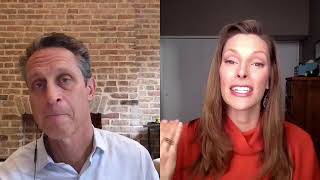
Dr. Mark Hyman talks with Emily Fletcher, founder of Ziva Meditation, about meditation for stress relief and performance. Fletcher teaches a technique designed for busy people and offers a 15-day online training program to get started.
Hey everybody, it's Dr. Mark Hyman. I'm here with my good friend Emily Fletcher and my teacher who's taught me meditation. And she's actually one of the most amazing new meditation teachers out there. I've been in this space for scary 40 years. And she's got something special. She's the founder of Ziva Meditation, creator of Ziva Online. And her mission is really to make meditation cool and sexy, accessible, easy to adopt. and she's been featured in the New York Times, she's named one of the top 100 women in wellness to watch, and regarded as one of the leading experts in meditation for performance and certainly has helped me with my performance. She's worked with Google and Barclays Bank and Sweetgreen to improve their company's performance, and she came to Cleveland Clinic and trained my entire medical staff how to meditate, which was so awesome. She's taught over 7,000 people to become self-sufficient meditators, with Ziva and it's really powerful tool. Now, I love Emily just because she's awesome, but the truth is that, you know, I used to meditate when I was younger and then life took over and I thought I was too busy to meditate. And I heard Emily speak once and I was like, All right, I better get back into this stuff because it's always been like one of those things that I know I needed to plug back into. And she kind of reconnected me with it in a way that has been so awesome. Like I would say that I didn't realize that then before that it wasn't something that I could get through life without. In other words, I used to think I didn't have time to meditate. Now I know I don't have time not to meditate because of the benefits that I get and the way it helps me with my life and just everything is easier. I'm less anxious. I'm more focused. I have more energy. And it just helps me to actually get through my very crazy busy life with a sense of peace and equanimity and fun. and energy, which is amazing. I'm really grateful to Emily as my teacher and I wanted to introduce you to her because she's the most awesome teacher and I think you all should meditate out there like 20 minutes twice a day. If that sounds crazy, trust me, I found that it's something I can't get away without because of the benefits that I get and it makes everything else work better. It seems like time but I just want everybody to learn from her. I want to ask her about this amazing new of course she's got and this technique which is sort of an interesting amalgamation of different types of meditation. It's sort of a, I would say the 2018 version of how to meditate. And she uses mindfulness and meditation and manifesting all in this great cocktail, this soup of waking up that actually helps you live your life in a way that's fun and better and awesome. So what makes Eva a little bit different than every other meditation, Emily and welcome.
Thank you for having me and thank you for your enthusiasm, like hearing you speak about meditation, especially because I know how busy you are and how much you have on your plate. The fact that you make time for this and the fact that you say that it helps your productivity and your performance, it makes my heart so happy. So thank you, thank you for having me. So to answer your question, what makes Ziva unique and I love this cocktail of waking up, what a cool saying, is that it really is a trifecta of mindfulness, meditation and manifesting. And a lot of people are using the terms mindfulness and meditation as synonyms, but they're not actually the same thing. Mindfulness is more of a directed focus style of meditation, more of a left brain active practice. And most of the apps and the YouTube videos and the drop-in studios that are out there are actually teaching flavors of mindfulness, but they're calling it meditation. And this is where it gets a little confusing. But I would define mindfulness as the art of bringing your awareness into the present moment. which is beautiful and profound and necessary in this age of technology where we're all bulimic of the brain.
But mindfulness is- yeah, I like that, bulimic of the brain. I definitely feel like that. It's not that I just want to throw up because I've been overstuffing myself with media and content and it's just overwhelming.
Yeah, there's so much to consume. Books in 30 seconds at the elevator and you're scrolling through Facebook or one red light, you're checking your text messages and it's like, when do we just digest? and so mindfulness is really good at helping you process your stress in the right now. But meditation is a whole different ball of wax and what we teach at Ziva is a unique style of meditation where you're giving your body rest that's five times deeper than sleep and that's not an insignificant point because when you give your body the rest that it needs it knows how to heal itself. So the cool thing there is that we're actually healing the stress from our past. So mindfulness is very good at dealing with your stress in the present, meditation very good at dealing with your stress from the past. So all that stuff that gets stored in your cellular memory, all that stuff that over time can lead to to inflammation, chronic disease, autoimmune issues, digestive issues. That stuff is what we're actually going in and exercising during the meditation itself. And then the third element of the Ziva Technique, which I like to think of the dessert. So mindfulness is the appetizer. Meditation is sort of the main course. And then manifesting is the dessert. And I know that that word manifesting.
Gets a bad rap sometimes. So we get to have dessert? I like that.
Yeah, we get to have dessert.
It's gluten-free, sugar-free. Dairy free, calorie free, taste free.
You can even manifest the way you want to have a relationship with food or your own relationship with your body. But manifesting is simply consciously creating a life you love. It's taking the time to get intentional about what it is that you actually want. And what I found is that the combination of meditation and manifesting is so much more powerful than either one alone. Because you can meditate all day, but if you're not clear about what you want, then it's very hard for nature to give you that thing. Conversely, you can make vision boards all day, but if you're not meditating and you're stressed, a lot of us don't believe that we deserve that thing. So the two of them together, it's like life just becomes so much faster as you know.
Yeah, so it's like not just sort of meditation, but you're combining all these components to actually help people shift out of this constant state of stress and worry and dysfunction and not be able to actually live the life they want, right? So, yeah.
And it really, I mean, I believe that we meditate to get good at life, not to get good at meditation. No one cares if you're a good meditator. meditator, everybody cares if you're good at life. And just like you said, it's a tool. And I think that you're such a good example and archetype because I think the number one excuse that people give themselves when they don't meditate is I'm too busy. And I use you sometimes. Like, well, Mark, you're a dad and an author and running the Cleveland Clinic and writing a million books every day and writing the Ford for my book. And so, and if he has time to meditate, you have time to meditate. It's really just a question of prioritization, but a lot of people aren't seeing a return on investment, so they seem meditation is a waste of time or they see it as a luxury item, like a pedicure for your brain or something. This is the paradigm that we have to shift. We have to stop thinking about meditation like a pedicure and instead start to treat it like the single most important piece of mental hygiene that we all.
Need to be practicing every day. Yeah, I was talking to my friend Marie Forleo yesterday on a Facebook Live and I said, well, what are the things that you do that help you actually function at such a high level? and keep you happy and successful. And she's like, number one was meditation, 20 minutes twice a day. And I'm like, yeah, you know, like, and, and you look at people. And I, you know, I met this guy who was like a billionaire, and he was an Indian guy who runs like 10% of all the steel plants in the world. He lives in London. And I'm like, well, how do you do this? You know, he's super busy. He's got a bazillion things going on. He's got, I think, 200,000 people that work for him, you know? And I'm like, he's like, I meditate every day. And I'm like, Wow, you know, I met with the Surgeon General, Vivek Murthy under Obama, amazing guy. And he says, we meditate, I meditate twice a day and I actually stop my office at the Surgeon General's office at 3 o'clock every day so we all can meditate for 20 minutes. I'm like, yes. In fact, now at Cleveland Clinic, you know, we have these rooms that are for bariatric patients who are very overweight and they don't get used very often and so we blocked it out as a meditation room. So now we have like a meditation room at Cleveland Clinic and it's super awesome that it's like there's a permission space for everybody to go do that. And I think, you know, I went to Huffington Post once and they have these nap pods. A nap's great but, you know, if you meditate, it's like, I don't feel like I had a two-hour nap if I meditate for 20 minutes. Sometimes I do what I call napitating, which is where I like kind of go into this other state of consciousness and I think I'm asleep, I think.
I'm awake, I don't know.
And then like my wife says, when.
I'm drooling, I'm probably asleep. That's a good indicator.
But actually, this is an important point.
Because a lot of people think that they fall asleep when they're meditating, but that's usually because they don't have any training. And an important point to make here is that meditation really is like any other skill. Like, just because it's simple doesn't necessarily mean it's easy. And just because it's simple doesn't mean it's weak. And so I think because it is simple, people assume they should already know how to do it. And then they start meditating and they feel like they're falling asleep, and then they feel like they're failing. Or they start meditating and their mind is still having thoughts and they feel like they're failing. So there's like, there's like one dude out there telling everybody that in order to meditate, you have to clear your mind. And we got to find this guy and we got to teach him how to meditate. But the cool thing is that once you know how to meditate, once you have some training, then it's easier to distinguish the difference between sleep and meditation. Because they can feel quite similar, especially the Ziva Technique, because you're giving your.
Body that deep healing rest. But it's helpful if your wife is like, hey, dude, you're drooling. I mean, it's actually remarkable. Like, I know it shouldn't be used for this, But if I'm, at the end of the day, I've had a very busy back-to-back patients, meetings, whatever, and it's like five o'clock, I'm like, all right, I'm tired, I'm done for the day. I'm done. I meditate for 20 minutes. I'm like, okay, let's go party. And it's weird. It's unbelievable. Or if I'm flying somewhere and I'm on a plane, I just can't do any work. I just go in and I put my little headphones on, the noise-cancelling headphones, and I just go in and then I come up 20 minutes later, Sometimes I go in for 30 minutes and I'm like, oops, that was too long.
That's okay, you can meditate more on a plane.
Yeah, and I'm like, okay, let's go. I can write another book. It's pretty remarkable. If you just lie down and close your eyes, it doesn't work like that. If you take a nap, it doesn't really work. I can lay down for 20 minutes and may not even fall asleep. This is a whole different situation. What's fascinating is a doctor is, I have a close friend, Daniel Goleman, and he wrote this book with Richie Davidson, who's done a tremendous amount of research on meditators and looking at brain MRIs and all sorts of scientific studies looking at the effects of meditation. I don't necessarily do it for that, although it's sort of a nice benefit. I do exercise not because it's going to make me live to 100, but because I like how I feel after. But the truth is that it has profound effects and different effects than other things that you can do for your health. It has the ability to increase stem cells, it increases your telomere length, which looks at, you know, reversing aging. It actually affects your immune system and reduces inflammation, it helps your antioxidant system, it really helps repair your brain and clean your brain. It's really fascinating. And it's like we don't really think of meditation as this sort of scientifically based intervention, like we think, you know, eating or exercise, but it actually really is. And as a doctor or scientist, it's really fascinating to me to to see that. And it's sort of a nice bonus that you get for also having it impact your life in a positive way.
Yeah, and I think this is an interesting point because when a lot of people hear all of the different benefits of meditation, telomere length, immune system, sleep, sexual performance, parking karma, they're like, oh, God, really? How could one thing make you that much better? But the better question that we should be asking is how can stress mess so many things up? Right, because we know that stress is being called the black plague of our century. And I think recently, medical school released a study that's saying that stress is responsible for somewhere between 70 to 90% of all doctors visits. And so if we agree that stress is making us sick and stupid and slow, and if we agree that meditation is the most powerful stress relieving tool that we have, then this argument of I don't have time to meditate or I'm too busy, like it doesn't hold water anymore. And it really can be the foundation. And that's the way I think about it, is that it's the foundation. It's the thing that allows me to engage in the eating habits that I want to engage in. It's the thing that gives me that sort of, it's not even willpower, but even the desire to exercise. It's the thing that makes my sleep more efficient, because each day I'm spending the time to go in and get rid of that stress. And that stress is sometimes the thing that makes me eat food that I don't want to eat, or not exercise.
Or makes my sleep not as efficient as I want it to be. Yeah, it's so true. I think that I often say to people, stress happens automatically, but relaxation doesn't. Relaxing is an active process. When I say relaxing, I don't mean sitting on the couch watching the Crown or some other Netflix special. Certainly not the news. Or watching sports and drinking a beer and relaxing. that's a different kind of relaxing. The truth is that the body needs to be in a different physiologic state. And we've always had this throughout our history. As tribal people, we danced around the fire, we chanted, we prayed, we did ceremony. These all put us in this state of profound shift from a activated sympathetic stress response to a relaxed parasympathetic stress, anti-stress response. and it's a very active process. I would say relaxing is very active and yet it's doing nothing, but it's kind of a paradox. But meditation is really this process of stopping but also deeply profoundly shifting into another physiologic state. And the technique of Ziva Online and Ziva Meditation is so powerful because you don't have to go in a cave, you don't have to you know, be in a monastery. You don't have to like give up all your worldly possessions. And it's like, I literally, I do it in the back of a car, you know, on an Uber. I've done it on planes. I've sat in the parking lot and done it when I'm waiting if I have 20 minutes, you know. I'll go in my office and work sometimes. I'll just sit on the floor and just take 20 minutes, think I'm having a meeting, you know. But sometimes they see me through the glass on the bottom sitting on the floor. Are you okay, Mark? Yeah, I'm like, why is this guy sitting in the dark, you know? but I just find that it's so portable, it's so accessible, you don't have to really interrupt your life that much, and yeah, it's great if you can do it at home and it's quiet, but it doesn't have to be. And it's like, I went to yoga the other day and I didn't have time to meditate because I was running around, but I really wanted to go do yoga. So I was sitting all day, so I got to class early and I just sat in the class, whenever he's chit chatting or whatever, and I just go in and I don't even hear them chit chatting and I just go in my space and then I wake up and I'm like, oh, ready to do yoga. It's awesome. So yeah, it's really accessible, it's easy, it's portable. And what's great about it is you usually have to go to a teacher and go to a class and go to train, but you create this whole program. It's called Ziva Online, zivameditation.com/online. And it's really accessible to anywhere, anytime to anybody on the planet. And it's such a great gift because you're one person. How can you teach nine billion people to meditate? You need some tool. And so I think this is a great service. And tell us more about that.
Yeah, so Ziva Online, it's a 15-day training and it actually is a matriculation. So it's not a challenge, it's not each day like me guiding you through different imagery, which is all fine, but this is actually teaching you to have a practice so that you can do it on your own without me, without finger symbols, without incense, without headphones. It's like you could just sit down like you do and do it on a plane or an Uber or in a yoga class with your kids screaming in the next door.
That's a challenge.
I'm about to find out because I'm having a baby in you know, I think nine weeks. And that's one thing that just quick side note is that meditation has, I mean, I don't, maybe it's just an easy pregnancy, but I haven't had any morning sickness. My, I've been sleeping great. I don't have any pain. Like, I'm like, I love being pregnant. And everyone's like, I don't think that's normal. Um, but I think that the meditation has really played a big role in that. Um, so anyway, so Ziva Online, it's 15 days. It's about 20, 25 minutes a day of training. And the first three days you learn mindfulness. Day 4 through 12, you're really diving into the main course, which is meditation. So people are given a mantra, they're taught this beautiful idea of effortlessness and ease, and they're taught how to be self-sufficient meditators. And we build up. So it's not like you just bang, sit down, and meditate for 20 minutes. Actually, XEVA Online gives you a technique where you do 15 minutes twice a day. It's a little bit more manageable time-wise. and then on day 13 through 15, that's when we learn the manifesting. And that's all about consciously creating a life you love and actually learning a technique to visualize your dreams as if they're happening now, which is a really fun thing to do. And even with high performers, I'm always amazed at how rarely we take the time to get super clear about what it is that we want. It's kind of scary to commit to the bigness of your dreams. And that's what this does, that it gives you this this focused time in your day to unfocus. There's a psychiatrist from Harvard named Srinivas Pillay and he says, you know, there's power in unfocused time, you know, focused time to unfocus. Because we end up with this focus fatigue. So anyway, at the end of this 15-day training, you have these tools to take with you for life. You don't need me anymore. And then you wake up in the morning, you do it, and then when you hit that mid-afternoon slump, like you said, you're just like done with the day. It's like you dive in, you give your body this rest. It's like a vacation for your brain, and you wake up and you have.
So much more energy, so much more.
Joy, so much more creativity for your kids, for your partner, for your projects.
So true.
If you want to. And it's just, yeah, it's been the single most important and valuable tool I've ever gained and it's such a gift to be able to share it with others.
It's true. It's sort of like taking a vacation twice a day. And it's almost addictive actually.
Yeah.
It's like, I try not to get anal about it, but it's like, you know, sometimes I can only do it once a day, but like, that's okay and it's just it's so powerful. So what what's the biggest myth about meditation out there?
So I'd say the biggest one is that people think that they have to be able to clear their minds in order to meditate.
Oh yeah. Stop thinking.
Oh no. And that's called a coma, right? Like that's called being dead and it's not the point of meditation. The only time the brain flatlines is when we're dead and that's not what we're up to. We're interested in becoming more alive, better performers and so Because I think people, the reality is when people are stressed, they don't like the content of their thoughts, right? They have this voice going, I suck, I suck, I suck. I'm gonna dial in with cats eating my face. And so they're looking for any way to shut that voice up. And meditation does not clear the mind. What meditation does, and specifically Ziva, is that we give the body this deep healing rest that gets rid of our stress stored in our nervous system. And as you do that, as you eradicate that stress in your body, it changes the flavor of the thoughts. And then suddenly the thoughts are, well, what if I started that company? Well, what if I called that guy? What if I made a million dollars? What if I cooked dinner for myself tonight? It's like the flavor of the thoughts change, but it has nothing to do with clearing the mind. Yes, you become more focused. Yes, you become more clear-headed, but those are products of the practice, not the practice itself. So if you sit down and try and say, okay, brain, shut up, then you're like, sure would like a snack. Snacks are meditation. Wait, I'm thinking about snacks. No, I'm failing at meditation. I suck. I knew I couldn't meditate. And then that's the beginning and the end of most people's career. Yeah. And it makes me sad because because then they potentially rob themselves of a lifetime of bliss and fulfillment and better performance because they're judging themselves based on misinformation. And so we go into this in great detail in Ziva Online. Like if there's one thing you learn in this training, it's that thoughts are not the enemy of meditation, effort is. And the more you're trying to be a good meditator, the more you suck at it. And also, no one cares if you're good at meditation.
You don't get a report card at the end of the 20 minutes, right?
Exactly. Although you might get some special stars.
Gold stars and straight A's. I end up like I go in, I start doing the mantra, and then I start thinking about something and I go down some rabbit hole and 15 minutes later I'll come out of it and I'm like, oh, okay, and I go back and it's like, you know, but I still feel like I get the same benefit.
Yes, you're seeing that even though you're having thoughts, you still feel better on the other side, which is the point.
It's so great, it's just such a gift. It's hard because meditation seems obtuse and confusing and disconnected from everyday life and yet it's really not. I was doing a Facebook Live the other day and was talking about meditation and someone said, no, no, no, no, just pray to God. And the way I was thinking about it is it's not like a duality here. It's like praying is talking to God, meditation is listening to God. It has nothing to do with a religion or a belief or a way of thinking. It's just a way of creating a state of being receptive to what's happening. And at different days it's different things, but it's a very powerful distinction I think people don't make.
Yeah, thank you for bringing that up because I do think that that can be an obstacle for a lot of folks that, you know, they're afraid that it will be in conflict with their religion. And we've really taken great strides at Ziva and certainly with Ziva online to make this accessible to everyone. And we really treat meditation as a tool. And I think what you said is so beautiful, that the prayer is talking to God and meditation is listening. But ultimately we want it to be a two-way conversation.
Yeah, it's so powerful. And, you know, I think it seems weird or Eastern or different, but it's really not. I mean, just think about, you know, rosary beads. What is that? That's a form of mantra meditation, right? Hail Mary. That's a way of. of suspending your normal way of being, slowing down, listening, and just being in the present moment. And that's something we don't get to do. And it's really, I think it's a, unfortunately it's sort of become an epidemic. You know, I was talking to Marie about Forleo about how she went to this event where everybody was a magic show and everybody had to put their phone away. Like, you couldn't bring your phone. and people actually were talking to each other and connecting to each other. You go anywhere now and everybody's in their phone and nobody's showing up and being present in their experience. And for our anniversary, I got her a box. It's this little tiny box and it was a little wooden box. It's a nice looking box. She's like, oh, that's such a nice present. I'm like, no, no, that's not the present. That's just a holder for the present. The present is actually a time when I put my phone in the box for the weekend. So I like say, I'm putting the phone in the box and you get me. And you know, I gave it to her as a present for her but when I did it, I was like, I spent a whole weekend without my phone. And I was like, wow, this is remarkable because what I'm experiencing is like profound space in my life. Like, you know, I had some time to hang out, she was doing something, getting ready, And I just laid on the floor with the cats, wasn't doing anything, listening to some jazz, just hanging out, like doing nothing. And I felt so happy as opposed to when I have a minute, okay, check my phone, do my email, filling all the gaps in the spaces. And the problem is that in the spaces in life is where the magic happens. And what meditation is, is like creating this spaciousness every day where you gave yourself this gift. It's so unbelievably powerful. Aside from the fact that it helps you lose weight and be happy and get rid of anxiety and sleep better and have better digestion and I can go on and on, it's really a profoundly amazing gift that you give yourself every day. It's so freaking easy. After you take the course, it's free. You know, I mean, the things that matter in life that really affect us in terms of our health are pretty much free, right? Movement, meditation, love, connection, people, food you have to pay for, but you have to eat anyway, so you can eat well for less too, and all that works. So, I'm super excited. So, how do you learn more about this? It's zivameditation.com/online.
You got it. Yeah, and then I think we'll also put a link as well in the comments if they want to click on that. And just know that it would be my great honor to have you and to guide you through this journey. And really, my job, and I feel like my mission is not only to make this accessible, but to make myself irrelevant. I'm not interested in becoming anybody's guru or telling anybody how to live their lives. I have a lot of interest in giving people tools to allow them to act in accordance with what they already know to be true. And that's what meditation does. It brings you back to yourself. It allows you to be the most amazing version of you, but not the version that Emily Fletcher says you should be, or that somebody else-- so we.
Don'T need to put a picture of you on our altar or anything like that. No, Sam.
Although it would be a good picture.
It would be a great picture.
It makes myself irrelevant. I'm gonna give people the tools to make themselves sufficient so they have this practice to take with them for life. And myself and my team, we're there in the communities. We have a beautiful online community to help support you through your journey, as you train yourself to be self-sufficient, different questions come up three months in than three days in. And the cool thing about the training is that you don't lose access after 15 days. You can choose if you want six months of access or a year of access or for as long as the program exists, so that you can retake the class, so that you can have access to me and my teachers for support. And I'm really proud of the community that we've created, because there's thousands of meditators all around the world, all different religions, backgrounds, busyness, professions, and we're all there to support each other in this common thread that we have, which is performing at the top of our game.
Totally true. And the fact is that I believe in this so much that at Cleveland Clinic, we take care of patients. It's a very intense job being on present for all these patients all day long for our whole staff. And we have about almost 50 people. And I was like, this is so important. Take care of them so they can take everybody else. that I, on my own dime, flew Emily out to Cleveland to help her help our team to be successful. That's how much I care and believe about this. And I'd also say that people don't realize that there are five pillars of really being healthy. One is food, and I've written a lot about that. Two is movement. Three is sleep. Four is community and connection, which is a harder one to do, but it's really important because we're all social beings that need to be connected. And the fifth is meditation and often gets forgotten. And I think it's such a critical pillar for helping people have happy, successful lives that are also healthy. So thank you, Emily, for the gift of your presence, for the gift of your fun and play in the creation of this amazing course. I want everybody to go out and sign up right now and do this. And you know, it's almost one of those things you should give a money back guarantee because people are going to be so into it. that, you know, like, it's, it's, we actually do.
We now have a 30-day money back guarantee. So it's, the course is only 15 days, but for, so you can take the full course, meditate for 15 days, and if you don't like it, we'll give you your money back.
Because I do believe in it.
There you go. And we just did, like, we had 1800 people take the class recently, and I think, like, seven of them asked for their money back. I was like, happy to give it to you.
There you go. That's awesome. Well, thank you, Emily. You're the best. Yeah, love you too. And everybody get meditating, all right?
Yeah. Bye, friends.
More from AI




This Is Why 99% of Skin Conditions Don't Heal — And What Dermatologists Won't Tell You






Why you need to start strength training today #strengthtraining #healthyaging #fitness
