DO THIS To Lose Weight, Boost Brain Health & LIVE LONGER | Dr. Gabrielle Lyon
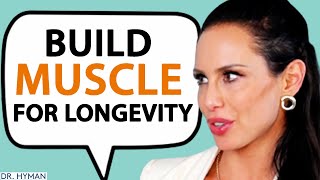
Dr. Gabrielle Lyon, a functional medicine physician, explains how muscle health drives weight loss, brain function, and longevity. She covers protein intake, resistance training, and metabolism as keys to staying healthy as you age and preventing disease.
So what does an ideal body composition mean? It means being under fat and more muscled. Being under muscled is because we're sedentary. We're not moving the way that we used to.
How I got into the field of.
Functional medicine, I was actually raised in it. I moved in with my godmother, Liz Lipski, at 17, and she is one of the founding functional medicine nutritionists. So from that point on, my trajectory was set. I knew that nutrition was where I was going to go. So I went to University of Illinois and studied human nutrition, vitamin, mineral metabolism. Then after that, I went to medical school and I did two years of psychiatry, three years of family medicine, and then a postdoc at Washington University in nutritional sciences and geriatrics. Brain health is dependent on muscle health because muscle is the organ of longevity. And when you think about brain health and you think about the issues with brain health, it's really, it rides on obesity. It rides on inflammatory conditions, creating a leaky blood-brain barrier. and the wider your BMI, the higher your BMI, the lower the brain volume. If that's the case, you need to have an ideal body composition. What does an ideal body composition mean? It means being under fat and more muscled. The issue isn't over fat. Everyone focuses on obesity and diabetes. That is a huge problem, but the real problem is being under muscled. You really need to change the ratio of muscle to body fat. Being under muscled is because we're sedentary. We're not moving the way that we used to. We live in a very domesticated way. 10,000 years ago, we were hunters and gatherers. We were moving 10 to 14 miles a day. I'm not doing that anymore. Metabolism is important for brain health because a healthy metabolism is really the metabolic sink. And the metabolic sink is your muscle. Muscle is the organ of longevity. the healthier your muscle is, the more glucose that you burn, the more carbohydrates that you burn, the more fat that you burn. So it's the site of fat oxidation and that it's responsible for your resting metabolic rate. So when you're thinking about brain health, you need to have a healthy metabolism because you don't want excess calories, you don't want pro-inflammatory states, you really want a body that's in balance. When working with my patients, one of the things that we really focus on is optimizing body composition. It's really about optimizing lean muscle tissue. We do that through diet, exercise, really targeted nutritional training programs that augment the muscle. I see a lot of patients with Hashimoto's and thyroid disorder, as well as hormonal imbalances. The first thing that we do, and there's one patient in particular, she came to me and she had Hashimoto's and her antibodies were through the roof, and her metabolism was just really wrecked. She had gone through years of yo-yo dieting. We know when you yo-yo diet, each time you lose weight, it's not quality weight. And what I mean by quality weight, it's usually muscle. So you do lose some fat, but the Integrity of the muscle changes. And when the Integrity of the muscle changes, you have a trajectory of gaining weight. So we worked really hard. We worked over eight months and we reduced her antibodies. So she was on very anti-inflammatory diet. But interestingly, what we did is that we really increased her protein intake. So she started at around 160 pounds. So what we did is we actually augmented her diet with mostly so she was eating about 140 to 150 grams of protein a day, divided into meals that had 30 to 40 grams per meal, in addition to really heavy weight training. And she's lost a tremendous amount of weight. Her body fat has come down and her muscle tissue has improved. And her Hashimoto's has gone into remission. I get this question a lot. Are Americans under-eating protein? Because you hear actually that people say we're eating way too much protein, and that's not true. What's actually happening is the distribution of the way that people are eating protein is absolutely incorrect. So the standard distribution of eating, for example, for breakfast, they have maybe 12 grams of protein or a vegan protein shake or maybe two eggs. So we know that you need 30 grams of protein or two and a half grams of leucine, which is the amino acid that triggers muscle protein synthesis per meal. So what happens is, is if you undershoot that at breakfast, right? Breakfast is the most important meal for setting up your metabolism, you have to compensate for something else. If you are low in protein, you're typically high in carbohydrates. If you are higher in carbohydrates and fat in that balance, then four hours later, we know that you're gonna be starving. So FMRI imaging definitely shows that the first meal that you have is the most important because four hours later, reward centers are all lit up. So when it comes to Americans eating too much protein, it's that they need to distribute it over time. So each meal should have around 30 grams, 30 to 40 grams of protein per meal to trigger that muscle protein synthesis. But what Americans typically do is that they have two meals with low protein amounts. Breakfast is the two eggs, lunch maybe a small turkey sandwich, and then dinner is a big steak. So you reach that threshold one time, and that's in the evening, and a lifetime of doing that destroys your metabolism because it does not augment your muscle. So for breakfast, I do one of two things. I often fast, and if that's the case, then I don't have anything. And if I'm having breakfast, I'll have either ground chicken, I'll have about four ounces with MCT oil. I tend to not have carbohydrates my first meal. Even if I'm training in the morning, I tend to backload my carbohydrates or have it later on in the evening because insulin sensitivity goes up. later on in the day. So your body is more sensitive to glucose later on in the day as opposed to having toast in the morning and these higher carbohydrate meals. You end up storing body fat all day if you're not a competitive athlete or you're really training. If someone is going to eat carbohydrates and carbohydrates in general are not bad. If you are burning carbohydrates and you're not, say, in a ketogenic style diet, the body maintenance dose, you need about 90 grams a day. Everything other than 90 grams is earned. so that's earned through physical activity. Every hour of physical activity, running, weightlifting, which is my favorite, resistance training, you earn that carbohydrate. So then you're talking about between 20 to 60 grams an hour if you're really training intensely. So the other aspect of carbohydrates is you can plan it around your training schedule. So if you really wanna burn it, I actually tend to use protein before a training session, and I recommend my patients do the same, unless they're elite level athletes, and then they can have carbohydrates while the muscle is primed, you don't need more than 30 to 40 grams, really, of carbohydrates. And then protein also, the muscle is primed to then turn over muscle protein synthesis after you train. Exercise is important for the brain in a number of ways. Number one, we know that when it comes to dementia, Alzheimer's, and aging brain, we know that optimal body composition is number one. So you're having lean muscle tissue, low body fat is number one for protecting the brain because you want to have low inflammatory issues, you want to have a healthy metabolism, what controls your metabolism, the organ of longevity, which is muscle. I practice something called muscle centric medicine, and really the focus of everything is the organ system of muscle. Muscle, you keep your muscle healthy, then you have your brain that's healthy. The other important aspect of exercise and the brain is that muscle as an endocrine organ, when you use resistance training, it actually secretes things. It secretes things like growth factor. It secretes things like BDNF. All these things help rejuvenate the brain and they actually cross the blood-brain barrier. So you're not just training your muscles, but you're also regenerating your brain. So the patients that come to me when it comes to a sedentary lifestyle, by the time they get to me, they're really ready to change. And of course, as in the military, there's a crawl, walk, run. So we crawl, we just begin. I usually talk about just movement. We talk about the difference between exercise and physical activity. A lot of people do physical activity, just movement based, and not a lot of people do exercise. And exercise are really planned, executed programs with progressions. And, you know, typically you train with somebody. Exercises that are good for the brain target large muscle groups. There's been a lot of study on cardiovascular health in the brain. And I think that one of the reasons that is, is because it's really easy to measure. That was kind of the big thing was endurance training in the brain and BDNF. However, emerging data is really looking at resistance training, and resistance training is lifting weights. and lifting weights actually stimulates the muscle and creates things and situations that are healthy for the brain, like those growth factors that we talked about, also helps with mood and cognition. Some examples of great exercises are really heavy compound movements. And to be very specific, you know, you're thinking about the squat, the deadlift, the bench press. And another important aspect is that it's typically 70 to 80% of someone's one rep max. And what that translates roughly to is 8 to 10 reps. So you pick 12 to 16 exercises and you really have to put in energy. So it's, you need to go to fatigue. You have to work hard. So there's two parts of being able to really stimulate muscle and that's having the mental fortitude to really be able to work hard and challenge yourself because that is required for the positive effects of muscle. you do that and of course Tai Chi and those wonderful relaxing types of exercises. But really what I think people are doing not enough of is the resistance training and having a really good resistance program is key. What occurs in brain health and muscle, it's very, that's a very interesting question because they kind of ride along together. What happens is as we age, there's sarcopenia and that's the loss of muscle that ends up happening. When that happens, by the time you're 80, you have had 50% the muscle that you had when you were 30. So these issues with sarcopenia and that's poor muscle mass, function and strength, they actually begin in the 30s and 40s. Interestingly, that's the same time that Alzheimer's and dementia and cognitive impairment starts. So dementia, type 3 diabetes, right, that starts in your 30s and 40s, just along alongside with the declining ability to use your muscle and the quality of your muscle. How can you treat the obesity? Obesity is much easier to treat than sarcopenia or sarcobesity. The most important thing is prevention. And I think a lot of physicians talk about that when we talk about having a collaborative effort to be creative with our patients is really prevention and finding protocols that work for them. The way to protect your muscle is there's really three things that I talk about with my patients and that's protein quality, quantity and distribution when you're thinking about protecting your muscle. So it's the quality of the protein that you're eating. That's very important. Plant-based protein is not the same as animal protein. That's not the same as collagen or bone broth protein. Getting the right amino acid profile, all proteins are not the same. So you have the quality of the protein, the distribution of the protein, which is distributed over three to four meals with four to five hours in between, if you'd like, and then the timing. So when are you having your protein? When are you having your largest protein meal. That's really key. So the nutrition is one aspect. The other aspect is training, really training their muscle, getting them on a good program, a three to four, even five day program of resistance training. If a patient is vegetarian or vegan, it's really important to incorporate branched chain amino acids and typically move them to a much lower carbohydrate load. I don't think being vegan or vegetarian is bad. Everyone is entitled to what works well for their body. I found that patients have a very specific phenotype. Everybody is different. If they are vegetarian or vegan, they have to add in branched chain amino acids to their meals and they have to time it appropriately. So for example, if you're eating quinoa for your protein, that's not actually enough. So you need six cups of quinoa to equal one chicken breast. And if you do that, then the carbohydrate and the carbohydrate and caloric load is way too high. So then you're driving up inflammation. In order to avoid that from happening, I tend to switch the vegetarians or vegans to a higher fat, lower carbohydrate diet augmented with branched chain amino acids. Branched chain amino acids are amino acids that are essential, meaning you have to get them from the diet. Out of the essential amino acids, primarily the branched chains, you're thinking about leucine. Leucine is required for what we spoke about before, which is muscle protein synthesis. What's interesting about leucine is that it's required in a bolus amount, so you actually have to reach two and a half grams of leucine to get a muscle triggering effect. anything less than that counts as calories and you don't actually get the stimulation to your muscle. What would an example of that be? That would be your two eggs. Your two eggs have maybe one gram of leucine, your breakfast of two eggs, and then your lunch of a small turkey sandwich is maybe 20 grams of protein. So you're now undershot your leucine amount and you don't stimulate your muscle protein synthesis. And then dinner, you've got your five ounce steak, which is perfect, but now you've only stimulated your muscle proteins in this one time. So branch chain amino acids must be ingested and they are necessary for metabolic functioning and they have to be targeted. So it has to be a certain amount that you're getting at one time. So for example, a branch chain amino acid, you can't sip it. So if you're sipping the branch chain amino acid, you're never actually triggering your muscle. Collagen powder is very interesting. Collagen is not high in the branch chain amino acids, but it is high in glycine and proline and other amino acids. recent evidence is emerging that it does help with body composition. It is still questionable as to why that is because it doesn't stimulate muscle protein synthesis. I do not have my patients count the bone broth or the collagen as protein. It's not a complete protein, but there are some really amazing effects that we're starting to see in sarcopenia and body composition. So you take an untrained elderly person and you start training them with resistance weight and then you add collagen, it's been shown to improve their body composition. That makes no sense when it comes to the science. My personal opinion is grass-fed organic is the best. The amount of protein is different in, say, fish than it is in beef. For every one ounce of animal gravity-bearing protein, that means if you have to kill it and it runs around, it's a gravity-bearing protein that has seven grams of protein per one ounce. So you need five ounces per meal. You need between four and five ounces per meal, which will get you to 28 to 35 grams somewhere in that range. Fish, for every one ounce, it has five grams of protein. So you need to have a six ounce piece of fish to be able to trigger that muscle protein synthesis. And that's not all or nothing, right? So the older you are, the more protein you need at once because of this concept called anabolic resistance. the muscle tissue becomes resistant to the amino acids. You actually need more protein as you age, which is a really important topic because right now the recommendation is 0.8 grams per kilogram, and that is creating a huge issue with sarcopenia in our population. 0.8 grams per kilogram is incredibly too low. It came from nitrogen studies that were from 18-year-old college students. The truth is the emerging evidence and everything that is coming out is saying 1.2 grams per kilogram up to 1.6 to even two grams per kilogram. So that's almost a gram of protein per pound. So for example, my dad, my dad is 160 pounds. He eats about 60 grams of protein to maintain his muscle tissue. Do I recommend tracking your meals? I think in the beginning it's really important. And I think that what happens is, is you become very good at building your meals around protein. So you build your meals around protein, you decide how much carbohydrates you're going to have based on how much activity you're doing or where your metabolic flexibility is. So for example, if you have Hashimoto's or if you have hormonal imbalances, I tend to lower the carbohydrates and increase the protein. And then the fat is wherever that is. I'm not crazy about adding too much or taking it away. Fat is essential for the body, but to track they can use FitPal. or write it down. I like to write it down, but it's important in the beginning to be able to eyeball it and really see what you're getting. And then after that, don't worry about it. Fasting is amazing. Research shows that by eating in a time-restricted feeding manner, that they have incredible effects on blood markers as it relates to obesity and diabetes. And we know that obesity and diabetes create major issues in the brain, right? So you've got type 3 diabetes, which is Alzheimer's and dementia. Fasting is can really help with that when you're younger. It becomes much more difficult for more elderly patients to fast. I personally fast. I think that it's amazing. I think that it's not ideal for muscle health. So if you're gonna fast, you need to train more, you need to lift weights because there's only two ways to stimulate muscle and that's either through diet or exercise. So if you're fasting, your body starts to become in a catabolic state, which is why you see yo-yo dieters lose muscle tissue and gain fat. I tend to fast 16 hours a day. I'm experimenting with fasting 24 hours twice a week. We'll see how that goes. I'll keep you posted. But I use the fasting protocols for my patients, especially patients that have weight to lose and hormonal imbalances, depending on where their adrenal status and everything is. The fats that I recommend, first and foremost, you need omegas, omega-3, and I recommend EPA and DHA. in two grams per day, you can go up. Certainly there's some benefits. They're starting to show benefits in the much higher doses. MCT oil is fantastic. It's a flavor enhancer. It's also burned more like a carbohydrate and less of a fat. There's some good data to suggest that it helps thermogenesis and body fat. Monounsaturated fats are great. Olive oil, avocado oil, coconut oil, saturated fat. I tend to not use a ton of that. personally, the patients that come to me, none of them hate to exercise. They're going to the wrong physician. But okay, so let's say a patient was really resistant. I would ask them, what's their why? Why are you doing this? So we have to have a commonality in terms of what we're promoting for health. And I think that if someone comes to me and hates to exercise, it's because that there's some emotional or experience that they've had that is really preventing them from having the opportunity to be optimal because the body was designed to move. People were designed for physical labor and movement. Top tips for staying sharp. Number one, most important, optimizing body composition. The issue is not over fat, it's really about being under muscled. Optimize your body composition. Number two, stay active in your brain processes. Always be learning. Stretch your brain. think about things, really don't get comfortable. And number three, exercise, resistance train, pick 12 to 16 exercises, lift heavy, put in the effort. It will pay off.
Hi, I'm Dr. Gabrielle Lyon and I practice something called muscle centric medicine. And that is the fundamental belief that muscle is the largest organ in the body. It's the organ of longevity. You can find me in my New York practice at the Ash Center. the role of protein in neurotransmitters is essential. There are essential amino acids that only come from the diet. For example, tryptophan we often think of as having with turkey, but actually tryptophan is a precursor for serotonin as well as melatonin. In addition, phenylalanine is also essential amino acid, and that's a precursor for norepinephrine and epinephrine. That's your get up and go. Overeating sugar and under eating protein is probably the worst thing. that you could do, right? So we know that type 3 diabetes of the brain is Alzheimer's creates cognitive impairment and dementia. If you think about it, insulin resistance in the body is no different than insulin resistance in the brain. So when you overeat carbohydrates and you under eat protein, not only do you do a disservice to your body and your brain, but also you can't feed your muscle. And we know muscle is the most important organ in the body. The carbohydrate threshold is really interesting because the more you train, the more carbohydrates that you can ingest, right? So muscle is your metabolic currency. It's the largest site for glucose disposal. I love to start my patients on 40 grams of carbohydrates or less. Anything over 40 grams of carbohydrates generates too much of an insulin spike and then a subsequent drop in blood sugar. When that happens, you go running for the cookie or the carbohydrate or the afternoon crash or snack. So it's essential to balance your carbohydrates, keeping it under 40 grams. and that looks like half a cup of if you eat grains, so if you eat rice, brown rice, then it's half a cup or less. There is this thought that too much protein causes an insulin secretion. In fact, it's true. Protein does cause a phase one insulin secretion, and that's necessary for muscle protein synthesis, so it's the beginning of this pathway. That's not a bad thing. In addition, it's one-third less of the insulin response from carbohydrate. So it's a necessary response, but it is lower than carbohydrates. Something that I see in my clinic is those that eat a higher protein diet have a steady blood sugar. And they have a steady blood sugar because the body begins to make its own glucose from ingesting the protein. So for protein, say for every 100 grams of protein, you get 60 grams of carbohydrates from that carbon backbone. So those that eat a higher protein diet, have a more stable blood sugar. And the reason they have a more stable blood sugar is that the body metabolically generates its own glucose as opposed to being dependent on dietary glucose. Those individuals have a higher A1C. They run higher. They believe that the red blood cells live longer. And overall, again, it's just a higher blood glucose, but it's not, you're not spiking it and then dropping it. It's not the same as a diabetic or insulin resistant type of picture. The concept of protein is that it's a very thermogenically expensive nutrient. So you take in protein and it's very costly for the body to process it. So it has the highest thermo-effective feeding. What that means is let's say you have equal amount of carbohydrates and an equal amount of protein. It takes more internal energy, metabolic energy, to burn that protein. And you also, from that protein, make carbohydrate. What it means is that your body is being caused to generate its own carbohydrate versus you feeding it carbohydrate, and then it becomes reliant on the diet. So this is a way where you can become more resilient and manage your own blood sugar rather than being dependent on your dietary needs of carbohydrate. I mean, it's really interesting. I was looking at some data, and hunters and gatherers ate a tremendous amount more fiber. You're talking 100 to 150 grams. all the rest of their intake was animal products from the nose to the tail. Protein is the most misunderstood macronutrient. We only think about protein in terms of muscle, but actually protein, certain amino acids like glutamine, which you get from dietary protein, as well as you make from your own body, it feeds the intestinal lining. So it feeds the enterocytes as well as the immune system. dietary protein is absolutely essential for gut integrity and immune function. So in my practice, I do notice that those vegetarians tend to have a lot more GI issues. I think in part that's from the volume of food that they're eating, as well as just being able to handle that fiber. I know that the data shows that we need fiber. I think that I'm not so convinced that the amount of vegetables, if it's skewed, is the best. You have to balance it with high quality protein. Okay, so let's talk about protein. A really great standard that is safe for everyone that doesn't have, say, kidney disease is for your ideal weight, it's one gram per pound ideal weight. So if you're 120 pound female, the goal should be 120 grams of protein. Now let's talk about how that varies with age. When you are young, kind of doesn't matter what quality of protein you have, you're going to grow. Remember when you were in high school, you could eat whatever you want and you could still put on muscle. You still were able to train and you still had energy because your body is driven by hormones. And when we think about muscle, there's two primary drivers. There's hormones and there's dietary protein. And when you're young, you're typically driven by hormones. So 120 grams would be great for someone who's 30 or younger, and the distribution doesn't matter as much. So they could have, say, 10 grams of protein or 20 grams of protein and still get a muscle protein synthesis response and a metabolic repair for the muscle. Okay, so now let's take a 65 year old female who is 120 pounds, and our goal for her is 120 grams of protein. For her, it is absolutely essential that she hits 40 grams of protein per meal. So if you break it out, so that'd be three meals at 40 grams to maximize for muscle protein synthesis. That is absolutely essential because what happens to the muscles is it becomes anabolically resistant. So when you are no longer driven by hormones and you are up against age, it is essential to have a certain amount of protein per meal. And that's 40 grams for this person, right? Because you want to reach a threshold between 30 and 50 depending on size and age. to get that muscle protein synthesis and to overcome what we call an anabolic resistance. As you get older, you have to be much more specific about the timing and the quality of your protein. In fact, that is essential if you want to age well. And it is something that is so misunderstood in our culture now. If you look at individuals, your parents, your grandparents, they might have one egg, right? And that's six grams of protein, your sub-threshold. We know that you need the equivalent of 2.5 grams of leucine, which is typically 30 grams of protein, high quality protein, to stimulate muscle turnover. And as you age, we can talk about sarcopenia, which is a decreasing in muscle size and muscle function over time. That is what we believe is a normal biological process of aging. That can definitely be stalled, whether it's preventable, we're not sure. But if you look at the kind of tiny people that just waste away, there are dietary interventions to maintain that muscle. In addition, muscle is your metabolic organ. It is your metabolic currency. So it is the site for glucose disposal. When we talk about brain health, talk about Alzheimer's, we know Alzheimer's is type three diabetes of the brain. The most important thing you can do is control carbohydrates and insulin. The way you do that is you have muscle. So it becomes this very slippery slope that as you age, you're already set up to lose muscle. And then you're eating the way that you did when you were 20, or you're later in life becoming vegan or vegetarian, and you're not feeding an already impaired tissue, then the trajectory of that aging is clear. And also bone density. Bone density goes down. The more sedentary we are, we need to offset that loss of muscle. we have to maintain muscle at all costs. So when you're young, or if you are a hunter and gatherer, you're running around and picking things up and putting them down, we're no longer living a life like that. We very much become domesticated. We have to offset that. So the average male American has 90 grams of protein or less. If you think about the average American, they're probably the average males, I don't know, 180 pounds, that's 80 pounds, that's 80 grams less protein that he should be taking in. So as you become more sedentary, your key macronutrient should definitely be protein, depending on what they're doing. So if they're a military operator, the most important thing that we do is that we make sure that they have enough protein to maintain their muscle tissue. But I typically give them an equal amount of carbohydrates. So more of a one-to-one ratio. So if I'm giving a military operator 50 grams of protein, and he's so active, I'll give him 40 to 50 grams of carbohydrates. Activity and muscle mass are what really determine your ability to manage carbohydrates. If you look at a label, you see total fat, and then you see, you know, unsaturated fat, monounsaturated fat, saturated fat. You see all these different breakdowns. And then you look at carbohydrates. Carbohydrates, you see sugar and fiber. Then you get to the bottom and you see Just protein. Something is wrong with that. Not all protein is created equal. And it's the last thing that we've really have yet to tease out. Protein is not equal. So for example, plant-based proteins have notoriously less methionine and lysine, threonine and all the branched chain amino acids. If you get a hemp protein shake, it'll say 30 grams of protein. If you get a whey protein shake and you compare it, it will also say 30 grams of protein. but the two amino acid profiles are totally different. The quality of the protein is dependent on the branched-chain amino acid profile, the completeness of the protein. Why? Because we want to maintain muscle tissue. If I was vegan or vegetarian and I was setting up my diet, I would actually, and I don't normally do a lot of protein shakes, but I would do protein shakes and I would do it twice a day. And I would shoot for 50 grams of protein with each of those shakes. And that's me. If you are younger and you can tolerate the amount of carbohydrates that goes along with getting the essential amino acids and the branched-chain amino acids, for example, a plant-based protein requires 25 to 40% more of it. So if we're talking about quinoa, it would take between four and six cups of quinoa to equal one chicken breast. For me, that's way too much quinoa. and that wouldn't be metabolically favorable because again, we talked about really the upper limit of carbohydrates if you're not running around or being active at that moment is 40 grams. If I absolutely didn't want to do a shake, what I would do is I would have a lower quality protein. If I had to pick and maybe it was tofu or some kind of bean, I would use that and then supplement with a branched-chain amino acid. When I think about protein powder and I think about protein powder for vegans and vegetarians, there is data to suggest that the vegan pea rice blend with the optimal amino acids works just fine. So if my patients want to check out First Form, if anyone's watching, they're coming out with a new vegan health line. It's an overall health line, and with that they do have vegan protein. Lack of muscle mass affects brain, not only brain, but every part of the body. It is that lone organ that people kind of miss, right? Muscle is again that metabolic currency. Muscle is responsible for glucose disposal. It's responsible for fatty acid oxidation. It's responsible for your resting metabolic rate. What that means is the more muscle you have, the more calories you burn at rest just sitting there. We know that brain health, when we're talking about metabolic issues with brain health, is largely based on body composition. When I was at my fellowship at WashU, we used to image people's brains. And the data was so clear that the wider the waistline, the lower the brain volume. And that started in individuals' 40s. Obesogenic sarcopenia is the next wave of illness. It is, if you think about sarcopenia, that's loss of muscle function and strength as you age, right? It's a decrease in size of the muscle and ability to use it. That happens, which we typically think of that as a disease of aging, is now happening easily in your 30s. When you think about it, we are now becoming domesticated. We're not moving, we're not doing resistance training, we're very sedentary, we're in front of our computers. Obesogenic sarcopenia is combining obesity with a decrease in muscle mass. It's kind of as if it's a marbled steak. And we know if you think about a marbled steak, you have decrease in contractility as you age. We know that if this, the muscle is filled with fat, it's not nearly as metabolically effective. These are massive issues when you think about aging, chronic illness, and it's no longer a disease of the elderly. This is happening much younger because of our patterns. There is a recent meta-analysis that have come out that actually says that protein helps and increases glomerular filtration rate. So it increases the efficiency of our kidneys. The idea that protein is bad for our kidneys, no one has ever seen that in clinical data unless you've already had a pre-existing kidney disease. When you think about kidney disease, you think about diabetes. And what causes diabetes? Not too much protein. That is a complete myth. Individuals really feel that protein is not good for them. The other myth is protein is bad for the bone. There's many research papers and data analysis that come out that show that actually those with a higher protein diet have better bone density, poor protein digestion. Hey doc, I ate this hamburger and I feel like it's just sitting in my stomach. And it's not necessarily poor protein digestion per se, but typically there's a-chlorohydrate, there's a lack of acid in the stomach and that happens when you age or if you're taking certain medications. That's an easy fix. You can either A, measure it with something called a Heidelburg test or B, take enzymes. I use betaine in my clinic. Of course, I measure first and then I give them betaine and those issues go away. We can pretty much assume that if you haven't been eating a lot of protein and you feel really tired after you eat, it's a good indication that you're probably having issues digesting it and.
That'S just from clinical experience.
If an individual has been vegan or vegetarian, they should not immediately go to a high protein diet because it does take time for the body to digest. It does take time for enzymes to upregulate. and the system to switch, otherwise they won't feel well. You can start easily with one meal a day of animal protein. Metabolism is the golden child of everything, of body composition, of brain health. How do we speed up metabolism? Have more muscle. How do you have more muscle? You do resistance training. You do resistance training and then you feed your tissue dietary protein. Another aspect of how we're really soft with ourselves is we say, I'm just going to do a spin class and I'm just going to do Pilates. And that's really as much work as I can do. No, there is a certain amount of effort and uncomfortable experience that needs to happen for growth. Like resistance in life, you have to push through it. Effort equals results. You have to strength train. Mindset is a key to my practice. It's really medicine of the mind. So a lot of individuals talk about medicine of the body, but if you don't have that mind, you will never make the change. And we live in such a harsh world that individuals become too soft with themselves. They tend to coddle themselves and I'm just gonna change tomorrow or I deserve this or I just can't do it. That is not the way I practice. That is enabling people and not making them capable. So when they come in and they sit down, we're ready to rock and roll. We have to change that victim mentality to What are we going to do? What are our action plans? We don't wait for motivation in my practice. We get it done. There's no more being soft because it's not going to get you anywhere. In fact, it's probably what got you to where you are now. So I have a great story, and it really opened my eyes to the way in which I practice medicine. I was taking care of a military operator, and he's an elite military operator with 15 years of combat experience. deployed multiple times, Iraq, Afghanistan. And he was coming to me because he was in chronic pain. And he had come home from deployment and was on a motorcycle going five miles an hour and was hit by.
A 17 year old girl texting and driving.
And he lost his leg from the knee down, left leg from the knee down. He came into my office and I said, Pete, how are you doing?
I know.
You'Ve really been through a lot and this must be really hard for you. And he looked at me and he said, Doc, what are you talking about? And I said, well, what do you mean? What am I talking about? And then I went through again this whole story about how it just must be so hard for him because he had been to all these war deployments and never been injured and now he came home and he's lost his leg and he's suffering. He said, I don't really understand the question. That was two months ago. And it struck me, this guy who was this tree trunk of a guy wasn't telling himself any story. His injury had occurred two months ago, was so significant that it probably would have massively affected any normal person's life. And he just said, you know what? That's a past. What do we got to do to move on? and he was ready to go. In fact, he wasn't even processing it in that way. There was no victim mentality. It was, what do we have to do to execute to go forward? And I realized that that's the kind of person that gets better. It's not telling the old story of your chronic illness. What it is, it's dropping the story, executing what you need to, living in the moment, and watching your health unfold because you take control of the most important organ. and that's the mind. In my clinic, I have tons of patients that come in and say, Doc, I don't know how to lift weights, or maybe I can do the machines or the bench, but I don't really know. If you don't have a well-laid out plan and you don't execute a plan with an end result in mind, you'll fail. We determine how much is in our bank account. You know how fast you're going when you're driving. If you're on blood pressure medication, you know how much medication you're taking. and you're telling me you're going to the gym and you're just doing a few sets of this and maybe something of that. None of that makes sense. So what you have to do is you have to hire an excellent personal trainer.
You have to have a program.
You have to have a goal. You have to track and measure because that way you know if you're actually hitting your goal. If you say, well, I just don't feel like going to the gym or I just don't feel like I'm getting stronger, what's the evidence? Are you or are you not? And I think that when you come up with a good plan and you execute, and you don't allow excuses for yourself. So, one, you have an accountability partner because you are now training with someone. Not that you need one, but it helps if you're getting started. And two, you have a very well executed laid out plan. In fact, you should start lifting immediately. That's what we were designed to do. That's our currency. Muscle is what we're made of. Muscle is the largest organ in the body, and it is one of the only malleable organs. We can change the size of it. We can affect our resting metabolic rate by doing a few things right. By resistance training, eating enough protein, that's incredible. There's not that many systems in the body that we can have a direct effect on. As profound, we can change the phenotypic expression of our body by training. There has to be some suffering. Suffering, we have this concept that suffering and challenge are bad. It's not. You should push yourself. You should have measurable outcomes. Some of the things that I personally do is I start out the day with an intention. What is my intention? And then I meditate. I think about the things that might be challenging for the day. And I think about how lucky I am to encounter them. So I prep my mind to be going towards the things that make me uncomfortable rather than away. The other thing that I do is I always get a workout in. I always do strength training. I always make time for it. I have a pull-up bar in my office. My patients will do squats with me. It doesn't matter. We'll get it done. I get a lot of questions about.
Strength training at home.
My answer is, don't do it unless you have a full gym with a full set of heavy weights and someone there. Forget it. Because the chances are of A, you pushing yourself very hard, are slim. The other aspect of that is, are your weights heavy enough? You cannot be doing five-pound weights. and assume that you'll get results. We are talking about putting in massive effort to get massive results. You only have one life, at least one that you remember, and that takes putting in dedication and not waiting till you're motivated. If you're not interested in going to the gym, you're never going to be interested in going to the gym. You have to know that that is a Achilles heel for you. So you don't wait for how you feel. You just go and you execute.
I've split health up into three areas. mind, body and heart. And I think many of us overly focus on one area. We focus on our favorite area and we neglect the ones that aren't our favorite. I'm human being. I do the same thing, right? So I'm not criticizing anyone. We're all humans. We're all imperfectly perfect, right? Doing the best that we can. And so I really, I remember when I was writing it, I was thinking, how do I, how do I make it really simple? for people, but yet still cover 360 degree health. And I think mind, body and heart does it. Mind is about mental health. So I say choose one five minute health snack for your mental health each day. And then body is about moving- Give.
Us an example of what those health snacks for each area.
Okay, so I believe in giving people options, right? So I give people all kinds of options. So in the mind section, I think there's about 10 different health snacks. You don't have to do them all. Nobody's got time to do them all. Choose one and stick to the same one every day because that's how you create a new habit. So it could be a breathing exercise. So there's two really cool five minute breathing exercises in the book. One is a Zen practice called breath counting, where you just simply sit down, You breathe in and on your, when you're breathing out, you count number one. Breathe in on your second out breath, you count number two just in your head. And the goal is on each out breath, up to five, you go one, two, three, four, five. Then you return to one again. Right. Well, it's remarkable, Mark. I've done this exercise. And once I got up to the number 30 before I'd realized that my mind had wandered, I was just automatically counting. So it's a really good exercise to help us train our focus and our concentration. And again, I went through a period of time where I was doing that every morning when I woke up, and I found that my focus and my craving for sugar, I found actually was a lot reduced in the day when I did those, which I found really, really interesting. So that's one option people may like. For anxiety, one of the first recommendations in the book is what I call the morning download. So this is where we download all the junk and anxiety that we've accumulated in our brains overnight onto a piece of paper. This is like the practice of journaling, basically. And I've given people two options. I said, journaling, when you wake up, you've often got anxieties whirring around your brain and your mind. And if you don't do anything to process them, they can stay there all day. They can impact your relationships. They can impact your the way you feel about yourself and your stress levels, but simply writing them down on paper, literally and metaphorically, takes them out of your head, puts them down onto paper. And it is really transformative. And I say to people, you can write anything you want. It's not going to be the manuscript for your next book. It's not a letter to your boss. It's whatever you want to write. For some people, they think that's incredible. And I remember the week after the book came out, a couple of people messaged me and they said, Dr. Shad, it's really interesting. I didn't realize I was worried about anything until I started doing this. And there was four or five really key things in my life that I was worried about, that I was writing down every day, but it was buried inside their brain. So they weren't even aware of it. So that's another one that they could do for their minds. But if that's too free-form, if people prefer a bit more structure, I've created this exercise called the Five-Step Release. So these are five simple questions you ask yourself basically to help, and it's really good if you've got anxiety or you really struggle with a lot of thoughts and you can't quite focus. And it's called a Five-Step Release. So if you're interested, Mark, I can talk you through it.
Go for it.
Yeah. Okay. Yeah. So I think people find this Super, super useful. So the first question is, what's one thing I'm anxious about today? So you just write down, I'm anxious about this today. What's one practical thing I could do to prevent or prepare for it? That's question number two. Question number three, what's one reason it's probably not going to be as bad as I think it is? Question number four, what's one reason I know I can probably handle it? Question number five, It's what's one upside of the situation. And I could tell you, Mark, it is so simple, but it is so effective. And I really would challenge anyone listening to this who struggles with anxiety. So pause, rewind that, write those five questions down. It's not going to cost you anything. Try it for the next few mornings when you wake up and just see how it makes you feel. Because I've seen over and over again that it makes a massive difference. So that's another option. Another option is nature, five minutes of nature in the morning or five minutes of flow. In fact, let me tell you this story, Mark. I think you'll really like it. A 48 year old lady with really bad migraines. She's busy, she's a busy mother, she's got three children, her husband's in a busy job, and she was coming to see me and we tried a few things, but I really got the sense that stress was playing a big part in her migraines. And I appreciate there's all kinds of other things that one can do with diet, with magnesium, but with her, I thought, okay, stress is a big player for her. But she was an A-type personality, right? She was busy all the time rushing. I says, I don't have time for any of that. We. I suggested yoga once, and she said she gave it a try for two weeks. She goes, oh, Dr. Chassy, yoga's not for me. I don't have time for all this. And so I was chatting with her and It turned out that she was quite into coloring books, you know, adult coloring books basically. I don't know if there's a big trend there in the US like there was in the UK, but people find it a really incredible mindful exercise of unwinding when they're coloring in. So I said, Would you consider that? She goes, yeah, well what difference is that going to make? I said, okay, why don't we give it a go? Go into it with an open mind. Anyway, we tried a few things and ultimately she said, oh, I can't stick to it. And then what we did, I said, okay, look, what does your morning look like? She goes, I get up, the kids are rushing around, I need to get them ready for school, I don't have any time for myself, I go down, I make myself a cup of tea, and I sort of try and get through the morning. I said, okay, so you're going down to make a cup of tea. Do you need a reminder for that? No, of course not. I said, do you need a notification to say, oh, make a cup of tea? He goes, no, I do it every morning. It's what I do. I said, okay, perfect. This is where we can stick on your new habit. So if you want to do coloring, why don't we stick it on there? I said, what do you mean? I said, okay, so next to your kettle, you gotta remember, it's in the UK, right? So people drink tea here, as opposed to, I think you guys are more coffee drinkers, I think.
Yeah, for sure.
You put the kettle on. I said, okay, so before you go to bed the night before, I want you to make sure your coloring book and your crayons are next to your kettle. I said, It's really important. Okay, fine. So this means she comes down in the morning, puts a kettle on, and straight away she sees coloring book and crayons. She has a visual trigger to remind her to do the behavior. So we're making it really, really easy for her. So she makes a cup of tea, she sits on the kitchen worktop drinking the cup of tea, and just for five minutes, chaos is going on in the house with her kids. But she sits there coloring in. And I'm not kidding you, Mark, within two weeks, her migraines went down by about 50%. And after six weeks, they had almost gone apart from on really stressful days.
That's amazing.
I'm not saying it happens in every case like that, but the point I'm trying to make is she thought she didn't have time for it. She knew she wanted to. She knew it made her feel good. But once we started applying the rules of behavior change, which most people do not apply. They think, oh, I'm going to fit it in when I've got time. No, no, no. There's a system. And if you follow the system, you're increasing your chances of success, made it easy, stuck it onto a habit, gave her a visual trigger. Boom. She does the behavior. And it really can be that simple, Mark. So again, for people listening who are struggling with stress, maybe that might be one that appeals to you. But if it doesn't, don't worry. There's all kinds of options because I really believe, like you, Mark, personalized health. I don't think we should be forcing people to do things they don't want to do. Out of all those recommendations in mind, choose one. Just choose one. Right? Choose one and do it at the same time every day. That's what gives the impact. I could be with the example of a toothbrushing mark. Right? So a lot of people think, oh no, I can't do it every day, but I'll do a one hour session on a Sunday. So I say, okay, when you brush your teeth, do you brush your teeth every day? I'll try it with you, Mark. So, do you brush your teeth every day?
Yes.
Morning and evening?
98% of the time.
Okay.
Maybe 99.
99, you do it, okay? I'm guessing you do it for two minutes roughly in the morning, two minutes roughly in the evening. Okay, so you know that if you give your dental health four minutes a day, then, you know, over the course of your lifetime, you're going to be looking after your dental health. Yeah. But when it comes to everything else, we think, No, no, no. We've got to do a big one hour session twice a week or three times a week. And I'm saying, hold on a minute. It's your mental health, it's your physical, it's your emotional health not also worth the same as your dental health. Is it not worth a little bit every day? And I find this is the approach that works for most people. Now, if someone's listening to this and they go, yeah, but I find it no problem to work out for an hour four times a week. Fine. and many people have asked me, I said, okay, fine. So that means that you've already got that locked in. But are you also doing something for your mental health and also something for your emotional health or what I call your heart's health? And often people find this framework so useful because even if they're already doing one of them, it helps them identify their blind spots and go, like, you know, someone, in fact, the lady who helped me design the book, it's a really beautiful design. She said, wrong, it was really incredible. I thought I was really healthy because, you know, I did Pilates regularly. I'd go for a walk every day. But I realized I neglected heart health, which is all about connection. And since she got the book, and this is eight months ago, she now every evening, she started off phoning her mother for five minutes. And now it's moved on. It's sometimes it's a mom, sometimes it's a friend, but she knows that human connection each day is critical. And she's found actually, as many people have, that actually once they get that right, they start to engage in less unhealthy behaviors. Let's say sugar, alcohol, often Mark. We engage in those behaviors because we're not getting this nourishment in our hearts. We're not connecting with people. So we're missing out. So we try and fill that hole in our hearts with another behavior, whether it's cookies, ice cream, alcohol, binge watching Netflix, going on Instagram for four hours straight. We're looking, we're yearning for that connection that we're missing. And that's why this heart health piece, I think it's the most important piece in the book. I put it at the end because I thought- and you don't mean, you.
Know, your cardiovascular health. You mean your emotional heart.
Yeah, so it was a bit of a play on words again. So, you know, the way I talk about it, as I say, when I say heart health, I've been in, I went to Edinburgh Medical School and I was taught about the heart. I was taught that heart, the heart is a muscle, it pumps blood and oxygen around the body. Now that is true, right? That is the physical kind of function of the heart and the heart muscle. But heart's got another meaning, hasn't it? Heart's got a meaning that poets and artists and songwriters have been waxing lyrical about for years and that's what it means to be a human being. that is our hearts connecting with other people. And we know if this sounds a bit woolly for people, we've got hard science on this. You know, there's good research now showing that the feeling of being lonely may be as harmful as maybe smoking 15 cigarettes per day, right? Being lonely. Or if you, the feeling of being lonely means you're gonna die. You're 50% more likely to die earlier, 30% more likely to have a heart attack or a stroke. Being lonely and not having that human connection is a really important part of health. And I guess in these sort of pandemic times when a lot of our social connections are being taken away from us, it's become even more important. So there are actually more health snacks in this section of the book than any other section because that's the importance I give to this section. There are gratitude games there that people can play. there are little writing exercises people can do for themselves. But I've got to say, my favorite one, and I think you already dig this one as well, and it's one that I try, it's something that I call the tea ritual in the book. And the tea ritual is one of the five minute heart snacks for health, and it's to do with connection. So I'm married, I've got two young kids. Now, it's very, very easy for us to be so busy, that we're like passing ships, right? Yes, we're present in the same environment. We're doing what our kids need to do. We're working, we're sort of eating together or whatever, but we haven't really spent any quality time together. So the tea ritual, and again, it's not just for couples or partners. If you have a flatmate in your apartment, it can work as well. But it's just, the commitment is for five minutes a day, My wife and I will put our laptops away, our phones away, we'll make a cup of tea and the goal is that we're gonna, without any distractions, ask each other how we are. Now, Mark, some people may be thinking, you,'re a medical doctor to me. Why do I need to hear this stuff about relationships from you? First of all, I say, you don't have to. That's the first thing I say. But the second thing I say is, I really feel from what I see time and time again, this lack of nourishing relationships in our life, the fact that we're so distracted now, we're not being present with the people that mean the world to us. I know that feeling, you know, I'm not perfect here. I sometimes will, you know, pre-COVID, I'd walk in sometimes, I'm still sort of trying to answer emails or get back to someone on Instagram. Instead of being present with my wife and my children, Mm-. It's very, very common. And I found that when we put the kids to bed and before we do anything else, Mark, we sit down in the kitchen and we make a ritual around it. It's a nice green teapot. We make some mint tea and we sit there. The requirement is we do it for five minutes. Now, I don't at the end of five minutes say, Hey, babe, look, we're done. Five minutes. It's time to get back on my email. No. Of course, sometimes the five minutes leads to 10, leads to 20, leads to 30. But the commitment we make is five minutes because why five minutes underpins this whole book is this. Five minutes is a small amount of period of time. It's a small amount. It's small enough that even the busiest person feels that they can fit it in.
And if you don't have five minutes, you got to really look at your life and what's going on.
It's long enough. It's long enough where if you do it consistently, you will experience a benefit. And I can tell you, when my wife and I do the tea ritual and we fell off at the start of lockdown, we stopped doing it and it had an impact on our relationship. And it is amazing, five minutes of dedicated connection time really knocks onto all these other areas. So again, if people are listening to this, if they're in a relationship, it could be with your children. It could be with your children. Are you inside all day with them and they're around? Great, but have you spent some real quality connection time? And Mark, I've done a few Instagram videos on the tea ritual and people love it. Yeah. I honestly think Mark, 20 years ago, you wouldn't need two medical doctors like us talking about this. I think that was inbuilt into culture two years ago. You come back from work, you don't have any more work to do till the next day, you have your dinner and then you'll connect over the evening. We, it's only now in the modern era where we finished it and then we're back on our computers, we're back on our emails, we're back on Instagram. And I'm not having a go at that. I'm just saying just be mindful of making time. So, yeah, I'm just trying to get people.
I agree. I mean, I found the same thing. My wife and I, you know, we're both busy, but, you know, I decided to have a special ritual called what's Up Below. And we have coffee in the morning. We sit down on the couch. we sit down outside and we just deeply ask of what's not on the surface of all the normal stuff, like how you doing on the service, but like what's up really below in your life? What are the things you're dealing with that make you happy, make you sad, make you cry, make you laugh? Like what is it that really is up for you? And so that what's up below, it's very much like how are you doing? And it's a coffee because it's America, but it's a very powerful tool to stay connected and to stay connected not just on a superficial level but on a deeper level is a different form of nourishment. I mean, we need heart food, we need soul food, we need body food, we need mind food. And all these healthy snacks, these health snacks that you talk about are really so simple and such a simple idea. And we think health has to be such this onerous thing that we strive towards that we always fail at, that makes us feel bad about ourselves that then we sort of in this vicious loop. And your book is really Feel Better in Five, this book is really a way for people to understand how to break that pattern, break that cycle in little incremental steps and tiny habits, as BJ Fogg calls it, that allows you to really succeed. And then, like you say, you don't just stop at five minutes talking to your wife. You might be talking to her for an hour about whatever's going on that really matters to you guys.
And it's- yeah. You know, you can do this with kids as well. Like people often ask me, Mark, what about children? If, you know, we're not, I'm in my garage at the moment, which I just converted to a podcast studio, and you're the first person who's actually talking to me in it. So, I'm very, very honored that it's you. But just there, I could see my kitchen on the wall next to our fridge. My wife, me, and my two kids, my son is 10, my daughter's 7, we have our own charts. We've got our own mind-body-heart charts. So, They have chosen their mind snack, their body snack and their heart snack and we all take it off each day. So we have a reminder in our kitchen of us doing our daily habits. And that's something- you- get the gold stars.
I had those when I was in kindergarten. I love those.
Yeah, but you know what? It works because the kids do it not because daddy's told them the benefits of a breath practice, which I've tried to do, but I'm not convinced that that's making the difference. Now they want their tick. on their chart, right? And that's a key part of behavior change success is celebrating your success, right? So we don't do this. So let's flip it. Let's flip it for a second, Mark. So what do a lot of people do when they feel low or depressed? They got chocolate, right? They eat a bar of chocolate and what happens? They feel good. So they're wiring in the emotion when I feel low, I have chocolate, I then feel good. That is very powerful because it's a-- For a minute. For a minute, yeah. But what it does is that it wires in a very powerful behavior sort of loop, which is next time you feel low, oh, I could have chocolate because that's going to make me feel good for a minute. And I'm saying we do it for bad habits, we don't do it for good habits. So you want to spend a few seconds luxuriating in the feeling. Let's see, you've done a workout.
Right?
And there are, I think there are about 10 five minute workouts in the book, none of which require equipment, none of which require gym, a lot of them are super fun. Feel good about it. Go, oh, you know what? I was feeling bad before. I've got loads of energy. Spend a minute to celebrate that success. A great way of doing it is ticking it off on a chart. That's why we have these charts on the wall. I think actually on my website, there is a mind body heart chart that people can download and print off for free. you know, if they don't want to get the book, just print off the chart, put it on your fridge, choose one mind snack, one body snack, one heart snack, and each day, take it off.
If you love that last video, you should check out the next one for sure on getting to the root cause of all disease.
But my view is that we've got it all wrong in that we have a glucose centric view of metabolic health. And so when we're tracking someone's metabolic health, we're obsessed with the.
More from AI




This Is Why 99% of Skin Conditions Don't Heal — And What Dermatologists Won't Tell You






Why you need to start strength training today #strengthtraining #healthyaging #fitness
