Dr. Mark Hyman's COVID-19 Webinar
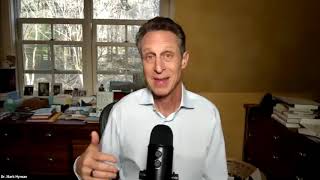
Dr. Mark Hyman and functional medicine experts discuss nutrition, immune support, and lifestyle changes to reduce COVID-19 risk. They cover diet, microbiome health, stress management, and how chronic disease affects outcomes.
Trying to make sure everyone's got their phones turned off.
All right. Hey, everybody. This is Dr. Mark Hyman. I'm the guy in the top right, I think. And welcome to our webinar on a functional medicine approach to coronavirus and COVID-19. I'm so happy that you're all listening with me, and we're gonna have a good time, even though it's a tough subject. We've got an extraordinary panel of experts and doctors here who I've known for decades and who are all my colleagues at the Ultra Wellness Center and have been working on the front lines of chronic disease for decades and teaching people how to create health using the principles of functional medicine. And we're all today coming to you live from our own respective socially isolated homes, but all colleagues at the Ultra Wellness Center which is in Lenox, Massachusetts. You have Dr. George Papapetrou next to me on the top. Hi, George.
Hi, Mark. How are you today?
And George is an incredible physician. He's recently joined our team, but he's an experienced physician. He's been doing functional medicine for a long time and is just an extraordinary doctor who has helped so many of our patients to recover from so much chronic illness. We have Dr. Elizabeth Boham right under George, who's a physician, has been my colleague at the Ultra Wellness Center for, gosh, nearly 15 years now. Along with Todd, Dr. Todd Lappe, who's.
Also.
Been with me for decades. We actually started working together at Canyon Ranch 1990s, right? Long time ago.
Many moons ago.
He was already into functional medicine. He's a brilliant doctor, as well as Liz, who's a nutritionist and an exercise physiologist. They both are teachers in functional medicine around the world. You've probably seen them at conferences. They're contributing greatly to the field. And I'm so happy to be able to actually get on with all of them to be able to answer your questions and have a conversation about a coronavirus and COVID-19, which is a disease caused by the SARS-CoV-2. COVID-2 virus. So, as you can imagine, this is a tough time for everybody. And I think healthcare providers are, you know, on the front lines and they're our biggest heroes today. And, you know, we are not on the front lines in the acute treatment as many of our colleagues are. But what we'd like to do today is to take you through an understanding of where we're at with this pandemic, what you should know about how to protect yourself and your families, and what you can do to contribute to the solution of getting over this pandemic with the least amount of suffering, the least amount of hospitalizations, the least amount of deaths, and do it in a way that is good for you, your family, and also everybody in the country. Because we're we're all in this together, even though we're all socially isolated or distanced, we don't have to be socially isolated. And we have to understand that the collective action working together is what it's going to take to solve. Some of that means taking more care of ourselves because the healthier we are, the less likely we are to get sick, the less likely we are if we do get sick to get very sick and need hospitalization and far less likely to die. I think I want to share a few statistics about where we're at today. Every day, it's kind of terrifying. You see this exponential rise of cases in the United States. Today, we are seeing increasing actual rates of of spread and death, even with the social distancing. And that's because we got far behind the eight ball on this. South Korea was very early. They had their first case the same time we did, but they got very early in the game focused on extensive testing, case tracking and isolation of contacts and cases in an aggressive way that led them to really what we call flatten the curve. So there wasn't this explosion of cases. I looked at the numbers yesterday. We had about 174,000 cases. They had 9,700 cases and they started with the same case load on the same day as we did in January. So I think that speaks to the effectiveness of some of their strategies, which we didn't employ, unfortunately. So we're playing catch up and this is going to spread. And I think what most people, need to understand is that there's some sobering facts we have to address in order to deal with this. And the real sad truth about this is it's going to get worse before it gets better. In order for us to deal with it, we have to take care of our own selves and our own health because if we do, we're going to put a burden on the healthcare system, which is already buckling under the load of the cases in the hospitals and the ICUs. Now, there's a bit of a silver lining here because what we now know about the people who would get really sick is that they are unhealthy. They're more likely to be suffering from a chronic disease such as heart disease, type 2 diabetes, cancer and so forth. Six out of 10 Americans have a chronic disease. They may be up to 10 times more likely to die from COVID-19 than someone who doesn't have a chronic disease. But the problem is in America that there's only 12% of Americans, 12% who are metabolically healthy. That means 88% of us are metabolically unhealthy to some degree or another. One in two of us has type 2 diabetes or prediabetes. 75% are overweight and 42% are obese. Now, why do I say that? Because when we look at the people who in this country are suffering, it's not just the elderly. It's not just those who are over 65 with a chronic disease. It's the youth. In New York, about 40% of the hospitalizations are of those between 20 and 40 years old. and those people who are hospitalized in that age group tend to be the ones who are obese. If you're obese, you're about three times more likely to die from COVID-19. So it's really important to understand that we can play a role in our own health and reducing our risk by taking care of our health. So while it's kind of a horrible finding, it's something we have to really understand that we can focus on and we can, and we see, for example, in in our clinic at the Ultra Wellness Center and of course in our work at Cleveland Clinic that focusing on these lifestyle changes, by focusing on food as medicine, by focusing on how we create health, that we can see rapid changes in these chronic diseases, that we can see rapid changes in weight. And there was a patient I've shared about a little bit before, but she was 66 years old, she had type 2 diabetes on insulin, She was suffering from heart failure. Her kidneys were failing. Her liver was failing. She had high blood pressure. She was on a pile of medication. In three days of changing her diet and using an anti-inflammatory diet, much like the kind we're going to hear about today, she was able to get off of her insulin in three days. She was able to get off all her medications in three months. She reversed her heart failure, which doesn't happen. She reversed her kidneys failing, which doesn't happen in traditional medicine. she reversed her high blood pressure and got off all medications in three months and lost 43 pounds and then went on to lose 125 pounds. So we know that the power of food is so great. The power of lifestyle is so great. We want to focus on is how can we help you double down on self-care, not just for you personally, but as a collective civic responsibility that we all have to contribute to the solution.
So.
There are five things that we're going to focus on, or seven things we're going to focus on in this webinar. And by the way, for people watching and they can't get the link or can't register, they can share with their friends and their family. They can go to drhyman.com/webinar and they can share that link and it'll take them right to the live webinar. so we're going to just talk today about how you can protect your health, your family and your community, how you can eat to boost your metabolism, how you can focus on lifestyle interventions that are immune, what supplements you should take to help boost your own immune system and support your health. What are the treatments out there that people are using talking about? What about vaccines? How do you deal with food cravings and addiction and sugar? Because that's a big factor. We know that sugar plays a big suppressing immune function. Then how do you access healthcare providers who can guide you in this? How can we offer you telemedicine and functional medicine care? We'll share a bit about how we do that at the Ultra Wellness Center. I think this is going to be a long haul. It's not going to be over quick, but there are about five things that are going to make this go better if we all focus in on it. One is each of us optimizing our own health, especially our metabolic health, because that'll make us less likely to get sick, less likely to hospitalization if we do get sick, and less likely if we get hospitalized to need ICU care and less likely to die. So it's good for us, but it's also good for the whole system. The next thing is really important is we really are going to have to continue to do social distancing. It's really uncomfortable. It's not super fun, but it's a sad reality. This is not going to be over soon. It's not going to be over. It will probably continue for 12 to 18 months in some form or another as Asia is letting up on some of the restrictions they're seeing a resurgence of cases. So this is going to be something we're going to have to figure out how to manage for the next while. the next thing that's going to happen is herd immunity. Now it's estimated that 40 to 70% of us are going to get this. About 80% mild or no symptoms, 20% will need hospitalization, and about 5% will need ICU care and about 1% or so are likely to die. And depending on the populations, it can be more or less if you're chronically ill and so forth. So we need to develop this what we call herd immunity, which when enough of the population gets the infection and becomes immune to it, it doesn't spread as much. And then hopefully, well, the fourth thing is we'll get a vaccine, but it's gonna be probably 18 months off. And then lastly, this may happen sooner, and we're gonna talk about exciting developments in treatment. What are the treatments that are gonna be available, both conventional and unconventional? So with that overview, you know, nobody's had to face anything like this in our lifetimes, but, With that overview, I just sort of want to emphasize how important it is for each of us to take care of ourselves because there's two parts to getting an infection. One is the microbe, which is virus, and the other is the host. Now we can't control the virus, but we can control the host, which is us, the terrain in which the virus lands. if it lands in inhospitable terrain, that's a good thing. If we're susceptible, that's a bad thing. And we're going to teach you in this webinar how to bolster your own defenses, how to optimize your health so you're less likely to get sick, less likely to get seriously sick. If you do get sick, less in your hospitalization and less likely to die. And I think that's going to be a good thing for all of us. So I want to start by first asking, and we'll have a little time for Q&A and, but I want to emphasize the importance of nutrition. And Dr. Elizabeth Boham is a physician, but she's also a registered dietitian. She's also a faculty of the Institute for Functional Medicine, has been instrumental in developing a lot of the courses in curriculum for nutrition for doctors and health professionals around the world. So Liz, I'd love you to share a little bit about what we know about food as medicine and food in particular around how we can use it to bolster our immune system and what things we should be focused on. What are the kinds of special medicinal foods we should really be focusing on?
Yeah. Oh, thank you, Mark. It's so great to be with you and to be with everyone out there. Thanks for having and putting this all together. And I love talking about food and the immune system and how we can use food as medicine to build a better immune system. And there's so much we can do. I mean, there's so much we can do. I think that what we, I also find that this time, people are saying, like you said, this is a time to take care of myself. And a lot of people are getting motivated. I was just talking to a patient just last week, and she's always struggled with sugar. and sugar addiction and having a hard time changing her diet and staying on that new, better eating plan. And she said to me, you know what? Now I feel really motivated because I recognize how important this is for my health and how important this is for my immune system and also for not spreading this to other people, how important it is for me to start to adapt and really stick with these recommendations you've been making. And so I think this can be a really motivating time for a lot of people to say, okay, Now it's time for me to really implement some of these things I've been wanting to do. I've been wanting to start cooking more. I've been wanting to start get rid of the sugar. Because we know it makes a huge difference. You know, when you look at the immune system, we know malnutrition is one of the leading causes of immune deficiency and death because of immune illnesses and infections worldwide. We know issues with zinc, vitamin A, iron, vitamin C. That is such important nutrients for the immune system. And people think, oh, yeah, that's a problem in developing countries. And here in the US, we are fine. But we know that's really not the case. And unfortunately, I think we've gotten a little lazy with our nutrition. And we've become so reliant on processed and refined foods. We're seeing more and more people, like you mentioned, that are getting deficient in a lot of nutrients. We know 40% or more of Americans are not getting the recommended dietary intake, which is just a minimal amount of zinc and vitamin A and vitamin C. And those are critical nutrients for the immune system to work properly. We know those nutrients help the innate immune system, right? That part of the immune system that is really important for fighting off new and new viruses that your body sees. So I think that's really, really important that we recognize that a lot of us are not getting enough even in this country. And as you mentioned, obesity malnutrition is a real thing. In our head, we think malnutrition and we think of somebody who's really underweight, but we know that there can be a lot of malnutrition in people who are overweight as well. So the first thing we recommend, and you even mentioned this, Mark, right, was getting off of the sugar and refined and processed foods.
Right?
Getting off of those things that are going to spike your blood sugar because we know that the immune system doesn't work as well when the blood sugar is high. You know, I think back to when I was working in the ICU and when you're working, you know, you're working in the ICU and you've got somebody on TPN and one of the main.
Things that we're-- Liz, what's TPN?
Ah, thank you. It's total parental nutrition, so it's IV nutrition. So if somebody is on a ventilator and they can't eat, you know, they're going to be getting nutrition through their IV. And what we're taught is one of the most important things for helping your patient in that setting is to keep their blood sugar balanced to make sure it doesn't go up too high. Because the immune system doesn't work as well. So patients aren't going to survive as well. They're not going to get better as well if their blood sugar is too high. So that's important for us as well. So one of the things I work with all my patients with is saying, okay, let's not let that blood sugar spike. because we know that your immune system won't work as well when your blood sugar is spiking. So the foods that cause that blood sugar to spike, right, are the refined and processed carbohydrates, these foods with added sugar in it, the processed foods. So this is a time to not go and grab that muffin or bagel or cookie, even though you might want to, or that soda or coffee drink, because all those added sugars are not doing your immune system any bit of good. So you wanna be focusing on avoiding those refined and processed foods and making sure that at every meal you've got some good protein source. We know protein's really important for the functioning of the immune system. Protein is critical in that situation. And a lot of high protein foods are also naturally rich in zinc. And we've heard so much about how zinc is really important for all those functionings of the immune system to work really well. So, you know, we always hear about oysters, right? Oysters are one of the most nutrient dense sources of zinc that we have. So per calorie, it's got one of the highest amounts of zinc, but lots of foods are rich in zinc. So a lot of our seafood, all of our animal protein, nuts and seeds, beans and legumes are all good sources of zinc. And you want to have some good source of protein with zinc at every meal of the day. You want, of course, of course be focusing on those vitamin C rich foods. Those are all of the citrus, right, but also the green leafy vegetables like spinach. And we know broccoli is rich in vitamin C and we know that kiwis are really rich in vitamin C. So all of your plant foods. We know that plant foods are also contain a lot of really magical components in them. Those are those phytonutrients. Those are the components in your plant foods that actually to help the plant survive in nature. But we're learning that these phytonutrients also help our body and they have a lot of antibacterial, antiviral properties in them as well. So reaching for, you know, getting those eight to 10 servings of plant foods, which are your vegetables, fruits, spices, and herbs, every day, teas, coffees, really those have a lot of really good benefits for us. so really try to get a much a lot of different fruits, vegetables, plant foods in your diet. One of the things we see, we do see some deficiencies in things like vitamin A that can cause an impact and worsen the immune system. And you know, not you think, well, if you're getting, you know, could I be low in vitamin A? You know, again, you wanted those, The vitamin A rich foods would be your animal proteins, eggs, fish.
Liver.
Hmm?
Liver.
Liver, exactly. Liver is really high in vitamin A. And that does help the immune system as well. So there's so much we can do every day. And this is a great time, like you were mentioning, Mark, to say, okay, I'm gonna try some new recipes. I'm gonna try some new foods. I'm gonna incorporate more and different vegetables and plant foods into my diet. We do see some zinc deficiencies, right? We do see it more so in the elderly, actually. I think that as we get older, can't eat as many calories, and sometimes they're not eating as many high protein foods, and they're not absorbing their zinc as well. So we sometimes will start to see some low zinc, and there's been some research showing that Sometimes if we give the elderly population a multivitamin or a zinc supplement, that they can improve their immune function. So that's something to think about as well. And then vegetarian and vegan patients, we sometimes will see some low zinc that you can get zinc from vegetable foods. We talked about the beans and legumes and nuts and seeds being good sources of zinc, but not quite as easily absorbed as the animal proteins. So they just have to work a little bit harder there. And then one of the things we think a lot about, oh, sorry, Mark.
No, go ahead. I was going to ask you a question, but go ahead.
I was just going to say one of the things we see a lot about, because we take a really detailed history of our patients and look at how all the different systems in the body are impacting each other and influencing each other. And we know that when the digestive system isn't working as well for whatever reason, sometimes people are not absorbing all of the nutrients that they need to absorb. They're not absorbing their zinc as well, or they're not absorbing their iron as well. That's something we really pay attention to. That's some of the other times we'll see some deficiencies. Sorry, I'm going to cut you off there.
No, no, I think that's really great. Just to underscore what Liz said, and then I want to ask another question is, the getting rid of processed foods, and starch and sugar, we can't emphasize enough because reading a paper this morning that in a host related way, your sugar, your blood sugar increases the viral infection. So, if you want to feed the virus, eat sugar, which you don't want to do. So, we have a program that we've used it for years called the 10-day which you can find at getpharmacy.com and learn how to actually detox some sugar and eat an anti-inflammatory diet. It's really important. And I think people should really take this opportunity to pause on what their normal habits are. There's a tendency to think, oh, well, it's a tough time. I'm going to go for comfort foods. I'm going to have cookies and cakes and don't do that. It's the worst time possibly in the world to do that. In fact, it's time to double down on your health. It's time to get back in the kitchen, learn how to cook. There's lots of resources. And by the way, for everybody listening, if you go to DrHyman.com/C19, that's like COVID-19, C19, we've written an entire blog which outlines all the things we're talking about in here, the lifestyle recommendations, the nutritional recommendations, the supplements, what the treatments are. So you'll get a really robust view. and links to everything you're going to need. So, Liz, I want to also, before we go on to the next topic, I want you to talk about the need to supercharge your microbiome during this time and the role the microbiome has in our health and especially what prebiotic and probiotic foods we should be eating so that we actually make the most of our home to fix our gut and bolster our immune system.
Yeah, you know, that's a great question, Mark. You know, we know that our microbiome, right? Those are all the good bugs. that line our skin, our nasal passageway, our digestive system, that that microbiome is a really important part of our immune system. So we know that when we have the right amount of good bacteria that they actually fight off viruses and other bacteria preventing them from getting into our body. You know, we've all seen this as physicians, somebody goes on an antibiotic, which kills off some of, you know, kills off the infection that they were getting the antibiotic for, but it also can kill off some of the good bacteria. And then we'll often see this another infection right afterwards. Then they'll get that viral infection or the flu afterwards. One of the reasons that happens is because the antibiotic gets rid of some of that good bacteria and it opens up our immune system to getting sick again. So So the good bacteria is really critical to keep healthy, right? We want to have a lot of good bacteria in our nasal passageways and in our skin. It's a really important part of the immune system. A lot of very interesting research here looking at probiotics and risk for all sorts of different infections, you know, sepsis in newborns, colds and flus, ear infections, very interesting research. So what can you do to protect your microbiome? I think, you know, avoiding antibiotics if you don't need them, of course, and then from a food perspective, we know fiber feeds the good bacteria. Fiber is food for those probiotics in the body. So really high fiber foods, ground flaxseed, your nuts and seeds, chia seeds, whole grains, those things feed that good bacteria, all your vegetables.
And there's specific foods, right? Things like dandelion greens and garlic and onions and asparagus and artichokes and hiccup, seaweed, and like you said, flax seeds. These are things we can start cooking with and include these in our diet. So it's actually a fun chance to start cooking, exploring new ingredients, and thinking about how when you're cooking, you're actually feeding yourself medicine that's gonna bolster your health and your immune system.
Yep, absolutely.
Absolutely. And on the probiotic foods, what are the common probiotic foods?
Those are just like your fermented foods. You've got kimchi and sauerkraut.
And.
Miso.
That was trying to get that one out. You know, lots of great foods, pickles, that can really help increase yogurts, you know, that can help increase the good bacteria in the body.
Yeah, and on the website link we have for this card, drhyman.com/c19, there's a list of what are the immune boosting spice herbs, what are the phytochemicals we should be focused on, the specific ones that seem to be antiviral, things like quercetin, camphorol, catechins, acid, aspergine, all these things are the food and you can get them from eating things like olives, oranges, and broccoli and cabbage and, you know, all these different foods that we can include. So all the resources are going to be there for you so you don't remember everything that Liz said. So I really think this is important. And of course, there's the chicken soup my mother made and there's a recipe on there for that because there is actually data on the immune boosting properties of chicken soup. And I have an upgraded chicken soup recipe which I put on there for you. There's a little twist on my mom's Jewish chicken soup.
Jewish penicillin, right.
That's right, Jewish penicillin. All right, so thank you, Liz. We have a lot of questions. We're gonna get to those as we go through this. I wanna cover the basis first. The next is, immune boosting lifestyle interventions. So, George, can you take us through the role of various lifestyle interventions and how they play a role in our immune system and how we need to pay specific attention to them in this time? Sure.
Yeah, and this is a very difficult time and for many of none of us predicted that we'd be here and the disruption in our lifestyles. is being felt by everybody. One of the things I think about that in all the social distancing is that we're actually closer than we've ever been. And we're doing it by using these tools, these IT tools, these online tools, Zoom. I've actually spent more time talking to old friends. I've made it a commitment to myself to call three people every day. and some people I haven't heard for a long time. That's actually one of the important lifestyle things that we need to do. We need to have good, healthy relationships. But there's an interconnectedness that we have as humans as we relate to one another that we share two other places. There's an interconnectedness of all of our systems in our body. They all interact, they all depend on one another. and we need to pay attention to the wholeness of the organism. And when we pay attention to lifestyle, we're going to be able to nurture all of our systems and keep that harmony and that balance between them. The other place that we share interconnectedness is with our environment. Our world is a living organism. And part of the reason why we may have, and there's some theories about this, that we may have, the issues we have with viruses, is the human impact on habitat and how that puts the other animals under a huge amount of stress. What does stress do to the immune system? I'm going to talk about that in a second. It does the same thing to us as it does to animals. It reduces their ability to fight off infection and virus. And then these viruses have a chance to flood populations. And then when the opportunity is right, we can have this zoonotic transfer of virus to humans. So we have to remember, as a whole living organism of the world that is now connected by this pandemic, that we're here for a reason. And I hope in the post-COVID world, we understand that and we start to do things differently in our environment. and the way we as humans interact with that environment. So now that I've talked about interconnectedness on a global level and I've talked about it on an internal level, what can we do personally to improve our health? And I'd like to go first to relationship. It's really important to have good relationship. And we're now social distancing. And I think being apart from people, I know I miss my buddies. I miss Mark and I miss Todd and I miss Liz. and I miss all the other staff at the Ultra Wellness Center. And I feel it. When you don't have good relationship, it can impact you short term and long term. When we did our Broken Brain series, I remember that it was 10 hours of really deep science and some of the brightest minds in neurobiology when they were asked, what are the top five things we can do? to improve our brains and age them well in that top five was having good relationships. It may have been for some of them, it was the number one thing. You have to have we are relational people. So during this time in a safe, social distancing manner, try to make sure that you Keep your relationships healthy. Everybody's in a house together.
You're going to start to- George, what you're saying is love is medicine.
Love is medicine, brother. Love is medicine. Yeah. And we need, and this is an opportunity to learn how to love each other more because we don't have, you know, I have all my kids home from college and, you know, believe me, you know, I have to practice love. But I'll tell you, it's changing everybody and there's a lot more peace in our home. when we focus on caring for ourselves and the people around us that are in greater need. So relationship, and one of the best things you can do for relationship is help other people. And this is a great time to find ways to reach out to your neighbors in your Community and to help where you can. And that will peace to your soul as well.
George, can you, can you dive in a little bit of some of the practical things around exercise, sleep and meditation? the role that it plays in our immune system? Sure.
So one of the things that I talked about is stress. And when you're under stress, it can really have an impact on your immune system. It can reduce the number of white blood cells that are able to fight infection, and we certainly don't want that. So what do we do to limit our stress? Meditation. So meditation has been proven to boost the immune system. It has been proven to improve our overall health by the benefits it has on our brain, the benefits it has.
On.
Our ability to get good sleep, And so when you get good sleep, you're able to boost your immune system. Some of the things that we know is that if you're under stress, it increases your susceptibility to virus. There was a study that showed that when volunteers were injected in their nasal passages of the virus, only the ones who scored high on the stress questionnaire actually succumbed to the virus. So this is a time that you can learn to do some meditation. Meditation will not only play a benefit now in boosting your immune system, but it will also play benefit for you, particularly with your brain as you age. One of the other things that we focus on, when people come to our practice, I will tell you-- I don't.
Want to interrupt for a sec. So just for those joining now, I just want to introduce everybody again, because people might not know who I'm talking to. This is my all-star team of doctors. We've got George Papamichael on top next to me. He's an incredible physician, part of the Ultra Wellness Center team. That's with Boham and Dr. Todd Lepine. All of us have been working together for a long time, many decades. And I think we probably got more collective experience in functional medicine with complex, difficult patients any place in the world. We've been doing this for a long time. and we're all fact teachers of this incredible system of thinking about how we create health using functional medicine. So, I just thought for people just joining, they might not know who we all are. I'm like, who's that guy over there?
Right.
Yeah.
So, well, welcome everybody who just got on. So, I was just finishing up on meditation and yoga and just really taking the time to relax is very helpful. and you can do that by yoga, you can do it with meditation, you can do it simple deep breathing, you can do it with hot baths, and you can do it with massage. And this is a good opportunity to do that during our isolation periods of time. So when people come to the UltraWellness Center, they come with really complex disorders oftentimes. And we have this thing we call the matrix, and we use that matrix to look at all the problems. But at the bottom of the matrix, at least in my mind as I create it, are all the lifestyle practices that they have. And for all the interventions that we have at our disposal, the most powerful ones are the lifestyle interventions. So I've already talked about meditation and yoga and I talked, you know, and having relationship. They're really important. And I often tell my patients, if we can't get your lifestyle in order, then all the other interventions I do are going to be handicapped. And we're going to have a really hard time getting you where you need to be. So moving on, I want you to understand these are really important. So when I just say like it's important to exercise, yes, it's important to exercise. Mild to moderate exercise, 40 to 45 minutes, a day will boost your immune system. But if you overexert, then you're going to decrease your immune system. So be careful to balance it carefully. So if you do go outside to exercise, you can do it safely. You just need to make sure you stay six feet apart from other people and you should be safe doing that. The other area that is very important is focusing on sleep. Sleep is really critical. Again, it speaks to what happens when you sleep. It allows your body to recover. It allows your body to remove toxins, particularly in your brain. You have a glymphatic system that needs to remove all the toxins. So if you're not sleeping well, then you're definitely going to have difficulties with maintaining mental clarity, maintaining your overall health, and it will also make it harder for you to handle stress of daily life, which is really important to limit. So great, children. Yeah, and I know that these things sound like the everyday typical things, but we work really hard with our patients to improve those areas. The last thing I wanted to mention is that it is springtime and gardening can be a wonderful thing. And I know I started gardening two years ago and it was something that has really changed our lives. And some people say therapy is when therapy is too expensive.
Garden.
Then garden and you'll get tomatoes with it. So gardening puts you out in the sunlight where you'll get lots of vitamin D which is a definite booster for your immune system. You'll get physical activity, which we already talked about, will definitely improve your immune system. You'll be working in the soil, you'll be working and moving, and actually working with your hands in the soil, there are some studies that show that that reduces stress and can improve, and when you reduce stress, you're also going to improve your immune system.
It also fixes your microbiome, right? So you play with dirt and you.
Get- I don't know what. Dirt and live.
Yeah, you know, by the time we're three years old, most of us have eaten about a pound and a half of dirt. So as an adult, you can just play in it. You're done eating it. So these are some things that you can start to employ. This is a really good time. And this will be my last comment on these. These are lifestyle habits. Habits can be very hard. And now that a lot of us are at home, and we, this is a time to reestablish ritual and habit. When we do that, we can hopefully take these, you know, once this is all over into our future life to live healthier, but it also will bring us a benefit now. It will, yeah. And disciplines help bring calm and stability. And certainly during this pandemic, we're all looking for a little of that.
Well, thank you, George. That's great. I just underscore the importance of these things. These are all medicines. Exercise is medicine, sleep is medicine, relationships are medicine when they can be. And, and, and, and so, and, and so we have to really double down on these because they will all help our immune system. Things like meditation is medicine, yoga is medicine. These are, these aren't just sort of, sort of trite sayings. They literally act as biological forces in your body to support your health and particularly your immune system. So this is now more than ever a time, particularly when we're all struggling. And in the links in the blog with this webinar, DrHyman.com/c19 and you could try capital or small letter, I think it should work 19. There's links to methods for meditation, there's strategies for links to exercise programs, strategies for sleeping better. So there's all these resources that we provided for you to help you actually implement the things we're talking about. So thank you so much, George. Now, Todd, I'd like to kind of move on to you and have you talk a little bit more about some of the role of supplements. And I think there's so much controversy. I'm seeing so many questions here. People want to know doses, people asking about vitamin D and the ACE2 inhibitors. And so there's so many different questions. the truth is, in my view, you know, we don't really know that much about COVID-19 period, but we do know about nutrition. We do know about the role of these nutrients in overall immunity. We know about their role in other viral infections. We know about their role in other SARS infections like SARS-CoV-1, which was another SARS infection and influenza. So, so we can, I try to extrapolate and, and anything, Todd, I'd love you to dig into what are the top recommendations that people should be focused on? And then what is sort of the second tier? Want to really amp up or if you're sick, what can you do? Can you go through that with us?
Sure. I would love to do that, Mark. I also put together some slides. I can do a share screen. I can sort of show everybody my perspective on the COVID virus and why you know, people are on this webinar because they're afraid. And what I'm going to hopefully do is show people what is the virus? What does it do that causes such problems in some people, particularly as you mentioned, people that are overweight, people that have other multiple illnesses. But the interesting thing about the virus is the virus by itself is really not that bad, especially in younger people. and people who are healthy. I want to get an overview to show everybody why that is and how we can modulate our immune system. Not so much that we have a stronger immune system, but I would call it a more intelligent immune system. Let me just go ahead. I'm going to do a share screen. I'm just going to go through a few slides. I want to highlight from a sort of a bird's eye view. Let's see here. Okay. All right.
So.
Basically, this is taken from a paper called Into the Eye of the Cytokine Storm. And the thing that kills people in a COVID infection is what's called a cytokine storm, where these molecules that are in our bodies sort of take over and destroy all of the tissue. And it's not really the virus itself that causes the problem, it's our immune response to the virus. And there's an analogy that viruses, they'll break into your house, they eat your food, they use your furniture, they have 10,000 babies, and then they leave the place trashed. That's really what we're having when people are having adult respiratory distress syndrome. And not everybody gets that, but only particular individuals. And the big question is, what's going on in those individuals? that's causing that problem. Just like when you have a tornado, you have the eye of the storm where it's really quiet. What happens with the COVID is that there's a certain period of time when it's sitting in your body and it's silent. That happens for two to four weeks, and that's when you can spread it to other people who are more vulnerable to the infection. There is definitely an eye of the storm when it comes to COVID. This is a paper of I'll put some links later if people want to read it. Excellent paper talking about how the cytokine storm is this massive deluge of cytokines. Cytokines are these chemicals which can be either pro-inflammatory or anti-inflammatory. It's really how the unique person's immune system is responding to this virus. Again, the virus is not alive. basically are on the fence between chemistry and life. A virus needs a host, as you've talked about earlier, if the host environment is not a healthy environment, then it will sort of take over and trash the place. What we want to have is really a healthy environment where we're not going to be trashed. Liz brought up the great aspect of nutrients and how nutrients play such an important role, specifically vitamins A, C, E, the B vitamins, zinc, selenium. And these are what we call trace minerals. And what we need to realize is that in today's world, diet alone may be insufficient for having these micronutrients in our diet, and it may also be related to age. And sometimes just taking a good multiple vitamin, multiple mineral can play a huge benefit in patients' overall immune system.
That'S right.
Yeah. One other thing, as I, as I sit here, I'm drinking my nettle tea. Stinging nettles is a fantastic way of modulating the immune system. There's. Let me go back there. There's a variety of different papers that talk about how stinging nettles reduce that inflammatory cytokines. If people have allergies, we use this oftentimes in our practice. We combine this with quercetin, and this helps to calm down the immune inflammatory response, especially, uh, as it comes to, uh. conditions like viral infections or allergies. And then one other thing in terms of supplements is, and Mark, you probably have used that. I think everybody in our practice has some of these new compounds. There's no literature on this in COVID, but I've had some incredible success using the SPM or specialized pro-resolving mediators. These are compounds which are actually metabolites of the omega-3 fatty acids, which we find cold water fish, and there are various supplement companies that make these. And these potentially can play a huge role in helping to down regulate a systemic inflammation as it comes to the inflammatory response or over inflammatory response to the COVID virus. And then you mentioned it, Mark, about vitamin D and there's this talk out there that the COVID virus needs the H2 receptors in the lungs to attach to the lungs. and that's true, well and good, and people are concerned about vitamin D and should you be taking vitamin D or not taking vitamin D with the COVID infection. But my point is that it's not the virus that kills you, it's your immune response or your immune over response with the cytokine storm that's really causing some of the damage. And multiple studies have shown the benefits of vitamin D in multiple viral infections, bacterial infections, at down regulating the immune system and keeping things calm, especially when it comes to respiratory viruses. And always remember, vitamin D is the sunshine vitamin. Way back when we used to treat tuberculosis by putting people out in sanitariums and putting them out in the sun. So low vitamin D level is really more of a biomarker of sunshine deficiency. So even though we're all in social isolation as they're spring, get yourself outside, expose yourself to the sun. And then vitamin D also helps with suppression of the hyperinflammatory responses, which may be beneficial in preventing immunopathology as it relates to infections like the COVID infection. Again, I invite you to- Can I.
Interrupt you for a sec? Because I think there's some people listening who are hearing that vitamin D should not be taken with COVID-19. and it's based in one particular action of vitamin D, and there are literally thousands of actions of vitamin D in the body. They are very complex, and it has to do with this receptor called ACE2 that the COVID virus actually uses to get into the cell. And vitamin D theoretically could upregulate this receptor, making it easier for the virus to get in the cell. this has not been proven, and it contradicts all sorts of other research on the benefits of vitamin D in viral infections, in immunity, and even an interventional trial that I saw in China where they used 10,000 units of vitamin D plus intravenous vitamin C and saw rapid resolution of patients who are severely ill with COVID-19. So I think there's a lot of noise out there, and unfortunately, A lot of it's not true. And I think, thank you, Todd, for clarifying that.
Yeah, you hit the nail on the head, Mark. It's absolutely true. And then this is a really interesting slide. There's a website to where this information was taken. What you look at here, I think there's actually, right now, there actually has been one fatality of an infant, but basically children who are nine and under, there have been no fatalities recorded. and then as you see, as you get older, there's more and more potential fatalities by the COVID virus. That begs, in my opinion, when I always see this, basically what you have here is you have children who are outliers. Remember, actually all of you probably have plenty of time, so tonight go to your Netflix and watch the Andromeda Strain. If you remember the Andromeda Strain, do you remember how they actually solved the problem? Because there were two people or two individuals that they made an observation that survived. One was the alcoholic with the sterno, and the other one was the infant. And it was related to oxygen and the virus was actually killed by oxygen. And that's how you can sort of see it. So this sort of begs the question, you know, what is it about infants or young kids that really makes the difference here? This next slide actually shows a potential for one of the potential mechanisms is melatonin is very, very high in youngsters. Always remember, melatonin is the hormone of darkness. Our bodies secrete melatonin in darkness. Most of us nowadays, what do we do at nighttime? We're on the TV, we're on the computer, we're on our iPhones or iPads. and that light from artificial light suppresses melatonin. One of the things in addition to what George was talking about in Mark is getting good sleep, but also make sure you're not exposing yourself to light at night because that's going to suppress your melatonin. If you have low melatonin, it's probably not going to hurt you, but taking some melatonin potentially can have a benefit with the immune system and also as an antioxidant. Then I'll just briefly mention, because at the Ultra Wellness Center, we actually have some other therapies that we use, including peptide therapy, and there's specific peptides. This one in particular, I think is actually some pretty good literature on this. This also ties back in with the young infants is the one thing that distinguishes the young people from the older people is the function of the thymus gland. The thymus gland sits right below your thyroid gland. And as we get older, the thymus gland sort of involutes, it gets smaller, gets filled up with fat, and it doesn't work as well. And this particular peptide, based upon my reading of the literature, is one of the potential very useful tools at modulating the immune system in infections such as COVID. This is a slide which I just put together on the easy immune hacks. And George pretty much went over this, which is getting good deep restorative sleep, focusing on meditation, whole food, nutrition, exercise, limiting alcohol, hydrating, and then the vitamins, which Liz alluded to, vitamins A, C, and D, and then we also put in vitamin L, which is vitamin love or social connections with your friends and family, zinc, and then other phytochemicals, things like quercetin and elderberry. I always make the joke that elderberries are berries for the elderly. Elderberry is one of those compounds which has been used for a long, long time that can help with modulation of the immune system and help to fight off viral infections. And then which are the beneficial bacteria, when we're eating those fibrous foods, garlic, onions, leeks, flax, etc., we're feeding those beneficial bacteria in the gut, and that's the way to really hack your gut immune system.
Them.
And then lastly, I will sort of end right here is you want to be like this little piggy. And for those who don't get this, because some people, I've shown this to some people and some people don't get it. Remember when you were a little kid and your mom or dad took your toes and this little piggy went to the market and the second little piggy stayed home. So for the next month or so, we need to be staying home. So I'll go ahead and end there.
Thank you, Todd. That's fantastic. I think that, I really appreciate that. I think you answered a lot of questions people have. people expressed in the questions was, don't vitamins not get absorbed and just make expensive urine? And I always answer that is, why water? Because you're just urinating. So it's stupid to drink water because you're just going to pee it out. Well, your body takes what it needs and gets rid of what it doesn't need. So there's ample data that nutrients that you consume, if they're the right nutrients in the right forms in the right doses, do actually get absorbed, make a difference, impact your health. And we've been practicing at the UltraWellness Center, nutritional and functional medicine for decades, and we test, we look at their nutrient levels, we see people who are deficient, we replace those nutrients, we see them improve, we see their health. And it's not academic to us. We see this in our patients every single day. and again, you know, there are a lot of things that Todd talked about. It's a lot of it's in the, in the blog that accompanies this webinar, doctor@drhyman.com/c19, not COVID-19, but C19. Also in the blog, there's lists of exactly the doses people are wondering about the doses for multivitamin, what vitamin C, what vitamin D, what zinc, what quercetin, melatonin, what probiotic, what are the options out there for us? and we've made a list of those available. We go into detail about what they do and where to get the right ones because it's not necessarily just anything you can buy at a grocery store or at a pharmacy. These are pharmaceutical grade nutrients that have great impact and are able to actually optimize your health and your immune system. So that's really important. So thank you, Todd, for that. and I think the ideas about melatonin are fascinating. Vitamin D and vitamin C and zinc and a multi, you don't have to go crazy, but I think there's some basic stuff that we should all be taking at this point. And then I want to just take a couple of minutes to talk about some other things. Some functional medicine practitioners say, yeah, yeah, we all know that food and exercise and sleep and all this stuff is important, but it's important for people to understand these are immune modulating for people who aren't medical professionals. And for those of you who are, I want to talk for a few minutes about what we do know, some treatments. And there's traditional medicine treatments and there's also some innovations that are happening, which I personally believe are going to be, if we can study these, if we can scale these, to be an enormous weapon in our arsenal against COVID-19. I mean, better than anything else that I think is out there. So the things that are being discussed now are certain plaquenil or hydroxychloroquine, which is an old malaria drug, and azithromycin, which is an antibiotic when combined seem to have benefit and reduce bad outcomes. Again, they're very limited. We're very early. There's no large randomized trials. We're sort of guessing here based on mechanism, based on people trying stuff, everybody's trying everything because people are in the hospitals are sick, they're dying, so people are desperate. So I think it's something to think about, look at. We shouldn't be hoarding this stuff. We shouldn't be taking it as prevention. They do have side effects. There's a drug called Remdesivir, which is an antiviral drug that was used for Ebola. It wasn't approved, but you can get it for this as well. There's another interesting therapy people are talking about, which is convalescent plasma therapy. Now, one person asked, how do I know? I think I had it. I wasn't tested. How do I know if I had it? Well, very soon we're going to be offering antibody testing at the Ultra Wellness Center. We'll be able to offer it in April. There's tests around the country that are being introduced to look and see if you actually had it by measuring your immune response or your antibody levels. But what you can do and what they're doing is they're taking these people who've had COVID-19, they're taking their blood out, they're spinning it down, they're extracting the antibody. and then they're injecting them into people who are sick and seeing great improvements in their outcomes. Or for healthcare workers, for example, it's like passive immunity like breast milk, where you get your mother's antibodies, where you can inject it into a healthcare worker to give them immunity, a passive immunity against the virus for sure. So these are the kinds of things that are being done. And then there's drugs that are cytokine blocking drugs. Todd talked about these cytokine storms. which are really the thing that kills you. It's not the virus, it's your body's reaction to the virus. And there are drugs that block that. There are various kinds of immune modulating drugs that are out there. They're listed in the blog. Interferon B in Cuba, they developed Interferon B as a drug which can really calm down an out of control inflammatory response. Vaccines, again, they're coming, but who knows how effective they'll be. and it's going to be 18 months. I mean, I don't think it's going to be any sooner than that. And then there's some other therapies that people are talking about that are more used during the intervention to keep people alive. But what I'm really most excited about, and this is really want to spend a few minutes on, is two therapies. One is vitamin C intravenously, and the other is ozone. Intravenous vitamin C is something that was studied in China in response to the virus, and they and in early studies had really amazing results. It's actually something that's been studied in this country in sepsis or overwhelming infection in ICUs and is found to be effective. And now as of yesterday, there were four hospitals in America where they had protocols for using intravenous vitamin C and they're seeing significant benefit. I think this is going to be a therapy that is going to be very, very effective and help these patients who are acutely ill. And it also can be used as a as an immune support and then preventive. The last thing I want to talk about is ozone. And for those of you who are like ozone, what's ozone? That's like the ozone layer and what's all that? Well, you know, it's a gas. When the lightning strikes and you smell that smell, that fresh smell, that's ozone created by the power electricity into oxygen and creating O3. Now ozone is something that was recognized to be a potential medical therapy and Nikolai Tesla developed the first ozone generator. He was the guy who was behind a lot of these inventions. Tesla is named after him. And they use a lot more to deal with infections by putting ozone-infused gauze around the wounds to prevent the infections. It's very powerful against infections. I personally had experience with it. I almost died a few years ago and it saved my life. And it really, I was in a cytokine storm and it really stopped it for me. It's great with chronic illness like Lyme and other things and viral infections as well. The people who have been pushing this country went to Sierra Lone during Ebola and they actually used it there to help Ebola patients. And now in Italy, it's actually approved as a therapy for COVID-19. In the United States, it's not well recognized. The medical system completely ignores it, but I think it has a lot of potential if it's done safely and effectively. There can be ways of doing it that are intravenously, there's rectal ozone, so forth. But I'm very excited about this new data from Italy where they're showing rapid resolution. of COVID-19 using ozone and intravenous ozone. And so I think this is something we need to explore here. We need to study it. And I think this is the time to do it. There are very few other therapies other than just, you know, support for these patients. So if this could be helpful, I think this is the time to start looking at it. So that's my personal view. I don't think it's widely held. I think, you know, there is concern about risks, but. given the risk benefit ratio of what we know about it, I think it's positive. So I'd love to sort of open up a little bit of questions and share some of the things that I'm seeing and just throw it out to the panel here. You know, people are concerned about masks. Should we be wearing masks? Because one day we're hearing we don't need them and save them for the healthcare workers and the other next day we're hearing, well, maybe it's shedding virus in people who don't have symptoms. So everybody should be, you know, everybody should be actually doing a mask whenever they go out.
Mark, I was actually doing some reading on that research. And so there has been research on masks, and the, the research isn't strong research, and it's mixed, but shows a couple different things.
That.
The masks, the concern about masks is that they will lead to people touching themselves more often and we know that hand washing and not touching your nose or mouth or eyes are important. The concern is that the masks that we use in the public that are cloth masks will not protect people well. And studies show that they can be effective in protecting the person wearing the people, the person who wears the mask is going to have spit droplets. And if they don't have the disease or if they have the disease very automatic, wearing the mask will protect other people. The concern has been that handling the mask, you're going to breathe in droplets that if you don't handle it correctly, you're going to breathe in droplets that can give you COVID. Taking it on and off, you're going to forget to wash your hands, touch your face, the mask is already infected, and you're going to give yourself the COVID virus. When they looked at all the studies, what they found was is that if you wore a mask, you reduced your chances of a viral infection by 55%. If you just washed your hands with no mask, you reduced it by about 65%. If you had a mask and washed your hands and used universal precautions, you reduced your risk for a virus by 90%. So, given all the fears we have around people being more bold if they're wearing a mask or forgetting to do social distancing or washing hands, with as serious of a condition that this is, wearing a mask isn't going to, you know, does have some benefit if you're also washing your hands and doing everything else. So, there is an argument to be made for wearing a mask. they've done it in Taiwan and Korea, and it's mandated by the public health services. And those countries have been able to control their spread of COVID much better than we have in our country. So there is some evidence that wearing a mask can be beneficial. I think if you're out and about.
I think, you know, the trouble is that, that you, you are at risk of shedding if you're not aware and people can, like, if you go, I went to the grocery store today, you know, I don't know if I've got a latent Corona virus. Maybe I should have had a mask on. And I saw a lot of people having masks. I'm like, well, maybe I should have a mask. And I began to look into it. And I think, you know, the first, the first priority should be the protective, personal protective equipment for the healthcare providers. It's unconscionable that we don't have enough and that they're not protected. In China, there wasn't a single healthcare worker after the initial couple that got sick after because they had the right gear. We're seeing doctors and nurses go down. If they go down, our whole system is going down. So we should save it for them. But if there was enough to go around, I think when we go out and about, we probably should. I have a bunch of other questions. One, I was listening from Michelle. She said, I was diagnosed with a mild case of coronavirus. Once you get it, are you immune from getting it again? Good question. Anybody have an answer?
We don't really, I think, have the information yet. I mean, there are some labs that are working on testing for antibodies. So they're assuming that if the antibodies that you actually have documented antibodies that you probably have immunity. However, Iceland has actually shown that they've actually been 40 mutations of the coronavirus. Most of the mutations are probably not significant. so I would say that if you have had it and it's documented by antibodies, you probably are immune.
Yeah.
Yeah.
I was listening to a podcast today from expert virologist immunologist, and he said there has been some preliminary studies that show there is immunity and it may not be long lasting. We don't know how long it'll last. And, you know, part of the way we're going to get back on track here is if enough people get it and get immune to it and then go back to work. that's going to help. Somebody was asking about testing, you know, and I think there's been a lot of noise about testing. We were late to the game in testing. The CDC said they wanted to do all the testing. They rushed it. It wasn't very good. It slowed the whole process down. It finally went out to private labs to be able to develop these tests, and they're pretty accurate. Most of them are pretty accurate. we're having a little bit of a supply issue with the swabs and the reagents and the medium. But I think in an ideal world, everybody would get tested who was at risk or had symptoms. So suppose anybody who is sick, if you have any symptoms, testing is, I think, very important. And I think we can today rely on the reliability of the tests. because I think that's really something we should be thinking about. There are a few more questions. What's the difference between this influenza and a bacteria? And do the recommendations work for all that? Well, who wants to answer that?
Say the question again, Mark. What was it?
The question was, what's the difference between virus, influenza, a bacteria, and Does what we're saying work for everything?
Well, I do think that what we do to build a better immune system, right, by taking good self-care and using this time to say, okay, I'm going to make the right choices in terms of my diet, I'm going to get good sleep, I'm going to manage my stress and do stress reduction techniques, all of that is going to help improve the functioning of your immune system and help against viruses, help against influenza, help against bacterial infections. so I think it will help in all areas. And I just wanted to mention, in addition to the blog mark that you were talking about on the Ultra Wellness Center, on the Ultra Wellness Center website, we have our blog there. And there's a lot of great meditations you can follow along with that are nurses and meditation specialists and Patient coordinators have put together things that can help you manage your stress during this time, different ways, how do you do tapping and great resources just to help us all through this pretty stressful time. And it's a really great time, like everybody has said, to start to implement that and add it into your daily routine if you haven't been doing it yet.
Yeah.
And there's a few other interesting questions. One was, what about Aleve and Advil and what's the data on that? anybody want to take that one on?
From what my reading of the medical literature is there's a potential increase specifically for ibuprofen, so probably avoiding the NSAIDs. Not sure of the mechanism for that, but I would probably avoid the NSAIDs at the time. I always tell my patients, I mean, those things are given usually for pain or fever, and fever is actually a really good thing as long as your fever will do high and you don't get a seizure. I think fever helps the immune response. I've never been a fan for suppressing fever.
Yeah, I think that's right, Todd. I think we know that fever is how the body kills the bacteria. In fact, one of the treatments that's used in functional is hyperthermia for infections, but they heat you up to 107 degrees. I've had that done. Maybe that's why my brain's a little fried, I don't know. But actually, the other thing is that I looked at the data too, and it was a couple of case reports. It wasn't actually a very good study. And so I think people sort of jumped on this one article and it really wasn't that impressive. And I've heard Anthony Fauci, who's the number one guy in charge of this from a medical point of view at the saying, you know, there is no evidence that that's true. So I think, you know, you shouldn't probably take it because of fever. But that's not necessary. The other thing that I think we should be worried about is the sort of lack of taking seriously our own health. I think if we don't take this time to stop and use it, because we're all home, have more time. We're all able to cook. We have to cook. There's no restaurants open. You can't, well, maybe you can get delivery some places, but it's a time for us to actually double down. And I think, you know, really part of why we, we had this webinar was for, for you to understand the importance of these fundamental principles of functional medicine, of food is medicine and the lifestyle supports, the supplements that can be helpful. to understand the landscape a little bit about coronavirus and to take advantage of these things for your own health and your own well-being. And I think just to reiterate a couple of them, this is a great time to do a sugar detox. It's a great time to actually reset your body. And it's so powerful and it's so easy. And we put together a program to make it easier for you to do. You just go to getpharmacy.com/sugar .com with an F G E T F A R M A C Y dot com and you can get access to the program. You can read it, you can download the instructions free if you want the upgraded version, you can get it. Also, there's resources on the Dr. Hyman.com/c19 page, which goes along with this webinar for meditations, for exercise strategies, for sleep tips, for the supplements, for the doses, all the questions that people are asking. I can see the questions. There's a lot of questions. We have about 35,000 people listening this webinar, believe it or not. It's all in there. Also, for those of you who do have a chronic illness, who are struggling with their health, who haven't put the time in, who want extra help, at the Ultra Wellness Center, we have this extraordinary team. It's not just us. We have we have 30 people there, we have nutritionists, we have great nurses, we have health coaches, meditation teachers. And if you want to learn more about how to get started as a patient, and we have switched over to telemedicine. So we're doing all virtual visits now, and you can sign up as a virtual new patient, and all you have to do is go to ultrawellnesscenter.com and click on the get started link. Link is also in the blog. There's also a link in the blog. So you can actually go ahead and check the article that comes with the webinar at drhyman.com/c19 and you'll see near the bottom it says how to get started with a functional medicine practitioner. Just click on the get started link. It'll take you right to where you have to go. I just am telling you we're going to get flooded. We're going to get to everybody's inquiry. We're going to reach out to you and we'll figure out a solution we're going to be doing group as is nutrition only consults, lots of other things. So we'll be able to accommodate you, but be patient with us as we try to get back to you after all this. Do you guys have any other closing thoughts or things you want to share?
I would just say to people, don't be afraid. Fear is actually bad for your immune system. As George talked about, you know, call up friends. This is actually a really, I think, a good time to, for us to sort of be a little more still, a little more quiet. We all have busy, busy lives and the financial ramifications of all this are going to be bad, but this is actually an opportunity. So, I would tell people, don't be afraid. Work on your diet, work on your sleep, work on your relationships, work on your gut, and we'll all get through this.
Yeah, I think that's a good point.
I would like to echo that. I do think this is a time that we talked tonight about self-care. but certainly it's also an important time to care for each other. This is unprecedented times. We've never experienced anything like this. And just the opportunity to work together against a common enemy in such a deep and rich way is one we shouldn't let go by. So I hope that everybody does take this time to work on that personal health create new disciplines, but at the same time, help each other. And I will just go right back to it, Mark, you're absolutely right. You know, love can heal many things. And this is a good opportunity for us to share that with our friends, our neighbors, and our communities.
That's really true.
And it's so impressive to see everybody coming together and embracing the social distancing to take care of our most vulnerable. And, you know, really, we don't always do that. So it is really beautiful to see. So it's really been great being with you all. Thanks, Mark.
Yeah, yeah, Mark, thanks.
You know, I actually reflecting on what you said, George, I've been thinking about this a lot. You know, we, you know, I'm 60 years old and, you know, I can never remember a time since I've been alive where there's been more conflict, division, hatred, and disconnection from each other, whether you're Republican or Democrat, Jewish or Christian, Chinese American, you're paleo or vegan. I mean, it's like, it's terrible. And what has happened in this moment is that we are all joined together in the face of this common threat, which is the virus. pointed out our common humanity and our vulnerability and our need to be together and work together to solve this problem. There is no place on the planet that is spared, maybe Antarctica, I don't know, although a whole bunch of people just there. But I think, you know, borders don't matter, religion doesn't matter, races don't matter, Political persuasions don't matter, dietary philosophies don't matter. We are all in this together. And I hope for all of us that we can reflect on this time where we have to come together to sort of work together to solve this problem. And I think it's an important moment in history. I think we'll look back on it and see the things we did wrong, see the things we did right. and what can emerge out of this. It's going to be a lot of pain and suffering, no doubt, but then I think we might emerge a little bit different and I hope that's true. So, I hope you stay safe, I hope you stay well, I encourage you to focus on your health, to learn from this provided, to connect with us if you want, and to get started on the road because there's no better time to work together to get healthy for you and for the greater community because we all depend on each other. So thank you so much for listening and webinar. I'm sure we'll be back. We'll let you know. We got all your email addresses so we can communicate with you and we'll share follow-up information and try to get to more of your questions. So thank you for listening and being part of the webinar and we'll see you next time.
Thanks, Mark.
And by the way, my wife came up with a great new term and we toast every night to thrival. It's sort of a combination of survival and thriving. So to sort of thrival for all of us.
Absolutely.
Thank you, Mark.
Thanks, Mark.
Bye everybody. Bye, thanks for listening and joining.
More from AI




This Is Why 99% of Skin Conditions Don't Heal — And What Dermatologists Won't Tell You






Why you need to start strength training today #strengthtraining #healthyaging #fitness
