Ending Disease: Fix Your Diet To Stop Inflammation, Obesity, Fatigue & Sickness | Dr. Steven Gundry
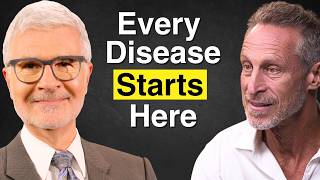
Dr. Steven Gundry explains how gut bacteria diversity drives health and disease. Modern diets lack the fiber and polyphenols that feed beneficial microbes, which then fail to produce metabolites that protect mitochondria and reduce inflammation. Eating fermented foods, prebiotic fiber, and polyphenol-rich plants while avoiding glyphosate-sprayed crops can restore the microbial ecosystem.
Chapters
The average practitioner, even the exceptional practitioner out there, if they're trained in traditional medicine, is not paying attention to this at all. You know, when your microbiome is messed up, it causes all sorts of things. It screws up your immune system, your hormones, your mental health, shortens your life, it increases your risk of autoimmune disease, heart attacks, dementia, as well as arthritis, diabetes, cancer. What is gone wrong and what is the definition or the hallmark of a healthy microbiome?
Well, one of the things we're supposed to have a huge number of different species of bacteria. And if you take the Hanzo for example, they have a phenomenal teeming tropical rainforest of different diverse species. And just like with any ecosystem, there are, there's one species dependent on another species. I like to use the example of Yellowstone park when they took out the evil, nasty, bad predator wolves. And because they're evil and nasty and we need to get rid of them.
And whoops, look what happened, the big bad wolf.
And so one of the things that's interesting to me is as I talk about you, you really have to have diversity. And you look at the Hanzas, they have a very diverse microbiome and we know that the bad guys are actually useful. And you want a few of these bad guys and they bring stuff to the table that we couldn't even anticipate. Just like a wolf is important in Yellowstone Park. So the Hanzas have this really diverse microbiome. You look at people who they were compared to in England, they, their, their microbiome is just a kind of a tropical wasteland. There's no diversity. Now what's happened us you've already mentioned, the microbiome really wants to be fed prebiotic fiber. And back in the good old days, our great grandparents actually even here in the United States were doing a pretty good job of feeding the microbiome prebiotic fiber. We number, we now have stripped all the fiber out of all of our foods in the inconvenience sake if nothing else. And you know, you've been a huge spokesperson against processed and ultra processed foods, but I think people realize how bad these things are, but they're bad because we're literally starving the microbiome to death. And that's, that's number one. Number two, one of the things that has been a revelation to me through the years, I've always been a big proponent of polyphenols. And these are the, you know, bright dark colors in fruits and vegetables. And you may remember a number of years ago we thought that Number one, we've known that polyphenols are not well absorbed in our gut. And when we did all these experiments with polyphenols and cell cultures, there seemed to be a tipping point where polyphenols seem to be pretty good. But then you got too many of them and all of a sudden they were really bad. There was even some research out of David Sinclair's lab that too much resveratrol might harm heart function. And we got into this. Well, they cause hormesis. What's hormesis? Well, that which doesn't kill me makes me stronger.
Well, now, because of the Human Microbiome Project, we realize, and I talk about this in gut check, that polyphenols are actually one of the favorite foods of the microbiome. And they eat the polyphenols and then they activate the polyphenols into an absorbable bioactive compound that then actually benefits us. And we miss the middle man. Yeah, the middleman.
In all of this. And that's exciting because the whole book is, man, there's a middleman that we didn't know they were there. And now we're beginning to figure out why they're there and why we've got to have them there if we want to function as a proper animal.
Yeah. I think this is really important. Two points that you brought up. One was the. The microbial diversity is really important. And this means the difference between sort of a complex Amazonian rainforest and a monocrop cornfield.
That's exactly right.
That's exactly right. An Amazon rainforest is incredibly robust. There's so many redundant systems, there's so much complexity, and in complexity there's health. So the more complex the ecosystem is, more healthy. It is a monocrop cornfield. One bug or one disease, it's gone. Right. And I think this is what's happening to us. We're seeing this dramatic decrease in microbial diversity and we're going to talk about how to boost our microbial diversity because it is a bit tough to change our microbiome as we get older, but it's not impossible. And I think that this is a huge factor. This is sort of declining diversity. It's almost like it's like industrial agriculture for our gut versus regenerative farming. Right. We want to, we want to know how to tend our inner garden and make it a complex, robust ecosystem. And I think the.
This is such an unappreciated thing. The other thing I want to drill down on is the polyphenols, because you kind of mentioned it. And I just want people to really get this because historically, even in functional medicine, we talked about prebiotics and probiotics and, you know, healthy foods and so forth and fiber. And somehow this polyphenol story just. I didn't quite get it. And I don't know if you know this, Stephen, but a number of years ago, I got a root canal that went bad. I had taken out, I got, guess what drug? Clindamycin. I ended up with C. Difficile colitis. I ended up that turning into full blown colitis. My gut was inflamed from top to bottom. I was in bed for five months. I almost died. I lost £20. I had plenty of bloody balance a day. And I did my own stool test. Now, I probably seen more than any doctor alive. Literally, they used to call me doctor See Every Poop at Canyon Ranch, because they made fun of me for how many stool tests I used to do. And I did my own. And it was probably the worst I'd ever seen. Like, literally just calprotectin off the chart, no short chain fatty acids, no Akkermansia, no healthy bacteria, just. It was a mess. And I was like, wow, this Akkermansia thing, you know, and I started to kind of research about it and I started to realize that, you know, we didn't have a probiotic then, and we do now, but we didn't have a probiotic then that you could take to replenish Akkermansia. The only thing that could make it grow was polyphenols. It loves pomegranate and cranberries and green tea. And so what I did to recover was actually create what I call my Akkermansia shake. And I literally took concentrated pomegranate concentrate, concentrated cranberry concentrate, Matcha powder, and a bunch of other polyphenols. And I would make this thing with prebiotics and probiotics and polyphenols and this cocktail, and it was incredibly effective. And I was like, wow. And then I started using this with my patients, and it was profoundly effective. So I think we're going to get more into the polyphenols in a little bit. But I want to sort of have you dive into something that I think is a fairly new concept when it comes to addressing what is the result of our poor diet. Lack of fiber, lack of polyphenols, lack of prebiotics, lack of probiotics, and this lower microbial diversity, which is this phenomena that happens called leaky gut. And then you are a person who talks a lot about this. And one of the things you talked about, which I thought was novel in the book, was this whole idea of mitochondrial uncoupling and how it, how it helps us maintain a healthy gut wall. So we laid in the good stuff, but not the bad stuff.
Yeah. So I spent.
What the heck is it? What the heck is it?
First of all, I wish it wasn't called mitochondrial uncoupling. I did not invent that term. It's a scientific term. And I spent two books, my two previous books trying to explain it. And maybe I'm not as good an explainer as I should be, but when people hear the word uncoupling, they think of Gwyneth Baltro getting separating from her previous spouse. And so uncoupling. There's a, a Dr. Brand in the year 2000 wrote a very, very simple paper called Uncoupling to survive. And anyone who hasn't read it, it's a really easy read. And all you got to do, type in to Google uncoupling to survive and it'll pop right up. So normally mitochondria, as you and I know, make ATP by taking energy, taking glucose and carbon atoms and oxygen and put them through the electron transport chain, which I call the mito club in the book. And you making energy, making ATP is really hard work and it's very damaging. And as you and I know, damage to mitochondria is one of the underlying processes of long, long term bad health. So we have a built in system that it's so damaging to make ATP that there are pop off valves within our mitochondria, very much like a pop off valve in a pressure cooker.
Okay, can I stop you there? Because I don't know if everybody knows what mitochondria, they're basically these energy powerhouses in the cells. They take the oxygen we breathe and the food we eat and they burn it like an engine, they combust it and out comes energy in the form of ATP. Water that you pee out, carbon dioxide that you breathe out, and all these waste products called free radicals. So that's what you're talking about. So, so now just so people have a context about what that is, I think you can kind of go into it now.
Making energy is really damaging. And so we actually have all these built in pop off valves. Now the word coupling comes from you're trying to couple protons with oxygen to make ATP. You're trying to couple them together. Now uncoupling says, okay, let the oxygen come in but let a bunch of these protons not participate in making energy. Uncouple them from oxidative phosphorylation, let them loose. So mitochondrial uncoupling was discovered way back in 1978, when the electron transport chain was fully developed.
So we, it turns out, at baseline, you and I sitting here right now, 30% of all the calories that enter into our mitochondria never get made into ATP. They are 30%. 30%. While we're sitting here, they are wasted and they are uncoupled. Now you go, well, wait a minute, that's really stupid. Hunter gatherers are starving all the time. We were starving all the time. Why in the world would we waste 30% of all of our potential power? Well, it's because two things. We're warm blooded animals, and it turns out that uncoupling generates heat.
And we know all about, hopefully a lot of people know about brown fat. And brown fat is brown because it's so full of mitochondria that it literally looks brown. But brown fat is what we generate heat with. And that's because the mitochondria in brown fat are profoundly uncoupled. So they make more heat, more energy. They like less energy, but more heat. Now that's part two of the weirdness. So Dr. Brand said, well, the weird thing is, if you're starving to death.
The last thing you want to die is your mitochondria, because your mitochondria are responsible for making energy. And if you don't have your mitochondria.
That'S it, you're a goner.
So he proposed, and it's been since proven that the more danger you're in, the more signals that you're in trouble, you're starving or things are bad. The more you ought to uncouple your mitochondria to protect them from damage. And now part two of that is with uncoupling your mitochondria, you send a signal to make more mitochondria to handle the workload. Mitogenesis. And I use the example in the book. Let's suppose we've got a dog pulling a dog sled and let's call the dog the mitochondria and you and me the dog. The sled. The dog will pull the sled. You won't get very far, you won't go very fast, but it'll work. On the other hand, if you added five more dogs to the dog sled and now have a six man, six dog sled, you'll Go a lot faster, you'll go a lot farther. Each dog will have to do a sixth of the work, and they won't tire as fast, but you have to feed them more. You have to feed six dogs. And when you look at it that way, you understand how mitochondrial uncoupling is actually an incredibly beneficial thing to happen for an organism. And one of the wildest things is what he showed and others now have shown is the people who live the longest have the most uncoupled mitochondria.
So to me, I. I want to sit around and teach people how to uncouple their mitochondria.
And how do you, how do you do that?
I'm glad you asked.
I'm on the edge of my seat.
So let's get back to polyphenols. How come there's all these pretty colors in the fall? You know, all the beautiful oranges and reds and dark purples? Those are the polyphenols that were in the leaves of the plants that we didn't see because of the green chlorophyll. Well, what the heck are polyphenols doing in the plants? Well, it turns out that sunlight is really damaging to plant mitochondria. Their equivalent is our chloroplast. And so photons from sunlight are as damaging to plant mitochondria as oxygen is to us. So plants make polyphenols. Are you ready, Drumbeat? To uncouple their mitochondria to protect them from the harmful sunlight and other environmental stressors. Okay, so that's what polyphenols do for plant mitochondria. Now when we eat them.
Our bacteria, we now realize love polyphenols. They then make polyphenol polyphenols available for absorption to us. And those polyphenols just happen to uncouple our mitochondria. So 20 years ago, we knew that, you know, all these polyphenol bright colored diets were really good. We had no idea why they were so good.
Right? Yeah.
Now we know.
Interesting. So in a way, I'm just sort of thinking the paradox of the uncoupling. Because if you're saying uncoupled mitochondria produce more heat but less energy, they also induce mitochondrial biogenesis, making more mitochondria, which is a good thing. But it also seems like, don't we want to create more energy too? So isn't, isn't it kind of a paradox that we, we both need uncoupled and coupled mitochondria to Want to produce heat one to produce energy.
Makes absolutely no sense that if you're starving to death, you would waste more energy. And what he showed was that the more you protect your mitochondria from damage by having it work a little bit less and then stimulating more mitochondria production to carry the load.
It's like the six dogs.
It's six dogs. Exactly. And you know, you mentioned now that we've learned about urolithin A, which we can get into.
We're getting into that. I want to get into that. Yeah.
Okay. So we now know that, you know, there, here's some compounds that are made from polyphenol metabolism by gut bacteria that lo and behold, make more mitochondria. And it's, it's like, it's like. What a cool design.
Yeah. I mean, to me, honestly, Stephen, I just marvel at this and I just, you know, I sort of came up with this term years ago as I began to understand the relationship between plants and humans. And actually I took a quick course at Cornell. It was called Plants and Humans and it was all about the interaction of plants and humans over the year. Not necessarily from a microbiome perspective, but you know, how we use them. Everything from psychedelics to building things, eating, whatever. And this concept I came up with is called symbiotic phyto adaptation, meaning we basically have co evolved with plants to use their molecules to regulate our biology in ways that are optimizing our health. And it's not because the plants care or give a crap about what's happening to us. Right. Although maybe they do because we're all in this symbiotic relationship, but.
They want to use us to distribute their seeds. Fruit seeds. Yeah, right.
Fair enough, fair enough. So, you know, especially in Africa, basically you could tell where the elephants went because they'd be eating palm trees in one area and they would poop them out all over. So there's like palm forests, like from the elephants that were spreading their seeds, but back, back to the polyphenols. The polyphenols there are, like you said, they're plants defense mechanisms. They're their own defense mechanisms. So in a sense they're, they're their immune system. And sometimes they are a little bit toxic to us, like you mentioned. So it's really about understanding how do we use them properly and create this concept of phytohormesis, which can be good and particularly in longevity and other things. But what you're talking about here is that the microbiome interacts so intimately, with not just fiber and probiotic foods or fermented foods, but with these polyphenol classes of foods, which we really haven't understood until recently. And I think, why don't you sort of explain the difference and then we can get into some of the specific polyphenols and what they do in the microbiome between polyphenols and antioxidants. What's the difference?
And.
And, you know, you talk about gut buddies that. That are the missing link, the good buddies that are the missing link to process these polyphenols.
Yeah. It's interesting. For. For years, I used to, believe it or not, there's an international meeting on polyphenols every year. And the organizer, I believe I'm meeting.
On everything every year. Well, of course.
And I used to present every year, one year in Lisbon. The. The head of this is a professor from France by the name of Marvin Edes. And he got up the start of the meeting. He says, anybody here who thinks that polyphenols are antioxidants, you can leave the room because. Yeah, he says, because you are so far behind the research that I don't have time to catch you up.
Pretty arrogant, but okay.
Yeah. Okay. Well, it turns out the guy was right. Polyphenols are not antioxidants. They. They aren't. And one of the things I think I've talked about in this book and others, there's actually only two antioxidants in our mitochondria. One really surprises people, and that is melatonin. The second antioxidant is glutathione. And a lot of people. Okay, great, I get it. But those are the only two antioxidants within our mitochondria.
What about this? Catalase and superoxide dismutase and glutathione peroxidase.
Yeah, but those aren't. Those are enzymes.
Those.
Those aren't antioxidants.
Yeah, but they produce antioxidants, right?
Yes. Yeah. But the only two that are active in mitochondria, glutathione and melatonin. Melatonin.
Interesting. Wow. So keep. Keep going about the difference between antioxidants and. And polyphenols then.
So. So we're going. Okay, well, wait a minute. We know that polyphenols are really good for us. Blah, blah, blah. And if they're not antioxidants, what are they? Well, they're essentially signaling compounds. And the book goes into. There is such an amazing communication system at multiple levels between the Gut microbiome and us, our genome, our cellular working mitochondria, specifically. And I think one of the most amazing things in terms of the design is a lot of people, we think, are convinced that mitochondria are ancient engulfed bacteria that about 2,000, 2 billion years ago, a non eukaryotic cell. And I won't bother you, ate a bacteria. And the bacteria said, hey, hey, wait a minute. Instead of you eating me, I'll tell you what, why don't I make ATP for you, and in exchange, you give me something to eat, protect me from the environment, and for every molecule of glucose, I'll make 32 molecules of ATP, and this cell goes, oh, wait a minute. That's a pretty good deal because with fermentation, for every molecule of glucose, I only get two molecules of ATP. So you mean I can get eight times as much ATP if I allow you to do the work for me. In. The guy says, yeah. So we think that. So ancient bacteria are our mitochondria. They actually have their own DNA and they can divide without the cell dividing. They actually have a cellular membrane that looks exactly like a bacterial cell wall.
Yeah, it looks like a little bacteria.
Actually, it does look like a little bacteria. Now, I argue, and others have argued, that those are. The mitochondria are sisters of our bacteria. Now why. Turns out all of our mitochondria we inherit from our mother. Men. Sorry, guys, we don't give any mitochondria.
Yeah, yeah, yeah.
It's all maternal. We're just drones. So those mitochondria, we get all of our initial microbiome from our mother, not from our father. And so there is a really cool theory, which I like, is that the maternal microbiome communicates with the maternal mitochondria. And there is a language that these share, and with every passing year, we get to understand that language better. And part of that language is gasotransmitters. And it sounds crazy, but the farts that you make are actually important talking points between the microbiome and, among other things, the mitochondria. We also know that.
Wait, wait, I'm confused. How does your microbiome and. And mitochondria produce farts?
No, the. The farts are actually there to talk to the mitochondria. So let me. Let me give you a great. Let me give you a great example.
I don't know about. This is good. Okay, I got. We got to go into this because I never heard this before.
Oh, you're gonna love this. You're gonna Love this. All right, so there are gases that are made from fermentation of prebiotic fiber. And those gases. For instance, one of the most common gases is hydrogen gas. The smallest molecule there is. Hydrogen gas is easily diffusible through the wall of the gut. And hydrogen gas, turns out, may be incredibly important in mitochondrial function. Let me give you just one teasing example. This work came out of Japan. Japanese looked at early onset Parkinson's disease patients. Then they looked at their gut microbiome compared to normal, and the gut microbiome in these Parkinson's patients did not produce hydrogen gas. They went. And the regular group did and they went, huh, that's interesting. I wonder what would happen if we give these people hydrogen water, hydrogen gas dissolved in water, which is easy to do. Lo and behold, their Parkinson's system symptoms improve.
Interesting. Yeah, because Parkinson's is a mitochondrial disease.
Exactly. And so now you go, son of a gun, you mean hydrogen and gas that I'm making as a process of fermentation is actually a signaling molecule that tells my mitochondria things to do. I spend a lot of time talking about hydrogen sulfide, this so called, you know, sewer gas or rotten egg smell. And hydrogen sulfide is incredibly important in terms of vascular health, if nothing else. We used to think that hydrogen sulfide was. Was toxic. That's because we didn't know where it became toxic and where it actually had benefit. Same with carbon monoxide. Carbon monoxide is actually a really cool regulatory gas that we make. Same with carbon dioxide. And we can go on and on. Methane, we make methane gas, which is actually a gasotransmitter.
Gasotransmitter, that's a whole other term. You come up with all this stuff I never heard before. This is pretty good. Gasotransmitter, that's what they're called.
Or if you want, you can call them gasomethane.
So what is the mechanism? Methane, how does it work as a neurotransmitter then?
So methane. Actually it literally. So these are all. I used to call them text messages.
And the best. Stephen, I love how you think you make. These things are so funny and simple to understand. It's great.
They literally are text messages about what we want things to do, the cellular system, I mean, just not to change the subject. Recently, in fact, just this week. And actually it's a great point. You and I probably have been told or taught that lignans in flaxseeds and flaxseed oil are really good for you and have some really Kind of cool anti cancer properties.
Yeah, yeah, right.
Particularly in women. And we've known that this is true. And there's some cool studies and we go, okay, yeah, you need lignans. Well, a paper just came out that lignans are eaten by the microbiome and the microbiome, get ready for this, make microrna. Microrna is the communication system that, you know, cells tell, you know, things to do, the work to do. The microrna is absorbed through the gut and the microrna literally stops cancer cells from doing their thing. It turns them off. So, and this just came out this week, and it's like, son of a.
No, no, actually, this is something I've heard about for years, that the microrna from plants is getting absorbed and modulating our biology. And we.
That's exactly right.
Conditions. Yeah, it's pretty interesting. So it's not just like vitamins, minerals, polyphenols. Now we got even the genetic material produced from bacteria is being absorbed and modulating our biology. So we are literally, I don't know, maybe, maybe we're just like walking little transport systems for the microbiome. I don't know if humans are really the in charge here.
Oh, I completely agree with you. I mean, you know, and the point of gut check is, look, if you take care of your microbiome, they'll take care of you because you're their home and they have a vested interest in you. And if you keep trying to starve them to death, if you keep trying to poison them like we do with our antibiotics and glyphosate, then it's no wonder that we're in the shape we're in.
The average practitioner or the, even the exceptional practitioner out there, if they're trained in traditional medicine, is not paying attention to this at all. I mean, my daughter now is in medical school in Utah in the third year. I said, rachel, what are you learning about the microbiome? She's like, nothing. I'm like, wow. I, I, I think, you know, my daughter in medical school has not learned anything about this. And it's unfortunate because it, it's key to being able to help so many people with everything from heart disease to cancer to diabetes to Alzheimer's to autoimmune disease, to allergies to digestive problems, to depression to anxiety to add to neurodegeneration. I mean, the list goes on and on. Right. So can you talk about how you came to understand this? And also, you know, how our gut microbiome is directly linked to our health and longevity like, what's going on?
Holy cow, where do we start?
No, but let me continue on what you just said. I have the Privilege of seeing 3rd year family practice residents rotate through my clinic for a month at a time and they're, you know, about to go into practice. This is their final year. And just probably won't surprise you, but might surprise our listeners, that not one of these individuals have ever heard of ordering a fasting insulin level.
Oh, my God. I know, that's. Don't get me started on that.
No, none of them have ever heard of, you know, a home ir, which is a way of looking at insulin resistance. Yeah. And they go, well, what does that have to do with anything? I go, well.
So you're right. I mean, one would have hoped, you know, you and I, we didn't know about this. You know, we thought that the GI tract was a hollow tube and crud went in and some digestive enzymes happened and whatever was left, we pooped out and that was the end of the story. But the human microbiome project, which really just completed in 2017, opened our eyes to this incredible tropical rainforest of 100 trillion different bacteria that we just didn't even know were there.
And so what that's been able to do is, okay, now we know they're there.
There's like 100,000 petabytes of data in our microbiome, like that's doing stuff all the time.
And, you know, I argued in one of my previous books that what I think we've done, since they have so many more genes than we do, and that genetic information is constantly being modified by viral genomes being inserted and cross filtering of genes between bacteria that I propose that we've actually done most of our computing, we've loaded it into our cloud computer or our brown computer. And the more we, more we see the influence that these guys have on everything that's going to happen to us, the more you realize what an amazing, elegant design and what a brilliant idea to outsource most of our computing power to this tropical rainforest within us.
And this is not that new idea, you know, you know, Dennis Burkitt, which you learned about Burkitt's lymphoma in medical school. He was a British scientist and he, he went to Africa on a missionary trip and he noticed, you know, all the villagers and the traditional tribal populations had no chronic disease. They were really healthy. And as soon as their cousins essentially moved into the city, they would get all the western diseases. And for some reason, I don't know how he got this idea, but he decided to study their poop. And he basically found that the urban dwellers had stool weight of 4 ounces, and the hunter gatherers and tribal people had stool weights of two pounds. And I just came back from Africa, you know, and saw the elephant poop. It's like, it's like, it looks like a basketball, you know, like one little piece of it. And then they have huge amounts of fiber. And I saw, you know, the Hadza population, which one of the last hunter gatherer populations on the planet. Now they have 20%. Up to 20% of their diet is honey, which is all you think, oh, that's bad, you know, sugar. But the other thing they do is, is their hunter and gatherer. So they gather a lot of tubers, these roots and these root vegetables, or I don't know if you can call them what you can call them more like chewing on wood. But they basically, they basically dug one up and they dug up this wild yam. And they eat about 150 grams of fiber a day. And that mitigates any of the harm from the honey that they're getting. And they, and they actually don't have these chronic western diseases. So I think in our society, we've just done such a disservice. We saw the same thing in this study years ago about Burkina Baco, like these kids who are eating western diets versus these traditional diets in Burkina Bissau. And they, they had profoundly different microbiomes, profoundly different health outcomes, no allergies, no autoimmune disease, none of the stuff we see here. So it's so intimately tied to our microbiome. And yet it's shocking to me that in traditional medicine, even though we sort of now acknowledge it, there's no roadmap to do anything about it. And that's why gut check is such a great roadmap, because it provides people an understanding of what's going on, why it's a problem, and actually what to do about it. There's some really fascinating research around.
Some of these polyphenols called elijah tannins that are in foods called pomegranates we can eat, or walnuts, berries and, and what, you know, you have this great term called gut buddies, like literally these gut buddies that are good guys living in there. The problem is we don't have that many friends anymore. We don't have any good buddies left, or maybe very few good buddies left in our gut microbiome. So when you don't have these, it can have serious Health consequen. And you talk about this particular.
Symbiotic relation between some of the foods we eat, our microbiome and compounds they produce, something we call postbiotics. I just had a podcast with Uma and I do, and she was talking about psychobiotics. Not crazy bacteria, but bacteria that act like psychiatric drugs to modulate mood, which I thought was great. But this whole concept of prebiotics and probiotics, people understand fibers. Prebiotics and probiotics are like taking lactobacillus, but then there's these postbiotics, which are things that are made by your bacteria from eating certain foods that are molecules that then you absorb and regulate your biology in ways that have profound impacts on your health. So one of those metabolites is called uroliphin A. And I've talked a little bit about the pot on the podcast, but this is such a great story because it illustrates it well and there's so much research around it. So it's one of the most researched factors around this whole postbiotic phenomena. So can you explain, you know, the data around this phenomena of urolithin A on super centenarians and their microbiome versus people who don't have this microbiome that actually can metabolize these phytochemicals? And so basically, you can eat pomegranate all day long, but you're not going to make your lithium A. Right?
Right.
Like 20% of the general population is able to do this. That means 80% of us aren't. But in the supercentenarians, a lot more have this microbiome that actually makes URL thin A. So can you explain this whole interaction between our ellagtannin content in our diet and the bacteria that are regulating it and this metabolite that it creates for your lithon A and what that does and how it relates to our health in general, our mitochondria and mitochondrial uncoupling that you talked about.
Yeah. One, maybe it's a. It's a bad.
I mean, that was a lot, but I just. It's like, really important. And I think. I think it's such a beautiful story because it illustrates this phenomena so clearly for people and why it's important to take care of your gut buddies and invite more good gut buddies in there.
Yeah. You know, I hate to use the expression, but it takes a village. And what we're learning and what I want people to understand from gut check is we. We used to think, okay, you need prebiotic fiber and your gut Buddies will take prebiotic fiber and they'll make postbiotics. And by the way, gasotransmitters are postbiotic, and that's a good thing. But what we now know is you may have to have four or five guys each doing one job, almost like an assembly line. And if the first guy doesn't make the next product, the second guy can't make what he needs. And it may need four or five different bacteria to get the end product. So let's take for example, urolithin A.
We know that the precursor is in pomegranates, in walnuts, in raspberries, but that you're right, only about 14 to 20% of individuals, you could give them all of these precursors. They will never make urolithin A. And so you then look at super old people and at least 50% of them make urolithin A, could be as high as 70%. So we now understand that there are multiple guys that are involved in making this compound. And if you don't have those multiple guys, you could eat all the pomegranates in the world, but you'll never come up with this compound. So what's so cool about this compound is, and this is work out of Switzerland. I've, I've had the folks from.
Christian, yeah it on my podcast several times because I'm so impressed with what they've done. So this stuff is actually makes mitophagy, makes mitogenesis. It actually, and I off camera with them, I'm pretty convinced it's because of mitochondrial uncoupling. And they have a recent paper that shows it has some really cool anti cancer properties as well. And I'll argue it's because of mitochondrial uncoupling, but it's fascinating that these super old people have this set of gut bacteria that are able to accomplish this job. Another, I think really beautiful study that came out of Stanford with the husband and wife team, the Sonnenbergs, about the importance of understanding that it's more than just say prebiotics as, as a part of this, they gave individuals prebiotic fiber and they looked at their gut microbiome diversity and they looked at their markers of inflammation, which was hscrp C reactive protein. They took a second group and gave them the same prebiotic fiber, but they also gave them fermented foods. It was primarily yogurts and vinegars. And lo and behold, the group that only got the prebiotic fiber had no change in gut diversity and no change in inflammatory markers. It was the group that got the fermented foods plus the fiber that had a change in the gut microbiome diversity and lowered their inflammation. And again, it's this conversation, it's this communication that makes the difference.
Was it because of the fermented foods that had bacteria in them and the probiotics in them? Was that the reason or was it because of the polyphenols in, in those?
It's even better than that. I've got a whole chapter in Gut Check that dead. Dead men tell no tales, but dead bacteria do. And it turns out that there's folks don't eat your yogurt to have active yogurt cultures. Most of those probiotics will be killed by your stomach acid. But it's the dead bacteria cell wall and it's the postbiotics that are made during fermentation that is what you're actually looking for. And we now know that these compounds carry messages that are read by other bacteria. And that one of the things that was interesting in Akkermansia research is that dead Akkermansia have much the same effect.
Really?
Yeah, really? Yeah. And it's like, what? Well, I have three male dogs and.
They'Re not going to ask why, but.
They'Re rescues, but that's okay. They, they're out sniffing at everything and they're putting urine on anything they can. And you go, what my dog on? What are they smelling? I don't smell anything. Well, they're getting messages. They're that the other dogs have left for them. And we now know that bacteria leave messages that other bacteria read. And it's those messages that are necessary to tell the other bacteria what to do with that prebiotic fiber.
Yeah, interesting. Really interesting.
You know, it takes a village.
I want to dig into more of this. Your lefthand a story because I think, you know, when I looked at the research on this, this is really well done research published in peer reviewed journals. It's not like, oh, I heard about some supplement and I'm just taking this. And when they did the work, this is in jama, Open Network and cell reports and neurotherapeutics. The data is really impressive and basically what it does is kind of shocking to me. When you think about, you take this basic food, you have bacteria in your gut. It makes this molecule called urule thin A. It gets absorbed in your bloodstream and then goes to work in your body. And they found that it increases without exercise. This is crazy. Without exercise, increases muscle endurance, muscle strength, increases your fitness level measured by VO2 max, which is like what you have to do wind sprints to fix. It increases ATP production. It reduces C reactive protein, improves your overall metabolic profile, meaning your insulin resistance. It reduces muscle loss. It stimulates mitophagy, or cleaning up the old mitochondria improves mitochondrial gene expression. It inhibits something called mtor, which we've talked a lot about on the podcast, which is important for longevity. It basically causes autophagy or cleaning of your cells. It upregulates SIRT 1, which we'll talk about in a minute, which is a really important.
Set of transcription factors that is involved in longevity and insulin resistance and DNA repair. So basically helps all the things with aging. It even improves your immunity by improving stem cell regeneration for T cells, and it has anti tumor activity. So I'm like, whoa, wait a minute. You were talking about eating a pomegranate, having some bug in your gut, and having all these downstream effects. And just to be clear, everybody, we're talking about one food and one compound. We're talking about not all of the other things that are going on in your gut with.
Trillions and trillions, probably 40 trillion bacteria in your gut and 2 to 3 million bacterial genes doing all kinds of stuff. But that's, that's a hundred times as much genetic material as we have. And what genes do is produce proteins. So that means they're producing all these molecules. And I was at sort of on a panel with Stan Hazen at Cleveland Clinic, and he was like, yeah, I said, stan, how much of the, of the metabolome comes from our microbiome? Meaning how much of the things that we can measure in our blood, not we get on a regular lab test, but when you do these scientific studies comes from the microbiome. He's like, probably a third to a half. And I'm like, what A third to a half? So we literally are kind of in this constant dance with our gut. And this is why your book is so critical, this gut checkbook, because it helps us to really understand on a granular level the science of why. So we go like, oh, yeah, okay, I get, take probiotics, whatever. You know, take prebiotic, whatever. But you actually give us the science of why. So that's the urolithin story. Let's Talk about Resveratrol insert 1, which is this really important transcription factors that are in the mitochondria that actually were first discovered by Lenny Guarte at.
MIT and David Sinclair and the whole resveratrol story. But people don't realize you had to drink about 750 bottles of wine to get the amount of resveratrol they did in the study.
Yeah, you talk about work, work, work, work.
I don't know. I could drink that much wine and you'd die.
You'd die.
But basically it has been shown to help with cardiovascular disease, but also maybe impacting the brain and metabolism, maybe even more than the heart. So how can this resveratrol compound that comes from grapes now? And by the way, I don't think we can get it from red wine. I think that's going to cause problems. And you talk about it in your book. I'm like, don't drink so much. So we can get into the alcohol story there. But I think the key is a phytochemical. So talk about how resveratrol can be used to help or treat and prevent neurogenic metabolic diseases and how it relates to the gut microbiome.
Well, again, I think resveratrol is a very poorly absorbed compound. And again, we've known that for years and so, and David Sinclair is a friend and we've through the years talked about his love of resveratrol and mine and he loves pharmacologic doses of it. But what's really cool about resveratrol is that it is a, it's a signaling molecule and it literally activates 31. And it's a really good way to come full circle of uncoupling mitochondria as well. But it literally tell, it tells, it repairs DNA breaks. It actually fosters the production of short chain fatty acids like butyrate. And the more we look at the downstream effects of resveratrol activated by the, the microbiome, we're beginning to see, okay, well, why is it that, you know, the, the French paradox works and you know, it's just, it's. We've. The middle guy.
That allows resveratrol to work is the microbiome, making it an absorbable compound. And that's what none of us knew until really the microbiome project got finished. Amazing.
It's quite amazing. I mean, I think the other thing that, you know, I want to dive into because, I mean, we could talk for hours and I don't, unfortunately, we both have work to do.
That's right.
We have other jobs, patients and all that. But, but I think, you know, the other issue is sort of the microbiome in the brain and mood. And you talk about a, you know, major depression is a big issue and depression is the biggest cause of disability. In this country and how the microbiome of people who are depressed is different. And in 2022, there was a study of microbiomes of over a thousand people with depression. And they found changes in about 13 bacteria. And these bacteria are known to produce various neurotransmitters. So can you kind of unpack that but for us and just give us a little taste of the, the mood, brain, gut, microbiome connection?
Yeah, I guess, you know, I, I suppose we should have known this, but again, now that we're being able to look at individual bacteria and the compounds that they produce. You're right. Brand new studies in the last year or so have shown that depressed individuals have a depressive microbiome, and you can constitute these particular abnormal species. What's really interesting is.
Let me step back one. We've known that glyphosate, which is a lovely weed killer, was actually patented as an antibiotic. And one of the recent findings about glyphosate is that glyphosate. Glyphosate targets the tryptophan pathway bacteria in our gut. Now, why should that be interesting? Is because tryptophan makes five, HTP makes serotonin, which, and GABA for that matter. And so glyphosate is really good at knocking out all the feel good bacteria, specifically in our gut. And isn't it interesting that this, that this epidemic of depression and anxiety correlates pretty doggone good with the advent of glyphosate? And yeah, and now we know, we can say, oh, well, glyphosate is bad for you. But wait a minute. Glyphosate is after the bacteria that are essential for our mood.
Yeah, I think that's okay, Stephen.
Yeah, it's like, what have we done?
Yeah, yeah, it's true. It's the unintentional side effects that happen from things we think we're trying to do good. Oh, weed killer, great herbicide, we need it, blah, blah, blah. But, but these, this, you know, people say, oh, glyphosate, cancer, this and that maybe, okay, there's been some, you know, lawsuits that have been successful around non Hodgkin's inflammatory if you douse yourself in it. But what's really striking about glyphosate, in really small amounts, it wipes out your microbiome. It doesn't take a lot. It's not like you have to like drink Roundup in order to actually mess yourself up. It literally is in small amounts. And that, that has led to maybe an Increasing epidemic of low microbial diversity that we're seeing, and an increase of all these chronic diseases, including psychiatric disorders, which could be really from this sort of altered. Altered microbiome, in part from glyphosate. I mean, there's a million other reasons, obviously, xenobiotics and other toxins and other things that are really, really important. I think.
The thing I want to sort of dive into a little bit more is cancer, because people don't think about cancer and your microbiome. But there was a Charis Eng, who was the head of the genomics research center at Cleveland Clinic. When I got there, she was so happy to see me. She said, what took you so long to get here? And I'm like, well, I don't know. I didn't know. I didn't really want to go to Cleveland Clinic. But they dragged me over there, and she told me about all her research on the microbiome and breast cancer. I was like, fascinating. And they were really. This is like some Russian lab up trying to do some research. This is like Cleveland Clinic, and they're digging into this. Stanhazen is digging into the microbiome and heart disease. So can you talk about how the microbiome determines not only a risk of cancer, but also how we respond to certain immunotherapy drugs that are now basically some of the best drugs we have against cancer. But if your microbiome is not right, the drugs don't work, right?
Yeah. You know, a number of years ago now, there was a. There was a paper, I'm sure you're aware of, that looked at the tongue scrapings of people with pancreatic cancer and the oral microbiome. And there was a very strong correlation between the oral microbiome and predicting pancreatic cancer. And people go, wow, this is great. Now we'll have a diagnostic test, and we'll just scrape people's tongues, and we'll know who's at risk for pancreatic cancer. And then people went, wait a minute. What does that have to do with cancer? Well, now, of course. And now, of course, we go, wow. There is, like I talk about in the book, there is a colon cancer microbiome, there's an ovarian cancer microbiome, There's a breast cancer microbiome, There's a pancreatic cancer microbiome, There's a lung cancer microbiome that is distinct to those cancers. And the question is, did they cause the cancer or are they facilitating the cancer? And that answer is not there yet. But like you mentioned, we know that certain patients are going to respond better to chemotherapy if we actually do targeted antibiotics to change the microbiome.
And other people aren't going to. And this whole personalized medicine, but we're now going, holy cow, why didn't we realize that there is this microbial component to cancer? And again, I'm not saying cause and effect, but they're there. And we certainly owe it to ourselves to figure out, okay, what part are they playing in this?
Yeah, this story is definitely being unpacked. It's. We're not quite there yet, but you know, our friend Will Lee talked about his mother who had stage four uterine cancer. Cancer. And did her microbiome test and found low akkermansia or no akkermansia. And he then did some research and showed that, geez, people did not respond to these checkpoint inhibitors and immunotherapy, which are great advance in cancer if they didn't have akkermansia. It's like, wait a minute, how come this powerful drug doesn't work if you don't have this one little lowly bacteria? But literally we are, we are just uncovering how powerful these microbes are in regulating so many aspects of our health or response to therapies. And I think he was able to give her these polyphenols that we talked about and boost her akkermansia and she got the immunotherapy again and was cured of stage four cancer.
It worked. Yeah.
Yeah. So think about that. A probiotic or polyphenols curing stage 4 cancer in conjunction with a drug that wasn't working before. That's kind of radical shit.
Yeah. And you know, you brought one other thing which is actually a good segue. You brought up xenobiotics. And so xenobiotics are all these environmental toxins, these endocrine disruptors, plastics, petrochemical products.
Like bpa, pcbs, pfas, everything, all the phthalates. Phthalates.
All the crap, all this awful stuff.
Yeah.
When you and I write about this in the book, when you look at these super old people's Microsoft microbiomes, you know, 95 and above, and they're thriving. They have a microbiome that eats xenobiotics.
Oh, wow.
Yeah. And you go, what's son of a gun? And they go. And people go, well, wait a minute. Xenobiotics. Look, you can engineer bacteria that eat oil spills, for goodness sakes. They just want it. That's right. They're just looking for carbon atoms. Right. That's right.
That's right.
So, yeah, and one of the hallmarks of these guys, besides the fact that they make urolith and A, is that their microbiome eats xenobiotics. And it's like, well, of course, now.
Do we know which microbes do that? And where can I buy.
Yeah.
Or what do I need to eat to grow them? Do we know?
Well, you see, that's what's really kind of fun about all this, because I.
Never heard this before and I think I just. The reason I say it's important is because we're.
We.
We doing the best. We still can't eliminate our exposure to these compounds. They're everywhere and they're in us. And so. So if we, if we can take some kind of probiotic to offset the harm from the xenobiotics, I want that. Yeah.
Well, again, what. Thank God for this human microbiome project, because we would have had no idea. And now we can start looking at these guys. I'll give you an example. There's a. Why are. Why are the French and Italians so skinny? Well, there is a particular bug in raw cheeses that is capable of inducing basically, GLP1. It's a GLP1 agonist.
Interesting.
And it's only present in raw cheeses. If you pasteurize the milk, the bug is dead and it doesn't work. And so you go, son of a gun. You know, how do these guys know this? So it gets better every year.
Oh, my God. Well, I have to tell you a story then, because I went to Sardinia researching my book Young Forever, and there were two different things that were cheeses. They were pretty raunchy. But one of the ways they make cheese there is they basically don't have rennet, so they take the ancient methods where they would take a baby goat or sheep that was, you know, breastfeeding, and then after it had a bunch of the milk, it would kill the baby sheep or goat, which is awful. But anyway, that's what they did. And then they would take the stomach of it and they would grow this kind of cheesy stuff in there, and it would become cheese in the stomach, and then they would use that as starter for other cheeses, but you could literally eat the cheese from the stomach. And I went to this big festival there and I kind of partook. It was very strong is all I can say. And then the other thing was this guy Olinto, who I write about my new cookbook, who I went to his house and he really grew all his own food. He had his own pigs and chickens and rabbits and fruit trees and it was quite amazing. And he made me kind of a nose to tail meal. And at the end he brought out this thing, this big cheese wheel thing with a kind of like a cheese lid on it, like a big wheel with a cut out on the top. And he like telling me this story how basically this is an aphrodisiac and that his grandmother gave it to his grandfather and he said it's so strong that she could still have sex with him two weeks after he died.
Now this cheese was so weird. It was full of worms. Now it was illegal, right? It's illegal, you can't do that. But he did it anyway. And so it was this ancient thing they used to do is cheese with worms. So I had a little of the cheese with worms too.
All right, so I won't tell you the end of the story, but anyway, you're going to make it up for yourself.
Well, you didn't die. Thank goodness I didn't die.
I did that. Now the other thing I want to talk about is.
Mental health. Going down the mental health thing a little bit more, I recall a patient I had who had the most severe ocd. Now we had a question from X. We asked some questions to ask and one was talking about OCD and how OCD is caused by ammonia producing bacteria that cause brain malfunction and what's the protocol and what's the success in treating it. And I, and I had this patient, she had the most, she seemed like a normal person, but she had the craziest ocd. She wouldn't clean up her house for years. She wouldn't move up anything off the floor. It was like a nightmare in her house and she couldn't control it. And so we did some tests and short term prunes are my normal workup. And she had a bunch of inflammatory stuff going on. I did a stool test and I also did an organic acid test. And organic acids are a way of also looking at metabolites of the microbiome. They come out in your urine because they only, not only come in your blood, but then they get excreted in your urine.
And I found she had like off the chart levels of something called dhppa, which is a female derivative, but it's a psychoactive metabolite from bugs in the gut. I'm like, well, okay, well I'm just going to treat her gut. Let's see what happens. So I basically gave her Flagyl to kill this compound that Comes from clostridial producing bacteria, clostridial bacteria that produce this dhppa. And it was like a miracle. It was like literally OCD went away overnight. And I was like, whoa, this is crazy. And that's kind of what those kinds of patients were, the ones that got me to write my book, the Ultramind Solution, you know, almost 15 years ago. Because I, I call myself the accidental psychiatrist. So what's your experience with, with this kind of stuff with, with treating the gut microbiome, clearing out the bad stuff, populating with good bugs, prebiotics, polyphenols. What kind of things have you seen and what, what's your protocol?
Well, you know, that, that's what's so exciting is exactly what, what you're saying. I, I see a lot of people with depression or anxiety just use that as an example. And they've been on antidepressants for, you know, a couple billion years, one or two of them. And one of the things I point out in the book is that we're now beginning to realize that at least ssr, SSRI antidepressants actually change the microbiome to a more favorable microbiome, that actually. So the effect is probably not this drug on serotonin reuptake, but it's, it's, it's actually changing the microbiome. But you don't need the drug to change the microbiome. So you get rid of glyphosate containing foods and I get such grief. Please, folks, don't eat, don't eat oats. Please stay away from oat milk. All of our oats are contaminated with glyphosate, even the organic varieties. I have nothing against oats per se, but it's just a carrier for glyphosate. And if you want to wipe out your happy bacteria, go have some oat milk. Knock your socks off. Just don't do it.
So oat milk is the go to thing we should be having then, right?
If you want to be miserable, what.
Do you, what do you call it? Oat, Oat juice or nut juice or something.
How do you milk an oat?
You know, the other thing, I can milk a goat, but I don't know how to milk an oat.
There we're getting for instance, the love hormone oxytocin that women secrete when they see the sight of their child or with the onset of breastfeeding. Oxytocin, the love hormone. We now know there are bacteria in our gut that make oxytocin. So L. Roteric is an Oxytocin producing bacteria. And you can actually take El reuter as a supplement. And it'll also grow hair, by the way, and improve your skin. But the side effect that nobody was looking at was, son of a gun, this bacteria makes the love hormone. And me, I like to have lots of.
Sounds good. That sounds good. So, Stephen, you know, your book is just chock full of this. We've just been dancing around, having fun, talking, talking about some of the things you talk about in your book. And there's so much more in there. Gut check. Unleash the power of your microbiome to reverse disease and transform your mental, physical and emotional health. But before we close, I want to have you talk about some of the practical applications. What is your gut check program in a nutshell? It's in the book. People can look at it, but what are the take homes for people here? We've talked about polyphenols, pre probiotics, talking about fiber. We talked about the harm of xenobiotics and glyphosate and cleaning up your diet. What, what should we be doing from the Dr. Gundry perspective to check our gut? And, and, and what I say is sort of tend to our inner garden.
So here's one of the shockers. It's, it's in the last chapter. Before the, before the recipes.
Of. About 80% of my practice now is autoimmune patients who.
Yeah, yeah.
Anyhow, 100% of my autoimmune patients have antibodies to wheat germa gluten, all the various components of gluten and non gluten proteins. 100%. If you look at my patients with diabetes, 100% have antibodies to wheat germagglutinin gluten. If you look at my patients with coronary artery disease, a hundred percent of them have IgG antibodies to the various components of wheat.
Do you use the Cyrex test or what do you.
No, I actually use vibrant wellness.
Yeah, yeah, okay.
But that doesn't surprise me anymore. But the place to start is get rid of most grains. Sorghum and millet are the exception as a great place. Why do I say that? Number one, if you follow these people, and all of these people have leaky gut, by the way, and we haven't even got into that. All of these people have leaky gut. If you go, if you do the.
Gut, does anybody not have leaky gut?
That actually is a great question. And I have met one person in my life who walked into my office that didn't have leaky gut.
It's not whether we have it or not, it's how leaky is it.
That's exactly right.
So I think, you know, anybody eating gluten, and this is According to Dr. Alessio Fasano, world expert from Harvard, he's like, look, anybody eating gluten has a little bit of leaky gut. Now, most of us can manage it and deal with it and fine. But you know, if you, if you really have a serious issue with inflammation in your body, a chronic disease, gut issues, you know, it's like gluten, gluten, gluten, gluten, sugar, boom, out. And then, you know, that takes care of a lot of problems for people.
Yeah, it really does. And the, and I published this. If you get this stuff out of your system, you will lose all antibodies to gluten to wheat germ agglutinin within nine months to a year. They will be gone. And I have people who are gluten free for 10 years who still have very strong anti gluten antibodies. And those will disappear once you get the other problems out of the way. One of the things I preach is, look, I can give you supplements to repair your leaky gut and they're very effective and I make them and other people make them. But if you keep swallowing razor blades every day, then you're just going to tear the thing open. So it's kind of 1, 2. You got to really stop swallowing razor blades. And part of the, part of the program is, okay, here's where the razor blades are and I give some people some new surprises about where the razor blades might be. Interestingly enough, almonds are way up there in the razor blade factor. Really.
This was tipped off to me years ago. I had so many people with rheumatoid artists arthritis that almonds were a trigger for them. And when I started researching it, there's a lectins in the peel of almonds. And that probably explains why, particularly in Portugal and Spain, mothers teach their daughters to soak almonds to remove the peel, blanch them.
You blanch almonds. Does that remove the problem of almonds?
It does for most people. But my real troublemakers, when we test them against blanched almond flour, they still react to it. And so just in general, get rid of almonds. The other thing that surprises a lot of people, particularly with ms, there's a whole class of lectins that I've never written about because I don't want to sound any crazier than I already think I am. There's a Class of lectins that are called aquaporins.
Wait, wait, did you just say. I don't want to sound crazier than I already am. I love that. Such a good line.
I might use that.
All right. Yeah, you're welcome to it. So there's a class, they're called aquaporins. And I won't, with the interest of time. There's an aquaporin in spinach, and there's. Aquaporins occur in us, in the wall of our gut, in our blood brain barrier, and in our myelin sheath. And if you develop antibodies to the aquapor porrins in certain plants, you can have an autoimmune attack against your own aquaporins. And surprisingly, there's an aquaporin in spinach. And women in my practice who have Ms. Are big spinach eaters. And to almost a person, they react to the aquaporin and spinach. And when we take the spinach away from them, and I have nothing against spinach, folks, their issues rapidly resolve some.
Yeah, there's no good for the goose. Isn't good for the gander, though, sometimes. Right?
That's exactly right. It's exactly right.
Because, you know, we. We evolved eating all kinds of stuff, and I think we were very resilient and robust and able to eat all kinds of foods. But what happened is that we messed up our microbiome and our gut so much that we become. We become intolerant. So I always say, that's exactly right. I always say it's not what you're sensitive to or allergic to. It's why are you so sensitive and allergic? And I've seen really amazing things. When you really repair the gut, often people be able to tolerate things. Like, years ago, I had chronic fatigue syndrome from mercury poisoning. And mercury interrupts enzymes everywhere in your body and particularly in the gut. And I had diarrhea and maldigestion, and I had sibo and sifo, and I couldn't eat anything. And literally all I could eat was like, turkey and broccoli, basically, and. And. And for it, I was so miserable. And I would get rashes and sores on my tongue and autoimmune stuff and brain fog, and my stomach would explode and blow up. Like I had a, you know, someone blow up a tire inside my intestines. And. And literally, after learning about functional medicine, this was, you know, decades ago, I was able to heal myself, heal my gut, and now I'm like, you know, kind of good. I mean, I. I really don't have any gut issues. And I really have a highly functioning gut. Even this was. Even after, you know, repairing it again after, like, another couple of decades, I got mold poisoning and. And C. Diff. And the point is, you can fix it. So it's not just about always avoiding the thing you're sensitive to. It's about fixing the reason why you're so sensitive in the first place. And then. And then. And then, if there are razor blades, like modern gluten, I would agree that should, you know, probably not reading that.
Yeah. And that's the exciting thing we. The reason 80% of my practice is now autoimmune disease is you can 94% of people resolve their autoimmune issue on gut check, which is not bad.
Yeah. Now, you know, like my stepfather used to say to me, what happened to the other 3%? Well.
And that's why I keep seeing patients six days a week, because I want to know, okay, why. Why isn't. And that's. It's funny. I get to learn something new every day when I see my patients.
If you love that last video, you're gonna love the next one. Check it out here. By these two mechanisms, glucose is broken down at a slower rate in your stomach. And as soon as it arrives in the bloodstream, it gets soaked up. As a result, glucose spike reduced by up to 30%. And this matters because then you don't have the glucose.
Scratch.
More from AI




This Is Why 99% of Skin Conditions Don't Heal — And What Dermatologists Won't Tell You






Why you need to start strength training today #strengthtraining #healthyaging #fitness
