Fix the Brain, Change the Mind: Root-Cause Psychiatry w/ Dr. Robert Hedaya
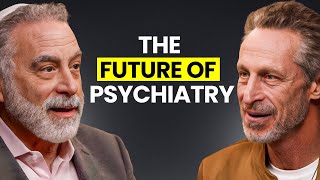
Dr. Robert Hedaya treats psychiatric symptoms by finding their physical cause: a panic attack that vanished after B12 injection, prosopagnosia that improved with laser therapy. He uses brain imaging and metabolic testing to target root problems instead of just naming diagnoses, then prescribes treatments like neurofeedback, hyperbaric oxygen, and photobiomodulation.
Chapters
A woman comes to me and she's having panic attacks. She has B12 deficiency. I give her injection. With the first injection, her panic is gone. And I'm like, oh, my God, what else am I missing?
Today's guest is Dr. Robert Hedaya, a true pioneer in functional psychiatry and has been doing this work for more than 46 years, helping people with some of the most complex and treatment resistant cases. Now psychiatrists are looking at the brain, doing imaging, doing something called qeeg, which is like a brainwave test that maps out things that we never saw before and that we're not making sense of. Talk about some of your more recent work around the whole adoption of this technology of improving neuropsychiatric treatment with qeegs. What is it? Why do we use it?
We can follow and detect the information flow patterns in the brain so we can see this and study a person's brain and then correlate with the symptoms.
So when you see these patterns, it tells you, like, which area of the brain is working, which not working, what you target, how it correlates with symptoms. And so you can see almost like diagnostically in a way that you can never see before.
Yeah. Oh, it's mind boggling.
Are you the only one doing this?
To my knowledge, yeah.
So what do you think the most common things that are causing these problems of sort of anxiety, depression, cognitive decline.
I hate that question. If you said to me, what are four things that you could tell a person to do to help themselves? I would say diet. Be careful what comes into your mind. You need to really communicate with God or the universe or whatever you think this greater thing is. Some kind of exercise, whatever is appropriate for you. Is it really critical? And I would say relationships are essential.
Hey, it's Dr. Hyman. I'm so excited to share this episode with you today. But before we dive in, I want to get your help. Please take a minute to hit that subscribe button. Whether you're watching here on YouTube or listening on your favorite podcast platform, it truly means the world to me and it helps my team. And I bring you this podcast every single week. Plus, I don't want you to miss a thing. So thanks so much for being part of this community and I'm glad you're here. Bob. Dr. Hedaya, welcome to the podcast.
Thanks for having me, Mark. It's great, great, great to be here.
Holy cow. I don't know where to start. We, we were the OG functional medicine neophytes. Learning functional medicine together at the first training session, applying Functional Medicine clinical practice in Gig Harbor, Washington in what was it, 1990, 98.
Yep.
And we were one of the first cohorts to go through the program. There were more teachers than there were students in the class and we became best friends there. And it's been almost 30 years that we've been doing this functional medicine stuff.
And I want to say thank you to you for what you've done for functional medicine. You know, I'm, I'm the scientist, the clinician, working, you know, in the trenches, you know, learning and expanding and doing all this. And you're out there.
I'm just a big mouth.
Yeah, you're doing a great job, man. You're doing a great job. You're spreading it to the world and it's fabulous. This is really needed.
I want to be the mind virus that it fix every doctor. Yeah, it's amazing. We know. I think back back then we were just sort of joking before the podcast that, you know, people were laughing at us for what we were doing and we're making fun of us for talking about things like leaky gut and mitochondria and the microbiome, and we didn't even call it that then and we called it the gut. And now it's sort of mainstream. And just last week I got a call from the chief medical officer of the center for Medicare and Medicaid Innovation, or cmmi, which is the innovation hub within Medicare that looks at new solutions to chronic disease and problems. And she called me to tell me they were launching a hundred million dollar effort with 30 different sites, $3 million or so each, to study functional medicine and lifestyle medicine in the treatment and prevention of chronic disease in my lifetime. I never thought that would happen. And in the website of Medicare, it says the word functional medicine. I'm like, wow. And we've come a long way. And you know, you are a psychiatrist, also an everythingist at this point.
As you say, accidental psychiatrist. I'm an accidental internist.
Internist, yeah.
Yeah.
So like you can't look at the body without looking at the brain. You can't look at the brain without looking at the body, and you can't look at the mind without looking at the brain, which is sadly what most psychiatry does. And we're in this extraordinary moment in revolution. I mean, you're 73, I'm 66. We're kind of, kind of old now.
But, but getting younger, getting younger.
And we've seen, we've seen the trajectory of science emerging over the last decades and now there's there's people we've had on the podcast like Sabani Sethi and Chris Palmer talking about metabolic psychiatry and realms of psychedelic psychiatry we've talked about with Rick Doblin and others. And you actually, you know, do ketamine assisted there, which is in that realm. You know, you, you really got in the front row seat to what's happening in the field of, of mental health. But from the lens of functional medicine and your book way back when, which I think was even before you.
It was before functional medicine, Understanding biology, biological psychiatry. I didn't know it, but I had discovered functional medicine. Yeah, in 1987.
That's right.
And maybe even, even before, because of my internship, there was a woman who had low potassium and I decided to give up bananas instead of, instead of K light.
Yeah, they did.
They were not happy with me.
No, that's right. Food is medicine. And you basically have seen, you've seen the development of this field and how so much of our ideas and concepts around mental health are just wrong and that in order to treat people you need to think about treating the whole system and that there are ways to fix the brain that change your mind. And that's not something that is really done in psychiatry. And you have therapy, you have psychiatric drugs. They suppress symptoms, but they don't really deal with the root cause. And as functional medicine doctors, we are root cause specialists. That's what we do. We dig and dig and dig until we find the thing that's or the things that are off and then we try to correct them. And we also then try to do things with modalities that we're going to talk about which help map out where the dysfunction or imbalances are and then how to correct them by supporting the body's own endogenous healing system. They're all the built in repair system that we have which is available. Like we just don't know how to activate it. What's really tragic is that there's so many people suffering with mental health issues and they're not able to access the care. They don't know that this is even an option for them. They don't understand that there's a way out of their suffering that has nothing to do with talking to a therapist or. Not that that's bad, but I've certainly used them or taking psychiatric drugs which generally don't work or cause a lot of side effects or have a lot of sort of symptom suppression that don't, don't really do the trick. Maybe you Kind of walk us through sort of the original insights that you had around how to think differently. Because as you mentioned before, I wrote a book called the Ultra mind solution in 2009, which was a good decade more than when we first met. And where I basically was seeing all these people and treating their bodies and their mental symptoms would get better, their ADD or their dementia or their depression or anxiety or whatever was going on, or bipolar or schizophrenia. I'm like, well, what's going on here? And. And I realized, oh, the body is.
Connected to the brain, Isaiah. It's the, the neck. It's called is the neck. Right? I think we missed that lecture, right? Well, they didn't give that lecture, actually.
It's true. And we, we don't really think about, you know, in psychiatry what happens below the neck, but that's where all the action is typically, and it's systemic. So can you kind of walk us through the kind of origin story of how you began to understand this, what maybe some of the original cases you had were and what you've learned over the last 30 years give us sort of a bird's eye view of the life and mind of Bob and Daya.
So quick thing that happened in medical school is I took six months off of medical school to study medicine on my own. And, you know, I had the two years under my belt and I took six months off and I said, you know, let. I'm memorizing stuff. Let me, let me, let me get this, let me get this right. So I took six months off and I was studying about 10, 10 hours a day. I had a whole thing that I laid out and I stuck to it. And I was, you know, very diligent and very amazing. And I actually came to actually understand the body and basic physiological principles. I wasn't just memorizing fast forward. I go in, I'm going to be a surgeon. I have a great mentor who teaches me how to do hypnosis in 10 minutes. I'm like blown away by the results. I switch to child psychiatry, I go to Georgetown, then I go to nih, where they were doing cutting edge research. And then I go into practice, and I'm in practice doing basically psychopharmacology. And I'm doing cognitive behavioral therapy, which was at the time, cutting edge therapy, which I learned from really, one of the top doctors in the country. So a woman comes to me, her name is, we'll call her Joanne. And she's 50 years old and she's having panic attacks. I'm like, well, this Is a piece of cake. I mean, I'm just, you know, I'll. I'll do some cognitive behavioral therapy. Well, that didn't work, so I'll do some, you know, mipramine or Xanax came out at that time. They were telling us to use 8 milligrams of Xanax.
8 milligrams. Geez. It's like a horse's dust.
So my working Hypothesis was she's 50 years old, she has an unhappy marriage, her only child is going off to college, she's having separation anxiety because she wants to leave her husband. And panic is basically separation anxiety where you think you're going to die. And then this deep parts of the brain trigger the adrenaline in the brain. The locus cereal gets activated, and you're like, I'm going to die. And you have panic. Your brain says, mortal threat. So a year into treatment, I'm dancing Saturday night at a bar mitzvah and my pager goes off. Look, go find a phone booth back in the day. Right? Okay, call. Hey, Joanne, what's. What's going on? I'm having a panic attack. Okay. Talk to her. And then I'm like, what is going on here? This is a year. She should be better. So Monday morning, I go into the office early to look at her chart. I had one lab at a cbc.
A complete blood count, psychiatristing blood tests. God, that was heresy back then.
I had one turned out to be crucial. The size of her red blood cells. The MCV. That means not really high. It was 101, the range of 80 to 100. I ignored it because two reasons. One, I was taught to treat train wrecks. Right. A little out of the range. Don't bother. Yeah. Because I was trained in the hospital. Yeah. They treat train wrecks, Right? Yeah. And the second thing is, I didn't know what it meant. So that was it. So I went to the national library of Medicine, I looked it up, and it says, oh, it could be a B12 deficiency. Do a shillings test, no longer available. But at the time, I never had done it, but I did it. And she has B12 deficiency. I give her injection. With the first injection, her panic is gone. And I'm like, oh, my God, what else am I missing? Because people are in the system. They're just in the system. They go around this, you know, you know, revolving door in the city of this doctor, that doctor, you know, this medicine, that medicine. That's when I was like, I must be missing a lot of stuff.
Yeah.
You know, and then there were a series of things where my mother in law was.
When the doctor says it's all in your head, it means either you're crazy or the doctor's missing something. And I would say nine times out of 10 or more, it's the doctor's missing something.
This is very true, you know, in one sense this is very simplistic, but you have the software which is, you know, how you think about things. Critical obviously, but then you have the hardware is, how's, how's the brain functioning? Does it have the nutrients, does, is inflammation low, are the circuitry, is it working properly, et cetera. Well, you gotta have good hardware to deal with the software, right? If the hardware is broken, you know, then, you know, then you're not really gonna get too far. You're gonna be in therapy for a hundred years. You're not gonna get anywhere.
So I always say it's a lot easier to get enlightened if you, you're not Mercury poisoned or B12 deficient. Your thyroid's working and your gut microbiome is healthy. It's a lot easier to, yeah, if it's working.
Like how are you going to run the race if, you know, you got rocks on your back, you know, you can't, you can't do it.
Well, that's an amazing story. I mean, I, I, I, you know, that's just one example. It's not that everybody with panic attacks has a B12 deficiency. That's the problem in medicine. We like, oh, you have panic attacks. Oh, that causes B12? No, that's that the symptoms in psychiatry are all based on like categorizing people according to a specific category and a disease, but it doesn't tell you anything about the cause.
Right. The DSM is good for insurance companies.
That'S, they call that the Diagnostic and Statistical Manual for Psychiatry, which kind of is organized based on categories.
But it doesn't tell you about etiology or cause at all.
No, I, once I sat, you know, remember Thomas Insel was the National Institute of, National Institute of Mental Health And I had dinner with him once. I said, so, Thomas, what do you think of the DSM 5? And he goes, well, I think it has 100% accuracy but 0% validity. I mean, it's really good at categorizing people according to syntax, but not telling anything about what to do. And I think this example of the panic attack is so key because there are many reasons for panic attacks. That's just one. And it's, and when you start looking at the biology you kind of have to do a deep dive to see what's going on. I mean, I had a. I remember writing my book Ultra Mind Solution. I was talking on the phone and some guy was fixing my stereo or something in the office and he heard me chatting. He was like, oh, yeah, yeah. I was so depressed. And then I took the B complex and I was cured. And I'm like, well, yeah, if you have folate deficiency or B6 or B12, those affect your neurotransmitters and it works, but it's not. I mean, everybody with depression has that, right? So you kind of had that insight. You saw this.
Yeah, and then I had serotonin. My. I, I really. Now don't get me wrong, allopathic medicine is great for certain things, as we know. I don't want to throw that out, of course it's medicine, but you know, I saw really horrible care of my mother in law, my father, at the major hospitals in the, in New York City. And they misdiagnosed my mother in law. She had, she had myxedema. And they wouldn't treat it because the reference range, they didn't look at her clinically. Thyroid, low thyroid, low thyroid. And, and the reference range said, no, she's not, she's not abnormal. That was the same test we use now, but the reference range was up to 10.
Yeah, 10.
And she was 11. They didn't want to bother treating it.
Like it should be in three and.
A half or two and a half even. And if you have a psychiatric problem, maybe even lower and you have certain genetics, even lower.
Yeah.
So it depends on that. So anyway, whatever you just forced to learn because there's nobody out there to help your patients. I would send people to endocrinologists, but I'd get back nothing. So I had to actually learn myself what to do.
So you're the accidental internist, I'm the accidental psychiatrist. It all comes around the same stuff because the body's one big interconnected.
All these things travel together.
Now there's this whole field of metabolic psychiatry we've talked about on the podcast, which uses ketogenic diets and nutrition more aggressively. What do you think about those?
I think it's great. It depends on the patient. You got to see what each person needs. It really does have to be personalize one thing. Let's say this, understand this, the people should understand this. There's a book called Mad in America and it traces the history of psychiatry in America over 250 years. And what you see is that There are fads in psychiatry and probably in medicine as well. And so you see that, you know, maybe a hundred, 200 years ago, you know, we thought that the problems were demons in our heads.
Right.
Anyway, so, okay, exorcism for everybody. And then actually, they started putting people in giant centrifuges and spinning them around. And they said, oh, hey, it works. The studies show work. So the hospitals got together and they made these centrifuges that had, like, they could spend 12 people at a time. That's great.
Like at the carnival.
Yeah, exactly. And so bigger and bigger.
Bigger.
And then after about 30 years, the science, they start say, you know, the study's not holding up. This is questionable whether it works. And then out comes a new model. Insulin coma, you know. Right.
And.
And then we had the psychopharmacology revolution in the 50s. Right. And I don't want to say meds are bad because I wouldn't want to practice without them, but they're so overused. Yeah. You know, and so there's always fads. There are feds. So the metabolic medicine. To get to your question, if you don't want. So I think for sure we're onto something here in functional medicine. There's no question about that. No question at all. But you have to also recognize we have a chronic disease epidemic in the Western world for sure. It's spreading. And we're gonna actually succeed because we're identifying now through functional medicine, the root causes, and it's gonna permeate the system. It will. It'll take 10 more years, 20 more years, 30 more. It's gonna permeate. Diseases change over time. If you remember in training. Thyroid problem. Oh, thyroid problem on the fifth floor. Everybody runs up to see what it is. Let's feel the goiter. It's so rare now, what is it? One in five women have Hashimoto's thyroiditis, you know, and the disease changes. So as we. As we treat the chronic illness epidemic, we may have other things to deal with. So things do morph over time.
We have long Covid.
Right now. We have. Now we have long Covid. Who would have thought that was coming?
So. So you basically kind of mapped out this field of biological psychiatry even before, you know, you kind of found functional medicine. But you've evolved the model over the years, and you treat people with. Dealing with their diet, with their gut, with nutritional status, so detoxification with hormones.
Straight infections.
Yeah, all the. All, like, tick infections, Whatever. Whatever it is you have to deal with. But what I think is really Interesting about your work is that you've evolved into using certain modalities which typically have not been used in psychiatry. I always say this on the podcast, but the joke is the neurologists pay no attention to the mind, and psychiatrists pay no attention to the brain. But now psychiatrists are looking at the brain, doing imaging, doing something called qeeg, like an electroencephalogram, which is like a brain wave test that maps out things that we never saw before and that we're not making sense of, and using modalities that people aren't typically using. So let's sort of talk about some of your more recent work around the whole adoption of this. This technology of. Of improving neuropsychiatric treatment with qeegs. What is it? A quantitative eeg? How does it work? What does it do? Why do we use it? How does it connect to imaging? Like, what kind of imaging do we do and what kind of things are you seeing?
Essentially, the quantitative EEG is we put a cap on a patient's head, we measure the electrical output at 19 points, and it goes into the computer. It's really AI driven. This is standardized against a age and sex match control through the NIH database. And what we do is we get all this information over the course of 15 or 20 minutes with eyes open, eyes closed, and then the computer takes that.
So you're just. You're just in there, like, quietly laying down, and they.
Yeah, your eyes are closed. It's painless, non invasive. You do it. We do it at home, all over the country, actually. We send the equipment to people's homes. It takes about an hour. And what we get back from that is a basically a wiring map of the brain. We can actually see all the networks in the brain. We can see the surface areas of the brain and how they're functioning. Wow. We can follow and detect the information flow patterns in the brain. So, for example, dissociation. You'll see the information flow from the frontal lobe on the right side to the parietal lobe on the right side of the brain. These are two different parts of the brain that is not flowing. There's a dissociation.
Right.
And so we can see this and study a person's brain and then correlate with the symptoms. And then we also do imaging, like the NeuroQuant MRI, which tells us the size of different areas, small areas in the brain. And we correlate all that data with the patient, with their symptoms, and we say, okay, here's what's going on. This network is out of whack or this, this is working too hard. Or like your worry network is just like it's not resting, you know, or you have trouble with the salience network, so you can't decide what's important. You get overwhelmed. You can't process things properly.
So when you see these patterns, it tells you like which area of the brain is working, which not working, what you target, how it correlates with symptoms. And so you can see almost like diagnostically in a way you can never see before.
Yeah. Oh, it's mind boggling. I could see if someone has a metabolic problem and you can tell which.
Areas of the brain are not working or working. So what do you kind of see and what do you, what are the kinds of patterns? So someone's like having depression or they're having. So bipolar or they're having whatever.
So in depression, for example, you'll see that the frontal lobes are not talking to each other. The information not flowing from left to right and right to left. Right. So that's something we can treat actually, you know, with a light to the brain specifically targeted to those areas. Or for example, a guy I had who had schizophrenia and I didn't know till he was paranoid. Okay. I didn't know till I did his qeg. I could see this track that went from the front of the brain to the back of the brain, the visual part of the brain. And this helps you, this tract helps you assess the valence of a person's face. And I said, oh, this is strange. Right. So I, I treated it with a laser. We could target it. Exactly. And after two or three treatments, he says, you know, I'm reading much faster. And I, I didn't realize that whenever I look at someone, their face was getting distorted and they looked like they were looking at me with disgust. And it actually, he said this, I remember him telling me this, that it actually doesn't make physical sense that their face would look that way given how their body is. In other words, he could now see the distortion and that was gone. That was the basis of his paranoia.
That's amazing.
Amazing. It's, it's astounding.
You, you see the patterns in the brain waves that correlate with different areas of the brain that are dysfunctional, that are not online for various reasons. So what are the reasons that people's brain is not firing? I think of like, almost like an arrhythmia for the heart. Right. It's like your heart rate is not normal, your brain waves are not normal. What's causing that?
Well, there's many causes, obviously. So it could be head injury. You know, it could have had a head trauma. You don't even remember. Or maybe you had one when you were a kid. You and that part of the brain where you had the trauma got segregated. In other words, it couldn't wire. When you were adolescent and a young adult brain rewires, and it couldn't really rewire with the whole brain, so you had to reroute all the information highways in a different way. And now you don't have certain skills and you don't even know because you're just so used to it. You know what I mean? It could be that. It could be toxins, it could be certain infections have a, a tendency to go to different parts of the brain. Mycoplasma goes to certain. It goes to the basal ganglia, for example. I've seen it. And then you treat the mycoplasma and you actually see the QEG change over time. It's slow. If you have an infection that affects your brain function, it won't really normalize for three months. It's gradual, but it, you know, it will normalize, but won't takes a while. Different infections go to different places. It's strange, but that's what they do. We know Pandas, you know, strep infection with some kids, you know, goes into the. Yeah. OCD in the basal ganglia and the chordate, nucleus, et cetera. So, you know, we're, we're seeing deep into the brain in a way that we could never see. And, and, you know, there's so much information in these scans. So I can say, oh, this net, you have, you know, you have six networks that are at a balance, let's say. But which one of these is bothering you the most? That's where we're going to start. Yeah. Right. And that, that will help reduce your stress, enable you to function better, you know, and, oh, now I can start to cope with my life. I can organize things now, you know, that kind of thing.
So you're basically seeing the, the abnormalities, but then you have to trace back what the causes are.
Yes. We're always doing the root cause medicine thing. Is it a gut thing? Always doing the root cause? Yep.
Right. So you kind of can see the, the pattern in the brain, which gives you a more targeted therapy. So you do the root cause analysis and the treatments.
Right.
But you also then do other modalities that are kind of ancillary, like neurofeedback, hyperbaric. Oxygen laser therapy, which is something you've kind of innovated. I'd love you to kind of talk about this hammock moment. I'm like, what is this chat about? And like, how, how, how did you kind of, kind of get all these pieces to come together?
It was from God or the universe or whatever you want to call it. So I was actually forced to take a vacation because we had paid for this place in somewhere in the Midwest, and they wouldn't give us our money back. So it was like, all right, we gotta go. So we took a week off and. Very sparse, very sparse. It's like, nothing to do, Right. So just hanging out there, and my daughter was with us, and we went into a sweat lodge, and that was unbelievable. It was great. And then the next day, I'm in a hammock for six hours, and I'm actually, at the time, retired, because I had retired in 2014.
You had.
Yeah, I missed medicine a lot, but I was retired. And I'm in the hammock for six hours and I'm reading a book, Doidge, I think how to Heal the Brain. Or I think that's the name of the book. Anyway, so I'm reading about Russia. In Russia, they're using lasers for the brain. They snake it into the body, up into the brain, and they.
Laser angiogram.
Yeah. Like, through the arteries, through the, through the veins. Not the arteries, but the veins, right into the brain. And then they're talking about how it works. And I'm like, oh, my God, this could really help the brain. This is amazing because it's giving ATP. It's doing a lot of different things we could talk about. But I was blown away. Then I'm like, well, I don't know. How would I even know where to point this thing? Anyway, and the next chapter is qeegs. And I'm like, oh, my God, this is how I would know. And so I studied QEGs and lasers. Laser, I should define, is just focused light. It can be very low potency or high potency, but it's very targeted, very focused. So we could control the wavelength, how the frequency of the pulses, and a lot of parameters about it. So I, I, I'm, oh, I could learn qeg, and then I could probably know, looking at symptoms where I need to apply the light to heal the brain.
Yeah.
And so I studied for three years, and I started to do it in 2017.
So you didn't, you weren't doing QEEGs, you just read about them and Then.
You started learning about them and I hired a mentor. I studied for three years.
What are they used for now in.
There's a difference between EEG electroencephalogram that neurologists do all the time or seizures.
And things like that.
Yeah. To see if you have a seizure or something like that. And. And then there's a quantitative EEG was. Which is AI. It takes all this data that you can never analyze yourself. Like all those squiggly lines that you see. Correct. 19 lines of this. You can't, you can't put that all together. So the AI actually puts it together and gives you visual patterns and network analyses and analysis of the, the, the electrical patterns in different surface areas. The whole brain really. And that's the quantitative. It's quantity eeg and it's all AI driven.
Wow. And you were telling me that you could basically just send out a helmet that.
It's not a helmet or a helmet.
Or some kind of electric.
It's a box, it's a computer and various things.
You have to hook it up to your own brain.
You don't hook it up to your brain. You put the cap on what people think they hook up their brain. You just put this cap on with gel and. And we have the tech who shows up on the screen and tells you what to do and make sure the connections are good. And then you just, you just basically look at the screen for about 15, 20 minutes depending how much time we want. And then you close your eyes. 15, 20 minutes, take it off, wash your hair, pack it up, send it back to us.
That's amazing.
Yeah.
So really, anybody can get this.
Anybody can get this.
And then you get the report and then you identify the patterns and then you design a program. But you also have to do the sort of.
We do it. That's part of what we do. But then I want to. I gotta get clinical data, right. Know what's bothering you. And then I want a neuroQuant MRI so I can correlate it. There's a strong.
Explain that because you're talking about waves lay to the brain and then you're talking about structural changes through a quantitative analysis of a brain on MRI.
So the NeuroQuant is telling us about the structure of the brain. Right. Is it big, is it small, is it inflamed? The right. Is atrophied, has it trunk. And then the qeeg, the quantitative EEG that we do that, we put that cap on you that tells us about function. We have structure and we have Function and then we correlate them and look at your symptoms and then we can say, okay, this is where we need to focus.
Are you the only one doing this?
To my knowledge, yeah.
No one else using laser.
There are people, there's a lot of, they call it photobiomodulation. Right. So there are people making these helmets now, right?
The red light therapy and there's 10.
64, 8, 10 or whatever, and the helmets that they put on for neurodegenerative disease and that kind of thing. But the thing is, I think that that is not specific. Like we're very targeted, we're very specific and we're very personalized. That's kind of a non specific. So. And I don't know, I think it's, it's definitely debatable whether that penetrates the brain. It's highly unlikely that it penetrates because the laser. No, the laser penetrates about 2.6% of the light gets through that. We know some people say 4.2%, about 2.6, let's say. But the LEDs, which are basically these lights that are very weak, you're not going to get much going into the brain, but you may still get some general benefits because, you know, you have all the blood flow and the mitochondria and the cells and everything, you know.
So this is really key. You just said a big word, mitochondria. And I think, you know, there's a lot of work in this field around mitochondrial health and the brain, whether it's Alzheimer's or Parkinson's or autism. Suzanne Go has been on the podcast, has done tremendous work in understanding mitochondrial dysfunction, autism as a way of both understanding the disease and also treating it. Chris Palmer at Harvard has wrote a book called Brain Energy about the brain energy system and how that's so dysfunctional as a driver. And it's basically an energy deficit in the brain that leads to mental illness. And by restoring healthy brain energy through ketogenic diets and metabolic health, you can correct a lot of psychiatric problems. So you kind of come at this the same way. And one of the treatments that you use, the laser actually works by increasing mitochondrial function and ATP.
Right? That's one of the main things that it does. So when you basically put the laser pointed to a certain area, the photons that light particles or waves or whatever they are, go into the brain and they actually go to the. The mitochondria are like little batteries, right? And we have hundreds or thousands in every cell and they have, you know, four points where they Function. And the electrons, like, floating down there like a wire. Right. And the mitochondria do so many things, but one of the things they do is produce energy. Without that ATP molecule, we're dead. Right. So the photon from the light actually knocks off nitric oxide molecule, and then the ATP flows through. It's more complicated than that. But the ATP now instantly flows through. Now you have more energy. Now the brain says, oh, now I have energy. I can do some repair work, fix the potholes, you know, do the work that needs to be done. Then you have the nitric oxide bringing more blood flow. And then you have changes, Mark, that are amazing, like misfolded proteins or the proteins in the brain that don't fold. Right. And they cause problems. And they're like. They're like viruses. They spread. Right. And it actually reduces that and reverses alpha synuclein misfolding.
It's a dementia protein.
Yeah, yeah, yeah. And tau protein, you know, all these things. Beta amyloid, you know. And so there's the acute effects of the light, the laser, which we're directing to specific places, and then there's effects that occur over time.
Basically, do like the qeg, the brain imaging, the functional medicine Assessment and workup for causes.
Right.
Then you design a comprehensive plan and then use various modalities. Laser therapy is one of the key ones that's kind of new and novel.
Right. There's a lot of research on this.
A lot of research on laser in the brain.
Yeah. Laser in tissues, laser in body, laser in the brain.
I haven't seen anything about it used. Like, I've seen the transcranial magnetic stimulation.
Yeah, that's different. Yeah.
Which is also used for depression and mental issues. But this is really different than that.
Right. I personally think it's better because the tms, the transcranial magnetic stimulation, is basically like a shock. You know, it's a magnet that's shifting everything in one direction, then it shifts back to the other direction. So it's a little bit of a shock. The cells and the outcomes, although now they're modifying a little bit, but the outcomes, they don't. They're not durable, really. After six months is a high relapse rate, you know, and it's a lot of money and expense and time, and it's a laser.
You don't see the relapse rate.
It depends on the person. So now, if you're treating a young person well, as an example, this woman, the first patient I ever treated with the laser, she had facial blindness. And I didn't I didn't even know she had. I didn't even know what. I didn't even know it existed, okay? And I'm treating her because she has a little early dementia and, you know, some memory problems, and she has a little bit of a temporal lobe seizure. And anyway, I treat her with the laser based on the qeg and where. Where I'm going to treat her because she's having trouble finding words. And she tells me after the first visit, like, five minutes after the first visit, she says, oh, my God. I can remember the. I still hear her voice. I can remember the face of the person I worked with this morning. Now, she had built up a whole structure, but she was going to people's homes to do environmental consults. So she'd take pictures of their faces, the house, everything. Everything was documented because she couldn't count on her memory for face. She'd come to the door and see someone, shoot, like, I never saw you before in my life. And then with the laser, five minutes later, she says, oh, my God, I remember the face of the woman I treated.
This. That's pretty amazing.
The woman and her husband, and he had this mole on his face, and, like. Wait, wait, wait. This. What are you talking about? This doesn't make any sense. I couldn't figure it out. But what I figured out eventually is that the brain has a lot of cells that are kind of alive. They have a heartbeat, but they're not doing their job. I say they're in a liminal state. They're kind of on the border between alive and dead. And if you give them the energy, they wake up. And so her cells woke up, she was cured. That was it.
That's amazing.
I published it. It was the first ever cured acquired prosopagnosia, facial blindness.
And how long do you have to apply the laser to this head?
It's a matter of how much energy you want to deliver to the. So we kind of measure the area we're treating, the square, how many centimeters squared. We calculate how much energy we want to deliver, and then I decide on the other parameters, you know, pulse frequency, et cetera. There's a lot of different parameters. And. And then we start slow. We always get certain imaging before to make sure there's no reason not to do it. You have to make sure they don't have an aneurysm or that there's no tumor or there's no. You know what I mean? And then we apply it. And. And in some people, it actually really. Boom, they're on the road, they're done.
Is it five minutes? Is it an hour? Is it five?
No, no, no. It's maybe. It depends. It could be 10 minutes to 20 to 25 minutes. It's a short treatment. Oh, it's short.
And you just need one treatment, or do you need multiple.
For most things, you're going to need multiple treatments. Like how much. So, for example, for the visual thing, the guy needed three. I just did it on a guy who's 80 with Parkinson's. I did the visual thing, and he needed three. And that was cured. Was good. Not the Parkinson's. This was treating the Parkinson's. But this was a different visual trait that was causing trouble. But if you have someone with a chronic condition, then, for example, one guy with Parkinson's, we were doing twice a week, and now we're down to twice a month.
And you combine that with other stuff like hyperbaric oxygen therapy and neural feedback, speech therapy.
In other words, you want to. It's like going to the gym.
You know, the Brain Gym.
You're going to the Brain Gym. Before you go to the gym, if you want to work out your biceps, you have to eat the food, and then you got to work them out. Right.
This is a real revolution. Are there any other colleagues doing this?
No, no, I'm. That's why I want to. That's why I want to do these educational cons. I want to train people who need this. I have people coming from all over.
So people listening and are curious about this. They can ask their doctor to work with you.
Yeah, you can go to my website. It's wholepsychiatry.com and we have an educational consult model that we've been doing for about a year. And basically, you go to your doctor and you say. Because people feel weird asking their doctor, you know, so they go to the doctor and say, you know, you've helped me a lot, but we're kind of stuck here. Or I'm on too many meds or have these side effects, or I want to see if I can get to the root causes of my problem. And there's this guy, Dr. Hedaya, who's doing this method. Here's his website, and he does these educational consults. So your doctor stays in charge, and you come and visit me physically, in person. And we'll spend probably four or five hours together, and I'll do physical and go over all the records, and we'll have the QEG and we'll have the imaging for the structure. Have all that. When you come and then I process all that. I say, okay, here's what I think is going on, the root causes. Here's what's going on in your brain. I'll show you, and I'll show the doctor. I'll share the screen, and then I'll say, okay, this is the workup. I want to confirm my hypotheses about your immune system or, you know, this or the other thing. Right. So you'll do these tests, and when we get all these tests back, I'll sit down for about, typically four to six hours, go through all the data, which probably I won't have to do in the future. When your company is in my office, I'll go through all the data and I'll come out with a plan, which I will make a sequential plan for the patient, put it on paper, present it to the patient. They come back to my office for the presentation. The doctor's on zoom. And then the doctor will consult with me as needed going forward. And the point of this is to help a lot of people around the country and to train the doctors in this kind of methodology. That's my goal. That's my goal. I want to train people. This can't stay with me. And just to be clear, it's all based. The clinical, the basic science. It's all there, the lot. Just go do a AI search on. On photobiomodulation of the brain. You'll see there's hundreds, if not thousands.
Yeah. It sort of speaks to an interesting thing, which is that there's a lot of advances in medicine and science, but they kind of languish outside of medicine because doctors don't adopt them. Right. It can take decades.
Decades. Decades. So Semmelweis.
Right, I was going to mention that.
Right, right. For people don't know this guy, he. He actually Learned in late 1800s, I think, that hand washing prevented puerperal fever. Well, a lot of women were dying after.
Well, all the midwives were washing their hands. And the doctors.
And the doctors weren't right, but the doctors didn't want to learn.
And they were like. When he said, you know, maybe we should wash our hands, guys, they were like, oh, you're a heretic. How could you imply that doctors would cause our patients to become sick? And you're banished from medicine. And he died in disgrace.
You know what he did? He sent out a letter to 100 hospitals about hand Washington. And they were incensed with him. And they didn't start washing their hands for 50 years.
50 years.
It's tragic.
One of our presidents died because the doctor didn't wash his hands.
Really.
McKinley was shot in the stomach. And you remember McBurney, the McBurney's point from medical school with the appendix, the appendix point where you push on the stomach. It was named after the surgeon McBurney who got called to see McKinley after he got shot. And he stuck his finger in the wound and he got infection and he died from the infection and it wasn't from the gunshot. You know, so that's how Theodore Roosevelt became president. And yeah, it does take a long time. I mean, you know, we've been doing this for 30 plus years. Functions medicine around for 40 years right now, only now we're seeing it in Medicare language on the website after decades. Right. It's sad because so many people are suffering. And I think that, you know, the work you're doing to understand the biological mechanisms are, are really important and the, the kind of. There's a lot of ways into repairing the brain and what, what the modalities you use are actually different than using a drug because drugs typically interrupt or suppress or block some, something in the body. These actually enhance the body's own repair systems like hyperbaric oxygen and neurofeedback and laser. Can you talk about these as, as sort of therapeutic levers that you use in psychiatry and a little bit more about each one and how they, how they work. You talk about the laser, but I think, you know, it's about energy, right. Release and improvement.
Yep. So hyperbaric oxygen, in a general sense, you could think of it as a general tonic for the body. Right. As, you know, you're treating actually the whole body. It's not, it's not targeted necessarily to a part of the body. Right. And in, in hyperbaric oxygen, you're, you're doing so many things. You're increasing delivery of nutrients. Right. You're increasing delivery of oxygen. You're actually increasing nerve growth factors. You're stem cell growth. Right. Capillary perfusion. Right. So it's really helpful. Unless you happen to have Babesia as an infection, then it's maybe not the best idea because they love oxygen. Babesia, Babesia loves oxygen. Right. Lives in red blood cells and they love oxygen. So we don't do it if you have Babesia, but, but we'll do it for lots of causes and we don't use it in everybody, but we'll use it for people with trauma.
And you have it in your office or you just send it in.
We have it in our we have a couple of chambers in our office, and we people have to live there.
Near you to do it.
Some people move for a few months or a few weeks, six weeks to three months or even six months to get the treatments. And some people will buy a HBOT and put it in hyperbaric oxygen chamber, put it in their house, for example. And then with the laser treatment, it has to be done in my office. But as I trained people in this, which takes time to train them, then I'm hopeful that people will actually be able to do it with their patients in that city where they are, you know. But right now I'm the guy who's doing that.
And are you seeing results using this sort of extra combination of things in addition to functional medicine that you weren't seeing before?
Am I seeing results in situations?
In other words, you've been doing functional medicine, psychiatry for decades, right? So with the advent of these new technologies that you're applying, or these old technologies applied in new ways, what are you seeing as the improvement over what you were doing before?
First of all, I can reach conditions that I can never reach. So, for example, schizophrenia or schizoaffective disorder depends on the resources the patient has, their willingness for treatment, for example. A lot of times these are infection based. You can actually normalize things. You can treat this particular area, the supramarginal gyrus, with the light, you know, which is helpful. I'm seeing people with Parkinson's disease now, which I never bothered treating before. Now I can treat it with the neurofeedback, the hyperbaric, and with the targeted laser. And you find this is fascinating, that Parkinson's, like everything else, is kind of a waste paper basket diagnosis. There's multiple types of Parkinson's. I have a guy who came to me with Parkinson's, and by looking at his QEEG and then taking his history. His QEEG was the tip off. It turned out he fell off his bicycle twice in the same place. And you could see it on the qeg. So all I had to do is laser that. And he's been stable now for six, seven years without any laser, without anything.
Most people aren't feeling at their health. They're just overwhelmed by the science and what to focus on. There's a new study every week, a new supplement, a new headline. And instead of feeling empowered, you're left wondering what actually matters. And that confusion is not failure. It's just what happens when there's too much information and not enough context. And that's why we created office hours. This is your one on one time with me where we slow down, we make sense of the science and we talk through what I'm actually seeing work in my practice and in my own life, every episode. My goal is simple. Leave you with clarity and clear actions that you can implement right now for your health, for your family's health. This is our space to learn, our space to grow and to take control of our health together. Office hours is live now and I'm glad you're here. And are you seeing the same thing work in like psychiatric conditions like bipolar or other things like that?
So with bipolar disorder, you have to be careful using the laser. They have to be stabilized before you do it because they can respond with too much activity and you could actually precipitate a mania. So you have to actually make sure they're on a stabilizer. If it's bipolar one, the severe type, you have to have the medicine to stabilize them for sure. Bipolar 2, you can stabilize most of the time with lifestyle and you know, treat the infections and the hormones and all that sleep and you know, all of those things. Um, and then there are things like severe depression, treatment, resistant depression, I mean, which nothing touches. And then I have a guy who's now 45, who depressed since he's 12 and started treating with laser and he's been doing great for a couple of years, hadn't done that well for a long time. Now the laser has to be recalibrated now, so he's not doing as well. But you know, that's. Yeah, no, there's amazing things that we can do and neurological things. That's the other thing, you know, for Alzheimer's. So one of the nice things about this is like people will come to me and they're like not ready for the whole million tests and the 4 and a half hours and the whole thing. So I could just say, you know what, I'm just going to jump in with these non invasive things. I'm going to do my quantitative eg. I'm going to look at the volumes in the brain. I'm going to take your history and see what's going on. Do some objective testing with a computer, see where your cognitive abilities are, et cetera. And then I could just jump in and treat. You don't have to do anything. The neurofeedback, you watch a movie. Just watch a movie. That's all the.
Don't you have to like actively engage with it?
No, you can't control it. Your brain.
I'VE done neurofeedback before and I had to play a video game where I basically had to use my brain waves and I had to calm myself. When I can get a certain relaxed brainwave, then the video game would work. If I was stressed, it wouldn't work.
No, this is different. This is different. Your brain, you say, I want to watch this video. Your brain tags it as a reward. And now you're watching the video and we control the settings, right? So let's say the default mode network, we want it to function in this frequency. We want to down regulate it or up regulate it, right? So, so we set the bar and we say, okay, when your brain, default mode network goes here, you get to watch the movie. And when it doesn't, the movie gets gray or goes black where the sound goes down, right. So we start easy, you're getting reward, reward, reward. And then gradually make it a little harder and a little harder and it takes about six or seven sessions. And then brain says, okay, I know how to do this. You cannot control it. This is all automatic. Automatic. Your brain is like, I want the.
Report, I want the movie. It'll be a good movie. Wow. And you also mentioned some of your work about a case of a dental infection and schizophrenia.
So this is very interesting. There's a woman, I've been treating her since late 90s actually and she has severe dental problems and she's just not going to go for anything.
So I put her on, didn't go to dental dentist. She will not go to the dentist.
She has so many, so much infection in her mouth. And as, as you know, the infection causes changes in the brain chemistry. Right. Increases glutamate excitotoxicity. So she was going in and out of the hospital periodically for decades and put her on two antibiotics to at least control the infection, you know, and she hasn't been in the hospital. She's doing great, better than she's done. And I've known her now for 26 years, something like that, Doing great, I understand. Antibiotics. If you look at the, the genetic studies on psychiatric illness, they're called genome wide association studies. Right. Where they look at millions of people and look what genes show up in psychiatric disorders. You know, this, it's like the immune system and it's the hormones. Those are the big drivers of psychiatric.
Yeah, inflammation.
Yeah. So we're treating the neurotransmitters. Right. But you know, we're kind of missing the boat again. Not that these meds are not useful in their.
But you got this woman to eventually treat her dental infections.
No, she won't go. But she's stable and making. Doing artwork and. And she's. It's amazing.
So the really severe psychiatric problems, whether it's schizophrenia, bipolar, you know, severe treatment resistant depression.
Yeah, you can treat these things.
So many different things.
Yes, we treat like 40 different conditions. I mean, you know, as you do, you know, these things all travel together, right?
So what do you think the most common things that are now today causing these problems of sort of anxiety, depression, cognitive decline? Like what?
I hate that question.
Well, I mean, what. There's common things are common, right?
So, like, you know, there's so many.
There's always the outlier case. But, like, what are the things that really are driving this?
And I think this food, right? This mental set, your mindset, right? There's hormones, there's infection, there's sleep, there's a social breakdown is a big factor, right? Antisocial media, you know, you know, it's really a big problem. So there are problems at many levels. Now we have long Covid. So I would say if you said to me, like, look, what are four things that you could tell a person to do, right, to help themselves, right? I would say diet. Okay, so assimilation. Really be careful of what you eat, right? As you say, your fork is your best medicine, right? And also be careful what comes into your mind. What are you exposing yourself to, what are you listening to, what's on the social media, who are your friends, what movies are you watching, what song? Brain pollution. Brain pollution, right. It's all information and it damages you. You know, we're floating in a cesspool of bad information.
I don't really try not to pay too much attention to news. And I just opened a newspaper app and I was like, God damn. Rob Reiner's like, stabbed by his son and the Jews killed in Sydney and the people at Brown Unit. I'm like, what is going on? I just. It's so depressing. I try not to pay attention.
Yeah, you can't pay attention to it. It's not. It's not good. I mean, so I think you have to work on this. I strongly believe this. And I think your previous podcast guest talked about this. You need to really communicate with God or the universe or whatever you think this greater thing is. And B, develop a relationship because the universe works with you, you work with it, it works with you. You ask for help, you get help. Not always the way you want or when you think you should get it, but the universe has Got you back. Yeah.
I think I have to be more specific because I was like, I really want to slow down some more time at home. But then I didn't say how. And I got in a bike accident and busted up my feet.
Very careful.
I'm like, wait, I can't go anywhere. But it wasn't what I had in mind. Like, be specific. I want to be healthy at home.
Yeah. So that's very important. So assimilation, the food, you take in, the information, the people. That's. That's one thing then. Because then you have exercise, activity, and it doesn't have to be crazy exercise. I mean, you're biker. I'm a biker. Right. But I've moderated, and I wish I had moderated earlier, even though I love it. But exercise, some kind of exercise, whatever is appropriate for you is really critical. And. And I would say we'll say relationships are essential. I, I think community, you know, they, they. They say, you know, social media and the community and social media. It's not a community. People don't even know what a community means anymore. I myself recently moved from Maryland. I was at Georgetown, Maryland, and I recently moved about almost four years ago to New Jersey.
Oh.
And I'm on the beach, right. And I have a whole community because I grew up with this community. I know people. People. I'm walking down the street, the Jersey Shore. Jersey shore, yeah. Yeah. Bruce Springsteen, right. That's where he grew up. And people say, hey, hey, Doc. I don't even know who he is. Hey, Doc, can I give you a lift? It's like. And I stop and I'm doing something with my car and other guys. There's the guy who looks homeless. He's near my car. Somebody else stops and says, hey, Doc, this guy bothering you? I said, no, no, no, he's fine. He's fine. He hangs around for a while, or I go to synagogue, you know, and I have friends. I have people. I didn't realize how lonely I was actually in Maryland. I was pretty, you know, I had friends, and I had my practice, my wife, my kids and everything. But I didn't realize that I didn't have a community, you know? And so the. I think people need to develop community.
It's important. It's definitely one of the best investments you can make.
Yeah.
I always say community is medicine. Yeah, it really is.
Yeah, it really is.
But from a functional medicine perspective, there's a lot, A lot of things that are really going on now that are driving, mental health issues, like the microbiome Changes, mitochondrial injury, toxins, nutritional factors, deficiencies.
I mean it's just so widespread, the whole list.
That's really why, you know, I've been thinking a lot about the biomarkers of mental health, you know, and in Function Health, you know, the company I co founded, we do a lot of labs and we can see a lot of things that relate to mental health that people typically don't pick up on. Whether it's marginal thyroid dysfunction, function like you were talking about, or whether it's a, you know, B12 deficiency, or whether.
It'S, you know, what's a big one? A big one is genetic glucocorticoid resistance. So steroids, corticosteroids, which we make, those are stress hormones, right? So they're a set of genes, 5 genes. NR3, C1, F, K, BP5, CRH receptor, 1 and 2 CRH binding protein.
Then it'd be a test on that guys.
But yeah, you know, whatever. It's these genes that basically when you make your stress hormones, when you're under stress, whatever's causing it, the stress hormone goes to the cell and then it goes into the cell and knocks on the door of the nucleus, the center of the cell where your genes are hiding. Knocks on the door, hey, let me in, I got a message for the genes. Nobody answers the door or it takes a lot of knocks. So you have the stress hormone, but it's like insulin resistance. You're not really reading the signal. So now you're more vulnerable to ptsd, to depression, you know, even suicide because you can't.
The cortisol doesn't hit the receptor power.
It doesn't translate to the genes to tell the genes that you're under stress. So you don't make enough proteins to help you cope with the stress.
So it sort of breaks down some of the pathways that required to keep.
Your body can't respond to the stress. How do you, you know now you have PTSD much more easily, right?
One of the things you talked about was you had like a 23 treatment resistant depression patients and you had 100% full recovery rate. Like when you look at psychiatric meds, like if it's 30% remission, that's like a fucking excuse my French, like a miracle.
That's right.
And you're talking about 100%. That almost seems like, you know, too good to be true. So tell us about that.
With my second book, which was the antidepressant survival guide or program, which was really functional medicine, I had a four page spread in the Washington Post Health magazine. And we had thousands of phone calls. I mean, thousands. You couldn't put the phone down without someone calling. So I couldn't really obviously treat everyone. So we screened people with. Looking for people with treatment resistant depression.
Yeah.
And basically people who had the resources, meaning the support to do what I was going to ask them to do. Functional medicine. And I'm treating people. And I was doing a lot of psychopharm. You know, I was. Hadn't dropped that too much. I was still doing a lot of psychopharm. So three years into this, after the book, I'm like, wait a second, everyone's getting better. The diabetes is going away, Osteoporosis is getting better.
Right.
The Ms. Lesion is going away. Like, maybe I'm lying to myself. Maybe it's selective attention to the positive. Maybe I'm forgetting the failures. So I hired a statistician and, you know, we're collecting data on everybody. And I said, you gotta go over the data and tell me, you know, here are all the patients, I've got the log. And he came back to me, says, no, you're not lying to yourself, everyone. The mean depression score at start, it was in the severe range, the low severe range. They all were better by 10 months. And you could see.
And doing just those combination of things. And functional medicine.
Yeah, just doing the functional medicine. By four months, when they're implementing the program, three months, four months, they start to get better and they steadily improve.
And.
And their overall health, all the other things are getting better too, right?
Well, that's the thing. You treat one thing, you treat everything. Right?
Right.
That's the thing. It's like we have such a siloed form of medicine where each specialty focuses on their particular organ or their particular body part and their disease categories. But there's so much cross, all these diseases, like, they're all inflammatory, most of these chronic illnesses.
Right. And mitochondrial.
It's. We're really in a revolution medicine, a revolution psychiatry, you know, I can't believe you're still going at it this hard.
You know, I can't stop. I love it.
Yeah. It's amazing.
And there's no end to what we can learn, right?
No. And we were just like at the beginning, we were the OG kind of. We thought we. Like. I remember when I took that, I was like, oh, this is such an established field. I'm like, we were kind of the few guys who kind of started to poke our nose around. And we've been doing this for so long. And the reason we Keep doing it is because it works. Like, you just see miracles. I always say every day I get to be witness to miracles. Things that I never thought were possible to cure or treat in medical school and things that people suffer from that they don't need to and that we have answers for, they're just not getting them.
And then there's prevention. Right. You know, you have a problem in your family history, there's vulnerability. You know, correct your diet, exercise, your. To get rid of the toxic influences in your life, you know, and prevent.
I think about prevention is treatment. In other words, we kind of define treatment and prevention sort of separately. But I think if you do the same things you would do for prevention, you're also going to treat the problem. Like if you eat healthy, you exercise, you sleep well. Yeah. Your diabetes is going to go away. Right? Right. You know.
Right.
Your autoimmune disease is going to go away. If you do all the right things, if you do the things to get healthy, then automatically, I always say, when you create health, disease goes away as a side effect.
And it's. Think of it this way also, if you have, say you're. You're working with someone in functional medicine and, you know, you're correcting your diet, well, guess what? Your kids are going to see.
Yeah.
And you're going to be helping generations. Right? Right. So it's. I think really we are. It's. It's a revolutionary time. People are taking control of their health more now. They see the system is. Is broken. It's not totally broken. There's a lot of good stuff going on, but it's. It's very limited with this chronic disease model.
And what are you among your colleagues in psychiatry? Are they friendly to these ideas? Are they resistant? Are they, like, you're a quack for get out of my space.
You know, I think, you know, I get this thing from the New Jersey board, right. And there are new ideas in medicine. Let's talk about B vitamins. And I'm like, all right, well, that's a start, you know, but, like, I might. At this rate, we're looking at a hundred years. I'm like, I want it, you know, you want it now, I want it now. And. And the other thing is, not everyone has the bandwidth, Mark. You have the bandwidth. I have the bandwidth. You have the curiosity, you know, you want to get to the truth of it. You get to the root of it, and you're just gonna follow the science. You're gonna follow what. What the truth is. You're not Wedded to a model. I'm not wedded to functional medicine. If something else comes back out that's better, of course. Great.
Wedded to the truth.
Yes, exactly. But a lot of people are. They're too algorithmic and they think they're too rigid. They're afraid, they don't have the bandwidth. They can't handle the anxiety of not knowing. Right. But we live in uncertainty, you know, that's life.
Mom, thank you for all you've done for the last decades to advance this field. You were kind of the OG Functional medicine psychiatrist, when there wasn't any. It was Abraham Hoffer, who was. We both got to know, who was a sort of pioneer really of functional medicine.
You know, he told me with my second book, I'm very. I was very honored. He told me, he said, I had lunch with him at a functional medicine conference, actually.
I think I might have been there.
Yeah, yeah, I think you were there. And he said to me, he says, bob, you wrote the book I wanted to write. Yeah. He saw this.
Well, just for those listening to kind of close up, he was a psychiatrist in Canada back in the 50s and was a kind of a colleague of Linus Pauling and was sort of experimenting with schizophrenia by giving them high doses of certain vitamins and believed that there were certain pathways that were stuck that he could unlock. And that led to the development of sort of this field and in general functional medicine. In fact, Linus Pauling went on to write in 1969 a key paper in Science magazine called Orthomolecular Psychiatry, which was sort of, in a sense, the original paper describing how we use nutrition to optimize your biochemistry to change your brain and your mood and your cognitive function. It was sort of so far ahead of its time, that was like 1969. But I remember Abram Hoffer. He was quite a guy, and I'm so glad I got to meet him. And I actually got to meet Linus Pauling, too, back in the day. Yeah, he was. He was, yeah. He won the Nobel Prize for folding of proteins, but also for the peace prize for the nuclear test ban treaty in the 60s. Yeah. So he prevented the above ground testing of nuclear weapons. And now he was part of the whole movement that I was a part of, which was in medical school called the International Physicians for the Prevention of Nuclear War. And. And I got to kind of hear him speak. It was. It was pretty inspiring.
Wow. Wow, right? What a journey, huh?
Yeah. Amazing. What a journey. Yeah. So thanks, Bob, for being on this journey with me. It's been great. And anybody wants to know more about your work, find out more. Where can they find you so they.
Can go to like, it's like Whole Foods, you know, only it's whole psychiatry. Okay. And we have, there's a lot of information on there, the videos, there's all kinds of information. And then there's a contact form and if you want an educational consult, you know, look for a functional medicine doc in your area and, you know, contact us and we'll help you find someone. If you can't find somebody, we have a network that we're building and, and then we'll meet. Typically we'll meet on Zoom for 15, 30 minutes, make sure this is right for you, that's the right fit. And then I think I can be helpful. And then we go from there.
Well, I know I'm going to get my qeeg. I want to see what's going on in my brain. That's what's happening.
I, you know, I do it, I do it regularly and I don't know if it's because I do the laser on myself, by the way, and I don't know if it's that or 25 years of mountain biking, but my doctor told me my brain looks like a 55 year old.
Amazing.
We just thank God.
I can only hope. I can only hope. Well, thanks for being here and thanks for coming all the way, Austin, it.
Was a pleasure seeing you. Marcus, it's been too long.
If you love that last video, you're going to love the next one. Check it out here.
More from AI




This Is Why 99% of Skin Conditions Don't Heal — And What Dermatologists Won't Tell You






Why you need to start strength training today #strengthtraining #healthyaging #fitness
