Fix Your LEAKY GUT To Prevent DIABETES, HEART DISEASE & CANCER | Emeran Mayer & Mark Hyman
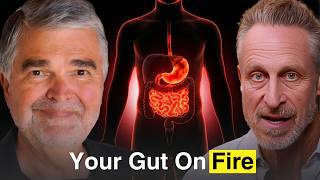
Emeran Mayer and Mark Hyman discuss how a leaky gut drives chronic diseases like diabetes, heart disease, and cancer. They explain the gut-brain-immune connection, the role of diet and stress, and how the microbiome influences everything from inflammation to psychiatric disorders.
It's definitely an epidemic and has not gotten enough attention. If you eat the things that are best for the health of your microbial system, you will automatically do the best for your health.
So we're right now in a big crisis. Over the last 75 years, we have so many chronic diseases that have been flourishing. Cardiovascular disease, diabetes, metabolic syndrome, autoimmune diseases, cancer, all kinds of neurodegenerative brain diseases and mood disorders, cognitive disorders. They're going up at extremely high rates. We're living longer lives, but we're also having shorter health spans, meaning our lives may be longer, but often we're sick for many of the last years of our life. And we're having a public health crisis at a massive scale. And we're seeing this being exposed by COVID-19, which has been affecting the chronically ill, the obese and the elderly who are all suffering from the effects of these various problems. How do we end up like this? How do we get here? Tell us a little bit about your perspective about this pandemic of chronic disease that we're seeing.
Yeah, so I mean, first of all, you know, it is, I mean, I would say, you can't call it a pandemic yet because it's not worldwide, but it does affect a lot of not just developed but developing countries. It's definitely an epidemic and has not gotten enough attention as a whole. Because what medicine has done is it's focused on individual diseases like cardiovascular disease, degenerative brain diseases, and have sort of presented this as individual challenges for medicine. But when you really look at it deeper, there's so many similarities both in the time course that this has happened since World War II, gradually increasing rates, that there is, when you look at it, evidence for systemic immune activation in almost all these disorders. I still know early in my career that people noticed that taking NSAIDs, anti-inflammatory painkillers, that this was good for heart disease and for colon cancer. Nobody knew why that was. So now we do know because the inflammation plays a big role. We've also seen with some of these diseases that they have moved down to younger and younger age groups. This is particularly true for diabetes and metabolic syndrome and obesity. So that suggests some similar process going on. And obviously a lot of things have happened in the last 75 years in our lifestyles. But I think one thing that you can identify as a common, I would say it's more than a risk factor, a common factor here is the change in our diet, particularly in the standard American diet appropriately called with this acronym SAD. So that is definitely If you look at it, this comes down to.
The.
Most likely common denominator for all these diseases. There's obviously other things like pollution, air pollution, less exercise, more stress that has come with our industrialized, advanced industrialized age. but, yeah, diet, I would say, is the main factor that we can both identify and that we can. This is the good thing we can focus on. So, you know, it, in some ways, once you can agree on this, it doesn't take rocket science how to deal with it, because if, you know, the target, the diet, but that's. not an easy task either.
So it seems as though we're seeing this epidemic of chronic disease globally. It's clearly linked to our inflammatory diet and all these conditions that we're seeing on the rise, whether they're brain disorders like depression or autism or ADD or Alzheimer's, or whether they're metabolic diseases like diabetes and heart disease, they're all related to inflammation. This is common denominator and it links together all these things. And as you mentioned, we're so focused on the siloed approach to problems. of the specialties and the particular pathways that we miss the interconnection of everything. And a lot of your work has really been focused on this emerging paradigm shift that's happening in medicine and science. It's still very hard for conventional medicine to get their head around. And it's systems biology or network medicine or I call it functional medicine. It's understanding how the body is one network. And really it's a network of networks of biological systems all networked together, all dynamically changing in real time in response to what you eat, you think, you feel, your activity, exercise, stress, sleep, your nutritional status, environmental toxins, all the things that wash over us are all impacting our biological system, our ecosystem. And so tell us how you came to understand that, you know, what you learned in your academic career and what I learned in medical school, don't really tell the real story of how the body works. And then we're going to get into discussing specifically your work around the microbiome and the brain and the immune system in your new book. which is really, really exciting. I encourage everybody to get a copy of it. It is really one of the most important, I think, books written in a long time. And the book is called the Gut-Immune Connection: How Understanding why We're Sick Can Help Us Regain Our Health. So tell us how you've come to understand this whole paradigm shift from systems.
To systems biology and network medicine. Yeah, so I mean, I've been fortunate in my career. I went through the whole gamut, through the whole history of science, so to speak, because I did start it with a very reductionistic approach of studying ion channels on invisible ion channels on isolated cells, muscle cells, neurons. Initially, then I realized fairly soon that my clinical interest was always in these mind-body disorders. And I realized after several years of very exciting basic science that that could not explain what I see on my patients. then as things went on, so we studied, you know, model systems a much more integrative way, then for a while. And, you know, I have to apologize to many of you viewers that may not like the idea of animal experiments, but that was just a part of the basic of science, and I was part of it, you know. So in retrospect, I would say, you know, I wish I didn't have to do it. So we did very elaborate experiments on systems in mice, for example, of various cells in the brain and the microbes. But then I realized this was mainly focused on stress. And then I realized when we tried to translate these findings to humans, almost none of these translations worked. So it was still way too reductionistic to have an isolated genetic identical mouse and do these beautiful findings. And then you try to see what happens to humans, so it didn't work. So then at some point, we decided, okay, I'm just gonna go to human studies. And we started, you know, we're the first ones to look at the brain, use brain imaging in these, you know, what's called functional gastrointestinal disorders. like irritable bowel syndrome. And so initially it was very easy. You saw these regions, splurps, you know, that lit up and then, so a very simple way of supposedly understanding the brain. But that changed rapidly to now was called the Human Connectome Project, where these regions are no longer the focus of the research. It's the networks, the interacting networks within the brain of multiple of thousands of regions. And it makes it explainable why it's so difficult to understand that because a network is not a static thing. So depending on what you do, a different network in the brain becomes active or the same network that was first like the default mode network, first when you didn't do anything, all of a sudden you do something, the same network all of a sudden becomes, has a different function. Same thing with the microbes. So the microbiome science, we were the first ones to look at this in, in, in IBS and in, and then we've, you know, the initial thing was very simple. We had a few microorganisms, and they, people associate those microorganisms with diseases, and it didn't really work out. You know, it was a very simplistic approach based on the traditional model of microbiology that you have one organism that causes a disease. Very soon, the concept of the microbiome now, a systems approach to trillions of these microbes that interact with each other in very complicated ways and not with each other, only with each other, but also with us, with systems in the gut. Then the gut of all places, you would never think that that's such a complicated system because it's there for digestion, If you look at it closely below the surface, you don't see this with an endoscope, you see there is the biggest part of our immune system is in the gut, the biggest part of our nervous system outside the brain, so I got the biggest part of the endocrine system. Each of those were studied in isolations by very smart people. But now we realize the only way to understand the gut is by looking at how these systems interact. immune system with the neurons and the hormonal system. So all of a sudden, all these easily understandable mechanistic devices or organs that I started my career on have morphed into these now gigantic networks, interacting networks, as you say. And as you know, it doesn't start really with us. When you start to connect the microbes without diet, then you go outside, outside the body and you look at these networks in nature where the plants are grown. And so it's like all of a sudden, you know, you look at reality in a different way. And I personally believe the only way that we will get, I mean, it's not the only way. The current way, you know, will very, very slowly get us there. but the only way to really understand and do actions that are healthy for us and for the environment is by looking at the world in the systems biological way.
Yeah, it's so important. And what I really love about the microbiome and your work particularly in the microbiome is that it's the one area of science where it's unequivocal that our old paradigm of silo diseases and specialties totally breaks down and it's being recognized in the medical literature, not just on the fringe, that the microbiome is connected to every single disease almost, whether it's diabetes or obesity or heart disease or cancer, Alzheimer's or autism or depression or cancer, you just go on and autoimmune disease, obviously. And so all of a sudden we're having this opportunity to rethink all these conditions based on looking at the body as a network and looking at the gut as in a way as the center of that network. And you mentioned that really the gut is the immune system, the gut is the endocrine system, the gut is the nervous system. It's like, wait a minute, I thought it was just the gut. But it's actually all of these things that dynamically interact together to determine the quality of your health. And it is where the source of most of our inflammatory problems come from. And your work has really helped us to understand that. So how is this latest science shown us that changes in our gut microbiome are connected to so many of these chronic diseases and even infections like COVID. I mean, the microbiome and the health of the microbiome plays a role in our susceptibility to COVID-19 even. So how are we learning about this? Tell us more about these links and what the science has shown.
Well, so, I mean, I should preface, I mean, this is still an evolving science. You know, if you know 10% of the system, I think it's a lot. I think there will be And there's different ways of looking at the connection between our diseases, the microbiome, and what role, for example, the brain-gut microbiome axis or system plays in this. So one is the microbiome is an ecosystem. So we know a lot about ecosystems, you know, about diversity, we know about relative abundances, richness. So all this is, and not by coincidence, a lot of researchers, early research in the microbiome field came from ecology. They were ecologists because they could relate to this. So we're very good as humans in destroying diversity all over the place, all over the planet, certainly in our environment, just about anywhere in any dimension. And we know that change in the diversity and richness will lead to a decreased stability, resilience of the microbiome to perturbations, any perturbation. And you can substitute, I like to substitute stress for perturbations because it's stress from our diet and stress from our brain going down to microbes that cause these so if you compare ourselves, for example, with people that live on the last remnants of hunter-gatherers on the Orinoco River, the Yanomami, which I was fortunate during my college time to be on a film expedition for six weeks and lived with them. So I never thought they would come back in my focus of interest. If you compare a microbiome with these individuals, they have the richest and most diverse microbiome of anybody in the world. and have lived with them.
So these hunter gathers that are in the Amazon.
Yeah, and sadly, they've been affected a lot by COVID in Brazil. So these people may actually disappear. Many of the areas that we stayed in, I've read about with a lot of sad feelings, were destroyed or wiped out from disease. also by miners that come in, you know, Brazilian. So anyway, that wisdom and how they live totally adapted to the jungle and the natural environment, to the wild animals. And it's always in retrospect fascinated me. So they are surrounded by any species of animal and fish that you can imagine in great abundance, but they only eat a very small portion of them. you know, their meat is an unusual part of their diet. They live of all the plant-based foods that surrounds them as well. So it's a natural, you know, development of a very wise attitude towards the environment. And anyway, so we talked about the importance of an ecosystem resilience, diversity, richness. And then you have a second thing, which is the relative abundance of certain microbes. So we have identified some of them as the good guys, mainly because we have identified as the good guys because they produce substances like short chain fatty acids that have a lot of good effects on our gut and our body. so the so-called butyrate producers. So all the microbes that produce these short-chain fatty acids from plant-based fiber, we can say is a group of beneficial microbes that we have in our gut. And then there's a few that are involved in other functions like mucus production or the regulating the thickness of the mucus in the gut. you know, in the layer insulating our immune system.
Like acyromancia.
Yeah, like acyromancia. That's kind of a converse and a controversial species because it's been involved both in or implicated both in good and bad aspects. So the, you know, it degrades the mucus. So it's not a mucus stimulating organism. It degrades the mucus and. we normally don't want to break down the mucus layer. So it's still an incomplete understood system. But then we have the third thing. So I talked about the short chain fatty acids. We have these tens or the hundreds of thousands of molecules that these microbes produce. And that's really, you know, one of the most important factors. How do these, and again, we're dealing with networks, you know, tens or hundreds of thousands of distinct chemical entities that are produced by these microbes and that interact with our gut are partially absorbed. They interact with the nerve cells in our gut, with immune cells. So, for example, all the microbes that interact with through their metabolites or signaling molecules with the serotonin containing cells in the gut, that's another group of mechanisms. So I would say we have on a big scale the health diversity and richness of the ecosystem. We have the number of beneficial microbes that live in that ecosystem that produce things that we know today are good for us. And then we have this, and we start really starting to look into this new universe of metabolites. that interact with each other and are ultimately responsible for the health promoting effects. So it's a complicated system, but I think we have already identified a couple of things, diversity and short chain fatty acid production as sort of major factors.
So is there a perfect poop? Is there a perfect microbiome? Is the indigenous microbiome that you found in the Yanomami Indians in the Amazon, something we should be striving for. How do we create that? If that exists in them and they don't have all these chronic Western diseases, is there a way to sort of help us to rebuild that through our own diet or other aspects? And the, and the other sort of phenomena that is so fascinating to me about the microbiome and, and I love your sort of insights in this is talking to Stan Hayes in a Cleveland Clinic, and he said maybe up to a third or half of all the metabolites in our bloodstream are non-human metabolites. they're things that are produced by bacteria in our gut when they eat certain things that we eat, and then they get absorbed and are circulating around in us and help regulate all sorts of things, good or bad. Like, if they're the bad molecules that come from bad bugs in your gut, from basically a corrupt microbiome or unhealthy microbiome, it can cause Havoc on your health. But if it's from the right bacteria that are producing the right molecules that our bodies actually Thrive with, so. Can you tell us more about that whole interaction between... It's not just about leaky gut. It's not just about the effects on that particular system, but it's really a much bigger story.
Yeah, I mean, maybe you can come back to the leaky gut because that is obviously an interesting one interesting aspect that we have understood with some of the others. Yeah, but what these microbes produce You know, they're the source of these molecules that they produce several fold. The biggest part is diet, dietary components, mainly fiber products from indigestible fiber from plant sources. Another group of molecules is those that our body produces like bile acids, sex hormones, that are excreted through the bile into our intestine. And the microbes modify those molecules so they can be reabsorbed and get back into our body and have all kinds of, you know, effects on, for example, estrogen levels in our blood are to a large degree influenced by these microbes, particularly after menopause. And bile acids have become a major factor. And as you said, there are good ones and bad ones. Nothing is simple in this world. So in general, people have always identified bile acids as being good for the brain, for brain health. But then there's secondary bile acids that are now implicated, have been found in the brains of postmodern brains of people with Alzheimer's disease. that seem to be playing a role in neurodegeneration and predict the transition from mild cognitive decline to full-blown Alzheimer's disease. Then there's a third group of molecules that are actually part of the microbes themselves in their cell wall. Lipopolysaccharide or a whole group of molecules, abbreviated as MAMPs, that interact directly with the immune system. So, we have food-related signaling mechanisms, we have mechanisms that are related to microbes breaking down or modifying our own molecules in our body. And the third one is where the membrane molecules directly talk to the immune system. I mean, one of the best examples, best studies examples of the first one is what happens with the essential amino acid tryptophan. So, you know, tryptophan can be metabolized by certain microbes or the microbes can help in metabolizing tryptophan into serotonin. This happens in these specialized cells in the gut, but the signals to stimulate that that conversion come from the microbes. The microbes talk to our gut cells, turn tryptophan into serotonin. Most of the serotonin in our body is in these cells in the gut. A second, but that's not the only thing that the microbes do with tryptophan. They also turn into something called unpronounceable limb, which is a really bad guy. It's involved in neuroinflammation and neurodegeneration. and the ratio of serotonin production to canurine production is influenced by another group of microbes. So under chronic stress, you will produce more canurine, the bad one, and less serotonin. And then there's a third one, which is called the indoles. And the indoles, again, have been implicated for both positive and negative health effects. But this one 17-hydroxyindole-oxal sulfate, which has now popped up in studies in Alzheimer's disease, autism spectrum disorder, and also depression. So this is just one amino acid, tryptophan. we have the other amino acids and we probably have a lot more of these other metabolites that are being generated. But it opens up like whenever you look at one of those pathways, you know, it opens up into its own universe. So it's, it's intimidating in some ways, you know, do we, are we ever going to understand this? On the other hand, I think we know, we've learned a lot in the last 10 years what this has really become the focus of science.
So diet plays a huge role in regulating what bugs are growing or not growing and how they affect everything from our mood to our weight and our cognitive function. But what's fascinating is that the other direction also affects us. In other words, our thoughts and feelings and emotions and stress actually create a feedback loop to the gut that can actually cause damage to the gut, alter the bacteria, create a leaky gut, create inflammation that actually is almost the same as eating a bad diet. Can you explain that?
Yeah. So this is the intriguing thing. So you asked me earlier, why are we, why, and how do we end up where we are today? One is the diet, but the other one is the top-down influence of our minds and our chronically stressed brains. Our brains did not develop for that. So we developed very effective acute stress response systems that saved us. human species from extinction many times. But these systems are not designed as adapted for chronic ongoing stress, which we experience obviously just the last year. We've seen the impact of that on people's lives. And the chronic stress will not go away now that the pandemic will be ending. There's enough other factors. so what the brain does, and I like to call it the brain-gut microbiome system rather than an axis, because it is a. Yeah, a bi-directional system. Brain talking to the gut, talking back to the brain. And the signals that the brain sends via, like, the sympathetic nervous system can talk directly to the microbes and make them more aggressive changes there. Gene expression patterns and the way they interact with us as the host. But they also indirectly change the microbial abundances by changing the peristalsis and the motility and the transit, the secretion of fluids into the gut. So when you stress your microbes live in a totally different world. If you're in a relaxed state and what is one repeatedly, you know, long before the diet-related leaky gut syndrome appeared, is that both severe acute stress and chronic stress can increase the permeability of the gut, decrease the mucus layer, and lead to a low-grade immune activation at the gut level. So now imagine in our world an unhealthy diet that does exactly the same thing. Together with the sprain impulses, it's, it's the worst thing that we can do to our gut health. And since gut health doesn't stay, you know, it goes very well. So I think that's really that.
Yeah, I think that's so key. I mean, everything we do affects this inner garden. And we just thought it was just inert waste material that now we're recognizing is regulating almost everything in our body and that the key to health and longevity is to optimize our inner garden. and to figure out how to do that. And the fascinating thing to me was when I saw in my practice, and this was decades ago, how the gut microbiome, we didn't even have the word microbiome back then, but the gut flora affected the cognitive emotional functioning of my patients. And I have story after story of cases of, you know, ADD or behavioral problems or depression or neurodegenerative diseases. When you fix the gut, which we did as sort of a matter of course in functional medicine to address physical problems, that the mental or cognitive problems would get better. And sometimes in striking ways. And we wouldn't be able to measure the imbalances in various flora or the overgrowth of certain bacteria, the overgrowth of fungal components, and how those had huge implications for their cognitive function. And by treating them, people would get better. So what are you seeing in terms of the therapeutic strategies we need to be using now for chronic disease. Because when you go to the cardiologist or you go to the rheumatologist or you go to the psychiatrist, they're not saying, can I please have a stool sample? I want to analyze your microbiome and tell you what you need to do to make it right. They're like, give me the regular medication for their particular disease. How do we get past that hump in medicine and start to really have doctors and the system as a whole start to take this into account? And what are these ways in which the microbiome specifically is affecting the brain. You mentioned tryptophan, but I think there are others.
Yeah, I mean, there's many other of these so-called neuroactive metabolites, for example, you know, they're being generated by the microbes and that the relative abundances of this, it's a combinatorial system. The relative abundances of these microbes determine ultimately what the output to the brain or to, you know, I mean, it's not only the brain, it's other organs as well, but Having been interested in IBS for a long part of my career, now this has expanded to cognitive decline and to psychiatric disorders. I've seen the same thing as you do. I have to say the experience that I had being in the middle of the conventional medicine world at a university.
Was.
Ignorance and total rejection at meetings or so the whole brain system was something that people either were not interested in or put away as psychological, hysterical stuff. I have a quote from a very prominent colleague who called this the disease of neurotic housewives.
Irritable bowel, you mean?
Yeah.
So, that's what we learned in medical school. It was just people who had anxious and crazy and it wasn't really because of anything physical, it was functional. But it turns out we were just not very good at looking, right? So it's like saying, well, you know, like we won't be able to see bacteria until we had a microscoped, right? So now we have a different kind.
Of lens to look at all these conditions and we see these connections that we didn't before. But the, you know, I think I give you in functional medicine a lot of credit here because the emergence of that type of medicine. I'm not that I agree with everything, you know, being skeptical. Sure. I'm still have.
I don't agree with everything either.
If I can't, if it's certain. Yeah. But on the other hand, I think it has a tremendous influence because all of our patients have already been to a functional medicine doctor, you know, and they come with these Concepts and. if we are open-minded at a university, you would actually learn a lot. So for example, the leaky gut I learned from my patients, I learned it from physicians like yourself long before this became an accepted term. So I think that the system will gradually change. I mean, there's now, like at UCLA or other places, like GI wellness programs that deal with relaxation, mindfulness-based stress reduction, diet, sleep. They really look at the whole human being rather than just the organ or the ulcer or whatever. In psychiatry, I think you will be slower. I think most psychiatrists are still very skeptical that this plays a big role. and I think we need to find, we need to get examples of, and unfortunately this will take well-controlled, randomized controlled studies to convince much of the medical world that this is actually happening. I can already hear it now. People say, oh, there was all this excitement like when you wrote your book about the Mind-God connection, but I haven't heard anything about this. Is that really true or was this just a fad? Yeah, no. So there's still this skepticism by the traditional medical establishment that this is not something important. We should also keep in mind, many of the medications that are being used, for example, in psychiatry are also metabolized by the microbes. So what our brain sees is to a large degree influence by what the microbes do with it. And that again determines, is determined by what microbes you have and what diet you're on. So, you know, it's this link. I think what's going to be easier, and I see that Trend already, there's a field now called nutritional Psychiatry that is gaining ground and. I think it's going to be easier through the dietary path. And there's physicians that are being trained in this, whereas I had maybe one hour of education in nutrition in my career.
It's not much better now.
But I think this, yeah, it's not much better now. But I think this will be changing. I've seen trends that just go in this direction. Younger physicians, they come to us and do research with us in our center. they're extremely interested in that and really want to pursue those kind of avenues. But I mean, I should say another thing, you know, what will slow this.
Process.
You make a lot more money with the traditional, with the conventional medicine, with the procedures. And so for, for example, as a gastroenterologist, so we now know that, you know, people get colon cancer earlier at an earlier age. And so the way the medical system has responded to this, so let's move colon cancer screening guidelines to start at 40 instead of 50. So probably in 10 years, we're going to move it to 30 years of age. And when somebody gave a lecture about this a few years ago in, in our division, I was asking, you guys do any dietary assessment of this? people that developed colon cancer at age 40 and said, well, that's actually a good idea. We should. We should look into this. I mean, what a concept.
It was amazing to me, but that shows.
What a concept.
Yeah.
When you think about it, you put pounds of.
But you make more money doing colon cancer, right?
Yeah. That's true.
You make more money, but you put pounds of food in your gut every day. How do gastroenterologists not think that food has anything to do with digestive disorders? It's just. It's amazing to me, actually. oh, you need more fiber if you're constipated or, you know, avoid these Foods if you have reflux, but it's very limited and superficial. So. So if you had patients coming to you with mood disorders or neurodegenerative disorders, how would you approach treating them through the gut?
Yeah. So I, first of all, I start to explain to them this concept of the brain-gut-microbiome system and how it's influenced by both the brain and. And the gut and the diet. I present them with a very holistic model of treatment that we want to target all the parts of the Sprinkas microbiome system at the same time that I don't think a single approach, just limiting to diet will be sufficient. So there's the regular moderate exercise, all the things that we know are beneficial looking at the sleep, stress reduction, With depression, it depends on the amount of anxiety and depression that's actually there. I almost always, now that we have these simpler versions, for example, of cognitive behavioral therapy, the online systems that are coming, you know, rapidly becoming available, anybody can do from their home in 10 sessions. So I recommend all these things plus the diet. And from a dietary standpoint, I mean, obviously this is a minefield, you know, as you know better than anybody else. Sure. I've come to this conclusion and pushes in my book that if you eat the things that are best for the health of your microbial system, you will automatically do the best for your health and for preventing or slowing cognitive decline and, you know, treating your depression. Depression, if you have a severe form of major depressive disorder, I don't think diet alone will do it. I think you will have to combine it with medication, at least initially. And then as a, if you get into remission, as a maintenance, you can rely on your diet part. Yeah. But I always look at this, you know, these multiple channels that we have to access the brain gut microbiome access. So, yeah, the microbiome targeted diet makes it easy. You don't have to, you know, you don't have to argue how many grams of protein are best for you and, and how many grams of carbs, what percentage, I think it becomes very simple. Microbes love complex carbohydrates that they break down into health promoting molecules such as short chain fatty acids. So it's a very simple so I don't know how this is going to be perceived that recommendation once a book comes out. but I certainly have thought about this a lot and could get a philosophical twist to that as well, that microbes are the most abundant and ancient life form on this planet. So they know exactly what's best for the planet and the creatures that live in it. So providing them with the healthiest food will take care of us too, and the environment, you know, as we know from a largely plant-based diet being beneficial for environmental reasons.
So, I want to just sort of summarize a little bit here, because what you're saying essentially is that we can treat a whole host of chronic diseases that are in origin inflammatory, including all the brain diseases, including depression, which is inflammatory as autism and ADD and Alzheimer's. These are all brain inflammation diseases. So what you're saying is we can alter the course of these conditions by changing our microbiome. And then a lot of it has to do with our diet, with exercise, stress reduction, sleep, and maybe some other things that we haven't really talked about, such as whether there's probiotics or prebiotics or things that can help fix the gut. So Talk about how we sort of need to sort of eat differently specifically for the microbiome. You mentioned plant, I like to call it plant rich diet. But how do we design a way of eating that facilitates a similar kind of microbiome, for example, as the hunter gathers? We all need to be paleo, as we call it, or what should we be doing?
Yeah, I would say, you know, I mean, I stay away from these categories like paleo or keto or because I think it's so contaminated by political and personal, strong personal feelings that, you know, I actually went to get a blurb from a book from a prominent person in this diet field and he didn't like that. In my book, there was one sentence about eating fish and chicken and he said he cannot write a blurb for a book if it has that sentence, if I would change it. And I said, well, I'm not going to change it. But this is the kind of world I think that we have gotten into, that people are so fanatic about certain types of diets. So I would say, I mean, the things you want to do is you want to create as many different microbes or nurture as many different microbes as possible. And since they're all specialized in different types of fibers and different types of polyphenols, the greater variety of the food, the more we force the system to diversify. And that's really the whole goal in it. And then continuing this, this doesn't help just to do it once. You have to really change your lifestyle. This has to become a permanent way of eating. Then you nurture the richness and the abundance of this expanded ecosystem. We know we can't go back to the ones of the hunter-gatherers or some people, the Hadza in East Africa, because some of them, sadly, some of these microbes have actually disappeared or extinct. Just like, you know, we can't bring back, you know, the animals that have gone extinct, even though, yeah, kinetic engineering CRISPR may make that possible again. But so we can't, but we can bring back about, I think we can reach about 80% of that, these kind of systems if we stick to a diet like this. And I would say in addition to the variety, different types of fiber, plants, fruits and vegetables, it's also external microbes. So you mentioned probiotics. I personally would recommend if you have access to natural and if you like the taste of natural probiotics and fermented vegetable or dairy products, go with that. If you don't have access, take a supplement, which is often a challenge because there's not enough controlled trials that would actually show you this one is better than this one, you know? So the way people have dealt with it, you mix a whole bunch of them together in very high concentrations. We don't know if that mix is actually better than if you had a couple, you know, that made the big difference. But if you look at countries like Korea, you know, that consume a vast amount of fermented products from China, for instance on, I would love to do a study on these chronic diseases if there's actually an impact on that. This study has not happened so far, to my knowledge. But this is what I would recommend. There's also one thing that I think is really important to mention. It's not just what we eat, but also when we eat it. So there's always three things that I think, what we eat, when we eat it, and where does it come from? Those are the three main criteria I think you should make. So when we eat, as you know, and as the audience knows, there's a lot of these intermittent fasting strategies, beautiful results in animal models, me being the big skeptic of animal models from my own personal negative experience. you know, the, the human studies are not as convincing because they're more difficult to do. They have started now randomized control trials. Of all these strategies, I personally like the time restricted eating because I think it's the most realistic. There's studies now on the microbiome that actually that positively affects the microbiomes that, you know, mice that are on time restricted eating can actually eat what's called a cafeteria diet, a very unhealthy diet without developing metabolic syndrome.
So just- But it works better when you eat healthy though. I've seen those things.
Yeah, it definitely works better.
Yeah.
So, and this goes sort of into this whole concept of the keto diet. So you're in a ketogenic state for 16 hours. If your first meal of the day is at noon time, and it's without any carbs and sugar, you can extend this ketogenic period even longer. And so you get multiple benefits. And so we have started this during the pandemic in our family and actually works really well. It's feasible. I'm not sure if I could fast two days a week on a regular basis, even if I wanted to do it. But the time-restricted eating, I think, is something. So combining that kind of microbiome targeted diet largely plant-based with the compression of the time when you eat it, I think right now, in my opinion, is sort of the optimal way of influencing your metabolic health.
Yeah, and in your book, the Gut-Immune Connection, how understanding why we're sick can help us regain our health, you talk about something called a gut microbiome diet, which is rather than focusing on, you know, the traditional macro micronutrients, you're talking about how do we eat holistically in a way that feeds our inner garden. And that's a very different Paradigm. And, and really in functional medicine, the way we start almost all our patients is by getting their gut right. And we try to do that through food and through the right lifestyle factors, supplements, sometimes resetting their gut through cleaning out the bad bugs. But it's an interesting idea that if we focus on a way of eating that facilitates a healthy microbiome, we can address a whole host of downstream chronic inflammatory diseases.
Which is in some ways, I mean, it sounds simplistic. It almost sounds like the string theory of chronic diseases. But I've spent a lot of time thinking about this, and I think it makes a lot of sense. Now, the unfortunate thing is not everybody can do this. We haven't talked about this. We've seen COVID epidemic, the racial and socioeconomic disparities, that a lot of people don't have access to that diet, or it's a lot more expensive than buying the hamburgers, two for one hamburgers for $2.50, which is a completely ridiculous price. that unfortunately becomes the diet of a lot of people that can't afford the other one. They certainly don't have the money to buy supplements. So this is a whole other question, you know, and unfortunately it's this part of the population that is most severely affected by these chronic diseases, you know, and covet as well. So how to deal with that issue is another, it's a whole other challenge.
Yeah. Well, you know, we, we often are very sort of human centric in our thinking. Uh, and, and what you bring up in the book is a different way of thinking about a relationship to our environment, that our own microbiome is connected to the microbiome of the soil, that what we eat, how we grow our food, how that impacts the environment, how that affects the planet all are related and that we can't treat one without the other. And a lot of the podcasts I've had in the work I've done in my food fix book has really been focusing on the bigger ecosystem of our food system and how it's creating the food that we're eating in a way that's damaging the soil microbiome, that's damaging our own microbiome. I mean, even glyphosate, which we use, for example, in massive amounts, and which we have discussed on this podcast, destroys the microbiome of the soil and our own microbiome. And it's prevalent. It's on everything. So help us connect the dots between the soil microbiome, our microbiome, and the overall health of the plant and the planet.
Yeah, I mean, I should say, you know, one insight I also gained is the interactions of our gut microbiome with our gut is in many ways very similar to the interactions of the soil microbiome with the root system, the rhizosphere of the plants, all the way down to some very amazing details, you know, that plants secrete carbohydrate rich sugar like molecules in their root system when they're in trouble, which attracts the microbes to gobble down, you know, the liver of this, just like in our gut, you know, there's micros living that can live off the, off the mucus layer, which is also a carbohydrate, a sugar layer, you know, and just that, that, that concept that plants depend on the microbiome for many functions on the soil microbiome, but many to defend against disease and stress. UV light, drought, pests, insects, a whole range of diseases. The plants send down these distress molecules through their root system and attract the microbes from the environment that then form very close interactions and stimulate the plant to produce polyphenols. These same molecules that we now know are so healthy for us. And then these polyphenols go back up in the plant to the leaves, into the seeds, into the fruit to protect those assets of the plant. I just find it absolutely amazing that these same molecules that you know, the microbes stimulate in the plants to help the plant health are we ingesting and we're depending on the microbes to break them down into smaller molecules that can then do the same thing in our system. They can be absorbed and go to our distressed organs, including the brain. And, you know, it's beautiful how nature has done that. So It's a design principle, I think, that works so well for the plants that evolution decided, let's stick with it. It works for humans as well, for animals as well.
You want to know my secret for living a long and happy and healthy life? Well, all I have to do is check out my weekly newsletter, Mark's Picks, where I share my favorite tips for health, longevity, well-being, and lots more. Check it out and link below. So, it's a real symbiotic relationship between the microbiome in our bodies and our own health, and the microbiome in the soil and the plant health, and then plant health also determines our health. So one of the things that really is critical about are these polyphenols that are these plant compounds, we call them phytochemicals, these medicinal compounds. You call them the healthcare system of plants and that the truth about our current way of farming and growing food is it's growing food that's got less and less of these beneficial compounds because of how we bred the plants because of the quality or lack thereof of the soil and the organic matter in the soil. So how do the soil microbiomes affect the polyphenol content of the plants? And why are these polyphenols so important for our own microbiome? Because I think this is an insight I've had over decades of doing this. that I didn't really realize until recently that polyphenols are such a critical component of the health of your microbiome, that they feed a lot of the good guys. So can you talk about the intersection of the soil problems we're having, the lack of polyphenols in our food or the decrease in polyphenols and its impact on our health overall and our microbiome's health?
Yeah, so what has happened with the soil microbes and the polyphenol production? It's the same thing that we have done with antibiotics to our gut microbiome. We've compromised it. And so, the whole range of autoimmune and allergic diseases can be traced back to this early life exposure to antibiotics. I looked at the chemicals, so chemical agriculture, which is basically industrial agriculture, has replaced the natural system and has killed a lot of these natural systems of healthcare, which was intricately connected with the polyphenols. And there's some studies, so there's now this whole concept of regenerative organic agriculture.
That.
Takes a totally different approach to it that we have to give back to the soil, not just the the chemicals which suppress the microbes. I mean, it's so ironic because these chemical fertilizers actually suppress the microbes. So you have fewer and fewer microbes in the soil, in soil that's chemically fertilized all the time and plowed. All the things we have done to maximize the output of agriculture has been against this microbial health care system that the plants have developed. And yeah, so this nutrient depletion of these plants look beautiful. You know, they're like on steroids. It's essentially what we buy in a whole food market is produced on steroids, but to a large degree depleted of its natural most health promoting elements.
So it looks good, but it's kind of not as good for you as it could be, right?
Yeah, and you can always tell this, so look at strawberries, you know, look at the strawberries that as a kid I picked in the forest, and that smell has such an intense smell and such an intense aroma. Now you buy these in the supermarket with these big strawberries, zero taste and zero smell, you know, so that's a good example.
Yeah.
This applies to everything else as well. I mean, there's small efforts, farmers markets, you know, in many cities on the coasts, which is a movement against it. So we'll have to see how successful that is. But, yeah, I would say we have, by pushing the limits of what we can produce, in, in terms of, you know, plant-based foods. And, and I should say the plant-based foods that this system works the best is the food for the animals. It's, it's not even for us. The system was optimized to grow massive amounts of soybeans and corn.
Yeah, yeah.
Using most of the chemical fertilizer and the most of the glyphosate. you know, that's the worst. That's destroying the health of the soil and decreases the abundance of diversity of microbes in the, in the soil.
So what you're really talking about is, is a whole new Paradigm of thinking that our health is not just connected to what we do, but what we do to the environment, what we do to the soil, and that the quality of our health is determined by the quality of the the food that we're eating, which is determined by the quality of the soil and the soil health and the microbiome. So when you talk about Network medicine, it's got to include all these aspects that most people don't even think about. And most doctors and scientists are not thinking about farming and how we grow food and the soil. I mean, they're just thinking in their little silo, and, and you're breaking down all those silos and saying, hey, wait a minute, these things are all connected and that, you know, not only are these polyphenols important for our health in many ways, but they're critical for the microbiome. And the way we're growing food is, is resulting in food that has way fewer of these compounds than ever in history. And so we're eating, even though it looks like a strawberry that looks good, it actually is depleted of a lot of the special molecules that may actually help prevent aging, for example, which is finessed in, in strawberries. But it's not, it's not that much in regular strawberries, more than wild strawberries. Really very powerful paradigm shift.
Yeah, you questioned this earlier. What does the polyphenols do for the microbes and microbial health? So, there's been a lot of misunderstanding, as you're pretty familiar with, the whole enthusiasm about antioxidants, which still dominates the media and the The advertising, yes, if you put a plant-based molecule that is called a polyphenol into a test tube with cells, yes, it has an antioxidant effect. If you put this into a human GI tract, less than 5% is being absorbed because these are such big molecules. They travel down the GI tract to our microbiome, which is the end of the small intestine, the large intestine, And then it does several things. One, it's a prebiotic for many microbes, so it feeds microbes just like fiber does. Secondly, just like fiber, it's broken down by microbes into smaller molecules that can be either absorbed or it can work in an inhibitory way on unhealthy microbes. So it has an antimicrobial effect on the bad guys in your gut. It nurtures the good guys and has a negative effect. Then how much of these small molecules that these metabolites that the microbes generate are absorbed? How much of that effect is actually mediated by antioxidant effects? We don't really know today. There's thousands of these molecules. and what they exactly, so we're doing a big study right now, effects on the brain of flavonoid supplement. We have some inklings that they improve cognitive function and slow cognitive decline, but this is a wide open field of science to understand what this pharmacy that's created by the microbes does to our health and our brain. It's still a lot to be found out.
It's sort of fascinating when you think about it. The microbes in the soil help the plants increase their polyphenol content. And the polyphenol content in our foods, they sell these colorful compounds in plant foods, feed our own microbiome. so it's this beautiful, virtuous cycle where our own gut are fed by the beautiful compounds that are made by other bugs in the soil. So we, we live in this ecosystem and we ignore it at our Peril. I think that's what we're, we're finding out. We cannot divorce ourselves from nature or normal principles of Science and Ecology, the laws of biology, and that we've done that in a way in medicine that has really missed an opportunity to design a way of treating and diagnosing people that creates health. as opposed to simply feeds disease and goes upstream instead of downstream. And your book is so critical in helping us think through some of these issues, the gut immune connection. I encourage everybody get a copy. It's available now. Go to Amazon, your bookstore, wherever. And in that book, you also talk about how you rank your meals based on different nutritional criteria. For example, is there a microbiome healthy food index score, HFI? Tell us about this. food next door, how you came up with it, and how it can help guide us to choose foods that are going to actually help reset our microbiome and improve our overall health.
Yeah, so I came up with this index. I mean, there's other indexes, Healthy Food Index, and several people have come up with. But what I really focused on is it's the ratio of the microbiome targeted food components, so the polyphenols and the fiber. and in proportion to the unhealthy things, you know, the sugar. And so it's a very simple formula. I've also added the omega-3 fatty acids on the denominator because that's clearly another, we haven't talked about this, it affects the microbial diversity as well. But it's just a mathematical way of expressing what I said earlier, that a microbiome-targeted diet is the best for us. And you can, if you put some typical food items into it, if you put a hamburger and french fries into it, you know, obviously you get the minimum value. And if you put a vegetarian dish in it, you know, you get the highest value. So it's, it's not rocket science, but I think it's a good way for people to just test it out themselves, you know, what they eat. How good is that for their health and for their microbial health?
Such a great idea. So thank you. You know, your work is so important. And you're one of the leading scientists in this whole field of microbiome. and I know we're going to continue to learn more from you and I encourage people listening to recognize that this is a massive paradigm shift that your doctor is probably not thinking about and not using as a way of treating chronic illness. In my practice of functional medicine and many other doctors who do functional medicine, we do this every day and we focus on how to rehabilitate and repair the gut and tend the inner garden and a lot of the ideas are things that you write about in your book and there are things that people can do on their own and the beautiful thing about this is you can rehabilitate your microbiome without necessarily going to the doctor just by changing your diet and dealing with your lifestyle and some simple, simple things. Now, sometimes you might need a reset and you need help from a good functional medicine doctor, but most of the time we can really take care of this. And I can't wait to see what's next. I mean, I think everybody's got to go out and get the book, the Gut-Immune Connection. It's really a huge contribution to our understanding of health and the microbiome and, and really designing a way of living that actually can really prevent a lot of these chronic illnesses and even treat them. And, and that's what's beautiful about the gut, is you can use it as a vehicle. to treat so many chronic illnesses. And that's really what we've done in functional medicine. So thank you so much for your work, Dr. Mayer. This has been a great conversation. Everybody listening should definitely go out and get the book, the Gut-Immune Connection. It's available now everywhere. If you love the podcast, share it with your friends and family. Leave a comment, tell us how you've affected your microbiome through your diet or something else, and subscribe wherever you get your podcast. And we will see you next week. on another episode of the Doctor's Pharmacy. Hey YouTube, if you like this video, you're gonna love the next one. Click on it to check it out today. Functional medicine is about getting rid of the things that impair health and putting in the things that help the body thrive. And then the body can take over and with its amazing intelligence can repair and heal from all sorts of things.
More from AI




This Is Why 99% of Skin Conditions Don't Heal — And What Dermatologists Won't Tell You






Why you need to start strength training today #strengthtraining #healthyaging #fitness
