GUIDE TO HAPPINESS: How To Hack Your Brain's Default Mode With MEDITATION | Dan Harris
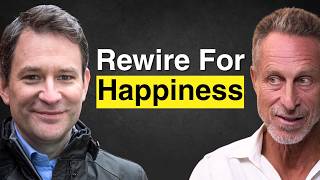
Dan Harris and Dr. Mark Hyman discuss how meditation rewires your brain's default mode network, the part that runs on autopilot and fuels anxiety. They explore neuroplasticity, Buddhist philosophy, and why love and social connection matter as much as sitting quietly.
This is the lever that the data suggests is most important to pull if you're trying to get healthier and happier.
From my perspective, the amount of stress we have, our diet, which by the way is a biological stressor, sugar actually creates high levels of adrenaline and cortisol, and it makes you feel like you're running from a tiger or want to attack somebody. All these things are driving us away from a sense of being able to actually connect with somebody or relate to somebody in a loving way or to to sort of have those positive behavior changes. And, but so we kind of have this ideal, but how do we access that? And this is where I think, you know, your work around meditation is so important because we, you know, we have a lot of science around how to, you know, fix our body, right? Right, diet, exercise, sleep, but how do we fix our mind? Can you talk about how you actually can train your brain and how that works and what happens over time. Because happiness doesn't just happen, love doesn't just happen. The ability to be compassionate or to be altruistic doesn't just happen automatically if we're living in a sense of separateness and disconnection and isolation. And I want you to talk about that. And I think one of the things that's really interesting is when you look at the minds of meditators who meditate for a long time, they're very similar to the states of mind that you see with psychedelics, which actually suppresses area of the brain that makes us feel separate and disconnected called the default mode network. So, it's kind of interesting that we have this psychedelic renaissance now, which may be kind of a shortcut. How do we sort of bring together, you know, the sort of the need to retrain our brain with sort of the to the mass obstacles that are on our way to do that.
What I think is so amazing here is, you know, we now have a couple of decades of data about what short daily doses of meditation will do to your brain and the rest of your body. And the results are really intriguing that it can lower your blood pressure, boost your immune system, and literally rewire key parts of your brain that are associated with stress and self-awareness with compassion and And if to whittle it all down to like a headline, a really, I think, earth shattering headline, honestly, is that happiness, which I think a lot of us assume either consciously or subconsciously is dependent on exogenous factors, external factors like the quality of our childhood or quality of our work life or our marriage. All of those, by the way, are very, very important. However, what the science is showing us is that truly happiness is a skill that you can take responsibility for and practice via meditation. So, what we know now is we used to think that the brain stopped changing after 25. That was the received wisdom in neuroscience. Now we know that's not true.
Hi, it's Dr. Mark Hyman. Now, today's podcast with Dan Harris explores the importance of mindfulness meditation for our well-being and happiness. And as part of our discussion, we talk about his recent trip to Dharamsala, India, to meet with the Dalai Lama, as well as his free online 10 part series on meditation and Buddhism. Now, after this podcast was recorded, a widely watched viral video of the Dalai Lama was released online that was highly disturbing to many who watched it. Now, I've seen the short video, which is an excerpt from a much longer video that was initially published online by a Tibetan journalist. Now, the excerpt taken out of context was widely promoted and distributed on Chinese social media platforms. Now, as many of you listening may know, I majored in Buddhism at Cornell and have spent much time in Tibet and India with exiled Tibetans. And I'd like to provide a little context and an explanation of the events that day and the underlying meaning that was lost in cultural translation. You see, the event depicted in the video was a ceremony in India for graduates from a private school to receive a blessing from the Dalai Lama. Now, during the full video, which wasn't shown online, the little boy, A child of one of the employees of the school asked the Dalai Lama for a hug, which he gave. And then the Dalai Lama gave a talk. And after the boy asked for another hug, which he gave. And then he asked for a kiss, which he gave. And then after the Q&A, he asked for yet another hug. That was the moment when the Dalai Lama stuck out his tongue and said, eat my tongue, which sounds sexual and inappropriate and weird. However, this phrase, quote, eat my tongue, which some people translate as suck my tongue, must be understood in the context of the Tibetan culture. While it is so true that many religious leaders have sexually abused children, and this is why the incident was so disturbing to so many, the true meaning of this is quite different. It's a common phrase used by grandparents in the Tibetan culture when children keep asking for more and more. As this little boy did, they jokingly stick out their tongue and say, essentially, what? I've given you this, and I've given you that, and I've given you this, and I've given you that. What do you want? Eat my tongue. At this point, the Dalai Lama stuck out his tongue, laughed, and then pulled his head back. It wasn't a real request. The tongue is not considered sexual in Tibetan culture, and sticking your tongue is often used as a greeting. We saw that in the seven years in Tibet with Brad Pitt. The video was amplified by the Chinese to discredit the dilemma. It worked in the West, but for Tibetans who live inside China, who understood the cultural reference, this attempt backfired. See, the Tibetans have been prohibited from seeing a photo of the Dalai Lama for over 60 years, and they were overjoyed actually at being able to see an image of him again. And I hope this brief background helps provide context for the misinterpretation of the event shown in the video. I know personally that this is deeply saddening the Dalai Lama, who has dedicated his life to the benefit of others. And it's my hope that you can now enjoy my conversation with Dan Harris. Dan, let's talk about your recent trip to the Dalai Lama, because you went for two weeks to see him in India, and you turn your conversation with him into this incredible documentary series called the Dalai Lama's Guide to Happiness, which everybody should watch. I watched it. And I wondered what you sort of took away as the key takeaway from your visit with the Dalai Lama about happiness. Let's start there.
Let me try out a thesis on you. this visit to the Dalai Lama coincided with the, with a book that I've been writing for many years. It's not going to come out for many years, but I'm, so I'm still in the process of, unlike you, I can't write books quickly. I, I've got, this will probably take me seven years to write this book that I'm working on now. And so I'm kind of honing my thesis, and I think my thesis is also the same, is also the answer to your question, which is what was my takeaway from my, my time with the Dalai Lama? So I'll try it out with you and, and please like, take shots at it. I think for sure people listen to this podcast. And I think most people are thinking a lot about how to be happier and healthier. Like we optimize for sleep, we obsess about what we're eating, we try to exercise, maybe we meditate. We're pulling lots of levers to get happier and healthier and look better in the mirror and have our CVs look better. But the data that I've seen show that the, the, the most effective lever to pull for health and happiness is, and, and I'm going to use a big and controversial word here, but it's love. The, the quality of your relationships, as the great Esther Perel often says, the quality of your relationships will determine the quality of your life on, on pretty much every level. I'm not saying you don't need to eat healthy and exercise and sleep well, but But, you know, if you look at the longitudinal studies, it's people who have good relationships who live long, prosper in the fullest sense of that word.
I think that's true. I think it's something I learned as I was exploring the research around longevity and went to visit the Blue Zones where they had tremendous sense of connection, belonging, community. And they, you know, in Okinawa, for example, they have little groups that form as kids where they put people in little groups where they have four or five people who have their back throughout their whole life and go through the entire journey with them. And, you know, last night I was on my men's group, which is basically a group of guys who've known each other for 40 years since college. And we just gather every week for an hour and a half on Zoom and wherever we are drop in. Not everybody makes it every time, but it's just, it's an amazing feeling to have that sense of connection and belonging. And I know Richard Davidson on.
Your.
Happiness program that you created, the Dialectics Guide to Happiness, he said, you know, being lonely and isolated is a bigger risk factor for death than obesity. And sometimes I've heard people say it's equivalent to smoking two packs a day. Loneliness is probably one of the biggest killers. So social isolation is a huge issue. So it's hard for people though to think about how do I build those relationships? How do I create that connection? And in some ways there's a way of being that allows that to happen, right? And in some ways I think maybe you weren't fully talking about this in your series, but there's a sense that the more you are able to show up and be present with somebody and give someone your presence, the more you're able to pay attention, the more you're able to connect with somebody, the more you're able to do those things, the richer your relationships are. And that being able to do that is predicated on you being connected to yourself and being aware of yourself and having a level of, you know, own sort of happiness within yourself. So this sort of, it's kind of like a double-edged sword in order, in order to actually have community connection, you have to actually be someone who people.
Want to hang out and connect with. Yes. Okay. You, you just put your finger on a lot of it. Can Do you give me permission to give like a longish answer here? Because you just so much.
Go, go, go. This is all about you.
Well, no, I don't want to, I'm not going to talk about myself. I'm going to just build on the ideas that you just, I think, phrased in quite intriguing ways. One is that the first idea is just in terms of why this is so important, is just think about evolution. Think about how we are designed. We did not, as a species, become the planet's apex predator, for better or worse, because we're the strongest. We're not the strongest. You know, the elephants are stronger, gorillas are stronger. But what we're good at is cooperating, communicating, collaborating to take down the stronger animals and eat them. And we have babies that require a ton of care. They sometimes call it the fourth trimester. after they've exited the womb, we are designed to be in relationship with each other. As I've heard one scientist say, our very nervous systems are designed to be in communication with other nervous systems. So loneliness on the savannah and our evolutionary days was deadly because if you were outside of the pack, you were very vulnerable to being killed and eaten by somebody else. And so our body now reacts very poorly to social isolation. Listeners may be thinking, oh, well, I'm not lonely. I've got friends. Some of you may not be thinking that, and we can talk about how to address that. But I think there are a lot of people who, you know, might look around and say, I'm doing great. I've got a social connection, but you can actually be technically lonely and surrounded by lots of other people, or you might not be technically lonely, but the relationships in your life are frayed and not as strong as they could be. And if you're an optimizer, if you're looking to get healthier, if you're listening to the doctor's pharmacy with an F, you probably are. And I'm saying this is the lever that the data suggests is most important to pull if you're trying to get healthier and happier. Okay, that's my, that's my. No, you're, you're 100 right.
I think, you know, this is ancient hardwired stuff. Like we're a little naked, skinny human running around on the savannah is going to survive very and I think there's a wonderful book, you might have seen it called the Social Conquest of the Earth by EO Wilson, where he talks about our evolutionary drive for altruism and that we have to be collaborative, we have to be connected in order to survive from whether we're ants or whether we're humans, right? And I think that's a really important thing and it's not something our culture really prizes or values or prioritizes in, and I think it's It really is a very important piece. I think, you know, in Buddhism and we talked earlier that I studied Buddhism in college, there's, you know, three pillars of enlightenment, right? Which is the Buddha, which is the symbol of someone who can be enlightened. So the possibility of waking up in this lifetime. The second is the Dharma, which is the teachings of how to do that. And that those are the practices and meditation and certain, you know, structures of thinking and awareness. And then there's the Sangha, which is the community as the key pillar to hold you accountable and to be there for you to actually live a vibrant life. So I think those are really important for us to think about. And I, I personally, you know, prioritize this more and more in my life. I spent many years of my life working really hard, raising a family, running around the world, trying to change the world, change medicine, and, and in some ways, I sacrifice a lot of, of relationships. But now at this point in my life, I'm doubling down and I think it's important. So, you know, when you were with the DalaLama, you're kind of hinting at something now that you've kind of highlighted quite well in the DalaLama's Guide to Happiness, which is this idea of altruism. And what's interesting is you kind of wrote this article in the New York Times, which kind of seems like the opposite of altruism, which is the benefits of wise selfishness. So, I'd love you to unpack what is wise selfishness and how does that work and what is this all about? Because it doesn't seem that it's a good idea to be selfish if you want to be in community and connected.
Right. So, this is why selfishness is one of, in my opinion, for my money, from from my perch as a Western, extremely privileged guy, one of the most useful concepts from the Dalai Lama. Now, there are many people who might disagree with with that. But for me, why selfishness is what has had a huge impact on me. And he, you know, just to say words like altruism and compassion or if you want to get even more Buddhist about it, loving kindness. To me, they land in a kind of empty, preachy way. It's like the kind of concepts that you see knit onto a throw pillow or used as a hashtag on Instagram or whatever. And so it doesn't, you know, I'm an ambitious guy. I'm a skeptical guy. I like humor. So words like that don't really land with me. And I also, you know, I think on some level, but now it's quite conscious for me.
Although, Dan, you did start the podcast by saying the most important thing was love.
Yes, yes, but I did it with some sheepishness. You know, it's like, I mean, the working title for this book that I've been working on is Me: A Love Story, and it's just a joke. But it's not a joke, you know? I'm trying to reclaim love.
It sounds like a story about Trump, I don't know.
Yeah, exactly, exactly. So it's a play, it goes right to why selfishness. It's a play on this binary that I think many of us have, which is either I take care of myself or I'm taking care of other people. And that may not be a binary that we're conscious of, but I think on some level, like you're either selfish or you're selfless. But what the Dalai Lama's point is actually, some level of selfishness is absolutely necessary. You need to take care of yourself in order to be useful to other people. And now here's where things get interesting. If you're truly selfish, if you're really wisely selfish, you will understand how we evolved, and that is to have good relationships, so you will care about other people because that redounds to your benefit. And so this is, instead of being a binary, this is, I think I use this phrase like a, beneficial double helix. You take care of yourself, you have a good relationship with your own mind, with your own body, and that better prepares you to help other people, which then redounds to your benefit. And then you're then that makes you happier and that makes you more willing and able to help other people. And that is what I've often called the cheesy upward spiral. I mean, and that is where you want to be. in life. And I'm not saying this from the mountaintop as a perfect person because I still retain the capacity to be a schmuck in a million ways. And I'm not talking about this as some religious leader preaching at you. I'm just saying, look at how we're designed, people. And follow that.
That's really beautiful. I think it's interesting when you look at the neurobiology of altruism. which is like doing something selflessly for others, it actually creates a biological response of pleasure in our brain in the same center that is reacting to heroin or cocaine or sugar, right? So you can either eat a sugar or you can do something good for somebody else and it actually creates a positive effect. It sort of reminds me of Adam Grant's philosophy of how to get ahead, right? And I think it's, It's what I followed most of my life, which was collaborative sharing. So people always ask me, I'm like, Sure, if I can do it, I'll help you. Even if I don't directly get anything back from it. And what I've noticed is that this creates this virtuous cycle in my life where it just creates more and more goodness. And as opposed to, no, I can't help you because it's competitive or it's, you know, you're, I'm going to lose something by sharing or giving. It's actually not the way things actually work. And there's a fair bit of science.
About this too, which is pretty interesting. It's beautiful. And, I mean, it's beautiful that there's so many problems with the humans, right? There's so many problems we can talk about. But at the core, this is incredible feature, not bug, to the human design, which is that the best thing we can do for ourselves is to help other people. That's incredible. And that's the way out of all of these messes, in my opinion. That's not to say we don't need structural fixes for big problems like bigotry and inequality and climate change. Yes, we do. But I think those structural changes are gonna be brought about by people. And I think we want people who are, again, to use a loaded term, more loving, a word I'm trying to reclaim. and, and make less cheesy. So, yeah, I mean, it, it, you know, what? Sometimes, something I often say to people is pay attention in a moment where you hold a door open for somebody. It's just a small thing. You just hold the door open for somebody. Yeah, we do this type of every day. If you're paying attention, that feels good. That feeling is infinitely scalable. Dr. Richard Davidson, who's featured prominently in my podcast series and video series on the Dalai Lama, who's a longtime collaborator with the Dalai Lama, was one of the first people to really use neuroimaging to look at the brains of meditators, showed that, in fact, what's actually true about our brains is something called neuroplasticity. The brain changes, it's the organ of experience. It changes based on our experiences. And so, if you are systematic about giving the brain positive experiences, a workout in the form of meditation, well, you can change the brain. And so these states that we want, well, at the end of the day, all we really want at the most fundamental level is positive or all we really want are positive mind states. You know, we do lots of things in our life. We work hard, we get married, but, and those result in concrete actions and phenomena in the world. But what we really want is to feel a certain way. And these feelings of calm, connection, compassion, happiness, joy, generosity, gratitude, these feelings are not factory settings that are unalterable. They are skills that are trainable. That is huge. And so I've dedicated much of my life to spreading that. I mean, I quit my job at ABC News to like get more and more focused on that news.
Yeah, it's such an important insight that we actually can change the structure and the function of our brain and aren't sort of subject to its fluctuations that cause us unhappiness and misery and often help us to sort of screw up our life if we don't fix it. It's just like, and it is kind of a muscle. Instead of exercise, I call it inner size. How do we practice inner size? guys and train our brains. And it's one of the things that guides everything in our life. And without it, I think our lives are poor and our lives are more messy and are more unhappy. And the truth is they're really fixable. I had a really interesting conversation with a friend of mine the other day who has climbed every peak on every continent, who's skied across Antarctica by himself, who rode a boat across the Drake Passage with 40-foot seas in Antarctica. I mean, this guy's serious dude. He recently did a dark retreat. Now, it's something the Tibetans have done for years and they'll go into these dark rooms for often a month or more at a time and meet their minds. And he said, you know, after a week in there, he felt the happiest he'd ever felt, the most at peace he's ever felt, the most connected he'd ever felt. And, you know, it just, it just think about like being in a dark retreat. It's like the forced ceasing of all the fluctuations that happen with our monkey mind and the settling of all that. And, I've done like 10-day meditation retreats and it's just amazing to see what happens like after, you know, 12 hours of meditating a day for 10 days, what happens to your brain? It's like, whoa, wow. Everything is like, it almost is like taking psychedelics, honestly. Have you ever done a 10-day meditation retreat?
I do them all the time. all the time. Yeah.
Yeah. And don't you feel like you're on LSD or mushrooms? Not that you've ever taken them, but if you were.
I'm totally. I mean, I'm taking all the drugs. I've been very open about that. So I. Yes. I mean, you brought up psychedelics before, and I do think there's a connection here, you know, and that you can think of psychedelics as a. As a shortcut, but there are drawbacks. Well, one of them is if you take. psychedelics in the wrong setting, it can be a shortcut to, as my friend Sam Harris jokes, the summit of Mount Shame. And you can have all sorts of bad experiences if you're not doing them carefully. The other thing is that since they're shortcuts, it can be hard to integrate these big experiences into your daily life, whereas with meditation, it is an exercise. So you're just constantly pounding the learnings into your neurons. And that's a very compelling argument. So I'm kind of yes and on all of that. But having done lots and lots and lots of 10 day meditation retreats, it does, you know, and I'm not saying you have to do meditation retreats in order to meditate. I think you could do a couple minutes every day and you're good to go. But what's interesting about these retreats, and you know this, Dr. Mark, is that you get two things. You get a sense, especially early on when you're struggling, because you will struggle, most likely, that You get a sense of what your life is actually about. Like you think your life is about service or relationships or striving for excellence at work. But mostly your life is about what's for lunch? Do I need a haircut? Where do gerbils run wild? It's like your thoughts are chaotic and cacophonous and vast, the vast majority of them are ridiculous and self-centered. And you really on a meditation retreat get a deep sense of that and that's helpful. because the more clearly you see the ridiculousness of your own mind, the less the ridiculousness owns you. And that is the point of mindfulness meditation. The second thing to say is once.
You.
Once all of the mental churn, the volume of that goes down on a retreat, you see what the mind is capable of, which is actually dropping out of habitual rumination about the past or projection into the future. And seeing the extraordinary holy wowness of whatever is happening right now, no matter where you are. It's just incredible that we're here at all. Do you know the causes and conditions that had to happen starting at the Big Bang in order for you to be alive right now? The amount of people that had to meet in the right places on the number of continents and all of the atoms that had to be in the right spot in order for you to be alive right now? It's almost ridiculous and embarrassingly obvious to just say this. But when you can take that into your marrow, it is incredible. And that is quite similar to what happens on psychedelics.
It's a miracle, yeah. You feel connected to everything in a way that is hard to describe. The Buddhists talk about being born in this incarnation as a human is akin to being a turtle swimming in all the world's great oceans, finding one little life ring, you know, like, and popping its head up for breath in that life ring once in every, like, thousand years or something like that. So it's like, it's not a common thing to get to be a human. It's a real blessing. And we get, you know, this whole range of experience. And often I feel like we kind of walk through it mostly asleep. And what you're talking about, Dan, is, is a, as a methodology, a practice, a science, and a whole sort of history of how to. actually wake up, right? And not walk through life in this sort of one-dimensional frame, which takes us away from ourselves and from others. So basically meditation isn't to get better meditation. It's not to get, in a way, it's not really to do that. It's to get better at life, right?
Yes, you're absolutely right.
You know, the difference in your life from when you were a hard driving news anchor who had a full-blown panic attack on live national television to the current Dan, who has a very different life. And what was that? Because you were at the pinnacle of what we see as success in our society. Not that you're not now, but just that it was like, wow, look at that guy. He's got it all. And then you kind of came apart at the seams. and then you put yourself back together through this process of exploring meditation, which as a sort of skeptical journalist, you're like, this is kind of woo-woo horse and, you know, actually found that there was, there was gold in them there Hills. So.
Yes, yes, yeah. Now you're exactly right. I, I, you know, I think you and I have discussed this before, so I, I won't, I won't, I won't spend too much time on the back story here, but as you said, yeah, I, for 21 years, I was a correspondent at ABC News. I after 9/11 spent a lot of time in war zones. And then I came home and got depressed after being in Iraq and Afghanistan and many other places. And I did a very dumb thing, which is that I started to self-medicate with cocaine. And that led to a panic attack on Good Morning America, which was pretty inconvenient. I wasn't high when I was on the air, but my shrink later explained to me that my ambient use of drugs changed my brain chemistry in ways that made it more likely for me to have a panic attack. So, that sucked and really changed my life and ultimately led me to meditation, which as you said, I was very skeptical of. I thought it was hippie nonsense. But I was very lucky and I started to get interested in meditation before the current massive hype cycle around meditation. So this was around 2008, 2009, and there was a lot of research that showed that meditation was really good for you, but it hadn't been widely publicized yet. So I recognized that, oh, this is a really good story. And spent many years really studying meditation and doing a bunch of retreats and getting to know many of the most prominent teachers in the West and the East. And then I put out a book in 2014 called 10% Happier, which turned into a podcast and an app and all that stuff and ultimately...
In a life.
And a life, right? Yes. So this is where I'm going to start answering, I think, what you really wanted me to talk about, which is how has it changed for me? How has it changed me? You know, people sometimes say to me, especially meditators, they're like, well, you undersold it. 10% is, you know, it's much more than that. And that's absolutely correct. It's like an investment where the 10% compounds annually. These are skills, these positive mental states, and you just keep getting better at them. And they're not, it's not like physical skills where you're contending with laws of physics. You really can develop these skills pretty far. And I won't sit here and say that I'm enlightened, whatever that means. It's just that I have been very consistent about practicing for a long time. I'm a much happier person than I was back then. And I think it's multifactorial. I married well, I'm more mature, I have a healthy eight-year-old son, and all of those things play into this. We tend to get wiser as we get older. But I would say meditation and Buddhist practice generally has been a huge, has provided a lot of benefits. to get granular on what they are. One of them is mindfulness, which we kind of referenced without using that word, but it's the self-awareness that's generated through meditation that allows you to see your urges and thoughts and impulses without being owned by them necessarily. So in meditation, we usually sit and focus on our breath for a little while, and very quickly you get distracted. And a lot of people think, oh, I've gotten distracted a million times as I'm doing this. that means I'm a bad meditator. But actually, seeing a distraction, it means you're human and it means you're a successful meditator. Because the whole point is not to get into some bulletproof bliss bubble where all thoughts evaporate. That may happen at the deep end of the pool, but for most of us, it's a process of continuous humiliation where you're trying to focus on one thing, usually your breath, and then you get carried away by your ego over and over and over again. And the whole point is to start to see how ridiculous your ego is. so that you're not owned by it in your daily life. And that's mindfulness. And so now when I'm hit by an urge to say something that's going to ruin the next 48 hours of my marriage, or if I'm, you know, hit by an urge to eat a sleeve of Oreos, I'm way better at just letting that come and go. It's not repressing it. It's just seeing it arise and pass. And that is a huge benefit of meditation. Another huge benefit is focus, you know, because this practice of trying to focus on one thing, your breath, and then getting distracted and starting over and over and over again. Every time you start over, that is, and you referenced this phrase before, it's like a bicep curl for your brain. And we see it changing the part of the brain that regulates attention. And that part of the brain has been under assault for many, many years via technology and specifically social media. And so this is a great way to counter program against that. And then finally, I think there's so much compelling evidence, and this is what I'm really spending a lot of time writing about these days, so much compelling evidence that it can make you warmer, more compassionate, dare I say, more loving, and not only towards other people, but yourself. And of course, the line between you, Dr. Mark, and the world, we feel like isolated egos fretfully navigating a hostile world, but the line between you and the world is porous. You know, we're constantly taking in thoughts and food and air from the world and then putting stuff back out via noises coming out of our face.
And.
We'Re in this dialogue with the world all the time. And so getting more loving towards other people and yourself is, again, it can sound kind of schmoozy and cliched, but I'm really, my new mission is to kind of make this accessible and intriguing and attractive to all sorts of people, specifically skeptics.
I love this because the side effect of happiness is love. If you're happy, you're just filled with more love and joy and you want to share it. And it just creates this virtuous cycle. I think it's beautiful. I think one of the things that is so important is the actual practice, like being in the gym, right? and meditating is not like going to the gym for your brain. But there's also another piece to it, which is the framework with which we sort of understand the world. And, you know, the Buddhist, you know, most people think Buddhism is a religion. I know, and it has become a religion, but it really is not a religion. It's actually a description of how the mind works. It's a phenomenology of the mind, if you will. It's a way of thinking about the nature of our perceptions, the nature of our misperceptions about the nature of reality, because things seem a certain way, but they're actually not. Like we seem separate, but actually we're not, you know, like we're, like you said, very porous and, you know, all of our atoms and energies are all intermingling and in a very real and direct way that are measurable. So, you know, I think the, the challenge is how do we sort of bring in not just the, the simple practice, but also the teachings, which help us sort of reframe the nature of our minds. And I think one of the things for me that was one of the biggest insights I ever had was that stress is the perception, and with the emphasis on the word perception of a real or imagined threat to your body or your ego. So it could be you're in a war zone and it's a threat, your bomb's going to drop on you, and that's a real threat to your body. Or it could be that you think your wife's cheating on you, you know, 'cause she came home 10 minutes late from work or something. And that's just the total fabrication and it creates the same biological response in the body. And so Buddhists really have a very interesting framework of understanding that our mental states are determined by the interpretation of our world. And so how does Buddhism help us reinterpret the world to kind of reset our ideas of the sort of otherness that we kind of typically live with.
I mean, there's so many ways in which Buddhism does that. And indeed, you're right, by the way, Buddhism is practiced as a religion in a quite beautiful way by millions of people. It's the fourth largest religion in the world, and that's all amazing. But the Buddha himself, from what we know about him, I don't think he was setting out to create a religion per se. The word Buddhism didn't even come up. That word, it was invented by colonial scholars in the 1800s, I believe, who went to India and found some of the original texts. The Buddha was creating the word you used before, Sangha, a community of people who were practicing this science of mind that he discovered by doing many, many years of meditation and study. And so what does this teaching, this Dharma, this science of mind show us about how to re, you know, kind of view the world through a different frame. There are a number of things, I would say one easy concept for people to understand is impermanence. We know, everybody knows it's obvious that everything's changing all the time. If you, as my meditation teacher likes to say, if you ask somebody on the street, is everything changing? They'll say, yeah, of course. But we don't act that way. We are programmed for denial. We don't, live our lives, most of us, with the knowledge from really centered in our mind up front that we're gonna die and that everybody we know is gonna die. And all the dramas of our lives are just absolutely fleeting to use a Buddhist expression, like bubbles in a stream. You know, it's like a, this is all going by very quickly. And if you Don't get comfortable with this uncomfortable reality. You're gonna suffer. And that's the other big concept that the Buddha, there are three really main tent poles to Buddhist philosophy, and one of them is impermanence. The second is if you're acting as if things aren't gonna change, if you're clinging to things that won't last in an impermanent and entropic universe, you're gonna suffer. And by suffering, it doesn't necessarily, it's a that's a big and unpleasant word. It's not like you're going to be chained to a cliff and some crows are going to peck out your innards. It's more like, it's going to be unsatisfying. If you think that every lick of an ice cream cone is going to do it for you, that's not actually going to work. So instead, we just are chasing dopamine hits all the time. We eat more and more and more. We can't. We shop more and more and more. We gamble more and more and more. We scroll more and more and more. As, as, again, to quote my meditation teachers, a guy named Joseph Goldstein, who likes to ask people, how many lattes have you sipped? How many vacations have you gone on? How many purchases have you made? And are you done? Of course not. We're insatiable. And that is suffering in the Buddhist, that's one aspect of suffering in the Buddhist worldview. And then the final, and this one can get a little esoteric for people, but it's the idea that our I think self, our ego, this inner sense that you have of being a solid entity, a solid mark, actually is an illusion on some fundamental level. Now, I'm not saying I'm looking at you, Mark, in a digital space.
It's not a Zoom room.
It's Riverside, I think is the name of the program we're using. And you and I look like almost exactly the same person to white guys with slightly graying hair and blue button down shirts on, it's ridiculous. So I'm looking at you and I'm looking at myself and we are real on some level, we're real. But on some, just the way the chairs we're sitting in are real. But if you were to take a high powered microscope to the chairs, you would see that fundamentally it's all spinning subatomic particles and mostly empty space. Yes, so there is no core. essence of chair, and there is no core essence of Mark. And you can start to see that when you put the mind under the high-powered microscope of meditation. And so what is that can sound hopelessly theoretical, but so what does it mean in your actual life? So there are million practical benefits, but let me just give you one. Next time you get gripped by a strong desire or a big blast of anger. Look for who is experiencing that. Look for the solidity of the anger. Can you claim it as your own? You can't. It's like a weather system. It's a coming together of atmospheric conditions. There is no core nugget of hurricane that I can grab. It's just a coming together of conditions, and then they will disentangle, decompose and pass. And that's a really useful way to see all of these things that dog us about our own minds. It's not necessary. This anger that's coming through isn't my anger. I don't need to view it as me. It's just a passing weather system, as one great monk has said. To claim these emotions as yours is a misappropriation of public property.
I love that. I love that. You know, listen to what you're talking about. It reminded me of this, Victor Frankl and what he said about, you know, the choice we have about how we feel and how we live our lives. And, you know, he's not a Buddhist. He was a Jewish guy in a concentration camp who basically realized that he had a choice about how to interpret his reality. And he basically said, you know, in between stimulus and response, there lies a pause. And in that pause lies our freedom. You know, it lies a choice. In that freedom, in that choice lies our freedom. And so I think we're freedom, which is what we're talking about here, freedom from suffering, freedom from unhappiness, freedom from all the the vicissitudes of being a human being that, you know, make us miserable. And we basically torture ourselves with. It really has to do with the, how we, how we see our world. And what I hear you saying, Dan, is that meditation and the practices that you're, you're sharing and that are in this beautiful dialogues, Dalai Lama's guide to happiness, which is really a beautiful 10-part guided meditation practice with a bunch of editorializing around, which is really fun with you and Dalai Lama and Richie Davidson and Joan Halifax, which meditation researchers and meditation teachers. You actually can come up with a very different sort of way of feeling and being without having to sort of go off the deep end, but it's actually a very powerful sort of nugget that you're sharing.
You know, I have to say, you do so much of a better job promoting my stuff than I do. I appreciate that. I like get really excited to talk about, I love talking about esoteric Buddhist ideas and then really like trying to help people apply them in their lives. But thank you. I appreciate that. You know, you know, I do, I think, I do, I do want to address something that I could imagine listeners thinking right now. Mark, can you tell me if, if I'm, if I'm on to something here? I want to be clear that you look at somebody like the Dalai Lama and you think, okay, well, that guy's, you know, always laughing and smiling and he, even though he's suffered so much in his life. But that, that's not accessible to me. You know, I'm, I don't know what Enlightenment is, per se. Most people don't. I mean, I'm voicing, I think, a skeptical, the thoughts of a skeptical listener right now. I don't, you know, what is Enlightenment? I don't even care. But it's not gonna happen for me. I got these daily problems, and I've got I got to deal with, and all of this can sound super theoretical and fluffy that I do come back to the notion of 10% happier. Perfection is not on offer here. I retain the capacity. I really do retain the capacity to be a schmuck in millions of ways. And I have lots of problems in my life and we can talk about some of them. I still deal with panic. But you can get marginally happier and better and you can compound those gains over time. that that's the news here that I really am excited to share, whether it's producing, you know, a course with the Dalai Lama or a podcast, on which I've interviewed you, and, and I'm about to interview for which, I'm about to interview you again. Um, whatever medium I'm working in or doing television, whatever it is, writing books, I'm really just trying to get out that message that There are mental skills that you can, there are simple practices you can integrate into your life, both, you know, formally in meditation and informally in your, in your walking around life that, that will increase your happiness or reduce your misery and that you can continue to build on these in, in ways that I think really do lead, if not in a steady hockey stick, unbroken, rise up to the right. It's more just like a gentle sloping, lots of zigs and zags because life is filled with vexations and vicissitudes, but like an overarching trend line toward more happiness as you get older. That I think is very possible for people.
I think that's a beautiful message. I think you kind of want to lean into thinking about, you know, what are the practices and tools we can use in our own lives to actually move that needle. And that's, I think I just encourage you to check out the Dilemmas Guide to Happiness. There's an app. It's beautiful, it's simple, it's fun, it's easy. And I, I really loved it. Honestly, I was, it was so accessible and not woo-woo. And it really gave people a road map to, to get started, which is often what people wonder. Okay, this sounds great. I want to be more compassionate. I want to love myself more. I want to love others better. I want to not have my monkey mind running my life. I want to not be constantly buffeted about by the world, you know, what do I do? And, and this is a, the answer to what do I do? And it's, it's a beautiful doorway to, to help people to actually get access to that knowledge. That's really ancient, but it's, it's really, you know, we're so good at outer technology. Right. In the west. But, but Tibetans were a sealed off culture for thousands of years plus and developed a massive inner technology. And that's really what we're talking about. And the science around is so powerful, you know, the work of Richard Davidson to document the biology and the physiology and the neurobiological states of happiness and meditation is amazing. And there's a book actually that I'm sure you're aware of called Altered States by Richard and Dan Goleman who's a friend. And basically maps out for those skeptics how this actually works. If you do an actual bicep curl on a regular enough basis, you're going to build your muscle. Same thing with these practices. and they're not inaccessible to us. The one thing I did want to talk about, which is sort of what I think about a lot, which is, you know, people have really struggled with severe trauma or issues that are, seem to be sort of beyond meditation. And I'm not sure if you're familiar with the work of a guy named Dan Brown from Harvard who recently died, who was a psychologist, but he was also a Buddhist scholar. He spoke fluent Tibetan. You know, he understood both worlds. And, you know, he realized that some things you just can't meditate your way directly out of. And he created a model for people with severe personality disorders people who've been, you know, sexually abused, traumatized, really horrible things, people with addiction, people with, you know, really complex trauma and with, with the personality disorders, which in, in, for my world as a doctor, are untreatable.
Right.
So, as a narcissistic personality or dissociative personality or borderline personality disorder, these are things that just seem really recalcitrant when it comes to any kind of medical intervention. And yet he, he found a model that Incorporated meditation. but you used sort of a whole series of steps to sort of break through those things. So, you know, I just wonder how, when do people kind of need to go beyond just meditation to kind of work through some of those really deeper things that we suffer from? Because the giant pool of us are mostly just neurotic and screwed up, but then there's ones who are, you know, really, really damaged and have really suffered.
I mean, I think you're on something really important here and I think, you know, early on in this conversation, I was saying I'm not a meditation fundamentalist that I don't think it's the only thing you can or should do to boost your happiness. And there are so many people who have, I'm not one of them. I'm happy to say I feel lucky to be able to say that I don't have severe trauma, either childhood trauma or otherwise. But there are so many people who do. And for them, I think meditation can be very, very helpful, but I think from what I can tell, and I'm not a mental health professional, but I interview mental health professionals for a living. From what I can tell, if you do it within the setting of highly qualified therapists, then it can be just another tool, another arrow for your quiver. And it's not going to fix everything, but it can really be a key part of whatever you're doing to feel better, to get better. But again, to have it embedded within, you know, I'm all for when you're working with qualified people, therapy, medication, if it's indicated, you know, as you talk about so much and so helpfully working on issues around what kind of food you're taking in. And as I mentioned before, obviously sleep, nature, the power of your relationships, this all kind of adds up to what I sometimes refer to as a pantheon of no-brainers. And we should all be pulling all of these levers, whether we're just, you know, the sort of worried well, the garden variety neurotic, or we've got real trauma that we have to work through. It's these tools are available to all of us, and it's about figuring out what works best for you. yeah.
Great. Well, there's two other things I want to talk to you about now because they were highlighted in your, in your series, the Dalai Lama's guide to happiness. And one was, and they're kind of related. One was self-criticism and the other is Judgment of others, basically. And, and, you know, what they do to our biology and how certain practices like meditation can help us work through them. Because, you know, if we were to actually say out loud what our inner, I call it our inner saying to ourselves, you know, people would think we're crazy or if we said it to our friends, as if it were them, we wouldn't have any friends. Yeah, we do that all the time to ourselves. And that has real consequences. And it actually, you know, there's a, I don't know if you know the word African Dapper, obviously, but know where that word comes from. No, it's, it's Hebrew. And, and it means I create the world through my words. basically, I speak the world into being. In other words, you say this to yourself and you actually reinforce it. So talk about that sort of self aspect. Then I want you to talk about all the people in our life who drive us crazy and how they can actually be a seed for good in our lives and teachers.
One of the biggest, most powerful and impactful changes in my life has come over the last five years, I would say. I started meditating in 2009. It wasn't really until 2018 or 19 that I started to get into something called self-compassion, which can sound, I don't know, either masturbatory or bland and boring, but self-compassion is a very interesting field of study right now. And, I think you could even use the word self-love, which is even more annoying. But, I don't mind. You don't, okay, good. Well, I do because I'm a jerk. But so I've never liked terms like self-compassion or self-criticism.
Wait a minute, isn't that just self-criticism? I'm a jerk, didn't you just do that?
Yes, tongue in cheek, tongue in cheek. Although I used to say things like that and mean it, you know, actually. So this goes to my answer to your question. I was intensely self-critical and still am, and I think this is very common, especially among ambitious people. And we think we have, I think this assumption, again, either conscious or otherwise, that we need an inner drill sergeant, an inner cattle prod, in order to get anything done. But the work of the pioneers in self-compassion, including Kristen Neff and Chris Germer, the work of these two geniuses has shown that actually, if you can gently escort the inner drill sergeant off the stage and replace them with an inner coach, you are more likely to succeed. An inner coach who has your back and is completely willing to point out when you've messed up, but is not running you down and telling you that you're worthless every time. And there are many, many practices for self-compassion, including specific forms of meditation or just deliberately trying to talk to yourself the way you would talk to a good friend or from, in my case, you know, noticing the difference between the way I talk to my eight-year-old son and the way I talk to myself and then trying to talk to myself in ways that are close, much more close, much closer to that than my habitual self-laceration. By the way, you can accompany talking to yourself in a supportive way by putting your hand on your chest or on your heart, which I long rejected as irredeemably goofy, but actually, again, a ton of data to support that this can really help. And so if you can develop this self-compassionate skills, you are more likely to be effective in your life and achieve your goals and happy. And this goes to the second part of your question, Dr. Mark, which is, What does this have to do with other people? And it has everything to do with other people. Because we live in this constant exchange with the world and this feedback loop, what I've learned is that all the ways in which I'm making myself miserable, I show up in my relationships with other people. I'm too hard on them. I'm snarky. I have this kind of serrated humor. I'm emotionally guarded. And as my later weather- I like that.
Sounds like a knife.
Yes, that's what I mean. As I've got, as my inner weather has gotten bombier, my relationships have improved, and then my inner weather gets even nicer, my relationships improve even further, and that's the cheesy upward spiral I was talking about before. And you can apply this to very, very annoying people. And it doesn't mean you're going to be a doormat or you have to invite these people over for dinner or accept the things they're doing that are unacceptable. It just means you don't have to walk around saddled with rage and resentment, which is not going to help you anyway, as is often said. That kind of attitude in the mind is like taking poison and hoping the other person dies. Yeah, exactly.
When you have grudge or resentment, it's like that.
Yes.
You think you're making something bad happen to them, but actually you're just causing harm to yourself.
Absolutely. And so we want to be able to take affirmative action in the world. We want to be able to be useful and helpful in the world and stand up for things that we care about. But what mind state do you want to be operating out of? Fear, rage, distress, or caring for yourself and others? Even the people you disagree with, you can see that, you know, you might be able to see, and increasingly I've been able to see that if I came out of that womb and was subject to the conditions of the life, the of the person with whom I disagree, I might be doing the exact same thing. And so I don't have to agree with them, but I don't need to demonize them, which only just adds extra weight into my pack, which I don't want to carry. And so that I found is all of this I found is really helpful, just having a better relationship with myself, improving my relationships to other people, all of this. And I'm not perfect at this, but it's very beneficial when I can practice it.
And the beautiful thing about it, it's free. You don't have to buy supplements. You don't have to get a gym membership. You don't have to do anything. I mean, you know, your online app, I think it's free. I I. Right. The whole thing was free online. Right.
I I. The Dalai Lama thing is totally free. If you want to go deeper, we'll, we'll, we'll charge you, but not that much. And my podcast, like your podcast, is totally free. And so, yeah, this doesn't need to cost. It shouldn't cost you much money. and it can be totally free. And, you know, that's like many of the best things in life.
It's beautiful. Okay, so how's your practice changed in meditation over the years? And then I want to talk about your experience being with the Dalai Lama and what actually is his secret? What are his practices? How does he get to be the way he is? Because he's very funny. He's really always full of joy and always happy. you know, despite having his culture smashed and destroyed by the Chinese, it just seems like he's full of joy.
He is. It's, it's, it's, and I'm such a dyed-in-the-wool skeptic, you know, my whole training is, you know, a skeptical newsman and question everybody. And so I come into the whole, I mean, I, I've, I first met him back in 2010, and I know you've spent time with him, too, but the first time I met him, I went in there thinking, oh, this is the guy with the goofy laugh and everybody. gets all sentimental around him and he's a religious figure and I'm an agnostic. And so I came in pretty skeptical. And I always, every time I come back to interview him, I always come back with a little bit of that journalistic remove that I, you know, my conditioning often pushes me in the direction of approaching everything that way. And every time I'm like, no, this guy's incredible. And it's not like he's in denial about the pain and suffering of the world or the pain of suffering he's endured. I mean, remember, this is a guy who was driven out of his own country by a Chinese invasion and has watched his people, you know, get traumatized in some profound ways and is very tuned in to all of the world's ugliness. And yet is just really like, light-hearted and rubbery when you're around him. And so how does he do that? And I think the answer is, from what I can tell, is this counterintuitive magic of compassion. You know, what is compassion? We, and it's a psychological term, and technically the way it's thought of is empathy, which is feeling other people's feelings. This is naturally wired into us. We have these mirror neurons in the brain that help us feel what the feelings of other people around us. However, if you do that in the wrong way, you're going to get shut down. Unless you're a sociopath. Well, right, exactly. Those guys, they tend to look at people as objects, but most of us are not sociopaths or psychopaths. And so we feel other people's feelings, but if you do that in the wrong way, you can get burned out or you can shut yourself down because it's painful. But compassion is empathy plus the desire to help. And this is a skill. So when you add on the desire to help, it puts you in an ennobling, empowered position, even if there's nothing you can do to help. It's just the desire to see the suffering of people around you alleviated. And so compassion is a skill that can be generated through meditation, where you do practices where you just envision the people around you are suffering, and you repeat phrases like, may you be free from suffering, may you be free from pain, may you be from anger. And this may sound like a forced and somewhat treacly exercise, but it is another kind of bicep curl for your brain. And it's the kind of practice that the Dalai Lama has been doing since, I don't know, age seven or eight, so 80 years now. And when you're around him, you can tell something is different. And I, you know, was really struck. And you can, you can you can see a little bit of this in the video series we produced, but you actually hear quite a bit more in the companion podcast that we produced for my podcast, where you really hear people around the Dalai Lama while we were with him. We spent about two weeks in his orbit. You hear people like losing it in his presence. And I'm not talking about just Tibetan followers of his. I'm talking about people on my team. My cameraman, who I've worked with for 20 years and covered school shootings with and wars and political campaigns, Tommy K, the Irish guy from Delaware, never even didn't know anything about the Dalai Lama. First day we spent with the Dalai Lama, and you can hear all of this in this little podcast series we did. He's shooting with the Dalai Lama. The Dalai Lama is doing a public audience where he's greeting people, locals who were coming by to get a blessing from him. Tommy is standing there just shooting it for a couple of hours. And when he's done, Tommy, this unflappable cameraman who's seen it all, puts the camera down, comes over to me, is shaking and crying, and gives me a hug and says, thank you for bringing me. I've never seen anything like this. And that was just one story. And I think that it goes back to the thing we talked about right at the top here, which is that we are wired for compassion. It is the central feature of the Human Experience, compassion or love or whatever, just the capacity to give a. We are wired for that. And when you're around a pure beam of it, when you're around somebody who's been practicing for 80 years, and if you believe Tibetan Faith, 14 lifetimes, it can undo you. and it's very powerful. It's a thing we may not realize we need, but this fundamental human need to be seen, understood, cared about, when you're around somebody who is just that good at it, it's remarkable.
So like the Michael Jordan of happiness, you know?
He is. And just to fully answer your question, I promise, is the last thing I was going to say is just that how does that, how can you be happy in the midst of that? suffering, it's because you're doing the empathy plus the desire to help. And that's compassion and that allows you to be with the suffering of the world and feel okay because you're training the mind toward altruism, not shutting down. And by the way, that also leaves you more open to the many awesome things about being alive. Like the Dalai Lama likes little cakes and tea. He likes his big breakfast. and he makes jokes about going to the bathroom. And so it kind of opens you up for all of it.
Yeah. Well, it's interesting, Daniel, when you're talking about with compassion, because, you know, as a doctor, it really, it is, it is what I do every day is, is, you know.
Yes.
Be with the suffering of others and get it and try to help them. The most profound experience I think I've ever had of just bliss and it sounds crazy to say this and really deep profound happiness was when I went to Haiti after the earthquake. We were the first medical team on the ground in the main hospital in Port-au-Prince where there were 300,000 dead, 300,000 wounded. The scale was just unimaginable, far more than any war you could imagine. I think, I don't know how many people died in all the wars and in US history. I think it's like like 600, 000 or something. This was like 600, 000 in, like, a day. And I got there and, you know, we just had to dive in and start to help people. And we're working 20 hours a day, and it was horrific. You know, people have lost everything and lost their homes, their limbs, their lives, families. But just getting out of my little Mark world and being in service and helping others, you I, it was a weird experience of being in this horrific environment and yet feeling a deep sense of joy and happiness and peace. And it was kind of a weird paradox even to say it sounds strange. Like what are you talking about? How do you go to a place like that and feel good? It was really because I was just immersed in the act of helping and serving and being compassionate and having these beautiful moments with people. And it was just so moving to me and to see how humans respond in that way and how they helped each other. And it's sort of what life's about. And I think, you know, you started, we started the podcast talking about love. I think we ended talking about love because at the end of the day, you know, as John Lennon and Paul McCartney said, Love is all there is, you know?
Right?
You know, I used to have a.
I mean, I'm a huge Beatles fan. I used to be super skeptical about that. Like, love is all you need. What do you mean? You need to go to the dentist, too. And, you know, like, there's lots of other things we need. But actually, going to the dentist is an act of love. It's a self-love. You're taking care of yourself. Love is all you need if you understand love properly. And what you said about Haiti is beautiful. I was there, too, as a journalist. It was horrifying. But I can see exactly how that worked for you because in heightened acts of service, there's no room for the existential crisis. There's no room for the Mark Neuroses. You're just helping people. And it goes back to what we were talking about before. It's like this incredible, we talk about all the bugs in the human design, but this incredible feature, which is what is good for us is good for other people. And what is good for other people is good for us. And that's why selfishness. And that's why selfishness is beautiful.
There you go. And I think next time reach for that cookie or that cigarette or that bottle of alcohol. Just think that maybe you should stop and do something good for somebody else. And that might give you the same joy and pleasure without all the harmful side effects. If you love that last video, you're gonna love the next one. Check it out here. -But it's never just anxiety. -Right. -And it's never just one thing. -Right. So, that's the other thing is, you know, we often sort of are reductious in our approach in traditional medicine. We go, well, you have anxiety. That's what's causing you to feel anxious. No, that's just the nature.
More from AI




This Is Why 99% of Skin Conditions Don't Heal — And What Dermatologists Won't Tell You






Why you need to start strength training today #strengthtraining #healthyaging #fitness
