Harvard Doctor Exposes What's Wrong With Modern Psychiatry
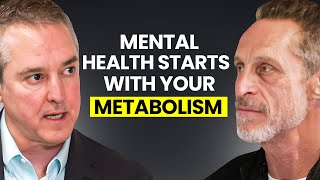
This is a recorded interview with Dr. Christopher Palmer (Harvard/McLean) arguing that many mental disorders are systemic/metabolic rather than fixed genetic brain disorders. He links rising mental illness rates with the global rise in metabolic disease and highlights mechanisms (inflammation, insulin resistance, mitochondrial dysfunction, gut microbiome, blood–brain barrier autoantibodies). He advocates network/metabolic psychiatry, describes empirical metabolic treatments (notably ketogenic therapy), mentions ongoing randomized trials and a $10M Wellcome Trust grant for a large bipolar depression diet trial, and argues for integrating testing (insulin resistance, gut pathology, folate/B12 transport antibodies) with personalized, root-cause care.
Questions this video answers
Approximately 1 billion people per year, about 13% of the world's population.
About 20% (one in five) diagnosed with a mental illness in any given year.
About 50% (one in two people will meet criteria for a mental illness at some point in their life).
On average about 15 years earlier (meta-analysis cited: >100 studies, ~14 million people).
A $10 million grant to fund the largest trial of the ketogenic diet versus a UK healthy diet for bipolar depression.
Chapters
In any given year, approximately 1 billion people are diagnosed with a mental illness that represents about 13% of the world's population. In Western countries, the rates are higher. One in two people will meet criteria for a mental illness at some point during their life. Mental disorders are one of the leading causes of disease burden and disability worldwide. At the same time that the rates of obesity and diabetes are skyrocketing, chronic diseases are skyrocketing, the rates of mental disorders are also skyrocketing.
Not a coincidence.
I point that out as it should not be considered a coincidence. And yet most people in our field don't think about it that way. I think that at the same time that people's physical health is getting worse, their brains are impacted too.
Dr. Christopher Palmer is a Harvard psychiatrist and a researcher working at the interface of metabolism and mental health. He's the founder and director of the Metabolic and Mental health program at McLean Hospital and assistant professor of psychiatry at Harvard Medical School.
The reason this is so important is because if you make the assumption that these disorders are genetic and permanent and fixed, it immediately instills hopelessness. I'm saying it is time for the mental health field to have a transformation, a revolution.
You are a pioneer in this. I would love you to just close out by saying, what do you think is next? Welcome to a special episode of the Dr. Hyman show, recorded live at the Eudaimonia Summit. Eudaimonia is a three day gathering designed to elevate human health and potential. Here, over 100 leading scientists, clinicians and wellness innovators come together to share the most advanced evidence based strategies for longevity and well being. And I'm thrilled to bring you a conversation from the heart of this transformative event. Okay, Chris, welcome back to the show.
Thank you so much for having me back on.
It's so great to be here with you at Eudaimonia, which is an amazing conference that talks about health and wellness and we're going to dive deep into the psychiatric revolution that's happening now in medicine. And you're the tip of the spear in that revolution. We had a funny encounter because you emailed me and said, mark, would you give me a quote for my book Brain Energy? And I was like sure and sent me the book. So I had a look at the book and I was like, wait, I wrote this book 15 years ago, it's called the Ultramind Solution. And you read it and you're like, sent me a very contrite email and says, mark, I really promise I did not read your book. I promise I didn't plagiarize it. I'm like, don't worry. It's like the science is finally catching up. I think both of us had the experiences, both personally and also with our patients, of seeing what happened when we change the diet and also change the biology of people's body. And what really became clear to me was that psychiatric problems are basically framed by traditional medicine based on symptoms. So the DSM 5, or whatever it is now 10, 11, 12, is basically a catalog of symptoms defining people based on X, Y or Z symptom. And you have anxiety, you have ptsd, you have depression, you have bipolar, you have schizophrenia, you have schizoaffective disorder, you have whatever. But it talks nothing about the cause or the mechanism. And what became really clear to me was that. And I spent. I remember one of my favorite times in medical school and residency was spending a month in a psychiatric hospital. I mean, not. Not personally, but I was. I was a resident. And I just was fascinated and sat there and listened and listened, and I realized it's. Something's off. And I remember writing a little piece. I'll see if I can send it to you about this. Cause I was like, this is just off. How we're thinking about this is off. But I didn't really quite get it. And what I realized later, as I was beginning to practice functional medicine and treat people's biology, that their psychiatric problems would get better. And I realized that mental health was not a brain problem. It was a body problem that affected the brain. It wasn't a brain disorder. It was a systemic disorder that affected the brain. And that includes Alzheimer's, schizophrenia, autism, depression. The whole spectrum of things that affect the brain are. Are driven by underlying biological mechanisms that we're just beginning to understand. I'd love you to start by kind of framing the problem of the scope of mental illness, how big an issue it is for us, and really how you came to understand the root causes of it from your patients and through the science, which is actually amazingly there. It's just mostly ignored. You know, I think there's so much literature out there, and most doctors don't have time to read it all. And they focus on what they were trained in. And if there's something that contradicts or challenges their paradigm, very hard to change it. RD Lang says scientists can't see the way they see what they were seeing. It's very hard to change things. The structure of scientific revolutions. Thomas Kuhn said, it's hard to shift people from what he called normal science and have a paradigm shift, but we're in a paradigm shift. So can you talk about how you came to understand this and what's happening with the scope of mental health and where metabolic psychiatry kind of plays a role in this?
Thanks again for the opportunity. Those are massive questions.
You don't have to go the whole hour on those. But just give me the Reader's Digest version for the scope.
I'll take the quick. So the scope is that in any given year, approximately 1 billion people on the planet are diagnosed with a mental illness that represents about 13% of the world's population. In Western countries, the rates are higher. About 20%, one in five will be diagnosed with a mental illness in any given year. In Western countries, such as the United States, about 50% 1 in 2 people will meet criteria for a mental illness at some point or another during their life. Mental disorders are one of the leading causes of disease burden and disability worldwide. And the reality is that the rates of mental disorders have been skyrocketing for decades now. At the same time that the rates of obesity and diabetes are skyrocketing, chronic diseases are skyrocketing, the rates of mental disorders are also skyrocketing.
Not a coincidence.
I point that out as it should not be considered a coincidence. And yet most people in our field don't even talk about it that way. Don't think about it that way. Many of the academic psychiatrists will say, well, the reasons the rates are increasing is because we're recognizing it more. We're talking about mental illness. We're destigmatizing mental illness. More celebrities are sharing their stories. People are comfortable talking about their mental health struggles. But these things are largely genetic. And that means they are fixed. They are fixed, permanent genetic disorders in the population. And they must have been there all along. We just didn't recognize them. That is, in fact, the predominant narrative right now. And I very much disagree with that narrative. I think that at the same time that people's physical health is getting worse, their brains are impacted too. And that sounds so obvious, but it is not obvious. Again, this is the predominant paradigm and narrative is mental disorders are genetic. They are permanent, fixed brain disorders. And. And then there's. Once you get this label, there's no hope. There's no hope for recovery because now you are schizophrenic the rest of your life. Once you have your first manic episode, you're bipolar the rest of your life. And what do you need? You need a mood stabilizer or an antipsychotic for the rest of your life. Don't you dare ever stop it. Because if you stop it, you're going to get sick and you're going end up in the hospital or end up dead. And so the reality is that mental disorders ruin lives, they ruin families, they cause tremendous suffering, and there still to this day is this tremendous stigma that comes with having a mental illness.
So, like, it's, it's like God made a. Or nature made a massive mistake and a design flaw in creating human beings so that we have this massive amount of mental health issues. That just doesn't make sense to me. If you think, you think about our evolutionary drives, if we all were suffering from mental illness and depressed in our cave and not hunting, we'd be all dead. Right? You're right. We think of these as fixed genetic disorders that we can't do anything about. We can manage them, we can treat them, we can suppress the symptoms, but we can't reverse them. And we can't really do anything about them, maybe except medicate or do 30 years of psychoanalysis. And that's really a flaw. And when you, when you started to kind of uncover the science around metabolic dysfunction in the brain, it kind of the light bulb went off for you. And tell us about that, that experience and tell us about, you know, what, what metabolic psychiatry is and how it shifts the paradigm from is fixed genetic disorders that don't change to something that is actually immensely treatable.
Obviously, as you said, you've been talking about this for a long time, shouting from the rooftops about this.
Nobody's listening.
And in, well, and in many ways, it's catching up to what you've been saying. And I think some of the foundational differences are things that we've just said that we need to think about mental disorders as systemic disorders that happen to be affecting the brain, but they are almost never limited to the brain. At the same time that people have these mental disorders, they also have body disorders. They have liver problems, metabolic problems, they have immune system problems, gastrointestinal problems. They have other problems, but then they're written off. Oh, you're mentally ill and you're complaining about stomach pains. It must be psychosomatic. We call it super chin, your anxiety, super chin curls.
For those lay people, it means it's in your head. Your tentorium is the part of your brain kind of fixes your kind of lower brain from your upper brain. And it's like, it's kind of like a pejorative thing that doctors say, oh, it's super tentorial. And it's kind of a very derisive joke, I think.
I mean, the reason. I think the reason I stress this is because it comes with, again, so much stigma and shame and humiliation for the patient, for the family. And it really comes down to you are broken or you are weak. You're just anxious. Take a deep breath. Why don't you take a deep breath and make your stomach pain go away? Well, maybe their stomach is inflamed. Maybe their gastrointestinal tract is inflamed, and taking a deep breath isn't gonna do a damn thing for their stomach inflammation. But yet we. We, like, we still say this. This is told to millions and millions of people every day. Another really important part of this revolution is this concept that instead of telling people you have a permanent fixed brain disorder due to your genetics. And even when I talk to people about metabolic psychiatry and stuff, they are still really focused on this.
But.
But wait, Chris, my. My dad does have bipolar disorder. So mine is genetic, right? So mine is genetic. It must be. I'm like, no, you're not getting it. You're not understanding it. And the reason this is so important is because if you make the assumption that these disorders are genetic and permanent and fixed, it immediately instills hopelessness that you are defective. You are a defective human being, and it's not your fault your parents gave you these genes. It's not your fault that you are defective. And you're gonna have to take pills for the rest of your life in order to manage your brain defect. And so even the most compassionate psychiatrists have that mindset. It's not their fault, but they are damaged, they are defective, and they do have to take their pills. And I'm doing a good job, and I want to get rid of that narrative. That narrative needs to go away and be buried. That the narrative needs to be, there is something wrong with this person's brain or body or combination of the two, that is causing dysfunction or dysregulation that can be fixed if we can ask the question, what might be causing the problem? And we can systematically look for causes.
So what do we know now about those causes? And what are the mechanisms that are going on that are causing this brain dysfunction? Because it's things like insulin resistance, inflammation, oxidative stress, mitochondrial dysfunction, all these fundamental concepts that are rooted in functional medicine thinking that we've been talking about for decades. It's happening in the brain, and we know what's causing it, and yet we're not treating it. So can you talk about what are those causes? And a little bit more depth and how do we start to begin to think about fixing those and even diagnosing them?
So the part of the field that I really want to embrace, which has been around for 50, 60 years, is this concept of biopsychosocial, biological, psychological and social. Those are the root causes and we know it. So adverse childhood experiences, if they occur early enough in life, they increase risk for all of the mental disorders and even autism spectrum. If an infant is severely neglected or abused, that infant is at much higher risk of developing autism because that infant will never learn appropriate social skills. But every label in DSM 5TR is increased. You're at increased risk from adverse childhood experience. What else do adverse childhood experiences increase risk for? Obesity, type 2 diabetes, cardiovascular disease, autoimmune disorders, all sorts of other physical, metabolic health conditions.
Yeah. Anybody listening? You should go online and look up the ACE questionnaire. Ace, It's Adverse childhood events. And get your score and it'll tell you what your score is. And the higher score, the more likely you are to have your health issues driven by what happened to you. Because it's. What happens to you is not just a emotional thing. It actually gets written in your epigenome and written in your biology in a way that changes everything and drives inflammation. So when you have adverse events happening to you, it literally turns on different genes that drive different metabolic pathways that drive inflammation and oxidative stress and even things like insulin resistance. We know the biology of this and.
Interestingly can change your gut microbiome. So we just had a paper out, research study out in last year showing that amygdala activation. So this is your threat. In the brain, the amygdala actually activates a certain specific pathway in the vagus nerve, which then lands on something called Bruner's glands in your digestive tract that secrete an enzyme that changes the acidity of your gastrointestinal tract that within an hour changes your gut microbiome. And so stress and trauma impact your gut microbiome, which can then impact whole body health, mental health, all of it. But as you might know, what you eat also impacts your gut microbiome. And so we need to put it together. So even if stress or trauma is causing changes in your gut microbiome that then increase your risk for a disorder, we can use diet and nutrition to treat those changes in your gut microbiome to restore a healthier gut microbiome, which will then reduce your risk for disease. Or improve your health.
Just one note on that, because it's really important. It seems to me a final common pathway is anything that triggers inflammation, Whether it's toxins, your diet, psychological stress, changes in your microbiome, allergens, infections, anything can drive changes that drive inflammation that ends up in your brain, that causes mitochondrial dysfunction, and that becomes part of the root dysfunction in the brain that you fix with the changes that you do with diet and other therapies.
Right? Yes, that's the way I think about it.
So I. I think there's many roads to roam and there's many things that can drive it, but the brain only has so many ways of saying ouch. And so when it. When it's inflamed, you don't feel it. But when you look at the science, people who are depressed have inflamed brains. Autism has inflamed brains, Alzheimer's, inflamed brain, all the psychiatric illnesses, Their brains are literally inflamed on fire. But we. We don't feel it except as. As psychiatric symptoms. And we think of that is something that is, like you said, genetic or because of it's in our head as opposed to it's in our body. And there's something we can do to find the root cause and fix it.
I think about inflammation. I mean, the way that I think about it really, is that there are a series of pathways that are all connected, like a series of dominoes that are connected. And so inflammation is one of those dominoes. It is not the only domino, because all of us get inflamed when we get a cold, and that includes brain inflammation. And yet most people don't become psychiatrically ill from a cold. Some do, but not most don't. And on and on. COVID infection caused severe neuroinflammation.
I mean, I remember when I had Covid, I got severely depressed afterwards, and I could feel my brain, and I'm like, wow, I've never felt this before. And I felt suicidal, and I actually took exosomes and it was gone, like, literally in a day.
So the su. The really. The depression part is common, and. And a lot of people don't think about that, but researchers have been talking about this for decades. High levels of inflammation cause behavioral motivational changes in most animals. So if you get the flu, you have a decrease in energy, you have a decrease in confidence, you are less likely to take risks. And what does that do that drives you to want to go to your bedroom, get under the covers, and hide from the World and stay away from the world. You are less interested in reproduction, less interested in sex, even if the opportunity is right there. You're like, get the hell away from me. Leave me alone. I'm sick. I don't feel well. Leave me alone. Let me recover. And in my mind, those are all adaptive responses that your body is hardwired to have this response. And the response is conservation of energy. Because your body is expending tremendous amounts of energy on your immune system right now. It is waging war on this thing that is infecting you and trying to take your life. It is waging war, and it is spending every ounce of energy possible to create new immune cells, antibodies, cytokines, other things that are all trying to defend your life. And it is telling you, as an organism, do not spend an ounce of energy that is unnecessary. Get into bed, go into that cave and hide from the world. Don't challenge anyone right now. Don't go out and get into a fight where you have to fight or flee. Don't do anything. Stay away. Hide from the world. The suicidality, so that part is actually really common with infections and high levels of inflammation. The suicidality part is not. And that's where I think about the brain becoming dysregulated from the neuroinflammation and people getting all of the constellation of symptoms.
Well, you talk about the genetic vulnerabilities, but then there's a lot of inputs that can drive the same final common pathway of energy dysregulation in your brain cells. Right? Diet, sugar, refined carbs, which, you know, affects Everybody. I mean, 93% of Americans are metabolically healthy at some level. You know, I would say most of those have some degree of insulin resistance, which we can now test for it at Function Health, the company I started with a bunch of folks, we actually can measure insulin resistance. And we can see the degree of is probably over 90% of people who we test have some degree of insulin resistance. It's pretty striking. Chronic stress and trauma. So psychological traumas can be transmuted into biological signals. Sleep deprivation, substance use, toxins. We talk about microplastics in a minute. Not exercising and being sedentary drives inflammation and anything like infections or allergens. Microbiome changes, all those kind of lead to this final dysfunction, which you kind of think is at the root of it. And when you look at things like Alzheimer's or autism, which are not psychiatric, particularly diseases, the same phenomena is going on. Suzanne Goh, who's been on the podcast, talks about Mitochondrial dysfunction, autism, and treating kids by treating their mitochondria and helping them with autism. And you're doing the same thing with mental illness. So can you talk about this kind of final common pathway of energy dysregulation and how it ties everything together? Because there's a lot of ways to grow on this. But the final dysfunction is very similar. And the therapies can be. Cross disease is very effective. So whether you have fibromyalgia, whether you have alcohol use disorder or eating disorder, whether you have Alzheimer's, autism, depression, bipolar, schizophrenia, anxiety, ptsd, these can be impacted by changing your diet.
The way that I think about it, because some people think, oh, you know, Chris Palmer, you're being too reductionistic. You're saying everything's mitochondrial dysfunction. And so I really, like, I'm struggling. How can I explain this so people understand what I'm really trying to say? Yeah, so what I'm really trying to say, we're on the edge of our seat, is that biological, like, wide range of biological, whether it's infections or, you know, hormones, like all sorts of things, gut, microbiome, diet, biological, psychological, social and environmental. In particular, environmental toxins. All of those four buckets are the root causes of chronic disease. Those four buckets. So there are lots of things that go into those four buckets, but they all converge at this central pathway called metabolism. Mitochondria. Mitochondria are regulating and controlling metabolism because they are, they are really mitochondria.
Give us a 60 second. Like when you say metabolism, people. I have a slow metabolism. You're not talking about that.
I'm not talking about that.
What you mean by metabolism, because it's important for you to understand this.
So most people think of metabolism as burning calories. And yes, it is burning calories. Most people think of it as well, it's metabolic syndrome. It's high blood pressure, high glucose, insulin resistance. That's metabolism. Yes, those things are tiny parts of metabolism. But metabolism, in fact, is a fundamental definition of a living organism. The ability to take food and turn it into energy or building blocks is a fundamental definition of a living organism. Viruses cannot do that independently. And so many biological authorities will say viruses are not independent living organisms. They are not a life form unto themselves. They. So life, a living organism, whether it's a bacterium to a human being and everything in between, has to be able to take food, oxygen, nutrients, and turn that into energy or building blocks to maintain life. And in fact, the absence of metabolism, the cessation of metabolism is the definition of death. There are zero exceptions. There is no cause of death that does not involve the cessation of metabolism. Suffocate somebody, you're depriving them of oxygen, which stops metabolism starvation. Toxins. You will not find any toxin that can kill a human being that does not disrupt metabolism.
Cyanide. That's what it does. Boom. You're dead in seconds because it interrupts.
It is a mitochondrial toxin. Arsenic, a mitochondrial toxin. Tylenol overdose, mitochondrial toxin. Alcohol poisoning, mitochondrial toxin. You can go on and on. And the reason is not. It's not. You know, when I first started doing this work, I was initially, like, shocked by what I'm saying, and I was a little bit in disbelief. I'm like, it can't be that simple. It is that simple. And why is it that simple? Because metabolism is a fundamental law. Like, we don't really have laws like they do in physics. They have laws, and this is a law of biology. Metabolism is fundamental to life. The absence of metabolism is the definition of death. Dysregulation of metabolism. This is what I am proposing. Dysregulation of metabolism leads to chronic disease. Dysfunction of mitochondria broadly leads to chronic disease. That, like, metabolism is so foundational to life that it shouldn't. I get that some people are really skeptical of that because they're focused on. But it's neurotransmitters. And I'm like, neurotransmitters are part of the metabolism. Yeah, it's hormones. They're a part of metabolism. Inflammation, part of metabolism. You know, viruses, a viral infection, that is an assault on your energy systems. It's an assault on your metabolism. It's threatening your life. And again, anything that threatens your life is threatening your metabolism. Ultimately, if your metabolism is going, you're still alive. By definition, you're still alive.
So, Chris, you know, people are listening, and they're like, okay, great. This is. This is a different paradigm. Like, we got it wrong around traditional psychiatry. We have a new paradigm that's emerging around metabolic, nutritional, psychiatry. But I'm depressed or I'm bipolar, or I'm struggling with X, Y, or Z. What do I do about it? How do I fix this? How do these insights and what is the science that's emerging that kind of points to what to do about all this?
So the. The one. The one point I want to make before I. Before I directly answer that, like an indirect answer or really a direct answer is also, what do I not want you to do? And. And I just want to, like, I am a psychiatrist. I've been at Harvard medical school for 30 years. I still have my job, I want to keep it. I don't hate psychiatrists, I don't hate mental health professional. I actually have the utmost respect and admiration for most of them because I know that they, like me, are treating people who otherwise society just wants to get rid of that society and families want to give up on. And yet we in the mental health field prescribe pills that harm mitochondrial function, that harm metabolism. We prescribe pills that cause obesity, that cause type 2 diabetes, that cause cardiovascular disease, that cause premature mortality. And I want to point out, I didn't say this yet people, but the Tatian die. People with mental illness are dying early deaths across the board. It is transdiagnostic. It applies to every label in dsm. In a recent meta analysis, over a hundred studies, over 100 studies, 14 million people represented in the studies, on average, people with mental illness are dying 15 years early deaths. 15 years, they are losing 15 years of life. Everybody goes to suicide. Yes, the suicide rates are higher and yes, that is one of the factors. And if a 20 year old commits suicide, that does skew the statistics. So I'm not going to deny that. But the primary cause of death in the mentally ill is cardiovascular disease. It's just happening 15 years earlier in.
Life and which is primarily driven by metabolic dysfunction and insulin resistance.
Metabolic dysfunction. They are dying of metabolic diseases 15.
Years earlier should be called cardiometabolic disease.
I would love that, I would welcome that. And well, and again, because cardiovascular disease cardiologists are focused on, the heart is a, is an organ that somehow lives in isolation of the rest of the body and brain, that it's all interconnected. Cardiovascular disease is also a systemic disorder. Obesity is a systemic disorder. Type 2 diabetes is a systemic disorder. And we need to think about that network medicine. We need to think about the network of the human body. The human body is a network of interconnected cells, tissues and organs. And so back your question. I don't want you to reflexively just go out and trust the mental health professional who wants to put you on an antipsychotic and mood stabilizer that's going to cause you to gain massive amounts of weight. That's going to, that's going to cause you to develop other metabolic disorders. It's going to cause you to die an early death. Please don't just go out and reflexively do that. At the same time, those treatments, I do want to say I still use some of those treatments to this Day. And in life threatening situations, they can be life saving. But I think about those treatments like I think about chemotherapy. Chemotherapy is literally poison. They're trying to poison your cancer before they poison you. But oncologists admit it. Oncologists admit I'm delivering poison. I'm not happy about it. I wish I had a better treatment. I wish I had something that would just kill their tumor and not harm the individual. But I don't. And I'm doing my best to save this person's life. In psychiatry, we deliver poisons, but we don't admit they're poisons. And we tell people to take them for life. We say, you've got this label, bipolar disorder, you need this poison. Go on it. We're really sorry it makes you feel like shit. We're really sorry it's causing you to become obese. This is really crazy. We're really sorry it's causing you to become type 2 diabetic. But just take your pills, take them. And I know you're probably on average gonna die an early death. I'm really sorry about that, but we don't know else to do. I'm saying it is time for the mental health field to have a transformation.
Revolution, Helen, help us understand this revolution. What's happening and what's the hope and promise in this.
The revolution is that if we understand the complex biology. So I'm not here to give you. Here is the 1, 2, 3 recipe to cure all mental illness. Because it's not that simple, you know that. As a functional medicine practitioner, I wish it was. It's not. Open your eyes to the possibility that there is something wrong with you. We can figure this out. It might take a while. We're not going to lose patience. We're not going to be deterred. We're not going to become overly frustrated. We are going to systematically figure out what is causing this metabolic dysregulation, this dysregulation in your biology. We are going to figure it out and we're going to treat it. And the good news is that we have a lot of things we can do to test for those things now. Insulin resistance. We can test for blood pressure. We can test for. Gut pathology. We can test for. There are lots of things we can test for.
Toxins.
Toxins. We can test for a lot of these things and then potentially treat them directly. We can test for infections that nobody has diagnosed. Lyme disease, whatever. There are lots of things we can do. And even when we can't, even when our testing Capabilities are not yet where we want them to be, even when our medical knowledge is not yet where we want it to be. We can use what I call empirical metabolic treatments. And the one that I'm probably most known for is the ketogenic diet. And the ketogenic diet, unbeknownst to most people, a lot of people know it as like a weight loss diet. It's a dangerous diet. They think that it's all bacon. You can actually be a vegan on a ketogenic diet. You can do a vegan ketogenic diet. So you can do a vegetarian version, an omnivore version. Yes, you can do a carnivore version. There are lots of versions of ketogenic therapies. But ketogenic therapy can change the lives of people with schizophrenia, with bipolar disorder, with chronic unrelenting depression. And in my mind, it's not that I want to promote. The ketogenic diet is the be all, end all, fix all. Because it's not. I wish it was.
There's many other things.
But there are a lot of other things we can do. And it really is about this mindset shift that you have a treatable condition and it's on us to figure out how to treat it. But for the ketogenic diet, I will say that I have seen, you know, we talked about this, I think last time I was on the podcast, there are patients with schizophrenia, 20 years, the longest example I know of 53 years of chronic unrelenting schizophrenia. Put it into remission, off antipsychotics for 15 years before she passed away at the age of 85.
Unbelievable.
So it was an enduring effect. The greatest hope. Obviously, I'm using this treatment in a lot of people. I'm promoting this treatment. We've got 20 research trials underway. Two randomized controlled trials of ketogenic diet for schizophrenia just wrapped up.
Wow.
This week. So within the next year, we're going to get those publications. We've got a $10 million grant from the Wellcome Trust, a very conservative healthcare kind of funding organization. $10 million to fund the largest trial of the ketogenic diet versus the UK healthy diet for the Treatment of bipolar Depression. And it will be the largest research trial ever done of a dietary intervention for the treatment of a mental illness ever. So we're making tremendous progress in this field and I think a lot of leading, world leading neuroscientists, psychiatrists, are really excited about this. JAMA Psychiatry, the leading psychiatric journal in the world right now, just published a meta analysis of the ketogenic diet as a treatment for depression and anxiety. Just published it. The fact that it made it into one of the leading medical psychiatric journals is nothing short of miraculous honesty.
I want to double click on a few things you said because it's so important I won't be able to get it. You said, network medicine. The body's a system. It's an integrated connected network. And there are many biological systems within that. There's your immune system, your microbiome, your mitochondria, your detoxification system, your communication systems. All these things we map out in functional medicine. And we have a very clear model of how to think about network medicine, which is there's stuff that disturbs the system that you need to get rid of. Toxins, allergens, infections, poor diet, stress, trauma, whatever. And there's things you need to add to actually help the body thrive. Whether it's the right nutrients, whether it's the right food, whether it's light, air, water, sleep, movement, connections.
Relationships.
Yes, meaning purpose. Relationships. All those things are the medicine. So you take out the bad stuff, you put in the good stuff, but the key is to be able to dive in and diagnose what those things are. And they're different for everybody. Because depression, you know, in my first book, I wrote that because, you know, the name of the disease doesn't mean you know what's wrong with you. If someone says you have depression, it doesn't mean you have a Prozac deficiency, right? It's. It's often caused by many things. So it could be caused by eating gluten that creates brain inflammation. It could be caused by an autoimmune thyroid condition that gives you hypothyroidism. It could be because you've been taking an acid blocker, because you have a crappy diet and have B12 deficiency that's accumulated over years because you live inside and you go outside and work inside and have vitamin D deficiency. It could be because you're insulin resistance. It could be because you eat a lot of mercury and have mercury poisoning, or you hate fish and have omega 3 deficiency. Or it could be because you.
You got Covid.
You got Covid, you got.
And it could also be the obvious psychological or social reasons. It could be because your spouse is beating the shit out of you every day. It could be because your parents told you you are worthless every day of your life. It could be because your friends are alienating you for something that just happened and you feel shunned. Like, it can be any of those Things. It can be biological, psychological, social, environmental. It can be any of those.
Agreed. And that's why you have to learn how to be a detective and figure out what's going on with that individual. It's really personalized psychiatry.
It is. And at the same time, I want to say, because I'm worried that sometimes when I say that exact same thing, people hear again, a hopelessness. You're saying it's overwhelmingly complicated and nobody can figure it out. And I want to say more often than not, the clues are relatively obvious. And we can do some basic blood work to get some really powerful signals and clues leading us in the right direction, or you can just talk to the person. Talk to the person. You get an upset stomach every night. What are you eating? Have you ever tried an elimination diet? Have you ever tried to figure out what's causing your stomach to be upset?
It's true.
We can figure it out.
Most people aren't feeling at their health. They're just overwhelmed by the science and what to focus on. There's a new study every week, a new supplement, a new headline. And instead of feeling empowered, you're left wondering what actually matters. And that confusion is not failure. It's just what happens when there's too much information and not enough context. And that's why we created Office Hours. This is your one on one time with me where we slow down, we make sense of the science and we talk through what I'm actually seeing work in my practice and in my own life, every episode. My goal is simple, leave you with clarity and clear actions that you can implement right now for your health, for your family's health. This is our space to learn, our space to grow and to take control. Control of our health together. Office Hours is live now. And I'm glad you're here, Chris. At Function Health, we've Now tested over 300,000 people. We have probably over 50 million data points and we see these patterns. We see over 90% have some degree of insulin resistance. We see 13% of auto antibodies through their thyroid, many of them not diagnosed, which causes depression. We see massive nutritional deficiencies, not at the level that I would think would be optimal, like levitamin D over 50, but like the reference range was just 30. Iron deficiency, vitamin D deficiency, omega 3 deficiency, folate deficiency through homocysteine methylmalonic acid. We see so many things on the function panel that are biomarkers of mental illness, which nobody talks about. So let's take a minute to kind of dive into a little bit about what Are the biomarkers that you've been exploring around mental illness? Because you've been looking at some of these things like folate, B12 microplastics. Kind of tell us about your work in that area.
It's really exciting. So I'm. I run the metabolic mental health program at McLean Hospital, Harvard Medical School. So we have the privilege of doing a lot of different researchers research studies, and I'm really interested again in root causes. And so there are two antibodies that we're exploring that one of them prevents folate from crossing the blood brain barrier. And the other is a brand new, newly discovered antibody that attacks a protein called CD320, which transports vitamin B12 across the blood brain barrier. Prior to about three years ago, nobody was aware that humans could spontaneously develop this autoantibody. There is not a commercially available test. I know that's a logical question when I'm talking about this. People are gonna be like, where can I get. Is not yet commercially available. Because it is so brand new there. People are working on it. But the reason both of those antibodies are really important because folate and vitamin B12 are required for numerous reactions in the body. But most of them center on mitochondria and metabolism. They are primarily so if you have folate deficiency, you have a metabolic problem. If you have vitamin B12 deficiency and or a deficiency in the methylated versions because you're having trouble methylating them, you have a metabolic problem.
That's the active form. Right.
And so the reason these antibodies are particularly intriguing to me as a psychiatrist is because if you measure their levels of folate and B12 from their arm, they will be normal. If you look for homocysteine in the periphery, it's normal. They show no signs from the biomarkers that we would normally measure from your blood, they show no signs of being abnormal. The person can be eating the healthiest possible diet, can have no gastrointestinal problems, but can be profoundly deficient in folate or B12 in their central nervous system because the antibodies are preventing the transport of these vitamins across the blood brain barrier into the brain and spinal cord. The reason that's really important to me, again, is because on the surface, if I look at the person externally, they can look otherwise healthy and actually be otherwise healthy. Their heart can be relatively healthy because it's getting all the nutrients it needs. If the person's eating a healthy diet and exercising regularly, their heart probably is healthy, but their brain can be grossly impaired in terms of its ability to function. And when we see brain impairment in a relatively young person, guess what that gets called 99 out of a hundred times, it gets called a mental illness. We call that a mental illness. Your brain isn't working right, That's a mental illness. And then we slap a label on you, we say it's genetic, we treat you with relatively toxic medications for life, and then we just write you off. So the reason I'm interested in these antibodies is, is because it helps us understand, like I said, that the pathways are dominoes. There are a lot of dominoes in play. But let me walk you through one clear example, because the leading theory about, well, what would cause these antibodies to develop in the first place, the leading theory is inflammation of the blood brain barrier, and that could be caused by a virus. So let's take a perfectly.
Anything that causes inflammation.
Anything that causes inflammation. But let me walk down that example. So you could have a perfectly happy, healthy child who gets a viral infection. They have neuroinflammation, including inflammation of the blood brain barrier. Their immune system is primed for whatever reason to develop antibodies to CD320, which now prevents vitamin B12 from crossing the blood brain barrier. This child, unlike most with COVID for example, who recover and do fine, this child falls off a cliff, develops new onset psychotic symptoms, new onset ocd, new onset panic disorder. And sometimes we call it pans pandas, sometimes we call it something else, sometimes we just call it a mental illness. And now this child has a mental illness due to a metabolic brain problem that we largely don't recognize. The reason in particular. So we're going to be doing the first ever study of these two antibodies in the largest cohort of people with schizophrenia.
Yeah.
So we're going to be looking for these antibodies in patients who have already been diagnosed with schizophrenia to see how many of them might have these antibodies. And then. And we're going to compare that to an equal cohort of healthy controls. By healthy, we don't mean completely healthy, because no one is, but we mean they've never been diagnosed with a mental illness, and we're going to see if there's a difference. The reason I'm particularly passionate and driven to do this research is because if we see these antibodies, there are clear treatments. If you have this antibody against folate, there is an existing treatment called leucovorin that we can deliver today to get folate into your brain and spinal cord even. No FDA approval needed. The fda, in fact, just approved leucovorin as a treatment for autism for this Exact reason.
I mean, and Chris, when I've been practicing, I'm old for a long time and I treat a lot of autistic kids. And one of the things we've been testing for decades is folate receptor antibodies and they often are cross reacting to dairy. And you cut out the dairy and you give them high doses of methylated folate and the lights come on in these kits. It doesn't mean that all autism is caused by this. It means that in some subsets this is a problem. And if you look for it, you'll find it. And it's just remarkable that it's coming out with B12 related antibodies as well as these other folate antibodies and it's treatable. And again, everybody, this is not the full solution. This is just in some particular subset of people with mental illness or autism, this is a problem. But it just points to the fact that we actually are now beginning to kind of tease apart the biological mechanisms be able to diagnose it. I mean, you know, the joke is that neurologists pay no attention to the mind and psychiatrists pay no attention to the brain. And that's changing a lot.
It is, it is. Well, and it to tie even that research in with my existing research on ketogenic therapy. So could ketogenic therapy help somebody who has one of these autoantibodies? We have every reason to believe it might because ketogenic therapy is broadly anti inflammatory and actually ramps down the immune system. Why does it do that? Because ketogenic therapy mimics the fasting state. When your body thinks it is starving, it actually reduces immune system function as a survival mechanism. Now, long term anti inflammatory, it's anti inflammatory that is proven beyond a shadow of a doubt. Anti inflammatory. In over like over 20 studies looking at inflammatory biomarkers and ketogenic therapy. But it also reduces immune system like autoimmune disorders. There's research on multiple sclerosis. Terry Wahls is doing one of the largest studies of ketogenic diet versus whole food, Mediterranean diet versus control diet for multiple sclerosis. In my, even in my world, when I deliver a ketogenic diet to somebody with schizophrenia and their symptoms get better, that's the way I'm thinking about it. Maybe this diet is actually reducing an autoimmune condition that is impairing their brain body physiology. And so is that a root cause treatment? I don't think of it as a root cause treatment. I actually think, I don't know what the actual root cause is. But ketogenic therapy Might be correcting it. And interestingly, you know, fasting. Fasting, mimicking that. Fasting's been around for millennia in every culture for a reason, because it actually works. And there's a reason it works, and it's because our physiology is kind of designed that way.
This is an amazing conversation, Chris. And I think all this conversation points to, as you mentioned, a revolution in psychiatry and the way I see psychiatry changing. I read a book, we chatted a little bit about it called Madness to Civilization when I was in college by Michel Foucault, which talks about how we think about mental health through the ages. Visitation by gods, or when Freud. It was all about the ego and superego and ID and your childhood. And then was this sort of neurochemical serotonin model. And now we're coming out, I think, maybe with a closer representation of understanding human biology, like the nature of nature. We're understanding what I call the laws of nature. And if I asked, you know, what are the laws of biology? Most people would have not have a clue. They say, oh, maybe evolution, but laws of physics we've described, but there are laws of biology. We just have been shitty at figuring it out. And what you're pointing to are some of these fundamental laws. And there's just. It's so exciting to me to be in this moment in the world of psychiatry, and I hope it scales up faster than, you know, it's doing right now, because it's hard to change the paradigm. And I think there's another revolution that's happening at the same time, which is, I think, going to be married together with this, which is psychedelic psychiatry. And, you know, there's now been trial. Nifty is about to approve MDMA assisted therapy for PTSD and other things. I just was in Mexico at a place called beyond, and I had the chance to do something called ibogaine, which I'm going to do a whole podcast on and talk about. But it's a powerful neurochemical reset, and it hits all the receptors in the brain, and it literally changes brain function, brain size, brain structure, heals brain trauma. I met a Navy SEAL there who had significant head trauma. He was a blast expert, and he said before and after his mri, his brain areas that were damaged healed. And so there are many ways to intercede. And I personally went through this last week, and I just had the most profound changes in my own sense of self, my wellbeing, my mental health symptoms. Everything changed. And I'm still like a newborn at it. It's been like three days. But. And we're going to talk about it at a length of the podcast. But I think these two revolutions really provide so much hope. And I think most people, like you said, are hopeless, that have mental health issues. And I feel like we're in this incredibly potent time where we're going to see a real change in our approach and our thinking to mental health. And you are a pioneer in this. I would love you to just close out by saying, what do you think is next? Where are we going with this and how is this being read it by your colleagues? Is this something that's going to become more part of psychiatric care?
You know, one of, one of the most common questions I get is like, are you getting a lot of pushback? And there are people who are pushing back, but more often than not, I'm pleasantly surprised, almost in disbelief. The positive reception I'm getting. I just gave a grand rounds presentation to a lot of medical professionals at one of the Harvard affiliated hospitals. 150 people. Immediately after that, I had, I got all of this praise, all of this. People want to come train.
Well, they know what they're doing doesn't work. It's like they're frustrated, they're, they're depressed. The psychiatrist.
No, they are, they are. And I think that. So I think that, you know, one of the, one of the really positive things that I do want to say about mental health professionals is, you know, that's kind of the negative spin, but the positive spin is their open mindedness. I think they do recognize what we're doing isn't working, not fully, that our patients are dying, our patients are getting sick, our patients aren't getting better. We want more tools in our toolbox. We know what you're saying is true. And I think that they are desperate for better solutions. And that's how we've gotten some of the leading psychiatrists and neuroscientists to be doing studies of ketogenic therapy for mental illness. But again, I think the field of medicine needs to move in the area of functional medicine, network medicine, whatever we want to call it. And we just need to call it medicine.
Hallelujah.
Hallelujah. We need to call it medicine. I agree. One of the reasons, like, you know, one of the terms that's getting.
I get the chills. I mean, here you are, Harvard psychiatrist at the world's top psychiatric hospital and you're saying functional medicine is coming out of your mouth. And I'm like, really? You know, it's kind of mind blowing because it is, it is so obvious when you see it. I mean the body is a network, it's a system. We can't keep doing things the way we're doing them. They're not working. So many people are suffering, so many people are dying. And there is a pathway to get better.
And I think that there are sometimes fields, forces that have maybe worked independently of each other. Lifestyle medicine, you know, the field of lifestyle medicine, some of those people hate the ketogenic diet because they, again, they're focused on plant sourced foods, just gotta be plant sourced foods. They don't even realize that you can be vegan and on a ketogenic diet. And so they, they, they fear that I'm promoting steak and bacon. And so I'm part of the evil, you know, adversaries. And it's like. But increasingly, I think when they hear me speak about this, they increasingly get on board. And so I feel like, you know, I sometimes actually think that this may actually be one of the strategies of some powerful industries is to divide and conquer. Divide lifestyle medicine from low carb, ketogenic people from functional medicine people get them all to call each other quacks, get them all to make fun of each other and then let them fight amongst themselves so that we can keep remaining dominant in our narrative of medical education. And instead I think that we, all of these people who are promoting exercise and lifestyle, nutrition and functional medicine, integrative medicine, whatever labels you want to give them, we need to band together, we need to join forces. It doesn't mean we have to agree on everything. It doesn't mean like. But we need to come together and fight because we are fighting Goliath. We are all little Davids and they have the little Davids fighting amongst themselves so that Goliath doesn't even have to spend a penny of resources to fight us. We need to come together and use our little slingshots and aim and fire simultaneously. And I'm increasingly convinced that we are doing that. I mean, I think Eudaimonia is a great example. This conference that we're at is a great example of that, that we have a lot of different voices, a lot of different perspectives, but we can find the common connections and the commonalities and work together to improve health. And I am truly excited about it. I think, you know, when you look at politics in the United States, I don't want to go there too much, but chronic disease is now part of the national narrative.
Yeah, thank God.
And it needs to be part of the national narrative. And again, the solutions people are going to bicker about. But I think what increasingly almost everybody agrees on is what we're doing isn't working and that we need a new strategy, we need new efforts. And so I'm really excited about it because at the end of the day, I became a psychiatrist to help human beings who are struggling and suffering, and I simply want to alleviate their suffering.
Thank you.
And improve their lives.
Thank you, Chris.
And I feel like we're getting there.
Thank you, Chris. I want to close by a Machiavellian quote, which is, there's nothing more difficult than to introduce than a new order of things, because the innovator has enemies in all those who have done well under the old conditions and lukewarm defenders and those who may do well under the new. So it's very hard to change things. But I think we're seeing it. And again, you're the tip of the spear. Thank you for the work you're doing. I can't wait to see what comes next. And everybody pay attention to Chris's work, who's listening, and check out what he's doing. Read his books Brain Energy and where can they learn more about your work?
They can go to brain energy.com. they can go to Chris PalmerMD.com great.
Wonderful. Well, thanks, Chris, for being on the podcast. Thank you all for being there. If you love that last video, you're gonna love the next one. Check it out.
More from AI




This Is Why 99% of Skin Conditions Don't Heal — And What Dermatologists Won't Tell You






Why you need to start strength training today #strengthtraining #healthyaging #fitness
