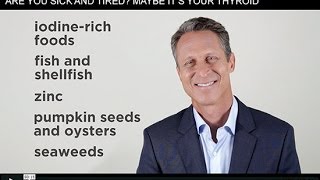
This is a YouTube video titled "House Call: Are You Sick and Tired? Maybe It's Your Thyroid" created in October 2013. It features Dr. Mark Hyman (Ask AI Mark) delivering a detailed monologue about thyroid health, symptoms of hypothyroidism, causes, testing, and treatment options. The content is educational and aimed at helping viewers understand and manage thyroid issues.
Hi, this is Dr. Mark Hyman. Welcome to my weekly house call, your chance to ask me your questions. This week's question is, I'm cold and tired all the time. Is it my thyroid? Well, the chances are it might be your thyroid because one out of five women and one out of ten men have thyroid problems. That's 30 million women and 15 million men, and you know what? Half of them are not diagnosed by their doctor. And they're walking around suffering needlessly, and they have all sorts of symptoms. They're tired, they're sluggish, they're particularly fatigued in the morning, have trouble getting going. They may be constipated, have dry skin, dry hair, coarse hair, they might have hair loss, they might lose the outer third of their eyebrows, they may have high cholesterol, low sex drive, poor memory and trouble concentrating. They might have depression, all these symptoms, fluid retention, all these symptoms are related potentially to thyroid problems, to low thyroid function or what we call hypothyroidism. And they're all vague and they're subtle and they kind of get missed. But the truth is they affect your quality of life. And when you correct your thyroid function, which I explain how to do in my Ultra Thyroid Report, you actually can get your life back. You can feel better. You can get rid of these symptoms. You know, one of my patients was 73 years old and she was tired, a little depressed, little fluid retention, constipated, trouble with memory. She went to her doctor. Her doctor said, you know, what do you expect? You're 73. Well, you know what? That's not what 73 is supposed to feel like. 73 can feel like 53 or 43 if you're tuned up. So how do you find out the root causes of low thyroid function, what do you do about it? Can you reverse it? And what should you do if you have it? So let's just go through the causes. There are many causes of low thyroid function, but the most common ones are environmental chemicals. And some of them we can control, some of them we can't. For example, plastics, pesticides, phthalates in plastic bottles, BPA in cans, stuff we put on our skin, makeups, parabens in sunblock and makeup. Chemicals in our water, chemicals in our food, pesticides, all these things block and interfere with our thyroid function. It's like the yellow canary in the coal mine that died. When the air was bad, our thyroids go bad first. Also, it can be what we're eating. Gluten is one of the biggest causes of low thyroid function because it causes an autoimmune reaction against your thyroid. We call that Hashimoto's thyroid disease. And it's fixable. You get rid of gluten, you can heal it. You fix the cause, you can often heal your thyroid. And there are a few other things that may be a problem. Nutritional deficiencies, iodine, vitamin D, selenium, zinc, omega-3 fats, vitamin A, all important for optimal thyroid function. So you have to have good nutrition, optimal nutrient levels, and you have to get rid of the things that are triggering it, environmental chemicals, and optimize your health. Now, another big cause are heavy metals and I see this a lot. Mercury, lead, these interfere with thyroid function significantly. In fact, when you look at people's stories, they eat a lot of fish or sushi. They might have a lot of fillings in their mouth. They might have a lot of vaccines like flu vaccine which has thimerosal. All these things can block or interfere with thyroid. So my job as a functional medicine doctor is to be a medical detective. to find the root causes, to deal with medicine by cause not by symptom, and then get people to fix these problems, to get rid of the root cause and to help balance the system. So once you've diagnosed this and once you have this problem, what can you do about it? Well first, you have to do the right test. Most doctors do not do the right thyroid tests and I really encourage you to demand your rights as a patient and ask for the right test. And what are they? It's a TSH or thyroid stimulating hormone. It's a free T4, very important to get the free level of the T4 hormone, and free T3, which is the other hormone. These are really important hormones to check for your thyroid. Next, you should also always check thyroid antibodies. That's an autoimmune reaction against your thyroid called TPO and anti-thyroglobulin antibodies. They're written right here in the blog. You don't have to remember this, but simply ask your doctor for these tests because that will give you a full picture of your thyroid. Also check for celiac or gluten antibodies or anti-glycans antibodies because these also can indicate a gluten problem that can trigger it. You also might need to get heavy metal testing because high levels of mercury and lead can trigger thyroid problems. So once you've found these issues, then you can begin to treat yourself. First is clean up your diet. So get rid of the things that are sources of pesticides and chemicals in your diet. Filter your water. Eat organic when possible. Minimize your exposure. Next, make sure that you eat foods that support your thyroid. Vitamin D rich foods. Mushrooms, sardines, herring. Vitamin A containing foods. Dark green leafy vegetables. Carrots, obviously. And iodine rich foods. Fish and shellfish. Very good. Zinc, very important. Zinc is in pumpkin seeds and oysters. great foods that you can use in your diet, seaweeds, to help boost your health and boost your thyroid function. But often that's not enough. Sometimes people need thyroid replacement and it's very controversial. Some people recommend only T4, some doctors recommend a combination of T4 and T3. I think that looking at the evidence, looking at the science, it's clear to me that people do better when you combine the inactive T4 with the active T3 hormone. and that's what we do when we give combinations, either in the form of Armour Thyroid, Nature Thyroid, or just combinations of T3 and T4. These are all described in my Ultra Thyroid Report. I go through everything in step-by-step detail. It's a seven-step goof-proof plan for fixing your thyroid. I encourage you to check it out, learn what you need to do, and fix your thyroid because you don't have to feel tired and crummy all the time. There is a way out. Now I want to hear from you. Have you been diagnosed with thyroid problems? What have you done to fix it? Do you feel good on your thyroid replacement that your doctor gave you? Or are you not quite right yet? And have you explored any other opportunities to get better? Also, I want you to share this blog with your friends and family. Tell everybody because half of the people remember are not diagnosed with thyroid. Sign up for our weekly newsletter and submit a question so next week I may make a house call to you. Thank you.