How Colin O'Brady Functions | Episode 1
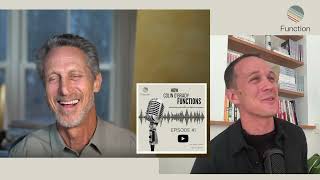
Dr. Mark Hyman talks with endurance athlete Colin O'Brady about his world record attempts and how blood work shapes his training. They dig into biomarkers, supplements, and what elite athletes do differently to optimize performance.
Hey everybody, it's Dr. Mark Hyman and I'm really excited to talk to an amazing human being, a friend of mine, and an incredible athlete. And we're going to talk today about what's coming up for him, the world records he's going to break and why they're relevant to you. And you're like, I'm not breaking any world records, so why should I bother listening here? Well, you should because what we're going to learn is about how each of us is really at risk for serious issues if we don't know what's going on under the hood. So it's really important to talk about what's going on under the hood. We're going to talk about Colin's under the hood story. Now, for those who don't know Colin, he's quite an amazing guy. He's actually, I kind of just know him socially and he's, you know, I kind of read his bio, I'm like, what? You know, like, what? He's really had the most unbelievable run of a life. He's one of the world's most recognized endurance athletes and explorers, 10 time world record holder. He's climbed every tallest peak on every continent in some stupid, slow amount, like rapid amount of time, like 130 days. He rode a boat across the Drake Passage, which is 40-foot waves, which seems insane. He pulled a sled by himself and was the first guy to cross Antarctica in a human-powered way. I mean, one of the most remarkable guys I know. He's a producer of the Impossible Row documentary and also host of the television series Survivalists. He's done incredible things. His TED Talk, Change youe Mindset, she had anything, had over 3 million views. And I could go on and on. And then you should check his bio out. It will put it somewhere you can find it. But I think, Colin, I'm just so excited to talk to you today because you're about literally in a few hours to go on your next adventure to break a world record, which is to be the fastest guy to cross the Antarctic in a particular way. So tell us about what you're trying to do. And then I want to go through your lab data and help people understand why we did your labs and what we've learned from your labs and how we're going to use your labs to optimize your performance and help you break the world records. And you're looking at three world records that you want to break over the next year. We're going to start with this first one. So tell us what's going on.
Yes. Well, it is so amazing to be here and I couldn't be more excited to be working with you, working with function to get my blood analyzed and everything dialed in for these upcoming world record projects that I have coming up. So as you mentioned, I am leaving for Antarctica in a matter of days. I am leaving for Antarctica and the hope is to become the fastest person to ever cross solo and unsupported from the edge of the continent all the way to the South Pole. So that's 715 miles pulling a sled with all my food and gear, no resupplies of food or fuel, and trying to do that in under 24 days. Many of the world's top polar explorers explorers have sort of contested this route. And the record was set back in 2011 by this really badass Norwegian guy. And so I'm going to try to break his record. But the long and short of it is what I learned from my other Antarctic expeditions, from my other big world record projects, is it's one thing to have the right mindset, it's one thing to do the right physical training, but really knowing what's going on under the hood as you spoke. And so the opportunity to have function, doing my blood panels, which I started a year ago and have been doing very regularly throughout the course of the last year as I've been training and preparing and then have you giving your advice on, you know, what's going on in my body and how to make it even better because I bring my own custom food, my own supplementation, all of that to Antarctica. So we have an opportunity right now to look at what's happening and say, Hey, Mark, what should I throw in that sled? Make sure it's not too heavy, please. But hopefully some of my—.
I'm going to give you about 40,000 pounds of supplements. How about that?
That might slow me down. But yeah, no, it's exciting.
Maybe just 100. Yeah.
Yeah. But for those who don't know, I guess first, I just want to explain real quick. Function is amazing. I know that's a business that you co-founded, Mark, but I've just been wildly impressed by Function. It's amazing. Without a lot of paperwork or red tape, you can basically get your entire blood panel taken. I think the first panel is 26 vials of blood. That might sound like a lot of blood taken out, but it's really not.
I didn't have a problem with it. And it gives you hundreds of vials.
You go get blood and you get way more than that if you give a pint of blood. Exactly. I mean, it was amazing all these biomarkers that comes back. And now having been able to do that on a regular consistent basis, there's this dashboard that we're going to look at today that shows what's improving, what's decreasing, you know, what kind of deficiencies are happening. So for me as an athlete, but I think this is true for any everyday person, being able to have this access at a reasonably inexpensive cost to go in to know everything that's happening in your body is I don't know. For me, it's probably the best money I've ever spent on my health that I can possibly imagine.
Well, thanks Colin. Yeah, I mean we founded Function Health in order to give people access to what's going on under the hood for themselves because normally you have to go through a doctor, you have to ask for the test you want, the doctor won't always order the ones that actually should be done and we're going to talk about some of those that we found on you that would have been missed by a regular blood panel. They were, oh, you're fine, go do your trek. And you get it all for very inexpensive membership fee of $499 and you get to do things sequentially over time and all of it's interpreted on the back end and you're given guidance of how to up-level your health with every aspect. So I spent thousands of hours putting in my own intelligence content. We've scoured the medical literature, we've put in other experts' content and basically are providing this enormous database that's driven by machine learning and AI to help understand your personal health. And what we're going to do today is sort of go through Colin's results and what we learned from them and will help us design a program for him that will optimize his health and then hopefully get him to be not only beating the world record, but smashing the world record.
Yeah, we've got this world record coming up right now, but it is a actual multiple world records that I'm going to take on over the next 12 to 18 months. So this is actually just part one of this multi-part series that we're going to be doing with Dr. Mark Hyman with function to continue, you know, before Antarctica test, after Antarctica, how did my body respond? How do we optimize this for the cycling world record and on and on? So this is hopefully everyone enjoys this, but I think it'll be fun to kind of roll up the sleeves, see what's under the hood, and then see how we progress over the course of the next year. So we checking in regularly doing these conversations and having Mark give his infinite wisdom on how I can be healthier, happier, more fit, more strong, and live.
A long life, because that's what I'm looking I'll do my best. Okay, so we know the Antarctic. The Viking one you mentioned, tell us about that. The third one you kind of can tease, you really can't spill the beans on that one yet. So tell us the other before we get started.
Antarctica is this winter, right now I'm leaving very soon, so I'll be down there for that. Then I'm gonna, in June, me and my childhood best friend, we're both, he's just over 40, I'm approaching 40, so a couple middle-aged guys attempting to break.
The speed record for crossing the entire continent. Hey, wait, wait, Colin, Colin, I'm middle-aged. you're a youngster, okay? I'm 64, I'm in the middle. So don't go with this middle-aged nonsense, all right?
Okay, I like that. I like that because we're increasing lifespan to in the 120-150 age. You know, you might still be just a young man, you know? So two 40-ish year old guys are going to attempt to cross the United States on bicycles faster than anyone. So we're going to two-man team and something called the Race Across America, crossing America 3,000 miles in under six days. We're calling that project sub-six. So when I get back from Antarctica, we're going to do the function blood panel test again, get me recovered from that and then training all the way up through June for the cycling crossing. And then I have another big idea for next winter. It's potentially my most ambitious world record that I've ever taken on. Can't really spill the beans on that yet, but through this process with you and function, it's going to be optimizing my health throughout the next year plus for all these multiple records as well as the recovery coming after them.
Right.
It's not just go hard, go hard, go hard. How do we dial it back? How do we recover? How do we be able to get the benefit out of training. So, it's going to be a fun different phases.
And, you know, Colin's obviously an elite athlete, but this applies to everybody, whether you're a weekend warrior or just want to stay fit and healthy as you age. The principles are the same. It's about optimizing your biology, finding out what's out of balance, creating a personalized plan, creating a plan that's based on your own biology, but also other strategies that we're going to talk about, about how to optimize your metabolic health and efficiency and mitochondrial function. So, let's kind of dive into it. I think it's kind of exciting that kind of dive into your little story. And you know what we did was test before Colin went on this big bike ride and after and also before he even before he started training and changed his diet. So we're seeing a lot of shifts over time. And in the first results, and we're going to pop this up on the screen, we're going to show the dashboard for function and you can see somehow the results are presented, but it's presented in a really easy to understand format. The first thing we sort of noticed was that he had a number of nutritional deficiencies. Now, thinking this guy eats healthy, he's super fit, he's focused on nutrition, he takes his supplements, but we found some interesting things as we kind of looked at his results. The first thing we found was he had something called high homocysteine. Now, you probably never heard of that. Your doctor probably never told you about it. He never ordered or she never ordered it. And, and you're kind of clueless. So what is Dr. Hyman talking about? Well, homocysteine is one of the most important indicators. of this fundamental process in your body we call methylation. And this has to do with basically the currency of chemicals that your body uses to run everything. Think about it like change. If you want to buy and sell stuff, you need money, right? And this is basically giving back and forth to different molecules something called methyl groups, which is a carbon and three hydrogens. That doesn't so much matter, but what really matters is that nutrients are really critical for making this metabolic machinery work, for doing everything from making energy and ATP, which Colin's going to need to actually go fast to building glutathione, which is an important detox molecule that is critical for recovery, for inflammation regulation and lowering inflammation, for building up antioxidant enzymes. So he's going to need, you know, a full bore optimize metabolic machinery, but we found he had an elevated homocysteine of 12.2. Now, the normal range is 8 to 10 or 6 to 8, depending on sort of how you want to go. But, it's somewhere in the 6 to 10 range. And, his level was elevated. It was 12.2. Now, that may not sound really high, but we're looking about fine-tuning things here and why shouldn't you be optimal? So, we found out that this means he needs extra amounts of B12 and folate. and B6, but not just the any kind. And I'm sure if we delve deeper and we did Colin's genetics, we find he probably has a genetic variation, or we'll call a SNP, that means he needs higher amounts of special forms of these nutrients. So we're going to give Colin as part of this something called the homocysteine formula that includes methylated B12, B6, and folate. Now, this is not something we would have known if we hadn't done the function panel. You would think, oh, fine, I'm not nutritionally deficient. You know, I eat my vegetables and I eat my fruits. I have eggs, I have maybe 12, I get, you know, meat, I be six, I have grains. So I'm getting all that stuff, but he wasn't getting the right forms in the right amount for him. And that's how we're all different. And that's going to make a big difference in his overall functioning and performance if we can get him the nutrients to drive these metabolic pathways. Because really, at the end of the time, it's all about biochemistry. The second thing, Colin, we found here was a bunch of other nutritional deficiencies. Now, the first one we saw early on was you were eating a fish-based diet with a lot of plant foods and healthy foods, but you weren't eating meat. And you had a very low iron store. And there was something called ferritin. Again, it's not something typically checked on your regular blood panel. But ferritin is a really important measure of your total body iron stores. Think about money in the bank. And if you have cash in your pocket and you're on a change, you can go to the ATM machine and get more money. But what if you can't go to the ATM machine and get more money? You're going to get in trouble. And that's where Colin was. He's low for a guy. Now low levels probably for women is a little bit more common because they menstruate. But for guys, it's usually not typical. And because Colin was a pescatarian, we saw this drop in ferritin. and this is critical if he's going to be using up his blood cells and human make more blood cells and using a lot of oxygen carrying capacity, he's going to need to be able to generate a lot of new red blood cells as he's going through this process. And he needs that iron stores to do that. So we're going to bump up his iron and give him iron. Now, you think, oh, iron's for women, but it actually is for guys or people who are vegan. We see this a lot of iron deficiency. And we saw it in, and we've done over, you know, 20, 000 blood panels of, of, of our members. some repeats on top of that. We've had 100,000 people on our wait list and what we're seeing is, in looking over a million data points, is a lot of these things are showing up that we didn't even know were this common in the population. The other thing Colin we found was that your vitamin D was low. Now it improved after, I think you started supplementing in between, but the first time it was 29. Now, depending on the lab, the reference range is cut off at 30 or 20. but it's not the optimal amount. The optimal amount is probably 45 to 75. And so, you're still a little bit low at 40, so we're gonna bump up your vitamin D. And why is vitamin D important? It's important for muscle function. If you're like, you know, skiing across Antarctica, you're gonna need your muscles to be optimally charged and functioning and, and your muscles aren't as strong. And, and if you have very low vitamin D, you can get things like muscle weight, wasting, you can get aching, you can get soreness. It's also incredibly important for your immune system because when you're traveling down there in Antarctica, you're going to be stressing yourself so much and you're going to need your immune system to be on top gear. So we're going to make sure your vitamin D is topped up. The other thing we saw was a little bit of thyroid issue. Now, this is not that uncommon. You had sort of borderline thyroid tests and you had low iodine. Now, I'm surprised you had low iodine because you eat fish, but it could be an absorption issue or it could be other reasons. People don't eat iodized salt anymore. so it's really important to, to kind of bump up your levels of iodine to actually help your thyroid work better. Because thyroid is like the governor. It's like, if you have a governor on your engine, you can only go so fast. Like, if you get one of those, you know, I don't know, what was I driving recently? And I had, like, a, like a golf cart or something. It's got, like, a speed limit. Right. And it's built in. You can undo it. Or when you get a, oh, yeah, you can get electric bike. And, you know, those things can go 30, 40 miles an hour. But usually there's a governor that makes them go, like, 20. so he's got a governor on which will slow his performance if he doesn't get this tuned up. So I think just with some simple changes we'll fix it. Also, we kind of may check some other things when he comes back because the thyroid antibodies were not high but they weren't zero. They should never be making antibodies against your own thyroid tissue. But for Colin, they were slightly elevated. That could be a gluten sensitivity, it could be toxins, so it sort of gives us a clue of what to look through. So that was kind of high level. The other thing, go ahead.
So with those recommendations, and we've talked about this a little bit in my previous panels, but this one, whether that's the vitamin D or the iron or the iodine, as you know, I create my own custom food for going to Antarctica. There's not this sort of off-the-shelf option. I need the right most calorie density. I need different macronutrient blends than most people would have. It's a pretty high fat diet since fat is the highest calories per gram. And I make these custom foods. I call them the Colin Bar, but they're just basically one of one custom foods. The Colin Bar smells like beef. You know, using a lot of coconut oil, nut seeds, et cetera. I could tell you the whole recipe, but I think you'd approve for what I'm doing. But I'm also looking for efficient ways to add that in. So when we think about the iodine, we think about the vitamin D and things like that, obviously I'll be taking some supplements. I imagine you're going to be recommending that. But something like the iodine can that literally be dropper mixed into some of this food, how does that sort of interact? Is there any issue with that?
No, it's not. We just basically put iodine drops in your food. We put iron drops as well as the iodine. We can mix up some of the other supplements and that'll just kind of get you eating that every day. It'll just sort of boost your nutrition. There was a few other things too, Colin, that we found that were kind of interesting. One was that after you exercise and you did this thousand mile bike ride. You know, after you did it, there were a couple of things that showed up that were kind of concerning to me. One was that you had a little.
Bit of background so people understand what that was. So basically, yeah, yeah, yeah. October of this year ahead of. So I was doing this, obviously, we're doing this cycling world record, 3, 000 miles in June. But as a test, my partner Lucas and I, we did the first 1, 000 miles of this 3, 000 mile bike ride. So we rode our bikes from San Diego to Durango, Colorado, basically. a thousand miles. And we're trying to do it as fast as we possibly could alternating, but we did it in 48 hours, just over 48 hours for a thousand miles, which puts us still on the world record pace which we were testing. But with function health, what we wanted to do is get my baseline, not my baseline, but my trained up, you know, sort of blood panels. We did the full, you know, 26 mile blood panel on October 10th. Then I left, did the thousand mile bike ride from October 13th to October 14th. And then immediately after that, did the full function blood panel. right after that to see what my body's doing in a fatigued state so that we can sort of think, oh, how can we get him recovering faster? And or when we think about an Antarctica project, which is 24 days long, if he's going to have a decline, how do we make that decline slower? So as context for that, be curious. I'm fascinated now to hear from you sort of comparing that even though those blood panels are only taken, you know, five days apart from each other, a thousand miles of cycling happened in between.
Those two is obviously what happened inside my body during that time. Yeah, right. I mean, look, we're not supposed to ride our bike a thousand miles in two days and sleep two hours onto gears off. So it's a stress to the body. You're a nut case for sure. But that's why I love you. If you exercise to a point, it's anti-inflammatory, it's an antioxidant sort of event. If you over exercise, it's an inflammation event. It increases oxidative stress in the body and inflammation. And what we saw was a marker that, again, is not often checked on regular blood panels. It's called C-reactive protein. It's just a cytokine. You've heard about it with COVID cytokines. and what it does is give you an indication that his level of inflammation in the body went up. That wasn't to super high dangerous levels, like if you got an infection or sepsis, but it was concerning to me and it indicated that his body was in an inflammatory state. And so I was like, okay, well we have to address this. And now the other thing that happened, and this was a little surprising to me, was he had an elevated liver function test. So Colin was stressing his body in a way that caused his liver to not be able to handle it. and to create some stress or damage to his liver. And we, so we saw elevated liver enzymes, which in a guy, Colin's age is really unusual, unless he's an alcoholic or a drinker or on some medication. So those two things are not unrelated. And it relates, I think, in part, Colin, and this is, you know, this is the kind of insights we would get from function that you're not going to get anywhere else. It's connecting the dots and understanding the body, the network and the system. The fact that you have this impaired methylation. this impaired ability to regulate glutathione and some of your antioxidant systems and regulate inflammation puts you at risk for having these problems. So if we can give you a way to boost your glutathione levels, if we can reduce the inflammation with anti-inflammatory compounds, which we'll go through, I think I'm going to kind of idea what I'm going to recommend for you that you can put in your food, that can put in your colon bar. I think we're going to help mitigate some of this inflammatory response and keep things down and help your liver work better. So you're not going to be, you know, you know, you were doing a thousand miles in two days. You're doing like, you know, a superhuman feet in 24 days and dragging a 500 pound sled. I mean, I don't even know how you would do that. But I think you explained to me the first day, you know, you go like kind of 20 feet, and the next day you go 30 feet, and then by the end as thing gets lighter, you go like five miles a day or so 10 miles or 20 miles a day.
Exactly. It's pretty cool.
Something like that.
So something like that.
I didn't get the math right, but you know what I mean? So, so what we're gonna do, Colin, in fact, I can go over your, your. And by the way, just so this is, again, this realizes a super healthy guy, 39 years old, super fit, super focused on his health, eats great, exercises. I mean, he's the peak of the peak of the peak. Now, what about the rest of us? Like, when you kind of take a deep look at the rest of us, we don't look so good, right? He looks great, the rest of his labs were great on paper, but these things were still off. And that just speaks to the prevalence of abnormalities that are being missed by traditional medicine. And the way that they impact your health can be subtle. So low ferritin can cause you to be fatigued, to have hair loss, to have insomnia. Low vitamin D can cause immune dysfunction, can cause depression, can cause muscle soreness, can cause all kinds of things. homo cysteine elevations again can cause mood disorders, can cause energy issues because it's required for everything. So we have these things that we found that were pretty interesting that are treatable and that are preventable. So what are we going to do for you, Colin? Well, first of all, I'm going to do is some things are going to fix these deficiency problems. And the second thing we're going to do is give you things to optimize your performance and recovery because we're going to do both of them. So I'm going to give you a really good multivitamin that's designed to be filled with antioxidants to help recovery from the exercise and all the nutrients you need. I'm going to give you the formula for homocysteine to reduce the level of homocysteine with B6, B12 in the right forms. I'm going to give you something called NAC or N-Acetyl Cysteine, which is really important as the precursor for glutathione. Glutathione, as I mentioned, is the main antioxidant, the main anti-inflammatory compound in the body. that's the thing that'll be depleted when your liver starts getting in trouble, it's because your glutathione levels go low. In fact, it's what we use in the emergency room when people have Tylenol overdose and the liver is failing. We give them this in the emergency room because even though it's a supplement, it works better than any drug to rescue the liver and prevent someone from dying from a Tylenol overdose. So we're gonna have you put that in. It's kind of, it's sulfur, it kind of might taste or smell that. Hopefully you have something to cover it up.
We'll figure out how to cut it. Yeah.
And then. And then we're gonna. Then we're gonna go on a vitamin D train. We're gonna give you vitamin D3 and K2 5, 000 units, and we're going to give you liquid iron and liquid iodine, as we talked about.
And.
And we're gonna also give you Omega-3 fatty acids. A really important. liquid Omega-3 that you can put in your food that will help with some of the inflammation recovery in the cell memories because you're going to be breaking through a lot of tissue and you need, for every cell you build in your body, you need Omega-3s. And again, it's one of the tests that we use in function to look at your nutritional status, which is your, your Omega-3 levels, Etc. And, and again, this is not something you get when you go to regular checkup. And, and even though you were normal, we're going to give you a little bit of this because it's important for the, the anti-inflammatory aspects and so forth. I'm also going to give you something that's a complex anti-inflammatory immunorejuvenating compound that's called HTB rejuvenate. And that's from a company called Big Bold Health. And full disclosure, I'm an advisor and investor, but it's really a company that I think is doing groundbreaking work in bringing phytochemicals into our diet that are profound effects. This is from Himalayan, Tawari buckwheat. It's got high levels of bioflavonoids, quercetin. it's incredibly immuno-rejuvenating, and there's a lot of amazing research on it. So you're going to be on that as well. And that's kind of the basic stuff to deal with the problems of inflammation, of deficiency, and, and the things that we kind of saw as issues, your liver. And then I'm going to give you a cocktail for performance. Now, this is not something that everybody needs to do. I, I do this pretty much every day when I work out, and it has to do with recovery and, and.
Performance.
The first thing is a really cool compound called mitopure, which essentially is derived from pomegranate and other berries and things. And it creates in the gut something called urethanes, something called a postbiotic, and it increases mitophagy and mitochondrial renewal. Mitochondria are the little Powerhouse in your cells. So all the energy Colin's going to need, he's going to have to actually use a lot of mitochondria and burn a lot of energy more than most of us ever consider in a and so this really helps with recovering mitochondria or repair mitochondria, renew the mitochondria. It also improves fitness and performance and it's not a doping thing, but it actually works like that when you look at the science behind it and it's just cool because it's made in your gut, from your gut bacteria when you eat certain foods like pomegranate. But the problem is most of us take antibiotics and we don't have the right bacteria, but that's the theory. We're also going to give you creatine which will help your muscle loss because you're going to be on a calorie deficit, you're just gonna be burning so many calories every day. And again, whether you're elite athlete or whether you're just trying to stay healthy and live longer, these are really helpful. And I use creatine every day in order to help keep my muscle mass because as you get older, it's harder to maintain and keep muscle mass. I'm also gonna give you something called amino acid complex. Again, a complex amino acids designed to help with muscle synthesis and muscle recovery and preventing muscle loss because that's one of the biggest risks for you as you go out there. you're going to be basically exercising like crazy and starving at the same time, which I don't know how you do exactly because I love food so much. I like being hungry, but it's kind of going to be a problem if you don't help you recover from that. And the last thing we're going to do is we're going to give you an herbal formula that's called adaptogenic formula. And it's a cocktail of things like rhodiola, lutherococcus, and ginseng, things that we know help with stress and recovery. The cosmonauts used them when they went into space. So that's going to be your program. And then we're going to check afterwards what actually happens to you and what the results look like and how you've changed one way or another. And we're going to sort of adapt the program. And that's the whole idea of function, is you test, you change something, you test again, you iterate, and you get to see, okay, this is how I tune my body up. And so I think, you know, for me, functional medicine is really about giving people a metabolic and health tune-up. And that's what we're doing for you now. You don't have a disease, but you're.
Just kind of not 100% and I want you 100%. No, I love that and I'm so excited about figuring out how to integrate that all into the custom food as well as of course I'm going to just have some capsules and things like that that I'll take every morning and evening, but it makes such a difference. And one of the reasons that I'm so excited about, you know, doing this with you and partnering with Function and talking about this is once a year ago when I got my first Function blood panel back, I just signed up as a normal customer, got it back and I was like, wow. Wow, there's so much information here and it was so efficient. It was just easy to go down to your local, you know, for me it was a quest, you know, near my house and just got the blood taken and then within a week or so, you know, I have all this information on my health that I wouldn't know otherwise. You know, like you said, I eat healthy, I train, I exercise, but there's these little inefficiencies that I wouldn't know about otherwise. I love that, you know, you guys are, you know, congratulations on the business. There's like, I think there's a hundred thousand person wait list to get into function or something like that right now. Yeah, crazy. For those of you watching, there's a special code, it's still the normal cost, but it skips to the front of the line, which is if you put in colon 100, you will be able to skip to the front of the line and be able to use Function yourself right out the gate. So I'm excited for that. Check out that coupon or that code for colon 100 for Function. Like I said, I'm just an advocate of this because it's amazing. And look, you might not be trying to walk across Antarctica, Mark said it, but let's really hammer this point, which is you're not me trying to walk out of Artica alone. If you are, I look forward to seeing you out there. But in the instance that you're just not trying to do that, that's totally reasonable. Ride your bike across country and the things you might find about your body are obviously going to be different than what I've found. But it's amazing to know all of these data points, all these biomarkers because I think if you're watching this, you probably are somebody who are oriented towards health, wellness. You know, as human beings, we have this precious life and why not live it as healthy and as long as we possibly can. That's the way I look at it. And so I'm really excited and grateful for your guidance, Dr. Mark, on kind of guiding, you know, what it's going to bring with me to Antarctica. And then I'm also really excited to see, like you said, or, you know, I'll get all those supplements, be taking them down to Antarctica with me. They'll be in my custom food in the column bars, and then see how I show up on the end. You know, we're going to get this function blood panel basically immediately when I get off the ice so we can get that data as fresh as possible. And our next chapter of Colin and Mark go deep and roll up our sleeves under the hood. We'll be reflecting on Antarctica. Hopefully we'll be celebrating world record, but world record, no world record, peak performance or not, I think we're going to learn a ton about my body and see how we can even continue to optimize it and evolve it over the next year as I push for several different goals. And the number one goal of them all is not the world records, but is to be living a happy, healthy, long, sustainable life. And that's why I couldn't be more thrilled to be getting all this information and data and working with you guys. yeah, it's.
It's going to be great. We're gonna. We're gonna do this for every one of these world records you're breaking. So we're gonna see and learn a lot. And, you know, and I think I wanted one tip, Colin, though, the n-acetyl cysteine tastes bad. So I don't want you to mix that in your food, because if you do, you're gonna go, oh, my God.
You'Re gonna be hating me every day. Okay. What about anything else on that?
Like, what about the fish oil or.
Any, like, that probably. Everything else tastes good. Everything else.
Everything else. It's the NAC. Don't mix that in. and it's, no, just open up a capsule, you'll know why. You just open up the bottle and it smells like rotten eggs, basically. So here's the deal, everybody. You might be thinking, oh, well, so I'm not Colin, but what I'd love you to think about is how can you do this journey with Colin for yourself? How could you jump the line using Colin 100, get signed up for function, do your tests, and change things over time? that's fine for Colin. He's got you and you're talking to him and he's just interpreted all his results with you. But you don't, you're not gonna do that for me. Well, that's not actually true. What I've done is spent thousands of hours putting in all the insights and understanding that I've gleaned over 30 years of practicing and doing functional medicine, as well as many other experts, and put it inside function. So it's not just your labs, it's an entire like like intelligence system that's going to help you interpret those and know what to do and how to make changes that you can do for yourself with lifestyle and simple things that you can take to actually up level your health. So you will actually get me, but it won't be like this. It'll just be in a personalized set of instructions that you get from the program. So I think for those of you who want to join with Colin and do this, I encourage you to do it. I I'm constantly checking my labs and tuning things up and it's such a wonderful thing to be able to do because we all can wear these, you know, wearable sensors and things and our rings. That's great, but we really need to know what's under the hood. So, Colin, I really excited about this journey with you. I'm excited for you heading out. I'm going to miss you a lot. Hopefully you can have a sat phone. You can call me once in a while. You want a battery, but if I don't have too many batteries with you and we'll see you on the other side. We'll review your we'll be back with all of you and we'll unpack those results just like we've done here, and we'll see what we learned.
Awesome. Thank you, my friend.
Can't wait to see you on the other side.
All right, buddy. Thanks, everybody.
More from AI




This Is Why 99% of Skin Conditions Don't Heal — And What Dermatologists Won't Tell You






Why you need to start strength training today #strengthtraining #healthyaging #fitness
