How Does Ultra-Processed Food Affect Our Mental Health?
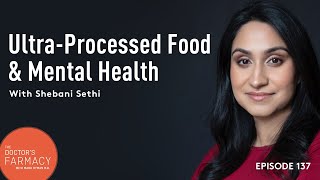
Dr. Shivani Sethi-Dlamai and Dr. Mark Hyman explore how ultra-processed foods and metabolic dysfunction drive depression, bipolar disorder, and schizophrenia. They trace the biological links between diet, inflammation, insulin resistance, and brain function, and discuss ketogenic diets as a treatment approach.
So the rates of obesity and binge eating and addictive like eating are rising alongside the increasing dominance of ultra processed foods in the modern food environment. And there are several mechanisms as to how this works.
Welcome to the Doctor's Pharmacy. I'm Dr. Mark Hyman, and that's Pharmacy with an F, F-A-R-M-A-C-Y, a place for conversations that matter. And if you've struggled with mental illness and are looking for some new insights about why we struggle as a society and individuals with this overwhelming burden of depression, anxiety, and more, then this conversation is going to matter to you because it's with an extraordinary physician, Dr. Shervani Sethi-Dlamai, who's a Stanford and Duke-trained double board certified physician in obesity medicine and psychiatry. So just stop and think about that for a minute. obesity medicine and psychiatry. They don't seem connected, but you're going to find out exactly how they are connected. She's the founding director of the Stanford University's Metabolic Psychiatry Program and the Silicon Valley Metabolic Psychiatry Program, a new center in San Francisco Bay Area focusing on optimizing brain health by integrating low-carb nutrition. And we're going to talk about that comprehensive psychiatric care and treatment of obesity associated with metabolic disease. Just an extraordinary physician. She's been, I think, leading the way in redefining what psychiatry is because for so long we've created this stigma of mental illness as a, as sort of a problem that is an emotional problem, but it might be in many cases a biological problem and it might be related to what we're eating. So I really wanna welcome you, Shamani, to the podcast and thank you so much for joining us today.
Thank you very much for having me, Dr. Hyman.
So you have kind of an interesting background. You have trained at the best institutions in the world, and you have somehow come to the conclusion that our psychiatric problems may be related to metabolic issues. And you coined this term, metabolic psychiatry, which really when I first saw that, I was so excited because I wrote this book 12 years ago called the UltraMind Solution about how the body affects the mind. We know about the mind-body effect, but nobody really talks about the body-mind effect. Most psychiatrists think about the brain as sort of disconnected from the rest of the body and you treat the brain, but what about what's going on south of the neck? It doesn't get much attention. And you've really taken a very different approach. So why don't you tell us how did you come to this idea that we should be treating psychiatric issues with nutrition and through metabolic approaches?
Yeah, that's a great question. So, early on, I went into, I knew I wanted to do medicine. And when I went into medicine, I saw that there were a lot of conditions that weren't necessarily addressed with nutrition. And there was a lack of training in the medical education system with obesity as well as nutrition. And with psychiatric conditions, I saw a lot of overlap with nutritional deficiencies and insulin resistance and even higher rates in that population versus the general population. And we know in the general population it's even, it's pretty bad already in our country. So the relationship between mental health and metabolic disease is bidirectional, which means if you have a mental illness, you're more likely to have metabolic disease and vice versa. And if you have a metabolic disease, you're more likely to develop a mental illness. You're more likely to have a heart attack, for example, if you have depression. And you're more likely to develop depression after you have a heart attack. So these observations that I made really put questions in my mind as to there must be something more to what we're doing that needs further investigation. And I believe that there are metabolic issues that are not necessarily addressed within the field that I think needs to start occurring. I mean, we need to start including that in the way that we diagnose and treat and evaluate disease.
Yeah, I was saying you were talking earlier about this idea of comorbidities, which is a term we use in medicine to describe diseases that occur in the same patients. So if you have high blood pressure, diabetes, depression, reflux, we call these comorbidities. But we were talking earlier about how they may not really be unrelated, that in fact they may be very connected. And sounds like from your observations you made the conclusion that maybe it wasn't a coincidence that the fact that people who were overweight or unhealthy also had mental health issues, maybe there was a relationship, nutritional deficiencies, metabolic issues, You talk a lot about insulin resistance. So how did you come to sort of understand that that was really going on? That the biology of that was something that was real?
So I originally started off with an interest in learning about nutrition and metabolic issues in obesity. And I wanted to treat obesity. And then I saw that in a lot of the patients, there were psychiatric conditions in those patients. So I started to veer into the realm of psychiatry and got very interested in that. So what happened was that when I was treating metabolic dysfunction, not necessarily obesity, but metabolic dysfunction, which is problems with blood sugar or insulin resistance or high blood cholesterol, I saw improvements in quality of life, in mood, in anxiety symptoms, in psychiatric symptoms, essentially. And that really got me interested in what is this relationship? Why is this occurring? And it got me interested in treating these patients in a slightly different way than standard of care. really integrating the understanding of what metabolic dysfunction is. And I then started a clinic and I started to do research and that's how my path started. And I started early on developing this clinic in residency training.
Which is incredible because when you look at the level of mental illness in society, it's one of the biggest causes of disability and one of the biggest costs is depression and anxiety. And I remember when I was seeing patients early on treating them for insulin resistance and pre-diabetes and other issues or gut issues or other factors that were going on related to autoimmune disease or inflammation, and we would get them healthy, they would sort of say, wait, you know, my depression went away, my anxiety went away, my panic attacks are gone, my bipolar disease is better, my ADD is better. And I'm like, well, how did that happen? and then you begin to go down the rabbit hole and you begin to look at the biology of what's happening. And one of the, I think the greatest discoveries around mental health is that it's an inflammatory problem very often, that the brain is inflamed, but the brain can't say ouch, like you have a sore throat or, you know, a swollen ankle. It manifests as all these psychiatric symptoms. So I love it if you sort of take us down the road of how inflammation is connected to mental illness and what the approaches that you're using to help correct that?
Sure. So that's, you know, quite an important question. And, you know, when we talk about how nutrition affects the brain and specifically focusing on reducing that sugar and processed foods and refined carbohydrates to improve mental and physical health, We know that consuming excessive amounts of sugar, processed foods, and refined carbohydrates lead to obesity, metabolic problems, fatty liver, heart disease, even cancer. There is evidence for this. And the body is really one whole system. And what happens in the body also affects the brain. The brain has a delicate balance of neurotransmitters. or chemical messengers with more sugar and processed foods, these levels really become unbalanced and they're significantly off. So I'm talking about- so wait, so.
Your brain chemistry gets screwed up when you eat processed food and sugar, is what you're saying?
Yeah, yeah. And I'm talking about ultra processed food also in particular, because I do think that there's a difference between processed food and ultra processed food. Ultra processed food is like the real sugar, the cookies, the cakes, the chips, the potato chips, these kind of highly processed things versus minimally processed foods, maybe some oils, vegetables that are frozen, that's a little bit different than ultra processed food. And so the research is showing differences between those things in the brain. And you need the right raw ingredients for chemical reactions to occur in the brain. and elsewhere, like vitamins and minerals and nutrients, you need proper functioning of the brain, you need proper speed of transmitting signals. Your brain is composed of electrical cells and it's a complicated web of signaling molecules. Those cells need fat to develop and to function properly, so you need those omega-3s in your diet. And if you eat sugar and ultra-processed foods, the chances are that your likely not getting those important nutrients, those vitamins and minerals, for those important reactions that you need, nor are you absorbing them. Most people with metabolic dysfunction actually have nutritional deficiencies and are malnourished.
So you're saying it's people who are overweight and obese often are very malnourished and vitamin and nutrient deficient?
Yes, that's right.
That's sort of a paradox, right?
Right, right.
I think they're eating all this food, why are they nutritionally deficient?
But they're actually among the most malnourished.
They are, they're looking in all the wrong places for the nutrients. They're eating more and more food. And I think a study from Kevin Hall and others showed that if you let people eat as much as they want and you give them ultra processed food versus whole foods, they'll eat about 500 calories more a day of ultra processed food because they'll keep eating and they're hungry and they keep driving. And you talk a lot about that in your work about the the biology of what these do to your brain in terms of dopamine and the addiction reward pathways in the brain that make you literally become addicted to these compounds and how that affects you.
Right. So the rates of obesity and binge eating and addictive like eating are rising alongside the increasing dominance of ultra processed foods in the modern food environment. And there are several mechanisms as to how this works. Some which act directly on the brain and some that indirectly act through hormonal signaling. So our body is very complicated and the brain is connected to the body. And we used to learn in medical school that you have this blood-brain barrier that nothing can get across it. But that's not, it's like the Berlin Wall. But in reality, it does leak. Right? And there are things that do cross.
And-- It's more like a coffee filter, you know, it's a sip.
Yeah, so ultra-processed food and sugar decrease our dopamine receptors and make us eat more compulsively, much like addictive drugs. The highly processed foods, they trigger dopamine reward pathways and they invoke addictive-like behaviors. which have been well documented and include intense cravings, includes feelings of withdrawal when cutting down on ultra processed food, continuing to eat these things despite knowing the adverse consequences to it, and repeated attempts to try to quit, right? I'm describing addiction here basically, and the consumption of larger quantities over time than intended. Because people go, oh, it's like emotional.
Eating, it's not really biological true addiction. But what you're saying is this is really a true biological addiction just like heroin or cocaine alcohol, that you get withdrawal, you get cravings, you get increased need for more and more of the substance to receive the same pleasure, you downregulate the receptors for pleasure, so you have to take more of the stuff to actually stimulate that reward pathway. And it's really this vicious cycle that people get into, and then they blame themselves and they feel guilty for doing it and they think they just have no willpower, but you're saying it's much bigger than that.
Yeah, that's exactly right. So sugar is an addictive substance. It's not just something we say. It has a straightforward neurochemical basis in the brain just like any other drug. And I think of sugar as a, it's a recreational food. It's not a food that's essential for survival. We make sugar, you know, through the process of gluconeogenesis, through other foods that we consume. And so, It's really about excess carbohydrates.
It's not- I call sugar a recreational drug. I've never heard anybody say it, but I've always, oh, he's right down in my book, sugar is a recreational drug. It's like, if you like tequila, it's fine, but not breakfast, lunch, and dinner in the quantities we're having in America.
Exactly, yeah. And we also, actually, I would like to share a story about this just during the era of COVID since we're in it. Yeah. Just to give context as to why I wrote about this and why I'm working on this as well and continuing to feel motivated to continue to do my work is the shelter-in-place order had come a couple of months back for my county and I'm in California. I live in Menlo Park. When it was announced, my husband, he's an infectious disease physician at Stanford and I'm a psychiatrist and a UCSD medicine physician as you mentioned, we both felt doubly invested in this pandemic. We went to our neighborhood Safeway grocery store and we saw many people loading up their carts with Pop-Tarts, Hawaiian Punch, popcorn, anything ultra processed basically. And they weren't loading up their carts with fresh vegetables or, you know, they were out of cookies at the grocery store.
Yeah. Using toilet paper.
And toilet paper, exactly. And there were still, produce left in the store. It wasn't like they ran out of produce.
So here I was... Wasn't a run on broccoli.
No. Here I was at the checkout counter and I was thinking to myself staring at the person's cart in front of me that it's full of the recreational food, as I mentioned, food that's not necessary for survival and detrimental to our health. I thought to myself, this is certainly not preparing them for the pandemic. or helping their immune system and if anything, weakening it. And this is our local Safeway. This is the heart of Silicon Valley. So in this context, it wasn't about affordability or access. That is what motivated me to kind of get that public message out on this topic.
Yeah, you did write a great article on the Hill and I read it. And you really talked about the way in which the pandemic we're facing is much more serious because of the underlying chronic disease pandemic we have in our society where is driven by this ultra processed food that makes us overweight and sick and causes all these underlying chronic inflammatory issues like diabetes and heart disease and high blood pressure, which are really the same mechanisms. If you look at the mechanisms of high blood pressure, heart disease and diabetes, it's insulin resistance, it's oxidative stress, it's inflammation, and it's the same thing that's affecting our psychiatric illnesses, which is so fascinating. And most people don't think about using the doorway of food to help treat the brain. And you're doing that in your research and in your practice. So tell us some of the kinds of things you're seeing in your patients using this approach, because it's pretty radical. You're going all the way sometimes to ketogenic diets with these patients with bipolar disease, schizophrenia, depression. It's fascinating.
Yes. What I have noticed is that a lot of my patients that come for psychiatric treatment and evaluation, a lot of them have pre-diabetes and diabetes. And when I look up the statistics on this in our country, 44% of adults today in our country are either pre-diabetic or they have diabetes. And I wonder to myself, what is that doing to our brain? We know that affects all these different organ systems, the liver, the pancreas, the heart, but what is that doing to the brain? And so I'm happy to talk more about my research and patient care, but one thing that I felt I didn't completely answer before was how these hormones affect the brain with the addictive piece.
How does it drive inflammation and all of that? Yeah.
Yeah, so going back to that.
So.
I was talking about the definition of addiction. And we know that hormones like insulin and leptin, which is the hormone that tells us we're full, it sends a signal to our brain, and ghrelin that tells us that we're hungry. These hormones modify natural and drug reward pathways in the brain. I mean, they have so many effects on their brain. Our hunger hormones go awry and it can actually increase the reactivity itself of the dopamine system. And so this happens when we consume that excess sugar and the excess carbohydrates in our diet. And they cause these rapid shifts in blood glucose and insulin levels similar to other addictive substances. So My approach in patient care has been to work on this system to decrease these shifts that occur in our blood sugar and our hormone levels to kind of go back to the homeostatic state that our body and our brains were meant to be in. And so I treat the metabolic dysfunction and I look at how that improves both metabolic issues as well as psychiatric outcomes. Yeah, so it's fascinating.
So basically you're treating the body to fix the brain, right? You're dealing with these physiologic changes that have to do with our diet and nutritional psychiatry that most psychiatrists aren't thinking about. I mean, most psychiatrists are thinking about, you know, psycho-emotional issues, they're thinking about medication and prescribing antidepressants, but they don't really work as well. And I just found that the amount of benefit you get by addressing these underlying factors is so much greater than you get with medication, which are marginally effective for most people. I think, you know, unless you have really severe depression, but I think the data is just not that exciting about these drugs, right? I mean, they can be helpful for people and they can be life saving, but there are also other doorways that you're exploring which are seeming to be way more fruitful. Is that your experience?
So, you know, the field has come, you know, a long way. They've, there's a lot of research that's been done on the biological piece and neuroscience and looking at, you know, obviously the serotonin hypothesis, but that's the hypothesis and an observation from like 30 years ago. And all of these research and money has been thrown on developing drugs, but we're not necessarily addressing some of the root causes of why are these chemicals imbalanced? And so that's an important question that I and others are trying to study through research studies and clinical trials. And like you said, we know that although our medications are necessary and life-saving for many, they have undesirable side effects that can worsen metabolic health. And while it's helping in one domain, it may in some people also be hindering improvement in psychiatric symptoms, especially if the metabolic health is poor. So psychiatric treatment is never going to be a one-size-fits-all approach. Mental health conditions are varied. They're heterogeneous and they have different phenotypes or presentations. We don't have a single mutation or a gene that we can point to or a lesion. There's no smoking gun. It's a complex relationship of multiple genes and environment. And unfortunately, a metabolic assessment is not part of that routine care. And stigma certainly plays a role in this. Obesity stigmatized and so is mental health. Education about nutrition and metabolism is lacking in medical education. Most psychiatrists recognize this relationship.
They do. They understand the connection between food and mood.
They're starting to. They understand that there are side effects with psychotropic medications. I think they don't necessarily have the expertise to treat it or address it. They don't know necessarily what to do about it. But most psychiatrists that I speak with, and my department certainly has been very supportive of this idea. And if someone has to do the research and so must do the work to kind of move the field forward. There's a growing body of other researchers working on this, and we hope that evidence-based research has to be done to kind of change the mainstream's generative care.
Yeah, I mean, you were talking about metabolic psychiatry. I was also noticing that Harvard had a whole department of nutritional psychiatry, which is, you know, seems like bookends on the country. I don't know the rest of the psychiatric world is thinking about this. you mentioned earlier that you work with Bruce Ames, who's an incredible biochemist and nutritional scientist from California, one of the most published sort of scientists in the world. And, I spent a lot of time with him and he talks about this whole idea of a metabolic tune-up and that so many of our biochemical reactions are regulated by vitamins and minerals and that each of us have different needs for different components of those vitamins and minerals. I remember one guy, I was sitting in my office one day working on something. I was thinking I might have been working on that book and I was talking to somebody about folate and B12 and B6. He said, oh, yeah, I had really bad depression and I took some of these B vitamins and that just went away. And, I think there are some people who have a higher need for, for example, folate or B6 or B12 based on these genetic variations that Bruce Ames talks about that really are so prevalent. In fact, one-third of our entire genome codes for enzymes, and those enzymes all need helpers, which are vitamins and minerals, and we don't really pay much attention to that. So when I look at depression or psychiatric illness, you know, I see so many different things that are going on there, whether it's insulin resistance and prediabetes or vitamin D deficiency or folate insufficiency or zinc or magnesium, all these various nutrients play a role in brain function. And they're not something we really learn about when we learn about psychiatry, right? Is that changing?
I think that is changing. There's a complex relationship between metabolic dysfunction and nutrition, food, mental health. And I want to start off by saying that the idea of food as medicine is not a new concept in the field of nutritional psychiatry. It's really grown over the past few decades by several prominent psychiatrists and researchers However, the focus has largely been looking at specific foods or supplements, eliminating certain things from the diet, the microbiome. You know, we're looking at the Mediterranean diet, for example, affecting depression symptoms. And these are all very important questions, but what I thought was missing and why I named our clinic and our group, SWIRK Metabolic Psychiatry, is to distinguish that this is a study of how treatment of metabolic dysfunction can affect psychiatric symptoms. Yeah. Hi everyone. Hope you're enjoying the episode. Before we continue, we have a quick message from Dr. Mark Hyman about his new company, Farmacy, and their first product, the 10-Day Reset.
Hey, it's Dr. Hyman. Do you have FLC? What's FLC? It's when you feel like crap. It's a problem that so many people suffer from and often have no idea that it's not normal or that you can fix it. I mean, you know the feeling. It's when you're super sluggish, your digestion's off, you can't think clearly, or you have brain fog or you just feel run down. Can you relate? I know most people can. But the real question is, what the heck do we do about it? Well, I hate to break the news, but there's no magic bullet. FLC isn't caused by one single thing, so there's not one single solution. However, there is a systems-based approach, a way to tackle the multiple root factors that contribute to FLC. And I call that system the 10-day reset. The 10-day reset combines food, Key lifestyle habits and targeted supplements to address FLC straight on. It's a protocol that I've used with thousands of my community members to help them get their health back on track. It's not a magic bullet. It's not a quick fix. It's a system that works. If you want to learn more and get your health back on track, click on the button below or visit getpharmacy.com.
That'S getpharmacy with an F, F-A-R-M-A-C-Y.com Now back to this week's episode. If a majority of us are suffering from obesity, type 2 diabetes, insulin resistance, metabolic syndrome, what is that doing to our brain? We know that these diseases affect multiple things, mental illness rates have increased over the past 20 years, in fact doubled. We know that mental illness like depression, bipolar disorder, psychosis, they're strongly associated with inflammation. That research is really indisputable. And research is also showing that there's an energy deficit in these brain illnesses, and the mitochondria, the energy powerhouses of our cells, are not functioning optimally, causing changes in brain signaling itself. And the thought is, if we can target inflammation, insulin resistance, the abnormal blood sugar, et cetera, as a method to improve mental health symptoms, then we can really improve our patients' lives further. And Again, mental illness has many different causes, but even if we, you know, in five to 10% of people have an improvement in these symptoms with this method, then I think that would be a pretty significant improvement of the overall mental and physical health of our country.
I think it's a lot more than five to 10%. I mean, when you think about the most amazing thing you just said to me is such a paradigm shift, which is that depression is inflammation in the brain. And that when you look at autopsy studies and when you look at the biology of this disease, the brain's on fire and it's also on fire in autism, in Alzheimer's, in schizophrenia, and a lot of these disorders that are, we think of as mental disorders, but are actually brain disorders that are manifestations of inflammation that show up differently in different people. And the question is, you know, what's driving that inflammation? and I think diet clearly is probably the biggest factor, which makes it an incredible thing to use to actually alter the course of these diseases because it's an easy tool to change and actually get a result. And that's what you're talking about, is your therapeutic use of metabolic medicine to actually fix psychiatric problems, which is pretty amazing.
Yeah, and I'm glad that you bring that up because I do want to clarify that with inflammation, It's not a complete clear picture. We know that there's inflammation, but there have been studies showing that treatment with anti-inflammatories, for example, in patients that have inflammation but not necessarily depression, can actually cause depression symptoms. So that's kind of a little bit of a paradox, right? So people-- you- mean like Advil or.
Do you mean like the interferon? the treatments for MS or?
Yeah, I think it was interferon. I'd have to look back at studies, but there have been studies that have shown differences, you know, generally with some of the psychiatric symptoms when you're trying to combat inflammation or reduce it. But in people that have metabolic dysfunction, I think it's a different story. And that's, you know, what I'm trying to study further. So we have to be careful. and cautious also, because otherwise we do a little bit of guesswork if we're not looking at it carefully. And then you got the microbiome.
People are talking about antibiotics causing depression because it destroys the microbiome. And then the microbiome is another huge source of inflammation. So, you're talking about diet and you've got the gut microbiome and you've got environmental toxins and nutritional deficiencies. And all these factors are affecting our brains in ways that we actually have a doorway to fix. and I'm so excited that at Stanford and places like Harvard, they're actually looking at these issues now because we do have a pandemic of mental illness. And it occurred to me when you're talking that as we've seen this rise in mental illness, it's the same curve as obesity and diabetes, right?
It's the same curve. Maybe they're related. Yeah, and I think that's what is interesting about that. And even with eating disorders, we're seeing more in that population too. And you mentioned something about, you mentioned about patients and how they've benefited. And what I'd like to share is that some of my patients with eating disorders, for example, which traditionally you don't want them to go on a diet, right? You want to prevent them from exacerbating their condition with binge eating, for example. But what I'm finding is that if you Tell them not to be afraid of a fat, for example, if they increase the fat in their diet. That's improving their binge eating. They're reducing their binge eating. And all the studies with diet in the past have been like low-calorie diets. It hasn't been looking at and low fat, right? And not the quality of the diet itself. So that's another interesting area of study, which I'd like to pursue. I had a patient who couldn't get pregnant for years, had a history of bulimia, and I found that she was iron deficient and insulin resistant. And once we treated that, she was able to get pregnant and she cried in my office with a joyous outcome. Another patient who was an athlete suffered from anorexia nervosa and hadn't had a period in months and emphasized the fat and the brain needs the fat. when she increased her saturated fat intake, you know, I don't tell you to decrease saturated fat. So her symptoms significantly improved and her menstruation returned. And so there are a lot of things with diet that we can do to significantly improve patients' outcomes. And two additional patients, I'll just briefly mentioned while I was in my training, they had schizoaffective disorder and they went completely off just Ultra processed foods.
That's like schizophrenia, right? I mean, that's more like where they have psychotic behavior, which you think of as not really an emotional issue, but really a more structural brain problem. But you're seeing that changes with that.
Hallucinations, specifically these patients had auditory hallucinations and- Hear voices. Yeah. And, and with Schizoaffective, they also have the mood component, but rage and that raging behavior, I guess it's known. So that would be something that's very interesting that requires further study, too. And the quality of life significantly improved for these patients, which is really fascinating.
So, yeah, I was digging into some of your research, and you're looking at doing ketogenic diets for things like schizophrenia and bipolar disease, which to me is fascinating because you know, we think of those conditions as less treatable than depression. You know, you can do talk therapy for depression, but you can't really talk your way out of psychosis. So how does this approach work for those disorders? Because those seem a little bit more intractable, but you're seeing real changes.
Yeah. So a ketogenic diet is that higher fat, low carb, moderate protein diet, and it shifts the body metabolism to utilize fatty acids. So other words, you're burning fat and ketones as the primary source of energy rather than glucose or carbs. And they're well known for being powerful in epilepsy, in diabetes, in obesity and insulin resistance. And now newer research is showing some improvements in some of the neurodegenerative conditions, Alzheimer's disease, some autism, And so some of the possible mechanisms include energy metabolism and reducing inflammation, reducing that oxidative stress. And oxidative stress is, I like to think of it as the burden to the cell, the environmental burden to the cell. And so it's an intervention that's worth studying for other psychiatric illnesses. And we think the diet does similar things in the brain to what psychiatric medications do like mood stabilizers. So in these patients that I saw through my training, I saw improvements when they went on this particular diet. That's actually why I got really interested.
In-- so who's prescribing? Were they doing it on their own or was there a psychiatrist who said you should try a ketogenic diet?
So this was a clinic that they came to specifically for weight loss. Because they were on psychiatric medications, they had some side effects from that, they had weight gain, they wanted to improve. They already had a baseline poor metabolic state from, you know, before the diagnosis of schizophrenia, but they wanted to get improvement right with that. So they were placed on a ketogenic diet for treatment of insulin resistance, treatment of obesity. and these side effects from the medication. But what was interesting is that, you know, there have been some reports about even gluten sensitivity in schizophrenia. And so ketogenic diets are gluten-free diets.
Yes, they are.
Yeah, so this was, that's another, you know, added dimension of it. But I think there are a lot of possible mechanisms that, you know, I mentioned. And so, What I am studying right now is I'm enrolling patients in a clinical trial looking at how this ketogenic diet intervention, which is really an anti-inflammatory and metabolic intervention, how it affects individuals with bipolar disorder or schizophrenia, where we often prescribe these mood stabilizers or neuroleptics for symptom control. And I'm also looking at obesity and metabolic dysfunction in these patients. And so while the trial is still ongoing, the early results are promising, are encouraging, and patients have been really thrilled with their results. And there have been patients who've been able to reduce their medication dose and they've proved their health overall.
And so- that's really striking when you think about it, because there has not been a lot of advances in schizophrenic care since I've been a doctor. I mean, there's better medications, but it's still the same old, anti-psychotic medication, which will often have a lot of side effects. And, this is a radically different idea. I mean, I think I read once that about 17% of schizophrenics have elevated gluten antibodies and about 20% of autistic kids do. And, gluten is something that causes damage to the gut, that causes inflammation in the brain. And, you know, I think that these are all patterns that connect and you're connecting dots that haven't really been connected before in the field of psychiatry. And it's pretty stunning because if what you're saying is true, and I believe it is because I've seen this in my practice over the last 30 years, that the doorway to the brain is really through food and through your metabolic pathways and optimizing those. It often is more effective than medication. And the side effects are all good ones, like weight loss and energy. So it's pretty exciting. the other thing you sort of mentioned that I don't want to skip past is you talked about energy in the brain. So we talked about inflammation and you talked about mitochondria and energy. These are little energy factories in the brain. And it made me think of one of these researchers from Harvard, I think that was in San Diego, Suzanne Goh. I don't know if you've heard of her. She's a pediatric neurologist who studied autism and she's done very sophisticated studies in the brain looking at the energy deficits in autistic kids' brains, which are, by the way, also inflamed. And if you have inflammation, it also causes damage to the mitochondria. So it's sort of a vicious cycle. And she found by giving these kids mitochondrial support, nutrients like CoQ10 and carnitine and various compounds that the mitochondria need to function, she was able to help these kids improve their autism. And I'm wondering, in some of these metabolic disorders where there are energy deficits in the brain, in psychiatry, if that would be a fruitful area for research, if there's any research on that, looking at using mitochondrial therapies to approach and treat psychiatric issues.
I think that's a really great question. And I don't know the research on that. I don't know whether there's been a focus on that, but I think that's a really important question. and something I would love to look into further. Well, you know, we know that there's.
Mitochondrial deficits in autism. We know there's mitochondrial deficits in Alzheimer's and Parkinson's is a huge area where, you know, mitochondrial therapies have been used. ALS, there's a lot of mitochondrial issues and therapies that are used. So, you know, it's something we don't really learn about in medical school. We don't learn about mitochondria and sense of how to treat them. We don't learn about inflammation in the brain or how to really treat that. We don't learn about nutrition. All the things that seem to be the most relevant now as science advances are sort of gaps in our training. And, and now we sort of have to put the pieces back together to try to sort through what to do. And, I mean, functional medicine is really a map for helping us figure that out. And that's why I found it so effective. And like I jokingly said, you know, I called myself the accidental psychiatrist because I was treating people for all these physical issues and their mental problems get better, you know?
Yeah, yeah, it's really interesting, it's fascinating. I, yeah, I don't, I'm not an expert in, you know, kind of nutritional supplements and how that affects mitochondrial, you know, function. And so I really focus on the metabolic part of treating metabolic dysfunction and how that improves how your brain kind of self-corrects some of that mitochondrial dysfunction. Yeah.
We'll talk about the ketogenic diet in mitochondria because it's really one of the key ways that it works is by improving the function and health of the mitochondria in the brain and also reducing inflammation, which seems kind of paradoxical because you think, oh, I mean, you need a high-fat diet. That seems like very inflammatory and bad, but it turns out it's the opposite. So, can you explain how that works in the biology of how the ketogenic diet is affecting the brain?
Yeah, so with the mitochondria specifically. Well, because there's a lot of it.
All of it, all of it.
Yeah. Yeah.
Insulin resistance in the brain, inflammation, oxidative stress, mitochondrial function, all those things that we know now are the underlying biology of brain disorders. How does a ketogenic diet influence those?
Yeah, so I, We'll give an example of, in particular, the clinical condition, food addiction or binge eating, right? So the ketogenic diet- By the way.
How prevalent is that? I mean, would you say food addiction? Is this like 10% of the population, 30%, 2%?
So ultra-processed food addiction is about 40-50% in patients with obesity and about 40-50% similar to patients with binge eating disorder.
So, if you're overweight, 40% of the people who are overweight or have been eating have this issue.
Right, right.
That's a lot. And considering 75% of us are overweight, this is probably the biggest addiction in America.
This is a big addiction in America, that's right. And, yeah, the ketogenic diet, it stabilizes blood sugar, as I mentioned, but you avoid these hormonal shifts and that's really a big We think that's a big reason because that affects the dopamine reward system in the brain. What we also know about binge eating disorder in particular and ultra processed food addiction is that the functional connectivity, which is really the amount of connections between your nerve cells networks in the frontal lobe, which is responsible for your planning and your executive functioning and even within the reward pathway, reward processing, these networks are actually a lot less. That functional connectivity in people's brains are less engineered.
So the adult in the room that is managing your impulses, your basic impulses, is not functioning because of the food you're eating. So you can't make good executive decisions based on the dysfunction in your brain, is what you're saying.
Well, what we do know is that imaging studies show that these folks have less connectivity. I don't know that anyone's proved that it's related to what we're eating or metabolic functions per se, but that's something that we hope to learn more about.
But the grown-ups left the building basically. Yep.
But what's really interesting is that the ketogenic diet increases expression of that miracle grow that you described in your book, that BDNF. Right, and that has been linked to decreased food intake. And these diets high in sugar and refined carbohydrates have been shown to decrease that BDNF expression and actually make you hungrier. So there's something about ketosis or the ketogenic diet that dampens down that reward signaling and the excitatory activity in the brain. which leads to a rise in the GABA inhibition. And interestingly, in addiction, we use medications that increase that GABA inhibition. And so indirectly, the ketogenic diet may be doing something similar to what medications are doing in playing a role in altering that neurotransmission.
Wait, so let me get this straight. So basically, when you eat a diet full of sugar and processed food, It turns off this miracle grow in your brain called BDNF or brain-derived neurotrophic factor that makes more connections in your brain and allows your brain to work better and make better decisions. And when you cut that out and you eat a ketogenic diet, you actually increase this miracle grow in your brain, you increase the connections, and you get to make better decisions and choices about what you're eating in your life in general.
That's right.
That's pretty amazing.
Yeah, that's, you know, our, so Ashley Gearhart and I have been collaborating on this particular topic and she developed the Yale food addiction skill. And so we try to use that in our studies because we're trying to look at how many of these people are actually identifying as having this ultra processed food addiction and suffering from the binge eating and the food addiction. So, you know, another thing that we know mechanistically with ketogenic diets are that it includes a moderate amount of protein and that protein has been shown to dampen reward response to processed foods and reduce ghrelin, which is our hunger hormone. So that might be, you know, another possible mechanism. And so there's exciting work being done in that area.
So I mean, good quality protein, lots of fat and very, very little starch and sugar. You're talking about like 5% carbohydrates, right? This is very very low carbohydrate diet.
Right. So for this, you know, for a ketogenic diet that I'm talking about would be 5-10%, more like 10.
So have you seen people with schizophrenia, for example, stop their psychosis and auditory hallucinations by using a ketogenic diet?
I have seen two patients that that has occurred with, yes.
Yeah, I mean, this may be like Eureka, right? I mean, this is not, this is, this is Nobel Prize kind of stuff. stuff, right? I mean, this is a big discovery.
It's really fascinating.
I could say I knew you when.
There are a lot of other researchers working on this. And I'm really interested in helping these patients because I really just felt day after day, just felt that there was something missing and we really needed to address this. So much heterogeneity, as I was mentioning in psychiatric conditions, but I do think that there's something more organic about some of the illnesses. And then I think there's different phenotypes, different presentations where we diagnose the same condition, but these strategies may help some people more than others. And many, many years ago, thousands of years ago, We still had documentation of these illnesses, psychiatric illnesses.
Before McDonald's.
Yes, before McDonald's. So there's something happening. And also, I'd like to point out that even psychological stress and major events in your life increase inflammation. So diet is very powerful, physical movement, lifestyle things are helpful, but I think diet is probably more powerful than some of the other things. And I do think that ultra-processed food and sugar is really, really messing up our health. And so I'm pretty worried about this country because I think that we're not recognizing it as a society. It's all around us and we think we're eating healthy food and it's marketed as healthy food, but it's not. I spend a lot of time re-educating my patients about what to eat.
It's true. So it seems like our whole definition of mental illness is coming into question. I remember once having a conversation with Thomas Insel, who was the former director of the National Institutes of Mental Health. And I said, what do you think of the DSM-IV at the time? Now it's DSM-5, which is the manual for categorizing psychiatric illnesses. It's based on grouping people together who share symptoms. If you are sad and hopeless and helpless and you have no interest in life and sex and this and that, you have depression. If you have this and that, you have schizophrenia. And he said, well, it's 100% accurate, but 0% valid, meaning that it was very good at grouping people into categories according to symptoms, but it didn't tell you anything about the cause or the mechanism. And what you're doing is you're saying, wait a minute, just because we say you have schizophrenia doesn't mean we know what's wrong with you. Just because we say you have depression doesn't mean we know what's wrong with you. It just means you have these symptoms and it could be a lot of variables. It could be some psychological stress, but it could be also your diet or it could be a nutritional deficiency or it could be your microbiome or it could be a thyroid problem or it could be gluten or it could be whatever. We don't learn how to think that way in medical school and yet this is really where medicine is moving at a pretty rapid pace. When you look at systems biology, When you look at the emerging concepts of network medicine, the body's a network, everything's connected by these biological mechanisms. And the things you talk about in the show today, in some resistance and inflammation and mitochondrial energy issues and oxidative stress, these are the fundamental things that tend to go wrong across almost all diseases that are chronic. And they show up differently in different people, but the doorways to fix them may be very similar, right? diet and using food as medicine. And, that's what you're doing really as a psychiatrist, you're using food as medicine in a pretty radical way, which is just so exciting. And, I think the fact that you're seeing people with schizophrenia stop hearing voices by giving them a different diet, whether it's the gluten or the sugar or the insulin resistance or the inflammation or the upregulation of their mitochondria through the ketogenic diet, all those pathways are active and you're actually activating the body's own healing systems rather than trying to interrupt some pathway or upregulate some pathway that is what we typically do with drugs. So, they're much more, we call it pleomorphic in a sense. They have multiple effects when you look at the effects of lifestyle and diet that are so much more complicated than just a single drug pathway.
It is a lot more complicated than a single drug pathway. I agree with that. One thing is that The SSRIs are targeting serotonin. Like Prozac, right? They target the serotonin and they increase it in the brain and it's supposed to rebalance your neurotransmitters and it's helpful for many people, but exercise also helps with depression symptoms. And one of the ways that we think SSRIs may also be helping is through a different action. anti-inflammatory action. There is some anti-inflammatory component when they measured inflammatory markers with SSRIs and that decreased. So it's very interesting mechanistically to kind of understand what we are doing and what we're hitting.
That's true. Statins are the same way. It turned out that maybe the effect of statin drugs and lower cholesterol aren't from lowering cholesterol, maybe because they're causing a lower level of inflammation. They have a side effect which lowers inflammation. And I remember one of the big studies called the Jupiter study, they found that if they lowered LDL but they didn't lower inflammation, there was no benefit. And if they lowered inflammation, and then there was benefit. So I think, you know, the inflammation story is, is really Central to everything that's happening in chronic disease. That's, you know, and I think that's why with covid-19 we're seeing such a problem in our society, particularly in America, because we are the among, you know, there's a few countries like Mexico, maybe worse, but we're among the worst in terms of our metabolic health. And you wrote about it in your article, like 12% of us down from 19% of us are metabolically healthy. That means 88% are not metabolically healthy and are experiencing some degree of this level of inflammation and even mood and cognitive issues. And so, you know, I think, yeah, what advice would you give people who are listening or at home still struggling with their the shelter at home still struggling with trying to figure out how to get through this and feeling depressed and, you know, filling their shopping carts with Hawaiian punch and pop tarts. Like, what should people be doing to protect themselves both physically and mentally?
So I would say to, you know, any American listening, whether they have a pre-existing chronic medical condition or not, the single most effective intervention that they can take today, you know, besides not obviously, especially now, is to not overload their body with that excess sugar and the highly refined carbohydrates. It causes a lot of damage to the body and we really should be encouraging improvements in health and immunity in every way possible. And we should look to other ways to increase our, you know, dopamine, for example, and improve our immunity. Sleep is really important. Physical movement, you know, we may not necessarily have the same access to the gyms that we do before, but even if you can just move, that's going to be helpful and getting connected to close friends or family and not feeling that loneliness or the isolation, it's physical distancing is different than social distancing.
Yeah, I know it's true. I mean, I think We are, I think, needing to think about different ways to raise our dopamine. I think that was a really brilliant thing you just said. And dopamine is the pleasure stimulating amino acid in the brain. It's a neurotransmitter. And, we look to stimulate it a lot of different ways. And, most of our society uses sugar and starch and processed food to stimulate it. But, things like love and connection and exercise and sleep, meditation, yoga, all those things. Food and the right kind of food, right? That also is so interesting to me when you look at the brain biology of what happens to the pleasure center in the brain when you eat starch and sugar and processed foods, your ability to receive pleasure goes down the more you eat it. So, you need more and more of it to get the pleasure, which is really the sort of definition of addiction, right?
Right.
I drink a glass of wine. I can barely walk up to my room at night. And some people who are alcoholics can drink a bottle or two and they're fine. And I think that's what's really going on in our society. Now, if I have a sugar load, I'm like, oh, I feel pretty wired. But it really is a matter of redesigning your biology. And what do you see in your patients? How long does it take them to sort of break out of the sort of pattern that they're in and see the changes. Does it take months? Is it days, weeks?
Yeah, so it really depends on the individual and what they are coming to me with. There's a, you know, wide variety of different complications and symptoms. So usually within a couple weeks to a month, there's significant improvement in their health. But there are patients that have a little bit more trouble because they've had past trauma or significant adverse childhood events still affecting them today. And I do think that that takes like talk therapy, as you said, psychotherapy to kind of even get them ready to make any changes in what they're eating, for example. And so for some people, weight can be protective. Weight can be protective for them to feel more secure and because of past trauma.
That's real. I mean, those are issues that really have to get sorted through. But the food part is an interesting therapy that goes along with the talk therapy and other modalities to help people deal with these psychological issues. And it's often not used. In my experience, it just accelerates people's progress. I always sort of joke as if you're, you know, if you're, eating junk food or if you're, you know, if you're, if you're thyroid not working or you're gluten sensitive and you're eating gluten, it's a lot harder to talk through your issues until you get your brain working properly.
Yeah, that's exactly right.
So, what do you think about things like ADD and nutrition? I think you have a number of papers on your site looking at, for example, artificial colors and additives and Omega-3s and stuff. And just in terms of general nutritional quality in ADD, are you seeing this epidemic of ADD and autism connected to our diet?
I do think it's connected to our diet. And like I mentioned before, that these conditions are heterogeneous. And I think that the number of cases of autism over the last 20 years has doubled, even maybe tripled. So both autism, ADHD is just rising and I don't think that we're giving our brain, we're not feeding our brains the right fuel. And that does affect attention, that does affect memory, that makes our brain cells more lazy or tired, not working properly. And so those are conditions that require behavioral changes with autism and improvements in memory and concentration is really important. I think what you're eating is so important for that.
I don't know if you said you mentioned you read my book, the UltraMind Solution, and you saw the case of this little boy who had ADD and his handwriting before and after he got treated.
Changed.
That was really what got me to write the book was when his mother brought in his handwriting before and after, two months later after he started changing his diet and fixing his nutritional deficiencies. And, his handwriting went from completely illegible to really perfect penmanship. And, I thought, well, how did his brain go from being totally chaotic and asynchronous and uncoordinated to being coherent and functional? And, I thought, wow, this is incredible if that is really true. Because, you know, people can talk about their behavior and their mood. It's more subjective, but when you see this objective reality of handwriting before and after, and it wasn't like he took penmanship lessons. What's actually happening in the brain? And, when I went back to look at this kid's history, it was fascinating because he had a lot of inflammation. So, if you look at all these comorbidities that he had, he had asthma and allergies and eczema and hives, and plus he had irritable bowel, and he had all these sort of physical issues. that were inflammatory, but they were coming from his inflammatory diet. And the kid never had a real food in his life. He never even probably saw a vegetable in his life. And he had high levels of trans fats in his blood. He had no omega-3s. He had very low levels of B6. He had low levels of zinc and magnesium. And, you know, it was really pretty striking when we just cleaned up his diet and we got him on some basic supplements, just a multi and fish oil and vitamin D. his literally, his brain completely changed within just two months and he became functional and his ADD went away and all his asthma went away and his gut issues went away. And, you know, it's years later now and he, you know, he graduated in astrophysics from University of Colorado or something. You know, it's like, you go, you know, this kid got kicked out of kindergarten. He was on Ritalin for years. And yet this is not something that most psychiatrists even think about doing with their patients, which is It's so frustrating to me because as a family doctor and someone who does functional medicine, this just seems so self-evident. And your work is just such an example of how things are really changing. Do you find that your colleagues are like, what are you doing, Shivani? Or are they like, this is interesting, or are they giving you a hard time?
No, so I completely believe that story you told me. I can believe that a patient with ADHD has significant improvement after what you treated him with. And my colleagues have been pretty supportive actually and very interested to learn more and very open to making that change. In fact, even just last week, one of the, we have different clinics based on subspecialties like neuropsychiatric clinic or mood disorder clinic or, depression clinic and the depression clinic and the bipolar clinic and this women's wellness clinics, they all reached out to me and want to collaborate. And I think one of the attendings told me last week that 40% of his patients have metabolic issues and talking about weight gain. And most likely, I think a lot of people have nutritional deficiencies. And we already know the general population has a lot of nutritional deficiencies. So if we look at the population and mental health, we're going to see, you know, even more. So I do think that this is something that's going to change. I'm optimistic. I think you can tell.
Yeah, well, you're changing it. You're clearly at the forefront. Are you a lone wolf out there? Are there other people out there in the psychiatric world who are on your same path?
I think there are other people out there on the same path. I think that Metabolic dysfunction per se is not necessarily looked at as much compared to nutrient deficiencies or specific vitamins and supplements, for example. But I do think that, you know, the combination, these are all important topics and all important things to work on.
So let's last question. Looking forward five, 10 years, how does the field of psychiatry change? How would you like to see it? change in how we treat mental illness based on what you're learning in your research?
So I would like to see the change actually across the board, even in medicine, to focus on nutrition and metabolism. And I think over time we need to really include that as part of the assessment in the initial history that we take, and we have to have a careful intake history about nutrition and what people are eating for breakfast, lunch, dinner, snacks, their drinks, I mean how they're sleeping, you know, how they're looking at food. So I think that should change and I also think that the treatment of insulin resistance and detecting insulin resistance because I often find that that it's not being detected, and I'm not necessarily the doctor that sees them as frequently. And so that's something that I feel needs to change within our whole system. We need to think about, aside from just looking at blood sugar every now and then and thyroid, we also need to look at some, like their fasting insulin level. What is their, What is their consumption? What is that early process? The things that make us sick later start early. And it's a gradual process towards decline. And what if we intervened earlier, detected things earlier, asked about things earlier so that we can prevent what happens later? We know what happens later, right?
So this is just a radical idea, right? The doctor should ask their patients what they eat. That's the future of medicine. Actually, no one can come and see me in my practice unless they fill out a three-day diet record. And then on top of that, you can't get an appointment unless you agree also to see the nutritionist because if food is medicine, I can't practice without a nutritionist. And the other thing you said was really important. is that the most common disease in America, insulin resistance, the most common problem that affects hundreds of millions of Americans, is not diagnosed 90% of the time by the doctor. That's a shocking stat.
I think we're missing a lot of it, unfortunately. I think we're missing a lot of it. And I think we don't necessarily know how prevalent it is as a medical society perhaps as a whole, we don't necessarily know how common it is. And it's really common and every time I mention that statistic people are shocked. Yeah, and with kids now too. So, I mean, it used to be that the majority of liver transplants in this country were done because of alcohol cirrhosis and now the majority are being done because of fatty liver caused by fructose and high consumption of sugar.
Even in young adults, which is terrifying. I was at an obesity conference and there was this guy there who was a pediatric gastroenterologist. I'm like, what are you doing here? He says, well, we see a lot of fatty liver in kids, five-year-olds. I'm like, really? That's what we used to see in old people with diabetes, right?
Yeah, that's very sad.
So make sure you do your five, three-day diet record. the other thing is ask your doctor for a fasting insulin. This is something I've been measuring for 30 years and I almost never see it done by most physicians. And it's probably the most important test because your fasting insulin goes up way before your blood sugar. And that's something you can easily detect by checking your blood test. And it's an easy blood test. And if your insulin is over five, you're heading towards trouble. If it's over 10, it's not great. and if it's way more than 10, you're in trouble. So that's an easy thing to measure and it's something that will tell you where you're going and it affects your mental health. So I would say to people who are listening, if you have mental health issues or you know someone with mental health issues, you should really think carefully about the role of food nutrition and how that plays a role in what's going on and experiment because there's really very little harm to cutting out processed food and sugar. In fact, there's only benefits. and there's even trying something more aggressive like a ketogenic diet, often with the help of a physician or someone who knows what they're doing can be helpful. But these are simple things that have low risk, high benefit, and they're actually being validated in the research. And your work is just so exciting to me. Shomrani, I think this is really the future of psychiatry and mental health in this country, and I hope that you can become a bigger voice than you already are because I think the world needs to hear this. our government needs to pay attention to this in terms of our policy of funding research in this area. So if I can help you get millions of dollars from the NIH, I'm going to do what I can.
That would help. I do need some research funding.
Go ahead.
I did want to just say, I had a comment to what you were saying is that because people are listening, I want to make clear that it's not just people with obesity that have insulin resistance, but people who are even just normal weight can have this insulin resistance. And so it's really important to think about that as you decide whether you want that assessment. Because you may not even know that you may be insulin resistant, and you may not know that you have a high blood sugar and you think you're eating healthy, but there are a lot of foods out there that you think are healthy that are not. and had a lot of added sugar in these things. Well, that's a really important point because.
There'S a lot of people walking around saying, well, you know, I eat a lot of sugar, but I'm skinny, so it doesn't matter. It doesn't affect me. Well, it does. In fact, about 20 to 40% of skinny people are metabolically unhealthy, meaning they're what we call skinny fat or metabolically obese normal weight. So, you look thin on the outside, but you're fat on the inside, and you're maybe not overweight, but you're over fat, and especially around your belly fat, which is what the dangerous fat is, it drives all the insulin resistance. so it's important to really have a real look at this for yourself. And I think I'm so encouraged by this conversation. I can't even tell you I've been waiting for you for 30 years to talk to you. And now you're doing this incredible work at Stanford. It makes me so happy.
That's very sweet. Another just comment is that with excess weight and that visceral fat that you were getting at leaks inflammatory molecules and causes damage in the body as well. And so how much of that is contributing towards mental health and mental health symptoms is also an important question. So I just wanted to mention that because sometimes that fat is not fat you can actually see. It's fat that's built, you know, around the organs and around the arteries and things like that.
So yeah.
Yeah.
Well, I just want to honor you for your work. I want you to keep at it. I want you to convince all your colleagues and I want nutritional psychiatry and metabolic psychiatry to be actually the first thing that psychiatrists think of when they're treating patients. And then, you know, medications are useful, but it shouldn't be the first thing we think of, I think, in this situation, because it's clear that this is.
Such a powerful intervention when other things often don't even work. So, that's great. And, Mark, you've had these ideas long, long before and you've been treating all these patients and It's so wonderful. It's really a fresh of breath air to meet someone who has these ideas and have them independently.
Yeah, well you should come learn about functional medicine. I think you would love it. It's exactly what you're doing and even though you don't know you're doing it. Thank you so much for being on the Doctor's Pharmacy. I hope you love this conversation. If you're listening to it and you liked it, please share with your friends and family. leave a comment. We'd love to hear from you. Subscriber, every get your podcast, and we'll see you next time on the doctor's pharmacy. And if you're interested in Dr. Shivani's work, check out her website, metabolicpsychiatry.com. you can find her on the Stanford website as well. There's a whole just type in metabolic psychiatry.
She'll pop up all over the place on Google. So I'm excited to have had you on the podcast. And thanks for joining us. Thank you for a great conversation and for inviting me to your podcast.
More from AI




This Is Why 99% of Skin Conditions Don't Heal — And What Dermatologists Won't Tell You






Why you need to start strength training today #strengthtraining #healthyaging #fitness
