How Eliminating Gluten May Improve Anxiety & Depression
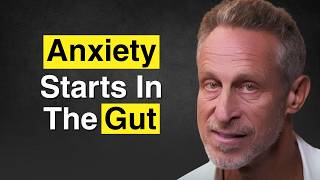
Dr. Uma Naidoo, a nutritional psychiatrist, discusses how gluten affects anxiety and depression through the gut microbiome and neuroinflammation. The conversation explores scientific findings on gluten sensitivity and dietary strategies to improve mental health.
There'S some sort of disruption that occurs in the microbiome that leads to dysbiosis in individuals who have anxiety. So I've had patients who can tolerate gluten, but if I were to give a general recommendation to someone based on what we've learned, we try to have them avoid it.
Hi, I'm Kasia Perowietz, one of the producers of the Doctors Pharmacy podcast. When it comes to diet and health, we most often think about physical health. But what we eat affects more than our bodies. It also affects our brains. Dr. Hyman recently spoke to nutritional psychiatrist Dr. Uma Naidoo about the connection between food and mood. She shares how one of the most common food offenders she sees with her patients is gluten.
We are seeing a mental health crisis in America. You know, I recently wrote a book called Food Fix, and then I was shocked to discover that the biggest driver of costs in our healthcare system and in our society, when you look at both the direct and indirect costs, it's not being overweight or diabetes, it's actually depression. Mental health issues are the biggest driver of years of quality of life loss.
Yes, and disability. Absolutely.
Disability. And it's like, well, wait a minute, this is a pandemic also, but we're really not talking about how to address it. And we think, oh, well, we'll take antidepressants. But talk to us about how that approach has really not lived up to its promise. In severe depression, it can be helpful for select patients, but for the most people who have it, it doesn't seem to be that effective. So can you talk about what the challenges are and how we need to think differently and connect diet and food?
I do prescribe medications, but some people come to me who want to try an alternate me. And if they're not actively suicidal or manic and not experiencing the psychotic episode, It's perfectly reasonable to start with nutritional strategies. But what I find is in the medication population that I treat of patients, not everyone gets better. And I really push against having to add on a second medication if I don't need to, unless it's for a separate symptom completely, which almost never happens. So they don't get better. I always suggest that they be in other forms of therapy. So someone with anxiety should be using one of the apps that I would suggest that they use for anxiety and mindfulness. They should be doing learning breathing exercises. They should be paying attention to exercise and sleep as well. It's not just one component.
All right, so talk about how specifically the studies recently have shown that diet can have a profound impact on our mental health, things like ADD, depression, anxiety, sleep issues, dementia, OCD. We don't think of, for example, OCD as being diet related or ADD as being diet related. But how are these linkages being discovered in the science now? Because I've been witnessing them for decades as a clinician and have been waiting for the science to catch up and it's kind of catching up. So what have you found? You're at the Harvard Medical School. This is not some fringe idea. This is now mainstream. So talk about what these studies show and how we can learn about how these things are all connected.
Sure. So the basis of how I describe a lot of it is around the gut microbiome and how and I'm sure your audience is very familiar with just how information gets formed and things like that. The way that it works with examples of things like anxiety, and I will speak about that because it's one thing my clients are coming in most commonly with right now, the uncertainty, the fear, loss of jobs, quarantine, restrictions changing, and going back the next day is really creating an immense amount of anxiety. And what the studies have shown is that there's certain things that, so the way that I look at it is the things that you, in terms of food that you need to embrace and the things that you need to avoid. And the things that seem to worsen anxiety include foods with gluten in them. And it's not necessarily people who have celiac disease or non-celiac glucose sensitivity, but there seems to be a correlation in the studies around the level of anxiety and eating and consuming gluten.
So.
Things that are positive are the use of things like turmeric with black pepper.
Well, what makes the gluten become a problem? What is the mechanism? Has anybody figured that out?
So we think that from what the studies have shown that it's that there's some sort of disruption that occurs in the microbiome. that leads to dysbiosis in individuals who have anxiety. So I've had patients who can tolerate gluten, but if I were to give a general recommendation to someone based on what we've learned, we try to have them avoid it. With the turmeric and black pepper, we know that curcumin and turmeric is activated by the piperine in black pepper, and it actually increases the absorption by a significant percent. And a study also showed that where Omega-3s are involved, that can enhance the absorption. So this combination and the work that's been done on Omega-3s in both anxiety and depression, for example, there was a study of medical students done that looked at treatment of anxiety using Omega-3s. And we've heard about Omega-3s and people know about using it for mood, but it talks anxiety as well. And the combination of Cayenne pepper as well as Omega-3s and I'm talking mostly about food sources of Omega-3s. Some people do take supplements and it's perfectly fine. Actually, it's quite powerful for lowering anxiety levels. So those right there are things that people should move toward.
There's also some so maybe like sardine curry with a little black pepper.
Exactly, exactly. Or some sort of really fancy glaze that you put on on seven, you know, and it could be oven roasted, it could be baked, and, you know, using all the healthy oils and turmeric and black pepper, you know, as well as some other things. So that's, you know, those would be a good way to go.
So one of the things you said, which I want to back up on, which is so important, you kind of glossed over it, which is this whole idea of neuroinflammation. Now, when your joint hurts, you get arthritis, it's inflammation in the joint, it hurts. If you have a sore throat, it's inflammation in your throat, it hurts. If your brain is inflamed, it doesn't hurt, but it shows up as depression, anxiety, ADD, dementia, OCD, whatever, right? Autism, these are all inflammatory diseases of the brain. And what you're saying is that a lot of the source of the inflammation comes from imbalances in the microbiome, in the bacteria in the gut, which you call dysbiosis, which is the difference between symbiosis, which is a nice balance with your gut flora, which is dysbiosis, which is really bad bugs that are growing that drive inflammation. And when you're eating different foods, you're feeding different bugs. And that may be how the mechanism this works with mental health.
Is that what you're saying? Exactly. There's no debate that gluten sensitivity and intolerance has been on the rise in recent decades. Research has shown that gluten can negatively impact the lining of the gut, creating leaky gut or intestinal permeability, even in those who do not have celiac disease. The lining of the gut is supposed to be strong and tight, keeping food, waste, and microbes inside the digestive tract. However, gluten can cause the release of inflammatory protein called zonulin, which opens up the junctions in the lining of the gut and causes gaps. This also allows particles to leak into the bloodstream, setting the stage for systemic inflammation. But why wasn't gluten the problem it is today 50 years ago? Dr. Hyman discusses in a recent conversation with the Nutrition Director at the Ultra Wellness Center, Maggie Ward.
There are some key reasons why we're seeing this increase. So one, it's the change in the kind of wheat we're eating. They've hybridized it. The dwarf wheat has way more gluten proteins and the way more inflammatory gluten proteins than heirloom wheat. You spray with glyphosate, which not all wheat is full of glyphosate, but a lot of it is. And that causes damage to your gut, which causes more leaky gut and more gluten reactivity. It also is sprayed with in the preservative when it's put in the bread called calcium propionate, which is actually a toxin that causes problems with behavior and attention and focus. So it can cause a lot of brain issues for people.
Right.
And then on top of that, we've created a background level of dysfunction in our gut over the last decades by our poor quality diet, starch sugar, low fiber, processed food, which damage our microbiome, makes it more like we have a leaky gut. We've taken antibiotics, we take acid blocking drugs, we take steroids, we take hormones, all of which mess up our gut. We have increased rates of C-section, increased rates of bottle feeding, All these things make your gut more likely to become more sensitive. Right, it sets you up to become more sensitive. That's why we're seeing this sort of.
Escalation of gluten sensitivity over the last 50 years and it's real.
Right.
And you know, not many of us are eating these like whole wheat berries. I mean, we're eating in the form of flour. So even if you get organic, you know, bread or whole grain bread, I mean, it's still refined carbohydrates and you're.
Selectively feeding things in your gut. You probably don't want to be feeding too much and throwing off your blood sugars. And it's always worth doing an elimination diet because the cost is low, the benefits high, there's really no downside to getting off it for six weeks, let's say, or even two weeks and see what you'd feel like. And if your symptoms get better and then you eat it again and you feel worse, there's your answer. Right, right.
I think it's a little tricky too, though, with gluten, because typically with elimination diet, you know, you use two to three weeks off of that food, you should feel better. We've had a lot of people where it's up to three months. Three months.
Right, before- Three months.
I saw it clinically for a while and now that we're testing for more, you see these antibodies to gluten stay around for a long time after someone's been off of it, right? You're no longer getting exposure, those antibodies should come down, the inflammation should come down. So that's something to keep in mind for listeners because I've had a lot of people say, you know, I went gluten-free for three weeks and I didn't feel all that much different. And then I'm like, I think you got to give it longer. It's around that three-month mark that a lot of people like, you know, my.
Joints finally started feeling better around that point. So that's something to keep in mind. Well, this is great, Maggie. You know, gluten is such a big topic. It's sort of the topic of, comedy shows, and people are like, I'm going free. I don't know why. It seems like everybody's doing it, so it must be good. But I think there is a reality to this. And as functional medicine doctors and nutritionists, we really see this every day. It's one of the most powerful things we can do is to identify these problems, to treat people, to clean up their gut, to clean up their diet, and to help resolve a whole myriad of symptoms.
Recent studies have shown that diet can have a profound impact on mental health conditions ranging from ADHD to depression, anxiety, sleep disorders, OCD, and dementia. If you're interested in eliminating gluten from your diet for a period of time to determine its effects on you, it's important to avoid gluten altogether. As Dr. Hyman says, there's no such thing as a low-gluten diet. And if you aren't careful, it can easily sneak into your diet through hidden sources such as soup mixes, salad dressings, sauces, and other processed foods. If you'd like to learn more about gluten and the science of mood and your microbiome, I encourage you to listen to Dr. Hyman's full-length episodes with Dr. Uma Naidoo and Maggie Ward. If you liked today's episode, please consider sharing it with a friend or leaving us a review below. Thanks for tuning in, until next time.
More from AI




This Is Why 99% of Skin Conditions Don't Heal — And What Dermatologists Won't Tell You






Why you need to start strength training today #strengthtraining #healthyaging #fitness
