How Food Policy Impacts Your Health
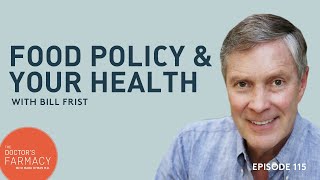
This is a YouTube video titled "How Food Policy Impacts Your Health" published in May 2020. It features a detailed and in-depth interview conversation between Dr. Mark Hyman (Ask AI Mark) and Senator Bill Frist, a former heart and lung transplant surgeon and U.S. Senate Majority Leader. The discussion covers topics including public health, chronic disease, pandemic preparedness, health care policy, the impact of nutrition and food systems on health outcomes, and strategies for systemic change in health and food policy. The conversation also touches on the COVID-19 pandemic and its relation to metabolic health and social determinants of health. The video is a rich dialogue blending medical, political, and policy perspectives on improving health through food and systemic reforms.
During the HIV era, and even today when I argue for public health and write op-eds and talk to our legislators, I come back to basically three words, or maybe it's four, but it's medicine is a currency for peace.
Welcome to the Doctor's Pharmacy. I'm Dr. Mark Hyman, and that's Pharmacy with an F, F-A-R-M-A-C-Y, a place for conversations that matter. and today's conversation is going to matter a lot if you care about health and health care, if you care about what's happening today with COVID-19, and if you want to really understand the mind of someone who spent their whole life looking at health, health care policy, who's been a doctor, a policy maker, a farmer, and much, much more. It's Senator Bill Frist, who's my guest today. I'm so happy to have you here today with me, Senator Frist. Thank you for joining us.
Thank you, Mark.
So Senator Frist was first and foremost a heart and lung transplant surgeon, although he did a degree in political science at Princeton. So he was thinking about politics, but he was given the advice to go do something real first and became a heart surgeon, which is no small task. He's the former US Senate Majority Leader, and one of the few politicians that didn't want to make a career of it. He said, I'm going to just pick two terms. I'm going to do my best, be of service. Senator Frist has really spent his whole life in service, first as a doctor, then in politics, and he's been running around the world helping people all over, doing surgeries in every place from Africa to Haiti, and really is working really hard to solve some of the big problems around health and global health around the world. He's just an incredible guy. He comes from a family of doctors, his father, his brother, His family started the Health Corporation of America. Is that it? Health HCA? Yeah, Hospital Corporation of America. And he was really involved in the Medicare Modernization Act, the PEPFAR HIV/AIDS legislation that literally saved millions and millions of lives worldwide and helped address poverty and AIDS in Africa when it seemed like an irrelevant issue for most people in America, but he really cared about it. He's performed 150 heart surgeries, authored 100 peer-reviewed papers, seven books on bioterrorism, leadership, and he's an adjunct professor at Vanderbilt University and, you know, School of Medicine. He also, in 2005, gave this incredible speech at Harvard about pandemic preparedness and talked about the need for Manhattan Project to really get us ready for this COVID-19, and nobody listened, unfortunately, which is why we're in the mess we're in right now. He's just active in his community and he's a really rare bird. He's a doctor, a politician, a farmer, an activist. He's now joined the Bipartisan Policy Center with his former rival Tom Daschle and they together have really been thinking about how to solve the hard problems in health care and in health, you know, because we suck in America. I mean just a few statistics and then we'll sort of get into it, Senator Frist. You wrote in one of your articles that we're 43rd in life expectancy and in some communities, like African American and Native American communities, we're far worse in the world. We're 11th out of 11 industrialized countries in health outcomes despite spending twice as much as everybody else. And we don't focus our attention on prevention or on how to create healthy communities or on the social determinants of health. We focus on instead treating things at the last minute when someone needs a bypass surgery, we're good at that. And you certainly did that, but realized you had to look upstream to see why were those patients ending up on the operating table in the first place. So you just had an incredible career. I respect you so much. We've got to know each other over the years and I'm a big fan of yours.
So welcome to the Doctor's Pharmacy Podcast. Mark, thank you.
It's great to be with you.
Look forward to our discussion.
Yeah. So, One of the things I want to start off with is, you know, you have talked a lot about pandemic preparedness, but you've also really been focused on the health care challenges in our country of chronic disease, the burden on the economy, health disparities, and some of the challenges of our health policy. And you being, you know, the Senate Majority Leader had, you know, front row seat to what our policies are and what the challenges are and what the challenges are in fact of changing the policies that don't work anymore. So how do you think your colleagues in the Senate and Congress and the administration are thinking today about the fact that much of the mortality morbidity, much of the death and the sickness, the severe sickness that's happening with COVID-19 is because of our underlying metabolic poor health in America and chronic disease where only 12% of us are metabolically healthy. Is anybody thinking about this?
Mark, it's a great question. And early on, people have just panic, lock down, anxiety across the country. But, you know, our representatives in Congress are the same sort of thing. It's sort of a shock value. They never thought about it. They didn't listen to my remarks back 15 years ago. The 20 speeches I gave on it. And they, a lot of them are not that tuned into data, to science. It's just not their background. I came to the United States Senate back in 1994, 1995. I was the first scientist, the first physician to come to that upper legislative body of the greatest country of the free world to be there, to be a senator. There hadn't been a doctor in the Senate in 70 years.
Yeah, since 1938, right?
Yeah, exactly. And that is a little bit of reflection of why there's not this appreciation of science and data and sort of the inquisitive and the curious mind. So to answer your question, not yet, but the reason my 2005 speech has sort of made the viral circuit now is because it's resurfaced. It just can be predicted. It is something that is long term, but it's in our lifetime and it will come back again. So now that's where we are today. So to answer your question, as the data comes forward in the last week and the next several weeks, people are beginning to realize that the virus is out there a lot more than we think. Yeah. But it's most destructive on people who are the most vulnerable people. And that's who is dying, that's who is suffering, that's who has to be hospitalized. And who are the vulnerable people? Yes, it's racial, the African-American. Yes, it's socioeconomic. But it's people who have chronic disease, whose immune systems are worn down, who don't have the natural strength within their own bodies to be able to fight out this little kg virus, which will otherwise take them down. Now, as I talk to my colleagues in the Senate, They're saying, oh, that begins to make sense. And then, so I hope we can use this as a teachable moment to come back to nutrition and exercise and our overall metabolic health as being the most important predisposition for the destructive impact of this COVID virus.
Yeah, because it seems like if we really focus double down now on our health as a nation, that we could make ourselves more resilient in the face of COVID and reduce the burden on health care. And I wonder within the next pieces of relief legislation, do you think there's an opportunity for inserting provisions to help improve our food system, improve our health care system to focus on the chronic disease and metabolic health of our population? How could that happen? Is there an opening for that? Would they be listening?
Yeah, absolutely. And our great democracy is really great because it takes this diversity of thought and it reacts to the whims of the American people. The House of Representatives probably more than the Senate. Senate. And that's good because it means that when there are teachable moments like this, people are receptive, but it does take that grassroots understanding, that advocacy, that coming forward. So I think as the data does come forward, it gives that moment. And we've seen a certain receptiveness of Congress to things like Medicare Advantage, a program that you mentioned that I helped start back in 2005. that Medicare Advantage has begun to open up to nutrition, to transportation, to some of these non-medical determinants for reimbursement in the future. Again, another little opening. So I think that case just has to be made by us, like on this show, and by the American people to give that understanding to Congress.
And for those who don't know, Medicare Advantage is a program where private providers contract with Medicare and get a bundled payment so that they get the same amount whether their patients are sick or healthy. So they're actually incentivized to do the right thing and create these programs. And I've seen this start to happen, which is very exciting, whether they're addressing social determinants, whether they're addressing nutrition, whether they're addressing lifestyle. And I think that's an amazing thing. And that legislation really helped catalyze that, which is great. But we need to do that across the whole spectrum of Medicare and Medicaid, which is value-based care. I think we're still not there yet. I think what's really striking to me, and you may have some perspective on this, is in the value-based care conversation, which means getting better outcomes at lower costs in health care, which we certainly have room to do given our crappy life expectancy and double the cost of any other nation in our expenditures.
How.
Can we actually look at focusing on the things that actually matter to do that rather than just care coordination, better health IT, reducing improving efficiencies, improving payment systems, and deal with the real issue. Because those are like moving the deck chairs on the Titanic. We need to actually say, why are people coming in the healthcare system in the first place? You know, the left of the Democratic Party is saying Medicare for all. And I'm like, well, it's a nice idea that everybody should have a human right to healthcare, but it's a disaster. if we load up the system with a chronically ill population instead of fixing the reason why people are in there in the first place. So how do we get Congress and the White House and the country focused on what seems like a smoldering problem instead of this acute problem?
Mark, I think it's getting there and again, your reach and your writing, which being on it and laying it out, both the history of it and where we are today is hugely helpful. I'll give you an example. First of all, Medicare Advantage is right. There are, say, 40 million people in Medicare, 20 million get their Medicare through Medicare Advantage. That program we started back there, and in a few years, 80% will be. It's very popular. It's popular because it allows the flexibility for payers, the insurance companies, to reimburse for things that work based on data, based on outcomes. And so the example would be a company that I'm also in the private equity investment world and I wear all these different hats just because it's all around health and healing. But there's a company called, it doesn't matter what it is, but it's called Pure Foods. Pure Foods gives medically tailored meals and about 50 million a year, so a lot, in all 49 states. And they're medically tailored meals, they delivered two weeks, it's not frozen, but they're medically tailored. And they're medically tailored for people with diabetes with chronic disease, with hypertension, the range, 12 different medically tailored meals. And what they had demonstrated, they came to me initially and said, well, why aren't we reimbursed? We know that it works. And I said, Collect the data. And they spent about two years collecting the data with the other medically assisted, you know, pressure food in the sense of medically tailored meals. And what they did is the data, and they found that the medical admissions fell by 30%. if you were on these meals for like three to four months. I said, that's unbelievable. They said that the overall length of stay for admission fell by about 22 to 24%. And if you had chronic conditions fell by about 50%. And then they said, and they demonstrated that the overall cost of care by eating good, healthy foods that are tailored to these chronic conditions, that the overall medical cost will fall by 37%. over that period of six months. Now they had to get the data, but once they got the data, they took it to Congress to CMS and Medicare that does controls Medicare Advantage. And that based on that kind of hard data, that outcomes are improved, cost ball, people live longer, that fewer health problems, overall health care health is improved, that ultimately in this last Medicare, about eight months ago, these Medicare revisions with Medicare Advantage, that begins to be reimbursed. Now tell that long story because it shows that if we come back to the science, we come back to the data, if we measure outcomes, if we show that their improved health leads to more productivity, less absenteeism, and you take that data and you give it to the appropriate people in Congress, they will act. So that's a good story. Again, that's what we need.
I love that story.
Yeah, yeah. So it is possible.
I think, you know, my friends at Tufts, Nutrition Science and Policy actually analyzed a lot of that and looked at the fact that over a five-year period, you could prevent 3.2 million cardiac events and $100 billion. And yet, the results that you just shared for those who aren't doctors or in healthcare, they're staggering. There is no drug on the planet that can do that. There's no drug that can reduce healthcare costs by almost 40%. and cut hospital stays by 50%. I mean, it's a staggering set of data points, and it should be the headline news, but it's sort of invisible because the reimbursement system, now Medicare is doing it, but our other private insurers doing it. How do we get that to happen?
Yeah, and I think it is just comes back to measurement, appreciation of science, and then the small companies, the mid-sized companies do have to measure the data and demonstrate that there are better outcomes, people are healthier, people are happier, better well-being, and then also that results in huge cost savings for the system. And that's pretty direct like that. And we sort of say social media is bad and hard and difficult and all, but in truth with social media and sort of these open sourcing, we can collect this data pretty quickly and we can communicate directly with our legislators with that data today. And I think in people's understanding, you know, in my own life, you mentioned, For 20 years, I did straight medicine, just practicing every day, medical school, and did probably 10,000 heart surgeries and a bunch of transplants. And I'll bet you of all the 10,000 cases that I did in heart surgery, I'll bet you as much as 50% of that burden of disease comes back to nutrition and to food. And we didn't know that before. We knew smoking was bad, and we reduce that from 50% to 20% and 15% of the population. So with these movements like the one that you helped both create, we can make it work. And using these little examples that I can put on the table, if we stick with it, this understanding, reliance on data, getting it to the appropriate people, we can change the system.
So how does changing the system work in the face of some of the challenges of Congress, which is the amount of lobbying in the food industry and the sort of interests that are pushing against what's right. I mean, just one bill alone, which was the GMO labeling act, had $192 million spent on it by the food industry to oppose it, and it didn't pass.
Yeah.
Because what you're saying makes so much sense, I think, is that a lack of understanding of the legislators about these issues? Is it something else? Because it seems to me that this is sort of a duh. Just the data you just presented is just like, well, why wouldn't we make this our premier strategy for dealing with the Medicare crisis? That we're going to run out of money in the Medicare Trust Fund in five years. This is just to be like, the house is on fire and we have a solution. Let's do it.
Yeah, I think it is a lack of understanding. I think it really is going to be just sort of staying with it. the lobbying is an issue, but it's not an insurmountable issue. And one of the reasons that, not one of the reasons, but I said I was going to start for 12 years, ended up being majority leader, left, and fulfilled my commitment. And part of that freed me up from any kind of dependence on raising money, spending time raising money, having lobbyists come in and say, oh, yeah, I'll help you out. And so lobbying is an issue here. But based on my experience of those 12 years of running the United States Senate, it is not the primary driver. And the people, I can speak for the Senate, the people in the Senate will listen. It takes getting to them, as I said, social media actually helps in terms of getting to them. It has to be fact-based, increasingly science-based. And one thing I think the whole COVID pandemic is going to do, among our 350 million people out there is an appreciation of what science is all about. And cut through all the fake news, cut through all the dismissal of science. I think even the president of the United States, who has not been a big fan of science in the past, maybe is going to wake up a little bit more the fact that science matters. This pandemic will not end until science actually brings us a vaccine or antiviral agents and everything in between is okay, but science is going to ultimately rule.
Yeah, I think that's right. So, once this will end at some point, it'll get better and society may be different unless there's some really great cure, which I sort of as a doctor doubt. I think there are some other things that are happening in parts of the world that are interesting, that look promising, but I do think that this is going to be changing society forever. We're going to be left with the chronic problem that we have that is driven primarily by the food system. As I've talked about before in the podcast, according to the Global Burden of Disease Study, 11 million people die every year from preventable chronic disease caused by food. I think that's an underestimate because about 75% of deaths worldwide are from chronic disease and food has a component of contributing to all of those. So if we are left with this this burden, and it's driven by food. As a doctor, as a regenerative farmer, we had grass-fed beef as a policymaker. Where would you start to try to chip away at the need to change the food system? I mean, you were involved in the one campaign that was driving the AIDS and poverty relief in Africa. And it was a massive campaign against all odds and it succeeded and you were shepherding that through and that was a huge achievement. We need a PEPFAR one campaign for the food system. We need a Manhattan Project for the food system. How would you go about, given all your experience and knowledge and your work at the Bipartisan Policy Center, laying that out in a way that was.
A.
Doable strategy, a winnable way?
Yeah, well, I think, and remember, I did the 20 years in medicine, the 12 years in politics and policy, but the last 12 years, I used the private sector. And the example, the food that I gave, the example that I gave to you really comes out of the importance of the private sector and investments that are made, that are cutting edge, that ultimately define policy. I also work from the policy end, so even though I'm no longer majority leader of the Senate, You mentioned it, I'm on the board of the Robert Wood Johnson Foundation where we talk about the health of the community, the non-medical determinants of health being much more important than the health care. That the food and our behavior and where we live and how we live is much more important than Bill Frist, the heart transplant surgeon, you know, saving lives, doing dramatic things. That's where the drama isn't very important, don't want to diminish it. but the sort of 60% of the impact is in the dimensions that we were talking about. And that means we have to go to policy. People say, why did you leave medicine and go to the United States Senate? What drove you to do it? Did you lose your mind? And I guess I did lose my mind. But one of the reasons is to be able to participate in the system that we're talking about, and that is ultimately public policy matters. Today a lot of people dismiss government, dismiss institutions, but at the end of the day, the public policy matters. And you've written about it, you know, we've talked about nutrition and agricultural policy, the Bipartisan Policy Center always, which is a center in Washington, D.C. Bipartisan Tom Daschle and I run the health component. We stay on the issues of supplemental nutrition, on agricultural policy. We're on that because it does affect health care and the health, the burdens of disease and the sort of quality of lives we're going to live. So it really starts from the private sector all the way up to the public sector. And you don't have to be a politician to participate in the public sector.
Yeah, you don't. And so, you know, the key things that have to get changed, you write about them, for example, in the bipartisan policy work, you know, SNAP, food labels, you know, reforms to Medicare, reimbursement around food is medicine, which you're talking about. How challenging do you think it is to get some of these things done? Because, for example, with SNAP, you know, the leveraging nutrition was a great report that was put out by the Bipartisan Policy Center, which outlined some of the things that need to be done, like sort of limiting access to, for example, sugar-sweetened beverages, which the Dietary Guidelines say we shouldn't you eat, but the SNAP benefits provide $7 billion a year for soda consumption. And so it's like schizophrenic. It's like the right hand doesn't know what the left hand of the government's doing. And there are people who are for it. There's people who are against it. For example, the hunger groups oppose any restrictions. And how do you thread that needle? Because I think it's such an important program, for example, for feeding the hungry and food insecure. security, but it also has secondary negative consequences of actually increasing poor health in that community and increasing the need for Medicaid and Medicare to pay for those patients who eat those foods who get sick. So it's really a kind of a rabbit hole. You don't want to go down. It is.
It is. And again, you've written so much about it, but the food stamp program of the 1960s, a program that you've written about, was mainly, you know, can people afford the food? And let's just get them food. Let's just get them calories and some protein, but let's get them calories. And then in the 70s, when sort of I was coming through in medical school, we first began to say, well, that's not going to be enough, and we really need to start looking to sort of better nutrition. But it took another 15 years to a healthier food and not just any food. But it took another 15 years really, and the SNAP actually became SNAP, the Supplemental Nutrition Program, after I left the Senate. But the fact that nutrition was put in the title, that was good. But then it took another five or six years before people say, what does nutrition really mean? And I think the SNAP, the Bipartisan Policy Center report that you mentioned basically said three things. Instead of taking the big policy issue and just arguing for it, it said, let's take three things. Number one, that food is medicine and healthy food has to be an objective of SNAP, not the, And that wasn't the objective back in the '60s. So do that, number one. Number two, sugary beverages. We know from science, you've known for a long time, but for the last eight years we know that it's probably the number one killer out there today in terms of when you look at metabolic disorder. That's just so prominent and I'm exaggerating a little bit and oversimplifying. But we made that number two. And then number three, in that just one report, and that one report goes to the 450 sort of policy makers out there, the United States Congress, we made the healthy reading in terms of fruits and vegetables and to lower making them both affordable but also in the SNAP program itself. So we focused on all that, we took it. Now, that's not because of that report, but obviously the Obama administration came in, made huge progress. We have, based on the science, and that's been evaluated, you know, the health, the metabolic conditions, We're probably 40% healthier, some reports say, than we did with the old SNAP program. And now you have President Trump coming in trying to roll that back.
Yeah.
And that rollback, now the only thing that's going to stop that, again, as you said, all the lobbying is out there against it, is going to be the science. If we're 40% healthier, we're 40% more productive at work, there's 40% less absenteeism, the GDP, the economy is growing, the jobs are being created, And it's that sort of reasoning that ultimately we need to push through, continue to push through. Again, you've written this whole story, but things like the Bipartisan Policy Center and other foundations need to echo that directly into the policy centers.
Yeah, I think that's right. I mean, I think, you know, I'm always curious about, you know, policy ideas becoming then policy and then becoming implemented. And it seems like there's a lot of steps there that Things can go wrong. How do you navigate that?
Well, that's hard to read because it's a fragmented system. We have our executive branch, which can sort of be out there, a voice, and can do a lot through regulations. Then we have our legislative branch where all the money is, and people forget that. And the House of Representatives is where all this sort of money starts, and therefore ultimately has to be translated. But then even after the law is passed, it goes back. to the execution and those are different people. The only thing I can say is it comes back in this reason, I'm talking to you now and you're talking to me and we've got, you know, hundreds of thousands of listeners. It comes back to the American people and how educated, how knowledgeable they are that they can translate that up through their mayors, through their school boards, through their city boards, through the state and ultimately it gets through the system itself. And that's why Democracy is a tough, tough system of government to implement and execute because it takes so long to get through it. But again, the HIV/AIDS is a great example for our listeners to listen to because it was killing 3 million people a year, not 60,000 a year, 3 million people a year globally. Huge stigma around it, impossible to do. and that by coming together, Democrats and Republicans in a global and appreciation of the global environment, just like nutritionism, metabolic disorder, it's a global issue, by coming together over a period of two years, we were totally able to reverse what up until that time, the previous 20 years since the early 1980s, had been set over in the corner and stigmatized. And now there are 20 million people alive because of that legislation. Policy can work, so we got to stick with it.
It reminds me of what Winston Churchill said, which is democracy is the worst form of government except for all the others. And I think you're kind of a unicorn because you thread the needle between a heart surgeon, which is the epitome of acute care rescue medicine, and public health, which has been a large focus of your work, and particularly with the Robert Wood Johnson Foundation. like you said, you were there operating on the downstream consequences of all this stuff. And you're like, wait a minute, maybe we better figure out a way to not get these people on my operating table. And a lot of the work you're doing now in Nashville with Nashville Health and the Robert Wood Johnson Foundation is focused on population health and how the social determinants, which are food and your housing and your economic opportunities, all the things that we don't think are that important, which may make up to 80% of the difference in your health, in your actual health quality of life and productivity. What do you see is required for the government to sort of really shift to say, wait a minute, we're focusing on the wrong end of the stick here. Yes, we need to maintain our best health care system in the world and the high quality of acute care medicine, but if we're really going to solve the health disparities, the economic impact of chronic disease, the fact that six out of 10 Americans suffer from a chronic four out of 10 have two and in a few years 83 million will have three or more chronic diseases and this obese metabolic health only being 12% of the population, 88% are not healthy. How do we start to shift our focus and share some of the work you're doing there because it's so important and it's such a different framework for how we solve these problems than just more access to care and better financing. and better efficiencies. It's flipping the whole problem on its head.
Yeah, it is. And I'll tell you what, just from the political standpoint, and again, it's nice to put politics aside, but politics are important in our democracy and where we are today. But the language that we use is critical. And the study of language and the storytelling if we want to move and establish movements. And for the HIVAIDS end of things, one of the things that we did was focus on young people and people like Jesse Helms, sort of an arch conservative, who had written an article in the New York Times about how evil and immoral HIVAIDS is, and therefore we should not support any sort of helping people. that changed over about two or three months as we focused on things like a drug called Naloxone, but you know, and that for just 50 cents you can give that to somebody and that would reverse 10 million orphans out there to growing over time. And when Jesse Helms heard that, you know, there's a really sort of cost effective way to protect babies and future babies and orphans and people all of a sudden he said he became our biggest advocate and he pulled in a huge constituency and the evangelicals came on board and the right people on the right people from the left. Family planning, another huge global issue that I've been involved with is an issue that, you know, Republicans will turn to abortion issues and Democrats will turn to abortion issues and try to politicize it in all ways. But if you instead of you say family planning, you say the healthy timing and spacing of babies. I don't even mention it. But you just say that. All of a sudden people come to the room and I think we can do a better job. Instead of saying eat healthy or eat your vegetables at all, really do frame it. And I'll just close with saying what does speak and the Affordable Care Act became so unpopular because it focused just on access, which is important, but it didn't focus on cost. They didn't focus on money to the individual person. Their prices were going up and they weren't getting any more benefits. So I think the more we can translate things into cost to effectiveness to well-being and we know that healthier, we know from my heart transplant, my heart transplants, they would do well long term if nutritionally and metabolically they were strong. So yeah, I did a heart transplant. I wanted to live 50 years and it came back to nutrition and a healthier lifestyle coming in. So I think if we do translate nutrition policy, not just good, bad, eat healthier, but translate it into a healthier person as a more productive person and greater well-being and it means more productivity at work, does mean a growing of economy, means fewer absentee days, the economy growing, individual well-being increased, which translates into national effects in the economy. And the Affordable Care Act, not missed it this time around, I think if we get the right language and we do end up couching it into growth, personal growth, productive economic growth, productivity, that the case can be made, will be made, will be listened to.
It's true, you know, and the thing that you talked about in terms of medically tailored meals is such a great example of an out-of-the-box intervention that works better than anything else. And you see that with the homeless population, providing them housing, literally paying for their apartments, reduces health care costs dramatically. And it's actually an economic benefit. Or I was speaking to the former head of population health at Cleveland Clinic where I work, and he said, you know, if we provided housing and food for young mothers, we would dramatically reduce preterm births and neonatal costs, which are literally in the billions and billions of dollars. And yet our healthcare system isn't set up to provide food or housing or any of the things that actually make the most difference.
That's what's so striking to me. Yeah, and I think the things that, when people listen to us, they say, well again, you're talking about Washington, DC and policy and all that stuff, and it's so far away. But it really isn't. When I left the Senate, the first thing I did is come back to Nashville, Tennessee, where I grew up, Vanderbilt and family and all. And Nashville, ironically, it's sort of a Silicon Valley of health services. All the hospital chains, disease management chains, psychiatric hospital chains are based there on a per capita basis, much bigger than New York or Boston or Washington in terms of the reach. But ironically, in the Davidson County, where all these home offices are, the population health measures, and it could be metabolic disorders, diabetes, obesity, how long somebody lives, infant mortality, are higher there than other sort of brother sister cities around the country of comparable size. And so we started a local initiative called Nashville Health, not appointed by the mayor or the governor. Those are good, but they tend to go away when they go away. But a collaborative of 120 nonprofits, the academic institution partnering with government, addressing these local issues, and because it's not healthcare, it's health, and as you said, 80% of that are things like food and housing and access to the internet. That's where our focus is. And we're making measurable change in the local community. And I throw that out there because whoever is listening to us, they'll look around, do you have a collaborative like that addressing these issues at that ground level? And that's where this great movement can be. of educating mayors and educating governors and educating Congress people starting in one's own community.
That's true. We were at a friend's house, Jimmy Haslam, and his brother was the governor of Tennessee, and we were chatting, and he said, you know, a third of our Tennessee budget is Medicaid, which is predominantly because of populations who are affected by these social determinants. and they're desperate to find solutions. But I don't think they're hearing the right ideas. I don't think they're hearing the right information. And I think the fact that you're out there talking about this and that there's these models like National Health, I think hopefully will spur governors and mayors and others to actually start to act on this because this is where we have to move. I think in healthcare right now, there's this movement towards population health. Cleveland Clinic just stood up a new program called 4C Cleveland Clinic Community Care to try to actually act in this space. And they started a Food is Medicine program. So, you see these global leaders like Cleveland Clinic leaning into this space. But I still find it so incremental. And I am like, wait, you know, this is like, I feel like I've got a big, you know, a truck full of water. And I'm, you know, in the desert. And there's on the other side, side of this glass wall as everybody's dying of thirst. And it's like, it's so not that hard. And yet, and we're just, it's so frustrating. So I think you're right. I think it's a grassroots efforts and, and on the local, local levels being, being focused on this. And it's also educating policymakers. And that's really why, you know, I, I wrote my book, food fix is why I started the, the food fix campaign to try to create a coordinated effort like you're talking about. for the 2,000 people in Washington that actually need to be educated to understand these things. Because I don't believe there's anybody that wakes up in the morning and says, I just want to keep people sick in America and I want to maintain the status quo. I mean, people, whether you're a big CEO of a food company or you're a politician, everybody wants better for themselves, for their families, for their country. It's just that we don't have the roadmap to get there. and I think this is the kind of stuff that actually has to be at the forefront of whoever is in the next administration in the aftermath of COVID-19 because in just in terms of pandemic preparedness, how do we deal even the next pandemic that's going to come unless we make a more resilient health care system, a more resilient population? And I think you've worked so hard to do that. So how would you, if you were president today, what would you be like leading the charge on to get us going in the right direction around this incredible burden of health disparities and chronic disease and social determinants.
Yeah, it's a great question. First of all, go back and- I.
Would vote for you actually. I'm a Democrat, but I would vote for you.
Thank you, but you're not gonna have the chance to.
Come on. Why aren't the good people running? I just don't understand.
You know, it is interesting. that people say, how are you spending your time? And first of all, as you know, I do a podcast and that podcast is really interesting. It's called a Second Opinion. But I'm talking to people just like you are and it's really interesting. My particular podcast looks at this intersection of health and healing, the life that you and I live as physicians, intersected with policy, the sort of things we talk about today. And the third big bubble is innovation. you know, the creativity innovation. So we bring people on and not to be advertising it too much, but the interesting thing is that when we gravitate back to that intersection of policy, number one, number two, health and healing, number three, innovation, just at that intersection there, it comes back to exactly what we're talking about, these non-medical determinants overall that will lower cost, improve outcomes, have greater well-being productivity for the nation coming back. And then you end up starting with shelter and you start with housing and you start with access to access and consumption of healthy foods and nutrition and then you gravitate back out to do that. So there are all the issues that I'm looking at. I think that COVID itself gives us this teachable moment as when we started, the vulnerable people are disproportionately impacted and vulnerable people who are people who metabolically suffer from poor nutrition. And some of them recognize that some of them do not, but it is that teachable moment. Right now, the policy that I'm putting out there, which is a big policy, and other public health experts like Mark McCullough and Atul Gawande and Andy Slavitt and others, we've come together and the policy we just this past week sent to the president and the Congress, is on COVID, but it's big and it costs a fair amount, $46 billion. But it does come back to say we need to do this contact tracing today and that's going to take an actual investment and improve the testing. Number two, for people who have to quarantine that we ought to be able to help them quarantine in hotels and all the empty hotels today. Number three, for the 180,000 people in the contact tracing we ought to use that as part of the stimulus program and actually use government money to go out and hire them. So that's sort of the big policy out there. I don't know if it'll get through or even be looked at, but that's the kind of policy today that links growth of the economy with health and well-being, with social determinants with the current issue of COVID in terms of the contact tracing.
I think you're right. I think talking about COVID for a minute, I mean, the obstacles to getting back to normal are the lack of adequate testing and the challenges not just in, you know, getting people to test, but just the supply chain issues of the reagents and the mediums and the swabs and the laboratory. Like it's not so simple just say let's do testing even if we wanted tomorrow because of the challenges. And then the contact tracing is the other key issue which is to identify and find all the contacts of people with COVID-19 We have 600 people at the CDC to do the job, which is going to require an estimated half a million people, which we now have 36 million unemployed or whatever it is. What is it? 20? Every day it's like another 5 million people every time I look. And then we have these challenges of sort of this infrastructure that we don't have to actually go do this. these ideas I hear talked about, I read about them, I see these articles, but nobody's talking about the challenge of how to make this happen. And I think, you know, my dream would be to take, yeah, let's hire a million or half a million contact tracers, but let's train them to be community health workers. You know, take like a public works program like FDR did and get them started with COVID-19, but then deploy them to actually be in the communities to be community health workers, which is really what we need to do to solve this this pandemic of chronic disease. And it's been demonstrated in many other situations. You know, you've worked in Haiti a lot with Paul Farmer. He, you know, he created community health workers to solve TB and AIDS in some of the most intractable places in the world. And successfully, when the public health community had just given up on them and realized it wasn't simply about better drugs and surgery, it was about getting people to change the social determinants that were driving us, what he called structural violence, you know, the social, economic, and political conditions that drive disease. And that inspired me actually to start this program with Rick Warren called the Daniel Plan, which is a faith-based wellness program. And I had the idea that, you know, based on Chris Dachis' work and others, that chronic disease, obesity is contagious. It may not be infectious, but it's contagious that, you know, your social networks determine your health outcomes and your social environment. So, why don't we go to the church and have people work in small groups to get healthier and support each other? Let's see if it works. And it was tremendously successful. successful. We called the Daniel Plan. I wanted to call it the Jewish Doctor's Guide to Christian Wellness. They didn't go for that. I won the Christian Book of the Year Award, actually. I'm the only Jewish guy I think that won that. Well, there might have been that other guy about 2000 years ago, but that was, you know. It was so successful. Now we're doing this at Cleveland Clinic in shared medical appointments, and we're seeing really amazing results. on transforming people's behavior and their habits through this power of community and social networks. So I think we do need these, and I think this is a moment where we can go, wow, how do we reinvent our healthcare system to deploy these community health workers? We used to have federal extension workers that went around in the 50s to teach young families how to take care of their homes and grow gardens and cook and do basic things that families need to do. We lost all that. And I think this is maybe that moment in history where we go, wait a minute, maybe because of this we can build an infrastructure of community health that is going to solve a problem. And I think you're probably familiar with Nigel Crisp who wrote a book called Turning the World Upside Down that was a big eye-opener for me.
Yeah, which is... I think this community health worker thing is a good example of there is no silver lining to what we're going through in this pandemic, but I think it's a good example of how the new norm can well be constructed of things that we learned during this pandemic. The fact that we have no medicine, you know, acute Western type antiviral drug or a vaccine yet, nor will we have a vaccine that can really be distributed for a couple of years, that we are relying on individual people, the community health workers, the contacts tracers, which literally are picking up the telephone and talking to people and walking them through this. They don't have to be doctors. They don't have to be scientists. They don't have to, they need training, but very specific training. They're of the community. They have the language. They have the cultural sort of understanding of their bellow person. They have the empathy. And that's the sort of thing that you and I were not really trained to do. We had our white coat on. We walked in the room. We had knowledge in our head. And our policies structured the system such with these almost most cast-like systems of doctor protection, you can't use telemedicine, you can't use telemetry, you can't practice outside of your state, you can't let nurses do things, you can't let community workers. I think this COVID thing is a great equalizer here, that the future of your safety, my safety, our family's safety is going to depend on people who can go out and do this contacts tracing. They're community health workers. And it's all over the world. And it's one of the things that all the countries that I've operated in and done surgery in, I have learned more overseas than here about the way healthcare should be practiced. They use community health workers as their primary care. And it can be done. It can be done successfully. And you contrast that to where we've been, this cast-like system. Things are being broken down. Telemedicine is another good example that before had a cast like, you know, we can't do it, it's not safe, and all of a sudden we can do.
It overnight like that.
Yeah, exactly. So I think all of this in the community health worker, I think coming out of this people will see how important they can be and we'll have to adjust policies to have appropriate breaking down of regulations and old licensing to allow that.
Yeah, I think you're right. I think this book, Turning the World Upside Down, talked about putting people and communities at the Center of Health Care, not doctor.
You know this book I'm talking about? Yeah.
Oh, yeah. Absolutely. Doctors and hospitals. And it gave example after example of how our growing burden of chronic disease can't be dealt with with acute care medicine, that we need community-based solutions that are peer support networks, that are community health workers, that are... I mean, and you look at the Nuka Health System, which is a great example in Alaska where it was an Indian Health Service program that was just costing enormous amounts of money, losing so much the outcomes were terrible. And the local population of the Inuit said, Look, let us take over our own healthcare system and try it. And what they did was fascinating to me. In order to get into the healthcare system, you had to join a group, basically a support group, a peer support group, to deal with the social issues. Were you being abused? Was there alcoholism? Did you have lack of access to food? What were the issues that were really obstructing your ability to get healthy? and they build teams of workers, they build community health workers, and the cost reductions were in the hundreds of millions of dollars, the health outcomes were stellar, and I think it's just a model of how we need to reinvent healthcare given the new reality of where we're at. Because my thinking is 40 years ago, when you probably graduated medical school, there wasn't this big problem. I mean, yeah, we had heart disease and this and that, if you look at the, in 1980, the hockey stick of chronic disease and obesity is like this. It's sort of like the COVID curve, but instead of over a month, it's over 40 years. And it's sort of like the frog in normal temperature water that just boils to death without it knowing. This is sort of where we're at, but I think it's reached a crisis point. I do feel optimistic. I think however horrible this is, I think it's highlighting that that health is an issue for America, that chronic disease is an issue. And, you know, I may be a Pollyanna, but I believe that, you know, we can get things done in Washington. And in fact, just look at what's happening. We talked about gridlock. I mean, there's more legislation that's passed in the last two months, I think.
In the last 20 years.
Yeah, and bipartisan as well. That's what I mean. Bipartisan. Everybody's working together.
It's pretty impressive. So I think, you know, these trends that you mentioned are real and they've been accelerated with COVID we've seen in telemedicine, we've seen in community health worker. Also, this whole trend for traditional medicine, bricks and mortar hospital, which over the last 10 years shifted to Affordable Care Act and risk taking and value-based care. This next step, and I think it's been accelerated, is moving much more to the home, from the hospital to the home, where people are aging at home, aging in place. And what that means is things like food, something that they see that people see every day, becomes much more immediate. Housing becomes much more immediate. And therefore, I think policymakers will follow this, the old acute bricks and mortar through the sort of value-based managed care. And now how best to age at home where the community workers, things called long-term support services become important. The companies are being built there. I'm building a company there called CareBridge. that focuses on the LTSS, the support services. You don't need doctors in the home, you need personal caregivers, you need people with empathy, you need community health care workers. So this flow of capital is going there, policymakers will go there, and because nutrition is so important as that aging in place, I believe that that will be escalated as well in terms of the national agenda.
Yeah, it just seems like there's this intersection of of trends of the social good and the medical good intersecting with the economic good. So it's like, wow, wait a minute, there's this moment where the economic argument should drive this. Because I remember being in Washington during the Obamacare debates and was advocating for lifestyle reimbursement for lifestyle medicine. And I think everybody thought it was a great idea, both sides, but because of the the haggling in the back room, whatever horse trading it didn't end up in the bill. But it was really clear that there was an interest in this, but people just didn't get how important this is. And now there's a moment where I think that people are starting to realize this. And I think if we don't solve this now, the consequences for our society, staggering. And, it is like a slow-moving tsunami. It's not this, you know, hurricane that sort of came in like COVID-19, but it's a slow-moving tsunami that is going to overwhelm us. And, I fear for our future. I mean, I fear for a lot of things. Not only our health, but even the consequences to our environment and climate from the way we grow food. So, you know, you're telling me the other day you're in Tennessee. You've got your farm there, you had grass-fed beef, you've got your chickens and growing vegetables, and you have an organic farm. So as a sort of switching gears a little bit to thinking about the other side of the food chain, which is how we grow our food, you know, what's your perspective on, as both a farmer, as a doctor, and as a policymaker, on how we address the challenges of our agricultural system, which seemed like a good thing as we looked at trying to feed a hungry population in the 50s, we were modernizing agriculture, we were increasing productivity, we were growing lots of grains and starchy food to provide abundant calories for a growing population. But at the time, we didn't know how bad that starchy stuff was for us. And, I think, how do you see us navigating that part of the food chain?
It's a really, really, really important both question but matter. I'm on the board of the Nature Conservancy and vice chair of the Nature Conservancy, which is the largest environmental. That voice is not out there nearly as much. I mean, you and I and others are trying to make a headway there, but that intersection of food and land and sustainable agriculture with our health and well-being. and you articulate it perfectly, but we just need to get the language out there further and further. And the example is agricultural policy, and then you just outlined it and you've done it so well in your writings. At the time that you actually read.
What I read, that's impressive.
Yeah, I do, I have to act smart, I can get smart from people like you. But, you know, from the 1930s and 40s, there were economic protections our government stepped in. to support the family farmer, in essence. And then later, just through the progression that you said, the policy out of Washington looked at how we get the prices as low as we possibly can. How can we export things for overseas to build up our economy and still give price supports? So what it resulted in is sort of eight commodity foods, 80% of all the federal subsidies, and they're huge federal subsidies. We talk about sugar, and we know all the obvious, but they're huge commodity subsidies. subsidies. Yeah.
So it's like wheat and corn and soy.
Exactly. Soy, sorghum, wheat, corn, all those. And so those eight, that's five, that's five, but of the eight, yeah, cotton. So all the subsidies are going to those eight. And then the best way to produce those eight to get the price down is to get rid of the family farmer and come in and just get these large tracks. But worse than that, I put on my TNC hat is the types of techniques that are used are just the opposite of what are eco-friendly, sustainable over time, more nutritious, things like no-till farming. You know, no-till farming is harder to do but protects the earth clearly over time much more nutritious both for the soil and for the product itself. Well, it does away with that. And so that policy may have been right for the time, but it drove us further and further away from the metabolic disorders which are destroying our kids, our country, the future, our health care system, the Medicaid programs and costs to the state. And so now we need to continue to wake up and start to begin to reverse that in terms of our national policies itself. But telling the story, people understand that at a point in time it may make sense for the priorities. But now that we have the science of the productivity of the cost of chronic disease of metabolic disorders, We're measuring the outcomes and if we measure the outcomes and we show it to people that the metabolic disorders, the obesity and the diabetes is killing the American dream. Once we can put numbers on that and demonstrate that, I think that our policymakers will change very quickly.
Yeah, I think that's right. I think it is an economic argument. I think the amazing thing is that there are big companies now that are understanding that we need to shift to regenerative agriculture. Like, Danone and General Mills are literally funding farmers to turn their conventional farms into regenerative farms, because they understand that if we keep farming the way we are, we won't actually be able to grow food anymore. We'll deplete the soil, we'll lose resources. And so they're actually funding this, which is what I think the government should start to do. I mean, there's a transition period where it's tough. for maybe two, three, four years for farmers to turn their farms from conventional regenerative. But when they do, they use less inputs, they make more money, they produce better food, more nutritious food, and everybody wins. And it revitalizes rural communities, it revitalizes farmers, and it just seems such an obvious solution. And the side effect is less environmental degradation and drawing down carbon into the soil. most people don't realize that a third of all the carbon in the environment, which is a trillion tons, is from the loss of soil because of tilling and soil erosion and killing the soil with chemicals. So that's like 2 to 300 billion tons of carbon that could be put back into the soil. In fact, I think people don't realize that the soil is much better carbon sink than the rainforest or the forest. It literally could take down all the carbon in the environment.
It is one you mentioned sort of lifestyle and I spend all of my time on a farm. I'm still working 18 hours a day, but in terms of my living and the food that we grow and the like. That sort of experience in connection with nature really does help and a lot of people just don't have that opportunity. But I write a lot about getting in parks and environment and all with health. But when you see the plants and you see what you see on the surface, and then you see them going down three times that length. And then you think of carbon and the sort of the ability to absorb that carbon that is taken deep into the ground safely. It fits with the nature conservancy, conservation climate change. It all begins to fit together.
So you're the head of the Senate and the head of Republican Senate. How do you talk to your colleagues about this because it seems like a non-starter to talk about climate change and it's such a polarized issue. And you're a scientist and, you know, I mean, whatever the cause is, things are changing. And I think it's hard to argue about if you look at the data, but it seems like there's such a polarization and lack of willingness to actually have this conversation. So how do we break through that? I don't know.
Yeah, it is. I mentioned the importance of language. and it applies to everything that we've talked about today. It was clearly that way with HIV/AIDS in the early 2000s, late 1900s. I mentioned the family planning issue, which is a huge issue. Same thing with climate change. As the science becomes clearer and clearer, whether you see the natural disasters of increasing frequency or the impact that global warming is having on everybody's daily lives, it's getting much better. It falls right into this polarization, even my talks on pandemics back, you know, being an alarmist. And no, the science is there, the viruses are cagey, they move faster than us. The reason that they exist is to change faster than us and we are totally native virgin in terms of immunity. Gradually people will understand if we stick with it, if we use the right language. And I think climate change is exactly the same thing. You know, it's ironic that people at the World Economic Forum back in January, that's all they talked about, which was good, but at the same time this pandemic was well underway in China, so they missed it. And so these sort of fancy, large, intellectual, even political groups will miss things, but if we stay on it, use the right language, bring science to it, look at data and now the American people, there's a teachable moment because now they're used to looking at all these epidemiologic curves and flattening of the curve where six weeks ago they weren't. And I think being able to present data in an understandable way is going to be very helpful to accelerate these big issues.
Yeah, it's exciting. And then the nice thing is that when you look at root causes, if you solve the root cause of how we grow how we produce food, how we consume, market, eat, waste food. It helps solve all these problems. It helps solve the economic disease pandemic, the economic burden, the issues of social and health disparities, the issues around climate change, environmental degradation, even things like national security, which you talk about. In fact, your former colleague, Mike Esper, is now the Secretary of Defense who worked for you in the Senate. and I think, you know, I just sort of shocked at some of the data that I've seen about the lack of mission readiness. And I think that the 700 retired admirals and generals put together a report about this unhealthy and unprepared where, you know, up to 30% can't get in the military because they're overweight and 70% are rejected for poor health or other reasons. And what was even more shocking in that report was that there was 72% more evacuations from Afghanistan and Iraq because of obesity related problems than from war injuries. And I met with a woman who worked for the deputy secretary recently in Washington and she said, you know, on the basis, the soldiers are not ready to deploy because they're so unhealthy and on the basis is all fast food stuff all the way. So I think, you know, we solve one problem, we seem to solve all of them, right?
Yeah, you know, I do think relating things to security is a useful, is very useful because ultimately our government exists to keep us safe and secure. We see it in states right now with COVID that given these emergency powers, we see it with federal government, we excuse some of the privacy issues. And why it's for our safety and.
Security.
During the HIV era, and even today when I argue for public health and write op-eds and talk to our legislators, I come back to basically three words, or maybe it's four, but it's medicine is a currency for peace. And in those words, then it's really true that if you have a healthy society, a society that is full of hope and optimism, future to look to, they become less prone to create problems, to become terrorist nations to fight. When I was going into Sudan and doing my medical work, even while I was in the Senate, I'd spend two or three weeks in the southern Sudan. A lot of fighting going on in the area. Civil war, you know, two million people killed, five million people displaced, terrible. But I noticed that when I went in with medicine and doing surgery, that within about 10 or 15 or 20 miles around, all the fighting stopped. I mean, it was really remarkable. I couldn't explain why, and I still don't know why, but it drove home that as we turned to our sort of more humanitarian sort of centered on health, there's a certain amount of trust and a certain amount of healing is there, and therefore it made me sort of come back and say, yeah, medicine is sort of a currency for peace. and health is, and I think this really applies. And then, so if you start bringing things like our military, that one out of three people, when you just say one out of three people who want to come into the military are the appropriate age, cannot come in because of obesity, that just really drives home the direct impact. And then all the other statistics we could mention as well. And again, it is a national defense issue. It is the protection of the American people. and it comes down to food.
Yeah, and it seems like the Defense Department would be the perfect ally because they're a closed system. There's the VA, they have their own health core, and they really supply the food chain so they could change their procurement, their purchasing, the food they're doing. And it's also a performance issue, right? I mean, you want your soldiers to be in top shape and perform at the highest level, and if they're all sagging because eating crap. It's so bad. Well, you know, I just think you're extraordinary and I wish you were running for president because I would vote for you. And I think we need more leaders like you. And I think your voice is so important because you've crossed so many sectors of health and policy and agriculture and public health. And I think you really have a deep understanding and you really pointed out some of the challenges we have, but also some of the possibilities. of how to actually make a difference. And I think you're like me, you're probably a pathological optimist who's always working to try to make things better. And I just, I'm so grateful you joined us on this podcast. Are there any last thoughts or words you'd like to share?
No, Mark, I'll just say thanks very much. I think that the overall messaging of the importance of healthy living but centering on nutrition is just so critical, so fundamental to moving ahead. I'm optimistic. We're going to get through this COVID thing. It's going to be tough. The American people are sticking together. I mean, it's really pretty amazing that you can come in and say, stay at home, and 300 million people are staying at home. There's a huge resilience in there, and that leads to the optimism to address.
The many issues we talked about today. Yeah, I feel the same thing. However horrible this is all is, it's like, wait a minute, humanity is all sharing the same experience. They can all come together in this moment. with collective action to address a threat. And even Congress is doing it, which is staggering. And wow, maybe we can actually do something together after this happens using this same ethic and understanding that we can face our collective issues together and solve them. So I'm just so grateful for you and your work and it inspires me so much and I love your writings. Everybody should check out Center for Frist's website, billfrist.com, There's so many articles and wonderful things on there that you can read about. His work at the Bipartisan Policy Center, if you're a policy geek like me, is really awesome. Maybe boring as some of you, but I love this stuff. And I really, I'm so grateful. Thank you for joining us on the Doctor's Pharmacy. Thank you, Mark. If you've loved this podcast, please share with your friends and family on social media. Leave a comment. We'd love to hear from you. Subscribe wherever you get your podcasts. and we'll see you next time on the Doctor's Pharmacy.
More from AI


Why Younger Women Are Getting Breast Cancer at Record Rates (And How to Reduce Your Risk)




This Is Why 99% of Skin Conditions Don't Heal — And What Dermatologists Won't Tell You




