How One Woman Is Transforming the Food System
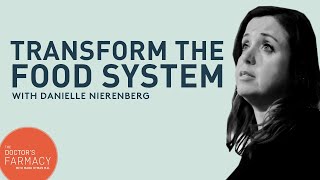
This is a YouTube video titled "How One Woman Is Transforming the Food System" recorded in June 2019. It features a conversational interview between Dr. Mark Hyman (Ask AI Mark) and Danielle Nierenberg, a food system pioneer and founder of Food Tank. The discussion covers topics such as sustainable agriculture, women's roles in farming, global food challenges, biodiversity, climate change, and efforts to reform food policy. The conversation highlights Nierenberg's extensive experience traveling to over 60 countries to learn from farmers and advocates worldwide, emphasizing the interconnectedness of food, environment, social justice, and health.
Food can be transformative in so many ways. It's not just about eating better, it's about changing your life.
Welcome to the Doctor's Pharmacy. I'm Dr. Mark Hyman and that's Pharmacy with an F, F-A-R-M-A-C-Y, a place for conversations that matter. And today's conversation is with an extraordinary pioneer in the world of food. And doing something pretty different and thinking about things pretty differently. Her name is Danielle Nierenberg, goes by the name of Danny, and she links together things that often people don't connect the dots to, such as agriculture, the environment, women's equality, economic, social justice, like how do those have anything to do with each other? But she's really been a pioneer in helping us think differently about our food, our food system, the way we grow food, who grows the food, the issues all surrounding food. And she created an organization called Food Tank, which is a nonprofit in 2013 to focus on building a global community for safe, healthy, nourished eaters, which sounds like a good idea. And she's done many things before that. She spent two years traveling to 60 countries, more than 60 countries, across Sub-Saharan Africa, Asia, Latin America, meeting with farmers, farmers groups, scientists, researchers, policymakers, government leaders, students, academics, and journalists documenting the work that's going on to help alleviate hunger and poverty and protect the environment. A lot of us sit in our, you know, table in our kitchen or at our desks and we use Google and the internet to learn everything. You actually did it the old fashioned way. You got on the ground in some countries that were tough and rough to be in and asked hard questions, followed people, were curious and discovered a lot of things that we're going to get into today. She also has authored several major reports and books about global agriculture and she's been cited in more than 8,000 major print and broadcast outlets around the world. That's impressive, 8,000. Masters in Agriculture, Food and Environment from the Tufts University Friedman School of Nutrition Science and Policy. I think that's important. Nutrition Science and Policy, you know, this is something that there aren't any other schools that do that. And one of my friends, and probably you know him well, is Dari Mazzafarian, who's the dean, and he also gets these issues. He also volunteered for two years in.
The Peace Corps in the Dominican Republic.
So welcome to the Doctors Pharmacy. I'm so pleased to be here. Thanks for having me. so, you know, you, you kind of got into this in a strange way. You, you grew up in Missouri.
Yep. Defiance, Missouri.
Defiance, Missouri, in a farming community. And your, your parents weren't Farmers, but you grew up around Farmers and you got to see what was going on there. And you also noticed the plight of the women in that Community. Yeah. And, you know, Just to give context, most people don't know, I certainly didn't know, that a lot of the world's food, probably 40 something percent of the food that's produced in the world globally is by women farmers.
Absolutely, about 43% to be accurate, yeah.
Yeah, and they actually are better farmers than men, it turns out. They have higher yields, better production, they're more effective, and they do all these other stuff that is for their family. So they have a rough job, and you sort of highlight the plight of women. So what was it, about the women in your community in Defiance, Missouri that stood out to you and how did that influence what you did and what you do and how did it inspire you to create an advocacy group for a healthy food system?
I mean, looking back, the women and the community where I grew up in were doing the same jobs as their husbands. They were working the fields and doing all the other stuff that you mentioned. They were cooking and cleaning and taking care of kids and driving carpool and doing all that other stuff, but they weren't recognized for being farmers, even though they were really an important part of the whole farming community. And, you know, when I was a kid, women weren't farmers. They were, you know, housewives. And so I think really being able to recognize the value that women all over the United States and all over the world put into actually producing and selling food and how they're often the main operators on a lot of the farms that we see is really something we should all recognize.
Yeah. And why did you not want to be one of them?
Oh gosh, I couldn't wait to get out of Defiance, Missouri. You know, it's funny, I've had this sort of evolution in my life. You know, I grew up around farm kids. You know, we did things like play on tractors and, you know, cow tipping was a thing that actually happened. And, you know, I just wanted nothing to do with it. I was surrounded by corn and soybean fields and I just couldn't wait to get out of there. And once I became a Peace Corps.
Volunteer and really-- and you were your.
Neighbor was Monsanto in Missouri. Yeah, that's where they're headquartered. I just wanted a different life. And it was strangely about six years later when I went to Peace Corps after college, I ended up working with farmers and riding on the back of extension agents motorcycles and visiting beekeeping and cocoa farms and really just understanding the connections between farmers and nutrition and protecting the environment. And it wasn't like I had this oh, aha epiphany moment. I was like, oh, It kind of was the slow realization that I was kind of dumb for not recognizing the farmers in my community and all that they were giving to not only the community, but to the world. And so just sort of being able to recognize that now and honor, you know, that place where I grew up and the people who made that community what it was.
Yeah. So many people who go to the Peace Corps, you know, have the idealistic view that they're going to go there and save those people. Save the world. Save the world. And it often ends up, Saving them.
Oh, absolutely.
And I'm one of those people. Changing their worldview. What happened down there that shifted your worldview and made you understand the connections between women's equality and the environment and social justice and agriculture, the economics, all these things that we don't, and you didn't even mention health, which also is in there.
Absolutely, absolutely. I mean, it was just listening to folks. It was sitting in a lot of women's kitchens. It was sitting, you know, and learning from farmers and just sort of, hearing them and understanding them and the challenges they faced and sort of the obstacles that were presented to them, but how they were solving them. It was really just inspiring. These were people who didn't have much.
Give us some examples. You traveled 60 countries plus. You sat down with people in their homes in living rooms. You talked to them. You asked them questions. What was it that most impacted you? What are the stories you can relate from some of those meetings that give us some sense of like, the texture of that experience for you?
So one of the stories that I was really my most favorite from traveling to all those countries over the two years that I spent, you know, just kind of truth seeking and ground truthing in all these countries is I was--.
I love that, ground truthing.
Ground truthing.
It's a great term. It's like being on the ground, finding out what's really true. Instead of what you read in a.
Magazine or a newspaper or a website. Yeah. So we were sitting with a group of about 50 women farmers in India outside of Delhi. And they had started this organic farm where they were using like vermiculture, which is using worms to compost. They were using all these different organic agriculture methods. They were growing food and packaging it under their own brand and selling it in cities. They were using other women who would sell the food and, you know, food that people could believe in that was sold at a lower price that had this great branding, and women grew it and et cetera. But sitting with these women, learning from them all day long, eating food with them. And I'd been taking my little notebook around, just interrogating them all day. And so at the end of the day, I closed my notebook and they're like, oh, we have questions for you. And they're like, what are women in other countries doing? Because they knew I had been traveling in Sub-Saharan Africa. And they're like, what are women doing to protect trees and protect indigenous species? how are they fighting climate change? And understanding that there's this really an opportunity for farmers, whether they're male or female, to learn from one another in different countries. And often in developing countries, they're way ahead of where the rest of the world is on things like climate change and health, especially in protecting water or biodiversity. I think in the United States, we have a lot to learn from those women in India, you know, and farmers I've met all over the world about how to protect resources.
Pretty striking, I think, about women who probably likely haven't gotten much education or schooling.
Right, and maybe have never left their village.
Yeah, who maybe or maybe can't read, but are thinking about biodiversity and climate change and water resources in ways that are quite unusual.
Complex.
And complex. And, you know, talking about the sustainability and the supply chain to create sustainable food.
Absolutely.
It's really remarkable. And it wouldn't be something we'd expect. It's usually a sort of a affluent countries issue, and everybody else in the developing world is just trying to scrape by and not thinking about these things. But it sounds like when you went around the world, you found that people cared about these issues.
-Absolutely.
-And the women probably care more than the men because they are, by nature, more nurturing, more thoughtful about future generations, more thoughtful about sustainability.
-Absolutely.
-For their families, and it is quite striking.
They want their kids to do better than them. They are thinking about the future in a way that all of us are, but they are especially, it is very sort of urgent to them. because they're seeing the effects of climate change daily, the effects of biodiversity loss daily. They're seeing it, it's very real for them.
And they're solving the problem.
You know, a lot of them are, yeah. They're really working towards things that can help improve biodiversity. One of the things that I'm most impressed by is how women are protecting traditional varieties of vegetables and grains and really saving seeds and making sure that they're available for the next season and for the next generation.
How do they know even about these things?
I mean, it's been passed on. It's, you know, all of this, their grandmothers knew how to do it. Their grandmother's grandmothers knew how to do it. A lot of that was lost, you know, during the Green Revolution when hybrid seed varieties came in and sort of, you know, displaced a lot of those traditional varieties. But women were always the caretakers of seeds. And it's really, you know, they're the ones who keep that going and make sure that it's around for their kids.
So Prince Charles wrote a little book. It was really more of a, he gave a speech that was turned into a little book called the Future of Food. And in it, he challenges the notion that big ag is needed for saving the world from hunger. In other words, the messaging we hear is, yeah, we would all be great doing organic agriculture and small farm holding innovations, but that's not going to solve our problem of world hunger. We have to feed our seven billion people. We need industrial agriculture, we need genetic modification of seeds, we need different hybrid seeds, we need to basically do this green revolution, which was a massive failure by the way, which for those of you don't know what a green revolution is, it was the idea that we could go into these poor countries, help them with their agriculture by innovating with different seed varieties that were drought resistant, pest resistant, etc. GMO products. But it was the centralization and monopolization of the seeds that disrupted their normal processes in their historical agricultural practices, which were very effective. And it's like, we're from the West, we know better, we're gonna show you poor people who don't know anything, what to do. And that led to really the destruction of local economies, local farming systems, and even dramatic increases in the rates of suicide among these farmers because they can't afford to buy the seed anymore. Their soil, their farms are depleted. They can basically, mine the soil instead of replacing the soil. And you end up with this horrible cycle that's the consequence of the Green Revolution where we're actually causing a bigger burden on these small farm holders. And in this lecture, Prince Charles was like, this is a myth that we actually can feed the world using small farm holders. And in fact, that's the only way we can do it.
Well, and I mean, it's already happening. Small holders are feeding most of the world right now. There are 500 million family farmers who are feeding most of of the world's population right now. And so I don't think we should romanticize smallholder farms. Some of them are very laborious and can often be not a way to move forward. It's often very hard on these folks. But there is a way to do this well and to support smallholders and medium-sized farmers as well in a way that can do all the things that we want the food system to do, produce nutritious, safe food, protect the environment, give fair wages, provide opportunities for youth, have equality for women, et cetera. There's a way to do that, and many of these communities are already doing that. But as you described, some of those Green Revolution practices really destroyed not only the local economies, but just the equality that already existed in some of these communities.
And the truth is, before that, the practices, like you said, were handed down from the grandmothers. And it was all organic. It was all sustainable. It was all biodiverse. It was just naturally...
It was organic because it had to be.
There was not anything else.
-Right. -Right. Absolutely. And I think, you know, the Green Revolution was well-intentioned in many ways, but it was never meant to be something that we used forever. We were never meant to rely on all of these things as, you know, the future of food. They should have been used by medicine, you know, in terms of, let us get through this really tough period of drought or tough period of, you know, too many floods and restore our indigenous practices afterwards. Unfortunately, that didn't happen. But I do think that there's a way to go forward that really combines high technologies, you know, some of the interesting innovations that are coming out of the big data space or AI or cell phone technologies and combine them with some of these traditional practices that have been in place for centuries. I don't think it can-- I don't think it has to be either or--.
It's not either, of course. So another question I want to ask you is when you were traveling around these 60 plus countries, what were some of the heartbreak stories you heard about people struggling and what are people facing around the world trying to grow food for their families and their communities?
Yeah, I mean one of the most heartbreaking things that happened to me sort of personally is visiting a farmers cooperative in Niger, which was really impressive. It was run by women again, but when we were leaving, one of the women was like, take my daughter with you. and, you know, still thinking about that, you know, this young mother and her young child. And it's, you know, those are the kinds of things. I mean, people, I think it's just indicative that people think that, you know, what we have going on in the Western world is better than what they're doing in their own communities. And I think what needs to happen is restoring some of that, you know, pride and dignity that people have that's been lost because they think, you know, hybrid seeds are better. They think imported food is better. Or they think, you know, having your kid grow up in the United States is better. I think if we can restore some of the pride that people have in their own communities that can help empower them and keep them, not want them to give their kids away.
It's terrible. I mean, it's true. I mean, even the aspiration to be like the West without really understanding what the West is like. And in many of these developing countries in Africa, fast food is a sign of affluence. So you can take your family out to KFC or McDonald's.
Right, it's a treat.
That's like going to a five-star restaurant. restaurant.
I'll be honest, it was a treat for me growing up in Defiance, Missouri. That was like, you know, we were a lower, you know, middle class family, and it was a treat if you.
Got to go to Wendy's. So, yeah. So what, did you learn anything else.
That sort of stuck out during those times? I mean, I learned every, like, it was such an amazing, we called it our Global listening tour because we just went and listened to folks and heard about what they were, were doing. And I think that's, you know, something that sort of the development Community can learn from. I think the, the usual Paradigm is you go into a community, you tell them what they need. and how to do it. And by listening, you learn the sort of the opposite of that. You learn from the people themselves what their challenges are, what their successes are, what they might need more help with. But if you go in sort of telling people what to do, it doesn't work as well.
Amazing. So I want to get into some of the great work you're doing around highlighting food heroes, which are the people out there who are making a difference, who are transforming our food system, who are adding value in the supply chain who are thinking differently about how do we create a sustainable food system? But before we sort of get into that, I would love it if you just from your perspective and your breadth of knowledge and experience, give people a sense of, you know, what's going on in the current food system, what are the big problems and what are the things that really could make a difference?
So, I mean, from our perspective, from Food Tank's perspective, you know, the food system as we see it is broken. And by broken, I mean, you know, we have a paradox of hunger and obesity. We have more people who are overweight or obese in the world than there are that are hungry.
800 million hungry.
821 million hungry, 2.1 billion.
Yeah. A lot of people overweight or obese.
So from our viewpoint, that's wrong. That doesn't make sense. And some of the people who are overweight are also experiencing malnutrition because they're not getting the nutrients that they need. You know, we're losing biodiversity. in the food system at astounding rates. Climate change is more evident and impactful than ever.
Agriculture is a big driver of that.
Absolutely, agriculture is at least 30% of all greenhouse gas emissions and yet doesn't make it into the policy debate or some of the mitigation around making sure that climate change is that we find ways to adapt to it. So from our perspective, there are lots of things that aren't working in the food system right now. And what we need to do is really focus on the and finding ways to alleviate hunger and obesity, make sure that there's more of a focus on nutrient-dense foods. We've been really, really good at filling people up but not nourishing them. And so making sure that women and youth are valued equally in the food system, that their contributions are valued, and making sure that there's a diversity of opinions and that people's voices are heard in different ways.
That's what Food Tank is. It's really a place for voices to be heard. I heard.
Yeah, we really consider ourselves a platform for the good food movement. And that means including, you know, a lot of different sides of these issues. We try to get, you know, very diverse speakers at our food tank summits that we hold every year, which we've had, you know, Monsanto executives on the same stage as food justice advocates. We bring as many different players together. Republicans and Democrats. They've been great. I mean, we make it a safe space. And I think that's what's been challenging for a lot of- you- do metal.
Detection at the door.
I mean, we just say no. Fistfights, but I think because Food Tank's reputation is very non-biased that we're considered, you know, a fair space that you'll be treated equally, that, you know, we're not looking to demonize anyone, it makes these conversations possible. I don't think other organizations can do that as well as we can.
It's impressive.
I mean, because- It's the only thing I brag about.
I mean, you could bring these people together, but, you know, I mean, we have an agenda for sustainable or local food system that doesn't monopolize seeds, that has less chemical inputs, that provides more ability to restore soils and water supplies. And Monsanto's not on that agenda.
No, they're not.
So they're not gonna think you're friendly.
They do, though. I mean, we've been able to have reasonable conversations with them, and though we're coming from very different viewpoints, that's why we try to get corporations in the room or people from different political backgrounds in the room or people who might not look like they're on our side. and really have those frank discussions.
Okay, so this is great. So how do you, when you get Monsanto or Cargill or Pepsi or whoever on the stage, what are you learning from them that you didn't know that informs your way of thinking?
Listen, I'll tell you, if you'd asked me 15 years ago, would I be talking to any company, any big food company, any big ag or seed company, I would have said, hell no. There's no way. There's nothing, I have nothing in common with these people. I want to know what you're doing.
22-Year-Old girl with a backpack.
It would have nothing to do with them. and so I think what's changed is that there are such big players, there's so much private investment in this space, in the food and ag space right now, that if we're not talking to them and listening to them and learning their viewpoints, then we're missing a huge opportunity. I think there's a big opportunity for companies to change. Will I ever agree with Monsanto? Probably not.
What do they say? Like, what do they, I mean, yes, we have to work with them and talk to them. What are they actually saying?
They're, I mean, what's their view of all this? You know, they think that what they're doing is helping improve the world's food supply. And they don't think that what we have to understand from them is they don't think that they're bad, right? They think they're trying to do the same thing that I'm advocating for, that you're advocating for. So understanding that we're all kind of coming from the same place, we're doing it in very different ways, and understanding that they're not big bag, you know, big bad ag, that they're just- Even.
Though they sue farmers who happen to be organic, seeds cross pollinated with Monsanto seeds.
Absolutely. I'm really, I'm not gonna ever stick up for MontsAncho, so you'll never be able to get me to do that. But I think we have to start talking to these big corporations.
Do they acknowledge the issues of climate change? They acknowledge the issues of slavery?
More and more companies are acknowledging that we're deploying our walls. I mean, I can't speak for any company in particular, but many companies are realizing the impacts of climate change on their bottom line. And they realize that if they're not.
Doing good, they're not going to be able to do business. Yeah, it's interesting. I've had the same view as you, as like, I never talk to these people. They're just out to mess with us. And I've gotten to be in conversations with people from Pepsi and Nestle at very high levels and challenge them on these issues. And they say, you know, we're actually working on these problems. You know, one of the top guys at Pepsi spoke at the USDA about how do we create more sustainable regenerative ag.
They have to or they're going to go out of business.
And their supply chains are limited. I mean, the guy from Nestle said, yeah, we'd love to have everything organic. We're a $100 billion company. There isn't the supply chain for that.
But they could help improve that if they decided to.
So they seem to be working on it. Now, do I completely, you know, view that everything they do is going to be great? No, but I'm curious and I think that's a great place to start.
Absolutely.
And I think being curious and asking questions listening to other people's point of.
View.
There are bad acts, but usually they're not bad people doing it. Sometimes I would say there are, because there are malicious intents within the system, like deliberate targeting of poor minorities by certain food companies, deliberate subversion of public opinion through huge amounts of money on front groups like Crop Life and genetic literacy projects.
There's a lot of greenwashing.
Yeah, I've been at Target. of them as well through various media campaigns and often written by independent journalists who actually work for the Genetic Literacy Project, which is really about educating people about the benefits of GMOs.
Sure, no, it's crazy, all the money that goes into that sort of fake news.
It's enormous. I mean, I read recently there was four companies, big food companies, and that companies spend half a billion dollars over five years funding front groups like Crop Life or Genetic Literacy Project or American Council on Science and Health that are seemingly independent nonprofits, science-based organizations, but are.
Just funded by it.
Right, they're just talking about sustainability and it's just a smoke screen.
Absolutely. And they've co-opted all of our language from the sustainability side. And so it's very confusing for a lot of farmers or consumers or those who are not as well educated or of these front groups.
I had an interesting conversation with one of the top guys at Nestle. He said, yeah, we were part of the grocery manufacturing of America and there was this action that happened where they got a group of big food companies to fund $11 million on an anti-GMO labeling campaign in Washington State. It was illegal. It was a violation of campaign finance laws. Washington State sued them. They were fined $17 million, the biggest settlement ever in a campaign finance tax violation. And a number of companies after that felt that the Grocery Manufacturers of America were not serving their interests. And this was, quote, they were deliberately trying to obstruct, stop, or slow any progress in changing anything that would impact those businesses. So they were trying to subvert anything that was moving things in the right direction, whether it's soda tax or whether it's GMO labeling or whatever it was. and they withdrew and Nestle and Denon and Mars and Campbell, what was it? Campbell's, I remember it was another company, withdrew from the Grocery Manufacturers of America and started the Sustainable Food Alliance. Now, that sounds great, nice name. What are they going to do? I don't know. Is it just another front group or is it something that's going to actually mean something?
That's always the challenge. Yeah.
So you had these conversations with people across all sides of the spectrum from the poor illiterate farmers in third world.
Countries- Smarter than anyone else I know.
-Or Monsanto executives and you've gotten kind of an insight into really what's going on. So what are the things that inspire you that are happening today? What are the things that, you know, because we can talk about the problems all day long and I certainly like to talk about the problems and point out what's really going on, but I think we also have to sort of understand that while there's enormous forces and money behind trying to keep things as they are, there's also huge initiatives within and without large companies that are trying to change that.
Yeah, there's enormous energy out there. I'm constantly inspired, especially by young people in this movement, especially as I get older. We've had the opportunity to work with so many amazing youth leaders. And one of my favorite is this young woman, Haley Thomas, who's 17 years old. who really started out, you know, as a 10 year old, her dad got sick. He had diabetes and she changed her whole family's diet. She became a vegan chef. Now she's a great spokesperson for the Happy Organization. She's one of my heroes. Every time I see her, I'm inspired by her. Every time I hear about her story.
What does she do?
She runs this group for youth empowerment and really helping youth understand not only how to eat better, but how to be, you know, more empowered themselves as youth leaders, as advocates for better communities. She's African-American and has really been great at helping communities who are often underserved understand how to eat better and gain access to resources that will help them live healthier lives. So she's just really, really inspiring.
That's amazing. So tell us more stories.
Who else do I love? There are scientists who are out there who I feel like are often not given a lot of attention or support. and one of them is a researcher at Michigan State University who's a soil scientist and her name is Sig Snap. And she has called for a rainbow revolution instead of a green revolution. She would like to see more diversity on our plates. And along those same lines, Marie Haga, who's the head of the Crop Trust, she is the biggest champion for biodiversity that I know. Her very first job was growing cabbages on a small farm in Norway and now she adds the crop trust, which is protecting the genetic diversity of vegetable and fruit and grain varieties for all of us at the seed vault in Norway. So she's just an amazing champion for all of these things.
Well, this is an interesting story. So biodiversity is an interesting concept. And, you know, I believe it or not, I'm a doctor, but I studied agriculture. And when I was in college, I did a summer course at this place called the Institute for Social Ecology and we took a course called Biological Agriculture. We read all these books like the Soil and the Towns, and by Albert Howard, the father of organic agriculture and once from a revolution about no-till farming. And we learned how to grow food and it was a summer so we actually grew a garden, we did French raised beds, we learned about intercropping and natural pest control and putting marigolds because the bugs don't like that. you know, and the Native Americans did the same thing with corn, beans and squash grown together. So the squash Regenerates the soil. Yeah. Will go up the, the, the corn stalks as a steak, and the beans would put nitrogen in the soil that would restore the soil fertility. I mean, so there's an understanding of this, but I think most people understand the concept of biodiversity, and it's both in, in, in how we put crops and animals on a farm and also in the seed biodiversity. And I don't I don't know if people understand because I'm not sure I do. Why is that important? Who cares? Why can't we just have GMO corn and GMO soy? It's food. Why do we need all this diversity?
I mean, it's important for a lot of reasons. One, biodiversity tastes good. We want a variety of plants and animals to eat. It's what makes food joyous. And so that's probably the most important thing for most consumers. The other thing that's really important is depending on monocultures is not not smart in a sort of a biological way because you're putting yourself at risk. If that crop fails, you have nothing else to rely on. You want a variety of crops on any farm. That's why monoculture systems require so many inputs because they get attacked by pests. They take nutrients out of soil. They don't give back, so you keep having to add things. But if you have a more diverse farming system, you're already adding all that stuff yourself. It's already protecting itself. It's already providing a lot of nutrients. has to be added. So it's just a smarter way to farm.
So farming is one aspect, which I think is critically important because there's concepts coming out now that I think are really important. It's not just that you use less inputs of fertilizer, which is great, so that's fossil fuel or less pesticides, great. It contaminates our food less. But in the soil, it turns out, is the most important part of agriculture and we sort of ignored it.
We've completely ignored it.
We've mined it. and we haven't taken care of it. And it's really like, you know, I often describe functional medicine as sort of like being an organic farmer or a regenerative farmer where you're regenerating the health of the human and creating a soil in which disease can occur. Absolutely. As opposed to regular medicine, which is more like industrial farming, which is highly chemical inputs. So you're putting all these things on the plant. Forget about the plant. Take care of the soil. Absolutely. And the plant will be happy. Absolutely. And so the diversity in terms of of crop rotation, in terms of intercropping of plants, in terms of complex ecosystems, they're more diverse. Yeah, absolutely. In a rainforest, if one plant dies, well, so what? You got 400 million other plants. But if you're in a monocrop cornfield, if you get a corn beetle or something, yeah, that's it. You're done. And if there's a drought, you're done. And so you're right, we have to use all these intensive methods to actually grow food and it's putting us at great risk. It's putting us so at great risk. we're looking at in 50 years, we're not going to have any soil left at our current rate of farming or my, I call it mining.
It is, it is. Wes Jackson, who was the head of the Land Institute and a real pioneer on these issues, said we're depleting our soil bank account and not putting anything else in.
It's interesting. It takes a thousand years to build three inches of topsoil.
Right. It's crazy.
Right. It takes 50 years to have depleted one-third of our entire topsoil in this country. And desertification is exploding across the world because we farm and then we don't take care of the soil and then we can't grow food, so we graze cows and then we can't graze cows anymore because they destroyed the land and we graze sheep and then we can't graze sheep anymore, so we graze goats and then desert. And it.
Happens almost overnight.
Yeah, you can Google desertification. You can look at a map of the planet and you see just huge amounts of the planet have turned to desert and that's reversible, right?
It is. It can be. I mean, you see all these initiatives like the Green Belt Movement across Sub-Saharan Africa to grow trees. And I think that's such an interesting thing that farmers in this country have forgotten you talked about intercropping before, but growing food crops along with tree crops is a really great way to restore soils and protect biodiversity and keep paths away, et cetera, et cetera. So I think, you know, those kinds of movements around agroforestry are really interesting.
So important. So one of the things that, you know, I want to talk about is, you know, what has been the challenge globally for the women you talk to around becoming farmers and actually feeding their communities and their family. Because men get preferential treatment by banks, by credit institutions in terms of access to land, education. But you talk about how by actually empowering women with better resources, with money, with education, that we can increase yields by 20-30% and, and I want to know why they do a better job than men growing food, and they could lift 150 million people out of hunger. That is a radical idea.
Yeah, it's great. And those statistics are coming from the United Nations Food and Agriculture Organization, and they've been studying this issue for a long time. You described it very succinctly. Women lack land, they lack access to education, they lack access to almost anything that would help them be better farmers. and men typically get those things.
And yet 43% of women- and in some countries- 43% of agriculture is by women.
Yeah, absolutely. In some countries it's 80% of the agricultural labor force is made up of women. So they're growing the food that, you know, can feed the world.
Despite all these obstacles.
In spite of everything, they're still growing food and doing a good job. But imagine what could happen if they had all their same resources as men did, if they had the education, if they were treated, you know, respectfully by banking and financial institutions, if they had access to technologies and inputs and all of the things that would help them do their jobs better, it could be revolutionary. So we ignore women in the food system really at our own peril. And if, you know, and it's not about empowering women, it's about women being empowered and empowering themselves, right?
It's also smart business, it's smart policy, it's just smart.
Absolutely. And I think one of the things when we talk about women in the food system is we have to understand that we also need to educate women and boys and young girls. It's not about just educating women. It's about really finding ways to make sure that men learn how to value and respect women, not only for the money that they can make, but their value inherently as human beings and as wives and mothers and daughters and friends. And so I think that's a really important part of this, this education of men and boys. Yeah.
Paul Hawkin, we've had on the podcast, It talks about drawdown, how do we draw down carbon in the environment and together collectively all the food solutions are the number one solution. But if you sort of repackage it and so what is another way to sort of see what are the biggest solutions? It's really women. There's two things. One is educating women and family planning.
Absolutely.
And those two things we think of how could that have anything to do with climate change?
Has everything.
Agriculture, but it turns out it, those two things together are collectively the biggest solutions to draw down carbon in the environment because of the sort of trickle down effect of what happens when you.
Educate women, you empower them and you- and it's generational. I mean, the results are just fantastic. I don't know why it's been so controversial. I don't know why we don't do more of it.
Now I want to segue into solutions. We heard about some of the food heroes and I encourage people to go to the website. You have foodtank.com, foodtank.com, and there's a section there about food heroes, which is where I spent a lot of time kind of browsing around because I was like, despite all this pressing news of the big, bad, ugly food industry and ag industry, there are pockets of hope over.
But I'm depressed, I go there too.
Yeah, and yet, But there are other amazing things happening. We have a Food is Medicine caucus in Congress. We have initiatives around food prescriptions and medically tailored meals. We have food pharmacies popping up. We have groups in Congress that are thinking about these issues. Congress, people like Shelley Pingree and Tim Ryan and even guys like Cory Booker are interested in the food and food system.
We have- AOC, she's very interested in food.
AOC and Earl Blumenauer, who's an Oregon Democrat who's written a sort of a recommendation of how to reform our food, we call it a farm bill, but it's actually the food bill.
It should be a food bill.
It's probably the single biggest impediment to changing health and agriculture in America and around the world. It is massive, it's complicated, and it's just full of special interests. and it's really unfortunate that we have that because it doesn't seem sexy and exciting like taxes, but nobody's up there on CNN or Fox News talking about the farm bill, but it actually is probably the most important bill. It's a trillion dollar bill. It's 75% of it is food stamps or SNAP, and the rest has to do with our growing of food or other food programs.
And.
When you kind of look at that, Just kind of depressing, but there are these pockets of hope. And you are working on Capitol Hill and working with policymakers. What are the initiatives that you see happening? What are you excited about? What are you trying to do to change the conversation?
Well, I mean, one of the things that we'll be doing this year is having these inaugural events on Capitol Hill with policymakers and their staff and really creating a space that doesn't exist to have conversations that are bipartisan around food and agriculture.
Everybody eats.
Right, everybody eats. Whether you're red or blue, their voters all eat too, and their supporters eat. So I think having really some conversations around things that are naturally bipartisan, food loss and food waste, nobody wants to waste food, it wastes money, youth in agriculture, everyone wants to see young people involved in agriculture.
Farmers, 60 something?
It's 58.3 years old.
It's growing.
Yeah, and that's pretty much all over the world. And Sub-Saharan Africa, it's the same. So we really need to invest in not just young farmers, but young researchers and scientists, advocates and policymakers who are interested in food so that the next generation of decision makers knows how to grow food sustainably, what food can be, if food is medicine, all of the things that we all care about. So having those conversations with staffers and members of Congress, we really think is important. so that they feel educated, that they can go back to their districts and talk about these things in a really comprehensive way where they feel, you know, that their voters can understand. And are they interested? Are they gonna sit with you? Yeah.
I mean, we've had some great interest.
From both Republicans and Democrats. So I'm really excited about having these conversations. I think it'll be a great, I mean, you know, they're luncheon conversations. We'll be eating, we'll be talking, it'll be, you know, we'll have fantastic speakers. So I think it's a great way-.
Food that represents the issues you're talking about. We hope to.
We'll see what the congressional caterer can do.
-Send in Congress. You know, the food system situation there.
Is frightening, you know, what they eat. With Nancy Pelosi in power, I feel.
Like we'll be okay.
Yeah, she's okay.
So, what are the kinds of things you're hoping to impact through these meetings? If you're going to go there and you're going to be an advocate, You're a nonprofit. You're in a sense an antidote to the, you know, multi-billion dollar food lobby. What are you hoping to push as the agenda for change?
We're not a lobbying organization. It's really to create this safe space for education and awareness because these are important issues.
Well, but in a sense, you're not officially a lobbyist organization, but in a sense you are providing- We're advocates. An advocacy voice that is not present right now.
Absolutely.
Nobody's paying for it.
No, and I think that's the thing. We need more of these conversations. They need to be happening more among congressional staffers and members and making sure that they know about these issues. And that's the thing. These conversations don't exist right now. It's surprising to me that, as you said, everybody eats, but Congress isn't talking about these issues.
Yeah, I'm working on another book called Food Fix: How Do We Save Our Health, Our Economy, Our Communities, and Our environment one bite at a time. And it's about the intersection between all these disparate problems that we think are separate and actually are all connected back to food, whether it's the poor performance of our kids and academics around the world. We're like 30-something in math and reading. We have massive amounts of kids struggling with learning difficulties, mood disorders, obesity, which affects their capacity to learn and succeed in life. It's burdening our population, where one in two people have chronic disease and 40% have more than one. And in fact, it's mostly driven by our food that we're eating, our ultra processed food. We have the burden on our economy. We're one in a three Medicare dollars on diabetes. 86% of our expenditures are on chronic disease, mostly prevented through diet and lifestyle. We huge amounts of social injustice and poverty and depression and mood disorders and behavior disorders, violence, suicide, homicide, which are complex issues, but often they're related to the food we're eating. We see national security problems where we can't find enough healthy recruits to join the military because they're overweight, 70% get rejected, and we're seeing the role of ag and food and climate change. in environmental degradation. So these are not different problems.
No, they're not.
And nobody's connecting the dots. And I haven't heard a politician really explain this.
Well, I mean, that's part of the reason we wanted to do this, because during every presidential campaign, no one brings up food, no one talks about farmers or agriculture or what's on their plate. And we really want to change that. We want to make sure that every candidate from presidential candidates to your local school board candidate. They should be all talking about food. If they are, you know, school boards are a great way to change the food system very locally through procurement. You know, I think we can make a lot of different impacts if we're talking to decision makers in a way that gets them excited about food. And as a job creator, too. I mean, if we're investing in the food system, that's going to create jobs.
Let me ask you this. We have in this country in 1900, 50% of Americans worked and lived on a farm. Now it's, I think, less than 2%. And it seems like in a really challenging world to get into for young people and as our farmers are aging, how do we inspire a new generation to actually start to do this? you know, we need to do it and we need to see this becoming sexy and fun. We're seeing the advent of urban agriculture of, you know, really food grown in factories. You're talking about creating, for example, in every Whole Foods, a farm underneath in the basement and, and having factory to farm, factory to table food, which, which sounds weird, but it actually, it cuts out all the supply chain issues. the perishables, the food waste, and it's a brilliant idea. What would you do if you could be in charge to actually change that and get people more into this food system?
Sure. I mean, one of the things I'm so excited about is since I was in graduate school, there's this whole generation of young people who want to be in farming and the food system in some way. So you mentioned the challenges they face. It's really hard for new farmers or young farmers to get into farming. They lack access to land. They're coming burdened with a lot of student loan debt. They don't have things like insurance. If we can create policies and programs that help mentor those young farmers, give them business skills, forgive some of their debt, help provide them with insurance, and give them the resources they can to succeed, I think that would be really exciting. There have been some wins by the National Young Farmers Coalition in states like Minnesota, where land is being transferred from farmers who want to retire to younger farmers. so that they can start on the right foot and get the mentoring and business and education, business skills and education that they need to do better. And I think, you know, this is not just about creating more farmers. This is about creating businesses and programs that will support young people and make them feel really excited about agriculture. Because as you mentioned, it seems like a very drudgery thing to do. Nobody wants, who wants to work on a farm, right? But you want to create those opportunities.
So, sons, I mean, my daughters, Boyfriend wants to get a build a regenerative ranch and create an agroecological system. Nice. And like, all right, I'm gonna help him and move there.
Yeah, great.
And we don't incentivize that. You literally have millions, maybe billions of dollars in the farm bill that are used for crop insurance, which basically means that if a crop fails, the farmer gets paid. which incentivizes farmers to plant crops they know will fail. So they literally plant them in ditches, they'll plant them in soil that can't support them. They'll just literally throw seeds on there and then they'll collect millions of dollars. And what's frightening is that most of the recipients of these subsidies, which are called crop insurance, are big, massive farmers.
Right.
Right. Are getting millions of dollars in subsidies.
That- They're essentially corporations.
They're corporations that are getting these huge breaks and allowing us to- yeah, but.
Imagine if that money was invested in young people or reinvigorating rural economies and getting broadband to farmers and making these rural areas really intellectually stimulating fun places to live so that young people don't want to leave.
Right, and it's why for example, corn syrup, high fructose corn syrup isn't everything because our government pays for it to be grown and it's super cheap and it undercuts the price of regular sugar. So we have tariffs on sugar coming from other countries. We support our farmers in paying for this, I'm producing this food. And I once asked the Vice Chairman at Pepsi, you know, why they use high fructose corn syrup. He goes, well, Mark, the government makes it too cheap for us not to do it.
So it's just a good business decision, right? Right, right. I mean, a lot of this would be solved, but I think by campaign finance reform and getting, you know, the subsidies out of agriculture, but that's a.
Bigger- Is there hope for the farm bill? Is this just a pipe dream?
I mean, every five years I feel hopeful and every five years I'm kind of disappointed. There were some wins. There were a few wins here and there in this last one. So I think there's always an opportunity. I think we need to think about the farm bill very differently. As you mentioned, it should be a food bill. It should be a people's bill and it's none of those things right now. So I think, It's a very contentious political time, but also a very exciting one with sort of a new Congress, new fresh faces on the Hill. I think there's an opportunity over the next few years to make sure that the farm or food bill is something that we can all believe in and use and something that will help us. But I think it takes a while.
It's great. I watched on your site, Earl Blumenauer, who's a Democrat from Oregon, very interested in reforming the Farm Bill and sort of wrote up a different set of policies that could be implemented that could make a big difference. And you can watch that video on foodtank.com, but you can also go to Earl Blumenauer's congressional site, and you click around, you can find the Food and Farm Act that he called it, that he wrote. There's a summary of it, there's a detail multiple page policy recommendations. And it's if everybody who's listening and everybody told their friends and family to call their Congress and write to their Congress and tell them about the Congresswoman. Congresswoman.
Yeah.
Well, yes, exactly. We have this legacy language now that what huge amounts of women are in Congress are interested in these issues and they will care if their constituents care.
That'S the thing. And it is those phone calls. It's not petitions, it's phone calls and actual letters to Congressional members that really make the difference. So I, I think a lot of people think if they sign a petition.
It gets to Congress.
That's not always the case. Well, sometimes it does. Right. I, I, I think it's the, the phone call. They, they track the phone calls and, and the actual letters that come in emails, too.
But, like, they like letters.
So, so, but you can't submit a comment on the website of your phone. That doesn't work as well.
It's, it's better to have a phone call and give them your, I don't remember the last time I bought a stamp. I don't even have an envelope in my house. So yeah, it's true. But you know, sometimes I get these- this is where old school tactics come in.
It's true, you know.
When I get a handwritten note, I got a handwritten note from a congressman the other day. I was like, wow, this was like two sentences. No, it was really sweet. And I'm like, wow, that's really way better than an email. It is, it's impactful. It's like, yes, I have it on my desk. Right, you'll save it, yeah. Yeah, it's powerful. mindful. So, you wrote this book a while back called Nourished Planet: Sustainability in the Global Food System. And it was a sort of anthology of essays from food experts and activists and advocates from around the world. And it talked about how do we create a more economically viable, environmentally sustainable and socially just food and ag system around the world. Can you tell us about the book and what some of the learnings were? Absolutely. We had some great people there, like.
Vandana Shiva and others who are activists. So we worked with the Barilla Center for Food and Nutrition Foundation on this book, and it's divided into four sections: food for all, food for sustainability, food for culture, and food for health. And really looking at different aspects of all of those things, the Mediterranean diet and how that's been such a culturally appropriate way to feed so many different kinds of communities and maintain the health and vigor of the environment as well. It talks about things like the double pyramid, which is a way of looking at food and environmental sustainability in a really comprehensive way. It takes sort of a traditional food pyramid with all the different food groups and puts it up against sort of the environmental factors of each of those food groups. And, you know, the foods at the base of the pyramid that are grains and whole and unprocessed foods have less of an impact on the environment than those sort of at the top, like sugar, meat and dairy. We included a number of experts. You mentioned Vandana Shiva, one of the researchers I mentioned before, Sig Snap. We included a lot of different voices and youth. One of my heroes, Frances Moore Lappe, is quoted in the book. She's really-- I love her. Diet for a Small Planet, yeah, which is how I, as a teenager, got involved in all of these issues. So it's just a really hopeful and inspiring way with a lot of data and scientific sources to really convince people that there is a way to eat that's good for you and good for the planet.
So great, it's so important to have this voice out there. What do you think our biggest challenges in America today to deal with this problem?
I think it's not empathy, it's the inability for folks, regular people, I think of the community I grew up in, to see that there's a different way, a different way to produce food, a different way to consume it. I think people are sort of feel a little stuck or trapped in the current environment because of lack of resources. There's a real issue of not only lack of access to food, but being able to afford it. And we talk about access a lot, like, oh, if only there was a grocery store in this community, then things would be better. But that's not the case. I think you have to make sure that people can afford healthy, diverse, safe and nutritious food. And that's just not the case here yet.
And it's expensive because... Because healthy food.
Is more expensive than crap, unfortunately. It's very processed, high fat foods tend to be cheaper because of the things that we mentioned before, the subsidies that.
Go into There is truth to that. Calories can be really cheap.
Yeah. And as I said, if you look.
At the cost per nutrient, whole foods are much cheaper.
Absolutely.
And what's fascinating is I just haven't read it yet. I bookmarked it, which was a scientific paper that comes through my science feed of articles. And it was about how eating healthy isn't necessarily more expensive. and that when you have the right knowledge, the skills and tools, you can do it. And I'm on the board of the Environmental Working Group and there's a guide called Good Food on a Tight Budget on how to eat well for you, for the planet and your wallet. You see, Mark Bittman wrote a great article in the New York Times years ago showing how it was cheaper to feed your family a roast chicken, a.
Salad and a baked potato than going out to eat at McDonald's. I want to counter that a little and I love Mark Bittman and I love the Environmental Working Group. I think it's easy for a lot of us who come from privilege backgrounds and have working kitchens with pots and pans and working stoves and refrigerators and microwaves and everything else to say, oh, here's how you do it. And if you're, I don't have to take a bus to my three jobs and get back in time to cook dinner. Often for a lot of people, it's easier to pick something up that's very cheap. It gets their kids fed because they're very busy and they don't have all the things that the rest of us have. And I just think that's, we can all say, eat more lentils, eat more unprocessed foods. But if you don't have the skills and the tools, then that's it. Yeah. Then that, that, that, you know, that's.
Not going to make sense for you. No, I saw that. I was part of a movie called Fed Up a few years ago. And, you know, I had a very, you know, eye-opening experience where I went down to this small town in Easley, South Carolina, and it was one of the worst food deserts in America. It was, it was based on a, an index. It's called a retail. Food Environment Index, which rates how many Whole Foods, you know, grocery stores, produce stores, there are compared to fast food and convenience stores, fast food restaurants. And there was 10 to 1.
Yeah.
And they were very poor. This family lived in a trailer, a family of five. They had disability and basically food stamps.
Sure.
They lived on $1,000 a month for food for a family of five. half of that was spent going out to places like Denny's, the other half was spent on processed and junk food. They were desperate to be healthy. They were all very overweight. The father was 42 years old, already had diabetes, already had his kidneys fail and was on dialysis. He had to lose 40 pounds or he couldn't get a new kidney. The mother was morbidly obese or severely obese. The son was almost diabetic and he was 15. and, you know, very, very obese. And he actually ended up bloating up to 328 pounds. And I went into their kitchen and I said, look, here's what you're eating, you know? And they go, I thought this was good. Cool Whip says it's got zero trans fats in it. And it's no low calorie.
And I thought this was good.
And I'm like, no, it's all trans fat. It's all high fructose corn syrup, but it's just mostly air. So they say it has zero trans fats because the government let the food industry say that because of a loophole that allowed them to do this. And I just went through everything and they're like, well, we didn't know. We didn't know. And I'm like, let's cook a meal. So we bought ingredients from the good food on a tight budget. You know, we made turkey chili. We made a salad of, like, not iceberg lettuce, but greens and carrots and tomatoes, cucumbers, fresh olive oil and vinegar. not dressing, which was refined soybean oil and high fructose corn syrup and gums and thickeners and who knows what else. We baked some sweet potatoes, we roasted them, put some herbs on them and roasted them in the oven. We stir-fried some asparagus and I showed them how to peel an onion, how to peel and cut up garlic, how to stir-fry, how to roast, how to do sort of a simple salad dressing. These are just simple skills. They're not they're not, you know, they're not rocket science. They just don't have them. They didn't have a cutting board. We literally were cutting sweet potatoes, raw.
Sweet potatoes with a butter knife.
Yeah. You know, because it was challenges. Yeah. Yeah. And so, so they were, but they were very interested in, in, in doing the right thing. And so I showed them how. And within the first week, I sent them, I went to home, and I immediately went to Amazon and I ordered them cutting boards and knives. because they didn't have cutting boards or knives. And then I gave them a cookbook that was simple recipe. I gave them the guide on how to eat well for less. And they lost in the first, I think, week together, like 20 pounds. And then they lost 200 pounds in the first year. The son gained a bunch back as he went to work at Bojangles because it was the only place for teenagers to work down there. He said it was like putting an alcoholic to work in a bar. And then he finally figured it out. He lost 120, 38 pounds, I think. And he just wrote me a little while ago asking for a letter of recommendation for medical school, which I wrote him. That's amazing. And so, and this is an extremely poor family in a food desert without any education who literally figured out how to actually take them to school.
And transformed their lives.
It's amazing. So, you know, it's partly knowledge, it's partly skills training, it's partly understanding what and how to do it. And, you know, we recently gave a cooking class in one of the areas in Cleveland, in one of the poor areas, mostly African American, and we did a cooking demonstration by two doctors in the hospital. And we thought, I don't know who would show up, 300 women showed up, desperate to know how to make kale. And they don't know what to do with an avocado. They don't never heard of a smoothie before. They don't, you know, it's like, and it was so unbelievable how hungry they were. And so I often, you know, push up against the notion that, oh, people just don't care. They just want to be fat. They don't care about their health.
No, I believe people care. I just don't think they always have the resources to do it. And, you know, you reminded me of another food hero What's on our website is Tony Hillary from a project called Harlem Grown. And he went into, you know, this neighborhood in Harlem and tried to tell people how to eat better. And then when he understood their challenges, that some of them are homeless. Yeah. And they don't have, you know, the access to all of the things that, you know, a lot of us have and understanding that and then working with them to, you know, transform their diets, to learn how to grow food, to learn how to, to, you know, gain the leadership skills so that they can get jobs and get out of homeless, homeless those, you know, food can be transformative in so many ways. It's not just about eating better, it's about changing your life.
Yeah, I know you think about the level of poverty and disenfranchisement and homelessness and, you know, the New Deal, whether you're Democrat or Republican, it sort of saved us from the ravages of depression and 30s under Roosevelt. And, you know, one of the things he did was create a workforce that employed unemployed people to do good works. Right. And, you know, Conservation Corps and other groups that actually did amazing stuff for America and built bridges and trails and infrastructure projects and paid them to actually do this. Almost like it was, so what would America be like if we could actually provide those jobs to revive agriculture, to revive local food systems, to create urban systems of food. I mean, I was in Atlanta, Georgia, at the Ebenezer Baptist Church, and it's in urban Atlanta. And right next to the church, there's got to be an acre or two. It's huge farm, literally a farm in the city that's run by the church and the local community. And they come in and they get their hands dirty. They eat the food, they grow the food, they connected to food, it changes lives. They give it away.
I mean, it's amazing.
It builds community connections. So, I mean, that's a project I don't know if government's willing to do, but it would be an amazing initiative.
Yeah, and all this reclaiming of land in urban areas by mostly African American communities is so inspiring because they're taking back the food system. They're having these urban farms. They're building the community that you mentioned. They're building the leadership skills among youth. They're getting them away from drugs and gangs and showing them that there's a different way of life. I mean, that's how you change things. and if there was government support, if it wasn't just churches and communities themselves, it would be amazing.
Think about it, yeah. What if we just did a 1% tax on the food system and all that money went into that? It would be transformational. So what can we do as individual citizens to impact this problem and do something? Because it's sometimes disheartening to listen to the challenges, but what can we do as individuals? Because I think we make a big difference.
I think your listeners are doing a lot. They're already listening to you, they're understanding these challenges, they're educating themselves. It's eating better yourself. I mentioned having a sort of more diverse diet. It's looking for the foods that are a little bit unusual. It's going to farmers markets. It's a lot of making sure that your plate is colorful. It's supporting organizations you believe in. It's volunteering. I mean, I think we all sort of get depressed about these issues, but devote your time, devote your money to causes you believe in. Go work with kids. Go work with, you know, teachers and see what they need help in. Don't sort of push yourself on them, but ask people in your community what they need help with and do it. One of the organizations that I really love is the Food Recovery Network because it's run by students across the country at their universities and colleges, and they're finding ways to reclaim food that would otherwise be wasted from their catering services on campus and donating it to communities in need or donating it to organizations. so I think when people are mobilized through organizations like that, they feel good about themselves and they're doing good.
-That'S great. That's great. So if you were in charge of the world for a day, and you could, like a queen, Queen Dani, yeah. Yeah, an empress, change things that would make a difference, whether it's policy law, what would you sort of list as your biggest initiatives?
I would make sure that farmers are as valued as people like you as doctors. I would want farmers to be valued as much as we value our medical community. That would be sort of my dream because I think once we recognize the value that farmers have on our lives, we would change how we feel. I think there's this misconception that farmers are not very smart, that they're destroying the environment, that they're doing all these things that are wrong. I'd want doctors to, I'm sorry, I'd want farmers to be as revered as doctors.
They're not the bad guys. So Danny, people listening might be inspired by what you're saying and want to get involved but not know where to go. So tell us about an amazing project you're working on that helps people plug into places to volunteer to be part of the solution.
Yeah, one of the things we're most proud of is this partnership with the James Beard Foundation on the Good Food Org Guide. And it's a compilation of the best and most innovative organizations in every state and around the country that are doing great work. People can plug in to the guide on our website, find an organization they want to volunteer with, and do it almost immediately. Our latest edition was downloaded about 20,000 times, so people are really using it. It's a great resource. We're so proud of working with James Beard.
They're such a phenomenal organization.
So how do they find it? What's the URL for the website? It's on our website. It's just the goodfoodguide.org on our website, but it's at foodtank.com so goodfoodguide.org if they go to foodtank.com and it's on.
Our- so go to foodtank.com and look.
For the good food or guide, yes. Got it.
So, if you love what you're hearing and you're inspired and you want to learn more about Danny Nierenberg's work and what's happening in the food tank, you got to check out our new podcast, which is Food Talk with Danny Nierenberg. You can get it on iTunes, Google Play, wherever you get your podcasts. It's going to continue the conversation and you're going to be inspired by what you hear and learn. So, check it out, Food Talk with Danny Nierenberg podcast, wherever you can get it. Well, thank you for joining us on the Doctors Pharmacy. and sharing your insight and wisdom about food, our food system, and some of the amazing initiatives and solutions. People should definitely go to foodtank.com and see more about your work. There are summits that happen regularly. There are events on Capitol Hill you could probably go to, 'cause I think anybody- yeah, we hope so, yeah, absolutely. and show support. Write your letters to your congressmen and congresswomen, senators, the president, hopefully he maybe not gonna get it. Yeah, he could do a lot to change his diet.
Maybe that's why his behavior is so.
Strange, 'cause he's eating junk food all the time.
Yeah, it must be.
And you've shown us that there is a way forward, that there is hope, that there is a solution to this, and it will take a little time, but I think we're gonna get there.
A lot of hope out there.
So thank you for listening to Doctors Pharmacy. And if you love this podcast, please share with your friends and family on social media. Please leave a comment. We'd love to hear from you. and we'll see you next time on the Doctor's Pharmacy.
Thank you.
More from AI


Why Younger Women Are Getting Breast Cancer at Record Rates (And How to Reduce Your Risk)




This Is Why 99% of Skin Conditions Don't Heal — And What Dermatologists Won't Tell You




