How Reclaiming Meditation Transformed My Life
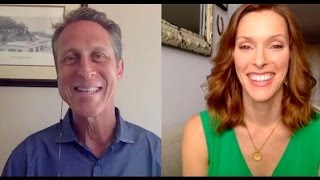
This is a YouTube video titled "How Reclaiming Meditation Transformed My Life" featuring a conversation between Dr. Mark Hyman and Emily Fletcher recorded in March 2017. Dr. Hyman, a functional medicine expert, shares his personal journey rediscovering meditation with Emily, a former Broadway performer turned meditation teacher. They discuss the benefits of meditation for stress relief, productivity, and well-being, including Emily's Ziva Mind meditation program. The content is an in-depth interview-style talk focused on meditation's impact on high performance and health.
Hey everybody, it's Dr. Mark. I'm so happy to be here with my good friend Emily Fletcher, who's an extraordinary woman. She's an incredible Broadway performer in her past life, and now she teaches the world how to meditate. And the reason I wanted to talk to you and have Emily come along is because I've recently rediscovered meditation through Emily, and I wanted to sort of tell you the story about it and why it impacted me. Because I met Emily at an event where we both were lecturing in Greece, which is awesome. And she was talking about meditation. I'm like, oh, you know, like I studied Buddhism. I used to meditate a lot. I did 10-day retreats where I would meditate 12 hours a day. I did Zen Buddhism meditation. I was a yoga teacher. I did tons of yoga. I still do a lot of yoga. And I thought, oh, that's good enough. And I also, you know, found that I like to do things to relax and I talk about de-stressing and I talk about relaxation and I teach about this all the time and I have my own little tricks. I do my hot baths with Epsom salt, I do yoga, I get massages, I do exercise, I just go in nature, I do all kinds of things to help me de-stress. And I began to kind of think, well, I'm too busy to meditate because I run the Cleveland Clinic Center for Functional Medicine, I've got my own practice in Lenox, I write books, I'm the chairman of the Institute for Functional Medicine. I do a lot of stuff. And I'm like, I have time to exercise, I gotta eat right, it's like too many things. I gotta sleep eight hours. I don't have time to meditate. I'm doing good. I'm not stressed, I feel good. And the truth was that Emily just really touched me and she helped me to sort of understand that maybe I was kind of fooling myself. Maybe that it wasn't even that. Maybe there was a way for me to actually be even better, like to feel better, to do better, to be more happy. And I, I didn't think that I was stressed. I didn't think I was anxious. I didn't think that I felt agitated. I did have some issues sleeping because I was running around so much. But, you know, sort of, I, I really went to Emily. I was like, listen, I think I might kind of need your help. So, you know, we had a great time in Greece. We became friends. We, we we did a little meditation there and it touched me. We had a great time on the boat. We danced. She was my dance partner. We had this great dance off. And when we got back from Greece, I'm like, Hey Emily, I really think I want to do this. And she was kind enough to actually teach me how to meditate again. And it wasn't something that I actually didn't know how to do. I actually did TM. My sister had a boyfriend who was a TM teacher. When I was like 15, so back in the 70s, which is a long time ago, tells you how old I am. And she taught me then how to meditate. I used to do TM, which is this Vedic kind of meditation. So I was familiar with it, but I really feel like when I went with Emily, I recommitted to it. And I just sort of want to tell you a little bit about what happened, and then I want to sort of start to get into it with Emily because she's just such an extraordinary human, great teacher. and she's just offering some great stuff and I want to share all about it because I'm so excited it's changed my life. I just want to share it with you guys. I was like, okay, I'm going to commit to this. I'm going to commit to 20 minutes twice a day, which sounds insane because how could I do 20 minutes twice a day? Because I'm running around, I got meetings, I'm all over the place. I was like, no, I'm going to do this. I can do this. She taught me again and then instead of giving me my mantra, it's basically this ancient technique. She'll tell you about it, but it's pretty straightforward. And I started doing it. I've been doing it for now over, gosh, yeah, about over two months, a little over two months. And what I found is super surprising. So I didn't actually realize how I was feeling before. You know, and I think the way I changed was I started feeling like it's like Dan Harris talks about 10% happier. He wrote this book, 10% happier. And he started meditating at a panic attack on TV. And he's like, well, you know, now I started meditating, I'm 10% happier. And I felt the same experience. I just felt happier. I felt calmer. I felt less anxious. I have way more going on, but it doesn't affect me the same way. I'm sleeping better. I have more energy. and the truth is, like, even if I don't sleep, if I meditate, I feel like I just had like three hours of nap. Like it's unbelievable. Like if I could lay down for 20 minutes and close my eyes, that wouldn't do it. But if I actually meditate for 20 minutes, I feel like I got a whole new evening back. So, like, I've been hiding in conference rooms at Cleveland Clinic. I've been doing it in, like, the car and parking lots. I have, like, friends drive if we go to meetings since I'm just going to do it in the car while we're going somewhere. I do it on the airplane. It's like it's so freaking portable. And it's not like I have to be on a cushion in some temple with the incense burning and like everything perfect. It's like there could be all kinds of noise and craziness going around, but like I just go into my little happy place and it's like, awesome. So I just, I really want Emily to talk about it because she had her own experience. She was on Broadway. She had issues that she had to struggle with. And then She's discovered meditation. Now she teaches everywhere. She's like teaching at Google and Harvard Business School. She's taught at Dave Asprey's biohacking conference. We were all in Greece together. It was super fun. She's been writing about New York Times, Elle Magazine. She's named one of the top 100 women in wellness to watch. And she's helped like thousands of high performers get integrating this model into their life. And, you know, I love that which is, you know, do less, accomplish more. Like it's just, it's so, it's like, I wish I could explain to you how it's affected me because, like, I would often kind of get tired at the end of the day because it was a long day and now I just feel like my whole universe has changed. And even if it's like, forget about getting enlightened, but just like managing my life, like I just feel like it's helped me so much just be happy. happier, more productive, and not feel wiped out and feel like I get a whole new energy at night to go have fun and do stuff that's awesome. So welcome, Emily. Wow. Sorry, that was a lot. That was a lot. I had to go off.
You're hired. I'm going to have you as my publicist and PR person and be like, just what he said, all right, who wants to meditate? It's such an inspiring story and really, like, Bravo, there's two things that really strike me about what you just shared. One is, like you're already performing at such a high level. You're already changing so many lives and changing healthcare. And the fact that this is making you perform even better is honestly why I do what I do. And then the second thing that strikes me is the fact that you've been studying this stuff for years. You majored in Buddhism, you were a yoga teacher, and you were meditating. And you, an expert of experts, had the level of humility to go into something with beginner's mind. And I think that that makes all of the difference. And it's just, it's so inspiring to hear your story. And it honestly makes my heart heart so happy. So thank you.
Yeah, it's so great. It's just like this, I feel like this huge gift that I got and I wasn't expecting it. And I kind of, you know, I always knew that, oh, it should be the one thing I add to my life. And I'm like, I can't add one more freaking thing to my day. Like, I just cannot add one more thing to my day because I have like, if anybody knew actually how much I did, like they would go, Dr. Hyman, you're a crazy man. and I'm kind of a crazy man, but everybody kind of knows that anyway. But I think that I just, I found that it actually helps me do exactly what you said. I can do less and accomplish more. If I take those 40 minutes a day, it's like I get an extra three hours of focused, productive, conscious time. And the quality of the rest of my time is different. So it's like, it bleeds into everything. It's like, it's not like, oh, I just meditate and then I go about my life. It's like, it's sort of, After a while, and the first, like you said, when you taught me, the first few weeks, I didn't feel good. It was like, I think I was stressed and I didn't know it, and then my nervous system was unwinding, and my whole, like, I think I kind of realized my whole even brain and my emotions and my nervous system was sort of reorganizing. And actually felt a little depressed and weird. And I didn't connect the dots until after when I remembered you saying that to me. I was like, oh, that's what that was. Because I'm like, now I feel fine. I'm like, what happened to me? So I just feel like, you know, I didn't, the point is, I didn't, even though I thought I was good and chill and life was good, I didn't actually know how I was feeling until I started feeling better. I often say that with my patients when they go on a detox, I'm like, Or they get healthy. you actually don't know how bad you feel until you start feeling good. Mm-.
Right?
And it was the same experience I had. Yeah, stress is like, you know, we.
Have an AC on in the background, it's just like a buzzing and you don't even know that it's on until you turn it off. Then you see that clarity and that's how I feel most people feel about stress. So let's talk a little bit about do less, accomplish more.
Like why meditation can actually help you perform better. Yeah, what's up with that?
What's up with that? stress is costing our bodies and our brains something. You know, we think that, oh, I need my stress. It gives me my competitive edge or this is, I need my stress. I teach a lot of artists and CEO types and my actors think, well, I need my stress. I need my herdy poos. That's what makes me create. And my executives think, well, I need my stress because that's the thing that keeps me in the game. But it's the opposite. Stress makes you stupid. And because it's costing your brain so much. If we want to look at why the human body reacts to stress in the way that it does, Cut back in time a few thousand years, they were hunting and gathering in the woods. Saber-toothed tiger jumps out at us. Body launches into a series of chemical reactions. First thing that happens is digestion floods with acid to shut down digestion because you need all hands on deck to fight or flee the predatory attack. That same acid seeps onto your skin so you don't taste very good. Your blood starts to thicken and coagulate. Your bladder and bowels evacuate. Your immune system goes to the back burner because who cares if you're going to get cancer if you're about to be killed by a tiger. And then your adrenaline levels increase. cortisol levels jack, which are acidic in nature, which leads to inflammation, which I'm sure your people know that that's no bueno. And so it's like this series of chemical reactions is good for you if your demands are saber-toothed tigers. But if your demands are in-laws or deadlines or breakups or traffic or red eyes, then this fight or flight stress reaction has become maladaptive and it's now disallowing us from performing at the top of our And since meditation is the most powerful stress relieving tool we have, once you go in and start clearing out that adrenaline and cortisol, it's like you're giving yourself your computing power back. If you think about the brain as a computer, when you're stressed, it's running all these irrelevant programs, which if you go to type an email, then the cursor is 20 spaces behind. And it's like, oh, stupid computer, can't even run an email. I can't even focus on a conversation. I can't even remember why I picked up my phone. And it's like the meditation goes in and closes out all those irrelevant windows so that you have more computing power for the task at hand. And it's that increase in mental and physical energy that allows you to do less and accomplish more. Life just gets more elegant, more easy, and to your point, you start enjoying it more.
Yeah, it's so shocking. And now I hate to say it, I'm kind of a little addicted to it.
Get addicted.
I think it's like, I'm like, why? I just like, I just make it happen. I think in two months, there's probably two or three afternoons where I just couldn't make it happen or it got too late. But, you know, I just figure it out. Like, I, you know, like, I just close. I just sit in my office at work, or I just, you know, just close the door or just wait, you know, I just late for dinner or, like, whatever. Like, I just feel like it's. It's such a value add to my well-being like, okay, it makes me more productive and all that, but, like, it just. the quality of my experience changes. Like my ability to be present, be in the world, do the things I want to do, show up for people, care about the things I care about, not get overwhelmed. Like, I function at a really high level, but, like, this just. It just really just, like, wow. Like, I was like, okay, like, I know that eating great is awesome. Okay, I got that nailed, and I know how to do that. and I focus on that. I know exercise is important, so I do that. And sleep is important. But, like, you know, I would not have ever believed the. The magnitude of the effect of this. Like, I thought, oh, you know, like, I know if I eat, like, a donut, I'm gonna feel crappy, but, like, I don't know if I meditate, whatever, it's, like, big deal. Like, I'm. I do yoga and I do all this other stuff to relax, and I. You know, but it's just not the same. And I still do yoga and do all those other things, but like it's just not the same. Like there's some quality and I don't, maybe you can help me explain like to people, what is it? Because like I, like I, you know, I can lay down take a nap, I could do yoga for 20 minutes. Like it's not the same as 20 minutes of this deep meditation. And people, well I can't meditate because I keep thinking, well of course I do too. Everybody does. That's normal. But you keep coming back to this mantra. which is just a word, like a meaningless word that you just say it's a sound, but it's, that's the vibrational quality. But like, what is going on that actually changes your nervous system like that?
So in the silent meditation that I teach at Ziva, you're accessing a verifiable fourth state of consciousness. So it's different than waking, it's different than sleeping, and it's different than dreaming. And in this state of consciousness, you're getting rest that's somewhere between two to five times deeper than sleep. There's different scientific studies that say differing, you know, degrees of that, but I actually I actually think that if you're in some lab being studied with rectal thermometers and cameras on your eyes, chances are you're not having the deepest meditation of life. Okay. So I think that when you're just doing it on your couch at your home, you may actually be getting sleep.
A rest that's even deeper than that. Yeah, I definitely don't do meditation with a rectal thermometer. Yeah, you don't recommend that.
I do not recommend that. Basically, like you said, there's a mantra which is a meaningless primordial sound, but it actually is the sound quality of the mantra that helps to deal excite the nervous system. And I know that sounds a little hippy-dippy or a little weirdo, but there's actually, if you want to look at this, there's like some YouTube videos you could watch on Cymatics, C-Y-M-A-T-I-C-S, which is the science of sound. And they'll have a sheet and they'll put a thing of sand on it and they'll play it with a Limbo and the sand will take all these beautiful sacred geometric shapes. Same thing, this mantra is de-exciting the nervous system. When you de-excite something, you create order. And when you create order in your cells, it's like all the stress that we've been holding in our cellular memory for our whole lives. to leave the building. And that's why for the first few weeks, you felt a little bit like you said that your nervous system was rearranging a little bit.
Yeah.
Some emotional detox. Yeah. Most of us have some stuff stored in here. You know, there was a dog that barked in our face when we were five, or our parents got divorced when we were 12, and we hold that stuff in ourselves whether we want to or not. Yeah. So the meditation goes in and I like to think about it like it's ringing you out. And so, yes, it's kind of intense in the beginning. And I think that's why it's really good to have some guidance, to have someone to help you through that because it can be quite intense. But then, to your point, once you move through it, it's like life is brighter, life is clearer, you start functioning better and you start enjoying yourself more because your body isn't working so hard to handle the stress.
It's just so shocking to me. I feel like an idiot, honestly, because I mean, I tell people to meditate. I tell people to meditate. I thought, you know, But this is very different than regular meditation. It's just something different about it. And again, I said I studied Buddhism, that's more mindfulness meditation, which is, I think, very powerful and effective. John Kabat-Zinn has done a ton of work on this. But there's a certain, when you do Zen meditation, like sit up straight, you have to be in your cushion, you have to be perfect, and you can't scratch your nose. And it's like, you know, it's like, if it's noise, like it's just hard and you know, like if you're in a retreat in the woods and like that's fine, but this is so like portable in a crazy life, which is and you don't and you can, you know, your body is relaxed, you can lean up against something, you're not like all perfect, you can kind of slump and like you get into this like other way of being that is and it's so different. Like I just, can you explain like why is that like so different?
Sure. So there's thousands of different styles of meditation. Most of them fall under one of two umbrellas. What we would call mindfulness, which is like a directed focus style of meditation. And then there's what I teach at Ziva, which is more of like, I like to call it the lazy man's meditation. But it's actually the big man's meditation, right? Because it's designed to be portable. It's designed to be integrated into your life. And you don't have to have a cave and incense and finger symbols to do it. Like all you need is a chair or an airplane seat or a bus or something. and so mindfulness is more of a waking state practice. Mindfulness is where you're directing your focus, right? Like you're either looking at a flame or you're counting your breath or you're visualizing your chakras or visualizing some lovely scene, but you're directing your focus in a certain way. Whereas what I teach is more of a surrendering practice. And I know that people do not like the word surrender because we think it means giving up or quitting, but it's actually, it's a beautiful series of letting go and trusting that nature has your back and allowing your body to settle into this deep rest. And then the beautiful byproduct is that not only are you flooding your brain with dopamine and serotonin, which are bliss chemicals, because you're giving your body this deep rest, when you come out of it, you're actually more awake, more conscious. And so I actually find that you become more mindful, you become more present as a byproduct of doing this lazy man's meditation because you're actually getting rid of stress in the nervous system.
And the thing, you know, was so great about it, you talked to me about it was, it was like, your mind's gonna keep going. It's like, I can sit there for 20 minutes and I might think about the 40 things I gotta do and the people I'm wanting to talk to and this and that. And like, I mean, maybe half of it or more could be completely distracted by that. And I still, at the end, I'm still like, wow, that was amazing because I don't know what's happening in there. And it's like, so people go, I can't meditate because I can't stop thinking. And I'm like, It's not stopping thinking. It's just like coming back and coming back and coming back. It's like, you know.
Yes. So thank you for bringing that up because I think that's actually the number one misconception around meditation. Every day, Emily, I want to meditate. I get that it's good for me. There's so much science around it, but I can't stop my crazy mind from thinking. So I'm on a bit of a war path to like retrain people's ideas about meditation. So think about this. The mind thinks, I mean, I know you know this, but I just want to share this with everybody because I think it game changing. But the mind thinks involuntarily, just like the heart beats involuntarily. So imagine how ridiculous it would be to sit down to meditate and be like, okay, heart, stop beating.
Like, that's ridiculous.
Like, okay, nails, stop growing. Like, that's not up to you. And yet, this is the criteria by which most of us are judging our meditations. We're like, okay, brain, stop thinking. I'm sure we'd like a snack. I love snacks. Snacks are delicious. And then you're just like thinking, and then you feel like, Failure and then you quit. And so like you said, this has nothing to do with stopping your mind from thinking. No one meditates to become a good meditator. We don't meditate to get good at meditation. We meditate to get good at life.
Yeah, that's cool. So like people are watching and they're going, oh, you know, this sounds great. You know, you figure it out. But like, I'm so busy. Like, I don't have time to meditate. What's your advice? Like, how should they get started? Like, what if they struggle? Like, Sometimes I'm too busy to meditate.
What are you gonna tell them? Okay, so two things. My new favorite thing to say to people that think they're too busy to meditate is, if Oprah has time to meditate, you have time to meditate. And now I'm gonna say, if Dr.
Mark Hyman has time to meditate, you have time to meditate. That's ready. It's like I show this cartoon, it's like, what do you have more time for, exercising one hour a day or.
Being dead 24 hours a day? That's good. That's really good. So, you know, I think that we think we're too busy to meditate because we don't want to meditate because we don't know how to do it and we feel like we're failing and no one's going to make time for something they feel like they're failing at. So, and obviously I'm a meditation teacher so I'm biased, but I really think it makes a difference to get some training, right? Like to sit down and try to like, imagine if I were to be like, okay, for 20 minutes twice a day we're going to speak Japanese. We're going to challenge. And if you don't know how to speak Japanese, that's really dumb. But if you know how to speak Japanese, then that's real fun, right? But you've got to learn. And so meditation is like any other skill. It takes a little bit of training. And so, you know, I teach in person in New York and LA, but started happening is that a lot of my students were like, Emily, my cousin lives in Idaho. He doesn't have access to a teacher. I really want him to learn. And so I made this online training. It's called Ziva Mind. And it's about 20 minutes a day for eight consecutive days. And it's a matriculation. It's step by step.
And it's training you how to be self-sufficient. It's like Emily in a box, basically.
Because it's online. Emily on demand. I like that. It's a video training. So by the end of it, you graduate and you have the practice to take with you for life. You can meditate in a car, on a bus, on a plane, in a meeting. I mean, not in a meeting, but maybe in a conference room after your meeting. And then there's also some guided visualizations on there, like for traveling or insomnia or stress release or for performance. And that's called ZivaMind. So, I mean, obviously I'm biased, but I really think it makes a difference to get a bit of training because meditation is like any other skill. It's a little training, a little practice.
But then once you know how to do it, it's something you look forward to. So great. Yeah, I mean, you know, it's interesting. The plane thing you told me about, like because I fly a lot, Yeah, you like meditate when you take off, meditate when you land. I'm like, sometimes if it's short flight, I don't just like once when I'm on my way down. And normally when I get, I fly and I get off the plane, you know, it's like this no oxygen, it's dehydrating, you're traveling, it's airports, it's annoying, you get stressed and I'm like, and I usually feel a little drained after all that. And now I kind of land, I'm like meditate, I'm like, wait, I'm like, okay, ready to go. It's like, it's like, what happened? You know, it's like, It changed everything, right? So it's almost like I don't have time not to meditate now. I don't like if I want to enjoy my life and be happy and effective, like and work. I mean, if I'm like, I have something to write or I'm like working on a plane and if I'm like a little foggy or tired, I just meditate for a few minutes and I wake up like wow. It's like boom. I get like right into it and it's totally like it's like drinking six cups of coffee without feeling like Speedy. Except you're just alert and focused and calm. And it's like, wow, who needs all that coffee? And it's coffee doesn't even work.
It's like, yeah, I can't even drink coffee anywhere. I mean, don't tell Dave, but like, I makes me crazy because I feel like I have the sustainable energy. And actually a lot of students report like not even turning on their coffee makers for like weeks after taking the class because they don't they're not exhausted anymore. I hear you. I think the jet lag thing, like how meditation cures jet lag is like, price of admission. And it also cured my insomnia. I know we didn't really talk too much about that, but I was on Broadway for 10 years having crazy insomnia, first day, first class meditation cured my insomnia, and that was 10 years ago. And so I was like, I'm in, I'm in.
I don't know if I told you the story, but I met with the Surgeon General recently to help him with food policy and talking about some of my initiatives. And he came to Cleveland Clinic and he gave a talk about his work and we got to hang out for a while. He's like awesome, friendly, great guy, you know, and I'm like, what are your initiatives? He's like, well, I, you know, emotional well-being I want to deal with food and we do, you know, this opioid addiction that we have in America. And I'm like, well, emotional being. Well, what are you talking about? He says, well, meditation. I want to get everybody meditating. I'm like, really? He says, yeah. In fact, our entire office, we got someone come in, train them in meditation. They do Vedic meditation. and everybody meditates twice a day in the Surgeon General's office. And they take a break in the afternoon and they do it. And I'm like, we're standing there with the chief of staff of Cleveland Clinic and they deal with physician burnout. It's tough, like working in Cleveland, it's hard, it's an awesome place, but doctors and staff, caregivers really work hard. And I'm like, I said, and the chief of staff, I was saying, well, why don't we get the entire Cleveland Clinic meditating? So I got excited about that. I think we'll start with my center. We're going to start with my center. You're going to help me with that. I just think it's such a powerful thing and it's not that hard to learn. So we have a few minutes left. I really want you to explain this Ziva Mind because I went online and looked at it. It looks awesome. It's like every day there's a different curriculum and it guides you through it. It's sort of goof proof. It's like you just follow it and at the end you kind of know what you're doing. And I got the privilege of being able to do this with you in person, but this almost looks better.
It's easier time-wise because you learn with the It's like 2 hours a day for four days, but this is like 20 minutes in the morning. You do it before breakfast and in each day builds upon the previous day. And it really is training you to be self-sufficient. So by the time you graduate, it's eight days, 20 minutes a day. You have a practice, you have a mantra, and you'll know how to do this thing every day. It culminates in a 15-minute twice a day practice. And then you'll also have some guided visualizations to help for like takeoff and landing of the plane, for insomnia, for stress release, so it's basically zivamind.com and once you go into it, there's a beautiful online community and that's where people can access me and if they have questions and get support not only for me but our beautiful global tribe of meditators. I just wanted to say, I'm so thankful for you and your enthusiasm and so inspiring to me and I know that so many people in your tribe have already invested in their wellness and I really believe in this thing. I think that once you get your mind right, it makes it so much easier to make healthy choices about your food and your When we're stressed, it's exhausting and it's costing us our willpower. This thing is in alignment. I have a joke where I'm like, if you wake up and meditate, you're a lot less likely to end your day doing cocaine off of a hooker.
Wow. Well, I've never done that. So I don't know if it would.
Not your eye, but it's just like, your day is not going to devolve into donuts and reality TV, probably. If you started your day with meditation, you're going to be like, oh, I think I'll go to the gym or do something else that's good for you.
Right, right. It changes your choices about everything else, whether it's food or whatever it is. It's like it helps whatever the thing that's an issue, whether it's relationships or food or work or. It's pretty, it's pretty interesting. And it's, you know, like, I might sound like an evangelist, and I might sound crazy because, like, what are you talking about, Dr. Hyman? Like, but I, I'm just telling you guys, like, sleep, eating, exercise, and this, it's like, It's like rocket fuel to everything else. Yeah, everything else is going to take care of itself.
Your life is going to be amazing. Also, I just wanted to mention we're doing a free online masterclass. It's called Stress Less Accomplish More, kind of like our Do Less Accomplish More. So if people just want to learn my style of teaching a little bit, there will be a link underneath this video. If people want to join, I'd love.
To have you on that Stress Less Accomplish More masterclass. Yeah, awesome. So thank you, Emily, for sharing. your wisdom and your teaching and making it fun and easy and accessible. And I encourage everybody to go check it out. Just check out zivamind.com, check out Emily's stuff. She rocks. I totally love Emily. She's just, you know, changed my life and we're just having a great time playing and having a good time, you know, thinking about how to make the world a better place. And I, you know, I feel honestly bad because I feel like I've sort of neglected this in terms things that I done myself, and I think I haven't emphasized it enough, but I didn't quite understand the power of it, particularly in a very crazy busy life. And now I would say like, I can't live without it. So thank you, Emily.
It's my pleasure. Thank you.
More from AI


Why Younger Women Are Getting Breast Cancer at Record Rates (And How to Reduce Your Risk)




This Is Why 99% of Skin Conditions Don't Heal — And What Dermatologists Won't Tell You




