How To Fix Obamas Health Plan Before Its Too Late
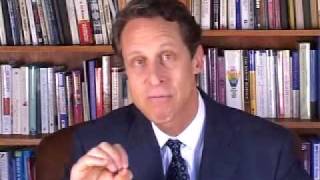
Dr. Mark Hyman proposes a nine-point plan to overhaul U.S. healthcare by shifting from treating disease to preventing it through functional medicine, lifestyle changes, and wellness. He argues the system needs to retrain doctors, change medical education, and move away from a purely pharmaceutical approach to address rising chronic disease and costs.
Hi, this is Dr. Mark Hyman. I'd like to share with you how I believe we can fix President Obama's health care plan before it's too late. The Chinese word for crisis is comprised of two separate words, danger and opportunity. As a nation, we are at the precipice of change for our entire health care system. Yet if we make the wrong choice and simply provide universal coverage to an outdated 19th and 20th century system of medicine, this crisis will lead us into danger rather than profound opportunity. There are different choices we can make now, and I will outline a nine-point plan for real health care reform. Despite the dangers ahead, I do have hope. You see, over the last few months, I've been privileged to participate in events at the nexus of change that have all focused on fundamentally changing our disease-based health care system to one focused on creating health and wellness. These ideas are not at the center of the health care debate, but they must be, and they can be. In February of this year, the Institute of Medicine held a summit on integrative medicine and the health of the public at the National Academy of Sciences. 600 key leaders and stakeholders in healthcare, including educators, scientists, community leaders, practitioners, lawmakers, policymakers, and insurance leaders attended it. It was a broad coalition that came together with a common purpose to change not only the way we do medicine, but also the medicine we do. You see, I believe the medicine at the core of healthcare reform must be founded on a clinical model and framework for practice that's been developed by the Institute for Functional Medicine, a nonprofit organization of which I am a member. And the goal is to support the widespread adoption of functional medicine. See, we recently published a detailed white paper on functional medicine as a model for 21st century medical education and practice. This new way of thinking about health and disease is the biggest secret in healthcare today, and yet it is the most effective model to address the current drivers of cost and chronic disease. And the same week that I was in Washington, I testified at Senate hearings on integrative and functional medicine before Senator Kennedy's Senate Working Group on Health Care Reform alongside other leaders in health care, including Drs. Dean Ornish, Mehmet Oz and Andrew Weil. I also met with key policy members at the White House. And there was an unexpected openness and willingness to find a way to true health care reform. And recently, at the edge of a very recently thawed Minnesota pond at a Christian Brothers Retreat Center, I was privileged to be invited to be a part of a think tank sponsored by the National Institute of Medicine on whole systems research. It was an international gathering of systems biologists and mathematicians and physicists and geneticists and physiologists and psychologists and researchers and doctors from a dozen countries and diverse backgrounds, Palestinians and Jews, Chinese and Iraqis, French and Germans, all exploring very important but neglected questions that hold the solution to our epidemic of chronic disease. Questions like, what is health? What are the laws of biology? And how do we study whole people, not simply diseases and drugs? How do we put all the puzzle pieces of science together into a story that addresses the causes of disease and explains how to create health? In this sequestered, isolated place, the leading thinkers with their finger on the pulse of the future all suddenly came to the same conclusion: The way we do research doesn't help us understand how things really work as a whole integrated system. In other words, the model for studying one drug for one disease or studying one chemical pathway or gene doesn't work to give us useful answers to how we get sick and how we can get well. I believe that real health care reform is now possible in a perfect storm where alignment of economic, scientific, and moral imperatives provides us an opportunity to do well as a nation by doing good, through fundamentally changing the medicine we do. But to achieve that goal, it will require the collective imagination, intention, focus, and action of health care providers, consumers, industry, and policymakers. A coordinated effort across government agencies and industry sectors focusing on health and wellness, incorporating what we already know is urgently needed. We also need leadership at the highest levels from the White House to successfully create culture of health and wellness and transform our healthcare system. The following ideas, while not at the center of the healthcare debate, although they should be, are essential to create real change and avert disaster. You see, horse and buggy makers gave way to the automobile. Eight-track manufacturers gave way to the iPod. Yes, some industries will fade as funds are allocated towards policies and initiatives that prevent and treat chronic disease through dietary lifestyle and community interventions instead of expensive drugs and medical technologies. But other industries that promote health and wellness will flourish in their place. These policies and initiatives are necessary for health care reform that addresses the true drivers of the systemic societal factors that drive our chronic disease epidemic and exploding costs. The following are strategies that could have the biggest impact on cost and outcomes with very little effort. These are the changes that must be made if we are going to fix our broken healthcare system. Number one, reimbursement must change to include payment for integrated healthcare teams focused on lifestyle treatment of chronic disease and the clinical model of whole systems or functional medicine, not only expensive and often unproven procedures. Number two, investment for comparative effectiveness research must support comparing existing drug and procedure-based medicine to lifestyle and functional integrative approaches, not simply drug to drug or procedure to procedure. Medical education must be transformed. Nutrition and lifestyle medicine and environmental medicine must be at the core of medical education and healthcare professional education. In fact, medical education could be free with three years of mandatory health community service, which would provide training in lifestyle systems functional medicine with integrated healthcare teams. This would help ensure greater diversity in medicine, greater supply of primary care physicians, more commitment to public service, as well as address gaps in service for our most needy citizens. Number four, establishment of a prototype institute for lifestyle systems and functional medicine that could develop the education and a scalable model and curriculum for medical schools, residencies, postgraduate education, and other health professionals. Number five, improve food policy and agriculture policy school and community environments to encourage health by prohibiting food that is known to promote obesity and disease and providing whole, real, fresh food for our children. Obese teenagers have now proven to have the same risk of premature death as heavy smokers. We wouldn't feed our dogs, Cola, burgers and fries. Why do we feed them to our children? Number six, provide demonstration projects in community health centers to provide inexpensive, nutritious meals, including takeout, recreational facilities, counseling and education, and health care based on systems, lifestyle, and functional medicine, all at one community health location. Number seven, impose limits on pharmaceutical and unhealthful food advertising. More than $30 billion a year is spent marketing junk and fast food to consumers, including $13 billion targeted at children, and more than $30 billion is spent by pharma on marketing drugs to doctors or about 30,000 per doctor annually. Direct to consumer drug advertising on television also drives prescribing practices based on induced preferences rather than science. Number 8. Bioinformatics and electronic medical records must facilitate 21st century systems and lifestyle based medicine rather than 19th and 20th century medical records keeping systems transferred to an electronic format. And number nine, we must create a White House Office on Wellness and Health Promotion and Integrative Health as a way to develop an ongoing vehicle for coordination of strategy and policy, focusing specifically on coordinating and developing policies and programs for lifestyle-based chronic disease prevention and management, integrative health care practices, and health promotion. These changes won't take place overnight, and they won't be easy, but they can happen. However, the only way they will happen is if the average person, that means you, gets involved and votes for change every day with your fork, your feet and your voice. We are facing a watershed moment in the history of medicine, one where changing the very way we understand and treat disease is finally possible. But we all must work together to effect such a tremendous change in our medical system. As Margaret Mead said, Don't think that a small group of passionate dedicated people can't change the world. In fact, it is the only thing that ever has. We now have all the information we need to cure or dramatically improve chronic problems that are poorly addressed by conventional medicine and to discover a vital, vibrant health at any age. And we can finally transform our sick care system into a health care system that promises vibrant health and vitality to every man, woman and child in the country This is the future of medicine.
More from AI




This Is Why 99% of Skin Conditions Don't Heal — And What Dermatologists Won't Tell You






Why you need to start strength training today #strengthtraining #healthyaging #fitness
