How To Use Metabolic Psychiatry To Heal Your Anxiety & Depression | Stanford Psychiatrist
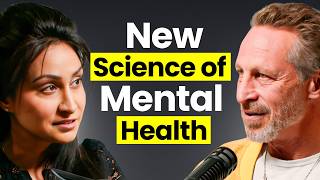
Conversation (YouTube/podcast) between Dr. Mark Hyman and Dr. Shebani Sethi (founding director, Stanford Metabolic Psychiatry) about metabolic psychiatry — a field connecting systemic and central metabolic dysfunction (insulin resistance, mitochondrial dysfunction, inflammation, oxidative stress, impaired plasticity) to psychiatric disorders (depression, bipolar disorder, schizophrenia, eating disorders). Key claims: ~1 in 3 Americans have insulin resistance (which doubles depression risk); ~37–40% of people with bipolar illness have metabolic syndrome. Dr. Sethi describes pilot ketogenic-diet work (n=23) reporting large metabolic and psychiatric improvements over four months, and a planned 120-person randomized controlled trial (mechanistic omics, continuous ketone/glucose monitoring) supported by philanthropy and collaborations (Mayo Clinic, Univ. of Toronto). Metabolic Psychiatry Labs is a venture-backed, nationwide virtual care program; Stanford hosts a free resource site (MetabolicPsychiatry.com). The discussion emphasizes multi-modal interventions (diet, meds like metformin, nutraceuticals, microbiome, mitochondrial cofactors) and the need for biomarker-guided, personalized treatment.
Questions this video answers
September 24, 2025.
One in three people have insulin resistance in the United States.
Insulin resistance doubles the risk of developing depression, even without prior psychiatric history.
About 37%–40%.
Pilot trial: 23 patients; reported outcomes in four months included 100% reversal of metabolic syndrome/pre-diabetes, 12% reduction in body weight, 36% reduction in visceral (belly) fat, and 27% reduction in insulin resistance.
Chapters
One in three people have insulin resistance in the United States, and that doubles your risk of developing depression, even if you have had no psychiatric history.
This is this weird moment in psychiatry where I think we're converging these two massive paradigm shifts. One is around psychedelic medicine, metabolic psychiatry. You can't do one without the other.
Dr. Shabani Sethi is the founding director of Stanford's Metabolic Psychiatry program, where she unites nutrition, metabolism, and mental health care. She's rewriting mental health by fixing the box first.
What is metabolic psychiatry?
Metabolic psychiatry is thinking about metabolism and mental health connection, but it's the study of all of the metabolic dysfunctions, both systemic as well as central. So you can have dysfunction in the brain and you can have dysfunction outside the brain, in the body. And those two elements are important in thinking about how that affects psychiatric disease and mental health.
The thing that I think people are wondering about is, where do I start? Like, I'm depressed, I'm anxious. Maybe I have bipolar disease. Maybe I've got it from schizophrenia. Like, what do I do?
Hey, it's Dr. Hyman. I'm so excited to share this episode with you today. But before we dive in, I want to get your help. Please take a minute to hit that subscribe button. Whether you're watching here on YouTube or listening on your favorite podcast platform, it truly means the world to me and it helps my team. And I bring you this podcast every single week. Plus, I don't want you to miss a thing. So thanks so much for being part of this community, and I'm glad you're here.
Welcome, Shimani, to the podcast. It's good to have you back. We had a chance to talk about your work a few years ago, and I just wanted to revisit it because it's. It's such an important piece of work you're doing in the world to look at mental health from a new lens, which is how the body affects the brain. It's something that, you know, is kind of this weird anomaly in psychiatry because historically, psychiatrists never looked at the body. I mean, the joke in medicine is neurologists pay no attention to the mind and psychiatrists pay no attention to the brain. And also, I would say psychiatrists pay no attention to the body in terms of what's happening that could be influencing the brain. You're sort of highlighting the opposite of the mind body effect, which is the body mind effect, and it's bidirectional. But mostly we focus on the mind body effect. Yes. Stress can cause illness, and so Forth, but physiological changes in the body that are emerging because of our lifestyle and our crappy diet and stress and toxins and all these things have an effect on the brain. And we really have neglected this area. And the body has only so many ways of saying ouch and brain even less. You know, when your knee hurts, if you sprain your knee, you know it hurts, right? But if your brain is inflamed, what happens? It doesn't hurt. They don't get a headache. It creates mental illness. And so I want to unpack with you today this whole field that you sort of are deeply involved in, that you coined the term for, which is metabolic psychiatry. So maybe you can start out by saying, how did you come up with this? Where did it, like, originate from in your mind? And what is metabolic psychiatry?
Well, thank you, Mark, for having me back on your show. You actually wrote a book 20 years ago or 15 years ago, making some of these connections.
And, yeah, the Ultra Mind solution, right.
Here we are 15, 20 years later talking about it. These ideas of metabolism and mental health being connected, they're not new. They've been around for 100 years ago in psychiatry, we had seen that there were levels of lactate that were elevated in serious mental illness and that there were levels of glutathione, which were low. They were low. And it is an antioxidant. And so these markers were markers of bioenergetic dysfunction.
And so lactate is like when you exercise too much and your calves hurt because you're. You've got lactic acid in your muscles, that's happening in your brain.
And so there's also a preferential area of energy production towards glycolysis that produces lactate, and that tends to be more common in certain diseases. So we see that in neurodegenerative conditions. We see that in serious mental illness, like bipolar disorder and schizophrenia and major depression. So when I say serious mental illness, I'm talking about these three illnesses, primarily knowing that these were biomarkers that we saw a hundred years ago. And then we went in different directions over the last hundred years, focused on neurotransmitters and other systems which are only just part of the picture. There's a much bigger picture when we think about metabolism. So metabolism is really just thinking about food breakdown into energy, and everything that happens in between is detail. Metabolic psychiatry is thinking about that metabolism and mental health connection, but it's the study of all of the metabolic dysfunctions, both systemic as well as central. So you can have dysfunction in the brain and you can have dysfunction outside the brain, in the body. They're connected. Right. And those two elements are important in thinking about how that affects psychiatric disease and mental health. And so when we look at how that dysfunction affects psychiatric symptoms, whether it's prevention, whether it's progression of disease or treatment of disease, that's really what metabolic psychiatry is about. I think other instances, metabolic psychiatry has been defined as brain energy metabolism only, or it's been defined as just the ketogenic diet, for example. And I want to clear that up, because metabolic psychiatry really is a more holistic term that incorporates all systemic as well as central metabolic dysfunction and how that affects psychiatric disease.
Yeah. So. So just for people listening, in medicine, we talk about metabolism, and people say, I have a slow metabolism in the lay culture, you know, I have fast metabolism. They mean a little bit different things. So metabolism is, yes, how you eat food and it converts into energy. But there's an enormous number of metabolic pathways. If you were to put on a wall in basically microprint, it would be a giant wall of all the metabolic pathways. You know, these set of seed we see in medical school. And every single one of those pathways are part of the biochemical reactions that happen across every system in your body. And there's 37 billion trillion chemical reactions every second in your body. All those are part of the metabolic system. And all those things, I think our mental health and everything else in terms of disease. So understanding that is really important. And it's kind of a neglected thing in medicine. We sort of give lip scissors to it in the first year of medical school. We pretty much ignore it after that. We don't learn much about things like insulin resistance, but even less about nutrition, which is driving a lot of the metabolic systems. Right. Because every one of those biochemical pathways requires a nutrient to actually work. So in a sense, metabolic psychiatry, you're saying, is the bigger rubric that encompasses all of that. Not just sugar and gluten, glucose and metabolism from that perspective.
Exactly.
Yeah, exactly. So I think. I think that's important to understand. And those metabolic pathways affect everything. So it's very complicated. We kind of like look at that chart and maybe learn a little bit about it, but it's kind of not this thing that we pay attention to, but it ends up being the kind of, I would say, holy grail of how to actually think about health in general, and particularly psychiatry. And the fact that you sort of are pointing to the fact that the way we thought about mental illness might not be totally accurate. And I think this is part of the problem in our society is that if someone has rheumatoid arthritis and their joints are damaged, we don't say, oh, there's something wrong with you. Like, we go, too bad. I'm sorry, you're suffering from this. How can I help with mental health? There's a lot of stigma around it, and there's a lot of judgment around it, and there's a lot of attribution of meaning to it. And I think through history, there's been this phenomena of different views of mental illness throughout history. And I think we're in this new era of understanding mental illness through the lens of metabolic psychiatry. And also, I don't want you to call it trauma, informed psychiatry or, you know, psychedelic medicine, which is addressing a lot of these other aspects.
Yeah. I think one of our. The dean of our medical school at Stanford Medicine had said, I think during a medical school graduation that the greatest discoveries are discovered in between. In this intersection between fields. And sometimes I think we forget that the body's related and, you know, organs are not just isolated and they're working in a whole system.
Yeah.
So, you know, if your city is, you know, running and it's not. If there's a issue in the power grid and you're not having enough power and the light's flickering somewhere, there's something that's wrong. And even though it's working, it's not working optimally. And so metabolic psychiatry takes different fields of endocrinology, immunology, and so forth. And we really wanted to have. At Stanford, we wanted to put a name to it so that more clinicians and researchers and people out there do more work in this area. It really gives us a communication tool and map to be able to label something and to be able to work in a more collaborative way.
And the truth is, for the serious mental illnesses that you're talking about, I mean, people suffer from anxiety, depression, major depression, more serious psychiatric illnesses from that spectrum. But then there's things like schizophrenia and bipolar disease, which are pretty intractable and chronic, and the medications come with a lot of downside effects. And obesity, it kind of makes it even worse. We're seeing, you know, studies that show. And some of the work you've done that you see profound changes in these untreatable mental illnesses using this approach of metabolic psychiatry. Nutrition and food is. Can you kind of talk. How did you. Because you kind of came from the field of obesity medicine and also psychiatric medicine. So was that what kind of got you thinking about this or yeah, so.
For me, I think I was one of those really lucky. At an early point my career, when I was in medical school, I had exposure to nutrition, which usually is not typical. I think normally it's maybe two days of lectures of nutrition in medical school, although I'm optimistic is changing. I had an opportunity to really delve more into obesity medicine starting in medical school. And that got me very interested in nutrition as well, because I started seeing differences in, in patients when it came to psychiatric symptoms and one patient in particular who had schizophrenia and treatment resistance, schizophrenia. I spent a lot of time talking to these patients in an obesity clinic. From there I learned more about obesity treatments. And so I really just follow my heart in a lot of ways. I didn't have plans to be a physician, scientist or an entrepreneur. I just had plans to treat patients and I did that and I really enjoy it. But I felt that a lot of times these things were not being treated, whether it was metabolic syndrome or insulin resistance or metabolic issues. And I thought it would be helpful to do that. And so I started really with a strong interest and that just led me with my curiosity to go further into obesity medicine. I knew I wanted to do psychiatry and I went into psychiatry with an interest in metabolism. So I veered towards obesity medicine because that was what. I had a great mentor in medical school and I went in that direction. He was an obesity medicine specialist. And from there that's how I learned about ketogenic therapies for seizures. And then I worked with some of the folks who are neurologists who do that for epilepsy and then understood how I could adapt it for psychiatric conditions. And then I started studying that. I did it with my patients, I started studying it, and here I am many years later doing research trials. And I started a program at Stanford which is focused on metabolism based interventions for those with bipolar or schizophrenia or depression and also eating disorders. I had done some work in eating disorders and trials and with obesity drugs. And I have realized over time that there are other options and tools which I do believe is important to integrate into psychiatry. I felt that it was missing that we, we oftentimes kind of segregate ourselves a little too much from other fields. And there's just, there's so much connection and relationship. And I'll give you one example. So in primary care, I saw a lot of patients that had diabetes, right? Diabetes or hypertension, but the folks that had the more severe depression tended to have insulin resistance or they had some other metabolic condition. And so in primary care, the folks with diabetes who weren't doing well had depression. So that's the thing that I saw. And then I just got more curious about this and that connection.
Yeah, it's a big crossover. Like about 40% of people with diabetes have mental illness. Right.
It's pretty high. So in bipolar illness, about 37, almost 40% have metabolic syndrome.
Pre diabetes, essentially.
Yeah, full blown metabolic syndrome. Yeah. You know, if you have insulin resistance, one in three people have insulin resistance in the United States, and that doubles your risk of developing depression, even if you have had no psychiatric history. So there's a lot of relationships, and.
It depends on how you define prediabetes, too, because I think if you look at some of the work out of Tufts, they looked at people with what they determined was metabolic dysfunction, which is either you have a high blood sugar, high blood pressure, abnormal cholesterol, you're overweight or obese, or you've had a heart attack or stroke. And if you combine all those which are all related to the fundamental biology of insulin resistance, which I want to unpack with you, that's 93.2% of Americans. So it's more than one in three that have some degree of this that's concerning to me because our diet is so bad, it's so high in sugar and starch. It's such a destructive force for not only our body, but also our brain. And people don't understand that. People don't understand that. Yeah, okay. I guess if I eat too many cookies or have too much soda, I'll gain weight and I'll get overweight. But they don't connect the dots with mental health. And I think. And then it becomes a vicious cycle. The more depressed you are, the less likely you are to take care of yourself, and you spiral. And that's what happens a lot in these patients. So can you talk about, like, the, The. The. The dive into this whole phenomenon of insulin resistance in the brain and how it. It affects you and how it's someh. And peripheral insulin resistance, because you talk about cerebral hypometabolism, which means low metabolism in the brain, and how it affects the brain and how insulin resistance plays a role in this. Can sort of unpack that.
So cerebral glucose hypometabolism in the brain, globally is a central pathological characteristic of neurodegenerative conditions and also present in schizophrenia and bipolar in particular. And that's really when the certain areas of the brain cannot use glucose for energy. Even though glucose is present, it can't process the Glucose, well, and you develop insulin resistance as well. And when you have insulin resistance centrally, there's a problem with insulin signaling and glucose signaling in the brain. And we see this even before the diagnosis of psychosis, before medications are given and before the diagnosis it's present. So we think there's a relationship between psychiatric illness and insulin and glucose handling in the brain. When you have insulin resistance in the brain, that doesn't necessarily mean that you'll have insulin resistance in the body. You know, measures of that differ. And a lot of the medications that we tend to use in psychiatry, unfortunately, some of them do have effects on insulin resistance peripherally, which is different than insulin resistance centrally. It can affect the hypothalamus, the nuclei, hypothalamus. It can increase food intake, so it increases your appetite.
Hungry?
Yeah, it makes you hungrier. And with the peripherally, it can increase insulin so that you are releasing more insulin and become insulin resistant by nature of the medication. But there's also elements of the medication that occur in the brain as well, where it improves insulin signaling depending on the drug. So it's actually kind of complicated. And I'll give you an example is lithium. It also improves insulin signaling in the brain. But to get back to, you know, this insulin resistance concept in the brain and why it's important, it's really important because it's important for neuronal, plastic.
Neuron, neuronal growth, remodeling, shaping. It's extreme insulin signaling is critical for that. It's one of the reasons why it's important when you have insulin resistance peripherally. So outside the brain, it leads to degeneration and atrophy of some of the hippocampal neurons as well. And so it's structurally altering the brain when you have insulin resistance peripherally. So that doesn't necessarily mean that the insulin resistance centrally is doing that. It's the peripheral insulin resistance that's leading to that. So there is this bidirectional relationship that you mentioned earlier. And that bidirectional relationship is that on one side, if you have type 2 diabetes or obesity or insulin resistance, it's leading to symptoms, psychiatric symptoms. It leads to a psychiatric diagnosis. Eventually it's affecting the brain. But then there's also intrinsic metabolic dysfunction and insulin resistance as part of that in psychiatric disease, that then leads to HPA axis dysregulation, or it leads to sleep disturbances, and it leads to the obvious peripheral signs of metabolic dysfunction as well.
So basically what you're saying in English.
Is that you've got there is some resistance in the body that affects the brain structurally. It can shrink memory centers and other key areas of the brain that make it not work well. But you can also have the psychiatric symptoms making you have worsened ability to regulate blood sugar, insulin peripherally too, because it affects your stress response, it affects your whole metabolic system.
Yes, in addition to medication side effects and so forth. But even the intrinsic metabolic dysfunction that exists in psychiatric conditions can also make someone more vulnerable in developing those other conditions.
And when you look at type 2 diabetics, their mitochondria function at half the rate as regular people who don't have type 2 diabetes. So mitochondria, essentially the little energy factories inside your cells. And there's anywhere from hundreds to thousands and tens of thousands in the brain. It's the most dense per brain cell, is the most mitochondria of any cell in your body. So energy is really important in the brain. What we find is if you're, you're a type 2 diabetic, or if you have insulin resistance, your mitochondria don't work as well. And that creates a whole downstream set of consequences. It can create more oxidative stress, it potentially can create more inflammation. And it's also inflammation can cause mitochondrial dysfunction. So it's a kind of virtuous or maybe a vicious cycle. It's a vicious cycle, vicious cycle of dysfunction. But on the other hand, you can create a virtuous cycle by the interventions that you're finding with your, your team and group at Stanford looking at metabolic interventions of diet, nutrition, like keto diets, for helping reset the brain energy system.
Generally there's four mechanisms of metabolic disease. There's plasticity. You mentioned the inflammation, there's oxidative stress and there's mitochondrial dysfunction. And so anything that's going to target these areas, whether it's a diet or whether it's medications that target these pathways, There is a potential for improving both the metabolic disease and the psychiatric disease because there is a shared relationship, there's a shared pathogenic relationship between mental health and metabolism. So that's really what we're studying and that's what we're trying to go further into with a lot of mechanistic studies, as well as looking at clinical outcomes and metabolic markers and so forth. I can go into that in detail.
But I think the inflammation piece is really important because when you look at people with type 2 diabetes, insulin resistance, they often have a high C reactive protein, a marker of inflammation, and they often have systemic inflammation. And when we start to look at all these neurodegenerative and neuropsychiatric illnesses. A common feature is inflammation. And I've even seen some stupid studies looking at TNF alpha blockers for depression, which is a drug we use for rheumatoid arthritis or severe autoimmune diseases. It's 50 grand a year and there's a lot of side effects. And they think, well, it's inflammation brain, let's give you an anti inflammatory. But it doesn't work like that. I think we have to think about what's causing the inflammation, get to the root cause of it. And it's this metabolic dysfunction that tends to be both the cause and the consequence of it.
Yeah, and I think we can think about all of these. Whether they're drugs or even dice, there are different tools in the toolbox that we can use to target a metabolic pathway or an improvement in symptoms. For example, you could take metformin. A lot of us know, right, metformin improves glucose, it improves insulin sensitivity, but it also crosses the blood brain barrier and it has a neuroprotective effect. It helps in the TCA cycle. You know, within the mitochondria we have machinery to produce energy, to produce ATP. And there are deficits in that energy pathway. Whether they're enzymes or cofactors, they're not present. Metformin helps support that to some degree and it also does decrease inflammation. So in some studies it's been shown to reduce TNF alpha, reduce interleukin 6, reduce other cytokines. And we know cytokines also are pro inflammatory, right? And they end up also affecting serotonin synthesis. It affects tryptophan metabolism. Hey, that's neurotransmitter, right? And that's one part, but that's one part of the equation. And so there was a study a colleague of mine did looking at metformin and treatment resistant biopsy, bipolar depression. And that showed an improvement in those who were treated with metformin and also had the psychiatric medication on board. It allowed the psychiatric medication on board to work better. So that's just one example of how a metabolic intervention or tool can improve psychiatric symptoms. That goes beyond just, you know, let's improve insulin resistance, but there's so many other other pieces that are also being affected by it.
And amazingly, what you're talking about is up until now, most of psychiatry has been sort of downstream. Oh, neurotransmitters may be a problem, but the question is, why are they so messed up in the first place? And what's causing that. And it seems like what your work is finding is that a lot of our lifestyle and diet related problems that are driving blood sugar dysregulation and mitochondrial dysfunction, inflammation, our ultra processed diet and sedentary lifestyle, all these things that sort of accelerate the problem actually makes these sort of neurotransmitter problems worse downstream. And you can treat the neurotransmitters or you can treat the cause, Right? You can treat the symptom or you can treat the cause. And I think the metabolic psychiatry approach, like you said, has many tools, like metformin is a drug that helps improve it. But there are many other things that are including diet, lifestyle, exercise, we know is very effective for mental health. And how does that work? And may partly work by improving insulin sensitivity, right?
Yeah, that's one. And you know, increasing bdnf, which you and I talked about last time, I think on your show, like now, five years ago, the time has flown. But you described it as miracle Gro and I really love the way you described it because it's exactly what it is. That was one. You know, with exercise it's shown to improve those levels and improve cognition and so forth.
So there's a lot of tools and the mitochondrial therapies. I mean, you know, there's a woman named Suzanne Goh who's looked at that a lot of mitochondrial dysfunction, autistic brains. And whether you have ADD or autism, or you have Alzheimer's or Parkinson's or depression or bipolar schizophrenia, it's all this spectrum of brain dysfunction. And there's a lot of common pathways involved in all these. And her work has found that, yeah, there's energy deficits in these kids in the brain, just like. And it may show up in one subset of people as autism, another subset is schizophrenia. But essentially it's the same mechanism. You know, she talks about using mitochondrial therapies, essentially co factors that are involved in these metabolic steps, these biochemical steps require helpers. And so they use nutrients like amino acids or CoQ10 or other compounds that actually help improve brain function. So I wonder, are you exploring any of these sort of nutraceutical approaches that are using the body's own things that uses to actually make energy, but giving them of higher doses or through supplementation as a tool for helping metabolic psychiatry patients?
Yeah, it's an interesting question and I love her work by the way. And I think looking at mitochondrial dysfunction, it's a lot of shared mechanisms with these different conditions. So it does make sense when we're studying serious mental illness and other conditions to be looking at vitamins, cofactors, things. So we test for that in our clinic. We test for all of these things and we optimize. So we have a approach that we use to make sure that people are not deficient in these things. Because if someone's deficient, does that make sense to treat them only with medication and ignore the fact that they're deficient or malnourished in some way? If they have insulin resistance, obesity or metabolic syndrome, sure, let's treat that. But let's make sure they're also not malnourished. Most of them are malnourished. And you mentioned 90 something percent of the population is having some kind of of metabolic abnormality.
Overfed and undernourished, right?
Yeah.
No calories, not enough nutrients. Yeah.
It's almost like a crime to not be thinking about it. And that's why I think it's really important to have that approach. And to answer your question, while I'm not specifically looking at one supplement and its effect on psychiatric outcomes, I'm really looking at the whole kind of the whole picture and making sure they're optimized. Give an example of research that's been done in our field by colleagues who looked at omega 3 supplementation, at least one gram, including EPA per day for I think it was a total of 8 to 12 weeks period, which significantly had a good. It was modest evidence that showed benefit for psychosis, early phase schizophrenia, early phase psychosis. And it's also been a treatment as an adjunctive treatment for depression. Things like this are helpful for us to know about it. Unfortunately didn't have the same effect for chronic schizophrenia, but that's why prevention is so important. And mentioned earlier about fasting insulin. Right. And development of depression. Like why aren't we checking these things more routinely or more frequently to prevent conditions or prevent exacerbation of symptoms that are so severe, like psychosis?
Yeah, I mean, I think what you're bringing up is important and you know, medicine is very reductionist and it likes to go, let's look at Omega 3s, let's look at vitamin D, let's look at magnesium, let's look at whatever vitamins. And the body is so complex that it requires all the ingredients. And it's like if you want to grow a healthy plant, you can't just have soil. You need water and light, you know, and vice versa. Like the human body is very much the same way. And I think think we often will not be sophisticated in how we think about providing all the components needed for optimum function of mitochondria, of your immune system, of insulin resistance. And I think that one way to navigate that is sort of emerging from our understanding of metabolomics and proteomics and gene expression products that are helping us understand the body in a more nuanced way. And I think one of the things I think a lot about is what are the biomarkers of mental illness us. And one of the things we should be looking at that can play a role rather than just treating one thing. You have to find everything that's off and fix it. In other words, if your omega 3 is low and you take it, great. But if your vitamin D and magnesium are also low, might not work as well. Right. And so you kind of have to think holistically about all the various factors. So can you talk a little bit about your work in the frame of the biomarkers of mental illness and what you're thinking about. About in terms of evaluating that? You know, you talk about lipids and triglycerides and HDL and blood sugar and anyone's seen all that, but it goes deeper than that.
It does. And I, I'm glad you're pointing that out. About the, you know, optimization can't just be a reductionist approach of one thing. We really have to look at. At everything. And, and that's what we are doing with our treatment approaches. It is important to, you know, obviously monitor those things as well. But biomarkers are biomarkers in psychiatry. I don't believe that there's just gonna be one biomarker. It's gonna be. It's a group of markers. And thinking about certain metabolic disease states, certain conditions, how much the progression is based on those biomarkers is really where I think we're heading. And also part of the effort in our trial, we're starting to a randomized controlled trial generously funded by some philanthropists, including Peace Cord Philanthropies at Stanford. And we're looking at mechanistic approaches for a metabolic intervention like a ketogenic diet in schizophrenia, bipolar and depression. And we're looking at a lot of these biomarkers. I'll give you one example, and that is looking at triglyceride HDL ratio, for example. That's been something that has been shown with a lot of good data, that depression severity and chronicity is associated with.
That marker, and that's directly related to insulin resistance. So the higher you get higher triglycerides and lower HDL and The ratio becomes higher as you get more insulin resistant. So it should be like 1 to 1.
That's right.
And you can go 2 to 1, 4 to 1, 10 to 1. You know, if your blood, if your triglycerides are 150 and your HDL is 30, that's a 5 to 1 ratio. That's not good.
What was interesting about that study is that insulin sensitivity wasn't associated with the chronicity of depression, but it was for the severity. But the triglyceride HDL ratio was associated with both. So it. There are some interesting nuances in the literature about, about kind of looking at the biomarkers a little bit differently. And I think there's, there's a lot of different biomarkers that will be helpful in even, for example, with insulin resistance, since we're talking about that, when we look at insulin resistance, we see that even with bipolar disorder, you have more rapid cycling, you have more treatment resistance, and you have more suicidality. So that's another thing that we could use as a biomarker as well.
Yeah, I think it's so many different things. I mean, when I think about it, you want to check your nutrient levels that affect mental health, like vitamin D and homocysteine and methylmatic acid and omega 3 fatty acids, fats and omega 3 index and hormonal effects like thyroid and sex hormones and your iron levels and zeptin and insulin insulin measurements and some resistance scores, which now available through quests, which we do at Function Health, which measures C peptide and insulin mass spectrometry, which is a really accurate way of measuring some resistance and triglyceride HDL ratio and particle size and particle number, inflammation levels, crp. So all these things are blood test that actually can help clue you into many different problems. But actually if you see there's abnormalities and we see a lot of it, like with functional health, we're seeing like 70% have a nutritional deficiency at the minimum level. That's actually recommended by the dietary.
Not surprising.
It's like not like what's an optimal level, unfortunately, or what an optimal level of homocysteine is. But like homocysteine levels are in the lab up to 14 or 15 and should be probably, you know, six to eight. That measures your folate or B12 or B6. That's status. And so we're seeing a lot of that. We're seeing 95% with metabolic dysfunction through the lipid particle size. And we're seeing 46% with high CRPs. And we're seeing A lot of really significant inflammation. So we started to go, wow, the population at large is sick. We're seeing increase in mental illness, and no one's really talked about how do we think differently about treating things systemically. And I think what you said is really important because it's a paradigm shift from thinking of the body is a bunch of different organs and parts to how the body's a network and everything is connected. And then we have to treat the network, not the symptom.
Exactly.
And so that's a lot of what your work is doing. And I wonder also the schizophrenia part. You know, 17% of people with schizophrenia have elevated gluten antibodies, which can drive a lot of brain inflammation and create a lot of neuropsychiatric symptoms.
Absolutely.
And again, you're taking that out when you give people a keto diet. That may be part of it.
You know, it's a good thing that we should test before and after, too, which we're doing in our next study. So, yeah, we will be doing that. And also looking at.
Looking at gluten antibodies.
Yeah, we're planning to.
Amazing.
Yeah. Just looking at mitochondrial deficits, too. So we'll be looking at that.
So how are you doing that? Because it's something in medicine we don't really pay attention to. We learn about mitochondria in the first year of medical school. We learn about the Krebs cycle, you call the TCA cycle, which is the energy cycle, how you turn food and oxygen into energy in the body. And then we kind of forget about it. And it's not part of clinical medicine. We don't talk about how do we evaluate mitochondria, how do we test them, how do we treat dysfunctional mitochondria. Yet it's one of the central features of most illnesses that are chronic, from mental health to neuropsychiatric disorders to metabolic disease, like diabetes to heart failure. Many, many problems or mitochondrial issues.
Yeah. I don't have an answer as to why we don't do it more, but I think it's something that is probably difficult and hard to treat in some ways. But the more research I think that we have in this area, the better it's going to be for more targeted interventions, so I'm hopeful for that. One thing that I thought would be helpful when you're describing the mitochondrial dysfunction and various conditions, what we are seeing in psychiatry also is that the brain is volumized. It makes up 2% of our body, but it consumes 20% of our energy, and it's so delicate, extremely delicate, that if there are deficits in insulin and glucose handling and that, you know, Krebs cycle machinery to produce energy, then there's more metabolic vulnerability. In psychiatric conditions, there's more metabolic vulnerability in specific areas of the brain. You and I talking right now, we're maybe using 80% mean of our capacity we have. If we're, you know, talking a little bit more deeper in science, you know, it'll be a 5% increase. Our daily, you know, activity is a bit less. And for someone that maybe has genetic predispositions or have environmental stress, it's going to be a little harder to have that, you know, perfect machinery producing energy. And there's more metabolic vulnerability there. And so those differences between one region of the brain and another is pretty critical for functioning cognition, mood and mental health symptoms.
And how are you thinking about measuring mitochondrial function as you're talking about in your, in your upcoming studies?
I believe in a lot of collaboration, I love collaborating with other scientists. So University of Toronto, Mayo Clinic, a lot of other departments. At Stanford, I have a faculty member, chair of genetics, who at Stanford will be looking at all omic profiling, so all expression of proteomics, metabolomic data, wearable HRV data. Another faculty member who's gonna be looking at ketone metabolites because downstream of ketone metabolism there may be say an amino acid called phenylalanine attached to, to beta hydroxybutyrate, which is what ketones will break down into. And if you have that, the end effect of appetite reduction or weight loss is present. If not, it doesn't work as well. The mitochondrial testing is a collaboration with Mayo Clinic and University of Toronto. And that's looking at all the different metabolites in the mitochondria. Lactate's one of them, but there are a lot of other. There are sex, Nyl, Coa, different dehydrogenases. So we'll be looking at all the, all the levels of that.
It's not something you normally can get at a regular lab test.
No.
Is there a research based test looking mitochondria? I mean, clinically it's been a tough thing for us to look at because you could do a VO2 max test, which is basically an exercise treadmill test that measures sort of indirectly your mitochondria. You can measure organic acids, which are urinary metabolites. And I think we all have sort of subtle changes in our metabolic pathways that affect different things and you can see some of those changes. But there's now, cheek swabs that look at the respiratory chain, which is basically the assembly line that turns food and oxygen into energy. And there's some interesting, you know, kind of ways to start to think about how do we sort of clinically measure this in people, because it's such a big, it's such a big black box and it's so important. And then you can actually even be specific and say, oh, this pathway that requires CoQ10 is a little slow. So what if I give extra CoQ10, it's going to speed it up and.
It becomes more personalized that way. Right. Like, and more specific. And I forgot to mention, we're also looking at epigenetic disposal data, so looking at DNA methylation and gene expression, it's 120 patients, randomized control trial. And we'll be collecting a lot of data, continuous ketone monitoring. Abbott donated the devices.
Glucose monitoring.
Grateful for that. Yeah, glucose monitoring and getting more. We're still fundraising for the trial, but we have gotten enough to get started and we're looking at all these measures and it's exciting. We're excited about it.
You know, what you're offering to people is not, here, take this pill for your mental illness, but here, here's a lifestyle change that can have profound effects. How do you do that? Because these are patients who are often mentally ill, which makes it harder for them to make good choices. Right. And so you're asking them to do a ketogenic diet or you're asking them to do severe lifestyle changes. How, how are you getting people to do that?
Yeah, that's a good question. And, you know, I do want to recognize that it's, it's not always easy, especially when you have a condition like schizophrenia, but there's a lot of support that involved in providing care that's important in those cases and caregivers that get involved. So we do support groups. We really help them with, you know, adjusting to making changes in the home to be able to. Not necessarily thinking about it as a diet, but really think about it as a lifestyle change and a metabolic therapy for their illness, which is improving their quality of life, which is our primary outcome. It's the thing we care about most as clinicians. Right. So, you know, we want them to have a better quality of life. They want a better quality of life and that's what also motivates them to stay on the diet or the approach as well. So I think a combination of that.
A lot of good side effects.
Yeah, yeah, a lot of good side effects. Yeah.
I mean, in your clinical trial you did on the ketogenic diet for bipolar and schizophrenia that recently published with 23 patients, you had 100% reversal of the metabolic syndrome or pre diabetes. You had 12% reduction in body weight. You had a 36% reduction in belly fat, 27% reduction in insulin resistance, which, by the way, the homa IR is probably not as good as this new insulin resistance score that Quest is doing through that aspect.
We're doing that now.
But dramatic reductions in psychiatric symptoms. So improved sleep, life satisfaction, all these great side effects in four months. Yeah. And when you take a drug for schizophrenia, all the side effects are bad right here. All the side effects are good. And does that encourage people to stick with it more because they're seeing positive effects?
It does encourage people to stick with it more. And I think over time, also organically, the more mutual patients with other clinicians in cardiology, endocrinology, or primary care see their patients improving with reduction in visceral fat and improvement of other metabolic markers aside from the psychiatric markers. And people start to appreciate it and are grateful that their patients are doing better. And the patients themselves also themselves feel like they have more control over their life. It gives them hope. And a lot of the patients that were in that pilot study that I did was published last year, but are still in my patients today. A lot of them are still my patients today. And I. And a lot of them are still on a ketogenic diet. So it does speak to, I guess, the feasibility of being on it over time. And I said earlier that my goal was I like seeing patients. I enjoy seeing them get better. A lot of these conditions are hard to treat. Having a tool like this and seeing that it's helpful is very encouraging. I thought that doing research is important for our field in order for it to, you know, go past just beyond me and other people do it. I want it to just die with me. I really want this to be out there so when I'm not around, my son can grow up in a world where. Where there are more things at his disposal and that my patients have at disposal and people that we can reach beyond just the academic centers, beyond research. I think that's why it inspired me to go outside of that too, and start something and found a company that's really just focused on providing that care. Because otherwise research just stays in research and in academia, it is not going out. Doesn't feel right to me, I guess.
I mean, it takes decades for scientific discoveries to end up in clinical practice. So I think the fact that you started Metabolic Psychiatry Lab, which is an online platform for engaging people who want to try this out, is important and it allows it to scale up and people to get access to it. And what you're doing is so revolutionary. I mean, think about the fact that nutrition has not been a topic in medicine. That is really thought to be a serious subject. And it's sort of the same sort of stepchild, fourth cousin once removed.
Not science enough.
Yeah. But what you're talking about is a nutritional therapy that has effects that orders of magnitude more than our traditional therapies. So it's not like it's an equivalent therapy. It's so much better. And I wonder if in terms of your work at Stanford, are you finding resistance or are you finding encouragement or openness to this idea? Because it's sort of a. Yeah, a.
Lot of people ask me that question and I appreciate that. I have found a lot of support with anything. There's always waves. Right. But I have found a good amount of support, especially with all the activities I'm involved in. And I'm in Palo Alto, Silicon Valley. Right. It's pretty common for professors to spin out companies outside academia as well. I love doing the research. I, I believe it's important to have evidence based science, so I'll still continue to do that. But also, you know, having. Having the support to be able to move between these worlds is, is something that I'm grateful for.
And so. So your psychiatry colleagues are not going, what are you doing using food in medicine? You should be using drugs.
I think some people are like, how do you stay on that? How do you stay on a ketogenic diet? Right. But again, I think it's the way you approach it. I think understanding, I think education understanding around it's a therapy, not a diet. Really, in my mind, it's really a therapy just like a drug would be. It requires monitoring, it requires a physician or as someone trained in that area. And there are other metabolic tools. I wrote this in Nature paper along with 12 other authors focused on, you know, what is metabolic psychiatry, why is this important? But also what are, what is the current evidence for these different metabolic based treatment interventions and why should we care and where are we going in the future? I'm more hopeful because there's a global group of scientists and researchers that do care about this and are working on this. And I think it was just yesterday that the Senate Appropriations Committee came out with a recommendation for the NIMH to put more money and funding into Guess what nutritional science or nutritional ketosis work in serious mental illness specifically? I'm psyched about that. I can't wait to apply and I hope that I can do more research with Metabolic Psychiatry Labs or at Stanford. But I care about the science and I care about patients getting access to these treatments. And so I love that Function Health has been able to really improve the access to get these labs. And what we're doing at Metabolic Psychiatry Labs is putting together the biomarkers, the personalization, using AI machine learning algorithms to improve the disease states of someone with schizophrenia versus someone with bipolar and really provide that wraparound care for them and work with their psychiatrist or their therapist or their PCP so that they're not alone in this whole world. And I think, or in the healthcare system, which I don't know how much we want to go into that, but I wanted to share with you that the reason why I was, I think, compelled or felt obligated to go in this is myself after I had a child. I had a really significant tailbone injury and I couldn't sit for nine months. And so. And yeah, it was horrible, but a lot of people couldn't see that I was injured or suffering in some way because, you know, I wasn't walking around with a cast or, you know, I, you know, I didn't have. It was invisible.
Right.
There was a colleague of mine that sent me a book on tailbone bone pain and there was a chapter on the psychology of tailbone pain. And when I read it, it just felt so validating. It was like an advocacy of how do you walk through the healthcare system and how do you tell your ob, GYN or what the issue is? Because it gets often missed. It was so helpful for me, that book. So I decided that I wanted to do something similar like a patient advocacy manual or book. And I'm still writing it and who knows when I'm gonna be done. But I wanted to do that for those who had seriousness mental illness. Starting Metabolic Psychiatry Labs is part of that reason.
And you mean you're starting with the sort of most extreme case, right? Schizophrenia, severe bipolar disease. But you know, the spectrum of mental illness goes from just a little anxiety and depression to OCD to more serious things. So, you know, across that whole spectrum, this approach can work, right?
It's not just serious mental illness. It can be depression, anxiety that may be less severe but still debilitating for someone and they're suffering from it. And having a metabolic approach, especially if not 90, you know, something percent have metabolic abnormalities. Why Couldn't they not, you know, benefit from, from something that's tangible and targeted and specific and evidence based?
Have you ever wished there was a trusted space where you can get real support on your health journey? Where your questions get answered and you don't feel like you're doing it all alone? Well, that's exactly what's happening inside my brand new membership community, the Hymen Hive. And I couldn't be more excited about about it. Thousands of members are already inside, sharing wins and asking meaningful questions, supporting one another like never before. The conversations are powerful, the camaraderie is real, and the community is growing every single day. Inside the Hive, you'll get monthly live sessions with me, office hours where they're resident functional nutritionists, science backed protocols, monthly challenges, behind the scenes content, and so much more. All designed to help you create health healthier habits that actually stick. Whether you're just getting started or fine tuning your routine, the hive meets you where you are and gives you the tools and support to keep going. If you're ready to take control of your health with a community that truly gets it, join us at Dr.hyman.com hive that's Dr. Hyman.com forward/h I V E.
I mean, it's really interesting because I, I first sort of started to understand these ideas when I was treating people with a lot of chronic illnesses that were, were not really psychiatric in nature, like an autoimmune disease or insulin resistance or microbiome issues or gut issues. And all these psychiatric problems would go away or get better. And I was kind of like, sort of shocked. And it's really why I wrote this book, the Ultra mind Solution. How to fix your broken brain by fixing your body first. Because I was like, wait a minute, nobody's talking about this. And I don't know if this is the thing or not, but it's certainly repeatable in my practice. And if you pay attention and observe what's happening with your patients and listen, listen to them, it's like, holy cow, you know, you, you, you treat someone's microbiome and their OCD gets better, or you, you treat someone with some nutritional deficiencies and they get better, or you fix their blood sugar dysregulation and their anxiety goes away and their panic attacks get better and like, and see, I.
Think the reason why you ended up maybe putting that together is because you probably, you know, you were treating patients, you were coming up with something for them, you saw them get better and it, it went from there. And that I think really where the heart is of, you know, when you' patients and treating them. You see that probably motivated you to do what you're doing today.
Totally. I mean, I jokingly call myself the accidental psychiatrist because I just didn't treat people's mental health issues. But then I started to. And then I wrote a book and then, boy, I got a flood of patients who had mental health issues and autism and ADD and Alzheimer's. You're trying to find solutions and it was amazing to see how much they got better when we just applied this sort of systems approach to dealing with all the variables that wrong and not just being a reductionist sort of single vector.
I think you'll be excited to know that we're also looking at microbiome. We're testing the microbiome also before and after with the trial. So genetic data too. So it's really like a big library of data that we'll collect and happy to collaborate.
Yeah, very fascinating. I mean, I think our data set as Function Health is interesting because we won't share it or sell it or use it for any purpose other than, you know, just helping learn and, you know, anything we learn will be from an anonymized data set that's. You can't tell who's who. But we're learning so much about the population and it would be, it'd be, it's going to be an interesting strategy to how do we start to study what's happening. And we actually had to talk with Lloyd Miner, who's the dean of Stanford, about collaborating on some research projects.
Oh, good.
Because, you know, it's hard to do a study. I mean, you want to do a study with 120 people, it's million, it's millions of dollars, it's a lot of. And you know, the costs are really high to do the diagnostics. But here we have almost 300,000 members and hundreds and biomarkers on each one, which is tens of millions of biomarkers.
Really good way to collaborate.
Yeah, I mean, literally we have available to sort of figure out what's happening with the population when they change things or do this. And I think it's going to be an interesting.
Absolutely. Yeah. We should talk more about that. I'd love to. Actually. Lloyd Miner is a huge support reporter of the work and actually wrote me a very nice email after the pilot study came out and was really grateful for what I was doing. So it's very encouraging. That actually answers your other question about how supportive is Stanford.
I think people who have an Open mind. I found this at Cleveland Clinic, that people who were in these sort of elite institutions typically had more open minds because they were curious, they were asking questions, they were willing to challenge orthodoxy. And of course there was always the pushback. But this is this sort of weird moment in psychiatry where I think we're kind of converging these two massive paradigm shifts. One is around psychedelic medicine, trauma, and then metabolic psychiatry at the same time. And it feels like they're complementary. I love to see them sort of combine all the pieces because you can't just do one thing like if you have some serious trauma. Yes. You have to fix your metabolic function, your nutritional status, get your thyroid working, get the toxins inside of your system, then your brain can work better.
Right, right.
I always say it's a lot easier to be enlightened if you're not mercury poisoned or your thyroid's working or you're not B12 deficient. Right, absolutely. But, but if you also have to look at the other end of the equation, which is, you know, what are the, what are the psychological impacts that imprint on the brain and on our genes and epigenetics that actually drive our psychiatric symptoms? So it's, it's sort of bi directional and you can't kind of do one without the other. You know, one of the things that you talk about is eating disorders. And I was sort of curious about that because the orthodoxy in eating disorders is don't restrict anything for these, often young girls, sometimes boys, and yet you're talking about putting these kids on a ketogenic diet, which is extremely restrictive. Right. So what have you found with these?
Yeah, I have some, because this is a life threatening.
This is one of the most life threatening illnesses is anorexia.
I have a colleague who's doing a trial looking at ketogenic diet and anorexia specifically. You know, as a whole, whole. When we look at eating disorders, whether it's anorexia or bulimia or binge eating, there are disruptions in several different pathways. There's serotonin, dopamine and opioid pathways as well. A lot of the literature on anorexia and restriction has been largely, and with bulimia too, is that you would exacerbate the symptoms when you're restricting diet. But a lot of that literature is based on low fat, low calorie diets, not necessarily thinking about, well, if you add fat back in and you have moderate protein and you know, you have kind of, you nourish yourself in kind of the right way. So to me it's not, it's not a diet. It's actually the way we should, we should be eating more like this. Is that changing neurocognition, is that changing the obsessions or compulsions, for example, that you sometimes do see in anorexia and the rigidity. And that data isn't quite out yet, but there are, there is some preliminary data that is showing improvements, especially with binge eating and bulimia. We published some case series on this and recently published an article a couple weeks back on improvement in food addiction symptoms, which is a separate clinical entity from binge eating disorder and obesity. But it tends to be in a subgroup in both conditions and in that subgroup tends to be worse out outcomes when you have the food addiction as well. So there are reductions in binge eating and purging and, you know, so forth. So we know, we have been looking at that and researching that data.
But it's not easy to do a ketogenic diet. That's the hard part. It's like you have to get rid of grains and beans and sugar.
And it's a personal choice. If someone wants to go down that path, you know, we will support it as long as it's clinically appropriate for them. I did a trial in the past with a colleague of mine, Deborah Safer at Stanford, which we looked at a obese FDA approved obesity drug called Qsimia. And we looked at that in binge eating disorder and bulimia and achieve abstinence rates of 63% while on the drug versus the control group was about 6%. So there was a pretty significant difference between those that were taking the medication because it affects reward pathway, it affects glutamate and GABA transmission, it was shown to be helpful for them.
It's amazing. Where are the big gaps in our knowledge that we have to fill in this field?
How do we do the types of studies that are needed? Because I remember Thomas Insull, who I met once, who's the former head of the National Institute of Mental Health. I said, what do you think of the DSM 5, which is the diagnostic and statistical manual that used to describe psychiatric illness. And essentially it's describing symptoms and categories according to their symptoms, not causes. He goes, well, I think it has 100% accuracy but 0% validity. Meaning it's great at putting people in categories of symptoms like you have schizophrenia, you have add, you have bipolar disease, you have depression, you have anxiety, you have ocd, but it doesn't tell you anything about why. And also it doesn't help you differentiate in those groups the different causes, because you could have 10 people with depression with 10 different causes, and you need to treat each one differently instead of just one size fits all medicine, which is kind of what we do.
Yeah, I remember him saying that before too. And, you know, he's right. It's one way that we have as a field to categorize the symptoms. Where we would like to go is, you know, you talked about biomarkers earlier and thinking about what are the right biomarkers and, you know, what's the right way to have a tool that you can predict certain symptoms arising. And thinking about the metabolic pathways that are involved, specifically looking at more mechanistic understanding of that energy, vulnerability, ability, and differences in diagnosis and disease state.
Can be helpful. But again, there's a lot of shared pathology, shared characteristics, and thinking about more of that root cause of what are the dysfunctions and why it's occurring, and is it happening in all conditions? A lot of times with psychiatry, there's a lot of different causes and it's heterogeneous. And so it can be quite complex. But I think the more targeted we can be and the more. The more specific we can be with our treatments, who's gonna do better on what treatment? I think that's where we wanna go in collecting our data. So with the data that you guys are collecting with labs and the outcomes and the treatment that we're collecting, I think that would be a really good way of figuring it out 100%.
And we're seeing this convergence of the understanding of.
The measurement of a are sort of different metabolic pathways that are off, but also sort of the personalization. So we sort of combine metabolic psychiatry with personalized psychiatry. It becomes much more effective, more precision.
Yeah, right.
And I think that's what I've always done with functional medicine is, you know, everybody's got a different treatment, even if they have the same disease, because it depends on what their particular dysfunctions are. And you can actually assess those and measure those.
Exactly.
Look at the microbiome. You can look at the mitochondria. We can look at the gut and food sensitivities. We can look at nutritional status and different people with a toxin load in different people. We can look at all these different things that play a role. I think we need to better accelerate this because so many people are suffering. And around the margins, there's these cracks in our conceptual framework in medicine. There's a crack in the ideas that we all were trained in medical school, which is that Diseases are these endorsements, entities that show up that we have to treat with drugs that we don't really know why they happen necessarily and we don't understand the causes. And we just kind of have to do our best downstream. We have to get to upstream medicine, root cause medicine, systems medicine, network medicine, whatever you want to call it. And I think the work that you're doing at Stanford around metabolic psychiatry kind of breaks that through. But it's true across all of medicine. This cracks are happening everywhere, whether it's autoimmune disease or neurodegenerative diseases. The thing that I think people are wondering about, I'm sure if they're listening is where do I start? How do I. Like I'm depressed, I'm anxious, maybe I have bipolar disease, maybe I've got a form of schizophrenia. Like what do I do? What would you advise people to first.
Understanding that there are tools out there right now that can be delivered and over time obviously will be refined and improved, but that there is a place to go to get care. We have a, you know, we have a line for people to contact us. We will recommend where we think it makes sense for them to get care. We offer care both at Stanford and at metabolic psychiatry labs. And so there's a lot of, you know, research trials. I'm involved in several now. So that's also an avenue that patients can take. Hopefully we can get to a place where I have a manual recommendation where they can kind of navigate. But for now I've been able to set up a line where people can contact and get information. And if they want to enroll in care, they can. Not bound by a geography, not bound by one academic center. And it's scalable, digital. Yeah, every state.
And that's the metabolic Psychiatry labs.
Yeah.
And is that operational now that people able to.
It's operational, it is venture backed and it is going to grow.
That's pretty exciting. I mean, because I think talk therapy is helpful, but it's not going to fix people if they don't have these underlying things correct.
No, it's just one tool.
So I think we have to use all the tools in our toolkit, whether it's trauma, informed therapy, whether it's psychedelic medicine, whether it's metabolic psychiatry, nutritional psychiatry, microbiome psychiatry. I don't know what you want to call it. The job. He says your psychiatrist doesn't check your poop test when you go to the doctor and you have depression, but they probably should. I actually speaking of the microbiome, I don't know how much you're looking at that, but it was such a huge unlock for me to understand when we looked at people's bowel overgrowth of bacteria or various metabolites. Check in organic acids and you would treat them and sometimes I would treat psychiatric problems with antibiotics. You clear out bacterial overgrowth or fungal overgrowth and people would come back to life. I remember this.
That's right, yeah.
Little girl I had who was beautiful nine year old girl who was just a terror and she was kicked out of her class like routinely in school, on the bus ride home, they have to stop the bus 15 times to deal with her disruptive behavior, violence, aggression. I did a urine test which looked at metabolites of bacteria and yeast in the gut and she just was off the chart like with fungal metabolites and bacterial metabolites. And so like I'm just going to go back to first principles and reset her gut and give her an antibiotic and an e fungal and give her some probiotics.
Good, she had you.
It was like the lights just came on in this girl overnight. She went from like this terror to being this sweet little girl. And I was like, oh wow, this is more here than I understand in terms of what's affecting the brain and how the brain responds to different things that are happening in the body that we haven't really begun to uncover. And so I'm excited to see, you know, 20 years later there's now this is actually emerging as a field of inquiry, as something that people are paying attention to in major academic centers like Stanford. It's pretty exciting.
It's about time, right?
It's about time. Yeah, it's about time.
Actually, the Pans autoimmune with OCD and depression.
Pandas.
Pandas, yeah, it's called Pans Clinic at Stanford. But I've seen a lot of cases there where antibiotics really helpful for the psychiatric symptoms.
Yeah.
There was another biomarker like L acetylcarnitine that my colleague actually at Stanford had looked at as a marker of depression. And with anti it's low on depression. And so with antidepressants it resolved the marker really with treatment response.
Yeah, mean like SSRIs improve carnitine levels. Interesting.
Yeah. The acetyl L carnitine level.
So it's interesting that you know, we might be giving drugs thinking they work one way, but they might work another way. Right. Statins may not really work by lowering ldl, but they work by lowering inflammation.
Exactly. So that's why metabolic psychiatry is really Thinking about the whole picture and that there's multiple tools both with medication and nutrition and how it all gets put together. Very strong.
Yeah. And I'm excited doing the omics work and deep metabolomics and mitochondrial testing because before we really had a hard time, like, it was like, it was like looking at the sky without a telescope or looking at, you know, bacteria without a microscope, it's hard to see. And now with the advent of deep diagnostics that are available, not just regular biomarker testing, but looking at what we call the omics, which is your metabolomics, all the metabolites you have in your blood, the proteins you have in your blood, proteomics, epigenetic expression, we can start to map out what's happening and see these patterns and then use AI and machine learning to help us make sense of them. And then kind of see how we can create more targeted solutions for people based on these large data sets which are are becoming radically deflationary. I mean, I think your whole genome sequence you can do for 300 bucks now. Used to be a billion dollars.
That's a big drop.
Yeah.
We're poised at a very good time right now to be able to use technology to really understand the science and the mechanisms. And it's not just the sky. There's a whole universe now right between the breaking down of food and production of energy and waste products, what we call metabolism. So there's a whole universe out there and excited to continue to explore it.
Exciting work. I'm keep following what you do. I'm going to maybe see if we can work together to figure out the mental health biomarkers. That would be something, right? See a psychiatrist to make a standard of care to get a panel of biomarkers for mental health. Let's make sure you don't miss anything. Yeah, I'd love to be amazing.
I mean, it really takes multiple brains energy, since we are all in limited supply to create something really wonderful.
Well, thank you. How can people learn more about your work?
MetabolicPsychiatry.com or MetabolicPsy PsychiatryLabs.com is the two websites. It's a free resource. MetabolicPsychiatry.com is a free resource through Stanford that we created and happy to help anyone looking for, you know, anything specific. And metabolicpsychiatrylabs.com is of course, the virtual remote care for Metabolic Psychiatry care that's nationwide.
And then there's a. For those nerds listening, there's a great article that you've written called Metabolic Dysregulation and Metabolism Based Approaches in Mental Health. A narrative review of metabolic psychiatry. Sort of trying to lay out a whole field what it is, what we know, where we are now, what are the options for therapy, from nutrition to metabolic therapies to drugs that can modify these pathways. And I, I think everybody should have a good look at that paper. We'll put it in the show notes so we can track it. Thank you for your work. I'm going to keep following what you're doing. We'll have you back maybe a few more years having that. I really appreciate what you do in the world.
Yeah, likewise. Thank you for having me.
Mark, if you love that last video, you're going to love the next one. Check it out here.
More from AI




This Is Why 99% of Skin Conditions Don't Heal — And What Dermatologists Won't Tell You






Why you need to start strength training today #strengthtraining #healthyaging #fitness
