How We Are Poisoning Our Children
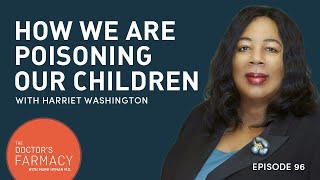
Dr. Mark Hyman and Harriet Washington discuss how lead, PCBs, and other toxins disproportionately poison children in communities of color. Redlining and policy failures have left marginalized neighborhoods exposed to environmental hazards that damage cognitive development and health.
If you don't know that you're being exposed to lead or PCBs, then you can't do anything about it. Hi everyone, Kaya Perowich here, one of the producers of the Doctor's Pharmacy podcast. Before we get started with this week's episode, we have a quick word from our sponsor, which happens to be Dr.
Hyman's new company, Pharmacy. Thanks for tuning in. Hey, it's Dr. Hyman. Do you have FLC? What's FLC? It's when you feel like crap. It's a problem that so many people suffer from. and often have no idea that it's not normal or that you can fix it. I mean, you know the feeling. It's when you're super sluggish, your digestion's off, you can't think clearly, or you have brain fog, or you just feel run down. Can you relate? I know most people can. But the real question is, what the heck do we do about it? Well, I hate to break the news, but there's no magic bullet. FLC isn't caused by one single thing, so there's not one single solution. However, there is a systems-based approach, a way to tackle the multiple root factors that contribute to FLC. And I call that system the 10 Day Reset. The 10 Day Reset combines food, key lifestyle habits, and targeted supplements to address FLC straight on. It's a protocol that I've used with thousands of my community members to help them get their health back on track. It's not a magic bullet, it's not a quick fix. It's a system that works. If you wanna learn more and get your health back on track, click on the button below or visit getpharmacy.com that's getpharmacy with an F, F-A-R-M-A-C-Y, www.doctorspharmacy.com.
Welcome to the Doctor's Pharmacy.
I'm Dr. Mark Hyman and that's PharmacylinF, a place for conversations that matter. And if you care about the role of environmental toxins in our health and you're worried, you might be affected. This is a conversation you need to pay close attention to because it's with an extraordinary woman, a brilliant mind, Harriet Washington, who has written a book that was extraordinarily disturbing, incredibly revealing, and powerful indictment of a different form of racism in this country, environmental racism. We'll talk about that book in a minute. But she's been the Shearing Fellow at the University of Nevada's Black Mountain Institute, a research fellow in medical ethics at Harvard Medical School, a senior researcher at the National Center for Bioethics at Tuskegee University, and a visiting scholar at DePaul University College of Law. She has held fellowships at the Harvard T.H. Chan School of Public Health in Stanford University, and she's She's the author of Deadly Monopolies: Infectious Madness and Medical Apartheid. Well, that's an interesting set of titles. She won, which won the National Book Critics Circle Award, the PEN Oakland Award and the American Library Association of Black Caucus Nonfiction Award. She's an incredible writer.
I've read her stuff.
It's very good. So welcome, Harriet. Thank you. Now we're gonna have a tough conversation today because it's stuff people don't like to talk about, which is one, Environmental Toxins and Two, Racism, and Three, the Destruction of the American Mind. Your title of your book is A Terrible Thing to Waste, Environmental Racism and Its Assault on the American Mind. And you've been covering the intersection of race, medicine, health and ethics for years. This is one of your latest works and it's an indictment of this whole idea that there's hereditary intelligence, that certain races are inferior, which I think is still kind of a thing in people's mind. But we do have a legitimate challenge with people of color in this country. And the challenge is that they're not inferior, but they've been treated inferiorly, which has led to forms of racism that are insidious and are not just about police brutality, or discrimination. They're about the destruction of the intellectual capital of generations of poor and minorities that are targeted in ways that are a little bit invisible both by the food industry, which I talk a lot about, but also segregation in redlining in ways that actually make them much more likely to be exposed to environmental talking. So can you discuss Harriet How communities of color in America are being poisoned due to the decisions and policies that expose them to these dangerous levels of toxins and how this poisoning has horrifying cognitive symptoms that are evidenced by the effects on our IQ?
It happens as an illustration that in 2019 we understand that race has no biological reality. In biological sense, race is not real. But racism is very real. And people's health status tends to reflect the race that they are perceived as belonging to. Policies that are political policies, academic policies, actually a confluence of many policies that do adopt race as a reality, that address race, that believe in race, have conspired to force out, to actually trap African American and Hispanic Americans and Native Americans in environments that are wholly toxic, whether you're talking about nutrition or you're talking about environmental exposures. It's a confluence of policies. One can pick almost any of these. I mean, if you look at the political pressures, well, we have historically segregation, which was physical force used to constrain African Americans and Hispanic Americans and Native Americans into living in certain areas.
Reservations are the classic example, right?
They are, except that most Native Americans don't live on the reservation. What they live on are equally assailed communities that don't have even the feeble legal protection of being in a reservation covered by treaty. And of course, African Americans and Hispanics, of course, have been constrained by actual laws in this country, which until the 1960s, you know, legally mandated segregation, de jure segregation trapped people in unhealthy areas. When whites were able to engage in white flight, moving to the suburb and exurban areas that didn't have any lead poisoning, that weren't being poisoned by fuel exhausts, black people and Hispanics couldn't follow them. No. Because even at the end of legal segregation, we had de facto segregation. Meaning that even though the law did not constrain them to live in these areas, many of their policies did. Redlining, racially discriminate mortgage policies. Wait, wait, what's redlining? People don't know what redlining is. Well, redlining is something when you take an area that contains people of color in this case, or other marginalized minorities, you take people of color and then you actually write your policies so as to minimize their access to the system. It's like a form of gerrymandering. Only now we're doing it in terms of things that people need to live, in terms of places to live.
So are these actual regulations or legislation?
Actual policies. And some are more transparent than others. Some are easier to see than others. For example, it's difficult to get private companies to open up their books and then see that the policies they've written for lending, mortgages, actually affect people of color. They're not going to be so foolish in the vast majority of cases to say, we don't want to lend to black people. But they can do things like saying these are particular areas in which we don't want to invest. Those areas happen to be where black people live. So a confluence of all these policies traps black people in the area. Now whites have fled to the suburbs, but black people can't follow them there.
Because they don't have the economic resources.
No, it's not economics. It's actually race.
I mean, they can't buy a house.
In a white neighborhood. They can't buy a house in a white neighborhood because the whites don't want them there. It's not a matter of, you know, the redlining in mortgage systems is a good example. African-Americans with sufficient income and sufficient credit still cannot get the same access to suburban housing because of redlining. Because banks have decided we are not going to invest in mortgages in people who live in this area. Yeah. Okay? So that's what's happened. I remember my own father, when we had, My parents were in the army. When we moved from Germany to Rochester, New York in the 1960s, my father left the army, took the GI bill, and planned to buy us a house in the suburbs. He couldn't do it. Nobody would sell him a house. And to be perfectly honest with you, I knew he tried very hard, but I think always in the back of my mind, there was something thinking maybe there were other things that could be done. You never know. But then, Walter Cooper, a chemist at Eastman Kodak with a doctorate, and later an executive at Eastman Kodak, documented for the local newspaper where I worked his long odyssey to buy his house, his family house in the suburbs. It took him years.
And he was an African American.
He was an African American. He was a PhD chemist. He was an executive at Eastman Kodak, but nobody would sell him a house in the suburbs.
It took him a very long time and multiple lawsuit threats before he finally was able to buy it. And these properties that are in these, underserved communities. I work in Cleveland and people talk about Flint, Michigan and the decisions by the governor there and the state to actually allow diversion of the water that created all this problems with the lead poisoning. The children in Cleveland have higher lead levels than those affected in Flint, Michigan because of the lead paint in the houses and these dilapidated houses that they live in and these horrible neighborhoods that they can't get out of.
I always say that Flint and Newark and Pittsburgh don't have lead poisoning problems. America has a lead poisoning problem. You can go to any metropolitan area in this country and you will find the exact same thing. People of color are trapped in areas where they're exposed to heavy doses of lead and other toxic metals like arsenic and also, you know, a bevy of other toxic chemicals. But this picture is an American picture. It's something that you will find in any metropolitan area. The only exception is, interestingly, certain areas of Washington, D.C. Not all of Washington, D.C. But I was a little mystified about why certain areas of Washington, D.C. When poisonous metals and leftover pesticides were found to taint the soil and water, quickly were cleaned up. And I found out later it's because legislators live there, Congress people live there, you know, people whose lives we value live there. So it's a consistent pattern. As you say, it's not Flint, it's the entire nation.
So some of these are sort of like unspoken sort of policies. Some of these are more hardwired into the legal and legislative system, right?
Well, you know, the legal system reflects people's attitudes. That's the interesting thing. I mean, we don't have a legal system that is going to enact the same policies for everybody, right? So, it like all our other policies is subject to the whims, including the whim of racism. So, and then also a lot of the poisoning is not strictly legal, but it happens anyway.
What do you mean?
Well, for example, if you looked at what happened in after North Carolina, a very interesting inversion of criminality. you had in North Carolina, there were these two men in the 1980s who had poisonous oil from their transformer business in New York State, not New York City. And it was very expensive to dispose of this oil legally. You had to pay a lot of money to properly neutralize it and bury it and do all these studies to make sure it's away from people. Instead, they put the oil on trucks and they drove through the night to dump it along the roadways in North Carolina. And then they drove back to New York. They were eventually caught out. They found out it was them. One of them actually went to jail very briefly, unfortunately. But North Carolina then had a problem. They had all this roadway, long sways of roadway, saturated with poisonous oil. They said, we have to take this and take it away where it won't harm people. they decided to dump it all in Afton, North Carolina. They did this with the blessing of the EPA. So in other words, they took the.
Stuff that was on the roadways, they cleaned it up, and they took it.
All put it in a tank. All the dirt saturated with oil. Yeah. And decided to dump it in Afton. Wow. And when asked why Afton, they said, well, our studies show it's the best place to dispose of. But it wasn't like the place where the oil would be dissipated more quickly. It wasn't farthest away from human habitation. It wasn't where the poison would not affect wildlife and humans, it's where black people lived. So the black people in the area did not take to sitting down. They said, we don't want PCBs to inundate our communities. So they began doing old-fashioned civil rights protests. They took to the streets with placards and signs, marching passively resistant, and there were a lot of white allies, people who didn't live in the area, but who were sympathetic to their plight. So they protested for six weeks. And if you look at these old newsreels, what you'll find is you have the Sheriff's Department there and the Legal Department arresting people. And through the bullhorns, they were talking about law and order. They're trying to institute law and order. These are criminals. We're going to arrest them and treat them like criminals. But who are really the criminals here? It wasn't the protesters. It was the people who dumped the oil illegally. Frankly, it was also the government that decided to dump it in a black community. So we see this often when you look at the history of these exposures, that there's often criminal activity that is either hidden or the people complaining, a lot of blame the victim going on. People who complain about being affected are often cast as criminals. Yeah.
So let's talk about our children, because I think this is something that people all can get behind. You know, I think I was telling you earlier, I remember the story of this kid who lived in a town near Albany, New York that had a giant cement plant. Cement plants are run through coal burning, and it was right next to the school. And every day the school was coated in this dust of basically coal ash, which is lead and mercury. and the kid had behavioral issues, had academic issues, had struggles with his brain. And his mother brought him to see me and we treated him. And we found that he had high levels of lead in his system and we got rid of it and he really dramatically improved. But not everybody has access to someone like me to diagnose and treat this, but this is a real widespread problem. So lead poisoning has come way down, thank God. but we're learning that even low levels of lead can have an impact. So we just think the level was 40 was safe, then it was 20, then it was 10, and now studies show that even down to one or less, there's impairment of IQ and cognitive function. And so we've had this sort of staggering effects to our population, but it's still happening in communities of color, in disproportionate ways, that harms millions of people, that affects their intellectual development, that provides these horrible deadly environments that are robbing communities of color of the ability to succeed in life, of their full intellectual capacity, and really affecting America as a whole. So can you tell us the connection between these environmental toxins and our intelligence and IQ and how that actually works?
Well, of course you're right. And the CDC has stipulated that there is no threshold for lead exposure, that any amount of lead exposure is dangerous.
Yeah, people say, what's the normal blood.
Level of lead or mercury? I'm like, zero. Yeah, well, that's what it should be. That should be the normal one. However, to say that lead has gone down is not actually true. It's gone down over the nation as a whole. Right. But if you look at places where pockets of children of color, it is not. That's what I mean. That's where people are exposed. Yeah, I knew it's exactly what you wanted to convey. So that's the problem. We now have it limited to pockets of children who live in these areas, once again, as I said, people who are trapped in the area, either by economics or by race or by both. Race actually tends to be the larger factor here, but economics is a factor as well. So you're living in areas that our government has decided not to clean up. And that's part of the problem. Could you repeat your question?
So really the question is how does lead and other environmental toxins rob us of our intelligence and our IQ?
In a myriad of ways. And of course it depends on the toxin. But one of the most profound things I think that is not really understood about these exposures is that although we can trace lead's many multifactorial effects on the body, including Brain damage that is subtle enough not to be diagnosed very often. What happens is you have children who are exposed antenatally, when the damage can be the worst. Yeah, but what happens is that antenatal, that's what I meant. But what happens is that it's not diagnosed until problems appear, and then it's not diagnosed as lead poisoning. Part of the problem is when you have an exposure, that precedes the discovered symptoms by 13 or 14 years or even by 20 years. It's really hard to tie it to the initial exposure.
Right.
So what's happening with a lot of African-American children is they're being exposed by things like not only lead and PCBs and even pesticides that have been long banned but still find their way into our food and water. But also exposed to a lot of these things, Even alcohol is a factor.
Sure.
So what happens is when they exhibit behavioral problems at 15, they might get a diagnosis of conduct disorder. Some psychiatric diagnosis describes their behavior, but doesn't get to the heart of the problem.
Right.
So it goes unrecognized. We don't see the connection between behavioral problems, between failing in school, between failing in employment, not being able to hold a job, to the initial exposure that happened when they were very young. The developing brain, of course, is extremely sensitive to certain things. And the thing that many people, I think, are not aware of, and I was insufficiently aware of, is that we know this-- Paracelsus said the dose makes the poison. We know that. So anything, including water, can kill you if you take too much of it. Sure.
Yeah, marathon runners die of actually drinking too much water. Their blood gets diluted and they get seizures from low sodium in their blood. Yeah, it's true.
Infamous case of the radio station that had a competition who can drink the most water. A woman died because of that, you know. She took in far too much water, sodium level went down and she was dead. So, but you know, what we don't pay attention to often enough is the fact that timing also makes the problem.
Industry scientists will say-- When you get exposed.
Exactly, exactly. Industry scientists will often say, Oh, the amount you're talking about is too small to cause a problem. That might be true in a full-grown, healthy adult with good nutrition. But if you're talking about exposure of a child in utero, of a newborn child whose brain is still developing and who is making these neuronal connections that happen with this exquisite choreography, you know, certain structures are developed on a certain day, neurons migrate on a certain day, and exposure that day It can be devastating to the brain. Maybe a week later it wouldn't have harmed the child. Maybe a week beforehand it would have had no effect. Certainly an adult would have had no effect, but at that particular time, the wrong exposure can cause a lifelong disability.
Not enough attention paid to that, I think. Yeah, and I think what's also true is that a lot of these chemicals are studied in isolation. So they go, well, it's a little bit of this, how could it hurt? But the truth is we're exposed to hundreds and thousands of these chemicals, they're all synergistic and they actually might not just be additive, they might be multiplied. In other words, one plus one isn't the effect of two, it might be the effect of 100 or 10. And so when you look at the study done by the Environmental Working Group on 10 newborns, they looked at their umbilical cord blood. I mean, this is before they take their first breath. This isn't necessarily poor African-American community, this is just the average person. They had 287 known toxins in their umbilical cord blood before they took their first breath, including about 211 neurotoxins, things like mercury, lead, dioxins, pesticides, glyphosate, flame retardants, PCBs, even DDT, even though it's been banned for years. And, what's fascinating is in this country, we shoot first and ask questions later.
Exactly.
And, I think in Europe they say, well, you have to prove that this chemical is safe before we include it in anything. in this country, it's like, well, you know, let's use it and see what happens.
Exactly. I addressed that in my book early on, the precautionary principle, the idea that one should test chemicals as they do in the European Union before human exposure. European Union does that. But we only test after someone's been harmed or reports of harm. And Philippe Grandjean at Harvard has listed over 200 chemicals known to affect people's neurological development. And most of them are not adequately tested before use in humans. So we need- and many of the.
Ones that are approved here are banned in Europe.
Exactly. So in the European Union, where they don't even release a chemical if the prior testing shows it's harmful, here we don't test until later. And then after people are harmed, the reports of harm, the most common refrain you hear from industry is it'll be too expensive. expensive to remedy this. It'll be too expensive to test our chemicals before we use them in humans. But that's not true. If you look at the expense of not only doing the test to certify their toxicity, but also compensating the victims, treating the victims, settling the lawsuits, it's far more expensive to wait until after people have been harmed to test them. But it's easier for industry because they are they've become so adept at deflecting management.
It's true. It's sort of nebulous because you think about okay, well people drink too much soda youa can measure their blood sugar and you see they got diabetes and you can make a connection With environmental toxins. There's so many they're so diffuse. They're everywhere in our skincare products our household products in our food in our.
Water in our air example of baby food and have we painted him?
In our homes. I mean, it's just, you know, we're surrounded in a sea of environmental toxins and it's invisible, right? And so the problem is how do you start to connect the dots like you've done in your book and tell the story in a different way that gets people activated about solving this?
That is so true. Remember thalidomide?
Yeah.
You know, which caused birth defects, profound birth defects, phocomelia in young children after their moms took thalidomide.
No arms, legs, nothing.
Yes. Well, David Ralston said that if the linoleic had caused a 10 drop decrease in IQ rather than the dramatic birth defects, it'd still be on the market.
Of course. I mean, I read, I'm researching my book, Food Fix, coming out in February, that because of pesticide use, and by the way, most farm workers are brown and black in this country, and Hispanic particularly are affected. And there's a loss of 41 million IQ points just from the use of pesticides because the exposure of farm workers to these chemicals. And that's just one chemical or a few chemicals. It's not the total load of chemicals, which is what really determines our risk. So how do we start to sort of think about this in a way that connects the dots better scientifically and also how do we change the healthcare profession so that people start to think about toxins? Because the average doctor knows nothing about toxins or food, which are the two primary drivers of most disease.
And even worse, I write in my book about the fact that some doctors who are well aware that their patients have, their patients of color, have a strong exposure to toxic substances don't address that in prenuptial visits.
They don't know how.
And when they've been asked why, one of the things they say is that, well, these are people who already are saddled with so many challenges, survival challenges, just putting food on the table. And it seems so burdensome to then also tell them, be careful about the fish that you eat, be careful about the air quality in your home, so they just don't address it. But that silence is deadly. People are unaware that these things are killing them as well. and so how can they be expected to take action against them? How to address it is really difficult. I think one thing that we definitely need to stop doing, no, start doing, is I address the synergy you talk about in my book that is so.
Important because-- It's not like 1 plus 1 equals 2.
Exactly. It's so important the fact that a single exposure and two exposures may add up to more than double the risk, right? These exposures, that means that the picture is almost certainly worse than what we think it is. You know, if we're measuring the effects of one toxin, we're only getting a woefully small point of the picture. And public health, you should take that in mind because very often industry's mission is to mitigate the damage. Industry's mission is to keep its product on the shelves and to keep from being legislated and to make sure people are continually exposed to it. It's their profitable stance. And so they employ a lot of doubt. You can't prove it's really our product that's causing the problem. You can't prove that. And they, it's too diffuse, right?
Smoking is a cigarette, you get that. But this is so many things. How do you regulate 80,000 chemicals that are out there?
In Anniston, Alabama, that's what happened. You had so many pollutants in the area that they actually, for a while, were engaged with pointing to each other. Oh, it's not our PCBs. It's the lead down the road. It's the DDT that's still in the water, you know. So, unfortunately, another public health...
So the cement companies are fighting with the... Right. Coke companies are fighting with the pesticide companies.
Yeah, that's an interesting... And the answer was, you,'re all responsible. You know, you're all guilty. Right. But one public health development that can be problematic in cases like this is the Focus on individual responsibility. That's a good thing in general, right? It sounds good. And we should be responsible. We shouldn't...
When you turn on the tap and poison comes out, it's hard to be responsible.
Exactly. But now we're talking about things that people have, individuals have no control over. And you can't evoke us. But that's exactly what has happened in the past. If you look at Baltimore and the not so distant past, they had public health workers Coming to Baltimore homes and showing mothers how to clean their floors with spick and span, implication being that you're not cleaning, that your homes are filthy and that's why your kids are sick. Their kids were sick because lead was everywhere. Lead industry had sold lead toys, lead paint, lead exhaust from the fuel, and mothers and fathers could do nothing to stem that tide. And yet, this blame the victim continues. we have to be really careful with personal responsibility because it can easily end up being a blame the victim.
Oh yeah, that is, it's also true with food. I think, you know, when you talked a little earlier about food swamps and food deserts and food apartheid and segregation around food, and it's hard to be personally responsible when you aren't able to have access, when you aren't taught what to do, when you don't know how to cook the right things, when you've literally been disenfranchised from your traditional foods.
Or healthy food is simply priced out of your market. Right. You know, there are no supermarkets nearby. Going to the supermarket involves taking a taxi, you know, or finding transportation. And it's too far away. So you resort to what you can find nearby, which is going to be very poor choices, right, you know? So these Hobson choices that parents have to face, like, you know, do I go to McDonald's and feed my whole family within my budget? Or do I spend a lot of money going to a supermarket that I really can't afford to do more than once every couple of months? Or do I buy some soggy vegetables and try to make a meal out of that? I mean, that's not a choice they should have to make.
Yeah, I mean, there's a friend of mine who runs a company called Thrive Market, and they lobbied a number of years ago to try to get SNAP to be able to be used online, food stamps, because it wasn't. There was a recent study done looking at actually what would happen if that was implemented and hopefully we'll get passed in 2021 to allow SNAP to be used online. But then you can get cheaper access to food, home delivery of groceries.
That would be great.
Basically, your food desert ends at the beginning of your internet connection, which most people do have. And so I think that the linkage between environmental toxins and the loss of our intellectual capital is not something that most people are aware of.
No, that's why I wrote the book because I knew it was under the radar, wasn't getting enough attention. And there's alcohol too. Alcohol is very important. I think that there's a lot of talk, a lot of discussion in the 80s and 90s about the hazards of high potency 2020 everywhere. You can't find these these alcoholic beverages that have, they're fortified with more alcohol. I remember I was so naive in the 80s. I thought, oh, that's nice. They're putting vitamins in the alcohol. And then, no, no, no.
They're putting more alcohol in the alcohol, you know?
So what do you mean? It's like 40 proof, 80 proof. What? I don't know the exact proof, but it's very high. They're very high in alcohol. And they're, what's interesting is I've gone to the bodegas to sell them. First of all, it's hard to find them outside of communities of color. So I've gone to bodegas that sell them. And when you go to the case that has beer in it, there'll be beer there. And then there'll also be fortified malt liquors, which look like beer or bottled like beer, but carry the alcoholic wallop of a whole bottle of wine. Wow. That's how much alcohol is in them. And they're sold in the same case. So young people go there and buy this without realizing that what they're buying, the malt liquor, is something that's far more potent. Or actually they do, because that's what they want. They want a high potent drink that's very cheap. And so drinking these things is very devastating, but especially to fetuses, because what happens very often in communities of color is that there is a lot of unacknowledged fetal alcohol damage. So what you have is that mothers who tend to be a bit younger, than more wealthy and white mothers. But they don't tend to know that they're pregnant for two months. During that time they've been socially drinking, not alcoholics but drinking normally, but that social drinking can affect their fetus.
Of course.
And then the fetus is born with a problem, but very often the problem will be more subtle in physical elements. Yeah, just a little bit of... Less cognitive, but it won't may not have like the distinctive facial characteristics. So it's not easily recognized and we don't screen routinely for fetal alcohol syndrome when kids are born. What happens is we have a lot of scrutiny on mothers that we know are alcoholics, a lot of scrutiny on Native American mothers, but not scrutiny on Hispanic and black mothers. So they have children with this problem and again they're diagnosed when they're, you know, in their late teens or 20s as having something else, some other problem. And so this fetal alcohol damage is going unrecognized and a lot of it has to do with having targeted marketing of high potency alcoholic drinks in these communities. And I also want to point out, if I haven't already, that we are talking about African American communities and I think there's an, well I know, people tend to assume that it's low income, socioeconomic, it's a problem. All the poisoning issues equally pertain to African Americans who are middle class, oddly middle class, and living in the suburbs. Yes. There are many communities that are suburban communities, fully employed, that if they were not African American, there'd be no reason for them to be the foci of Superfund sites or be exposed to toxic waste, but they are.
Why is that?
Because it's a matter of race.
Because they're segregated communities.
No, no, no, no, no. We're talking about communities that are African American and are solidly middle class. I mean, I think the 2017 study showed that African Americans with median incomes between $50,000 and $60,000 are exposed to far more toxicity than white communities with incomes of $10,000.
Because they live in neighborhoods that are more likely to be exposed to environmental toxins because of... Well, it's actually the exact opposite.
They are living in communities that should not be exposed to, but they are because of race. Why? Why is that? NIMBY syndrome.
Not in my backyard.
It's kind of a zero-sum game, right? Whites understand that... A lot of this is political clout, right? Whites understand that these toxins are gonna be located somewhere. Nobody wants them in their neighborhood, right? So whites who have some political clout or power or representatives with little clout of power will fight legally to prevent the sighting of them in their communities. And so it's by default that they're cited in African-American and Hispanic communities. They don't have as much clout. Political gerrymandering or gerrymandering or power also home ownership. Remember the redlining we talked about earlier? People who don't own their own homes are much more vulnerable to this kind of thing. You don't have the clout to fight it. You know, if the homeowner doesn't really have a problem with it, then you're stuck. So that happens often. But even homeowners in places like Anniston find that their communities are targeted. That's where the dumping happens. That's where the illegal, not illegal and illegal, citing of toxic waste happen because they're, because of racism, because whites don't want it. You do blacks. But blacks tend not to have the political power.
--Don'T have the political power, yeah.
--Wow. --So, it's not, so having, being middle class, doesn't protect you. Even owning your own home doesn't protect you. If you're black, you're still more likely to be a victim here. Robert Bullard has documented this very heavily in places like Houston, for example.
--Robert Bullard, the Muller Report guy? --Which report? --You said Muller, Robert Muller, is that how you said?
--No, no, no, Robert Bullard, sorry.
--Oh, Bullard, I'm like, wow, okay. --The father of environmental racism.
Got it. Yeah.
So, you know, this is clearly an issue. There are clearly people like you talking and writing about it and others. You know, has this achieved any awareness within local, state, federal legislatures or governments?
It had until the current administration. Actually, the Environmental Protection Agency was not doing everything it should have done, but it was making progress, steady progress. Actually, over the last couple of administrations, partly because of people like Mustafa Ali, who is a very powerful head of environmental racism programs there. But he resigned because the Trump administration has been consistently rolling back the progress that had been made over the last few administrations. For example, there were only four chlor-alkali plants left operational in this country.
I know those produce a ton of mercury.
Exactly, but we've done a really good job. Only four were open and they were scheduled to close last year, but the EPA under Trump decided to cancel the closing. They're still operation, they're going to continue to be operational.
Here's a little known fact you may not know, but in the processing of corn to make high fructose corn syrup, they often use chlor-alkali, which means that there's actually mercury in a lot of soda and other products. that are sweetened with high fructose corn syrup.
That's charming.
Yeah, it's good to know. There's actually a research paper on that.
It was written a number of years ago. It's pretty frightening.
Yeah.
Even the surprise inspections that have been a constant under the EPA. Last year, the EPA also decided to end all surprise inspections.
So we're not going to come and.
Check out your factory to make sure it's kosher. We'll check it out. We're going to tell you beforehand. Yeah. So it's going to be much less effective, right? Right. You're going to clean things up or hide anything you don't want to be seen, you know? Yeah. so it's going to invalidate the purpose of the inspection. So the EPA has been especially desultory under the Trump administration and we've been going backwards steadily.
So let's talk about lead poisoning a little bit more because it's a big deal. I mean, even though we've gotten rid of leaded paint and leaded gas, it's still in many homes and communities of color are more affected and, you know, it costs the United States $50 billion a year. You say it costs $23 a million IQ points in our children every year. I mean, we're basically destroying the future generations ability to be- $50 billion, yeah. And nearly two out of every five African-American homes in Baltimore have lead-based paint. Almost all the 37,500 Baltimore children who suffered from lead poisoning between 2003 and 2015 were African-Americans.
That's an underestimate.
So yeah, I'm sure it is. I mean, you know- because the testing.
That they've been using to establish whether the kids have lead poisoning is faulty. In Baltimore, I've- Meaning just a whole blood lead level? Yes.
Why does it underestimate the- Because the testing is faulty. What do you mean?
The test is faulty. It's been known to be faulty. I mean it's not accurate. It doesn't work well.
It's not accurate. Well, it's interesting, you know, as a functional medicine doctor, you know, I've been focused on environmental toxins for decades and the way we test for them doesn't make sense, right? Because particularly the heavy metals like mercury and lead, they only stay in your blood for a short period of time, maybe 90 days. They're either excreted, portion of them are excreted in your urine and stool, but a lot of them are then stored in your tissues and organs like your brain and your muscles and your bones. And so, you can measure lead levels in bones. And so, measuring some ones lead level in their blood actually only reflects what their recent exposure was, but they could have been exposed heavily early on and then not later and then it'll look like normal, but they still have high levels of lead. And there was an article in the New York Times about Special Forces, which we've been treating at the clinic, who had very high levels of mercury and lead because they were working in blast houses and we treated them with chelation, which is not a standard medical treatment, although for acute lead poisoning, DMSA is a an approved drug, but it's not widely used. And there's nothing, quote, nothing that can be done about it, they say. But in fact, that's not true. And one of the lead researchers at Mount Sinai, lead poisoning, saw the before and after bone scans. I can't remember his name.
Phil Andriagan.
No, not Phil Andriagan, but I know Phil very well. So, the professor at Mount Sinai was like, well, we've never seen lead levels come down in blood before. and I'm like, yes, because you don't know how to treat the people with lead. So I think, you know, for those listening, you know, it can be fatalistic to say, well, we're all poisoned, we're all toxic. We've already done the damage. And I can tell you clinically, from my point of view, I was mercury poisoned from living in China and thousands of patients that I've treated with lead mercury poisoning, they get better when you treat them. And there's a science to how to detoxify from heavy metals and how to upregulate your body's own systems for getting rid of pesticides and chemicals and so forth. So there's a way to do it. I've written a lot about it, but I think it's important for people listening to understand that it's not a done deal. If you've been affected, if you think your children have been affected, that there are ways of treating this, but they're.
Not within the traditional healthcare system. It's important, I think, because futility is one of the things we're up against. Futility is a problem. If you assume that nothing can be done, nothing will be done.
Right.
And I do make the point in my book, the Collation and other Methods can help people. I worked with some lawyers in Baltimore who have representing clients who've been lead poisoned. And I've been, you know, I find it really inspiring when they tell me about kids who had been written off essentially, as having been hopelessly injured by lead poisoning, but with the proper treatment, after they win a settlement, they're able to go on. Some of them have gone on to college. You know, they performed quite well.
So yeah.
I think that's a really important point you've made.
And I think if you just look at traditional medicine, there's other than just stopping the exposure, there's no treatment. And yet we know, for example, high levels of zinc and vitamin C, which often these kids are deficient in, helps remove mercury. There's drugs like DMAA, there's things like glutathione, there's binders, all sorts of strategies we use in functional medicine to help mobilize and get rid of toxins. And I can tell you, I've seen kid after kid who's had cognitive impairment, who's had behavioral issues, who had aggression, who's, you know, had dyslexia, learning difficulties, which are all related to these toxins actually get better. So, you know, we're really haven't one named the problem very well. We don't, we're not good at identifying the problem. And, and I think it's, it's a problem. Like, I, I, you know, even things like glyphosate, we think is, you know, it affects everybody in this country, but it's, it's, it's one of the biggest actually, it's the most abundant used industrial chemical, glyphosate, which is Roundup to. It's an herbicide, and it's, it's, you know, there's more glyphosate than vitamin D or vitamin A and Cheerios, you know, which is fortified with vitamin D, vitamin A. And I, I think that affects kids microbiome. It affects their Gene expression, affects Generations and, and, you know, but there are ways to help. reduce it and treat it. I think that's important for people to be empowered about. So from this whole idea of these communities who are marginalized with these toxic effects, these chemicals, what else can be done either locally, nationally, individually?
I devoted two chapters of my book to that. In chapter six, I talk about what individuals can do to exercise more control. not perfect control, but more control over their own environment, detoxify their own environment. And there are many things you can do in your home. It's important to understand though that, as we said before, an individual cannot alone, you know, eliminate this problem. It's not an individual responsibility. But in your home, you can do certain things. If you live too near a bus depot or gas fumes from passing vehicles, because lead has been reduced, greatly but not eliminated in fuels in this country. Then there are things you can do like run the air conditioner, keep your doors shut if you can afford to do that. And I point out that there's funding available to help individuals to do that. I talk about the vermin in their homes, which have also been shown to cause disease that lowers cognition and things you can do to help eliminate those vermin.
You mean like cockroaches and dust mites?
I mean like cockroaches, dust mites and rodents. Rodents are largely un- recognized source of hantaviruses. Sol virus, for example, has been tied to hypertension, which in turn has been tied to lowered cognition over time. So getting rid of these rodents is more than an aesthetic concern. It's a very immediate health concern. And people who rent often feel powerless because it's not their property. They have control maybe over their own apartment, but not neighboring apartments. There's limits in what they can do. but I point out the legal help that's available to them because most laws and most municipalities say that the owner of the home is responsible for keeping the area vermin free.
And also, they can use lead remediation is legally mandated, but it's not being done by landlords. Right.
So I talk in detail about that.
Why is that? I mean, this was sort of shocked me in Cleveland. I was like, well, aren't these homes in Cleveland required by law to actually be remediated from lead?
You find the same thing in Baltimore. The laws exist, But it's my opinion, I have to label it as opinion because I can't actually document it in most cities. But in cities I've looked at, you have municipal concerns that the landlords who actually own the property will simply abandon properties if you force them to clean them up.
It costs too much.
Yeah, it costs too much to get rid of the lead, it costs too much to get rid of the rodents. I'm just gonna leave this place, I'm just gonna abandon it. and then the city loses tax revenue. So they are, in my opinion, not always as assiduous as they should be in enforcing the law where it exists. But still there are things that people can do. There's also OSHA, depending on the use of the building. So I detail a lot of that for readers so they will know what to expect.
So practical things about how to get help.
In their own environment. In the next chapter I talk about communities uniting. to get help from the government and other agencies and to try to clean up their own areas. And the thing is that these communities, I try to stress to people, you don't have to reinvent the wheel. There already exists a lot of agencies that have been very successful in helping other communities, and you can benefit from what other people have gone through to try to get your own area attention that it needs so that you will end up having the EPA essentially is going to have to be forced to do what it should do by its own state. And I talk about ways to do that. There is, I'm sure you're familiar with that, Earth Justice, wonderful organization. I love their motto, because the Earth needs a good lawyer. And that's what these people need. When you organize to try to expel these sources of illness from your community, you're going to need legal clout, and they can provide it.
That's amazing.
I try to give this blueprint for people not only to clean up their own homes, but also to clean up their own communities, the places where they live and banish the sources of poison. Because unfortunately, EPA is not going to do it for you. You're going to have to do it for yourself.
Yeah, thank you. This is amazing. I want to just shift tracks a little bit because in your book you also talk about the issues around food and food swamps and food injustice and how they're connected, both environmental and food racism in a sense. And you know, I mean, you can Google food racism and you'll see almost nothing. Like it just doesn't come up except a talk I gave at the Riverside Church in Harlem about food oppression. But other than that, there's very few things written about the deliberate and often unrecognized sort of food racism. And it's often targeting the poor and minorities. It affects the same way their cognitive functions. So we know just as environmental toxins cause loss of cognitive function, so does nutritional deficiencies, so does sugar and processed food. So how do you see these issues as linked? And how would you describe the problem?
Well, semantic point for First, although the food racism you describe is real, I tend not to use the word racism. I use it for environmental racism because it's that specific variant. But racism is like a tricky word. Studies have shown that different people interpret it differently, which makes it pretty useless for communication. Right, it's not a great-- it's kind.
Of people are allergic to it, right? Yeah. The reason I use it is because it's meant to get people upset. It's meant to get people-- it's accurate.
But I find for communication it's not always optimal.
Yeah, I'm not always good at that. I like just to call it like it is.
So, but in terms of policies that drive this, one can go back as far as you like. It's very nuanced. There are a lot of things that are going on that have historical import. But if you talk about what's happening now, essentially it's a factor of capitalism. People who supply foods are driven by the profit motive. They're not driven necessarily by optimizing your health. And so when they're in areas where people tend to have a low income and tend to have higher rates of unemployment, they often find that it doesn't suit their bottom line to locate there. So you're not going to have Supermarkets was an abundance of fresh, nutritious, safe food, organic food, etc. offered in these areas. Instead, you're going to have bodegas, fast food places that are heavy on the cheap, but extremely non-nutritious food, filled with fat, sugar, etc. Chemicals. So that's what people are stuck with. And increasingly, and so absent some kind.
Of.
Control, a regulation by government, that's what people are going to continue to be stuck with. There are some things that have worked in some communities, but the reality is it's fine to say, as people have said, that these communities could get together and have community gardens and grow their own food, and that's a beautiful thing. But you're often telling people who are engaged in survival and don't have time to work in their in their garden. They're too busy just trying to keep a roof over their heads, you know? So it's really important for the government to step in and do some regulation. And some people, of course, I know that there are people who feel it's not the government's role. I disagree. I think that it's really important, especially if you look at the long-term effects. Who ends up paying the cost, the financial cost, when people are sickened disproportionately? because they have had a whole lifetime with not eating poor food. We pay the taxpayer, Medicaid. Medicaid, yeah. That gives the government, I think, the right to step in and dictate to companies, okay, you want to remain profitable, we understand that, but you also are going to maintain food centers in these areas. And I think that's what needs to be done. And we need to have a government that's willing to do that.
Well, I mean, I think in this country we're really good at privatizing the profits and socializing the costs.
Very well said.
Meaning, you know, the true cost of the food isn't paid for at the checkout counter or in the restaurant or at the McDonald's, you know, counter. It's paid for by the structure of the environment, how we grow the food and climate change. It's paid for by the subsidization of that farming by the government, our taxpayer. It's paid for by the government, for example, for SNAP or food stamps, where 75% of the food is actually processed food and about 10% is soda. The biggest line item is soda. And then we pay for it by having to pay for the chronic disease that's caused by that, which is diabetes, heart disease, cancer, and so forth. that is, you know, really literally trillions of dollars every year that are paid for in our society by health insurance companies and the government. And so we pay for that as citizens through our tax dollars and we're not actually having the companies held accountable for the downstream consequences of their food and their products, just like the same thing as, you know, the consequences of the pollution that you're seeing these Communities, they're not paying for the loss of cognition. I mean, how much is an IQ point worth? I mean, how do you measure that in a kid? You know, the quality of their life, their ability to succeed, their ability to go to school, their ability to actually function.
Does the poisoning cost us $50 billion or, you know, that $23 million IQ points per year? By either measure, it's far too much, right? Yeah.
And so we really have to start thinking about how do we start to get real about this. and change the food system in a way that one not only provides access but also sort of changes the economic equation. Why is it so much cheaper to buy a can of soda than a bottle of water? I mean, you know, I mean, if you go buy a bottle of water, it's nine cents an ounce. Soda is two cents an ounce. You know, like if you go, for example, on On Amazon, you can buy a big bottle of smart water for nine cents an ounce or a bottle of Pepsi, for example, for two cents an ounce. So how is that right or fair?
It's absurd.
It's crazy. Considering Pepsi is mostly water.
Right. Exactly. So the companies are going to have to be forced to do what's right and to make their products available to them. Everyone who needs it. Yeah, I mean, this is people where they can be sure of making a lot of money.
So there's tremendous health disparities in this country that are caused by the environmental impact you talked about, but also the food issues. And I think we're seeing this at huge scales. I mean, if you're African-American, you're 80% more likely to be diagnosed with diabetes, almost twice as likely probably, four times as likely to have kidney failure, three and a half times as likely to.
Get amputations as whites. The kidney failure is really interesting, because I remember I was at the Harvard School of Public Health when New England Journal of Medicine published an article that essentially asked the question, why are African-Americans four times as likely, African-American diabetics four times as likely to go into end-stage renal failure as whites? And they began positing all these possible reasons. It could be genetics, it could be this, could be that, on and on and on. I read the article and I said, they don't mention toxicity. even though we know that African-Americans are exposed more heavily to toxicity, not only in their homes but in the workplace. I said that, and my professor said, you,'re right. That should be a key factor. But they didn't even bring it up.
It wasn't even on the radar. No, you're right. I mean, in the Journal of the American Medical Association, a number of years ago, there was an article where they looked at people with, all people with sort of early kidney failure who are going to progress to get dialysis, which is an enormous cost. I mean, it's just an enormous cost. And what they found was that if they treated them for, and they all had a lot of lead toxicity, they treated them with EDTA intravenous chelation for lead, that their progression to needing dialysis was halted, which you think would be now standard practice. It wasn't in some third-rate journal from, like, you know, China. it was a peer-reviewed top medical journal, the Journal of the American Medical Association publishing this paper that just completely went ignored. And yet I see this. I see patients with toxicity and renal issues and we treat them and they get better. I mean, I had a patient come the other day, he had a lot of reasons for his kidney issues, but he saw his nephrologist and the nephrologist was like, I've never seen people's kidney failure get better. It just is a one-way street. I don't know how you did this, you know, and we we changed his diet, we got him healthy, we fixed all those things. And it's a huge issue. Can you talk a little bit about the, and this is a tough question, but the African American community, I think, is disproportionately affected by the food system and by environmental toxins. But often there's not a sense of, awareness or empowerment to fight these issues. We have Black Lives Matter, which is about the judicial system. That's about empowerment.
You mean on the part of African-Americans?
Yeah, I think people are...
I'm not sure that's true. Because I know differently. Well, I'd like to hear that because.
I see the Black Lives Matter movement about the criminal justice system.
But you see Black Lives Matter because it's publicized by the news media. Yeah. Okay, so what happens is that the concern of among African Americans about food issues is often not publicized by the news. It often remains under the radar. Or even worse, it's mischaracterized. I lecture frequently not only to medical schools and medical ethics institutions, but also to communities. And it is actually the most frequently cited issue.
So what are the conversations?
I'm not even speaking about food issues for the most part. But it always comes up immediately.
So what are the conversations you're having?
Well, there's a lot of understanding. First of all, there's a lot of concern about the importance of eating well and maintaining health on one's own, because many people have justified trust issues with the medical establishment and frankly want to avoid it as long as they can. I don't think that's the right approach, but I understand why they think that.
And just for people who don't know why the history of the Tuskegee experiment.
Which is essentially... Not really Tuskegee, actually. It's everything else.
Oh, really?
That's a whole other conversation. Just quickly, for those who don't know... My book Medical Apartheid actually focuses on that. Yeah. There's a long history of abusive medical research with African Americans and the focus on Tuskegee, but the other studies were actually much worse and were very dense. I have 15 whole chapters, and only one of them mentions Tuskegee. And not only in the past, but in the there are present day issues. There's one going on right now that I'm involved in, in Baltimore, of course, happening in Baltimore where we have young black men who are being actively recruited into studies without their knowledge, where they're going to be forced into hypothermia as treatment for gunshot wounds.
Wow.
Yes, really chilling. Anyway, these concerns mean that many African Americans seek to avoid getting sick, avoid the health care system, and they focus very heavily on food as a way of doing that. And so, I'm often, they often come with very precise questions to me that I can't answer, but they're concerned about not only eating the right things, but even concerned about brands. The brand of the bottled water they drink, it's like the last talk I gave, which didn't deal with nutrition at all, I was asked by a lot of people who were taking notes which brand of bottled water should they eat? Or they'll talk about the fact that they avoid meat, that they have a vegan diet, and they also avoid dairy. I mean, they're very, it's very meticulous, it's very precise, and there's a great deal of concern about this, but I've noticed that it typically doesn't get addressed in the news media. And I'll leave any, you speculate why that would be, but it's something that you don't see addressed in other, you have to be in the community to see and hear this.
I would wonder, for example, the soda companies target the poor minorities much further than every other community. And yet, you know, there's not an outcry, for example. I talked to African-American pastors and said, why don't you get up on the podium and go, hey, look, this is a form of targeting and targeted marketing that's affecting us in our communities. And there's a pastor in Baltimore, Delmar Coates, who says, you know, we're losing more people to the suites than the streets. And I think...
But let's look at the facts. Who drinks soda? You're speaking as if this is a minority issue, as if African Americans are. But 85% of the people in this country are white.
Yes.
Okay.
They drink soda too.
Some companies would go out of business They were targeted African-Americans. Americans are drinking soda. So, in think about that.
It's true, but the data really clear that African-Americans do drink more and kids, and government kids do drink more.
These are targeted. When you say more, what do you mean? More by volume or more by rate? The rate may be higher, but the fact that these are so few people.
Even in a portion of the population, it's less.
Even a much lower rate of soda consumption among whites would still mean that they would far outstrip African-Americans in consumption.
In terms of total amount of salt, of course. Exactly.
But I'm talking about per capita consumption. Okay, that's much higher. It's important to specify that. Yeah, yeah, yeah. We're talking about per capita. But we're talking about per capita, then the question is why are we talking about per capita? Because if we know the rate of consumption among whites, which I don't know, and I'm assuming you don't have at your fingertips. But if we knew the rate, we'd have a better picture of what's going on.
It's about double for African-Americans.
Which makes the rate among whites what?
I don't know. I have it in one of my books I wrote about years ago. But basically what I remember was that the number, the amount of soda consumed by African-American kids is twice that of white kids.
Well, I think that it's really important to understand we're not talking about a racial issue there. We're talking about an American issue. Because if you're talking about the rate of consumption, that's one thing we're talking about consumption, it's largely driven by whites. Whites are an important factor here, too. Sure.
I think we're just maybe sort of not quite talking about the same thing. What I'm suggesting is that these communities are far more affected by diabetes and obesity, which are caused by sugar and processed food and soda in large part. and they're consuming more of it because they're targeted. For example, in Snap, when you go to a suburban neighborhood, they're not advertising on Snap days when people get their Snap card for more soda. But you go to the bodegas, they're advertising heavily for the $2 bottle of two-liter soda.
So, they are... Targeted marketing is a constant in the African-American community. My point is that if one's not careful about quantitizing things like consumption, then it can play into a subtle form of blaming the victim, not by you, of course, but by others, people who take it up. And I see this happen very frequently. You know, the focus on African-American behavior, like soda consumption in a vacuum, gives the impression that it's not a behavior that's of consequence to other people, which.
No, your work. Of course it is.
Of course it is. Yeah. Your work is like you focus on this and.
Yeah.
And it's obvious. that you don't think that. But I'm thinking about all the people who read the newspaper articles and come up with the wrong impression.
What I'm saying is not personal choice. They have targeted marketing to them. Their communities are full of this stuff at incredibly low prices. And my question to you is really, does the African-American community get that they're being victimized by the food industry and that that's a subtle form of sort of racism?
They absolutely do. But I think also there's no monolithic African-American community. As I've told you, many African-Americans are very concerned about nutrition. And many would assume, you know, shoot themselves as drink a soda. I mean, for sure. And then you have others who again, with actually fewer choices. You know, a parent's head of a household with marginal jobs, They have to, they're doing what they can do to put food on the table. And so they're going to resort to buying that two-liter bottle of soda for their kids, you know, because they don't have many choices. So those are very different situations and very different people. So I think it's really important to, For sure.
For sure. It's a complex problem.
But I do know that the many, many African-Americans who are very focused on nutrition and eating healthy and eating the right things, don't get the same media attention as those who are presented as having problematic choices.
No, I agree. I think we just have to sort of name that there is a system of food injustice, there's a system of food apartheid, and that it's real, and that it is targeting communities of color in ways that are really unfortunate and need to be fixed. And that's really what I-- Those pressures.
Do need to be fixed, absolutely.
And I think the question question I have for you is, you've thought a lot about this and you say that there is hope. We don't have to be discouraged completely that if we work together we can fix these problems. So what are the most important changes you'd like to see in terms of public policy and how do we think about solutions and strategies to maximize the intelligence of our nation as a whole and communities of color?
Yeah, there's so many, but as I've said, in chapter six and seven of my book, I lay them out in great detail. and also how to do them, not just what you ought to do, but here's who can help you do it. But the overview is that first of all we need a functioning EPA, an EPA that will take its mission to protect our land, food, and water seriously. Right now we have an EPA that seems to be dedicated to doing nothing and to rolling back the advances we've already made. So we also need to have municipal governments that will not only correct issues, but stop lying to people. It's a constant feature that in every city I write about, at one point the city government has lied to the sufferers about whether or not they're being exposed to lead or PCBs, then you can't do anything about it, you know, if you're being lied to. And also, I think it's really important for people who live in communities that are being assailed by these toxins to organize, to realize that they're going to have to save themselves until we clean up our act as a government, but that they're not alone in doing that. You know, that can be done. Public health has got to not only scrutinize very heavily any messages about personal responsibility. Public health has to do a better job of medical journalism. You talked about the the journals that have very high prestige and are cited frequently. But I have written repeatedly about many of the deep flaws in medical reporting. Yes. In journals like... In media. Journal of... no, Journal of the New England Journal of Medicine. Yeah. You know, American JAMA. All these journals are being influenced by corporations. Interesting.
And they... which are successful.
Not just pharmaceutical companies. Well, largely pharmaceutical, not completely. And they are influencing the messages and distorting the information available to doctors. So doctors are essentially being lied to by these journals very often. You know, the journals will say we're peer reviewed and you can trust us, but they can't uphold this promise of purity because they often don't see the original, in fact they don't see the original data.
Right.
So they don't know how the data have been processed before they get it. There have been many cases where companies who use medical writers to write the journals, not the doctors whose names actually are on the journal, these companies have withheld information. Like COX-2 inhibitors, they withheld information about heart attacks and deaths. So doctors couldn't know it and kept prescribing them. So anyway, when it comes to environmental problems, you see the same kind of things. Not only do they publish articles which are erroneous, but they ignore information that is of paramount importance. So we don't know about a lot of exposures that we should know about. So public health and medical reporting have to do a much better job of, you know, not only reporting accurately without corporate influence, but also reporting about things that are important. One of the things I had a problem with in writing the book was I wanted to write about substance and fishing, when people fish in order to.
Add to their diets, right?
I was gonna bring that up. Yeah, I called a researcher at Johns Hopkins, by the way, a researcher who had been very sympathetic to environmental racism. And she told me, oh, forget it. There's no data on African-Americans and fishing. Asians, but not African-Americans. African-Americans don't do that. I said, oh, yes they do. I've lived in African-American community. I see it very often. My own father went fishing and hunting to support his family seven, you know? And I said, it happens frequently. She said, if it's not written down, it doesn't exist.
Oh, geez.
And that is actually the mentality.
Well, yeah. I mean, the truth is that, you know, every single river and lake in this country is polluted. And if you're fishing, subsistence fishing out of these, which are often around urban areas, the fish are highly polluted, toxic.
And that's getting into people. And, you know, there are things still that people can do to protect themselves. I mean, if you, frankly, if you think that you have to do the fishing, support your family, you can choose certain fish that are less polluted. You can choose smaller fish. You can find waterways that are less polluted. I mean, there are things you can do. But these have not been, yeah, but you know, the data isn't there. I mean, these are things that should be investigated. They're very important. Well, I mean, the data isn't there.
For African-Americans maybe, but the data from the EPA was really clear. I looked at all the rivers and lakes in America and every single one you wouldn't want to eat the fish out of.
Well, that isn't for African-Americans. I'm writing about African-Americans. That's the data that I needed. And what happened was, fortunately for me, literally six weeks before I finished the book, finally a report was issued, an Haines report, and they not only documented African-American fishing, but they also had like this little note chiding from the researchers saying, this has been ignored for too long. We should have done this study a very long time ago. So those are things that should need to happen.
So there's a lot of things that can happen to fix this. And I think your book is really a great testament to one, exposing this issue and naming the issue, and then also helping solve the problem by laying out a whole series of strategies that could be implemented.
Thank you. That's what I'm trying to do.
Well, I hope everybody gets to read this book. It's called the Terrible Thing to Waste environmental racism and its assault on the American mind. I mean when you think of the amount of intellectual and human capital it's lost because of environmental toxins and also the food system, it's staggering and it's fixable. So thank you Harriet for the work you do for being on the podcast. If you love this podcast, I'd love you to share with your friends and family on social media. Leave a comment, we'd love to hear from you. Subscribe wherever your podcast and we'll see you next time on to the doctor's pharmacy.
Thanks so much.
Thank you.
More from AI




This Is Why 99% of Skin Conditions Don't Heal — And What Dermatologists Won't Tell You






Why you need to start strength training today #strengthtraining #healthyaging #fitness
