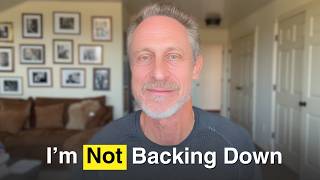
A physician argues glyphosate should be banned due to links with cancer, endocrine disruption, and microbiome damage, but proposes a gradual phase-down paired with major investment in regenerative agriculture rather than an abrupt ban that could destabilize farming and food supply.
Chapters
Hey, everyone. This week I had a post on glyphosate that, well, it generated a lot of, well, let's call it passionate feedback. I want you to know I heard you. And let me be very clear, I have not changed my stance on glyphosate. As a physician who spent decades reviewing the medical literature, working with thousands of chronically ill patients, and studying the intersection of environmental toxins and disease, I really, truly believe that glyphosate is harmful. It's harmful to human health, to animals, and to the health of the soil microbiome. Now I believe we should move toward banning it, Period. The research linking glyphosate exposure to cancer risk, to endocrine disruption, to microbiome damage, to mitochondrial dysfunction and soil degradation is not fringe science. It's solid. It's substantial and growing body of evidence that we should pay attention to. Now, clinically, I see the downstream effects of the toxic burden in our environment every single day, including immune dysregulation, metabolic dysfunction, neuroinflammation, hormone disruption, all of it, and lots more. And these conditions, they don't arise in a vacuum. They're part of a larger problem of the disruption of our ecosystem with toxins. Now, that said, I believe in intellectual honesty and I also believe in systems thinking. And here's where complexity enters. We can't pretend that just turn off the chemicals tomorrow is a realistic policy solution. Like if we just stopped everything tomorrow, we're kind of screwed. Modern industrial agriculture is so deeply dependent on these synthetic herbicides and other chemicals. Our seed systems have been bred around them. Our soils with are damaged, they're depleted, they're compacted, they're microbiologically damaged because of these chemical inputs. Our supply chains, export markets, farm debt structures, crop insurance systems, global food security frameworks, they're all intertwined with the reality of this industrial agricultural system. Now, transitioning to a regenerative agricultural system at a national scale is not just a switch. It's a multi year, multi stakeholder transformation. It requires a lot of soil restoration, rebuilding the microbiome, diversification of our seeds and breeding reform, retraining farmers and technical assistance for them, changes of equipment and farming resharing during yield transitions to protect the farmers from loss, insurance reform, subsidy restructuring, and developing markets for regenerative outputs. Right, so there's a market for it. So if we yank chemicals overnight without a coordinated transition plan, it's bad. And we risk farmer insolvency, shocks the food supply, dramatic national security issues because our food system can't Produce the food it's supposed to. And a lot of vulnerabilities to different populations. So that doesn't actually serve public health at all. Right. You know, holding these two truths at once is kind of uncomfortable, but it's necessary. Glyphosate is bad. It's harmful. Also, the current agricultural system is structurally dependent on it. So understanding that tension is just not an endorsement of the status quo, but it's an acknowledgment of the complexity of the problem we have. So to be equally clear, I do not support granting immunity to chemical manufacturers. It's bad. Accountability matters, transparency matters. And public health must matter more than corporate protection. But I also recognize that we're dealing with an ecosystem of interconnected industries. Agriculture, chemicals, seeds, genetics, food processing, export trade, federal crop insurance, global commodity markets. It's a lot, right? Even for a doctor, as I understand, it's a lot. Now, some players are absolutely protecting commercial interests. Others are grappling with the general complexity of transitioning a food system that feeds hundreds of millions of people. That's why I believe the path forward must be a dual track. Rapid reduction and a phase down of harmful chemicals and a massive structured investment in regenerative agricultural transitions from. From conventional to regenerative agriculture. So if we're serious about getting off glyphosate, the federal government should consider a few things. Conversion grants for farmers shifting to regenerative practices. A subsidized transition insurance to buffer these volatilities in the yield from the farms so that until the yields catch up. Soil restoration incentive programs so farmers get paid to make healthy soil. Also research funding for non chemical weed management. We need to restructure the subsidies away from these monoculture commodity crops. We need public private capital pools. Yeah, kind of a slush fund, if you want call it that. This dedicated to large scale soil regeneration. And we need to understand the interconnectedness of multiple currently disparate stakeholders. We just can't ignore that. We cannot ask farmers to absorb all the financial risk of correcting a system that they didn't design. We got to build a bridge while we walk across it. So, no, my stance on glyphosate has not softened. It is strictly my view of systems complexity that's remained intact. Right. I think in systems. My original post was about empowering you to reduce your exposure. Regardless of the policy shifts. We don't have to wait for Washington to protect our microbiomes and our health. There are steps that you can take now. And as a doctor, I believe it's important to meet people where they are and where the system is. These are enormously complex issues. They require multidisciplinary thinking. They require humility and long term strategy and vision. And I've written a lot about this in my new book, Food Fix Uncensored. You can get a copy now. It's a bestseller. Thanks to all you. Thank you so much. And I lay out from end to end the food system, including agricultural problems that are facing us as a nation and how to fix them. And also I'm working with my nonprofit in Washington to advance these ideas and to try to get the change to happen. So I know it doesn't seem like it from the outside, but trust me, there are good people in government who are doing the right things, who've been in government for decades, who aren't part of a political party, who are doing the hard work and want to see the right thing done. So please support this effort to talk to your congressmen, your senators, making sure everybody knows exactly how you feel about the need to move to a regenerative system. So thanks a lot and I'll see you next time.