Ian Somerhalder: The Shocking Truth About Food, Farming, and Your Health
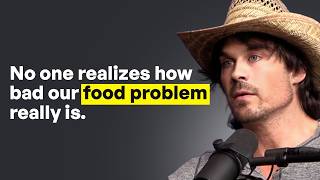
Ian Somerhalder discusses regenerative agriculture's potential to redirect $80 billion annually to rural economies and save $447 billion in diabetes costs. He argues that modern farming depletes nutrients, only 16% of supplements get absorbed, and soil organic matter increases could achieve net-zero carbon.
Chapters
Why are we sending $80 billion of American farmers money overseas? If everyone was healthy, we'd be out of business, but everyone would be healthy. I could go find another job. You need two things to get through your day. You need to feel good and you need. From starring in hit TV shows to.
Leading a movement for soil regeneration, Ian.
Somerhalder is on a mission to heal the planet.
He shares how food, farming and policy can shape our future.
We wonder why there's chronic disease. We wonder why people have skin issues, mental health issues. It's just the system is set up for us to fail. Happy, healthy people build happy, healthy societies by making happy, healthy choices. We spent $447 billion on diabetes, over.
A billion dollars a day.
So I produced a show about a virus that destroyed the world right as Covid happened. And the day I walked out of Netflix, proving my case of why the show should keep going, the next day the whole world shut down. If you ever really want to change the world, don't start a non profit, start a for profit that feeds all of those necessary nonprofit. This one little word that I realized that we're all searching for. It's the one word that can set you free. That word is.
Well, Ian, it's amazing to have you been talking about this for a long time. And you, you have quite an amazing sort of scope of what you're doing in your life that sort of shifted from acting to really trying to change the world to try to focus on fixing the agriculture system to looking at people's nutrition and starting a supplement company. It's been quite an amazing journey. I first kind of, kind of got into it Lost, and that was my favorite show.
It was mine too, until they killed me.
I was sort of addicted to it.
And you've kind of moved away from that whole career acting to do stuff that really matters in a way that think is. Is consequential.
And thanks, man.
You know, we, we've worked together on a couple of films, Kiss the Ground.
And Ground, for lending your amazing, powerful voice because you really, you changed the game for us on both of those films. So thank you, brother.
Yeah, they were so important. For those who don't know those films, those are films. Kiss the Ground and Common Ground were really consequential films that have sort of helped us understand the role of how agriculture could make a big difference in fixing our climate, soil, health, food, all of it. How did you sort of shift from acting to that? Can you kind of tell us, walk us down that, that path?
Yeah, by the way just. I just want to say how incredibly grateful I am to be here with you. Congratulations on the book and this amazing career, but I think we're effectively doing the same thing. Yeah, you're actually. Because you are a big. It's not just the understanding of science and of medicine that you understand. You're also a policy guy. You understand how Washington works. You know how things get.
I don't know if anybody can understand that.
Well, no, exactly. But that's why, you know, you've been so instrumental in this. And I just want to thank you for taking all that information. It's a lot of energy. I see how hard you work, and we are actually moving the needle. And what's been so amazing about getting into this whole regenerative ag thing is because I see it when I'm in D.C. and I know you see it, too. Both sides are coming together.
That's right.
And that's the thing, is they. They're doing this. They found something that is meaningful to both sides because it's meaningful for the country. And I'll definitely get into the. The question you just asked, but, like, I think for you and I both, you know, I've had all these conversations and calls and emails and stuff looking for endorsements of all these candidates and stuff. And I'll tell you one of the things I realized and, and you know, Josh and Rebecca and I talked about this.
Josh, Rebecca, the show who made the.
Directors and producers and writers of the films of Kiss the Ground and Common Ground and Groundswell was that as long as we stay laser focused on building systems that are impervious to, let's call it regime change, because at the end of the day, it's the same. You know, I said this to many heads of state. At the end of the day, they, you know, they're regimes, they come in, they change. So, you know, you work so hard to get something done, someone else comes in. And what I was saying to some of the, the president's guys and gals, and then also to my Republican sisters and brothers in D.C. was, so listen, if you had a company, right, whether It's a Fortune 500, Fortune 50 company, whatever, and you had a CEO that came in every four years and you busted ass to create all these amazing scenarios where the company does well, but every four years another CEO comes in and just gets rid of those. Yeah, the company would never work.
That's.
First of all, your shareholders would be freaking out.
That's right.
You would. You know, it would. It just wouldn't work. So why do we run our country that way? Yeah, it's quite interesting. Right. You mentioned Lost. Do you realize it's been 20 years since that show premiere? Yeah, it was, I think September 21st or September 22nd.
Yeah.
And you know, we still look the same. But in that span of those 20 years, going from Lost into a very humbling experience, which was the. I forgot what we called it. Splinter. It's like the. The intermediate period between Lost and Vampire Diaries, which was about three and a half years.
Yeah.
What Vampire Diaries did was it built a massive global platform for me to stand on.
Because it's been seen by something like 1.2 billion people. Not views people. At the end of the day, if you just look at it from a numbers.
I have to admit, I'm not one of those people.
Yeah, I'm sure. No, I'm sure.
A different generation.
I'm sure it's a different generation. But.
But I didn't watch Lost. But.
But you know, if you look at that, it's 1 in 8 people on the planet have seen or somehow enter, intersected or interacted with this material.
And it gave you a. And chance to have a big voice.
A big voice. And I think if you, if you get a big voice, but then you're inspiring people with the things that you care about that are actually there for the betterment of not yourself, but for the community around you or for the global community around you. I think that's where it's really valuable. And I. And I sit there.
Your family was very into this. Like, you're, you're. You kind of have some Native American heritage.
Yeah, my mom.
Your mom sort of was into Eastern Choctaw.
I grew up in Eastern medicine.
Yeah. And so, so sort of you were sort of predisposed to thinking about health and wellness in different way and relationship nature and from the get go. Right. And so something happened to you where you're like, gee, I want to really focus on how we. How we make the planet a little bit better and take care of the earth and fix our agriculture system and our food system. And what was that kind of moment.
For you from the very beginning? Yeah, I just called my mom on the way here because, I mean, you know, listen, you're not to sound sort of cheesy, but you are literally like the most famous doctor out there in the world. People know you mentioned your name. Oh, wow. You know, and so I just said to my mom, I was coming to do this show and she goes, oh, wow. Oh my God.
I love him.
Please tell him I said hello. But I called her to thank her because I just. We just walked through this, and this is the 32nd version. And this is why it's so important for. For people and parents to give their children amazing experiences. Because now, I mean, dude, I'll be 46 next month. Or, you know, in like a month and a week. And I just called my mom on.
The way home as a baby.
Yeah, right.
I'm gonna be 65.
I know. And then you. And you look 45. That's what's so cool about it. But I called her to thank her. I said, you know what's crazy? I get to go do this and sit with someone like Dr. Mark Hyman. Because you showed me very early on, and I'm talking the early 80s.
Yeah.
The importance of nutrition.
Yeah.
And how you can heal your body and heal land with this. My dad gave us the nature balance because I grew up on a marsh. But my mom comes from the farming family. And not to say anything disparaging about my family, but the chemical side of my family, my uncle. So my aunt, my mom's sister, married. They were very successful farmers in Dumas, Arkansas.
Oh.
He was like the number one crop duster in the whole state.
Oh.
So I grew up, you know, that's.
Where I was crop dusting, but it's more like spraying pesticides.
I know the dust in there.
So my sister and my cousin used to stand in the fields and hold the orange flag, so you know where to go. And my dad would spray them a lot about chemicals. And he would say, and Joseph, get inside. Get inside. Well, our family is really healthy and thriving. My dad's 84 and just still lifting is like Olympic set, you know, my mom is crushing that side of the family. Bless her dear amazing soul. My aunt passed last year. Her husband also, too did. My cousins have all sorts of neuro or degenerative issues because of the exposure of the pesticides. Exposure to the chemicals.
Yeah.
And, you know, everything from Parkinson's to CPO D to all of that stuff, you know.
You know. You know, farmers have the highest rate of Parkinson's. It's the. It's their biggest risk.
And then look at what happened with Gate, by the way, what you did with Gabe Brown, our brother.
Yeah. He's doing amazing.
He's doing amazing again. It's. You can. You can look at that and you can say. I mean, that was. That was you, Dr. Mark. You said, listen, here's how we fix this. And we need Gabe Brown around?
Yeah.
Als cannot take Gabe Brown from us. So ask how that happened. Just bringing it all back to why the why the why building. You know, obviously I own a whiskey company too, but it allows me to speak on. You know, I understand grain and I understand agriculture a great deal. We go through hundreds and hundreds and hundreds of thousands of pounds of it a day.
Yeah.
And the great thing about it is if you break it down, look, there's 200 million grain acres in this country. Production acres. I mean there's, there's more, but we'll just use it as a benchmark. If you're looking at regenerative ag, up to about a 400 an acre savings multiply 400 times 200 million. It's 80 billion a year that we send to Monsanto, which is German now, and Syngenda, which is Chinese.
Yeah.
And so when you're in D.C. and you're listening everyone complain about.
Those are chemical and seed companies for those who don't know.
Right, exactly. Sorry, but why are we sending $80 billion of American farmers money overseas?
Yeah.
So when we start injecting 50 to 80 billion back in the middle America, well, that's going to be the re industrialization of middle America. It's going to change our economy. It's going to be amazing. Farmers are going to be able to go down to that local Chevy dealership and get a new car. You know, tax base is going to go up. School districts are going to get better, water districts are going to get better after school, programs are going to be implemented by parks. All that stuff's going to get better. So it's this very positive cascade.
Yeah.
And there's money in the pool. Right. But it's money that they made, they feel good about themselves on top of.
So you're saying regenerative farmers actually will be more successful economically by switching from our industrial agricultural practices which destroy the soil and produce the commodity crops that go into processed food that make us sick.
That make us sick.
And, and you're saying by switching over, it's not just sort of crunchy granola. Organic.
Nothing crunchy about it.
It's actually a better economic model for the farmers and for the country because we're not shipping our dollars overseas to buy all these chemicals and seeds from foreign companies and fertilizer companies, which are, you know, global.
And keeping our, and keeping our population.
And the farmers get stuck in this horrible trap between the banks that need to give the loans to buy the seeds and the chemicals and then they need to get Those loans from the bank to, to get the crop insurance. And they're stuck in this vicious cycle where they can't get out of. But, but there's a bridge out from that to regenerative agriculture, which is now being implemented through policy changes in Washington, through some of the $20 billion that kiss the Ground was part of getting. And our nonprofit.
How cool is that man?
Yeah. Food Fix Campaign was involved in helping to push that legislation. And so we're seeing sort of the support. It can be pulled back and there's like always fighting about it, but there's more and more interest. I met with Senator Boozman from Arkansas and Congressman Randy Fenstra from Iowa. Republican Republicans who are seeing the problems with climate, seeing the problems with the soil, seeing the problems in the world Committee, seeing the problems of the farmers and how they're really subverting their own well being by doing the practices that they're doing and how interested they are in changing. So how do you see like the, the sort of the movement shifting? You know, it's been in the, I don't know, kissed the grounds in four or five years, right?
Yeah.
And we, we've seen real changes over that time.
Needle has moved so much. So when we, so we released Kiss the Ground, I think in 20 or December of 2019 because it was right when V War was released, it was right at my birthday. I want to say there's about a quarter of a million acres of regen here now there's 39.9 million quarter million to 39 million.
That's incredible.
We've moved the needle very quickly and we're, we're getting up to that 100 million acre mark.
Right.
That's why we launched 100 million acres.org the idea is, is getting companies not to upset their bottom lines or their shareholders, but the idea is to really make a commitment to shift small portion of their, their, their supply chain to regenerative. And ultimately what ends up happening is we get to that a hundred million mark.
Right.
There's about a billion acres farmed in the U.S. so if we're looking at 100 million, that's 10%. 10%. We know that's the threshold. It'll never go back from there because again, at the end of the day, pardon my French, I'm not trying to sound rude, but money talks, bullshit walks.
Yeah.
You show farmers and communities that they can make more money while healing themselves and the planet. The other side of that, produce better quality, produce better quality food. So think about this and you would Know this better than more food and more food. Right. You would know this better than I would. And I don't quote me on the statistic, but I want to say it was maybe 2020. Maybe it's 2019.
We spent $447 billion on diabetes.
Yeah. Which is over a billion dollars a day.
Which, by the. Exactly. But that is. That's not something that you're really born with, to my understanding.
No, I mean, it was very rare.
I mean, it's the food system.
And yeah. If you look back in the. In records in 1800s and Harvard Medical School and hospitals there, there was just like almost no cases. And. And then it just started skyrocketing after.
So I think we can run a parallel to the hockey stick of the use of creation of, you know, sweeteners in our food system and what have you. This is what I always talk about in Washington, too. As our public health gets better, our public health care costs are going to come down.
That's right.
Precipitously. Can you imagine what we could do in this country injecting 50, 80, $100 billion back into it without using agrochemical companies.
Yeah.
And then the savings of sometimes almost a half a trillion dollars in disease care.
Yeah.
The numbers don't lie.
Yeah. No.
And it would just be this flourishing economic giant.
Yeah.
And it's just a cascade effect because.
Really, you got to start on the farm. And if you don't start on the farm when, by the time it gets to your fork, you're not going to have what you need to keep you healthy. So you got to fix the whole system from field to fork.
Exactly. And that's one of the things, you know, when we were building out the absorption company, when you're looking at this data and the data don't lie, you're realizing how little. So not only is our food system broken with all the processed foods, and it's pretty much at every touch point. You know what I mean? From our municipal water being used to our detergents and phthalates and all this stuff, our gut microbiome is destroyed, and it's destroyed for our kids.
Yeah.
And so we. It's. And I'm not trying to laugh, it's actually not funny. But I just. It blows my mind. We wonder why there's chronic disease. We wonder why people have skin issues, mental health issues. We wonder why there's all of these neurological issues with our young ones. It's just the system is set up for us to fail. And this isn't like some conspiracy theory, just looking at data.
Yeah, I mean it's true.
When we were building the absorption company, we're looking at the data and you're looking at from a supplement perspective, only 84%. I mean, sorry, 84% of the things that you ingest are not being absorbed.
Yeah.
So if you're looking at it from a purely a numbers perspective, you're saying 16% of what we take, we actually get. Now what that tells me.
Is that there are billions of dollars being spent a year. Heart hard earned dollars, tens of billions are being spent by hard working people like us or my parents. Listen man, I grew up on the poverty line in Louisiana. We were so poor. I mean we had everything though. We had the bounty of, of the marsh and the rivers and then we had nature. That's what fed us. Yeah, but billions of dollars are being spent on things that don't work. And that just did not sit right with Nikki and I. It just didn't. And, and our team. And that's why, you know, look, I'm not a scientist. I leave that to the scientists. Yeah, the science to the scientists. We just knew something was wrong with the system. So there's, you can draw direct parallels between the food system and the supplement industry and the medical industry.
Totally.
And so like we're what we're talking about. And by the way, you know, two of the other amazing support systems we had in Indiana, Baird and Braun as well have been so awesome with, with us, with Kiss the Ground and with, with Common Ground in particular those amazing introductions. You know Rick Clark, our, our brother.
Rick Clark, he's a farmer. Yeah, he's Rick massive corn. He industrial corn farm too.
He went. So we sent Rick Clark to testify in Congress in a congressional testimony. And he, he just basically said listen guys, I am a lifelong Republican and I am a farmer and I've got about 7,000 acres and I save about $2 million a year.
That's right.
And everyone called BS and they said well what? That doesn't make any sense.
How?
And he goes well, I don't use pesticides, fungicides, herbicides or fertilizer. Bam.
Yeah. And this and produce the same amount or more for sure crop.
Better quality heirloom thousand year old genetics. The whole thing. And the congressional chamber was silent.
Were you there?
I know we were. We've filmed the whole thing.
Yeah.
And it was really powerful. And again, that's the beauty of it. And that's the thing that Rick and we were talking about with every member of Congress. We can stitch this country back together through its food. And that's why.
Well, it's not a Republican or a Democrat issue. This is really something that affects everybody across every spectrum of society. Absolutely. We're all sick. And disease doesn't say, oh, you're red or blue or purple. It's basically killing all of us. I mean, 80% of our healthcare costs are more for chronic disease. It's mostly preventable and it's mostly caused by food. And it's from how we grow the food to how we process the food to how we consume the food. And it's, it's really a systemic problem that has to be fixed. And I think the regenerative agriculture piece is such a key piece of this. And people don't often think about food and farming. They think about the food, but they don't think about the farming part. Yeah, but we got to fix the farming in order to fix the food.
You know, think about this. We are the same biological process as the planet. You think about it like the trees are our lungs. You know, the vital river systems and oceans and lakes and streams are the vital, the cardiovascular system transporting all those nutrients around the, around the organism. And so when you start cutting all the trees and you start damaging all the water systems, the organism can't survive. Right. Well, I think another thing that, a parallel that people don't draw and this is something, you know, again, building out.
These formulas just, just to back up a little bit. So, so, you know, Ian, you've been focused on a lot of things, regenerative agriculture and the films. But, you know, and your whiskey company, and you created a company that helps people get nutrients that they're not getting from the crappy food we get, which is called the Absorption Company. And it's powdered, delicious actually, which I'm drinking right now. Supplements that are highly bioavailable because they're formulated in a different way. And that's what you're talking about, just so people know.
Exactly. Yes. We have a patented piece of technology that allows us to take lipids and turn them into a water soluble nanometric particle with up to 500% more bioavailability.
Now, in English, that means it's absorbed.
Better than pretty much anything.
That's why it's called.
I mean, other than an iv, right? Like we can't argue that. Yeah, anyone can try and pick that apart and go, well, you can get it through an iv. We're talking about in your car, driving to work.
Yeah, yeah.
And, and so you're not going to.
Hook yourself up to an IV in your car or an Uber. Right.
You know, but it has really been an amazing journey. And it's the tech that allows us to take. You know, the patent is in lipids, not liposomes. But when you start talking about lipid encapsulation and the ability for it to just, in layman's terms, absorb. So at the end of the day, you feel it and you feel it fast. And we live in a mo. We live in a world now where, you know, it's 5G and this and the train, everything runs on time. And if the plane is delayed 6 minutes, you're all upset. We live in a world where that's existing. We're not going to change that. But what we want to do, you feel this and you feel it fast. And that's all that we want for people to listen. Whether you're a high school student studying for exams or you're.
A, you know, C suite executive of Fortune 500 company, or you're an electrician like my dad, up on a high rise in the middle of the winter, you need two things to get through your day. You need to feel good.
Yeah.
And you need energy.
Y.
You cannot run a family or a business in deficit.
Yeah.
And that's why the absorption company kind of came in. We launched in a really huge way. We actually pulled the range back. Whoa, whoa, whoa, whoa, whoa. We're not going to. We don't want to grow that fast.
And now going into the innovation side of it, you know, is where it's really getting crazy, you know, because of the nanometric technology. Dr. Mark, I cannot wait to send you some of these samples. I mean, I'm going. We're diving so deep into amino acids, into proteins, into getting things into people's body that they can absorb really fast and feel immediately.
Well, it really connects to the whole agriculture piece because the way we've farmed has really caused the soil to be damaged in such a way that it kills the microbiome and the life of the soil. And you need to the microbiome of the soil for the plants to absorb the nutrients. It's a symbiotic relationship. And so we're seeing even, you know, when you eat vegetables, you think not even processed food, they're much lower in the nutrients than they were even 50 years ago.
Right.
And we're seeing this scientifically. And what. What's striking is the amount of nutritional deficiencies we have in America is stunning. I.
As far as global super. I Mean as far as developed nations, right?
Yeah. I mean obviously it's very bad in the, in the developing nations. And I was recently had a chance to talk to Bill Gates about this and he was talking about these bullion cubes like that, they sort of supplement with vitamins so they can provide this at scale in the developing world and it's helping solve a lot of the nutritional deficiencies there that kill a lot of people. Like they. But I said to him, you know, Bill, there's also massive nutritional deficiencies in America. It's like, no there's not. And like yes there is.
Yeah.
And then you look at NHANES data, which is the National Health and Nutrition Examination Survey that looks at, you know, Americans and the same as, you know, tens of thousands of Americans, that's their lab testing determines, you know, what health issues they have. There are significant deficiencies. Over 90% are deficient in one or more nutrients. Omega 3 fats, vitamin D is 80%, 90% omega 3 fats, 45% magnesium, magnesium, iron, iron, zinc, folate. And people don't think it's really, it's really an issue, but it is. I had a, I co founded a company called Function Health which allows people to get access to their own lab data. It's quite amazing. And I was talking to a friend who did the testing and she's 35, pretty healthy, eats well, exercises, doesn't eat junk food and she was massively nutrition efficient. She had super low zinc, super low iodine, low iron, low vitamin D. You know, you're suffering from all these things and you feel like you feel, feel great because you don't have these nutrients. And part of it has to do with the fact that they're so depleted in our food supply. And, and so this is an interesting model.
This is why we built this company. Exactly that.
So we have to fix agriculture and we have to fix food. I mean, ideally, if we're all eating great food from Regenta Farms that was grown the right way, we might not need vitamins. But hey, that's not happening.
There's not happen for a long time. There's nothing more than I think this my team, my absorption company team would love. Which is not going to happen. But it's like if everyone was healthy, we'd be out of business.
That's right.
But everyone be healthy. Yeah, I could go find another job.
Yeah.
The one parallel I wanted to draw that I forgot to get to is that biological process. So, so think about this soil and its ability to not only just grow Healthy food. But to bio sequester, carbon is directly related to this health of the soil microbiome.
Right.
And you're the doctor, not me. But from my understanding, yeah. The human body is only as healthy as the gut microbiome.
That's right.
So you've got these two ubiquitous figures.
On the planet Earth and they're connected.
That require the exact same thing. And if we draw those parallels, we live in this wildly developed nation that lives on the drip of agrochemicals because the congressional, the lawmakers have allowed that to happen.
Yeah.
And that's the thing. For anyone listening or watching when we made Common Ground, everybody should watch it.
It's on Netflix, right?
No. So we. So Kiss the Ground was on Netflix for a long time. We pulled that off of Netflix.
Love and appreciate Netflix. And we're repackaging everything and it's going on Amazon.
Oh, on Amazon. Amazing.
And it's a big deal. It's a really big deal.
That's amazing.
And I'm just, I'm over the moon. Like, I just got chills thinking about it. Because we're looking at, just from a numbers perspective, how many people, you know, look, we got to get. We gave Kiss the ground away to 45 million students globally for free. Common Ground, I think we're giving away to 145 million students for free. Yeah, it's, it's a huge amount of numbers.
I mean, it's been seen by a.
Lot of people and seen by a lot of people. But when we were making that, one of the biggest things that we got to do was. And, and for anyone listening, if this piques your interest, we got to show through our team and Rebecca and Josh's super hard work, we get to show through investigative journalism how basically, you know, I'm just going to say I'll leave out the name, but the agrochemical companies, one in particular has to leave out the name. Yeah. Basically, what we uncover on film is how Monsanto has effectively been secretly micro financing.
Yeah.
Most of the university agricultural curriculum in this country for 40 years now. We uncover the money pipeline.
Yeah.
Because if you think about it, if Monsanto or anyone wanted to write, you know, whatever, 75 million dollar check to university, like whatever Texas A and M or UT or something.
People would know.
That's right.
If they wanted to write, you know, ten, seven and a half million dollar checks, people would know. Even a $750,000 check, people would take notice. Yeah. But no one's looking at 10, 20, 30, $50,000 checks.
Yeah. So they're doing slowly, slowly.
So you just feed the system.
Yeah.
And then you buy the best science money can buy. And then the congressional lawmakers allow it to go through because, listen, I mean, I'm not defending their practices, but think about this from a numbers perspective. There's 23. I think you would know this better than me because you really are the policy guy. There's 23 agrochemical lobbyists per member of Congress.
Yeah. It's crazy.
So think about it. So you're. So you're. You're a congressional lawmaker, Right. Hey, Mark, listen, man, why don't. Let's just go to the Bahamas this weekend. We got a great house down there, my wife and I. You know, your wife's gonna look really great in this mink coat we got from, you know, whatever Saks or whatever it is. And, and so from a numbers perspective, that's two people a month that are coming at you for something. Well, even if it only takes up a week or two a month. Think about how much noise that is as a lawmaker.
They really hear from industry. They don't really hear from people like you and I. And that's, you know, why it makes a difference when we go in, they go, wow, I didn't really understand this, and I didn't know about this. And the level of awareness and education is very low. And once they start to hear the.
Stories now, that's why. Start to shift now. That's why we have this, this change. And it's amazing. Listen, this is all not doom and gloom. This is really powerful stuff.
And it has. And the policies have to happen. You know, one of the things that you're talking about, just to give people context, is land grant colleges, which were established by Abraham Lincoln to build, you know, curriculum for building an agricultural nation. And so these land grant colleges are funded in large part by the government, but they're also funded by agrochemical companies. Agrochemical companies who are highly influential in determining what the science they do and what the studies they do are and what the results are. And so what the curriculum is. Because then the students of these land grant colleges come out thinking that they need all these. Farming is the only way to go. And, and I was talking to Michael Pollan recently about this, like, come on. And he was like, when I wrote, when I wrote Omnivore's Dilemma, I was supposed to give a talk at Caltech, and they canceled my talk because the one of the ranchers who's in a, you know, cafo you know, industrial meat, meat farming, meat factory. Basically funded huge amounts of money to this, to Caltech. And he just said he can't come, and they get rid of him. Yeah, that's the kind of stuff that goes on, you know, and this sort.
Of right under our noses. Yeah, but not for much longer.
Yeah.
Speaker Johnson is a Louisiana boy, like I am. There's a lot of. There are a lot of people from a lot of small towns who get this.
And the farmers are, you know, like, you know, I don't know if you know Fred Provenza. Do you know Fred Provenza? He's an amazing guy. He was. Studied behavioral ecology and looked at, know animals and plants and soil and humans. He's incredible. Wrote a book called Nourishment, which everybody should get. He's been on the podcast a couple of times.
Oh, I gotta read this.
And he, you know, he's talking about how he was going around teaching about this to farmers. And then, you know, it used to be like one or two people in the room, and now it's just filled. And people, the farmers and the ranchers are desperate to change because they see the failure and the failure of the system. The failure, no resilience to actually make money, to make a living. And they're. They're struggling. Right. And they understand that something's broken and they're looking for a different way.
By the way, you know, that was another thing. You know it. You do it too. We're. We're formulators. Right. So when we were building out the formulas for the absorption company, we started with just four use cases, right. It was restore calm, which really chills people out. And it just gets you to that place where it quiets the noise. And I needed that, too. Energy, which is I live on, and then sleep. And the reason we started with those four things was how can we get people to have better days so that they have better weeks, they have better months, and then eventually those months string out into years, and then the years string out into a lifetime. And this is something you and I have talked about at great length. Happy, healthy people build happy, healthy societies by making happy, healthy choices. It's new, unimpeachable information. Right. So again, man, it goes back to. And. And I'm. I'm. I'm putting together this amazing program for farmers where I'm going to start sending these to a lot of these hardworking farmers because you just, like, you feel the lift.
Yeah.
And better sleep, especially when you're stressed about crops, finances, all that stuff. You need to get that good sleep. So I'm doing this program and I'm going to put some spend behind it where I just get it to farmers, just get it to people who are busting their asses in the field. If you've ever been on a combine or you've been on a harvester at 5:30 in the morning.
After you couldn't sleep all night, and this is now three, four weeks in a row, you start to deplete in a way. Listen, a very dear brother of mine is building a bank and I was really fortunate enough to, to consult with them. Not, not non paid, but I got to work with these, these like Nobel laureate behavioral psychologists. I mean these people, they know a lot about humanity. Right. And one of the things we were talking about was there's and this is a term, you know, because you're a doctor. Eco anxiety.
Eco anxiety.
It's a real diagnosable term at this point. And there's 27 million young Americans that are basically. Think about it, you're young, you're trying to figure out what you're doing with your future. There's famine, wars, droughts. There's a broken food system, broken water system, broken political systems, Everything's broken.
Yeah.
You go into college, you're going to end up with a $200,000 debt, but you're going up with a $30,000 job.
Yeah.
And they, so they feel this weight.
Wait, wait.
And then they just end up doing this and what do they do? And it's eco anxiety.
Yeah.
So the idea is to lift them back out of that. Where you realize this is what I always say to people. It's not all doom and gloom because I see the data, I know it's coming down the pipeline. We are actually about to balance our climate. We're going to rebuild our food systems.
Yeah.
We're going to rebuild our economy and we're going to do it all through food.
Yeah.
And that is the most amazing thing. You know, I always hear people like joke, sort of like coastal elites talk about the flyover states. There are no flyover states, dude. Those states are. There are the rock stars of the country. Yeah, they are. It's not just the breadbasket. They're going to be the greatest bio sequesters of carbon dioxide that we have.
Yeah.
There are life's blood. And the people running those, those farms and those businesses are our brothers and sisters and they're crushing it. And so what we're gonna do is arm them with all this amazing, you know, not even Technology. It's old technology. Since it's old as dirt.
Yeah.
It's a really, you know, you know.
I'm sure you heard Gabe pound tell the story, but he had this. Who's this farmer who's been on the podcast and he, he's a go link.
To that One of our Greatest Heroes show.
But he's an incredible guy who was a traditional farmer in North Dakota spraying chemicals, doing all that for years, which is probably why he got ALS to.
Be 100% and I can't say 100. You know, you had all assuming bad.
Years of drought and hail and five years of hell. It was just a mess. And then somehow he got Thomas Jefferson's journals about farming practices and started to incorporate some of these practices that isn't that amazing. Yeah. Restored his farm and restored the soil and, and he's such a hero. And he's, he's really a key part of these films, Kiss the Ground and Common Ground, which everybody really should see these films. They're really power moving films to help you understand.
Thanks.
What the food system is, why it's broken, why it starts on the farm, in the soil.
Yeah.
And how if we change that, we change everything, Right?
Change everything.
We were kind of linking all together, but not only do we restore the soil, ecosystems, restore biodiversity, protect our water resources, not only do we prevent the chemical pesticides that are harming humans, but we also produce food that's more nutritious.
Yeah.
Solves a lot of our chronic disease epidemic. We help the farmers have more economic.
Kind of health and wealth and inclusive with farmers. You know, by the way, you're not even think. We haven't even touched on the fact of the, the, the social dynamics and the ethnicity of farming. You know, the amount of young farmers coming into the fold. Indigenous.
Yeah.
Black, brown, you know, purple. Like it doesn't matter who you are. And one of the more exciting, one of the more exciting things is to. The indigenous cultures are about to thrive. You know, a lot of these reservations are going to become these, these regenerative giants.
Yeah. Going back to their indigenous.
Going back to their indigenous practices and allowing them to make a ton of money and. Oh, man, who was I just talking to? He's amazing. Such a powerhouse. But you know, I want to say in 1930, I'll have to go back. I've. I have such dad brain, dude. I was up every hour.
You got little kids every hour on.
The hour last night with my son screaming into the monitor because he's not feeling great. But I think in 1930, there were a million black farmers.
Yeah.
And now there's 50,000.
Yeah.
And now they're, they're coming back and they're bringing this incredible indigenous knowledge that they have into the food system and thriving and growing. And that is, that's what America, that's what makes America so incredible.
Yeah.
When we all come together, I'm not trying to sound like some cliche out of some, like, you know, newspaper clipping. When we all come together and we lift each other up, that's when we win. And getting farmers off the drip of the agrochemicals and then, you know, the other side of my life is keeping them fueled with things that actually work, you know, Geez, dude, like, the future is bright. Get your sunglasses and you're, you're doing.
This like you're living this. You have a farm, you have animals and food. And tell us about your kind of what we.
My, my wife, she's the animal whisperer.
It's like Green Acres. You went from like Hollywood to the Beverly Hillbillies.
Yeah, Green Acres. But it's.
That's dating me, actually.
I used to watch that. You know, this is why I called my mom on the way here to thank her for that base. And, and one of the things is too, I realized.
We can't build a great society without unbelievably well rounded grounded children. My experience as a child, you know, I had the biggest, you know, our. My farming uncle and aunt cousins were very successful. They were the ones that always had all the money. It's also where my love of flying came from because he had Beechcraft aircraft that, you know, that, that the aircraft that I used to fly in. And that's where I grabbed my great love of flying.
But you died in a Beechcraft and lost.
I know. I was like, I felt so bad. As I was saying before we were rolling, I said that to J.J. abrams and Damon. I was like, guys, this is embarrassing. I fell 30,000ft out of an L1011 and survived. And then I fell 30ft out of a Beechcraft and died.
But, you know, those experiences as children, Now I'm, I'm 46 in a month and change.
Yeah.
All of those systems that I was exposed to are now playing out.
Supplements, health and wellness. I have a whiskey company. A lot of, A lot of, A lot of connection to bourbon in the south and the familial component, but that also spans. That's into my agriculture side. Between my wife and I, she's got jewelry that she created this Closed loop, you know, basically completely sustainable model for luxury jewelry. Crushed it, launched, did their first deal with Michael Dell and it just crushed it.
Great.
Yeah, well he had all this gold because Michael Dell just said, hey listen, I there all of these computers and landfills and my name on it. Fix this.
Yeah, yeah.
So he started using a hot water process to extract all sustainable, but extract all the heavy metals from microprocessors and gold and silver and stuff. And they ended up with all this gold. They didn't know what to do with it. So my wife, so Nikki reed at like 27 years old, 28 years old, calls Michael Dell and says, I know what you can do with that gold. You're going to give it to me, you're going to sign a multi year deal with me. I'm going to build a sustainable luxury jewelry line out of it and it's going to sell out in like a week. So they did that. She went to ces, the consumer electronics show in Vegas, representing Dell.
That's crazy.
On a stage. And it sold out. The whole collection sold out in 36 hours.
Wow.
So that's when they knew like so she created that whole system much like we did with building a regenerative whiskey company. And now we have absorbed. So we have these two parents that came from the entertainment world. By the way, our daughter still doesn't know what we do.
Who are now between two parents. Yeah, right. Two parents running, building three companies simultaneously, very successful companies simultaneously.
Which I'm, you know, I'm going to do 110 flights this year. It's not. I am your model, I'm your anti model patient. I am, you know, my adrenal, my system is broken down and to be honest with you, it's not like some shameless plug.
You're working too hard.
But I wouldn't be able to do what I do had I not built this company. Yeah, I just, if I didn't have the absorption company, I'm not even kidding. There is no possible way you could do what I do and then still get up and maneuver at this level and pace a lot.
Like you know, you got a farm, you got kids, you've got, oh man.
20 films, you're 6, 26 animals or something crazy like that. And you know, we just released my wife. We just released, we just got another, introduced another horse into the, to the herd yesterday and so worried that they were treating him well throughout the night.
You know, the other horses.
The other horses, yeah. And, and they did fortunately, you know, checking on him early this morning. But like, like our daughter, rather than worrying about eco anxiety or, or some digital, you know, bs, that was her biggest worry last night. Was, is, is, is our horse going to be okay? And I'm going to check on him in the morning before school. And you know what I mean, like.
That connected to the nature and to these.
These, you know, these incredible.
I mean, this is sort of what we need. Our kids are so not connected to nature. This Nature deficit disorder. Not ADD, you know, but.
Exactly. But that's about to change. Dr. Mark, what we're doing when we launch Common Ground, you know, we repackage. Kiss the ground. Now Common Ground is going out. This film changes lives. And with your help and your hard work and ours, we're changing policy. And this is what I said in, in Vegas, not Vegas, sorry, D.C. very similar. Yeah, in a way, but that's what I just said in D.C. which is.
Because anytime you go and you do all the, the circuit in D.C. it's all about policy. It's policy. It's policy. It's policy. Yeah, policy is important, but this isn't just about policy. This is about good policy helping good people. And that's where we win. And that's what I said.
Well, it's a. Yeah, the triple win money. The Earth wins, the farmers win, people win. The government, everybody wins.
Because when the, when more people make more money, they pay taxes rather than just a few big agrochemical companies that don't pay any taxes, most likely. This is how we build our society. This is how we build our communities. And with these systems that are so powerful and so impervious to, let's call it, change within the government, they're going to. Just going to continue because that model works. And again, I say it, I'm not trying to sound crass. Money talks, walks.
Yeah.
You tell a farmer or community leader or a constituent or a member of, you know, a legislative body who comes from a district where people are poisoned, they're sick, and they have no money. Yeah, it's going to change. And, and I, I stay so far out of politics. I literally, at one point, many years ago, there was a small group of sort of like the new Guard in Louisiana that was going to groom me to run for governor. Actually, it would have just been this past cycle. Actually would have been this past cycle. And I would have been working on this for years. But the. We looked at the data and the data suggested like, just because of the vast platform, I mean, now no one wants any more celebrity like you know, you want to be very careful with celebrity politicians.
Probably would have won just from the numbers perspective. Now I would not want to be in that position. But I guess my point is there are systems in play right now that are going to build basically the single largest carbon capture food economy in the world from the Carolina coast to the California coast. And we are in it right now. And the work that you've lent your voice to and how much you work and what we're doing together, this is the tip of the spear.
Yeah.
And it's amazing to see all of these governing bodies from both different sides coming together over this. And it's just an amazing, it just makes sense.
It just, it's like when you lay it out, it just, it makes common sense, it makes economic sense. It makes sense for fixing our ecological problems, climate risk we have affecting our health because of the food we're eating. So all of it can be solved if we actually fix the food system from starting with the farm. And I think you're right, in Congress people are starting to recognize that this is economically the right choice.
Makes sense.
It's not just sort of a good idea to have organic food and not have pesticides. It actually is better for the farmers, it's better for the economy, it's better for the downstream effects on our health.
Downstream effects are incredible.
And it's a multiple layered win if we actually do it. And what's interesting to me also is that private equity companies are now funding the gap for farmers to transition from conventional to regenerative agricultural because they see that there's a huge return on the investment, like farmland. They're buying up farms, they're converting them to regenerative agriculture. They're seeing the profitability in there like 60, 70, 80% returns on their money, which is like what, you know, and if that's true, and it is true, then then the whole system can, can kind of really, if we get the incentives right with, with policy can start to shift very quickly.
Well, think about those inputs. Fungi, fungicides, pesticides, herbicides, fertilizer and diesel.
Those are a lot of inputs. Yeah. It's expensive.
Yeah.
And that is what has been so amazing to see this shift. And by the way, again, I stay out of politics. But this senator, Republican senator who will go unnamed, we had an amazing conversation. And I said, Senator, I said, I don't, I don't talk about politics, I don't promote politics. I'm. And we're building this type of system. But I said, I think what you're going to see in these next few cycles is you're going to start to see people waking up and.
Yeah. I mean, even in this election cycle, they're talking about chronic disease and.
But it comes from the legislators. Right. And so if you think about it, a lot of these districts, especially a lot of the rural ones, whether you're an incumbent or a candidate, you're not going to be able to go back to your district a hero anymore if you're taking agrochemical money. Because the younger voters.
Yeah.
On either side. I'm not talking about sides. They're not going to stand for it because they're going to know too much about it.
Yeah.
And Kiss the Ground and Common Ground is that envelope that opens and shows them that world. And they realize I'm going to call on that. No, absolutely not. And that is. And I remember sitting there with this. We'll go on name, but this incredibly powerful member of Congress. Right. Sitting there saying, this makes sense.
Yeah.
And I said the other. The best thing to do is, you know, find other ways to get that campaign. There are other ways to get that campaign money. And also, too, when it comes from people, they feel more engaged.
Yeah.
So it's going to be in those. More. In that. More grassroots, because now with technology and stuff, you can trace where money is coming from.
That's right.
And. And his eyes lit up and he just said, oh, my gosh. This like. I just got chills. Like, my eye. Look at. My eyes are, like, tearing up. He said, oh, my gosh, this is the future. And this is the guy who, you know, a lot of his campaigns were funded by agrochemical companies. And he realizes this is the future. This is the fair way of getting the right people.
Yeah. In the seats, people see it like Senator Boozman. You know, usually when you go to meet these senators in congressmen, you meet with their staff, and the senator pops in for two minutes, says hi. He wouldn't leave me alone for 45 minutes. We just talked all about this. And he was telling me stories about how he was seeing in his own community, in his own lifetime, what's happening in Arkansas with agriculture and with the sort of degradation of the farms and.
Well, my uncle was the main. He owned the entire crop dusting, most of the business in that state. That stuff was sprayed by my uncle.
Crazy. Now, tell us about the new movie Groundswell, because this is a sequel. This has become like a trilogy. A trilogy.
You know, Kiss the Ground, Common Ground and Ground Swell. So, Josh, man, this family has it's unbelievable what they, Josh and Rebecca, what they put themselves through. Everyone got super duper duper sick. Six, eight week recovery.
Wow. They're making film basically about their movement around the world of regenerative.
So Kiss the Ground was like dipping our, our toes in letting people know that this exists. Common Ground is the practice of uncovering how the agrochemical industry affects and basically controls the science and the laws. And then groundswell is the international global component of the, of, of the adoption of large scale regenerative ag. And what's crazy is this is a number that will just freak you out. By increasing soil organic matter by 1% globally.
Yeah.
We will be at zero net carbon.
That's insane.
It's the most AM. If that doesn't make you want to just jump out of your seat when you realize like, okay, look, let's just get down to brass tax, right? Let's just, let's take the gloves off. Let's stop trying to, let's stop bullshitting. There's a big divide and con in, in our society, right, between what the EPA standards and all this stuff is. And you've got some people on one side saying the rest of the world is not adhering to this, we're damaging our own economy to set these standards. But it's, we're a global system, right? So when you sit at a table with Josh and Rebecca and our team and you look at the data and you're like, look, everybody stop fighting each other.
Basically. If we have the system, we can't build scrubbers to suck carbon out of the air at a global scale. No, no, talk to, you know, you know, just read drawdown. Right, right. You like, you know.
Yeah, but I mean the biggest carbon sink in the world is the soil. Other than the ocean, it's the soil.
And so the idea is it's like, let's build systems.
Not the rainforest, it's the soil, it's the soil.
Let's build systems that give the soil the ability to bio sequester and draw down that legacy load of carbon. Because that's what people think. They're like, you know, what if I just drive an electric car and use paper straws? The world's going to change. It's not because we've, we have that legacy load of carbon dioxide in the air that's been there since, basically since we started burning fields.
A third of all the carbon in the atmosphere. About 300, I think.
Billion giga tons or something. I forget the exact number, but it's a Ton. It's a, it's a lot of. A third of the carbon in the atmosphere comes from the loss of soil organic matter. And that can be put back. And I was, I just moved to Austin, Texas and there's a ranch right outside there called Rome Ranch, which is a ranch that was bought by this young couple that made Epic bars. And they sold the general mills, which then they got general mills to commit to a million acres of regenerating and training farmers to do this. They basically took a. A thousand acres and convert it into a bison ranch and a regenerative bison ranch. While the farmers next door are. And the ranchers are having to get rid of their cattle because of the drought. This is a flourishing ranch. The soil organic matter increased 6%. You said just 1%.
Huge.
6% is huge. Look at Gage.
96 tons of carbon per acre he's.
Storing and it's huge. And they were able to sequester water. The rivers are coming back that have been dried up there where the groundwater, navigational creeks for this, for the, the settlers as they moved west through Texas.
Then you're also too bringing. And there's a big migratory bird component to that.
Yeah, they were like eagle, bald eagles coming back and wild animals coming back and it was quite amazing to see. And this soil was, was rich and the plants were growing and bison were healthy and yeah, it was like. And every, everything around it was almost dead.
By the way, that's why I did that deal with, with Mars with Neutro. You know, I mean the Mars company is massive, right. And people are going, what are you doing getting into bed? Because it's actually a family owned company. They're actually, they're super cool people.
Frank Mars I met, he's super into food, is medicine, phytochemicals and the cocoa.
Yeah, well, so they have a pet health brands under their umbrella.
Yeah.
And Nutro, what is 100 year old pet food company. But what they're doing is until 2027, they're spending 5 million bucks on helping their farmers transition. Because again, they look at the, they look at their revenue models, they look at where their sources are coming from. People don't realize that even pet food is grown like ours. So if you can shepherd these, your farmers, your producers.
Yeah.
If you can shepherd them into a regenerative state, then their profits go up, your margins are better. You have absolute unlimited food for generations. Yeah, well, not unlimited. It's how much you can grow. And that's why you've got these big companies and that's why I commend Mars for doing that. Like, I love being in business with those guys. They're crushing it. Yeah, but that's the benchmark. General Mills is doing it, Mars is doing it. A number of other big companies, Nestle.
I mean, Nestle's committed to converting a lot of their supply chain to regenerative agriculture. Paul Hawkins advising them. So it's interesting how this is all happening. And it's like, you know, it's, it's.
It'S a. Paul Hawkins, by the way, wrote a book called Drawdown. If you haven't read this book, read this book. It's all about that gigaton of carbon legacy load and how we draw it down. Because people ask, they say, what the hell is regenerative ag? And why should I care?
Yeah.
It's just so simple. It's just the use of plant grazing methods and using living, growing plants, agriculture at scale to sequester enormous amounts of carbon dioxide. But the reality of it is the one thing that we left out this whole time and that people, when they hear this, they're like, no, it's impossible. The one thing about regenerative ag that you don't do is till.
That's right.
We've our whole lives. All you think about is telling that.
Story is the soil microbiome.
It kills the microbiome, but it releases carbon. The one thing that we do, because, remember when we were watching Kiss the Ground.
Yeah.
And everybody for the first time sees the model when Ray Archulet is talking.
Yeah.
You see the big, those NASA satellite images of all the plumes of carbon. That is when we're tilling.
Yeah.
And then as those, as the crops are growing, you see that greens and blues come back.
Right.
And the oranges and reds go away.
Yeah.
And every time I saw that model, when you would play it back as a, as a, in the model, you know, there's like 25 cuts of that film. Every time I would get teary, but I'm like, tears of joy.
Yeah.
Because then you realize people see that it's going to change their life. You can't unsee that.
Yeah.
And that's like, you know, again, it goes back to this, which is what I get through my days with. But when we were formulating all these things, there are moments in there, sitting in these, these meetings, you know, going through all these, all this material and all these nanometric particles and stuff for the absorption company, and there are moments I'd look up, we're having these big deep conversations and look around in the team and people are like genuinely moved.
Yeah.
We have like teary eyes thinking about when you get to help someone like this, but you're doing it. It's not a nonprofit way. I ran a nonprofit that I had for 10 years. And what I realized, what I learned is, and it's nothing against 501C3s. I think a lot of them do a lot of great, great things. But because it's so litigious, if you ever really want to change the world, don't start a nonprofit.
Yeah.
Start a for profit that feeds all of those necessary nonprofit. Not just initiatives. The actionable component of it.
Right.
And that's what's so amazing. It's not just awareness. It's awareness coupled with action that moves the needle.
Yeah.
And people are always so, you know, we're always kind of floundering and to a lot of young people, because you got to realize, like, Vampire Diaries is the. I want to say again, don't quote me on. I think it's the 10th, Spencer. You would know. I think it's the 10th most streamed or viewed show in history of around that. That ilk.
Kiss the ground.
No. Vampire Diaries.
Oh, Vampire dice.
And so what I look at, so many young people are trying to find what they. Who they are. And there's like this one little word that I realized that we're all searching for.
Yeah, what's that?
It's the funny thing about this word. It's very elusive. It's the one word that can set you free.
It's honestly the most important word in the world other than love, I think.
And that's what I thought you were gonna say.
That word is purpose.
Purpose. Yeah.
Because if you think about it, purpose driven. Anything moves a needle better than something that's not purpose driven. Whether it's an organization, a company, whatever. But this is what people, young people are asking me. Well, how the hell do you find that purpose?
Yeah.
Because there's no formula. No one talks about it in schools or on the street or anything. There is a little bit of a formula. You find purpose when you marry skill with passion. So when you bring together the things you're good at with the things you love, you find purpose. And then boom.
Yeah. Your whole world opens up, which is what you've done. It's quite amazing. And you really.
Do you see what I mean when you tell a 12 year old that or a 6 year old that, whether you're 6 or 60, at the end of the day, we're all searching for purpose. Some of us may never find it, but that's literally what we're searching for. It's not just love. Yeah, we're looking. We're searching for purpose. And so you just sit back, look at yourself in the mirror or the quiet moments where you're falling asleep at night or having your tea in the morning. Go, damn, man, what am I good at? And what do I love? What is that thing that people say, hey, you know, yo Joe, or hey, sue, you're really good at this thing. Find that thing. And I think it's changed so many lives. And dude, I get giddy. I've. Because I live in airports. So many people come up to me and they're like, you changed my kid's life. My kid was going to go to. And nothing against like these amazing financial schools, but our business schools. But like my kid wanted to go to Wharton like his dad and work on Wall street and he changed his major. He's going to Texas A and M. He wants to be an agricultural engineer. Switched his entire life.
You create a whole generation of farmers.
But that's what I'm saying. Like, that is powerful. Powerful. And I get so. I just like, I get so excited. And I'll make a video for them and with their parents and then we'll send it to the kids. And the kids are freaking out all of a sudden. Their parents are super cool and they're sending it to all their friends.
And that, man, it's got to feel good.
It's like what you do for us, I get to do with them.
So great.
And a lot of the information I've gotten, I've gotten from you anyway, so effectively I've just regurgitating what you've.
You're doing a good job. So I mean, I just want to thank you for, for lending your voice to this movement, for being part of the, you know, creation of these films. Kiss the Ground, Common Ground now Groundswell, which is coming out soon, I hope. And really shifting the conversation to where we need to go in this country in terms of how we deal with our food and food systems. And you know, the absorption company is a great kind of.
Thank you, brother.
Kind of, kind of point of the spirit is start to get people to actually upgrade their nutrition members. You check it out. Go just to feel. The website for the absorption company is.
Absorb more dot com.
Absorb more dot com.
And I mean, it couldn't be a more proper fitting. We sat down in these meetings and even Spencer, we were just like, what do we call this? Amazing thing. And it was just, it was just there, clear. I mean, there's nothing else you can say other than the absorption company. This is about absorbing things and feeling better, dude. I.
And you've also got a regenerative whiskey company, Brothers Bond, which is, you know, alcohol for sure. But it's still, you know, if you're going to drink, you can do it in a way that actually helps restore the ecosystem and the soil we just released.
Well, you know, obviously the Samuels family, you know, Maker's Mark has moved the needle really, and done amazing things with Salar, with, with regenefied and with Gay. But we just released our regenerative whiskey that we make down in North Carolina. And when you sit there with someone and you pour this with them and you're sipping it and then you explain to them what it is and they look at this bottle and they're like, wow, this is delicious. And this sequestered, more carbon than it produced.
Yeah, it's great.
It's just such a cool. You know, people are like, well, you make vitamins. Why do you make alcohol? I'm like, guys, life is about balance. Like, come on. I'm not going to sit here and say, I am.
It's a recreational drug.
I'm. Yeah, right. But I'm telling you, I am that. I am that patient that would show up to you. Dr. Mark, I need help.
Yeah.
I am spent out. I'm running, you know, I'm building two companies, I'm raising two kids, a farm, managing a life and a marriage and companies. And I'm broken, man. Yeah, my adrenals are shot. All these things are shot. And the only reason I get to do it is because, I mean, I own, you know, I co. Own a freaking. Honestly, it sounds so horrible to say, but it was time for shakeup. And effectively, you know, this is a 55 billion dollar year industry. I think by 2032 it's going to be a 77 billion dollars industry. And this is about to disrupt the entire, the whole category.
Yeah.
But I wouldn't be able to do it without that. And, and, and I want people to feel this good.
Yeah. Well, thank you, Ian. You're. You're just a bright light out there. You're doing good work. I, I want to come out to your pharmacy or 26 animals.
Let's do it. Oh, man. We'll eat some fresh food. And you know, again, I say this to whether you're really young or you're raising.
Young ones or you're just starting out in that workspace health is wealth.
Yeah.
And it doesn't take a lot to invest in it.
That's right.
You're not, you're not buying commodities on the, on the market. You're buying a commodity in yourself.
That's right.
And when we break down these stick prices, like they're like $3 a stick. Right. People go, oh, well, this is too expensive for a week supply. I think it's like 21 bucks.
Yeah.
Money's hard to come by.
Yeah.
So what we did was. Okay, well. Oh, this, oh, this. The other thing I want to say before we go, this is the crazy thing, because you live in this world. This is the, this is the most unregulated industry.
Quality matters.
And quality matters. And that was the thing we realized. It's less than 4% of companies that third party test. So it's really about 3.6%.
Yeah. And that means you're testing the ingredients to make sure it says what is on the label. There's no contaminants.
Exactly. And potency you're testing is a third party test. And we publish that information.
Great. Transparency.
Trust and transparency. That's how you build a company. Because, man, I. It scares me what's out there. And so again, just. Just take that little leap.
Yeah.
And make that investment in yourself.
Yeah.
Because again, man, check it out. It's amazing.
Absorbmore.com I love you, man. Love you too.
I'm so grateful to be here.
Check out those films and check out what you're doing. It's just, it's great. We miss you on screen. But I'm glad you're doing all this great work. It's fabulous.
Well, we did just get the rights back to V Wars, but you get.
To be in the movies. Common Ground. And so you get a little bit of acting there.
Josh and I are. Josh, actually, he just came back from Brazil.
Yeah.
And now he's getting him back on a plane today to go back to Brazil. But that's the thing.
Work.
It's important work this year, you know, or this coming year. He goes, he goes, listen, man, how does it. He's like, I know, you know, you left acting, but you have two massive feature films coming out this year, Kiss the Ground, which is repackaged. Y and Common Ground. And I thought about that. I was just talking to my mom about this.
That's right.
We have two massive films coming out next year.
So. Great.
I mean, it's like.
Yeah, yeah. I think everybody listening. You've got to watch these films.
You have to.
They'll change how you think. They'll change how you eat. They'll change where you're going to have to.
And they'll make. They'll give you hope.
Yeah.
Because hope is everything.
Yeah.
Hope and action together.
That's right.
Because look, man, scary out there.
There.
Okay.
Love and purpose.
Love and purpose, man.
All right.
Hope and purpose. Thanks, brother.
If you love that last video, you're going to love the next one. Check it out here.
More from AI




This Is Why 99% of Skin Conditions Don't Heal — And What Dermatologists Won't Tell You






Why you need to start strength training today #strengthtraining #healthyaging #fitness
