If I can make time for it, so can you!
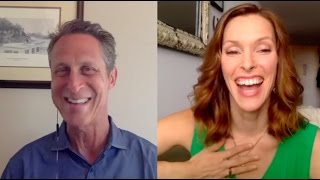
Ask AI Mark and Emily Fletcher discuss how to fit meditation into a busy life. Fletcher breaks down different meditation techniques and explains why even five minutes a day can make a difference for stress and focus.
And I just sort of want to tell you a little bit about what happened and then I want to sort of start to get into it with Emily because she's just such an extraordinary human, great teacher and she's just offering some great stuff and like I want to share all about it because I'm so excited it's changed my life so I just want to share it with you guys. So I was like, okay, I'm gonna commit to this. I'm gonna commit to 20 minutes twice a day which sounds insane because like how could I do 20 minutes twice a day because like I'm running around, I got meetings, I'm like all over the place, like and I was like, no, I'm gonna do this. Like I can do this. And so she taught me again and instead of giving me my mantra, it's basically this ancient technique she'll tell you about it, but it's pretty straightforward and I started doing it. I've been doing it for now over, gosh, yeah, about over two months, a little over two months and and what I found is super surprising. So I didn't actually realize how I was feeling before, you know, and I think the way I changed was I started feeling like it's like Dan Harris talks about 10% happier. He wrote this book 10% happier. And he started meditating, had a panic attack on TV, and he's like, well, you know, now I started meditating, I'm 10% happier. And I felt the same experience. I just felt happier. I felt calmer. I felt less anxious. I have way more going on, but it doesn't affect me the same way. I'm sleeping better. I have more energy. And the truth is, like, even if I don't sleep, if I meditate, I feel like I. I just had, like, three hours to nap. Like, it's unbelievable. Like, if I could lay down for 20 minutes and close my eyes, that wouldn't do it. But if I actually meditate for 20 minutes, I feel like I got a whole new evening back. So, like, I've been hiding in conference rooms at Cleveland Clinic. I've been doing it in like the car and parking lots. I have like friends drive if we go to meetings and say I'm just going to do it in the car while we're going somewhere. I do it on the airplane. Like I it's like it's so freaking portable and it's not like I have to be on a cushion in some temple with the incense burning and like everything perfect. It's like there could be all kinds of noise and craziness going around, but like I just go into my little happy place and it's like, so I just I really want Emily to talk about it because, you know, she she had her own experience, you know, she was on Broadway she had issues that she had to struggle with and then she discovered meditation. Now she teaches everywhere. She's like teaching at Google and Harvard Business School. She's taught at Dave Asprey's biohacking conference. We were all in Greece together. It was super fun. She's been written about in New York Times, Elle Magazine. She's named one of the top 100 women in wellness to watch and she's helped like thousands of high performers get integrating this model into their life. I love that saying which is, do less, accomplish more. It's like I wish I could explain to you all how it's affected me.
Because.
I would often get tired at the end of the day because it was a long day and now I just feel like my whole universe has changed. Even if it's like, forget about getting enlightened, but just like managing my life, I just feel it's helped me so much just be happier, more productive and not feel wiped out. I feel like I get a whole new energy at night to go have fun and do stuff that's awesome. So welcome, Emily.
So there's thousands of different styles of meditation. Most of them fall under one of two umbrellas, what we would call mindfulness, which is like a directed focus style of meditation. And then there's what I teach at Ziva, which is more of like, I like to call it the lazy man's meditation. But it's actually the big man's meditation, right? Because it's designed to be portable. It's designed to be integrated into your life. And you don't have to have a cave and incense and finger symbols to do it. Like all you need is a chair or an airplane seat or a bus or something. And so mindfulness is more of a waking state practice. Mindfulness is where you're directing your focus, right? Like you're either looking at a flame or you're counting your breath or you're visualizing your chakras or visualizing some lovely scene, but you're directing your focus in a certain way. Whereas what I teach is more of a surrendering practice. And I know that people do not like the word surrender because we think it means giving up or quitting, but it's actually, it's a beautiful series of letting go and trusting that nature has your back and allowing your body to settle into this deep rest. And then the beautiful byproduct is that not only are you flooding your brain with dopamine and serotonin, which are bliss chemicals, because you're giving your body this deep rest, when you come out of it, you're actually more awake.
Yeah.
More conscious. And so I actually find that you become more mindful, you become more present as a byproduct of doing this lazy man's meditation because you're actually getting rid of stress in the nervous system.
And the thing that was so great about it, you talked to me about it, was your mind's going to keep going. It's like I can sit there for 20 minutes and I might think about the 40 things I got to do and the people I want to talk to and this and that. you know, I mean, maybe half of it or more could be completely distracted by that. And I still, at the end, I'm still like, wow, that was amazing because, like, I don't know what's happening in there, but, like. And it's like, it's. So if people go, I can't meditate because I can't stop thinking. And I'm like, it's not stopping thinking. It's just, like, coming back and coming back and coming back.
It's like, you know. Right. Yes. So thank you for bringing that up, because I think that's actually the number one misconception around meditation. Every day, Emily, I want to meditate. I get that it's good for me. There's so much science around it, but I can't stop my crazy. mind from thinking. So I'm on a bit of a war path to like retrain people's ideas about meditation. So think about this. The mind thinks, I mean, I know you know this, but I just want to share this with everybody because I think it can be game changing. But the mind thinks involuntarily, just like the heart beats involuntarily. So imagine how ridiculous it would be to sit down to meditate and be like, okay, heart, stop beating.
Like that's ridiculous.
Like, okay, nails, stop growing. Like that's not up to you. And yet this is the criteria by which most of us are judging our meditations. Okay, brain, stop thinking. I sure would like a snack. I love snacks. Snacks are delicious. And then you're just like thinking and then you feel like failure and then you quit. And so, like you said, this has nothing to do with stopping your mind from thinking. No one meditates to become a good meditator. We don't meditate to get good at meditation.
We meditate to get good at life. Yeah, that's cool. So, like, people are watching and they're going, oh, you know, this sounds great. You know, you figure it out, but like, I'm so busy, I don't have time to meditate. What's your advice? How should they get started? What if they struggle? Sometimes they're too busy to meditate.
What are you going to tell them? Okay, so two things. My new favorite thing to say to people that think they're too busy to meditate is, if Oprah has time to meditate, you have time to meditate. And now I'm going to say, if.
Dr. Mark Hyman has time to meditate, you have time to meditate. It's ready. Well, it's like I show this cartoon, it's like, what do you have more time for? Exercising one hour a day or being dead 24 hours a day?
That's good.
That's really good.
So, you know, I think that we think we're too busy to meditate because we don't want to meditate because we don't know how to do it and we feel like we're failing and no one's going to make time for something that they feel like they're failing at. Yeah. So, and obviously I'm a meditation teacher, so I'm biased, but I really think it makes a difference to get some training, right? Like to sit down and try to like, imagine if I were to be like, okay, for 20 minutes twice a day, we're going to speak Japanese. Yeah. We're going to challenge. And if you don't know how to speak Japanese, that's really dumb. But if you know how to speak Japanese, then that's real fun, right? But you gotta learn. And so meditation is like any other skill. It takes a little bit of training. And so, you know, I teach in person in New York and LA, but what started happening is a lot of my students were like, Emily, my cousin lives in Idaho. He doesn't have access to a teacher. I really want him to learn. And so I made this online training. It's called Ziva Mind. And it's about 20 minutes a day for eight consecutive days. It's a matriculation. It's step by step and it's training.
You how to be self sufficient. It's like Emily in a box basically. It's on demand. Emily on demand.
I like that. It's a video training. So by the end of it, you graduate and you have the practice to take with you for life. You can meditate in a car, on a bus, on a plane, in a meeting. Not in a meeting, but maybe in a conference room after your meeting. And then there's also some guided visualizations on there like for traveling or insomnia or stress release or for performance. And that's called Ziva Mind. So, I mean, obviously I'm biased, but I really think it makes a difference to get a bit of training because meditation is like any other skill. It's a little training, a little practice, but then once you know how to do it, it's something you look forward to.
More from AI




This Is Why 99% of Skin Conditions Don't Heal — And What Dermatologists Won't Tell You






Why you need to start strength training today #strengthtraining #healthyaging #fitness
