Is HRT Safe? 10 Questions Women Ask Most — Answered by a Functional Doctor
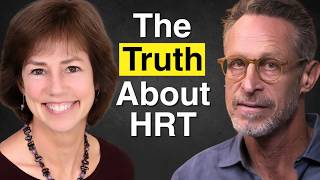
In this interview‑style YouTube episode, host AI Mark talks with Dr Cynthia (Cindy) Geyer, a functional‑medicine physician at the UltraWellness Center, and later with Dr Sharon Malone, a board‑certified OB‑GYN menopause specialist. They address the ten most common questions women have about hormone replacement therapy (HRT) that were gathered from social‑media responses. The conversation covers: (1) the current safety landscape – the FDA’s removal of the HRT black‑box warning in 2025 and updated ACCOB‑GYN/menopause‑society guidelines that the benefits usually outweigh risks when therapy starts within the 5‑10‑year window around the final menstrual period; (2) cardiovascular and clotting risk, emphasizing that transdermal routes avoid first‑pass liver effects and that older women in the Women’s Health Initiative (WHI) skewed risk data; (3) breast and uterine cancer risk, distinguishing estrogen‑only versus estrogen‑plus‑progestin regimens, the lower risk of bioidentical micronized progesterone versus synthetic progestins, and the modest absolute increase in breast‑cancer incidence (≈8 per 10 000 yr) without higher mortality; (4) timing of initiation, bone‑density and metabolic benefits of early perimenopausal treatment, and the lack of a hard stop‑date for therapy; (5) formulation choices – pharmaceutical‑grade bioidentical estradiol patches/gels versus compounded products, oral versus transdermal routes, and the impact on clotting, triglycerides, and CRP; (6) testing strategy – blood panels for hormone levels, FSH/LH, lipids, glucose, vitamin D; saliva for cortisol dynamics; urine for estrogen and testosterone metabolites; (7) functional‑medicine perspective – genetics, gut microbiome, diet, B‑vitamins, magnesium, cruciferous vegetables influencing estrogen metabolism pathways and cancer risk; (8) lifestyle and non‑hormonal alternatives – whole‑food diet low in refined carbs, soy (whole‑food, non‑processed), stress‑reduction (yoga, breath work, acupuncture), exercise, weight‑bearing activity for bone health; (9) contraindications – active breast cancer, unexplained uterine bleeding, liver disease, personal or familial clotting disorders (with specialist input); (10) individualized, ongoing monitoring – regular mammograms, Pap, DEXA, advanced lipoprotein testing (ApoB, Lp‑a), hs‑CRP, insulin, and annual reassessment of goals and labs. The episode also revisits the historical WHI controversy, clarifies misinterpretations of the 26 % relative risk figure, and underscores that modern evidence supports a nuanced, patient‑centered approach rather than a blanket avoidance of HRT.
Chapters
Hormone replacement therapy is one of the most talked about and most misunderstood topics in women's health right now. For some, it's seen as a game changer. For others, it still feels confusing or even risky. Questions about safety, cancer risk, when should I start, whether you even need it. A lot of noise out there and a lot of conflicting information. So today we're cutting through all that. We asked what your biggest questions were on social media and we got over 800 responses. And today we're answering your most common questions about hormone replacement therapy. What it is, who it's for, what the risks actually are, how to think about it in the context of your overall health. And today I'm joined by someone who works really closely with patients every day on this topic. It's Dr. Cynthia, or Cindy Geyer, from the UltraWellness Center. We've worked together for the better part of a quarter century now. She brings a lot of functional medicine perspectives to hormone health. She helps patients understand not just if HRT or hormone replacement therapy is right for them, but how it fits into the bigger picture of aging, metabolism, long-term health. And because this isn't just about managing symptoms, it's about understanding what's happening in your body, but how it fits into the bigger picture of aging, metabolism, and long-term health. Because this isn't just about managing symptoms, it's about understanding what's happening in your body, and it's about making informed decisions that support your health over time. So let's get your questions. What are the top 10 questions on hormone replacement therapy? The first, the biggest one, Cindy, is, is HRT safe? Is it actually safe long-term?
I love the way you teed it up, Mark, that hormones are a small part of the bigger picture of what's happening, happening for women in this time of life. So we have to look at it in context of everything else. So there's a lot going on, not just in terms of hot flashes, night sweats, and changes in sex hormones when we're talking hormone therapy, estrogen and progesterone. There's shifts in insulin signaling and cholesterol regulation and an uptick in bone loss, weight distribution shifts. We start to move it from our buttocks and thighs to our midsection, and hormones play a role, but it's not the only thing.
That's not fun. This episode is brought to you by Function Health, empowering you to live 100 healthy years with over 160 lab tests for just $365 a year. And use the code MARK2026 to get $50 off your membership.
Mitochondrial function can change. We might be more stiff and achy, and collagen turnover can change. There's also a lot going on for women in their relationships. You know, they might be having teenagers that are in their own hormonal environment, or kids that are leaving home or reassessing a long-term relationship, or even having more caregiving responsibilities for aging parents. So to just think about, do we take estrogen and progesterone or not? Is it safe? Without looking at the big picture, I think it's a missed opportunity to really work with women to optimize their health. So one of the big shifts in official guidelines is related to hormone safety. It used to be only take hormones in the lowest dose for the shortest period of time. For symptom management. But in November of 2025, the FDA removed the black box warning for hormones. So guidelines now from the American College of OB-GYNs and from the Menopause Society say for most women, the benefits probably outweigh the risks for hormone therapy, especially if it started within the 5 to 10 year window around your last menstrual period. So that's a sea change, Mark. That's a sea change.
That's big. Yeah.
And I think it's I'm really glad that we're focusing more on the potential benefit of hormone therapy for managing symptoms and potentially organ system benefits. But at the same time, I don't want women coming away from this thinking, if I can't take hormones, or I don't want to take them, I'm somehow missing out and can't age well.
One of the things, Cindy, that I kind of see as a big shift is this conversation, and you mentioned it briefly, do you start it like right at menopause or within 5 or 10 years? What is the danger of starting them later if a woman's later on wants to get support from hormone health, like, is there, is there a reason it's 5 to 10 years or within 5 to 10 years?
So one of the reasons why the benefits may outweigh the risks in that 5 to 10-year window is in a woman probably hasn't had a lot of chance to build up plaque in her arteries. And older studies that use primarily hormones by mouth, if women already had plaque, there was a higher risk for clotting and higher risk for heart attack and stroke. Newer evidence suggests if you're using hormones through the skin, it's probably not going to impact negatively cardiovascular risk and may have some benefits. There's also this concept that when we're newly in that menopause transition, our tissues and our organs are better able to respond to estrogen because there hasn't been a change in receptors. So even the response may be less as the further out we get from that last menstrual period.
People are concerned about other things like risk, right? So, so I think the biggest concern really is, is what about breast cancer and uterine cancer also, but particularly women worry about breast cancer. Can you talk about the different forms of therapy, the different, you know, estrogen only with progestins or with progesterone, or the different natural or bioidentical and synthetic versions, and how that all plays a role in trying to figure out what to do?
That is probably the biggest concern, is what is the long-term risk with hormone therapy and breast cancer. And if we go back, if we look at women's natural history without hormone therapy, starting your periods early or ending them late, there's a statistical slight increased prevalence of breast cancer in women with that longer tissue exposure to estrogen. The data about hormone replacement therapy— slight increase, increased risk the longer you stay on it and the higher the dose. But the formulation really, really matters. Even in the— even in the Women's Health Initiative, for women who'd had a hysterectomy and only took estrogen, there was actually a reduction in breast cancer risk. So something about That's fascinating. Yeah. And something about adding in the progestin, which was not a bioidentical progesterone, was what was the combination that was associated with increased breast cancer risk.
Yeah. So, so basically they were using this like Provera, which is a synthetic progesterone instead of the micronized progesterone, which is a prescription you can get as well, but it's mimics your body's natural progesterone.
It seems to be better. The more recent research shows that the bioidentical progesterone, the micronized progesterone, at least up to 5 years, does not seem to increase breast cancer risk. So that's very, very reassuring.
And the uterine cancer, you need, you need, you have to worry about uterine cancer with estrogen only if you're not taking the progesterone.
Correct. If you still have your uterus and you're thinking of estrogen or progesterone replacement therapy, you have to take the progesterone to prevent the overthickening of the lining and potential risk for uterine cancer. Using the two together, there's no increased risk.
And there's one other bit to this question I want to ask. It's really a functional medicine perspective because, you know, typically when you get on hormones, your doctor just prescribes the hormones and that's it. Maybe they'll check your levels, maybe not, go by symptoms. But what we look at in functional medicine is not just the blood levels of estrogen or progesterone or testosterone. We look at the, the urine metabolites, that's what happens when you process these hormones and how you're processing them. And that depends on our genetics, our environment, our microbiome, and so many things. So can you talk a little bit about that, how it's used, why it's important, and what we should make sense of, how we should make sense of it?
I think that's, that's great, Mark, because all of this data is coming from population data. Individuals are highly different in terms of genes they come into the world with, their type of diet, how healthy their gut microbiome is, what's happening with other hormones like insulin. And we know that, that whatever estrogen you make or take can get shifted down different pathways that is influenced both by your genetics, also by your exposures to potential endocrine disrupting chemicals, your diet, if you're meeting your needs for B vitamins and magnesium, how much cruciferous vegetables you're eating. So we want to personalize the information because All of that can influence for a given woman, is that estrogen going to be more likely or less likely to contribute to breast cancer risk? So it's not just about putting people on hormones, it's looking at their genetics, it's looking at those urine estrogen metabolites that tell us, are they shifting it down those pathways that are less risky? And if not, how can we support them by optimizing gut health, supporting them nutritionally, avoiding exposures to those endocrine-disrupting chemicals.
Yeah, and I think that's really the, the cancer risk, uh, framework is, is important because we really need to be able to look at how do we decide who's at risk, who's not at risk, which— how do you manage it, how do you even look at, you know, ongoing risk based on their estrogen metabolism. I think that's a really important piece that gets overlooked that needs to be done. And we do that at the UltraWellness Center. We look pretty routinely as part of our care for people who getting hormone replacement therapy. Okay, so when should you start it? We talked a little bit about it, but what's the right age? The timing is— it should be perimenopausal, it should be only when you've stopped your period for a year, you know, should be based on symptoms, should be based on prevention, should be based on like their risk of bone health. What are the things you take into consideration about deciding when to start?
Yeah, so that is also an evolving story. It used to be that doctors would wait until women had been a full year without their period. And they're missing the window when the symptoms are the most intense. So hot flashes, night sweats, changes in cycles, disrupted sleep— that may start a decade before that last menstrual period. So if it's premenopause, I often use symptoms and then test to kind of look and see where somebody is. So if somebody comes to me and they're 45 years old and they're starting to have more trouble with their sleep, especially before their period, Um, they're starting to have some hot flashes and night sweats, but they haven't started to change their periods yet. We might do estrogen and progesterone levels, but that might be a time where, depending on where they are, we start with progesterone only or cycling progesterone. So even how we treat somebody may differ whether they're in the early perimenopause or they're starting to skip periods. The emerging research is suggesting that the Increased turnover of bone may start well before women start skipping periods. So if there's osteoporosis in your family, if you're at risk for osteoporosis, there is increasing evidence that starting full hormone therapy, estrogen and progesterone, earlier in the perimenopause might sort of set you off on a good, good path to maintain that bone density.
Did you know that heart disease is the leading cause of death in women? Not breast cancer or ovarian cancer. And this is a statistic that makes me sit up straight. And yet the average woman is still being evaluated with the same cholesterol panel we've used for 50 years or more. Here's what most women are never told. LDL cholesterol is not the only predictor of your cardiovascular risk. ApoB is way more precise, way more predictive. It counts the actual particles that wedge into your arteries. And Lp is a genetic marker, but it's almost never checked. Or take hs-CRP. It measures the inflammatory environment that makes those particles dangerous. A woman can have normal cholesterol, quote, normal, but still be at risk. And I've seen it far too many times. The least we can do is measure the data that matters. It's time to stop guessing. Check your health with Function. Function gives you access to over 160 lab tests every year, including advanced lipoprotein testing, It's time to stop guessing. Check your health with Function. Go to functionhealth.com/mark. And if you're one of the first 1,000 people this week, use the code MARK2026 for a $50 credit toward your $365 a year membership. That's functionhealth.com/mark and use the code MARK2026 today. Well, I mean, so, so basically you, you, you, for symptoms and don't wait until you're already a year out from when you had your last period. It's great for for helping prevent bone turnover and prevention of osteoporosis. It may help prevent plaque even in the heart if you start early. It helps blood sugar, insulin signaling, mitochondria. So there's so many benefits that, you know, I think it's coming kind of more into the swing because I remember when we were practicing Canyon Ranch, that's when the Women's Health Initiative came out and it was like everybody was on hormones. Then the next day they were off hormones and it was kind of a nightmare. And we've kind of been trying to, for the last almost, kind of 25 years trying to recorrect that story. And meanwhile, a lot of women have suffered unnecessarily. So I think, you know, it's really important if people take, take this seriously, and both for their symptoms— and there's no reason not to, to manage your symptoms. Even, you know, sexual health is a big one for women, and that we didn't talk about that, but that's a big one. What about natural alternatives? Like, if you don't want to take hormones, or if you're concerned about them, like, are there ways to regulate hormonal balance without having to take hormones?
So the first thing I would say is, by far and away, estrogen and progesterone therapy is the most effective for troublesome hot flashes and night sweats. There are other things that can help, and I think this window of opportunity to really think about the bigger picture brings us back to lifestyle. So think— for a lot of women, when we think about what drives hot flashes and night sweats, interestingly enough, there's recent research that it may be a marker for somebody who's at higher risk for heart disease. So we want to be thinking about what's going on with blood sugar regulation and cholesterol. A fluctuating blood sugar is a potent trigger for hot flashes. Other potent triggers for hot flashes: caffeine, alcohol, some people spicy foods. So just taking a nutrition-forward approach and eating a whole foods diet with lots of fiber, not a lot of starchy carbs and refined carbohydrates, eating in a way to regulate your blood sugar may actually help hot flashes and night sweats.
So sugar, alcohol, and caffeine, right? That's like all the fun stuff, right? But it makes a difference. It does make a difference. I mean, excess caffeine, I mean, even cigarettes, we talk about that. Alcohol, blood sugar issues, these are all things that you have a lot of control over and, and actually work. And then you mentioned foods, but there's some really cool foods we should talk about. What are the other lifestyle factors that you can do? And then what are the kind of supplements, foods, things that we should be thinking about specifically that are there.
So the foods that show the best benefit in terms of helping hot flashes and night sweats are soy foods, whole soy foods, ideally organic, non-GMO soy. So thinking edamame, tofu, tempeh, those have been shown to be effective in reducing hot flashes and night sweats. Stress is a huge contrib— contributor as well. So there's evidence that breath-based practices, yoga, acupuncture, Those strategies can also help many women manage their symptoms. Exercise above and beyond just the breath-based practices, exercise. And that probably becomes one of the single most important things we can do when we're thinking of not just helping symptoms, but setting us up for healthy aging for the second half. Because it is probably, you know, this Mark, you talk about this all the time. One of the most powerful tools we have for keeping our bones healthy, our our muscles resilient and strong, are protecting our heart, protecting our brain. If we could bottle it up, we'd be incredibly rich billionaires.
We'd be the richest people on Earth. But I think, I think I just want to loop back to something you said about soy foods, because people think, oh, soy foods, you know. And I've heard so many oncologists tell their patients not to eat tofu if they have breast cancer, which is just insane because It's an estrogen modulator. It doesn't actually cause breast cancer and may protect against it, except— and there's a big except here, and this is data from the NIH— that when they fed animals highly processed soy extract, like basically the soy protein powders that are hydrolyzed soy protein, it seems to actually cause cancer. So whole soy foods— tofu, tempeh, miso, natto— all those things, fine. Edamame, whatever you want, that's fine, but it shouldn't be an industrial soy food. And what about herbs and stuff? Are there herbs that work also for menopause?
Mixed data about herbs, but some of the best exist for black cohosh, pycnogenol, which is a pine bark extract. There's some evidence that that might help with vasomotor symptoms. It's also a great antioxidant. There are a few others as well. The research is somewhat mixed, but I think if they're safe, it's worth a try because some women find them very helpful.
Next question we got is, is what about this whole issue of prescription hormones, bioidentical, compounded versus Pharmaceutical grade, bioidentical, there's all these different kind of conversations. And the problem is I saw when the hormones were starting to be used, they were only the prescription versions which were either horse urine or for estrogen, Premarin, or a synthetic progesterone, which is kind of highly problematic with the side effects it has. So I think there's other better versions and we've been using those for a long time. And maybe you can kind of walk through how to think about it, how to do them, what is sort of an approach that makes sense for proper dosing, delivery, and form of the nutrients?
Sure. I think that's a great question. And a lot of the confusion about the risks of estrogen was exactly related to those synthetic forms. And that doesn't seem to be borne out with what we call bioidentical. From my perspective, bioidentical doesn't mean it's necessarily compounded versus pharmaceutical grade. It means that your body doesn't tell the difference. It is the exact same form of the hormones that you would have made before menopause. So there are pharmaceutical-grade bioidentical options. A good example is an estradiol patch. That's probably one of the most common ways that we'll use estrogen replacement. I like it because it's convenient. There are multiple doses that allow you to personalize it to the, to the person's symptoms and to their blood levels and everything else that's going on. You change it twice a week. Pretty simple. There are also gels that are prescription pharmaceutical, and you can also get insurance coverage, which for some women makes a big difference. There are a lot of women prefer I prefer using the compounded estrogens. It— in my experience, sometimes it's more difficult to get a good blood level if that's what we're trying to do, although it's possible. Um, sometimes depending on the quality of your compounding pharmacy, it may vary batch to batch. So I tend to use the pharmaceutical-grade but bioidentical estrogens and progesterone. The other big piece is the route of administration matters. So when we use estrogen by mouth, even bioidentical estrogen by mouth, there's a first-pass effect in liver. And in the liver, we make clotting factors and we make triglycerides. So even bioidentical estrogen by mouth can raise clotting factors and triglycerides. So I tend to use the transdermal because I think it's better tolerated. It's easier to titrate the dose, and you're not going to have those same risks for clotting and triglycerides.
Yeah, one of the things I noticed, you know, some of these, these oral hormone versions of estrogen tend to increase inflammation. So they increase CRP.
Yes, thank you.
And the pill does that too. So that's an important consideration because, you know, inflammation is the driver of all chronic illness and disease. So you don't want to be spiking inflammation with hormones if you don't have to. And the best way to do that is avoid the liver, like you said. So Cindy, what about the next question we got, which is what are the symptoms, the main symptoms that taking hormone replacement therapy will really help with? Is it, is it like brain fog, weight gain, sleep? Sex drive.
So estrogen and progesterone, as I mentioned before, the most effective for the hot flashes and the night sweats. So that's really where they shine. However, there's also benefits with sleep quality, and there's some suggestion that estrogen progesterone may prevent or slow down the emergence of sleep disordered breathing that starts to emerge in the menopause transition because our connective tissue gets more lax. So when we improve sleep quality, that improves mood, it improves brain fog, it may even improve, improve insulin signaling. So I think there's, there's whether the benefit on brain fog is directly related to the hormones. I think it could be, but it also could be secondary to better quality sleep. I think what's really interesting is that estrogen and progesterone, not from a symptom standpoint, but it, it helps with insulin signaling. So insulin resistance becomes more prevalent in the menopause transition. And estrogen and progesterone seems to mitigate that to a great degree. That's fantastic.
So does that mean, I mean, like it helps you not put the weight on your stomach, but more on your butt?
Yes, that was going to be the next thing that I was going to say. What we see about it is it, I wouldn't use, think about it as helping weight loss, but it helps the weight distribution. So it helps prevent that shift that we talked about earlier that goes from the buttocks and thighs to the belly. And that increase in belly fat, as you have talked about many times, is a lot of what's driving the worsening insulin signaling, the higher rates of inflammation, and the higher rates of cardiovascular disease that start to emerge. So there does seem to be a protective benefit there. In terms of libido, some women find that— we'll talk about testosterone in a minute, but just estrogen and progesterone alone improve sex drive, libido. Libido is very complicated because it's not purely hormonal. It's also related to being sleep deprived, feeling overstretched if there's a lot going on, how you feel about your partner. I mean, those are important factors that also negatively impact libido. Even using a patch of estrogen, it may not be enough for some women to help with the vaginal dryness, thinning, and pain. So there can be an additional role for vaginal estrogen, which has also been shown to improve libido. Or vaginal DHEA, which has been shown to improve libido above and beyond just improving the health of the tissues. Lastly, there can be a role for some women to use testosterone, low-dose testosterone, which can move the needle if those other things have not helped.
The good thing with the— but even if you had breast cancer, you can use vaginal estrogen safely.
I think that's really important to point out because it doesn't tend to get systemically absorbed, and that's also been a shift in the last last several years, even women with estrogen-positive breast cancer, if they're having an informed conversation with their oncologist, it seems to be pretty safe and it can really make a difference in symptoms.
And the last thing is, you touched on a little bit, but sleep is definitely helped by just reducing hot flashes with estrogen, but progesterone has a particularly unique effect around sedation, sleep. So maybe you can chat about that. And even you can use that even before you use any estrogens in the perimenopausal period, So that's in a way of helping manage a lot of the symptoms of heavy bleeding, clotting, sleep issues, PMS. It all starts to accelerate in the late perimenopause.
Progesterone has a, has a calming, sedating effect. And in the early perimenopause transition, where there's bigger oscillations in estrogen, for women who are prone to migraines, they can really flare. For women who have more histamine-related symptoms, those can also flare. And interestingly enough, giving progesterone by itself can kind of reregulate those wider swings and help with those symptoms. So that might be an instance where we're focusing on high-dose progesterone initially in the, in the menopause transition.
All right. So people are sitting there wondering, okay, how do I know if I need it? How do I know if I start? What are the signs I should consider it? Is it testing? Is it my symptoms? Like, what, what's the way to approach this?
Again, this is a great opportunity to kind of check in with what's going on in your life. How do you feel? Are you starting to notice hot flashes, night sweats? Is your sleep changing? Are you having worsening premenstrual symptoms? Mood swings, that would be a good time to start talking to your doctor about what's going on and whether hormones make sense. Then testing is tricky in perimenopause because it's going to change day to day and week to week and month to month. So you can do a snapshot in the moment, it's not going to tell you the whole picture, but it can provide some clues. We treat the person, not the level in the perimenopause. I think it's also a great time to get a baseline— what's happening with your insulin, what is your A1C, What is your cholesterol? If you can get a baseline bone density, that would be fantastic. If you can't, you can start looking at these markers of bone turnover. Are you looking like your bones are starting to, uh, turn over more rapidly, which is a predictor of future decline, current and future decline?
I mean, don't you think women should be like, ask for kind of a mandatory DEXA scan for bone density and body comp? And they're like, at least by their mid-40s, I can just— it says a non-starter almost.
I know, but right now insurance, unless you're high risk, typically doesn't cover it until you're 60.
They're not that expensive. Like, I went to this place in Austin, it was $80 for both. It was like super affordable.
It's much easier to get it. And, and I'm glad you brought up the bone density because your weight doesn't tell you the whole story. Women might, if they, especially if they haven't been physically active, might actually have low muscle mass and identifying it early We can take steps to add in more resistance training, make sure you're getting enough good quality protein, supporting digestion, absorption at a gut level to help you with your body composition.
And the good news about the DEXA scan, it can do both the bone density and the body composition. So, okay, well, Cindy, let's, let's talk about testing because I think people are confused. Should you check blood tests? What about urine tests? What about saliva tests? Like, there's so many options. So how do you think about diagnostics when it comes to hormone therapy? Obviously, you're going to be looking at all the standard stuff like cortisol, thyroid, vitamin D, and so forth. But what about, like, hormones themselves?
You know, Mark, I just have to say, it's interesting that you said the obvious stuff like thyroid and cortisol and vitamin D and insulin, but it's actually not obvious to everybody. Think about how many people come in and they're just looking at estrogen and progesterone. So I'm really glad you called that out. We look at the big hormone picture. Um, I tend to use blood levels for quantity. I think they're probably the best if I'm looking to see where somebody is, also looking at the pituitary hormones, the FSH and LH. And then if we're monitoring somebody after we're starting treatment, I rely on the blood levels for quantity of the hormones. Saliva to help manage prescriptions, or yes, to help manage prescriptions, to track somebody, especially if they're, if they're not responding, do we need to change the dose? Um, the saliva tests I don't use as much for estrogen, progesterone, but they're really great for looking at cortisol levels throughout the day. They correlate pretty well, and that gives us a snapshot of, of adrenal reserve, um, how stressed somebody might be, what things could be spiking their cortisol or not. And then, yeah, for those estrogen metabolites and testosterone metabolites, the urine levels are what we look for. So it's a combination of things.
So yeah, so you can use saliva for cortisol, you use blood for hormones, you also use urine for estrogen metabolism. So you kind of need a cocktail of things to really understand what's going on, and then helps you understand where they're at, what to do. But the thing is, as you're going through perimenopause, your hormones are all over the place. So any one mark, any one level, any one time doesn't really give you the whole picture. So it's a combination of like your clinical expertise plus symptoms plus the lab testing all gives you sort of a framework. It's, it's, it's sort of like multiple ways of navigating. And so it's important to sort of track that stuff, and particularly if you're on hormones, you want to make sure you're not overshooting with estrogen, progesterone, testosterone. All right, so let's say somebody starts on it and they're like 50 and they get on it, or do they stay on until they die? Or like, you take forever, or you take it for a few years till your symptoms are over? Like, are there 80-year-olds having hot flashes who haven't gone, who haven't been on hormones? Probably not. So the question is like, what, what, what is the right amount of time?
And there is no perfect answer there either, Mark, because I think if we just look back at how much the pendulum has shifted, there is still ongoing research. And every year we get new information that might shift the equation. So it's also about, okay, if you're thinking about hormones now, making the best decision you can with all the information you have. But checking in every year, is it still the right option for me? How do I feel? What are my goals? What are my levels? What am I trying to achieve with hormones? And I would say there isn't a black and white answer to that. You know, some women might try it and they don't like how they feel. Progesterone— some women don't do well with progesterone. I mean, they just can be— most women do, but some women don't. So we might need to shift gears there. Or maybe they go in for a mammogram and they get a new diagnosis of breast cancer, and then we really need to shift gears there. Care. Um, there could be other health changes or priority changes. So I think it's a— it's an evolving conversation. It's about establishing benchmarks and then having a partner you trust that can continue the conversation every year.
And also tracking things, right? You want to check your mammogram, your Pap test, your bone density, your cardiovascular risk factors, your insulin, all the things that you want to be tracking. And that's what, you know, we do at the Ultra Wellness Center in Lenox. We have a— we do this We've been doing this for a long time, and we have the ability to really kind of dive in and help people navigate this. And it's, it's, it's one of the most satisfying parts of practice for me because it just— you really can help people not suffer. And I don't think women should have to suffer.
I think one of the other misinterpretations of this, if you start within 5 to 10 years, physicians for a long time would say, okay, you've been on it 10 years, you have to stop your hormones. That's not true either. There are women who continue to stay on their hormones Beyond the 10 years, if they're doing well, they're feeling well, it's working for them. I don't routinely take people off just because it's met a magic year mark based on some population data.
Right, exactly. Just, just like, how do you make up those numbers? They just sort of make them up out of the air. Last question is really about who should not take hormones and hormone replacement therapy.
Yeah, so we talked a lot about breast cancer. Even breast cancer is not all the same. Women who've had an estrogen-positive breast cancer or progesterone receptor-positive breast cancer, it's still really considered relatively contraindicated unless you're using the vaginal estrogen. There's some newer evidence calling that into question, but that's really an informed discussion with your oncologist. Triple negative breast cancer, they're starting to look at maybe there might be a subset of women who could tolerate or have estrogen. But again, I think that is an informed conversation with your oncologist. So active breast cancer, I would say no.
No.
If you have unexplained vaginal bleeding, you don't know where it's coming from, that could potentially be a sign of uterine cancer. You need to figure that out first. Active liver disease— would not take hormone therapy. Um, the research is also shifting. If you've had a personal history of blood clots or you have genetics for blood clotting, there's some emerging evidence that if you're using estrogen through the skin and you've got bothersome symptoms, that could be a possibility. But again, I would probably defer you to your hematologist for that. Those are the main contraindications.
And liver disease probably too, right? So breast cancer, clotting, liver disease. Yeah, yeah.
I would say you have to know yourself. If you're somebody who doesn't want to take them, who is going to every day you take it feel like, oh my gosh, is this not right? Am I going to cause breast cancer? It may not be the option. I'm not going to force anybody to take hormones who doesn't feel like it's right for them.
I mean, that's important because, you know, people don't have to take them. They can do well with other ways of managing symptoms or these diseases or conditions that they're at risk for. But I, I think that the current thinking— and who knows, this might change as more data comes in— is it's a more nuanced view than we had. And people are confused or want to learn how to do this or need help and support. You know, our practice, Delta Wellness Center, we have 5 physicians, lots of physician assistants, nutritionists, nurses that really help support people on this whole journey. So, uh, Cindy, thanks so much for joining us. You, you, uh, given us a lot to think about and a great explanation of how to, you know, just get to the, the nuts and bolts and the meat of the issue, so to speak. As you can see, everybody, hormone replacement therapy isn't like just one size fits all for everybody. It's nuanced. It depends on your symptoms, your medical history, your, your goals, your— in the bigger picture of your health, you know, with your osteoporosis or heart disease or other things. And then, you know, Well, hopefully what this conversation has done is cut through some of the confusion. You know, for a long time, the conversations around hormone therapy has been really about fear and about misinterpreting the data and outdated information. And what we know now is way more nuanced than that, right? For the right person at the right time, hormone replacement therapy can be a powerful tool. And it's just that, it's a tool. It's not the only answer and not something to approach without guidance. So, if you're navigating these questions for yourself, the most important step is to work with a practitioner, ideally a functional medicine practitioner, who can help you look at your full picture, not just your hormones in isolation. Because this isn't just about managing symptoms, it's about supporting your long-term health, your metabolism, your brain health, and how you want to feel as you get older. And that's really the goal. If you found this helpful, I encourage you to share it with someone who's navigating the same questions, because the chances are they are. And if you want to dive deeper into this topic, look out for my upcoming episode with Dr. Sharon Malone, who's a board board-certified OB-GYN and menopause specialist with decades of clinical and leadership experience in women's health. And here's a clip from that conversation. The thing that just maybe we should just unpack is this, this black box warning that came from the FDA, because it's what, what got people really scared. And I remember, because you— I was practicing really heavily with women that, that during that time when, when that study came out and it stopped the study, they literally stopped the study because they were concerned about the harmful effects. So they had— that, that's a big deal. And overnight, I think 50 million women stopped hormones, which created a, you know, a catastrophe in the country.
How well I know.
Yes. Right. And so we kind of had a backlash.
Yeah.
Now we're kind of coming back to a more coherent way of thinking about it. And, and I'd like you to unpack, you know, how you think about, um, prescribing hormones and which hormones and for whom and what the benefits are, because the Women's Health Initiative did show that increased stroke and increased heart attack. And there were some—
Did it though?
Did it?
I mean, that's what they said, right? That's what they said.
Okay, and I'm gonna tell you it didn't really say that.
Because the effect sizes were small or the—
The effect sizes were small and they were as prescribed. Remember, the women entering the Women's Health Initiative, the average age was 63.
Yeah.
You could be anywhere from 50 to 79 years of age to be in that study. They didn't really even say, all right, these are women who've never had hormones before, and now we're going to give some hormones and some not. The criteria for entering and being randomized, you just had to not have taken hormones for 3 months.
Yeah.
Before entering the study. Do you see what I'm saying? So the population was really murky. They were too old.
Yeah.
That's not how we're prescribing today. We prescribe— what we do know is that the The earlier you start treatment, the more long-term benefit you get.
And is it riskier to start it when you're older?
Well, yes, there are some— you get less benefit. And I don't think it takes any leap of faith to understand that if the purpose of the Women's Health Initiative was to sort of figure out whether or not the hormones really were the secret sauce in reducing the cardiovascular disease, because when the women's— when the Nurses Study, 50% decrease in heart disease in the women who took estrogen.
Yeah.
Okay. Is it that or is it something else? And to have women come into the study at 79 years old, I think we can all agree that it doesn't matter what I give you.
The—
that horse is out of the barn by then. And by having too many women who already had established heart disease, well, how are you going to prevent something that you already have?
Yes, like they didn't do angiograms on everybody and see what their hearts look like.
Exactly. So when you stratify, even the Women's Health Initiative, when you looked at the younger women who were in the minority, but the younger women did not have an increase in the risk of cardiovascular disease. All of the bad things, the only finding from the Women's Health Initiative that was statistically significant was there was an increase in the risk of blood clots.
Yeah, blood clots. But that doesn't— a heart attack is a blood clot, right?
No, but we're talking about Yeah, but that's separate. And this is listed as separate in part because it's DVTs or deep vein thrombosis or pulmonary emboli. And that was reported separately.
But estrogen does mechanistically cause an increase in clotting risk. We know that.
Yes. Yes, it does. However, again, perspective matters. You need to know to say some to someone that it's a 50% increase or 100% increase. Well, what's the baseline? You know, and what we do know is that for women who start estrogen even oral earlier, when you're 40s or 50s, when you start, that increased risk of blood clotting, that we don't have it, we don't see it. It happens when you're older. And so a lot of the findings from the Women's Health Initiative that were negative, even the cardiovascular disease was elevated, but only in the first year and not after that, because again, you're probably giving something to women who already have fairly advanced heart disease.
And what about the breast cancer risk?
Ah, the breast cancer.
'Cause that's what freaks women out.
That is the number one reason why women avoid hormone. They, the whole, oh, cardiovascular risk, I don't care about that. It's the breast cancer. That was really the nail in the coffin.
Yeah, 'cause it did show some increased risk, right? That's what they reported at least. Okay, let me tell you. I mean, that's what the public said, understood from the study.
Oh, trust me, I've been in this, I've been in the weeds on this for so long.
I'm just framing it so people know. It's like I'm not just saying I'm right.
No, no, no, no. That was what they held.
That was the headline.
That was the press conference. Oh, not only does this, you know, they held a press conference when they stopped the Women's Health Initiative to say, oh, not only does it not help your heart, it increases your risk of blood clots and heart disease and strokes. And it went on and on and on. Well, that's very scary. And I would challenge anyone to give me another example of when the NIH, the regulators at NIH, held a press conference to announce a study. I mean, that's how big of a deal they thought that was. And I'll also mention that Bernadine Healy was not there at that time. So we're going to give her a pass on that. But here's the breast cancer story. And I will say this, the data is the data. You don't get to change the data because you don't like it. It. Okay. You can change your interpretation of the data, but it is what it is. But let's take it at face value. What did the Women's Health Initiative say about women who took estrogen, the Premarin and the Provera? All right. They reported there was a 26% increase in the risk of breast cancer in estrogen and progestin users versus non-users. 26%. That sounds terrible.
Who wants that? It's relative risk, right?
But what did that mean in real terms? That means for women who did not take estrogen and progestin, 30— the natural incidence is about 30 per 10,000 women per year will be diagnosed with breast cancer, living long enough to get it. In the estrogen and progestin user group, it went from 30 per 10,000 women per year to 38 per 10,000 per year. With no increase in the risk of dying from your breast cancer, even if you were diagnosed on hormone therapy. So let's make that sound a little better. All right. 8 per 10,000 additional cases of breast cancer.
And that's 26%.
That's 26%.
Right.
With no increased risk of dying from it. And then make it even better, less than 1 in 1,000 additional cases of breast cancer.
Yeah.
In the women who took estrogen. And progestin. Now, that doesn't sound nearly as scary as 26%, right? But that was never really put into perspective.
I think Mark Twain said, there's lies, there are damn lies, and there's statisticians.
Exactly. And, you know, and there is— and when you put it that way, you say, oh, okay, well, 8 in 1,000, but I'm no likely— no more likely to die from it even if I'm taking hormone therapy. And even that statistic itself— and you and I know in a medical study, if you were going to report a finding. To call it a finding, it has to be statistically significant. It was not statistically significant. But that stuck like glue. It's still with us today because doctors and patients still believe that it— that a family history of breast cancer is a reason not to take hormone therapy. So that's just that worst-case scenario. Let's, you know, put it on— blame the old bad Premarin and Provera. Even that did not statistically increase your risk of breast cancer. And that is what has taken a long time for people to, to really understand those numbers. And because I remember the day that came out, it was 1992 and I had been prescribing for 10 years. Well, 2002.
Yeah.
And I had been prescribing for 10 years before that.
Yeah, me too.
And patients were horrified. Oh, doctor, I can't believe you're trying to kill me with this stuff. And when I read the study, I was like, wait a minute, it's not as bad as as what they said. And again, remember, applying that data, again, take it as it is, you can't apply that, the same data from 79-year-olds and 65-year-olds to 45-year-olds. They're not the same.
Hey everybody, it's Dr. Mark, and I'm in my kitchen making my morning smoothie. Yum, yum. And I just wanna tell you about this amazing course that my team and I put together called the Brain Shaping Academy. And it's really outgrowth of the work I did over 20 years ago with the Ultramind Solution, helping people understand how to fix their broken brains. So many people suffer with mental health issues, with neurodegenerative conditions, with ADD, with focus issues, with brain fog, and all these things have solutions. And often the solution is not in your head, it's in your body. And so the Brain Shaping Academy helps guide you through exactly what the root causes are and how to fix it, and how to fix your brain by fixing your body
More from AI




This Is Why 99% of Skin Conditions Don't Heal — And What Dermatologists Won't Tell You






Why you need to start strength training today #strengthtraining #healthyaging #fitness
