IVF Isn't Fixing Fertility – Here's What Actually Works
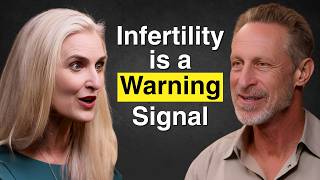
Dr. Anne Shippy, a functional-medicine physician, argues that infertility is a sign of deeper metabolic and hormonal problems, not a condition IVF should be the first fix for. She describes how diet changes, toxin reduction, microbiome balance, and mitochondrial support through supplements like CoQ10 have helped women in their late 40s conceive naturally after addressing root causes.
Chapters
Unfortunately, there's this narrative making IVF to be expected. So the way that I'm thinking about IVF these days is a check engine light's on, the body's saying, hey, there's something going on, and then women are encouraged to do IVF. That's like taking a car that has the check engine light on and trying to drive it at 200 miles an hour across the country.
1 in 7 couples is infertile. Sperm counts and sperm health is going down globally. Historically, women had babies in their early 20s, and now, you know, women are delaying it, and there's sort of some challenges with that, and the leftover sperm I think a lot of women struggling, but you also talk about this idea that it's not your chronological age, but it's your biological age that matters. Exactly. Dr. Anne Shippy is a former IBM chemical engineer, functional medicine leader who uses a data-driven approach to help couples conceive healthy babies well into their 40s, even after they've been told IVF is their only option.
My oldest patient right now is 47 who got pregnant naturally on the first try.
I want to kind of emphasize it because it's generational and what you do now, actually could affect your grandchildren.
We can't change what genes we actually give to our child, but we can have a dramatic change on how those genes are being dialed up and dialed down.
I actually have a true confession here. Hey, it's Dr. Hyman. I'm so excited to share this episode with you today, but before we dive in, I want to get your help. Please take a minute to hit that subscribe button, whether you're watching here on YouTube or listening on your favorite podcast platform. It truly means the world to me, and it helps my team and I bring you this podcast every single week. Plus, I don't want you to miss a thing, so thanks Thank you so much for being part of this community, and I'm glad you're here. And welcome to the podcast.
It's so great to be here with you. There were a few days where I was wondering in our recent past—
what Anne's talking about, if you're wondering, is that a year ago or so I was sick, and she took care of me and helped me as one of the doctors helping me sort through this horrible health crisis I had. I'm grateful for you for doing that.
Well, it's, I just adore you and it was pretty scary at the time, but your body's amazing. All the things that you've done to heal, like you look better than ever. It looks so vibrant and healthy. It's so great.
Yeah. You know, there's life after death or almost death.
Well, and you, after that, you appreciate it even more each day, right?
Yeah. It, I don't take a minute for granted. That is for sure. I came to the edge. It was close, close call. I was close.
Way too close. No more of those. No more. Got that bubble around your elbow.
Bubble wrap for Dr. Hyman. Yeah. And we're talking about a back surgery I had that was, I got a back infection and I was, you know, in the hospital for weeks and on a deathbed for about a month and kind of a Hail Mary saved me. But, uh, here I am. Found the way and, you know, and that kind of, kind of goes to, you know, this sort of both unfortunate, but also blessed experience that we both had of having very serious debilitating, quote, chronic illnesses that were, quote, incurable, but that we recovered from. And who knew that the body is this miraculous thing that actually wants to be healthy.
I, and I felt kind of lucky at this point to have had those experiences where I could witness in my own body what potential we have for healing.
I mean, it is kind of amazing, you know, the body is like, you crash your car and it doesn't heal, you know, you break a window and it doesn't repair itself, but your body is this intensely powerful healing machine, right? You cut yourself, you burn yourself, you break something, and like you wait a little while and, you know, you don't really have to do much and the body just kind of knows what to do. And today we're kind of diving into a topic where the body's been pretty messed up by the load of crappy food, the environmental toxins we're exposed to, the stresses we have, the change to our microbiome, and all the insults that come from living in today's modern world. That have massively affected fertility. And your new book, The Preconception Revolution: A Science-Backed Path to Fertility and Generational Health, which is a great subtitle for which I wrote the foreword. Thank you for asking me to do that. Thank you for asking me to do that. I only write the foreword to very few books, and this one I felt compelled to write a foreword to because it's a topic that I think has been much neglected. Which is thinking about how do we create a healthy baby? What are all the inputs that we have to think about to ourselves and our partners, men and women both, because there's two people involved in making a baby. How does that impact, one, your ability to get pregnant, and two, the health of the baby once it's in utero? And, you know, I practice family medicine. And I was trained in OB and gynecology and I delivered 500 babies.
Look at you.
And I learned all the tricks and tools of like, you know, how to deliver a baby and all the things that go wrong and how to, you know, do C-sections and how to deal with all kinds of complications. But I was never once taught about how do we create a healthy pregnancy and how do we create a healthy baby and how to like it. Get vaccinations. Like that was it. Right. And I was, I was, it's just sort of stunning to me how it's this massively important area and it's massively neglected. And we're seeing this massive fertility crisis. 1 in 7 couples is infertile. Sperm counts and sperm health is going down globally. Kids are sicker than ever. 1 in 2 kids has some type of chronic problem, whether it's ADD or depression or allergies or eczema, whatever is going on with our kids is unprecedented. 40% of kids are overweight, 20+ percent are obese.
The autoimmunity, the cancer, autoimmune disease, everything. So if we were starting our families right now, we'd be scared to death because we'd be like, oh my God, how are we possibly going to have a healthy kid without this conversation that we're having today? Because I think it really will give people hope and I want to create a sense of urgency around this. Like most men and women have no idea that there's anything they can do other than starting a prenatal vitamin and, and start trying. They have no idea this period before conception and between babies too, can make a huge impact to their fertility and the health of their babies. So, so excited to have this conversation with you.
Yeah. It's, it's an important book. I mean, everybody needs to go grab a copy if you wanting to get pregnant, if you know anybody who's going to have kids, if you, it's a great present. It's like, this is the book that you should be getting for anybody who's thinking of having a family or for your kids, if they're having a family. I got it for my daughter. She's pregnant. So I want her to read it. And I think, you know, I want to dive into the problem, but I just first want to sort of take a little step back. We've sort of hinted at the beginning, you know, You came to understand the body in a very different way. You were an engineer and you worked for IBM.
I was on a fast track. I was getting to do such cool things with getting chemicals out of our environment in the manufacturing area. And I thought I was going to be a chemical engineer executive for IBM and retire after 30 years.
Yeah. And get your gold watch.
Little did I know. Exactly. You know, you've worked with IBMers. Little did I know I was going to take quite a detour.
And so what happened? You got sick and then that led you on a different path.
I went on vacation and when I came back, I couldn't find a doctor to help me. I couldn't absorb my food anymore. And I got so skinny, people thought that I had cancer. Like I looked terrible and felt terrible too. And so that's what made me start thinking about things outside of traditional medicine. I did all the workups, all the things through traditional medicine, but then I had to start changing my diet. I went and started on a naturopath and a nutritionist and started building my body back. And suddenly my body was healing and better after 6 to 9 months of doing this additional work. And I got so inspired with how my body healed that during the night, one night, I I think my decision was made. I wanted to change careers and go to medical school so I could do medicine differently at 32. And I'd never taken a biology class.
Yeah, no, me neither. I studied Buddhism and I didn't, it was sort of an afterthought. And I think that there's a whole bunch of us out there who have been, you could say fortunately, unfortunately have been sick and we've gone into medicine or we've been in medicine and we got sick. And we had to wake up to something different, to a different way of thinking about the body, about health. And we had to question our training, the paradigm we were all exposed to, and we had to think about doing medicine quite differently. And, you know, you're also like me, a functional medicine practitioner. We've known each other a long time. Your, your work really is around this particular area is so inspiring because you really break it down for people in terms of the, the way to think about handling all the things you need to handle to create a healthy baby. And it's not like you start when you get pregnant. The book is called The Preconception Revolution, meaning before you get pregnant. And it's not just like a day before, a week before. It's, you're talking anywhere from 3 months to 36 months, 3 years that you have to start thinking about what it takes to prepare yourself to have a healthy baby. And I was just reading an article, you maybe you're aware of some of this data, but there was a really interesting article about rapamycin. And fertility and egg preservation in women, which this is a kind of a longevity drug. It's, it modulates immune function, has a lot of interesting effects, but you know, I think we're seeing, we're seeing increasing ways of how do we, how do we preserve, increase, improve fertility and healthy pregnancies.
And especially as that applies to women, there's, there's a study that just came out on the mitochondrial DNA being preserved more than any other cell in the body that they could test. And so that was one of the things that I think really gives me hope. And what I see happening with patients is that even for women in their mid to late 40s, if they've really taken care of their bodies and they've done these steps that I've described, even if they've had infertility issues where they've gone an IVF route in the past, that they can actually improve their ovarian function and have healthy babies well into their mid and maybe even late forties. My oldest patient right now is 47, and I just— she got pregnant naturally on the first try. She had had a couple kids, they're about 10, and she met the love of her life and decided that they, they decided they wanted to have a child together. She knew about my work, so she came in right as she was turning 47. We found, found some things. I was like, wait, let's test you and make sure it's a good idea. So we, we found her microbiome was off. She had some environmental toxins we needed to clear out, some inflammatory markers. We worked really hard for 3 months and then they had one— she was supposed to come back and retest some of these things, but they had one night where they weren't careful and got pregnant. And now she's, she's due in about 6 weeks and she looks and feels amazing. Um, super happy, easy pregnancy, super— everything's going very, very well. And, um, she's actually going to be 48 by the time that the baby's born. And then I just, right before I left the office to come talk to you today, had follow-up with a patient of mine who's 44. And we had kind of decided maybe they shouldn't have another baby. She had done— she came to see me about a year ago. She had done IVF to get her 3-year-old. And the IVF was really, really hard on her body. She had endometriosis that just went rampant and she actually ended up losing a kidney from it. So she's down to one kidney. It triggered autoimmunity. So she ended up with autoimmune hepatitis and we were like, okay, maybe one is good. She's 6 weeks pregnant right now, not trying at 44.
Yeah. I mean, you know, we talk in medicine about geriatric pregnancy, which means if you're 35, and older, you're a quote geriatric pregnancy. And I think, you know, historically, you know, women had babies in their, you know, teenagers and early 20s. And, but now, you know, women are delaying it and there's a, there's sort of, I think, some challenges with that. And that's why we're seeing a lot of women struggling, but, but you also talk about this idea that it's not your chronological age, but it's your biological age that matters. And talk more about that.
I'm starting to think about the ovaries as They're like little sensors in the body, like continuously monitoring, is it a good time? Is it a good time? Because we're basically built to keep the species going, right? So if the body senses it's not a good time, the check engine light comes on and it's like, nope, we're not doing this right now because you might not be safe. It might not be a good time to have a baby for them as well. And so I, I'm really thinking about infertility as just The body's sensing it's not a good time. The male side of things is a little bit different because we're continuously, um, producing sperm. So it's more about the sperm quality, but that's another thing I see too. Um, we see when there's environmental exposures, when there's nutritional deficiencies, um, weight and blood sugar abnormalities, that the body's not producing healthy sperm. And so a lot of times what I'll see is even a patient who has issues with their sperm quality or quantity, when we do these same things for the man, they get an increase in sperm count and quality. And also resume to be super fertile.
Yeah. So important. You talk about like this, this sort of problem of infertility as sort of a, not like a moral failing or some terrible thing wrong with you, but like as a check engine light, like if something's going on with fertility, it means it's not just about fertility. It's, it's kind of a clue that there's some biological disturbances that are upsetting your hormonal regulation and ovarian function and sperm health and production and quality. All those things are modifiable and we don't think about them. We don't address them in traditional medicine. We don't think about how to look at it.
Well, and unfortunately there's this narrative. There are more and more books coming out by reproductive endocrinologists that are just making IVF to be expected, right?
So in order to get pregnant, you have to go to the doctor.
You gotta go to the doctor. And you, so the way that I'm thinking about IVF these days is the check engine light's on, the body's saying, hey, there's something going on. And then women are encouraged to do IVF. And it's, that's like taking a car that has the check engine light on and trying to drive it at 200 miles an hour across the country. It's like, it's putting the body through super physiological efforts rather than being like, oh wait, what's going on? Why is it something simple? Like we're a little low in some nutrients or is there some inflammation because there's a low-grade infection or is there a mold exposure or what's going on that's causing the body to put the check engine light on?
Exactly. You know, and I've seen this so much in my practice at the Ultra Wellness Center and I've helped so many women get pregnant by just addressing the fundamental, like, terrain. It's like, if you're going to plant, you know, a vegetable in the garden, you want healthy soil. And so how do you create metaphorically healthy soil in a human body, both for the man and the woman? And it's not something that most of us know how to do. And there's ways of measuring, testing, evaluating, and learning about what's going on in ways that are not done in traditional medicine. And that yet are extremely effective in that I think are increasingly being thought of by some fertility specialists. It's like hard to ignore, you know, like I, I think I just had Michael Eisenberg who's from Stanford, who's a urologist, specializes in fertility in men and so forth. And he's talking about these issues. So I'm like, okay, you know, there's people in academic centers starting to think about, you know, toxins, about nutrition, about stress, about the microbiome and how all those play a role in, in affecting the basic hormonal systems and important sort of regulatory pathways allow us to have a healthy baby. How do you start to think about like evaluating someone? And how do you start to think about like when someone comes in and say, well, I'm having trouble getting pregnant or I want to get pregnant. Like, what do I do? How do I, how do I start? You know, maybe I'm not having trouble, but I want to clean house and get myself ready. Or maybe I am having a problem. What do I do? So let's start with like, just as a general idea that preconception time matters and what should we be looking at? What should we be measuring? What should we be testing? And what are the kinds of things that people should be doing to actually improve their health so that their eggs and their sperm are as healthy as they can be at the time of conception?
That's such a great question. So I know not everybody can do the testing, like that's ideal to, to take inventory. So, you know, I wrote the book so that somebody could pick up the book and understand what the testing is, see how much they can actually go get done. But if they can't, start to lay a really solid foundation. So the, the first thing is to get the diet dialed in. So you and I find we've had so many of our patients heal by just changing their diet, right? So, um, I would start there by taking out the highly processed foods, and add in the most nutrient-dense foods that we can. So I really like a paleo or Mediterranean diet where people are already taking out the gluten and the dairy that can be so inflammatory depending on the person, see if they can take out the grains, but mostly put the really high-quality good things in and get out the processed.
But the truth is that sugar and starch is a huge driver of infertility. Well, I mean, Walter Willett wrote a book called The Fertility Diet and was all about the phenomenon of insulin resistance driving infertility.
And that leads to one of the things that really led me to write this book that I want to segue on for just a minute. And that's epigenetics. So how we dial our genes up and down, we can't change what genes we actually give to our child, but we can have a dramatic change on how those genes are being dialed up and dialed down. So then where our metabolic state is when we get pregnant actually gets passed on to the baby. What our toxin levels are, especially for men, can have a huge impact on how those genes are being dialed up and dialed down. Even can determine, is it a successful and healthy pregnancy once you get pregnant? But then there's intergenerational studies now that— and that's why I called it the, you know, for generational health, because the, the state of the nutrition in the body, the state of the toxins, the microbiome. The sperm is like a time capsule. So I really want to inspire men to be not just thinking about their own health, but do as much as they possibly can in this 3, 6, 12 months. Takes about 74 to 86 days to make a sperm. So get things really dialed in around 3 months before you're starting to try to conceive with as many of these factors that are going to influence the health of your baby. So hopefully that's going to really inspire men to prioritize their own health and make these changes, you know, eating super healthy and getting their weight at a good place, eliminating the toxins, doing a detox period where they are getting the toxins out. One of the interesting studies that came out actually after the book was written, so I didn't get to include it, was they took men and they gave them highly processed foods for 3 weeks. And another group that they gave just mostly whole foods, like healthy meat, healthy vegetables. And then they looked at sperm quality and hormone levels. In just 3 weeks, they could see a change in sperm quality and hormone levels. Then they flipped the groups and they, and they saw the same thing. So when they took the men who had their sperm look pretty healthy, their hormone levels were good. They did a little washout period and then started filling them, feeding them highly processed foods and saw the same kind of decline in as little as 3 weeks.
So Twinkies and Pop-Tarts are bad for your sperm.
Well, exactly. And I think it's somewhat to the containers that these highly processed foods are, um, like the takeout I think is really not good for men's sperm health. Right. Um, the PFAS and the plastics that get leached into the food. From the takeout containers and the frozen containers that the highly processed food in is in is part of the, the story here on what's going to actually move the needle to have people have men have healthier sperm.
It's important that you're talking about this because I remember a book I read a long time ago called Our Stolen Future by Theo Colburn, which is sort of like a Rachel Carson Silent Spring book about the role of these environmental chemicals and pesticides and plastics and PFAS and forever chemicals and their role as endocrine disruptors and how they were affecting fertility in the— and she, she went deep into the animal kind of research around this. And I think, you know, we don't realize that that's all affecting us. So the toxins do affect both women and men in terms of both their—
it's just easier to study it in men because we have this quick turnaround. It's harder to know what's going on with ovaries, but I'm sure it's the same thing. As with the men with the ovaries, it's part of why the ovaries are saying, ah, check engine light, there's a problem here.
So, so how do you start to think about just, let's just sort of dive into the whole preparation of how do we like clean house, right? Because, you know, health is just about removing all the things that are causing a problem and also adding things that make you healthy. But the, the, the, the, it's the overload of things over time that tend to cause problems.
So most people, when I do their toxin testing, they have they think they're doing everything right. And then we'll test and like find out that they're high in atrazine or high in BPA or heavy metals or all these things. So for the people that can test, great. And if they can't, getting the— starting to minimize the exposures by, you know, using things like Environmental Working Group and looking for where, where the chemicals are, eating the healthy foods that actually support the detox pathways. But then I think most people really benefit from doing some liposomal glutathione and some liver support and some binders for at least 3 months. And I describe a lot of that in the book, but—
So what you're talking about, Ann, is basically a systematic way to help upregulate your body's own detoxification pathways through specific foods, certain supplements, certain lifestyle practices, saunas, all kinds of things that binders to bind the toxins. And there's a method to it. And it's not something we learned in medical school, but it, it's something that, that I think I've used personally when I had mercury poisoning and other various kinds of toxic stuff.
Me too, when I had toxic mold.
Yeah. And so we, we, you know, it works and it's something that, that, you know, requires some level of education, awareness, and specificity, but it actually can help you reduce your total body burden quite significantly. And I think it's, there are even more, more advanced protocols like intravenous protocols of IVs and things like phosphatidylcholine, but they're, you know, those are harder to access and they're more expensive. But honestly, in a perfect world, I would, I would like put everybody through a 6-month detox program, get their metals out, get the pesticides out, you know, put them on aggressive detox program, you know, IVs, saunas, gut binders.
I think that's the next thing we do is we just open these centers that have this level for people that need to, but what I see with my patients. And cause not everybody can do that. And what I wrote the book for is so that people know how to do it safely. And, and I'm, you know, I'm starting to even think about how I'm thinking about this because so many young women that I'm running into, they're like 28 or 30, they haven't met their person yet, or they're deep into starting their career and they want to wait and they're seeing everything on social media and what's happened with friends that are a little older. And so I'm, I also think that rather than going and putting your eggs on ice kind of thing, if you do take some of these steps, you can preserve your fertility based on what I'm seeing in my mid-40-year-olds.
Like, I, I mean, it is sure. I mean, the body has this incredible capacity to kind of repair, heal, and to renew, but also, you know, I think it's important not to wait too long. I think a lot of people struggle and they wait and they and then they end up, you know, just—
it's a lot less stressful if you do it in your, if you have your kids in your late 20s or early 30s. But I don't want people to feel like there's this pressure, like say for IVF or, you know, make sure you get your eggs harvested. And I want to change that conversation. I'd rather people are actually putting their efforts into lowering inflammation and toxins in their body and, you know, really supporting their fertility with some of the supplements. You talked about the rapamycin. I think some of the supplements that work on some of those same pathways like CoQ10 and NAD and, um, some of these supplements that are so reasonably priced and very available for most people can, can do a lot of those same things without the level of risk and cost.
Yeah. There's, I mean, Michael Eisenberg, the Stanford professor, is involved with a company called Swim Club, which is basically about supplements that help male fertility and sperm health?
Because there's so much good data around this now. Like there really are supplements. So that's the, so we talked about getting the diet dialed in, making sure the toxins are taken care of. And then there's, yeah, there's so many good nutrients for enhancing.
Are they different for men and women? Or like, how do you think about it? And how do you think about testing and how do you think about evaluating what people need and what the things that are most evidence-based that, that are out there.
So I really feel like this area is evolving. Like, as I was writing this book, there were a number of studies that, that came out to look at this. And, um, and there was actually, uh, another one even on ashwagandha that came out recently for sperm health. So it's such an evolving area and the quality of the studies can be mixed, but I, I really find that there's so much good research around the mitochondrial function. So most of the nutrients that support mitochondrial function, uh, the little organelles in the cells— I'm sure your audience is very familiar. They've heard about mitochondria ad nauseam, but yeah, maybe, maybe for the few people that might be listening that don't know what mitochondria are, they're the little energy makers and they quench certain types of inflammation in the body. Pretty much everything that supports mitochondria supports fertility. So CoQ10, B vitamins, NAD. You and I both have had such a dramatic assistance from this supplement, phosphatidylcholine, in our bodies. It turns out there's a lot of really good data behind phosphatidylcholine being good for both men and women's fertility. Like, if I could just beam out a supplement to everybody who wants to protect their fertility or enhance their fertility, everybody would get phosphatidylcholine.
And that's basically like a fatty substance that's part of your cell membranes and helps both your regular cells and the mitochondrial membranes, right? So you've got, it's basically providing the infrastructure, like the building blocks, the bricks for your cells to work.
For cells and the mitochondrial membranes. And that's such a fun area to be able to measure and see the difference in, in how the cells and the mitochondria are performing. So, you know, you and I have both seen such turnarounds from our patients that are super sick with autoimmune disease and neurological diseases and all the things. And then of course it works for healthy babies and fertility too.
Yeah. Well, energy is everything, right? If you don't have energy, you can't do anything in the body. And if your energy system isn't working, then, you know, it's tough. So I think it's really important that people understand that this is not like a passive process, that it's, it's really requires some thought and planning and preparation. And it's not to guilt trip people or to have a moral judgment, but, you know, having a healthy baby is unusual today. I mean, one, getting pregnant is hard and two, having a healthy baby. So it's not just about the conception part. It's also about, you know, what you mentioned a little earlier, which was epigenetics. And I want to sort of double-click on that a little bit because, you know, people may not really understand the implications of that. It, everything we do washes over our genes. Every thought we have, every bite of food we have, every, our sleep, exercise, environmental toxins, emotions, all of it is communicating in real time with our genes in ways that program them for health or disease. And so the good news is it's changeable. The bad news is if you don't do anything about it, it can be a problem.
It can be devastating.
Yeah. And you mentioned generational effects. I think, you know, we've talked about generational health as a subtitle of your book. I want you to talk about that.
Yeah. You're making me think of a really powerful patient example. So you and I both love taking care of families and multiple generations. So as you were talking about that, you made me think about this couple that brought me their children like 10 years ago when they had one child with autism who was about 4 and, you know, fairly severe, verbal, but, you know, lots of issues. And then another one who was a year and a half and had developed pretty severe autoimmune encephalitis, so PANS/PANDAS. We found that they were in toxic mold and had, you know, methylation. So, you know, some genetic predispositions to not clearing toxins very well, some glutathione We found a lot of things with them and we got them out of that dilemma. Right. So now this little girl is, she's like leading her class kind of thing. And the little boy doesn't have any signs of autoimmunity, but in the meantime, then I got to help the parents and they had had to go through some IVF to get these kids, but we got the parents tuned up. And so then at 42, they ended up with the surprise number 3 that they weren't expecting because they had gone through infertility with the first 2 and then also You know, it was a little alarming. Like, were we going to get a healthy baby at 42? Well, this little girl, she's, um, she's 5 now and she, uh, she is so unbelievably healthy. Like, wow.
Every— because you kind of got them healthy because they got healthy.
So they were some of my teachers and like what's important when I was writing the book among many of my patients, but it's so inspiring because infertility issues, sick children, get their bodies tuned up and they accidentally get pregnant.
I see that a lot. I see it a lot. People don't think about how they have to get themselves healthy first, but it, it, it's a great story because I think it sort of speaks to the reversibility of a lot of these problems.
Well, and I think so many couples, they're going into this seeing, you know, their, either their siblings having children with health issues or their family or their friends having infertility or problems. So they go in already thinking, oh, we might fail. And so that's why I love sharing these stories, because just having that hope that if you put, put this effort in and actually press the pause button, take the time, don't rush into getting pregnant, take the 3, 6, 12 months to really prepare your body. It can really make a difference between what you have to go through with your kids. Cause it's so hard to have a child with the neurodevelopmental delays or the autoimmunity.
And it's, it's a little disturbing. I mean, 1 in 6 kids now has some type of neurodevelopmental problem, whether it's learning disabilities or Asperger's or ADD or autism or anywhere in that whole spectrum.
I think without this kind of effort, and that's why I really, I called this book The Revolution because I want people to really start like it's non-negotiable to think about this period of time so that we can start to see the autism decline, the autoimmunity, the cancer rates that we're seeing in the kids. Like, have you seen the studies on the numbers that came out on colon cancer, you know, really going up in 20 and 30-year-olds?
Yeah, it's frightening. We're, we're basically threatening our whole future generation if we don't address this. And I think this is one of the most consequential books because of that, because nobody's really talking about this. We're talking about the rise in autism. What's the cause and what's going on? And we know, like, it's not like a fricking mystery. Like, it's not that hard. I mean, we might not know everything about everything, but we know a lot of the foundational principles about how to create a healthy human. And that means, you know, dealing with nutrition, dealing with stress, dealing with environmental toxins, dealing with the microbiome, dealing with mitochondrial dysfunction, mitochondrial dysfunction, all the things that you talk about in your book. They're like foundational for everybody's health in general, not just sperm and egg health, because like you said, it's, it's just like a, it's just like a check engine light. It means everything else is not good too.
And I think by doing this work before starting or growing your family, you also change the trajectory for your own longevity, right? I think you're less likely to, to get cancer, to get autoimmune diseases, to have all these things that are also looming for people.
Yeah. Right. It's not like, it's not like you're doing this just to have a baby. You're actually getting yourself healthier and there is benefits to that. You're going to feel better. You're going to have less chronic disease.
The other thing that I've seen is that when couples do this, the women are less likely to have the postpartum issues. Like they just sail through the postpartum period. I still like to do some testing and make sure they're getting tuned up. And, you know, after the first month or two, we're replacing nutritional deficiencies and double-checking to see what all the hormones did to their microbiome. Home and things like that. But it just, it actually helps people to be in a place where they can enjoy their families more and be present and have, you know, delight in, in growing their family.
Yeah. I mean, if you're not healthy, it's hard to show up for your kids, right? Exactly. And it's kind of looping back a little bit to the epigenetics stuff. I think I want to kind of emphasize it because it's, it's, it's generational. Like what you do now. Actually couldn't affect your grandchildren.
I think that the PFAS testing is one of the biggest things.
I think you offer it through Function Health. We do it at Function Health.
Yeah. I think that's one of the most interesting pieces of epigenetic data for generational health that's out there now. We know that the PFAS can dramatically, like just exposure to the sperm and the egg can dramatically affect the possibility that the child's going to have to deal with obesity.
Yeah. And those are, those are forever chemicals, right? And they're obesogens.
So, and probably for future generations, like it's looking like those epigenetic switches that get passed on at conception can impact not just the baby, but their children as well. So the best analogy that I can think of are the DES children, right? The children that were exposed to the DES chemical in utero, it's a similar thing where, you know, I just had a new patient the other day where her, her grandmother had had the exposure and now we're like, oh, well, let's kind of look at how this might affect your fertility. So she's just starting to think about having babies. So we're going to delve into that.
I mean, we see this in animal studies because, you know, it's hard to poison a human on purpose, but we're all poisoned anyway, but on purpose. And they do this with animals like with mice and they see that there's transgenerational effects. If the grandmother mouse had glyphosate, which is a weed killer, or Roundup, their grand little baby mice are affected. They're at risk of hormonal dysfunction, of cancers, of kidney issues. It's kind of disturbing. And we're not really addressing this as a medical profession, as a society. And we have to, because if we don't, we're going to, we're going to see a very sorry generation coming up.
So you and I both love data. We're so nerdy. So we love to test, but I know not everybody has access to that. So if you can at least, you know, follow the checklist of things I've mentioned, the packaged foods, but it's, you know, in the clothing, it's in the, the, our sofas, our carpeting, all those kinds of like just nonstick surfaces. I'm not sure that any nonstick pan is unhealthy, don't feel safe with them. I think we need to be using cast iron. Yes. Or stainless steel. So eliminating the exposures that we can figure out and then helping our bodies to detoxify that 3, 6, 12 months before and between pregnancies, I think is going to give people a much lower likelihood of passing on those epigenetic changes.
And are there ways that people like thinking about, okay, what are the tests that we need to do? What are the biomarkers we need to do? Because, you know, at Functional Health, we create a panel of biomarkers that includes a lot of the foundational things that you need to know, like a lot of the core nutritional things that are important, a lot of the hormonal factors that affect fertility, um, the immune factors, checking for inflammation. And also we can look at PFAS, you can look at BPA, you can look at heavy metals.
Should people be doing that? Absolutely. Every test they can possibly do, as well as looking at their microbiome, as well as, um, if they can do mitochondrial function so they know if they need to, uh, do something there. Uh, autoimmunity. There's so many people that have the autoimmune process going on, but they don't have any low-grade disease yet. So I really like people to do a detailed autoimmune panel.
It's incredible. We, I don't know if I told you this, but in function, we've got 400,000 members. Go through it. And a good third of people have some degree of autoimmune disease or pre-autoimmune disease.
It takes years for that tissue damage to happen. I pretty much screen every patient because it's usually that dysfunction. It's the immune system just being confused. And as it's working on something, a low-grade infection or these environmental toxins that are building up, and then it gets confused and attacks itself, like the thyroid or the DNA, or, you know, I had a run-in with Sjögren's after I had my second baby. Totally gone now, along with basically antiphospholipid syndrome, also completely gone now.
This is important. What everybody should pay attention to is what Anna is saying is she had a whole bunch of autoantibodies. And by the way, so did I. And we are trained in medicine that once you have them, they never go away. That ain't true.
That ain't true. So what we're trained in medicine to do. So I, you know, I'm 2 years into my internal medicine practice. I can't have a conversation without having some piece of gum or mint in my mouth. And my eyes were so dry. I couldn't wear contacts anymore. And I, so I did an autoimmune workup on myself. And I found I had those antibodies along with the antiphospholipid antibodies, which means I was at increased risk for having a heart attack, stroke kind of thing. Right. And so I, you know, I've had my training and I know I still go see the, um, the specialist, the rheumatologist, and get the answer I expected. Like the only thing to do is to put you on immunosuppressants and then go away. Right. Um, so that was actually perfect because I had had a baby in med school, a baby in residency in my 30s, and I was kind of at a 1-year-old and a 5-year-old when I was done. So I went into standard internal medicine practice. I was off my path. I hadn't found functional medicine yet. So it was perfect because I was like, oh wait, I've got to solve this. So that was right around the time that IFM started being a little bit more visible. Found them, went, did my first course. It was all they offered at the time. It was just the one week.
When was that?
About 21 years ago, I guess. So then I started implementing everything I learned and reversed my autoimmune markers, which was great because then I could hold that for my patients, right? Just because you have Hashimoto's thyroiditis or just because you have lupus doesn't mean that you should just band-aid your system with the immunosuppressants. We need to figure out why your immune system's confused. And help your body get your immune system back into balance. So it's been really fun. And then every once in a while I'll just double-check myself because I know I don't have to have symptoms. Right. And my immune autoimmune markers are like perfect.
It's true. It's important. Like the diagnostic workup to like make sure you're okay before you have a kid is important. And that's why with functional health, we do include autoimmune biomarkers, which are not typically part of your checkup because I think they should be screened because there is a phenomenon pre-autoimmune. It's just like, it's like prediabetes or prehypertension. And it's not that they're really pre-anything. They're, they're just, they're just don't have full-blown disease yet. Something's going on. It doesn't mean it's normal. And most doctors will dismiss and say, oh, you don't have any other symptoms. It's nothing. It doesn't mean anything. It's not true.
It means something. It's so not true. It means your immune system's confused and attacking itself.
Yeah. It's like, it's like if your blood sugar is 99, but 100 is prediabetes, like, is 99 actually okay? No.
I know.
Right.
And it is one of the things that can be the trigger for infertility. And I think there, it's also letting us know that there's epigenetic markers that are not going to be great for the baby. So I've had a number of patients now where I'm thinking about one in particular where she had failed IVF so many times that they told her, don't do it anymore. And she came in, we worked her up. She had an undiagnosed autoimmune thyroid. Situation, um, along with some shifts in her microbiome and toxins, you know, worked up the whole thing. She ended up getting pregnant, um, naturally. And then she was nursing that baby and ended up getting pregnant with twins. Didn't learn the lesson, got pregnant with number 4. So she ended up with 4 children.
Under the age of 4 after failing IVF, like, no, she talked to her about birth control.
But her husband finally decided 4 was good.
What if the greatest threat to your health wasn't bad choices, but bad design? In America, chronic disease isn't accidental. It's the predictable outcome of a food system built for profit, not people. A web of corporations, lobbyists, lobbyists and policymakers all feeding off your plate. They call it choice, but your options were engineered. From the grocery aisle to the school cafeteria, Big Food, Big Ag, and Big Pharma wrote the rules together. The food pyramid distorted, the science bought, the front-of-package health labels designed to deceive. This isn't a broken system, it's a perfectly functioning machine. Producing disease, dependency, and distraction exactly as intended. Food Fix Uncensored pulls back the curtain on the collusion shaping your health, your choices, and your future. Because once you see how it works, you can never unsee it. Food Fix Uncensored, the truth they never meant for you to read.
That really taught me about how important the autoimmune piece was in the infertility and then how incredibly fertile, because, right, you're not supposed to be that fertile while you're still nursing. But yeah, I have several of the— I have actually have two of those patients right now that are— we did a little tune-up postpartum, you know, looking at your nutrient status and got them really dialed in with their nutrients and then they were, they weren't quite ready for the next one.
It happens, right? The healthier you get, the more fertile you are. That's the whole message here is that if you want to be fertile, you have to be healthy. Infertility is not a disease. It's just a sign that something else is going on in your body that you can address. And it's, it's not directly treating your hormones, which is basically what happens with IVF treatment. They just plow these hormones into you. They overpower your system. They cause all kinds of havoc. Often women have long-lasting consequences from that. I'm not saying IVF is bad because, you know, if people really want to have a baby and they can't otherwise, okay. But like, there's so much—
But do this first because the, if you do end up needing IVF, you'll have a healthier baby and you'll have better chances at the IVF working. So it should be like prep for IVF because a lot of times then you don't even need it. I just, a new patient last week, they had failed IVF. I've just seen her for the first time and the, her husband came and they had been reading the book and learning about him. So he had done a traditional sperm test for them when they were doing the IVF piece and it had looked okay. So they were just pointing the finger at her. Well, then they did this. Have you heard about the Sperm QT test yet? Yeah. So he did Sperm QT. It's terrible. And so now they're both. Patients and we're going to get them both tuned up because the Sperm QT looks at the epigenetics of the sperm and can detect deeper problems than what a traditional—
what is it measuring?
It's measuring epigenetic markers. So methylation and histone markers of the sperm. And I— this is another thing that I hope just becomes really common as part of this, probably the longevity conversation. Is your, can we use sperm as a, a biomarker for men? Okay.
All right. I actually have a true confession here. I wanted to figure that out and I did that sperm QT test. You did? I did. And I got excellent. So I was happy to see that at 66 years old. And that's unusual.
I mean, I think that's going to kind of be one of the mixed blessings of what you've gone through the last 2 years, right? Because it. It got you to even dial in your health even more. Wouldn't you say in some ways you're healthier now than ever? And so that's so great that you can see that.
Yeah. I understand that it's a biomarker, even if you're not wanting to have a kid or not planning to have children, you know, it's like checking your blood pressure, checking your sperm health is a way to see if you're otherwise healthy or not. And actually Michael Eisenberg from Stanford on the podcast, he talked about exactly this issue. He said, you know, it's a, it's a biomarker of your health. Not just, it's like a vital sign.
It's like a vital sign. It may be an easier way to even know, is there a toxin we need to go look for? Is there a disruption, a disruption in your microbiome? Do you have a low-grade infection someplace? Do you have some autoimmunity brewing? It can, I think it's kind of an easy way to see what's going on.
Yeah. I mean, I'd encourage everybody to listen to that podcast with Michael Eisenberg, but I think your message is very much the same. It's like, don't just look at the woman, the guys. Half the problem. And often the woman gets all the hassle and the blame and it's—
and half the opportunity for this preconception period. Right. It's like part of how we have a healthy pregnancy, how we have a healthy baby. It's like such an untapped potential for couples to help them actually have a healthy family.
Yeah. So true.
This is a great podcast. I love hanging out with you. I love that you did that.
Oh yeah, whatever. I try, try everything. I wanna know everything. I wanna like, I wanna test everything cuz I'm just curious and it's what my job is anyway. So I, I wanna learn about tests I wanna do for my patients. So I always do it myself and I learn a lot and you know, I see areas that are problematic. You mentioned something earlier I wanna kind of come back to and, and see if you can dive in a little bit on the research on this. And we've heard a lot about NMN, NR, NAD as this longevity supplement. My, um, David, uh, Sinclair has done a lot of research on this and I heard him once talking about this and I read about it in his book, uh, Lifespan, where he basically talked about these female mice who he gave NMN to, which is a precursor of NAD, which is some, helps mitochondrial function and DNA repair and inflammation and blood sugar regulation and a whole bunch of stuff. And he said these mice reversed menopause, or he called it mouseopause. But you know, what is the data on these?
Of course, I'm not doing anything in isolation. Like, I don't have the mice that I can look at and just see what NAD+ does. But I, so many of my patients for so many different things, I use the best form of oral NAD+ that I can. And for the patients that are willing to come and do the NAD+ IVs, I found a source for, for that, that I get just such great results. Um, and then I combine it with phosphatidylcholine, um, orally and IV if we can. Um, uh, really good forms of CoQ10, the B vitamins, all the things that really support the mitochondria. And I think this is part of why I'm seeing such good success because the mitochondria are such an important piece of the sperm itself. Right. I always show I'm doing a an online course for, you know, kind of the people between me, the people that want more of me than what they can get just from reading the book. And, uh, and yet they can't come see me as a patient. Um, so I've just started this and, um, you know, showing them the picture of the sperm that have all the little mitochondria lined up after the head so they can, you know, be inspired to support their mitochondria. And then, um, and then the ovaries, like the ovaries just need so such good mitochondrial support. And then I just see this, like I had a patient today who's 55 and she's doing all the mitochondrial support. You know, she's taking the MitoQ, the CoQ10, the NAD+, and she's 55 and she's still having regular periods like every 28 days. And I think it's because we've really you know, she had some family history for things that we wanted to really get ahead of with some dementia and heart disease and those kinds of things. So I'm like, okay, let's really have your mitochondria be some of the focus. So I think the NAD is really, really a powerful piece of this. And then there are some, there's a study that came out where they did the NAD IVs, you know, like a, a 10-pack of them and showed that it did help. Significantly with fertility. And again, I don't want people to feel like they have to do the NADs, but if you're in a situation, you know, you're 40 and you want to have a baby next year, then think about doing the NAD IVs. Yeah.
All such important information, you know, the importance of nutrition, the role of toxins, your microbiome, mitochondria. But, you know, there's another piece to this, which is the stress of trying to have a baby when you can't have a baby. And it I've seen this over and over again. And as soon as couples give up, they get pregnant. Like as soon as they deal with, because it's such a stressful process.
I personally am one of those babies. My mom had the, like the papers to sign for adoption and then she got pregnant at 32.
Yeah. And I think, you know, I remember before I even, back in the early '90s, I took a course at Harvard.
That was the mindfulness one.
Yeah. Oh my God. Benson. And he had a, he had a woman come and speak who was a Harvard professor. Her name was Ali Domar. And she wrote a book about this and it was really this mindfulness-based stress reduction, essentially meditation group for 12 weeks where they learned about stress management, stress reduction, and their results in terms of pregnancy. Were the same as IVF, like, or better than IVF. So basically I thought that was fascinating. And I'd love you to sort of speak a little bit about that piece of it. Cause I think families, couples, women especially get very, very burdened by this feeling of not being able to conceive and it actually makes it all a lot worse. And how do you help them think through that?
I think this is important for everybody listening, not just for people that want to start or grow their family. Like it's such an important driver for health. So, and it's something that I really do address in the book, but, um, you know, we have something called the cortisol steal where when we're stressed, we make more cortisol and it basically slurps up the estrogen, progesterone, testosterone, and uses the precursors for making our hormones into cortisol. And so one of the best things that we can do is to meditate. It was so funny because I was just having a conversation with one of my office staff today when we were both grabbing a cup of tea about the importance of meditation. And she's like, but I can't do it. I'm not good at it. I start stressing out about whether I'm doing it right. And I reassured her that just the intention of meditating will start to change your biology. And just letting your body know that it can be for a moment without doing will start to change the brainwaves that you make.
Maybe even thinking that you could do meditation, not meditating, or actually meditating?
Actually meditating. But, you know, you're, it's so normal for your brain to get distracted and start solving a problem or making a grocery list or reflecting on a previous conversation, but that's okay. That is normal. If you just, when you notice that you're in a little different place, if you just gently bring yourself back to the meditation, whatever, and it doesn't really matter whether you're doing mindfulness, centering prayer, Joe Dispenza, like any kind of meditation has really good research behind it. So it's a matter of just finding a type of meditation that you like and actually doing it.
Doing it.
Yeah. It doesn't even have to be long. Even 5 minutes will start to change your biology. Ideally it's 20 minutes once or twice a day. And then for people that really want to get more nerdy about it, you could, um, you can do neurofeedback. I personally find neurofeedback fascinating and have invested a lot of time and money and equipment and, you know, going and doing, um, week-long neurofeedback sessions. 40 years of Zen, I've done 4 or 5 times. Um, and I have a muse, a Sensei, which is one of the newer neurofeedback devices. I have the equipment that you spend $20 grand on because I find it so impactful. I think, you know, sometimes when we go through these health crises or like almost dying, or like we both of us have done multiple times, that our brains can really get stuck in something called limbic state where we can't, like we're just stuck in high beta and can't get into the alpha theta brain states very easily. Um, one of the best things that we can do is go and do some neurofeedback to help our, our bodies know that we're not running from the tiger anymore. We're not needing to be hypervigilant and we can actually start relaxing and enjoying our lives again. So important for, for fertility, healthy pregnancies to find something that you really enjoy. It can just be a guided meditation. It can be a prayer, a mantra, just something that gives your body a few minutes every day to relax.
Well, this is such a hopeful conversation, you know, from just the simple idea that there's actually something you can do rather than just going to fertility doctor, crossing your fingers and going through tens of thousands of dollars of the treatment with all kinds of pokes and prods and injections. And it's like, wait, stop. Like, let's try something else first. Not that we can't use IVF as a last resort, but it shouldn't be the first step. And I think, you know, your book really lays out very carefully how to think about all the different things that you can address from fundamental lifestyle factors to detoxification, to addressing mitochondrial function, to identifying all those pieces in a very simple way that people can use. So, and I thank you for writing this book. Where, where can people find out more about you, about your work, about the online course?
Like, tell us, tell us more. So my website is annshippymd.com. The book is available any place that books are sold. It's easiest probably to get on Amazon. And, and we're just constantly putting information on Instagram and any place that I'm found. So Thanks so much.
What about this course for people listening? Like, I can't see you and what do I—
Oh, the courses. Uh, we've started a separate website called Every Baby Well, cause that's my, that's my dream is that all babies are born healthy. Um, I was pregnant with my first son. Oh gosh, this makes me feel really emotional. Like, this is what I wish I had known before I got pregnant. I was in medical school. I was doing my first rotation, third year of medical school, 8 months pregnant at Hermann Hospital in Houston. And it was devastating to see these children suffering when the hormones were just flowing through me. Like, yeah, this is what I wish I had known and what I want every parent to know before they get pregnant on what to do. So everybabywelldotcom, everybabywelldotcom, you can find information about the course. And I'm so— I'm loving it so much. I love seeing patients individually, but what's, what's really interesting is how, um, the people in the course are wanting to help each other already and being encouraging of each other. So I really feel like we're going to build this community of, uh, parents-to-be or people that are growing their family that all want to really, um, be implementing this healthy lifestyle, have these tools in their toolbox so they can have healthy families.
Well, thank you, Anne. Thanks for your dedication and all the work you do. The book, and everybody definitely get a copy. Thanks for being on the podcast.
Thanks, Mark. Thanks so much for supporting this mission of healthy babies.
If you love that last video, you're gonna love the next one. Check it out here.
More from AI




This Is Why 99% of Skin Conditions Don't Heal — And What Dermatologists Won't Tell You






Why you need to start strength training today #strengthtraining #healthyaging #fitness
