Midlife Crisis? Why Life After 50 Could Be Your Best Years Yet | Chip Conley
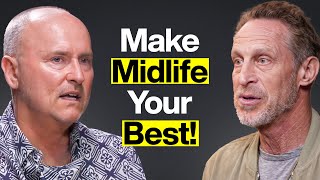
Chip Conley, a hospitality entrepreneur, argues that midlife after 50 isn't a crisis but a chance to build wisdom and emotional intelligence. He shares how reinvention, community, and shifting your mindset about aging can make these years your best.
When you shift your mindset on aging from a negative to a positive, you gain seven and a half years of additional life. Wow. Which is more life than if you stop smoking or if you start exercising at 50.
Yeah, I mean, actually, if you end cancer and heart disease from the face of the planet, you'd only get five to seven years of life expectancy. I know. Welcome, Chip, back to the Doctors Pharmacy Podcast.
It's so great to be here.
Yay. It's great to be here, Mark. We're here in Santa Fe. We're here in Santa Fe in New Mexico. I just had back surgery two weeks ago. you had struggling with your own health issues. And you have been an advocate for something that is been something that most people dread, which is getting older and midlife and redefining what that looks like. Because as most of us look at people around us in society, we see the process of getting older as kind of bad news.
Of course. If there's a bumper sticker, it'd be just don't do it. The opposite of Nike.
Right, just don't do it. And here we are. I'm about to be 65. You're not far behind me. And we're still going strong and being creative and doing stuff. And life is kind of different than it was for generations past at this age where I'm going to be an age this year where I can go on Social Security and Medicare. And yet, I'm moving to a new town. I just bought a new house. I just got married.
You have a lovely wife.
I have a beautiful wife.
Who's younger than you? Who is?
I started a new company. I am trying to work really hard to change the food system and be more active in ways than I've ever been.
Yep.
And healthier than I've been in a long, long time. So, you know, we have to kind of begin to rethink a little bit of this whole process. And what I'm curious about is, you know, you came from this very successful career as a hotelier. You were really instrumental in the development of Airbnb, which all of us know and have used. And yet you kind of turn your attention to a different focus as you've entered a different phase of your life, which is how do we reimagine this process of midlife as not a burden but an opportunity?
So what's the first word that comes to mind when you hear the word midlife? What word goes with it? No, what word goes with it? Midlife.
Crisis.
Exactly.
Crisis.
So this is the life stage that has the worst brand.
I got a new car and I did not get a 911 Porsche.
Okay. But you got something red.
I think I said something right.
So midlife crisis is an age-old trope that Hollywood made famous by American Beauty with Kevin Spacey and a bunch of other famous Hollywood actors who hit 45 or 50 and then said, okay, to hell with it, I'm gonna become an adolescent again. But the reality is most people don't have a crisis. What they have is a feeling of being stuck. And Brené Brown, a good friend, says it's the midlife unraveling. Because around 45 or 50, your life is so raveled up to be raveled means like being stuck in a string, like so wound up that you sort of feel a little bit like you don't have any choices. And so- Like you've made your choices.
And you're stuck with them.
Or you're stuck with your choices, exactly. So I like to call it the midlife chrysalis because midlife for the butterfly was the chrysalis, caterpillar chrysalis butterfly. And the truth is that the U-curve of happiness research, which has changed a little bit recently because People who are younger are really in a bad place. But generally speaking, it has historically shown that 45 to 50 was the low point. And from like early to mid 20s, your life satisfaction declines, bottoms out around 45 to 50. And then with each decade after age 50, you get happier and happier and happier. And so what if midlife is not a crisis, it's a chrysalis? It's a time for metamorphosis and transformation. And so I started in my own life, I had a very rocky, Age 46 to 49. Yeah, that happened. I lost five male friends to suicide. This was 2008 to 2010. They were ages 42 to 52. I had my own company, my boutique hotel company, that had grown to be the second largest in the US, but the Great Recession was coming along. I didn't want to be doing it anymore, but I didn't have a choice because we were in a struggle there. I have an African-American foster son. He was going to San Quentin wrongfully. I had a long-term partnership, romantic partnership that was ending not by my choice. So everything, you know, and I was running out of cash. I mean, it was all bad.
And then I had an NDE.
It sounds like a lot of fun. Yeah, I know. The NDE was like an allergic reaction to an antibiotic. And long story short, it is 47. I was at the bottom of the U-curve of happiness. The research on U-curve of happiness had not come out yet. But I can say personally, yes, my low point was there. And then I just said like, okay, I've got to have a hotel, your wake-up call on this one. and I completely changed my life. But what I recognized at that time was there's so little in the way of resources to help people through rites of passage, rituals, schools or tools in midlife. We have a lot of social infrastructure to support people through adolescence, but we don't have much social infrastructure to help people through middle essence.
Yeah, middle essence.
And middle essence is a word that's been around for a while, not popularized. but it basically says like, hey, in adolescence, you're going through all these transitions, emotional, hormonal, physical, and identity transitions. And in midlife, you're going through the.
Same transitions, but on the other side. Well, I'm going to be 65, so.
I think I'm right about midlife.
You are?
Well, listen. Back in the old days, back in the old days, old days being like 50 years ago, midlife was 40 to 60. So you wouldn't even have been in midlife. And then it was 40 to 65, and maybe 45 to 65. When I did the research for my new book, Learning to Love Midlife: 12 Reasons why Life Gets Better with Age, I found that many sociologists now believe that midlife is 35 to 75. And it's the bridge between early adulthood and later adulthood. And if we're living to 100, later adulthood may last 20 or 25 years after this midlife. And midlife has these three stages: early midlife, which is 35 to 50, the core of midlife, which is 50 to 60, and later midlife, which is 60 to 75.
Yeah. Well, it's interesting because I feel like now, like I'm back in my 20s.
Yeah.
And it has to do with the way I think about things, which is curiosity, openness, exploration, innovation, things that you don't associate with.
Openness to new experiences. Yeah.
I'm constantly learning new things. Yeah.
But I think you weren't always this way.
I kind of was, but I think for many years I got stuck in what you call these entanglements, marriage, kids, job, the rat race, all these identities, trying to get somewhere, trying to build something, trying to do something, and be somebody. And now I'm like, ah.
And why were you doing that? Who were you doing that for?
Was it your parents? Oh, 100%.
Yeah.
Oh yeah, well two things. One, my mom said to me, there's only room at the top, which I got mad at her for many times, But she was basically saying to me, strive for excellence. And my fathers both were, my stepfather and my father were both very judgmental. And I'd come home from school, Dad, I got a 98. Well, what happened to the other 2%? And he wasn't joking. And I wasn't a bad student, obviously. And yet, I spent a lot of time trying not to be them. Because they were both serious failures. But were they serious failures?
Oh yeah, both of your fathers.
I mean, my father went bankrupt. I had to support him. through the latter part of his life, my stepfather was supported by his brother who did well.
So, your mom didn't do so well with her early choices?
No, I know. It took me a minute to get there.
Is she still living or no?
No, she died.
Okay.
She died. She was an amazing woman. But the things I had to unlearn from what I learned were a big part of my growing up.
So, what was the age at which you had your midlife unraveling? You had the sense of, Is this all there is? Or is this, am I living someone else's life?
Yeah, so it's probably around in my, like around 52 when I got my second divorce and I'm like, holy shit, like what am I doing? And where am I going? And who are my people? And is this what I'm dealt with? Because I don't like this. And I was, Trapped. And I think I spent a lot of time and a lot of work and met a lot of new people that helped me emerge from this place and reinvent my life, which now is, like you said, I think you're right. The happiness, I've been the happiest I've ever been.
So I've only known you in the last five to seven years or so, and I've only known you as who you are today, which is someone to me who is age fluid. You are not defined by your biological age or your chronological age. chronological age, and you're not defined by your generation. And so, I don't know that Mark from before, but I also know you've had a very storied career. I feel like I'm interviewing you now. You've had a very storied career and you worked your ass off in order to be able to accomplish what you've accomplished. But what I've appreciated about you is that openness to new experiences. And the curiosity and openness to new experiences are two of the variables that are most correlated with living a longer, happier, healthier life.
Well, in your book, Learning to Love Midlife, 12 Reasons why Life Gets Better with Age, which I'm certainly finding, it's sort of, you know, it's sort of an opportunity for us to rethink something that we previously, at least I previously kind of had some fear about, you know, the fear of getting older, the fear of losing function, the fear of being irrelevant, the fear of and, you know, just kind of getting stuck in old friendships and old patterns and old stories. And, and, you know, the chrysalis is, I would say it more like a crucible.
It is a crucible.
Because I had to burn off a lot of the old stuff that, you know, kind of kept me from actually being in a happy place now as I've gotten older.
We call it the Great Midlife Edit. Yeah. So there's a, you know, Richard Rohr, famous Christian Mystic, is teaching at our Modern Elder Academy campus here in Santa Fe right now. I just jumped over here for this interview and I'm going to go back there. He says that the first half of your life is about accumulating and the second half of your life is about editing. And it's around midlife that all of a sudden you start to realize, oh wow, there's another world out there beyond my ego and you start to actually shift. And there's a lot of shifts that are happening but nobody gives you a roadmap. to say like, oh, you're in midlife, guess what? And so what I've just loved about writing the book and then for now six and a half years running the World's First Midlife Wisdom School is to help people to see that yes, there are a bunch of things that get worse with age. Our short-term memory, sometimes our bodies, although you're in great shape, and a lot of, you know, I'm in good shape but not great shape. partly because I'm dealing with some cancer issues, which we'll talk about. But long story short is when you look at the things that get better with age, your emotional intelligence and emotional moderation, your ability to actually be socially, have social capital, social wellness, you value relationships more, your ability to edit things, your wisdom, your crystallized intelligence, your ability to get off the treadmill and say, you know what? I don't want to be on that fucking treadmill. That's someone else's treadmill. You're curiosity about spirituality. All these things get better with age. So we live in a culture, especially in the US, where the primary way we define each other is based upon how we look. And it's okay, nothing wrong with that. But there's other playing fields that are getting better with age. I wanted to sort of say, okay, well there's a lot of anti-aging products and services out there. Most of them, let's be honest, are anti-women products. They're about the natural, like making women feel badly about their natural process of aging. And I wanted to create a pro-aging product and service. Because Becca Levy at Yale has shown that when you shift your mindset on aging from a negative to a positive, you gain seven and a half years of additional life. Wow. Which is more life than if you stop smoking, or if you start exercising at 50.
Yeah, I mean, actually, if you end cancer and heart disease from the face of the planet, you'd only get five to seven years of life extension. I know.
So, this is really remarkable and her research has been done over the last dozen years, but it hasn't gotten a lot of attention. And, you and I both know there's a lot of attention on biohacking and on longevity right now, but it's mostly on the physical side of the side. And, I think it's interesting and I'm glad. And, I hats off to you and Peter Attia and Peter Diamandis and all of the people who are helping us to see like we can actually with proper interventions, some of which are actually really fun and easy, we can actually live a lot longer because of what we do physically to ourselves and how we feed ourselves as well. But what's not gotten a lot of attention is the social science of longevity. The social wellness piece. Bob Waldinger's work at Harvard showing the number one variable for people living longer, healthier, happier lives, it was how invested were they in midlife and beyond in their social relationships. Absolutely. Dan Buettner, who's our faculty from Blue Zones. Yeah, Dan, I love Dan. In fact, I think when we first met, we might have been actually with Dan, I don't even know about that. That long story at a YPO event. But Dan, you know, his work in Blue Zones is very much focused on the natural process of the things you can do even if you're living on Sardinia on a mountain that is good for you, where they don't have gyms or anything else like that. They don't have keto diets, but people live to 100. And of course, Dr. Levy's work on showing how shifting your mindset on aging has such a profound impact on not just living longer, but living happier as well.
So let me ask you this, because I've been through a lot. You've been through a lot. You had cancer, prostate cancer, you're still dealing with it. you've had lots of loss, lost your friends, you've lost relationships, you've had a lot of sorrow and heartbreak, physical challenges. I've had, you know, three divorces. I've had many, many illnesses.
You just had two weeks ago back surgery.
I just had back surgery, which, you know, is a little bump in the road. I'll be back. Don't worry. Yeah. And. And in some ways, you know, those kinds of life experiences can kind of make you hardened.
Yeah.
And bitter and closed down. And the question I have is, you know, all of us go through that. Because, you know, when you're born, you know, everything's great, everybody's alive. And then people start dying, your parents start dying, your friends start dying. You have losses, you have successes financially, you have losses financially, you have all these good things happen to you and all these bad things happen to you. And it sort of accumulates in a way. you know, it can weigh you down. I see a lot of people as they get older being weighed down by the weight of all the story, the old stories that they carry around with them from their life. And so the question is, how do you get free? Because in a sense, from the chrysalis is a liberation, right?
Yeah, yeah.
And so that liberation process, it's almost a modern elder liberation academy.
Yeah. Right?
So how do you enter that process of liberation from all that weight that we've carried around. Yeah.
So how do you move from the weight of the world to the wonder of the world? Yeah. Good question. As my friend Dr. Kelton or Dr. Kelton is on our faculty and teaches people about awe. You know, part of it is, I like to say that our painful life lessons are the raw material for our future wisdom.
For some people though, for some people it doesn't.
I agree. The raw material. So you can have good raw material, but if you don't do anything with it, you cannot be a great chef in the kitchen. You might have all the ingredients and or even a recipe, but if you don't know what to do with it, it's gonna taste really badly or you'll never even cook it. So the key is to figure out how do you metabolize your experiences? So how do you take this raw material and metabolize it in such a way that it becomes wisdom as opposed to just you know, something that, you know, kicked your ass. Bitterness. Yeah. Or bitterness. So I've been doing an exercise, a practice for 35 years now. Every weekend, I started doing this when I was two years into starting my Boutique Hotel Company. So I was a CEO of Boutique Hotel Company at age 26. Like, who knew? I had one hotel in the tender line of San Francisco. And in 20, when I was 28, the company was having some troubles. And so I started to practice every weekend. I'd come home and I took a journal off the wall and I didn't journal, but I actually created what I called my wisdom journal. My wisdom journal. And I would write four or five, six different lessons I'd learned that week. Generally painful ones, personally or professionally. I'd say, Here's the lesson I learned. And then I would ask myself, How will that serve me in the future?
I've been doing that every weekend. That explains everything. That explains everything. That is not an easy thing to do because it means you have to stop, you have to look at yourself. 20 to 30 years. Honestly, you do not lie to yourself.
About who you are. But guess what? It accelerates your ability to cultivate and harvest your life lessons. And guess what? If you do that, you have wisdom.
All right, well, I'm a little late to the game, but I'm going to.
Start that because that's a great practice. Oh, it is a really great practice. And when I was like the CEO of my company going through the great recession, I went back to the.com bust in 9/11 and said, what did I learn then? Because I was going through something very similar and I went back through these journals. And so I now do that with my leadership team. So one of the best things you can do with this is to take it to an organization. So at Joie de Vivre, my hotel company, at Airbnb, where I was helping the three founders as their modern elder, and they called me the modern elder because they said, a modern elder is as curious as they are wise. It's like, okay, I'll be that. And then at M.E.A., my midlife wisdom.
School, That stands for modern.
Modern Elder Academy.
Yep.
We do a leadership lesson exercise once a quarter. So the leadership team comes together and we have each of the people, let's say there's eight people on the team. Each person says, here was my biggest lesson of the quarter. And then they say, and here's what it's going to do, how it's going to serve me and the company in the future. And each of us do that. So there's candor and authenticity, but also learning a growth mindset. of like, okay, I'm gonna improve and get better as a result of this. And then we finish the meeting with each of us saying, what was our biggest lesson as a team? And then we arm wrestle over that one to say, like, what did we learn from it? So this thing I've been doing for 35 years, I now do and have been doing for 20 years with all these leadership teams I've been involved in. And it's beautiful because what it does is it helps create a wiser organization. Because we're living in an era right now where artificial intelligence has made knowledge a commodity. So we talk about knowledge workers and knowledge management. You know what? Bottom line is we are now in the wisdom era. Because when knowledge is a commodity, wisdom becomes scarce and a value. And so how do you create wiser people, wiser leaders, wiser organizations?
It's true. I think about what you're saying, and I'm thinking about this process that I've seen happen to so many people, which is as we get older, things fester, resentments, bridges. And I saw this even with my own father who kind of withdrew from life. And he was this vibrant guy who traveled Europe for 11 years and was a journalist and was, you know, worked for Reuters for Europe and smuggling, you know, after the war, watches and cameras across borders, helping the Jews who'd hit in the forest to sort of make some money after the war. And, you know, he just was an incredible guy and a dreamer and a pilot and. And I just saw him trying to contract and to get hardened. And what you're saying is, it sort of reminds me of one of the Supreme Court justices, I forget his name, a long time ago said the greatest disinfectant is light. And I think we have to disinfect our own thoughts so we don't fester in those old patterns and old stories that keep us from actually being free as we get older. Because I think what you're doing, Chip, is creating a structure where we can actually build this process of wisdom generation through bringing light to the darkness. Yeah.
And that light comes in the form of community. It comes in the form of lessons and learning and school. Part of the reason I created the Modern Elder Academy, MEA, was because I lost those five friends to suicide. Part of it was because I was at a very low point during that time.
You weren't far away from that either.
No, I wasn't. One of my friends who took his own life is named Chip. How many friends do I have named Chip? And he took his own life. And so I'm at the memorial service and I'm going through my Dark Night of the Soul, or now what I call the Dark Night of the Ego. And I was thinking, because in fact that's what's happening.
That's good.
You're at the Dark Night of the Soul. What's happening is your ego is starting to disintegrate. meaning there's things that you built your life upon believing that that was who you were and it's not working out the way you thought it was. And you think, oh my God, everything is going downhill from here. And so that's why we need support because we need programs and rituals and rites of passage and education to understand transition. So M.E.A. was created six and a half years ago with a campus in Baja, not too far from a property you used to own in Baja, in Pescadero, about an hour north of Cabo. And then we have a 2,600 acre regenerative horse ranch here in Santa Fe that has two retreat centers on it. And then we have- you- have horses? We have horses. We have a dozen horses. And long story short is we do programs that help people reframe their relationship on aging and understand longevity from a social science perspective. Navigate transitions because we're going through all kinds of transitions from menopause to divorce to retirement to starting a new company or selling a company to parents passing away, empty nest, lots. So navigating transitions is a piece of it. Cultivating purpose, which is a really important piece of living a good long life. You know, part of the reason people actually lose a sense of momentum in their life is when they retire and lose a sense of purpose. And then finally, owning wisdom. Like, what if wisdom was the superpower you have as you get older? And guess what? It could be. So our average age of the people who come is 54, about little over 60% are women. We've had 5,500 people from 50 countries come. 5-0, 50 countries. I know, it's a lot. Love it. We have financial aid for people who can't afford it. And it's great.
So how do you help people move towards the wisdom piece, towards the freedom piece, towards the liberation from those old patterns and stories and kind of enter into a place of possibility and renewal? And, you know, I'm sort of shocked at where I'm at in my life. You know, I thought, okay, 65, I'm gonna slow down. maybe I'll kind of play more tennis. And, you know, I took a little break in Maui and rode my bike three hours a day and did a lot of that. But I-- It's not for you. Well, it was for me. But I also feel like I'm in this moment, it just feels so new. And it kind of makes me laugh because I'm like, I look in the mirror and I'm like, I don't think I look 65.
You don't.
And I don't feel 65.
You don't.
And I don't certainly act 65.
You definitely don't.
And I, and I have a, and I actually, most of my friends are in their 30s and 40s because I, what I find is that people who are in that, you know, 50, 60, 70 age group, not all of them, obviously, but a good bunch of them kind of are starting to get calcified. Calcified. Ossified.
And so, yeah. So the key is how do you, so if we're running, if, if midlife lasts 40 years, let's say 35 to 75. And let's also say, like, who knows? There's a woman in this week's workshop who's 91 years old. She's the oldest person who's ever come to a workshop.
That woman is like- She's getting a 30-year mortgage.
Yeah, and she acts like she's 45 or 50, and she looks like she's 65 or 70. So, you know, we all age differently. You know, there's lots of- there's a chronological age, there's a biological age, there's a cognitive age, there's a sexual age. and on that one, you're still a teenager. But the bottom line is we won't talk about that. We won't go there. Okay. The life we live, we can curate. But if midlife is a marathon and we are carrying all of this excess baggage from earlier in midlife or from childhood, there's a point at which we need to actually learn how to let go of that. So we do this thing called the Great Midlife Edit at M.E.A. You can do this at home. I write about it in the book Learning Mid lifefe. It's actually a practice of saying What are the things I have a fixed mindset about? Where do I have a limiting belief? And it doesn't have to be just about age, but it could be. It's like, o Oh, I'm never going to meet uhh, I'm sixty years old, I'm never going meet my my my swillight. Yeah. Or I'm fifty and it's too late to start a company or or whatever it is. Um, we give people the opportunity to identify and acknowledge what it is that's holding them back. And then we give them the opportunity to throw that away in the fire. Or there's, you know, there are other kinds of rituals you can do.
So basically, you have them see it.
Help them see it. Help them to see that the fixed mindset is something that you tend to hold on to. And a growth mindset, and you can focus on improving yourself and winning. And a growth mindset is focusing on improving yourself and learning. and we need to help move people to the growth mindset because if you only play games that you can win, as you get older, your sandbox gets smaller and smaller. And there's a lot of people who live that way and they wonder why they're so bored or they wonder why.
They are so... Actually, actually, you know what? I kind of wish I could have more time to be bored.
Me too.
I'm like, the world is such a fascinating place.
Yeah, well, that's, and that will serve you well the rest of your life.
You know, one of my favorite films I ever saw was, you might have seen it, it was about these comedians, Norman Lear. It was Mel Brooks and Carl Reiner. I forget the name. They were all like 90 to 100 years old. And I actually got to know Norman Lear pretty well before he died. And it was funny, I was at his 100th birthday and Rob Reiner was at the dinner. and Norman Lear gets up, he's 100 years old, he just goes on and on and on, he's talking, he's sharp as a tack, and Robert I. goes, Shut up, or this is gonna go on until your 101st birthday. It was very funny.
Well, a sense of humor is also something that is correlated with living a longer, healthier life and growth mindset.
But the thing about the movie was that they were all still working. They were all still creating.
George Burns used to say, I can't die yet. I've got a show tonight. And so he would book himself a year or two out because it was sort of the mentality of like, I can't die. I've got to be on stage.
That's right.
Yeah, but humor is important. Humor and humility, both of those are really important pieces of the process of living a longer, healthier life and a growth mindset. When you have a fixed mindset, you have a tendency to be self-conscious. You have a tendency to have that voice of your father or mother in your head, you know, saying like, you know, you didn't do well enough. And so, all that does is create a perfectionism that actually stunts you and means that you're not going to try new things.
How do you get people practically? You mentioned one editing piece, but give us some of the other tools that you use to help people move from this chrysalis to this liberation and becoming sort of a butterfly in the last part of life and really tapping into that wisdom and happiness and joy and engagement that it's possible for us. Well, I'll give you a few.
I'll be brief with them. First one is there's three stages to a transition. And for those who want to learn more about this, on the MEA website at the bottom footer, there's something called the Anatomy of a Transition. It's just a free resource that actually talks about this. so there's the ending of something, there's the messy middle, and there's the beginning of something. And once you sort of understand that, that there are three stages to any transition, ending, you want to ritualize that, messy middle, you need social support, and you need to find the through line of how you're going to get to the other side of this and have some hope and belief in that, as Viktor Frankl showed in the concentration camps in World War II. And then on the other side of it, the beginning of something new, you have to have a growth mindset. So we really go into depth about how to help people improve their TQ, their transitional intelligence. And TQ is very important. So we came up with that as a trademarked M.E.A. term, but we came up with that partly because we are going through all kinds of transitions as is the world, but nobody helped us to learn how to master and navigate these transitions. So that's one piece. A second piece is, I love this question. What is, and I'm going to ask you this question, So, what is something that you know now or have done now, Mark, that you wish you'd learned or done 10 years ago? Think about that.
Well, I think I look at the patterns of choice I made that were focused on trauma that I had from my childhood of being a people pleaser that undermined a lot of my ability to have healthy relationships that undermine my ability to even be more successful in the world and to be more effective at, and when I mean success, I mean to be more effective at achieving the mission of helping heal people through functional medicine. And I wish I'd crack that one. But it was locked inside like 10 Russian dolls, or maybe it was like a diamond in a huge rock quarry that was just impossible to get to for me. And I tried for years. And I went through a process I've talked about, actually I talked about it on the Diver CEO, of how I actually did that.
Yep, yep, yep. Well, so now I'm going to ask you the next question. So that was beautiful. First of all, thank you for your authenticity on that. Now, 10 years from now, at age 74, almost 75, what will you regret if you don't learn it or do it now? You don't have to think about it.
No, no, no, no, no. I actually have been thinking about it because I'm in a process right now, which is forcing me to look at this, which is, How do I be more of a warrior king in my life and in a kind benevolent way? And so often I've been not able to stand up for myself in the ways that I need to. I'm not able to tell the truth in the ways I need to tell it.
Because it's going to disappoint someone.
Because it's going to disappoint someone.
Or it's going to make you look bad.
Well, mostly because it's going to maybe get disappoint someone because, you know, when I was a kid, my father, my stepfather was a rageaholic. So if I told the truth, I would come at me with rage and violence and physical violence. And so I've learned to kind of, you know, navigate the world in a bit of a tentative way.
Yeah.
Which I really kind of overcome over the last, you know, 12, 14 years.
Yeah.
But I feel like I still have a lot to learn there. And I feel like I, I, I I feel like I'm at this moment in my life where, like, I know beyond a shadow of a doubt that there's a scientific revolution that's happened that hasn't reached the public in medicine to help people really transform their health through what we call systems medicine, network medicine, functional medicine, whatever you want to call it. It's a paradigm shift. And I know that my job here on the planet is to help steward that in. And if I don't act in the right ways, that's in integrity, that's telling the truth, that's standing up to the forces that are pushing against me as a warrior king, that I will regret it.
So you just answered your question beautifully. And I think the question then might be, and again, the question is 10 years from now, what will you regret if you don't learn it or do it now? The thing I would say to you, if you were in an M.E.A. workshop right now, and I was like.
I feel like I'm in a workshop.
Yeah, exactly. together, so I'd say like, okay, so what is it that's the tangible of that? What's the specific that actually you need to do in order for you to know that you've done that? You don't answer it because I want to actually give people another perspective on this. For me, when I asked myself that question when I moved to Mexico eight years ago, this is before MEA opened, but I knew I loved Baja. I loved Pescadero and Todos Santos, the neighborhood where I bought a home and renovated the home. the thing that I said to myself, well, gosh, 10 years from now, I will regret. At that point, I was 56. I will regret 10 years from now if I don't learn Spanish now.
Right.
Or if I don't learn how to surf now.
Right.
And yet, I had a mindset, a fixed mindset saying, I am too old to learn a foreign language. I am too old to learn surfing.
I started learning surfing when I was 62.
Well, exactly. But for me, the thing that got me off my duff and gave me, was the sense of like the anticipated regret. 10 years from now, I will regret, especially the thing that's physical, you know, because it doesn't get any easier. And also mental, like foreign languages are not easier as you get older. So anticipated regret as a form of wisdom. Anticipated regret is a form of wisdom and it's a catalyst to take action.
So that's a question I would ask. Sort of like the Chinese, you're gonna.
Need a 10-year plan. Or at least this idea that, okay, am I comfortable with the fact that 10 years from now, if I don't do that, am I going to be okay with that regret? And if the answer is yes, then there's no catalyst at all. You're comfortable with that. So these are the kinds of questions we like to ask at M.E.A. and they're including questions like, okay, once a year you should be coming a beginner at something. So that you just, when I go to a cocktail party now, that's the first question. People usually say, like, oh, what do you do? Where do you work? My first question is like, so what are you a beginner at these days? And people are like, oh my God. They walk to the bar, like, I need a drink. They're like, I need a drink. Like, who the hell are you? But helping people to see it's okay to be a neophyte, to be not very good at something, but to be learning it. Peter Drucker was famous. He was a management theorist, lived till 95. He had a practice and his practice was every two years he would study something to become one of the world's leading experts on it and something unrelated to being a business school professor or business author. He wrote two-thirds of his 40 books after the age of 65. And so this is a man who said, that's insane. Curiosity and learning are sort of like the fountain of youth or an elixir for the soul.
Totally.
I don't like to call it lifelong learning. I call it long life learning. how to live a life and how to curate a life that's as meaningful and deep as it is long. Because I think we're going to get better and better at the longevity, the length of a life, but the depth of a life is also important.
Well, I mean, it's true. I mean, I've written 19 books and- Is that right? Yeah.
Oh my God. I've written seven and I think that's a lot.
And the reason is because I want to learn something. Yeah. Like, I know this much, but I want to really become an expert in this topic and do the research and the hard work. And I find it so invigorating. It's like I was talking to my wife the other day, I'm like, we will both want to go back to college. And she's like, we can't go to college. Yeah, we can because they have summer courses.
Oh, they do.
There's three week courses. And so I actually used to be at Cornell where I went to undergraduate.
Oh my God, you should have gone.
In the hotel business.
That's a major hotel school.
I did go to the hotel school for lunch because they had to practice all this gourmet cooking. So I would go there for their cafeteria. But I actually want to go back and take courses in different topics that are academic because I love learning. I want to learn. I want to be forced to learn. And the reason I've written books is it forces me to learn new things. I'm now forced to learn. I'm learning about AI and building a new company and I have to learn about AI and I have to learn about tech and I have to learn about user experiences and things that I never really understood before. I mean, I know how to be a doctor. I'm good with biochemistry and all that. But like, this is all news for me. So, and how to.
So there must be a part of you though, who is, you don't, even though you came up with parents who were a little tough on you, somehow you've gotten to a place where you may not be as self-critical as you used to be. Is that true? I think, well, because otherwise you might shut yourself down when you're trying to learn something new.
I think two things happen. It was like this paradox of things that happened as a kid. One was my stepfather and father were both very hard on me and judgmental and we're both failures. So it was kind of a weird dichotomy of them pushing me down while they were down, right? My mother basically said to me, you can do or be anything you want. the sky's the limit. Like, you have this intelligence, the capacity, you work hard, you can do whatever you want. And she never put a limit on my thinking, except for one thing. Because my sister was very musical. She says, your sister's a musical one. You can't sing or do music. And that made me piss off. So one of my things that I would regret in 10 years If I don't do it, is to learn-- To learn how to sing? Well, my wife and I are talking about taking singing lessons. I don't know how it's gonna go. But I got a guitar from Bob Weir, an electric guitar, signed for my birthday. Bob Weir, for those of you who don't know, is part of the Grateful Dead and is one of my heroes. And he signed a guitar for my.
Birthday, and I wanna learn how to play the guitar. You know, that's so funny. I learned how to play the guitar at age 40. And it was one of those things I didn't ask the question of, well, I regret. and I loved it until I got all these calluses on my fingers. You'll get used to it. But I loved it, but I haven't kept it up. But I think it's great.
I worry about the calluses because then I want to feel things. Yeah, yeah. So it seems like you've created this revolutionary new framework for thinking about how we age.
Well, it's a bit of a movement. So this idea of How do we help people see that purpose and community and wellness are the foundational pieces of living a good longer life after age 50? And so we have 60 regional chapters around the world, MEA does. So we have two campuses and we have online programs, but to have 60 regional chapters means that it's become a global phenomenon. And the idea of how do you help people to actually feel better about aging? And we can arm wrestle a little bit about the idea of like, is aging a disease or is it not? And physically, there's no doubt, senescence and the telomeres and- Things get changed. All of those things are very important. The problem that I have with the Brian Johnsons of the world in Venice Beach and many of the people in the- Don't die. Longevity movement, is that they're fixated on only one part of life, the physical side of life, and they want to cheat death. And it's like, fine, go do that. But if Brian seems like a nice enough guy, I've never met him. But when I listen to him in his podcast, I feel sad for him. His life is so regimented, it feels so rigid, and like when could he have an orgasm even? And like what time is he gonna go to bed? It feels like there's a joyless striving to it. And I just want to say-- well.
He'S actually being a scientific experiment for the rest of us. So I respect him for that.
I respect him for that as well.
That's courageous. It's like someone going to Mars for the first time. Can you do it?
Exactly. And what are the collateral damage associated with it?
Well, yeah. Is he happy? Is he not happy? I actually met him. I talked to him. He seems very happy.
Okay.
I mean, it's hard to judge from the outside, but I think the thing for me that has to do with the physical health part is that my definition of health and how I want to age is being able to do whatever I want for as long as you can. And this year, I learned something new. Helicopter skiing. I'd never done it before.
Did you do that in Iceland?
I did in Iceland.
And I just came back from Iceland. Oh my God. Yeah, what a beautiful place.
It's amazing. It's something I always wanted to do. I never could afford to do it. Now I can afford to do it. And it was one of the most exhilarating experiences I've ever had. And it was something that I want to continue to be able to do, not at just 64, but at 84 or 94. And I think that for me is why the biological part is important, because it allows us to do the other things, which is to learn and to be engaged in relationships. to have purpose to do stuff, you know, because if you feel like shit, you just want to sit around and watch TV.
Yeah. So the average American watches 40, I'm sorry, the average American retiree watches 47 hours of TV a week. So it's almost like they retire from a job that they were doing 47 hours a week and they just decided to go be a couch potato watching TV for 47 hours a week. So yeah, that sedentary life is not good for us. And it's really bad for our brains too. I mean, the thing that a lot of people think is like, oh, especially recently with Biden having some challenges with his mental capacities in his debate, the reality is that our short-term memory definitely gets worse with age. But this idea of crystallized intelligence, the ability to be not so fast and focused with your brain, but as Dr. Gene Cohen showed, to be able to have four-wheel drive of your brain, to think systemically, holistically, and to connect the dots. We get better at that into our early 70s. And so it's a little bit of wisdom, it's a little bit of intuition, it's a little bit of peripheral vision. And why would we want to actually deprive ourselves and others from that? Which is part of the reason why this movement part of M.E.A. is like, Hey, why is it that Ernst and Young and I like Ernst and Young, but, and we've had young partners come to M.E.A. But why are they requiring their partners to leave the firm at age 60?
Really?
Yeah. And there's a lot of companies that do that.
It's like, they pay them too much.
Well, that's a little bit of it. A little bit like, hey, let's get you off the payroll. But the truth is, in some ways, in some parts of your life, that's when your brain is at its best. And so that's why part of what we help do is say, okay, you're going into your next chapter. And your next chapter, I like to call it same seed, different soil. Take that seed of all your wisdom, but plant it in different soil. Like I did at Airbnb when I was 52. I joined a company, I was twice the age of the average person there. I had no background in tech, and so I had to learn a lot from everybody else because I thought I was supposed to be the mentor, but I was also the intern. I was what I call a mentor, a mentor and an intern at the same time. And the bottom line is, you know, I was better off for it by learning from the young ones. and they were better off for having me there.
Yeah, and I think, you know, what you're talking about is developing different aspects of your physical health, emotional health, mental health, spiritual health, social health, all of which kind of form this soup of happiness.
That's right. It's not any one thing. Because, you know, for all we know, we might be a paraplegic tomorrow because we get hit in a crosswalk. So, if you only have one, if your physical is the only thing that you actually value in life, I mean, Christopher Reeve, you know, God rest his soul, was a really interesting character, Superman. And then he has a horseback riding accident and he's a paraplegic. And he had to learn a new identity. And if we are not willing to learn new identities, we get stuck in the old identity. and that's what feels really depressing. And especially if that old identity is starting to shrivel up.
And part of what's happening in our society just feels like we're ossifying our ideas and ideology and identifying with tribalism and divisiveness and separation and discord and disconnection. And it's heartbreaking because we're all human beings. I mean, I had people criticizing me for treating different patients. you treated a prisoner, you treated a Republican, you treated a Christian, you treated a Muslim, you treated a Democrat.
I mean, like, what?
Like, you're a doctor, you treat everyone. Come on! And I'm like, you know, these are all human beings, first and whatever they are, second. And we kind of lost that. And I wonder, it seems like part of what's happening to us is this sort of, this ossification is happening earlier and earlier in life. And I wonder through the wisdom you've gained through the work at MEA and your own personal life, how we kind of break through? Because what you're talking about is building deep, meaningful social relationships and connections as a key part of living a healthier and happier, longer life. And that's what Dan Buettner showed, the Blue Zones. It's certainly true. So, but we're going, it's not like we're going the opposite direction.
Yeah. How do we get, the key is how do we learn to get to know each other from the inside out. We tend to get to know each other from the outside in. That's how we've always been. And, you know, that's led to certain isms, you know, you know, racism, sexism, homophobia, ableism, etc. Well, you know, the reality is that that's what I've learned at M.E.A. One of the beauties at M.E.A. is, and Dan and Decker Keltner's work on awe has shown that the number one pathway to feeling awe in life is not in nature. It's number three. Number two is collective effervescence, your sense of being with people and feeling a sense of connection. But number one in life is moral beauty.
Moral beauty, who knew?
Moral beauty is when you witness kindness, courage, compassion, equanimity, resilience in another person and it gives you a sense that humanity is good. So, part of what we do at MEA is when you come and you're in a cohort of, say, two dozen people, no one knows each other's last names. We've not sent out LinkedIn profiles. People can, if someone says, what do you do for a living? You can answer it, but you don't have to. Because actually, what we really want people to get to know is like this person for who they are. And we talk about speaking from the third vault. The first vault is the facts of our lives. The second vault is the stories of our lives. The third vault is the essence of who we are. And so having people spend a week together speaking from that third vault, by the end of the week, they realize, oh my god, the person I've connected with the most is somebody who is a big Trumpster. And I'm a Democrat, but I love them. And now I understand them better. So I think the world, I think America needs to be all coming to M.E.A. for the politics. division because if you get to know people from the inside out, you understand their motivations and you assume best intentions. And we live in a society right now partly through social media where we assume worst intentions. Yeah.
It'S such a beautiful movement. I think what I wonder is people are drawn to you and to M.E.A. because they're already sort of pre kind of set up to think that this is something they want or that they're missing. How do we reach those people who are just sitting on the couch watching TV for 47 hours?
Well, we get their spouse to go first and then their spouse comes home and they're like, you know, in fact, we have someone in this week's workshop and he's there because his wife went and she came back radiant and he said like, okay, I'm gonna try it. So we had a union plumber who was going to be retiring and his whole life was knowing how to fix things and there's only so much plumbing you can do at home with his wife. And she said, you've got to go to this program. So sometimes it's encouragement from family members and from friends who've done it. But you can't, you know, you can take a horse to water but it can't make it drink. If someone doesn't really want to look at themselves or build a deeper connection with other people, it ain't gonna happen. But what I've found, you know, 5,500 people into this for week-long workshops, is it's a real rarity that someone actually doesn't wanna go there. Maybe two or three people in six and a half years have left early. Maybe, and that's partly because we actually are in very isolated locations. Santa Fe is not like a commuter school. Baja is in another country for most people who are coming. So, you know, we could have done this in Sonoma for San Francisco or Hudson Valley for New York, but we chose places that require a little bit of a pilgrimage, partly because that first 24 hours, sometimes people look around like.
What the hell am I doing here?
I have never done anything like this. And, but by, you know, by a couple days into it, they're like, wow, this is how I want to live. And this is why we actually have created residential communities as well. In Baja, we have something called Baja Sage, which is a regenerative community. It's based on regenerative living principles with a regenerative farm. We're going to be doing the same here in Santa Fe, a regenerative ranch. And so how do you help people not go to a retirement community, but go to a regenerative community?
It's a beautiful sort of stake in the ground that you put in to sort of change the perspective of how we can think about what happens to us as we go through life and get older and things change. And one of the things that a lot of us deal with is health issues. I've had my own five, six years ago, I almost died from mold poisoning and I got autoimmune disease, colitis. I lost 30 pounds. You see I'm already pretty skinny, but I was 30 pounds lighter than this. And I was this close to death. And I had to pull myself out. I've had to pull myself out of a lot of these things. I had chronic fatigue syndrome. mercury poisoning. I've had Lyme disease. I've had back issues. And, you know, I always found this resource in myself to come back.
Yeah.
And I wonder kind of, you know, you're dealing with something now.
Yeah.
Which is prostate cancer. And as long as I've known you, you've been dealing with it.
Yeah.
And you walked in today and I was like, you look great. Yeah.
A little overweight, but, you know, because of the some of the treatment stuff I'm on. Yeah, yeah, yeah. So I, six years ago, how does.
The question really is, how has that affected your thinking about kind of midlife? Because it's like, you're thinking midlife, I could have another 30, 40 years.
Yeah.
But then I'm facing this immediate.
Yeah.
Cancer.
What happens if it's only three years? Yeah. So six years ago, I found out I had stage one prostate cancer just through PSAs. PSA, you know, then ultrasound and MRI and PET scan or biopsy and PET scan, all that stuff. So stage one, it's prostate cancer, no big deal. We'll be okay. And my decipher score was relatively good, which is basically tells like my genome, am I at high risk or not? But about three years later, I went to stage two. I had what's called HIFU surgery. It was supposed to be fine. I lost half my prostate. prostate, but there's a 1% chance of metastasizing within five years. And within 15 months, it metastasized and went to my pelvic lymphs. And so now it was outside the prostate. And that's when I had to start a lot of things. So for a year and a half now, I have been on androgen deprivation therapy. So in essence, a testosterone blocker. Yeah. And so I have a testosterone score of eight or 12. So it's really low, like 2% of what it would normally be maybe.
Yeah, that's very low.
And so that's hard when you're launching a book, launching a new campus.
That's what me too. Feel motivated, feel energetic.
Yeah, exactly. So, no libido clearly with that. I had to have a radical prostatectomy. So, got the prostate taken out. And then I had to have 36 sessions of radiation. You know, and my last session of radiation was January 12th this year. And on January 15th, I was on Good Morning America. On January 16th, my book came out. And on January 17th, I was on the Today Show. So, I have done it, but I will also say it's taken a bit of a toll. So, I take retreats once a month now. And whether that's going to Iceland for a week or more often going up to a place called Ojo Caliente north of here, to go do the hot springs for two to three days, going and doing a silent retreat by myself for two or three days. I do that monthly because I need that as the refreshment.
I'm gonna take notes from that.
Yeah, we do need it. We need it.
I love it because my joke was, I'm gonna go part-time and stop working nights and weekends.
Yeah, yeah. Well, and we're very similar. The other thing I started to get to is realizing, a lot of people think of cancer as this thing you have to kill. And yeah, I mean, I want to kill my cancer for sure. But the mentality is very much the warrior mentality. And I've done, I mean, I've changed diet. I did a keto diet for six months. I've done a lot of different things to actually improve it. I've had functional medicine doctors helping me and supporting me. And I came to realize that what if I instead of thought of this as something to kill, what if I thought of this as school? I'm in cancer school. Cancer's my teacher. What's cancer? Why do I have cancer? What is the purpose of me having cancer? And I've learned a few things. Number one is, you know, when I have cancer, I can't always be the hero. I like the archetype for me as hero. I'm gonna strap on that cape and become the hero. And so how do I let other people be the hero? And how do I let people take care of me? How do I be less focused on my work? How do I ask that question? Not 10 years from now, what would I regret? Three years now, what would I regret? Because what if this does keep metastasizing elsewhere in my body? So that became a question. What is it that I really, what matters in terms of my relationships? I have two sons. I have actually, I have a foster son who's 48 years old, like that's a long story. And then I have two biological sons, 12 and 9, with a lesbian couple. I'm gay. And they reached out to me years ago and said like, we want you to be the dad. We want your sperm. Like, you know, I was like, okay, I know how to make sperm. Today with no prostate, I don't know how to make sperm. But thank God they asked a while ago. So I have two biological sons. in Texas, and I go hang out with them more. And so to actually look at cancer as a teacher and as the opportunity to change my life and my lifestyle in certain ways. Yeah. To respect that is great. I can't wait to be off the Androgen deprivation therapy because it's put 15 to 20 pounds on me because that's what it does.
Yeah.
You actually go through menopause, too. I mean, like, you know, like, I I know what hot sweats do. hot sweats and night flashes. Hot flashes, night sweats. And yeah, brain issues too. Yeah, but I will be off it soon enough.
You know, someone said to me very wisely, we asked, why is this happening to me? He said, the real question is, why is this happening for you? And I wish you weren't dealing with this. I wish I didn't have back issues. I wish I didn't have all the things I had to deal with. but it's what we make from it. It's the meaning and stories we make and it's all the little bits that help us kind of get to where our soul is supposed to get to. I don't know what that is for each of us, but my deep belief is that we're here to get our souls free. And I see your work at MBEA as sort of central to kind of redefining the process of Getting older and imagining how we can actually get freer as we get older, not more stuck. And the midlife crisis is the stuckness.
It's the stuckness and it's the, okay, I want to take shoots and ladders back to adolescence because I liked that period of my life.
I didn't. Well, you think a teenager is a nightmare.
For some people, it wasn't.
I know, I know. 20s was great. I'll go to 20s.
Yeah, yeah, yeah, yeah, yeah. I can imagine. So, and sometimes you're having your adolescence now too.
Yeah.
And that's beautiful because, you know, to be age fluid means you're all the ages you've ever been and will ever be. Yeah. And why wouldn't we want to be that?
Well, you know, when COVID happened and I got divorced, I basically, you know, had a motto, which was no emails, no females and a backpack. And that was really powerful because I just got free. I dropped everything, all my identity. I really dove into this sort of work of Ram Dass, which I'd known for a long time. But he had this sort of audiobook called Becoming Nobody.
Yeah, I love it.
As opposed to this Becoming Somebody nonsense that we're all striving for. And it was a really important moment in my life where I did the editing.
Yeah.
And I did the really deep inquiry and I was looked at how I got to where I was.
And you saw your patterns.
And I saw my patterns. And I'm like, I ain't doing this anymore. This is locked up.
Yeah.
And I want to be free and happy. And the truth is I've never been happier.
I can see it in your eyes.
Freer. And it's, and I've never been healthier because I've also learned a lot of stuff about how the body works. I mean, that's the thing about medicine. It's constantly changing. It's not like you learn how to put together a record player and it's the same record player. It's like a Pandora's box of magic. And I feel like I'm on that ride. And so I feel we really are in this critical moment in society where the things that you're teaching, the things that you're offering are needed more than ever. And I think people are listening to this, they're wondering more how to learn about the work and where to find out more. Of course, your book, which is Lessons in Midlife. But tell us more about where they can find out about MEA, where they can find out about the work that you're doing.
Sure. The website is meawisdom.com and you can see all of our workshops as well as for those who don't want to come to our campuses, we have online courses. Also, I have a daily blog.
A daily blog?
A daily blog that I write and it's on the MEA website. and I love it. And it's called Wisdom well. And so, if you want to sort of learn more about this for free, just subscribe there and you get a daily microdose of wisdom from me.
Oh, I like the microdose idea.
I thought you would.
So, the book is Learning to Love Midlife. 12 reasons why life gets better with age and your website is meawisdom.com and.
Then there's also chipconnolly.com.
Great. Well, Chip, thank you for Thank you for your courage. Thank you for making us take a hard look at ourselves when we'd rather go watch a lot of TV. And I look forward to having the same conversation 10 years from now when we can look back and ask the same questions.
Yes. Thank you for being a role model.
Thanks, Jeff. If you love that last video, you're gonna love the next one. Check it out here.
More from AI




This Is Why 99% of Skin Conditions Don't Heal — And What Dermatologists Won't Tell You






Why you need to start strength training today #strengthtraining #healthyaging #fitness
