Not All Meat Is the Same—Here’s What It Does to Your Health
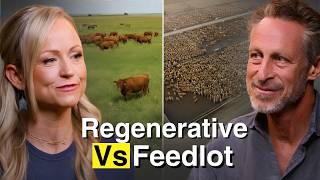
AI Mark and Autumn Smith discuss how different meats affect your health, from nutrient density to the food system's problems. They explore regenerative agriculture and why nutrient-rich food matters for both mental and physical health.
Chapters
What you put at the end of your fork is more powerful than what you'll find in a prescription bottle.
But I remember feeling like I was trapped in this body working against me and that I had no control over. I just had bloating so badly that I looked pregnant. I would wake up in the middle of the night with excruciating pain. It almost felt like a knife, like twisting on my inside. It wasn't until I changed my diet that things really started to stabilize.
Autumn Smith, Master's in Science, PhD and FDNP with a Master and Doctor of Science in Health and Holistic Nutrition. He's a functional diagnostic nutrition practitioner, a certified eating psychology coach, and former former celebrity fitness trainer. She co founded Paleo Valley and Wild Pastures with her husband to help people thrive through nutrient dense whole foods and regenerative pasture raised meats. Let's just start with what the problem's been with our current food system.
The nutrients that used to be in our food are no longer in our food because, you know, our food supply is more depleted in nutrients than it's ever been.
Why is that?
Largely due to our industrial agricultural practices, we're filling our bellies, but we're starving at a micronutrient level and our cells just don't have what they need to produce energy. We really do want to take factory farming and make it a thing of The.
Hey, it's Dr. Hyman. I'm so excited to share this episode with you today, but before we dive in, I want to get your help. Please take a minute to hit that subscribe button. Whether you're watching here on YouTube or listening on your favorite podcast platform, it truly means the world to me and it helps my team. And I bring you this podcast every single week. Plus, I don't want you to miss a thing. So thanks so much for being part of this community and I'm glad you're here. So Autumn, it's so great to have you on the Dr. Hyman Show. I really have been been so excited about this opportunity to talk to you about some really important things, which is the quality of our food, why we're sick, and how many people are suffering out there that don't need to suffer. And the answer is sort of literally at the end of your fork. I've always said what you put at the end of your fork is more powerful than what you'll find in a prescription bottle. And obviously food is medicine and the whole framework of everything that I do. And you embody that so well, not just in your Personal life. But in the companies you've created, Paleo Valley and Wild Pastures, which is basically about getting regenerative meat to people from America. You know, I really think, you know, want to start off by kind of inviting you to share how much you were suffering when you were younger. Because I think one of my life goals and when I say what people say, well, Dr. Hyman, what's your purpose and mission? My mission in life is to end needless suffering through the power of functional medicine and also through the power of community to help change behavior through the science of functional medicine and the science of how we change. And you know, people walk around just feeling like crap all the time and they think it's normal. So I just want to invite you to share a little bit about your initial struggles with irritable bowel. How that affected you, how you felt, and then what you did to overcome it.
Yeah. Well, first let me say it's an honor because you were one of those people who provided that hope for me early on in my journey. But I remember feeling like I was trapped in this body working against me and that I had no control over. So I just had bloating so badly that I looked pregnant. I would wake up in the middle of the night with excruciating pain. It almost felt like a knife, like twisting on my insides.
Call it a food baby.
A food baby, exactly. But like a violent food baby.
Yeah. Kicking a lot.
Yeah, it was really bad.
Triplets in there all kicking at the same time.
Exactly. It was unpredictable. And I on the outside looked fit. I was always a dancer and. But I was just not well. And so that started about 10. And then no doctor really knew what to do with me. They put me in the irritable bowel syndrome category, which we kind of know means we don't really know. We ruled out more serious pathology and we just. You should take Beno and Gas X, which I did to no avail.
Beno, Gas X and Metamucil. Yeah.
Don't be stressed.
And it's all in your head and.
Just basically stress based condition. Yes. I was like, well, okay. And then as I got into my teens, my mental health started to suffer because we didn't understand at the time, but there's the gut brain link and I do think that directly contributed that unaddressed inflammation. Oh yeah, there's actually.
Just to interrupt you for a sec, there is actually a paper in like the Journal of the American Medical association that talks about how the belief that doctors have that irritable bowel is caused by anxiety and people's mental state is actually backwards. That the inflammation in the gut creates inflammation in the brain. An irritable gut causes an irritable brain. It's not the other way around. And I mean, obviously works both ways. But, like, the real primary challenge is this bottom up the gut to the brain connection. And that's what you're experiencing.
Exactly what I was experiencing. And because I had that anxiety and depression as a teen and really just kind of flew off the rails. And it wasn't until I changed my diet that things really started to stabilize because I think I was just on a roller coaster. Right. Inflamed blood sugar up and down. And my husband, it wasn't until I met him that he said, wow, you're really suffering and you live like this. Like this is your normal. And he wanted better. For me, we lived in LA at the time. He got on the intern Internet, saw that a few people in 2007 were using food as medicine and talking about it. And I thought that was crazy that food would have anything to do with my digestive disease.
Who is that? Huh? Who is that?
It was you. It was you. And I think Rob Wolf or, you.
Know, I had like, I had like a video podcast blog essentially in 2005. It was crazy.
Oh, yeah, I've read all your books. Like I said, like, you've been a real mentor from afar for me. So. But yeah, even just 30 days of dietary change, my digestive issues went away. But it was a few other pieces I had to dial in to where my. My. It was like the fog lift.
Yeah. What. What did you do? What did you do to diet wise? And what did you do?
Yeah, so I started first. We just crowded out processed foods. Right. Anything that was processed and not a whole food. I started going to Pasadena's Farmer's market. Fruits, vegetables, and really high quality animal products. And I was someone who kind of avoided animal products in my youth, and I think that contributed. And then the next pieces were really focusing on the gut health.
Yeah.
So the bone broths and the fermented foods and then stabilizing my blood sugar. I am someone who benefits from a low carbohydrate diet, without a doubt. And so that was kind of the last piece. And I. I started to feel a calm, like a sense of stability that I just didn't know. I was always a restless, agitated spirit. Couldn't find her center. And then it was just like, whoa, what's that?
This is so important. I want to double click on this, because what you're saying is, is something I want everybody to really take in.
Depression, anxiety, bipolar disease, maybe even schizophrenia in some cases, other mental issues that people suffer from. And it is, it is the number one cause of disability in America. You know, yes, obesity, heart disease, diabetes kills a lot of people. But in terms of disability, what we call quality of adjusted life years, meaning, say, how many qualities, how many happy years you have, it's the single biggest cause of disability. And most people don't realize it's connected to what they eat or how they live or some other factors that's modifiable and it's not them. People say, oh, I, I'm depressed, like, like I'm John or I'm Sally. And no, like, it's like, no, there's something awry in your system and that's fixable. Sometimes it's a big diet change. That's the whole journey here is people don't have to suffer that they, that you, you know, you, you figured it, you did it, you know, in a way that, you know, it's hard. Your doctor wasn't giving you the answers. You had to go on your own and research, but you, but you did it. And now, like, look at you. You're glowing, you're happy, you're, you know, you never know. You were depressed and anxious and miserable.
I know I'm generally a happy person and I, I am, like you said, so inspired by the metabolic psychiatry movement and all the things, you know, the trials in ADHD and even anorexia, binge eating, schizophrenia, bipolar. My aunt was bipolar. I just wish that, you know, we had known she's, she's passed.
But, yeah, I mean, it's quite powerful. We're in this moment of nutritional metabolic psychiatry. I've had a lot of people on the podcast throughout this. I've had Savanni Sethi, I've had, you know, Dr. Umanaidu. I've had, I've had a lot of people like James Greenblatt, psychiatrist. Oh, yeah, I'm going to have another psychiatrist on Robert Hedaya. So we're going to start more and more talking about this whole idea of how do we, how do we help our brains and our minds? Whether it's Alzheimer's and Parkinson's or anxiety, depression or OCD and add, like, whatever it is, there's another way to think about this than heavily medicating yourself into oblivion.
Has to be, because I was a teen on antidepressants and that did not go well for me. It was really Hard. And also for my final project for my Marc David class that I did.
The Institute for the Psychology of Nutrition.
That's right. Yeah. I focused on the ketogenic diet for eating disorders, which you'd think, oh, it's a restrictive diet. But it was so helpful for me. And now they're doing research to suggest it might be helpful for others.
It's quite powerful. And when you meant no low carbohydrate, just to be clear, for people, I think you mean no refined sugars and flours. But you eat vegetables.
Oh, yeah.
But vegetables are carbohydrates. My joke is carbohydrates are the single most important food for your health. Oh. And because they have, like, you know, phytochemicals and nutrients. And so if you're eating spinach or broccoli, that's a carbohydrate.
Yes. I'm not like keto, and I'm not carnivore. Most of my diet is plants, actually 50% of my plate. Absolutely. The low carb, starchy variety.
Exactly. So just to be clear, you don't. Low carb isn't necessarily technically low carbohydrate. It's just low sugar and starch. So we've established that, you know, one. People are suffering out there, including you and including me. Back, back. Back in the day that, you know, we discovered that food was medicine, you know, and, and most people listening to this podcast probably aware also that that, you know, ultra processed food is not the best thing for you. And thank God, now, you know, I'm working with the FDA to kind of help put in a petition to define what is ultra processed food. They're, they're actually asking for.
The desire to make an initial assessment of what is ultra processed foods that can be regulated. There's a whole. Yeah, so there's a whole NIH FDA collaboration on regulatory science, which means how do we figure out how to regulate food in the right way? And so we're really kind of moving in this direction. But most people don't realize that 60% of their diet's ultra processed food. It's almost 70% of kids diet. It's 73% what's on the grocery store shelves. It's mostly funded by our government through, you know, crop subsidies and SNAP, which is $100 billion of payment and 75% of which is for this junk food. So all this is true. So Americans are really at the effect of this horrible food system, which is, you know, attempting to be addressed now through this, through this administration for the first time in history, which, you know, whether they get it right or not, I don't know. But like it's at least, it's at least it's a conversation. And that's incredible to me especially like the last dietary guidelines committee did not make a determination to ultra processed food, which just blew my mind. And there's a lot of technical reasons why they didn't do it, but still it's like, give me a break, right? So you know, just for a little bit, tell us about your perception of the problems with our food system and then let's talk about, you know, like the idea of how do we, how do we actually.
Think about food in a, in a way that understands that it's medicine. And I want to get not just into the like metaphorical aspect of oh yeah, food is medicine, it can heal like Hippocrates said, but actually the granular science that you've been involved with with one of my previous podcast guests, Steven, Steven Van. How do you say his name again?
Stefan Van Vliet.
Steven Van Vliet. I say Valette, but Steven Van Valid, who's at the Utah State University where my daughter actually did her, her pre med school actually I was in Logan and taught him and, and he's doing a lot of research looking at the actual metabolomics and nutrient density in a very sophisticated scientific way. What is the difference between regenerative or grass fed organic. But let's just start with what the problems in with our current food system and why it's killing us.
Well, I think my problems were twofold. Right. We were eating mostly processed foods. I was that were creating inflammation. So like you said, majority of Americans diets are ultra processed. But then also we have this situation where the nutrients that used to be in our food are no longer in our food because you know, it's more. Our food supply is more depleted in nutrients than it's ever been.
Why is that?
Why is that? Largely due to our industrial agricultural practices that are destroying that life in the soil that acts as a taxi from the rocks where the minerals originate.
Yeah.
Into the plants and then we eat the plants or the animals and if they're not able to get into the plants, then we never get to benefit from them. Magnesium that helps us ease tension and the iron that gives us energy and the calcium that helps our bones be strong and make sure that we don't have cravings like we are not able to access those. Studies have shown, you know, 5 to 40% decline. And I read one the other day that there was like an Apple In 1912, when you compare it to 1992, there was 50% less calcium and 80% less magnesium and 90% less iron. And if you. In the Today's Apple in 1992, now, if you take that at the same rate of decline, it would be 61% less calcium and almost no iron or magnesium at all.
So it looks like an apple, but it's not really an apple.
Exactly. We're filling our bellies, but we're starving at a micronutrient level and our cells just don't have what they need to produce energy. So. And this again comes back to the way we've been doing agriculture. And we just have to kind of get into a place where we realize the health of the soil is the very basis of our health. And we cannot thrive until we rehabilitate this soil and the plants and the animals. You know what I mean?
It's basically what the plants are eating, which is in the soil, and what the animals are e. Which are the plants. And so if that's all depleted, you're getting a whole depleted food supply. And I think what you said, I just want to double click on because it's so. It's so important for people to understand there's a difference between soil and dirt. Soil is that rich, loamy, warm, like nice smelling, like chocolate cake. Chocolate. It looks like chocolate cake. Yeah, it's like rich soil. Whereas dirt is just like dust and sand and crumbly. And what we've done in America is taken this rich soil, which we had 8 to 50ft of in the Midwest, and just lost a third of the topsoil through our agricultural practices, through the tillage, through the use of chemicals, which are like, basically they're like poisons. I mean, pesticides and herbicides are poisons that are meant to kill living things. So like, literally, Literally, I mean, for those who don't know, the history is that pesticides came from biological weapons and nerve gases because they're, they're nerve gases and glyphosate and came later. But that's, that was, you know, used to clean lead pipes and ended up killing everything downstream in the river. So they're like, oh, this is an herbicide. And. And so we've depleted this soil and turned into dirt. And then like you said, that the microbes and the living soil is a taxi. I never heard that before. But that's a great, it's a great metaphor, but it's like basically it shuttles the nutrients from the soil into the plant. And the nutrient density of the plant depends on the health of the soil and the nutrient density of an animal, which we don't even think of. Oh, go. Meat is meat is. Meat is meat. It's not just like an apple in 1912 is different than apple. Now if you have a eat a bison in 1812, it's going to be different than a, than a feedlot cow in 2025. I just went to a place where they had buffalo. It was amazing. And then they had one bread that was bred with a cow. They call it a beefalo. But the bison didn't like it, so it was banished to another paddock. That made me very sad. Anyway, I digress.
But this is such an important piece. So our whole food supply, just from the, from the soil on up to the grocery store shelves, has just been completely decimated. And, you know, there's really not much nutrients in. In ultra processed food. There's calories and there may be some protein or fat or carbs, but it's usually the bad kind. So. So we all kind of, you know, understand that. But what people don't understand is what I want to dive into next. And this is really where using hard science to actually say, oh, I'm not just a hippie wanting to eat organic or regenerative. Like, you know, it's good for the planet and that's kumbaya, blah, blah, blah. There's actually some extraordinary science. And Fred Provenza, who I've had on the podcast, and Stephen Van Valeet Van Valley also, they work together to look at the impact of different diets on animals and their own nutrient density. So I want to kind of dive into this. And, you know, Fred Provenza wrote a book called Nourishment, which what we can learn from animals about how to eat. And it just, it's just what, the most amazing book I've ever read. First of all, he's like, he's like a guru poet. Like, oh, he's like, he's got this big white beard, he's got this shroobic smile and he's just always happy. But he's like a deep philosopher and he's like this rangeland ecologist who studied the relationship between soil and plants and animals and how animals can identify what plants they need if they're left to their own devices in the wild because they're using different plants for different medicinal purposes or different nutrient purposes and for food calories. It just was fascinating. And so the work you're doing is Taking that work and actually even putting more hard science behind it. So tell us about the work you're doing with the Bionutrient Definition Standards Board and the Bionutrient Institute and the scientific work you're doing because it's really important and what's being looked at. I think people need to understand that. And we're going to jump into meat now and beef because it's one of those really controversial topics. Everybody should be a vegan to be healthy, which is basically the cultural narrative, which I don't understand.
There wasn't even the word vegan until the 40s and, and there was no voluntary vegan populations on the planet. The Seventh Day Adventists, you know, were one example of, you know, vegetarians, but it wasn't like a thing. This Bio Nutrient Institute, it's, it's leading this multi year data driven study about how to look at what's going on in beef and you know, what farm practices to the soil, health impact, the profile of meat. So kind of take us through like, you know, what, what are you guys looking at? You know, how are you doing these studies and how are you comparing the nutrient density quality of like feedlot meat or even, you know, even grass fed meat to regenerative meat and kind of walk us through that whole journey and story how you got started, you know, what, what you guys are doing, what you're learning and what it means for us.
Okay, first I listened to your podcast with Dr. Provenza and I really loved. There's that kangaroo study. Do you remember the kangaroo study in 2011 where they ate kangaroo from native pastures or feedlot beef and saw a reduction in inflammation when you had the native pasture fed kangaroo meat as opposed to CAFO meat? And I thought, well, that's interesting.
CAFO meat is a confined animal feeding operation. It's basically a feedlot.
Exactly. And I thought, wow, we're all thinking that meat is protein and fat, but this guy seems to know it's so much more than that. And so I contacted Fred and he's just the loveliest soul, as you know. And he connected me with VanVleet. And so the project is called the Beef Nutrient Density Project and it's a collaboration between the Bionutrient Food Institute with Dan Kittredge and Utah State with Van Vliet. Now the Bionutrient Food Institute. I'm sure you've talked about this, but they're creating a handheld meter. Do you know about this?
I heard about it.
Okay. So his goal, his parents basically wrote the Organic standards. He's been in agriculture for so long and as you know, the incentives right now yield profit, shelf life rather than nutrition. So how do you flip that on its head? You give consumers the ability to see how many nutrients are in the foods that they have right in front of them and you change what people are growing eventually.
So you scan the barcode and you.
See, well, it's like a fractometer. Like it gives you a wavelength. You know, all the different nutrients have a different wavelength.
I know about this actually.
Yes, yes. So anyway, in order to define nutrient density, you have to go, I just stop there.
Because people have probably missed that what you're talking about is like.
A Star Trek device that you basically, you kind of aim it at the meat or the vegetable and it kind of reads the light energy within it and basically gives you a reading about the nutrient density. So that's mind blowing.
Isn't that cool? Because he's done a lot of testing and it's even between varieties, like, you know, the mineral content can vary by like 4 to 18%. And when it comes to antioxidants and polyphenols, like a hundred times, you know, so it's just huge intra variability, even within a one product situ situation. So how do we let people decide and get back to that? The core of what we need is those micronutrients. And so then what we did is the beef nutrient density project. They started with beef because it's one of the most commoditized products out there, but they wanted to categorize that variability because you can have factory farmed meat, obviously, but then there's so many other flavors. There's grass fed and then there's beyond grass fed, there's regeneratively raised meat. So there are 300 samples from all across North America. That was the cool thing about this project is it was so diversified in locations the beef came from, but also they're commercially available. So it wasn't this like very stoic, highly controlled, scientific setting. It was the foods and the products that you'd actually have access to that people are eating, that people are actually eating, that you'll see out in the marketplace. And so what we found is, I think like five major things. First of all, the metabolomics is a big deal because we're often looking at 13 nutrients on a nutrition facts panel and believing that that is what a food's made up of. But it's thousands of bioactive compounds that change dramatically.
Okay, so let's just stop there. Metabolomics Most people have never heard of that. What is metabolomics?
It's basically metabolites. It's. There's tens of thousands of compounds that change, that make up your metabolism, that make up an animal's metabolism that you can actually capture. Now with more advanced technologies, rather than looking at iron, calcium or minerals, you know, fatty acids, it goes way beyond that. And you look at like, instead, like.
10 or 20 tests, you get thousands of these metabolites that are actually bioactive, that regulate your biology, that influence every function in your body, that are. Are medicinal in many ways, or that are harmful if they're bad metabolites.
Right, exactly. And finding that, you know, certain animal products can have as many phytonutrients as plants. You know, in one analysis, lamb liver had as many phytonutrients, phenolics, specifically, as an eggplant or a turnip or a squash. And so basically, meat was a photograph of the land. It's literally the land. The biology, the life of the animal is kind of written into the meat itself.
Okay, stop there. You just laid another giant bomb there. What you just said was animal food, meat, liver can have the same medicinal phytochemicals or plant compounds as the plant. Yeah, I wrote about this, actually, in my book, because in Icaria and Sardinia, they know, take their goats as they eat this plant at this time of year and eat this plant at this time of year. And they're not doing it because they want to get more phytochemicals. They're doing it because they know the flavor changes. And what Fred Provenda says is flavor always follows phytochemical density. So the more phytochemicals, whether it's meat or plants, they taste better. Right. And so they know that. This one guy, Olinto, said, he fed me like a nose to tail pig meal. He says we flavor the animal before we kill it. They feed it carob, they feed it acorns, they feed it whatever vegetable. I don't know what they feed it, but it's exactly this concept they didn't know scientifically. But what you're saying is that the. The plant foods that the animals are eating and the compounds in those plant foods that are beneficial for us get into the meat. And so it really matters what you eat.
Absolutely. And these antioxidant, anti inflammatory, you know, anti carcinogenic, antiviral, these compounds have so many different health benefits. And animals can also consume things we wouldn't otherwise consume. Right. So then they metabolize them and Then they increase the diversity of our diet. One of the main things I hear when people eat this type of meat versus a factory farm is that they finally feel satisfied. And that's another thing Dr. Fred Provenza believes is working for that type of meat is that ability to feel satiated is kind of gone when you.
Well, yeah, you know, that's another thing that. That Fred did, which was so amazing, was he. He basically would give these animals different plants, and as soon as the phytochemical level hit a certain level in their blood, and he would measure their blood. They stop eating.
Exactly.
Yeah, they stop eating. It was like. I was like, wow, that's. And he did the same thing with. There was reporting on a study that was done in the 20s in Canada with orphans, where they basically gave them brain and liver and kidney, whatever. Like, all these weird things kids wouldn't eat right today, at least, and let these kids naturally choose what they would eat. And these kids all chose foods that made them healthier. They had this natural intelligence. And so basically, these book nourishments, like what we can learn from animals about how to nourish ourselves by being in touch with our own natural sense. Because when you're craving sugar or you're craving. Craving crap or carbs, your. Your body's dysregulated. But when you get imbalanced, like, when I go, like, and I'm in an airport and I go to Starbucks and there's all that, you know, pastry stuff, I mean, to me, it looks like a rock. Like, I would never buy it if I was hungry. Even I was starving. Like, well, maybe I was starving. I would eat it. But. But I'm like, you know, like, it doesn't actually even call my name anymore. Yeah. And like, I'd rather have a Paleo Valley meat stick or, you know, I mean. And in fact, that's what I did yesterday. I was like. I was, like, hungry, and I was working all day, and I missed lunch, and I was like, I need, like, three sticks and I'm good to go for my afternoon podcast.
You know, I do that too. It's gonna make you hungrier. The. The rock, that is.
Yeah. And so it's like your body can reset and it's. It's like all this GLP1 stuff. It's fine. But, like, it's not addressing this fundamental issue. How do. How our brains and our metabolism, our biochemistry and our microbiome and our hormones and our immune system has all been hijacked by ultra processed food, by this.
You know, cutting down what we're eating to 12 foods. Right. 75% of our diet comes from 12 foods. And that's what we've done with animals too with these total mixed rations. They're fed whatever we give them. They're no longer able to self select, they're eating more, they're gaining a lot of weight and it's translating into the meat.
So take us through then. What are you finding from CAFO feedlot meat versus like regular grass fed, maybe grain finished or organic meat or versus regen to me and maybe define the terms because people might not know what they all are.
For that we didn't look at phytonutrients but I just wanted to highlight that because that was a big piece of their research before we had five major findings. First is just the lower omega 6 to 3 ratio. And so in grain fed about a 8 to 1 and in grass fed about a 2 to 1. And so we know that that's pretty consistent so maybe linked to lower levels of inflammation. The second was it is a really good source of omega 3 fatty acids. Grass fed. So you could eat one grain per or one grass fed steak or three grain fed steaks and get about the same amount. And I don't know if people understand but beef in the UK can be considered a good source of omega 3 fatty acids. Anything over 40.
You don't even eat fish.
You're saying, well no, I think we should all be eating fish.
But I mean you're getting the fish fats from the meat exactly in their.
Long chain form, which is different than the ones that you would get from plants. So we measured EPA and DPA and DHA. A lot of prior research hasn't measured DPA, but that is another omega 3 fatty acid. That's really important. When we do start to measure it, we realize, oh wow, the amount in animal products can be significant. And they've done several trials where they actually watch people and they take them from grain fed meat and put them to grass fed meat and the levels of omega 3s in the blood increase significantly.
So not only do the animals have more of it, but when you eat the meat you have more of it. So it's not the meat you eat, it's whatever the meat you eat ate.
That's exactly right. Is that what your meat ate that matters? Yes. So and then the other one was around the saturated fatty acid profile. I don't know if you've talked about the diversity in saturated fatty acids.
Yeah, but, but there's also another Fat that's really interesting.
Oh yeah, cla.
The cla. So there's another fat that's in grass fed meat or milk that's incredibly important and maybe you can just chat a little bit. People know about like omega 3s and EPA, DHA basically. But there's also lower ratios of omega 6 to 3 in, in these fat. These meats, which is not omega 6 are bad and omega threes are good. They're, they're both needed. It's just the volume we have. When you start seeing 20 to 1 omega 6 to threes you start getting into health issues. And I think that's most of what Americans have talk about cla. Because CLA is really something that is something most people don't know about. It's not really out there as a supplement usually.
Yeah.
And so. But it's really important for our health. So talk about what it is and why it's in the grass. Or Virginia PID meat.
Yeah. So conjugate linoleic acid is another one of those fatty acids that we know has cancer protective properties potentially as well as an ability to help improve body composition and reduce the risk of cardiovascular disease. That's what some of the early research is showing in 1.6 times higher.
So less cancer, less heart disease and better metabolism and body fat seems like a good deal. Yeah, that's pretty amazing.
Yeah. And 1.6 times in the grass fed versus the grain fed. So yeah, that's another fatty acid. And then the saturated fatty acids, like I said, changed a lot. So there's a diverse array of saturated fats and we all lump it into one category where we've been kind of led to believe that it all acts the same. But we had more stearic acid, which is the cholesterol neutral saturated fatty acid. But then these very long chain saturated fatty acids, acids which are actually associated with a lower risk of cardiovascular disease in associative evidence like orochitic acid and behenic acid, those were increased and then we have odd change.
So just hold on. So somebody knows. I wrote a book called Eat Fat Get Thin and basically there's no such thing as saturated fat. There are many different types of saturated fat and you just mentioned one stearic acid, which is the main saturated fat in meat, which you also just slipped in there. Because I'm slowing you down. Because people are just going to. You're going so fast. Yeah, you should. I didn't have a taste. This is basically a C acid which doesn't have impact on your blood Cholester. Okay, so this is like, don't eat meat because it's gonna raise your cholesterol. Maybe that's not true. And what kind of meat? Right.
Yeah. I love that. And then even maybe with these longer chain, you can actually improve your cholesterol or reduce your risk of cardiovascular disease. And we've all probably heard about C15 or pentadecanoic acid, thought to potentially be a new longevity nutrient or required nutrient. And those levels also increase. Now, the absolute amount isn't large in beef, but it still was higher.
Interesting. Yeah. Yeah. I just did a Instagram live with Stephanie and Watson, who's basically the veterinarian who discovered that dolphins who age well a long time have higher levels of these fats that have longevity protective effects.
So that are saturated fats.
Yeah, that are saturated fat. Yeah. So saturated fat is not in the boogeyman. In fact, even Marty McCary, who's our FDA commissioner, came out and said, hey, we got this all wrong. We took a left turn in 1960, and for those listening, there was a very dominant, strong scientist named Ancel Keys who pushed this theory. And in the end of his life, he actually retracted it because he realized it was wrong. But it was even the sugar industry that paid these new scientists, like the top nutrition scientists at Harvard, to the equivalent of like, $50,000 to write a paper that said, hey, guys, it's not sugar, it's fat. That's the problem in heart disease. And that was the beginning of the end for America.
It really was. We talked about that in the Rethink Meat series. But, yeah, we've got really off course. We just. And now I think with these new, more advanced studies and more nuanced studies, we're starting to see, oh, wow, this is, you know, really nuanced. And we've tried to make it simple, and we've suffered as a result. The other one that we had was minerals.
Minerals.
What did you find? So minerals we found 6 times the selenium, 3 times the amount of calcium, 2 times the amount of copper, and 1.2 times the amount of iron.
Wow. Yeah.
So can you imagine that adds up as we talk about. And they've done other research to suggest that it's related to the soil biology.
Yeah. It's not what you eat, it's what you. Who ate. Ate.
Exactly. It's an imprint of that land that it came from. And they even recently published a paper where ergotheanine, it's this compound that's actually made by bacteria and fungi, actually Got transferred right into the meat when it was one of these.
Tell us about it. Because that's an important compound throwing out like big words. So I'm just going to like slow you down and help everybody understand because this is important. This is important stuff, guys.
This is a revolutionary idea that you can actually get a lot of plant medicines when you eat the right meat. It's crazy. And it may explain a lot of the longevity benefits of the amount of cheese and milk that from goats and sheep that was eaten in Sardinia and Ikari, where I visited when I wrote my book Young Forever. So I really think that this is such a massive discovery that no one's talking about. Yeah.
So ergotheanine is this compound. I think we traditionally associate it with mushrooms, but is produced by bacteria and fungi in the soil and it can be transferred into plants and even into the animal products. And so they looked at forage and also the meat and they found it was about 11 times higher in the forage when you compared it to something like a total mixed ration. So if you're eating a botanically diverse forage, you're gonna already have a higher amount of that ergotheanine. But then if it transfers to the meat, it was about 2.8 times higher than in other meat again. And this has potentially cytoprotective, anti inflammat, inflammatory. It's thought to get in and really improve mitochondrial health and improve the health of our brains. And so I think more and more research is being discovered about exactly how beneficial this compound is. But it's again one of those things we've. The dark matter of nutrition that we've largely ignored.
Well, you know, the Rockefeller institute is spending $200 million creating the periodic table of phytochemicals. They literally are doing deep research analysis on plants to look at the tens of thousands of molecules in there that bioregulate us. And years ago when I was learning about food as medicine, I came up with this term symbiotic phyto adaptation, which essentially they made up words that I made up.
I've heard it, I've heard you say it.
And in English it basically means we co evolve with plants. Because while. And I'm just going to just take a. Turn it on. Get back to you in a sec. But I joke about know your thermos keeps your soup, you know, hot in the winter and your lemonade cold in the summer. How does it know what to do? Right? It's like, how did the body evolve so that these Phytochemicals interact with certain receptors and genes and to regulate our biology. You know, everybody's heard of like red wine and it's good for whatever, but it's resveratrol, which is the phytochemical in there that interacts with our mitochondria and cert1 receptors which regulate longevity. The sirtuins that I wrote about in my book Young Forever. So like, it's like, how does it. I mean, yeah, okay, a vitamin. But these, I, I don't think of these as, as kind of like, you know, you're not going to get an acute deficiency disease like scurvy. But these are essential nutrients for, for life if you're going to live a healthy, good life.
Absolutely. And that's what we've called them secondary compounds, as Fred Provenza will tell you, but they have very primary roles in the body, potentially improving, improving satiety, our ability to defend our DNA, you know, antioxidant protection and potentially how we age, I think is probably the quality of our lives, our vitality.
And there are a lot of plants that regulate GLP1, right? So or, or your insulin or your, you know, inflammation level or your hormones or your brain chemistry. All of these things are modified by these phytochemicals.
And if you read the papers that they write, you'll see dozens of benefits. Cytoprotective, cancer protective, cardiovascular protective.
So you mentioned ergothioneine. What other things were you finding? You're doing this metabol analysis, you're not looking at like, you know, 20 nutrients, you're looking at thousands of compounds. So what, what was the difference between like a feedlot, you know, cow, a grass fed cow that's just eating maybe one or two crops on grass fed fields versus a full regenerative cow. And explain like as you do this, what, what the difference of what they're eating is.
So the difference in what they're eating, it just, it was all across the board. That was my role in the project. I got to speak with the ranchers and the farmers and talk to em. What are you exactly? What are the species in the pasture? How diverse is the pasture? How long are they fe. So we had people who did feedlot samples, right? So they're getting a total mixed ration, you know, protein, corn, soy, you know, some added vitamins. And then you have the grass fed and finished and regenerative systems where you could have up to 30 different species or, you know, and what we found in our research is these were two really cool findings. For ranchers and producers is that up to 10, the more species in the pasture, the higher level of ala, the plant based alpha linoleic acid. Yep. And then also the longer the grazing period at the end of their lives that they got directly implanted, you'd have more ala and a lower omega 6 to 3 ratio. Suggesting we want these botanically diverse pastures and we want them to be grazing, you know, their entire lives or as long as possible.
Do you want to. You want a complex diet?
Exactly. Just like humans. We're built for this diversity and we've kind of reduced everything that we're consuming.
And I think, yeah, I think broccoli is good for you. But if all you is broccoli you would die.
Exactly right. And that's what we're forcing our animals to do. And in turn we are eating the same things over and over. And, and so, and that was another one of the major takeaways is that grass fed is not grass fed. Is not grass fed grain fed. And there's just not captured by our current labeling system. And so we just need to do it.
What do people do? Like I'm, you know, go to Whole Foods or whatever and I try to find grass fed or is it grass finished or grass fed or is it regenerative or like is it, is it what? Like what? How do I determine what's what or can't.
It's really tricky. I think we wait for the Star Trek.
Trek.
Just kidding. But also I think we try to find producers or companies who we can trust who are prioritizing the way animals are fed. Because you know, 2016, grass fed doesn't always mean grass finished because you can have grain. At the end of their lives they've.
Done even like most animals spend most of your life on grass and at the end they throw em in a feedlot and they pump em full of corn and soy and they patent em up, give em hormones and antibiotics and then.
And that can still be technically grass fed today. Right. Because no one's going in and really regulating it. And there was a paper in Bronchament 2019 I believe and they looked at the commercially available grass fed beef and the omega 6 to 3 ratio which is very indicative of what the animals consuming went from 28 to 1, which is terrible. Definitely getting grain there. But it was still grass fed technically all the way down to 2 to 1. Which is more in alignment with what we see in our studies about a 2 to 1 versus an 8 to 1.
And when you think about it, when you look at the data on the long lived societies and we talked about the blue zones today and Dan eater's great friend and he's highlighted a lot of what they do. But back 125 years ago at the turn of the 19, the 20th century, 1900, the, the plains Indians like the Lakota and the, the Sioux like they, they, they had the longest lived population. They were tons of centenarians in that community and pretty much all they ate was bison, buffalo and some berries and you know, whatever they could forage. And, and so, so you know, we were told, you know, meat is bad for you don't eat meat, it's gonna cause this and that, cancer and heart disease. And you know, people still think that's true and it is true. I think if you're eating crappy meat.
Potentially, yeah, crappy meat combined with a crappy ultra processed diet.
And for those who want to know more, read my book Food what the Heck should I Eat or the Pegan Diet. I go really deep into all this stuff but because I was like if I don't know what's true about meat and I have no clue. And I actually came to Austin where I'm living now and I went to this hotel cell and lock myself in there for a week with about a hundred different of the top scientific papers on meat. And I'm like, I don't care what the headlines say or what the media says or what doctors say or nutritionists say. I want to read the actual science myself. So I read through it all. I was like, oh, now I get it. You know, it's right. The regenerative meat has so other things too. Like it's, it's the fats composition is different, it's the omega 3 fats, the minerals. But I think it's this phytochemical richness that, that is kind of the secret sauce because when you're eating wild animals it's really dark different. And we went to Rome Ranch around here. You don't probably know them.
Oh yeah, yeah.
Which is this couple that did epic bars and they sold it to General Mills and they got them to do like a million acres in regenerative farming. And I have a podcast with them and I went to visit them not far from here and it was a bison harvest day. So they pick up bison that needs to be called and they, you know, they go up to it and they separate out from the herd and they, they shoot it right in the head and things dead before it even hears the bullet, you know, the sound travels very. You know, his bullet child was faster than the sound. And so basically it doesn't, it doesn't know. And it was, it was. And then we butchered it and, and they opened it up and I was like, oh my God. Like the fat in it was bright yellow. Like not white fat. It was like bright yellow. And I'm like, wow, these are the phytochemicals, the carotenoids. Like your salmon is yellow, right? Or your carrots are yellow. Like these are the carotenoids and the phytochemicals that are inside the animal that we're eating.
It's amazing, isn't it? And what I think is even more interesting is that they're getting into human clinical trials now.
Yeah. So tell us about that. Okay, so great. We've established that regular meat is not something we want to be eating and there's a cost issue for sure. But there's a way to get cheaper meat and I talk about it in my book, because you can get a cow share, you can get meat directly from farmers. You have wild pastures, which is your company that helps people get access and lower cost or force of nature. So a lot of companies out there that are doing this, which is really great. The science is, I think from my perspective is pretty well established on the nutrient density, the phytochemical richness. The better fatty acid profile, the better mineral profile, the better antioxidant profile. I mean you can go down the list for regenerative meat, which is basically regenerative, essentially means you're actually mimicking nature and having the animal go from pasture to pasture, not over graze, eat a lot of different plants and have a life that's pretty much like they would if they were wild animal. So that's kind of a summary of it. But what is the impact then on humans? And tell us about that research because that's really interesting.
That's my favorite part about it. So there was a trial back in 2011 which I mentioned the kangaroo versus feed lab beef. And then Dr. Van Vliet's now working on, and there's preliminary evidence that he took people from a standard American diet onto a whole foods diet, saw a reduction in markers of inflammation, but then also took them from a standard American diet to a diet where they only ate organic produce and more of this regenerative, totally grass fed type of meat and also saw a few of the inflammatory markers reduce. Yeah, so again, I think it was IL6 and TNF and CRP potentially.
These, these are we call cytokines. Everybody heard of the cytokines storm during COVID So interleukin 6, tumor necrosis factor alpha, C reactive protein. These are standard measures of inflammation and we can test them. And so if they go down, that signature significant.
That's good because every time you eat we have an inflammatory response. And so if every time we eat we're having less of that inflammation, our body's going to be able to resolve it. Potentially not leading to a chronic inflammatory response. Potentially, but this is where. But he did, he likes to be clear that going from the whole foods diet was the biggest lower of inflammation, but that there was also potentially another beneficial effect. And he's still working on these human trials and he's doing more than one of them.
So, so has there been trials where they've looked at, you know, just swapping out the meat? Like, you know, like let's say you eat a whole food diet, but you eat feedlot meat.
Yeah, that's what he's working on, forces.
A whole food diet plus regenerative meat.
Yeah, that's what the second part of that trial was that and he did see again a small reduction in inflammatory markers, smaller than moving from the standard American diet to a whole foods diet, but still potentially.
And that's compounds just real understanding. Like if you're every day eating a diet that's slowly increasing inflammation, it compounds over time like compounded interest. And the opposite is true. If you're eating an anti inflammatory diet over time the benefits compound and you get healthier and healthier. And aging itself is an inflammatory process. And so the less you can have inflammation, the better off you are.
Exactly. And then there are the other trials I was speaking to about the Omega 3s and their ability to get in your the ratio. Specifically they've had people go from grass fed meat, from grain fed meat to grass fed meat and see a significant reduction in that omega 6 to 3 ratio in their blood and in their platelets. And I think that's a really another interesting burgeoning area of research. Research the omega 3 index and just having more omega 3s 90, potentially 84,000Americans die every year due to omega 3 fatty acid deficiency.
So wait, wait, say that again.
I think Harvard research showed that about 84,000 people in America die every year because they're not getting enough omega 3 fatty acids. And I think.
And that's about as many more that people die from drug overdose, which is a big crisis. It's a quote, national emergency. Right, right. And what about omega 3 deficiency. Is that a national emergency?
Maybe, I mean, it can't be. And imagine if you had to eat one steak instead of three to get a significant amount of omega 3s even outside of your fish consumption, which we hope everyone can access and eats regularly. But, but this is important.
It is a big deal. I mean, think about that. 83,000 people dying from deficiency disease that we aren't even testing for in traditional medicine except with Function Health, which is a company I co founded. And we, I'm like, I'm the medical, chief medical officer and I'm like, we're testing the nutrients, we're testing vitamin D, we're testing iron, we're testing, you know, zinc, we're testing selenium, we're testing omega 3 fatty acids, we're testing all the B vitamins and methylmonic acid and homocysteine, where we're doing a deep dive in your nutritional health. But, and we know what we're finding dining autumn.
Almost 70% of our members are deficient in one or more of the nutrients we test. And we're using the reference range from the lab, not what I would, as Dr. Hyman would say would be the optimal range. So example vitamin D, the reference range in Labs is 30 and lower is deficiency for me. And when you look at the scientific literature, it's 45, 50. 50, right. So you know, what I'm saying is almost 70% of people at an extremely low level, like iron, you know, your ferritin should be 45 or 50, but 16 is the cutoff on the lab. Right. So I'm just, I'm just, you know, the reference ranges in my view are wrong. And still within those reference ranges which are, I think are too generous, we're still seeing almost 70% nutrient deficient. And if you're saying, you know, omega 3s are killing 83,000 people year, that's big. And all you need to do is eat some regeneratively raised meat or eat some sardines or take your fish oil pill. And it's so easy.
It is, but it's something most people don't recognize and you're getting a skewed population who's far more aware of these deficiencies probably than most normal people. So I'd say if you take that out population level, it's almost everybody.
And omega 3 fats are really rich in wild foods, which is mostly what we ate as hunter gatherer. So we believe in agricultural producers for 10,000 plus years, years, maybe 12,000, depending on who you listen to. We've been humans for 200,000 years. So, like, what were we eating? What did we evolve on? We evolved on wild food, which has got all these phytochemicals, which is all these omega 3 fats. And, you know, the Native Americans in the Pacific Northwest, they actually used this fish as currency, which was so oily and so fatty and so rich in omega 3 fats that everybody knew how valuable it was. And instead of mushroom money, and that's what they would use to trade.
That makes a lot of sense. That's insane. And. But I've noticed a profound difference.
I'm just full of these, like, stupid factoids. I don't know why they pop out of my head, but here we go. I love them.
And it's easy, maybe, for people to understand that omega 3s originate in greens, right? In plants. And then the grains are really high in those omega 6s. And this is in addition to the high levels of vegetable oil consumption, obviously. But the way our animals are being raised now I think is another significant contributor to a rise in that omega 6 to 3 ratio, especially when it comes to chicken and pork. Right. Beef is a little bit more moderated because of the process through their rumen. But when it comes to beef and chick, or pork and chicken, they can be like a 20 to 1 ratio. 20, 30 to 1 ratio.
Okay, okay. So the belief is chickens are healthy. Pork, the other white meat, which is, I think, a really dangerous marketing campaign that the government and industry paid for. Like, got milk? These are checkoff programs that the government does that are supposed to be in partnership with industry to improve the health and the nutrition of the population and do research. Research. But instead they use it for marketing, like pork, the other white meat. Really. So can you kind of take us through the pork and chicken story? Because I think this is important, particularly chicken, because everybody's like, I'm gonna eat chicken breast. That's gonna be super healthy. And maybe it's not.
So maybe not.
Maybe depending on how. Walk us through that.
Yeah, maybe how it's raised. And I've gotten really, as a result of that project, kind of zoned in on this omega 6 to 3 ratio. But when you go and you get a conventionally raised chicken, that ratio 20 to 1, 1, 20 times more omega 6s than omega 3s. And the pork is even worse. It's, you know, can be 30 to 1, 35 to 1. And when you change their diet, because, like I said, cows have the ability to biohydrogenate and they kind of control the polyunsaturated fats, it's really nerdy, but they just have a different type of digestive system. But pigs and chickens are monogastrics. They have one stomach and so they just have higher levels of those Omega 6s get into their meat, like far higher levels. And so even in our factory farm, the ratio was 8 to 1. And that is far lower than chicken and pork in conventional settings. So truly, you know, sometimes if you're just looking at that omega 6 to 3 ratio, beef could be, even factory farmed beef could be a better choice if you don't think about the antibiotics and hormones, then chicken and pork that most people can buy today. So if you're wanting to balance that, I would go for beef and fish before chicken and pork. Yeah, personally. And I've had a farmer, a rancher, he's a buddy of mine, and he actually wants to set the world record for the lowest omega 6 to 3 ratio in pork, but he got it down to a five to one. And the way that he did that was he put his pigs out on pasture and just didn't supplement them with grains. And it was a specific breed of pig. And so there are lots of factors and variables that go into this, but you can reduce that significantly. And it's also something my team and I are working on. I think chicken as the meat that we consume most often, you know, probably around 60 pounds per person per year for being beef, but about a hundred for chicken because we've been taught that.
It'S the chicken's better. Right. Actually, meat consumption has gone down over the last 50 years. Yeah, poultry consumption has gone up.
Exactly.
And we're getting sicker and fatter.
Exactly.
So what? Have you ever wished there was a trusted space where you can get real support on your health journey? Where your questions get answered and you don't feel like you're doing it all alone? Well, that's exactly what's happening inside my brand new membership community, the Hyman Hive. And I could, couldn't be more excited about it. Thousands of members are already inside, sharing wins and asking meaningful questions, supporting one another like never before. The conversations are powerful, the camaraderie is real, and the community is growing every single day. Inside the Hive, you'll get monthly live sessions with me, office hours with our resident functional nutritionist, science backed protocols, monthly challenges, behind the scenes content, and so much more. All designed to help you create healthier habits that actually stick. Whether you're just getting started or fine tuning your routine, the Hive meets you where you are and gives you the tools and support to keep going. If you're ready to take control of your health with a community that truly gets it, join us at Dr.hyman.com hive that's Dr. Hyman.com H I V E. So. So the chicken thing is interesting. You know Joseph Hibling?
Yes.
Yeah.
Mental health guy.
So he's the guy who said, gee, in population studies which don't prove cause and effect, the places in countries where there was higher, much higher omega 6 intake and lower omega 3 intake had more suicide, homicide, mental health issues and so forth, which was kind of an amazing study. But he and I met in Washington. He worked for the nih, and I was just very impressed with his research. So I reached out to him and we hung out. He was talking about chickens. He's like, yeah, these chickens really have lots of these omega 6 fats. And we're actually. And when you look at heart disease.
You know, the way that it's not cholesterol itself that causes heart attacks, it's rancid cholesterol. It's. And, you know, when, you know, it's much easier for a oil like soybean oil or corn oil to go rancid than it is, for example, example, butter or lard or ghee, for example, which has got all the milk solids out. You can leave it out of the fridge on your shelf for months and it's fine to eat. Whereas if you did that with another oil, it would become dangerous, it would be rancid. And what he said was that the. The oxidized LDL is carrying these oxidized omega 6 fats, and that's what's causing a lot of the heart disease. And we know this isn't true. This is not something that's like, you know, I'm making up. This is. Our cardiologist, really, most understand the this. So that's true. And you're eating this, you know, increase the ratio of omega 6 to 3s. You're. You're in and you're eating a lot of chicken. You may actually be worsening your risk of heart attack. And. And he was talking about how do we create a line of chickens where that. That's not the case. So can you talk about your efforts on the chickens?
Because that's exactly right. Yeah. Because they get into our cell membranes and they make different compounds and different signaling molecules. But yeah. So my husband and I have become obsessed with. With, you know, not only optimizing for the environment and sustainability of the animal products that we Provide, but also for that nutrient density and that balanced ratio. And so we're working on a feed that will reduce that. We've had it testing to 4 to 1 so far, but we are perfectionists, and so we want to even get it below.
So what is it in most, like regular chicken you buy in the grocery store?
What are they consuming ratio? Oh, 20 to 1, 25 to 1. It's really high. Yeah. It can be lower. I mean, again, and this is.
And just what humans should be generally eating is like two to four to one is. Okay.
Exactly.
Six to one. But. Yeah.
Yeah. And can you imagine eating all of your meat with that ratio? And then what could happen if you potentially lowered that ratio?
So you're like, chicken breast, chicken breast, chicken breast, chicken breast. And you're like, don't even realize what you're doing. But so. So you. You're getting it down to 4 to 1.
4 to 1 so far. But we're gonna keep going. And actually, like I said, after this, we're going out to our poultry farm and we're gonna work with our farmer and rancher on this particular plan.
Can you tell us what your feedback eating them?
Oh.
Or is it. Is it a. Is it a. Is it a secret?
It is kind of a secret. Just like forge, which my. I think my husband would kill me if it wasn't because it's not quite finished yet. But when it is, we will share it with everyone. We don't want this to be like a trade secret or anything like that, but we're just increasing, you know, the forage, and then we're fermenting different types of grain and really looking at the different ratios in each different type of grain. And so we're just. It's a very specific process because, you know, corn, soy, wheat, they all have this different omega6.3 profile that then gets transferred into the meat.
And if you have pasture corn is like. Is different because they're eating like. I was in my friend's house in Martha's Vineyard. They had a regenerative farm, and they had these chicken houses, and they had these cows and sheep and chickens all living together. They moved them around, and every time they would move the cows and they would move the chickens into where the cows were, and then the chickens would go out and eat all the maggots and worms and, I don't know, whatever bugs that are in the manure and eat all whatever is in the grass and the quality of the taste of those and the meat is quite different. And everybody knows this, if you've seen, seen an egg from a, like, pasture raised chicken, it's like bright orange. If you get a commercially raised egg, it's like this pale yellow yolk and if you touch it, it just breaks. Whereas the pasture raised egg yolk is hard to break.
I first noticed that when I was in Uruguay and I was like, whoa, what are these eggs? This is not American eggs.
I went to New Zealand and I've eaten a lot of Pastures eggs here. I went to New Zealand and, and they served us eggs and I looked at the egg and I'm like, this is like a, like this is like a giant bright sunset, like orange.
I'm like, it's like beautiful.
Yeah. Like, I took a picture of it. I was like, this is a beautiful egg. Yeah.
It's so true though. They do a lot of that pasture based in Uruguay and so. And that's the carotenoids, you know, creating that robust, beautiful color that is transferred again right into the meat and the animal products.
Yeah. So you're, you're, you're kind of redoing chickens.
Redoing chickens.
Biggins, tell us about like, wild pastures. Because you founded that, you know, to try to address this issue. Because access is a problem, you know, and we're talking about all this and they're like, yeah, but like, I got, I go to Safeway or I go to like, you know, iga or I go to Publix or I go to whatever, wherever you live, whatever the grocery store is. H e b in Texas. How do I know what I'm getting? And I don't know if I can afford, you know, a stage $70 ribeye steak. You know, it's regeneratively raised. Right. So what, what do I do?
Yeah, so basically we, we did wild pastures when we started to realize, okay, the nutrient content of our supply is dipping soil is kind of restoring soil is probably one of the most important public health interventions of our time. And so we wanted more people to be able to opt in to supporting that rehabilitation of the soil and to put a dent in factory farming. So that's our big thing. But food sovereignty is really another piece. It's creating these bioregions where people in their own communities are producing the foods that they're consuming. And so we only source from American regenerative farmers and ranchers because there is heavy amounts, and you've written about this, of consolidation in the beef market specifically. And we have a lot of.
There's like five companies that basically run all the beef in the world four.
And runs 85% of the beef processing. JBS, Cargill, National Beef, Tyson and a few of them are foreign owned. So that's a scary thing when they're coming from Brazil or even China has its hands in our meat supply.
Oh my God. Smithfield, which was bought by China, is basically a pork production. And they're just producing pork in the worst way for their market. It's really quite bad. And they're destroying and you know, I'm just going to go on a rant here, but like I wrote about it in my book Food fix the amount of harm. Forget, forget the eating of the food that's not good for you. The amount of harm of these factory farmed operations of chickens or pigs or something, or pork. Or pigs and pork are the same, or cows. It is creating such environmental damage, the runoff of the manure, the pesticides, the herbicides.
The effluent from all the waste is creating toxic air. And if you live near there, your health is dramatically impacted because you're getting asthma and all these horrible illnesses and their life expectancy is going down, property values are down. I mean it's really having a terrible impact.
Yeah. And antibiotic resistant bacteria kill 700,000 people worldwide like you said. And these costs are all extraordinary.
You read my book?
I did.
And yeah.
And you don't pay for these at checkout. But I like to think when you buy this cheap food, it's like a down payment because you're paying in environmental costs, you're paying in maybe a lower quality of life, you're paying for the cost of disease later. And so, and also people in far off countries, they're not going to treat your community the way that you would. Right. They're just not invested. They're not connected. And so how do we get Americans connected back to the American food supply? So that is another major tenant. And then also keeping the cost as low as humanly possible because everyone deserves access to high quality food. There is too much inequality.
How do they get it?
Wild pastures? What we do is you go to wildpastures.com you go to wildpastures.com and we also do like whole animal utilization. So we Paleo valley and wild pastures use the organs. Right? We use the bones for our bone broth, we use the tallow. And so it's that whole animal utilization that allows us to keep the costs really low. We're constantly tinkering. In our seven years of business, we've only raised our prices once. And if you know anything about the meat market right now, the beef prices are out of control. And so it is always our last. We would never want to pass the cost back onto the consumer because we really do want to take factory farming and make it a thing in the.
Past, basically like doing direct from farm or ranch to the consumer. You're cutting out the middleman, you're cutting out the grocery store, you're cutting out the distributor. You're able to lower the costs and make it accessible.
Yeah. And right now.
And it comes frozen.
Yeah, it comes frozen. It's convenient and it's affordable. And so. And it also gives the farmer and rancher a better wage. Right. A better quality of life because our poor farmers, ranchers, are trapped in this system. I, I grew up in Montana. I know it. It's a hard life. And so, yeah, we just really want to restore the nutrient density of our food supply. I do believe, well, raised meat is one of the most valuable tools we have for restoring this micronutrient sufficiency, obviously lowering our risk to antibiotics, hormones, and all of the chemicals and environmental pollution, but also just making sure that anyone who wants to opt in can opt in easily.
So just. You touched on something again. I want you just full of just all these great little things you whiz over that are. I just want to, I want to kind of dive into again. You said something really interesting, important. And we're talking here about human health and its impact of eating the wrong kinds of meat versus the right kinds of meat, the benefits of regenerative on our health, the animal's health, and, you know, even the environmental issue. But what you're, what you're really talking about is a much broader restoration of our entire ecosystem. So regenerative means to regenerate, to renew, to repair, to heal. And we have a whole field in medicine called regenerative medicine, which is about, like, using the body's own healing, healing properties to actually activate healing responses like stem cells or exosomes or peptides. So these are the body's own regenerative systems. They're not a drug. They're actually something the body makes to do. Like when you cut yourself, how does your body heal? Well, it recruits stem cells, it recruits the exosomes that get released, they release healing factors and growth factors and recruits fiber plasts and connective tissue. You're not going, oh, would you please heal Mr. Skin or Mrs. Skin. Right. So, um, so the, the body has this regenerative capacity, but the earth also has a regenerative capacity. And we saw that during COVID when everybody was locked in and the humans disappeared from the world for a short period of time, nature surged back, like insanely. You know, populations of fish, populations of dolphins and sea life and animals. I mean, it was just, it was remarkable how the body can reclaim. And David Attenberger, who's an incredible filmmaker, he's a. Oh, yeah, environmentalist, actually made this feeling about the kaleidoscope of his life and how the environments change, how many species we've lost, what the degradation of forest has been. It was kind of depressing, honestly. But at the end, he goes to Chernobyl, which, I mean, most people have this image in Chernobyl as a nuclear toxic waste dump and nobody lives there, which is true. But he showed that, he went there and he showed that it had completely regenerated, that the trees had taken over. It was like Planet of the Apes, you know, like it took all. It all came back to nature. They were deer, they were wolves, they were bears, there were animals all over. It was like this really thriving thing. So what regenerative agriculture can do is not just feed us well, but actually restore a lot of our climate and environmental problems. So can you speak to that?
Yeah, absolutely. My favorite analogy is from another one of our ranchers who said nature's like a horse behind a gate. If we just let her out and let her do what she wants to do, rather than working against her, like the most beautiful things can happen. And that's essentially what you said regenerative agriculture is all about, is just restarting all of those cycles of nature, nature and working with nature rather than against it. And so, yeah, our soil can also be a storage house for carbon. Right?
Yeah.
You know, three times the amount of carbon in the atmosphere can be trapped in soil. So we can.
It's the biggest carbon sink on the planet. Forget rainforest.
Yeah, exactly. So we can build soil and the organic matter in soil. And then again, that organic matter is going to feed the plants. It's going to make all of those nutrients accessible. And again, even soil contains microbes that improve serotonin levels. Right. And that diversity, diversity in the soil. Some scientists even believe there's a relationship between the diversity in the soil and the diversity in our own microbiome. And your brain, and our brain and life saving medicines, they come from the soil, Right? So many of our life saving medicines come from the soil. And that biodiversity, 25% of the biodiversity, is linked to the life in the soil. And like you said, we've destroyed and decimated that biodiversity I think over 60% of it in the last few decades.
Yeah. There was a bacteria. It's really interesting. There's a bacteria in the soil of Rapa Nui, which is Easter island, called rapamycin, that is one of the most promising longevity compounds out there. So the soil is like a storage house of healing. And I mean, think about it like we're looking for the fountain of youth. I mean, this drug isn't the fountain of youth, but it's the closest thing we have today to the fountain of youth.
Yeah. And we see that looming threat of antibiotic resistance. And I read a statistic the other day that only 5% of the life saving medicine compounds have probably been discovered in soil.
Yeah.
So like you said, when we're depleting the soil, we are really depleting our best chance we have at a vibrant health and for generations to come. And that's what I hate about the thought that we right now depleting our soil as we are, we are essentially like passing the bill to our children, future generations, because they're the ones who are, we're already suffering, but if we don't fix this issue now, they're going to be suffering.
Yeah. So I think this is so important and I know it's hard for people, but wherever you can, whatever, whatever you can do to support regenerative agriculture is important. And there's new regenerative organic certifications that are emerging. You know, there's, you know, people are kind of self policing now, so you have to kind of do your homework. But, but there are companies out there like yours, like wild pastures that do this and do the hard work and, and source good stuff and, and you know what's interesting, I don't know if you know this, but in, in Europe people spend 20% of their income on food. In America it's 9% percent. So you know, we want to spend money on, you know, whatever video games or clothes or, I don't know, lattes.
I guess just food technically.
How many, if we did like a math of like how many lattes Americans consume, how much they spend on lattes a year and if they just invested that in their health, it would be amazing. Make, get a machine and make your own latte at home.
It's so true. It's $5 a day. There was a time when I was doing that, you know, $35 a week, like two, you know, several hundred dollars every month. And yeah, put that towards a csa, put that towards better high quality meat. Go to your farmer's Market. See, you can really make those dollars.
I mean, there's a really good book I read years ago called your money or your life, and it was essentially talking about the value of your money based on how much it takes to earn it. So, like, if you make $30 an hour, you know, if you go buy a $30 shirt, that's an hour of your, your time. Right. And so it kind of like recalibrates it and says, like, what, what do you, what are your values? Like, what matters to you? Do you really need to spend $3,000 a year on lattes? What if you took that $3,000 and spent it on a gym membership or on better quality food or on taking a vitamin D and a fish oil pill every day? Or, you know, like, there's a million ways to invest that, that extra cash that we don't think we have.
Absolutely. And you can just start with one small decision. Like you said, I'm not going to have a latte. I'm going to do this. What we did for. We just said we're going to go to the farmer, farmer's market this summer. And we found people who were selling their produce, their imperfect produce at far lower prices or by the end of the day they just wanted to get rid of things. And so you can find deals there. We found people making our milk down the road, fermenting vegetables. And so, yeah, I think just choosing one thing to change at a time. Yeah, it creates momentum.
It does. And I think, you know, what you're giving is hope for people. Right. And I think what, what I want to sort of come to end on is like people listening go, oh, well, that's for the elite and that's for people who can afford it, and that's for the wealthy and it's not for me. And I can't really eat well because it's too expensive. And I'm on a budget or I'm on food stamps or whatever. Right. And this is a message that I think has really been promoted by the food industry. You know, you know, that's elitist. It's, you know, expensive. You know, let us help you. Let's make safe, convenient, cheap food for you. We're taking care of you. We love you. This is the food industry's propaganda, but it's making you sick. So whatever you're not paying on food today, you're going to pay on your medications and co pays and doctor's visits when you're sick later, you know, you pay now, you pay later. But even with that you know, I think there are what ways to navigate how to eat well for less. And quick story, because I've said this many times, I think on the podcast, but I was in a film called Fed up, went to South Carolina, one of the worst food deserts in America. They have, they called the Retail Food Environment Index, which is how many fast food and junk food stores in bodegas are out of healthy grocery stores. It was like 10 to 1. And the family was massively obese. They lived in a trailer family of five, disability and food stamps. The father was 42, on dialysis already from kidney failure from diabetes. Right. Which doesn't usually happen to later. The 16 year old was diabetic pretty much. It was like very overweight. And I went to their house, well, their house. And I said, let's just cook a meal together. So I got this guide called Good Food on a Tight Budget from the environmental working group and I picked some recipes from there. We went, got the ingredients and we made turkey chili. We made a salad with fresh vegetables and olive oil and vinegar. Not some weird dressing that they had in the fridge. And they didn't even know what they were eating. It was all processed food. And, and they learned how to do it. And they lived in one of the worst food deserts in America. And they, I said, here's the guide, here's a cookbook. I left and I bought them cutting boards and knives because they didn't even have them. Everything was in a microwave or, you know, and so they didn't really even have things to cut vegetables with, you know. And I showed, I just showed them the basic cooking skills and one, one meal and they were like, Dr. Hyman, do you like eat like this every day with your family? Like, yeah, I do. And we had, we had a great time and, and a week later the mother texted me back. We lost 18 pounds of family. A year later, 200 pounds. The father gets a new kidney. The mother loses a hundred pounds. The son lost 50. Gained it back working at Bojangles, ended up getting himself together and we, I coached him a little bit. He lost 132 pounds and went to medical school first, not in, first person. He was the first person for him to go to college.
Wow.
So I'm like, wait a minute, here's a family this, it's extremely extreme poverty. Who's in one of the worst food debts in America. And they figured it out. And it's not about inaccessibility. Now they're probably not going to get a $70 grass fed regenerative ribeye steak. Yeah, but, you know, they're eating real food and that's the first step. And so, so talk about how you know it, it, it's not inaccessible, it doesn't have to be expensive. And, and the real cost of cheap food, which is, you know, what you paid at checkout counter is not actually the real cost of the food.
No, like I said, it's a down payment.
Right.
You're paying in environmental pollution that's degrading our topsoil, exposure to chemicals, which we all are learning far more about. You know, 11,000 people, the farm workers, 11,000 people die from just handling pesticides, from pesticide poisoning. Right? Antibiotic resistance, like these are all costs that the companies, the mega corporations are externalizing.
And what is the cost of losing 41 million IQ points in kids who, who are the children of farm workers? I mean, what is the cost of.
That and the cost and the quality of life? These are all things that we are paying, but the corporations are just not paying and making it look like cheap food, but it is not cheap food.
So like you said, somebody's paying, it just ain't them.
Exactly. It's our.
More from AI




This Is Why 99% of Skin Conditions Don't Heal — And What Dermatologists Won't Tell You






Why you need to start strength training today #strengthtraining #healthyaging #fitness
