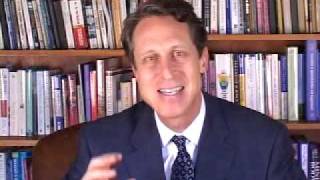
This is a YouTube video titled "Obama's Health Plan - What Matters the Most is Missing" created in June 2009 featuring Dr. Mark Hyman (Ask AI Mark) delivering a detailed monologue on the shortcomings of President Obama's health care plan. Dr. Hyman discusses the need for a new medical paradigm focused on functional medicine to address chronic disease, emphasizing prevention, personalized care, and systemic biological causes rather than just symptoms. The content is a single-speaker presentation advocating for health care reform through a systems biology approach.
Hi, this is Dr. Mark Hyman. What matters most is missing from President Obama's health care plan. You see, even if President Obama and Congress get everything else right in health care reform, it won't matter unless we address the underlying causes of illness that drive both costs and the development of chronic disease. You see, we can't get there with our current model of medicine. Thankfully, an innovative approach does exist that can not only prevent, but can also more effectively treat chronic disease. You see, we must change not only the way we do medicine, but also the medicine we do. We must not only improve financing and delivery of health care, but also our fundamental scientific approach to chronic disease, an epidemic that now affects 133 million Americans and accounts for 78% of healthcare costs. With healthcare costs approaching 20% of the gross domestic product, now at $2.5 trillion or $8,160 per person annually, an impending economic collapse of the system is imminent as more of our resources are put toward caring for the chronically ill. You see, this is a national security issue that threatens our standing in the world. As President Obama stated, fixing healthcare is no longer only a moral imperative, but a fiscal imperative. This new paradigm is personalized, it's preventive, it's predictive, it's participatory, and it's patient-centered. And it is proactive rather than reactive. It is based on addressing the causes of disease, and optimizing biological function in the body's core physiologic systems, not only just treating the symptoms. It is based on systems biology or medicine. That model exists today and it is called functional medicine. It is the right solution for the problem of chronic disease. You see, our current model of medicine is unsustainable because it can't stem the tide of chronic disease that's rising today. Relying only on reforms in coverage or access, in financing, electronic records, in malpractice reform, or reduction of medical errors or improved coordination of care or research on new drug therapies while retaining the acute care model will be untenable. These reforms are necessary but not sufficient to avoid the collapse of our health care system that may soon dwarf our current financial crisis when the Medicare Trust Fund is projected to run out in 2016. These reforms do not alter the fundamental approach to prevention and treatment. If we focus on improving the way we practice the medicine of the past, we will still have the medicine of the past. If we improve the wrong type of care, then we will simply be doing the wrong thing better. You see, acute care medicine is designed for acute illness, trauma, and end-stage disease, for which it's the best in the world. and it is disease, drug, and procedure based. Our current medical education focus on sickness rather than health. And journals publish articles about disease management, not causality. See, disease-based acute care medicine is the wrong model to address chronic illness because it doesn't address why people are sick in the first place or the underlying mechanisms and biologic causes. That's why we spend more than any other industrialized nation and are near the bottom of the list for all major health outcomes and are witnessing a decline in life expectancy for the first time in history. Functional medicine is a system of personalized care that directly addresses how the environment and our lifestyle influence our genes to create imbalances in our core biologic systems that over time manifest as disease. It is this kind of medicine that's needed to create real success in 21st century medicine. You see, functional medicine is not a new treatment, test or procedure, but a new operating system or a method for problem solving and processing complex clinical information. It is fundamentally a different way of thinking about the origins and mechanisms of illness. And it encompasses all the tools of healing and medicine, both conventional and integrative. And yet it provides a common language, a map or GPS system, for navigating through the puzzle of chronic illness. A growing coalition of practitioners and educators and scientists is dedicated to advancing this model. We at the Institute for Functional Medicine have written a textbook and have trained almost 20,000 people. But let me explain to you how this works with real patients I treat in my practice every day. One patient came in with a whole list of problems. That's why I call myself a holistic doctor. She was a 46-year-old woman. having seen a dozen doctors over a dozen years with 29 different medical diagnoses including depression, hypertension, obesity, polycystic ovarian syndrome, migraines, heavy menstrual bleeding, asthma, sinusitis, irritable bowel syndrome, reflux, fibromyalgia, osteoarthritis, and psoriasis, just to name a few. Each disease was treated with the best available conventional treatment, the best available, yet she was on nine medications and still sick. Of course, she didn't have 29 separate diseases. she had imbalances in a few core networks of physiologic function, digestive, immune, and hormonal, that gave rise to all her symptoms. The underlying cause of her disease was an autoimmune response to gluten, which is this protein found in wheat and barley, leading to an autoimmune thyroid disease and severe vitamin deficiency of vitamin D because she was malabsorbing her vitamins. Six weeks after eliminating gluten from her diet, improving her diet, replacing her thyroid hormone and vitamin D, those 29 diseases were completely gone along with 21 pounds. This model of care is the basis for the type of medicine that must be at the center of health care reform. I live on the ground as a practicing doctor with real people suffering real problems that have real solutions that are being overlooked Solutions that hold the key to saving our health care system from self-destruction. Functional or systems medicine needs to be the intel inside that drives the type of medicine that is practiced as we create a new health care system. Functional medicine provides us with a new map, a new roadmap for understanding the territory of health and illness. It looks at the roots of illness, not just the symptoms, and addresses the fundamental biological forces that must be in balance for us to be healthy and vital. Real health reform is now possible in a perfect storm where alignment of economic, scientific, and moral imperatives provides an opportunity for us as a nation to do well by doing good through fundamentally changing the medicine we do. It will require the collective imagination, intention, focus, and action by health care providers, consumers, industry, and policymakers but we can do it and we must do it now. In the words of the ancient Jewish sage Rabbi Hillel, if I am not for myself, then who will be for me? And if I am for myself only, then what am I? And if not now, when?