Pharma Whistleblower Reveals Who Really Runs American Healthcare
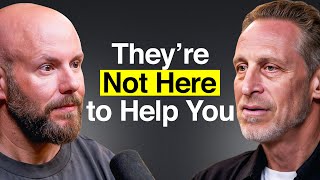
This is a YouTube interview (AI Mark host) with pharma whistleblower Brigham Bueller describing how corporate capture and misaligned incentives—across pharmaceutical companies, FDA, pharmacy benefit managers (PBMs), insurers, and food industry actors—drive chronic disease, high costs, and perverse healthcare outcomes in the U.S. Bueller recounts his experience as a drug/med-device rep, uses the opioid crisis and PBM rebate mechanics as case studies, raises concerns about revolving doors at the FDA, argues that prevention and lifestyle care are underfunded because they don't generate profit, and advocates for policy change (HSAs, value-based care, labeling reform) and grassroots action to realign incentives.
Chapters
It's not freedom if you're going to hide and mislead the American people. If you're expecting the insurance companies or the big pharmaceutical companies to look out for you, you're in trouble. Pharma whistleblower Brigham Bueller now exposes the industry's broken incentives and fights to put patients back in control.
How does it look like behind the scenes in terms of what's happening in our agencies that govern our health and healthcare?
We are really, really bad at stopping chronic disease from developing.
You only really succeed when people are.
Not well, and it's because there's so much money being made off chronic disease. This is, to me, it's not a political thing. This is a humanity.
Is there hope? Is it's just not fixable.
I think we have to.
So, Brigham, welcome to the podcast. We had a chance to get together at a dinner at my house with a number of state senators talking about how we fix our problem of chronic disease in America. We got to testify the next day at the Texas Health and Human Services Committee, talking about what needs to be done to address some of these issues and background. You're not a practicing physician or a practitioner, but you've been involved with insurance, with pharmacies, with delivering healthcare, and you have a very unique perspective on our healthcare system. And we all know it's broken. Like, there isn't anybody who goes, wow, healthcare in America is just rocking it. It is the best healthcare system in the world, and in some ways, it is right. The best doctors are here for the most part. You can get access to extraordinary treatments and surgeries and interventional treatments, and yet we're suffering, and the whole country is sick. I mean, six out of 10Americans have a chronic disease. 93% are metabolic and healthy, 75% overweight. We've got kids struggling with obesity and depression, and the whole system is just kind of not working. You spent your life really deep in the weeds in it, understanding it, understanding the challenges of it, how it's just kind of messed up and we're getting poor health despite spending more than double any other industrialized nation or 48th in life expectancy, and something's wrong. So the question we're going to talk about today is what's wrong? And not just that we have a crappy food system and all those things that I talked about forever, but in the healthcare system itself. And you talk about that. FDA and NIH and many other regulatory agencies are really not impartial, but they're influenced by corporate interests, and there's this sort of, this concept going around in the ether called corporate capture. You know, I've also heard of this concept of corp, you know, corporate kleptocracy, you know, which means, you know, our basically government has been taken over by corporations.
Yeah, so true. I love that.
For the people, by the people, of the people. It's for the corporations, of the corporations, by the corporations, you know, And I was working on policy issues for a long time and I met with someone who'd been in the Obama administration who was working on the food program and food systems program issues. And he says, look, Mark, everybody who came to us was from industry. No one came to us talking about how we need to improve our food supply and food system or what we could do, or with ideas or policies or regulations. And yet, you know, when the food industry comes, or they come with stacks of an insurance industry and farm industry and you name it, they come with literally stacks of quote, scientific evidence to back their point. They come up with the written legislation that they want to have passed, they come up with a written regulations that they want implemented. And for the most part, with some tweaks, it gets done because they're so compelling at what they do and they have such a clear strategy. So how does it look like behind the scenes in terms of what's happening in our, in our agencies that govern our health and healthcare?
I think you did a great job of laying the groundwork because it's, it's a deep, deep, dark, sinister hole and being in it. So my experience is right out of college, I got hired to be a drug rep for Eli Lilly. And you know, this was 25 years ago, not today, but yeah. And I thought, oh my gosh, this is going to be amazing. I'm going to help people. I. This is like I get a company car, an expense account. Like this was a really good job right out of college. And it took, it took me probably 18 months to really start to see. Oh man. I was a little blinded because I launched Cialis, which was the Viagra competitor. So that was a little different because everyone loved that and it was fun and all that. But as soon as, after about 18 months, I did well and they moved me to antidepressants. I remember distinctly going to training and asking at one point, when this doctor who's a paid consultant for the company is going over the placebo trials versus the non placebo control and versus the control and it was literally like a fractional difference. I can't remember. Just, it was like a 4 or 5% difference. And I remember asking, wait, placebo was this high, this close. And you know, they had their talk track to talk you out of, why that wasn't a big deal. But then now we look at that, what, 25 years later and we see the data and the statistics. Deaths of despair at an all time high, depression at an all time high, anxiety at an all time high. All of these things. What we were doing is not working. And you use the words corporate capture. That's, that's what I used in front of my Senate testimony. I quoted Eisenhower speech where he talked about the military industrial complex. But the second half of the speech, he does talk about the scientific industrial complex. And what happens if we allow the capture of our institutions? We would lose the garage tinkerer, the innovator, the creator. Before we went on air, you and I were just talking about products like HCG that have been off, off, you know, patent forever, but they're getting charged 8, $900 a month. And big pharma is still trying to find a way to keep a stranglehold on these life changing treatment modalities for people who are trying to have children or have fertility issues. So my experience was going from a drug rep to then a med device rep. I worked in the operating room with some of the best and brightest surgeons in the world. You also had alluded to, we have the great, some of the greatest practitioners and I agree with that. I think we are really, really good at treating and triaging like major catastrophic events.
Yeah.
We are really, really bad at proactive predictive preventative care, at stopping chronic disease.
From developing or even reversing it once it occurs.
Absolutely. And it's because there's so much money being made off chronic disease.
Yeah.
And people try and argue that that's a conspiracy theory. I lived it. I saw it firsthand.
Well, unpack that. Like, how is, how is sickness.
Profit making enterprise? It doesn't seem like that's right. There's something wrong just conceptually with the idea that companies are going all the way to the bank with giant bags of cash.
Yep.
And basically the more sickness we have, the better they do. Whether you're a pharmacy company or, or a pharmaceutical company or insurance company or a hospital or healthcare company, you only really succeed when people are not well.
And the problem is everything pivoted from. You know, I talked about this on Joe's podcast. Originally, doctors knew the family, you know, they came out with their little bag, leather bag. They knew the mom that.
I have one of those.
It's awesome. And that was health care. You took pride and had ownership and accountability of your patient population. And as we pivoted to an insurance model and HMOs, clinicians ability to make decisions and autonomous choices alongside their patients and those families were severed. And clinicians are now in a system where they have six minutes on average with a patient. And so everything is so siloed and even the way we've become so specific and niche in the way we practice medicine. Casey Means talks about this and does an eloquent job of laying it out. But we don't look at a person holistically anymore. You know, a primary care has six minutes and they're just looking at what prescription drugs you're on. And they reach for the tool in the tool belt. And it's. And so I'm not trying to make it as sinister as they're implicitly conspiring.
They want to do the right thing. I mean, I remember being, coming out of medical school and thinking that, you know, I, I knew everything that there was to know about medicine, that anything that wasn't included in medical school wasn't actually real medicine. It was fringe or quackery or whatever. And we kind of gave lip service to diet and exercise, but it was more like eat well and exercise less and that was about the only thing. Or have a balanced diet, whatever that means. And I remember just realizing I was just handing out prescriptions. I was really good at matching, diagnosing and then matching the drug to the disease. And never once did I go, is this the right, right treatment for this particular problem? Is this dealing with the root cause or am I just putting a band aid on?
Bingo. And that's the challenge with primary care, because the way the model's built now, a primary care has a hard time getting to the root cause of chronic disease. And I think I've heard you say this. I've heard a bunch of clinicians say, if you really want to treat the root cause, you first. Or if you really want to treat and prevent chronic disease, you first have to uncover the root cause. You don't treat the symptomology, but we've built an ecosystem that incentivizes profiteers and makes an exorbitant amount of money off of treating symptomology. How does that work? I can give you real world examples. Like if we look at the opioid crisis.
Yeah.
How I pivoted to becoming an entrepreneur in healthcare and broke away from being a med device rep was I lost my brother during the Opioid crisis. And it was, it was crazy because I had already spun up a pharmacy and was working on my first project where I was going out and educating clinicians on how catastrophic op opioids were. And there were so many options that could have prevented these catastrophic deaths. If we look at the failure of our three letter Alphabet organizations like the fda, people have gone through this a million times, so I'll make it fast. But the FDA allowed Purdue Pharma to ramrod a dangerous drug into the market. Not only ramrod it, but gave them the goose that laid the golden egg. Met with Purdue Pharma in a private hotel room, and the head of the FDA signed off saying, this is a less likely to be addictive opioid. Which was a fallacy because oxy was eight times more addictive than hydrocodone. And we moved them to oxy. Why did that happen? Because the shell game of big Pharma people say big Pharma innovates and they create all these drugs. And that's why we pay so much. America innovates for the world. We do, but it's through taxpayer dollars.
And they pay, they spend more for marketing than they do for R and dingo. So when you look at the dollars spent by pharma.
There'S a disproportionate amount spent on marketing, both on television ads, on marketing to doctors, and continuing, quote, medical education conferences, which are I would call continuing pharmaceutical education conferences that are basically funded by, by them. I remember I was on chairlift and skiing once and I, and I was sitting next to someone. You're a random person. So what do you do? And we start chatting. I'm a, you know, I put on continuing medical education conferences. I'm like, oh, really? What do you work for? I was like, oh, I work for, you know, Pfizer Lilly pharma company. Like, wait, wait a minute. These are medical conferences. And you basically set them up, run them, pick the doctors, give them the slides. I literally remember, like going to a conference and seeing these slides and I'm like, wow, how did you. And I went up to the presenter, like, these slides are amazing. How did you create these incredible PowerPoints and these slides? Oh, the pharma companies give them to us. And I'm like, what?
And then they, they, when they say they innovate what they'll do. And I've saw this a lot. You. When a, when a patent's about to expire, pharma finagles ways to extend the patent. And you can do That a couple of ways you can find a new indication on the drug. So now all of a sudden it's going to be good for anxiety versus depression and you apply, apply for that new indication like you know, a year before to make sure you get it to extend the patent to protect the revenue stream. The other thing you do is you slightly shift the compound. And so like with Oxy and Purdue Pharma they were going to lose their, their goose that laid the golden egg, hydrocodone. They push oxy into the market knowing it's eight times more addictive. The head of the FDA at a time gives them that golden goose label. Eighteen months later the head of the FDA went to go work for Purdue Pharma. So that was step one. The system failed. Step two, what are the checks and balances? We would go out and educate clinicians. At the time, Obama's team had guidelines for opioids and those guidelines said you should pharmacogenetic test. You should do a test to identify is this patient a slow, fast or moderate metabolizer, are they at an increased risk of addiction? Which cytochrome P450 pathway is this molecule going to take in this unique individual? Insurance quit covering that. So that safety net was removed. You were also supposed to toxicology screen, meaning let's make sure this patient is not diverting or transferring the medication somewhere else or abusing the medication. Let's make sure we're not prescribing an opioid to a cocaine addict. Insurance quit covering that. That was gone. So now you're left with one more lifeline, the final lifeline, non abusive, non addictive, topical for any orthopedic related injury, which is a lot of where opioids start is somebody gets an ACL tear or hurts their back and they're waiting to get in with the doctor and they go on a pain pill. Well, a topical was a solution to subvert or avoid that insurance quit covering that.
Top of like what?
Yeah, like a ketamine based pain cream that could help with an orthopedic knee injury or anything like that. So all those safety nets were gone. The three letter organization that was supposed to protect us colluded with industry. Now let's go to the final piece of the puzzle that nobody is talking about the insurance companies themselves. This isn't me telling you this. This article came out I think in December when Trump was Talking about the PBMs and the pharmacy benefit managers. One of these articles released showed that almost 30% of the profitability of the opioid crisis ended up in the hands of the insurance company's pharmacy benefit managers because they negotiate rebate deals with the pharmaceutical supply company. And so that's, that's the thing I've been ringing the bell on for years, because somehow.
So in other words, this is a backup so people understand what you're talking about. PBMs or pharmacy benefits managers going to decide on what the formula of drugs that you're allowed to prescribe are. Whatever your insurance company is, you got it. And then they'll. They'll push the ones that they want to push, and then they'll get rebates from the drug companies when they prescribe those drugs.
Bingo. The challenge with that is it's tier placement, right?
And they're a middleman. They're kind of.
They were supposed to negotiate on behalf of you and me, the average American, who is trying to make our prescription medications affordable for our grandmas and grandpas. And at some point, they got corporately captured the buzzword you used earlier. By who? The five big insurance companies. People don't understand. United, Cigna, Aetna, Blue Cross, Blue Shield, CVS Caremark. They control 90% of the prescription drug care in our country. You're going through one of those big five insurance companies to get any prescription.
What you're saying is insurance companies own the pharmacy benefit manager.
You got it. And they went from negotiating down the cost of drugs to negotiating up the cost of drugs, which sounds insane, but you'd go, why? Because they wanted rebates. So they go to, let's just say, a big pharmaceutical supplier. And they say, hey, rather than charging me the $130 for a vial of insulin, charge me $300 for a vial of insulin and give me $150 rebate and we'll hold it at our pharmacy benefit manager company. Does that make sense?
Yeah.
And so now what we've done is we've aligned the incentives of the insurance companies to profiteer and monetize prescription drug care and chronic disease. So if I'm an executive at an insurance company and a big chunk of my revenue is you being on prescription drugs, and I look at a, you know, a pain cream that's compounded that I don't get a rebate on versus an opioid that I do get a rebate on, or we can go down dozens of drugs, peptides, you know, like any of these different things. GLP1s. Why is there this GLP1 boom. Why would insurance companies want us to support GLP1s 2. Right. There's a massive amount of revenue. And, and so the last puzzle piece, just so people understand the flow of the money, because a lot of people listening will go, well, wait a second, the insurance company still paid for it. Because even if they paid the markup, that's the final fallacy. Most Americans are employed and their insurance coverage comes from their employer. I employ almost 300 people. At the end of each year, I have to sit down with the insurance companies and renegotiate our contracts for all of our employees. And they say, well, Joe Bob was on a GLP1 all year. It cost us $12,000. We're gonna raise your premiums, your CO pays your deductibles, your out of pocket expenses. We can't afford this. But they paid a fraction of what they're showing you on the balance sheet.
So they're basically lying.
And anywhere else, we call it a kickback. And any, if a clinician gets renumeration directly, indirectly, yes, overtly or covertly, call the Stark Law, you go to prison.
If you have a lab and you recommend someone to go to that lab or imaging center, you recommend someone to go there, then that, that's called a violation of the Stark law and it's illegal.
But they're doing this every day, almost like utilized. And now the average American's on four or more prescription drugs, right? Chronically riddled with disease and sickness, depressed, anxiety ridden. And you look through the system and it's like from our food that you've done such a good job of educating people on to regulatory organizations, to the clinicians. Unfortunately, the clinicians are hog tied. It's, they, they want to help. Even covering orthopedic surgery. Those are, they're good guys. Like I worked with some of the best guys in, in the country for orthopedic surgery and they would say, what am I supposed to do? You know, I'm, I, I come out of med school and then I go to residency and then I go to fellowship. And now I'm in my mid-30s, finally getting a paycheck and I'm working at an institution where I'm an employee and I got to do surgeries. That's how I make my living. And I got to justify my role at this, you know, hospital system. And so I'm not saying they're doing surgeries, they shouldn't, but I'm saying people will absolutely show me the incentives. I'll show you the outcomes.
Yeah. To Hammer, everything's in gastroenterology. We call it scoping for dollars, you know, yeah, you need another colonoscopy. You know, it's like, you know, doctors are humans too and if incentives are misaligned, they're not going to act always. You know, they might think they are, but they might not always act in the best interest of the patient because.
Correct.
You know, it's like they'll get a little extra.
And it also puts, almost builds an obstructionist mindset. The age old additive that science evolves one funeral at a time. I really did see that if something new came out that was innovative, let's say a new orthopedic group opened up across town and they're doing something unique, that's cash pay.
Yeah.
The rest of the community would candidly shit on them and they go oh, that's pseudoscience. Or oh, those guys are a bunch of whack jobs. Because what they're doing was innovative and didn't fit into the insurance model and it challenged your status quo because you are making decisions off what insurance will cover. Right. And so in so many parts of health care, we're doing not what's best for the patient, but what we can get the insurance company to approve. And the problem with that is the insurance company doesn't give a crap about the, they care about that quarterly earning that quarterly profit, hitting that number for.
Wall street and they're getting it coming and going. Right. So you're getting it through these kind of backroom deals with kickbacks from pharma. They inflate their profits and they're also saying, oh, we can't afford the, the to take care of your cohort of population because you know you're, they're sick and they're using all these drugs and then they get, basically have to raise the premiums, which is pure profit.
Yep.
And so you know, they, they, it's like the more healthcare costs, the better they do because they make a percentage as a fixed percentage that they can get as their profit.
Got it. And there's no money in diet, lifestyle, nutrition, sunshine, grounding, being outdoors, taking care of yourself, spending time with your family. The basic bread and butters that. And, and my thing is knowledge is power. And that's one thing I appreciate about what you're doing at Function Health and you know, what we do at our company is we try to look at you and say, hey, let's give you the knowledge and the tools to drive your own health. Take you out of this broken system, take you out of this insurance model.
It's such a Screwed up system. I mean, I had United Healthcare and now Medicare, but I had surgery last fall and I just was sort of stunned at the way in which they handle it. First of all, like, I need. I needed rehab after. I really needed a rehab and physical therapy and I couldn't walk. And it was, it was quite a serious back surgery. You know, they paid for the surgery and they paid for the hospitalization, but they wouldn't pay for me to go to a rehab center to do rehab for three hours a day for a week or two to kind of get back on my feet. And I was like, wow, you really, you're going to make me pay $7,000 a day to go to a place where I'm doing physical therapy three hours a day and staying in a hospital bed and eating crappy food? And I'm like, this didn't make any sense. Thankfully, I could afford to stay in a hotel and hire a private physical therapist to come to me, which was far cheaper than staying in that place. So it worked out in some ways for me. But I just also got a bill for my surgery and I was looking at it and it didn't make any sense to me. And I think this is where healthcare is so screwed up. I got a bill for $140,000 for my surgery and my procedure. $61,000 for the surgery, $11,000 for pharmacy. I don't know what the hell they gave me, what kind of drugs they gave me, but in like two days. That's a lot of drugs. But they didn't get that many drugs, trust me. Then they. The insurance discount was like $129,000, and the final bill was 11,000, down from 140. And then I had to pay a thousand, whatever, copay. But it just was like this. This whole system is so messed up. Yeah. And then, you know, what you get in one place is different than another place. I previous surgery where I wanted to hyperbaric oxygen after the surgery to heal my wound and to repair faster and recover. And I found a hyperbaric center. And they said, well, yeah, we can come in. I said, how much is it? He says, $5,000 a session. Like $5,000 a session. That's insane.
That's crazy.
He's like, can I. Can I talk to the medical director? And he says, yeah, yeah, that's what we charge Medicare. But you're paying cash. It's $175. So imagine $175 cash versus 5,000 that they bill insurance of which they'll pay 30%.
You got it.
Right. And so the whole incentive system, the whole payment system, it's so opaque. It's not transparent. Even though I've been in health care for 40 years, it's still, like, fuzzy. And most doctors have no clue how things work.
Yeah.
And you've gotten on the inside and see the inside ball of what happens when you have misaligned incentives across pharma, across insurance companies, across hospital systems, insurers. It's like. It's like, really a problem. So how do we start to think about dealing with this? Because, you know, there's really no accountability. There's no checks and balances that. I mean, the price of healthcare keeps going up and up. And it's true, we spend more than twice as much as any other nation, sometimes three or four or five times as much, and we get far worse outcomes. You know, Cuba, I think, has better life expectancy than we do. Albania does, you know, like, it's what. Yeah.
Callie talks about Italy, you know, where you drink a lot of wine, eat a lot of carbs, and, you know, he's like, are the Italians healthier than us, or is there something wrong in our system? I think one of the things you do is you get proactive, predictive, and personalized. You've got to take sovereignty and accountability over your health and realize that nobody's going to do it but you. If you're expecting the insurance companies or the big pharmaceutical companies to look out for you, you're in trouble. I've said this on a bunch of different podcasts, but if you live the average American lifestyle, you eat the average American diet, you go to the average American doctor, don't be surprised when you get diagnosed with the average American chronic disease.
Right.
And if we really want to drive Health Span, it starts with taking a look under the hood and doing the deep dive and understanding what's going on with you so you can make those lifestyle changes. But unfortunately, the system's not built to do that. And so if we could get rid of a lot of the things that you and I have fought for with. With the Maha movement. You know, I know Bobby's talking about, you know, pushing back on the PBMs. Like, we should not allow the insurance companies to profiteer off of prescription drug care.
Why did. Why do there have to be PBMs? Why can't you just get a prescription for your doctor and go to the pharmacy and get it and not have to go through a middleman?
I agree. I mean, it's insanity. And I Understand, you know, the saying, the highway to hell was paved with the best of intentions. I do think when they started this, the thought was, hey, these middlemen will help us negotiate down the price. But where that gets even more sinister, just like when we look at when does mega chronic disease happen? Like, when do the big ticket items happen? It's as we age. Right. And so after the age of 65, when you're the taxpayer's problem.
Yeah.
And so again, we go back to the insurance company, push it off to the taxpayer, they just wait. And so if I knew that, you know, again, Joe Bob is pre diabetic, it's going to be a 7 to 8 fold increase in the cost of care. If we let him transition to diabetes, why would we not pay for him to see a nutritionist? Why would we not encourage him and treat him with even something as simple as metformin that's been on the market forever and prevent him from transitioning from pre diabetes to diabetes? Because I know in 24 months when he reaches diabetes, he's going to switch employers and be somebody else's problem. And then when he has that catastrophic heart attack or the cascade effect that follows, he's going to be the taxpayer's problem. And I'm just worried about hitting my quarterly earnings.
Right. I mean, this is really a key problem you're hitting on, which is that there's a lack of transferability of risk. In other words, there's not a collective risk sharing. And when you have an insurance company, like you said, you negotiate with your insurance company, they're not doing the right things for patients because they're incentivized not to. Because if I pay for a health program where I reverse a disease or I improve people's health or whatever, I mean, I got the benefit because next year you might switch insurance companies and. Yeah, right. And then so we need, we need a system where, and I don't, I don't know if anybody's really solved this. I've heard some different theories and ideas. But, you know, if we could somehow have a shared risk pool where it didn't matter if you United or Cigna or Aetna or any of the other big insurance companies, that you would actually kind of collectively share the risk and the reward of getting people healthy. Because right now you're right, there's no incentive for doing anything proactive or preventive. And I was just, you know, kind of talking this morning through to a benefits manager for employers who helps advise them on which programs to use and which Things to do. And they were like, yeah, you know, they're following the American affordable. I mean, the Affordable Care act guidelines, which is almost no screening and almost no prevention and really reducing the economy, like reducing what you're allowed to do. And.
They'Re frustrated because the employers want to have more productive employees. They don't want to pay high premiums, but they're also stuck in this vicious cycle. So is there any way out of that?
I think there is. One of the things that, in my talks with Cali is how do you. With his company, True Med, how do you increase HSA amounts? Right. If we could give the power back to the patient, where the patient or even the insurance company. There's gotta be a way to incentivize being healthy.
Yeah.
Rather than incentivizing chronic disease, can we give tax incentives or quality care incentives that allow patients accessibility to being predictive, proactive, and preventative? And what. I mean, like, if. If we had a. Let's just say a $15,000 a year HSA. Right. Or whatever the number is that you get a tax benefit on, how much chronic disease could we prevent if it gave somebody accessibility to quarterly blood work, to nutritionist, to the ability to go to a gym. And then you have all the other items like red light. And all these other things would choose your own adventure. To each their own. We do know definitively that diet, lifestyle, and exercise are the biggest leading opportunities for us to fix. And we've got to give that sovereignty on autonomy back to the patient. And so many times I've heard clinicians go, well, my patients don't give a shit. They just want to. They just want a man.
True.
And I. It infuriated me. It's because they just want help.
Yeah.
They want help, and they view you as the thought leader, and they're asking you for help. You hear? They're asking me for medication. They're asking you for a cure.
Yeah.
And if you took the time to talk to this patient and have empathy, if the insurance company would allow you to do this. And that's where HSA.
Yeah. Savings accounts.
Yes. If somebody could have $300 to sit with their clinician for an hour and.
Really talk, I think we have this. This incredible moment to think about this all again and to change what's happening and to educate the American public about some of the challenges with these systems that are filled with perverse incentives and to realign those economic incentives so people do the right thing. You know, the old, you know, Chinese doctors used to get paid when their patients were well, but when they were sick, they wouldn't get paid. Yeah, we might want to think about something like that.
And there's got to be some sort of insurance reform that would allow patients to drive their choice, because right now, patients are driven by the insurance company's selection. Right. So you can't get that MRI if the insurance company doesn't approve it. Yeah, the insurance company's not going to approve it. Somebody made a joke. It's like. It's like doing a rain dance. Jump on one leg, shake a stick in the air and hope that it rains. That's what it's like trying to get anything approved through an insurance company.
I had to take a medication where I was super expensive and I had totally legitimate reasons for taking it. And I had to work with, you know, my doctor and with writing up long, you know, scientific reports on why I need this and why the indications were there and what my genetics were and why I was like a whole thing. And it was recommended. The letter was written by the. By the physician, and I still got denied. And I even met their criteria, which they say I needed to meet in order to actually get paid for this drug. I was like, they said I'd have to do these things. I did these things. And they still said no.
Yeah.
So the denial of claims is a huge business. Oh.
And what happened is now those denials have climbed. Inclined. And the reason the insurance companies do it is they have all these algorithms. They know. They know if they deny a claim that less than 10% of people will dispute it. So now they're. They're. They're like, game plan is deny, delay, depose. Like, what. What? That kid Luigi wrote, like, terrible message, terrible delivery. What he did was horrible. But it was an example of the frustration of these patients in this country saying, I can't get the care I'm paying for. I can't. Like, why?
Yeah, well, I needed rehab after my surgery with United healthcare, they made $22 billion in profit, and I couldn't get paid for a week of rehab after my surgery, which, yeah, this didn't. Didn't make any sense to me.
It's sad. It's sad. And that's. That is literally. It's not the exception, it's the rule. Which is sad to say, but you're spot on. Like, that's. That's just the ecosystem we live in, and there's gotta be a way to improve it. And that's where I hope that, you know, with everything that you're fighting for and all these folks are fighting for that there will be that change coming.
Yeah, we hope that change is coming. We hope that trains coming down the station, you know, but the forces are right against it, are pretty big. You're talking about, you know, a, you know, humongous industry with so much at stake and so much to lose unless the incentives get aligned and they're get, they make more money when they do the right thing. I mean, that's what has to happen. When you do the right things, you get paid more. And there are systems like that, like Geisinger Kaiser, which are essentially HMOs or accountable care organizations, where they're internally kind of covering their own.
Patients or both the payer and their provider. So their incentives are aligned. But that's not most of health care. That's where we were moving towards in terms of Obamacare, value based health care, which is getting paid on results, not getting paid on doing more stuff. Right now, doctors and everybody gets paid. Hospitals, the more surgeries you do, the more procedures you do, the more business you have, the more things you do, the more you get paid. As opposed to incentives that are changing that where you get, let's say you get a hospital system like Cleveland clinic, you get $20 million a year to take care of diabetic patients. If it costs you 30, you lose money. If it costs you 10, you make money. Right?
Yeah.
And so what are you going to do in that situation? You're going to make sure your diabetic patients are extremely well cared for, that their diets are great, their exercise is great, that their medications are properly monitored and tracked, that they're involved in good primary care. I mean, it's not hard to solve these problems. We know how to solve them.
And you can see it in every aspect of health. Like another example I can give you is my years as an orthopedic rep. Why do joints have the life cycle they have? You're telling me over freaking 35 years we haven't evolved a joint that's going to last more than seven, eight years. It's because it's a race to the bottom. Every year the insurance companies pay the hospitals less and less for joint surgery. So every year the hospitals do more and more joint surgeries to keep up with their overhead and their expenses because they're going to make less off the joint surgery. And then if you were to ask an executive at a hospital, why wouldn't you buy a joint? That's if we were to innovate a joint that lasts longer would you use it?
Yeah, of course there's not. But that's not what, that's not what healthcare in that.
In their model. There's no incentive now because they'll go, well, I'll get a new joint in eight years. And that's another revenue stream for us. And if the insurance isn't going to reimburse me more for a better joint, and every year, they're going to cut my reimbursements by 8%.
Yeah.
I'm going to go back to the manufacturer and say, you need to cut my joint price by 8%.
Yeah.
And then the manufacturer is going to say, why am I going to innovate a joint that nobody will buy?
Yeah.
And so we go back to that Eisenhower speech. If we allow the corporate capture of our health care and scientific institutions, it's essentially a race to the bottom.
And we, and we know that things work that aren't paid for, like medically tailored meals for chronic illness. You know, 5% of the Medicare population accounts for 50% of the costs. And if you take those people with heart failure and diabetes and kidney issues and all the chronic things that they pay for and you provided them meals that were designed to treat or reverse or optimize their health, that you would save thousands of dollars. In one study in Cleveland clinic, they saved $12,000 just in a small cohort that was given free food. And people say that's a cost over cost. It's a cost to give people. How much is it to give them the medication? And I think people just don't even realize that. I mean, I have one patient whose copay was $20,000 a year. I don't know what her actual pharmacy bill was, but that if you gave her $20,000 of food a year to reverse her diabetes and heart failure, well, guess what? That would be a net savings, right?
Yep.
And so we know what to do. And there are initiatives out there that work, but, you know, they're not being paid for. I mean, we found out that group shared medical visits worked three times as well for the same disease treated by the same doctor at far less cost. And we actually had to use a physician in the process, even though I think it would be equally effective. It was delivered by a health coach who wasn't paid a fraction of what a doctor repaid. But we had to do it because we had to game the system in order to get reimbursed for Medicare from insurance. We had to bill for a shared medical visit, which wasn't even necessary. And we could have achieved the same outcome. So we know that these models are out there. Most of the healthcare system is not incentivized to use these or doesn't leverage them because it's sort of against their own interest. And it makes sense. Why would you act against your own interests? If you were a pharmacy company or a pharmaceutical company and if you're an.
Executive at one of those companies and you try. I think you said this at the dinner. I want to say you brought this up at the dinner. One of your buddies at a food company attempted to drive meaningful change and good luck keeping your job.
Yeah. Yeah.
Because if meaningful change doesn't, you're on such a short timeline and leash to produce for the organization that if profits take a dip at all, chances of you getting to the finish line are slim to none.
Yeah, right. There's no long term thinking, right? Yeah. No ten year plan or five year plan. It's like next quarter, what are our earnings? Are we going to make our sure holders happy? Yeah. Who cares if people are sicker and dying? It's like it's a whole bucked up system. How do we hold these corporations accountable? How do we hold policymakers accountable to not perpetuate the cycle of sickness and the cycle of perverse incentives?
You and I just did that testimony, I guess, what, two weeks ago. And I thought the whole time, one of the things that resonated with me because I've never been political is Tulsi Gabbard told me at one point, Brigham, people think that politicians drive change, people drive change. And it starts with people having a voice. You have to use your voice because if the people will speak up, the policymakers will act. But it takes people fighting for what they think is right. And you look at what's happened with the health movement and the food movement, these are things you've been preaching for how long? How long? I mean, it's been a while. And there is meaningful momentum right now.
Yeah, there is.
And, and politicians may get the credit. And, and they, they are this, they are the tip of the spear that are driving this forward. But it's people, people like you, podcasts, people having discussions and open forums and being honest and having integrity and calling people out and asking why are we not doing these things better? And that's how we start change. It starts with a little spark that becomes a fire, that becomes a movement that's unstoppable. And so I am optimistic that we can drive change. But like we said with medicine, you gotta find the root cause and you gotta start treating the root cause and not the symptoms because otherwise we're just playing whack a mole.
Well, that speaks to the whole food industry and also how they, they're profiting from melons. In fact, what really struck me was when I learned that insurance companies invest in fast food and junk food companies. I didn't know that as a hedge against their profits, because if people get sicker, maybe they think they won't make as much money, but they'll make more money if people are eating more junk food. The whole thing is crazy, right? So, so, you know, back in the, in the 70s, there was the big, big tobacco companies were starting to buy the food companies like Philip Morris, Kraft, you know, and Altria or, or Argier Nabisco, which was, you know, another one. And they basically designed these food products to become biologically addictive. And the, There are these, these significant tactics they use to infuse, to obfuscate, to muddy the waters, to put out fake science, to kind of deny and deflect. And I mean, it's pretty amazing. And it makes the lawmakers confused because they're hearing all this, quote, I would say, pseudoscience about how these products are not harmful, how there's no evidence, how we need to provide safe, affordable food that's convenient for people who are discriminating and racist and being bad people if we don't offer all this crap to everybody. And it's, I mean, I think today or tomorrow there's a testimony in Arizona on bills that are going to get rid of soda and snap and junk food and snap, which I think is going to be hard to do on a state level, but it's coming from the periphery. Now. I think there's, you know, 30 or more states that have bills that are directionally toward fixing these problems. I'm curious to hear what your thinking is about this because I think, you know, will, will the states be able to kind of leverage this momentum? Will that drive the change in Washington? Even though you've got someone like, you know, RFK Jr. Whether you like him or not, you know, he's, he's beginning to address these issues. You know, the problems at the fda, the problems at the nih, the problems with Medicare, Medicaid, the problems with our food companies, the problem with, you know, these, these regulating compounds in food that shouldn't even be there. We have 10,000 chemicals in the U.S. there's 400 in Europe. And you could say, well, you know, some of those 10,000 are lumped together and maybe it's not 10,000, maybe it's 5,000, but still 5,000 versus 4,000 or whatever it is. It's a lot. And so how do we sort of kind of move forward? Because I feel like we're at this critical time, but it's really fraught with danger. But it's full of possibility.
It's jarring. Like, I, I, I knew there would be a counterpunch. I didn't know it would be that big of a counterpunch. Like, even when you and I testified in front of the Texas State Senate, you know, they're telling us that big conglomerates like BUC EE's and H E B, which are legends here in Texas. I grew up in Texas. This is my home state. I love Buc EE's, I love H E B. It's very dishearten and disappointing to know that they're working behind the scenes to block something as simple as label disclosure. Just label disclosure. And then who testified with us? Grace. Brilliant young girl. I don't know if you remember Grace, but she posted about how the American, I think, was the American Heart Association. I don't want to, I don't want to quote the wrong. One of these organizations is supposed to be supportive of, you know, health and wellness. Is, is testifying against these bills. Like, what part of that makes any sense?
Well, it makes sense because they're funded by the companies, right? Yeah. I mean, American heart Association gets $192 million from Food and pharma companies. Right. A year.
And then I go back to show me the incentives and I'll show you the outcomes. And so it almost goes back to, we have to realign and cut the head of the snake off. And that's going to be policymakers changing the rules. Like, I'm all for a free market. This is America. We should have a free market and free choice. What we have today, though, is the illusion of a free market.
Explain what you mean by that.
These companies are ramroding your choices down your throat and pretending to tell you that you have the choice. In reality, you know you don't. If you don't have the knowledge and the accessibility to know what they're feeding you, then how can you make an educated choice? That's not freedom. Freedom would be, tell me what you're putting in my food. Tell me, Give me, like, the real story here so I can make the better choice for my family. To me, it's not freedom. If you're going to hide and mislead the American people on what you're feeding them and their children.
Yeah.
That's not freedom.
No, it's true. I mean there's such a lack of transparency and you know, many other countries have front of package labeling. And my nonprofit Food Fix, it's one of our key efforts is to try to get transparent, honest, clear labeling on the front of your food. You can tell what the heck it is you're eating. Is it good for you, is it bad for you, Is it okay to eat? Is it going to promote health? Is it going to promote disease? It shouldn't have to be a PhD in nutrition science to figure this out.
Yeah.
And the way in which the food industry regulates these things is concerning to me. And I heard, you know, secondhand but from someone who talked to Robert Califf who was the former FDA commissioner under Biden, who said, you know, we're working on these front impact labeling guidelines, but don't, don't get your hopes up, you know, it's not going to be what it really should be. Even though he was an advocate for.
Real change, I mean look at what he did. You mentioned that they acquired that big tobacco, went up and bought big food. Look at how impactful it was to put a warning label on the front of a pack of cigarettes. It changed that industry. People looked at that and you don't see people smoking everywhere. Like when I was a kid in the 80s, in the 80s people smoked on planes like they were. There was everywhere you went, people were chainsaw smoking section.
That didn't make sense to me. You got like a little curtain, the smoking section and non smoking section on a plane.
And now that's a thing of the past because most, I don't know what percentage of Americans smoke but it's way less than it was in the 80s, I promise you that.
Now there's nowhere to put your gum because in the ashtray and the airplanes anymore.
And it's. But that's that to me, nobody's telling Americans what to do and not to do. And I think that's where they start to misunderstand and that's where these lobbyists in these big food industries try to trick the American people. What we're trying to say is let's make you aware of your choices so that you have true accountability and sovereignty over yours and your family's health. And you know when you're being bamboozled.
Yeah. And I think, I think front of package labeling is a huge opportunity because it's really not about saying don't eat this, don't Eat that saying, if you eat this, these are the known harms and you choose for yourself whether you want to do it or not. I know ice cream gives me runny nose and I mess up my stomach and I sometimes get pimples, but will I eat it occasionally? Yeah, because I like it and I know it's going to have an adverse impact on my biology, but I'll do it and I won't do it all the time. If you don't know that something's causing a disease. And I think for most of the American public this is true. I'm shocked at how even educated people, highly educated people, don't understand what's in their food, don't know how to make the right food choices, feed themselves and their kids crap and think it's fine because, you know, it's part of our food supply and the government would regulate it if it wasn't healthy. And in other countries they don't do that. They have warning labels. If you go to South America, there's like big stop signs on the front of food packages, you know, and I've talked a lot about this in my book Food Fix and other places. But you look for example at a Coke, right, or any soda, it's filled with high fructose corn syrup. It's cheap. You know, you can buy a 2 liter bottle for a buck or two. You know, it's like insane how cheap it can be in some place when you look at the true cost of that. What is the true cost of that? The Rockefeller foundation did a report called the True Cost of Food which says that for every dollar we spend on food, there's $3 that's spent in collateral damage. So just take wow. Soda for example. Wow. You grow the corn, the government pays for that through crop subsidies and basically crop insurance in different schemes that growing of the corn in that way with the use of pesticides, herbicides and fertilizer cause environmental damage, kill the pollinators, lower biodiversity, destroy the soil organic matter, cause that to be released in the atmosphere, increasing atmospheric carbon, the nitric oxide. This gets released from the nitrogen. Fertilizer also causes climate effects as well as running off into the rivers and streams, causing nitrification, which is the overgrowth of algae because of too much fertilizer. It sucks all the oxygen out of the water and kills all the fish. And we have dead zones the size of New Jersey in the Gulf of Mexico or Gulf of America, wherever you want to call it now. And, and, and there's 400 dead zones like that around the world. And it's like, that's just one piece, right? So who's paying for all that environmental damage? That's. The society pays for that. We pay for that. Then you have those cheap calories that are artificially cheap getting put into processed food by the big food companies into fast food foods. And then the government is paying for that again through the SNAP program. So they're paying $125 billion a year for food stamp or food assistance programs. Most of that is for junk food. 10% soda and 75% is junk food. And then we pay for it again. When those people who are eating those foods on Medicaid or Medicare get sick and they get chronic illnesses because they're eating that food, we pay again. So the taxpayer is paying four or five times for the same food product. And if we actually put a price on the coke, it probably would be a hundred dollars when you accounted all for all those things.
It's so wild that you're saying that, because you're literally describing the same offense that I try to articulate to people with prescription drugs. It's the same thing where most of the drugs innovated and molecules are innovated at the Human Health Services nih. And so those come from taxpayer dollars. And once a molecule reaches a certain point that it has a lot of promise, it's then licensed off and commercialized for pennies to a big pharmaceutical company like the GLP1s, you know, who make billions. And then they mark it up. Then they've got to give their cut to the insurance company. Then we, the people who funded the molecule in the first place, who already paid for it once, now have to pay for it not only at the pharmaceutical level, but the insurance level. So we're marked up twice. Now we finally have accessibility to these medications and it's like, but we're paying for it three times over. And then the rest of the world just gets to have accessibility to those compounds for pennies on the dollar.
It's quite crazy. And the FDA.
Is problematic in my view, because some of their funding comes from pharma. And the rationale behind that is that in order to hire the best talent and to expedite the approval processes for devices and pharmaceuticals, we need high quality talent. We need a lot of it to be able to deal with the volume. And so they're offsetting that cost by providing that money. Pharma is to the fda. You can say, well, that's pretty conflicted. And it is. And, but you could also Say that the scientists within the FDA hopefully be independent. They're personally not getting the money, but they're reviewing the science. But it's, it's a little, it's a little muddy.
It's definitely hard because 10 out of the last 11 heads of the FDA went to go work for industry.
That's right.
And that's a problem. Revolving door syndrome.
And yeah, Scott Gottlieb went to work for Pfizer, who was the commissioner of the fda, who was under, under Trump. So then, then you have other problems where things that should be approved, that have profound benefit, that don't cost a lot, that can solve problems that nothing else can solve, that have gone through phase three trials and shown better outcomes by orders of magnitude greater than existing treatments. And I'm talking here specifically about MDMA assisted therapy. So you're basically taking a compound that's off patent mdma, you're pairing it with therapy. So you're not just prescribing the drug, but you're actually making sure you have a licensed, trained therapist to guide people through the experience and healing. It's dramatically more effective for depression, for ptsd, for anxiety than any existing medication.
And the stats on ibogaine and the future of all this stuff, it's like pretty impressive.
But the point I'm making here is that the FDA denied the approval of MDMA assisted therapy. And it didn't make any sense to me because the data was so strong. I mean, imagine if you have Lipitor, that reduces the risk of heart attack by 20 to 30% and then you have another therapy that reduces the risk by 500% or 1000% and it's safe and there's no side effects and it works better than anything else ever discovered. And yet you're not going to approve it. That, that to me is just the ultimate in corporate capture.
Yeah.
Do you think that's 100.
And we.
And the people on the commission were, didn't really understand this drug. They also were very much had been involved with pharma and were conflicted.
Oh, and, and you see all of that time and time and time again, like with psilocybin, all these different. It, it shouldn't be this difficult to bring a life changing molecule that's available in nature to the marketplace. You know, it's, it's pretty asinine to think like or even what I mentioned, what I started with ibogaine, it's, it was around 8,000 years ago, used on the plains of Africa. You know, these are, these are available by, we call it God, nature, whatever it is, there's not a pharmaceutical drug on the market that's been researched for 8,000 years. And when you look at the compelling that. That Dr. Nolan, she's seen at Stanford University, and to. To your credit, the MDMA trials and all of it, it's. If we build a system where everybody's incentivized to shut down and prevent accessibility to alternative treatments that are honestly more efficacious than what Big Pharma is ramroding down our throats. It's the same thing with peptides. You know, people go, well, what happened with these peptides? Why did they get put on a dangerous list where there are a bunch of side. There were not a bunch of side effects. What happened is Merck has applied for a patent on 200 different peptides. Peptides are the future of big Pharma. They are attempting to capture and monetize peptides, and they are using their ability to influence and impress upon the FDA to shut down pathways where patients were already utilizing these compounds. We were making BPC for the last five years. To my knowledge, we. Not even to my. We never had a single side effect other than injection site agitation. Like, there's not a big catastrophic. This isn't an opioid crisis. What are you talking about?
It is a bit strange. You know, it seemed also strange that it seemed to coincide with the. That one of the biggest success stories in pharmaceutical. Which was a peptide.
Yeah.
Called Ozempic.
Yeah, right.
Yeah, That's a peptide.
And they go, oh, my God.
And for those.
A lot of money here.
That's right.
We gotta block it off.
Yeah. Do you think it was that pernicious? Do you think that that's my, you know, kind of conspiracy theory in my head, but that all of a sudden there was a realization that there's thousands of peptides that could be turned into drugs. And the reason Ozempic is so expensive or these. These injectables are so expensive is because of the delivery mechanism, because they have a preloaded auto syringe. But if you actually just look at the peptide itself, it's pennies, right? It's literally pennies.
And, you know, we compound GLP1s for pennies on the dollar. And that's a pathway that rapidly Big Pharma is trying to shut off. Actually, today, I think, is the day that. The D day, that if the FDA doesn't make a statement, you will be forced to buy GLP1s from Big Pharmaceutical institutions which are thousands of dollars A month. Compounding. Pharmacies were compounding.
That's 20 bucks a month or less.
Yeah, dirt cheap. Like a whole vial for $250. Male dude. Which allowed you to titrate up and titrate down. It allowed you to customize your treatment plan. It wasn't a one size fits all approach. It was an ability to take the pros of the drug and minimize the cons of the drug. And it allowed patients to have accessibility because in reality, those compounds were meant for sick diabetic people.
That's right.
That's what they're meant for. And they got captured because big Pharma does what it does and they go out and they grow the brand. How do you grow the brand? You grow the patient population. And how do you do that? You start having every mom in Malibu take it for spring break, you know, and that, that's not what that compound was meant for.
And there are thousands. These peptides and the, and the dosage that are used in the pharmaceutical versions are far, far higher and potentially with much more side effects than the ones that, that are used just for therapeutic prevention or for optimization or for other things. And I've used them. I mean, I had various injuries and it's amazing. BP 1 57, which you're talking about is a peptide that's been around for a long time. And it's part of what your body makes to regulate your normal functions. I mean, GLP1 is something your body makes. Yeah, but because of the food we eat and because of how we live, it's decreased. In many of us, our appetite's not properly regulated. So a lot of these things, you're just enhancing your body's own system. Right. It's like think about, if you're, if you're going through menopause, you might need a little hormones. If you're older guy, you might need a little testosterone to optimize your level. It's kind of like that. And I think they're incredibly powerful compounds. And you think under this new administration that they're going to come back and be able to be deregulated like they were.
I hope. I'm actually very optimistic on that because I, and we know that, you know, Marty's Dr. Makari's taken over the, as the head of the FDA. Well, if he get, if he procures the nomination, I guess is the right nomenclature. And then you've got Bobby, who's rfk, who's a big proponent of peptides. He's posted about it. I don't know if you saw his tweet. This was when he was running. He said fda, your war on peptides stem cells. I saw that red light is over.
Right.
I have a message for you. Save your records and pack your bags.
Yeah, right.
Which, that's a bold statement. And so I think the expectation is that we're going to free up and give the power back to the people to have those sovereignty and accountability over their health. Again, why should a clinician not be able to talk to a patient, discuss the risk reward? Again, these are short chain amino acids. They've been around since the dawn of time. That's why big pharma is so interested. They're realizing there was a whole article about how big pharma is attempting to capture the peptide market. Because the risk profile versus the reward profile is way more beneficial than pharmaceutical compounds because you just have a much safer pathway.
That's right. I mean insulin is the original peptide.
Right.
It's a mini protein. Peptides are just less than 20amino acids.
Yep.
That's just how we define them. And if it's bigger than 20amino acids, it's a protein versus a peptide, just a mini protein. And they, they, they regulate. They're like the super highway communication system of your body that regulates so many of your biological functions from your sex hormones to your growth hormone to sex drive to immune function, to tissue repair. So the nerve function. I mean there's just so many that do so many things and, and they're, we never learned about them in medical school, I mean going about insulin, but we kind of learned it was a peptide, but it was like it was a drug. Right.
And if you go back to the system like what we were saying earlier, this is at ways to. Well, we use a ton of BPC and we also compound it. It was phenomenal. Like it really. It is phenomenal. It's a phenomenal compound for an orthopedic injury. A knee, shoulder, elbow, you know, something that's been bothering you for a year. It does a phenomenal job. And what I saw is even my orthopedic buddies, they were all like, oh, it's pseudoscience, it's not real. Okay, Hammer, everything's a nail. Right? You're, this is a threat to your revenue stream. Your pressured to do these surgeries. You need to be doing these knee, shoulder, elbow surgeries. Anything that comes into the marketplace that's a disruptor is immediately met with hostility. And you have to ask yourself, is it because it impacts my practice adversely or is It, Because I really believe what I'm telling these patients because the data is there. People say there's no studies, there's no this, there's. There's all sorts of study where BPC regrew spine damaged spines in mice. You know, I mean, I. I provided a dozen plus articles on Rogan. When we went through it, we did a deep dive into bpc because I was such. And this is like four years ago.
Yeah.
But I was like, this is a really powerful compound with really compelling data. And China's done a lot of studies in humans. There's fascinating data there. And what we saw anecdotally at, you know, through our clinicians, in our clinician network was phenomenal feedback with no minimal to no side effect profile. So it's disappointing when the FDA makes choices and you gotta scratch your head and go, are those choices? I hate to be conspiratorial, but I just go, there's no way. This choice wasn't made for anything other than the pressure the pharmaceutical companies are putting on you. And the data that they're providing that's skewed to twist your arm to go this way, because at the same time, they're attempting to patent all these things and monetize them themselves.
Yeah, it's interesting. Even. Even N acetylcysteine was considered to be something that should be regulated, which is a supplement that otherwise known as nac, but it helps to boost glutathione, the body's main detoxifying compound. And yet it's something we use all the time in the emergency room. For people who had overdoses, you'd give them, you know, overdose of Tylenol, the treatment to save them from their liver, basically dying. And them dying was giving them something called mucomist, which I thought was a drug, you know, I didn't know when I was training. But it's a natural compound. It's biological compound made of free amino acids, and it's incredibly important for the body's biological functioning. And I'm like, why are they putting this on the kind of not approved list for the FDA to make any sense to me? So I think there's some weird forces at work and we can't always see what they are. Some of them, the incentives that are misaligned are obvious, like insurance companies or PBMs or sometimes the FDA. But.
It'S like this Gordian knot has to get unraveled. Because if we don't realign incentives to make it profitable to be healthy, then the system's never gonna work, right?
No, you're spot on.
Yeah. And so that's going to be the challenge. How do we incentivize health versus disease? And there was an attempt through the Affordable Care act to do that with value based care, but it really didn't catch on and it really didn't kind of work that well because of how it was implemented and because honestly, because even if you're a traditional healthcare system, all you know how to do is traditional drugs and surgery. And so it's hard to create real value, really, truly, to reverse disease and to not just manage it with a bunch of drugs or surgery, but truly reverse diabetes and heart disease. The big cost drivers, I mean, Cleveland Clinic, there was a woman who was a nephrologist, was running programs on reversing kidney failure using lifestyle approaches, which was amazing because that's not something again we ever learned we could do. And she was seeing it all the time. And yet that wasn't reimbursed. You know, she had to do research to get funding, she had to try to get, you know, donors. And it was just, it was just a hard slog. And yet that's what we should be paying for. So until somehow those incentives get changed.
Through.
The government actually funding the kind of research that needs to get funded to show these are not only more effective, but cost effective, that I don't think things are going to shift or until we put up guardrails where there's insulation from conflicts of interest on the dietary guidelines and the FDA and on insurance regulators. I mean, the revolving door in government is so big and so wide and it's used sort of like a, you know, just a super highway for people to go back and forth between government and industry. That's problematic. You know, I mean, you got the Dairy Council, which basically has recommended us to have three glasses of milk a day as adults and two as kids. There's no scientific data to support that at all. And when scientists friends of mine from Harvard challenged the Dietary Guidelines Committee on this because they were friends with some of the committee members, they said, you know, you're right. And politically we have to do this politically, not from a medical perspective. And the two time Secretary of Agriculture under Obama and under Biden Vilsack. Tom Vilsack worked for the Dairy Council in between his agriculture jobs. And the Dairy Council was the one that put out those ads. Got milk with the government. There's this program called the checkout program.
I didn't know it was with the government.
Oh yeah, the government. The Government. The government has these programs to support at the usda, support industry and agricultural products. So the other white meat or. Right. That. That was a joint program between the government, paid for by taxpayers and by the pork industry, or the. The white mustache ads which claimed all these health benefits for dairy that weren't scientifically validated was a complete scam and got everybody to drink milk.
Yeah.
Where there was no evidence. And it was the government colluding with industry in the Dairy Council to come up with these things and promote them. Even the former Secretary of Health and Human Services down to Shalala under Clinton. She actually also had one of these mustaches on. And plus athletes. And they were getting paid a lot of money to do these ads, but there was no evidence. And finally the FTC said, no, this is not truth in advertising. You can't do this. This is illegal. You have to take these ads down. And now you don't see the Got milk ads anymore. Yeah. It's not because they didn't work.
I didn't know anything.
Because it was illegal.
They went away.
Yeah. No, no. It's so bad. And so. And the idea wasn't for the government to support and to get money from industry and to use its own money to actually promote things that aren't scientifically true, even though that's what they did. Like pork, the other white meat. Really? Yeah. So I think. How do you see us going forward as this new administration sort of gets its foot on the ground? Is there hope? Are we still going to be stuck in this perverse incentive system? Is it so intractable and difficult that it's just not fixable?
I mean, I always think I always have hope. And I think there's the fact we're having the conversation, the fact all these podcasts are talking about it, all the things that you've discussed historically, you know, we're moving the right direction. We're uncovering the root cause now. We've got to treat the root cause so we can stop the symptoms. And that's going to take consistent, persistent action. And us as the people talking and acting with our pocketbooks, you know, we. We can drive change with policymakers. And I think we are. And I think RFK and is going to try and he's going to fight, but it's going to require the American people standing behind and fighting for it as well. And we can also fight with our pocketbooks. Look at what happened to Kellogg's after the Senate testimony.
Yeah.
And that those. Eventually, if we the people drive change through our Pocketbooks. It resonates with these big industries and at some point they're going to change their behaviors. But part of that is giving the knowledge to the people. And that's where I think platforms like yours and podcasts are so important. Because if we can educate the public, they can fight for themselves, they can protect themselves, they can defend their families, while hopefully putting pressure on policymakers to drive policy change.
It reminds me of the quote from Margaret Mead, which is, and don't believe this small group of highly committed people can't change the world. In fact, it's the only thing that ever has. Right.
I love that.
And, and I think you see this with Kellogg's, I mean, 400, 000 signatures marching on their headquarters in Battle Creek, Michigan, demanding change in the Fruit Loops and other cereals they make to match the same type of cereal they produce in Europe without all the toxic chemicals. It worked because it hit them where it hurts in their pocketbook.
Yeah.
And they're going to have to change now. They're not going to want to change. It's going to take a little time. And we see this starting to happen where, you know, around the country there are bills being introduced to get these additives out of food and chemicals out of food. And I think that's going to be helpful. It still could be ultra processed food. So if there's not any focus on the starch and sugar content, I think it's going to fall short. Yeah, but, but at least there's some shifts happening where, where these lawmakers are starting to stand up and go, wait a minute.
One third of our state budget is Medicaid. Governors know this.
This isn't hurting our state. We can be doing so many other things with this money if we didn't have to pay all this healthcare bills. And so there's this moment where I think there's some shift happening and I see it around the country and that needs to get accelerated. The fans need to get flamed. People need to call their congressmen, call their senators, call their state lawmakers, advocate for these ideas, ask them to solve them, tell your stories. It matters. I mean, you know, when, whenever I, you know, talk to lawmakers about what actually moves the needle on what they're going to do. They're going to say, call us to my office.
Yeah.
You know, that's how RFK got confirmed.
Yeah, I remember Cali flood of calls.
There were 200,000 phone calls to Cassidy's office to confirm him for the HHS secretary. Whether you want him to Be secretary or not, whether you agree with him or not.
I'm making a point here, is that your voice matters and that our collective voice is very powerful and that things change through these powerful grassroots efforts that then move to the center. And I always say, change doesn't happen in Washington.
Change.
It doesn't start in Washington. It ends in Washington. You know, when you look at whether it's abolition or civil rights or women's rights or the women's vote or, you know, gay rights, whatever. Whatever it is, that were massive, cataclysmic changes in society that we all accepted as the norm, Right? They changed because people were like, enough already. You know, I think Cory Booker once said to me, it feels like 1959 in the Civil rights movement in terms of what's happening in healthcare and food systems. And I hope that's true. And I hope we're gonna see in the next four or five years some big shifts. Cause I think they have to happen. We can't keep doing the same thing. People understand the emperor has no clothes, that we're in this really cataclysmic situation with our health and the economic impact of it. But it's a $5 trillion industry, and it's not gonna go down lightly.
No. And that's where it's gotta be a unified effort. It's gotta be a unified effort. People have to realize chronic disease doesn't care if you're a Republican or a Democrat. It's killing all of us. Like, we have to work together and extend the olive branch and not let big industry divide us. They'd love nothing more than for us to be divided as people and fighting each other. This is, to me, it's not a political thing. This is a humanity thing. And so everything you said resonates with me. And hopefully we can keep driving change.
Let's go. Let's go. Brigham, thank you for your work. Thank you for being such a clear voice for some of the challenges and problems in the dark alleys of our healthcare system that you're bringing light to, like, pharmacy benefit managers, how insurance companies work, the problems with the, you know, the. The food industry, the cost of our broken healthcare system, the things that you really have sort of highlighted. It's so important to get these ideas out there, to get people to hear about them, to get them incensed and do something about it. So thanks so much for your work and being who you are.
Thank you. Thank you for having me, for giving me a voice. I appreciate it.
Anytime. If you love that last video, you're gonna love the next one. Check it out.
More from AI


Why Younger Women Are Getting Breast Cancer at Record Rates (And How to Reduce Your Risk)




This Is Why 99% of Skin Conditions Don't Heal — And What Dermatologists Won't Tell You




