Prevent Alzheimer's: Brain Health Warning Signs And Anti-Aging Techniques | Dr. Leroy Hood
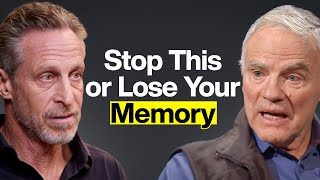
This is a YouTube video titled "Prevent Alzheimer's: Brain Health Warning Signs And Anti-Aging Techniques | Dr. Leroy Hood" published in July 2024. It features a detailed, in-depth interview conversation between Dr. Leroy Hood, a pioneering scientist in systems biology and 21st century medicine, and Ask AI Mark, who hosts the discussion. They explore topics including scientific wellness, biological age metrics, metabolomics, digital twins, AI applications in personalized medicine, and approaches to preventing and reversing chronic diseases such as Alzheimer's. The conversation highlights the future of medicine as a data-driven, personalized, and AI-assisted practice, emphasizing the transition from disease treatment to wellness optimization.
I'll tell you the most famous of all the users of BrainHQ is Tom Brady, who in his later years used BrainHQ 1 to increase his reaction time and 2 to increase his depth of field, and it worked magnificently.
All right, so Lee, welcome to the Dr. Strassberg podcast. It's great to have you back on.
It's a pleasure to be here, as always.
So, you know, as we heard from the introduction, Dr. Hood is an iconic guy in the history of medicine. And he's literally like the forest Gump of scientific discoveries of the last 50 years. And he's been there at the beginning of everything, including the beginning of bioengineering and understanding how to use technology to sequence DNA and peptides. He was there at the beginning of the human genome project conception. He's developed the whole field of cross-disciplinary biology, which allows us to sort of cross over fields and understand biology in a much more complex way. He's sort of the father of systems biology and 21st century medicine and this whole new concept of scientific wellness. And so he's really kind of been at the intersection of much of what's happened in the last 50, 60 years in medicine that hasn't quite reached the bedside yet, but will very soon. And we're gonna talk about what that's gonna look like and where medicine is going right now. We can't really imagine what's coming in five or 10 years, just as in 2005, nobody could imagine a smartphone or basically just all the social media we have today or the technology we have and virtual reality and AI. It was sort of just a vague concept, but now it's part of everyday life. And I think this soon will be part of our everyday life and medicine will be radically transformed. And Dr. Hood has also sort of developed this incredible new project at the young age of 85 called Phenome Health, which we're going to talk about. And Phenome Health is essentially a way to map out every conceivable aspect of your biology and to, through computational biology and AI and machine learning, make sense of it all and find out how to understand what's going on really at the core of your biology, all the intersecting complexity that makes you you and how you're unique and how you need to personalize your own health journey and disease repair journey, it's going to radically change everything we know. So, Lee, I'm just excited to have you here because you've basically been there in the beginning. I read a textbook chapter you wrote talking about the seven paradigm shifts that are driving 21st century medicine. So I wonder if you could quickly take us through what those are. I sort of alluded to them a little bit and where you've been in them, but I think it's all leading to this moment we have right now, which is a moment of radical reimagination of the science of medicine, which will lead us to a reimagination of the practice of medicine. And we're going to talk about what that looks like. So can you take us through a little bit of that, that amazing history that you've been through personally and that you've actually led?
It's a pleasure. When I went to Caltech in 1970 as an assistant professor, I was interested in biology and and somewhat overwhelmed with its enormous complexity. And that led me to thinking about things that led to success of series of paradigm changes. And I think at that time, there were three things that I realized were important. One, humans are complex and the only way we're going to solve the problems of complexity is with big data. We have to be able to decipher it in order to understand the causal events that lead to wellness or disease and so forth. Number two, it's really important to realize the blood is a wonderful window into health and disease. Molecules from all organs are secreted into the blood. And if you can read those molecules out, you can assess the complexity of the whole organism from the blood itself. And the third thing was, look, this is an enormous amount of data. How in the world can we possibly handle it? And that was the beginning of systems biology. The idea that you need global comprehensive dynamical sets of data to be able to translate data, digital data into biological networks that underpin physiology and disease, that is wellness and disease. It was with this start then, in the first paradigm change, my lab over the years developed six instruments for reading and writing DNA. Most important of course was the automated DNA sequencer, which made possible the second paradigm change, which was the Human Genome Project. And that was interesting because 12 of us were invited to Santa Cruz in 1985 to pass judgment on the Human Genome Project. And the two major conclusions we reached are one, it would be technically possible though challenging. And two, we were split six to six on whether it was a good idea. Those against said, this is big biology. It'll take money from little science. We can't have this happening. And it took five years to convince the world that the genome project should be done. The third paradigm change you'd actually mentioned, and that was The idea in order to create all these instruments, I had to get engineers and mathematicians and scientists and computer scientists and all. And it seemed to me the most logical way to do that wasn't in one big lab like mine, but rather to create a new department that was cross-disciplinary. And biology at Caltech absolutely vetoed that idea. Bill Gates made it possible to go to the University of Washington and have a shot at it anyway. And I'll say we created a department that was enormously successful called molecular biotechnology. And it pioneered major instruments in genomics and cell biology and biochemistry and so forth and computational methods, the two major computational techniques of the genome project came out of that lab. But what I came to realize was the bureaucracy of a big state school made it virtually impossible to do innovative new things. And my policy has always been, if you have a really new idea, you can't do it out of an old bureaucracy. So I started the Institute for Systems Biology and that, really over the last 20 some years, has successfully pioneered the whole vision of systems biology and applied it both to wellness and disease. And of course, the final paradigm change had to do with the realization in 2014 that we ought to apply this big data to individual human beings in populations. and from that began to deduce their health status and how to optimize that health status. And that worked in a project of 108 individuals in 2014. We started a company called Arivale 2015 to 19 that collected 5,000 individuals and their genome, and phenome data. And from that have come almost 30 different papers and major journals, each giving us an idea about a story of wellness and/or of prevention and how we can go about absolutely leading to the final paradigm change, which is the idea we're going to replace a disease-oriented health care system with one that focuses on wellness and prevention.
Yeah, this is really profound. I mean, you know, when I think about human biology, and I remember, you know, reading this book Consilience by EO Wilson, where he talked about the fact that we have no theory of medicine, that it's just a descriptive reactive sort of practice.
Exactly.
Really doesn't represent the underlying biology. And so we kind of navigate illness in a very clumsy way from the chronic disease perspective. I mean, what we had in early 20th century medicine was a wonderful approach to infectious disease, to sanitation, to public health, that made enormous advantages in our lifespan and quality of health and vitamin deficiencies and all that was wonderful. And then we sort of seemed to think that that same approach would work for chronic disease and it just doesn't. It doesn't at all. It doesn't at all. And you know, we're doing spending more and more getting less and less and we're, it's a frightening trajectory when we look at the fact that 34% of the population, more than a third of the population will be over 65 by 2050 with now six in 10 Americans having chronic disease and be over 65, it's more than that. So it's kind of a terrifying trajectory if we don't think differently about the problem. And what you've done is really created a model of how we think differently about the nature of health, the nature of disease. And in fact, coined this term scientific wellness, which kind of upends our whole approach in medicine from one focused on diseases to one focused on the science of wellness or health. How do we define it? How do we measure it? How do we track it? How do we modify it? How do we understand the diseases just boom happen one day to the next? It's actually a continuum from optimal wellness all the way to some slight perturbations in our biochemistry and biology to full-blown disease. And, you know, when you think about, you know, your iPhone, it's an incredibly complicated system. But it's not as complex as the human body. I think of it maybe it's like an etch a sketch when you think about how it compares to the complexity of the body, which is chemistry, biology, physics. And literally, I don't know if I got this number right, but it's, I think last I read about it, it was 37 billion trillion chemical reactions every second in the body, which is something beyond any capacity of any human to understand or think about. And so what you really mapped out and what you're now doing using this sort of integration of what we call deep phenotyping, which is collecting all the data you can on somebody, you know, their blood work, their Quantified Self Biosensor Metrics, their genomics, their metabolomics, their microbiomics, all of it. Literally everything you could think about and scooping it up and looking at the data in a way that is informed by knowledge, informed by a framework of thinking, but also sees patterns and relationships and creates predictive models for things that we couldn't even imagine before. So it's such an exciting, such an exciting moment. And, and yet we're basically, my daughter's in third year medical school right now. And it's, it's, it's frustrating for me that, that she's learning what she's learning. And I talked to her about this stuff, and she's like, I don't know what you're talking about, Dad. I'm learning about diseases and rheumatoid arthritis and diabetes and cancer and, you know, dementia, but not really understanding what's really happening. So can you talk about, you know, what, what is actually going to be this process of transitioning from a disease care system to a true healthcare system to measuring health. How do we even think about measuring it? Because we're seeing all these revolutions happening, right, on the omics revolution and the ability to understand all these different data points that are tracked through our wearables or glucose monitors and using systems medicine, which is sort of the extension of systems biology, using AI and ML to actually make sense of all this and how is this going to change the medical industry and why are these things so essential to a wellness-centered future?
So I would make a couple of points. One, if you really want to assess and optimize wellness, you need metrics for wellness. And what is absolutely fascinating is three different metrics. have emerged for wellness out of the Arivale population that we've analyzed. And the first metric is a metric called your biological age. It's the age your body says you are, as opposed to what your birthday says you are. So the further you are away below your chronologic age, the more effectively you're aging. And what we demonstrated for Arivale is for every year a woman stayed in Arivale, she lost 1.8 years of biological age. For every year a man stayed in, he lost 0.8 years. And I had a good friend who went through the Arivale program and lost 10 years of biological age. Now that's- if you stayed there long.
Enough, you'd be five years old.
Five years old, exactly. But the converse was also true. We looked at 40-some diseases in this population and virtually for everyone, your biological age was above your chronologic age. When you came back to normal, it reduced down. So here is a metric for wellness that is going to allow us to assess wellness and how effective your aging.
What did you use there? Was it DNA methylation or was it some other calculus?
No, these were analytes from the blood and we showed you could do it with proteins, you could do it with clinical chemistries, or you could do it with metabolites. And the most effective was doing having an algorithm with metabolites because that gave you clues both as to how your different major organs were aging, your liver, your kidney, your immune system and so forth. And it gave you hints as to what you could do to optimize the aging process. So that's one metric. A second metric, which we just- Is.
That something that some people can get? Is that a metric or is that something you need to get?
It is a metric you can get actually. We license this metric to Thorne and I think for $89, you can get your biological age done. And it gives you at the same time the age of your major organ. So it's an enormously useful asset.
So it's different than the ones that were developed, for example, from the Horvath clock and epigenetic aging and DNA methylation, or Morgan Levine's calculated ones that's based on wider ranges of DNA methylation patterns?
Yeah. The methylation patterns, I think, can accurately assess biological age, they can't give you recommendations. So one of the advantages is having the analytes that give you the recommendations. And just to be clear for people.
Listening, metabolites basically are all the molecules and chemicals and compounds that your body has floating around in the blood that regulate everything. And when you go to your doctor, you get like, you know, 20 or 30 analytes, but there may be thousands or tens of thousands of these in your blood. And that now we can start to measure these through something called metabolomics, which is not part of your regular blood work, right?
We typically do a thousand different metabolites and a thousand different lipids and thousands of different proteins in measuring the blood from individuals.
You were able to track how those tracked against biological age.
How they change and they give you insights into how to optimize wellness, absolutely. But I just wanted to say a second metric that I think is going to be equally important is your biological BMI, basal metabolic index, which classically was determined by measures of your height and your weight.
Yeah, your height.
And it turns out it's inaccurate. It doesn't respond to changes. It incorrectly classifies, for example, really muscular people turn out to be extremely obese. Obese. Criteria. whereas the metabolic BMI that we use from making analyses with the metabolites is spot on with all of those things. And it actually gives us insights into populations that are somewhat diseased metabolically that aren't detected by the old-fashioned one. And it allows us actually to stratify obese patients into really interesting classes. give you insights into how you can think about treatment and things like that.
So- But this isn't a DEXA body composition. This is using metabolically active cells.
This is a measurement right out of your blood that assesses many different things. I mean, the really nice thing about the metabolites is you can make hundreds of measurements to assess this one factor that gives you an assessment of It turns out that metabolic diseases are intrinsic to diabetes, they're intrinsic to neurologic degenerative diseases and so forth, and they play a fundamental role in cancers as well. They're very widespread, so having a good metric is great. The final measurement we can make from blood analytes is we can actually assess the diversity in your gut microbiome. and that's key because the more diverse you are, the healthier you are. So if you can't do the gut microbiome test, you can do a quantitative test with blood metabolites and boom, you get your gut diversity. So those are three metrics we can use to follow patients really effectively for the future. So that's one thing. I think the second thing is- Before.
You go on, I just want to highlight what you just said because I don't want to skip over it. what Dr. Hood just said is you can take a blood sample and measure what's going on in your gut, that the metabolites from your poop essentially are absorbed across your gut lining, end up in your blood, and we can measure those. And I've heard estimates that's anywhere from a third to half of all the metabolites in your blood may be from the microbiome, which plays an enormous role in every part of your health journey from every disease we can think of pretty much, unless you get hit by a car, pretty much every other disease is connected to the microbiome. So, it's really a profound thing that you can just get a blood test and look at that. So, you're looking at your biological age, you're looking at metabolic health, and you're looking at your microbiome as metrics to track your health and wellness and deviations from health. Because you're not actually often measuring a disease with those analytes, you're just measuring deviations from health or how little things that are off, right, on that trajectory. Right, right. So, I cut you off. What were we going to say next?
I just didn't want to skip over that because... No, that's a really important point. So, in a sense, I wanted to emphasize the fact that there are three axes to health, one of which is virtually entirely ignored in today's health practice for the most part. So, health of your brain, health of your body, and health of your gut microbiome. All three of them seamlessly integrate together, and they're all absolutely critical in optimizing wellness. I think the health of the brain is one to really emphasize in the sense, I can ask most people, when's the last time their doctor asked them how their brain was doing? And the answer, of course, is never. And the fact is your brain is an organ just like your heart that needs exercise. Michael Merzenich, a close friend who got the Kevley prize for brain plasticity, demonstrated beautifully for an ordinary person, your cognitive features rise to a maximum in your mid-30s and for most of us they fade away. What Michael demonstrated is he has measurements to assess and replace lost functions. So you can take an 80-year-old and with most of them restore them back to where they might have been. in their mid-30s so it's enormous hope for all of us. This is a series of assays called Brain HQ. And if there's one thing I'd urge you to do to actually exercise your brain in really effective manner with regard to its cognitive features, it's Brain HQ made by a company called Posit, P-O-S-I-T that you can look up.
But, yeah, that's the link to that in the show notes. So that's really important because we'll put that link to that. It's basically like, you know, crossword puzzles on steroids, and it's a way to increase neuroplasticity by using mental exercises and brain training. Just like you go to the gym for your muscles, you got to go to the gym for your brain. And that's what this is.
Well, I'll tell you the most famous of all the users of BrainHQ is Tom Brady, who in his later years used BrainHQ1 to increase his reaction time and to increase his depth of field, and it worked magnificently.
And he's really- you- saw seven Super Bowl rings. Yeah.
So look, all you aspiring 30 year olds who would like to continue doing this, there's a chance to exercise your brain.
That's so great.
I would say the final point I would make about data is the genome and phenome data is an enormous amount of information. obviously. So what we've begun to use are the tools of HI, and these include knowledge graphs that connect together all sorts of different types of data. They include digital twins that incorporate high-level physiologic data and mechanisms with omic data and those kinds of things to give us the power to make predictions about diseases such as Alzheimer's. And finally, they include these large language models. And we're now learning how to use those three features to convert the digital data of your genome and phenome into language-like data that large language models can use. So in the future, what we hope to be able to do are two really important things. One, take your genome phenome data and put it in this AI device and have it read out in prioritized order literally hundreds of actionable possibilities you can carry out to optimize your wellness, starting with the most important ones, of course.
That's right.
And then two, what we will be able to do is send to your physician those actionable possibilities. On the one hand, explaining them for the physician and what needs to be done, but on the other hand, providing the clinical evidence that says these are legitimate actionable possibilities. And can you imagine being, you know, what's really interesting about the genome and phenome is it's exactly like Michael Angelo's statement about a block of granite where he said, David is in there. All I have to do is chip away on the edges and we'll have a David. Well, the genome and phenome can assess from your data, your current health, your health trajectory, and tell you how to optimize it. And that's where we're going to be going in the future. And that's where will have an healthcare that more and more becomes focused at home with your cell phone and other similar devices that lets you expand your health span out into the 90s or even hundreds. That is the stage of your life where you're healthy and active, aggressive. And the interesting question is, what are you going to do with the extra 20 years? And I'll bet you'll get bored us playing tennis and golf. But maybe that's not true of some people.
No, I'm gonna be 65 this year and I just climbed a mountain in Patagonia and it was 15 miles in a day and it was 5,000 feet of elevation, literally a mile up and a mile down. And I read afterwards that it was a two day, normally a two day trip and we did it in one day.
So you're in great shape.
I'm in great shape. Yeah, I'm in good shape. So I think I just want to sort of pause for a minute what you said there was so important. I'm not sure everybody again, I just want to see if I got it clear. So first of all, the genome is your genes. They're fixed. Your phenome is the expression of your genes based on everything that's happened to in your life, what you've eaten, how much you exercise, your thoughts, your relationships, your environment, exposure to toxins, your microbiome, all that washes over you to determine the expression at this moment of who you are. Do you have diabetes? Are you healthier? That's correct. And that's what we call the phenome. And that can be measured and that's changeable. and this is what Dr. Hunt is talking about is how we can change our phenomic health and reverse our trajectory towards disease and actually go back towards health and even optimal health and scientific wellness. And you're talking about three key things which I think are really important. One is this idea of knowledge graphs and then digital twins and lastly, the AM machine learning that goes to sort of sort through it all.
Large language models.
Yeah. Large language models. So how do you define a knowledge graph for people listening? are familiar with it. What is a knowledge graph and what is a digital twin? And tell us a little bit more about those because those are really important concepts because what you're talking about is essentially revolution in medicine. Rather than doing large randomized controlled trials with thousands of people and millions of dollars, we're going to be able to do research in a very different way that's based on what we call N of one research. You're at the N, which means number one, and it's basically research on you. And the NIH has validated this as one of the highest levels of research and evidence, but we don't really take it, we call it anecdotes, but really there's a whole scientific field of N of 1 research. Can you kind of unpack knowledge graphs, digital twins, and then explain how machine learning AI and large language models will help us understand all that?
Sure. A knowledge graph is nothing more than going to the medical literature and it's putting in graphical form the relationships between genes and proteins and RNA and disease and different kinds of physiologic states and so forth. So, and in a sense, you've got a gene as a feature that is connected by a whole series of edges to the things that it actually causes one way or another. So the knowledge graph takes medical knowledge and it creates all the interrelating connections to it. And the usefulness of that is we can actually take your digital information and we can map it right onto a knowledge graph. And in doing so, we interconnect you with virtually the entire literature of modern medicine. So that gives us enormous insights on your specific and unique relationships to being a human being and so forth. So the digital twin, on the other hand, usually has an area that it's interested in and the one that we've worked on with collaborators is brain health. And the idea there is you bring in all of the physiologic information at the top with all of the little differential equations about how the brain works and everything. And from the bottom, you tie that to omics and to clinical chemistry and all the other things. And this digital twin thus is a repository of information states for brain wellness, for Alzheimer's, for other Parkinson's, other kinds of diseases. And what it enables one to do then is on the one hand, you can create a million virtual digital twins modifying different aspects of those relationships to see, for example, what is most useful in extending the period of time before you get and transition to Alzheimer's or Parkinson's or things like that. So it gives you relationships to disease and we're going to be doing one for wellness, which will give us the myriad of relationships for different aspects.
So it's almost like an avatar of yourself that you get to do research on and figure out what's going on. And you can.
Make predictions and you can use the digital twin because it gives you mechanistic information to say, phosphatidylcholine is really great for delaying the onset of Alzheimer's.
Yeah.
An observation that was made with the Wellness Digital Twin. And it's a very, very powerful tool for thinking about how to delay and or even ultimately to prevent the onset of the disease it's been designed to do. We're running a big clinical trial with very dense data on diabetes, and we are at the same time making a digital twin now for diabetes. as well. So we can optimize what we've learned most effectively to come back to patients and say, here are the things you need to do to avoid these consequences.
So it allow you to really fulfill the dream that you've had, which is P4 medicine. It's personalized, right? It's predictive, it's preventive, and it's participatory because then you have to do what the data say, which is change what you're doing in terms of what you're eating and your lifestyle or treatments or drugs or whatever the right approaches. So it's really fulfilling this vision that you've had for years and really was so exciting for me to hear as a practicing physician, as someone who was trying to work in this area of systems thinking and biology and medicine, network medicine, functional medicine, whatever you want to call it. It's really, you know, the name doesn't matter. It's this idea that the body is one interconnected ecosystem. It's a big biological network. It's a network of networks. And unless we get that and understand that, we're not gonna be able to solve the problem of chronic disease. We're gonna be throwing drugs at it. We're gonna be spending lots of money. We're not gonna get any better care. And we're seeing that. We're spending more and more money than any other nation. We're getting worse outcomes. Medicare costs are skyrocketing. And we're kind of on a sinking ship. So this really what you're talking about is a revolution that's gonna change all that if it can get adopted. The thing I worry about is the adoption rate. You know, what we're talking about essentially is an AI co-pilot. for your health, for you, for your self-care and for your doctor to actually use as a co-pilot for their care. Because there's no way they're going to understand all this either, because the smartest doctor in the world doesn't know every single gene or every single metabolite or every single protein, but the computer can.
Well, let me say a word or two about that, because I have thought about that. I remember when, for the first time, computer beat a chess master unequivocally and could beat him every time. And what happened is that chess master said, well, if I can't beat the computer, maybe I can join the computer. And the two of us together can beat any other individuals or. any other computers. And he proved that was true. This chimeric relationship of a human who was unbounded in creative thinking and a computer who could do all the calculations and estimate the moves and roots and all of those kind of thing that worked absolutely beautifully. So what I see is doctors becoming partners. with AI because what AI will be able to give the doctor is essentially the equivalent of domain expertise in all fields of medicine. That means you can give your patients the treatment that experts in 50 different fields would give them. You alone can do that and uniquely offer up a kind of medicine we've only dreamed about in the past. But to do it, you have to be willing to be a partner with this computer and you want to check the computer and make sure everything is standard and okay and everything. But the idea that we can use then AI to create super docs and make them incredibly efficient. It has, I think, enormous implications for, I mean, you're going to convert family practitioners into the equivalent for domain expertise in all fields of medicine, which has to be an exciting idea for them.
It's pretty exciting. It reminds me of being a family doctor in a small town in Idaho. where we were the only practitioners. It was five of us, one drunk surgeon and five family doctors. Yeah. And things would come in that I'd never seen before or extremely complicated cases or high-risk situations like premature neonatal birth where I'd have to take care of a neonate that would normally be taken care of in a tertiary care hospital because there was nowhere near it to take care of them. And I would literally call the doctor in the next biggest town, which was like two or three hours away, and I would talk to the specialist and they would guide me exactly what to do. But think of this on steroids. That's what you're talking about. It's just like not just one doctor in steroids. Yeah. And it's really an exciting thing because, you know, when you go to the doctor, you're just getting their experience, their residency, their experience with patients, a very limited set of data. But, you know, you know, right now we're seeing this in medicine with radiology and Ophthalmology and dermatology, where literally, you know, AI has seen billions of images of skin lesions, whereas a dermatologist might see thousands in their life. They're seeing billions. Yeah. And they're able to track it and do a much better job. And it's not that the computer is going to be doing your skin biopsy.
But it's helping the doctor decide which.
Lesion in the biopsy, which. What's what? Yeah.
Right.
What's what? Absolutely. So it's so exciting. I think, you know, getting. Getting specific now, you know, you. You basically. talk about this concept of scientific wellness and getting a yearly checkup and blood draw and look at where you are in the trajectory of your biological age, your current trajectory toward disease. And you're saying, we're able to track things and actually make a difference like reversing diabetes, getting rid of cancer, avoiding or preventing or even reversing Alzheimer's, reversing autoimmune diseases. These are really kind of big claims. And, you know, you're not a kind of an internet influencer who's, you know, basically read a book and all of a sudden got a million followers and telling people what to do. one of the leading scientists of this generation. And you're talking about this concept in a way that's really scientific. And so the principles of scientific wellness seem to be offering a breakthrough in a lot of conditions, Alzheimer's particularly, that this is the one you've worked on. And so you give us an example and walk through how this idea that you have created works in something like Alzheimer's and how it's led to a breakthrough in your thinking about this and how it works as a model then for fighting other chronic diseases or addressing other chronic diseases?
Well, I can give you a personal story on Alzheimer's. My wife in 2005 was diagnosed with Alzheimer's. And of course, that as with all families so diagnosed had a profound impact. And one aspect of it was I decided I'd learn everything there was about Alzheimer's. which was really pretty depressing at that point. There were two things that you could give them that looked like they worked for very short periods of time, if at all. And then I really came to the conclusion that drugs were given mostly for the doctor's sake, not for the patient's sake.
Yeah, to make them feel like they were doing something. Right.
But it, you know, it's a progressive kind of disease. I met in 2010-11-12 Dale Bredesen, who was a pioneer in thinking about Alzheimer's from a systems point of view. And, you know, he had this wonderful analogy of the barn roof with 38 holes, and those were the deficiencies that Alzheimer's patients had, and you had to replace those holes with the appropriate chemicals. And in his particular case, and Dale never really provided the hardcore classic evidence of randomized clinical trials. But it turns out almost certainly he was right. There was a trial later from Finland called the Finger Trial. Fingerprints showed, for example, exercise and diet had two enormous impacts on Alzheimer's disease and how long it took to get.
It under the- Even Richard Isaacson's work also showed that you could impact and reverse it by using a kind of.
Personalized multi- and it's been confirmed many times over. So I think the idea that, and I'll tell you, the digital twin, has more than anything else given us a wonderful beginning mechanistic understanding of Alzheimer's disease and shown that basically it's a disease of your metabolism. And it really has to do a lot with the failure to be able to deal with LDL cholesterol really effectively. And the gene that predisposes most to Alzheimer's APOE4 is a gene that manages that whole cholesterol process and all. So anyway, we have really wonderful new mechanistic insights, but I think for Alzheimer's, there are two really key points. One is what are the earliest easily detectable signs that a transition has occurred. For example, with a type of scanning called metabolic PET scanning, Mike Phelps demonstrated you could actually see changes in your brain metabolism 15 years before you got diagnosed with Alzheimer's. So I'd like to find a blood marker that does that same thing in a simple, non-radioactive manner and everything. And we're going to be setting up next a clinical trial on Alzheimer's and a major focus is going to be the early detection of the earliest transitions. Because when we detect markers for the transitions, they'll give us clues as to what's gone wrong and we'll be able to reverse the disease at that early stage. But a big part of reversing Alzheimer's, I'll tell you, is dealing with exercise, dealing with diet, dealing with prop... It's absolutely routine things that are under our own control that can make a big difference in addition to the medical things we'll be discovering as we go on.
Yeah, well, you're right.
So anyway, my real hope and My family, for example, has this APOE4 gene and my son, for example, is homozygous for it. So that is a very high risk for Alzheimer's by the time he's in his 60s or so. And what he's doing now that really looks like it's doing a superb job is dealing with diet in major ways. dealing with exercise. He's an exercise fanatic anyway.
Yeah, yeah.
He runs ultra marathons to give you an idea. So he's in great shape. And he's doing an analysis of his metabolism.
But his dad's 85 and does 100 push-ups a day, right?
I do 150 a day.
Oh, 150, man. I'm slacking. Geez, I gotta catch up.
Well, anyway, yeah. Well, he's a tremendous athlete. So, he'll be able to do that at 85, too.
Well, what you're talking about is so important because we're so in the dark ages now. We wait till we have symptoms and you're talking about these metabolic scans detecting changes that happened decades before that we can do something about through lifestyle, through exercise, diet. And, you know, I don't know if you know the story, but I wrote a book more over 15 years ago called the UltraMind Solution. which was a description of how the brain is influenced by everything that goes on in the body. And that we often mistakenly attribute meaning to things like depression or anxiety or ADD or Alzheimer's that really have nothing to do with the cause. And that these conditions have multiple causes, like the 36 holes in the roof or 38 holes. And that you have to deal with all of them in order getting people better and you have to look deeply at what's going on in their biology. And I, you know, I think, you know, when we typically have an Alzheimer's workup in, in today's neurology, it's just, you know, you check your B12, your thyroid, you know, a few other things. It's pretty superficial. And you did this neurocognitive testing, and you can see that they have dementia, but it just tells you what they have. It doesn't tell you why. And I, when I wrote that book, now, I, I was influenced by my patients who would come to me with Alzheimer's or autism or ADD, and I would see these radical changes in when I started to just fix all the holes, I optimized her gut health. They were nutrition deficient in B vitamins. They needed vitamin D. They had heavy metals. I would get rid of those. They were pre-diabetic I would fix that with diet and lifestyle. And I had a patient who had a double APOE4 gene. Yeah, the risk gene. He was about seven years old. He had really significant cognitive impairment, couldn't work anymore. He was a civil company. He was depressed, his family didn't want to be around him because he was acting crazy and really kind of gone pretty far along. And we found out that he lived in Pittsburgh where they actually coat the streets with coal dust in the winter instead of salt for ice. And coal is essentially full of mercury and lead. And that was also where U.S. Steel is and they have these factories that spew out coal effluent, which is full of mercury and lead. And he also had a mouthful of fillings and so forth. So I checked his mercury level. It was off the chart. We treated that, we treated his insulin resistance, which was severe. He had years of gut issues. We know the microbiome plays a role in Alzheimer's. We optimize his gut health, his bacterial overgrowth. He had high homocysteine, so we had problems with methylation. Again, B12 folate deficiency. We just kind of worked on everything. And he literally woke up like Van Winkle, and was able to function again and be part of his business again and be with his family again. And I was like, holy crap, what is going on here? I'm just applying these basic principles of treating the system, not the symptoms. treating them. And so I wrote this book. And then Dale's wife, I don't know if you know this, she's a functional medicine doctor. She read the book. She gave it to Dale. He read the book. He's like, oh my God, I've been in the lab. I need to, this makes so much sense. I'm going to show this is true.
So he took that and actually ended up, that's where he started. Oh, that's right.
Interesting story. That's right. That's right. And so, I mean, I obviously can't take all the credit because he's not got a lot further with it. But it was just by clinical observations that people had so many different things going on. And so this is the future of healthcare rather than a single drug for a single disease. It's multimodal interventions, meaning multiple things at the same time to fix the things that are wrong. And they're going to be different for each person. There's no such thing as Alzheimer's. There are many variations and individual subtypes and individual abnormalities that are unique to each person, whether it's with diabetes or heart disease or Alzheimer's or cancer. And we're labeling people with these diseases that it's almost meaningless today. I don't care what the name of the disease is. I want to know what's going on underneath the hood. And then actually, it's like saying you have a red car. Well, is it a Porsche or is it a Volkswagen or is it a Ford?
You know, it's like, okay, well, I don't know. We'll fix what's under the hood.
We won't worry about what the hood says. Yeah, exactly. Exactly. So, I think this is such an exciting moment in medicine. and I think I'm so excited about the things you're discovering because it's translating into, you know, a different way of thinking about disease, which is the problem, I think, in medicine. We have a thinking problem. And, you know, I don't know how you've come to be so open-minded and have such a vision of the future. And, you know, it's really often dealing in entrenched ways with the current paradigm. You know, I think Thomas Kuhn wrote about this in the structure of scientific revolutions.
Revolution.
Yeah. Normal science and how tough it is to change scientists' way of thinking about a problem. And it often has to wait till they die and get a new version of it. And I think this is coming fast. So can you tell us all the work you've done and everything that you're doing now with the Phenome Health Project? How far are we from actually getting this into the clinic, the bedside, or even bypassing the healthcare system and people being able to use this for their own self-assessment and care?
Well, I think let me just say that we're taking two major approaches to phenomics. One is with individuals to optimize their wellness and prevent disease, and the second is with disease to use big data to understand it in ways we've never understood it before. In that latter case, we're starting the diabetes trial within the month and we'll be starting an Alzheimer's trial within hopefully six months to nine months. These are big, expensive trials, but they'll tell us more in a four-year period than we've learned in the last 50 years about the inner workings of all these things. So phenomics, I think from the disease point of view, is, and there are many people doing these kinds of studies at different levels. So it's, but on the individual level, I think we're actually talking with a healthcare system, we haven't come to a final agreement, but we've basically agreed to start with their executive health program. and then move down to their family practice program. And if a major healthcare system takes this on and over a period of five years shows that everything works as it did for Arovale, I think we'll be well on our way to convincing the skeptics and so forth. But I do want to say one of the proposals I've made is this idea that we do a second genome project, which is called the Human Phenome Initiative, where we analyze at government expense a million people over a 10-year period. And that will do three things. One, it will unequivocally demonstrate an enormous increase in quality of data-driven health. Number two, we can show cost savings that are going to be staggering from preventing chronic diseases by that time. And again, 86% of our healthcare budget is spent on chronic diseases. So if we can begin to eliminate diabetes and Alzheimer's and other heart disease, yeah. Heart disease and cancers, it's going to have a major impact. And the third thing is we'll optimize the phenomic analyses so most of them in the future can be done at home. and, and your health will be an aspect of your home and so forth. And, you know, I would just like to make a word about health and how important it is, because Health underpins all of the uniquely human qualities that we treasure, your early development, your education, your work and your jobs. your community and communication with others, but creativity and thinking out of the box and all of these things. And most important, it's going to really expand your health span, as I said, into the 90s or even hundreds. And if you have a purpose and a commitment to life, you'll be able to use all the wisdom you've accumulated. during your earlier lifetime to really benefit society at the end. And that's where I think we need to have an education program that begins to have people thinking about this in their teens and not wait until they're in their 80s or 70s or 60s to think about it. I think with any paradigm change, education is utterly critical. unless you want to wait forever.
Yeah. Well, people, I think, are scared of AI, and there's been a lot of fear-mongering around it. And I think it is a concern in many ways, although right now, a lot of our life is driven by AI algorithms that determine what we see on social media, what gets surfaced on Netflix. And, you know, it's like we're already being gobbled up. Our data is being gobbled up by AI and being directed at us. But people worry about it in other ways. I understand that. And I think in health care, it's one of the use cases that I'm most excited about and I think has the potential to help us, like you said, have an AI co-pilot for doctors and for individuals. And, you know, I think in the company I co-founded called Function Health, we're basically creating a model where we allow people to get access to their own data. It's democratized. they can have an interpretive model that actually is based on the evidence, based on their own biology that allows them to see where they are in the trajectory and then modify things to change their life. And it's so exciting. I think, you know, you mentioned this million person project. Isn't that All of Us? There's an NIH study that's called All of Us. It's looking, I thought, at the same.
Things, looking at metabolomics. Well, they're not doing phenomics. They're just doing genomics. and some digital health and electronic health records. But it's the phenomics and most important is returning the results to the people so they can optimize their health. NIH is a big research project and I'm not knocking it. I think it's going to be very valuable and it's wonderful. And I see us as partners rather than competitors.
So we need a billion dollars from the next president to fund the human phenome project, basically. Would that be good?
That would get it started. There is no question whatsoever.
A billion just to get started? Oh, God, okay.
Well, but if you say it will cost less than two B-2 bombers, Do you want to trade bombing in the Middle East for a new health care system that makes everybody well? That's the argument I've made to Congress. And I think people will recognize that. It isn't a great time, two wars, polarization, all of that kind of thing. But if you're stubborn, and I am really stubborn, I'm going to keep beating these drums until we get this human phenome initiative. yeah.
So Lee, for you, you're 85, right? You have been tracking this your whole life. You've been developing this field. You've done deep phenotyping on yourself, I would assume, through genomics, metabolome, microbiome. And what have you learned in your deep phenotyping of yourself that it's been a surprise? And what have you learned that's helped you change your behavior or health practices that have improved the quality of your health and life.
Well, I think one thing, if you're.
Comfortable talking about that, I think it's.
Oh, sure. No, I'm, I'm totally comfortable. One thing. I'm an exercise fanatic, and I think exercise has made an enormous difference in my health. And I'm a big one who believes hyper oxygenation of the brain that comes from dynamic exercise is really a healthy thing for your brain every day. I mean, the parts that succumb to Alzheimer's are the parts that get least oxygenated. So the more oxygen we can put in there, the better off we are. I would say the second thing is in, in the course of Arivale, I lost about 25 pounds. You know, I gradually like I was in good shape, but I weighed 195 pounds, and now I weigh 170. And it's what I played college football at.
Amazing.
Okay. And now I'm sure there's somewhat more fat than the muscle I had when I was in college, but. But I'll tell you, losing weight makes an enormous difference in both people's perception of their self and how they feel.
So.
I think that's really important. But looking at my genome and learning I had one copy of the APOE4 gene, so I had to worry about Alzheimer's too and had a family history of that. And again, there are diet recommendations for that, there are certainly exercise recommendations for that, and certainly I check lots of supplements and metabolites and vitamins and keep my blood chemistries optimized to the extent they can be optimized. The story you told about bringing a person back from Alzheimer's to a functional individual is moving. You know, I have friends that have done exactly the same for Alzheimer's patients in the that are exposed to black mold. And if you take them out of a black mold environment, boom, you can see remarkable changes immediately. So there are environmental toxins, as you pointed out, that have enormous impact and we can get rid of them. If you know what to do.
Actually, one of the treatments I actually use for the brain is for treating mold is intravenous phosphatidylcholine. so you mentioned that before as a compound that's really important in regulating your risk of Alzheimer's. And actually it's a therapy for mold. Yeah. But were there any other analytes that you found that you were surprised about? You found the ApoE gene. I mean, the exercise diet weight loss all makes sense, but were there things in your phenome that were like, oh my God, I didn't know that. And I'm actually going to change what I'm doing based on that.
Well, I'll tell you the biggest things I found that made a difference is on my initial blood tests with Airville, I had a blazingly high mercury level. And it came from eating sushi tuna. I stopped eating sushi tuna and that mercury level dropped right after six months or so back down to normal and so forth.
But for example, you might see in your metabolites a low glutathione. which is a compound that helps you get rid of mercury. You would pick that up, but it wouldn't be a normal blood test, but you might find it when you did a deep phenotyping and then you'd know you need to eat these certain vegetables that upregulate glutathione. That's really a good point. Take an acetyl cysteine that upregulates glutathione. So there's supplements you could take, there's dietary things you could take. And so there's ways you can actually.
Even enhance your practices to actually reduce your risk further. Yeah, I think good functional medicine docs and people like yourself that have really learned these things are absolutely invaluable. And I try and refer all of my close friends to those kind of physicians because really what they're asking for is how can I optimize my wellness? Can I find a doctor that is in sync with me? You know, it was interesting at Airlie, one of the limitations we had is we didn't have physicians. So it meant when we had pathologic conditions, we had to give those to the patient and then say, take this to the doctor and have him or her make the diagnosis. And it turned out that about a third of the doctors really engaged and were wildly enthusiastic about this. A third of the doctors were utterly indifferent and said, I'm too busy. Don't bother me with these kind of things. And a third were enormously defensive. And I'll tell you, those defensive physicians really lost a lot of their aerofail patients because we said, go find someone who's going to work with you and not fight you.
Yeah, it's true because it's a lot of confrontation. If you go to a physician and you have all this data that one, they don't understand that they've never learned about that they don't know what to do about, it's a little bit intimidating and then you're kind of challenging their authority. and it's unfortunate because we should all be curious and we should all be going, what does that mean? And is that valuable?
And that was the third who responded. They said, Help me learn about these things. And, you know, they were a pleasure to work with.
Yeah, that's pretty exciting. Lastly, I want to sort of dive into for a few minutes the computational tools that you've developed for these analysis of your genome and your phenome and how you kind of how it gets to decipher the complexity of the phenomics and then translate it into actionable things that each person can do to optimize their health and prevent disease. Because I think it's a little abstract. I wonder if you can help us understand a little bit more. Because while AI computers help, it's like a lot, but you're kind of deep in the science of this. As a biologist, you're also really deep into the sort of multi-omic analysis through through computational biology?
Well, let me just say that we have built a computational platform that one has the ability to store enormous amounts of data and to be able to move that data up to the cloud to analyze it effectively. All the major analyses now and in the future are going to be done in the cloud. But the other thing this platform has done is you get the data in buckets. There's a protein bucket and a metabolite bucket and a gut microbiome bucket and the genome bucket. And we've developed a platform that has the ability to take various of the buckets and integrate the data together in such a way that it reveals biology. And this essentially are a simple way to look at it is interesting statistical correlations that suggest there is a unique relationship. And it's these relationships that lead to actionable possibilities. And it's the integration then of all of these different types of data. that really expand out the number of actionable possibilities. So when I look at the genome, there are seven different levels of actionable possibilities there. When I look at the phenome, you can do supplements and vitamins and things in the blood. You can check your metabolites and your proteins. and so forth. But where you really get the actionable possibilities are when you start putting different types of data together, because what that exposes is relationships in your body that are significant. It's almost as if the integration of the data begins reassembling the complexity of your own body only it does it in a sense where you can do statistics, find the correlations, and then identify the actionable possibilities. And we believe that with the Human Phenome Initiative, a million people that will find easily 10,000-plus actionable possibilities that again will be available to all physicians and to all patients. and it'll be a part of making every physician an expert in all fields of medicine. So it's really, it's going to be so transformational what we'll be able to do. You know, one of the really interesting questions is how well do you want to be? Because, you know, you're the conductor of your own wellness and you handled your diet, you handled your environment, you handled your exercise, your sleep. All of these things are really important elements of wellness. And, you know, I think we have to learn to embrace these opportunities so as to enhance all the potential we really have. Because in the end, as I said earlier, health potentiates every single good and unique thing about human beings. That's true.
You know, it's true what you're saying. You know, Benjamin Franklin said, you know, an ounce of prevention is worth a pound of cure. And, and it's a lot easier to prevent all the things if you catch them early. And, and this is what you're talking about, is how do you Define Health? How do you scientifically measure it? How do you measure deviations from Health? And then what do you do about those things? And that's something we really haven't done in medicine at all. Like, I don't think, I never took a course in medical school called the science of creating health 101. I just wasn't there. I think pathophysiology and diseases. And, you know, when you're talking, it just reminded me of this case that I mentioned earlier about dementia. We didn't have the capacity to do, you know, metabolomics and proteomics and lots of other things, but we did pretty deep phenotyping and we did certain SNPs as genes and we found, for example, that he had genes that impaired his ability to make lutein. which is important for getting rid of mercury. We found he had genes that affected his risk of insulin resistance, which he had, which causes, you know, type 3 diabetes or Alzheimer's in the brain. Yeah, we found that he had a genes, for example, that affected cholesterol metabolism, a CTP gene that we also were able to treat. We also found he had methylation problems, which is genes that have to do with B vitamin regulation, MTHFR. So we had combinations of all these genes, and then he had the phenotype that went along with it. Right. He had low good fire, high mercury, high homocysteine. He had you know, lipid abnormalities, he had insulin resistance. And then we also looked at his gut microbiome and found bacterial overgrowth. And we treated all these different things, like fixing the 36 holes in the roof. And I didn't know what I was doing. I just. Well, I don't know. Let's just try this, because I'm gonna. I know how to get you healthier. I don't know if it's gonna affect your brain. Let's try. And it did. And I did this over and over in functional medicine, and. And now with the Deep science we have with the capacity to measure our phenotype in such a more profound way at such a lower cost. I mean, when you met in 1985 to decide if you do the human genome project, it was a multi-billion dollar effort, right? That was the fear. It was a multi-billion dollars going to take away money from other good scientists doing good work. Now you can get your whole genome sequence for a few hundred bucks, you know? So even though now it seems still like a far reach, I mean, you know, I remember, you know, my first computer had, I think I had one megabyte of RAM and four megabytes of hard drive and it was $3,500, you know? Now, I have a four terabyte little hard drive that's this big that I got for 100 bucks, you know? So I think this is going to happen also with diagnostics and testing, the cost is going to come down, the ease of doing it's going to come in, the ability to kind of integrate this. And I think, like you said, in ossified institutions, it's not coming from there. It's coming from people like you who stepped outside of traditional institutions and built their own institutions. And it reminds me of Bucky Fuller's quote that, you know, you don't have to try to change the system, you just have to make make a new one that makes the old one obsolete. And I think that's really quickly what's happening here.
It's really true.
It's really true. So, I just want to thank you for your work. Thank you for the dedication for being there every day and taking this field forward over the last 50 plus years or more, 60 years, 65 years, probably a long time, as long as I've been alive for sure. And, I think, you know, I'm hoping to keep working together and learning together. I think this is just one of the most exciting times in medicine and healthcare. And it's such a privilege to be able to know you and to hear your vision and have people hear what you're talking about as really the future of everything we're going to be doing. So thanks so much, Dr.
Hood, for being on the podcast. Well, in the end, it's all about having fun, right, Mark? That's right.
And I think we both are having fun. Okay. Thank you. Exactly. All right. Well, thank you so much, Lee. This has been so fabulous. If you that last video. You're gonna love the next one. Check it out here.
More from AI


Why Younger Women Are Getting Breast Cancer at Record Rates (And How to Reduce Your Risk)




This Is Why 99% of Skin Conditions Don't Heal — And What Dermatologists Won't Tell You




