Prevent Disease: What To Eat & When To Eat To HEAL THE BODY | Dr. William Li
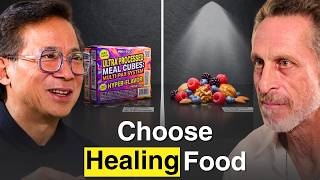
Dr. William Li explains how food activates your body's natural healing systems. Eating the right foods at the right times can fight cancer, manage chronic disease, and help recover from long COVID by strengthening immunity, regenerating cells, and supporting your microbiome.
It's not about drugs killing cancer. It's about our bodies taking care of itself and wiping out those cancers. I think food as medicine is something that can become second nature. You have to be exposed to the basic information. Food as medicine is really not a new concept. It's an old concept. And if you go other cultures, whether you're in Europe or in your Asia, indigenous peoples from all around the world, they looked at food as part of their health keeping scorecard. And they viewed food as a precious substance. They didn't just need to survive, they ate because they were doing something good for themselves. We've lost a little bit of that. And the research behind it actually resurfaces this in a new way that I think that we can all get behind, which is, in fact, it's not really just about the food, it's about how our body responds to the food. how does our body protect its health? And that's what the health defense systems are all about.
It's true. I remember traveling once in Hong Kong and I went out to dinner with this guy, I think he was part of Merrill Lynch, I gave a talk. And we had this extraordinary meal and everything in the meal was medicine, intentionally medicine. And I wrote an article about it called Eating youg Medicine: Food is Pharmacology. And then I went through all the dishes we had and I went through the research and I was like, well, Ginko nuts do this and this thing does that. It was an amazing kind of experience because I realized that in this culture, we don't think of food that way. And yet, that's foundational for creating health.
Well, that's why I wrote Eat to Beat Disease, is that why do you explain the science behind things? I actually lay out more than 200 different foods that are actually some of them are real crowd pleasers. They're the things that we actually know that are supported by science and then figure out how can you incorporate that because in fact, It becomes natural to pick the things that are good for you. It's something we've lost that we can put back into our everyday lives. And for me, when I go out to eat or when I prepare a meal, that's what I'm doing. I'm actually assembling things that I know are good for me.
Absolutely. That's why this show is called the Doctor's Pharmacy with an F, F-A-R-M-A-C-Y. Because that's where you get your drugs. I go to the drugstore, which is the grocery store, and that's where I find all the drugs. don't know as much as you perhaps about this, because even though I've been doing it for a long time, but I look at all the vegetables and all the foods. Now, I didn't know razor clams, we're going to get into that, are so beneficial. I don't know exactly why, but I love them. But you can find out what are the foods that have various components that can activate health.
Right.
And how do you eat more of those things?
Well, I think it makes it, it's about having knowledge and then making it second nature. Right. So, When we heat up something on the stove, we know it's going to be hot, we don't burn ourselves. So we actually avoid certain behaviors. When we go out into the sun, we know to put on sunscreen, it becomes second nature. I think food as medicine is something that can become second nature. You have to be exposed to the basic information. And, you know, the science is important because that's what makes it real. But at the end of the day is, you know, this is something that school teachers should be teaching kids, that coaches should be teaching athletes. that doctors should be telling patients. And so, and I think family members should be sharing among themselves. This is the type of conversation that should be happening at every holiday meal, in every schoolyard. And I think that it's not so foreign. It's informed by science. And we can all do it.
It's true. Now, the other thing I heard you say was at this conference was you showed a slide around immunotherapy. For those who know what immunotherapy is, it's essentially a way to get cancer by activating your immune system rather than giving a poison or cutting it out or burning it out. You literally give something that's going to help your immune system get into gear and be like Pac-Man and eat up the cancer. And, you showed a slide and who would have thought of this, but you showed a slide that people who respond to this immunotherapy and these can erase cancers actually have a certain type of bacteria in their microbiome, in their gut that makes them respond to this immunotherapy, whereas those who don't actually die. And this bacteria is called Akkermansia. It's one of the thousands and thousands of species of bugs in your gut. And you shared a story, if I may, about your mom who had basically metastatic endometrial cancer. which was treated with immunotherapy and was successful, but you added certain things to the treatment to make sure that her acrymancy were good, like pomegranate and cranberry and these polyphenols which come from food that seem to be powerful growers of these great bugs in your gut. So, how do we sort of begin to integrate these ideas into how we treat these diseases? Are we giving everybody a smoothie with all these things in it and helping them with their immunotherapy?
Yeah, well let's take a step back to say, first of all, Our bodies are working hard every single day from the time we're born to our last breath to defend our health. And these defense systems, and I've identified five of them in my book, is angiogenesis, stem cells, our microbiome, our ability for our DNA to protect our body, protect itself and our bodies and our health and our immunity. And all these defense systems work together in concert. They're like our security force in our body. They're patrolling, they're watching out, they're making sure everybody's safe inside and everything is functioning smoothly. And when you have a disease like cancer, for example, and it's not just cancer, it's heart disease, it's diabetes, it's Alzheimer's, it's obesity. But specifically for cancer, it's really, you know, a few bad guys snuck in and they figured out how to get around the security force. You know, it's sort of like, you know, TSA slip, let somebody slip by, and now we have to try to chase it. So, in the old days for cancer, what we used to do is just say, well, let's take a drug like chemotherapy and wipe it out. And, that's a blunt instrument approach by trying to take something poison to kill something that you want to kill.
By the way, the rest of you gets poisoned too.
Well, that's right. And so, basically, it's a toxic approach to something that we don't really, one bad actor, but we don't want to poison the entire body. We've now changed our minds about this, and this is really what's making the impossible possible. We've realized that it's not about drugs killing cancer. It's about our bodies taking care of itself and wiping out those cancers. So immunotherapy, which is what you were just bringing up, is an entirely new approach of enhancing our own body's defenses. We don't use drugs to kill the cancer. we allow our bodies. We give medicines that allow our bodies to kill the cancer so our immune systems can find the cancer and reverse the disease back to health. That's what we've always been dreaming of and it's here. But here's the problem. Only about 20% of people actually have this incredible response to immunotherapy. Sometimes a little fewer, sometimes a little bit more. But the response when it happens is exactly what we want. Dramatic.
Like your mom.
My mom had metastatic cancer and in 30 days she had no cancer and never had chemotherapy. What makes the difference between somebody who responds like that and who doesn't respond like that? That's one of the mysteries out there. And, this is exactly where we need to consider more than the typical lab tests that doctors run. We need to think more holistically. And, one of the things we know is that our microbiome, our healthy gut bacteria, communicates, talks to our immune system. And we need our gut bacteria to help coach our immune system to do the right thing, including getting cancer. So, a study done by a colleague of mine, Dr. Laurence Zitvogel, she's in Paris, she's an immunologist who works with cancer patients. She looked at 249 cancer patients who were receiving immune therapy. and separated them into people who responded versus people who did not respond. This, by the way, was published in the Journal of Science, which is one of the most prestigious journals. And what she found was that the difference between people who responded and didn't respond was one bacteria. Unbelievable. Akkermansia, right? So, well, isn't that easy? You can just maybe take some probiotics with Akkermansia, except that you can't.
No.
There's no Akkermansia probiotics. But you can feed them. But you can feed it and you can actually change your gut. to make your body grow akkermansia. And, the way to do this is the food as medicine solution. So, turns out that pomegranates and cranberries actually have ellagic tannins, but pomegranates especially, and that natural chemical in pomegranate juice and what's been shown is that just one 8-ounce cup of real pomegranate juice, not the flavored stuff, but the real stuff.
Yeah.
Actually, over the course of a week or two, will actually help change the inside of our guts so that that bacteria likes to grow. That bacteria grows in the lining of the gut, talks to the immune system, and that makes the cancer immunotherapy work better. Yeah.
And then there's other things too, like you said, cranberries and green tea.
Many things can actually feed our microbiome, right? So, plant-based foods, you know, I think it's completely accepted now It's not challenged that plant-based nutrition is actually the healthy approach to life. I mean, it's kind of- Eating more plants.
Eating more plants.
Eating more plants. Right? But it's not just, we're not just feeding ourselves, we're feeding our bacteria. Yeah. Right? So we're feeding the, you know, 37 trillion bacteria in our bodies. And after we extract all the stuff that we need on the human side, we're leaving, you know, the leftovers for the bacteria. And this is the fibers, this is the bioactive. and what's amazing is our bacteria can take some of this fiber and they digest it. So, it's kind of like giving a sculptor a block of wood and say, do something with it. So, the bacteria, our gut microbiome, takes that block of wood and starts making sculptures. There's these things called short-chain fatty acids or SCFAs that our microbiome make. And, it turns out that these short-chain.
Fatty acids, these little tiny particles that they make from our food that we feed them.
They're like the fats that fuel the gut lining. They do that. They're anti-inflammatory. They boost our immune system. They help regulate our blood sugar. They lower our cholesterol. They also suppress cancer risk and they prevent blood vessels from growing into cancer as well, all tied together. And this is, you know, at the end of the day, why we need to take our food seriously.
Yeah, essentially you write a little bit about, for example, how the microbiome plays roles in autism. and cognitive function. And, I remember recently seeing a study where there are undigestible things in breast milk that humans can't digest, called oligosaccharides, and they feed the good bacteria in the baby to develop it. Formula doesn't have those things. And, the kids that are breastfed have high levels of something called butyrate, which is one of these short-chain fatty acids, which actually turns off colon cancer genes. and is an incredible important anti-inflammatory and regulates the gut health, whereas the other formula fed kids had something called propionic acid, another one of these short chain fats, but actually that in animal models can induce autism. And so what? It's like, whoa.
Well, you know, at the end of the day, we're just at the surface of uncovering the mysteries of health. And I think that's the kind of humility and awe and wonderment we all need to have, which is, you know, we know quite a bit about different diseases, but we're just at this new frontier of understanding our health. I mean, you've been working in this field for a while and you're deeply steeped into it. And what I'm seeing from my end of the table is that we can begin to peel back the layers of the onion. So it's all about balance.
Yeah.
You know, more is not more. You need just the right amount.
So in your book, A to B disease. You break it down into these very digestible bits. And you briefly touched on it, but I want to go deep in each of these five areas because what you're talking about is something that is our health creation, health defense system that we can activate, but nobody talks about. And you mentioned them, it's our angiogenesis system. It's regeneration, which is stem cells, and you're really involved in the stem cell world. The microbiome, the DNA protection, how we repair and keep our DNA healthy and our immune system. So let's talk about each of those and how we can activate those things. What are the things that harm them? For example, you talk about alcohol affecting stem cells, and I'm thinking, wow, I had a tequila last night. Did I screw up my stem cells? or then you say, well, red wine maybe helps other areas. So, it's a little confusing. How do you break down each of these? And, let's just go through them. Let's start with angiogenesis. And, what are those things that are impairing the proper function of this defense system? And, what are those things we can.
Use to actually activate health within it? Great. So, angiogenesis is a term that actually talks about how the body grows blood vessels. Blood vessels bring oxygen and nutrients to.
Every cell in our body.
That's what keeps us healthy.
They say there's 60,000 miles of blood.
Vessels in your body. So, if you're going to pull out all the blood vessels in your body, line them up, and then you can actually form a line that would go around the Earth twice. Unbelievable. So, that's one of this enormous organ system. So, you know it's going to be important. And, we know when you block blood vessels like in the heart, you wind up having big problems with cardiovascular disease. Clogged blood vessels lead to heart attacks and strokes. And, if you don't have enough blood vessels, you can't heal your wounds. and if you actually have too many blood vessels, you can bleed in your eye, like in diabetes or macular degeneration, and you can grow cancer. So, this is a system that is required to keep every cell in organ healthy. It's a health defense system. And, if it's out of balance, you wind up either too many or too little blood vessels, you wind up having in trouble. So, what are the things that can damage angiogenesis? Well, it turns out high fat diets, damage and your genes. Any fat or just? You know what? Actually mostly saturated fats, but I think that it's really high fat, overall high fat diets can be damaging. And hypercholesterolemia, for example. If you have a lot of cholesterol floating around your blood, the damaging bad cholesterol, LDL, it actually impairs the function of these blood vessels. If you have second cigarette smoke, tobacco, whether people shouldn't smoke, but even secondary smoke, can actually damage your blood vessel response. And then you think about heart disease, you think about cancer, things that are your blood vessels out of whack, out of balance.
The fat thing is interesting because a lot of the studies around fat are people eating high amounts of refined oils. And it's hard to separate out are the people eating high fat having avocados and almonds and olive oil or they're having trans fats and toxic fats and inflammatory.
So, the science actually says is not actually talking about what you actually eat. It's about what the net-net, the effect is in the body. So, if you wind up actually going from, the researchers have studied, for example, in the lab, animals that actually are naturally hypercholesterolemic. These are mice whose blood is milky because it's actually so filled with fat. that's a genetic thing for sure.
Right?
And those are the subjects that actually wind up having problems with angiogenesis. So, I think that we're still trying to figure out what kind of dietary fats are good. We know that, for example, that the omega-3 fatty acids are actually good, the polyunsaturated fats are good for you. But, I'm talking about after what the body actually processes it, what actually results in your body. so what are the things that actually can help restore healthy androgenesis? Well, think about androgenesis balance, like a lawn that's growing, right? Or a garden that's growing. You want to prune the garden, make sure things don't overgrow, pick out the weeds, and if you're mowing a lawn, you're kind of just getting everybody, all the lawn to be kind of in the same level of height.
Yeah.
So you don't wind up having the scraggly lawn. That's what the body does to keep angiogenesis in balance. Not too much, not too little. And so the food we eat is actually like a lawn mower. It kind of prunes off the lawn to keep a perfectly manicured blood vessel lawn in your body. Not too much, not too little. So the things that we do know that angiogenesis balancing foods are like green tea, which is really good soy. Actually, Genistein is It's a bioactive found in soy. It's really good. Tomatoes are really good for helping to keep angiogenesis in balance. Many fruits and vegetables also can do that. So the brassinins are really good. So many of the things we already know are good for us, we know actually also help our blood vessels.
And now we know how.
And now we know how.
Yeah. Now what about stem cells and regeneration? This is a big topic that I think people are hearing about in the news. They're confused about it. There's controversy about it. There's laws about it that prevent adequate research. I mean, it's really quite a messy area and yet it's also one of the most exciting areas of medicine that you've been involved in. And, and it's, I don't think, something that most people are aware of that you can activate your own stem cells, that there's things you do in your life that you can screw up your stem cells. And what are stem cells anyway? What do they do? And how do we, how do we.
Understand how to stop hurting them and start helping them? Yeah, well, stem cells are really simple. We're made of stem cells. So, when our moms and dads got together and created, you know, us in the womb, we started out as stem cells. They actually made every single one of us. And, and then the sperm. And, and the sperm got together and they basically decided they would become a stem cell factory. And then pretty much we formed out of our own stem cells. And after we were born, a few of those stem cells stuck around. about 700,000 of them. They stick around and they're mostly in our bone marrow and they're in lining of our intestines and they hide out in our body and they help us regenerate. So, when you and I were growing up, right, in grade school, we learned from our teachers that starfish can regenerate, salamanders can regenerate, but people can't regenerate, right? Can't grow a new arm. Yeah, well, it's true. You can't grow a new arm, but we do regenerate. We regenerate every day. We know that we regenerate because our hair falls out and grows back. Our gut lining grows back. Our livers can grow back. If you actually remove part of your liver, it'll grow back. Yeah. Our skin grows back. You know, so we. Our bodies possess the ability to regenerate through stem cells. Now, what can injure stem cells? You know, high doses of alcohol can damage and blunt your stem cells.
So I'm okay with the one tequila.
I had last night. You know, having a tequila every now and then is not bad. Having glass. But, you know, the thing is on balance, what you want to do is people who drink a lot have damaged stem cells. Diabetes is another state, a metabolic state that it really impairs, it cripples our stem cells.
Sugar.
High blood sugar cripples our stem cells. So, the excess of anything can be harmful, including to our stem cells. So, what are the things that we can do to help boost our stem cells. This is where it's really become interesting. Before I talk about that, though, let me just. Stress affect your stem cells. Stress can definitely affect our stems. High stress will blunt the activity of our stem cells. You know, it's just like stunning them. So they're like, wait a minute, what do I do now? You know, maybe I'm not going to be so enthusiastic in rebuilding our organs. We got to rebuild our blood vessels. We got to rebuild our hearts. You know, our hearts turn around. Like, we actually have stem cells in our hearts and our brains and re-grow our nerves. Every single day, something in our body is regenerating. Actually, a lot of things are regenerating. So, what people are hearing in the news are really efforts by the biotech industry to develop stem cell therapies that you inject into the body. So, taking stem cells like drugs and injecting them. And someday, that's gonna wind up becoming game changing in medicine someday. We're not there yet. I've been involved with some of those efforts and what I've seen is very exciting. But more exciting to me is the ability for every single person listening to this podcast to be able to actually enhance their own stem cells. And, here's the research. You can actually take-- and it's a lot cheaper. And, it's a lot cheaper and more enjoyable.
Getting a stem cell injection is like 20 grand or something, right?
Well, you know, I would say, why go out and have to subject yourself to that when you can do it at the dinner table? Right? So, the Mediterranean diet, it's been studied by Spain, looked at elderly people on the Mediterranean diet, and those who were on a Mediterranean diet compared to not on a Mediterranean diet had five times the number of stem cells in their circulation, in their bloodstream. So, again, it's not one magic food. it's the pattern of food that you're actually eating. Now, when you, you can actually do the research on specific things as well. So, for example, tea, green tea will increase your stem cells. But guess what? So can black tea. Right. So here's what this is.
Japanese live forever.
Well, you know, all the green tea, you know, people in Asia drink a lot of tea. People in Britain drink a lot of tea as well. We used to say green tea is good, black tea is fermented, so it's not going to be that good for you. we're changing our minds. We have to keep our minds open. Black tea can also double the number of stem cells. And then here's another kind of surprise and delight is that there was a study by UCSF in San Francisco where researchers took people with known cardiovascular disease, so they had kind of crappy blood flow, and they gave them hot chocolate.
Yeah, I was gonna say the chocolate stem cell story.
I wanna hear about that. It's amazing, right? So the the darker the chocolate, the higher the flavonols. These are the bioactives that are naturally present in cacao.
And, there was a study done. These are the food is medicine. This is the food is medicine. There are literally these chemicals in food.
Called phytochemicals or phytonutrients that actually have these medicinal properties. They are made by Mother Nature. They're packed in the food, growing on the plant. And, you know, every plant-based food will actually have some type of bioactive. So, in cacao, which is a bean, which then you process to actually get, you know, kind of the cocoa powder. If you take the really dark chocolate, like 73% cacao, the really dark chocolate, and you make it into a high flavanol hot chocolate drink, and you have it twice a day, this was the clinical study they found in people who wound up actually having drinking the hot chocolate twice a day over the course of a month, they doubled the number of stem cells compared to the people who didn't drink hot chocolate. Right? And so, okay, so the question is, is that important? When they measured their blood flow, what they did is they put a blood pressure cuff on them and which, you know, kind of like lowers the circulation of the blood, they let it go. They found that the blood flow was much vastly improved. Wow. So here's a functional result that actually means it makes a difference. So, who's gonna complain about chocolate? Who's gonna complain about tea? Who's gonna complain about a Mediterranean diet? I mean, you go out to eat, these are the things we love.
One of the things we're looking at is nitric oxide, NO, which is a gas, it's a natural signaling molecule. It's the stuff that our cells make to repair themselves. It's what our blood vessels use to dilate and to fix themselves. And it's what Viagra and Cialis actually caused the body to make with the obvious effects that they're intended to have.
We have actually had Louis Ignarro on our podcast. So he was the guy who discovered NO or nitric oxide and has won the Nobel Prize for it.
I saw that Lou's an old friend of mine and an amazing guy.
And.
What'S amazing about Lou is that, you know, in his, you know, as a senior statesman of research, he is the most friendly, accessible, passionate, brilliant, articulate guy that I know. And so I'm glad that he explained that. But I can tell you when this all started, when we first made our discovery about the blood vessel damage, you know who's the first person I called? Lou Ignarro. Lou and I actually compared the notes on the gene expression, the pictures of the blood vessels, and we were thinking about this. Now, I've continued to move forward and am looking at working with some companies now that actually have nitric oxide stimulators. Let's look through this. There's some interesting efforts that can actually, they have nitric oxide delivery systems that are in inhalers, not ready for prime time, in clinical trials for acute COVID. The reason that happened for acute COVID is because there was a really interesting successful clinical trial of inhaled nitric oxide in pregnant women who are on the ventilator or heading towards a ventilator and they found that you could actually rescue these women and their babies. Definitely something that can help blood flow and repair, definitely life saving. And so one of the interesting- Should.
We all be taking Viagra for our blood vessels?
Well, so one end of the spectrum is actually this stuff in clinical trial, you know, but then, you know, so much of COVID has led us to talk about repurposing existing drugs, right? Because we can't wait 10 years. We got to sort of see what's available. And so, you know, like the hydroxychloroquine and ivermectins, and a lot of people have been coming up with different good ideas to sort of figure out do they work or not. But it's really interesting because on the other end of the spectrum of not what is to be invented, but what's already around is Viagra, Cialis, and all kinds of other things. Now, so that's an interesting clinical trial to be done. Vasodilates, creates nitric oxide, affects repair, and nitric oxide causes stem cells to come out of our bone marrow to repair and regenerate our vessels as well. And it can actually help to repair neuropathy, which is another thing, and lower inflammation. so again, I'm super interested in, I think there's huge amounts of promise that clinical trials actually need to be done for that. I think that, you know, there's also something to be said. Should we be taking arginine that increases.
Nitric oxide in the body?
Right.
Well, so that's another interesting thing. There's dietary supplements that actually introduce arginine precursors and L-arginine, right? So you can actually have arginate and mix it in water. There's also medical foods. like Juvenescence that actually are approved for healing wounds. So I was having a, you know, I'm on the board of the American College of Wound Healing and Tissue Repair, and we've been talking about long COVID, and we are raising this specter that perhaps the long COVID is like the entire internal part of your body being turned into a chronic wound, stuck in the inflammatory phase, damaged blood vessels, not completing the cycle of actually healing itself up. So what do we do there? What kind of pages can we tear from the playbook for chronic wound healing from the biology to the clinical stuff to the treatments? So I think that, you know, it's really interesting to think about ArginAde, Juveness, wound healing substances, phosphodiesterase inhibitors like Viagra and Cialis. It is a whole spectrum. Now, I don't, I'm not, again, you know, we can't give medical advice. on a podcast, but I think what we're sharing, I mean, Mark, you and I are both physicians that think deeply about mechanism of the disease. What we're actually sharing, this conversation is really about how medical scientists and physicians that think about the science actually think about how to solve problems. So I don't think the answer is there yet, but I'm actually really encouraged that there are these tools that are out there that we might be able to do. I think one thing that, by the way, is really important to actually pursue is this clue why vaccination improves the symptoms in some people?
Yeah, explain that because I think it's sort of counterintuitive and people who have already had COVID are getting vaccines because you can get COVID again. And some of those people who've had long hauler syndrome who've had the virus are now getting better, which is kind of surprising. So explain us.
Totally surprising, totally counterintuitive, as I said, another wrinkle, another twist in the pandemic story that, you know, nice, easy understanding. And this is where I think the medical community needs to really just admit our humility and to eat some humble pie, right? Like, it doesn't make sense. Why would that happen? And then you sort of have to put on your scientist hat to say, well, a vaccine shouldn't actually cause that kind of an improvement if there's damage in the body. A vaccine shouldn't cause the body to shouldn't be repairing the body, but the vaccine might be able to prompt the immune system to fight residual virus. So as that part's going on, the other thing, by the way, the vaccine might do is it might actually essentially control alt delete and do a hard reboot of your whole immune system. And it could be that the fire that COVID causes in many people, not all people, never quite goes out. So it's kind of like a forest fire that when it goes out, you still have this sort of burning brush underneath, even though it looks like it's mostly out, there's still flame there. And what you need to do to put that thing out, you know, is you need to actually just completely restart the hard drive, and then it'll actually go out and reset. And so, you know, I think you mentioned this earlier, another hypothesis, I mean, listen, for your, viewers, this is just like medical research thinking in real time. We don't have the answers, but we know at least we can actually try to ask questions.
It's fascinating to me that the virus sort of may not be obviously detectable when you do the regular test, but maybe I'm wondering if you're doing biopsies of tissues if you show. And also, I wonder if we're just stuck in a feed-forward cycle, because we see this a lot in functional medicine. People have chronic fatigue syndrome, have sort of weird, crazy symptoms for years and years just don't get better. They've had Lyme disease, they've had nystatin bar, they've had whatever an infection, and they just get stuck or they have, you know, gastritis in their gut. It's never the same. So there's this phenomenon in medicine where people get stuck in a feed forward cycle, which is very much like, you know, your record skipping. Many of you listening may not ever heard, ever had an album, but you and I are old enough to have record albums and they skip. I'm like Spotify and, and it just kind of keeps going on and on and on. and it gets stuck and it's almost like a biological groove that you can't get out of. And so a lot of functional medicine is about focusing on how to get people out of that feed forward cycle and reset their immune system and reset their biology. And we use a lot of different therapies, all of the basic foundational lifestyle things we talked about, you know, diet, exercise, sleep and stress reduction, meditation. But there's also a host of other therapies we use to enhance the body's function, whether it's just adequate levels of vitamins and minerals and all their, their role or adequate levels of phytochemicals or herbs. and there's also a whole field of sort of regenerative medicine, which is looking at various therapies that are sort of biologic, in a sense. They're biologic therapies that use substances that our bodies naturally have, but sort of give them in higher doses to enhance repair and healing such as stem cells. It's obvious when people know about exosomes, which are derived from stem cells and oxidative therapies, which, you know, we sometimes use, for example, in medicine, but like hyperbaric oxygen therapy, which can seem to be also helpful for some of these patients. I just had a patient who had long hauler syndrome. and she said the most profound thing she did was use hyperbaric oxygen therapy to recover, which increases wound healing, right? That's what you've studied as- well, yeah, yeah, yeah. Let me just finish. So there's a couple of other things as part of this spectrum of things that may push the body to reset, like ozone therapy, which is being used in many other countries, but it's still sort of fringe here. But there's really good data on how this sort of pushes the body out of this cycle by suppressing the inflammation, activating your anti-inflammatory systems, antioxidant systems, repairing blood vessels. So there's a lot of therapies out there that are on the fringe that probably actually won't even be studied by traditional science. but I think have some among the most promising benefits. And I've had the chance to treat a lot of long hauler patients, and I've seen that those people who do these other therapies often are the ones who recover the fastest.
No, it makes total sense. I mean, because this is, once you have system-wide damage or inflammation or imbalances, which is clearly what's actually happening with long haulers, and we can pinpoint it down to the cellular molecular level, the reality is that it's very unlikely that a single pill or a single prescription is going to actually do the job. And while integrative medicine is almost self-assigned to use tools that are on the fringe, listen, I think this pandemic pushed the entire human species to the edge. And so it's now time to actually look at those things that may not.
Have been.
Examined in the same way before and pull them up, pull them to the main stage and kind of say, is this something that can actually be helpful to us? And this is where it doesn't really matter what side of the equation you are or what, you know, what, whose team you're on. It's basically like, let's look at stuff that can actually help. So what's interesting, I really like what you said about hyperbaric. So a lot of people in the wound healing world misunderstood what hyperbaric oxygen does, because the idea was to pump high oxygen pressure into a wound that's not healing because the wound needs more oxygen, because the blood vessels aren't quite as good. And indeed, you would actually see blood vessels growing pretty profoundly after doing these hyperbaric dives, they call them dive chambers. And it turns out there's a really interesting mechanism that is at play in hyperbaric therapy that might help to explain your experience with long haulers. So when you're actually in the chamber, whether it's 40 minutes or an hour or whatever it is, you're training the body, you're resetting the barometer of the body to get used to high oxygen. And now the patient steps out of the hyperbaric tank or the chamber, and now suddenly their body that was used to very high oxygen suddenly is at sea level. Okay, like again, sort of like not low level oxygen again, okay? Or not actually having the same amount of hyperoxia, hyperoxygen. Now you actually trigger genes that are caused by hypoxia and not enough oxygen and it turns on angiogenesis. And that's really what the blood vessels are growing in response to the change between chamber and not chamber, chamber and not chamber. It's that delta between that pulls a trigger. The other thing that happens with hyperbaric is that one of the things when the trigger gets pulled is a domino effect and stem cells come out during in hyperbaric chambers. Yes. Regenerative. and that to me, if it's happening in your wound, it could probably happen in your lungs, in your heart, in your brain. And that is really, really worthwhile studying. I know that there's some hyperbaric studies.
Again, looking at the microcirculation. Yeah. And that's called an oxidative therapy, which is sort of the opposite of what we typically think of. We'd want to do in medicines. We want to take antioxidants, right? An oxidative stress is a bad thing, but it's not necessarily. It's, it's just part of our normal regulatory system. So when you have too much, it's bad. When not enough, it's also bad. I think that the effects of hyperbaric or ozone, these are what we call oxidative therapies, using oxygen, which is in a sense potentially harmful to the body, pushing it to respond by giving it this little insult, and then the body responds by hitting the repair setting. Your body has its own innate repair systems, and if you know how to activate those systems, then we can begin the healing process. And I think that's what's happening with Long Hauler Syndrome. These people are getting stuck in a rut, a biological rut of inflammation. And there, there needs to be things that push them off of that. And you can't just take, you know, ibuprofen or steroids or any of that. You've got to figure out how to get the, because the body is way smarter and more powerful than any medication. And if we can activate those endogenous or internal innate healing mechanisms, I think we're going to see a lot of benefit. And that's, that's where I get the most benefit for my patients with chronic fatigue or Lyme or other chronic illnesses that are resistant to traditional treatments?
Yeah, no doubt. And I think that this is where we need to look not at the solution as single solutions, but we need to look at the body as in need of multiple solutions and allow its own reset processes to be able to heal. So it's sort of can let the body complete its cycle of healing. because the body wants to heal itself. I mean, we've got, we're hardwired with health defense systems. I mean, our circulation is designed to operate at its optimal, and if you don't have enough, it'll grow more. If you have too many, it'll actually prune it back. And same thing as regeneration. I mean, you know, like, our organs are continuously regenerating. We're regenerating from the inside out invisibly and silently. And so when we actually need more repair, we need to be able to kick out some more stem cells and a great and now example I give you sort of clinically is in the burn clinic. So people who suffer, you know, bad body burns, you know, like thermal injury, whether it's a kitchen fire or they're an industrial fire when they've got bad body burns, that is like this prompt that we need to super repair ourselves, super regenerate. And that's when the stem cells come flying out. You can measure this in the bloodstream. And so, you know, another thing that could be done is actually to measure stem cells in the bloodstream. for long haulers at diagnosis and then follow them over time to see if they need to push more stem cells out because we can actually measure those now.
In the spectrum of what we're learning around COVID-19 and long hauler syndrome, are you hopeful that we're going to be able to take care of this? Because to me, the prospect of 50 million people globally with long hauler chronic fatigue syndrome, it just seems like a healthcare catastrophe. In America, you're talking about you know, let's say 30 million people have had COVID, it's probably twice that easily because those are the ones who've been tested positive and maybe three times that's maybe it's 100 million. That means, you know, 30 million people in America were walking around with some type of debilitating symptoms. And I don't know how prevalent it is. It depends perhaps on your infection or your hospitalizations or not. I saw one review that looked at cases out of the, you know, the hospital where people had been in the hospital with COVID-19 at 60 days, 87% had severe symptoms. That's almost 90% of people at two months were still sick. Now, maybe it's less if you're not in the hospital, but what is your thinking about that?
Well, I think that there's been two recent studies that actually paint an even more dire picture. There was a study published in Nature looking from the Veterans Administration looking at 70,000 patients. I don't know if you saw this study, but basically people had recovered from COVID they had a 59% increase in mortality six months or later afterwards. And so this is not just something you put up with and get by with, but this actually can trigger even greater illnesses. And by the way, don't forget about all these other non-communicable diseases like diabetes and obesity and cardiovascular disease that we were struggling with before the pandemic. This is now a thick layer on top of that that might actually make the other ones a lot worse. And so I think that we're looking.
At.
A new human disease that we have the science, which is what makes me optimistic. We have the ability to think and peer through the veil of this condition to try to figure out what's going on. And what I'm really optimistic about, well, let me first before I say that, let me say what I'm not optimistic about. I'm not optimistic that the pharmaceutical industry is gonna come up with that race to find that single targeted therapy that's gonna cure long haulers. that I don't think is going to happen. And I've got a lot of experience over 25 years working with biotech. I just don't think that model is going to succeed. I do think that they will contribute something modestly, and it won't work for everybody. But I do think that there is a bright bulb that has now been turned to white hot, sort of white hot heat, to really be able to look more at a systems biology approach, a whole person approach. The very things that you talked about, Mark, and you have been talking about, which, you know, if anybody has had any doubt that the body needs to heal itself, that we need to actually give the body a chance to heal itself, we need to actually prompt the body and give it every shot to be able to actually affect and complete the cycle of healing. And those things are usually not found in a prescription pad. Those things are usually not found in a medical clinic. Those things, you know, they exist in people's own homes. So now we actually have to stitch together this continuum between what happens in the doctor's office or the Cleveland Clinic or another great medical center with what actually happens at home. And so now this is not alternative. This is mainstream. And what I would tell you is that people who are only throwing drugs at patients with long haulers, they're the ones that's going to be practicing alternative medicine.
Well, that's a very interesting perspective. I'm not sure how that would go over in major academic centers, but I tend to agree with you. And I think that, you know, it's forcing us to rethink medicine because what we see with COVID-19 is it's not a respiratory disease, it's a systemic disease. And your work around the effect of COVID on blood vessels helps explain why. But by working in our silos, we're not going to be able to figure this out. And I think that, you know, in a sense, you know, like autoimmune disease, you know, we can give these powerful drugs to suppress the inflammation. But as soon as you stop those drugs, the disease is still there. So the question is, how do you, how do you organize a system of, of thinking to treat the whole system to create health and activate, as I said, these bodies, the body's own internal intelligence for healing, which is profound. I mean, when you begin to understand, like you said, you're just, just sitting like you cut yourself and all of a sudden your blood vessels start growing. I mean, I still, like, I get a boo-boo, and I'm like, wow, that's amazing. Like, that just I burnt myself here in the stove and I'm like, wow, look at that. It's perfect. And it's like, how does it do that? And I think that's not just happening on the outside, it's happening on the inside. And we understand a lot and a lot from your work about how do we enhance the health and the function of our internal systems and internal blood vessels. And your book, Eat to Beat Disease is such a great example of how we can use, for example, foods as medicine to start to repair and regulate these systems. And the way food and lifestyle works is not by a single pathway, it's by working on your whole system. And I think that's what's so different.
The microbiome is an entire new discipline that's going to change humanity. I think that we've always thought of humankind as just humans, but in fact, we're 50-50 with bacteria is really kind of like 90-10. Well, they've actually done some new calculations on this, right? So, it's about 40 trillion cells, about the same number of bacteria the latest calculation on this is sort of the up to date numbers. And it makes a lot of sense, right? So basically when we evolved as humans, we were hunters and gatherers picking stuff up, you know, nuts and fruits and seeds and picking stuff off of trees that had bacteria in it. There's more bacteria in a planet than living than animals. And when we ate those, the bacteria naturally colonized the body. And by the way, the gut, of course, but not just the gut, our skin, our mouth, our nose, every orifice has got bacteria and our tears have bacteria. Breast milk has bacteria, even in the womb, which we, you know, when you and I were medical school, they said, oh, the womb is sterile. Wrong. In fact, babies get bacteria from the moms in the womb. Amazing. Okay, so we're beginning to rewrite the playbook of understanding how bacteria get in our body. The next thing about bacteria, I'll tell you about in terms of the microbiome is, in the Middle Ages, bacteria was responsible for the plague. And so we sort of developed this fear and repulsion to bacteria. Fast forward to the 1940s, the discovery of antibiotics that really was a medical revolution. And then everybody went willy-nilly with the antibiotics, which can be life-saving let's be clear about that. But the overuse of antibiotics, not just in humans, not just in children, but also in our animals.
Which is where most of the antibiotics are. We have 24 million pounds of antibiotics that are used every year. 19 million are used in animals for helping them grow and preventing infections.
And getting into our drinking water. So we've sort of invisibly impaired our environment so that we're exposed to antibiotics. That changes the ecology, the coral reef, that that delicate ecosystem between bacteria and human cells in our body. So that's one thing is antibiotics. The other thing that actually can really injure our microbiome really is our lifestyle, you know, physical activity. We know that if you're not active, your microbiome kind of suffers. We exercise on the outside, the bacteria get the benefit too. They get that workout, right? Stress can change our microbiome. I mean, how many times have, you know, you've, I'm sure you and I have done the same thing. We stayed up all night. We've had to pull some all-nighters next day. You feel like crap, you know, your gut doesn't feel so good. That's because of microbiomes having a riot. Yeah, they pulled the all-nighter too. So what we're realizing diet, obviously, and our diet plays a huge role.
So putting in pounds of stuff every day in that, too. Yeah.
Well, you know, is something really interesting.
Right.
So when I look at the ingredients of any food that I actually get. And, I try to do fresh food, whole foods. But, every now and then, you have to take it something and you look at all the ingredients. The stuff you don't recognize, you can't pronounce. Those are the things that we should worry about actually that could influence our bacteria. Yeah. Right? You pick a mushroom and you eat it, you know that the fiber in that mushroom is going to feed us and the bacteria, right? The pulp is going to feed us and the fiber is going to feed the bacteria. What we need to worry about is what it is that we're putting in that can actually harm our bodies.
We have 3,000 food additives in the market that are FDA approved and we don't know what most of them do. Very few have been tested and it turns out that the unintended consequences is that many of them adversely affect our microbiome.
Well, and you know, we all know people that are super healthy, right? So they never get sick. And then we know people that seem to get sick all the time. the difference is probably in their microbiome. In fact, it was an interesting research study that looked at super healthy super agers. These are the people that got to their 70s and 80s and 90s almost without any disease at all. And then they looked at young healthy athletes and they found when they compared their microbiome, they were remarkably similar. They were almost identical. Amazing. So health is clearly governed by our microbiome. So what are the things we can actually eat that can affect them? Well, we talked about this a little bit earlier. It turns out that pomegranates actually can make a big difference. Cranberries can make a big difference. Nuts, walnuts, pecans, cashews, things that we actually know. Almonds? Almonds, yeah.
And so, I had almonds for breakfast.
I want to make sure I got it. Well, we should all probably, I mean, unless you have a nut allergy, I think nuts are one of nature's most healthful snacks. I don't know if you saw this, but about two years ago, the American Society for Clinical Oncology, the big cancer meeting, they presented this result that say in patients with colon cancer, stage three colon cancer, undergoing treatment, whatever the treatment might be, that those who ate two handfuls of nuts a week actually at a 50% lower risk of death from their disease.
Now, you have to put that in context because When you see a drug that has a 20% reduction, everybody's jumping up and down, it's a billion dollar blockbuster drug, and you're talking about a couple handfuls of almonds for a few cents instead of these drugs that can cost $100,000 is actually better?
Well, it's not an either or, it's together. And again, this is where food as medicine really needs to enter the toolbox of doctors. Not just you and me, but we really need to spread the word among the medical education community because if you were taking care of a patient with colon cancer and getting treatment, if you look at that data, it's the same kind of data that's presented at a big meeting where they talk about all the drugs and immunotherapies, I would actually strongly advise patients to have nuts if they can take it. And what do they serve in the hospitals? So again, we're in the middle of a revolution. It's slow. but inevitable that we begin viewing food as medicine. And, we're going to be able to.
Map this out, right? We're going to be very soon in a more clinical way with artificial intelligence, big data analysis, microbiome assays, we can actually look at what's growing, what's not growing, how different things affect it, check it over time in a serial way, monitor the effects. I mean, it's fascinating, you know, wow, maybe if you give this cocktail of akkermansia smoothie, then your acrymancy grow and your cancer response rates are increased from immunotherapy. I mean, this is really radical stuff. And yet, there are very few people talking about it in a clinical way like you are. You're saying, okay, wait a minute. We don't know everything, but we know a lot and we know enough to actually start to integrate these strategies. And the whole idea of these five defense systems is so powerful because it empowers people to say, okay, wait a minute. I don't just have to set a wait around to get disease and hope some drug saves me or try to fix it then, but I can actually start to build the foundations of my health for my whole life by understanding. And these are a little bit technical, you know, stem cells and microbiome and all this stuff, but it's actually doable and you make it so practical in your book. You have this five by five by five plan, which we'll get into, but let's go next to the DNA thing because we talked about in Genesis, regeneration, stem cells, microbiome. Let's talk about the DNA because we think, oh wait, we got our DNA. There's nothing we can do about it. We get hits to our DNA from toxins. and stress and different things, but what can we really do to help our DNA? Right.
Well, so in my book, I should talk about how most people hear about DNA these days relates to our ancestry. Who are we related to and how much of us is Neanderthal?
I'm about 1.5%.
But in fact, our DNA is our genetic blueprint and part of that blueprint is our blueprint for health. It actually is designed to keep us healthy, our DNA. our genetics to actually produce all the healthy things to defend our health. We need the right proteins made, we need the right molecules made at the right time from the time we're born to our last breath, really. And so we know that DNA can get mutated and so some of the things that can mutate our DNA is actually, you know- Wait, stop there.
I just want to go back a minute because what you said is really important. You said our DNA makes proteins that regulate all of our biology. And so, they can actually make good proteins or if they get damaged, they make bad proteins. Bad proteins. That's right. And the good proteins help you create.
Health and the bad proteins cause sickness. Exactly. Okay. Exactly. And by the way, the DNA is part of our hardwiring, right? It's kind of like the operating system in our body that has an auto virus system. It actually checks it out, finds problems and erases them, really just deletes them. so on average, we know that there's about 10, 000 mistakes that can lead to mutations that occur in a healthy person every single day.
Right.
So think about it. We're outside in the sunlight, Sun ultraviolet radiation damages us. You sit in a car in a highway on a traffic on a community to work. That sun shines going right through the windshield, mutating your DNA, secondary smoke. You're filling up your car in a gas I mean, some of us drive electric cars, but most people still wind up filling up their cars with pump gas, right? So do you stand upwind or downwind of the fumes?
I just hold my breath. Actually, I try to like stuff the cap in the thing, because they have the automatic ones, I run away.
So here's a way to protect your DNA. When you're filling your gas, figure out which way the wind's blowing and stand upwind. If you stand down when you're inhaling those solvents, gas and you're mutating your DNA.
You like a little wood block, you.
Can just stick in and hold and then go there. Well, but this is the kind of situational awareness that we want to have. You know, like I was saying, when you're at the stove, you're really careful not to burn yourself or set the house on fire. These are the things that we know we should be doing at sort of the health level. So, our DNA is, and there's some things we can't do anything about, like radon coming out of the earth. Like that just mutates our DNA as well. So, we have to take proactive steps to protect our DNA. And some of the things that we can do are pretty simple. Like, for example, we know that an elemental vitamin, vitamin C can actually do it. A really interesting clinical trial or clinical study that was done in people who were drinking orange juice, right? So, their scientists actually took blood from them, before drinking orange juice and they took the blood out and they measured how well their DNA protected itself in a lab test. And then they gave them orange juice to drink. It's one and three quarters cup. So it's kind of a tall glass of orange juice. And they found that within two hours, drinking orange juice could enhance their DNA's ability to protect itself by lowering damage by 20%.
Is it, is it the vitamin C or is it the naringenin or quercetin?
We think it's vitamin C because actually they've they've actually studied vitamin C in isolation, but it's almost certain that there's other factors in there.
I mean, you're getting a lot of sugar with that much orange juice. Could you then just take the vitamin C pills?
So, what's interesting is that the placebo that they gave to a group of people were just sweetened water that was the same amount of sugar as the orange juice. It's not the sugar. We know that's not good for you, but it was really the other stuff. So, vitamin C is what they were focusing on. But, I think it's probably the naringenin and hesperidin and other things in orange juice as well. You know, the pulp's got a lot of good stuff in it. And, you know, by the way, the other interesting thing is that in most of these fruits, it's the peel, the rind that actually has a lot of stuff.
Well, they say, you know, if you're taking statins or certain drugs, you should have grapefruit, especially the peel, like the white stuff, because it actually affects the metabolism of drugs. Exactly. And so, if it's that powerful that you can get toxic from eating grapefruit if you're taking a statin.
Well, so, you know, that's pretty interesting. But just a point of clarification on that. So, it's if you have grapefruit, it can slow down the metabolism of the liver. So, when you're taking a drug that can be toxic at high levels and the liver has to clear that, that's when you call it toxicity.
Right.
But in point of fact, think about it another way. If you have grapefruit and you're eating other healthy foods, you raise the levels of the healthy things in your bloodstream. So here's another amazing food that can protect our DNA is kiwis. Kiwis.
Oh, my God. Well, I just came back from New Zealand where my wife is from, and.
I ate a lot of kiwis. Listen, I love kiwis, right? Kiwis used to be in the jungle. I think monkeys ate them. and they were grown in New Zealand and then shipped to America. And, I think they were called Chinese gooseberries originally, and they were just named kiwis. So, anyway, there was an interesting study done in Scotland that looked at whether you ate one, two, or three kiwis a day and looked at what happened to your ability to protect your DNA. Turns out even eating one kiwi a day can help your blood protect its help your blood protect the DNA from damage by 60%.
That's amazing.
One kiwi a day.
And what you're talking about is learning about in your book all the various foods. You might not like razor clams, but there's a lot of options. And it's not just that you're going to eat kiwis all day. It's you add all these different creative foods into your diet as much as you can, and you actually will probably have a more powerful effect than even what you're talking about.
Right. Well, I mean, look, here's the thing about most health diets, right? If you are extreme and you only go on one way of eating or try to only eat one food, you're not balancing your body. It's not natural to do that. I think it's the most healthful approach is one that's sustainable, that's supported by real science and real evidence, and that allows you to do the things you enjoy. So in my book, my emphasis you need to beat diseases. Number one, look for foods that you eat the foods that you enjoy that are good for you. And so I present a whole list of food, 203 foods actually, and you get to choose. Pick the ones, circle the ones, take a cell phone picture of the ones and check them off. That's your shopping list. You've started out, you've had a great start already. You're already identifying the foods you love that are good for you. I've done some of that work to figure out which ones are good. Now you just choose them. Secondly, Besides doing the things you like, be moderate. And, that's the other thing is that, you know, I think most researchers, most research has shown that if you cut down your calories by 15%, 30%, actually you improve survival, at least in lab animals, but also in people too. People that eat somewhat less, you know, the Japanese have the same- Ari Hitoshi Boo, right? Exactly, 80% full.
Don't push yourself away from the table before you're so stuffed that you Leave.
The party before it's over, right? That's basically what it is. It's better for your body. It doesn't put metabolic stress. You know, when you stuff yourself to the gills, your body is really stressed out. Even if you eat healthy food and you don't want to stress your cells, if you eat slowly and moderately, your brain will sort of say, hey, you know what? It's enough.
Well, it takes 20 minutes for your stomach to tell your brain you're full.
Exactly. Right. So, you know, here's, here's, and this is, by the way, why eating with other people, which is what most of these Mediterranean countries do, the Blue Zone, you know, where people live a long time, they eat with other people. It's good for you.
And you're talking, so you can't be.
Stuff in your mouth the whole time. Exactly. And you're not distracted. You're not watching television. You're not looking at your phone. It's, you know, eating social. And, and so that's another important component. And then finally, it's got to be sustainable. you got to do something that you can do your whole life. And, that's why doing the things that you love and that you already like and that you can explore on. You were talking about razor clams. In my book, there's a lot of foods that most people may not have heard about.
Bitter melon.
Bitter melon, it's kind of a staple in some Asian countries but great to try. I wouldn't cook it yourself for the.
First time because it's not that easy to cook.
Go to a Chinese restaurant.
Yeah, let somebody who knows how to cook it. I love it. It tastes really bitter but it actually for diabetes, it helps lower blood sugar.
Absolutely. And, you know, what the interesting thing about bitter melon is, again, this is the culinary side, right? So, you know, here we were talking about the doctor's pharmacy, but in fact, we could be having a chef having this conversation as well. When you have bitter melon, which is a little bitter, it actually makes other foods taste more intense. So, it actually, the way it was designed in cuisine, is actually help you make you enjoy other foods even more. So again, it's not either or, it's not an extreme, and it's about different cultures and finding what we love to do.
Well, it's fascinating. We bred food and vegetables to be more disease resistant, to be drought resistant, to be easier to be shipped without spoiling, to be not necessarily designed for flavor or polyphenols. In fact, the flavor comes from these phytochemicals.
Exactly.
So, we've actually bred all of the good stuff out of even our common fruits and vegetables. That's why I say eat weird food, because those typically haven't been screwed with. And there's a couple of chefs we're having on the podcast, Chef Boulay from New York, who actually has quit his world-class restaurant and is now focused on food as medicine and creating all sorts of different culinary experiences that integrate these magical foods like curcumin and turmeric oil and various things that he's done. And Dan Barber is also going to be coming on our podcast and he's created a new seed company to design seeds, not to be heirloom necessarily, but to be full of these rich phytochemicals so they enhance flavor. nobody was breeding for flavor. People were just breeding for all kinds of other things, pest resistance or GMO, whatever, instead of saying, well, how do we create more of these medicinal foods? And which is a whole new thing that chefs are starting to think about food as medicine. I remember when I was at Canyon Ranch years ago, probably like late 90s, and I got up in a meeting. There was the executives there, the owners, the doctors, the dieticians, the chefs. And I got up and I said, you know, we need to, this is a health resort. We need to start thinking about how to design our menus to use food as medicine. And the head chef got up and he screamed to me, this is not a effing hospital. I'm like, oh God, I guess I'm a little too early on this one.
Well, you know, listen, being ahead of the time is something that you're known for. And I think that we're now starting to appreciate it. I mean, think about all the opportunities to impact on health using what we now know about the health of food. Not only hospitals, by the way, but restaurants would be a great place. Theme parks would be a great place. Airlines would be a great place. I mean, there's so many places we can have an impact.
Well, it's just frame shift. Getting people to think about food as not just calories but information, food is not just energy but actually instructions that regulate your stem cells and your DNA and your microbiome and your immune system and your angiogenesis. I mean, these are things that are.
Not it's a new science of nutrition, right? So, beyond proteins and calories and sugar and all that kind of stuff, we're now combining food science with life science. You know, the life science is what we learn in medical school. Food science, you know, not so much, right? So, the average, it's only like 20% of medical schools that require any nutrition. Yeah. You know, I can tell you part of what got me into this is that I used to be a doctor at a VA hospital and I felt a duty. Well, I felt a duty to really try to help people that committed their lives to help protect our country, right? So, what was interesting, and I'm sure you know this as well, the veterans that come to the hospital, they're often, they have a lot of health problems. Some of them are obese, diabetes, they got diabetes, bad heart disease, cancer, you know, that's the sort of everyday in the clinic, you see people that are are really, really dealing with a lot of illness. And what I noticed was I said, you know, this is odd because these people, when they were in their 20s.
Were healthy, were fit.
They couldn't even get into the military if they weren't like perfect specimens of fitness, right? So what happened to them over the decades? And I realized it wasn't, you know, just medicines. It had to be their lifestyle. and when I kind of talked to them and gave them diagnoses, oftentimes really bad diagnoses, you know, and then they would ask me, what's the treatment? How long do I have? Doc, you know, how bad is it going to be? They put their clothes on and they'd be on their way out the door and almost all of them would turn around and ask me one question. They said, Hey, Doc, what can I do for myself? What can I eat? And I didn't have the answer because I wasn't taught. We weren't taught to give that answer. and I thought that was wrong. And that's what led me on this journey that led me to write this book, Eat to Beat Disease, because I think that we need to know that people want to know that. What can we do for ourselves to eat to beat disease? Our immunity is our first and best well recognized defense system, right? Nobody would challenge that. And we've always assumed that, you know, if your immune system is working, you're gonna stay healthy. if it crashes like you see in HIV or in AIDS, it's a terrible situation. If you've got an overactive immune system like autoimmune disease, lupus, rheumatoid arthritis, I mean, lots of people suffering from that. Even celiac disease, for example, food triggered immune responses, people really suffer. And so balanced immunity is what's important. I don't know if you remember this, but I certainly do. When I learn about the immune system, in medical school, it seemed infinitely complicated. You know, you got this system, you get that system, they break together and there's like 50 different parts and they work together. And I thought it was an alphabet soup, honestly.
A lot of molecules involved in the immune system.
But here's at the end of the day, what we know is that the immune system acts like a security force in our body. They patrol our system to make sure any invaders that might get in through through our eyes, our nose, our mouth, our ears. I mean, every orifice is an entry point. You cut yourself, bacteria can get in there. Our body basically, our immune system goes, hey, wait a minute, we're gonna go to the site of action and we're gonna secure the zone, so to speak, clear it up and make sure everything can be not disrupted. That's essentially what our immune system does. And yeah, there's a lot of complexities in there, but we do know that things can lower our immunity. We know that infections, if you have a lot of infection, you can lower our immunity. We also know that, again, smoking, aging, stress, sleep deprivation. Sleep deprivation is a big one, right? So there's some new studies coming out that show that pretty much if you don't get at least six hours of sleep, your health is seriously in jeopardy. And we know this, again, that all-nighter phenomenon that every college student and Definitely, anybody's gone to medical school or done a residency training has, right? Yeah. It takes time to recover from that and our immune system needs to come up along with our microbiome and all these other defense systems.
I used to feel like I had fibromyalgia after every night on call. He was achy, tired.
Now imagine it never goes away. Yeah. Okay. That's so what do we now know about food? We know that foods can actually boost our immune system. I mentioned oysters. It's quite amazing that actually oysters have polysaccharides, these long sugars and proteins that.
Actually can help boost our immune system.
Oysters and oyster mushrooms. And oyster mushrooms, yep, exactly. And then, you know, our microbiome talks to our immune system. So here's the pomegranates and here's the mushrooms again that help our microbiome to actually boost our immunity. And then we do know that that there are other foods that can calm our immune system. So tea, you know, for example, green tea can not only help boost our immune system, but it can calm it if it's overly active. So people talk about inflammation, right? And sometimes we use inflammation in sort of this broad sweeping statement. Inflammation, a little bit of it, the ability to have it is good. You want, you need inflammation a little bit, but you still want too much of it. And so there are foods that can calm and quell information, inflammation as well. And, that's important if you have autoimmune disease.
Like?
Well, so again, tea is one of those foods that can actually lower your immunity, not your entire immune system, but just the inflammatory component.
Yeah.
Because those catechins actually can actually help to quell things.
So, I was talking to a gastroenterologist from Harvard. He was saying, yeah, they use curcumin and green tea extracts as ways of treating colitis.
That's right. Well, I mean, so curcumin is an interesting one because when you eat this yellow natural spice powder, which is delicious, by the way, it can be produced from curry, right? Curry powders. It tends to go right through our system out the other end unless you have it with fresh cracked black pepper. I don't know if you know about this, but basically if you have fresh cracked black pepper, you actually help your intestines get activated so it absorbs more of the curcumin from the turmeric. So, again, this is- and also traditionally.
Like in India, they used to make oil with ghee and turmeric.
That's right.
In fact, I'm writing a cookbook called Food, what the Heck Should I Cook? And, I've invited chefs to contribute recipes and David Boulet created this amazing thing called Turmeric Oil. And, it's a special infused oil. oil with turmeric that actually helps to activate all the inflammation fighting properties.
And, you know, it's so interesting you mentioned that because combinations of foods can be really important. You know, for example, tomatoes which contain lycopene, most people don't realize that if you pick a tomato off a vine and you eat it like an apple, you get the vitamins from the tomato, but the lycopene actually is in a natural form that the body really like to absorb. It's called the transform. If you heat the tomato and cook it, you gently change the chemistry into another form. That's why tomato sauce. People love to absorb. But, it's still fat soluble. So, if you actually cook the tomato slowly with olive oil, a healthy oil, it's fat soluble, and then you eat that together, now your body really loves to absorb it. Sounds good. So, right, like again, back to the Mediterranean. Or in Asia too, there's combinations that work. Let's go back and look at what the people from olden times knew. I think that we're forward looking. I'm a researcher, so I'm always looking at the latest new thing. But I think there's great value in looking back at the ancient cultures, the ancient recipes. We've probably forgotten more than we have to learn, but we still have a lot to learn.
I'm going to send you that article I wrote called Eating youg Medicine: Food is Pharmacology. In fact, you're Chinese. And in Chinese, the word for take your medicine is chīr yào, which means to eat your medicine, which is a very interesting way of framing it. It's that they don't take medicine like.
A pill, they eat their medicine. That's right. In Chinese medicine, traditional TCM, traditional Chinese you kind of view food and medicine and herbs all sort of in continuity. You've got hot and you've got cold, you've got balance, all the things that, you know, we're now rediscovering using science. And, you know, I think that there is so much to learn about health and we need to have the humility to recognize that while we know, you know, quite a bit about disease and we've got some good medicines to treat them. When it comes to health, we need to keep our eye on the ball. We need to focus on what we're learning and we need to think about that ourselves because you don't need a doctor's prescription for health. What you need to do is to make that part of your life in a natural way.
Well, if we can get food reimbursed by health care, it's a game changer. I'm actually working on that at the clinic with the food pharmacy, which is the idea of actually paying for food for people instead of drugs to get healthy reverse disease and then actually will save lives and money.
And insurance companies are starting to recognize that as well. And so we should all work together, find ways to apply our knowledge so that everybody can benefit from the most advanced knowledge possible. And, you know, actually honestly for the average person, they shouldn't have to think too much about it. It should be natural all around them. They should be doing the things they like. be moderate and actually do it for a long time.
Well, it's tough because we're not educated about it. We don't learn about it. The environment of our food is so toxic. We live in a nutritional wasteland where to try to find something that's good for you is really tough.
Well, that's what we've done for ourselves. But I'm saying that health is an invisible thing. And that's why we need to think through what our health actually means. And because we're against, really, a brick wall almost every single day in and modern society with everything we've done to the environment and to the stress that we put ourselves in just living life in general, the odds are kind of stacked against us unless we take our own control.
It's incredible. I mean, for a guy who was sort of steeped in traditional medicine, who's probably one of the leading scientists in the world around angiogenesis, who understands the deep biology that we all learned in medical school and has published 100 plus papers in major journals, you're sort of coming around to this idea, this paradigm shift that the way to get people well and reverse disease is not by treating disease, but by creating health. And that is a massive paradigm shift. And that's really what functional medicine is all about. And it's really now becoming more accepted and mainstream.
And you're leading the way. And I think most of us who go into medicine, we started out by wanting to create health, right? I mean, people don't go to medical school to treat disease. They go to medical school because they want to help people stay healthy. So, here we are. We're at the precipice of a new era in society, not just medicine, where we can actually do something for ourselves.
If you love that last video, you're gonna love the next one. Check it out here.
People think that this sort of breakdown process is really bad for you, but it's actually really good for you. The only real successes we have in cancer medicine are really in prevention. So stopping smoking, for example, is sort of.
More from AI




This Is Why 99% of Skin Conditions Don't Heal — And What Dermatologists Won't Tell You






Why you need to start strength training today #strengthtraining #healthyaging #fitness
