Robert Kennedy Jr: Power, Corruption, Freedom, & The Chronic Disease Epidemic Within America
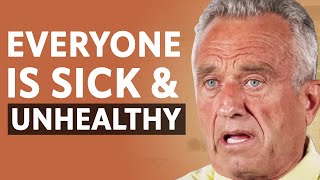
This is a YouTube video titled "Robert Kennedy Jr: Power, Corruption, Freedom, & The Chronic Disease Epidemic Within America" featuring an in-depth interview between Robert F. Kennedy Jr. and Ask AI Mark, recorded in August 2023. The conversation covers topics including the U.S. healthcare system, chronic disease, vaccine safety and censorship, media consolidation, political polarization, corporate influence on government agencies, and Kennedy's presidential campaign motivations. The dialogue is candid and explores complex social, political, and health-related issues with a focus on transparency and reform.
We have the highest health care bills on the planet and the worst outcomes of any industrial nation is bankrupting us. 80% of that is from chronic disease.
We talked years before about you entering politics and you were a bit reticent about it, but now you've sort of taken a big step. And what was it that kind of called you to this moment?
So I was, as you know, I've been censored for 18 years since I published an article at Rolling Stone in Salon in 2005. and all of a sudden my opportunities to go on television, I had a deal with the New York Times at that point where I was publishing an op-ed every six months and they shut that down. And then little by little, they stopped publishing anything that I wrote on any issue, environmental issues. And really since 2010, I've been almost completely banned from the mainstream legacy media, which is very, very dependent on pharmaceutical advertising dollars. And so, and then, but, you know, the, the, during the early Trump Administration and, you know, at the beginning of COVID actually, in 2016 or 20, no, 2019, I, Adam Schiff at the beginning of 2019, so this is a year before COVID Adam Schiff wrote a letter to the, in, in, in March, Adam Schiff wrote a letter to all of the social media sites asking them to start censoring anybody who questioned vaccines. Three months earlier, the World Health Organization had declared without any scientific evidence that vaccine hesitancy was one of the 10 greatest threats to public health. and, you know, there was no scientific study cited. This was more, you know, more dangerous than AIDS, more than cancer, et cetera. Malaria, it was up there with malaria and all these other, you know, genuine threats for which there is evidence. But it was kind of an arbitrary designation. And then that year you had the measles epidemic and they, we started getting censored. And then when COVID happened in January, the censorship became, you know, really, as you saw, there were doctors, you know, like Peter McCullough and Pierre Kory and all of these other doctors who were just trying to talk about alternative medications, about early treatments who were being deplatformed systematically. Not only that, but their licenses were being attacked. And then in, in January of 2021, we now know President Biden came in on January 21st and on January 23rd, and this is all in Judge Dody's decision, recent decision, 155-page decision, which enjoined the White House from having any contact with social media sites. But the White House two days after President Biden came in, had contacted Facebook and Twitter and asked them to begin censoring me, to remove me from their platforms. Three weeks later, Twitter or Instagram took me off, and that was my major site. I had over 800,000 followers on there, and they just took me off at the White House orders. And the White House was, we now know, was deploying all of these three-letter agencies, including the FBI, the CIA, the Census Bureau, I don't know why, but, you know, the N8 or the DHS, NIH, were all involved in identifying different people that needed to be censored. And they weren't just people who were talking about COVID They were people who were talking about things that were, you know, critical. In one case, it was a parody of President Biden and Jill and his wife, you know, that was an idiotic parody, but it was, they didn't like it. And so they demanded that it be censored. So this has never happened in American history before, where the president of the United States is ordering and threatening private companies to remove information. And a lot of that information was critical medical information. The Wall Street Journal did an article two weeks ago that said that suggested that a lot of Americans had died because they were not, because of that censorship, because they were not given access. to information that they should have. And in fact, you know, our country, and this has never been explained, we only have 4.2% of the global population in the United States. We had 16% of the COVID deaths. And, you know, the public health agencies, whatever the reason for that, the public health agencies need to explain it. Is it because, is it a combination of things? Is it because we have the highest chronic disease, rates of any country in the world, the highest chronic disease burden. Is it because they denied early treatment by ivermectin and hydroxychloroquine? Is it because of the lockdowns? It's something that the government did wrong. And we, you know, and that the function of NIH should be to spend some of that $42 billion that is supposed to be allocated to researching public health threats. It's critical that we understand what went wrong during this pandemic and there's no effort to answer that question.
I think that's right.
Anyway, that was only half of my answer. Okay.
I just wanted to add one thing to that point because I think it's important, particularly for the audience here, and I'll let you finish in a minute, but you're right, we're 16% of the deaths and cases and 4% of the population in the world. And when you look at the data on that, I think it primarily is because of chronic disease and published study from Tufts showed that 63% of all hospitalizations cases of COVID could have been deaths from COVID could have been prevented by better diet. And I asked Francis Collins about this in person. I said, why didn't you use this as a teachable moment for America to say, hey, you know, it's not your fault that you're in a toxic food system, but this is a chance for you to get yourself healthy. And here's how to do it. And he was like, well, we don't want to blame the victim. I said, well, this is not about blaming the victim. This is about calling out our destructive food system that both from an agricultural and a food production system is generating food that is 60 of our diet is processed food. That's what's making us inflamed and pre-inflamed. flame. So when COVID hit us, we all got sick and died. So I think you're absolutely right about that. And I want to just be transparent right now. Bobby and I have known each other for, oh, gosh, I don't even know, maybe 15 years now. And we've traveled over the world together. We hang out a lot. And I consider him one of my close friends. And I've known him in all sorts of circumstances, tough family situations, in his public service as a leading environmental activist is, is activist for the health of our children and many, many other sectors. And I know of no other person with more integrity, with more intelligence. and more commitment to making the world a better place.
Well, you know, there's a CDC study that nobody's ever contested that showed that three, that the average person who died from COVID in America had 3.8 chronic diseases and, you know, potentially fatal ones in some cases, like diabetes or asthma. But, you know, it was clearly the chronic disease that was killing them. It was very hard for a healthy person to die from COVID The people who were done, it happened. We don't know why, but certain people, I have a very good friend of mine who literally owns a health wellness company and he's in the best of health. He almost died. So COVID could kill people that were healthy, but it's very, very, very, very rare. And in fact, there's been a series of studies in the US and in Germany where they could not find one healthy child who died from COVID You know, that everybody who died was, you know, either had very chronic obesity or some other chronic illness. And so really, if you look at what were Americans dying from, they were dying from chronic disease. And it was the COVID that maybe put them over the edge. But the thing that really killed them was a chronic disease. We have an epidemic of that in this country that makes COVID look like a cakewalk.
Absolutely. I mean, every day, you know, we lose probably 2,500 to 3,000 people from chronic disease is totally preventable. Yeah.
Yeah.
So get back to the inspiration on why you, why besides the censorship that you're kind of now running for president.
The censorship kind of put me off because, you know, one of the things I was looking at, I said, well, if I run for president, it's much more difficult to censor me. but, you know, my wife and family, to put my wife and family through the nightmare of, of a presidential race, to make a point was something that I didn't want to do and nobody in my family would do. But then a guy, then, you know, the, the Ukraine War started, and I started having, you know, immediately from the beginning, I was looking at that war and, and seeing how much of it was driven by these propaganda tropes that I had watched in Vietnam and Iraq and, you know, Syria and Libya and, you know, again and again, the same thing to feed these forever wars. And I started seeing that, oh, you know, the Minsk accords that the Russians actually wanted to sign a peace treaty and we wouldn't let them. And then again in April 2022, the Russians signed a peace treaty with Zelensky and started removing their troops. And we sent Boris Johnson over there to blow it up. and so, you know, I started looking at these and saying, and the Democratic Party and Republican Party were both full blast and into the, you know, into the war. And I, I just felt like I'm, I'm losing my country, that this is, that, you know, we're locked into this, this military industrial complex, which Eisenhower warned us would my uncle died fighting, that my father died fighting the military industrial complex. And here we are, and it's on all the things Eisenhower said, which is, you know, to turn us into a surveillance state at home, an imperial state abroad, and that somebody needed to be talking about that. And then a pollster, Jeremy Zogby, who runs one of the biggest polling houses in America, had been polling my name across the country. And this is at a time, Mark, when, you know, I probably had 10,000 articles written about me. by that stage in COVID, and not one of them was a nice article. They were all, you know, what a monster I was, a conspiracy theorist, and every name that you can apply to somebody. So I didn't expect that if I did a poll that anybody was gonna, you know, say I was a good guy. Zogby was putting my name on a bunch of polls. You know, when you do a poll, for a client, you give that client about 40 questions and then you ask each of the recipients those 40 questions. But most of the clients, they only want to know the answer to maybe 10 questions or 15. So when Zogby had extra questions on the poll, he would throw my name in and he called me up or he sent me an email and he said, I need to talk to you, I need to show you something. And he came to my home and he had all these pols that he'd done across the country. And they showed, you know, me with this extraordinary strength that showed that I actually had a pathway to win the election. And the pathway was coming from support, you know, from all three parties, independents, Republicans and Democrats, but very strong in each one. And at that point, I took those to Cheryl, and you know Cheryl, she did not jump at the idea of me running, but You know, I, we talked about it for several months. I made all kinds of promises and concessions and finally, you're still married.
So that's good. You're still married.
I wouldn't run without her support.
So, I mean, it's incredible, Bobby. You know, I think it's interesting when you look at, you know, the, the field out there, it's like Republicans hate you, Democrats hate you, but, like, also many Democrats and many Republicans love you. So it's actually very confusing to everybody because it's like, where do you fit in a little box? And I think what's what's unique about your campaign is that you're talking about things that people don't want to talk about. I mean, I, I, I mean, even this chronic disease conversation we're having, I, I'm shocked. I've talked to presidential candidates. I've talked to people in, in, in Washington over and over, and nobody wants to talk about this issue. Nobody wants to talk about the food system. Nobody talks about the environmental impact of our ag system. Nobody wants to talk about the, the burden of chronic disease and its impact on our economy and health disparities and the, you know, the impact of our food system on climate change. I mean, it's just like silence. And yet you're somebody who's talking about these issues. You're bringing them to light. You're talking about the divisions in society, trying not to make them worse, but make them better. And I think that's so refreshing, you know, and I think, you know, it was like when your father was running for president, it's like the country catalyzed around him because he was talking about something nobody was talking about. He was talking about the poor. He was talking about social justice. He was talking about things that really matter to people that they care about. And I think, you know, your family has a legacy of doing things that, I mean, I know so many members of your family, and I would say to the people listening, it's really remarkable how many members of your family are in work is actively trying to make the world better, whether it's the kids going off to developing countries to help, whether it's your son going off to the Ukraine, not telling his dad and going to fight in the special forces without telling you, which probably freaked you out, I imagine, you know, but, you know, well, he didn't tell you. No. I mean, but the level of moral courage to get up and say the things you're saying.
Yeah, I'm. And, you know, I had argued with him about the Ukraine. We argue every night at dinner about it. And he, you know, he made a very courageous decision. But when he, he decided, he just, we were sitting at the dinner table, and I said to him, one of you starting work for your Law Firm. I was very excited. He was going to work for bomb Headland, which is the Law Firm that did the Monsanto case for me in Los Angeles. The best, the best. a law firm in Los Angeles. And he said, and he had a job with them. And he said, I gave my notice. I'm not working there. And I said, what do you mean? And he said, I have other plans. And I said, Another plan? Oh, Cheryl and I were sitting in Europe. And then I did have access to his credit card bills and I A few days later, I saw a credit card, a bill from Poland. And so that made me think, okay, that's pretty close to Ukraine. And then the next one I saw was from the Ukraine and then nothing for three months.
No, must have been a scary moment. But I think it just speaks to the commitment of your family to advocate for what's right in the world and the campaign that you're launching. And I encourage everybody to go to Kennedy24.com and look at the platform that he has, look at the issues that Bobby's talking about from reconciliation. You know, I think, you know, in this country, I maybe you're a little older than me, but I don't remember a level of division. I mean, there was the 60s and the upheaval, but the level of division and enmity and hatred from one American to another is just so disheartening for me. And I know, and I interact with everybody from all walks of life, from all political spectrums, from all religious beliefs, from all gender identities, and it's just, you know, people are people first. And I think we've, we've forgotten that. So, you know, one of the, one of the reasons, and I, and this is something you, you, I remember where I was standing, actually, was on the dock in Hyannis Port when you said this to me years ago. I said, you know, what are the problems with our democracy? He said, one of the problems was the repeal of the Fairness Doctrine. And I'd like you to explain what that is. And, and the reason I'm asking you is because that single act led to the propagation of information and media that no longer is about the truth. It's about polarization. And that was a very disturbing moment in American history that I don't think most people caught. In the movie Vice, there was a scene where I think Dick Cheney and I think Bush were talking and it actually was under the Reagan administration when this happened. But it was really a moment where we've kind of lost our common American identity and lost our common humanity together. So I'd love you to sort of talk about this division in America and how you imagine healing that because these seem to sit at the root of so much, including the censorship, including the lack of of free speech, including the cancel culture that we have. It's like, it's just amazing. People can't talk about things anymore, can't have debate, can't have differences of opinion. And it's really what you're inviting is let's all talk together. Let's hang out and like get to know each other as human beings and find out what's true and let's, you.
Know, change our minds if we can learn from each other. Yeah, so the Fairness Act was Congress passed it in 1928 at the dawn of commercial radio. and let me just go back earlier, you know, in our history, there was a dispute and at the time of the constitutional ratification between Hamilton and Adams, or Hamilton and Madison on one hand, or no, Jefferson Madison on one hand, Hamilton Adams on the other. Where Jefferson wanted a universal franchise, meaning every white man could vote. Okay, that's what Universal meant at that time. And Hamilton wanted to restrict it. Hamilton wanted to restrict it to just Atlanta, people who were landowners. And the reason for that was that those were really the only educated classes. And he believed that in a democracy, that could be stolen by a demagogue who could seduce uneducated voters with promises with a chicken in every pot or unrealistic promises that they wouldn't be able to see through and that you needed an educated class. Jefferson did not dispute that. He believed that was true, too, but he said the remedy for that is not to deprive people of their franchise. but rather to educate them and forcibly educate them if they refused to be educated. So that's why we, you know, we had for the first time in this country, Massachusetts and other states had mandatory public schools. You had children had to go to school because it was regarded as critical for our democracy that you have an educated populace and, you know, Jefferson. created all of these educational institutions in Virginia. In fact, his grave, you know, it says, you know, along with author of the Declaration of Independence, says founder of the University of Virginia. And they started these land colleges, you know, the state land colleges everywhere in this country. And it was all about that. You need to educate the public. So then when radio was invented, Congress recognized very aware of this history. that this new media, which could suddenly magically talk to every American so that, you know, all these newspapers that they were reading would become irrelevant because you had these, you know, the one voice that could talk. Congress passed a law to make sure there was a diversity of voices. And, you know, ultimately the Fairness Doctrine said you could only own a limited number of radio stations because they didn't want one corporate conglomerate to be able to control the narrative. You could only own certain ones in certain jurisdictions. You couldn't own a newspaper and a radio station in the same jurisdiction. They wanted to make sure that there was a diversity of voices in our democracy saying all the different, you know, stories and serving different constituencies. And they also said for the public airwaves, because it was recognized that the public owned the airwaves and that the broadcasters could be licensed to use them. But they, the license from FCC would be that they could only use them to serve the public interest. And what that meant is, yes, they could make money by selling entertainment to you on the radio, but they had to tell the news that was important and, you know, for performing government policies. at least for a certain amount of minutes or hours per day. And particularly when the television came along, they had to do it at a time when most families would be home. That's why we had the six o'clock news hour, because they thought all Americans are going to be home. The news divisions had to be independent. They had to be telling truth. They could not tell a lie. And if they told one side of the story, if there were two sides, you had to let the other people tell their side of the story. That was the fairness doctrine. And that's why during that period, the news divisions were basically semi-autonomous and they were all money losers because the network would put the money in them because that's the only way they could hold onto their license. And then in 1986, Reagan, who came to power with the support of the big studio heads who wanted to consolidate all of these, these radio and television stations and with the support of the Christian right, which was then, you know, developing their own television networks. And they didn't want to give equal time to Satan, you know, which is understandable, but basically they were like, where? So Reagan abolished the Fairness Doctrine. He, you know, he did it through FCC policy. And then you saw this huge consolidation so that today, I think there's five countries, five companies, maybe now only four that control virtually all the radio stations, all the television stations in our country, almost all the newspapers, almost all the billboards, and most of the large internet content providers. So you have this huge consolidation where there's five guys or now telling American what's news. And there's no obligation anymore that they have to tell the truth. And so in the old days, you had Walter Cronkite, who everybody believed in John Chancellor and David Brinkley and, you know, Chet Huntley, who had the most integrity of any people in our country. More people believed them. They were independent. They didn't lie. They were supposed to tell, you know, their job was to tell the truth to the American public. And now that's not true. Now you have people who are, whose job is to promote, you know, ideologies and, and be corporate propagandas for the, for the advertisers. And the, after the fairness doctrine, the news bureaus became corporate profit centers. Oh, the, you know, that, that they had the bean counters at NBC. We're now telling NBC news division, you got to show a profit. Well, how do you show a profit if you're a news division? and not by having reporters in every country in the world and reporters in every agency of government. There used to be reporters when I was a kid. There'd be a reporter at EPA from NBC. There'd be a reporter full-time at the Commerce Department, at the Transportation Department. They'd be digging through papers all day, uncovering scandals and revealing them to the public. That's all gone. Those investigative journalists- no investigative journalists. No, and they show a profit. not by telling us news that may be difficult to explain or hear, but rather by entertaining us. So they tell us lurid stories or they do things that are Hollywood entertainment, but it's not the news that is really important for Americans to understand. And then they do a lot of partisan propaganda and corporate propaganda. And it's very, very damaging to our democracy, as our founders predicted.
Yeah, I think you're right, Bobby. And I think, you know, anybody who turns on Fox and CNN at the same time, you're like, what world am I living in? You know, you can read, you know, the exact same thing about the, you know, same event, and it can be completely a different narrative. And so it's very confusing for someone who's not in it, who isn't knowing the facts, to actually come up with a coherent opinion about it. And it's unfortunate, it just creates more polarization, more division. and lack of nuance. And I think, you know, we've dumbed down so much for Americans and have not given the credit to actually understand nuance and detail. And that's, you know, one thing you do very well is, you know, people say, oh, you're an anti-vaxxer. It's like, that just makes me crazy because I could be called an anti-vaxxer too, but I'm not. I've been vaccinated and my kids have been vaccinated. Your kids are vaccinated. You're not anti-vaxxer. You know, we helped, you know, we helped work on a book with you called about thimerosal. And it's really about, you know, what are the science, what does the science say? Having a conversation about things that are difficult does not mean you're anti or pro. It just means asking the question, what does the science say? What are the facts? How do we uncover them? How do we have an intelligent, coherent, logical debate about what's true rather than this immediate dismissal or canceling somebody as soon as they say something you think might be against your ideology or views? So how do we as a country get back to a place where we are all kind of reading from the same playbook or the same facts and heal the divide? I mean, one of the links on your website is really about healing divide as a major part of your platform. It's not vilifying the other, it's about bringing people together.
Yeah, and I mean, I'll say something about being anti-vax. As you know, I've never been anti-vax. I began every speech during that period saying, you know, all my kids are vaccinated, I'm fully vaccinated. I was getting a flu shot every year. I mean, I, you know, I was not, I was the least anti-vax person. I just wanted good science and I wanted to get the mercury out of the vaccine and the aluminum. And as I pointed out then, I've been trying to get mercury out of fish for 35 years and nobody called me anti-fish. You know, they, they were calling me anti-vax because it's a way of, of marginalizing me and making me look like a crazy person. And that's what they do, they're doing now. I mean, I'm, I'm, you know, I'm threatening all of these, these prophets that the military industrial complex, the pharmaceutical companies, the DNC. And so you see this, you know, this orchestration of the propaganda against me, which tries to discredit me, you know, in a whole variety of, you know, of weird charges that I, you know, that I'm a conspiracy theorist or everything that you can imagine, you know, the worst possible stuff that's been said about me. And virtually none of it is true. And, you know, my position on vaccines, if Americans, you know, people ask me all the time, how are you gonna persuade Democrats to vote for you, you know, because of your anti-vaxxine? And I, what I say is, if Democrats knew my position on vaccines, virtually all of them would say that I wanna do the same thing. All I want is good science, the same scientific safety studies that are, that are endured by every other medical product and medicine prior to licenser, which vaccines are exempt from, and also that people have a choice. And, you know, if you, you know, it's between you and your doctor. If you're, you know, if your child or if you want to get vaccine, it's a medicine where, you know, the government should not be ordering us to take it. There's risks for every medicine and people need to make those, I believe in freedom and, you know, I think most people agree with me and those who don't, that's fine. Let's talk about it and let's engage in it. Let's not call each other names and try to cancel each other and shut each other up.
I think that's right, Bobby. I think one of the challenges around vaccines is that there was a moment in history where there were very few vaccines and most people got those vaccinations and we did all right. And then all of a sudden, the number of vaccines started increasing and there was a reason for that, which is that the government indemnified vaccine makers against any harm. In other words, they wouldn't get sued and the government would take that liability and they paid out billions and billions of dollars in vaccine court to kind of deal with vaccine injury. And none of that really gets talked about. And so, you know, when you look at, I remember when I was recertifying my board certification, I had to go to a review course and there was a pediatrician got up and said, you know, here's the current vaccine schedule. And it's like, you know, incredibly long because I have to share this with you. But I just gotta say, like, I don't know about this. 'Cause, you know, we don't really have evidence-based medicine. When you look at the evidence, you should say, okay, well, when we went from like eight vaccines to like 20, 72 shots, for example, where's the evidence of comparing all those shots in one kid or a group of kids over time to a group that didn't get them? We don't have those studies. We don't know. And so we really aren't practicing evidence-based medicine and we're not really asking good questions. And furthermore, I don't think there's any interest in studying it. It's like there's just this, lack of interest in actually looking at the data because it's, it could potentially is not, not what we want to see. And so that's not to say that vaccines aren't good or haven't been great for humanity or haven't saved many lives. But I think, you know, like any other medicine, they're a pharmaceutical intervention that has risks and has benefits. And let's not just ignore the risk. And I think that's what happened with COVID We're like, vaccines are safe. These work. They're effective. Well, they kind of worked, and they were kind of safe, you know, like they weren't like the panacea we all thought, and nobody really talked about the difference in disease immunity and, and, and actual sterile immunity, which is kind of a nuanced medical conversation. You know, it's a difference between, like, actually, like the flu vaccine, which you get, and you may or may not get the flu, but you could get the flu versus, for example, when you get measles vaccine, you're not going to get measles in your lifetime. So I think that, that people just don't, you know, have the facts, they don't have the information. They're not, it's not shared about in a coherent way by people who understand this. And it's, it's like, well, let's not confuse people. Let's not, like, say, don't eat junk and sugar because it might make people feel bad, or let's not talk about the issues because they they don't give people the credit for having the intelligence to decipher nuance. And I think that's what you do. And if people really are interested in what Bobby has to say, I'd encourage you to read his books, to look at the data, to read the things. You know, when we did the book on Thimerosal, there were over 900 references. And you and I went to Washington, we went to the Department of Health and Human Services, we met with every agency lead on vaccines, the NIH, the CDC, the FDA, HHS, I mean, everybody. And we, and like not one of them could say, Gee, you know, if I had a kid or a grandkid right now, would I want to knowingly put a vaccine with mercury in them? Because we know mercury is a neurotoxin. Even if we're not 100% sure it's bad, there's enough evidence to say that mercury is one of the most toxic compounds on the planet. Like, why would you want to put that in your kid? And they would go, well, we don't want to, but we don't really have an alternative where they were kind of weaseling around about it. It was like, it was one of the most embarrassing moments from my perspective as an American citizen to see the leaders of our government agencies not actually taking a stand for what seems to be the most obvious thing, which is let's get mercury out of vaccines. Not that vaccines are bad, but this is a poison. Why are we putting them in there? And then I remember that meeting, Bobby, remember that when we were there?
It was a meeting. Let me just clarify this so that listeners, mercury was removed from most of the childhood vaccines in 2003. but it was, it continued to be, and it continues to be in the flu shots. And in, in multi-dose file flu shots, and most of those are sent to poor neighborhoods, to, you know, the urban and rural clinics and, and poor neighborhoods. And they, it's, it's horribly dangerous. It's given, it's recommended for women in every trimester pregnancy and for children every year of life. So anybody who tells you that all of the mercury was removed from flu shots from childhood vaccines. He's not telling you the truth. The mercury is still in the flu shots and we need to get it out. And we need to do real science in the flu shots. And the Cochrane Collaboration, which is the most prestigious group of independent science, which oversees, overlooks pharmaceutical science, that repeatedly said that flu shots are waste. of money and that there's no benefits and mortality from the flu shot. And in many cases, you're more likely to get non-flu infections if you take that shot than if you didn't. So we should be doing real cost-benefit analysis and real science. We should be doing evidence-based medicine. And by the way, the Institute of Medicine, which is part of the National Academy of Sciences, has a list of about 170 diseases and injuries that it suspects are caused by vaccines. And every four or five years, it tells the CDC, you need to study these. And CDC simply refuses to do those studies. That's not Robert Kennedy talking. That is the Institute of Medicine, the highest arbiter of vaccine science in the land. And, you know, that just needs to be done. We need real science. Well, part of the problem, Bobby, is.
Something you talk about a lot, which is concept of corporate capture. And once I heard in a lecture, you say something called corporate kleptocracy, which I'd never heard before. It's basically the stealing of our government by corporations. And I think people are aware that this goes on, but at the level that it goes on, it's just sort of staggering. And, you know, I'd love to sort of talk about how do we sort of gain that back? And it's not just, the government, it's the media too. And I just to kind of go back to what we were chatting before, you know, over 55% of ads on TV are for pharma and probably a lot of the rest are for bad food. And, you know, when you look at the news, the news shows there, a lot of advertising is drug advertising. And so, you know, it's very hard to get truth about lifestyle or diet or things that really work or that matter, what I do functional medicine on the news. And I found this myself, I've not been censored the way you have, but I definitely noticed It's really hard to talk about these issues. Nobody really wants to. I went on Tucker Carlson and he let me kind of rant about it, but he got canned. I don't know if that was why, but hopefully not. But I think we basically have to have a way for the media to be more independent. We have to have a way for government to be more independent. How as president would you address these big issues? Because I think they're what's really driving a lot of the problem with our country today.
Yeah, I mean, one of the first things I'm going to do is to make good health a priority for Americans. You know, the way my uncle did with the National Council, the President's Council on Physical Fitness, I, you know, I'm going to make that a priority for Americans and say, you know, my uncle said, ask not what your country can do for you, ask what you can do for your country. Well, here's something that you can do for your country. do some exercise, lose some weight, get yourself in shape, build your immune system. Why? Because we have the highest healthcare bills on the planet and the worst outcomes of any industrial nation. We pay $4.3 trillion a year in healthcare is bankrupting us. 80% of that is from chronic disease. And that's something that, you know, we have some control over that chronic disease. most of it is coming from bad food and toxics in our environment and bad health habits that are contributing to it. And we need to change that. As Americans, we need to take control of our own health and not hand it over to the pharmaceutical companies and the pharmaceutical paradigm. I'm going to just make that a priority for Americans and I'm going to to, you know, start physical fitness programs in every community in our country. And I'm going to, you know, create incentive systems for people to actually lose weight and to take care of themselves and, and reward them for that. And then I'm going to do concrete things like get the pharmaceutical advertising off television, which is where the only, there's only two countries in the world that allow that atrocity to happen of direct to consumer advertising. and it's us in New Zealand, and that's one of the reasons why we use three to four times as many pharmaceutical drugs as any of the European countries, and we have the worst health results and we pay the highest prices for pharmaceuticals. And the number one cause and death in our country, number three cause and death in our country, is pharmaceutical drugs after heart attacks and cancers, according to the Cochrane Collaboration.
And by the way, Bobby, I just want to say something about that point. That point is really important because people don't realize that not just side effects or harmful things from drugs that are taken improperly. I think recently the data may have changed, but years ago there was a paper in JAMA that showed that I think the third or fourth leading cause of death was drugs prescribed by doctors for the right dose and for the right patient in the right way, not mistakes. So it's important to realize that. That's pretty frightening data.
And a lot of that may be drug interactions too, because when you prescribe a drug for a patient, that patient, you know, I heard the other day, I don't know if this is true or not, so, you know, don't quote me on it, but people over 65 or something are on an average of like 11 or 12 different pharmaceutical drugs. I mean, it's, it's insane. And I don't know if it's that many, but it's, it's definitely going to be four or five. and nobody knows.
81 takes one or more. 81 takes one or more a day.
So is that then. Anyway, I'm not going to ask you about that number, but somebody told me that number the other day. I didn't check it, so I'm not going to vouch for it. But, you know, and then, then we need to decouple the, the regular, the health regulatory agencies. you know, these financial entanglements that they have with the pharmaceutical industry. It should not be that the drug division at FDA is getting 70% of its financing from Pharma. The 45% of the entire budget of FDA comes from pharmaceutical companies. So that's their boss. That's who they're reporting to. That's how you get incentives. by doing good things for pharmaceutical companies. And, you know, and, and at the agency now, those mercantile Ambitions, the pharmaceutical companies have entirely overwhelmed and subsumed the regulatory function of that agency. The same is true of CDC. CDC, about 45% of CDC's budget goes to buying and then Distributing vaccines and these sweetheart deals with pharmaceutical companies in the way that you get job promotion, salary increases, you know, recognition, et cetera, at that agency is by making, by increasing vaccine uptake. And that shouldn't be your job. Your job should be increasing public health. You know, that should be the only metric you're worried about. But they don't, that's not their metric. Their metric is get as many people to take as many of these as possible, and that's how I'm going to get my salary raised. So your job is to look for problems with that product. And yet you're disincentivized from doing that. And then NIH is probably the worst. I think there's 1200 scientists from NIH who are now collecting royalties from pharmaceutical companies, including Anthony Fauci. And so if you work at NIH and you work, NIH is now the biggest incubator for new pharmaceutical drugs. If you have the good fortune to work on one of the drugs that hits the jackpot, you now have margin rights to the patent and you can get $150,000 a year for life. So the scientists who are supposed to be protecting public health are collecting royalties from a pharmaceutical company that's paying for their house, their boat, their children's education, their retirement accounts, and they have very, very little incentive to look for problems with that drug. which is their job. And so we need to get rid of those. We need to get rid of the revolving doors. I know how to do this because I've been studying these agencies. I have a PhD in how to unravel corporate capture in the pharmaceutical industry and at those regulatory agencies. And I'm going to take a lot of pleasure in doing that when I get in there. And, you know, people know that I'm going to do that. And that's why you hear these, you know, slanders about me every day in the press, why the press universally, the legacy media is now, you know, is coming at me with such a vengeance on issues that if you go parse them and read, you know, what did Kennedy say? That's a conspiracy here, or that's anti-Semitism or whatever, you actually look at my statement, you'll go, you know, there's nothing here. but they need to say that. They need to put it every day in the headlines because they know, I mean, these are companies that are making billions and billions of dollars in taking pharmaceutical advertising, and I'm going to cut off that flow for them. So they have a big incentive to, you know, to make sure I never get into that White House.
Yeah.
I mean, you mentioned chronic diseases being.
An issue, and I think, you know, Pharma is profiting wildly from that. And, you know, I would, I would argue that COVID and deaths were really a foodborne illness. I think it's caused by the food we're eating because it creates such a level of poor health, obesity and chronic disease. And I think, you know, in the government, there are good people. I recently talked to some folks in HHS who were helping with the dietary guidelines and they're like, that was shocking to me. They said, we can't get a million dollars. We can't get a penny. There's no allocation statutory or any other way for supporting the process of developing dietary guidelines for Americans, which basically reviews the science and tells Americans what they should be eating. and I'm like, what? He's, yeah, we have to go around to the other departments in HHS and that with a tin cup and beg for money to do our work. I'm like, to review the science, do all this work? Yes. I said, he was complaining, we couldn't, we couldn't, we can get $113 billion to support the war in Ukraine, but we can't get a million dollars to support the dietary guidelines process. And he's asking me for help. And I'm like, holy cow, it's such a corrupt system that the things that we should be focusing on are getting completely ignored. And, you know, when I, when, as part of my food fix campaign, a nonprofit, we got the government accountability office. to do a review of government policies and chronic disease and its health and economic impact. And it was shocking. There were over 200 policies and 21 agencies, most working across purposes, that were undermining the health of Americans and costing us billions and trillions of dollars. Like, for example, we say eat less sugar in the tight D guidelines, but we spend $10 billion as part of food stamps for the poor would snap or, you know, and we spend 75% of that of the food stamp bill, which is $100 billion a year on junk food. So they don't want us to look at it. They don't want us to examine it. They don't want to change it. How do we start to deal with these things? Because Congress is also captured. It's not just the White House or the agency. So how do you sort of begin to deal with the reality of this in a practical way?
Yeah, I mean, but are you saying that in the SNAP program that a significant amount of money from food stamps is going to process foods.
Yeah, 10, it's 100 billion a year, 10 billion goes to soda, which is over 30 billion servings for the poor, and 75 billion goes for junk food, ultra processed food, and 60% of our American diet is ultra processed food, and that's what's killing us. For every 10% of your diet that's ultra processed food, your risk of death goes up by 14%. The data is clear, obesity and globally deaths, the number one cause of deaths now is not smoking or war, or violence, it's actually food. And it's not talked about, it's not something that the government's even addressing. And I'm just one little guy with no corporate relationships trying to advocate for this.
Of the 10, is it 30% plus the 10 for soda?
No, it's 75% overall. And of that 10% is for soda.
75% for soda. What goes to processed food?
Food stamp bill, yes, goes to ultra processed food and junk food, yeah.
75%. 75%. All right, well, that's worth running for president just to change that. Yeah, it is.
But there's so many challenges with that. It's like the hunger groups are fighting any changes now.
I've been fighting that industry for 30 years, you know, all of those processed food. industry. But, you know, I mean, one of the things, one of the great things that, that, that came out of COVID is that, you know, you, you, you can make that we, we now have this example of the White House making these huge, huge policies, these dramatic policies for public health that, you know, that locked down an entire society, shut down Industries. disrupted the whole economy to, you know, to protect human life. So, you know, that's a, that's a precedent I'm going to remind people of when it's time to get rid of processed foods.
Bobby, you know, I've known you for a long time, and, you know, one of the things you do is take care of your health. I've had to help you a little bit, get rid of the sugar, but you did that many years ago. And, you know, you're incredibly fit. You're incredibly healthy. You're 69 years old, but you have the body of a 30 year old. how do you keep healthy? What's your routine?
You are my role model, Mark, honestly. I try to not eat sugar. I do my best. I'm not like a purist about it, but I'm pretty good. I do, and I intermittent fasting. So I don't eat before noon usually, and then I try to stop eating by seven. And that really helped me, you know, with my weight and with, you know, making sure that I keep off kind of, you know, it's good. And I, my understanding is it really reduces inflammation, but it did. It changed my health dramatically. really when I started doing that. So I, you know, I don't, I do so many things because I take all these vitamins and stuff. I take, you know, a handful of fistful vitamins every day. I don't, I'm not very good about it. I'm not somebody people should take recommendations from.
But I do, you, you hike every day. You go to the gym. You work, you.
I go to the gym every day. I go for a short period because that's sustainable that I do intense weight. for like 35 minutes and I have four different routines. I just alternate and I do seven days a week. I do one of those routines, you know, I do, you know, I do bull exercise one day, chest one day back, another day legs, then miscellaneous. And then I do a three hour high or a three mile hike uphill, which is, which I also do meditations, which I think that that spiritual connection is absolutely critical to health. I think for me it is. And then, you know, my vitamins and, and supplements and stuff, I take a ton of that stuff. And I'm really, I, I'm really bad about it. Like I said, nobody should listen to me because what I do is I listen to one of, I listen to one of these podcasts where the guy says, if you take turmeric, your entire life will change. And I believe him, and I start taking. And then another guy will say, take NAC and that's the only thing you got to take. And then I add NAC to that and vitamin D. And now I take a handful of these things. I have no idea.
We can do another blood test. I'll help you out.
I do know that I never get sick. So something's working.
If you want my help, I'll help you start through it. You're doing great, Bobby. Well, thank you so much for your personal health habits. I think we've all learned from that. It's just consistency and sticking to it. If you love that last video, you're gonna love the next one. Check it out here.
Monsanto really was the mastermind for those techniques.
And.
They hired Hill and Knowlton and Edelman, and they created these PR firms that really from the ground up.
More from AI


Why Younger Women Are Getting Breast Cancer at Record Rates (And How to Reduce Your Risk)




This Is Why 99% of Skin Conditions Don't Heal — And What Dermatologists Won't Tell You




