The Hidden Costs of Poor Nutrition on America’s Economy and Health | Dr. Mark Hyman
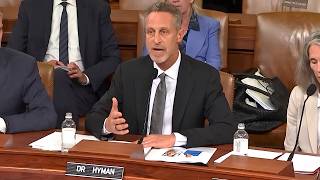
This is a YouTube video titled "The Hidden Costs of Poor Nutrition on America’s Economy and Health | Dr. Mark Hyman" recorded in September 2024. It features Dr. Mark Hyman, also known as Ask AI Mark, testifying before a congressional committee alongside various members of Congress and experts. The discussion centers on the impact of ultra-processed foods on chronic diseases in the U.S., the economic burden of poor nutrition, and potential policy solutions including nutrition education, medically tailored meals, and healthcare reimbursement reforms. The video captures a detailed, multi-speaker conversation focused on public health, nutrition, and healthcare policy.
Thank you, Mr. Chairman and members of the committee for the opportunity to testify before you today. My name is Dr. Mark Hyman. I'm the chairman of the Food Fix campaign. I'm the co-founder and chief medical officer of Function Health, the fastest growing consumer health platform in America, empowering people to live 100 healthy years through data-driven health care. As both a doctor and a concerned citizen, I'm very grateful for your focus on food and the chronic disease epidemic facing our nation. I especially wish to thank you, Vice Chair Buchanan, for your leadership in establishing the bipartisan Preventive Health and Wellness Caucus with Congressman Moore. It's a critical step in addressing the human and economic burden of chronic disease. And like you, I'm deeply committed to reversing America's chronic disease epidemic by addressing its root cause, our modern ultra-processed diet. Unlike healthy foods, ultra-processed foods are high in sugar, starch, refined oils. They often contain industrial ingredients such as preservatives, emulsifiers, artificial flavors, colors, and sweeteners. Also, they have a long shelf life.
And are fast to prepare and eat.
But with devastating consequences. Nutritious food has the power to make us healthier, but processed foods drive the chronic diseases that are a leading cause of death and disability in the US today. 60% of Americans have at least one chronic disease, 40% have two or more. 93.2% of Americans are metabolically unhealthy. What does that mean? It means they have high blood pressure, high blood sugar, abnormal cholesterol, are overweight or have had a heart attack or stroke. That means 6.8% of Americans are not metabolically unhealthy. and one in 10 Americans has pre-diabetes or type 2 diabetes, including one in four teenagers. And the culprit is what we consume. About 60% of our diet is ultra-processed foods, which are new to nature foods. They're not really food by the definition of food. And among children, the share of their diet that's ultra-processed food is 67%. For every 10% of your diet that's ultra-processed food, your risk of death goes up by 14% is the number one killer globally. Ultra-processed foods also impose a huge burden on our healthcare system. Since 2000, national healthcare spending has ballooned from 1.3 trillion to 4.9 trillion. But although we're spending more and more, we're getting sicker and sicker. We rank 30th in the world in key healthcare metrics like infant mortality and last among developed nations. We are 48th in life expectancy. I think Cuba is higher than us. We accounted for 16% of the global cases of COVID deaths even though we're only 4% of the world's population. Why? Because COVID kills the chronically ill and obese. Fortunately, there's a solution. It's harnessing the power of eating more nutritious foods. The fact is that most diet-related chronic diseases are preventable and as Senator Frist said, even reversible, if we change our diet. And that is the Food Fix Campaign's singular goal. Now, fortunately, there's mounting research that proves that food is both the cause and the cure for most of our chronic disease epidemic. Yet, doctors do not learn about nutrition, nor does our healthcare system reimburse for treating patients with the most scientifically effective tool to reverse chronic disease.
Food.
Take Janet. We can show her picture here. This is Janet, who was a minister from Ohio, came to our center at Cleveland Clinic. She had obviously severe obesity, type 2 diabetes, on insulin, heart failure, hypertension, fatty liver, failing kidneys, on her way to a heart and liver transplant. Her annual co-pay for medication was $20,000. After three months, she reversed all of her diseases. and was off insulin all our medications. This is something we learned is not possible in medical school because we don't learn about how to use food as medicine. And this is Janet, a year later, she lost 116 pounds and got her life back. The data clearly demonstrate that we can not only prevent type 2 diabetes, but we can reverse it. And data show with a ketogenic diet that 60% of people can have their diabetes completely completely reversed, 100% reduce or eliminate their medication at a savings of $6,000 per patient after the cost of the program. If scaled across Medicare, this would save over $90 billion a year. Now here are ways you can address the problem. First, I want to applaud Chairman McKenna and the committee for including in the American Medical Innovation Investment Act, a medically tailored meals demonstration in Medicare. Now under this incredible demonstration program, qualified beneficiaries will receive medically tailored, home delivered meals and medical nutrition therapy. In the future, the standard of care can be further incentivized with a Medicare add-on payment for nutrition focused treatment. Second, we must train tomorrow's clinicians in the science of nutrition and its role in causing and curing chronic disease. In medical school, I learned nothing about nutrition. 40 years later, my daughter, a fourth year medical student, also received zero nutrition education. We can change that by setting minimal competency requirements in nutrition in all federally funded medical schools and graduate medical education. And finally, I encourage the committee to consider a novel but proven direction. and I believe this could change so much about what's wrong with our country. We all know that changes in diet and physical activity can reduce the risk of developing type 2 diabetes by 58%, but new research clearly demonstrates that type 2 diabetes is not only preventable but reversible. And that's why I encourage you to establish a national diabetes reversal program to address the single biggest driver of disease and cost in our healthcare system. In closing, I want to thank you all for all you're doing to solve America's chronic disease epidemic. This is a national emergency and it demands a national bold response. We know that food is medicine and together we can build a healthier and more productive and safer future. Thank you.
Dr. Hyman, what's your thoughts on that with the idea we're spending over a trillion dollars We're spending more money than we've ever spent, but we're going in the wrong direction in terms of health care. When you look at 40% pick a number, obesity in adults, 20% with children, that's wrong. That's sad. We could do a lot better. What's your thoughts on it?
Thank you, Chairman. I think that- Can you put the speaker on? Thank you, Mr. Chairman. I think this is a very important issue because, as Senator Frist said, we now have the science and the science and the data are clear. that we can solve this chronic disease epidemic by focusing on its root causes. I practice root cause medicine. Some people call it functional medicine, systems medicine, network medicine. It doesn't matter. The key is what is the root cause? In America, we mop up the floor while the sink overflows. How do we turn off the faucet so we deal with the root cause of the problem, which is the food that's driving the chronic disease epidemic. I think there's a lot of levers that government can pull. Many of them were mentioned here by the panel. I think a deep understanding of food as medicine is very important. I think most people still don't comprehend that food is not only something that could be used for prevention of disease, but for the treatment of disease. And that it often is a better treatment than medication. Medication has a role, it's important, it's not that we want to get rid of it, but we have to understand what is the actual right treatment for a patient. Just like this patient, Janet from Ohio, she lost 116 pounds and reversed all her diseases. This is not something that you could do with medication. She was already getting the best medication from the best healthcare system in the world. And yet, she wasn't getting better. And I've seen this over and over in clinical practice. We've demonstrated this in our research at Cleveland Clinic. There's many, many data points that we have in the scientific literature that by applying the science of Food Is Medicine, that we can transform biology. And for those of you trying to understand what does that mean, what is Food Is Medicine mean, it's not just a metaphor. Food is literally a code that you're eating. Every molecule in the food you're eating translates into changes in your biology, in your gene expression, your immune system, your brain chemistry, your microbiome, your hormones. They're all regulated by the molecules you eat. And if they're molecules that produce health, it creates health. If they're molecules that produce disease, you get sick. The molecules that we're eating in America are not actually food. Food by the definition in the Webster's Dictionary is something that promotes the growth and health of an organism. By definition, most of what America's eating, ultra-processed food, is not food. It actually does the opposite. It promotes disease. So I think understanding how do we make nutrition central to healthcare? How do we reimburse for it? And I say in my written testimony that we don't have evidence-based medicine, we have reimbursement-based medicine. how do we move to more evidence-based treatments? In fact, every professional association, American Heart Association, National Heart, Lung, and Blood Association, I mean, from the NIH, the American Diabetes Association, all recommend lifestyle therapy as the first-line therapy for treating high blood pressure, for diabetes, for heart disease, and yet it's not done in healthcare because it's not reimbursed. if tomorrow doctors were paid to do the right thing, not the thing which they get paid to do, this would change very quickly. So I think the medically tailored meals program, produce prescriptions, incentive buying nutrition services and payment services for physicians and health care is critical. I think reforming our medical education system. I think the federal government spent $17 billion for graduate medical education. None of it is comes with any ties or recommendations for including nutrition services. I think some of the work we've done is, and you've done, Mr. Chairman, has helped change that. And the ACGME, the American College of Graduate Medical Education, is now going to provide nutrition competencies as part of their training. And I think that we have an opportunity to do some really bold things through CMMI and Medicare demonstration programs like the Diabetes Prevention Sorry, like a diabetes reversal program, which has never been done before.
Doc, let me ask you, both of you. Someone said, like 30 years ago, I hate to bring up these stories, but some things have an impact on your heart, Doc. He said that 50% of people that have their first heart attack don't see the next day.
That's right.
I don't know if that's true or not, but that's what I was told.
That's right.
I thought to myself, how do you not have the first heart attack to begin with? what can we do about that? So I want to, in terms of prevention, I'm just looking at how much we're spending and only 3% of dollars are allocated for federal dollars for prevention. That makes no sense. It's kind of like lung cancer and these other things. If you don't do the test, you get into a lot more expense. Someone says, well, I can't afford to eat that way. So in some ways you can't afford not to. Yeah, but you're the heart doctor. What's your thought about this whole idea of prevention and 3%.
We just underscore Senator Frist's point about nutrition research. The NIH spends $48.6 billion on research every year. $121 million is spent on nutrition research, a fraction of that, and yet it's the single biggest driver of all the diseases that all the institutes at the National Institute of Health are studying. And that needs to change in order to actually further study this problem. And I also think that you know, we have an opportunity to really rethink our whole approach to treating disease, not just preventing it. I think prevention is important, but 5% of the population accounts for 50% of the cost in Medicare. And focusing on that group will create the best ROI, and I believe with CBO will create a potential scoring that allows this legislation to pass. I think it's essential we think about things a little bit differently. Prevention is important. We need to figure out how to do public health campaigns. We need public health measures that include, you know, nutrition, education, the public, addressing the food marketing in countries. The UK just banned food marketing to kids, you know, from during the day, front of package labeling to help educate consumers like they do in most other countries in the world. They're far ahead of us in policy and they're seeing the changes and benefits to their population. And yet, you know, we're not addressing these things in a serious way. and I think this, as I said in my testimony, is a national emergency and it needs to be treated as that. I hope the next president will declare such an emergency and put a focus on it as we did for COVID, whether we did it right or wrong. We had a focus on it and we put resources to it and we put efforts of the government behind it and I think that's the kind of.
Effort it's going to require. I think it's important. My time's just about expired. And you know, somebody say this may be very paternal, telling you what to do, what to do, but this is an at-risk population. There oftentimes are food deserts without a doubt, but if we don't start putting some personal responsibility and if people aren't going to be able to do that, and they are, good Lord. You know, I've seen two-year-old kids come into the patient with their mother drinking a Mountain Dew. You know, we have to put some responsibility because they're going to have so.
Many deleterious effects in the weeks and years to come. Real quick, Dr. Hales. Just quickly, I think we need to put the end back in SNAP. Nutrition security, not just food security, not just calories, but also nutrition that drives health and wellness. I think incentives for purchasing healthy food have been demonstrated to be effective and disincentives for purchasing unhealthy food that can be built in. I think that focusing on nutrition security as well as food security is essential and I think people want it. And I think people on SNAP would benefit and the data show clearly that those who get the incentives for good food and disincentives for unhealthy food actually create better health outcomes and better overall health for the people who are doing this. Yeah, there are models for this.
Absolutely.
There's actually a program at the Indian Health Service, I think in Native American reservations, which is like SNAP, and they get a choice between Whole Foods or SNAP, and they often choose Whole Foods, which they have on the reservations.
We can expand that to the rest of the nation.
Great, thank you, Mr. Chairman, you're back. Mr. Hueron, you're recognized. Thank you, Mr. Chairman, for having this important meeting. You know, as a person who I actually lived on food stamps many years ago when I was young and four siblings younger than me lived on food stamps. You know, we have this debate about what can food stamps buy today, SNAP, let's call it what it is. And there's a debate about, as one of my colleagues said, is that, well, the rich people get this. There was a time when it wasn't so. I remember standing in line with my mother and she would buy some of these things that we're saying are just for everybody now. and I would have to take them back. You know, you always get called by your mental name when your mother's trying to get your attention. She said, Kevin Ray, you can't buy that, and so you got to put it back. And so there was a time when we cared about nutrition a lot in our families as we were trying to move people onto their feet. So I've got a series of questions, Dr. Hyman. I saw you this morning. I said, you know, usually I have a big diet tribe that I ask like two questions real hurriedly and use all my time. But, you know, we do have a nexus, and it's kind of a real tough situation. You all are giving us a problem and Dr. Murphy said this a minute ago, we hear these problems all the time, but nothing's getting solved. It's getting worse. And it's got to be extraordinarily frustrating. I know you are because we talked.
Last night and again today.
So I'm just going to run through some questions. So you've given us the numbers on obesity, what it is in the United States and how it's continued to grow. So my question is, are we still measuring, you know, we get hung up on things being measured differently today than they were 10, 20, 30 years ago. Are we still measuring obesity the same way today that we did 10, 20, 30 years ago?
Yeah, it's defined as a overweight as a body mass index of 25 or more, obese is 30 or more. When I graduated medical school, there wasn't a single state with an obesity rate over 20%. Now there's not a single state with an obesity rate under 30. And most are well over 40. 42% is the national rate. By 2030, it's estimated that one in two Americans will not be overweight but obese.
So you're saying that we have not changed the numbers to make the problem look worse?
No, the definition's the same. I mean, we can talk about BMI as a valuable metric or not because body composition turns out to be more important. If you're someone like the Rock, you're a big guy, your body mass index is very high. It doesn't mean you're overweight. It means you have a lot of muscle. So the definitions are not as clear, but I think the problem we're facing is one of a metabolic dysfunction, which has to do with insulin resistance, which.
Is driven by sugar and starch in our diet. And that is what's driving most of the chronic disease, from heart attack to strokes to cancer to diabetes. well, I'm not a doctor. I didn't interrupt you, but while I'm not a doctor, like my two esteemed colleagues are, you know, I spent a lifetime in business and understanding human nature and was pretty successful at it. And I'm probably pretty successful still to this day. And there's a lot of really smart people that could, if I could do things for you, I would, but I can't. So we have to incentivize people.
That's right.
And in my world of business, and we all worked in the same models, we all have businesses, but the ones are really, really understand what motivates people to be better in themselves. They don't have to be the most educated, but they can be the best themselves. And it's got to be extraordinarily frustrating because you all see the end game. If you don't, you're not going to live as long, friends. If you're obese, it's just not going to happen. Or if it is, you're living on borrowed time. And so we're trying to tell people this, but it doesn't change anything. It's only getting worse, as you all have all described. So why is that? Why do people want to live shorter lives? You know, in that day and age when things are instant gratification, we have to figure out how to incentivize people even beyond their own knowledge or capability because we know that's going to be good for them. And that's where we need to move into what are the solutions? We deal with taxes on this, we deal with tariffs, we deal with all the problems, but it takes a special transition into what are the solutions to this. You can regulate every single business out of the food business. I spent 35 years at McDonald's, very proud of it. my kids can't gain weight, but they were very active, very athletic, stayed busy all the time. We didn't let them sit on the couch watching video games. They were working daylight to dark, which meant we were as well. But there's, there's a part to this. One of the fastest growing places in the world on density of restaurants is China. Every major brand that we would demonize, if you all did, did it openly in the United States today, or in China, because China wants them there. So, the Chinese people are very active. They walk a lot, high-density populations that are walking a lot. So, there's a lot of opportunities here for us to incentivize this. I'm a business guy. I like to figure out solutions. I'm an engineer. I like solutions. I get the problem. You guys have written tons of books. You've written tons of documents. So, we don't have an information problem of describing the problem. Everybody in the world knows the United States is obese. Now we've got to move to the resolution, the solving of this. You have got some great examples. We've got to figure out how we're going to put a study together and have some business people get involved in fixing this situation. I've got some really great ideas I shared with you last night. I'm going to move on it because who better than a guy that spent 35 years at McDonald's to find a solution to obesity? So, you know, I think it's a great place to go. I want to say thank you all because it is a big deal. We're spending trillions of dollars. We spend trillions of dollars on the symptoms, but we're not solving the problem. So thank you, Mr. Chairman. Thanks for bringing this up. I know it's a passion of yours. And thank you all for your hard work. Dr. Hyman, quickly, you've led the charge on food as medicine. How do we incentivize better diet through.
Through healthcare without the mandates? Well, I think a lot of it has to do with knowledge and education. I've been shocked at how little people, even educated people, know about what to eat or what not to eat. I think that's a result of a confusing amount of information in the media and in science. Nutrition science is funded 12 times more by the food industry than by the NIH. I think one of the key strategies to work around is behavior change, and I think this is something that we do know a lot about because at the end of the day, it's about behavior change and how do you incentivize that? And we discussed the social determinants of health. I learned from Paul Farmer who treated TB and AIDS in Haiti using not better medications or surgery, but by using the power of community health workers to help people change their behaviors. And I scaled this model to the Saddleback Church in Orange County, California with Rick Warren where we got 15,000 members of that church to do a lifestyle change program in small groups, not run by a doctor, not run by a nutritionist or any health care provider or health coach, just a curriculum that was supported by the church. In little groups every week, they lost a quarter million pounds in a year and transformed their lives and got off medication and up, you know, reducing hospitalizations. We scale that to Cleveland Clinic where we created a functioning for life program and show that we have three times better outcomes with the same patient with the same diagnosis, with the same doctor simply by using the power of group therapy. Janet, I mentioned to you, she was in a group program, a lifestyle change program. If we reimburse for things that work and behavior change strategies, it's really around understanding the nature of these social models of the social models of change. And I think the Blue Zones is an example. They're a natural environment, and I've been there, I wrote a book called Young Forever about the Blue Zones, where they live in ways that automatically create health. automatically eat healthy food. They automatically have to move because they live in rugged environments. They automatically have social connection and meaning and purpose in their life. These are the things that drive longevity, not genes. And so those are the things that we can replicate. You're more likely to be obese than if your friends are overweight, then your family's overweight. You're 171% more likely to be obese if your friends are overweight than if your family is 40%. So this is something we actually can do and reimburse. So the reimbursement for these group social lifestyle change programs, I think is a very important thing that we could implement.
Appreciate it, thank you.
Thank you. Ms. Miller, you're recognized.
Thank you, Chairman Buchanan. And thank all of you all for being here today. And Senator Frist, it's nice to have you back. Thank you for taking your time to be here, to help educate us and to testify on such an important issue. It's extremely personal to me and my constituents because I'm from West Virginia. And West Virginia has the highest rate of diabetes, COPD, and kidney disease in the country. This is nothing to brag about, but it is something that constantly guides my work and the work of health care providers in my home state. One effort that I've been very impressed by is the Food is Medicine program at Marshall health network that's in my own hometown of Huntington. The Food Is Medicine program screens patients for food insecurity and social needs, provides medically indicated food assistance, and encourages nutritious food utilization. And this approach to chronic disease management has been working wonders for patients in our state. There's a medically indicated food box program in the little tiny town of Lavalette, which is led by a community health worker, and it recently showed that all 61 patients participating in the program have gotten their blood pressure under control. Similar food assistance programs provided to dialysis and oncology patients with food insecurity have improved nutrition and outcomes as well. Dr. Hyman, you've dedicated your career to the notion that food plays a huge part of managing chronic disease. Can you speak a little bit more on some of the benefits of getting patients on track for healthier living?
Well, it's quite astounding. You know, I've been practicing this way for 30 years, and I would say that food is the most powerful tool in my toolkit as a doctor for a broad range of diseases. Obviously, diabetes, but many other things. Mental health, we know, is directly related to diet. that ultra-processed food has been linked to depression, anxiety, behavior changes in kids and adults. We know from clinical trials, for example, in other countries where they swap out healthy food for the junk food, that depression rates are dramatically reduced. We know for autoimmune diseases, for neurodegenerative diseases, for example, dementia, which is one of the most costly diseases because of the effect on caregivers and loss of productivity, is now called type 3 diabetes because of the effect of insulin resistance and sugar on the brain. So across the spectrum of chronic disease, not just the ones we typically think of like heart disease and diabetes and hypertension, but even cancer is primarily driven by sugar and starch in our diet. The main cancer is colon cancer, breast cancer, prostate cancer, pancreatic cancer. And these cancer rates are rising.
We're seeing the younger and younger members.
Of our population, 30, 40 year olds. Repeat that.
That statement right there.
We're seeing cancer in younger and younger people in our country, which is staggering to me in their 30s and 40s. And the real driver is our diet. And until we come to terms with this fact as a country, we're gonna not only threaten the health of our nation, we're challenging our economy of the $4.9 trillion. 40% of that bill is footed by the federal government in one program or another. 30% of our federal budget is completely unsustainable and most of it's almost unpreventable. So if we tackle this intelligently, coherently, and looked across the policies that have to be done, as Senator first said, across different committees, across different jurisdictions, whether it's, you know, Medicare reform, whether it's food labeling, front of package labeling from the FDA, or addressing the problems of food marketing to children or addressing problems with SNAP or looking at our dietary guidelines or nutrition research funding. There's so many levers to pull as we try to change this tsunami that's coming at us. And it's almost been this invisible threat because when we graduate medical school, this wasn't a problem.
No, it wasn't.
I'm old, but not that old.
I'd like to move on a little bit as well because chronic lifestyles and patients, we also need to listen to the clinicians because they have a big role to play here, just with screening and education and identifying the chronic diseases and how to manage them. Studies have overwhelmingly showed us that the screenings for diabetes, cholesterol, chronic kidney disease and cancers can be the difference in anybody's health journey. I introduced a bill called the Chronic Kidney Disease Improvement in Research and Treatment Act to address these issues just for kidney disease, and my bill would expand the Medicare Annual Wellness Benefit to include kidney disease screening for seniors, as many patients do not know that they have kidney disease until it's too late. The bill would also increase access to the Medicare kidney disease education benefit so that physicians, as you all are, can help teach patients more about managing their disease and any of the comorbidities that they may have and not know. And so I'm happy to have voted in favor for, and she's already gone, but the Nancy Gardner Sewell Medicare Multi-Cancer Early Detection Screening Coverage Act earlier this year, my dear friend Terri about her mother, which would help screening with cancer for Medicare patients to ensure that they have the best information about their health that they could. Now, Dr. Peters, you have done tons of work surrounding preventive care for chronic diseases. Can you speak to the clinical benefits of increasing education and screening so that patients are more informed about their options?
Dr.
I think those are incredibly powerful tools because if you don't know you have a risk, you're not going to go find out and see if you can do anything about it. But education alone, in many areas, particularly with diabetes, isn't enough. You need to couple that with treatment. And treatment, frankly, should start with lifestyle. And so I see all of that as part and parcel of the same process. But education is necessary so people realize that they must do something. And I think that people go into these weird states of denial, and I'm not a psychologist, but They'll see family members who are blind or on dialysis, and they won't go get tested because they're too afraid to find out they have the same disease. So I think it's a, you know, you can get educated. We've done programs with the churches. We've done programs with the schools. There's all sorts of ways that you.
Can get this out there. I have to yield back my time.
You all, thank you so much.
Did I make a comment?
Is he allowed to make a comment? Quick. Just quick. I think screening is really important. I think we wait too late. We're reactive. proactive in medicine and it's part of why co-founded a company, Function Health, to allow people access to their own biological data without having to go through insurance or doctors. For $4.99 they get 110 biomarkers that track all these things from kidney function to cardiovascular health to metabolic health and diagnostics that are not done in your annual physical. And we're so behind the time, Senator Frist wrote an incredible paper in the New England Journal 20 years ago that talked about how long it takes from science to become clinical practice. And I think early screening and detection detection is important. It's essential. And I think that's something that should be looked at very carefully as something we can motivate our Medicare patients to do, as well as our citizens in.
General, to do early screening and detection. Thank you so much.
Thank you all. I yield back. Thank you, Chairman Buchanan, for holding this very important hearing on investing in a healthier America by evaluating chronic disease prevention and treatment. Our nation invests less than 3% of our overall health expenditures on prevention services. All the while, there are 1.7 million people that die from chronic diseases each and every year, many of which are preventable. Moreover, about 42% of Americans have two or more chronic diseases, and as members of Congress, we should be prioritizing in investing in prevention and living healthier lives, hence the purpose of today's hearing. This is also one of the reasons why I co-led the introduction of the Personal Health Investment Today Act, also known as the FIT Act, alongside our colleagues, Representative Kelly, Representative Panetta, Representative Hood, Representative Sewell, and Representative Boyle. This bipartisan bicameral legislation encourages physical activity and incentivizes healthier living by allowing Americans to use a portion of the money saved in their pre-tax health savings accounts, HSA's, and flexible spending accounts, FSA's, toward qualified sports and fitness activities. Mr. Chairman, I'd like to submit for the record a letter sent to our committee, as well as an attachment both from the Health and Fitness Association on the benefits of physical activity for preventative health and chronic disease reduction. My first question is for Dr. Hyman. Doctor, good to see you again. To quote your testimony, you state, quote, We do not practice evidence-based medicine in America. Instead, we practice reimbursement-based medicine. Dr. Halamand, in your experience, what do you think Congress should do specifically to incentivize health outcomes associated with healthier living rather than reimbursement-based medicine?
Well, thank you, Congressman Fitzpatrick. Good to see you again as well. I think this is a critical question and it's multidimensional and I think we've covered a lot of these potential solutions. I think covering Food is Medicine within Medicare is our first step in nutrition services is critical. I think incentivizing providers to do the right thing, paying for nutrition services is critical. Dealing with the behavior change aspect by reimbursing, for example, group programs like the Diabetes Prevention Program works effectively even if it's delivered by a layperson. It's effective as if it's delivered by a physician. And we saw this with the Saddleback Church. You know, people heal together. Community is medicine. Referring to this peer support model, it works. And I think it's a very low-cost model. The patient I mentioned, Janet, she was headed for a heart transplant, which costs $1.6 million on average per patient. We spent a few hundred dollars to put her in a lifestyle change program with a group that was effective in reversing her heart failure, reversing her diabetes. These are the kinds of things that need to be paid for. We had to kind of stick it together with scotch tape at Cleveland Clinic by using shared medical appointment codes, required physicians to be involved, required higher level providers to be involved. That's not necessary. These programs can be delivered in community settings like churches and can be reimbursed by the federal government. through various programs. So I think by changing our incentive structures, by changing what we pay for, we can actually start to use the science to deliver on results that improve healthcare outcomes and reduce healthcare costs.
Thank you, Dr. Hyman.
Dr. Is it Hyman? Okay, you've been willing to do podcasts in long formats and walk people through. We're dying. In 14, 15 years, the United States has more deaths than births. How do I help our brothers and sisters understand that maybe the thing that's wearable, maybe the new technology where I can put something on my wrist and it counts my calories, it's not a Dexcom, it actually counts my calories, so it's not blood glucose. How do I socialize the technology because we have a data set from our joint economic economists and for a ranking member he may find this fascinating. Number one input and income inequality was not education, it's health. How would you evangelize a healthier America and the fact that it's the single biggest thing you could do for U.S. debt?
Mike, you said something very important, we're not going far enough and I honestly held back a little bit. to tell you the truth. I think we need sweeping changes across policies. I wrote a book called Food Fix, which lays this all out from field to fork. It's how we subsidize agriculture and the commodity crops that are driving the chronic diseases. It's what we pay for nutrition in terms of healthcare services. It's nutrition education. It's our dietary guidelines. It's our SNAP program that needs to be reformed. It's food marketing. particularly to children. It's front-end package labeling of the FDA. It's nutrition research that needs to be done by the NIH. It's so many different aspects across government. The GAO produced a report at Dr. Mazzarri who's in the audience in my request through Tim Ryan and Rosa DeLauro a number of years ago that looked at all government policies related to nutrition and all the agencies involved. There were over 200 policies, 21 agents they found that most of these were working across purposes and actually causing more harm than good and creating more problems than solving problems. For example, you know, we subsidize commodity crops that are turned to ultra processed food, then we pay for $100 billion with SNAP program, and then we pay for the back end on Medicare and Medicaid for those patients who are chronically ill. So the taxpayers are paying three or four times for the same problem, and we need to change that. So there's, I think, a set of sweeping policies that need to be done across the government that can really make a huge difference. And we may not be able to get them all done at once, but we have to work towards that. I think, you know, slavery was at the center of our economy 150 years ago, and we figured out, not obviously through civil war, I don't want to figure it out, but we figured out really how to end that and change our economy to something that actually created a more equitable society.
Mr. Chairman, thank you. Thank you for your patience. I have an entire binder of articles and disruptions. With your permission, I'd like to submit.
Those for the record.
And I do hope actually we can have some additional conversations, 'cause I'm optimistic we're in the time of technology changes.
Yes.
Where the thing I can have on my wrist is actually almost my primary care.
Yeah.
Helping me.
I do think that AI-driven healthcare will create AI co-pilot for health and it will create AI super docs that will transform health care. It's nothing we really talked about today, but I think it's part of what's happening outside of the traditional health care model and I'm involved in that and then part of what our company, Functional.
Health, is all about. Mr. Chairman, thank you for allowing my rambling.
Thanks, Mr. Smucker.
Thank you, Mr. Chairman. I don't normally serve on this subcommittee, but I've been sitting here very important for me to be here because I think this is a critical, important topic for several reasons. One, in my own experience with learning more about nutrition, exercise, and saw how much impact that had on my own life in just the past few years. Secondly, I think a lot about what I think is one of our major threats and that is our debt and our growing fiscal, you know, our fiscal policy. And if you look at the drivers of our increasing costs. It has a lot to do with health care. And so if we can solve this problem, it will have major consequences, not only on individuals' lives, as it did for me, but also on the health of the country going forward. And I do disagree with a few things that were said here today. I just want to mention that I have a question maybe for Senator Frist and Dr. Hyman. I think there is a lot of new information here that hasn't existed a few decades ago. So I think there are a lot of people who don't understand the benefits of good food and good nutrition. And I think so education I think is really, really important. Maybe I'm just late to the game, I don't know. But, you know, I talk to people in my district and they have no idea how what what they're eating is affecting them cognitively, physically, whatever it may be. And so I think this really is going to require a lot of education, and I think that perhaps is the best investment here. I do want to also say, so I live in Pennsylvania, Lancaster and York counties, very strong agricultural community, a lot of nutrient-dense foods. In fact, people move to my community from other states sometimes. I've talked to them who come here just for the nutrient dense food that we have there. We also have a great industry that has come from that and we call ourselves the snack capital of the world. So, you know, we make, we have Hershey, we have Mars, we have Snyder's, we have Hanover, we make a.
Lot.
Of foods that potentially you would categorize as ultra processed food. And these are great business people. And so, Ms. Scarheart, I think it was, I probably disagree a little with your characterization here, but I agree with a lot of the points that you make. These are individuals who, if you talk to them, they're very concerned about the health as well. They want to create healthy products. They're responding to the consumer. So, for instance, I give you a real-life example of this. We had implemented additional regulations some time ago that required for the reduced salt in chips. And when they did that, they found that people weren't buying their product anymore and individuals who so they're trying to respond to the consumer as well. And some of the owners of these companies are looking for ways to help address the problem that we're faced with. And so I guess, you know, Americans still like their free choice. and Senator Frist, you talked about, I strongly believe in free enterprise and capitalism and less government intervention, but that's, you know, sort of at odds with this idea that we have this opportunity where people can live much more healthily, may need to be prodded to that. What's the balance? Like how do you address that? I go back to the, you know, I think education is really important, but What would you think is the right balance here? How do we move what is really an entire system that sort of feeds on itself, if you will? How do we move that to a much healthier lifestyle over time?
Yeah, I think we have to face the fact that, you know, we have to address the real cost to society of our food system. The Rockefeller Foundation determined that for every dollar we spend on food, that's about a trillion dollars a year in America. We spend $3 on collateral damage in terms of public health costs from diet-related disease, antibiotic resistance that's making us more susceptible to infectious disease, environmental costs, soil degradation, loss of our water resources, the pollution of our waterways, the effective collateral damage from farm and food workers who are not properly cared for in the labor market. And that's a legacy of the Roosevelt era, labor laws that excluded them from protections. And they are paid for by the government programs like Medicare, Medicaid, and free care in hospitals. There's food insecurity, economic insecurity. All these are driving the costs that are externalized. And so while capitalism is important, but we're not paying the true cost of the food, the price we pay at the checkout counter for what food we're buying or those snacks is not the actual cost to society. And we have to account for those in some way and actually create incentives for businesses to do the right thing and disincentives to do the wrong thing. And I think you're right. They do want to do the right thing. And I think what I've heard from talking to the CEO of Nestle and vice chairman of Pepsi and many other large corporations, they're looking to how to change. But what they hear about is this they here, well, if I change my product, the other companies are not going to change their product. And one of the CEOs of the company said, if the government could convene all the major food companies, and there's not that many, there's like a dozen or less food companies that control the entire food supply, and bring them together to collaborate to kind of solve this problem, I think it could make a big difference. And I think they have to be kind of working together. They can't come together because of antitrust laws, but we could do that as a government to bring them together.
More from AI




This Is Why 99% of Skin Conditions Don't Heal — And What Dermatologists Won't Tell You






Why you need to start strength training today #strengthtraining #healthyaging #fitness
