The Perfect Morning Routine for a Longer, Sharper Life | Dr. Mark Hyman
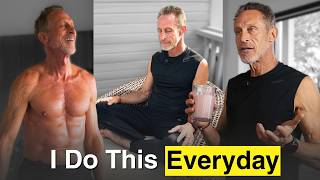
Dr. Mark Hyman outlines a morning routine designed to reset your circadian clock and hormones: 16 oz water with electrolytes, 20 minutes of sunlight, 10-15 minutes of breathwork, meditation, then a protein-rich breakfast with eggs and avocado. He emphasizes consistency and avoiding your phone until mid-morning.
Chapters
Morning routines have become a big focus in health and wellness, and it's not just about productivity or checking boxes. How you start your morning has a direct impact on your brain, on your energy, your metabolism, even how well you sleep that night. Because your body is constantly taking cues from your environment— light, movement, food, stress— and those early signals, well, they help set up your internal clock. They regulate your hormones. They shape how you feel for the rest of the day. Things like getting morning sunlight, moving your body, creating consistent rhythm. They're not just habits, they're biological inputs that affect everything from your focus to your mood to your long-term brain health. So today we're going to break this down in a very practical way by walking through my actual morning routine, what I do, why I do it, and how you can apply these same principles in your own life without overcomplicating it. I built my morning routine by doing the things that are Scientifically proven to make a difference. And the first thing I do when I wake up is I go to the kitchen and I have at least 16 ounces of water with electrolytes to get rehydrated from the night. And then I'll go outside if it's a nice day, or I'll sometimes use full spectrum light glasses if I'm not able to get sunlight for about 20 minutes. And light's so important because it's how your body resets your circadian rhythms and it's how your brain comes online. It's how your hormones start to regulate. It's how you set yourself up for a good sleep that night. So getting 20 minutes of morning sunlight is a really important. It helps cortisol timing, sleep quality, and all those things are really, really essential if you want to have a healthy, balanced sleep and also circadian rhythm. This episode is brought to you by Function Health, empowering you to live 100 healthy years with over 160 lab tests for just $365 a year. And use the code MARK2026 to get $50 off your membership. And I'll do my breathwork just to get my system going in the morning. For probably 10, 15 minutes. I'll do some qigong, which is gentle movement and getting blood flowing and energy moving in my body. And then I'll do a meditation after that for anywhere from 5 to 20 minutes. And that's kind of how I get started right at the beginning. And then I'll usually, if I have time, I'll journal just to kind of get my thoughts out and kind of consolidate my memories and metabolize my experience. And that helps me just stay emotionally and kind of spiritually healthy. Usually after that, I'll work out and I'll go to the gym. I'll do a workout. I didn't start strength training until I was in my late 50s and I didn't really know what I was doing and I didn't want to hurt myself. So I thought it was important to find a trainer to learn the skills and to have someone watch me. Also, I've had a lot of back surgeries and I have to be very careful. So I want someone supervising me. Not everybody needs that. You, there's plenty of free online trainings and apps and YouTube videos. So you don't actually need a trainer. You can do body weight, you can use bands, you can use weights, it doesn't matter. But it's important to get started, whatever it is, and to do it right. Part of the reason to get a trainer is to make sure your form is right, because people often will do the wrong form and actually end up in trouble, or do the wrong form and end up not actually getting the benefit of the exercise. If you don't have a trainer, you want to make sure you at least get some basic guidance. And there's again, many online tools and resources. If you can have someone work with you a few times just to kind of teach you the basics, it's important because people can get in trouble. And I think movement is so key. It's so key for everything. The more you move, the better you're going to be. We're all meant to be moving. It helps your cognitive function, brain growth, prevents Alzheimer's, just walking every day. Lymphatic system circulation depends on movement. It helps boost your energy. You know, often when I'm tired, if I exercise, I'll feel better. So it's not necessarily just something you only have to do when you feel amazing. You can do it as a way to reshift and shake up your energy. So after I do my basic foundational things to get my nervous system set in the morning, gather myself and get grounded, and after my workout, usually around 8, 9, I'll have a protein shake. And I usually do a 14-hour overnight fast. So if I eat dinner at, you know, 6 o'clock at night, I can eat at 8 in the morning and that's, that's a 14-hour fast. And my go-to breakfast is typically when I have all my stuff with me at home, I'll have a shake. Usually I use Goat Whey, I'll put in creatine, put in urolithin A, spermidine, these ingredients that help with longevity, and also put in some prebiotic fibers. I might put in some probiotics. I make kind of a medicine shake for me really, 'cause I can get it all done in one. And then I'll have that shake with the rest of my supplements to help the absorption of those supplements. So most supplements really require fat and food to absorb. So I'll have a multivitamin, my fish oil, my vitamin D, and my omega-3s. I use a very specific kind. I'll take other cocktail of things depending on what's happening and what I'm working on in my health. But often I'll take a cocktail of mitochondrial supplements. I'll use N-acetylcysteine to help glutathione, lipoic acid also helps. This is a great booster for detoxification as an antioxidant. And if I'm out and about and I can get a shake, I'll do it. And if not, I'll, you know, have eggs and protein and fat for breakfast. Really important. Avocados, tomatoes, eggs, olive oil, omelet. Not sugar for breakfast. I think most Americans eat sugar for breakfast. Cereal, pancakes, muffins, bagels, you know, French toast, sweetened yogurts, sugared coffees. I mean, these are just disasters for your metabolism and shouldn't be what we're not eating for breakfast. So don't eat dessert for breakfast. Have protein and fat for breakfast. I will also say I travel a lot, but for me there's certain non-negotiables. Like I make sure I have always with me at least a day's food in my backpack. And that could be protein sticks. I have Maui Nui venison sticks. I have nuts like macadamia nuts, very calorie dense, very nutrient dense, very high in fat, very high in protein. I don't have sugary snacks in my bag. I don't eat those. Really important because you don't wanna be in a food emergency. I have myself Supplements packed in little packets so I can carry with them with me and travel with them. And I always carry bands with me because sometimes I can't get to a gym or there's no gym where I am. So I'll have bands that I use for working out so I can— all I need is a floor and a door, which I can usually find. And that's kind of non-negotiable for me. And so those are really important things. And I think I just keep those consistent and that just makes all the difference when I travel. Even meditating 1 minute is better than meditating no minutes. Even exercising 5 minutes is better than exercising no minutes. Consistency really matters. And it's like compounding interest. You do it every day, you'll just get in the habit and it becomes much easier. Now, sometimes you can't, your routine's off, you're traveling, whatever happens, fine. But it's important to not just use that as an excuse to kind of screw off and never do it again. So I think I try to do those things when I can, when I'm traveling, obviously if I'm changing time zones or I can't always do it, but I always, when I get somewhere, I always like go right to the gym. I work out, I have a sauna. I Oh, try to get a massage and that kind of resets my system. So really important to try to get your system reset when you're traveling. I mean, over time I'll change it depending on new things I'm learning or new practices I have or different breathwork practices or different types of meditation or different kinds of fitness routines I'm doing. But it's basically the same structure and I'll adapt it depending on, you know, what, what I'm doing in my life and where I am and where I'm at in the world. There is something about summer that makes people feel free. If you're outside and moving, There's added travel, late nights, more alcohol, and more heat. But here's what your summer actually does to your cardiovascular system. Your heart works harder just to keep you cool, and alcohol impacts blood pressure and recovery, while sleeping disruptions can drive inflammation, and flights and events can double the stress on your body. If your ApoB is already elevated, hs-CRP is running high, and fasting insulin is already strained, you're not starting from baseline, you're starting from a burden. The season didn't create the risk, it exposed it. And the people who find out about cardiovascular risk in July often laid the groundwork in January. It's time to stop guessing. Check your health with Function. Function gives you access to over 160 lab tests every year, including advanced lipoprotein testing. It's time to stop guessing. Check your health with Function. Go to functionhealth.com/mark, and if you're one of the first 1,000 people this week, use the code MARK2026 for a $50 credit toward your $365 a year membership. That's functionhealth.com/mark and use the code MARK2026 today. I know my routine may sound like a lot to some people and may even feel overwhelming, but if you're overwhelmed, just start simply with some simple practices. You know, everybody can try to get outside for 10, 15, 20 minutes in the morning. Take a walk. Very simple. Hard to, hard to kind of make that complicated. Make sure you drink a good glass of water every morning when you wake up. You can put a little bit of electrolytes in it. Easy to do, not hard to do. These things stack on each other. And if you can, you know, listen to a meditation app for 10 minutes, doesn't have to be a long time, just simple, even 5 minutes can be a lot. So 5 minutes meditation, if you don't have 5 minutes to meditate in the morning, there's something wrong with your life. You better figure it out. And then movement, you know, do what you can. If you can just do 10 jumping jacks between phone calls, do that. You don't have to be rigid about it, but Start building these habits and you'll find over time your health will improve, your wellbeing will improve, and you'll just be better for it. The other thing people do is, you know, get on their phone before they go to bed and get on their phone as soon as they wake up. And I think a good rule of thumb is keep your phone in another room, put it out of the bedroom, keep it in your office or keep it in the kitchen or somewhere else, charge it there. And don't look at it first thing in the morning. Don't look at it last thing at night. You know, we don't need to, and it's good to gather yourself for yourself into yourself so you can be more grounded as you go through life rather than being the immediately pulled into the dopamine hits of your phone. If I just wake up and go right to work, or I go right into stuff or jump on email, I typically don't feel like I have as good a day. When I start the day grounded and when I start today with my practices, with breathwork, with meditation, with journaling and exercise, it just sets me up for the whole day to have a great day. And I don't end up having dips in energy. I have to stay motivated. I stay connected to myself and it just provides me a foundation for my life. We all live such a crazy stressful life. And so I find it really important to incorporate things to help regulate my nervous system. That includes breathwork, meditation, and there are different techniques. I used to do TM when I was younger. I studied Buddhism, mindfulness. Breathwork is a really simple practice that you can use, you know, Mindfulness Stress Reduction training from Jon Kabat-Zinn. There's a million different varieties. It doesn't really matter, whatever works for you. And that really has tremendous amounts of science in terms of how it affects the immune system, your cardiovascular health, your immune health, your brain health, your risk of diseases, chronic pain. It's so many different things. So it helps sleep. It's one of those foundational things that we tend to ignore, but it's just important as eating or breathing or sleeping. Let me go through a few kind of key questions that people are asking about coffee. Should you have it before, after food? Coffee on an empty stomach is how most of us drink it. It's probably not the best thing to give yourself a jolt of caffeine and, adrenaline before you eat. So having it with food is probably a better idea. What's the best 5-minute habit that you can do in your life? Well, probably just a 5-minute breathwork meditation, just slow into the count of 5, hold for 5, out to the count of 5. Do that for 5 breaths. Super simple. I call it Take 5. It's really, really easy. The biggest mistake people have in the morning is just not taking a little bit of time for themselves to establish their day. And I mean, just simple practices that are so simple that everybody can do, whether it's just 5 minutes of meditation, a simple stretching routine, glass of water, you know, making sure you have the right breakfast. These, these are the really important things. And I think people just skip over these things and kind of rush right to life, but it's important to really get grounded in some good habits in the morning as a foundational practice for your health. So as you can see, a powerful morning routine isn't about doing more. It's just about doing the right things because those early moments in your day are when your body's most responsive to light, to movement, to rhythm. And those signals shape everything the follows your energy, your focus, your metabolism, even how well you sleep that night. But the goal here isn't to create a perfect complicated routine. It's to start simple, to get some morning light, to move your body, to just create a little consistency because those small inputs done consistently, they can have an outsized impact on how you feel and over time they compound. So don't feel like you need to overhaul your entire morning tomorrow. Start with one or two things and build it from there. Let your routine work for you. So if you found this helpful, share it with someone who's trying to feel better, think clearer, or just start their day with more intention. And we'll see you next time on Office Hours. What if brain fog, anxiety, and mood swings aren't simply all in your head? What if the health of your mind actually starts deeper in your body, in your gut, in your hormones, metabolism, and your immune system? Well, let me tell you, the connection is real and it affects how you think and you feel every single day. And that's why I created Brain Shaping Academy, a 6-week program that shows you how healing your body can help you heal your mind. Brain Shaping Academy relies on the same targeted nutrition and lifestyle strategies that I've used for 30 years to help my patients improve their mental, emotional, and cognitive health. So if you want to feel calmer, clearer, and more in control, and stay sharp and protect your brain as you age, check out Brain Shaping Academy at drhyman.com/brainshaping. That's drhyman.com/brainshaping.
More from AI




This Is Why 99% of Skin Conditions Don't Heal — And What Dermatologists Won't Tell You






Why you need to start strength training today #strengthtraining #healthyaging #fitness
