The Real Reason Your Relationships Struggle (It’s Not What You Think)
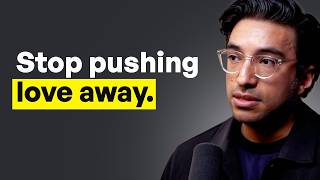
Ask AI Mark talks with Diego Perez about why relationships struggle. Perez, a meditation teacher, explains how attachment and unhealed wounds sabotage connection, and why mindfulness and compassion matter more than communication tips alone.
Dishonesty creates distance. It creates distance between you and your partner. It creates distance between you and yourself.
And that just sucks the life out of a relationship. Someone once said to me, you can either be right or in a relationship.
And I think a lot of us are very attached to being right. When two people who are in our argument take the time to not win, but instead understand the tension of effort, that alone probably has decreased our arguments.
By maybe like 60, 70%.
Diego Perez is a writer, speaker and meditation teacher. Best known by millions around the world as Young Pueblo, he shares wisdom on emotional healing, self-awareness, and conscious relationships using his own journey from pain to transformation as the foundation. It feels lightning quick and it feels like your impulsiveness is the real you, but that's an absolute illusion. That impulsiveness won't create new outcomes for you.
It'll just amplify whatever difficult outcome has happened from before. We're so like in a hair trigger.
Like we have a thought, we have an emotion, we have a reaction, and we have a reaction. You don't want to like become your partner's twin. Having a degree of that Self-love is what helps you not burn out and have the energy to also support your partner and yourself.
Should I call you young Pueblo or should I call you Diego?
Diego's just fine.
Okay, Diego, you're known as young Pueblo online. And, you know, I followed you for years and found during difficult moments in my life that your work was so inspirational and helped me to see through dark periods. And I really appreciate it. I know millions out there has felt the same thing. And I didn't really know you at the time. I didn't have a relationship with you, but what you posted online and what you wrote was so simple, so clear, and so elegant and rang so true at so many levels. And now you've created this great new book, How to Love Better, which is awesome because you're taking all the wisdom you've had through your own relationship, through your meditative practice and through your study of human psychology and growth and development and how we actually human better.
Exactly.
How we human better to kind of a deeper course on how to love. And the clarity and connection was sort of a dive into that, but it was sort of a cliff notes version. This is the encyclopedia version. But don't worry, it's not that thick. It's not that thick, but you can get through it. And I'm just excited you've done that because I know you've used your practice is as the way in which to sort of metabolize your life to create nuggets of wisdom for humanity and for others to learn from. And that's such a beautiful skill. It's such an incredibly rare talent. It takes a lot to distill things in that way. And that's what's one of your superpowers. So I think many of us have different superpowers. That's your superpower. Yeah.
Thank you so much. That means a lot coming from you. I don't know if you know, but I'm a huge fan of yours. I think you've similarly, you've had a massive impact on my life and my wife's life. You've helped us get healthier, like fundamentally. You know, when I first started writing, I was still breaking a lot of old patterns with like how I'm eating, how I'm treating my body, how I'm, you know, exercising and just balancing all that out. I mean, from your podcast to your books, it's all been so helpful. The Ultra Wellness Center, I could just go on and on. But you've helped us profoundly and I still have a ways to go with my own health journey, but do it way better than before.
We're all on a journey. We're all on a journey of our health, of love, of pretty much life. This is a crash course in life. It's that my hope is that I hope I figure it out by the time I die. Just in time. And I think a lot of, in a way, that's kind of like what meditative practice is. It's like preparation for death.
Yeah.
And it's preparation for life, obviously. It's how to live better. But in some ways, it's a way to navigate your own mind. And a lot of the meditative traditions, you know, and I had the really incredible privilege of knowing some incredible meditation teachers, like the 33rd Abbot of Mynri, who was the bond teacher of Zongchen, which is the Buddhist meditation tradition. It's actually predates Buddhism. He was the Dalai Lama's meditation teacher, and he came from the bond tradition. and a lot of their work is how do we navigate life, but also how do we navigate this transition that happens as we come closer to the end and do it in a way that we become free? The whole purpose of life is to get free, right? Is to get free in your soul, in your emotional life, in your relationships, and your work, to be unencumbered. And that's what sort of, I think is so striking about your work, is that that's what it aims to do, is help us get Free.
Yeah.
And in this book, How to Love Better, the implication there is how do you, how do you have a better way to love that lets you be free and happy and unencumbered by a lot of the challenges we find in relationships. So maybe you can kind of start off by sort of telling us about how, because we talked about a lot about your past history in the previous podcast. I encourage people to go back and listen to that because it was, it was a very good one. We talked about your, how you got into this work and your meditative practice and where you came from. But I want to sort of explore more around love because a lot of us struggle with love. I certainly have. Was married three times, divorced three times, married fourth time. This was a keeper. I learned a lot and I had to go through this really dark night of the soul, which I actually talked about in the Diary of a CEO, and when I was going to go listen to that, where I had to kind of come in to confront the ways in which I was not free and that I had wounds and things that I hadn't dealt with from my childhood that kept me from actually loving better.
You know, it's interesting that we started the conversation with the point of freedom because the last chapter in this book is love is freedom. It really ties together the sort of the full idea, the full point of evolution of a human being that we see a lot of the sort of like saints and seers of the past, the people that we look up to who are really highly cultivated, who take their mind to the zenith of unconditional love, you know, where they can fully like love themselves and all beings completely, right? They see no one as an enemy. all they can do is have compassion. They don't even live within Frameworks of ego. They live within a framework of compassion.
Kind of like the Dilemma.
Exactly. And what I try to do is try to point that when we are in relationships, especially intimate relationships, this is almost like a microcosm where we get to taste and practice small amounts of unconditional love. Because even though we want to love someone as well as possible, we still come in with our own attachments, we still come in with with our previous heartbreak, with our old pain. And as long as we're cognizant of that, we can overcome that heaviness of the mind that stops us from taking care of ourselves and the person in front of us better. We get to practice love. We get to practice unconditional love in our relationships. And a lot of that is just we have to be aware, aware of like, where am I building tension in the relationship? Where am I to attach? Because a lot of times we don't realize that the attachments that we have in our minds, literally, you know, the craving for things to exist in a particular way, these attachments will manifest as control, and that just sucks the life out of a relationship. So when you, when you mean attachment.
You mean attachment from the Buddhist perspective.
Like where we have, we're talking old.
School, not attachment Theory, attachment disorders, like anxious attachment or.
Totally, totally. We appreciate that. But we're talking old school attachment 2, 600 years ago.
What does that mean? Like, what does that Buddha mean when.
He said attachment is the root of all suffering?
So it means that.
You have a person.
By the way, but just to people who don't know Buddhism, the four noble truths of Buddhism, because I majored in Buddhism in college, you can I didn't know that. Yeah, better than I did. Life is suffering, meaning life is difficult. And two, the reason for our suffering is our attachments. So let's dive into this concept of attachment around particularly ourselves and life in general, but also specifically let's get into it around love.
So suffering is the interesting and big word. I think a lot of times people say, you know, that the Buddhist teaching is life is suffering or life is misery. These are big words. Sometimes we don't necessarily relate to them. A different way to translate dukkha, that poly word dukkha, is not just suffering, but dissatisfaction or stress. And now that's something we can relate to. Life is quite dissatisfying, you know? And I know that, I know this firsthand because I grew up extremely poor. That was very dissatisfying. I now am not poor. I'm not wealthy either, but I'm not poor anymore. It's also very dissatisfying, right? So being able to be cognizant of that doesn't help. Like it takes that tension away so that I'm not relying and putting my happiness on what's happening externally. That it's something that's I'm building from within. But that suffering, that attachment that we have, it creates a lot of dissatisfaction and it sort of just shows up in our life as us trying to force things to be in a very particular way where we want the person that we love to do X, Y, and Z.
Why don't you X, Y, Z?
Exactly. Or we want the good things that we really like to always happen continuously, infinitely, and forever. We never want our parents to die. These situations are basically attachments that try to fight the truth of impermanence. Embracing impermanence is a direct opposite of attachment because attachment wants things to be static. But impermanence is the deep embrace of life being dynamic, which is undeniable.
Well, that's the third noble truth, right? So, first one is life can be stressful or difficult slash suffering. Two, suffering comes from our beliefs and our conditioning and our conditioned mind that wants things to be a certain way, which is attachment. And the third is- the end of suffering. Well, the third is there's a possibility of the suffering, but the impermanence is really what what is causing so much stress because things change all the time. And I'm 65 and I know that because I can tell you that life is constantly changing and I have perspective, which is actually the nicer thing that happens as you get older. You realize, oh, if I'm having a shitty moment right now, it's not going to be forever. Or if I'm having a fabulous moment, I'm on the top of mountain right now, it's also not going to be forever. And not having your, well-being, your happiness, your joy, your ability to be present in life and engage, be conditioned by what and where you're with.
Right?
That's kind of getting free.
Yeah. And it's just when you deeply embrace that impermanence, it gives you an understanding that there is a dissatisfactory nature to life. And there's also the deeper understanding that who I am it's not fundamentally real, right? This sense of self. It's a construct. It's a construct. It's something that's coming together quite rapidly because of mental and physical phenomenon that are just moving so fast that it creates the illusion of I. And when you're able to let go of that and let go of your, the attachment to your opinions, the attachments to your views, it helps you relax those attachments so that you can allow yourself to evolve, allow your preferences to evolve, and it helps support the fact that your partner or those who you're really close to, they're going to evolve too. They're going to change. You have no control over their preferences. Even though the two of you may be highly committed to each other and may be together for decades, you don't have any say over what your partner's hobbies are. You don't really have a say over what shows they're going to like. You don't have a say over the way they want to design their life. I think it's scary to think of freedom as a part of relationships because immediately people think, oh, that means my partner's going to cheat on me and do all these things. That's not what we're talking about. It's the freedom to evolve. It's the freedom to grow whatever way best supports your happiness.
You mean your partner's not supposed to just act and do things in the.
Way that you want them to do? No, I think a lot of times when we think about relationships, it's like we want our partners to be happy. Why don't you, blah, blah, blah? Yeah, like I don't want my partner to be my twin. I love the fact that she's different from me. Yeah. Right? Tell me, like, tell me your views. Tell me what you think about the world. I'm glad in the moments that we actually get to disagree. I want to hear why, because I do trust your wisdom, so I want.
To hear more about your view. So getting free is sort of the goal here.
That's like the last chapter. It's deeply tied to the end of craving, right? Because craving that is taking a desire, right? Some initial motivation, a goal or whatever, but when you're forcing it into craving, it's you're taking that desire and connecting it with stress, with tension, and you're very, very attached to it. And the moment that you're able to undo craving, let go of craving, approach life with a much more balanced mind, equanimity, having a balanced mind that helps you, you know, stop replicating all those attachments.
That sounds great. How do you do that?
Yeah, to do that, you have to, I mean, the mind is, you know this for a fact, right? The mind is built from repetition. The body's built from repetition, right? You eat tons of unhealthy food, eventually you get unhealthy. You eat a bunch of healthy food, you're going to be a little healthier. The same thing with the mind. When I go away to meditation courses and I'm meditating for 30, 45 days, I'm literally just taking myself to the mental gym and I'm cultivating three qualities, awareness, non-reaction and compassion. So it takes time to be able to literally design and shape your mind. Yeah, yeah.
In a way, what you're saying is the meditation helps you be a witness and slow down the way in which we normally operate, which is thought, emotion, action. But they're collapsed into one. And what you're saying is you can separate those out so that you can be aware of the thought. You can even be aware of the trigger that might happen in you. And slow that down. So you don't have to actually act from that. You can then be non-reactive in a way that allows for a greater freedom in love. But it's also in your own life. It's not just for, I mean, you get better at Life, you get better at love, right? You get better yourself, you get better at love. So how do you do that? Cause I mean, most people listen go, that sounds good. But you know, I don't really have 50 days to go away to a meditation retreat. So, I mean, I don't know, that's.
A lot of time in the gym. Yeah, it's a lot of time in the gym, but either way, you still have to rely on repetition. I think that's the difficulty with our society nowadays is that all these apps that we have access to in our phones, all of them are trying to just make life easier, make everything faster, easier. And they're very sort of connected towards increasing pleasure in the body. We have to realize that our personal transformation and resolving the issues in our relationships, these are very gradual, slow things. Like the best parts of life, they're quite slow and they're related to the present moment. And so it's almost working against the culture that we're given, that we're being fed, and embracing the fact that even if you don't meditate, even if you don't even see a therapist, you can be aware of what you're good at and what you're not good at. I think one thing that became clear even before I started meditating was when I started being with my wife, I realized I'm not good at listening. I need to bring my attention back every time my mind goes off somewhere and I'm thinking about how to respond. Instead, let me calmly bring my attention back to whatever it is that she's saying. And through that, you can train yourself. And I think when we realize, what are you not good at? You lack patience? Then the next time you have an opportunity to be patient, put a little more effort into it.
The way you said there was really important. I wanted to just sort of double click on it because when most of us are in a conversation, we're already rehearsing our response before that person has actually finished their sentence. And what you're saying is you have to pause that if you want to be in relationship. Otherwise you're just in relationship with yourself. You're not in relationship with the other person, whether it's a friend or a colleague or your partner or your spouse, your lover, whatever it is.
Whomever you're in proximity to, especially if there's someone that you, someone that you really care about, there are going to be moments of disagreement. The key way to solve arguments is totally related on a specific type of compassion. The compassion to pull yourself out of your perspective and see the perspective of another person. That requires deep listening, selfless listening that requires me making sure that even though I feel heated in this moment, I am going to take the time to listen to how the series of events moved for you, for you to end up feeling this way. Because ultimately what Thich Nhat Hanh said is fundamentally true. He said, Love is understanding. So only through listening, clear communication, and I come to a point where I fully understand you. And when two people who are in our argument take the time to not win, but instead understand, the tension evaporates.
That's right. That's so powerful. And I, I think most of us don't even know how to do that. We know how to do math, we know how to work, we know how to read, we know how to do all the stupid stuff we learn in school, which can be helpful. Although I don't really use math that much anymore. I do use reading and writing, but other than that, it's like the fundamental life skills. We don't learn about how to be in relationship, and that, that creates a lot of sort of unhappy people and bad relationships. And understanding requires you to pause your own narrative. It requires you to sort of stop. And that's not easy to do for most people. Like when you're triggered or you're in a conflict or something's come up and you're like, you know, we just got a new dog and I'm very much like, you gotta stick to the rules and the dog has to be trained and then you get free. 'Cause when you train your mind, just like you train your dog, Then you can take your dog everywhere, but if it's a brat and you can't take.
It anywhere, then it's like, no fun.
Yeah, I just met your dog. My wife is like, well, she's a riot. And she's like, oh, he's so cute. I'm like, yes, but you still have to correct him and train him. And so I found myself getting very agitated. And it wasn't, I wasn't doing what you said. I wasn't really stopping, like, where is she coming from? What's happening there? And how do I communicate what I want with her? in a way that actually she can receive and that she can understand me and I can understand her. So I think that's a silly example, but it's fundamental to sort of any communication. And I'm curious how you think people can actually get that skill. Because it's not, we're so in a hair trigger. We literally, we have a thought, we have an emotion, we have a reaction, we have a reaction.
It feels lightning quick. And it feels like your impulsiveness is the real you, but that's an absolute illusion. Usually whatever you immediately react with, the initial sort of impulse, normally that will be something survivalist, something defensive. It's something that gives you a sign into what your past look like. Usually that impulsiveness won't create new outcomes for you. It'll just amplify whatever difficult outcome has happened from So I think the key way, no matter what, whether you're training yourself through therapy, whether you're training yourself through meditation, whether you're just building self-awareness at home on your own, it's by intentionally slowing down and telling yourself, okay, I feel the impulsiveness, but I'm not going to make a major decision right now. I can feel how my perspective is that I can't even see clearly. I need to be able to just take a moment to breathe. so that I can see more options than just the red.
The breathe is the key thing.
Yeah, and I think for a meditator, right, for me, like I normally use my breath. I'll like anchor myself back in my breath, bring me back to my body. I'll be able to feel myself again. And then that will help me not just get caught up in the narratives that are just building tension in the mind, but other people have other ways. You know, there's so many different methods out there, but I think something that helps you just slow down in that moment so that you can see more options than just this one initial reaction, I think will help you just make different decisions than what you've done before. There's this incredible book called the Body Keeps Score.
And it's really about how childhood traumas and wounds and stresses and beliefs we create out of those, the meaning we make out of what happens to us. Like Eskil Gabar says, it's not what happens to us, it's the meaning we make. And we're meaning-making machines. And when we're kids, we create all these sort of narratives about how life is based on our little tiny universe and the people around us and our parents and the small world we live in. And that then shapes our whole life. And unless you kind of understand that you have to go back and excavate, I call it soul archeology, you know, you have to excavate the traumas, the wounds, the beliefs, the ways of being, the automatic kind of triggers and kind of you're going to stay in it. And whether you're, you know, 25 or 65, it doesn't matter. You know, just because you're older doesn't mean you're wiser.
And that's really true. And it's absolutely, you know, we're very largely shaped by what happened in our childhood. But I think the Buddhist teaching shows us that it even goes a step further where it's not just what happened when you were young, but any hard moment, any moment of big reaction, when moments when you felt big heartbreak, moments when you felt big loss, moments of intense anger where you were defending yourself when you were like 21 or something, you know, whatever it could be. All of that makes an imprint on a subconscious of your mind. All of that literally shapes your mind, which shapes your perception, shapes the way you're reacting. So all of it is really sort of being imprinted very heavily. And I think there are always these moments when we can decide, okay, I'm actually going to take ownership over my evolution, and I'm going to actively redesign the way that I perceive and react to reality, because the same way that, you know, You can't just run for a marathon. You have to train yourself. You don't just learn a language overnight. You have to train yourself.
So if you want to have peace, that requires training. And how do we train ourselves? Meditation, you mentioned, is a way that.
You'Ve found successful, but is that the only way? Are there other ways that people-? No, I've seen people be really successful in a lot of different manners. I've seen people who take their health seriously and start learning different ways to be able to nourish their body. I've seen that relax their minds. I've also seen people who've had, you know, really serious therapy practices also just transform the way they show up in daily life. I've also seen people who, you know, get a good psychiatrist, like help totally balance them out so that they can breathe, so they can live. So I've seen people take steps forward through a variety of manners. And I think it's good because like we don't have the same conditioning. You know, I really enjoy going to these like long 10 day, you know, 30, 45 day meditation courses. That's not for everybody. You know, it's really, it's hard.
If it's for you, fantastic.
Make your knees sore.
Yeah.
You should see the, the, the 70 year olds in there who've been meditating for like 50,000 hours in their life. They start when one of my teachers, he's 76 now, he started meditating when he was 24. He's probably like, I, I did a rough calculation for my own, right? I've probably meditated like 12,000, 13,000 hours. This guy's definitely meditated over 50,000 hours. His mind, he's a weapon. Knees are still good, but like you should see how peaceful he is and how sharp his, his mind is incredibly sharp at 76. And he's just such a peaceful leader. So I have a lot to learn.
So if people are wondering and listening, this sounds good. And in this beautiful book, How to Love Better, sort of a roadmap to kind of thinking about these things. What are some of the ways in which people can actually sort of stop to kind of this sort of powerful, impulsive narrative that comes up when you're under stress or in a relationship where things are in conflict. You have to kind of pause, you have to break it down, you have to take it in steps, you know, and it's not easy for people.
No, it's very challenging. And I think whether you're starting a relationship or whether you are in a long-term relationship, there are still these three qualities that are always really ever important. So that's the first quality is kindness. Usually when you're in proximity to somebody, whether it's a roommate, you know, your family or your partner, whoever's closest to you, they're going to see the best of you and they're going to see the worst of you. I think a lot of times we sometimes, because of the vulnerability, it's amazing that people get to see all sides of us, but we forget the sweetness after a while. We forget to bring in that gentleness and that kindness. So that element is really critical whenever there's good moments or tough moments. The other side of it is what I would talk about.
If you've been in a relationship for a day or a year or 10.
Or 50 years, kindness. Gentleness, it always matters. Gentleness, kindness always matters. The same thing with compassion, like what I mentioned before, the specific type of compassion where you're seeing outside of your own perspective. The way to solve any argument is to not just dwell in your own perspective. Because if you create a situation where arguments arise and you just want to win, you want to dominate, that means the other person has to yield. and if someone's yielding, there's gonna be the buildup of resentment. So it's much better to switch the framework from trying to win to trying to understand. And the last element is really growth. When you come into a relationship, you have to understand that you're coming in with some past pain. Nobody has, you know, walked through life without trauma. Like we all have. And whether you call it trauma or not, you felt some type of pain, some type of hurt that shapes your mind. So being aware that that will affect your patterns and how you show up in a relationship that calls you in to be able to embrace your growth so that you can undo those heavy patterns and you can build new ones that are actually much more supportive of your own happiness and your partner's.
Yeah, I mean, there's a lot in there. I mean, I think that the part about understanding is really important. And I think I, again, I wanna double click on that because it's about curiosity.
Yeah, and remembering that your partner is not your enemy.
Right.
Like you gotta remind yourself sometimes it feels like it's- Sometimes it feels like it's like, I'm in danger. Like, but you're not, you're okay. Like even if you lose the argument, even if you have to apologize, you're all good.
Remind yourself that this person is one of the dopest people in your life. They're amazing. I mean, I think you're right, it's curiosity, which is about really understanding and also vulnerability on the other side, being able to really share, not a place.
Of, and then point your finger, but from like what you're really feeling, I'm scared. And we didn't know this, right? When we got into the relationship, So my wife and I got together super young. She was 18 and I was 19. I would say the first six years of our relationship were a giant blame game. Like it was whenever I would feel tension in my mind, my mind would try to figure out why it's her fault and she would do the same to me. And we would just go back and forth, back and forth, constantly trying to win, both of us losing all the time. Until we started meditating and building, like when we went into meditating because we wanted to work on ourselves as individuals. So I went to meditating because I wanted to save myself. Like I had so much sadness, so much anxiety, that my mind just felt like it was like a thousand times, right? It just felt so heavy all the time. I was shocked that I went into meditating to save myself. I started building these qualities, patience, understanding, listening to myself better, accepting myself. And then I come out of the meditation retreat and I turn to my wife and I'm realizing, oh, these are the same qualities I need to bring into my relationship. They're not just for me. There's a total bridge there where I'm building them. They're helping me these qualities, but They're absolutely useful in the moments where we're having trouble.
It reminds me of the two schools of Buddhism. One is, you know, they call it Theravada Buddhism or Hinayana, which is kind of a pejorative term. He's lesser vehicle.
Yeah.
Or Mahayana, which is greater vehicle. But the first one is, you know, a lot in Southeast Asia, it's all about self-realization, whereas the Buddhist tradition of.
Tibetan Buddhism and some Chinese Buddhism is.
This tradition of compassion. Yeah, that's the dilemma, right?
Right. May all others be free before I am.
Yeah.
And I can help them.
And then if you even get to the gates of enlightenment, you got to turn back. Yeah. Cause you got to help everybody else.
Yeah.
That's the Bodhisattva path. And so it's like you actually realize that salvation comes in that practice of being willing to be curious and compassionate and kind and loving toward another, right? That's totally, they're, they're- an element where that's what Buddhism is just loving kindness.
They're deeply, deeply interrelated. Like, even in both, in both, you know, the Theravada and the Mahayana tradition, like, service is incredibly important. Like, we have to be able to help others because if you're doing the opposite and you're just being selfish, then you're just pushing your freedom further and further away. And it's really interesting. I was, I was on a pilgrimage in India. I went to go see all the major sites of the Buddhist life and. the person who was leading the group, he was telling us he's friends with all these different monks from all different traditions. And he was telling us about a Vajrayana monk and was talking about how, you know, people will take the Bodhisattva path and they'll take those vows where they want to help others be free. And then at some point they make enough development that they, you know, they themselves become free. And then they realize, oh, there's no me and there's no them. though, like it's an initial inspiration, a point of inspiration to help you, you know, put the energy into cultivating yourself to that point where you can literally.
See beyond the universe. Yeah. And you mentioned Vajrayana, that's like the diamond path.
That's another level.
That's like more Tibetan Buddhism. Yeah, yeah. It's, it's a, it's a, we won't get into all that, but it's a lot. People want to know about how do I have a better relationship? In summary, what you said was that, you know, you have to know yourself, you have to slow down, you have to be aware of your mind. You have to be aware of your own emotional patterns, where they came from. And that's what I call, like, the soul archeology. I had to go back and Excavate. Why was I continually being in these relationships and choosing people or being in relationships that just didn't work? Some of them are great people. It was just like, I just. It wasn't.
I.
It wasn't them. It was me. When I realized that, I was like, I'm not doing this ever again. I don't care if I'm ever in a relationship again or not, but I got to figure this out. And that really got me to a place where I really had to go deep.
Yeah.
And find out what those emotional wounds were, that those patterns, those beliefs were. And you talk a lot about this concept of emotional release and freedom, how, you know, holding on to suppressed emotions like prevents you from being free in yourself. And you think you're being right and you're, you're righteous in your relationship and you're telling you, you know, the truth.
With a capital T, but most of the time it's not.
No, you're just, you're actually just cranking stress. And so the question is, how do you kind of get to that place of emotional release and actually get free from those destructive patterns? that you talk about.
I don't know if you're gonna like the answer because it's devastatingly simple. The answer is acceptance. You have to accept. And there are layers, and it's. It's really hard to accept what? Accept the difficulty, accept what hurt you, accept the. What happened before.
Because stop blaming your parents.
Oftentimes we're fighting ourselves. We're fighting the past. The past that's long gone, that's not happening anymore, but we're the ones. Digging it back up because it's imprinted itself in the mind. And we're revving it up. We're sort of feeling it over and over again. But I think in the act, like, you know, the whole, the Buddhist path, just because we keep talking about it, the whole Buddhist path is sort of centered around just observe. It's, you know, it's just a simple act of observing. And through the act of observing, there's unbinding. And I think that same quality that you find in meditating, people also find a lot of relief through different forms of therapy where it's like, When you can finally accept what happened, when you can finally talk about it, when you can finally feel it without running away, there is a lot of relief. But I think it's hard. It's really hard, but it's important, especially in the relationship context, because the things that you're running away from are going to show up as walls and blocks in your relationship. So to be able to deeply just deal with what's happening inside you, be able to accept it so that you can actually take a step forward. That'll show up as you being able to support your partner's happiness better. It's not an easy task. Like, it's, it's like, but love is not easy, right? No.
It could be in an. It's the hardest practice, right? It's like, I think Rilke said, you know, love is difficult, but it's the sort of the all other tasks. I'm, I'm butchering his quote, but it's something like all other tasks are just preparation for love, you know? It's like, and ultimately it's, it's, it's a place where we can either suffer or we can get free. And then when you get free relationship, it doesn't mean you're, you know, off gallivanting around. It means you're, you're emotionally free and you're spiritually free and you're able to actually engage in life in a way that doesn't come with all this friction and pain and struggle and conflict and arguments and bickering. And I think that's a really powerful thing. And when you do end up in a situation, then, then there's tools, right? So let's say you and your wife are, are in a conflict, like something's come up. Like, what do you guys do?
I think one of the main, the most useful things is actually what happens before the conflict. It's the, what we've been calling preventative communication, where when we wake up in the morning, no matter what, we tell each other how we feel, like where we are in our emotional range.
You know, we, Emotional Weather Report.
Yeah, exactly. Temperature check, and we're just like, You know, I'm feeling a lot of heaviness moving through. I'm feeling down. I'm still upset about what happened yesterday at work. You know, I'm feeling great. I slept really well. I feel amazing. You know, whatever it is, however you feel, we're just honest about it so that the person who feels the heaviness, they admit it to themselves. They're not walking around with that unconsciously. And, you know, the other person also hears. So whenever my partner tells me that she's not feeling great, I'm like, great, amazing. Thank you for giving me that information because now I know either to give you your space, to support you, whatever it is that you need. But I'm walking around with that information through the day so that I don't make it harder for you and so that I know, like, if you need your time to yourself, it's all good because it's natural to have ups and downs. But I think having those moments where we, so we'll do it once in the morning and then once sometime in the middle of the afternoon. And it's just so valuable because you understand and you feel within yourself emotions change. the storm doesn't last. And you're cognizant that you're walking around with something heavy because there are times where if you're not aware of where you are in your own emotional range, the mind will just take that heaviness and just try to throw more cannon fodder at it. It'll just fuel at it. It'll make it bigger. You'll try to get into an argument. You'll like, you know, try to project it in some manner. And when we started practicing just that clear communication in a very sort of laid back manner. It's not like I'm sitting down formally and having a check-in. It's super passive and like a few minutes really. It's literally ends. But that alone probably has decreased our arguments by maybe like 60, 70% because now we took away that ammunition. You know, the mind isn't just like trying to just make whatever tension is there bigger. We already know that the tension's moving through and we know if we get snippy at each other or something like that, it's like, oh, I already know that this person doesn't feel good. Give them their space and I'll give them a little extra leeway and let go of the little thing.
Let's say there's something bigger than one.
That's when we have to sit down and we talk, you know, we talk and we- We take turns.
You both go back and forth.
We both listen selflessly. I do my best in the moments where when she's sharing her perspective, reminding myself that like, I don't need to hang on to my view. I can just fully listen. I'm safe. I don't need to see her as my enemy. And in the act of that, going back and forth, both people giving each other that ability to listen selflessly over time, even if it's like, you know, 20 minutes an hour, we figure out, oh, there is a bridge here between us. Like, I'm seeing what happened to you, and when we could both see each other, it does ultimately melt away. And still, there are times where, like, you know, one of us has to apologize and all that. But what we found pretty consistently, even if I said something to her, usually the person who feels aggrieved also throws some fire onto it as well and makes the argument even bigger. So oftentimes both of us end up apologizing in some way because both of us, you know, owned up to some mistake.
Yeah, I find curiosity one of the most powerful tools. Like if your partner is upset or they're angry about something or they're mad at whatever's going on and you're like, you know, what the, you know, I don't deserve that and that wrong and whatever, you can have whatever narrative. But if you stop and you go, Gee, what's going on for you? Like, I'm really curious. Like, this seems like a big thing. Like, tell me what you're really feeling. And then listen. And then not actually respond by giving your point of view or your perspective or your solution, but actually just kind of helping them to be gotten. And it's like all you have to do is then reflect back what they're saying. It's a really powerful technique and I don't know why people don't use it, but it's like you get to both go, you both get to have turns, you don't have to actually agree on anything, you could both have totally different worldviews on whatever, but at the end of the day you've actually come to start with your premise of understanding, of curiosity, of seeking to understand rather than being understood. And in that process you actually free the other person to kind of relax and not feel, you know, because it. Because often we were in our amygdala, right? Which is our primitive reptile brain when we get in these situations or our partners. It's like, how do you get out of that? Well, you get out of that by feeling safe, by feeling you're in a safe environment, a safe space with someone who cares about you and loves you, is curious about you, wants to know how you're feeling, doesn't want to challenge you, make you wrong. Because even if. Even if you think they're wrong, like, I. I got with my wife, she's like, She really doesn't like rules. And so I get why she's struggling with the dog. But for me, I'm like, this is important. So how do I kind of understand what's really underneath that for her? Why didn't she, why does she like that? Why does this come for her? How does her reality been shaped so that she feels that way? And why does she have these beliefs? And just getting curious together, sometimes it allows your partner to go, wow, I don't know why I believe that. Or, that's not actually how I My values, but it's actually my beliefs. And our beliefs and our values are often at war with each other, right? We have certain values, but then we have these beliefs that often are interrupting our values.
You know, and I think I like how you explained that beautifully. And I feel like the thing that has been newly added, I think even in the past like two years for my wife and I is trying to make sure that the both of us are living in our individual energy. If I'm irritable and I'm trying to figure out some way for my wife to join me in that irritability, she just says no and she just stays in her own energy and vice versa. And I think it's been really valuable in difficult moments because a lot of life is just problem solving. I feel like once my wife and I spent a lot of time cultivating a better relationship between the two of us, after that, there's still family members getting sick. This problem happens over here, this problem happens over there, and we're just solving problems together. that's what like the last two decades, you know, the last like decade and a half has been for us. It's hard, but I think the key thing is when I feel that either her or anyone else is trying to get me to join them in their attention, I just remember like, actually I don't want to feel like that. I want to live in my own energy. And it's been really useful because there are times where, you know, we want to pick a fight with each other, but whoever is more grounded, if they just remain in their groundedness, It actually helps the whole process be a lot more efficient because you have no one to fight. You're just like, you're just there sitting in your own stress and then the.
Other person helps you, you know, see yourself a little more clearly. Yeah. And then it goes away. It's like the other, the other trick is like, you know, if both triggered, one of you is probably a little bit less triggered.
Yeah.
And sort of like, you know, check in and be aware and go, okay, well there's only one crazy person allowed in the room at a time.
Yeah.
Yeah. So let's like not both be crazy because that's not going to go well. And it's not easy, but it's how do you hit the pause button on your reactivity?
Totally, totally. And it's really helpful. I think recognizing the moments where I can have a little more balance for the two of us and she can do the same, I think it's a gift that we give to each other, where it's like, I rather lean in my own peace and then eventually instead of inviting you into my anger, I'm inviting you into my peace.
Yeah, that's beautifully said. when you guys are in this, in, like, in a place of conflict and you both feel activated, how do you navigate that moment? You, you take space until you both can come back.
You, you know, I've noticed that the arguments, they just flow like just a little more slowly. Like, we'll talk. We're both heated. And then in the middle of talking, there's little bits of pausing where we're still both sitting in our chairs, still both, you know, riddling with Tension in the body, but we're, we're being a little more measured about, am I trying to resolve the argument or am I trying to make it bigger? And that's something that, you know, when we were in our 20s, it was just like, make the argument bigger and bigger and bigger. And now we just let the argument take the time that it needs. And if we need to talk about it another day or, you know, hours later, fine, let's cool off. But now it's usually just, it doesn't all need to be resolved in this immediate moment.
Right.
Especially if we both can't see clearly, then we're not going to do that well.
Take a break. Someone once said to me, you can.
Either be right or in a relationship.
And I think a lot of us are very attached to being right. How do we give up this incredible desire to be right, which is connected to the illusion of I that you referred to earlier, this kind of false illusion? I want you to kind of dive a little bit more into this whole idea, this illusion of I. and how we give up this sort of identity where we have to be in our ego and be right.
I think one of the key things is that you have to work with the universe instead of against it. Our universe is one of motion. Our universe is one of impermanence. That means that the whole universe is this giant river that's just flowing and rushing forward. And if we try to stay static, if we try to stay attached, then that river is just going to knock us down. It's going to be life is going to be very difficult. But when we embrace change, that means that we're also embracing the own fluctuation of our identity. You know, who I was 10 years ago is long gone. Who I am right now is also in, you know, it's in transition. And ultimately who you think you are, like, it's going to be gone. It's going to disappear, you know, either through evolution or through your own death. But when you're embracing your growth, you're just not going to stay the same. And I think that's the same thing for relationships. You know, who we are, like who my wife was even two years ago. I mean, we had this beautiful argument that highlighted it the other day, right? Where my wife two years ago, she was exhausted from all the travel. You know, we had had, she also works as my manager and she like has been, you know, critical part of the business and with everything, but we were traveling so much for work that she was exhausted. She felt like it was affecting our health. And I was like, Cool. I was like, I don't want you to get hurt. I was like, Definitely, I can do more trips on my own, do speaking events on my own and all that stuff. And so I ended up changing a little bit of the way that I would talk about things. So I'd be like, oh, I have to go to Boston. And then I said that the other day, and she was like, oh, what about me? I can't come. And I was like, oh, I was like, you know, I changed the language for you because two years ago you were like, We're traveling way too much, and I I started changing the way, you know, I have to go to Austin because I don't want it, I don't want you to feel obligated to come because I know that that makes you unhealthy. And I was actually, I changed my language because of what you asked me to do. It was a nice moment because two things, it showed us that it's valuable to ask, like, how do you like your happiness to be supported? It's not going to be the same thing it was two years ago. And also, you know, in that moment, like I felt her tension because she felt like, Legitimately left out. And I was like, oh no, I actually did this cuz of you. And, and then it just like helped the realization that like, oh, I, I totally want her around me. It was a nice moment where, you know, it reminds me like what she wanted as support two years ago isn't necessarily valid. Like I need to check in and make sure that in terms of like our actions, our language and whatnot that.
I'm actually being supportive. Yeah, and what you said else is important cuz you have to allow your partner to evolve and change just as you evolve and change.
Yeah.
And you were living in the past reality of what she said two years ago.
Totally.
And she had moved on, or maybe.
She was ready to travel.
She'd been stuck in the middle of nowhere in the Massachusetts for too long. And she's like, let me get to a city. Yeah, yeah.
I wanna get some good Chinese food.
Some good concrete. You know, one of the things that I think people have a hard time with is we often have broken pickers. Meaning we pick people based on our conditioning, our past, our beliefs, our traumas. And so I certainly had one. That was the biggest thing I had to fix, was fix my broken picker. And meaning, you know, how did I know how to be in a relationship without choosing someone who wasn't the right person for me? And that wasn't actually just in relation with me because it was sort of dealing with some wound I had and trying to fix that. And you talk about sort of red flags that people should look out for, and you also talk about green flags, which is kind of interesting. so can you kind of break that down? What are the red bag flags and the biggest red flags people have?
And what are the, what are the green flags? I think one of the biggest red flags is a lack of humility. When someone has a lack of humility in terms of, like, they think they know everything, they think all their opinions are right, that means that they also carry a very static sense of identity. If that static sense of static sense of identity is there, that means that they're a highly attached person. So they're not going to have the flexibility it takes to be able to grow together. So I think that's, that's something definitely to watch out for. A green flag is, is the inverse. Someone who appreciates learning, someone who understands that when you go into a relationship, I may love you and I may feel strongly for you, but I'm not necessarily going to know how to care for you. I have to learn that over time. I have to learn that by literally asking you, like, how can I support your happiness? And I think the other thing in.
Terms of- How do you want to be loved?
Not how I think you should be loved.
Exactly. Exactly. This is how I want to be loved.
So I'm going to do that to you. Yeah. It doesn't often go well. I feel like my wife, the way that she feels loved is when I'm taking care of the compost. But the way I feel- Acts of service.
Is by being hugged.
Right. You know, so- Touching. Yeah. I love languages, right? Yeah. Totally, totally. Love languages. And I tell my wife, the flip side, it's like my corny dad joke. It's like, I'm touch sensitive. When you don't touch me, I get sensitive. and, and she's just, you know, that just doesn't matter to her. It's, like, not as important. But I think we have to learn that we have to ask and not think that the person is just going to read our minds.
That's powerful. One of the things that I think is challenging for people in relationships is, is honesty. And I don't mean, like, lying, truly lying about, like, oh, I'm having an affair. I'm not telling you. That's kind of betrayal. That's, that's clearly bad. The small lies, like the lack Not telling someone how you actually are feeling or kind of omitting things that might be bothering you or not being transparent about who you are and what's happening for you in the moment. Can you talk about how important sort of honesty is and what your framework is around honesty in relationship?
Yeah, I think it helps to understand that dishonesty creates distance, right? Dishonesty within yourself, it creates distance between you and yourself. That means you're not appreciating your emotional history, you're not appreciating, you know, your wounds and your patterns. You're just sort of trying to distance yourself away from the things that you feel in relationship. When you're dishonest, it creates distance between you and your partner. And that could be about the small things or the big things. I think understanding that connection is fed by honesty. Like, this is what allows this connection to continue, because you have to feed the connection and you feed it by just. Being honest, even if it's something small or something large, like whether you like this TV show or not, or like how you really feel about ex, you know, family member, you know, whatever it could be, like serious things to small things. I think when you're approaching honesty without judgment and without fear, because a lot of times honesty scares us, we're always like afraid that the home is going.
To break, but we'll- so people pleasing is the kind of inverse of honesty, right?
Yeah, but having a good understanding that, especially when you're approaching a relationship, not from a place of expectations and attachment, but a place of commitment where you know that you two are highly committed to each other, willingly so, and you support each other's happiness because there's clear information about it and you're choosing to act on it to support your partner. Then it's a lot safer, to be honest.
I think that's such a subtle thing. We don't really think about it. And I, I remember, you know, one of my, you know, childhood wounds was I had a rageaholic father and I had to learn how to tease him or please him or people please him in order to not get the wrath and the rage coming at me, which was scary. Cause he was very loud, very deep voice, big chest and kind of scary guy. And so I, I learned that, you know, people pleasing was how do you navigate the world. What it led me to do was to not actually say what was true for me in the moment in relationships. And that was very destructive. some people pleasing sounds like a nice, a nice thing, but it's actually a lie. It's a flat out lie. And for me, that was, that was a big thing that I had to kind of realize was that honesty, I was going to be 100% transparent, honest about everything in my relationship, whatever relationship I got into. And it's been, it's been pretty remarkable to see how powerful that is as a force for understanding as a force for connection, as a force for intimacy, as a force for love. And that most of us don't even realize we're doing.
Yeah.
We don't realize we're, we're, we're not being fully transparent and honest. And I think it's important. And I think we, we don't learn how to do that. So how do you, how do you help people kind of think about that? I mean, in how to love better, which is a great book. Everybody should get a copy of it. It's out now. What, what What is the way to get through that place?
Yeah, thank you so much for sharing that part of your story. I didn't know that. I can feel like how much you've overcome and how much that shaped you. Honesty, it's an invitation to get closer together. And I think we have to be really careful because we often, human beings are inclined towards black and white thinking where it's like, if I'm going to do this, I'm going to do it 100% and there's no other way. you know, honesty is especially important in those intimate relationships that you're very close, you know, your best friend, your parents, or, you know, your partner, whoever it is. But then that doesn't necessarily mean that, like, every time someone says something that you don't like, you don't have to, like, get into a fight with them about it or anything like that. You, you know, you don't have to fight every battle in our most important relationships. You know, honesty is the thing that keeps feeding energy into that relationship. And without it, we just grow apart. Yeah. We just grow apart over time or walls develop where we can't even see each other clearly.
I think the other golden rule, you didn't really talk about it so much in that yet, but it's this idea of like, don't think things personally, right?
Yeah. Yeah.
Your partner needs to go off and do something or if you're like, okay, babe, I just want to have some time myself. I want to go to Boston.
Yeah.
By myself and just, you know, have my alone time. It's not a reflection on her. And I think, you know, when you take things personally, it kind of It kind of blows up a relationship.
I'm really grateful that my, like my wife and I, we, we both really enjoy meditating separately as individuals, right? When we go away to these long meditation courses for like 30, 45 days, we're totally silent. We don't have our phones, we don't have our laptops, we're not in the same room.
You know, we're like, you wonder you.
Don'T answer my texts. Yeah, I'll disappear for like 45 days. I'll turn my phone back on and it's like tons of texts. So, We'll be totally apart. And what's awesome is like, not only are we experiencing that in our own solitude, in ourselves, we're cultivating ourselves during that time at the mental gym like we talked about. When we come out, what ends up happening is that so much old conditioning is erased. Like you'll come out, you know, after 45 days of meditating, your mind just becomes so much lighter and all these old patterns that were hardened become soft over time because they haven't been replicated. so you have much more choices and you come out and you feel like you're a new version of yourself and a lot of your old preferences down to like simple things like the type of food that you like, the TV shows you like to watch, the books you like to read. You're like, oh, I don't know if I even like this stuff anymore. Sometimes I'll finish those long courses and I'll listen to the playlist that I was listening to before and I'm like, no, this is not working at all. You know, it's not, I don't even want to hear this type of music right now, but that means that We push ourselves forward in our evolution as individuals, but that means that I get a chance to re-meet who my wife is. And because we're not exactly the same, we're discovering ourselves as individuals and we're discovering each other again because so much old conditioning gets deleted. And part of that is me not being attached to who she was before. What she likes now is way different from what she liked when she was 25. And I think it's honestly, it's pretty cool. We love being next to each other and we love doing life together. But she keeps changing and that's part of the fun.
So control, alt, delete is kind of a key part of relationships, huh?
Yeah, let it go.
That's amazing. In terms of self-love, which is a sort of talking about love, loving your partner, but self-love is a core part of having love together with somebody else, right?
Totally. Totally. You need a degree of balance because the self-love is what helps you stay energized, rejuvenate yourself, it helps you cultivate yourself, and you don't want to get lost in a relationship. You don't want to become your partner's twin. I think having a degree of that self-love is what ultimately helps you not burn out and have the energy to also support your partner and yourself. Because if you just make your whole life about this one person giving, giving, giving, you're eventually going to either burn out or get really, really resentful. So I think having a balance of the two is really important. I mean, watching literally, like, you know, watching my wife over time take the health issues that she had and overcome them, figure out solutions, you know, by reading your books, by, like, doing other things, like trying to figure out how she could make herself healthier. I watched this whole journey go down, you know, the same time when I was, like, writing inward and writing clarity and connection. And as I saw her get more and more serious about her health, I was like, hang, I should do something, too. You know, like, I should really put some more energy into it. But that was her own journey, and I think it was, you know, I ended up being inspired by it, too.
So I was a little. I was a little slower, but. So how do we elevate each other?
Yeah.
Right.
Yeah. Rather than taking each other down. Right. Yeah, absolutely. And I think that's what we're here to do. We're. We're here to inspire each other. I think it's. Relationships are a long road. It's difficult to be in front of that mirror all the time because. you get to see in your relationship, like what you're good at and what you're not good at. It's very evident. And then you have an opportunity. Like, do you choose to accept the challenge? Do you choose to accept the fact that, you know, relationships aren't easy? Like, literally befriending the challenge of relationships is what helps you have a long-term relationship, especially if your. Your partner is not, like, abusive and they're a good person. Yeah. You know, they want to be their best as well. You still have to accept the challenge. of relationships because it's just not going to be easy all the time.
Oh, yeah, it isn't. And I think one of the things that tricks, quote, tricks that helped me is to help, and I said this right up in the beginning of our relationship with my wife, I said, there's you, there's me, and there's us. Yep. It's a third entity.
Yeah.
A friend of mine, you know, Annie Lala, she's a love coach, and she talks about, you know, giving it a name. We haven't done that, but each of you have to care for yourselves individually. We all have to do that. We have to care for each other. And we have to care for the relationship, which has its own needs, right? And I think we often lose focus of that. It's like me, I, you, instead of this other place where we can kind of anchor ourselves as a sort of a North Star to serve. And I think that's a powerful framing for a relationship. It's really helped me a lot.
Yeah, it's helpful too, because sometimes we get bogged down in the mundaneness of life where it's like, you know, we're just focusing on, like, doing our taxes together, paying the bills, getting the kids to school, like, you know, solving one problem after another. And we forget to talk about, what do you think about this universe? Like, tell me more of your views. Like, what, like, this is the meaning of life. What have you been thinking about? You know, like, sort of bringing that earlier energy and that curiosity and keeping that, like, flame a lit. So. Because your partner is, like, a whole universe in and of themselves, and you two get to, like, move together, like, willingly choose to be. two rivers that flow alongside each other. And, you know, you got to keep getting to know each other over and over again because you're always changing whether you talk about it or not.
That's the Curiosity piece. One of the things I think is foundational, you talk about in the book, is emotional maturity. That's not an easy thing to get because most of us are basically like 25, 35, 55, 65 year old people walking around with an eight-year-old inside of us that's running the show, and so. Developing that maturity is not something we learn or trained in that we have any cultural or educational frameworks for. And yet it's like the most fundamental thing to actually being happy is actually becoming an adult. A lot of us stay anchored in our past because of wounds or childhood or just because like we want to be that 20 year old who did whatever they wanted. And it's not, it's really a challenging thing. or to actually have a relationship with someone that is going to work. You have to have two emotionally mature people.
Yeah.
How do you, how do you help people under that? And how, how does, so what are the clues that there's emotional immaturity that hurts relationships?
Emotional maturity, it's, it's such a big word and it can be defined in a lot of ways. I think it's ultimately, you know, the, the peace that you can have when you're feeling your own emotions and having the ability to resolve difficulties between you and another person where you actually want to resolve difficulty as opposed to making it bigger. And I think emotional maturity is actually like a large set of skills. It's not like one thing, but it's a. A word that shows that you can listen, that you can let go, that you have self-awareness that you, you know, can see other perspectives outside of your own, that you have, you know, a compassionate framework as opposed to an egoic one. And it's a lot of these things coming together so that you can handle down moments without just leaving. Because I think that's one thing that our culture has almost insidiously, the way media has affected our minds where we see a lot of romantic comedies and what you see in a romantic comedy is normally two people meet, they resolve one problem together, one issue, and then they're happily ever after. You never see the part that happens after. But what happens after is constant ups and downs, constant ups and downs. And you know you're in a situation that isn't quite as healthy if you're just moving from one down moment to another down moment to another down moment. Then you have to really reassess, is this the right place for me? Should I be in this relationship? But having ups and downs, very normal. You can still very much so be in a healthy relationship.
Yeah, that's key. It's so key. And I think, It's a constant, it's a constant work. I wonder if some people are thinking and listening to this are thinking that, well, this sounds great, but this is a lot of navel gazing. And how does this help the world and all the problems we're having in the world? And, you know, it's, and I think this is, this is fundamental because, you know, in order to actually, and we.
Saw, society is built in the home.
Yeah, yeah. We, we see, we saw this in the sixties, you know, everybody's out to like change the world and fix it, but no one had dealt with their shit, you know? and there was a lot of really dysfunctional communes and dysfunctional things that were.
Just- When you don't deal with your shit, you end up recreating the thing that you were fighting against. Like fundamental. You look at history over and over and over again, that's what happens. Groups of people, they come together around particular values that are very good values. They sometimes win and they get power. And then power is like a magnet. It pulls out the roughest parts of the ego. All the stuff that you have in heals, all those deepest wounds, and then all of a sudden you're, you know, doing the evil stuff that you were once fighting against. So that, to me, I, I'm really honestly grateful to have been born in this time period, because this is one of the few time periods where you can still work to make the world a better place, but simultaneously change yourself simultaneously, fundamentally at the root, help deal with the potential evils that are lying dormant in your mind and helping undo that conditioning. and I think it's beautiful. Like, we live in a time where there are millions of people who are seeing therapists, millions of people meditating, millions of people actively cultivating themselves in all these different modalities. You've been doing psychedelic assisted therapy, right? Exactly. And it's no wonder to me that, you know, we had this, like, self-love and wellness movement that I think really started getting big. And, I mean, it's been going on for a long time, but when it started exploding on social media in, like, 2014, 2015, It's no surprise that, you know, so many people were talking about self-love and developing themselves and overcoming, you know, old wounds. And now we're taking a look at our relationships and how we can have relationships that are growth oriented, where two people can keep evolving together. And I think this is something that's critical because this will help us honestly rear children that are not as traumatized. You can't create a perfect life for a person. But you can create a place that's just less harmful. I think this is really important.
And you have kids?
Not yet.
Not yet. Well, that's the incubator.
Yeah, that's when the real test will come. Yeah.
Wow. I mean, I think you're right. I think people have to understand that the world is made of individuals and the individuals have beliefs and individuals have points of view. And what we're seeing today is this total disconnection from each other. It's total lack of ability to talk to each other. total lack of understanding, this lack of ability to connect. And so what you're talking about in a sense, how to love better, is not just about how to be in a relationship better, but it's how to be in relationship to everyone in the world better.
Yeah.
And everything that's going on.
Yeah.
So, you know, I, you know, had a certain sort of very sort of set of beliefs as I was younger, very progressive, and, and I, you know, didn't want to talk to anybody who thought, you know, otherwise. It wasn't really like a conscious thought that I didn't, but I, I realized I gravitated towards people who thought like me, who felt like me, who were like me, who had the same beliefs and the same world views.
Legal love, similarity.
Yeah. And what I found was by actually developing and cultivating relationships with people who had very different views and beliefs that I've grown, that I've learned, that I've actually been able to actually humanize the other, right? Because we always like to otherize everything. And this was happening in the world today, we're otherizing everybody. Republican, you're Democrat, you're pro-life, you're pro-choice, you're whatever it is. You're Jewish or Muslim. It's endless. And curiosity sort of gets lost in any kind of relational way of navigating through this gets lost. And it's really about this massive conflict we're seeing today.
And.
We saw in the Oval Office the other day, which was astounding to me, that We have world leaders who are literally bickering and fighting with each other, and nobody's stopping for a minute to listen, to slow down, to understand. There were valid perspectives on both sides, but nobody was even listening. They were talking over each other. And I'm referring to President Zelensky from Ukraine, who was in the Oval Office with President Trump and J.D. Vance. I don't care if you're Republican or Democrat, just like that in and of itself, you know, wasn't how we want to demonstrate to the world our leaders behaving. And in a sense, you're, you're sort of these leaders who are under stress, who are dealing with difficult things, who have a lot to deal with. They weren't able to actually listen to each other. And the first step is really to listen and to understand. And you might not agree. You might have different perspectives. You might want to solve a problem a different way, but at least if you, you start to build on a Foundation of understanding, you don't end up in, in a situation like that. And I think in a way your book is sort of the antidote to that, right? How to love better, how to communicate better, how to be in a relationship better, right?
It's funny because the past, I think the past year, my favorite sentence has been, tell me more. And that's just something so simple where I've been honestly retraining my mind because I used to love to debate, right? Like I used to really love my opinions. And now I'm realizing that, oh, my opinions are very ephemeral. Like they're very subject to change. They're also like, I don't know everything. So why do I think I know everything? And now whenever I feel the reaction of hearing someone say something that I don't agree with, I feel the impulsiveness of, oh, that's wrong. But I've been retraining myself to say, tell me more. If it feels important, sure, let's talk. I don't want to debate. I'd rather discuss. like, I don't. I don't like this, like, whole, like, you know, there has to be a winner type thing. But if I don't feel like I need to debate or prove anything or anything like that, I just say, tell me more. Like, I'm.
I am genuinely curious.
Like, how did you get to this? How did this evolve? Like, you know, without judgment, without condescension, because that's the other thing you get is, like, people looking down on each other. But honestly, tell me more is dope, man. It's so helpful to just. And it's. Honestly opened up a lot of learning because I don't know everything and especially in the field of politics, like left and right. I'm always telling people like left and right. It's not, it's not really taking us that far. We need to go up.
Yeah, my friend Rick Warren said, I'm not left wing or right wing. I'm for the whole bird. Otherwise you fly around in circles.
That's good.
Right. Well, Diego, young Pueblo, it's been amazing to have you on the podcast again. Everybody definitely check out your book, How to Love Better. They can find you on social media. Where is the best place to find you online?
Definitely on Instagram, @youngpuebloYUNG underscore P-U-E-B-L-O. And I'm also on Substack. I've been really enjoying writing longer articles there. And you can find my book in bookstores and on Amazon. Yeah.
Yeah, I would highly recommend them. They've really impacted me and they were they were kind of like medicine or a savat, a tough moment in my life. So I really appreciate you and all you've done to bring a little bit of understanding, a little bit of compassion, a little bit of love to the world, the world that is in desperate need of that. So thanks for being on the podcast.
Yeah. Thank you so much. Thank you, Mark. Appreciate it.
If you love that last video, you're gonna love the next one. Check it out here.
More from AI




This Is Why 99% of Skin Conditions Don't Heal — And What Dermatologists Won't Tell You






Why you need to start strength training today #strengthtraining #healthyaging #fitness
