The ROOT CAUSE Of Climate Change & How To FIX IT! | Mark Hyman & Paul Hawken
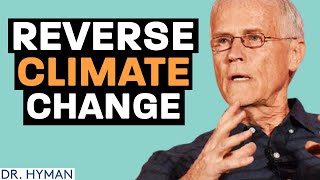
Paul Hawken and Mark Hyman discuss regeneration as a framework for addressing climate change. They explore nature-based solutions and regenerative agriculture as practical ways to create systemic change, combining scientific insights with actionable steps for individuals and communities.
We're facing, as you said, the greatest crisis humanity has ever faced, civilization has ever faced, and 98% of the world is disengaged.
I want to get into the solutions and the regeneration and the ideas, but I think it's important to paint a picture a little bit of where we are. And as we're recording this, we're just been hearing in the news about once in a thousand year floods in Europe and floods in China and temperatures of 114 degrees in Oregon, for God's sake, like Oregon Scolds all the time. It's like, and this is just mind-boggling so can you just paint a little bit of a picture for everybody about the state of affairs? It seems to be getting worse at a rapid rate and faster than we all sort of imagined. How is this affecting us and how fast is this really going and what's happening?
Yeah, it's a very, very good question. I think It's important to state that climate scientists are agog as well. In other words, it's not like, oh yeah, I mean, they're like, of course, this is what we told you. What climate science has done very well and goes back 30 years is predict the rate of temperature increase. That is the rate of warming. Just spot on, really, given business as usual and increasing amounts of greenhouse gas emissions from combustion of fossil fuels and the way we use or abuse our land. That was pretty well known. I think what scientists are surprised about, and I think most of the world is too, but at the impact of that warming, I think that's where there was a disconnect going back, you know, 5, 10, 15, 20 years. I don't think any climate scientists thought that We would be seeing the impacts we're seeing now or seeing them as soon as they are occurring. And this goes back to your expertise as a doctor. I mean, the climate, I mean, the atmosphere, the earth is a complex adaptive system. I mean, and it's not linear. And, and therefore, you know, the, when you get change, it can be, as if it's almost a Lamarckian, it can be, highly discontinuous from what it was a day, a week, a year before. And so we don't know where we're going. I call it Terra Nova, which is we're going to the new Earth. And the interesting thing about, and I would say this, and that is that what we are seeing, however, if there's a plus to the extreme weather, the temperature, the flooding, the burning. It is that climate and global warming are changing from a concept to an experience.
Yes.
And so I think, I believe that the climate movement, however you want to define that, I just mean that climate action really is going to become the biggest movement in human history because of the weather. And so the question is, when and how and what are we going to do and what do we, you know, how do we organize ourselves around that? There's no question to me that it will be now that also portends social breakdown. And my biggest concern really is people feeling, experiencing it in such a way that it just upends their lives. And we've seen that already with migration. So migration is going to increase. Nobody wants to leave their home. So a migrant isn't somebody who says, hey, I'm out of here. They leave their home because they can't get food, they can't get work or their home is gone or whatever. And so, I mean, the UN estimates.
That within a decade or two, we're gonna see up to 200 million climate refugees because of weather, because of drought, because of lack of food, because of political instability as a result of climate change. that's staggering. I mean, you think of Syria, there was a million refugees because of drought and famine. That destabilized Europe in a profound way. Think about 200 million or maybe even a billion the US has, which is staggering to think about.
There's going to be internal migration in the United States. I mean, we may not call it migration, but the Southwest will be emptied. I don't think there's any question about that. And they're going to want to move north and where in the north? And if the West dries out the way it is right now, that's a fair question, you know, as to how far north and where is their jobs, land, water, food, all those kind of things. And so yeah, the future we face is highly unusual and unpredictable and all the more reason to basically act, do something, as opposed to sort of wallow in it.
So, there was projections that by the end of the century it would be bad. But now it seems as though this is an accelerating process that once these cycles of change happen, there's these feed-forward cycles that accelerate such as the loss of peat or this forest fires, which you're releasing carbon from the forest fires, but you're also losing the forest, so you're having a double whammy. And you get these feed-forward cycles. that accelerate the pace such that it seems like it's happening a lot faster than we thought. Is that true?
It is. But there actually is an element of good news from climate scientists.
What? Tell us, tell us.
Well, the scientific consensus for decades, as far as I know, has been that even if our emissions stopped, that is to say, you stopped emitting, and the amount of carbon and carbon dioxide and greenhouse gases in the atmosphere leveled off, that warming would continue for decades, if not centuries. In other words, the cat was out of the bag way of looking at it. In December 2020, Dr. Jori Riegel, who is a lead author of the Sixth Assessment of the Intergovernmental Panel on Climate Change, he's from the Grantham Institute, said, and I quote, it's our best understanding that if we bring carbon dioxide emissions down to net zero, the warming will level off and climate will stabilize within a decade or two. There'll be very little or no additional warming and our best estimate is zero additional warming.
So how did that change? Because it seems like it contradicts a lot of our previous understanding.
It does. Well, I don't know. I don't know the prior science and this science. assumptions underlie the prior science, which is like the warming is going to keep going regardless of whether emissions stop. And that is the big change. And it's been backed up by Michael Mann and some of the other scientists say, Yep, this is what we know now. So that should give us an incentive and motivator to say or to act in in a way that is rigorous and comprehensive now, because we actually have a goal in, it's achievable. That is to say, we can achieve net zero, we can actually start drawing down emissions, drawing down carbon dioxide, and know that there will be, if you're young anyway, there'll be within your lifetime a shift back to a more stable climate? Now, what happens in the interim? I don't know. That's a good question.
Tell us why you feel like this framework of regeneration is the right framework to think about solving our problems with. Because a lot of people are talking about climate mitigation and combating climate change and fighting global warming, and it just seems like a negative Framework. Yours is a very positive, hopeful framework.
Yeah, you nailed it, actually. I mean, how many people wake up in the morning and say, I can't wait to go out and mitigate? Or, I can't wait to have a net zero world, whatever that means. I know what it means, of course, but I mean, it's sort of, again, sort of a nothing burger, if there ever was one, in terms of language. and combating and fighting and tackling all these verbs that we use, you know, basically disempower us. You know, they make us feel like, well, I hope they do it or, you know, the war metaphors or sports metaphors, and they are negative. And the problem, the way I look at it is that science is extraordinary, climate science is extraordinary, climate communication by scientists has been sort of inept. in the sense that it has emphasized the nature of the problem, the speed at which or the rate at which the problem is progressing and growing and enlarging predictions that are apocalyptic or nearly there. And all of that really numbs people out. And my way of thinking about it, Mark, is like, got the science, love it. Thank you. Great, great science. Now, what are we going to do? Because basically obsessing about it, first of all, does nothing. Actually, it does something. It takes you out of the game and it ruins your life. And or you then do what most people do, which is to block it out. You just block it out. And so there's an interesting Number is that we're facing, as you said, the greatest crisis humanity has ever faced, civilization has ever faced, maybe ever, we'll face, I don't know, in the future. And 98% of the world is disengaged. More than 98% don't do anything at all. And even of the 40-50% in developed countries or other countries, so-called developed countries, that are aware of it and understand the anthropogenic influence on climate and the cause and feel empathy and sympathy don't do anything. They think they're watching a documentary on Netflix about it is doing something. I mean, they don't know what to do.
It's hard to know what to do.
Well, they feel empathy. You think, oh, yeah, this is terrible. But they don't actually do anything. And so the question is why? You know, really? And so that's the question I answered. And I realized that the word, whether it's sustainability or whether, frankly, drawdown or whether net zero or whether these words are not motivating words. And regeneration is something that is innate to human beings. In other words, we already do it. We do it every day. And our 30 trillion cells are regenerating every nanosecond or we wouldn't be having this conversation.
Yeah.
And, you know, so there's, whether it's our babies, our children, our pets, our garden, our friendships, or in so many ways, every day we embody and express regeneration, which is we nurture life. And the way I define regeneration is putting life at the center of every act and decision. That's what regeneration is. And what I wanted to do is to take away the, maybe the, this sort of polarizing way people see climate, which is, I hope, you know, governments get their act together, the corporations do it. And at the same time, you're being told that, you know, what you can do, you know, and eat less meat or, you know, use cold water in the washing machine or you use the bike, you know, and all these things. And unless you have an IQ less than room temperature, you know that this is insufficient to the task at hand. They're correct. I mean, They're good things to do and you want to do them, but then you, which, what we've done is.
Hyper, it's necessary, but not sufficient.
Yeah, we've individuated the person and the person feels actually even more pessimistic in a way because they know it's not sufficient. And so regeneration is about, I mean, this sounds like a cliche, but bringing us together reconnecting all the broken strands in the society and we've broken our relationships between each other or humans to humans, humans to nature, and we've completely fragmented and broken the connections between nature itself. And so regeneration is a celebration of what we have as a innate impulse to be alive.
So true. You know, we see with COVID what's happened is as humans are sequestered inside, the world came back to life. Nature reclaimed itself. Oceans cleaned themselves, rivers cleaned themselves. wildlife populations return in just such a short time. So, you know, maybe it's us. Maybe it's us.
Maybe. Well, the one way to look at it is nature never makes a mistake. Yeah, yeah, it's us. So it makes it very clear. So, okay, nature. And, you know, even like extreme weather and the way, you know, things are getting more profound, it's. That's not a mistake. Climate change is sort of a, you know, stopping climate change is kind of a, again, a misnomer in the sense that climate changes every nanosecond. It's going to change all the time. It's part of our complex physical biochemistry, biochemical system, you know, that produces, you know, our life and food and water and all these wonderful things and so forth. So we don't want to stop climate change. What we want to do is address the cause of climate volatility and disruption and weirding, which is what's happening when you get warming and so forth. That's what we want to do.
Yeah, it's really striking. But when you look at the UN.
Report.
They'Re really talking about this massive cascade of destruction that's going to happen if we increase the temperature instead of to one and a half, which is already terrible, to two degrees. It only seems like it's half a degree Celsius, but there are real clear actions we need to take to avoid that half a degree. And what regeneration does is it really clearly maps out the research that can cut the energy emissions in half by 2028. And by using things like agriculture and the food system, and for us that actually we can make the Earth a carbon sink instead of a source of emissions by 2027. That's only six years away. How do we get that? What are those actions that we need to really stop this forward trajectory?
Well, one thing, I mean, the climate scientists started to turn to what they call nature-based solutions, which I kind of find a humorous phrase. The whole darn thing is nature. It's called planet Earth. and I think the climate movement, you know, for years has been very technical, very much about renewable energy, which totally makes sense. 74 or 5% of our greenhouse gas emissions are for the combustion of coal, gas and oil. So that made total sense. But at the same time, you know, the, even when I created Drawdown four years ago, I mean, people talked about regenerative agriculture or the soil health and things like that. We're dismissed by many climate scientists as sort of a children's crusade. That has been sort of a radical shift in the last four or five years. And so now there is an acceptance that nature exists. I'm not trying to make fun of the past so much as I'm just saying, yeah, and that it is getting in alignment with biology, with nature, is what the earth is really teaching us.
I mean.
And if we do that, so many good things happen and no bad things. It's like, whether it's our oceans or forests or grasslands or wetlands, it's like no matter where we do it, if we do that, the benefits are cascading and the detriments are non-existent. And so this awareness and this understanding can be sort of summarized in a different way. And so let me give you a framework of optimism as opposed to a framework of oh, we're screwed.
Yeah.
Yeah, the science, I got it, you know, and so forth. Okay, here's the thing. So, in our terrestrial systems, there are 3,300 billion tons of C, carbon, not carbon dioxide, carbon. Okay, that's about four times more, almost exactly four times as much carbon that's in the atmosphere. Okay, so there's two ways to look at that. If we continue to degrade our living systems, our forests, our wetlands, you know, seagrass, you know, I mean, if we continue to do that to our forests, etc., then as they die, those ecosystems, they emit carbon. So if we continue to do that at the rate we're doing it, our PPM will go up from 419 to, you know, 519 just from a land degradation alone.
So parts per million of carbon dioxide.
You mean, yeah, so carbon dioxide. Thank you. and but let's flip it. So if we restore nine, if we increase the amount of carbon by restoring our 3 billion hectares of degraded land, our existing forests, our grasslands, our wetlands, our mangroves, our tidal sea marshes, etc. If we increase the amount of carbon by 9%. 9%. We will offset all the emissions since the Industrial Revolution.
Wow.
We will draw them down. If now the fact is there's going to be more emissions between now and 2050, let's say. So if we increase the content of carbon in our terrestrial systems by 14%, we will basically have not only offset those industrial emissions and the new ones that are coming forth, but we will be at the outset of drought and we will continue to see greenhouse gas emissions go down to a sustainable level in terms of climatic stability. So if you can imagine now, you're in Massachusetts, you can look out, you can see a forest, you can see trees, Look, and you can imagine, can I increase the amount of natural nature activity by 9%? Yeah, sure. Can we do that all around the world? Absolutely. And does it create employment for people? Absolutely. Is it meaningful employment? Yes, it gives people a sense of purpose and meaning and involvement, which is what the world needs. And so, We really need to reframe the situation, not to ignore the science, but so much as to understand that the science is bumming us out. And we can't be bummed out. If we're going to act, we need to act with certainly the acceptance of the science, but not the inevitability.
Yeah, that's very true. And I think that the the scale of the problem is just overwhelming for people and it's been so abstract, but it's becoming less abstract as we see these changes that are happening in our backyard in America, in developed countries, not just in developing countries. And what we're requiring is a systems approach to think about this. And it's very much like functional medicine. You know, the body is a complex adaptive system and we need to create balance and figure out how to regenerate health. And that's the science of health, that's what functional medicine is. And what you're really mapping out with the book Regeneration is the science of regenerating our entire ecosystem and the people that live on it and doing it in a way that creates all these secondary benefits of equity and justice and dignity and biodiversity and obviously drawing down carbon and climate reversal and improving health. So to me, that's what regeneration is. And it's such a powerful idea. The challenge that I see is when we start talking about these things, it's a little overwhelming. And I think that one of the beautiful things about the book is that it sort of breaks it down into really bite-sized chunks and looks at all the areas and solutions and things that we should be thinking about, but it does it in a way that creates at the end of the book, particularly this beautiful guide on how to create action and connection. And in the book, you talk about all the areas we need to focus on. It's not just our food and food systems are forests. It's our oceans, it's the forests, it's our wilderness. It's how do we reimagine our approach to land management, to humans and people, to urban environments, to our food system, to energy production and industry. And how do we put all those threads together so that we create a different world? The challenge for me when thinking about this is that a lot of the things that you're proposing are science-based, they're common sense, or they make sense, and yet there seems to be a lack of political will and inertia. I was speaking with John Kerry the other day about his role in climate, and he's like, well, if, for example, China doesn't want to step up and do it, it's going to be a problem because they're one of the biggest emitters. We are too, but they also are. And there's just a resistance to this kind of scale of change that has to happen and the speed that needs to happen at. And I know you're hoping that the book will catalyze that, but how do you see us taking this concept and scaling it up into policy and to business innovation, into transformations in our food systems and policy, even in our political choices?
Well, the end of the book is called Action and Connection. Really, it's a wormhole to the website, which won't be up until September 14th when the book comes out.
And it's what? What is the website?
Regeneration.org.
Okay.
Simple. What I noticed after Drawdown was published, and I gave 128 talks or something like that, and was inevitably and invariably, actually, people raised their hands and said, But what can I do? They actually, I said earlier that 98% of people aren't engaged even though many of them may be sympathetic. But actually, if you really ask people, they literally do not know what to do. And yes, they can change their diet or this or that and so forth. And you're also quite right, this is functional medicine for the earth. It's absolutely the same as what you and your colleagues are doing with respect to the human body. you know, basically, as my wife says, you know, we're mostly bacteria learning to be human, and now we have to be humans learning to be Earthlings.
Right.
To live on this planet. Right. For sure. So the, the, the, what we have in the what to do section is let's, is, is not like these are the top 10 things you can do and, you know, check off your list. So one of the things that you want to do that light you up. that really turn you on, that are fascinating, that you can get engaged in. That's what you should be doing. And so that's why we don't, in a sense, give a hierarchy of what it is that you should do. If somebody, if you're not doing something, you can be sure somebody else is. Don't worry about that. Where you're going to be most effective is where you're lit up and where you're Engaged in learning and curious. You wouldn't be the doctor you are today if you weren't extremely curious. And you still are. Okay. So we all are that way, but just not in a way that's prescribed to us by the climate movement or the climate science and so forth. So what we have in the website is a complete thing. Clothing is eight to 10% of global emissions who know I mean, it is the industry. Yes. Yeah. And like, you want to do something about it and you go to the website and it'll tell you what you can do as an individual, what you can do as a school, as a college, as a company, as a city, which you, who are the players, the good players, who are the ones that are really, you know, fast fashion companies that are incentivizing our teenagers and young people to change their clothing every few weeks. And we have one, for example, on the boreal forest. And again, the boreal forest is the greatest stock of carbon in the world. In Canada, it goes across Scandinavia and Russia. But in Canada, they're mountaintop clearing, they have the tar sands. they're cutting down virgin ancient timber to make toilet paper for Procter & Gamble and Kimberly Clark and so forth. And so it says here are the CEOs, that's their name, here's their email, you can do this. So here's the influencers, here's the NGOs that are kicking ass, you can get involved with them, you can support them. Here are the great videos and books on this thing. Here are the Native Americans, First Nations up there, you know, who are really taking charge of their traditional tribal lands and so forth. Here, I mean, so you can look at it and say, oh, man, okay, you know, and here's a Washington Post in the New York Times and my publisher who buys paper from the same companies that are trashing the boreal forest. Okay. And so, and So you can have just a whole menu of how to get involved and what to do and how to be effective and also to influence the policymakers, what John Kerry was talking about. That is to say, here are the policies that are up there. Here are the people who were working on those policies. California has a law which is being rabidly opposed by Canada. that says it cannot buy paper products unless they have come from lands or where the tribal and the, you know, the traditional owners of the land have approved of that logging and the paper products. And, okay. And that's going back and forth in the legislature. So, so that's what we're trying to do, Mark, is, is actually get people excited about all the and the beauty of nature and of this earth and the complexity in the best sense of the word. And then find a place where you want to make a difference and to understand that you're not an individual, that an individual does not exist. We all have agency, and when you start to connect to the different people who are are involved or you get involved with, you get other people involved with you, your classmates, your school, your company, your colleagues, your neighborhood, your family. That's who you are. That's who we are. The individual is just a delusion, you know, that we, our mind, as soon as we wake up in the morning. But in actual fact, you know, we are powerful in ways which you don't understand. And the most important thing you can do actually is local, where you live, the people you know, the ecosystems that you interact with, the municipalities that you vote within, et cetera. This is where you can make the biggest impact. You can watch the government sort of waffle and be corrupt for sure, and you can listen to all the things you should do about recycling for sure, but where you're effective is right where you are. In this sense, it's exactly the same as the human body who is in charge. No one is in charge of the human body. You're in charge of what you drink, eat, smoke, and think and exercise, but you're not in charge of the human body and we're not in charge of the earth. And so when you understand that the power to make reasonable, informed, and substantive action rests within your network within agency within your place, then you can sort of let go of some of the grief or stress that you carry about what's not happening and focus on what is or what can be.
So Paul, I just want to like, this is tremendous. And I think that what you're calling on is all of us to show up in the small or big ways that we can in our own lives and our own choices and our own purchases and the things we do in our home, in our kitchen, in our workplaces, with our families. Really, this is a key message and I think it's important for us to all think about how we can contribute. But I want to push back a little bit and say, even if all us humans who weren't driving policy or running big corporations changed, would it make enough of a difference? Or do we need to pull in business and government in order to actually solve the problem? Because I don't know the answer, but I think I do. I want to hear your perspective.
I am not excluding business and government whatsoever. I'm saying we need it all. I'm just saying it's really middle out. There's a big middle that's missing. That's the 98% of people who are disengaged. Governments and corporations are engaged. The slogan of the biggest food company in the world, Nestle, is Generation Generation, regeneration. Okay? And they're serious. They have 600,000 farms in Africa and South America. And I say they have them. They don't have them. These are small holders, but they buy from them and they have relationships that sometimes go back five generations. And they're working together to convert to regenerative agriculture or agroforestry, it depends, and for very practical reasons for the farmers, for them and so forth. So you're seeing substantive action occur on a corporate level. But I just don't want people to think, well, I hope they do it because you are they as well. That's what I'm trying to emphasize. So I think the pushback is right. I do work with corporations and I'll work with anybody who wants to make a change. I'm not opposed to that at all. We're in this together and I think that when we act that way, but I just think that when I say what to do in the website, that includes influencing corporations. We just found out that What, $3.3 trillion of subsidies were given to fossil fuel companies by the G20 in the last five years?
Wow, why do they need all that? They seem to make enough money on their own.
And banks invested $3.6 trillion since the Paris Agreement. So there's almost $7 trillion has gone to coal, gas, and oil. well, you want to find out who did it? Well, it's Chase, it's Wells Fargo, it's Bank of America. Look at your credit cards, get rid of them, write to them and say, I'm out of here. You know, if you're not going to bank in a way that protects and preserves and restores the world, I'm going to go to who does. And so you have the, a, a, a fintech arising, basically, you know, which in, like, Gunnar Lovelace is a mutual friend of ours with good money, and so many of these companies are arising that actually disintermediate the existing structure. So those are things you can do.
Yeah, that's right. It's beautiful. And I think one of the concepts you share in the book, and we'll get back into some of the beautiful aspects of how to regenerate, because I think it's important to talk about that specifically. But you talk about a set of sort of principles, a compass that creates a checklist for us to think about what our actions do, whether we're individuals or businesses or governments or philanthropists or anybody. And I just gotta go through them because they're just, they're really brilliant and they make you stop and think, you know, does this action create more life or reduce it? Does it heal the future or steal the future? Does it enhance human well-being or diminish it? Does it prevent disease or profit from it? Does it create livelihoods or eliminate them? Does it restore land or degrade it? Does it increase global warming or decrease it? Does it serve human needs or manufacture human wants? That's a big one. Does it reduce poverty or expand it? Does it promote fundamental human rights or deny them? Does it provide workers with dignity or demean them? And in short, is the activity extractive? or regenerative. And those are beautiful set of things to think about as we look at our choices and our actions every day, whether you are in government, whether you're a business leader, whether you're an individual. These are the principles that are going to help turn things around. But they're a moral compass that exists in an amoral, often amoral business world. And it seems like an increasingly amoral political world. I worry about how we get the right people who have the biggest levers to drive the changes and make the decisions from that moral compass. How do you see that happening?
I had no idea.
Okay.
Humans are very interesting, you know, and I would go back to something you said earlier in the We are not well human beings. We're not healthy, which is whole, okay? Whole, we're not whole, we're not healthy. We have been basically exploited by big food and big ag. And big food has basically hijacked our taste buds. which are there for a reason, you know, and they were developed over tens of thousands of years, you know, to help us sort out what to eat and what not to eat and why and when. And that's all been hijacked. And so, as you know better than I, and so forth, 70 of disease is metabolic disease caused by what we eat in the food system. And the food system itself, as you also well know, and I, I don't want to be telling you what you know, but to the listeners and so forth, you know, it is highly inflammatory. Okay. And you think, okay, inflammation is where in the cell is where all disease starts, you know, and, and, but if you look at the world as a whole, it's inflamed. It's inflammatory. It's the metaphor, I mean, the analogy is perfect. well, why did human beings act so crazy? Why are they so divided? Why are they so willing to be deluded? Because actually their brains are inflamed or nervousness. Yeah. They feel crappy about themselves. You know, they're depressed, you know, they're trying to cover up their depression or their sadness, you know, with substance, with alcohol, with addictions, with video, with pornography with God knows what and so forth. And that is further inflaming them and suppressing their core goodness, I would say, which I think is in every human being. And one of my teachers and one of my board members so gratefully is Jack Kornfield.
And.
His he teaches Buddhism and is a big appreciator of all the different schools. But the school that he was schooled in, actually, the Theravada school is the oldest school of Buddhism. And one of the tenets is that you want to discover the one who knows is in everyone. There is the one who who knows.
Who understands, you know, your higher self.
Exactly. And so it's about how do we draw that out? And I think food is just, there's so many ways in, and the principles that you read that I came up with, by the way, in 15 minutes when somebody asked me, said, well, here's the principles. I looked at them later and I thought, wow, these are pretty good.
But it's pretty good.
They seemed obvious. And to me, what they are, if you look at them and you say, well, these are in the best sense of the word, these are religious principles too. I mean, every major religion, these are core principles. It's like it's the golden rule, essentially. And so I think that the question about how do we change the perfidy, the corruption, the, the venality, the delusionary nature of our culture of capitalism, of advertising, of marketing, of politics and so forth, is a really good question, but we change it by discovering that within ourselves and then trying to draw that out from others. In some ways, you do it just by healing, just by being that practitioner, it can be that my daughters are in, you know, to help people come back to themselves, you know? And I think when they do, they see the world differently. And that is a one-to-one relationship. It's not something you can do with a microphone in a stadium, you know, you do it. And so we all have influence on people that way.
That's so beautiful. Do you want to know my secret for living a long and happy and healthy life? Well, all I have to do is check out my weekly newsletter, Mark's Picks, where I share my favorite tips for health, longevity, well-being, and lots more. Check it out and link below. So, getting into the sort of meat of the book, you know, since I think I'm interested in food and agriculture, I want to sort of start there and we'll see how far we get. But, you know, within the book, It's interesting how you had aspects of food and food systems and agriculture in almost every section, whether it was the city or forests or obviously food or land use. So in there is so much about food. And in your book, you talk about how the food system is the single biggest cause of global warming, of soil loss, of chemical poisoning, chronic disease, destruction of rainforests, even the killing of the oceans, the dying of the oceans. So can you talk about the regeneration in all these areas and how transforming our food industry can be an extraordinary opportunity for humankind? And it's really one of the core tenants of regeneration.
It really is. I think that I put regenerative ag in the middle of the book because I feel like some people think regeneration just refers to soil or farming and you know, that's all they've heard and so that's what they think. And I so I started with oceans and forests and wilding. But yeah, food is core. First of all, we eat it every day, one or two or three times or more, depending on who we are. We eat every day without which we disappear. Okay, so that is our connection to the earth. and what we have now, of course, as you know, an agricultural system, industrial ag, that basically came out of the 19th century that in Europe where there was definitely issues about sufficient food and hunger, and then they invented the Hoover Bosch process of nitrogen that is you know, putting nitrogen on in the soil and wow, everything was green. What that started was the idea that you can actually feed plants directly. In other words, you put the chemicals in there, MPK, and you're putting plants on an IV drip essentially to use a medical metaphor. And the fact is that what regenerative ag is, is you feed the soil. because the soil is what feeds the plants. When you interdict that, when you interrupt that, which is what we've done, basically, the roots don't have to go as deep. The plants don't get everything they need. They can grow for sure, but they're weak. They get attacked by insects. You need insecticides. They're not strong. They don't compete well. You need herbicides. need or you, in a sense, that's what happens. That makes the soil even more dead and the roots more shallow and the runoff more toxic. So you're in it.
Yeah.
But what does it do to human beings? And they're eating that food, whether it's direct or processed, usually almost always processed. And basically they're starving. So people are starving and they don't know what they're starving for or, you know, they don't know what they're missing. Their body knows and it's signaling them all sorts of ways, symptomatically, over hunger, disease is a signal, is a signal to the body. It's, you know, it's like, this isn't working for me. Do you listen now? I mean, it was headaches first and now it's migraines or, you know, whatever. I mean, the body's always giving us feedback. But the feedback goes right back to the food system, right back to agriculture, right back to soil, right back to this profound misunderstanding of our relationship as a species to the living world. And I love, I think, what you said once, I heard you say recently, if it has a label, I'm not going to eat it. But you're pointing to the fact that do I need ingredients or do I need as I think what nature made, eat what nature makes, you know, but don't eat, you know. And so this is one of the disconnections. And I say the climate crisis is caused by this disconnection between each other. Where did the disconnection from each other come from? I'm not sure. I would go to the politics industry and other things, but the disconnection to our bodies and to our self and to our well-being and to our health and to mental well-being is definitely from Big Food and Big Ag. It's an unholy alliance and it is right there with transport. Those two are the two biggest causes of global warming. I would say climate is bigger because it, you know, food is bigger.
Food is bigger.
I mean, excuse me, food, I mean, big food and an egg are bigger because they engender other activities and things that are negative and harmful to the environment.
It's true. And, you know, the beautiful thing about the book is it, you know, it certainly names how food industry and the ag industry are driving so much of the crises. But, you talk about really amazing ideas like agroforestry or animal integration or composting or things like local food production, become modification. These are all amazing ideas, getting rid of food waste. Can you share a little bit more detail about some of these ideas and how they work, what they do, the impact? and how we can scale these things.
Yeah, decommodification is an interesting one. There are these huge companies, the hugest, I think the biggest company in some ways, private company in the world, Cargill, and they buy grains and seeds and commodities from farmers. Okay, when you sell, they store it, then they resell, re-ship around the world, you know, whether beet or whether it's sunflower seeds or whether it's, you know, oil or wheat or rice or something. Okay, so if you're a farmer, and let's say you want to move away from GMO farming, okay? And so you're now you're just saying non-GMO well, cargo will buy non-GMO there's a big market for non-GMO corn and soy, and so it'll sell it, right? Okay, but it sells it at the lowest price. Now, let's say you're really making an effort to restore your farm to regenerate yourself. You're going the extra mile every year to make this a much more productive, better, healthier place. You're not paid for that by Cargill. They don't care. It's just non-GMO end of subject. Cargill will buy organic food, same thing, which is, so in other words.
The.
Lowest threshold in terms of classification of the food is good enough for Cargill. And so let's talk about regenerative. Now they want to buy regenerative food. Okay. I mean, Cargill's right there. But what de-commodification is an Indigo Ag, which is a company that is very much about regeneration to the opposite of Monsanto. basically have set up a system that connects the farmer to the buyer directly. So now the farmer, she can talk about what she's doing and all the different ways in which she's implementing practices at her farm, what the results are, what the carbon levels are, how she has basically increase the complexity of her cover crops, you know, to 25 different ones in her drills. Why? I mean, goes on and on and on. That then is a narrative, a story, a quality that you as a buyer can share with your customers. So you're, you're not just buying, you know, non-GMO you're buying this person, this farmer, you know, or farmers, you know, who are really making the movement to restoring water, land, health, animals, biodiversity, et cetera. And so the farmer makes more selling direct, the buyer pays less than if they bought it through Cargill. So it's really a big win for the people involved, for the customers, for the people are going to eat the food, but also for the environment and for climate. So that's de-commodification. And that also relates to localization, which is really food always used to be local until the railways came in. And the railways changed agriculture forever, especially in this country. And really, localization is within the city in the peri-urban and environment and so forth, you know, is that more and more people are farming and bringing that food into the city. They're not just growing, you know, vegetables or fruits, they're also growing grains or growing beans or growing seeds. So you're getting a kind of interesting relationship between the urban environment and I call it per-urban, the surrounding where food doesn't travel so far. and it's fresher, it has more meaning because it's in farmers markets or local stores and so forth. There's names, there's varieties and so forth. So you're seeing people remarry because they got divorced a long time ago, remarry food as culture, as taste, as, you know, and so that's localization and de-commodification. They really go together. and that's restorative. That has a big impact on climate. But that's what I was trying to say about regeneration is you don't have to know about climate in order to be excited about regeneration. You don't have to have a scorecard, you know, about- But what you know.
Is interesting about regeneration is it, you know, it is a word that's been talked about in terms of climate change primarily. But what you're presenting in your book is a very different framework, which is inclusive of regenerating human society, regenerating natural environments, regenerating wild places, and doing it in a way that brings merit, benefit, and abundance to so many people and to our whole way of life. So, I think this is a really striking different shift in framework. I think I had a very limited view of regeneration before. I understood it in a human health sense and in the soil health sense. but your framework is so much broader and so it so beautifully maps out all the things we need to think about if we want to live on the planet. Because the truth is, you know, we are at risk of being extinct. The planet is getting messed up, but it's going to be fine. Like, it'll come back, but we won't. And that, you know, maybe we're okay with that. Maybe we've had our time and we should just write it out, but it feels like we really have this moment in time right now where we can show up as a species and say, okay, wait a minute. We've made some bad choices. We've done some things that were done with good intentions but had bad consequences. How do we shift that?
If you look at the book, and there's 78 different solutions in there, and if you look at them, and let's pretend for a moment that you knew nothing about the atmosphere, that there was no climate science. You would want to do every one of them because the benefits are so great and they don't have a downside. They do not have a downside. We are in an extractive economy. where the benefits are about money and capital formation and sales and growth and stock market value and the detriments and the harm are huge. And so we are in a degenerative economy and it's not intentional by most companies or people. It's just true, which is we extract, we take from the environment we take from our oceans, our land, our people, from our cultures, from the forest, from every living system. And we eventually make something, manufacturing something or create a service or make a product and sell it, you know. And yet the harm that's happened, we may be divorced from it and not understand it, not see it, but the fact is the harm is still done. That's an extractive economy. Yeah. Extraction of life is degeneration. That is degeneration. So regeneration is really about what if we did a 180 and said, huh, okay, I got it. You know, it's, I understand what I have been doing or what I've been buying or what it does and its impacts. What does regeneration look like? And it's a 180. And it's not like you can do it overnight if you're a big company or you know, whatever. But actually it's a different path forward that goes for Millennia. Degeneration. We can see the end of that road. It doesn't go much further.
I agree 100%. And I think one of the things that gets people stuck is economics and the belief it. This sounds like a great idea, but is it really something we can afford? Is it something that's going to just cost money or is it going to save money? and I just got back from Rodale Institute where I met with my Food Fix campaign team where we're driving changes in the food system. And we've learned about their farming systems trial, which has been a 40 plus year trial looking at the impact of organic practices and regenerative organic practices versus conventional practices on the same farm and plots next to each other. So they're experiencing the same environmental conditions, everything. And what was striking was really.
The.
Data that they had. So it's not abstract. And I think that the concept that we're told by the food industry and the egg industry is, yeah, yeah, organic is okay, but we really need industrial agriculture to feed the world. We've gone from one and a half to seven billion people in the last 100 years. We need to produce these large commodity crops in ways that actually use industrial practices because otherwise we won't be able to feed the world. And I think this is a giant mythology. And what they showed from this research was that they produce competitive results in terms of yields using organic versus conventional, which is the argument against organic. What was even more striking was that in tough times of drought, they organic produced 40% more yield. And in terms of soil health, of course, it builds soil health. It used less energy, 45% less energy. 40% less carbon emissions, leaching no nitrogen or pesticides into waterways. And what was even more striking was the economics of this. Farmers earned three to six times more profit when they did organic than when they did conventional. So all the ideas that we've been told are really not true. And I think the question I would pose to you, Paul, is what is the economics of regeneration? Is it something that's going to create more abundance or is it going to just cost us?
Yeah, I mean, that has been the canard that's been thrown at the organic world. I started, you know, Erawan when I was 20 years old and we are always criticized like, this is, oh, you hippies want to eat this way. But we serious people care about the rest of the world and want to feed the world. and that, you know, that is. I can't believe that Trope is still alive today because industrial ag doesn't feed the world at all. First of all, it poisons the world. But 70% of the food is produced by small holders, not by industrial ag. Most of industrial ag, cultural production goes to animals, not to people. And it goes to animals that are treated. very cruelly and harmfully, you know, and confined area feeding operations and process that food is processed in such a way that in almost, in most cases, produces food that's toxic to human beings as well. And, and produces a lot of effluent, the capes produce effluents and, and toxicity and, and et cetera. Okay, so. First of all, the myth that industrial ag is needed to feed the world is just nonsense and never has been true. Second, on cost, yeah, I mean, if you're subsidized like crazy and you externalize the cost of raising food, which is what industrial ag does, the dead zone in the Gulf of Mexico is caused by industrial ag. Who pays for that? Well, not the farmers and Monsanto Bayer, not Syngenta, not the chemical companies, you know.
I mean, that's staggering. Probably 212, 000 metric tons of fish that die every year. How much would those fish cost? And how many people would they feed? And, you know, that's just one dead zone. There's 400 of those around the world. Feed a half a billion people. So it's staggering what you're talking about.
Look at pesticide poisoning in the salmon. in Sacramento Valley, where I live in California. I remember when we, we, I had an organic farm and, and at Erawan, you know, I had Farmers in 35 States, 34, 000 Acres under contract, organic food. But we would talk about us, you know, like, wow, we're internalizing costs. That is to say, we're, we're, we're spending money on our Farms to not cause harm. We don't use pesticides, we don't have, Etc. the farmers who were doing that basically weren't paying the cost at all. And so there was a profound imbalance in terms of fairness. It was unfair upside down and backwards and so forth. The food that should be labeled and highly labeled as industrial food, chemical food, ultra processed food, that should be labeled as ultra processed, chemically produced industrialized food. This is what you're buying just You know, if it's organic or regenerative, there shouldn't be any label at all. It's like food. It's a banana, it's an apple, it's kale, it's arugula, it's cruciferous, it's vegetables, you know, and like there's no label. Yeah, that's right. Because, I mean, so it's upside down and backwards, you know? And, but I see, that's why that thing about either we're healing the future or stealing the future, and we can make money just as much and more by healing the future. I say more, not in the sense of concentrating in the hands of a few people, but more in terms of what you talked about, which is happening with organic and regenerative farmers, which is once they make that transition from being addicted to chemicals, and that is a passage, that is a transition, they need or deserve support. Sometimes they can only do it so many acres at a time because of that. But once they pass through that, they will never ever go back because it is more profitable and the income is higher. And we have a USDA, and we have, by the way, both the USDA effects SNAP programs and food stamps, $46 billion a year, and what goes to people who have very low income. and it also impacts basically the food that's grown and how it's grown. And this is due to basically insurance, crop insurance. So with those two things, crop insurance and the SNAP programs, we lock in toxic food that's grown toxically. And so there is your cost advantage right there. It comes from us, our taxes. Yeah.
That's true. I mean, if we were actually were paying with the real cost of food, it would be staggering. And I think that the Rockefeller Foundation just to produce a report on the true cost of food, and it was trillions of dollars a year that we're paying as a society, as taxpayers, to compensate for the damage that's done by the very way we grow food, the food we produce, the consequences of eating that food on humans, which is chronic disease and death, and no one's talking about it. And so, I'm really pleased to see the Rockefeller Foundation put a stake in the ground and declare this because at the end of the day, when you look at regeneration, it's a concept that regenerates not just humans and their health, not just ecosystems, not just communities and societies, but it regenerates economies. And I think at the end of the day, whether we like it or not, our entire Global, you know, national system is driven by money. And if we don't align the economics incentives and allow people to understand how this is actually the right economic choice, that this won't happen. And in Drawdown, you did that beautifully. And this book is a more human book in a sense, but in Drawdown, it was really fascinating how you were able to look at what is the cost of this solution, let's say, doing compost or, and what is the benefit in terms of the return on investment? And it was staggering the return on investment from these interventions. So could you talk a little bit about the economics of how we drive our thinking differently about the economic benefits of regeneration?
Yeah, I think- and some examples maybe. There's a great Wendell Berry quote, which is basically, organic farming or I forget what it was, but it's not going to make you rich, you're going to be rich. In other words, leading a life that creates more life is extraordinarily satisfying and edifying life and one that destroys life isn't. But I would say that that the, I guess what I want to say is that, yeah, we did the numbers and draw down. They're based on assumptions, of course, every model is, you know, about cost and, and, and income. And most of them were profitable. Some occasionally were not and so forth. But, you know, actually, those are good, in a sense, for a policy level, but actually Numbers don't change people, jargon doesn't change people, fear does not change people. None of those things really change, really, how people think and what they do and or what they believe to be true and so forth. So I kind of, I took the numbers out of this book for that reason. Because I think people are focusing on them. I focused on engagement as human beings, as people, as cultures, societies, neighborhoods, friends, you know, engaged on agency more than on that because I feel that is really how things happen as opposed to looking at a number abstractly and saying, well, this could be profitable. And there's no question that the momentum and inertia of the existing neoliberal capitalist system is bizarre. And I mean, the cheapest form of new electricity generation in the world today by far is solar and wind. Okay. And as mentioned earlier, almost $7 trillion of money has gone to support coal, gas, and oil, which are far more expensive in terms of energy, electrical generation, transport generation, whatever use you give to those fossil fuels than what we know how to do today. And yet, so we're seeing this crazy making diversion. Yeah. Where did that money come from? It comes from you. It comes from when bank. It comes from taxes, you know, we're paying for the devolution and degradation and destruction of the earth every single day, you know, and that means action. And I don't mean just, you know, start growing organically in the garden. I mean, I mean, write, call out, name, vote. I mean, get active. you know, no question about it because basically a small group of people has control of what's happening to a much, much larger group of people. But the other thing I emphasize, and this goes back to the origin of regeneration, I was in 2017 at the Commonwealth of Nations in Marlborough House in London. I was invited to speak to the 52 high commissioners, which is essentially ambassadors.
Oh, wow.
And to London, you know, and I was asked to speak about Druada and I did. And then I had Q&A, which was fascinating. Q&A is always the most fascinating part of any talk.
Yeah, I agree.
Yeah, it's where you learn the most. You learn because everybody asks the question, almost everybody asks the question for others as well, you know, they just don't. And after that, I was walking back past Buckingham Palace, you know, it was all very glamorous and so forth, but I was walking back thinking about the questions. And what I realized, Mark, was that everybody there represented all the ministerials in their country, not just one. They represented defense and finance and education and transport and fisheries and ag and health and so forth. And from their point of view, climate was about carbon dioxide and methane, and that belonged in the portfolio of the environmental minister. and which is usually the lowest ranking or very low ranking ministerial in all these countries. And the rest of the ministers had a job to do. They had to take care of housing or health or this or this. And I realized, oh, oh, my gosh, you know, and as to what you said earlier, is that is this, this, this is for everything and for everything. It makes everything better for everyone. And so if we are not thinking about the 4.1 billion people in the world who are impoverished, if we're not directing our work to serving current human needs, if we think we can save the world and not make a world worth saving, then it's not true. So what Regeneration does is opens up this quality of understanding and activity that provides people with a sense of betterment. And the only way people are going to get involved around climate is to see that what they do or what is possible or this job or this vocation or this profession or this focus is going to make their life better, their family's life better, is going to make it better. community. And this is what the world wants because the world wakes up every single morning, pretty much most of the world worried about today, not tomorrow, not next year, not climate change. They can't afford it. I remember a black person saying to me, how can I worry about that when I have to worry about getting a job? And I say, spot on, man. That is exactly right. and you look at the rest of the world, they're worried about food security, about health, about getting their kids to school, getting a school at all, about clothing, et cetera, et cetera. That's where the juice is in terms of reversing global warming.
Yeah, it's so true. And I think when you just touched on this, it's something I want to highlight because you stayed in the book, I mean, kind of provocative, would you say that the climate crisis is not a science problem? it's a human problem. And that the most complex and radical climate technologies on Earth are not what you'd expect, right? They're the human heart, the head and the mind, not a solar panel. So talk about how the power to really change the world doesn't reside in these technologies, but relies on things like reverence, respect, compassion for ourselves, all people, all life. You sort of touched on a little bit, but I'd like you to get into it a little bit more because I think it's really at the end of the day, it's not the facts, the figures, the science. You're not going to yell and convince somebody. It may be the economics that drive things for sure, but it ultimately comes down to this human component.
It does. And again, I think, start with tobacco industry, then later with British Petroleum in 2001, I think it was, he said, oh, you can calculate your carbon footprint. This has been this corporate communication for decades. that if something's wrong, you did it and you're responsible and you can change, you know.
Yeah.
Yeah. Calculate your carbon footprint, you know, which is interesting, by the way. I don't, you know, don't get and say that. But somehow if you change it, that's going to solve the problem. And we know that's not true. And what we can change, though, and what is possible is what you just described and so forth, is that we can. Regeneration isn't about bringing the just the world back to life. It's about bringing ourselves back to life, you know, and. And. And to sense, like, I'm here. I've chose to be here. What am I gonna do at this time, given what I know and what I see in the world? And do I want to go around hangdog, depressed, angry, blaming other people, or do I want to do something that brings me to life? to others, to myself, that where I learn, like where my curiosity grows and expands, and I become more connected to more people in interesting ways and so forth. And to nature and to the earth and to all the living beings that are here, that join with us to other cultures, to understanding that I live basically on land that to me, I'm living on stolen land. Who do we steal it from? What is that culture? What did they know? There's all sorts of things that happen when you start to think this way and behave this way. And that is innate to regeneration. And I'm saying regeneration is innate to us, you know? And so it's really about just allowing that, recognizing that, and enacting that within ourselves in our daily life. And it doesn't, I'm not, by the way, in saying that in any way criticizing any other thing that's going on with climate. I love it all. Everything that everybody's doing around the climate is fantastic. But we have to figure out how to get most people involved, not just a few.
Yeah. Make it, make it, make it relevant to everybody. You know, I think.
It is beautiful.
Because it's very similar to what I see in healthcare right now. You know, the number one cause of death in the world is diet, you know?
Yeah.
And it's not like we need a great new advance to cure diabetes and erase diabetes from the planet, which is the biggest driver of healthcare costs and suffering globally. But we don't have the understanding that we can. It's almost like Dorothy and Uruvi had slippers. She didn't really know she could get back to Kansas by clicking her heels. You know, we had that same power collectively. And I think, you know, we kind of rely on others and we abdicate our agency and our desire to actually do anything because it just feels overwhelming. But you paint a beautiful picture of here how we each can be a part of it. And yes, we need big changes in policy and yes, we need big changes in industry and we need all of it. and it's not just one thing. But what you're saying is that it's actually, which is something I actually didn't feel before I really read through your book, was that what we each do does make a difference and that collectively it matters and that we can make choices that not only make us feel good but actually are making a difference.
Yeah, absolutely. I mean, somewhere in the book I say the person who can change this the climate crisis is reading this sentence. And it sounds illogical, you know, from what we're told and so forth. But absolutely, there are possibilities here. We're just bathed in probabilities. Oh my God. And the news cycle, it doesn't help us at all. And and that's why we really have to, I think the possibility here is an awakening. And I tell you, Mark, I won't name them, but I talk to CEOs of rather large companies, you know, rather very, very big companies. And I have seen such a difference in the last 18 months, two years, 40 years. I mean, their eyes are different. They get it. I mean, they have children, they have grandchildren, they have sisters, brothers, aunts, uncles. They have, I mean, they're going, it's an OMG moment for them, you know, it really is. And they find themselves then as the head of these extraordinarily large, you know, corporations with, momentum and capital. But I see in them an awakening. And I just think it's just a matter of time before that occurs to other people in other ways. You know, nobody awakens you, you awaken yourself. But, and when that happens, I think the rate of change is going to occur is going to be extraordinary. The rate of climate change right now exceeds the rate of human change, no question about it. But I feel like that's going to have, we're going to see a figure ground shift where the rate of human change is going to exceed the rate of climate change. And the example I give, I think about, and we're studying it inside in terms of our organization, is about what happened to the LGBTQ community, which was client, it was like, It was like shame, okay? I mean, it was basically, you know, gay shame. It was shame, you know, and you could run for office in 2010 and denigrate, you know, LGBTQ people and win. Now we had a month of gay pride. We have a month of advertisers and companies and so forth. I'm not saying everything's going to be...
And we had an openly gay man running for president, which was fascinating.
Exactly. And so there's been a figure ground shift. Not everybody has shifted, of course, especially in this country and other countries, some other countries for sure. But I mean, that's a shift. And so what is going to create that figure ground shift with respect to global warming? And when that happens, the rate of change that can occur and activity that can occur will be extraordinary. And yes, can we basically achieve that point where we start to reverse global warming and draw down greenhouse gases? Absolutely. We know how to do it. We have the tools. We have the understanding and what we lack right now is that capacity within humanity to awaken the moment of awakening. But I see it so fast right now.
So, Paul, one of the things that I think is a little overwhelming for people is, you know, is this really going to change? Can we really fix this? Is this going to transform our society. And the thesis of the book is really extraordinary, which is that we can end the climate crisis in one generation. So in the book, there's 78 different solutions. All of them are interesting and important. But where do we start? Where do we start as individuals? Where do we start as business innovators? And where do we start as policymakers?
Ending the climate crisis in one generation does not mean that we can no longer worry about climate. What it means is by 2030, we will experience a rate of change and engagement and involvement and absolute results from our activity that basically show that if we continue to do it, which we would because of the momentum of it, achieve drawdown by 2050, 2045 or at some point in near future and avoid the worst of global warming 1.5 C levels thereby. So that's what that subtitle means. But each person has to find their own way in other words, It's like, as I said, this is going from conceptual to experiential. I mean, and you can stay in, you know, your, I guess, conceptual framework of the world and read things that reinforce it. Or at some point, do you step out and look at yourself and say, I need to be part of something that is meaningful, you know, really meaningful in my life. And I can't think of anything that would have more meaning than reversing global warming, because it's really not about global warming. It's actually about humanity. Well, the reimagination of civilization, of self and other. And so it's a very good question. I kind of, it's kind of like a Wizard of Oz question. I feel like I'd be a fraud if I said I knew. I don't know. I can only tell you what I see and what I see is a rate of understanding in the world. But when it comes to an individual, I don't know. Each person is different. When it comes to the the rate of change. And you don't need, there's different numbers, but change creates change. And as I say in the book, belief does not change action. And we know that from neuroscientists, from Andy Newberg's work at Stanford, where action is, action changes our belief. And so, and action changes the belief of others as well. And as more action occurs, as more people act, you get a cascading effect from that. And that's what I'm going to bet on.
Yeah, it's really incredible to think about what a difference we can make. It reminds me of that quote from Margaret Mead who said, Never doubt that a small group of committed individuals can change the world. In fact, it's the only thing that ever has.
Yeah, and we have a great teacher. We're being homeschooled by the planet. We have this great teacher and, and, and so it's our home and she's teaching us and, yeah, we're a little slow.
We're in the short bus, our medial extra help learning disability class.
True, true. But then she just speaks a little louder when that happens and it gives tougher homework assignments. So, you know, we have the teacher, we have the teachings, you know, we have amongst humanity, we brilliant, brilliant, gorgeous, amazing human beings are here everywhere in the world doing things that have such importance and grace. with such intelligence and kindness and compassion. They're all here. And so let's meet them, let's get involved with them, let's learn from them, let's be those people, let's do that. And yes, we'll look at the headlines and we'll look at the demagogues and, you know, the billionaires in space. But in the end of the day, we want to be around human beings.
It's true. Think about it. What's beautiful about your book, it's not about what we need to invent or create or hopefully figure out or discover. It's about the solutions that exist right now in all these different aspects and areas that are scientific, that are proven, that are being implemented in smaller, large ways globally. And we just need to draw on those to scale them up and reimagine everything. Before we close, I'd love you to just to sort of talk about how you reimagine the future. Maybe paint a picture of, in each of those areas, what are a few things that could be done that would make such a big difference in each of those areas of the book? Maybe just one or two to say, okay, if we did this, this is what needs to be done. And I think there's so much in there, people will find it, but it would just be good to get a flavor of the kinds of solutions that you're really proposing. and what they look and feel like to people. You mentioned a few of them we talked about, but I'd love you to sort of go through the book and just share a little bit about it. Because it's gonna give you a sense of hope about, oh, there's the solutions. These are the things we can do. This is possible.
What I see happening is solutions that are really fascinating to me or engaging. One is about water and It's interesting that plants manage water. That's just managing water on the planet, and water manages heat. So we talk about carbon, but we should also talk about water. It's so important. And so when we start to, we have these, like I say, billions of acres of degraded land, which is just begging for people to go on it and use rotational grazing, regenerative agriculture, afforestation, agroforestry, silver pasture, etc. And restore that land. What happens when you restore land? You're restoring water. We're restoring basically the water cycle. And when the water cycle is restored, it literally makes rain. We think rain comes from the oceans, it does, the rain clouds, it also comes from the land. And so what we know now is that when we change what's on the land in terms of plants and trees and so forth, it actually creates rain, it creates water. And the earth is desiccated. If you have a patient who is completely dehydrated, that could be near death if they did that. you hydrate them. Okay. Yeah. So what we need to do is hydrate the Earth. That's what we gen ag and these different methodologies do.
Yeah.
And they can increase the amount of water that's in the soil by a factor of 10, 20, 30 or more. Okay. So we're bringing that excess water that just about, you know, they killed so many people in Germany and all these places, you know, in Europe last week. and we actually bring it back and put it in the earth. When it's in the earth, the temperature goes down. So 80% of what we experience in terms of temperature is from the hydrosphere and not from the atmosphere. And so what also happens is a wonderful study that was done in Africa. And because this valley in Malawi had hailstorms, all the time, they had the most hailstorms of any place in Africa. And the question is, you know, why? You know, why was it happening? You know? And so what we know now is that we used to think that water nucleated formed a drop, you know, from a gas to a liquid by attaching itself to dust particle in the, in the sky. It does. But what we've learned is that actually, attaches to bacteria. And so what these scientists discovered in Malawi is when the hail came, they actually melted it and sequenced the bacteria. Wow.
Wow.
And they discovered that the bacteria in the hail was specific to that valley. That valley was making the hail. which is a type of precipitation, water. So there are these discoveries going on about how we can actually change the surface of the Earth in such a way that we change the weather, and as opposed to the weather being changed and not having any, you don't have control when you do that, but you actually are regenerating patterns of weather that we we have lost. And so I think one of the most exciting things is the restoration of degraded land in all the different ways and what it will do to rainfall and crops and rivers that we cannot predict or know a priori, but we know it will have a profound impact on it and we know we need to do it.
Absolutely, it's just so beautiful. So this is a really hopeful message in a time which feels kind of hopeless when we see increasing climate instability, when we see increasing social instability, economic instability, obviously health is going downhill big time. And this is, to me, very much like the functional medicine approach to health, which is get to the root cause, restore systems, restore ecosystems to their natural balance. And Regeneration is just such an important piece of work in this moment. And I hope everybody who's listening gets a copy of the book, reads it, takes it in and shares it with their community, with their family, with the people who they work with or work for, who work for them. Because this is the kind of book that can shift our perspective. It's a frame shift that allows us to go from despair to hope. Hey YouTube, if you like this video, you're gonna love the next one. Click on it to check it out today.
Dietary guidelines were meant to prevent disease.
We got it pretty bad.
How has that progress gone?
You know, how's that working for you?
Obesity going up, diabetes going up, heart disease still number one killer, cancer going up. So by any outcome measure, they have been a total failure.
More from AI




This Is Why 99% of Skin Conditions Don't Heal — And What Dermatologists Won't Tell You






Why you need to start strength training today #strengthtraining #healthyaging #fitness
