The Secrets to Creating a Healthy Immune System
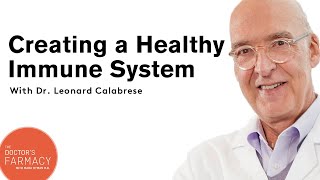
Dr. Mark Hyman talks with Dr. Leonard Calabrese, an immunologist at Cleveland Clinic, about what actually strengthens your immune system. They cover diet, exercise, sleep, and stress, plus the science of how your mind affects your immune cells.
Welcome to the Doctor's Pharmacy. That's F-A-R-M-A-C-Y, a place for conversations that matter. I'm Dr. Mark Hyman. I'm here with an extraordinary man, a friend of mine from the Cleveland Clinic. We're here at the Cleveland Clinic, and we're here for a conversation that you will come to believe really matters. Now, Dr. Leonard Calabrese is an extraordinary scientist. He's an immunologist. He's a rheumatologist. He's leading some of the most important work in the world of how our lifestyle and immune system are connected and what we eat and what we think and stress and our sleep and our food all play a role in how well our immune system works and can fight disease. He's been experienced in virus disease and HIV. He's the director of the R.J. Fasenmyer Center for Clinical Immunology at the Cleveland Clinic, which specializes in disease of the immune system. He holds joint appointments not only in infectious disease but also in the Wellness Institute. So he's focused on wellness and he's focused his whole career on changing the way we think about how we approach disease in general and particularly immune disease. In fact, he came to us at the Cleveland Clinic Center for Functional Medicine and reached out and said, hey, you're here, welcome. Very few people did that. And he, with his colleagues, have been key partners in helping us think about how do we move this field forward.
So welcome, Dr. Calabrese. It's really great to be here, Mark, and been following the show. You've had some incredible people on. I'm flattered to be here and look forward to the chat.
Well, you're a giant in this world, and I want to start out by talking about How you came to understand that the immune system was connected to our lifestyle and what we eat and our thoughts and beliefs and exercise and so forth. How did that sort of aha moment happen for you? Because you were trained pretty conventionally.
Okay, now you learned in medical school. That's a good question. I don't have a sound bite answer, but there's a story.
We got time. We got stories.
So, you know, I'm a clinical immunologist. I take care of people with overactive immune systems, with immune-mediated inflammatory diseases, rheumatoid arthritis, lupus, and vasculitis, and the like. I also take care of patients with immunodeficiency disease whose immune system is hypo-functioning. And when I started this business a number of decades ago, you know, we had very few tools in the toolbox to deal with this. Now, there are a few stories in medicine as satisfying as the development of biologic therapeutics for immune-mediated diseases. And over the past 20 to 25 years, the introduction of biologics has transformed patients' lives. It's taken fatal diseases and made them non-fatal, it's taken progressive diseases and made them non-progressive. And I've been involved in clinical trials.
And you're talking about drugs like Enbrel and Remicade.
I'm talking about all of these types of drugs, and I was involved in the development of virtually all of them in terms of clinical trials. Yet, at the same time, while we're doing this incredible job of controlling disease activity, I increasingly recognize that there was not a one-to-one correlation with making people well. You could control disease activity, you could reduce a biomarker, yet at the same time, everybody has the same desire. They want to live a life that's well lived, that's wellness in its essence. And I have a remarkable practice, I'm so privileged to be able to run the center and see patients from all over the world coming for rare and unusual diseases, and sometimes we identify them genetically, sometimes we do tremendous therapies for them, sometimes you know, we make some progress. But I have always noticed that there's not a single person, if you give them enough time, and that's kind of a rough thing in medicine these days, right? Who won't ask you the question, what else can I do? What else can I do? And so, you know, I'd say when Mike Roizen got here, he kind of stimulated my thinking in this area.
And he was the chief wellness officer.
Chief wellness officer doing great things with our patient population. I started to become more interested in this academically and clinically and I started out by creating a one-page handout of what I thought was good wellness behavior and it grew to a two-page handout. Now it's a 30-page monograph and I have videos in all my exam rooms of recipes and everything else that is going on. there are these two dimensions moving forward. Now, I'd love to get your take on this. 15, 20 years ago, the wellness science was not robust. You're a believer, you're not a believer. But over time, tremendous progress in the science of wellness. So you have these two things going on, development of targeted therapies, robust progress in the area of the immunologic basis of wellness. And I've decided to try to put these together in the most high quality, highly productive and scientific way possible.
Yeah, and you do that with your patients in the clinic?
I absolutely do it with my patients in the clinic and we want to take it and make it for patients around the world. So that's where we're going.
That's fantastic. There's some fascinating studies looking at this. I mean, I remember reading one study in JAMA about patients with rheumatoid arthritis and asthma, both inflammatory diseases, and they had the patients just write in a journal 20 minutes a day. Now, it couldn't be, you know, I went to the grocery store and I walked my dog. It had to be about what was happening below, underneath the hood, and what were your emotional state, how are you feeling, what was affecting you. And they found that it dramatically reduced asthma, even by objective measures, and even rheumatoid arthritis symptoms by objective measures. And there's a woman named Candace Pert who studied neuroimmunology. There's a whole field of psychoneuroimmunology at the NIH, National Institute of Health, and she found that their immune system was listening to our thoughts.
She calls this molecules of emotion. Can you tell us more about that? Yeah, it's such an incredible area. So, you know, Everyone, everyone, it's well accepted that stress is bad for your immune system. I mean, classic chronic stress, you know, acute stress, run from the saber-toothed tiger, that's really good. Chronic stress of my job, my life, the environment, politics, and the world is bad. We are now starting to appreciate that the opposite of that, the immunology of joy can be immunologically potentiating. And you mentioned a very nice example. I call this the immunology of gratitude. And gratitude has wide-ranging biologic effects. There's a recent study done at UC San Diego that showed that patients with asymptomatic echocardiographically documented congestive heart failure with six weeks of gratitude journaling could improve ventricular function.
Your heart pumps better and faster if you're grateful.
Right. So you've got to open your heart, essentially. Exactly. Let's take this a couple steps further.
Before you go on, there's another condition, which is the opposite, which is stress-induced heart failure.
Broken heart.
Broken heart. I literally had a patient with a broken heart. He was healthy otherwise, and he went into heart failure after his wife died. Sure. And through using various modalities around stress and energy medicine, we were able to get it better.
We think that that's the basis of, you know, of voodoo deaths. Yeah. You know, you're petrified and your heart. So it's all connected.
That's a Gugu toxin.
Right, right, right. So, the immunology of joy, there's been some tremendous work in this.
It's such a great phase, the immunology of joy.
Yeah, so, Some people, Cohen from Carnegie Mellon has done such beautiful work looking at resistance to respiratory viruses and the effects of hugs and did this elegantly controlled study where they measured social interactions, the amount of touching that goes on in a person's life and then actually inoculated all the people in the study with cold virus and then measured their antibody responses and clinical things. And hugging was an important and significantly clinical variable. Even though the hug people were more exposed to viruses, you know, they were protected. So, I mean, a small example.
That's great. So, hugs so you won't get sick. That's why when Lenny ever comes to see me, we always hug each other.
It's therapeutic, right?
It's the only doctor at Cleveland Clinic who gives me a hug. It's pretty amazing.
That's good. I want to be known for that. Folvio DeQuista from London, who's going to be visiting us in May, where my immunology summit, which has been going on for 16 years, is actually going to start out full half day on the immunology of wellness, who does experimental work on the immunology of joy. And he actually has, animal models. Mice take mice and let them live in his little home, take another set of mice and put them in a dirty cage and they get all upset and you take the other set of mice and you put them in the Ritz-Carlton house and you pet them and their immune systems shift. So, you know, we don't know how to quantify this but it certainly fits with our model that in those behaviors of diet, exercise, sleep and stress, we want to move our affect in a more positive manner. And I see this every single day that, you know, sometimes we see immunologic diseases that we just can't, we can't do anything about with targeted therapy. And we have to deal with it, you know, biobehaviorally. And people have to, they have to be empowered to do this. And that's where I think that, you know, you guys have been doing this for your whole career, but 20 years ago you were the wellness guys. You were over here, all right? You were over here. This was alternative therapy. I'm trying to bring immunologic strength, wellness, and immunologic health building to the mainstream of people, some of the people that you're interviewing on the show, who deal with immune-mediated inflammatory diseases every single day. you know, we're shifting the curve a little bit.
Well, what you said was really important before. You said before wellness was sort of a nice idea that we all believed in but didn't have a lot of data. Now you're saying there's a lot more data. And I saw a study recently where they literally injected cold viruses into people's nose and they looked at stress questionnaires.
That's the same work of Sheldon Cohen.
Incredible. And they found that those who scored high on the stress questionnaires got colds and the ones didn't even when they injected the cold virus right in their nose. That's right. So what kind of data are you seeing around stress and wellness, diet. Let's just kind of go through it. I want to spend a little time digging in because it's such a compelling area and I think your work is so important and you're such a great voice for this.
Well, you know, we'll knock these down one at a time. But, you know, one of the interesting things that has happened here is that, you know, a decade ago, I felt very comfortable talking about this these topics to the wellness community and, you know, translating it for them. But it's taken a bit longer, and only in the past five years, am I now trying to take to the airways, literally, and in the scientific literature to bring it to my immunology colleagues. So it's a shift, and the data speak for itself. Let's just take one disease. Let's take rheumatoid arthritis. So, okay, so for For the audience, rheumatoid arthritis, most common cause of inflammatory arthritis. You know, 100 years ago, inexorable, terrible illness. The great Sir William Osler, the greatest physician of the past century, said when he saw a patient with that disease walk in the front door, he would walk out the back door.
Yeah.
Even when I was a resident and fellow, we had very little to offer. Steroids and steroids were just in the dawn of them. Today we know so much more about this. So we have large studies. Who gets rheumatoid arthritis? Well, there's a genetic predisposition. You have the genetic makeup, but not everybody that carries the gene gets the disease.
So they have- Not everybody who has the disease has the gene.
Exactly. But most do. So we have hypothesized for a long time that there are environmental influences. Gene plus environment. And that environment may be external, could be your own behaviors. Big studies like the Women's Health Study that have looked at, you know, 100,000 women for decades have found that if you take people, women who are predisposed to rheumatoid, it's a many autoimmune diseases are female predominant. More, yeah, mostly. Yes, and you look at certain variables, diet, okay? And if you, you know, just to make this understandable, if we take the dietary range here from over here, the standard American diet, the sad diet. Yes. And over here, let's just call it the prudent diet, and at the end we would peg this as a vegan diet. The further you go down toward a healthy diet, the more plant-based you become. Statistically, for each quartile, for each quarter of dietary health, you statistically lower the likelihood of developing rheumatoid arthritis, particularly when you're young and active. It's an unbelievable and stepwise regression. And, you know, so we know that diet can be a tremendous influencer. Once you have the disease, once you have the disease, looking at dietary composition, we know that patients that eat fish twice a week will have statistically, and I'm not talking about trivial improvements, palpable lower disease activity than people who are non-fish eaters. And in fact, just eating any fish in your diet in these cross-sectional studies have suggested that it contributes to this. So composition, healthy fats, things that we can dig into a little bit later. So this is hugely important. So we can take people who are, you know, genetically predestined to this and modify their risks early on and once they have the disease actually can make contributions to lowering disease activity.
What are the kind of diets besides, for example, eating fish? What would be the dietary recommendations you'd give to someone with inflammatory disease or rheumatoid arthritis?
You know, so my recommendations are to, well, Ultimately, I'm very happy with someone who has achieved a semblance of what we would recognize as the Mediterranean diet. I'm very happy with people who have achieved becoming either total vegans or close to that. Very good data coming out now that Paleo diet also can have some anti-inflammatory effects. Pegan diet, you know, I tell you know, so, you know, people are not coming to me. So what's different for people who come to see you and people come to see me. So people are coming to see me are coming to have their disease sorted out. They're looking for the most advanced targeted therapies, and they're looking for a little extra. People coming to you are looking how to rearrange their lives and do this. So I have a very slow and stepwise process.
You might scare them away if you.
Told them to go meatless Monday. You know, if you can do meatless Monday, say, I'm very happy. Let's start. And the one thing that we know in imid diseases, it's not a foot race, it's a marathon. So I'm going to be seeing people for years and decades.
Imid diseases is immune-mediated inflammatory disease.
So rheumatoid inflammatory bowel disease. So we try to take the low-hanging fruit and try to make little modifications and then over time I'm so impressed that people can make meaningful progress. So that in the dietary aspect, I encourage real food, get rid of the junk, plant-based monosaturates. I have no problem with protein as long as it's high quality. I think there's a place for it. So that's where we start with people.
Yeah.
Step two, exercise. I am. I I became.
By the way, for people, maybe not realize, but 60 of your immune system is right underneath the lining of your gut. So it's there because you're exposed to foreign molecules from food and bugs, and your immune system is the first line of defense. And so when that system gets disrupted, and you get what we call a leaky gut, it creates a lot of inflammation. And so changing your diet has a huge impact on there, working on inner garden, your gut microbiome plays a big role.
Yeah, you know, I'm glad you brought that up and diving into the science just a little bit. I mean, the microbiome, which is connected to every organ system in our body, and you've talked about it extensively on this show.
Is.
Critical in both the development and the function of our immune system. I mean, you know, if you're born with a sterile gut and you're immune, you're immunodeficient. And we know that from animal models. We know it from people. We know a lot about. And you just, I, you've had Dr. Hazen on the shows, studied this in the most, you know, robust scientific way possible. You know, we know what healthy microbiome kind of looks like, you know, diverse and rich. We've yet to dial it in to this organism, that organism. So we know that good diets, people that eat real food, usually have a more diverse and rich microbiome, and that supports immunologic health. I'm reluctant to tell people, Carl Sagan used to say that extraordinary claims require extraordinary data. Right. And so, you know, we don't know how to reduce it to that crystallized, eat this, do this one thing. It's probably much more complicated than that, but we do know that prudent diets versus sad diets, a huge effect on the In the frame of functional medicine.
We often people fall on elimination diets, which is eliminating inflammatory foods and anti-inflammatory diet. Things like gluten and dairy can be an issue. Processed food, obviously, eating more whole foods.
Plant-Rich foods is really key.
So that's sort of what you're saying.
Absolutely. Yeah.
All right, so next topic would be, you said exercise.
Exercise. So I've been interested in exercise and immunity for decades actually, probably one of the first areas of behavior and immunity that I became interested in. And it's a complex area to talk. So over the past many years, I try to invite world leaders in all of these areas to my center to visit. And last year we had David Nieman, who's one of the undisputed leaders in this field. And, you know, I do believe in what we call the J-curve of exercise, that people who are sedentary, people who are sedentary, are immunocompromised. And we know this both from the laboratory and the risks of, you know, the kind of the canary in the coal mine that we measure usually is respiratory illnesses and how many normal and how many do you get?
Being a couch potato is bad for your immune system.
It is definitely bad for your immune system as well as virtually every other system in your body. But I'm looking from the lens of immunological strength.
When we just talk about heart disease and things like that, but this is a whole new view.
This is it. The thing that you can do to demonstrate immunologic enhancement is moderate exercise. And, you know, moderate exercise is still a moving target. And, you know, if we look at the guidelines, which have been recently revamped only in the past couple months, you know, walking is an incredible form of immunologic strength building. And we actively endorse, and what we talk to about our patients, is just like with the diet, tell me where you're at in this spectrum of exercise. Are you the couch potato and you work in a cubicle and you're sitting there all day long, you're doing nothing, or are you, you know, training for ultra marathons at the other end? No matter where you are, we try to move people down a bit at a time. And Betsy and I, my nurse practitioner, world's best nurse practitioner. We talk to our patients about instant recess. That's what we call. And we say, you know, if you're totally sedentary, just get up and start moving. And now I'm copying you. So at my immunologic summits for the past two years, I invite our head yoga teacher from the Cleveland Clinic. Judy who comes and we do yoga at all the sessions. So the first time I did this at a scientific meeting, these guys are like, what? What's going on here? And now it's like so popular. So anyway, we start moving the needle down to moderate exercise. There still is some data and there's some controversy that's recently been added into this. You know, the middle path is very strong for health and wellness, right? And you know, you can, too much of something is often as bad as not doing it. And there have been a lot of epidemiologic evidence that show people who are ultra exercisers can actually do harm. Like marathon runners and beyond. Now, ultra marathon runners. I don't think it's coincidental and I'm sure you've seen this in your practice, I've seen many people who have developed what we would recognize now as chronic fatigue syndrome, who had started out as very high endurance athletes, and then something has fallen apart. And you just wonder in your head of whether this was a predisposing factor, but we get people moving. So there was a very interesting study done at the University of Colorado in the last about 18 months where they experimentally took a group of people who work at a sedentary job, cubicle, sit there all day long, and they randomized them to you get to go to a gym and come in a half hour late and you do 30 minutes on the treadmill versus you who all you have to do is for five hours during the day get up and walk around five minutes out of each hour. five minutes out of each hour. And then they measured a number of outputs. And while they didn't do immunologic function, they looked at vitality, well-being, mood, et cetera. The people who won were the people who were just getting up and moving.
Walking around.
Yeah, you know, you don't- you- need.
A step counter, the 10,000 steps?
All of that stuff that Mike Roizen talks about and our whole enterprise engages in. You know, it's, I think it's good for your body, it's good for your brain, and it's clearly good for your immune system. So it's just a small bit of data. And similar to what we talked about from the Nurses Health Study on diet, there have been several large epidemiologic studies to show that people who carry the predisposition to rheumatoid arthritis, who are more physically active, will have a lower incidence of actually developing the disease over a lifetime. So you've got two areas that there's clearly enough data for so many reasons. Cardiovascular health, emotional well-being, and immunologic strength.
So what happens to your immune system when you exercise? Not like the ultramarathoners, and I know you've written about this where you see even clinical studies looking at ultramarathoners versus regular folks, their immune system is different, their oxidative stress is more. What is actually happening when you exercise your immune system?
It's actually still relatively poorly understood if you divide it into two types of studies. One of the studies where you can do it in a lab and come in and do an exhaustive stress test or cycle until you've hit the oxidation wall and hit your aerobic capacity. It's not surprising that all types of things happen to your immune system. You have trafficking of immunologic cells, you have elevations of inflammatory cytokines, those are the mediators that cause inflammation, and redistribution of lymphocytes like T-cells and B-cells. I've always said, well, I would expect that. That's just stress and your immune system is moving to stress. The more important question is if you take a person who's sedentary and a person who has moderate activity and a person who is an ultramarathoner, do their immune systems differ by what we have traditionally measured, T-cells and B-cells and inflammatory cytokines and the like? And the answer is there's very little difference that we can detect. And my response to that is that, you know, We have very poor tools. We're just now, we're looking with an.
Eyeglass instead of a telescope.
We're looking at the same techniques that we looked at 40 years ago, where in the next five years we'll be looking with what we recognize as omic technologies, where we're looking at the entire cloud of data of how your genes are functioning and how your proteome and metabolome. So some of that work is starting to be done right now. and I look forward to seeing more of it.
That's pretty exciting. So eating, right, exercise. Let's talk about stress because I think the data is pretty clear that stress is not good for your immune system, but that the act of managing stress or actually doing things that help reset your stress response actually can help your immune system. And it's really the conversation about molecules of emotion.
It really is. I think that this is the most exciting area going on in immune behavioral science right now. And the data that are being generated are, you know, pretty impressive. So let's just talk about, let me back up and give you just a magic minute on triggering the immune system. So, you know, we have this immune system here. It's designed to defend us from all types of dangerous signals. We traditionally think of that as external signals such as infections, and it certainly does all that. There is another set of danger signals that we are just now starting to understand, and you brought up the term psychoneuroimmunology. It's a mouthful. It is. your psyche, your nervous system, and your immune system. And, you know, we don't know what stress levels were, you know, 200, 500, 5,000 years ago, but we do know that today, living in this world, stresses are different. You know, you got, you know, you're carrying your phone in your pocket. I had to turn it off when I came in here and I'm probably already getting nervous about how many emails are stacking up while having this nice conversation with you. The exigencies of modern life are complicated. Add to that the environmental stresses. We're living in a world where the temperature is rising, pollutants are bombarding our body. Those are danger signals. And so there is a tonic level of stress there that I think is probably new in the industrial age. Processing that is our brain by and large. And the brain can send signals to the body that promote inflammation. Inflammation is good when you cut your finger, it's bad when you have it for 10 years. So the immune system is triggered by stress to generate accelerated inflammation, which contributes to all these immune-mediated inflammatory diseases that we're talking about, contributes to acceleration of aging, and that includes aging of the immune system. And we have this great term called immunosenescence. you know, your immune system.
Does it sound good?
It does not sound good, right. So all of this is going on.
Dying of your immune system is what it means in English.
That's right. So with that as a background, the question is, you know, what the heck do we do about it? Yeah.
And I think the science is really good about what happens to your immune system under stress. It's not just an idea, oh stress is bad for you. It's actually mapped out pretty well.
It's mapped out in in incredible detail. And we can look at people who have mood disorders, we can look at people who are caregivers for patients with cancer or dementia, we can look at people with PTSD, we can look at all of these populations and there's profound perturbation of their immune response. So how do we move that needle? How can we do that? Well, you know, There are a variety of techniques, but the ones that have been best studied surround the use of mindfulness meditation. And I'd like to just take a couple minutes to talk about this with you, because I know that you're a great practitioner. And so for those in your audience who are many are well familiar with this.
The.
Cognitively based Mindfulness-based stress reduction developed by Jon Kabat-Zinn 25-30 years ago has been the standard bearer of research. Of research. And, you know, I give unbelievable credit to his pioneering efforts and all the data that's been generated for this. But as you know, this is pretty demanding stuff. And, you know, day of introduction. You know, you have to be stressed is hard work. Eliot said, if I had enough time for CBCT, I wouldn't be stressed. Mindfulness-based stress reduction. I'm sorry, mindfulness-based stress reduction. So I've been asking the question for the past number of years, whether lower doses of mindfulness can have beneficial effects on all the domains that MBSR has had effects on. All right.
So, you need an hour or twice a day. Maybe there's like a different dose.
Maybe there's so, you know, we have a program that develops at the Cleveland Clinic stress-free now. And stress-free now has been used in multiple settings and we've published in scientific literature, you know, when, you know, hundreds of engineers have taken this, people from call-in centers that are all stressed out, that 15 minutes four times a week appears to lower stress levels.
15 minutes twice a week.
15 minutes four times a week seems to be a sweet spot, which is, you know, that's doable. We've also developed a program which you can get on your app called Stress Free Now for healers. I designed this program.
God knows we need it.
You know, we're talking about burnout and all the stresses of this. I couldn't stand the thought of trying to tell some neurosurgeon he has to meditate for an hour a day to reduce his stress. It probably clumped me over the head. Right.
Ice you up with the scalpel.
We're introducing this smaller dose. So now with this, so we know that it reduces stress. So now we have a study that is going on. We just launched it and we're getting scores of people interested in participating. We're doing it within our own system. So we're taking Stress Free Now for Healers, this low dose meditation that can be used on your app, can be used at your workstation computer. And we're going to take nurses who are undergoing occupational stress and over a six-week period we're going to study them. But the primary endpoint is not going to be reducing their stress. The primary endpoint is we're going to look at how this affects how their genes function. So we're doing what we call next generation sequencing. We're looking at the entire function of the genome.
So very high tech analysis.
Very high tech analysis. And then we're looking at all these interleukins, inflammatory molecules. Inflammatory molecules of the immune system. And it'll be the largest study done of its type. None has been done in the healthcare setting, none has been done with this low dose. And we just are so excited about working with this. And I will tell your audience, so if you're interested in following me this work along, my kind of worldview on this. You know, follow me on Twitter.
Yes.
ElCalabreseDO and I would, you know, get my wild and wacky view of the immune system and behavior. But this is where we want to go. We want to plumb that. And Mike Reising and I have had this discussion. He thinks that we should be looking at six minutes of mindfulness meditation. I don't know that the answer is, but that's where our studies are going to be going in the future. So it's a big one.
It is true. And there's other people have done some work on this at the Chopra Center they looked at with very sophisticated analysis of immune system, of gene expression in the brain effects of meditation. They found this dramatic lowering of inflammation, improvement of the immune system, improved stem cell production, improved gene expression. just simply by dealing with this really simple technique of stopping, breathing, sitting, doing nothing, which most of us never do.
So, you know, one of the, there's incredible work going on in that area. There's an investigator at UCLA, Steven Cole, who has founded this area that we refer to as social genetics. Yeah. And basically shows that there is a pattern of gene expression. This all has to do with epigenetics.
Yeah.
You know, how our genes work, not just the genes that were inherited in, is that if you take people who are stressed out, regardless of whether it's, you know, caregiver, PTSD, or psychosocial issues, they have a conserved abnormality of how their genes function. In other words, There's a fingerprint of this gene perturbation, disruption, and it is highly inflammatory and it affects both the amount of inflammation that we're putting out as well as the way our body defends us against viral infections. So there's an interferon signature and this thing. And so this is now being plumbed and actually Dr. Cole is going to be doing the gene analysis for our study. So we're very excited about it, but this is behavior, genes, immunity. It is all there and while we don't have all the answers, we know that we need to modify this. We already have tools in the toolbox to do it. So that leaves the last thing.
Before you finish on this one, I'm going to get to the last thing, which is sleep, right?
Okay, great, great. Is that something you're excited about?
Sleep, the last thing?
Yeah.
Okay. So, you know, what's fascinating is that the immune system responds in that way to stress reduction. And in this whole world of social genetics, there's a concept that I thought I came up with, but I clearly probably didn't, which is over 10 years ago with this idea of sociogenomics, which is how our social connections and our social context influence gene expression. And I just sort of thought, because I realized that, you know, with obesity, It was more of an infectious disease. It was contagious because people who were overweight, who had friends overweight were more like, I mean, people were more likely to be overweight if they had friends who were overweight than if their family was overweight. So I was like, well, these social connections are really important. And then I made these studies where they looked at people who had different quality relationships. If you were in a social interaction that was uplifting, that was loving, that was heart-centered, connected, that actually improved your gene expression and reduced inflammation and did all these wonderful things, and bad interactions did the opposite. The idea of just hugging everybody, that's like going to help your immune system and reduce inflammation, improve your gene expression, right?
Yeah, and it proves your autonomic function too. And all of the above, you know, the immune system, just we started talking a little bit about epigenetics, so just to set that stage again, you know, you inherit your genes from your parents, but how your genes actually function, has to do with a lot of things that occur after you're born. And that's behavior, diet, exercise, et cetera. So there have been studies done in the past few years. Mark Davis from Stanford, leading immunologist, did this incredibly detailed study of twins. and looking at immune function. And they looked at monozygotic twins, that means that you're absolutely identical. Identical twins. And then dizygotic, where you inherit one fraternal twins. Fraternal twins. Fraternal twins. And basically showed that 70% of the immunologic function, and that has to do with everything from T-cells and B-cells and these inflammatory cytokines and responding to vaccines and stuff like that, is acquired. And if you start looking at children...
So it's different in identical twins?
Yes, it's different in identical twins again. That's who goes on to live the loving, healthy life and who goes on to be a crack addict. They're not going to look the same if they both make it till they're 70 years old. And so that's very interesting. On the other hand, studies that have looked at immune systems in children, who are twins. They're very similar. So you start out the same, but then your genes start functioning differently by how you actually live your life. And that's what we're all talking about here. It's fabulous. Pretty fascinating.
All right, last subject, sleep. Now, recently we had an expert come to Cleveland Clinic. You gave grand rounds with him. It was fascinating to listen to him talk about the effect of sleep and sleep deprivation and quality of sleep on the immune system. So can you share with us what those key findings are around sleep? They're all sleeping so much less than we did. We have so many things that interrupt sleep. We used to sleep nine hours a night, now the average is seven or even less in this country. And we live in a chronically sleep-deprived era and also people who have insomnia and disrupted sleep.
Yeah. So our visitor was Dr. Michael Irwin from UCLA. I consider him the leading figure in sleep immunology. And I've been I've been thinking about this for the past year and trying to design how to study it in the IMID population. I see immune-mediated inflammatory disease population. And I've been commenting on this and actually tweeting this. I think sleep is the new frontier in immunology. It's something that is we know less about than all of these other areas, yet it is so powerful and it is linked into virtually everything. Some of the data on sleep and health are so strong that you know that if you sleep less than seven hours and the lower sleep, the worse, and if you sleep far more than nine hours, all cause mortality, it looks like patients with terribly bad serum lipids and cholesterol. I mean, it is a dominant risk factor for heart disease.
If you sleep too much or too little.
Yes, the too much is actually quite complicated, 'cause now you have to, you know, sick people may be sleeping, but-.
I gotta talk to my wife, 'cause she loves to sleep a lot.
I gotta get her out of bed. So do I, actually. So I actually, I felt, I really asked him a lot about that. He made me feel a little bit better. But the lack of sleep is huge. and people have been writing about it and been talking about it. What has been shown is that sleep is a very potent master switch of the immune system. And if you interrupt people's sleep and deprive them of sleep, and they do this experimentally, you go into a sleep lab and they just stop you from sleeping for the first four hours, then they let you go to sleep, your inflammatory markers start rising dramatically. and those inflammatory markers are coming from your brain, because that is the neuro-psycho-immunologic limb. And what does that do? Those inflammatory markers then contribute to musculoskeletal pain. When you have pain, you sleep, you go to bed with a stiff neck, you don't sleep very well. So all of these things are together. Add to that our biologic clocks, our circadian rhythms. you know, you are, you are, you're hardwired to sleep a full night's sleep. You know, your cholesterol, your, your cortisone levels, you know, rise in the morning and fall during the night. Hormones, all of these things are going on. So sleep is invested in every one of these. So, you know, when I talk to people in my practice and I talk to them, you know, it's easy to talk about at least talk about diet. We can, you know, people know what you're talking about and people know about exercise. You can measure that and envision that. But sleep is, it's really a tough one to modify. You know, if you don't sleep good, you know, what do I do? And we have a fabulous online program at the clinic called Go to Sleep. Yes. That is a cognitive behavioral program that.
Is available to everybody.
It's available.
Go to sleep. Go to sleep. Just type in Cleveland Clinic, go to.
Sleep, and you'll find it. Go to sleep, you'll find it. And that has been published in peer review, and the science of it is good. And so we are incorporating all of these things. And maybe in our closing comments, you.
Know, I'd like to tell you a little bit about immune strength. Yeah, so sleep is so key. And, you know, I remember being a resident or even working as a family doc, doing deliveries, staying up all night, working in the ER, that after you get sleep deprived, you're sore and achy. It feels like you have fibromyalgia.
Well, you do. I really think that that is an experimental model.
Yeah, I mean, is that universal? Because I don't know if everybody else.
Has experienced, but I would have it. It's very common, actually. It's actually been studied at looking at tender points in physicians post-call and you're more tender.
See, I lived in California during my residency in Northern California Sonoma County and we had a residency that was very enlightened. It was a family practice residency. One of the residents was a union negotiator and he negotiated the getting off of call after 30 hours instead of 36 hours. So, you would get off at noon after call and then I would drive up to this hot springs because I was so sore. I would drive to the hot springs with my wife and we would like soak in the hot tubs in the hot springs just to kind of get rid of that. I wish I trained. It was fantastic. So, you have laid out a world that is so different than I learned in medical school around how to deal with inflammatory and immune diseases, which is not only using medication but using what we eat and how much we exercise and the quality of our exercise, how we think about stress, our minds and how they affect our immune system and tools we can use, sleep and how that affects all of it. These are powerful tools. They're not small in terms of their effects, especially when you add them all up together. your work is pretty amazing. So tell us about what you just mentioned.
So what we're trying to do, so when I talk to my colleagues who are immunologists who take care of immunologic diseases, the IMIDs, and I asked them like, well, here's the data. Why aren't you doing this? A, I don't, I'm not comfortable that I'm confident that I know the science because it hasn't been discussed. B, I don't have time. C, I don't have the skills to interact with patients. And D, even if I wanted to do this, I don't know who to send them to. I'm afraid of alternative medicine. I want people to stay with me so I can manage the disease, but I'm all for wellness. So we have developed a program that is about 50% built that we call Immunologic Strength. It is an online program working with the Wellness Institute, 10 weeks with an e-coach. We have these fabulous coaches, so you're not alone. It's PC-based but also will be portable. And over the first eight weeks, you are introduced to our Stress-Free Now program, the one that I've told you that we're studying molecularly. the go to sleep program, which is highly effective for this, a modification of our good foods to go, and we're designing an exercise program. Patients, you come into this because you're interested in immunologic strength, so there'll be specific programs. You have rheumatoid arthritis, you have psoriasis, you have multiple sclerosis, and you will learn that You have a disease of the immune system, behavior affects your immunity, you have the power to change this. And the way that it's going to be monitored is that when people come in, we're going to measure all types of quality of life measures using many of the things that we use in our clinic, all online, all, you know, highly confidential and self-explanatory. They'll have access to my monograph on immune health, and then halfway you'll see your progress in global health, global mental health, global sleep, global fatigue, pain, and then depending upon the disease, we'll actually look at disease activity measures that can be done through patient-reported outcomes.
Amazing.
So what we want to do is build this, and I'm doing this with Elaine Husney, who works with you guys. Yeah, my, my right arm. And then we're going to use this as a platform for study. I mean, big time study. This is phenomenal.
So immune strength and then it's not ready yet.
It is not ready. We're, we're, we're, we're, we're, we're probably in the, in the next six months, it'll be done. And then we want a search tool only, or is it for, oh, no.
Then we want to disseminate it.
To the world of- so not just for Cleveland Clinic, but for anybody.
Beyond. And we're- so write that down everybody.
Immune strength, Cleveland Clinic, six months, Google it. It's going to be, you know, this is built by immunologists, but with collaboration of people in the wellness world. And what makes it different from all the other messages is that it's a story of immunologic empowerment. There are 50 million people that have immunologic diseases. and we want them to understand that their immune system is not totally out of control and they can do a lot about it. This is tremendous. I'm just sort of marveling here because.
What you're talking about is a total paradigm shift in how we think about medicine. It's not only about treating the disease, it's about the science of creating health. And it's a very big paradigm shift. And yes, you're right, your colleagues, none of us were trained in how do you create a healthy human. We don't know, we don't know how to do it, we don't know how to talk about it, we don't know the science about it. but it's there, the science is there. So what you're saying essentially is that food is medicine, that exercise is medicine, that meditation is medicine, that sleep is medicine, and that we haven't been using these tools properly in healthcare and now we can. And in a place like Cleveland Clinic, this is such a pioneering advance. I applaud you, Lenny, and just continue your work and help us understand how we can actually create healthy immune systems because we all need that.
Well, I want to thank you for having me on the show and for all the great work that you guys have done in functional medicine because you've really kind of challenged some of us to think a little bit differently.
Well, at least you have open minds, which is amazing. So I would say anybody wants to learn about the immune system, what's really in the cutting edge, they should definitely follow you on Twitter. Give us that handle again.
L Calibris DO.
L Calibris DO. Okay, great. It's great. I'm always retreating with stuff, so you might see that as well. You've been listening to the Doctor's Pharmacy. That's F-A-R-M-A-C-Y, a place for conversation that matters. And I think this conversation matters to all of us. Thank you for being here, Dr. Lenny. And if you like this podcast, please leave a review wherever you listen to your podcast, share with your friends and family on Facebook and Twitter and social media. And We'll see you next time on the Doctor's Pharmacy.
More from AI




This Is Why 99% of Skin Conditions Don't Heal — And What Dermatologists Won't Tell You






Why you need to start strength training today #strengthtraining #healthyaging #fitness
