The Shady Reality of the $Billion Supplement Industry | The Dr. Hyman Show
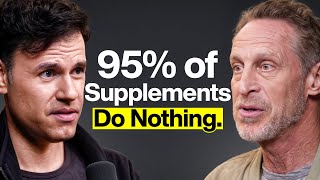
This is a YouTube video titled "The Shady Reality of the $Billion Supplement Industry | The Dr. Hyman Show" created in May 2025. It features a detailed conversational interview between Ask AI Mark and Steve Martosi, a serial entrepreneur and health innovator. They discuss the challenges and complexities of the supplement industry, personal health journeys, widespread nutrient deficiencies in America, and the innovative solutions offered by Martosi's company Subco to help consumers navigate supplement quality, trust, and efficacy. The conversation also covers functional medicine insights and the need for better supplement guidance.
Why didn't you take a blue pill or a red pill or have titanium.
Dioxide or have dyes in chemicals? Yeah, these things that are not good.
They don't need to be in your supplements.
Steve Martosi is a serial entrepreneur and tech innovator. Who turned his own health journey into a mission to revolutionize the supplement industry. I wanted to live, but I was deeply unhealthy. I got up to 300 pounds in college. I found a functional medicine doctor.
We started doing lab work, right? And we started experimenting and it worked. At that point, I probably lost 70 pounds. I was trained that vitamins make expensive urine. Don't waste your money. If that logic was true, you shouldn't drink water. water because you pee out.
Well, Steve, it's so great to have.
You on the podcast. You know, we've been friends for a while, traveled the world together, done a lot of cool stuff. We're both, you know, involved in two companies that I think are going to change the landscape of health in America. One is Function Health, where I'm the co-founder and chief medical officer. Another is Subco, which is something we're going to talk about today. And it's something that's been desperately needed for decades. Navigate the myriad of supplements out there on the market. to find the quality that you want, to know that you're not getting crap in it, to know that it's made in a way that actually meets pharmaceutical grade standards to actually figure out what to do, because it's a landscape out there that is fraught with all sorts of problems that I've tried to solve, but you've done a way better job. You see, you've, you know, kind of started an exit to many amazing companies like GroupMe and Blade and Splice. And I think there's a, there's this interesting personal story that you have about how you have sort of understood your own health challenges and used your own way of navigating it. And this is really coming out of your own struggles to figure shit out. And now, you know, we have the opportunity to share this innovation around how to think about supplementation and whether you need them, why you should take them, what the landscape is out there, what the problems are with it, and how to solve that. So, you know, you've, you're sort of a multiple serial entrepreneur. and you've tackled this problem in a way that I'm just so glad because for me as a practicing doctor, it's so hard for my patients to actually figure out what to take. And that's why I've spent decades researching the market, visiting supplement manufacturers, factories, going in there, doing quality control, looking for third party testing, making sure their ingredients were pure, that they had no contaminants or chemicals or additives, which often they do, making sure that they're bioavailable, that they're forms of nutrients that work right, and also that they're digestible. When you eat them, they don't just poop out. And that they're actually tested after for both potency and purity. So whatever it says on the label is what's on the label. And I spent decades doing this, and I've curated a small group of these supplements that I think work clinically for my patients. And we're going to sort of go into how you solve the problem at a much bigger scale because, you know, there's I don't know how many products.
Are in the market. We have tracked, tracking about 200,000.
200,000 products. So it's kind of, you know, it's kind of insane to think about how much is out there and how much noise is out there and where's the signal and what's good and what's bad. So let's just sort of start by diving into your story because you were, you know, a very overweight, unhealthy guy when you were in your 20s.
I'm in 20s. I think my journey probably goes back to my childhood. I was always the fat kid. I was the tall fat kid. And I would make all the sports teams because they'd be like, oh, he's six five. We can make him good, right? He's gonna get better as time goes on. But honestly, I had nothing I would do playing football. You do two a day practices and all nonstop, and I wouldn't lose weight. And it was pretty wild. My mom has hypothyroidism. She took me to an endocrinologist. This is like 1996, 7, something like that. And they did some labs, and they just told me I was on the low end of normal, and they couldn't do anything.
Yeah.
And it was completely disheartening. I thought that medicine like completely let me down and things got worse. Like I got up to £300 in college, 299. I never saw 300 on a scale. I refused to get on a scale once I was 299. Like it just was not it was not good. And then, you know, I'm a software engineer. I just love building code is kind of my canvas. It's just where I can lose days building and it's so much fun for me. Built a successful company called group me. It was kind of pioneering group text messaging. And when we sold that, we sold it quickly to Skype, you know, I was 270 pounds. I had just made some money. I wanted to live, but I was deeply unhealthy.
Yeah.
And I found a functional medicine doctor. And this is like, this is 2010, you know, like so kind of ahead of the curve a bit.
I've been doing it since '96, so that was like- I had a social.
Media curve, at least.
I was 14 years later. Yeah, yeah.
Ahead of the curve of like the biohacker trend that I feel like is now. We started doing lab work, right? And we started experimenting and, you know, started with some thyroid medicine. kind of dialed in some hormones and built a supplement stack and it worked. And I committed to diet and exercise again with these helping me this time and it worked. And people would ask me, they'd see my transformation and they'd asked what was I doing and no one wanted to hear diet and exercise.
And you lost almost 100 pounds.
Yeah, I mean at that point I probably lost 70 pounds. They're asking me what I'm doing and this is 10 years before I was.
Epic as a thing.
Yeah, yeah, right. This is not the easy answer. And so I would share them my stack, which was the list of supplements and medications I was taking and it would be a ugly, out-of-date Google spreadsheet. And honestly, people didn't really know what to do with it, you know, but a couple of people would be like, cool, I talked to my doctor about this one thing. And, you know, then I went on with my, my life happy. I started blade and splice and ran splice for 10 years. I was a little burned out leading through covid and, you know, getting ready to have a kid and kind of wanted to step back and hire a CEO there. You know, it was time to build again. I'm just, the software itch is just always in me, and I wanted to do something in health. I mean, it had been a transformative experience for me. And it had become the zeitgeist, you know? Like, your book was just coming out on longevity and Peter Attia's book, it just seemed like the dinner table conversation and the stack sharing on social media, like it was happening. Like, this wasn't just about- I'm taking this, yeah. Yeah, it's like, that's like- what are you taking?
Exactly.
And so that was the core concept was to bring back the stack sharing concept. You know, I saw what you guys were doing with Function and I was so inspired by it. I'm a Function investor. I, you know, I'm happy, about that. But I wanted to tackle this space, which I found to be an incredibly gray area of understanding what to do. And so that's where it formed. I remember the first day I had the idea in my head, some friend of mine came over for dinner without me saying anything. She said, I spent four hours today going through all my supplements, putting them in a spreadsheet, figuring out how to save money and take less pills.
Yeah.
It's like, oh, this is like a pretty good idea then. And then like, I had another friend in the first week say that their friend, they knew someone who whose mom had taken so much vitamin D, they didn't know. She had dementia, early dementia-like symptoms, and she was totally mis-dosing vitamin D. And.
So I started to really get it. Because it wasn't what it said on the bottle.
I don't even remember. Was it too many pills? I think it was too many pills or not understanding the IU dosing versus milligram dosing. And was like, you know, that was the story I was getting.
And so we're really here to help you make sense of supplements. Let's talk about the landscape of nutrition because I think, you know, most doctors and certainly I was trained that vitamins make expensive urine. Don't waste your money.
Right.
And your body gets everything it needs from food. You'll be fine and don't worry about it. You know, there's a big fallacy in that. First of all, if that logic was true, you shouldn't drink water because you pee out what you don't need. Your body takes what you need. So if you drink an excess amount of water, your body will just get rid of it.
Right?
And that's the way it is for most vitamins, not the fat soluble vitamins. You have to be careful. But, but it's, you know, it's, it's crazy because you have 37 billion chemical reactions in your body every second. And every single one of those chemical reactions requires a co-factor or helper. And those, those are facilitated by enzymes. The enzymes need various nutrients to, to activate that pathway so that one molecule can become another molecule, which is how your body works. And those co-factors are vitamins and minerals. Literally the grease lubricates the wheels of your metabolism and your, when I say metabolism, I mean your, you know, from a medical perspective, which is every chemical reaction in your body. And on top of that, you know, there's other compounds that are phytochemicals that are also we're learning are so powerful and we've consumed, you know, 800 species of plants and foods with all sorts of phytonutrients. There's, you know, probably maybe 100,000 phytochemicals out there. that have effects on the body. You've heard of some of them like sulforaphane from broccoli or resveratrol from grapes or, you know, curcumin from, you know, turmeric. Yeah, turmeric. And so basically we've been consuming these things. Now we probably eat three main species of plants, basically corn, wheat and soy. And then maybe another total of 12. Yeah, tomatoes, lettuce, celery carrots. Like it's like 12. foods. And you're, you were missing all these important phytochemicals that also help regulate our biology and that we've co-evolved with. I call it symbiotic phytoadaptation. So whether it's an actual vitamin, you know, that's essential or an omega-3 fat or essential fatty acid, or it's a conditionally essential nutrient, there's many of those that you need more of, depending on your state of health and what's going on, like CoQ10 if you're on a statin. And then there's all the phytochemicals. And, and so there's supplements out there that contain all these things. It's a kind of a morass of. of a landscape that's poorly regulated, that is not well controlled. I mean, the Shays legislation in the 90s helped sort of set the stage for a supplement industry that you could, you know, kind of go wild and not make disease-curing claims, which was good, but it kind of created a wild west where the whole supplement industry grew. The question is, you know, do Americans need supplements? Do people in general need nutritional supplements? Because if you listen to most doctors, you don't.
I mean, I think that is the thing that is so hard as a consumer in this space is just the wildly different opinions. And like it's the doctor gap of people who say expensive urine to the ones who are like, this is exactly what to do for this. And it's also like the explosion on social media. You know, there's this whole kind of n equals one world right now where people are raving about, you know, this supplement is just changing my life. It makes me see in 4K. But, you know, then they also have their supplement store right behind it. So it's a, it's a It's an extremely difficult space to navigate. I mean, there's a lot of snake oil salesmen, but- A lot of snake oil salesmen. Yeah. Or, and look, there might be people who are having actual real great experiences, but they're not aggregating that data in a way that, you know, allows anyone to make sense of it. It's just their individual story. And I think we're going through such a big, you know, battle right now in America around the individual and the institution, right? And like who to trust in this. And that trust is really eroded. Institutional trust is, you know, continuing to go down. And, you know, 51% of Americans say that they have bought a health or wellness product from a social media influencer, from something they saw on social media?
Well, I bought shorts and shoes. Fair, fair. All right, see, we'll kind of dive a little bit deeper for us into what is Subco and how it works and why it's so important.
You know, we like to say that we're helping users make sense of supplements through our website and app. We're helping you figure out what supplements are right for your health, what products and brands you can trust, how you can save the most money and get results. To do this, we've cataloged over 200,000 supplement products that you can search in our app or by scanning the barcode. And we've built an in-depth trust score rating from 29 different attributes that let you understand the manufacturing standards and quality of your supplements. For those looking to figure out what they want to take, we have 80 expert protocols that you can go in to find guidance on different health topics like brain fog or heart health and women's hormones. To get starting, it's pretty easy. You enter a little bit of information, start scanning your supplements to kind of catalog what you're already taking. We give you an analysis of your stack so that you can kind of get a score that's easy to understand how you can improve quality, how you can improve trust, and make changes to kind of improve that. You also then can share your stack with your doctor, your friends, kind of get feedback from different people, create a conversation around it. That helps you understand if you've taken too much or too little of something. which happens to a lot of people. And then we have a smart scheduler that lets you make sure you're taking your products correctly. Are you taking them with food? Are you taking them at the right time? Which will then also start tracking to see whether or not you're getting results. We launched a beta in early October. The response has been amazing. We're getting nearly 1000 users a day right now. October 24. October 24, yeah. And we're getting 1000 users a day without even having your protocols. So we're excited to get your protocols in stack on the platform soon. And I think what For us people to know right now everything on Sepco is free and we'll launch a premium membership later this year, which will have some premium features and eventually help people save money on their supplements as well. We don't sell any of your data. There's no advertisement on Sepco either. And yeah, we want people to come in and be aligned with them so that we're just as excited when they stop taking something that doesn't work as when they start taking something.
So you're not selling supplements.
We're not selling supplements. And if we do, we will never profit from them.
We want to guide people on how.
To guide people on how to take.
The best products for them that are the cleanest that are actually matching their goals and needs. And you're, you're just providing this incredible service, which I think is such an important gap in the marketplace that you're filling. So what is the problem of nutritional deficiencies today in America? What do we know about the level of insufficiency or deficiency of nutrients? Is it widespread? Is it rare?
I mean, look, I think this is your world. I think this is the one that you particularly would talk best about. I know my own individual struggles, but honestly, like you've got this data.
This is your world. I mean, the data is so impressive. You know, when you look at the, and I'll just sort of share a little bit, it's kind of set the stage, but, you know, NHANES is called the National Health and Nutrition Examination Survey, and it's conducted by the government. And every year they drive around, they get blood on a whole bunch of people, they test their levels, and they see what's going on of all sorts of things, and nutrient levels. And what they found is, you know, 90 plus percent of Americans are deficient in one or more nutrient. at the minimum level to prevent deficiency. And this is really an important concept for nutrients because if you look at, for example, vitamin D, you need maybe 30 units so you don't get rickets. But you might need 3,000 units so you don't get osteoporosis or cancer or dementia or heart disease or autoimmune diseases or a whole bunch of things that we call long latency deficiency and diseases. There's a guy named Robert Heaney who Professors and brilliant scientists who wrote a paper called Long Latency Deficiency Diseases. What Asencion was talking about was like, yeah, there's nobody walking around really in America with rickets anymore or scurvy or berry berry or pellagra or xerophthalmia. These are these severe deficiency diseases that we actually found in the turn of the century when we started refining our diet and taking, you know, white flour and white rice. That's actually how they found it was in prisoners. They gave them white rice. They all became deficient, had these horrible diseases that were cured in a second, essentially with miniscule amounts of nutrients. When you look at the amount of deficiencies, whether it's, you know, 90 plus percent deficient Omega-3, 80 plus insufficient deficient vitamin D, and some people say even more, magnesium is about 45%, zinc's about 40%, iron, you know, we have a lot of deficiencies. And with function, you know, we now have 150,000 members at Function Health and, and, and now By the way, there's no waiting list, so you can just join, go to functionalhealth.com/mark, you can get in and go ahead and check your levels. But we found that in looking at all the data, almost 70% of our members have a deficiency in a nutrient that is at the minimum reference range of the lab. So in other words, for iron, this is an example, your ferritin level, which is your iron source, should be 45 or more to feel good. to not have fatigue, to not have hair loss, to not have insomnia. There's a whole bunch of things that come with low iron. The reference range goes 16 or lower, but it should be 45. Sure.
Right.
Or homocysteine, which is like the levels 14, which should be more 6 to 8, right? Which detects B vitamin deficiencies. Or vitamin D should be probably 45 to 60, not 30 or 20, which some lab reference changes are. and at the minimum level, which is, you know, how much you need to not get rickets or scurvy or any diseases, not, this is what the RDA is. It's not the amount we should be taking. It's the minimum amount you need to be taking. So you don't get some of these horrible diseases. We're seeing almost 70% of people are deficient in these nutrients in a cohort of 150,000 people, which is a massive amount of data that we've collected at Function Health. And we're learning about, you know, the, the, the kinds of things we're seeing in the population. So it's a real issue where people are not getting the nutrients they need and they don't know why they feel bad. They don't know why they have these low grade symptoms. I had one patient, she came in, she was a radiation oncology resident at Mayo, and she had the most severe migraines. She was on narcotics, she was on major anti-vomiting medication, and she could barely function. And she came in and she said, oh, I have terrible migraines. And I started taking her history. I said, oh, you other symptoms like constipation or do you have, you know, muscle spasms or do you have anxiety or irritability or palpitations or constipation? And she's like, yeah, I got all those things. I'm like, well, that's a magnesium deficiency. And it was so easy. And I gave her, she needed like a thousand or more milligrams of magnesium to get her going and clear everything out. And then cured her migraines. And you hear someone who was at Mayo Clinic, saw the best migraine doctors, did everything she could. They couldn't even diagnose this deficiency. And by the way, Magnesium deficiency, you can, we test magnesium with function and we get your red cell magnesium, which is a better indicator. Sure. But to do a real magnesium loading test where you give people IV magnesium and you see what they keep and what they dump out is the best way to actually really tell. But, but it, but even so, just by history I could tell. And I, and after doing functional medicine for 30 years, I can tell you without a doubt and doing nutrition testing on tens of thousands of people and deep analysis of minerals and vitamins and any oxygen levels and oxidative stress and CoQ10, all the things that people normally don't look at, it's so widespread. Nutrient deficiency is so widespread in America. So, that kind of then leads into the question of, well, if that's true, then why is that true?
By the way, what's shocking about that is 75% of Americans take a dietary supplement, 55% are regular users, yet 70% are still getting those lab results from it. So, they're definitely taking the wrong things or not enough of the right things. So, I think that just speaks to a lot of the, stuff we're trying to sort out, SUBCO is giving people the ability to actually know what they're putting in their body. One of the big features of being able to enter everything that you're currently taking is you'll actually see your nutrient totals across all the different products. Vitamin D is coming from six of the products I take. And actually having a conversation with a doctor about what's actually going in your body doesn't really happen. I remember talking to a nutritionist in the beginning, they're like, she was very good. She said, yeah, I've spent four hours actually going over the nutrients that people were getting from the products they told me. But most people don't ever do that. I don't know who has a conversation with their doctor who knows actually what.
They'Re putting in their body. I think this is really important. So, SEP Co. is your company that you started to help solve this problem of what to take, of quality, of.
How can you trust what you're taking.
What's the total amount of nutrients you're taking? So, people might be taking 10 different supplements and like I said, they all might have selenium in them. And then you're getting toxic dose of selenium. 100%. And you don't know that because you're not adding it all up, you're not putting a spreadsheet, you're not doing the math. And you've created a product that does this. Now, I believe in this so much because it's what I tried to solve when I started my own store for my patients, which was essentially trying to curate a small group of products that I personally had investigated, that I visited the factories, that I did the analysis, that I looked at the third party testing. Oh my God. I curated basically 300-400 products for functional medicine applications, for basically helping people with cardiometabolic issues, for hormonal issues, for gut issues, and so on, so forth. that was a lot of work. And I've been confident that I can recommend these things to my patients or people who follow me, but I don't think it really solves a bigger problem of like, how do you figure out everything all together? And I know personally that I don't have enough time to do this for myself even.
Totally.
I'm buying different things or using things.
Right.
They're like, how do I know? So that's really why I become an advisor to SUBCO and then sort of helping you because I think this is such an important gap in the marketplace and it's such a need. When you look at the landscape today, tell us some of the problems in the supplement industry. Why is this needed? Because people are just buying stuff and they don't know where it's coming from, where they get it, they can buy it on Amazon and often the stuff is sitting on a pallet for a long time or it's some sort of ripoff product that doesn't have the nutrients in it. So tell us sort of unpack the real issues with the supplement industry as it is today.
As I said, we've got about on 200,000 products. There's like 195 already done and then a big queue of ones that have been submitted to us that we're going through. And that's up from 4,000 products in 1994. That's all there was.
Right?
So it's been a 4,000 to 4,000. In 1994, there's 4,000 supplement products on the market, and now there's over 200. That's insane. And so we've kind of gone in and taken each one of the supplements, taken the supplement facts labels, and kind of taken the data so that you can get an aggregate view of what you're actually putting in your body. So that helps you understand what you're taking. But in addition to that, we've gone out and scored The top, there's 8,000 brands, which is insane too, if you think about it. We've taken the top 500, which covers, you know, a big percentage of it and kind of expanding down the long tail now. And we've given them a trust score. And so we basically have gone in and done what you were doing kind of manually and doing all these individual reviews, built a 29 point system that goes in and, you know, checks what certifications, what kind of testing they're doing and kind of breaks it down and gives them a score. That alone, that feature alone, you can, you can scan.
More from AI


Why Younger Women Are Getting Breast Cancer at Record Rates (And How to Reduce Your Risk)




This Is Why 99% of Skin Conditions Don't Heal — And What Dermatologists Won't Tell You




