The TOP FOODS You Need To Buy Organic To AVOID TOXINS | Dr. Mark Hyman
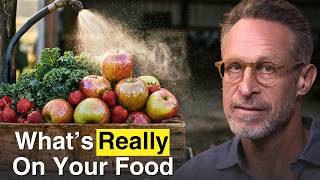
Dr. Mark Hyman breaks down which produce carries the most pesticide residue and which you can safely buy conventional. He references the Environmental Working Group's Dirty Dozen and Clean Fifteen lists to help you spend your organic budget where it matters most.
Nearly 75% of the non-organic fresh produce sold in the United States contains residues of pesticides. Much of our food is contaminated with glyphosate, which is sprayed on over 70% of crops, which means you want to really, that's a weed killer. You want to make sure you use organic food if you can, regeneratively raised food if you can. But if you can't, there's a great guide from the Environmental Working Group that comes out every year with a list of the dirty dozen, worst contaminated fruits and vegetables, and the Clean Fifteen, the least contaminated. and basically if you follow that you can kind of avoid the most contaminated foods. So to come up with this year's list, the Environmental Working Group or EWG went through the USDA data on 46,000 samples of 46 of the most popular fruits and vegetables. They washed them, they peeled them as one would do at home before testing them for pesticides. Now after washing, nearly 75% of the non-organic fresh produce sold in the United States contains residues of pesticides. That's what the report found. And so they basically score each type of produce from clean to dirty based on a percent of the samples tested with detectable pesticides. The percent of samples with two or more detectable pesticides, the average number of pesticides found, the maximum number of pesticides found in a single sample, and the total number of pesticides found in the crops. There's a lot of different ways they look at how bad is it contaminated. Basically this means that in that list it's telling you which crops were treated with the most and the highest volume and the most variety of pesticides. But it doesn't quite go to connect the dots between that and what are the health risks. But there are, I promise you. So what is the 2023 Dirty Dozen? Strawberries always top the list. So if you're not Going to eat those organic, don't eat them. And I'm going to list them now, but you can see in the show notes, we're going to post it there as well. Strawberries, spinach, which we all like, kale, collards, and mustard greens, which are staples for people. If they're not organic, don't eat them. Peaches, pears, nectarines, apples, grapes, bell, hot peppers, cherries, blueberries, and green beans. So if those are not organic, don't eat them. Blueberries and green beans are actually new additions. to this year's list. The green bean samples had residue acetate, which is a toxic pesticide that the EPA banned over 10 years ago. Overall, more than 90% of strawberries, apples, cherries, spinach, nectarines, grapes sample tested positive for residues of two or more pesticides. But the good news is there's a whole bunch of stuff that you don't have to buy organic that actually isn't harmful. so the cleanest produce typically has a tougher outer peel or husk or a shell that you have to remove, right? Avocados, for example, corn, pineapple, onions, papaya, sweet peas that are frozen, asparagus, honeydew melon, kiwi, cabbage, mushrooms, mangoes, sweet potatoes, watermelon, carrots. So these are all okay to eat. If you don't want to buy a kiwi organic, it's probably okay. Or your avocado organic is too expensive, that's okay. If you don't want to buy your onions organic, Okay, if you want to get a mango, it's not organic, no big deal. Same with sweet potatoes. So you can save a lot of money by actually focusing on this list. So it's important to understand that whether we like it or not, we live in a toxic world. We have to understand where those toxins come from. We have to reduce our exposures and we have to upgrade our body's own biological detox system. And we know how to do that. It's not that hard. I've written a lot about it. You can't get rid of them from our environment, but you can reduce your exposures and you can actually do a little homework for yourself and switch to safer products for your skin care or household cleaning products, your food products, so you know how to live clean and green without a whole lot of effort. Now, we have been exposed to more and more and more number of environmental toxins than ever before in human history. And the problem with medicine is in medical school and today too, when I went to medical school and now, there's almost no education about the effect of environmental toxins on our health unless it's an acute toxic exposure. Like if you're in a factory and you jump in a vat of mercury, well, okay, they know what to do, but basically they ignore it. The truth is that low-level exposure to multiple different substances over your lifetime is a huge risk factor for so many diseases, from heart disease to cancer to obesity to diabetes to dementia to Parkinson's to autism to depression. I mean, the list goes on and on and on. Infertility, I mean, I could go on and on. So, it's not just sort of a, oh, let's detox and get rid of a bunch of toxins. It's really about understanding the biology of environmental toxins, our body's own detoxification system, and how did one reduce our exposures while at the same time up leveling and upgrading our own biological detoxification systems? So we're going to talk about all that. Now, how do environmental toxins affect our health? Well, they do it through a lot of different mechanisms, but they're basically poisons and they cause inflammation, they cause oxidative stress, they cause DNA damage, They cause disruption in our mitochondria. They damage our stem cells. I mean, the whole flood of environmental toxins, there's over 80,000 of them now that have been introduced to the industrial sort of world since the early 1900s that we've never been exposed to before and we somehow have to figure out how to deal with them. Well, thank God we have a system to do it, but it's still overwhelmed. So environmental toxins, as I said, drive cancer. they are hugely impactful, for example, in blood sugar and insulin sensitivity. Most people don't realize that diabetes and prediabetes and even obesity can be driven by environmental toxins. Something called bisphenol A, which is a compound that's found in lining a lot of cans, plastic bottles, on paper receipts from credit cards or gas stations. When you touch that, it goes to your skin and bisphenol A is a huge driver of insulin resistance and prediabetes, independent of what you're eating. It affects cholesterol metabolism, it drives inflammation, oxidative stress, mitochondrial injury, screws up our thyroid function, affects our appetite, leptin signaling. I mean, pretty much everything gets haywire when we're exposed to too many environmental toxins. Now, the downside of living in the modern world is that we're all pre-polluted when we're born. There's 287 known environmental toxins found in the umbilical cord blood. of a newborn. They take out the blood of the umbilical cord, send it to a lab, and the average amount of toxins is 287, many of which have been banned for decades like DDT or PCBs or dioxin. And 217 of those are neurotoxic, meaning they're directly damaging to the brain. There's pesticides, phthalates, bisphenol A, which I just mentioned, flame retardants, heavy metals like mercury, lead, arsenic, and they have huge effects across the spectrum of human health. So what are the ones that we should really be paying attention to that we really want to avoid and get rid of? The first I just mentioned earlier is bisphenol A, or BPA. It's found in plastic water bottles and canned foods. It's a synthetic compound that mimics estrogen in the body. We call these xenobiotics or xenoestrogens. They're hugely impactful in regulating hormonal health and risk increasing risk of cancer, and it's been linked BPA to breast cancer, to infertility, reproductive issues, obesity, heart disease, and it's not that hard to get rid of it in your life. Basically, don't touch credit card receipts, don't touch gas station receipts that come out of the machine, don't eat from plastic bottles unless they're BPA free or from canned foods unless they're BPA free. So make sure you look at that. You can use stainless steel, glass, bottling packaging, look for BPA canned fruits. The next compound is phthalates. Phthalates are also plasticizers and they're found in food containers, children's toys. It's banned in Europe. There's a legislation in Europe called REACH. It gets rid of most of these chemicals that are allowed in America. And when there's ever an attempt to limit by law or a bill to reduce our exposures, the food industry and chemical industry comes in hard with tons of lobbying dollars, millions and millions and millions, tens of millions of dollars to defeat bills. There was one on this final A that got defeated. And unfortunately, it was trying to be banned, but that didn't pass because it was so much lobby against it. But it's found in children's toys. It's found in like the plastic little rubber duckies in the bathtub. So they stick it in their mouth. Bad idea. Also, makeup has a lot of phthalates in it. So get rid of all your unhealthy makeups. And we're going to talk about how to do that. But there's a beautiful website called ewg.org, the Environmental working group. They have a skin deep database. You can put in your product, what you like to use, or other products that can find that have no contaminants and see the level of toxins and what they are and find alternatives. So they also are really bad for you because phthalates cause hormonal chaos. They're linked to breast different cancers, to birth defects, to thyroid problems. So make sure you check it out. And the basic rule is if you wouldn't eat it, You probably shouldn't put it in or on your body, right? So for skincare products, everything goes through the skin. When we go to the emergency room with a heart attack, what's the first thing we do? As a doctor, we slap on a toothpaste tube cream full of nitroglycerin because it goes right through the skin and it's the fastest acting, but then taking it by mouth or before we can get an IV and we just slap that on. And so it goes through the skin, hormone patches, testosterone gels. We know the fentanyl patch. I mean, there's all kinds of drugs that are delivered through the skin. So when you're putting it on your skin, that's actually getting inside your body. So you want to make sure that if you wouldn't eat it, you shouldn't put it on your body. Like coconut oil, where you can eat that and you can put on your body, so that's a win. But there's a lot of products out there that are safe that you can use. Another one that's concerning is glycol ethers. They're in household cleaning products, cosmetics, paints. They damage fertility, they lead to birth defects, they worsen allergies, asthma. And these are really bad because they're pretty much in all of our household cleaning products. And the Environmental Working Group, EWG, also has a whole guide on household cleaning products so you can use the least contaminated products or ones that have no toxins in them that work well. So make sure you check that out. And, there are so many other toxins like heavy metals, mercury, lead, arsenic, mercury is from fish, from our fillings, from coal burning plants, pollution, lead is often found in crystal wine glasses or glazed plates. I see many, many patients have those and they get sick from that. It can be in the ground, it can be from coal burning, if you live near cement plant or a coal plant that basically goes up in the atmosphere, comes down in the soil, your kids were playing with it, it'll be dragged in the house, the baby's on the floor. So lead exposure is real. There's houses that still have leaded paint, all the leaded gasoline that was used for years, all that went in the air and goes down in the soil. It can be in vegetables. If you're growing in an urban environment, for example, you're growing greens, you think you're eating kale and being healthy, it could be full lead. Now, arsenic also is a big problem and it's found in rice, many places because in the ground, it can be in pressure treated lumber that you have on your deck and getting your feet, it can go actually in chicken feed to prevent the feed from going moldy, which is great for the feed and the mold, but it's not good for you and it gets in the chicken, you eat it. So it's pretty important for us to make sure that we get rid of those. So I think the key is we need to avoid toxins. And so the question is, what are the top strategies to reduce our toxic burden? Well, we can basically remove the toxins, but we also have to upregulate our detox system. So first thing is avoid plastics wherever you can. Try stainless steel containers. I have those or glass containers for storing food in your fridge, stealing so water bottles, glass containers are great for leftovers. Don't buy water in plastic water bottles. Get a water filter. I like reverse osmosis and you can actually get a water bottle bring it with you. Make sure you detox your home. get simple cleaning products, laundry detergent, cleaning products for windows, for counters, for dishwashers, everything. There's a great source, Thrive Market. It's an online grocery store basically. You can get all the best cleaners from seventh generation and other eco-friendly, non-toxic food companies. Now of course check out EWG's guide on household cleaning products, on skin care products. They're great. I think make sure that you just are diligent about getting toxins out of your home. Second is mercury is a big one and often we don't pay attention to what we're eating and people eat tuna fish, swordfish, sushi. Sadly all the oceans have been polluted and no matter where you get your fish from it's pretty much pre-polluted. There's microplastics, mercury and other toxins, PCBs, farm fish can be just as bad. So there are a few kind of ways to get around it. One is to eat very small fish, sardines, mackerel, herring, anchovies. small salmon can be okay, but still that can have mercury. Also, there's a great regenerative aquaculture company called Cetopia.Fish, and they actually provide beautiful, delicious, clean fish that you can get frozen sent to your home. It's amazing fish, actually. And also reduce your exposure to the problems that are from all the chemicals in your environment by having an air filter in your house that reduces the airborne pollution. Indoor air pollution is a real thing, whether it's mold or whether it's other things like contaminants, off-gassing from furniture or rugs. I mean, you want to obviously try to have a clean home and not full of products, but I mean, you buy a Tempurpedic bed and it smells awful. It's off-gassing. Those are called VOCs, volatile organic compounds. You really want to avoid those in your house. you want to start to learn about how to actually upgrade and increase your body's own detoxification system. And the best way to do that is by using a couple of strategies that are really important. One is maximize your intake of phytochemicals. Plant-based compounds, these nutrients in plants, work on up regulating different pathways in the body, including a lot of detox.
More from AI




This Is Why 99% of Skin Conditions Don't Heal — And What Dermatologists Won't Tell You






Why you need to start strength training today #strengthtraining #healthyaging #fitness
