Unlocking The Mind & Healing The Body: The Incredible Benefits Of Mushrooms | Paul Stamets
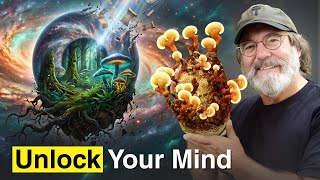
Paul Stamets, a mycologist, discusses how mushrooms work in the body and mind. Psilocybin shows promise treating PTSD and depression. Mycelium networks underground connect entire ecosystems, and medicinal mushrooms have been used for centuries in traditional medicine.
I think psilocybin has enormous potential for the prevention of mental illness, for the prevention of PTSD.
I mean, it's really a whole interconnected network of fungi that is basically running the world. So I wonder if you can just spend a couple minutes explaining why that's so important to us and how they've been neglected, because I think this is a really interesting space. So why don't you start out with like, why should we care about mushrooms?
So we go back in time 13.8 billion years ago, the Big Bang. You know, 4.5 billion years ago, the Earth formed. 3.8 billion years ago, the first evidence so far of life, unicellular organisms. And we then actually the first evidence so far of a multicellular organism is fungi, mycelium, refined webby cobweb substance found in lava beds in South Africa. And that's about 2.5 billion years ago. Then fungi were the first organisms that came to land. The prevailing theory, which I very much like, is the influence of the moon on the oceans for creating tides and the washing of the ocean and then the tide goes out and is exposed to air. Well, that constant interface of going into aquatic and the non-aquatic, Then the organisms in the ocean and fungi being one of them paired up with plants, algae, and formed lichens. And so lichens are actually a dimorphic organism, fungi and plants together, form lichens. And lichens then started munching rocks. And then the mycelium would dissolve the rocks and give minerals. And then the plants would give carbohydrates and sugars and mycorrhizal fungi. This is exactly what they do. So it was that pairing. Now, we diverged from fungi.
And that created soil, right? That was how soil came.
That created soil, much rocks creating soil. So that happened for, I mean, for millions of years. Fungi actually gave birth to animals. 650 million years ago, fungi created animals. And the fungi went its underground path. And animals went basically in circulating our nutrients and digesting within the stomach, whereas the fungi extracellularly digested its nutrients. So we march forward and of course we have Animalia. And so the super kingdom called it is called a Pisces, 650 million years ago we were unified in the same, I like to say kingdom rather than kingdom by the way. fungi gave birth to animals. And this is from a medical point of view, this is why we have really good antibiotics against bacteria, but we have very poor antibiotics against fungi because of our close evolutionary relationship. So these networks of mycelium permeated the ground paired with plants and ecosystems then flourished and then animals needed plants, herbivores, and then of course carnivores came about for consuming other animals. So the whole path of our existence is traceable to mycelium. We are the children of mycelium.
That's incredible. And it's such an important part of our current wellbeing because without mycelium, you can't actually create healthy plants. And they're in the soil that's been basically taken care of properly. When we talk about regenerative agriculture, we're talking about soil that's not been disrupted and the mycelium networks damaged and injured. And, and when you think about like, you know, when you kind of till the soil, you're basically like cutting through all the fiber optic cables of communication from the plant kingdom to help them extract nutrients from the soil. It helps them, you know, communicate with other plants, tell them what to do. It's really a whole information highway there.
And so, I've been in many interviews, but that's the first time I've heard that metaphor. And that's a beautiful one.
Cutting through the fiber optics, you know, of the ground. Yeah, it's like a worldwide web except it's underground.
And it's essential for our survival and we're killing it. yeah, no, that's it. Mycelium is earth's natural internet. You know, I've been saying that for a long time. Plants micro, I have microsomal relationships. This means that they're in a mutually dependent, dualistic relationship. And then the. All plants are dependent upon soils. So the few plants that aren't don't have microsomal relationships. Depend upon saprophytic fungi that break down. organic material for benefiting the life cycles of many other organisms. So you have sort of mycorrhizal fungi that are in association with the roots of plants or inside of plants, endomycorrhizal versus ectomycorrhizal, endo means in, ecto means outside. And then you have the saprophytic species. And the saprophytic species break down wood as soon as a log is created or a tree falls in the forest. so the dynamics between saprophytic and mycorrhizal fungi is still an unexplored area, but they're very much interrelated. You can think about, well, saprophytic fungi are growing the first foot of soil typically, with exception of the oceans. They've done cork barks down a mile deep into the oceans, and they've found all sorts of fungi. This is a yet unexplored area that's been stated that the greatest mycelial maps in the world are submarine. They are in the settings of the oceans. And we know virtually nothing about this.
That's incredible.
Yeah, so I mean, it's a well of knowledge that we're dipping into. But this is why I think mushrooms have become the zeitgeist of our time. It's like this worldwide revolution awakening to the very fabric of nature that exists under every footstep that we take. Literally, every footstep that you and I take in a healthy ecosystem has about 300 miles of mycelium under each footstep. I mean, that's how prevalent these are.
It's unbelievable.
And have something so prevalent. And the presence of a mushroom is really a biological miracle. I mean, it just very few, we know about 150,000 species based on DNA analysis of mushroom forming fungi, but we've only identified about around 14,000. Again, 90% of the species we haven't identified because when they pop up above ground, they have a morphology that taxonomists can use. Well, now with DNA tools, we know there's a whole bunch of fungi that have never represented themselves in the form of a mushroom, but could, but they're not yet described. So, I mean, it's amazing. It's truly an astonishingly rich trove of new discoveries for young scientists in particular.
Yeah, I mean, we could spend the entire podcast talking about what's going on underground, but I want to talk about actually some other things that I think people are going to find very interesting, which is a lot of what you build your business on, which is the benefits, the health benefits of certain mushrooms that have been used potentially in traditional medicines for thousands of years. Certainly a lot in Chinese medicine. And the things we might have heard about, things like reishi and shagga and cordyceps and lion's mane and turkey tail and all, all these mushrooms that, you know, you can't really buy in the grocery store that much. Some of them you can, you can buy shiitake, you can buy maitake, you can buy lion's mane and cook them. And I do, and they're delicious. We should eat them. But, but you actually found that these are medicines, and they actually have biological properties that are helping our immune system, that prevent cancer, that may actually help metal chelation, that help with Also, the sort of adaptogenic response that we need, sort of stress resilience. So, can you take us through some of these mushrooms and ones that are like the greatest hits of the mushroom community that are part of your go-to toolkit for helping people support their health and kind of take us through each one a little bit what they do. And then I want to sort of jump from that into the psilocybin conversation. We'll get through that for the rest of the podcast.
Okay, well, let's start with, you know, mushrooms produce spores. Spores are like little seeds. They come together, they germinate, they form mycelium. Now, when one spore germinates, it's called a hypha. H-Y-P-H-A. Hyphie for plural. When they come together, they form mycelium. The mycelium grows, and then in response to four primary stimuli, most all of you listening to this know this rain, of course, water. With rain, you have evaporative cooling, so you have a drop in temperature. Oftentimes, rain is associated with a drop in temperature as well. The mycelium comes up to the surface, exhales carbon dioxide, inhales oxygen. This is like externalized stomachs, externalized lungs, and then surprisingly, light. Most all mushroom species, with exception of button mushrooms and portobellos and a few others, most all of them are triggered by sunlight. Indirect sunlight usually is the best. so that dappled sunlight. So a massive rain and the dappled sunlight, you know, after a storm passes, the mycelium is wicking up and it's exhaling carbon dioxide, inhaling oxygen, it's stimulated by light, the water temperature, drop in temperature. Those are all the tools that cultivators use to initiate a flush. Now, a mushroom comes from the mycelium, but when you dissect the mushroom under a microscope, what is it made of? Mycelium. so mycelium makes mushrooms, mushrooms are made of mycelium. The difference is the single strands of mycelium, and you microbiologists out there know this well, but in a single cubic inch of soil, there can be tens of millions of microbes, and there could be eight miles of that mycelium running through. Well, there's only one cell wall thick, and it's got microbial pathogens that are trying to eat it. so it upregulates this immune system to create antibiotics that prevent parazitization and exceeds alliances with bacteria that are friendly, saying, hey, we'll help you if you help us. And so it's a mutualistic relationship. They create guilds of microorganisms that collectively cooperate to prevent other bacterial, you know, predators, even bacteria, aligning with mushroom mycelium, produces antibacterial compounds to keep the unfriendly bacteria away. So these set the stage for ecological evolution. And then under the right conditions, mushrooms form from the mycelium, and the mycelium laminates from individual strands and laminates into this complex, dense structure. So the structure of the mycelium becomes a mushroom, as opposed to the hyphae that are loose in the ground. Now, the reason why this is important is more than 25%, sometimes we have some examples of like 90% more genes are activated in the state of mycelium. It makes sense. They have to grow for years sometimes before mushrooms form. A mushroom is perishable as fresh fish. Many of you know this. Oyster mushrooms, you're going to eat them right away. They're only good for two or three days. I know, it makes me mad because.
I want to eat porcini mushrooms in America, but you can't get them. You just can't get them. Yeah, it's a problem.
So, the mushrooms themselves don't have a good immune system because they're not meant to be. They're meant to be eaten by mycovores, animals that then spread spores and carry the mushrooms away. So, it's really interesting that the mushrooms are nutritionally dense, but the bioactive immune agents are more present in the mycelial state. Now, this is a big surprise to a lot of people trained in traditional Chinese medicine, but not to be flippant here, but the typewriter had its usefulness. And then we had the computer, right? Technologies evolve. So what was proven for thousands of years is a foundational stage of knowledge. And then with new technologies, new scientists, thousands of people exploring the fungal kingdom, new discoveries. And so the most interesting research is coming out on mycelium. I populate a website that's for physicians like yourself and for researchers, not branded, thousands of pages now of references, mushroomreferences.com It's amazing.
I've dug in there. It's quite amazing.
If anybody wants to look at that, mushroomreferences.com, it's unbelievable. So, you can go there. I updated, you know, we updated, my team and I updated about once a month or so. So, what I'm saying is that mushrooms are nutritionally dense and they activate immune system through beta-glucans and other compounds. but we have found that the beta glucan, which is these polymers that can be from 10,000 Daltons to 10 million Daltons of molecular weight. So what is the beta glucan? It's a massive polymer and there's a whole bunch of them. It's not a single molecule. But these polymers we found are scaffolding for holding bioflavonoids and lipids and some research that's come out that when you use lipases and you strip all of these fatty acids away from the scaffolding, the beta-glucans are immunologically inactivated. We found now that, yes, the scaffolding, that's what you could find in early science, so you can identify it very quickly, but it's the structure that houses all these other compounds. I see mushrooms as miniature pharmaceutical factories. but I see mycelium as being like a factory on a plant. The mushrooms are like a factory, and the mycelium is like the plant. It's a massive treasure trove, a library of extraordinarily adaptive knowledge because of epigenesis. The mycelium grows out and there can be more than six trillion end branches in a meter swath of mycelium. I actually said in the movie Fantastic Fungi, a trillion. And then a mathematician says, no, you're wrong. It's more than six trillion. I said, okay, you win. But the idea is the end tips of the mycelium are polynucleate and they're encountering bacteria or a new food source, a toxic waste. If those nuclei can upregulate a new enzyme sequence proteins to break down those that new potential food, what happens? The mycelium grows. But then the mycelium back channels that information into the mother mat. And so it becomes immunologically educated and it has genomically in this reservoir, in this biological toolkit of protection and already an experience to be able to reactivate these gene sequences should it needs. So this is why mycelium is so exciting. It is truly like Earth's natural internet. It's sharing information and it's learning. Mushrooms are at the end of the life cycle. Hooray, you made it. But they're perishable. They're designed to rot. They're designed because they smell and they attract insects and humans, et cetera. And then insects and humans pick them and spores spread spores and away we go. So we're actively in partnership with mushrooms, whether we enlisted or not.
So basically what you're saying is they sample the environment and they kind of create immune response for themselves or create ways of fighting these things that then we can use for our own purposes. So basically like borrow their immune system in a sense and it helps us to fight cancer and to fight infections.
Absolutely. But more being an integrative doctor, more specific to your field of expertise, these are not a solitary soldier or entity up against an army of competitors. They're very clever and realizing that community is stronger than an individual. They set the stage for building communities that then create the plants that then grow, creating the debris fields that then are recycled. So they predictively condition ecosystems for the benefit of their community to create resources for their own progeny. Because obviously, if you did it, you would, so they take a very long view of like, I'm gonna take a toxic waste and I'm gonna make it into an old growth forest. That's gonna take a thousand years, but.
We'Re all gonna be eating my mushrooms. Humans are gonna consume my mushrooms, right? When they stick us in the ground.
I'm sorry to follow you on that one.
I said, when we get buried, then eventually we get, consumed by mushrooms too, right? Everything goes back to the earth and everything is sort of decomposed and digested by the mycelium network and then repurposed and recycled.
The more I'm very deep into the subject obviously, but it gives me great solace, surprising to some, to know that I will be disambiguated, demystified, and returned into the essential atoms that built the molecules for my own form right now. It's a continuum. I mean, think about everyone's concerned in this apprehension end of life and depression, and we can talk about that. But knowing that we didn't exist in our form before I was born and you were born, we're not going to exist in the same form afterwards. And this has been going on for billions of years. there's a bigger picture here, folks. Let's not be biologically myopic and so self-centered with our egocentricity. They believe that we're all that important.
Maybe we're just in service of the mushrooms. The fun guy.
I think we're in.
I love that.
I think we're in service of the universe. Yeah, for sure. Much larger. Some people call up God. I don't like using God as. As the phrase, I'm like using entity. but there is one giant consciousness that I think we all are participating in. And religions are the inadequacy of our language to explain that great consciousness. And then we elaborate all these strange rituals around religions that all have the same end goal in common, but the way that they monetize and create businesses and propagate their own myth. And I'm not saying that in a pejorative term. Myths are important. Myths are legends. You know, myths are based on oftentimes real experiences. They're informative. The myth that we choose is the religion, you know, flavor of the week or the month of your lifetime. So I, but I, the bottom line is, Celtic ivy in mushrooms and mushrooms are a gateway into this wonderful existence that we share that I think helps everyone feel better about their temporary mortality. We think about immortality. We will be immortal with the atoms that have created us. We just flow back into the nutrient cycles. You know, maybe one day, one of our people listening here, one of their grandkids will be coming up on a plant that was made from pollen marked molecules. There you go.
There you go. That's amazing. Well, Paul, you know, as you talk about the importance of sort of fungi in human evolution, it's sort of not lost on me that, that they, they've been used throughout human history. And, you know, you and I recently came back from a trip from Egypt where we took a trip down the Nile and we visited these ancient temples, thousands of years, 5, 000 years old, who knows, maybe more, and. on the hieroglyphics on the sides of these temples were clearly psilocybin mushrooms. And so the ancient Egyptians were taking these compounds as part of their cosmology, as part of their religious activities, as part of their ways of understanding the world. And this is not just that culture, but all across the world, this has been done for thousands of years. And what sort of strikes me really is how do these molecules, particularly in psilocybin, because all the others obviously work on different pathways in our body. But psilocybin in particular has this profound effect on our neurobiology, on our neurochemistry, on our neuroplasticity, on neurogenesis, in ways that are stunning and that are sort of hard to explain for me as a doctor. Like, how does this sort of molecule in nature bind to these places in our brain that makes us grow new brain cells? It increases the connection between brain cells. It helps resolve deep-seated trauma that helps alleviate depression that's resistant to every other treatment that helps improve people's sense of their place in the world and the meaning of life. I mean, it's quite remarkable to me. So what's your view on this? And how do these psilocybin molecules work at the cellular neural levels to actually trigger the responses that we're seeing now in the research? And I'm talking about, like, in the Journal of the American Medical Association, not like some crazy left-wing hippie journal. I'm talking about mainstream medical literature that now is just engaged in this massive renaissance and rethinking mental illness and using these ancient compounds in plants to help us reimagine our lives and reimagine our way of treating one of the most important public health crises today, which is mental illness.
Well, I would like to take a step back to some of the audience understands the progression of science is to remove all the clutter, all the noise, try to find a signal, and that single molecular approach, what got us penicillin, it got us antibiotics, it got us many of the drugs that we know today. But the practices of integrative medicine and integrative science is how much these systems interrelate and influence each other. So with psilocybin, the narrative has been docking with a 5-HT2A receptor. this is a neuro receptor that's throughout our body, and particularly in our brain. And serotonin also docks with that same receptor, but psilocybin substitutes temporarily for serotonin in the signaling pathways. And this is why the floodgates of the senses are open. So the big narrative is a 5-HT2A receptor. This is how these psilocybin works. Well, two articles I'm going to bring to your attention. We can put them up later on the website. the one published in Cell 2022, about 25 co-authors published that the reason why the majority of antidepressants SSRIs work is they bind also to a different receptor besides 5-HT2A. They bind to what's called TRAC-B. These are MAP kinases. And TRAC-B is so interesting because on the surface of the cells when it binds, it stimulates neurogenesis. And especially newborn neurons in the hippocampus, which was thought that you couldn't grow new neurons after the age of seven or eight, or some people debate what age, but you're basically got all the neurons that you're going to get in your life.
No, that's not true anymore.
Very not true. So now we know that in these in psilocybin just came out in an article that it binds to those same receptors that the FDA approved antidepressants bind to, TRAC B, a thousand times greater than the FDA approved antidepressants. So you have two articles. The new mode of activity recognized by many scientists is antidepressants work by binding to these TRAC B receptors. Newest article, psilocybin binds a thousand times more than those FDA approved antidepressants. Now, I mentioned this because I've been a lot of skepticism about microdosing. And I've been telling people for years, be a little bit more circumspect, be careful about what you say about microdosing. But this recent discovery, if it's a thousand times greater than an antidepressant medicine approved by the FDA at a therapeutic dose of psilocybin, what happens when you take a microdose one-tenth as much? Well, it may not be 100 times as much, but it's going to be more, I guarantee you, in all probability, than these antidepressant medicines. So there's been an incredible sea change in the past three months by many of these skeptics who decided that microdosing wouldn't work, who are now going, wow, I'm going to have to rethink this now because the TRAC-B activation, what happens with TRAC-B is called BDNF, brain-derived neurotrophic factors. And so it stimulates endogenous, BD enough to better bind and to locate and have a greater affinity of binding to those receptors.
That's like miracle grow for your brain, basically. Brain-derived neurotrophic factors like miracle grow for your brain. So, it helps everything get better heal and repair.
That's an interesting analogy because I do a lot of cell culture, hundreds and hundreds of species. So, is it best to give Miracle Grow all in one massive dose for this entire lifetime? Or is it better to titrate it as it grows? Microdosing is titration of a nutrient over time that as the cells divide and reproduce, you don't overwhelm those receptors with one massive dose. You titrate it during cell division as your endogenous system is repairing and growing. So I think what's happening now, I was just on a call with some physicians, is what we call pulse therapy of a high dose of psilocybin. With therapy, we think that's regulatory for PTSD, for trauma, no doubt about it. It's helped me personally, we know this is helpful. But you can't take a macro dose every week. So macrodosing followed by microdosing. that's where we think that you can be refortifying the signal pathways with these, this new way of thinking. And that's what happens. The problem with psilocybin, it's got a PR, it's got a PR problem. It sounds too good to be true. And we all trained, if it sounds.
Magic mushrooms, it must be magic, right?
Well, you know, as you know, the New England Journal of Medicine, JAMA, the Journal of American Medical Association, numerous other journals, very convincing evidence for treating depression, very convincing evidence for reducing alcohol use disorder, for us tobacco cessation, two experiences, John Hopkins, 67% of the people quit smoking tobacco. That's amazing. I mean, so this is too good to be true, or is it just fundamentally changing our neurobiology and all these behaviors are self our attempt at self-medicating to reduce inflammation and pain and trauma. And that you talk about this a lot, inflammation and pain and trauma are all in mental health are all interrelated. It's a vicious Mario ground. How do we get off that Mario ground? And so I think psilocybin gives us that exit. And once we find that we can get off that Mario ground of self-abusive behavior, and all the calamitous societal effects that it has, then we find that there is a way out. And psilocybin, I think, gives people a way out of their need to self-medicate.
Well, you know, when you look at the data on the PTSD stuff, it's interesting because I think that's, you know, an extreme example of the kind of mental illness people sort of get from various traumas, whether it's sexual trauma, war trauma. I mean, this is a real phenomena. vets have it. And this works remarkably well better than any other therapies. MDMA also is effective. And, and, and that's pretty important to understand that, that it has that role when nothing else works. Like in terms of our Paradigm in Western medicine, there's, like, really no treatment other than anti depressants, any anxiety medication. It's a long-term thing. It never really resolves, and it's, it's really debilitating. And yet, and yet you know, here's this compound that with one or two, maybe three treatments can resolve this in ways that nothing else can. And, and most of us don't have that level of severe trauma. Maybe it's 10, 15 of us, although I think one in four have some type of sexual abuse in their life. But we all have micro trauma, right? We all were raised by parents who maybe didn't love us right or neglected us or maybe yelled at us too much, or maybe we had Just the trauma of living in the modern world with the threat of climate change and nuclear war and incredible divisions in our society and the instability of our economy and social inequity. I mean, the list goes on. There's no lack of micro traumas. And so, it's hard to cope with these things. And we develop anxiety, we develop poor stress resilience, we develop mental health issues, we develop physical issues that are a consequence of stress. And because our thoughts actually manifest in biological reactions, we know for example, from the data on adverse childhood experiences, which are bad things that happen to you when you're a kid, that the more of those you have, the more likely you are to have actually physical problems like cancer or autoimmune disease or heart disease or obesity or diabetes. So here's a compound, psilocybin, that potentially can help us deal with the whole range of, you know, just the normal run of the mill sort of stress of living to more severe mental illness, which we're seeing escalating at incredible rates. It's kind of this moment in history where we're kind of reimagining our approach. It's almost as big as a change as when Freud talked about, you know, the unconscious and psychoanalysis. I mean, it's a massive paradigm shift in mental health. So can you talk about the research in this field, what you're seeing, what you see coming down the road, what's working, what's not working, and what people should think about as they're listening to.
This and, and maybe how they can think about it in terms of their own lives? okay, I. I. You've opened up a wide world.
I did.
My brain is going. My receptors are. Are dancing and cross talking with each other. That is indeed what we're seeing now is that there's a lot of cross talk of the receptors. When you look at the single molecule similar receptor approach, you're. You're stimulating one node node and a network of many Crossings. That actually stimulates, cross talking influences other receptors activation. The thing about psilocybin that's so exciting is that it's activating many receptors, most of which I would say we haven't yet fully discovered because this is a whole organism change in behavior biologically and psychologically. so it would be not likely due to one pathway and probably not likely even to do a one molecule. Psilocybin mushrooms contain psilocybin, psilocin, boisterin, norboisterin, norpsilocin, norrugein, and norisogen. These are other tryptamines. All of those are legal except for psilocybin and psilocin. They get you high. The other ones don't technically get you high, but they dock within the many receptors. some of them are broken down by MAOs, monoamine oxidases, and if you take MAOi inhibitors, putatively they may cross into the blood-brain barrier and also activate the receptors. But we do have evidence that even some of those without MAOi do cross into the bloodstream. I'm just saying all this because mushrooms are like miniature pharmaceutical factories and psilocybin mushrooms are uniquely and a compendium of these molecules that I think influence us neurologically. But let's go back a little ways. First, we need to give Maria Sabina and the Mazatecs our deep bow and debt of gratitude for opening up the therapeutic use ritualistically of the Mazatecs. R. Gordon and Tina Wasson specimens of which were sent to Albert Hofmann, the discoverer of LSD, who first synthesized psilocybin. If it wasn't for the generosity and graciousness of Maria Sabina, this movement would be decades behind. Not in totally eliminated because psilocybin mushrooms have been used around the world. There's 141 species identified so far. And the species that most people are using 90-95% of cacti cacti censuses. Well, Maria Sabina never used cactus censuses. She used cactus mexicana, cereusens, as a tecorin. These are species that grow in soil and pastures or in wood. Cactus censuses goes on dumb. The common name in Mexico is Santa Cecilia. It's the saint of the fields. it's associated with the conquistadors who brought over cattle. So, Cimexopsis being used by the majority of people around the world has no connection to Maria Sabina. Maria Sabina was using a different species that unfortunately is wild harvested only, even today, not cultivated. It can be in the laboratory, but the production is extremely small. So, I say this because There's an interesting bridge happening, and I believe in building bridges, not divides. A friend of mine went down to Oaxaca and visited Maria Sabina's relatives and the Mazatecs down there. Because of the interest in psilocybe mushrooms by tourists and by people suffering from mental illness, by medical doctors who want their patients to experience this, there is a shortage of these wild psilocybe mushrooms. so what are they using? Celosse B cubensis, which can be cultivated using Western technology of in vitro propagation to sustain a maztec tradition that's been going on for thousands of years. I mentioned this because there is a concept here in Canada, and I'm struggling to remember the, the person's name, Albert. He's a Indigenous elder from Eastern Canada. And he was challenged by one of his Indigenous mother of a student that he had, why should I send my Indigenous children to a Western school? And Albert Marshall is his name. And Albert said, because we need to learn the Western ways to survive in this world. We need Two eyes seeing. One eye rooted in indigenous traditional knowledge, one eye rooted in Western technology and Western knowledge. The two are compatible. And so many indigenous people are mixed blood. Look at Mexico, right? You have the entire Latino community is entirely mixed blood, most of it. So I'm saying this because this is an advantage of Western technology helping indigenous people continue their traditions. It's also Cihuacóatl, which is not being, it came over with cattle, we believe, and the eagle, which is a bird that picks bugs off of the backs of cattle, also spread the spores of Cihuacóatl. So that ecotype was not present in the Americas until the Spanish came. So they brought with them fungi, that then are being used by the Masai. Now, this is the honor and to say that all traditions by indigenous people around the world are sacred, should be respected, et cetera, should not be exploited. But it's careful people should understand with 141 species, any indigenous population in Europe and Africa and Russia and Japan and China, ultimately would encounter these fungi. As sloaki covenances is very obvious because it gets to be this big. It grows on cattle dung and cattle go to ponds to drink water. So the whole thing with our Egyptian experience with a blue Lotus, a water lily, is that the sloaki covenances would grow where the water lily would be located. The cows go to the water lily. So you'd find sloaki covenances. So what I'm saying is that any people resident in the ecosystem is aware basically on survival and knowledge, but will come to discover these mushrooms eventually. It may take thousands of years, it could take tens of thousands of years. And this is here and there is a problem. And this is why this movement's been so slow. Think of this. In your viewscape with plants and animals, you have a familiarity factor that goes over months, years. you are constantly in contact. Mushrooms come up and disappear in five days. They may not come up the next year. They may take two or three years. What's that? I mean, your memory of that is very difficult to recall compared to something like you're encountering all the time, like a plant. So this eclectic knowledge is ephemeral, and then you have war, you have cultural domination, you have disease, you have religion, you have suppression and psilocybin liberates people from the shackles of conventional wisdom, from the shackles of oppression, from the shackles of a structured religion. These are liberating experiences that bring us all together where there's no gatekeeper to.
God, there's no tithing, no gatekeeper to God. That's good.
It's really, and so I can see it why it would be threatening to the to the industrial religious complex, right?
Although it's interesting when you look at some of the history of the Christian, early Christianity and the ancient Greeks, I mean, a lot of the sort of insights and mysticism that they had, you know, can be traced back to the use of ergot containing plants or drinks that they used to use. And recently this was sort of discovered, it's written about in the Immortality Key, but it was really an ancient part of the beginning of of the sort of mystical aspect of these religions. So it's not like a new thing.
No, it's not a new thing. And that's what's surprising. It has been suppressed. And indigenous peoples, especially in the Americas, I mean, they have, they were so abused. And that is a tragedy we should never forget. And we should do everything we can to make sure this never happens again. Indigenous voices are important.
I mean, that's interesting. I wonder if there's a, is there anybody working on the Native American trauma using psychedelics? I mean, I think they have, you know, peyote is some of their traditional sort of plant medicines that they use. But I, I'm wondering if, if you're.
Aware of that, because it seems like a novel but very important idea. Let me tell you a story. I was in, I was driving up to Washington State, but I went through Bakersfield. I went through a middle valleys. It's a Salido. you know, East Bay. And I ended up stopping at, I got, gotta get a cup of coffee, you know? So I stopped at a coffee shop, and I'm there in this Native American woman, an indigenous woman, she kept on looking at me, and then she came over and said, are you, are you Paul Stamatis? I said, yes, I am. I started talking to her, and what are you doing? She says, well, I'm a Navajo, and I'm just accepted at the UC Berkeley, and I'm not sure what I'm gonna do for my graduate thesis. I go, oh my God, you know, she's smart, she's, you know, she's not just indigenous, she grew up in the Navajo tradition, and indigenous people are really emphatic about this. You might genetically have some indigenous, you know, genes with you, but were you schooled in the tradition of ancient knowledge? And she was. And I said, you know, you're in a really unique position to explore and it's called re-indigenization, bringing back knowledge to indigenous people at their request, not pushing this on them, and this is what she got so inspired about. So she is now, I just met her again at the conference in Denver, MAPS, and she's completing her PhD from that encounter in the coffee shop, which she was looking for something to do, and I'm going, oh my gosh. you see, it's explored this subject very deeply and, and there is a Resurgence of interests by indigenous people to recapture. I don't think he's like the word recapture. I don't like the word rediscover, but maybe reintegrate.
Reintegrate.
Reimplement these ancient Traditions because so much of those threads have been broken. But we have those through time or we have some family trees that are still practicing this. But bear in mind that Maria Sabina, when she would do her Mazatec ceremonies, she had the Holy Trinity from Catholicism as part of her ceremony. My immediate response was, well, that was a survival mechanism to be able to practice magic mushrooms within the Catholic domination. But anyone who's gone to Mexico, I mean, it's a very, very Catholic centric culture. It's very, and so Catholicism with indigenous people is really an overriding paradigm we can, we could debate all day long.
Well, I want to, I want to kind of, I want to take a minute to kind of dive a little more with you into the research around mental health and, and psilocybin and then, and then talk about, you know, where it's being applied, what the future looks like. Because, you know, a lot of clinical trials are going on now. I see them being published. regularly every week, you know, what's promising, what are we seeing, what does the data and literature show, you know, what's strong, what's coming up?
Right. I would first off recommend that people go to clinicaltrials.gov, it's the clinical trial government, US government website, all clinical trials are supposed to be registered if you want to advance to an FDA approved medicine or therapy. There's 124 clinical trials using psilocybin, 124. So, that's like a, you know, a roadmap to all the potential indications, alcohol use disorder, stroke victims, you know, mental health issues, depression, PTSD, all those things. The use of psilocybin for treating depression is extremely strong. But let's listen, let's make sure we're careful about this. 70% of the people on average have benefits from psilocybin. 30% of people do not. Okay. So in a recent, most recent clinical study that was published with treatment resistant depression, and you're being a doctor, I think it's two or three medicines did not work. And then you're in the treatment resistant depression category. for which there are no medicines that are available. That's a very tough patient group. So pseudohallucinatory became an issue because people who did not get benefit, oh my gosh, I'm at the end of my rope. This is my last hope and it didn't work for me. So you naturally feel like defeated because you're hoping that this medicine would help you. So it's really important that we contextualize this. but the, I would say most of us, and I, I, most of us are on the spectrum of healthy normals. I know that's used a lot. If you're on the spectrum, well, most of us are in the spectrum of healthy normals, and then there are people out on the, on the outer edges of that who are not healthy. I think psilocybin is, has enormous potential for the prevention. mental illness, for the prevention of PTSD. We're looking at treating after the trauma, after the event, you know, as a consequence of many factors. And then how do we heal people? Well, how do we prevent this trauma from occurring from the beginning? And this is where I think the signals that we're getting from meta studies are particularly interesting. A reduction of partner to partner violence, reduction of crime, reduction of larceny, theft. If we can prevent and reduce crime, criminal behavior and mental illness, the return on our investment for society is massive. I mean, think about the literally billions, if not trillions of dollars that could be saved if we had only 10% of the PTSD, the mental illness that we have today, 50 years from now. We'd be a much wealthier society. We'd have more ability to support social programs, to be able to help educate individuals, to give basic housing and food. We can elevate our entire society just from the savings of money. So everyone talks about treating diseases and illnesses. I'm really fascinated by the fundamentally psilocybin makes nicer people. I think psilocybin makes smarter people.
Yeah, when you think about it, when you're, you know, sort of feel one with the universe, it's hard to want to do anything bad to anybody else because you feel your connections to everything and to the world and the earth. It's like it changes your perspective. I mean, I know you had profound change when you were a young man by taking psilocybin. And I did too when I was 18. It totally changed my worldview of everything. And it's informed so much of how I think about the world. interconnections I see, how I think about functional medicine, how everything is basically a big network and how we're not separate from it. I didn't really have it as an intellectual idea. I had a visceral felt experience as a young man and it really profoundly changed me. And I think you went through the same thing. And you're right, Paul, we're seeing such a epidemic of mental illness. You mentioned the cost. I mean, this was one study, but it looked at the economic impact of chronic disease on our economy. And over the next 35 years, it's going to be $95 trillion. And the majority of it is mental health issues in depression. So we're talking about tens and tens of trillions of dollars that we are losing to our economy, to our society because of something that we're all experiencing but don't have great solutions for. And that's why I'm really excited about the psychedelic revolution as a way to sort of try to treat some of these really intractable problems.
And, you know, what's happening now, which is maybe a surprise to many people listening, is that one of the major forces for the legalization of psilocybin is by conservatives, is by Republicans, because they're dealing with so many of their constituents, you know, Afghan and Iraq war veterans and law enforcement officers. And there, I was in Austin, Texas, and met the founders of the Healing Warrior Church. It is a non-profit, I looked it up. And they have taken over 600 law enforcement and seals, Special Forces officers, through high doses of psilocybin at a weekend retreat owned by the seals, you know, a military guy who had a ranch and converted into a psilocybin retreat center. Let me just, it's a tough thing to say, but I won't say too much about this, but law enforcement officers make mistakes. Doctors make mistakes. Both of them literally have another person's life in their hands, so to speak, and they can't be 100% right. So I asked the obvious, dangerous and difficult question about what some of these Iraq soldiers experienced that was so traumatizing. I'm not gonna get into it. But when I heard the answer, I went, oh my God, that would traumatize me for the rest of my life. So who can they talk to? These are good people. They had a bad day, you know? And if they don't deal with that trauma, then it's alcoholism, it's drug abuse, it's suicide, it's the guilt. And so they created the Healing Warrior Church and they bring them in and they have massive dose of psilocybin with their other you know, other people sharing this experience. And the most amazing story is that City of Austin Police Chief, 56 police officers, they had one bad apple and everyone very worried about this police officer because he kept on going out of bounds and doing things that were not right. A very difficult personality to deal with. But he knew he was traumatized. He went to the Healing Warrior Church for a weekend session. He came back. and no one recognized him. He's got the same face and the same body, but he's a different person. What happened to this person? So I was told personally then the city of the chief of police of Austin wanted all of his employee law enforcement officers to go in this weekend ceremony. And so I asked the organizer, but these are law enforcement. You're doing something illegal. He goes, that was a church. I go, what if you get somebody who wants to bust you? And he goes, we're seals, dude. No one will.
Like Nixon said, if the president does it, it's not illegal. So please do it, it's not illegal.
I don't like that. Don't mix Nixon. So what's happening with ex-Governor Perry, our Department of Energy, I met with him. He's a strong advocate for using psychedelics and psilocybin for treating PTSD with soldiers. He's had personal experiences in witnessing what's happened. So you have conservatives coming. And this, you know, Albert Marshall came up with two-eyed seeing, and I think it's a brilliant concept. But I would also extend that to conservatives, conservatives and liberals. We need conservatives. We need conservatives because conservatives don't dare take the risks that liberals do, but the envelope of change is pushed forward by risk takers, which tend to be more liberal. And the conservatives, my family comes out of wheat farm background. My family has had large wheat farms. I'm a wheat farmer. I got 200 acres from my family inheritance. But I'm talking to them, they don't want to change protocols because it's too risky. So they're conservative. They're financially conservative, they're philosophically conservative, because it's dangerous to take risks. Now, those of us that are liberal, we push the envelope of change. We take risks and we fail left and right. But the few times that we're successful expands our knowledge and technological base that then it helps the commons. So we need this balance of conservatives to conserve that which is proven, and the more liberal thinkers and the minorities. It's the fringe edgerunners. It's the LGBT community. It's the people who are different, and many of us know autistic individuals who are brilliant in their own subject area of expertise. But these people are different than conventional people, but they add this impetus, this push, the envelope on the edge of knowledge to explore, to take dangerous risks. And some of those risks now we all benefit from today. And that's why I think the Silicon Valley microdosing movement and the psychedelic movement in Silicon Valley has been so inspirational in helping our technologies advance.
Well, let's talk about the next bit of what you just said, because you touched on microdosing. I mean, I think the microdosing being used across, you know, spectrum from addiction to PTSD to depression to anxiety to end of life. And, and we're seeing benefits, not, not a hundred percent benefit for everybody, but we're seeing more effectiveness than almost any other treatment that we have. So it, it's sort of head and shoulders above everything else in terms of microdosing. This is sort of an interesting concept because it's not a, a dose at which you're gonna have any psychedelic experience. It's sub perceptual. You don't really know you're doing it. but you pioneer something called the Stamit Stack, which is a combination of psilocybin, microdose, lion's mane, and niacin. And you've done a fair bit of research on this. You have a sort of a community-based research platform that you've created that helps sort of assess people's use and also the response to use and the cognitive benefits. And you've been, you basically created a whole company to do the research on on this model where you're actually using microdosing to treat neurodegenerative disorders like Parkinson's and Alzheimer's and seeing objective changes, which is quite remarkable. So could you talk a little bit about that work and the work around microdose.me, which is the website for the microdose study?
Sure. We published two articles in Nature, scientific. Communications. So please check out the articles.
And, and by the way, nature, for those of you listening, is the premier medical scientific journal. It's really hard to get in. It's, and it's impressive if you get in there.
The first article had about 8, 000 people report. The second article, I think, is around 11, 000. Now we're over 25, 25, 000 people reported. Now, being a doctor that's called the N of 1, doctor meets a patient that should not be alive and they did something and they have this unusual N of 1. Well, this is not N of 1, this is an N of 4000, right? We have different cohorts. The amazing thing about the data pool is that we had more non-microdosers than microdosers. So the editors at Nature really liked how well weighted the data sets were, you know, equal numbers, about 4,500 non-microdose and 4,200 microdoses. That always amazed me. This was sort of announced as a microdosing survey, and yet we had more non-microdoses. I think there are citizen scientists who want to create baselines. That's what I would do. I'd say, okay, if this works, I'll create a baseline, and then I'll become a microdoser. But nevertheless, we found, you know, tremendous signal in reducing depression. anxiety, using standard DAS and PANAS scores, this is used in psychology. But expectancy became a big part of the criticism. Now, so expectancy is that you're expecting to get better, you have a community of people that are doing the same, you're sharing information, and so the benefits you're seeing is all related to expectancy or quote unquote a placebo and it's not real. Now, I would draw your attention to the latest article that was published in the New England Journal of Medicine for treatment resistant depression. And in the abstract, when you can look it up at mushroomreferences.com, it says expectancy was not a factor on predicting the outcome from psilocybin. Now, that's not a macro dose. So why would it be a factor on microdosing? Okay, we can argue about that later. But one of the things that was outside of the arena of expectancy is we had a motor skill tap test, a psychomotor test. How many times you can tap your fingers in 10 seconds. This is used validated test for Alzheimer's, Parkinson's, traumatic brain injury, TBI, dementia. And the sad news is, with exception of TBI, you get slower and slower later in age. due to neuroinflammation due to Alzheimer's, et cetera, you don't get better. You're tapping frequency. You can play a piano a lot better when you're 22 than when you're 82. So it's also age related. We all start dying from the moment that we were born, right? So we have this cosine curve of neurogenesis and then we decline. So we did the TAP test and this is we've also now we had in the microdose study, Microdosing with psilocybin by itself, we're doing it with chocolate, peanut butter, we're using the Stamatakis map, which I popularized on some blogs, and the stack is microdosing with psilocybin and niacin and lions mane. So, we've got a few hundred people in that category, and then when we looked at 55 plus year olds, because you're looking for a signal against a background population, if you're looking at 22 year olds, they're at the peak of their neurological health anyhow, you're not unlikely to see a benefit. But if 55 plus year olds due to neurodegeneration age related, we found an extraordinary signal that we published in Nature where the tapping test frequency went from 48 to 68 in 10 seconds after 30 days of microdosing with this damage stop. Now, that's not due to expectancy. You can't say it's a placebo. This is a psychomotor benefit. And I explored this in seven regions of the brain. and your neuromuscular system are involved from ideation to execution of a tap-toe. This is, so something is happening through your psychomotor network, and we believe it's related to neurogenesis. So when we saw this signal, then we started looking at MAP Kinase, and this is where I've been talking about MAP Kinase for almost seven years now. In the recent literature in the past two years, it zeroed in on psychedelics and MAP Kinase. So that includes atrac B, the one that BDNF binds to. So I'm saying all this because we see now a physiological demonstrable benefit. The value of the p-value significance is one chance in 250, p-value 0.004.
That's very good for those of us who are scientists.
Many medicines have been approved at 0.05, right? Which is one chance in and 20 of that is noise. So the fact is that we have such a strong demonstrable benefit. Now, what is the cause? So this is where if you get mired in analyses and mechanism of action, don't lose the force for the trees. The patient is demonstrating a benefit. You can argue all day long about your analytics, but the fact of the matter is the patient's benefiting. so let's make sure, let's prove that there's a benefit. And let's, you know, aspirin, I think, I don't, I think I remember the date, but I think 1974, they figured out how aspirin worked. Well, aspirin was worked way before 1974. People were using it. But just because you didn't know the mode of action doesn't mean that you shouldn't use it. So I say all this to keep this in perspective, because sometimes scientists go down wormholes and they have wormholes of expertise, and they have these little academic battles about wormhole is responsible for activity. Forget all that. I mean, all that's informative. Ultimately, you're painting a canvas with different brushes, but the whole canvas is the result, which is beneficial. So we created this new company. We've been in stealth mode. We're a public benefit company. We don't do press releases. You know, there's 500 companies that have come and gone. Most of them are gone from the psychedelic, you know. wave that came through two years ago. So we're now in the middle of designing clinical studies. Parkinson's is one of ours. There's two other studies that we're looking at right now. And I received my DEA license, my company and myself. So I passed my background checks. I now say that I said, amazing that you passed. Well, amazing for a very good reason. I would not give my father psilocybin at the end of his life. I wouldn't give Alexander Smith, the father of American mycology, psilocybin. And it was like both of them asked me to, to Journey with them, to trip with them. And I told, I told them both, no, because I am not a therapist. I've seen what's happened with psilocybin. You need to have a therapeutic support to maximize benefits. For the 30% of the people who do not have a positive experience with therapy, you can make that into a beneficial experience that they've been learning from. So the temporary negative experience could have long-lasting beneficial effects with proper therapeutic support. I just met somebody who did seven grams of psilocybin. She cried the entire time. She cried the entire time. and then I asked her, was that experience beneficial? She goes, oh, yeah. It was a catharsis for her. She was able to resolve a lot of trauma. And so if you call the experience positive, no, it was not. It was a native experience, but it was so cathartic for her. Subsequently, she felt that she come to a resolution. This is what's needed. This is why high doses of psilocybin. We need clinical support therapeutically. But it's $4,000 to $5,000 in Oregon now to have a session. That's out of the reach of most people, yeah. Microdosing is within the reach of everyone. It can be done very inexpensively. You don't need to have the in-clinic support, the staff. You can do things by app, by a phone call, by Zoom. You can build a community of people. Did you know there's a community of people called Mothers for Microdosing? No.
Actually, Paul, do you know in terms of the microdosing, is it having the same effects on not just the neurodegenerative diseases but on depression, anxiety, trauma? Are you seeing changes with those things that are more subtle?
Yes. We started to see that our first study in nature was demographics, why you microdose, you know, your income, your race, you know, your sexual preferences, et cetera. The second study was more looking at the consequences of microdosing and the consequences we're seeing specifically in reduction in the metrics for depression and anxiety, improvement of mood, et cetera. So the exciting thing about the micro dosing, the tap test is think of if you're a guitar player teaching a young student, think of your grateful dead guitar flicker.
Well, I do have a, I do have a guitar that I got for my birthday that's a Bob Weir signed guitar. So, yeah, it says, hey now, Dr. Mark. I'm like, all right, I'll take it.
But if you have, you know, if you're a coder, right? And you need to get things done or you're typing your new book, your Memoirs. We slow down in age. So having the psychomotor benefit from the Stamet stack, if we can prove this clinically, which I think we have such a strong signal, it's just hard to explain it away. I mean, there's one logical sequence of thinking here that is neurologically beneficial more so than psilocybin by itself. Psilocybin by itself in the study had no effect. an improvement of the psychomotor skills, nor did the non-microdosers who took nothing. They were in the same level of no improvement, but the stamina stackers went like this.
And this is something you take every day, Paul, is this something that's designed to be taken in a something like.
A- We're in new territory here. There's two protocols, the Jim Fadiman protocol where you microdose one day, two days off. The protocol based on my cellular research, and this is basically running thousands of cultures over many, many years, is three to four days on and then weekends off or two to three days off. The idea is you want to wash your receptors, and Jim and I are on the same page with this. You want to make it so your endogenous system recovers, becomes resensitized. Psilocybin only has a half-life of 1.8 hours. It's phenomenal. so it clears out of your system less than a thousand, I think, in, in 28 hours. So it's a very quickly metabolized. Now, it's latency or occupancy period is longer. So we want to get past the occupancy. So the receptors then clear. So basically, you don't take it every day.
You take it intermittently. And, and we don't know if it's two days on, three days on, three days off.
Something like that. My own personal practice, but those who consume vitamins, your daily vitamins, do really take them every day?
I forget sometimes.
Are going pulse vitamin therapy anyhow, right? Like, why? Then take my vitamins again and you take them the next day. So, you know, I think this intermittent use, but in the larger picture and scheme of things, you are taking it several times a week, okay? It's just that cadence may be interrupted unless you have medical support where people are actually giving you the pills.
So as we wrap up, I'd love you to sort of project out a couple of years, two, three, five years. Where do you see us all being with this? Do you see it being legalized everywhere? Do you see it being used as part of psychiatry, general medical practice? How do we get from where we are now to where we will be in five years?
In five years, I think it'll be legalized. I think microdosing will replace SSRIs. I think we'll have the universality of use of a paradigm shifting medicine that will cost pennies, if it's not just a few dollars. I think it's a game changer for our society. I think it could help us resolve many of the not only political strife that we face, but I believe that this is a peace molecule. I think if we reduce war, it'd be more collaborative. People will start working as networks of communities that create guilds of cooperators that are trying to help each other. I think we have the opportunity of interrupting the inflammation cycles. And inflammation is the root of so many of these diseases that express themselves. The other thing we haven't talked about is a psilocybin and the stack stimulates interleukin 10s and interleukin 1ras. These are anti-inflammatory cytokines while stimulating neurons to grow out. So we have human neurons that are growing out, and we can see the neurons enhanced in their growth with the stacking versus psilocybin by itself or lion's mane by itself. So I think this is a way of regeneration of your nervous system. overcoming many neuropathies and also overcoming inflammation. I think it, you know, the too good to be true adage. There are exceptions to rules.
Yeah, it might be. And it's safe now.
How we articulate this, how we standardize it, how we deliver it. I believe that Solzhenitsyn should be available to anyone who needs it. at no cost or at an affordable cost. The people who can't afford it should subsidize by paying commercial companies sufficient money that they can be philanthropic to be able to give it away for free. I don't think those two systems are incompatible. That is, you know, the basis of Micromedica. As a public benefit corporation, we want everyone to heal. The rising tide lifts all boats. There'll be more affluence, be better for everyone if these medicines get out, provided we have the garden rails and we need government controls. So what's happening now is so many politicians, I hate to use the word bureaucrats because it's pejorative, but I'm dealing with a lot of government employees who are risk averse. They don't want to make a decision that'll ruin their career. So it's easier to say no than yes. But when you go to the ballot boxes and you have initiatives, like in Washington, DC, 70% of Western Antonians in Washington, DC, voted for the decriminalization of psilocybin, 70%. So I think the ballot measures are going to drive the government officials to then implement these medicines to be available because their jobs won't be on the line, they're just following the new law. and that's why we need to get the politicians noose neck out of the news, so to speak. But so many of them are worried that their decision could, could be, you know, destroy their career. Should there be something wrong with that decision in the future?
That's powerful Vision. You know, doing what I do, I always, you know, sort of have a deep understanding of the role of food in our health and, and particularly, you know, the problem of obesity in our society, where, you know, 75 are overweight and 93% are metabolically unhealthy. And a lot of it's because of the food we're eating and a lot of it's very addictive. And so when you talk about psilocybin being a treatment for addiction or nicotine or alcoholism, I'm like, wow, maybe I wonder if it would help us deal.
With the obesity epidemic.
Well, I think so. It's a crazy thought, but it's something that just had to sort of say because I think, you know, as I see people struggle with food, a lot of it is because of the hyper addictive and hyper palatable nature. of the food they were eating and it's not their fault.
And one of the questions you had posed in the description here before we got online is what does the day in Paul Stamatis look like?
Yeah, what does it look like? Let's end with that. That's great.
It's funny that you say this. So, okay, I am a very active dreamer. I love dreams. My partner is amazed that I remember so many dreams. I really love flying dreams. And flying dreams are my favorite. I started when I was a kid in the storms or the windbreaker opening up in the wind. And this is now. And I got very good, very agile flying in my dreams. And. And so I fly a lot in my dreams, and I wake up. And when I, you know, I'm in bed, I just sort of process, you know, everything. I like to wake up to first recognize where I am because I'm in some hotels, where am I? so that's it. And then I. I am a coffee drinker. I think that's one of the best herbs ever invented. I love coffee. And then remarkably, and this is true, I do 100 push-ups a day. I broke the high school push-up record when I was 14. I've been doing this all my life with my twin brother, and I alert everyone to this, and I do take two days off sometimes. I'm traveling. but I'm very, very consistent on this. And for young people, it's so important the structure that you build when you're a younger person, you know, from the ages of, you know, from when you're born to 40 years of age, that structure carries through. And so my core is really, really strong. But you can look this up. A Harvard Medical School survey found that if a, with men, 40 push-ups per day, you have over a 90 or 95% reduction. and heart attack.
Yeah.
Heart attacks. Yeah. I mean, it's incredible. It's the best medicine out there for treating heart attacks or cardiac arrest is push-ups right? And by the way, you don't have to do a full push-up all the way down your hyperextend your elbows. You want to do what I call compression push-up you want to tighten your belly, go down, you know, two-thirds you know, three quarters, but you don't have to touch your nose on the floor, which I had to do in high school. But then I write and I'm also a victim of Google Scholar alerts. So I get so many new articles every day that I have to peruse through. And I write and I do my work in Zooms, whatever the case, to about two or three in the afternoon, and then I go on an epic bike ride. And I smoke some marijuana and I go on these epic bike rides and I get preformed thinking, I get adrenaline, I'm just a little bit, you know, high and my best thoughts come from there. I stop all the time and I'll write down three or four words or a half a sentence in my notes on my iPhone, you know, to capture that because it's fleeting, right? These good, they fleeting. And then I untangle them. And the next morning I look at it going, well, that was a dumb idea. Or that was a really good idea. So I could have assembled thought streams, both from dreaming, from, you know, push-ups in the morning, which gives me an adrenaline rush. And then I do my linear writing. And then in the afternoon, you know, I go on this epic bike ride, and I usually listen to Neil Young or the Grateful Dead on my. There you go. I really enjoy exercise and getting outside of your brain and let your body do the talking. and often times the body is informing the brain of things that needs to know because you could finally shut yourself up.
I think it's a great routine. I think it's going to keep you going for a long time. And I think we have a lot more work to do, Paul. So, we got to get this all over the finish line and help millions of people, billions of people potentially deal with the stresses and traumas of life and deal with the unbearable burden of mental illness. and who knows what else we're going to find out about how they affect us. You mentioned the immune system, you mentioned the way they affect brain diseases. So I think we're just kind of beginning to understand the power of mushrooms and fungi for human health. So thanks for all the work you've done for decades and decades and decades. Now you're in the spotlight, but I'm sure it was lonely for many, many years. And thank God you stayed with it.
Well, I just want to close by saying, let's all be adults about this. These are serious medicines. Please consult a qualified medical practitioner. Please obey the laws, you know, even though you don't agree with them, you don't agree with them, go to a place where it is legal. So I am an advocacy for a body by the law. I'm also an advocate that what you do inside your head and inside your own home, you know, I'm a libertarian in this sense. You, the government has no right to interfere with what you your own consciousness or in your own home. As long as you're not harming others, I think it's personal practices need to be protected. And I will also say the use of psilocybin mushrooms is spiritual by many of us. It's becoming a new religion, but not in the context of the conventional religions. It's the freedom of consciousness religion, where you have the freedom of choice and I think the psilocybin mushrooms are sacraments. They're medicines for the soul, they're medicines for your body, they're medicines for your psyche. So I think they have a huge potential. But everyone, please be very careful. If you see somebody going off the guardrails, don't ostracize them. Reach your arm, you know, in companionship and friendship and try to bring them back, because I think this unanimity of opinion of indigenous wisdom, modern technology, conservatives and liberals coming together. We're all in this together, and we all have skill sets that we need from each other. And those skill sets are far more important than the purported differences that separate us. I think there's a unanimity of being that we share one giant consciousness.
If you love that last video, you're you're gonna love the next one. Check it out here.
The genes are information, but which genes, which blueprints you're gonna look at have to be selected. I go, well, who does the selecting? I go, Ah, now we jump from the genes making the selection and.
More from AI




This Is Why 99% of Skin Conditions Don't Heal — And What Dermatologists Won't Tell You






Why you need to start strength training today #strengthtraining #healthyaging #fitness
