Use Food To REDUCE STRESS & Balance BLOOD SUGAR Today! | Mark Hyman
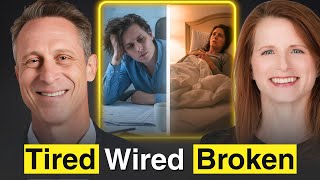
This is a YouTube video titled "Use Food To REDUCE STRESS & Balance BLOOD SUGAR Today! | Mark Hyman" created in June 2021. It features a detailed conversational podcast-style discussion between Dr. Mark Hyman (Ask AI Mark) and Dr. Elizabeth Boham, focusing on the biology of stress, the HPA axis, adrenal fatigue, and practical lifestyle and dietary strategies to manage chronic stress and improve health. The conversation covers symptoms, testing, treatment approaches, and real patient cases, emphasizing functional medicine perspectives on stress and nutrition.
But it's really critical to have a good source of protein, healthy fat, and great source of fiber at every meal because it is not allowing for that stress response to happen in the body. It's nourishing the body and that's exactly what the body needs.
Welcome to the Doctor's Pharmacy. I'm Dr. Mark Hyman's Pharmacy with an FFA, or MSUI, a place for conversations that matter. and if you've ever been stressed, which I'm sure some of you might have, this is an important conversation to listen to because it's with Dr. Elizabeth Boham, who's my colleague here at the Ultra Wellness Center in Lenox, Massachusetts. She's a physician's physician. I would respect her in any medical circle, especially my family, which I have her take care of. So she is the doctor I go to for advice. And today we're going to learn about stress and something called the HPA axis, which you probably never heard of, but which is the central feature of our stress response and how it goes awry and how to fix it. So if you feel chronically stressed, if you're really not sleeping, if you have all kinds of weird symptoms that you don't know what to do with, this.
Is the podcast you listen to. Welcome, Liz.
Thank you, Mark. It's great to be here. Okay, so we're gonna talk about this pandemic we have, but not COVID. It's a pandemic of chronic stress. It's coming along with COVID right? It's coming along. COVID is making it a lot worse. Yes. The economic stress is making it a lot worse. Yes, the political situation, the social unrest is making a lot worse. The economics are making it worse. So we are in a very difficult moment right now. I think as human beings, I've never lived through anything like this. And it's not just one thing. It's like a perfect storm of everything. And I hope we come out of it soon, because I don't know how long we can last in this. But we are in a state of chronic stress in our society. Can you talk about what are the biggest drivers of stress for most people? And then let's get into the biology of what happens. because fasting, when we look at what people suffer from in terms of chronic disease, most of it's either worsened by or caused by stress.
-Absolutely, absolutely.
-Dealing with this is pretty important.
-Yeah, so stress is that real or perceived.
Threat.
-Sorry, thank you. It's that real or perceived threat. So stress is that real or perceived assistant< end_header_id > -and it can be.
To your body or your ego.
-Absolutely. Right? And it can be, it can be emotional stress and it can be physical stress. I think that's important to recognize we could talk more about that because sometimes we always think it's coming from the mind, but you know, we appreciate the fact that it's all connected and sometimes it's coming from the body and impacting the mind as well. So it's either real or perceived and it impacts our body and our health. And we know that- When you say.
Perceived, you mean imagine. So you could think your spouse is having an affair and they're just late at work trying to make money to take care of your family and you can get the same stress response as if he actually was having an affair.
Absolutely, 100%. Our mind is really powerful and it is not always right, right? And it can create a whole bunch of extra stress for us many times, as can chronic news and our apps and our phones and all those things that create a lot of perceived threat to our health and our wellbeing as well that creates a lot of stress. That's absolutely true. So acute stress is something that our body is equipped to handle, right? So a stressful event occurs and we've got all of the things in place to be able to handle that stress. We have a whole endocrine system, we have hormones, we have cortisol, we have that fight or flight response, we can run away from that tiger or to give a presentation or, or go run a race. And all of that is, is really good and important. And we have it, we have a body that can do that. Right. And, and, and we want to be able to handle stress. Right. That's good for us. And the problem comes in when it becomes chronic over time and how that impacts our health long term. And we wanted to do this episode because, because there's this, there's this a term being thrown around and people talk about it a lot called adrenal fatigue. And people are always like, well, what does that mean? Do I have it? Do I not have it? And really, how is it impacting my health?
That's so true. And I think we can't change our external circumstances often very easily. I can't snap my fingers and change politics or and climate change or war, civil unrest, or even change the economy. I mean, there's things I do have control over, but there's a lot of things that are real stresses, or if I have a family member who's difficult, or if I have a health condition that's stressing me out. I can't control that, but we have tremendous ability to control our thoughts. And our thoughts are things that influence our biology in a very direct way. There's been a lot written about this, a lot of science on this, biology belief, Unleashing the Power of Consciousness: Modern Miracles by Bruce Lipton is an incredible book about how our immune cells, for example, listen to our mind and Candace Pert, molecules of emotion, the neuro-psycho-neuro-immunology, how our thoughts are literally communicating with our hormones, our brain chemistry, our microbiome, with literally everything in our body. And so when we let our minds run ragged and astray and wild without learning how to regulate our own consciousness and thoughts. It leads to this chronic level of stress. And even the best of us who learn how to do that, it's still hard and you still need to do practices. So we know we're very good at, oh, I know I need to exercise 'cause that's good for my body. And I know I need to eat better. that's good for my body. But most people don't understand they need to sort of reorient and recalibrate their relationship to stress. It's never going to go away. It's just how you perceive it. You know, Woody Allen has a gun put in his head, he's going to be freaking out and having a neurotic panic attack. You know, if James Bond has a gun in his head, he's like, oh, whatever. And he's going to get out of it.
Right. Same gun. Right. Different person. And I think that's, that's what we all have to learn.
How do we respond to that stress that we have? You know, how do we respond to it?
Well said.
So tell me about the symptoms if people are in a state of chronic stress, how would they know it's affecting their biology? Because there's a whole list of symptoms that we talk about when we talk about adrenal fatigue or adrenal exhaustion. There's a lot of, I think, skepticism in the traditional community, medical community, about this whole idea of adrenal exhaustion. You have Addison's disease, which is an autoimmune disease that nukes your adrenal glands. or you're fine. But it's not really like that.
Right. So we have this whole, really what people are saying the proper term for this situation is HPA axis dysfunction, right? The hypothalamic-pituitary-adrenal axis, which are really parts of our endocrine system that handle and manage the stress response in our body. And when it gets out of balance, that that can really influence how we feel. And so we can have, and we'll get into this a little more, we can have HPA axis overactivity, right? Or underactivity. And so, you know, but those hormones, all of those different parts of our endocrine system handle that stress response in our body. So when there is a chronic stress over time, when a lot of cortisol gets produced from our adrenal glands, At the beginning, as we talked about, that acute stress, that cortisol is really helpful for us because it helps increase our blood pressure, it helps us run away from the tiger, it increases our blood sugar, so we can get nutrients and energy to our muscles so we can run away from that perceived threat, which is really important if you were running away from a tiger or a bear. dog or whatever, right? So we need to- and it stops.
Your digestion because you wanna be digesting your food while you're running from a tiger.
And so, you know- It increases clotting, right? Absolutely.
Because you wanna make sure if you get cut or bitten when you're running away that your blood clots very fast.
Yeah. And it's a phenomenal system and it's really good and really important. But over time, if we've got chronic stress for some reason because of our perception of the world around us or we're not taking time to take care of ourselves or we're eating a diet that's really stressful on the body, or we're not getting enough sleep, or we have a chronic infection. I mean, we do see this with illnesses too, like a chronic infection. Those chronic stressful events over time really can disrupt how all aspects of our hormone system works together. That whole HPA axis works and it can get dysregulated. And so that's that whole talk of that HPA axis dysregulation.
So your hypothalamus, which is in your brain, your pituitary, so it's all the command and control centers in your brain that then send messages to your adrenal glands, which are on top of your kidneys, and they produce adrenaline, cortisol, norepinephrine.
And epinephrine, but also DHEA, which is a hormone that gets turned into testosterone and estrogen and hormones that impact our blood pressure and electrolyte balance. So it's involved in a lot of things. And it's important to recognize that the pituitary also impacts lots of other hormones in our body, our female hormones, our male hormones, and so our thyroid hormones. It's all really connected, which is interesting as well. So when people are under a lot of chronic stress over time, the cortisol levels are remaining higher than they should be for long periods of time. And so this is a whole feedback loop, right? This system in our body is a whole feedback loop. So that high cortisol sort of shifts the way that there's a feedback mechanism that occurs, and in a way the body sort of slows everything down. And so over time with high levels of cortisol that are getting released all the time, people start to crash. They have like that, what they call burnout or, you know, their body sort of just slows down. We see their thyroid slow down. We see, we can see other hormones shift, but we definitely can over time, if we look, we can see a decrease in cortisol levels. So we can do some special tests that look at that.
It's so important what you're saying because the stress response is a good thing in the short run, but not in the long term. And we never really had these chronic stresses that we do now. We'd be in threat of danger, we'd mount the response, it was good. Right now, you're releasing high amounts of cortisol and it's like a drug we give for people with autoimmune disease called prednisone. Or when you, for example, have a disease called Cushing's disease where your adrenal glands or a pituitary tumor will produce a lot of cortisol that is not regulated by any feedback mechanisms. And when that happens, you get all these problems, right? You get high blood pressure, you get diabetes, your brain shrinks, the memory center in your brain shrinks, you can get dementia, you have muscle loss.
You're more likely to get sick more easily.
You get sick, your immune system stops working as well. So you're really accelerating all these age-related diseases. And you're also suffering from FLC syndrome, which is basically when you feel like crap. So let's drill down into some of the symptoms that people who might have this dysfunction.
Yeah, absolutely. So, you know, a lot of times people with HPA axis dysfunction, they'll say, well, you know, I have a good night's sleep, but I still feel tired in the morning. I can't get going. Or other people, depending on where they are in this whole process, they may feel like they're anxious all the time. They can't calm down. They're tired but wired and they're just, you know, wired.
And you get into bed and you lay there, you're tired but you can't fall asleep. Yeah, I've been there.
You know, they can have a hard time dealing with the stress of everyday life. They can feel more depressed or irritable. Things that they used to be able to do really easily are hard to do. So things that they, you know, their job maybe or, handling going to the grocery store even, you know, things that used to be really easy to do every day become tasks for them. They feel overwhelmed and exhausted and they might get, as I said, sick more easily. They, you can have more cravings for foods. You want it, you're looking for things to pick you up, right? So sugary foods, salty foods, can you have cravings for them? You may feel more fatigued when you stand up, you get more tired, you may have low over time and low blood sugar over time with an underactive HPA axis.
Yeah, and it's often the syndrome I see in tall, thin women, which is really common where they get sort of adrenal burnout. They get low blood pressure, so dizzy when they stand up. They crave salt. They have anxiety. They have palpitations. They tend to get hypoglycemia, so their blood sugar actually is not coming up when it should. And so you can kind of pretty much tell that this is going on with people. But what's interesting is it might be worth breaking down is that adrenal burnout, let's just call it that, comes in stages, right?
Absolutely.
The first stage is, tell us about the first stage and how it progresses to full burnout.
Absolutely.
The symptoms and the treatment are a little different.
They are a little different. So at first, when you've got that overactive adrenal gland, It's the beginning, let's say, of just handling all this chronic stress. People feel that wired and tired. They're like anxious. They feel like they just can't calm down. They feel upregulated inside. And then over time, what can happen is with having that chronic levels of high cortisol, what can happen over time, as we talked about with that feedback loop, they get a decreased level of cortisol that occurs.
So initially, the high levels.
Initially, the high levels.
When we do the testing.
And we'll talk, let's talk about the testing in a minute. Yes. And then over time we see you go. And when it's flatline, what it feels like is burned out. You know, you just feel exhausted. You can't get going in the morning. You're getting sick more frequently. You're, that's when you see a lot of low blood pressure, low blood sugar, you know, salt cravings, but just, you know, literally you feel that burned out.
You know, your exhausted feeling. So when it's like chronically high and it was like chronically low and there's kind of in between where you get low in the morning and high at night. So you're exhausted in the morning, but you can't fall asleep at night because your whole- yeah, it's like flipped.
The circadian rhythm is all screwed. So that's what we do differently than what conventional doctors often do.
By the way, this isn't even a.
Diagnosis in conventional medicine. No, really, like you were saying, if somebody has really low cortisol or really high cortisol on blood testing, they'll call it, it might be Cushing's or Addison's or a very serious adrenal issue. And we were taught about that in medical school. But we weren't really taught about these situations where if you did a blood level first thing in the morning, it probably would look okay. And you wouldn't really see a lot of abnormalities in the blood testing. But if you look a little deeper and you do saliva testing and you check saliva four times in a day and you can check saliva for cortisol when you first wake up in the morning, they call that the cortisol awakening response. What we should see what we should see with that saliva testing is that when you first wake up in the morning, your cortisol increases. It's almost like a stress test for your adrenal glands. The cortisol awakening response is like a stress test for your adrenal glands. Getting up in the morning is a little bit of a stress for the body, right? It needs to get going and wake up. And so what we typically see is the cortisol increase first thing in the morning. And that's a good thing. We want to see that. That means that the system's working well. And what we see is the cortisol levels in the beginning of the day are higher and as the day goes on they come down. So when you check somebody's saliva tests during the day, we should see it go up when they first wake up in the morning and then start to come down as the day goes on. And that's a very normal pattern. And what we were talking about is over time, if people have a lot of stress and anxiety going on, you might see high levels of cortisol. and then over time you might see it start to flip where they're low in the morning but too high at night. And then if things really go on for a while, you might see a low level of cortisol throughout the whole day. And it really gives us a lot of information about how best to treat somebody and how best to take care of them and what they need to really focus on. This is something you wouldn't get at a traditional doctor's office.
They're not gonna look at your salivary cortisol levels. They'll say, oh, you have Cushing's and there's tests for that or Addison's and there's tests for that, but short of these two extremes, and that's what's so different about functional medicine. It's really about this continuum of dysfunction. It's not just on or off. It's not like you have diabetes or you don't. You have high blood pressure, you don't. It's a gradual worsening over time. And those diseases are very particular because they're either a tumor, which is Cushing's, or they're an autoimmune disease, which is usually caused by gluten, the Addison's disease, which is what President Kennedy had actually. And it certainly impaired affected him. so when you have these patients come in, you do this history, you find these symptoms, you sort of hear their story, how do you start to approach correcting this? Because I found some things are really easy in functional medicine. Someone has bacterial overgrowth or they have gut issues, irritable bowel, one, two, three, it's fixed. This takes a little bit of time because of the amount of stress we've put on our adrenals. We have to constantly try to build them back up over time and it takes a little bit of time to recover.
Yeah, I mean, I think what's fascinating is, and what we realize is the body has this tremendous ability to heal, right? And we, this is an area where our body can heal. We see it heal all the time. It just sometimes takes a little TLC and some care. And that's where the lifestyle factors really, really make a huge impact. You know, we work with people to really balance their diet and focus on nutrition and we can delve into each of these more, you know, getting good sleep, keep resting. Resting is important, right? We need to give our body time to rest. And, you know, we're living in a world where it's hard sometimes to turn it off and people aren't. And so, so, so they're really having issues because of it. So we have to help them rest and recuperate and get in their regular meditation and, and breath work and, and take time for themselves and turn off the lights at night and, you know, turn off the computer and the cell phone and, you know, diet makes a huge difference. There's so much we can do.
Before you get into diet, let's go back to what you just said. the light thing, the computers, the screens. It's not just that they're distracting. There's a biology around your adrenals that has to do with something called your circadian rhythm. And it requires certain types of stimuli at certain times of the day and different kinds of stimuli at the other times of the day. So in the morning, the way to get going with your circadian rhythm and your adrenal glands to properly function is to have sunlight for 20 minutes in the morning, which how many of us actually do that?
Yeah.
And get outside. And the same thing at night, if you are stimulating your eyes with bright light that isn't have all the blue filtered out, which is you can see blue-black glasses or just getting off screens, you will actually stimulate more awakenfulness and you will suppress cortisol because like, I mean, suppress melatonin. Yes.
Right?
Because in the morning you wake up and you see the sunlight, well your melatonin levels go down so you don't feel sleepy all day. But if you're having light at night, it actually keeps the melatonin down so you can't fall asleep. Hey everybody, it's Dr. Hyman. Thanks for tuning into the Doctor's Pharmacy. I hope you're loving this podcast. It's one of my favorite things to do. introducing you all the experts that I know and I love and that I've learned so much from. And I want to tell you about something else I'm doing, which is called Mark's Picks. It's my weekly newsletter. And in it, I share my favorite stuff from foods to supplements to gadgets to tools to enhance your health. It's all the cool stuff that I use and that my team uses to optimize and enhance our health. And I'd love you to sign up for the weekly newsletter. I'll only send it to you once a week on Fridays. Nothing else, I promise. And all you have to do is go to drhyman.com/pix to sign up. That's drhyman.com/pix, P-I-C-K-S, and sign up for the newsletter and I'll share with you my favorite stuff that I use to enhance my health and get healthier and better and live younger longer. Now back to this week's episode.
Yeah, I mean so circadian rhythm is critical and we're going to touch on it with one of the cases I have because we'll get into it in a minute but she was was working more in the evening shift. And I think it really is hard for a lot of people with, depending on the shifts that they have to work. But you mentioned that, you know, getting up in the morning, getting outside, getting that sunshine helps for so many reasons. It helps our mood, it helps us fall asleep more at night, and it helps us, you know, our body likes to have regularity and rhythm. And I think that's one thing we really work on with people when they're really struggling with this is getting them in some pattern and rhythm of, you know, getting a good sleep cycle, getting a good, eating cycle, you know, not grabbing and going, you know, not skipping meals. I mean, there's a lot to be said for fasting. You know, you've done a lot of podcasts on this and there can be really a lot of great things with fasting, but sometimes when people are really, when their HPA axis is really underactive and it's not working very well and if they've got the signs of burnout or adrenal dysfunction, right? We Fasting sometimes for too long can be more stress on their body. Some extreme diets can be more stress on their body and they might not be at a point where they can do it, they can feel good with it, right? They can't get all the benefit from it. So, they can still fast for 12 hours, but we might not be fasting them for 16 hours or 18 hours during that time.
Well, it's really important what you bring up about food because there are certain foods that actually cause stress in the body. independent of your thoughts. And there are certain foods that reduce stress in the body, independent of what you're thinking. Right? So it's actually food can be a stressor or a relaxer, depending on what you're eating. Can you talk about the foods that tend to cause more cortisol, adrenaline and stress in the body? And then some of the foods that we would be thinking about that might help reduce that.
That's such a great point. You know, you know, if we, if we eat A donut and with coffee and sugar. I'm going to an extreme here for breakfast. It's not that extreme.
It's probably the breakfast of most Americans. Dunkin' Donuts, yeah.
It's really stressful on the body, right? Why? Because it causes this spike in our blood sugar because it gets digested and absorbed really quickly. Our blood sugar goes up quickly and the body goes, oh no, right? It gets stressful for the body. The body produces a bunch of insulin. to help lower it. And then what happens is the blood sugar drops afterwards. And so those ups and downs in blood sugar like that are really stressful for the body. And when the blood- if your blood.
Sugar is dropping, it's a life-threatening emergency. You gotta go get food.
Right, right. So those, you know, if you're eating a lot of foods that cause your blood sugar to go up and then drop with, you know, those easily to digest and absorb, you know, you have a can of soda, I mean, we're, you know, those things really are stresful for the body. They create this stress, they create the cortisol response. It's one of the reasons we get a lot of weight gain around the belly when we eat those kind of foods because they are stressful for the body. And so instead we want to be.
Really balancing our blood sugar. And before you get to how to fix it, I just want to point out this study that was just so mind-blowing when I read it years ago by a friend of ours, Dr. David Ludwig from Harvard. And he took kids that were overweight and fed them different breakfasts, right? Oatmeal, steel cut oats, and an omelet. Same calories, okay? Same calories, but different carbohydrate, protein, different fat. What he found was that the kids who had the regular oatmeal, like the quickly absorbed oatmeal, we think oatmeal is healthy, right? It's not like you're having a donut. Their insulin went up, obviously their blood sugar went up, but their cortisol went up, their adrenaline went up. the body perceived it as a stress.
Yes.
Whereas the kids who ate the omelet didn't happen.
Yes.
And then the kids who ate the oatmeal were hungrier and wanted more food. So we know that starch and sugar create a biological stress response in the body, and that's bad. In addition to the fact that the sugar causes a problem, your brain chemistry and your neurotransmitters are talking to your fat cells and they're telling them when they're under stress to store more fat. So literally stress makes you gain weight independent of what you're eating. So it's really it's fasting when you look at weight and other issues. It's so connected.
It's so connected. It's fascinating. So I mean so really balancing blood sugar is so powerful. It's you know I mean people sometimes we say these things again and again like balance your blood sugar, have a good source of protein, healthy fat and fiber at each meal. And sometimes we say it so much that I wonder people just, oh yeah, it's the same thing. They're just saying eat healthy. But it's really critical to have a good source of protein, healthy fat and great source of fiber at every meal because it is not allowing for that stress response to happen in the body. It's nourishing the body and that's exactly what the body needs. so.
Yeah. And so I think, you know, using food and having the right quality fats, low glycemic diet, lots of fiber, phytochemicals, these are all messenger molecules that help reduce the stress in the body.
Yes. So, you know, so we always start with food first, and this is a great place to start in this area, you know, really working to balance the blood sugar, preventing those spikes in blood sugar, preventing that stress. We often work to pull people off of caffeine for a period of time, you know, if they're in that state where they're really anxious, they don't need the caffeine. If they're in that state where they're burnt out and exhausted, they might feel like they need the caffeine, but that's actually, you know, a little bit of a stress for their body. And so when the adrenal glands or the whole HPA axis isn't able to handle that stress at this point in time, you don't wanna add to it. So we often will pull people away from caffeine or really lower their levels or keep it to a little bit of green tea. and just not excessive amounts.
How about alcohol? Is that gonna relax you or is.
It gonna cause a problem? You know, I mean, so, you know, it's really with alcohol, it's all about moderation, right? It's really all about moderation. We know that too much alcohol is gonna wake us up in the middle of the night. We know that when it wears off, it's, you know, alcohol is a depressant. When it wears off, we get that rebound stimulating effect. We really need to be working on sleep during this period of time, well, all the time, but we need to get good restful sleep, so we just have to watch the amount. I mean, that's really, really important. And so for some of our patients, we take them off of most of the alcohol for a period of time. And, you know, it also wears down your B vitamins. And B vitamins are really important for.
The- so when you drink, you deplete your B vitamins.
That's what you're saying. Yeah, and B vitamins are critical for the functioning of our adrenal glands. So things that you might have been, you know, people will say to me, well, I've always had two cups of coffee in the morning and it's been fine. You know, why can't I have two cups of coffee now in the morning? And, you know, when you to that exhausted, burnt out stage, that's just too much for your body at this period of time. We just have to be a little more gentle.
Yeah, I think that's absolutely right. I also think what you said before, I want to come back to it because it's such an important point. We jump right over it. You said something that I think is worth underscoring, which is that infections or any physical illness can cause a stress response. So let's say you have Lyme disease or you have a virus or whatever, independent of your thoughts or feelings or perceptions, it can cause a stress. And there are certain foods that drive inflammation that cause a physiologic stress response. So anything in the body that causes inflammation, either your thoughts which can cause inflammation, or gluten or dairy or food sensitivities or sugar, all these can cause a stress response. So sometimes getting rid of not just the junk food, obviously, the sugar, but actually potential food sensitivities or gluten, dairy can be enormously effective.
And with the point about the infections, I think that's something that we see a lot of people who've become debilitated over time from dealing with whether it was Lyme or Epstein-Barr virus or some other chronic infection. And they're just really having a hard time rebounding from it. And it's important for us to support the adrenal glands during that time because that's a really important part of healing because over time, you know, if we were to do their saliva test, we often see it being very on the lower side and that's an area that we have to support. We're supporting their immune system, we're supporting their digestive system, we're supporting their detoxification system, but we also have to support them hormonally too. It is important for us to pay attention to.
All right, so what are the other things we have to do? We diet and clean up our diet, we cut down the alcohol, the sugar, there are certain other lifestyle things that are really important. You mentioned sleep and that's a whole other thing because if you're stressed, it's hard to get the sleep regulated and we know how to do that. But there's some other things that are really important. What are the favorite techniques or tools for discharging stress? Because my view is we can't eliminate stress from our lives. It's coming at us whether we like it or not. But can we do a tai chi move on it? and actually not have it really overtake us. And how do we discharge that stress?
Tai Chi is a great way to do it.
-All right, Tai Chi.
-Okay.
-What else?
-Right. Mindfulness activities, right? Meditation and yoga and just throughout all those practices, we get to recognize how crazy our mind is and how much it can be, you know- -You call me crazy. -You call me crazy. thinking the wrong things that are making us really exhausted and wiped out. And so, you know, that is where the power of mindfulness and meditation is, is because it helps us really stop and identify these things that are taking us down the wrong path.
-Absolutely. So, the symbol, I have so much stress in my life over the years, and I really learned techniques that I can use to change my physiological state. Right? So I use like yoga, knee dress. I put on like headphones and lay down and have a guided relaxation for 20 minutes. I'll do meditation twice a day. I'll do yoga. I'll take a steam or a sauna and an ice bath. That literally changes all your hormones and adrenaline. I will get a massage sometimes. Oh, I love that. And exercise.
Bodywork. I love bodywork. It works very well for me. You know, acupuncture, hands-on bodywork. neuromuscular therapy, getting out in nature.
Yeah, yeah, nature, right. And so all these things, taking a walk and exercise particularly is important. So when I think about exercise, I'm like, well, we never really exercise when you're a hunter-gatherer. We'd like run from a tiger, you know? And we do normal physical work. But when you look at this book written by Robert Sapolsky, it's called why Zebras Don't Get Ulcers. which is this whole research that he's done. He's a neurobiologist from Stanford. He's a crazy guy. But anyway, he studied, you know, the stress response in his book, why Zebras Don't Get Ulcers. He talks about the fact that they literally will, like, run like crazy from the tiger or the lion or whatever. And then one of them gets killed, and they all just go back to eating the grass. Right. And, and they have this massive discharge of the stress response through exercise. and then they just can go relax while their whatever cousin is getting eaten and it doesn't bother them anymore. But we just have this chronic state of stress and we don't discharge it. So I know for me, exercise, I can be really stressed and I can go for a run or I can go bike ride and I come back and I just feel like I've literally burned off all the adrenaline.
Yeah, and I think other things that are really great for this from a lifestyle perspective are journaling. Writing down your thoughts and your concerns and your worries. The gratitude journal, really shifting our thought process. You know, sometimes we can shift our thought process on our own. Sometimes we need a little support to do that, whether it's a, you know, a health coach or a counselor or, you know, because we've got to work to change some of how we're viewing the world around us is really important.
That is true. I think that's a very important point, Liz, because many of us have a habit of listening to our lower selves and not our higher selves. And you all know what I'm talking about. And so, Sometimes you just gotta like shut that lower self voice up and listen to that higher self that knows better. And all of us struggle with that. Me included. I think it's, you have to learn to not let your mind run your life.
Absolutely.
It's not always very friendly. There's a lot of negative self-talk and a lot of fear and understanding that and meditation can be really helpful with that. Journaling can be helpful. There's various kinds of approaches, life coaching. Let's talk about we've talked about exercise, we've talked about diet, we've talked about sleep, we've talked about stress reduction, we've talked about getting out in nature. Let's talk about the role of nutritional supplements because we use that a lot in helping people to recover. And partly because during times of stress, you really get depleted in nutrition and nutritional supplements. And I remember reading this paper years ago about Kosovo, which was a war zone back in the '90s. and what they found was that the people who were in this chronic state of stress in this war zone had tremendously depleted magnesium. They literally collected their urine and they found the magnesium just pouring out of them, which is the relaxation mineral. Yeah, magnesium is wonderful.
And when we're low in magnesium, we also feel more depressed. There's been interesting research on that too, so it becomes this vicious cycle. And so magnesium we get a lot from our foods, our whole foods, foods. But sometimes when there's been a lot of, when you've been going through this chronic stress period of time, sometimes we need to really give people extra magnesium. And, and, and so we use that a lot as a supplement. We use B vitamins, good quality methylated B complex helps support the, the body during this time. We use a good multivitamin and just some of the basics. Yep. And, um, sometimes we'll use things like adaptogens. Ashwagandha.
So, what are adaptogens?
Adaptogens are herbal substances that really help the adrenal glands. It just supports them, herbally. So, and they can, they call them adaptogens because they help us if we're overstressed, they can help us feel more calm. But if we're depleted, they can help support us so they can adapt to what we need in a sense, I guess.
I mean, they've been used even in, you know, in space exploration. The Russians, cosmonauts always took these adaptogens to help their stress resilience. And I personally take them because I live a fairly high stress life and I want to create as much resilience. So what are the top ones that we use?
Ashwagandha, rhodiola, Asian ginseng, Siberian ginseng. Yes, yeah. So those are really supportive to the adrenal glands. And there are, we sometimes will use things like licorice if somebody's really depleted in their adrenal glands. But you have to be a little careful if you're doing that on your own. If your adrenal glands aren't really low, sometimes that makes you feel more anxious. So that when you have to be a little bit more careful.
If you have low blood pressure, if you're dizzy when you stand up, if you have palpitations, then you probably will benefit from it.
Yeah, but it can definitely raise up the blood pressure. So if blood pressure, if you run a little high with blood pressure, you need to be careful with regular licorice.
So why don't we go into a few cases that you've had, because I think it's really instructive to learn about how this affects real people. The first one was a nurse, an ER nurse.
Yeah, so she was a 39-year-old woman and she came to see me because she had fatigue, and she was frustrated because this was new to her. She had never really had a lot of fatigue in her life. She was a go-go person. She was a nurse and lots of energy, worked in the ER, really loved her job, and really got a lot of personal reward from her job. And so was really frustrated and concerned where she was feeling so tired. she didn't want to go to do her job anymore. And she would, it would overwhelm her now. And she, she couldn't really respond to some of the stresses at work as easily. And she was feeling sad about that, you know, and concerned about that. And so she had seen her primary doctor who had said, well, maybe this is depression and should we start some medication? And she wasn't ready to do that. And she wanted to look at things a little bit of a different way. So she came to see us. And when we delve deeper, we found out that she worked the evening shift, so she would work in the evenings. She was kind of not always that careful with her diet. She'd grab a couple cups of coffee, she'd grab some food here or there, she would eat in the cafeteria at work. So, she tried to be healthy, but it wasn't the... I mean, when I worked overnight shifts in the year, I would have like.
A quadruple espresso, a giant chocolate chip cookie, and a half a pint of ice cream, and I'd head to the ER for my 11:30 PM shift. at night to seven in the morning shift.
Yeah, yeah. And so she'd gained some pounds. She gained like 20 pounds over the last couple of years. And so she was frustrated with that too. And she was so tired, she just couldn't exercise anymore. She didn't have the energy to get up in the morning and to exercise before she went on her shift. And then when she came home from work, she was feeling, she was more, she had a hard time calming down after the shift and getting a good night's sleep. and so she was having a hard time getting to sleep at night. She was feeling that, you know, that wired feeling at night when she needed to go to sleep. So we did her saliva test. We did the cortisol awakening response with saliva test. And what we saw is that the morning that cortisol awakening was low, she wasn't able to mount that cortisol response in the morning.
She was burnt out.
She was burnt out. Exactly. She was burnt out. and it was a little bit high in the evening. So, you know, I mean, you know, we talked a lot about, you know, just it just build, you know, it can build up with people. You know, they kind of have been just living their regular life and making it through and feeling fine, and then it sort of just adds up over time, especially having a stressful job like that and not being able to, or not taking the time to take care of herself every day and calm down. So we really focused a lot on her lifestyle. We worked to, she ended up shifting and starting to work more during the days. She was able to do that because she had been there long enough. So she was able to shift her time. She started getting up in the morning and doing some calming exercises, some meditation first thing in the morning. She started to pack her own food and bring her own food to work and we worked to clean up her diet, take away some of the caffeine for a period of time, really work to balance her blood sugar, make sure she was getting that protein, healthy fat and fiber at every meal, really some of the basics there. We also gave her a little bit.
Of.
An herbal support that had some licorice and ashwagandha first thing in the morning just to help give her the energy for the day and a good B complex. and really focused on her getting outside and getting some sunshine in the morning and getting her exercise in. And we started sort of gentle with her exercise because she hadn't been doing very much and she was tired, but over time she was able to kick up the intensity and start to do more intense exercise.
I think that's an important point you bring up because a lot of people have adrenal exhaustion. They don't tolerate intense exercise. They just can't. Because when you're exercising, it's like you're. You've got to mount the stress response. It's very difficult for them. And I had a terrible flashback when you were talking about her because I. I worked in Idaho in this small town and worked as a family doctor, probably 80 hours a week, delivering babies on top of my regular schedule, off and up all night, ran the ER as well. You know, we had to rotate through a night or two a week. So we were, like, on these 24-hour shifts, and I had babies on top.
That.
And after like almost four years, I decided to stop working there and I took like a few months off and I was ready to go visit my friend and drive in my car with my family to go from like Idaho to California. And I literally, when I finished Rick, I literally could not pick myself up off the floor. I was so exhausted in such a deep and profound way. It took me like three months to recover forever. And I, you know, I didn't have chronic fatigue or anything back then, but I was just so burnt out. And I thought, oh, you know, I'm a doctor, and that stands for medical deity. And sleep is an option.
And I would just literally go for days with very little sleep. I mean, I was, I was same way.
I feel like I've learned the most.
About this whole HPA axis on myself. Yeah. Because I've been burnt out a bunch of times, and, and the, the biggest one was after I went through all my cancer treatment and I had my two I, you know, I finished all the treatment, then I had my two kids. And, and it was kind of like at the end of that whole process where I had gone through all the treatment when I was 30 and then actually had two children, which is exhausting for the body. And then I was the same way I was, I was just burnt out. And, you know, you know, there's nobody, especially when people go to the doctor, there's often not a lot that's, that's, that can or that that happens conventionally. You know, we're just not training our physicians sometimes, I think, to recognize that. And so we often go to the depression place first, right? Or the medication place first, where it's just we really need to have that time of self-care and shifting our mind process and everything.
So the first case was sort of like a, in a way, a physiological problem. It was her schedule, it was her rhythm of her life, and it was some of her bad habits. But the next case is a woman who really suffered from psychological trauma.
Yeah.
And we know that adverse childhood experiences we call ACEs are highly linked to this chronic stress or PTSD, which is an extreme version of it. And that, you know, sometimes it's very difficult for people to get out of that state of alarm or hypervigilance that comes from being in an unsafe or unstable environment they grew up in, whether it's an alcohol or abusive parent or financial insecurity or worse. You know, people grow up in war zones and so we don't really do a good job with helping people with that in medicine. So tell us about this young woman who really suffered in this way and how you helped her to reset not only her biology but her mind.
Yeah, I mean, so she was 28 when she came to see me and the reason she came in was her digestion. I mean, she was frustrated with her, her irritable bowel, right? So she was, she was, had a lot of digestive issues, bloating, cramping, diarrhea, and she was anxious. And as we, as we delved into things, I mean, we did, of course, clean up her diet and, and, and, you know, help her with some digestive issues. But really, as we delved into things, we realized and we learned that this was more her hormone balance in her body and that HPA axis. She had an abusive, her father was an alcoholic and her mom just living with her father being an alcoholic, her husband being an alcoholic, had a lot of stress in her life. And so she often overreacted with her kids, which we see, right? And she was just not to blame her, but she often overreacted. And we know that that impact we know that how the mom reacts impacts the kids and their offspring, even when they're a fetus, but definitely when they're young too. And when the mom overreacts, then the kids learn to overreact in that same way. And of course, the stress and trauma with her dad. And she was very successful. She had a good job, but sort of she She was just feeling anxious all the time, feeling anxious all the time. And that anxiety was kind of going into her, you know, this diarrhea that she had, this urgency that she had. And she tried to, she knew she was anxious and she knew she needed to calm down her body. But when she did some breath work or meditation, she couldn't shut down her mind. And so it just wasn't, she would say, I just can't do it. We get that all the time with our patients, right? They say, oh, I just can't, I can't, I can't shut down my mind. Meditation doesn't work for me. So, so, you know, that was when she came in, we did that, the saliva test. Yeah. And what we saw is her levels were high. So she was still in that just high cortisol through the day. So her body was, you know, just continually pumping out a lot of excess cortisol. And, And that was making her feel really anxious and unsettled inside and contributing to her overall health. So then we got more information. She was, you know, having, she was also a two to three cup coffee in the morning. She often skipped breakfast. She skipped her lunch many times or just grabbed whatever she could. And so we really worked in many aspects. to sex with her. We have a woman, Suda, who works in our clinic and works with people to teach them mindfulness, different exercises in meditation. And I think that can be really helpful. You know, there's a lot of great apps out there, but sometimes people need a little more hand holding than that. And so, you know, I had her work with, with, with Suda, who works in our clinic, and, and that was very helpful. She worked with her for a long period of time, but just to some regular weekly meditation sessions together, you know? And sometimes- Sometimes you need a little.
Help from somebody else.
Yeah, you know.
Energy work, breath work.
Yeah, I had her work with a Reiki specialist as well, because many times some of those aces, those adverse childhood experiences get stuck, that trauma gets stuck in our body. And energy work, like Reiki, really can be helpful at releasing some of that structure. drunk, oh my goodness, stuck trauma, which is important sometimes to we have to let go of.
Well, it's interesting right now there's a lot of research going on around psychedelics and stress and trauma. And in fact, just a couple of days ago, published in JAMA, the Journal of the American Medical Association, psychiatry, I think there was a study on psilocybin, which is mushrooms, they call magic mushrooms, that was four times as effective as antidepressants. And it's used for PTSD, for war veterans, for people who have cancer, and it's not legal yet. There are a lot of research trials going on, so sometimes people can get enrolled. I think Oregon just legalized it for therapy, which is amazing. There are states which have decriminalized it as well. So it's really, I think, going to be an emerging therapy that often works really well to help break down that sense of fear and separateness that makes us stay in this chronic state of trauma. So, you know, we're learning a lot about how to deal with trauma, and there's so many different techniques. And I think what you underscored was that, you know, often the doorway into healing from chronic stress is through your body, not just your mind, through your diet, exercise, circadian rhythm, the right supplements, various kinds of stress reduction techniques, meditation, yoga, Reiki, whatever. Maybe even some of these newer therapies that are being used out there, like psychedelic assisted therapy. And I think that we, you know, we're sort of on the verge of, I think, a real breakthrough and understanding how to help people with this because it is so rampant. And I think now, given the phase of the world and covet and the economy and politics and yada, yada, yada, it's like enough already. And I think, you know, I think all of us feel it.
Yeah.
And I think it's really important for us to learn how to manage our stress response. And I often say, you know, we think the opposite of stress is relaxation. But I think for most people, relaxation is like, I'm gonna sit and have a beer and watch football or watch my sitcom. That's not relaxation. We're talking about an active process of relaxation. So it's actually active active.
Right.
And it can be meditation or yoga, other things. And I think these are really things that people can access that are available to us that's mostly free. And for people who are really struggling, there are sometimes, sometimes a need for more advanced therapies. And in functional medicine, we do the cortisol testing. We do all these other therapies. We, we can address the underlying physiological causes of stress, whether heavy metals or infection or allergies. And also, I think we, we understand that sometimes people need some adrenal support. And for very few patients over my career, I've used very, very low dose hydrocortisone, which is a treatment that's not normally used in traditional medicine but can really help rescue people from this complete state of crash until we sort of build them up. So, I think there's just a lot of options for people and I encourage people to check it out. Come to the Ultra Wellness Center. We're seeing patients virtually now at ultrawellnesscenter.com, Liz, you've been doing this forever and so have I. And it's really gratifying to see these patients once you give them the guardrails and teach them how their bodies work that they can learn how to do this. And for me, if I didn't have these tools, I'd be a mess right now because I've had so much stress in my life and I've learned how to actually discharge the stress so I can actually function and have a good life. So thank you so much, Dr. Bow and Liz, for being on the Doctors Pharmacy podcast. on this special episode, House Call. So great to have you again. And if you love this podcast, please share with your family and friends. Leave a comment. If you've found ways to deal with chronic stress, please share them with us. We'd love to hear. Subscribe wherever you get your podcast and we'll see you next time on the Doctor's Pharmacy. Thank you, Mark. Hey, it's Dr. Hyman. If you enjoyed this video, you're going.
To want to check out this next video coming up. Step number one is you get rid of the term mental illness.
You call these things what they really.
Are brain health issues that steal your mind. Get your brain right and your mind will follow. So the end of mental.
More from AI




This Is Why 99% of Skin Conditions Don't Heal — And What Dermatologists Won't Tell You






Why you need to start strength training today #strengthtraining #healthyaging #fitness
