Use These DIET & LIFESTYLE TIPS For Reducing Inflammation & HEALTHY AGING | Dr. Andrew Weil
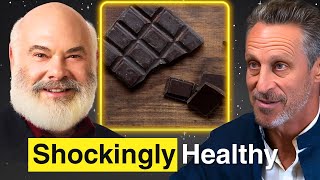
This is a YouTube video titled "Use These DIET & LIFESTYLE TIPS For Reducing Inflammation & HEALTHY AGING | Dr. Andrew Weil" created in April 2022. The content is a detailed conversational interview between Dr. Andrew Weil and Ask AI Mark discussing topics related to anti-inflammatory diets, chronic disease prevention, mind-body healing, integrative medicine, and strategies for healthy aging and longevity. The conversation covers diet, lifestyle, the biology of healing, the role of inflammation in disease, and the importance of social and mental well-being in health.
When people get past the age of 60, 65, a lot of them develop heart disease, neurodegenerative diseases, cancer. Is that inevitable?
So what would be your anti-inflammatory diet? Let's sort of break it down. If we wanna- well, 'cause I think what you said is so important is that all diseases of aging and all.
Chronic illness is really inflammatory disease at some level. Yes, yes. So I think it starts with what you don't eat because the mainstream American diet is strongly pro-inflammatory. It gives us the wrong fats. the wrong kinds of carbohydrates and not enough of the protective elements, which are mostly in fruits, vegetables, or spices. So the first rule is to stop refined, processed, and manufactured food. You know, that simple. I mean, that's really what's doing us in. So see if you can eliminate that from the diet. And then- I remember, I remember, I.
Remember you on Larry King once, and I heard you say, the two things that I would recommend everybody, non-negotiable, are get rid of high fructose corn syrup and trans fats. and I stole it from you because it was so brilliant. If you do that, basically you get rid of a lot of the junk out there.
Well, the trans fats have mostly been phased out, but we now have, our manufactured food is flooded with refined vegetable oils, which are sources of pro-inflammatory fatty acids. And they're in there because we've made them cheap through federal subsidies, same with high fructose corn syrup. So that has to change. But the first step of the anti-inflammatory diet is eliminating as much as possible those kinds of then you want to eat a wide variety of produce and I think more concentrate on vegetables than fruits because fruits can be concentrated sugar sources. But you want to eat a great variety of vegetables of all different colors. Those all have protective elements in them. Same for herbs and spices. The most powerful natural anti-inflammatory agent is turmeric, the yellow spice, ginger, which is related also. But those are tea, green tea, at the very top of my anti-inflammatory pyramid is dark chocolate.
You mean your personal pyramid or is.
This actually- no, no, dark chocolate in moderation has a lot of protective compounds in it. And then, I don't believe that carbohydrates are bad foods as some of the extreme keto and paleo people believe. I think you have to learn which carbohydrates are better and which are worse. And in general, the ones that quickly digest into blood sugar and raise blood sugar sugar, and that's mostly things made from flour or containing sugar. Those are not good. They promote inflammation, whereas slow digesting carbohydrates like you find in beans and, and the winter squashes and sweet potatoes. No, those are okay.
Yeah. And even, like, vegetables, like asparagus, is a carbohydrate. Our jokes are carbohydrates. Broccoli is a carbohydrate. Right. So there actually, you know, I joke. And I say carbohydrates are the most essential thing we need for health and Longevity because that's where all the phytochemicals are, right? Right. It's not the garbage carbohydrates that we're eating. Yeah.
I was talking to Dan Buettner the.
Other day, the Blue Zones.
Oh, yeah. Yeah. I love him. We were talking about beans, you know, which have been really vilified in the keto paleo world. And he said that one of the common threads that they've seen in all the Blue Zones areas is regular consumption of beans. You know, they're good foods. They're cheap. They're available, they have a lot of fiber, a lot of minerals, a lot of phytonutrients, slow digesting carbohydrate, and protein.
They have everything to recommend them. It's true. I was in Sardinia last summer at one of the Blue Zones. Dan hooked me up and I had this great adventure. And, you know, one of their core staple foods is minestrone, which is filled with beans and vegetables. Right. It's like, it's so good. Really good. So, it's also getting an oil change, right? You also talked about getting an oil change. Yeah, big one because I think I stole that from you too.
That's a good one, I like that. Well, I'm a big fan of olive oil, which not only is delicious and has good fatty acid profile, but it has a unique anti-inflammatory compound in it that's not found in other oils. So, I think that should be your main cooking oil. It's also antiviral.
It's like, true.
And, if you want an oil that doesn't have a flavor of olive oil, my first choice would be avocado oil. that now has become affordable and it's got a good fatty acid profile.
Exactly.
Yeah.
Yeah.
Everyone needs an oral change.
And Omega-3 fats, you talk a lot about. And Omega-3 fats, absolutely, which probably are best gotten from the fish sources rather than taken as supplements. But the diets, mainstream diet is very deficient in Omega-3 and very heavy in Omega-6s.
So, sardines and mackerel and herring and.
The small fish, right? Yeah, and sardines, I'm a big fan of kippers, smoked kippers, which you get in any supermarket. I mash them with mustard and onion and lemon. They're great and they're cheap. This is a cheap, high quality food.
Good source of omega-3 fatty acids. Yeah, so true. All right, so nutrition is pretty clear. We need to get rid of the bad stuff, put in good stuff and add these protective foods. And I think a lot of people talk about what not to eat, but you're also talking about what to eat, which is really important, which is not just what you eliminate, but it's actually the protective nature. some of these foods that we don't typically have. And I know when I go to the grocery store, I think of it as my pharmacy with an F. And I literally go through with a mind of like, because I understand what the phytochemicals are and I've studied this, I can literally go through and say, oh, I'm going to buy this drug and this drug and this drug. Okay, that's a prebiotic and this is a probiotic food. And this has, you know, high levels of catechins and this has high levels of curcuminoids and these are high levels of gingerols. And I'm, I'm thinking all the time.
About how do I actually optimize my.
Biology by getting my medicine cabinet, otherwise known as my fridge, for all the right stuff.
And you mentioned probiotics, and this is, I think, another area of tremendous revolution in medical thinking. When I was in medical school, people who took, who ate yogurt or took acidophilus were health nuts. You know, this was, we were made fun of. And suddenly now we're seeing that the gut microbiome is a major determinant of physical health, of mental health, of your interactions with the environment. I mean, this is, remarkable research that's being done. And, and then it's worth thinking about. And what can you do to modify your gut microbiome in a good direction? It seems like one of the best strategies is to eat fermented foods. And I recommend learning to make them because they're, you know, I make my own sauerkraut and pickles and kimchi. It's fun, and these are cheap foods, and they're delicious, and they Really do good things for your insides.
It's true. I used to make my own yogurt in college. My daughter now makes kimchi and I'm like, great. I'm like, I'm really gonna eat that. It's a little, I'm like, I'm a little nervous, you know, homemade stuff is like, it's gonna kill me. But my daughter's now in medical school and it's so fascinating to actually see how little the curriculum has changed and how anachronistic it is and how they're teaching literally 19th and 20th century medicine, which is very reactive. and doesn't understand this basic fundamental question that you really called us to think about, which is how do we create health?
And still short changes nutrition, which if it is taught as taught as biochemistry and is forgotten as soon as the biochemistry exams are done, and still omits mind-body interactions, doesn't teach about what these other medical systems have to offer. So, big need for change, and that's what our center tries to do. remedying all the things that are not taught.
That's so powerful. So talk about how do we start to think about defining health? How do we measure health? How do we create health? How have you used both food and mind-body practices and other alternative modalities to help activate the healing that you say we all are possibly have access to without knowing it?
First of all, it's hardly a new idea. Hippocrates said we should revere the healing power of nature. I mean, that was his first precept. So, To me, when I ask many medical colleagues to define health, a common answer I get is the absence of disease. And that's not very helpful. I think health is a positive state of balance, equilibrium, wholeness, and a major quality of it is resilience so that you can go through life and not get thrown off balance by all the things out there that have the potential to harm you. It is remarkable that most people are mostly healthy most of the time when you think about all the things that can go wrong, both within the body and outside the body. I mean, it is marvelous and we never stop to think about that. And as you said, it's absolutely true that most diseases end by themselves. And they end because the body's healing mechanisms take care of them. And we can take credit for that, but it's not usually our doing. And I would love to see a course at the beginning of medical school on the healing system of the human organism. You know, I didn't learn anything about that. You know, it is, it makes use of the immune system, the nervous system, circulatory system, but there are these internal healing mechanisms that keep us in balance. And that's good medicine should start from thinking about, you know, what, why isn't healing happening here? What can we do from outside that might facilitate it, you know, remove obstacles to it? That seems to me is our main job.
It's true. And I think most people don't realize there is a healing system in the body.
Absolutely.
There is actually our innate mechanisms for repair, regeneration, renewal, fighting infection. It exists and we see it. I mean, if we cut our skin.
If you cut your skin, it's easier to talk about this with kids than it is with doctors. Watch what happens when you get an owie and that same thing happens throughout the body. And my experience is that most people have no confidence in that. And I think that's one of the great things we can do for people. if we understand that is to give them greater confidence in their body's healing abilities so that they can be less dependent on practitioners of all sorts.
So can you break down what are the elements of our body's healing system so people understand what we're talking about?
Well, clearly the immune system is central to that. That's our major defense system which protects us against infection and pathogenic organisms and cancer. and foreign things that can harm us. But I think the nervous system is key that regulates the immune system, the nervous system connects to the mind, and you can't separate the mind from the body. And there are all sorts of ways that what goes on in our mental-emotional sphere influences what happens in our physical sphere. So it's all connected. But this is, you know, at any level of biological organization that you look at, you see inherent mechanisms of repair, even in the DNA molecule itself, which if it's injured begins to make repair enzymes to correct it.
Yeah. And, and, you know, some, one of your books was on healthy eating on how do we eat? And, and it was a huge influence on shifting my thinking on what to take out of my diet, what to put into my diet, what to, how to rethink what we should be eating and how food is medicine. Um, and that, that is a huge component of activating our healing system.
Absolutely. And you had asked me some questions about inflammation and its importance. And you know that I've developed an anti-inflammatory diet, an anti-inflammatory pyramid. And, you know, this to me is one of the great revolutions in medical thinking. When I was in medical school, I was taught that diseases like coronary artery disease and neurodegenerative diseases like Alzheimer's and cancer were completely separate disease entities that had nothing in common. And now it turns out that they may have a common root in inappropriate chronic low-level inflammation. You know, coronary artery disease begins as inflammation in the lining of arteries. Alzheimer's begins as inflammation in the brain. And cancer is connected also because anything that increases inflammation stimulates cells to divide more frequently. And you can't separate those two things. Anything that is as pro-inflammatory is also drives malignancy. So the good news is that if all these disease processes, which are the big things that kill and disable people prematurely, have a common root, then there's common strategies for dealing with them. And that is to contain inappropriate inflammation. Inflammation is a critical function of the body. You know, it's critical to healing. It's the way the body gets more immune activity and nourishment to an area that needs it. And we all know it on the surface of the body. It's local heat, redness, swelling and pain. But it's very important that inflammation stay where it's supposed to stay and ends when it's supposed to end. If it doesn't, it becomes productive of disease. And this is a problem. I think many of us go through life in a pro-inflammatory state. There's lots of influences on that, but diet is a big one, and it's one that potentially we have a control over.
Yeah, so I think that's really true. I remember recently I had a patient who had an autoimmune disease and she said, Dr. Hyman, would you mind talking to my rheumatologist about, you know, what my care is about? And I was searching for the causes of inflammation. Was it her diet? Was it her microbiome? Did she have a latent infection? You know, what were the triggers? And I was like, oh, you know, you get those calls like, oh, this doctor, it's gonna be an argument. He's not gonna get it. It's a waste of my time, but I'll do it. I get on the phone with the guy and he's a Cedar Sinai rheumatologist and he's like, oh, Dr. Hyman, I've.
Been using anti-inflammatory diet with my patients.
You have no idea how well it works. Fabulous. Great. I'm glad to hear it. And, I think there's a sort of a shift in doctors understanding this. You've got like William Lee writing the book, Eat to Beat Disease. And, there's a really increasing understanding that food is not just calories, it's actually medicine, it's information. And, the molecules in there, the phytochemicals, I mean that was your original work was understanding ethnobotany and Power plant compounds that actually regulate our biology. And nowhere is that more important than food. And I don't think people grasp the power of food to actually not only prevent disease, but actually to treat and reverse disease.
Yeah, and rheumatology is made to order for integrative medicine. It's those diseases. First of all, they have a high tendency to go into remission, which is great, because you can take credit for that. The mind-body component hits you in the face. you know, a typical story, the onset of rheumatoid arthritis in a young woman is flare up of all joints within 24 hours of a serious emotional trauma.
Yeah.
And then there are these influences of diet. There are many natural remedies. So integrative. You'd think that integrative rheumatology would be a really robust field. It is slowly coming into being. You know, we've had a number of rheumatologists go through our fellowship, and they're interested in working together. So I hope one day that'll be.
Yeah.
No, before we immediately turn to these very powerful. immune suppressive drugs, we should try these lifestyle adjustments and see how we can modify those diseases. Yeah, and I think people don't realize.
That there are ways to figure out the cause of inflammation. I had a patient who did an elimination diet as part of reading my book, the 10-Day Detox, which is essentially getting rid of a lot of inflammatory foods and gluten was one of them. He's like, Dr. Hyman, is it possible that my rheumatoid arthritis can go away in 10 days? and I'm like, well, yes, if it was something you're eating, you know, and then for him it was. It's not, not all the causes of rheumatoid arthritis are the same. It could be a parasite, it could be gluten, it could be Lyme disease, it could be very. Environmental toxins. Environmental toxins.
Yeah.
Yeah. They call those autogens, which drive inflammation, right?
Right.
You know, you know, you, you, you influenced me highly. And there was another physician that actually I met that, that actually ended up writing me a letter of recommendation for medical school. named Bernie Siegel, who you know well. And he wrote a book called Love, Medicine and Miracles. And he was a cancer doctor who wrote about all sorts of extraordinary stories and cases of the power of the mind to heal the body and talked about basically the pharmacy between your ears. And another good friend of yours, Ted Kaptchuk, also wrote a really wrote a book called the Web in the Weaver about Chinese medicine, but he then went on to study the placebo effect. Placebo effect.
That's great.
Yeah.
And the nocebo effect. And so, you know, we don't really think about this when we're in our clinic with patients. We talk about stress and, you know, maybe you should meditate and it's kind of given lip service. But, you know, when you actually look at the power of this and guys like Joe Dispenza are taking it to another level, which is a little bit of a mystery to me, but you hear these stories and like, wow. And your book, Spontaneous Healing, is full of these stories. So can you share a little bit about your understanding of this mind-body effect, how it works and how to activate it and what people can do to actually make it part of their daily life.
You know, first of all, I would say Bernie Siegel, I think, was ahead of his time and did not get a positive reception from the academic medical community, to say the least. And he couldn't believe when I was doing this at the University of Arizona, he couldn't believe that I was being accepted out there in an academic center, but times had begun to change. Yeah. I took a course in medical hypnosis at Columbia University. right when I finished my internship. One of the most interesting courses I've ever taken, you know, it was just, it was just great. And I, at that really awoke in me the power, understanding of the power of using mind, the mind-body connection. So I then also affiliated with a, a very skilled clinical hypnotherapist who was on the teaching faculty of the American Society for clinical hypnosis and still teaches on our faculty. And I remember him once saying to me that he thought that all dermatological all gastrointestinal disease and all gastrointestinal disease should first go to hypnotherapy before you go to dermatologists or gastroenterologists because those systems are the most frequent sites of expression of stress related disorders. Anyway, mind-body medicine is a very important part of our curriculum in integrative medicine. So it's hypnotherapy, guided imagery, visualization, biofeedback, I mean, a whole range of these things. These therapies are very time effective, very cost effective. and very underutilized in medicine today. And they're even fun for both the practitioner and the patient. But we don't think of using them. And I think there is nothing that's out of the reach of the mind, because everywhere you've got nerves, you've got the potential for mental influence. You have to be, there's an art to discussing this with patients because it, as I'm sure you know, that patients can easily think that they're being accused of having imaginary diseases or making it all up. Or you're blaming that on the problem.
Yeah.
Or that it's all in the mind, which it isn't. It's always in mind and the body, but you can take advantage of that connection.
Yeah.
So how, how do you understand the biology of spontaneous healing, the biology of the mind body? Because, you know, that there was a, Bernie was great. He, he, he told, I mean, it's funny. We used to write letters back in the day when we had, where there were letters, and he used to write me. He was bald, and he, he wrote me in a purple, purple pen. And he reminded me of, like, Harold and the Purple Crayon, which is my favorite childhood book. But when he talked about this episode of this woman who had cancer, and they basically told her that they were gonna give her this brand new drug that was gonna cure her cancer, but it was nothing. It was a placebo. And literally her cancer tumors melted away. And then a number of years later, they kind of said, well, you know, that was really just a study and it really wasn't a thing. And her cancer came back like that and she died. And so that's just remarkable to think about.
So again, this is another area where I think there's been a A huge change in thinking, although this still has a ways to go. I think that these new brain imaging studies that have become available to look at meditators' brains, for example, and see physical changes in the brains of people who meditate, or in placebo responses of finding that there are brain correlates of placebo responses, it makes it real for doctors who otherwise thought this was all sort of black magic and wasn't real medicine. So I think that's changed things. Now, there's now a real serious placebo studies. I think it's being looked at in a different way from the way it used to be.
And, you know, our friend Candace Pert, who sadly is not here anymore, she wrote a book called Molecules of Emotion. And she identified this whole phenomenon of psychoneuroimmunology, which is how our immune system is literally listening to our thoughts. and regulating what's happening and it regulates so many things in our body that we just are beginning to understand, like telomeres, like Elizabeth Blackburn's work showing that.
For example, meditation can lengthen your telomeres. Yeah, so I think, you know, that this, when I was in that hypnosis course, there is a very well-documented literature of experiments like taking a good hypnotic subject and telling them you're touching them with a piece of hot metal and it's a finger and they get a blister. the blister is real. And you can do the opposite. You can touch them with a piece of hot metal and say it's cold and they don't get a blister. I mean, that's all you need to see of how powerful that connection is and you want to take advantage of it.
Yeah. And so how do people listening start to incorporate these practices? What is your sort of basic go-to instructions for people to say, okay, we have this healing system, our mind can kill us or it can cure us. So, just as this is an example of this cancer patient, how do you start to lean toward the curus side of the ledger?
Well, first of all, I think everyone should learn and practice some method of neutralizing the harmful effects of stress on the mind and the body. My favorite techniques are breathing exercises because they're so time effective and cost effective and efficient. In addition, here's one strategy that I use. I can't always do it, but if you can, as a physician, introduce a patient to someone who has their disease and is now well, that is a very powerful way of giving them a message that it's possible to get better. I've had many patients over the years who've said to me in retrospect that the most important thing I did for them was that I was the only doctor they saw who told them they could get better.
Yeah.
I mean, that makes me sad in a way that why doctors are so pessimistic.
I think it's a cover your ass medicine, which is, you know, don't promise too much.
Exactly.
Under promise and over deliver if you can, but it's exactly. It's like lower expectations so you don't get in trouble or get sued.
Exactly. I think another problem is that.
In.
Our hospital training, we tend to see a very skewed population of sick people. We see very sick people. And in the very sick population, healing happens less regularly than it does in the general population. So I think that skews our view. But the fact is an awful lot of doctors are pessimistic about healing and they convey that in one way or another to patients.
I had atrial fibrillation and ended up having an ablation. And the doctor was brilliant. She was world's expert in atrial fib and, but she read me the riot act of what was possibly gonna happen to me when I had the procedure, the surgery done. and I was like a half an hour of terrifying. Well, you could die and we could puncture your order. We could do this. You're this could rupture. And I'm like, well, you know, it wasn't exactly inspiring.
I collect. I collect some of these stories, Mark, you know, that I put under the heading of, you know, this is medical hexing. One, I remember, was I had a woman patient that had systemic lupus. You know, she was pretty sick, and she worked with the rheumatologist, and she kept bugging the rheumatologist about what her prognosis was. She must have really exasperated. and finally he said, well, put it this way, I wouldn't buy any tires with a lifetime guarantee.
Oh, yeah, yeah, yeah.
Wow. Unbelievable. Or let me tell you one other, I had a patient from Finland, a woman who had MS, and she came to our, she stayed at Canyon Ranch and just imagine, first of all, the benefit of coming from Finland in the winter and staying at Canyon Ranch. So she brightened up and she said, you wouldn't believe what those doctors did to me in Finland. She said, the head neurologist at the hospital when he made the diagnosis said, wait here, he went out and came in with a wheel and asked her to sit in the wheelchair. Oh, yeah. And he said he wanted her to get a wheelchair and sit in it for an hour a day to practice for when she would need a wheelchair. Wheelchair practice. That's terrible.
I totally forgot.
Yeah.
And I think, you know, I mean, you and I have seen great results. And I think part of it is because we do believe one, we believe ourselves in the power of the healing mechanisms in the body. And it's actually not really a belief anymore. There's so much science to back it up.
Totally.
And the patient then feels that possibility and then they actually engage with their health more and they start to believe it and it starts to shift everything.
I think that's one of the most important things we can do for patients is to give them that sense of confidence in their body's ability to handle things. Yeah.
And, you know, I think the other thing is we're learning about is, you know, our thoughts influence everything, right? Our telomeres, our microbiome, amazing. That, like, are literally those bacteria listening to your conversations, just like Alexa. And they actually start to change and grow different bugs or good bugs or bad bugs. So it's so important to get your mindset right. And I think the mindset story is something that we don't tell enough in medicine. We don't teach people how to navigate their thoughts and their feelings, and none of us get any instruction in emotional intelligence. I mean, we learn you know, reading, writing, arithmetic, but we don't learn the most important things in life, which is how to have healthy relationships, how to practice, how to create health for ourselves and how to manage our money.
Well, all those are key, key components of healthy living. And absolutely, this should be, this should be taught. By the way, I think, you know, we should have robust Health education starting in kindergarten and going all the way up, you know, through professional education and beginning with the idea that the body can heal itself.
Yeah, we know more about how our car works or how our iPhone works than how our bodies work for most people. And I think what you're, one of the, you know, the magnificent things you've done is you've taught people what the healing systems are in their body from both food and mind-body systems and exercise and, and many other modalities that the role of plants and herbs and, and nutrients in creating healing. And, and the truth is that most of health does not get created by the doctor. It's created by your lifestyle and the fact that you have full control over and that are not that expensive.
Right.
And, you know, sometimes you need some heroic measures, like, you know, I did. You probably might have at some point in your life, but thank God for that. It's just, it's just not where the money is, you know, right now in terms of how we focus on what's important. But, like, diabetes is the greatest example. It's, it's crippling our economy globally. Obesity in America and obesity, diabetes costs, I think, 3.7 trillion in direct and indirect costs. That's an enormous amount of money. That's a third of our economy. Just that. I mean, I mean, I'm sorry, a fifth of our economy, just that. and yet it's curable by food and lifestyle and exercise and stress reduction and all those things and we don't do anything about it.
So listen to this. This is very, I think, sobering. A few years ago, the New York Times ran a week-long series on the effect of the diabetes epidemic in New York City on the city. And one article was an economic analysis of it. I read that. It says, okay, for every clinic, that offered nutritional counseling or preventive medical counseling. For each consult, they lost on average of 50 to 100 dollars. For every amputation of a diabetic limb, they made six thousand dollars. So there's the problem right there. You know, prevention doesn't pay.
Yeah.
And until we can figure out how to make it pay, we aren't getting anywhere. The whole system is corrupt. You know, it is geared toward making money for interventions for drugs, it is not geared toward incentivizing people to teach prevention.
Yeah, I think it's starting, right? I mean, value-based care is a concept that says, well, we need to get better outcomes at lower costs and you need to be accountable for the results. I mean, think about it. If you went to your car mechanic and you gave him your car, but he didn't fix it and charge you a lot of money, you wouldn't go back to them. Right. You know, right now, we, we pay for health care, even though the results are abominable and our chronic disease are escalating and their costs are escalating. We're not seeing benefit. We should be paying for results. And, and that's really what the system is shifting towards, what Medicare is shifting towards. The problem is doctors don't know how to produce those results because they just, you know, are trying to do the same things a little bit better, more efficiently. But for example, Cleveland Clinic, where I work, They had an accountable care system where they were paid a certain fixed amount for diabetes care. So if they get, let's say, $20 million a year from Medicare to cover all their diabetic patients, if it costs them 10 million to take care of them, they make 10 million. If it costs them 30, they lose 10 million. So they're incentivized, but they still don't know what to do. They still don't understand that they should be providing food for the patients like they did at Geisinger, where they showed an 80% reduction in cost by giving the patients food. as opposed to drugs. We'll pay for the, you know, we'll pay for the drugs. We'll pay for insulin and all the medications and the amputations and the doctor visits and the bypasses, but we won't.
Pay for a few dollars worth of food, which is insane.
Right. Well, I'd love to see all this change. Yeah, I think, I think it's coming. I think it's coming. Hopefully we'll get there. I want to switch, switch gears a little bit and talk about longevity. Cause I, I know you wrote a book many years ago called Healthy Aging. and that was honestly way before the rest of the world was waking up to these concepts that now are hitting the mainstream around longevity. And you've got all the tech billionaires really interested in this now and putting billions of dollars in longevity research. You've got it being a recognized discipline in science now, or it was sort of a stepchild, but why should we study age and we all get old and we can't do anything about it? And I think the truth is we can't. And I just did my biological age test. It's a DNA methylation test. and I'm 62. I think I was 35 when I met you. I'm 62 and biologically I'm 43.
Oh, great.
So we have the capacity, if we know what to do to regulate our aging process and often what we see is abnormal aging. It's not actual, a necessary consequence of getting older. We all get older, but we don't have to age in the same way. So what have you learned for yourself personally and also from the science about how we need to think about our longevity and actually turning the clock back. Okay.
Well, first of all, I remain skeptical of life extension. I don't think we're going to be able to do much about extending the human lifespan. I think it's relatively fixed. But so I would say rather we should focus on being healthy as we age. And, you know, the real problem, the real question is, is it necessary to get sick as you get older? you know, we see that when people get past the age of 60, 65, a lot of them develop heart disease, neurodegenerative diseases, cancer. Is that inevitable? And I think it's not. I think it is possible to separate the aging process from age-related disease. So then the goal is to live long and well and have a rapid drop off at the end. So, you know, and there's a, the technical term for that is compression of morbidity. so you're trying to squeeze the time of disability and decline at the end of life into a shorter period as possible. And I think you do that by applying all of the methods that we know that in all the lifestyle methods that we know that influence health as you go through life, starting with diet, getting adequate rest and sleep, regular physical activity, attending to stress, you know, all of these things that we know about.
Absolutely. I think the, you know, the, the work by Dan Buettner, as we mentioned earlier, has really helped us identify what are the default mechanisms in these cultures where they live to be a hundred. I mean, you know, maybe, you know, we, the upper limit, it was 122 of the oldest, the person.
Right.
But, but, you know, most of us potentially could get to a hundred if we took away a lot of the insults. Right. Now that we've dealt with infectious disease mostly and we've dealt with a sanitation, we've dealt with the vaccination diseases. And now we have the opportunity, if we shift into a way of living that creates health that actually- Now, there.
Are a lot of centenarians around these days. They used to be quite rare, but now there are a lot of them. But if you look at them, most of them are sick. Most of them are not doing that well. And that's not the goal. You don't want to just live to a high number. You want to live and be able to enjoy life and feel good.
Exactly.
That's the real challenge is how do you stay well as you get older?
I think that's right. And I think I was in Sardinia last summer and I met this guy Pietro who was 95 and just stopped his shepherding work at 95 and was hiking five miles every day up and down the mountains. He was bolt upright, booming voice, clear eyes. I'm like, wow, you're 95 years old. And, and, you know, he was sitting there chatting with his friends and had been eating their traditional diet for years and doing natural activities and built the community. And so all those were defaults. And we've lost all those defaults. We're all isolated and lonely. We eat crap food. we don't move our bodies. We're under chronic stress. There was a guy named Silvio I met in Sardinia. I said, Silvio, tell me, he was a shepherd and was living on the top of this mountain. And I think his family had been there for thousands of years. And I said, Silvio, you know, do you have any stress? And he kind of looked at me like I was kind of a little funny question. And I said, you know, stress, like where things are difficult. He said, oh, he thought for a minute. He goes, well, sometimes at night when a goat gets out, I have to go get it. I'm like, oh, God, that's stress, right?
Yeah.
So I think we are just so inundated with so many insults and it takes a kind of a heroic effort to redesign your life to actually create the conditions for having your health span equal your lifespan, which is what you're talking about. I mean, the average person in America, I think the last 17 years of their life are spent in health, poor health and disability. so if you live to be 60, or maybe your health plan 60, but the next 20 years, you're, you have no health, and that's, that's not good.
Yeah.
Now, when you look at some of these people that are old and doing well, they're all over the map. You can find some who smoke and drink moderately. And, yeah, I, I talked to one Russian woman who was 103, I think, and was asked about the secret of her longevity. She said, I never eat vegetables. So.
It'S true.
But, you know, I think one of the commonalities that I see is like, very good social connections.
Yes.
Social and intellectual connections as you go through life. I think in our culture, an awful lot of older people become isolated. That's probably gotten much worse during the pandemic. But, you know, social isolation, I think, is a great under-miner of health and healthy longevity.
Yeah, and I think I might have read it in your books, but like, if you belong to a bowling club or a knitting club or it doesn't matter what it is that as long as you belong, to something and have some connection and it actually creates some kind of downstream effects. And, you know, I think the science of this is fascinating. I don't know if you've dug into this whole research around sociogenomics, which is the power of social connections to influence our immune system and our gene expression. And, you know, about the work that in of entrainment, right? Where you, yeah, which I think I read you wrote about it, which is where if you're in a room with someone, you're having a heart-centered connection and you're both wired up to EKG and EEG, you can literally see the other person's heartbeat and the other person's brain. Right? And so I think there's so much to this that we're just beginning to understand about the biology of these social connections. And it's not just an abstract idea.
There's always a mechanism underneath it. Absolutely. I saw research from Japan, which nobody here knows about, showing that laughter can actually turn off genes involved in prostate cancer. Wow. Amazing. I mean, now that talk about a mind-body interaction. I mean, that's.
Yeah.
Laughter and genes. It's powerful.
Yeah.
But, I mean, you know, you knew Norman Cousins.
Yes. And I think his book, the Anatomy of Illness, also really influenced me when I was in my 20s. Yeah, same. And he had ankylosing spondylitis, which is an autoimmune disease, and. And decided he wasn't going to take the advice of his doctor, but he was going to watch Lauren and Hardy.
Movies and the Marx Brothers. Yeah. He laughed. It laughed as way to good health.
Yeah.
Yeah.
That was great. Absolutely.
Yeah.
It's so powerful. And for you, Andy, what are the things that you incorporate in your life now? I don't even know how old you are because you look the same as you did when I met you 30 years ago. I'm gonna be 80 in a couple months. No, amazing. God, you look Mazel Tov, you look fantastic. Thank you. So, obviously mind is bright, your skin is clear, your eyes are good. I mean, what are you doing day to day, given all that you've learned in your lifetime and all the amazing access you've had the leading edge research in how to keep healthy.
Well, I follow my own dietary advice. You know, I eat an anti-inflammatory diet varied. I, you know, all the things that I should be doing. I try to be physically active. I walk is my favorite physical activity. I have two big dogs that take me for walks. And I think being with companion animals is a healthy strategy. I like to laugh and I like to spend time with friends and cook.
Book.
I really attend to good rest and sleep. I do my breathing exercises. I keep engaged in the world and my teaching is certainly provides that. I can't imagine retiring. I mean, that's just not, not of interest to me.
Yeah, I think that's so key. I think the, you know, you look at the data on retirement, it actually is a death sentence. I mean, I think. Yeah.
I mean, I'm sure you've seen that, too. Within six months of retiring, many men, you know, get really sick or die.
Absolutely. Yeah. So are there any things that you do that are a little bit extra? Like, you've written a lot about supplements and nutritional deficiencies and you've recommended a lot of supplements over the years. Where are you at with that now?
And, what do you think, what is your thoughts about what you take? You know, I take vitamin D, I take CoQ10, I take an antioxidant mix, I take some extra magnesium, I use a variety of mushroom supplements which I think are really good for immune health. I think that's, you know, I think that's basically what it. Yeah. And, and, you know, you, you know.
There'S a lot of work you've done in, in the world of mushrooms. You've been very into mushrooms. Yes. And, and we're entering a mushroom renaissance here. Quite amazing. Yeah. It's, I mean, so many friends are starting companies with mushrooms. I have a friend who started a company called Hero Diapers. Oh, hero Technologies, which essentially using mycelium technology. to digest the diaper and the poop.
How great.
And it actually can eat all the plastic and landfill. It's amazing.
Amazing.
And now there's a whole field of psychedelic assisted therapies for trauma and depression and end of life therapy. It's quite amazing to see Paul Stamets, I know you're close with, is now getting a lot of attention, is creating these microdosing stacks. And how do you see that sort emerging research around mushrooms and both therapeutic mushrooms, adaptogenic mushrooms, and also the psychedelic mushrooms. And, I want to draw on your ethnobotany background to kind of give us.
A deep dive into this. Well, I got interested in the therapeutic benefits of mushrooms a long time ago, and I was one of the first people to write about them and try to get people to do research on them. And, I first came onto this from looking at traditional Chinese medicine where mushrooms are highly esteemed. as remedies, and there've been almost no research in the West on them. So I think especially for immune modulation, for increasing resistance to viral infections, cancer, there's a lot there. You know, that's a big area of research. The psychedelic mushrooms, this is part of the whole psychedelic Renaissance that's happening now. It's long overdue, and I think it's a good thing. And it may be that, you know, maybe this is the one thing that can save our culture. frankly, I think we're in so much trouble. And it may be that this is the consciousness change that can happen. It's possible. In some ways, I can't believe how it is penetrating mainstream culture. I saw an article, listen to this, this was a month ago, in Town and Country Magazine, of all things, Town and Country Magazine, titled, why is Everyone Smoking Toad Venom? And town and country? I mean, unbelievable. And Vogue had a cover story on psilocybin a few months ago. I mean, this is really out there now. And when I was traveling before the pandemic, didn't matter what subject I was talking on, healthy aging, anti-inflammatory diet, integrative medicine, I would get questions about psychedelics. People are curious, they want to know, they want access to it. it's happening. I, I think it's a good thing.
And, and how do you, how do you think that, you know, this, this, this movement is going to end up? I mean, you think, you think we're going to legalize it? You think it's going to be part of our traditional medical therapies for chronic conditions?
I mean, yeah, I think we're going to see, first of all, you know, I think MDMA will be made available for post-traumatic stress disorder, psilocybin for drug resistant depression, you know, a few other things like this. I think there will be more and more people trained in how to use psychedelic therapy. So that's one movement that's going to happen. The other is, I think, just penetration of the general culture that people are going to be microdosing and experimenting. So I don't know exactly how it's going to play out. And I have some worries about, you know, are big companies going to try to take it over and control it? I don't know. We'll see.
Yeah, there's like a lot of public companies that are now investing in psychedelic research. Mushroom technologies. I think Paul Stamets, I heard him speak recently and he talked about this work he's doing around dementia and Alzheimer's. He's doing microdosing and using a stack of lion's mane and psilocybin and niacin. Fascinating research to show the real impact on these neurodegenerative diseases.
How do you think that's working? I don't think we know enough yet. I don't think we have enough data. It's promising. It's a promising area of research.
So, I think we should follow it and see what happens. and you said something very provocative, which is if basically, if all Americans took mushrooms, that magic mushrooms, that everything would shift. And why do you say that? And what does it do to the brain? And how does it change our perceptions in ways that shift things toward a.
More, you know, there's an awful experiential evidence of people having very radical shifts in how they perceive the world and their relationship to it as a result of psychedelic experiences. And I think some people become very aware of the environmental crisis and how their behavior influences it or their connection with nature, connection with other people. You know, we need a change in consciousness if we're going to avoid disaster. You know, things seem to be heading in a very bad direction on all fronts. And I think the only thing that can avert it is a change in consciousness. And the only agents that I see out there that have the potential to do that are psychedelics. not just mushrooms.
Yeah, it's really true. And I think it got such a bad rap, but it was really a key part of psychiatric research back in the fifties. And Michael Pollan did a great job in how to change your mind about mapping out, you know, how that's all unfolded and why we got so sidetracked. And now it's all coming back. And I, you know, I don't know about you, but I, I, I would say the experiences I had in college and now I think it's okay to talk about it.
Yeah, sure.
Well, you know, I, I definitely had the experience. It was in the seventies. and it was a thing. And I remember always doing it in a sort of a sacred container of nature with friends, not just going to parties and taking a bunch of drugs, but actually having a very intentional experience. And it really profoundly affected the way I saw the world, the way I saw myself. What mattered to me, understanding the intersection and connectivity between things. I think you and I were similar in that way. We both, we see the patterns in the data, we see the way things are connected. We see that out of the ecological view, you're an ecological doctor. I think that's really what we're doing is ecological medicine. And I think that hugely influenced me and started to shift my thinking towards more of this kind of medicine. Was that something that happened to you? I know you went to South America, you had all these experiences.
Yeah, but I did. I began experimenting with psychedelics when I was in college long ago.
I was at Timothy Leary, Richard Alpert.
Yeah, right. But yes, I think a profound influence on my way of thinking and my way of thinking about medicine.
And what, what happened? What were some of the experiences that you had?
Well, I think some of it was really seeing very graphically how what was inside my head was connected with what was outside my head and that I could change things out there by changing things in here.
Yeah, it's, it's so powerful. And, and then there's a whole other class, I think, that are now also mushrooms that are arising that are therapeutic mushrooms that we really haven't taken advantage of that I, I've been using a lot more personally that I'm using my patients. cordyceps, reishi, maitake, shiitake, lion's mane. All these incredible mushrooms.
But these have been long used in Asian medicine, in Japanese medicine, Chinese medicine, Korean medicine, and they've been extremely valued and they've been unknown in our part of the world until recently. So I think they're good to incorporate into the diet, the edible ones, and to consider taking as supplements. It's true.
I actually eat a lot of mushrooms. I eat, you know, good thing. And maitake mushrooms, you know, you can buy a whole variety of mushrooms, not.
Those little white button mushrooms. That's the only thing we had available for years.
And now suddenly we have all these new mushrooms available. Yeah. And, and they, the science behind them is quite impressive.
You know, lion's mane helps the brain heal. And, yeah, yeah. There's a, there's a very, very robust.
Body of research accumulating now on these mushrooms. They were ignored for so long. do you take any of the supplemental mushrooms? I do. Powders or.
I, I take capsules of, mostly capsules of Lion's Mane Cordyceps.
Yeah. Yeah.
I, I, I actually make a smoothie in the morning, and I have the powders, and I just mix all of the different mushrooms in my smoothie, and.
I don't really notice it. It's fine. Great. But some of them taste great, too. You know, you know, maitake, shiitake.
These are delicious.
Yeah.
Edible mushrooms. And there's companies like. for sigmatic that now you can make mushroom teas and a lot of companies are emerging that are making this stuff really quite accessible. So what's your, what's your, what's your, what's your dreams and goals for yourself for the next 30, 40 years?
Well, that's, that's extremely optimistic. Well, you know, I want to see, you know, I want to see the field of integrative medicine get on a very solid footing. I've always said one day we'll be able to drop the word integrative. It just be good medicine. and, you know, maybe that's not that far away. I'd be very happy to see that.
Yeah, I think that's great. And I think, you know, you, you are, are such an important figure in health care, and unfortunately, you know, it takes so many decades for things to change. And you've just been at this for, gosh, now five decades.
I feel lucky that I've been able to see these changes in my lifetime because I think a lot of people, you know, don't, don't get to live to see the effects of their work. And, you know, I do. So it makes me very happy.
Yeah, it's great. And I, and again, I said, yeah, you, you , influenced me so deeply and helped me get on this path and helped me realize there was a path.
Yeah.
And, and, you know, we're sort of catalytic and, you know, sort of following your footsteps at Canyon Ranch felt really awesome for me. And it was just, it was just so beautiful, to actually have that support of your perspective as a foundation for, for stepping out of the traditional sort of format of healthcare.
Thanks for telling me that.
Yeah. I don't think, I don't think I'd be Dr. Mark Hyman if I wasn't, it wasn't for you. I don't know if you know this story, but I was asked to help as a on-call doctor for Canyon Ranch in Lenox many years ago in the early 90s. And I didn't really know about it. I'd never visited the property, but they said, well, you can use this, you know, the health resort and that you can use the spa and you can use the fitness facilities. I'm like, okay, it's like a gym membership. So I started it. And then I was at the local bookstore here in Lenox, and I was buying spontaneous healing and this woman, Christine Huffman, came up to me who had a tag on this at Canyon Ranch. And she's like, oh, that's a great book. You know, I know Andy Wells. I was like, yeah, I just got on the call schedule at Canyon Ranch. You wanna, she's like, you wanna come over and take a tour? I'm like, sure. So I went over and talked to, talked to about my vision for healthcare and medicine and, you know, how important your influence was on me and the thinking I wanted to be doing around integrated medicine. And, and she's like, why don't you come for a tour? So I came for a tour. And next thing I know, she offers me a job. as the medical director after I met the owners. And that was the sort of the beginning of my career in this whole field. So you had a lot to do with it. That's great.
Thanks for telling me.
So, Andy, you went to Harvard in the '60s. You were in the era of the '60s revolution. And you had a different way of thinking about things. And something led you to kind of take a left turn and not pursued the traditional medical path, and you went to South America and you discovered some things that set you on the career you're on. So take us through that story briefly and tell us how you got inspired to do that and what happened and what you were led to come to think about.
Well, I think I took a left turn long before I went to medical school. I was always interested in plants, and that led me to be a botany major as an undergraduate at Harvard, which was a very unusual choice of major. in those days. And that gave me a unique perspective when I entered medical school. You know, I was really tuned into the natural world and it was a real shock to find that the people teaching me pharmacology in medical school knew nothing about the plant sources of the drugs that they were teaching about, you know, much less about how they differed from isolated compounds. And also, I had a long-standing interest in the mind and how the mind influenced the body. And I tried to study that. as an undergraduate, but it was not possible in those days. And the mind was simply left out of the equation in medical school, as you know. Yeah. When I finished my internship in San Francisco in 1969, I decided I didn't want to practice the kind of medicine that I had learned first, because I saw it do too much harm, mostly in the form of adverse drug reactions.
Yeah.
And secondly, because it really didn't equip me to keep people healthy. You know, I learned nothing about health, healing. how to keep people from getting sick. And I thought that should be my main function as a doctor.
Wow. That's the way that you just said that basically in medical school, you learn nothing about how to keep people healthy, which is such a statement, right?
I know. And much less have time or incentive to keep myself healthy, you know, going through medical school. Anyway, I dropped out of medicine. I made my living for a number of years as a writer. I found ways to travel around the world, as you mentioned, looking at other kinds of medical systems and medical practice. I spent time with shamans. I was interested and psychoactive plants and drugs and foods and other cultures. So I did that for about three and a half years. I saw a lot of interesting stuff. And then my car broke down in Tucson in 1973, and I never left. I never would have thought that I'd be living here. But it turned out the person I had most to learn from was in Tucson, and he'd actually been here the whole time and didn't know about him. And that was an old osteopathic fish. Yeah. Robert. Robert Fulford. he was in his 80s when I met him and I think was the most effective healer I've ever met. He used Hands-On manipulation, no equipment. He charged 35 for a visit. He didn't say much, but it was so good to be worked on by him. And people would say, when should I come back? And he'd say, you don't have to come back. You're fixed. And he also would say things like, you know, you just make these adjustments and let old Mother Nature do her work. Yeah. Anyway, I saw him. effect remarkable cures of everything from recurrent ear infections in kids to chronic GI conditions. And he really made me aware of the healing power of nature, again, something missing from my medical education. And how possible it was to use low-tech medicine to produce, to facilitate healing. So that was a revelation to me. I began giving talks to medical students and I began lecturing in the medical school on alternative medicine. Nobody even knew what alternative medicine was in those days. And, you know, nobody knew the difference between an osteopath and a chiropractor, for example. That's right.
Yeah, I'm sure you remember. I remember the Holistic Health Handbook, which kind of. Yes, right.
Was the first sort of.
It was like published in the 70s, and I studied. I took a course in Holistic Health. at Goddard College in a summer program. And we had this handbook that had everything from crystals to osteopathy, homeopathy.
It was very interesting.
Yeah.
And there was a holistic medical movement in Arizona, as I'm sure there was in other parts of the country, but no doctors were members of it. It was nurses, psychologists, social workers. And for through the 70s, I was talking, began writing about my ideas about health. No, none of my medical colleagues paid any attention. to me. You know, I got a larger and larger following in the general public, but really no one in medicine cared about what I was saying. And that didn't change until the early 1990s. That was when Jim Dolan came to be dean of the medical college. But it was the time when the economics of healthcare began to go south. And the conclusion that I draw from that is that no amount of ideological argument moves anything. It's only when the pocket, the pocketbooks of institutions get squeezed. that they begin to open to new ideas. So I was calling what I did natural and preventive medicine, and then I came to use the term integrative medicine, which seemed to be more acceptable.
Yeah.
And the whole idea was that there are all these modalities out there that are incredibly effective, that have basically been in the diaspora of health care for centuries and maybe actually be central to the most important idea that we've ignored, which how do we create health?
Yep.
Not how do we create health?
How do we facilitate healing, which I think, you know, comes from within. But there's also a lot of nonsense out there. And I think the, the job of people in integrative medicine is to sift through it all and sort out what is useful and sensible from what isn't.
Well, you know, you've catalyzed literally millions and millions and millions of dollars of research on integrative medicine by bringing into academia. and saying, look, there's value here. Let's look at it, whether it's acupuncture. And you spawned a whole generation of doctors from Bryan Berman to Tracy Cadette, who worked at the VA. I mean, she tried to get me to come and, and, and run your program in Arizona, because I was, I was at your program in 1997 in Canyon Ranch. We had a week-long program there, and you had the white beard there.
They looked the same.
You don't look any different than you did. That's what people tell me, like 30 years ago. I don't know what you're doing. It's like you sort of frozen in time. And so Tracy tried to get me to work for you. She ended up running the VA. Now she's running the Whole Health Institute for Alice Walton, where they fund $200 million to build a new medical school. You've got so many people that I know that are in my network that have been your students who now are actually driving the future change. And I imagine that's got to be so satisfying for you to see. It's like, you're just not this guy at the end of the road in Ranch in Tucson who's telling people to go to the osteopath. You really catalyze an entire transformation in healthcare.
Yeah. Next week on the 16th of March, we are having a groundbreaking at the University for our new building for our center. Amazing. Which is a big milestone. And I'm very proud of the accomplishments of it's now called the Andrew Weil Center, which I find it hard to bring myself to say. It's the Andrew Weil Center of the University of Arizona Integrative Medicine. But we now have graduated, I think, upwards of 2500 physicians from our intensive fellowship and they're in all specialties, all ages. And then we have, we're training residents. I think 100 residencies have now put our curriculum into the residency training in a number of different fields. I think it's a realistic goal that one day every practitioner will have had basic education and nutrition and mind-body medicine and strengths of weaknesses of these other medical systems.
It's true. I think the new generation of doctors is really changing. I reached out to all the time, as I'm sure you are, by people who want to go to medical school, who are in medical school or residency, who are like, I don't like this. This is not what I want. What's out there? And they want support and guidance. And I think it's so important. I'd love you to talk about, you know, this book Spontaneous Healing was so influential for me. And it talked about the healing power of nature and the healing power of the body and how to activate that. and we were sure we both went to medical school and we didn't take a course on creating health 101. It just didn't exist. And yet, it's so central because when you learn how to activate the body's own healing mechanisms, the body knows what to do and most diseases can be taken care of by providing the right conditions. And the science of creating health is so central to integrative medicine. If you love that last video, you're going to love this one. Love the next one. Check it out here. The body is so objective that it does not know the difference between the real life experience that's creating that emotion and the emotion that person is fabricating by thought or memory alone. The body's believing it's living in the same past experience.
More from AI




This Is Why 99% of Skin Conditions Don't Heal — And What Dermatologists Won't Tell You






Why you need to start strength training today #strengthtraining #healthyaging #fitness
