What Is Hyper-Local Food?
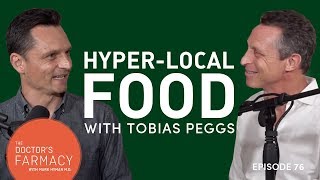
Dr. Mark Hyman talks with Tobias Peggs, CEO of Square Roots, about growing food in cities instead of relying on industrial agriculture. Square Roots trains the next generation of urban farmers and uses technology to make hyperlocal food production scalable and profitable.
It's the love that the farmer puts in that makes the food taste great.
Welcome to the Doctor's Pharmacy. This is Dr. Mark Hyman. That's Pharmacy with an F, F-A-R-M-A-C-Y, a place for conversations that matter. And today, this conversation I think will matter because it's about food, how we grow it, where we grow it, and what it does to us, the environment, and pretty much everything that matters. So, we have an extraordinary guest today, Tobias Peggs, who's an extraordinary man with a PhD in artificial intelligence who's an urban farmer.
I figure that makes sense.
He's the founder with Kimbal Musk, and he's the CEO of Square Roots, which is a Brooklyn-based urban farming company. It's known for changing the way people think about growing local food and training the country's future generation of farmers because our farmers are getting old fast and we don't have young farmers. So I'm really interested in that. He recently led a company called Aviary, which was a mobile photo editing company and was its CEO until it was bought by Adobe, not bad. He was also the CEO at OneRiot, a social media analytics company that was acquired by Walmart, where he will tell us how that job helped him figure out what's wrong with grocery stores and food purchasing and farming and everything else. He grew up in England. And, the PhD he got was from Cardiff University. He's a tech star's mentor, competitive triathlete, a snowboarder, and admittedly eats far too much ramen. That is true. But, you can only eat that much ramen because you run for 13 miles, bike for, I don't know, 50 miles, and swim for a mile and a half. So, unless you're out there doing that, I wouldn't eat as much ramen as Tobias.
So, welcome Tobias.
Thank you. I'm really happy to be here. So, this is really a great topic because we're learning more about the challenges of our agricultural system. We're learning about our conventional farming, which destroys the planet, which increases environmental degradation, it causes runoff into water, some little fertilizer that kills dead zones, it contributes to climate change, it produces mostly commodity crops that is turned into junk food for humans, biofuels or animal feed. So, we're kind of in a messy situation and there's On the margins, all these exciting innovations that are happening around how to bring new thinking to solving the problem of how and where and what food we get. Square Roots seems to be this extraordinary new company that has started up with a lot of backing from many really cool people who I saw on your board and as part of your team. It's trying to disrupt our industrial food system which generally produces low quality food, it's not nutrient dense, that comes from every part of the planet. It's harmful to the health of us, to the planet, and leaves us pretty disconnected from the people who grow the food. If you're a vegan and you get your produce from Chile or maybe from who knows where in China, you probably, with one flight of your asparagus from some other country, you'd have to be a vegan for five years of not eating meat to cover that carbon footprint. So, it's kind of a problem. So, tell us about square roots. How do you see it changing the food system and how do you see it shifting the way we think about farming?
Well, I mean, you've covered my entire pitch, right? How scary the food system is. And that really led me to jumping in, we gotta do something about it. What Square Roots is in essence is an urban farming company, as you've said. We build farms right in the middle of the city. And so what that means is we're growing food essentially in the same zip code as the end consumer. We're also able to do that all year round thanks to the technology platform that we've built, where we're building these farms indoors. and what that means is that we can control the climates inside these farms and do that all year round. So let's say, for example, basil was your favorite herb.
Yeah, this is some basil right here.
Perfect, okay. So the way that we would do that is we would say, okay, where in the world do they grow the best basil? And the answer would be north of Italy. And so we would literally look at the historical environmental patterns in the north of Italy, and understand, okay, in the best basil growing season, when does the sun come up? When does the sun go down? What is the temperature? What is the humidity? What is the CO2 level? And then recreate that environment inside a box and basically drop it in the middle of Brooklyn and grow, you know, literally the world's best basil, but do that right in your backyard, right? Which means when you as the consumer get to eat that food, It was harvested like 10 hours ago, right? This morning. As opposed to the industrial food system that you're talking about, where this food is being shipped across the planet and is taking days, weeks, sometimes even months to get to us, which is crazy.
I mean, if anybody's gone to their garden and picked an asparagus or had broccoli or a tomato, they know how different it tastes than When you get something that's been shipped across the country or across the world, and the nutrient density of the food declines in direct proportion to how far it's gone, how long it's sitting on a truck, a plane, or in the store, and you're talking about getting not only local food, but immediate food.
Oh, I don't know if there's a term for that. No, it's crazy. When we first started studying food systems and we were putting square roots together three or four years ago, I was horrified to find out that the average apple in a US supermarket has been traveling for nine months before it gets there. Not nine days, not nine weeks, nine months.
Nine months, yeah.
And to stop that apple decomposing into a gray ball of mush, it's covered in wax. I'm sure you've gone to the supermarket and you buy an apple and the first thing you do is come home and wash it. You've got to get rid of that wax and the reason for that is to stop the thing decomposing in the three quarters of a year that it's traveling. But to your point, during that time, all the nutrients inside are breaking down into sugars. So you think you're making a healthy choice, right? Maybe you're buying that apple for your kid for lunch tomorrow morning.
I mean, it's better than a Pop-Tart, but still.
Well, it's not as good as it could be. Right.
It's a waxy ball of sugar. Yeah. Right.
And- well, you say it like that, I mean, like- Right. And so then they join the dots between a country where we've got 30-35% childhood obesity rates in most of our cities who are all at the mercy of this industrial food system. It is crazy.
Yeah, it's pretty big. So what you're seeing is you've created essentially a very smart system of agriculture that incorporates a lot of data and knowledge and technology to grow just plants in a way that makes it optimal for them in those conditions. And I think it solves a lot of problems. So let's talk about the kind of problems it solves. One, talk about the impact for example, on the nutritional quality of the food, which you sort of just did, right? Yeah. So can you tell us more about what really do you know about how good or different food that's that fresh and that local and grown in these conditions is?
Absolutely. Well, I mean, I think that the first thing to say is that again, as food travels, those nutrients break down over time, right? And so a system like Square Roots, where we're growing food in the same zip code as that retailer, as that end consumer, right? It means our food is traveling for less than 24 hours.
Right?
And so all of the nutrients that are there when the food is picked, right, they're still there when you eat it, right? It's like, you know, one day, right? There's hardly any kind of degradation there. And then what we'll do to make sure that we understand how good that food is is lab test it against, you know, the best organic farmers market food that you can buy in New York City. And we're very, very happy at that nutrient quality.
So you're testing what in that in those tests, you're testing like vitamin levels.
And all sorts of stuff, right? So we wanna make sure that we're at the very least, at the very least, as good as the best food that you can buy at the organic farmers market in New York, right? However, what we're then able to do is provide you as the consumer with that food all year round, right? 52 weeks a year. Because inside these farms in those controlled climates, it doesn't matter what the weather is outdoors, right? You can have two foot of snow outdoors, it can be the middle of February in New York City, but indoors, it's still the perfect conditions to grow that food with those nutrient levels, with all that goodness that's there, and then still get that food to the consumer within a day of harvest.
Okay, the other benefits are sort of disrupting some of the social challenges that face people when they try to eat good food. If you live in a food desert or something called food apartheid and you don't have access, you can literally put these shipping containers where you grow your food, in any neighborhood and provide fresh local produce to that neighborhood in ways that were never accessible to them before.
Yeah, I mean, if I think about what we've got in New York City, for example, you know, our farms are built inside refurbished shipping containers, right? And that means that we can be very creative with existing city infrastructure in terms of thinking where should we put a farm, right? If you have an empty warehouse, Boom, I can back in, you know, 20 shipping containers and turn that into a farm, right? In Brooklyn, for example, where our first pilot farm is, we literally have dropped these shipping containers on an underutilized parking lot outside an old Pfizer pharmaceutical factory and turned it into a farm, right? And what that means then is we're now distributing food, I think, to over 75 retailers across New York City. All of our retailers are within four miles of the farm. and that's mind-blowing right? To think that the seven or eight million people that live in New York City can now have this hyper locally grown food and have that all year round, like it's a game changer.
Forget about local, but hyper local. Right, exactly.
I mean, literally you can jump on the J or the M at the subway line and come visit the farm, right? You're here in a beautiful part of town, our farm is like two miles away from your apartment.
Amazing. So the other benefit is, you're raising up a new generation of farmers that is absolutely essential because in this country, the average age of farmers is 58 to 60. People are aging out of farming. There are really very few supports for young farmers to enter the marketplace. The land acquisition costs are so high, the land has become financialized because corporations have bought it up because it's actually got more land value than agricultural value. So we're really in a situation where Young farmers have a real barrier to entry in the market, but you've created a whole program. It's called Next Gen Farmer Training Program that allows you to bring in people who want to be part of the solution and create a career out of it. Can you talk about why you're doing that? Because you could just be selling herbs.
And vegetables and why would you not do that? Yeah, right. I mean, you're right. At the beginning of the pod, you were articulating the issues with the industrial food system, chronic waste, terrible for the planet, all of these things, pollution, diabetes, 70% of our food has got pesticides in it. This is all horrific. And then this extra topic that doesn't get as much air time as it should is this demographic time bomb that's about to go off. If the average age of a farmer today is 58, who's going to grow the food in five or six years time when they retire? It's frightening. But to your point, very, very hard then for young people to start a career in farming. and quite frankly, if you're 22-23, do you want to live in the middle of the country, in a big farm?
Or in Brooklyn, be a Brooklyn farmer.
Exactly. Be surrounded by technology and have an opportunity to really change the world, right? And so again, when we were putting the business together, we realized first and foremost that if we're going to build an urban farming company, we need farmers at the center of the system. Now, that might sound obvious, right? But there are a lot of entrepreneurs in this indoor farming space who are raising a ton of venture capital money to build robots and automation and AI and all these kind of buzzwords. Yeah, there's literally hundreds of millions of.
Dollars flowing to this vertical farming.
Basically, to take labor out of the system, right? Because that's one of the most expensive inputs. Right? And, you know, there's a lot of amazing technology on that. Our fundamental thought, though, belief really was that it's the farmer that's at the center of the system, right? The person that's willing this plant to come to life that just makes it taste better, right? It's like when you're cooking, right?
You put Vitamin L. Vitamin L. Exactly, exactly.
And, you know, I have a PhD in AI, right? I've spent my whole life in data science and I found it very, very difficult to rationalize that answer initially, but I just know that it's true. It's the love that the farmer puts in that makes the food taste great. So we had to figure out how do we provide a pathway for young people to come in and learn how to be farmers, provide that love in the system. But we also wanted to do that in a way that was creating a positive social impact. on the worlders, right? How can we empower and educate and inspire and get more young people into this local food movement? They can spend, you know, 12 months with us, 24 months with us, and then when they graduate and they leave Square Roots, you know, are they now inspired and do they have the tools and are they ready to set up their own local food companies? Right? Because the more of us working on this local food revolution, the better, right? So that was kind of the genesis of, okay, what, you know, what can we do here to bring more young people into the industry? So great.
It's so important because we do have a crisis in farming and agriculture and we're trying to shift. And there's so many movements. There's regenerative agriculture that is really defining a whole new way of thinking about growing food that restores the soil, that reduces carbon in the environment, that preserves water, that reduces chemical inputs and fertilizers. These are all really essential activities and vertical farming is not going to solve our entire food problem. But it does fill a niche that is really important, which is how do we how do we bring food into urban environments where more and more people are moving to across the globe, where there's less access in many areas for healthy food?
Well, and who's going to do that? So that was the reason why we put this NextGen Farmer training program together, which is there aren't the millions of farmers who understand these systems who can make this happen. And so what the NextGen Farmer program is, it's a 12-month program. young people come and they work with us for a year. We basically surround them with technology and training and a team so that they go from, you know, perhaps zero experience growing plants to become a really competent farmer within about four weeks. The technology platform helps them do that, right? It kind of guides them through their day to day. Okay, buddy, you're in, you know, this farm today, you've got to harvest the basil, you know, here's how to do it. You run your farm through your smartphone. Yeah, that's exactly right. They literally Open an app on the phone and the system is kind of, you know, giving them instructions of what to do today, right?
Yeah.
At the end of that harvest day, then that food gets aggregated and packed.
And distributed all across New York.
And it's done through bicycles.
That's right.
Yeah.
You know, the carbon footprint is basically.
Whatever the guy who's driving the bike or the woman who's driving the bike ate, right? Yeah. It's so fun. We have these little electronic tricycles with climate controlled modules on the front of them, right? So the food literally goes from the farm straight into the climate controlled bike and then boom, we cycle all around.
Town and distribute the food that way. Like a different meaning of the word recycle. Right. Okay, so are you riding the bikes as part of your training to get around the city?
Of course, yeah. I mean, well to be fair actually, we do do that. Every new employee that comes into Square Roots, they spend a month in the farm, right? You gotta learn how to do this thing. And then for sure, they're on the bikes, they're in the stores doing demos.
Like you know, you've gotta be able to kind of walk the walk, right? As well as talk the talk. Let's talk about something that is also an important piece of the food story, which I think there's debate about how this approach impacts that. And that's climate change. It's really clear from emerging research that our food system is the number one source of climate change.
30% of greenhouse gases, right?
Yeah, 30%. But if you add in food waste, you add all the transportation, you add in the whole, not just, you know, animal factory farms, that you add the whole value chain, some estimate that it's between 40 to 60%.
Yeah, it's frightening.
So it's frightening, it's bigger than the energy sector's contribution. So if we just completely stopped fossil fuel use today, everybody switched to electric cars and had zero emissions, we'd still have catastrophic temperatures within two decades. So the only solution is to reimagine agriculture and farming at scale. And the idea of a carbon farm essentially is that soil is a big sink for carbon. Basically, the plants draw carbon out of the environment and store it in the soil. The microbes feed on it and it becomes this wonderful virtuous cycle. And the hypothesis that some have is that if we do this at scale, we can actually draw down carbon and it's the biggest carbon sink on the planet, bigger than the rainforest. Right now, soil on the planet contains three times as much carbon as the entire environment in the atmosphere. So with industrial farming, it's clearly a problem. Regenerative farming is a promising solution. How does vertical farming, hydroponics, aeroponics, how does it all fit into that? Because there are energy inputs to the system, right? So yes, you have a container and it's sitting in Brooklyn somewhere in a warehouse, but you have to have lights, that's through my electricity, you have to have cooling and temperature control, and there's water use, but it's, I think, far less than traditional agriculture. But so there's, how do you kind of reconcile that? What does the data show? I know that Cornell are doing some research to look at all these variables. I don't know if anybody's really sort of figured it out, but I wonder, is it got a positive benefit or is it a negative benefit to the environment?
Yeah, and I think, right, no one has figured it out, right? And you're going to take maybe years, right, to figure out the exact impact of industrial farming, right, and then to do the comparison with indoor farming. With indoor farming, there's so because it's a technology driven industry, right, there are so many efficiencies that happen every every day, literally, right, that by the time that five year study, you know, that's commissioned and is finished, like it's kind of out of date, right, because the industry has moved. That's a fantastic thing about indoor farming.
I often You could run off solar power, wind power.
Well, wind power, right? So, we're opening a farm in Michigan right now that is wind power, right? Which is absolutely incredible. And you have to think intuitively, right? That if you have an industrial farm where there's, you know, chemicals, pesticides, herbicides, you know, that the, you know, farmers are kind of overplanting to hedge against nature, right? Think of all the resources that that takes. And then you've got to distribute food maybe across the world. you know, the refrigeration costs along the way, et cetera, et cetera. So, intuitively, it's got to make sense to grow not all. I would never say this is, you know, a complete disruption.
And you can't grow everything in there.
Exactly, right. But I would say, you know, perishable produce, right? Your herbs, your leafy greens, some fruits. Like, let's start thinking about how to do this at scale indoor. in the same zip code as the end consumer as soon as possible. Now, I'll tell you this, in the UK where I grew up, the intensive farming techniques that we're using were eroding the topsoil at such a rate that there is only about 50 years worth of harvests left in outdoor soil.
If we continue the current practices.
If we continue the current practices. So you can sit here and pontificate for the next 10 years to figure out, okay, which is the carbon footprint of this better than this? Now we're 10 years closer to that 50-year kind of apocalyptic cliff where we can't grow food outdoors.
So you have to- and it's not just there. I mean, before Obama left, he had people working on the soil issue, and they estimated in the United States, by the end of the century, we're running out of soil. We're done.
So you've got to do something. So the way that we think about-.
No soil, no food, no humans. We've got climate change.
Exactly. Exactly. So, you know, when we think about resources, right, we think about space, we think about water, and we think about energy, right? So from a space perspective, we're growing using vertical walls, right? So we kind of take that two-dimensional field and we turn it on its end and kind of rack that field inside these boxes, right? So now we're growing food in three dimensions instead of two dimensions, and that means you get a lot more food from the same size footprint. Right? So theoretically now we could think about saving, you know, like an apartment building.
Versus a single level.
That's exactly right. And so now let's think about, okay, well if we're sort of, you know, saving acres and acres and acres of farmland because we're growing indoors using this kind of very smart space system, you know, can we, what else now can we do with that outdoor land to do things like you know, take carbon out of the air, right? So you can work in collaboration with the outdoor farmer, right? This isn't just, you know, the only part of the solution. Of course. On the water side, these are hydroponic farms, so there's no soil. What that means is there's no water runoff, right? Like you would have in an outdoor farm. So these are very, very efficient in terms of water use, right? Some estimates claim that hydroponic indoor farming uses about 90% less water than the equivalent outdoor farm. So that's a good thing.
Which is important because we're running out of water too. Not just soil.
Completely. And then the third thing is energy. So yes, we do have artificial lights inside these farms. It's the light that gives the plant the energy that it then turns into biomass to grow.
Photosynthesis.
Exactly. You need that. What we are able to do though is through studying photosynthesis, you begin to understand what Spectrum of light the plant uses at certain points during its growth period. And then the artificial light, we're only pushing into the farm the exact Spectrum that the plant needs, right? So often when you look at pictures of indoor farms, there's pink lights everywhere, right? It's kind of red and blue lights because that's the Spectrum. It looks like a disco, right? That's like the Studio 54 of farming. We've been called many times. But the reason for that is one about energy efficiency, right? Which is if we're flooding this farm with white light, you then have all that spectrum either side of the red and blue that would just be wasted light, right? The plant doesn't use it, wasted light, wasted energy. Let's not do that. Let's hyper focus the spectrum of light to give the plant just what it needs, right? And then finally, as technologists, we're obviously making all of that more and more efficient every single day, right? If I'm an outdoor farmer, I can't suddenly look at the sun and make it twice as efficient tomorrow to half my costs or double my yield. As an indoor farmer, I can look at those lights and make them twice as efficient over time and bring that positive impact to the whole model through technology over time.
It seems like if you can add in the renewables to it, like solar, wind, that you can actually make a real argument that it's 100% actually much better because it is more intensive. And then the question is, where are we at in the affordability? Because when you start a new industry, I remember when I bought my first calculator, which added, subtracted, multiplied and divided, and that was it. It was $100 for that. And now you can get a smartphone that's a supercomputer for close to that. What is the price challenges around this? Because it's more expensive than traditional, more expensive than organic.
Getting it. And actually, the calculator is a good analogy, right? Electric cars would be another good analogy, right? 10 years ago, electric cars, it made sense to make $100,000 sports cars, right? The Tesla Roadster, right? That was where the technology was suited at that point in time, right? by building the Roadster, a company like Tesla is then able to invest and learn and push that technology and start building the Model S, family sedan available to more people. By selling the Model S, you're then able to invest and learn and get the technology better and build the three, electric cars for everyone. We're getting closer and closer and closer. We're on that same path here with indoor farming. So today, we're able to grow leafy greens, herbs, even some small fruits, at a very competitive price to say an organic farm, right? I think what's really, so kind of price parity is there, but admittedly, price parity still at the premium level, right?
Right.
The long term- if you're on food.
Stamps, it's still a lot of- the.
Long term roadmap here has got to be, you know, not, you know, fancy basil for, you know, yuppies in New York, right?
It's got to be- Very fancy.
Right. It's got to be real food for everyone, right? And that is what gets us out of bed every day as technologists, as we think about the business model, as we think about how do we bring more farmers into this system so there's more expertise and more people thinking about it, right? Again, the more of us working on this real food revolution, this local food revolution, the faster we're going to get to that end point, right? But it's a journey. Yeah.
Okay, well let's talk about soil because this is something I'm very interested in as a doctor. One of the most powerful things that I discovered to heal people, to treat disease, to prevent disease are this rich array of chemicals in plants called phytochemicals or phytonutrients. They're not vitamins and minerals, they're not protein, fat, carbs, or fiber. There's other category of stuff that you see in sort of, the berries have these proanthocyanidins, which are powerful antioxidants. green tea has catechins or broccoli has glucosinolates. And, these are not part of their normal nutritional value. But, it turns out that we've adapted and evolved with these compounds in plants to take over functions for our body like regulating inflammation, antioxidant control, our microbiome. I mean, there's all these things that are regulated by these polyphenols and phytochemicals. And, I remember recently hearing about in reading about grass-fed beef. And the quality of the meat and the quality of the, even the quote, phytonutrients and the antioxidants in the meat was controlled by what the meat was eating. In a sense, there were multiple different types of forage grasses and plants, and they all have different properties. They all extract different nutrients from the soil. They all have different phytochemicals. and they have a huge impact on the end product, which is the food that's eating it. So, without soil, I mean, we know a lot about soil, but there's a lot we don't know. I mean, they're in a thimble full of soil. There's more microbial life than all humans that ever lived on the planet in the history of humans.
Right?
So, we know nothing close to nothing. And, you know, there's things that we do know, right? We know basic things, what plants needs, we know NPK, we know, the vitamins and minerals they need. We know all of this. But the way the soil works is it allows, if it's organic matter, it allows the plants to extract all this cool stuff from the soil to make its powerful chemicals. And also plants grown in different environments are different. For example, an organic plant has far more phytochemicals and nutrients than a conventionally grown plant. and a wild plant has even far more. So a wild blueberry versus an organic blueberry versus a conventional blueberry, profoundly different.
And does that depend on where in the planet those things are going as well? Of course, of course, of course.
It depends on what the soil, so the soil matters so much in the food. So the question I have for you then is if that's true, when you remove soil from the equation, like, What gives? That's right. Do we know? No, no, no.
It's a great question, right? But if you think about kind of what's in that soil and how accessible that is to the plant, immediately it kind of isn't, right? You know, the rain is a very important factor here, right? It kind of dissolves those things and makes that accessible to the plant.
Well, it's actually the microbial life in the soil that makes those nutrients accessible.
Exactly, right?
Because our nutrient content has gone down 40 to 50%. in a lot of foods that we've grown because of the lack of organic matter in the soil.
Yep, yep. So huge problems that are getting worse, right, and then lots of variations all across the planet, right? So I think one of the major advantages with controlled climate agriculture is that word controlled, right? So we can study those plants, right, those wild blueberries, right, that you were talking about. Okay, what what's in there, and then how can we inject input those elements into the system to make sure that the plants that are grown indoors are also absorbing those things at exactly the right doses that we need, right? And so you'll get parity, but also parity with the best product that there is, right? You kind of remove the variability from it, right? So we'll certainly work today, we're putting microbes into to the growing systems. As I said, we're kind of lab testing, you know, every single month, the quality of product. Of course, we're learning more and more and more about what that plant is taking out of the soil. But again, with indoor with control climate, you can kind of micro dose, you know, those elements into the system and make sure that your plant is taking those things up.
Wait, wait. So you just said you're adding microbes into the environment.
Correct.
So see my probably illogical, ill-informed vision is that you've got these walls of plants with the roots somehow hanging off in the space, would you spray stuff onto them with water and vitamins and minerals, and they're sort of like this sort of super high-tech, you know, the Jetson version of, like, you know, farming.
You should come over and visit. It isn't quite Jetson, but, you know, it's a farm.
Jetsons meets Studio 54, maybe.
No, but it's a farm, right? And there are living plants in there. And in the growing medium, right, where the plants are suspended, that's where you've got those microbes.
So you add microbes.
Correct, right?
They're all around the room.
Why are you adding the microbes? Well, for exactly those reasons that you're saying, right, how does that then help the plant absorb, you know, that goodness.
Right, that you end up, you know, kind of tasting Okay, so if there's literally trillions of microbes in a handful of soil, how do you know which ones? Have them happen and we'll know what they are.
Yeah, that's true. And that's why we hire agronomists, very experienced farmers, and again, a lot of.
It can be- Maybe another PhD, artificial intelligence and agronomy.
That's exactly right. But ultimately, you can also taste that goodness as well. And I think, you know, when hydroponic food kind of first started coming to market 10 years ago- that's good basil. There you go. So when hydroponic food first started coming to market 10 years ago, you were tasting, you were going, eh, it's kind of limp, doesn't really have that taste. You know, and because it was version 1.0 of what was needed, we're now on version 10, 12, 15, right? And so you're getting that crunch, that taste, that smell, all of those things, right? And this is kind of implying that the quality of the food that's coming is on par with what you would have from the best farmland in the world.
Yeah, so you have like Dan Barber and Kimbal Musk having these sort of debates about whether or not we need the soil versus whether we can do it through technology and hydroponics.
Yeah, I mean, listen, I'll be honest with you, I don't think that's the right debate. I don't, I really, it's not either or. We're on the same side.
Absolutely.
We're on the same side, which means let's have local farms, let's get people much more connected with their local farmer, with the person that's growing the food, right? Let's get them to understand the value of that food. Let's grow food locally.
See the face that feeds you.
Now, if totally. Now we talk at Square Roots a lot about appropriate systems, right? If you're upstate, you know, next to a village that's got a great composting program, like the appropriate system may well be, you know, outdoor no-till organic farm, you know, you get that compost, great. Try doing that in the middle of Brooklyn.
Yeah, right.
It's impossible. And so the appropriate system there may well be an indoor hydroponic farm, right? The point is the end product is local food that's getting people people connected to the farmer. That's a good thing. Our common enemy, right, whether you're Dan Barber or Kimbal Musk, right, the common enemy is the industrial food system that's shipping in food from who knows where. Yeah. Doesn't taste of anything that's got low nutrients is, you know, high calorie is terrible for us. Right. That's the common enemy. So I'd much rather we focus on how, you know, we and the, and the, you know, the local Farmers, the organic Farmers, the regenerative Farmers, like, how do we work? together and recreate a new food system that's based on local sustainable food.
That's great. So what kind of stuff can you grow? You're growing basil, mint, you're growing lettuce, like what are the limits of what you can grow? Yeah. Can you grow rutabagas? Can you grow like what?
So the question today isn't really one of capability, right? It's one of economics. So in the farm, you know, in the last kind of six months, right, we've grown turnips. we've grown eggplants, we've grown strawberries, tomatoes. We had a chili eating competition in the office last month, right? With some habaneros that the farm's good. Beautiful, absolutely beautiful. But if you think about photosynthesis, right, what's happening is the plant is taking energy from a light source and then converting that into biomass, right? So something like herbs and leafy greens, right, not too much biomass. doesn't need that much energy. So you can get that product to market at a very competitive price today. If you grow more and more biomass, heavier vegetables, a turnip, it's going to take more energy. And so maybe today it's just not economically viable to get that to market. But again, as technologists, you can make that system more efficient with time. So it's literally just a roadmap Right. Of heavier and heavier and, you know, and heavier vegetables. Right. I think for us, herbs, leafy greens today, small fruiting crops and next. Right. We've got, you know, some really beautifully tasting strawberries that, that we can get at the farm. It wouldn't surprise me if those were in Market, like, within a year, because they'll be a competitive price. The question, I think, really, though, is, you know, so theoretically, so many, so.
Expensive to get this started. You've got, you know, the rehab, the shipping containers, you've got all the technology involved, you've got all the I mean, the energy control, the price. It's a lot of inputs.
But then you have articulated the issues that we're facing so well, if it's going to cost a couple of million dollars to get another indoor farming business up and running so that they can start to tackle that versus the cataclysmic issues that we've got facing us 20, 30 years from now. These are easy bets to make at this point, I would argue.
Yeah, and it's true. I think we need solutions across the food system. And I think bringing in urban farming, bringing in, you know, urban indoor agriculture is definitely catching a lot of people's attention. And I think in like any early industry and startup, it's, you know, it's going to take time for it to mature, for us to learn all the facts, for us to be able to sort of figure out if this is affordable, scalable. But it sounds like it provides a solution in a place where, you know, there are often is an access to good food. And the other thing is that it actually gets people to be aware of the challenges with our food system. So, by doing something different, you're actually highlighting the flaws in our current system that you should be getting your lettuce from California as opposed to Brooklyn.
Right. We're doing something different and doing it right in the middle of the city so that people can literally come and see. Right? So we'll do open house farm tours and we've got one, you know, like every month, right? Every four weeks we'll do this open house farm tour. We'll get hundreds of people showing up on these farm tours to stand in a parking lot in the middle of Brooklyn. And then when we open the doors to these farms, right, you can smell that basil and see the farmer at work. And it's just magic, you know? The best thing that I love about these farm tours is the emails that I get the next day. you know, from a parent, right? You know, I brought, you know, little Johnny to the farm tour. He would never eat vegetables, but now he wants to grow up and be an urban farmer, right? Because, you know, it's so kind of relatable and visceral and it's this, like, amazing experience. What that's doing is getting people connected to their food again. And that's, that's a wonderful thing.
It's so great. So this has just been so fascinating. And I think, you know, the The future is going to look different than it does today for food. It has to because we're not in a sustainable pattern of growing food. Like you said, we maybe have 50 to 100 harvests left. We're running out of water. Climate change is driving so much crisis around the world. It's driven by our food system and the way we grow food. The policies that we have in agriculture don't support the kind of agriculture that will solve the problems. how are you finding from a support point of view? Are you getting any support from the USDA or the government or the Department of Agriculture to actually facilitate what you're doing?
Yeah, it's an interesting one, right? And I'll trade, you know, somewhat carefully, right?
Oh, you don't have to.
I think, you know, I think certainly, you know, every time that we've talked to the USDA about what we're doing. They're very, very keen to figure out ways to, you know, support, especially the young farmer training program. You know, they, of course, like everybody else, recognizes the need to bring young people, you know, into the industry and create pathways to do that. So, you know, I think that's good. I would say that, you know, there's an issue with hydroponic growers finding it very difficult to certify as organic. For example, our farm uses zero pesticides. Zero, right? It's a controlled environment. It's the cleanest food you're ever going to eat in your life. We cannot certify- what is the fertilizer you use? Oh, so yeah, we use MPK, right? And we source in the same way as any other farmer would, right? No.
So you're using big, big fertilizer companies products?
Well, I mean, we actually don't, right? So we'll work very, very closely with kind of more small batch, providers where we understand kind of where their nutrients are coming from and like we're very, very sort of keen to make sure we understand their supply chain. Yeah. So we feel good about where those.
Things- and also the nitrogen's not running.
Off into the rivers and lakes and causing dead zones.
That's exactly right. It's a complete- and it's not destroying.
The soil because you don't have soil. Well, but that's back to this organic point, right? In order to certify as an organic farmer, you have to show how you are repairing the soil. Obviously we have a problem there, right? Because we do not have any soil in the farm.
You could say we're not depleting the soil.
Well, that's right.
We're not using soil.
So I think a lot of hydroponic growers, when we're going to market and trying to make the consumer sort of understand why this product is a good, high quality product, then we're able to say this is grown locally or hyper locally. It's very difficult to say that.
Organically.
It's going organically. Yeah, that's a challenge. Not that I think today actually that would matter much in terms of marketing, right? Because I think the discerning consumer now understands that, yeah, I can get my organic food, but I understand that organic farmers can use pesticides.
Yeah, but there's no weeds on your plate.
Exactly, right? Or I can get organic food, but it's shipped in from South America or.
Whatever it is, right? So, it's pesticide free, GMO free, herbicide free, with no chemicals other than fertilizer. Right. Sounds pretty good.
It tastes good. And, you know, ultimately, I think that's, that's the key.
That is the key.
If the food tastes good, right?
Yeah.
Straight off the farm. Right. That is the best food that you can have.
So this is, seems like a really cool idea. You know, you're in Brooklyn, but you're also thinking about how to bring this to the Globe, not just here in Brooklyn. And you partnered with one of the biggest food distribution companies in America, in North America called Gordon Food Services. So how do you see that playing out?
Yeah, this is potentially pretty big actually, right? So Gordon Food Service, huge food distribution company, they're servicing tens of thousands of customers all across the country. you know, they'll service, you know, restaurants, right? And their customers, those restaurateurs, want local food, right? Because their customers, the people eating at the restaurants, want local food, right? This is the wave people understand. This is what we want. So demand is increasing for this stuff. And it's very, very hard to source local food at a national scale and do that consistently all year round, right? This is where indoor farming like ours can be a solution. So we've partnered with Gordon Food Service, who are incredibly mission-driven company. They understand the responsibility that they have as a food company at that scale to also do things that help us move towards a sustainable, healthier food system. They've partnered with us to build square roots farms on every single one of their distribution centers across North America. So, not only now will we be growing local food and plugging right into their distribution system and getting local food to all of their customers year round, but it also means then that they're supporting the farmer training program that we have. So now instead of training tens of people a year from our one farm in Brooklyn, we're now training hundreds, maybe thousands of young people a year across all these farms across Golden Foods. distribution network, right? And now this thing becomes a movement, right? This is how we get thousands of young people into- And they can earn.
A good living doing this. Absolutely.
Yeah.
So what would an indoor urban farmer make?
Oh, sure. So the next generation farmer training program that we have, think of it as a 40 hour week, right? You spend maybe 25 hours a week farming. five hours a week learning about sales and marketing and distribution, getting out into the stores, talking with customers, like, you know, trying to understand what the community is saying about local food. And then we also provide 10 hours a week of structured programming where we're teaching the farmers plant science, entrepreneurship frameworks, and then finally, Community Building. So the whole idea is it's kind of like a Hands-On MBA to become a, like, a local food entrepreneur, right? When you graduate from Square Roots, you know how to farm, you know about plant science, and you track these farmers. Oh, it's amazing. And by the way, and you get paid, right? You get paid, you know, in Brooklyn, I think something like $40,000 a year to do that. And healthcare, right? This is unbelievable because, you know, most of the other options for young people wanting to learn how to be farmers is go volunteer on an organic farm for a year and don't get paid. So this is like, you know, a really good proposition we think. Obviously, we get highly motivated people in our farms farming, right? That's kind of like the engine of our system. So it's a very fair value exchange, I think. But it's a really kind of exciting opportunity for young people to come and make their first step in this industry. And yes, to your point, what happens to these folks once they've graduated, right, and leave square roots? So we have, you know, folks who've gone and set up, you know, mushroom farms in Long Island, right?
Yeah.
And selling, you know, mushrooms to all the restaurants out there, people who have set up urban farms in New York City, right? Kind of rooftop farms, folks that we've been able to place in other urban farming companies all across the country. And then of course, you know, a square root scales.
We've got plenty of opportunity for people.
To come and work. So people can make a good living. Oh, yeah. And also it's an acceleration into a career, a lifetime of this new urban farming industry.
Amazing. All right, so if you could change what's going on in agriculture today other than more urban farming or even including that, what would be the biggest leverage you would push to actually change the system?
Yeah, I mean, you look at 2050, right, and you've got 10 billion people that you got to feed. And, you know, clearly the current methods of food production are not going to get there, right, in a sustainable way. So we need to grow, you know, arguably more food, certainly in a different way. And that's one half of the equation, right? The other half of the equation, this is the things that, you know, I, I cheer on from the sidelines. I, you know, Watch people do amazing things. It is around the topic of food waste, right? So we're growing food, let's not waste food.
We actually, you're right. We actually have enough food for over 10 billion people right now.
That's exactly right. But we waste 40% of it, right? You know, farmers over plant, right, to edge against nature. So a ton of food's left in the soil.
Yeah, you know, I somewhat quoted that it's literally the amount of food that could be grown in the entire landmass of China is thrown out every year.
That's right, right? And where does it get thrown out, right? Transport. Right? You know, if food is being shipped thousands of miles in a truck and it's bouncing up and down, you know, half of it is, you know, bruised and rotten by the time it gets to the retailer, right? The retailer then has got kind of ridiculous aesthetic standards, right? Where the food's got to look perfect if it's going to go on the shelf. So much food is rejected at the last minute. It's ugly. And then the consumer overconsumes, right?
We buy way too much food and.
Then throw it away at the end of the month.
That's true. I left a bunch of produce in my fridge up in the. Do you compost?
I do.
So that's, it's my, it's my, it's my way. I feel I can justify the leftovers or even the scraps. Because even when you're making stuff, I mean, you can make food out of scraps like Dan Barber. But, you know, I actually have had.
A compost pile for 40 years. Right.
Oh, that, that's amazing. Because I read, I read soil and health by your countryman, sir. Albert Howard. Right, right. Which is the father of organic agriculture.
And I really began to understand this cycle of soil and health. But how easy do you think that is for most people?
Like, do you compost in New York? Well, actually, there is a Union Square Park in the farmer's market. You can bring your scraps and, yes, and they actually have kitchen composters you can buy. You can actually make compost in your kitchen or your backyard.
But how can we do that to make it convenient and easy for 10 billion people?
Well, you know, San Francisco is mandated composting. That's right. France You're not allowed to actually throw out vegetables if you're a supplier, restaurant or a grocery store. You get fined, you can go to jail, throw out your food waste, and.
They'Ve dramatically reduced it. That's right. So there's, you know, enormous amount of efficiency, right, to be kind of captured all along that supply chain to reduce that waste number, right? If we waste 40% of food today.
Let'S not do that. But I bet you your stuff doesn't.
Get wasted because you don't have waste on the farm. A number of things. Exactly, right. So A, we grow on demand. This thing is so controlled, we're literally sort of controlling the morphology of the plant. So with one cup boom, it fits exactly into the packaging. So there's no trimming. Then of course that supply chain, we're cycling to the retail store, that takes less than a day. So there's no wastage along the way. The food then when it's on the shelf is super fresh. It's going to last three times longer than industrial food. And then likewise for the consumer, right? They take it home, they put it in their refrigerator, whatever. Again, it lasts a long time. So, there's very little waste all along that chain, actually.
All right, amazing. Well, this has been an extraordinary interview. You've kind of enlightened me about the benefits of vertical farming and hydroponics and dispelled some myths. And we've discussed some of the challenges that are unknown. that we have to figure out.
Sure.
And this isn't the solution for everything, but it is a key part of the transformation of American agriculture, urban farming, training new generations of farmers. It's just, it's a tremendous effort. And thank you for taking your PhD in artificial intelligence and applying it to making the world a better place. Because it could be bad with artificial intelligence.
Right. It's a completely different topic. Yeah.
Fantastic. Thanks for joining us, Tobias Peggs on the Doctor's Pharmacy. You've been listening to the Doctor's Pharmacy. If you love this conversation, we'd love to hear from you. Please leave a comment. Please subscribe wherever you get your podcasts and share this with your friends and family on social media or wherever you like to share stuff. And we'll see you next time on the Doctor's Pharmacy. Hi everyone, it's Dr. Mark Hyman. So two quick things. Number one, thanks so much for listening to this week's podcast. It really means a lot to me. If you love the podcast, I'd really appreciate you sharing with your friends and family. Second, I want to tell you about a brand new newsletter I started called Mark's Picks. Every week, I'm going to send out a list of a few things that I've been using to take my own health to the next level. This could be books, podcasts, research that I found, supplement recommendations, recipes, or even gadgets. I use a few of those. And if you'd like to get access to this free weekly list, all you have to do is visit DrHyman.com/picks. That's DrHyman.com/picks. I'll only email you once a week, I promise, and I'll never send you anything else besides my own recommendations. So just go to DrHyman.com/picks. That's P-I-C-K-S to sign up free today.
More from AI




This Is Why 99% of Skin Conditions Don't Heal — And What Dermatologists Won't Tell You






Why you need to start strength training today #strengthtraining #healthyaging #fitness
