Who Is Growing And Picking The Food You Eat And How Are They Being Treated?
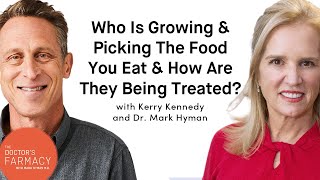
Dr. Mark Hyman and guests discuss farm workers in the US who face exploitation, unsafe pesticide exposure, and poverty wages. The Fair Food Program offers one model for worker-driven change, but most farm workers still lack basic protections and fair pay.
The Coalition of the Mockingbird Workers. And that is an extraordinary organization that really has come up with a formula that has stopped exploitation and stopped abuse and stopped sexual assault, basically ended sexual assault among farm workers. And their model is now being used in Bangladesh for garment workers. It's being used in Hollywood for the MeToo movement, and it's being used in the upstate in Vermont for dairy workers.
Hi, I'm Kaya Perowich, one of the producers of the Doctors Pharmacy. Most of us don't think about food and farm workers when we are eating or shopping for groceries, but this is the largest sector of workers in the United States. Without them, we wouldn't be able to eat, yet they rarely make a living wage and are often subjected to unthinkable living and working conditions. Dr. Hyman spoke about this in a conversation he had about health disparities with his colleagues at the Cleveland Clinic. He also explored how one group of farm workers banded together to fight for better wages and working conditions in his conversation with Kerry Kennedy.
And the other thing that people don't realize is that a lot of these health disparities exist in food and farm workers, which comprise more workers than any other industry. There's 20 million food and farm workers, and they're often brown and black. And they're often unprotected. And the Fair Labor Act, which was in the 30s under Roosevelt, which was developed to protect workers, did not cover food and farm workers. Why? Because they were African American for the most part, so they weren't protected. And that's why they often earn less than minimum wage. They have no health benefits. We have to cover them with Medicaid and food stamps. And they're often at high risk for diseases such as pesticide-related conditions and and they're struggling. And again, we're eating all this food, but what is happening to people who actually provide the food? That's a whole another level of health disparity that exists in those Brown and Black communities.
The real miracle story of farm workers in the United States over the last 50 years is, of course, Cesar Chavez and Dolores Huerta and the United Farm Workers in California. But all of the Progress they made in California did not impact other states. You have to go state by state by state because we don't have a federal rule. But there's an organization in South Florida which you mentioned that you were marching against Wendy's.
I was.
And ran into my daughter Maya a few months ago on behalf of the Coalition of Mockley Workers. and that is an extraordinary organization that really has come up with a formula that has stopped exploitation and stopped abuse and stopped sexual assault, basically ended sexual assault among farm workers. And their model is now being used in Bangladesh for garment workers. It's being used in Hollywood for the Me Too movement, and it's being used in the upstate in Vermont for dairy workers. So they've done an incredible job.
Yeah, it's an incredible story. I mean, we can go into it a little bit, but, you know, this is a group of farm workers from a number of different countries, from, I think, Jamaica and Mexico, and they were being really abused. They weren't given shelter from the shade. They weren't given water, they weren't given proper breaks, they weren't given restrooms, they weren't given safe transportation, they had sexual abuse, all these injustices against them. They were paid not a living wage. Again, they were living in these crowded housing environments, working from five in the morning till eight at night. And they figured out how together they could band together to create a movement. And they sort of happened in fits and starts, but they finally figured out that by boycotting not the farmers who are abusing them, but the purchasers of the farm products like Wendy's or like Taco Bell. They were able to pressure the supply chain to change their purchasing practices, which then led to this fair trade, fair labor sort of practices. So can you talk a little bit about how that happened and how they were successful? It's a very compelling story. It wasn't from the outside, it came from the inside.
Yeah, it's an amazing story of people at the lowest end of the supply chain standing up and figuring out how to make things work. There's a guy called Lucas Benitez and Greg Asbed and a few others who came together and had had it with being exploited and figured out this program. But essentially what they do is, incidentally, they have a legal arm and they successfully prosecuted 15 cases of slavery in the United States over the last decade, 15 cases of people going to jail for enslaving farm workers picking tomatoes.
And what does slavery look like? Because, you know, it's hard to imagine, we'd be buying and selling people or what are they doing?
Well, I'll tell you, one of the cases, in one of the cases they were, and this was of African Americans, primarily African American slavery, they were going into homeless shelters and saying to people who, many of whom had intellectual disabilities, If you come with us, we'll give you food and shelter and a full-time job. And people had gotten to this truck, which was basically a U-Haul with no windows, and they're driven five hours and dumped out in a tomato field and told you had to pick tomatoes now 12 hours a day, seven days a week. And then they're not, you know, they're not.
And they weren't paid.
They'Re not paid and they have no idea where they are and they have no idea how to get out of it. That was one of the cases.
Wow.
Another case, it was of immigrants coming up from, you know, seasonal workers coming up across the Texas border looking for work. Yeah, we've got a full-time job for you. Just get on this flight. to go to Florida again. They're taken, now in that particular case, they had, I think it was like 24 people in one mobile home. And they show everybody binoculars and show them how binoculars work. And then they pistol whip a couple of the workers and say, and they've got guns. And they say, any of you tries to leave, we're gonna shoot you and we're gonna kill you. And we've got binoculars on you all day long. You go into this field more. And they were there for a year. The field adjoined a, what's the biggest bird watching association?
The Audubon Society. Yeah.
It joined an Audubon Society. They just saw tons of people with binoculars looking at them all day long.
Wow. Wow.
How about that? Can you imagine anyone from the Audubon Society thought those people were being enslaved and being, and that they were being exploited? So that's what was happening. what they did was they went to consumers.
Yeah.
And then they got consumers on board, mostly on college campuses, starting in college campuses then generally. And then they went to the big buyers like McDonald's and Burger King and others, the fast food companies and now Walmart. And they said, you have the danger of slavery in your fields. All you have to do is comply with the fair food program and we will guarantee that you don't have the supply chain disruptions and that you're treating your people fairly. And so, you know, eventually almost all those companies came around. But Wendy's is still holding out.
Publix, right? Publix, have they converted?
Publix as well. Well, Wendy's is a national chain, Publix is local to Florida. But basically, what the Fair Food Program does is it's a worker-driven social responsibility. So most social responsibility compacts are written by the CEO or the legal team or the marketing team. This is written by the workers. What do you need in order to feel safe. We need sanitation in the fields. We need to be able to wash our hands. We need to be paid from the moment we get on the bus, not the moment when we can start working in the field. All those types of things. Then they have an agreement that they'll train all of the workers in those fields. They do trainings once every about two months. so that everybody knows their rights.
Yeah.
And knows how to report the abuses. And then they can, you know, and then the abuses continue to happen usually in a field for another year. But once everybody understands that they'll be held accountable for abuse, the abuse has stopped.
Yeah.
And that's what they've been able to prove. So it's really, really important.
Yeah, I mean, the fair food program is pretty amazing because it really was generated from the workers. And in order for a company to say they are a fair food purchaser and be part of that and get the credibility with the consumer, they have to agree to do these things, including paying a penny more per pound, which doesn't sound like very much, but it doubles the wages of these farm workers.
Exactly.
They did it without passing on that to the consumers. And the amazing provisions are or things that we would all think are just something we should already have in America, like no forced labor, no child labor, no violence, minimum wage, paid workers for all their work, no sexual abuse. I mean, these are things that we all should expect, freedom to report unsafe treatment, abuse, access to shade and clean water, and just like things that we take for granted most of us being transported in safe vehicles rather than rickety things that are going to fall apart and actually how to actually leave the field if there's pesticides spraying. I mean, I think the data from a doctor's point of view was so striking to me, Carrie, when you look at the Chamaco study in Salinas, California, the chemical exposures from the pesticides, even though there were a lot of reforms in California, there's still tremendous exposures. The workers there are 59% more likely to get leukemia, 70% more likely to get stomach cancer. They're more likely to get cervical cancer, 63%. and what's really striking is in breast milk. So these kids are really born pre-polluted, you know, it's pretty scary. 40% more pesticides in the breast milk. And these kids have neurological impairment. They lost 41 million IQ points in this population. And they're using chemicals that are banned in most other countries like atrazine, paraquat, nicotinamide and dichloropropane, which is one of the most harmful ones and most widely used in California. And it's like, wow, we're living in a democracy where equal rights and human justice are, I mean, we're all, we're like the, you know, the sort of, apparently the paragon of human rights, and we call it all these other countries. And it's terrible, and especially in these workers.
That workers should have basic rights would seem to be a given, but for many food and farm workers, it's not. Part of how we can help fix this problem is by supporting restaurant and food retailers who agree to the Fair Food Program, and by pressuring growers to adhere to basic tenets. If you'd like to learn more about anything you heard today, I encourage you to check out Dr. Hyman's full length conversation with Kerry Kennedy, as well as his conversation on racial health disparities with his colleagues at the Cleveland Clinic. Dr. Hyman also included a full chapter on this topic in his book, Food Fix. If you enjoyed this episode, please consider sharing it with a friend and leaving us a review below. Thanks for tuning in.
More from AI




This Is Why 99% of Skin Conditions Don't Heal — And What Dermatologists Won't Tell You






Why you need to start strength training today #strengthtraining #healthyaging #fitness
