Who Should Eat Keto and Why? | Gary Taubes
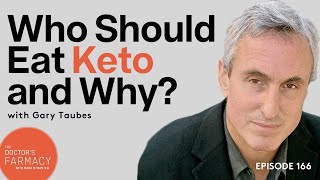
This is a YouTube video titled "Who Should Eat Keto and Why? | Gary Taubes" published in April 2021. It features a detailed conversation between Dr. Mark Hyman (Ask AI Mark) and journalist Gary Taubes discussing the science and practice of ketogenic and low-carb diets, obesity, insulin resistance, and metabolic health. The discussion covers historical perspectives, scientific controversies, personalized nutrition, and the challenges of conventional dietary advice, aimed at people struggling with weight and metabolic issues.
The obese and overweight, the 90, 88% of Americans who are metabolically unhealthy are not sitting in lines at McDonald's right now. And they're oversized, you know, SUVs with the specialty wide seats waiting to get, you know, their triple cheeseburgers and super-sized fries and huge cones. I mean, some of them are, but some of them are eating very healthy and doing their best to eat in moderation. They're still overweight because they're getting the wrong advice.
Welcome to the Doctor's Pharmacy. I'm Dr. Mark Hyman, that's Pharmacy with an F-A-R-M-A-C-Y, a place for conversations that matter. And if you've heard the buzz about keto and are wondering what it is, if it works, if you should do it, or if it's going to kill you, this is the podcast you should want to listen to because it's with my good friend, incredible award-winning journalist, Gary Taubes. He is one of my heroes. In fact, it is one of his original articles that got me thinking about the whole idea of is a calorie a calorie and is sugar actually worse than fat? Back in 2002, when he wrote the New York Times magazine article, which was called Big Fat Lie, right? Wasn't that called Big Fat Lie?
What if it's all been a big fat lie? Yes. Yeah.
Hi, Gary. Gary was the co-founder and director of the Nutrition Science Initiative or NuSI. he's the author of many books which are really deep dives into issues that we all care about. The Case Against Sugar, which I'm a huge fan of, why We Get Fat, which is a very concise little book that explains exactly why we gain weight, and Good Calories, Bad Calories. Again, these are just in my mind some of the top books in the nutrition health field have been most investigative books I've seen about the truth of the science without any filters or any sort of obfuscation through the ways that we usually get our data. He is also a contributing article writer for Discover, staff writer. He's written many articles and cover articles for Nutrition Health, New York Times Magazine. He's written for the Atlantic Esquire and has been in many best of anthologies, including the Best of American Science Writing. And he's received lots of awards, three Science and Society Journalism Awards, the National Association of Science Writers, he's the recipient of the Robert Wood Johnson Foundation Investigator Award in Health Policy Research, which is pretty damn good for a journalist. He lives in Oakland, California, and he is one of the smartest guys I know. Welcome to the Doctor's Pharmacy.
Mark, thank you and thank you for that great introduction.
Okay.
Even me, you know, even I'm willing to listen to what I have to say now.
Yeah, exactly. Well, you know, we're in an interesting moment in society where we're fatter than ever. We keep talking about it for decades. I have been, you have been, and it just keeps getting worse and worse and worse. Our government recommendations and policies don't seem to be solving the problem. And certainly the advice we're getting from our doctors and nutritionists often is not effective either, which is eat less and exercise more. It's just calories in, calories out. And you've written a lot about this in the past. And recently there's been a real movement to look at radical different ways of solving some of the biggest problems we have, which is diabetes and obesity, using a ketogenic diet. And for those who are listening, a ketogenic diet, essentially a 70% fat diet, cuts out almost all carbohydrates and has, you know, moderate amounts of protein. It's definitely not exactly an Atkins diet. It's a little bit different than that. And it's been around for a long time in medicine, but it's recently being used for all sorts of conditions from cancer to diabetes to Alzheimer's. And it's been used for decades for epilepsy by neurologists. So, you really become an expert on these issues as a non-doctor scientist. You probably have read more of the scientific papers and more of the data on this than most doctors or scientists. And you've been busting a lot of the big myths that really we are facing in the world of food. And that first myth that you really took on back in 2002 with that article, what if it's all been a big fat lie? was that we should all be eating a low fat diet to lose weight because fat has more calories than carbs. So if we all eat Snackwell cookies, we lose weight, except for one thing, the opposite happened. So what led you in that whole trajectory of this sort of examination of low fat movement to swing so far the other way to read to write a book called the Case for Keto, Rethinking Weight Control and the Science and Practice of Low Carb high fat eating. What made you go, I need to write a book about this? Okay.
Well, when I first- By the way.
This is the book. Everybody should get it. It's really, really awesome. It's got a nice red cover. You can't miss it. And, it's beautifully written.
It's great prose. It's just awesome. And again, thank you again. So, yeah, so that New York Times Magazine article was a third of my investigative reports on nutrition. So, I started off just by chance writing about salt and blood pressure for the journal Science. And I had no idea that there was an enormous, very vitriolic controversy in the field, the basis of which was that there's surprisingly little evidence to advise us all to eat less salt. And while I was doing that work, I realized that one of the worst scientists I'd ever interviewed, and I had written a book called Bad Science, had taken credit not just for the low salt diet we were all eating in the 1990s, but the low fat diet as well. So then I did a investigative piece for science. It took me a year published. It was called the soft science of dietary fat. And it just turned out that again, the evidence, the idea that dietary fat causes heart disease was an interesting hypothesis that was launched kind of in the beginning of the 20th century and then took hold in the 1950s and never panned out. The experiment after experiment to try and test it. And the experiments, you know, sometimes they showed that people ate less fat, lived a little longer. Sometimes they show that they died a little more prematurely. And scientists fell in love with the hypotheses that scientists often do. The public health, the move establishment in this country started promoting it, and we believed it ever since. So in 2002, when I did this New York Times magazine article, initially the idea was that I just wanted to find out what started the obesity epidemic. pandemic. It was relative, our awareness of it was relatively new. Obesity rates shoot up in this country roughly in the 1980s, and it coincides with some shifts to nutritional advice. Well, we go from eating sugar to eating high fructose corn syrup. So that was one hypothesis. Michael Pollan bought into that idea and was promoting it. And the other was just that we started promoting this idea that a low-fat diet was a healthy diet and that carbohydrates are heart-healthy diet foods. When carbohydrates had always been perceived as kind of uniquely fattening, you know, starches, breads, and sugars, the kind of thing that, you know, people would say they go right to my hips or right to my gut. So I was reporting that story for the New York Times magazine. And while I was doing it, it turned out I stumbled on five clinical trials, really the first five that had ever been done comparing an Atkins ketogenic diet to a low-fat diet, the kind the American Heart Association was telling us to eat. And none of these studies had been published yet, but they'd all been discussed in conferences. And they all found the same thing, that if you tell someone to eat a high-fat diet rich in saturated fat and animal products, but don't eat carbohydrates, and you could eat as much as you want. So, you know, the eggs and bacon for breakfast and a you know, T-bone steak with salad for lunch and a half a roast chicken with salad, their green vegetables for dinner and you smother in butter and oil and, you know, all the things we were supposed to not do. And if you tell someone to do that, not only do they lose weight, but their heart disease risk factors improve. And all five studies showed the same thing. And they were, you know, from clinical trials, up and down the East Coast, basically. And it suggested, you know, this is the joke. It suggested that everything we know about or everything we're being told about diet and health was wrong. Because, you know, the Atkins diet, again, was basically was a ketogenic. It was a ketogenic diet. That's why Atkins was crucified for promoting it. He got very wealthy, but the medical establishment didn't appreciate him promoting a radical idea like ketosis. and so anyway, I, I wrote that article. I argued that, you know, maybe dietary fat wasn't the problem. Maybe carbs were. And I've been following that ever since. And I actually didn't want to call my book the case for keto because I didn't want to distract from the major points. I was sort of the, originally the book was called how to think about how to eat. And then our mutual friend, Mark Bittman, came out with a book called how to eat six weeks before mine was originally scheduled to be published. Theirs came out in mid-March ship 2020. So they got swallowed up by covet. And mine was not scheduled until late April, so we could delay it. And when we delayed it, we changed the title to so they wouldn't compete. And it became the case for keto. I didn't fight it because I've basically been making the case for ketogenic diets since that original 2002 article.
It's a pretty profound idea. Go ahead.
Yeah, I wanted to, I just wanted to put all this in context. And the context is, you know, if carbohydrates are fattening, those of us who get fat easily can't eat them. And then the extreme version of carb restriction is, is a ketogenic diet. But for, you know, 90 years, people have been insisting we get fat because we eat too much. And, you know, I, you and I and others have been arguing when you get fat because of the carbohydrate content of the diet, then some some of us just, you know, if we want to reverse that process, we basically have to restrict or abstain from them entirely. And then you replace the calories with fat. Now you're doing a keto diet and you're fatter. Yeah. But it's the same thing that you would have been told 195 years ago. Yeah.
Well, it's true. I mean, this has been around for a while. In fact, you know, our good friend David Ludwig was a Harvard professor, does a clinical trialist in obesity and insulin resistance, you know. He says, we don't get fat because we overeat. We overeat because we're fat. And what he means by that is that when you start eating carbohydrates, you get hungry fat growing in your abdomen. And it's not just fat there holding up your pants. It's actually hungry fat that makes you hungry and eat more carbohydrates. It's a vicious cycle and it causes fat storage, slows your metabolism, increases hunger and locks the fat in the fat cells. It's literally a one-way turnstile. Once the fat gets in, which comes from the sugar, is turned into fat, it can't get out. So it's kind of a disaster. And he said something to me once which just blew my mind and made it all make sense to me. He says, you, remember your training about type 1 diabetics, type 1 diabetics and autoimmune disease where the pancreas is damaged and you cannot make insulin. These people have, we call it polydipsia, polyphagia, and polyuria, right? So they're constantly thirsty because they're peeing out all the sugar and salt and everything. but they're hungry, they're starving all the time, which is polyphagia. And that means that they can eat 10 or 20,000 calories a day and they will not gain a pound. In fact, they will lose weight. So why is that? It's because they have no insulin and you need insulin to gain weight. And the cold key to keto is that it shuts off that insulin. And so, you know, one of the whole issues here is that it's a whole calorie myth, which you dissected in your book, good calories, bad calories. Can you take us down a little bit of why we're still so stuck on this? In fact, David Ludwig sent me a paper from the American, I think, Endocrinological Society that was relatively recent by a whole panel of experts on obesity, very renowned people. And they all came down and said, it's all about the calories. And I was like, oh, I thought we were over that one.
That's just all about the calories because they're willing to accept that counting calories doesn't really help anyone anymore. It's this idea that it's all about energy balance. So what David Ludwig is saying, the idea is you have the different foods have different effects on our hormonal status and whether or not we accumulate fat is determined primarily by hormones, insulin and glucagon. So insulin is a dominant one and glucagon is a sort of a counter hormone. So if some foods stimulate insulin, carbohydrate rich foods and protein to a lesser extent, carbohydrates only stimulate insulin, protein stimulates glucagon, which works against insulin, the fat tissue. So it's sort of, the argument is obesity is a hormonal thing. You, you cause your fat to, your fat cells to accumulate excess fat, and that in turn steals calories from the rest of your body that you would use for fuel. And so you're constantly hungry. And when insulin's elevated, the only calories you could burn for fuel are carbohydrates. So you're constantly hungry. So that's part of the vicious cycle. back at the turn of the 20th century, when nutritionists and doctors first started thinking about what the cause of obesity is, it's funny in science and, and I, my interest even more than nutrition is, is the, how science progresses and scientific thinking. And in science, the tools you have available determine what you can learn. Right? so in physics, you get a bigger accelerator, you can learn more about the universe and astronomy, you get telescopes that look in different wavelengths, you could learn different things about the universe, whatever you could see in that wavelength. And in nutrition, the only tool they had that seemed relevant to obesity was a device called a calorimeter, which could measure the energy expended by a human being or could measure the energy contained in a food that the human ate. So they created this theory that obesity is caused by energy in being more than energy out. It seemed intuitively obvious because that's all they can measure. They couldn't measure.
It's a math problem. I mean, weight loss is a math problem.
It's basically. Weight loss is a math problem. So, you know, and there are other people arguing, look, it's, it's clearly a hormonal issue. It's like you look at men and women's fat differently. That's hormones. You know, like boys go through puberty, they gain muscle and lose fat. That's hormones. Girls go through puberty, they gain fat in specific. places. That's hormones. It's all hormones, you know, and it's just some people, they're going to get fat no matter how much they eat or the only way they're going to stop themselves from getting fat if they starve themselves. Yeah. And this was the German and Austrian clinicians who were doing the best medical science in the world at the time argued this. And it didn't matter. An American came along, a guy named Louis Newberg, University of Michigan, and claimed he had done the first experiment ever. This was 1930. and in this experiment he proved once and for all was all about calories. It's about how much you ate. And it was always about how much you ate. And no matter what the excuse, like, you know, women when they go through menopause, they gain fat. Now animals when they go through menopause are the, if you remove the ovaries from animals, they'll gain fat. And that was well known even in the 1920s. So it seemed to be a hormonal thing related to estrogen. But with women, it was about eating too much. They sat down with their lady friends. and played bridge and ate bonbons. I mean, incredibly sexist explanations for why it's never hormones. And it just, it caught on. It's, it caught on in part because World War II came along and the, the Germans and Austrian researchers arguing the opposite vanished. They evaporated with the war.
So the Germans were the ones pushing that it's not energy balance. And because of that, they were saying, Nazis, we got rid of that theory.
We got rid of that. And it sounds like we're joking, but it's you. you know, nowadays, I, I mean, it's very easy to demonstrate in the history. It's people cited Newberg. They didn't cite the germ. Actually, the prime guy was an Austrian. He was a Jew named Julius Bauer. He fled to the U.S. in 1938, but the only job he could end up getting was that the, I mean, he was the, one of the founders of the, the sort of endocrinology research in Europe. very well known pioneer in the field, flees the Nazis in 38 when they attack, they move into Austria. He ends up going to Baton Rouge, Louisiana. He works at LSU for a year and then he goes to LA and gets a job at the hospital of medical evangelists and he publishes papers like Julius Bauer, Hollywood, California, and nobody pays attention.
Yeah, yeah.
You know, he's not at Harvard, he's not at Yale, he's not at Columbia. He's like, who is this?
We've had decades of of other research since then. I mean, there's been really well-designed, well-executed clinical trials by David Ludwig and others looking at this whole hypothesis of the carbohydrate insulin hypothesis of weight loss, which is a hormonal one. And what it really leads to in our thinking, and this is sort of striking to me, researching some of my books, I discovered that if you're a kid and you're overweight, It's more of a stigma than if you're a kid and you're in a wheelchair and a quadriplegic. And we basically blame the person who's overweight for being fat. It's your fault, you're fat, just eat less and exercise more. And otherwise, if you don't, it's just because you're lazy and a glutton. And that fat shaming and that underlying approach is based on this idea of the calorie myth and that weight loss is just a matter of willpower. So why is willpower not the issue here?
Well, again, it's, it's based on this energy balance idea. If the, the obese child, maybe he's 40 pounds overweight at age 12. That, that means his, his fat, they, they's been storing, you know, 50 extra calories of fat a, a year in his, his fat cells. So why can't they fix that? Why can't they just. eat a little less, store a little less, or exercise a little more, store a little less. And it's the answer that lean people come to is, well, they must not care enough. If it's about energy balance, and I make this point in the case for keto, if it's about energy balance, that absolutely, that creates the concept of fat shaming in effect, because the assumption is always, if it's about intake and expenditure, then you should be able to take in a little bit less or expend a little bit more. It doesn't take a world of effort. We're talking about tiny numbers every day. So why can't people do it? And then you end up assuming it's because they don't want to or they don't have willpower. You come over. And it's interesting. By the 1960s, you know, obesity research in the US was dominated by psychologists and psychiatrists who were trying to figure out how to get those fat people to eat less. I mean, they didn't care. The idea that they just have a fat storage disorder. They, we have a fat storage disorder. Just like if you saw somebody walking down the street who was eight feet tall, you wouldn't think about how much they eat and exercise. You would think he's got some kind of growth hormone dysfunction. Even if you weighed 400 pounds, which often, if somebody's eight feet tall, they're likely to weigh 300 or 400 pounds. You don't care about how much they're eating and exercising. care about the growth hormone issue and growth hormone receptor. But here they just didn't think like that. And once they didn't, and this is a danger in any sort of medical scientific process, once you assume something to be true based on an assumption, then it's going to infiltrate everything you do and it's going to affect everything you do. So David Ludwig does these terrific, you know, very well-designed experiments to suss out whether or not obesity is a carbohydrate insulin problem or a calorie problem.
Yes.
And for the most part, his work is sided with his, you know, his own preferred hypothesis, carbohydrate insulin. But there are other people who think the opposite, who claim that their experiments are just as well designed, and then you end up getting. Yeah, they will remain. And the problem is all we can do, like you as a physician and me as a journalist, is say, look, this works. you know?
Well, I'm a practicing doctor and I'm just humbled by seeing real patients in real time and not just looking at theory or scientific articles or textbooks, but actually seeing what works and what doesn't work depending on the person. And, and this is really an important piece here. And you say in your introduction to your book, you say, I'm not writing this book for the lean and healthy of the world. I'm writing it for those who fatten all too easily. And I think that's the key line in the book. There are some people who can eat whatever they want and they're fine because they're highly insulin sensitive. But when you look back, for example, at the Native Americans in this country, there was no obesity, there was no diabetes, there was no heart disease, and now second to Samoans, they're the fattest population in the world. Why? Because their diet changed from what they were adapted to, to an extremely high carbohydrate diet. They were great at starvation. They were magnificent at managing scarcity, which 100,000s do that.
I don't think the Native Americans dealt with a lot of scarcity in this country.
Well, I mean, they might have had to deal with some scarcity. 100 gatherers, you know, they could get food, but there was food, but it was tough, right?
It wasn't like- It wasn't that tough. When Lewis and Clark, I hate to say, when Lewis and Clark, you know, crossed the country in 1805, they had to push the buffalo out of the way on the Great Plains, literally. You know, you've got these herds of millions of buffalo.
But historically, we've gone through periods where, you know, it wasn't always easy to go to the grocery store and get food. So we are really well adapted to starvation. And then there's a whole class of people that really this book is for, the Case for Keto, Rethinking Weight Control and the Science and Practice of Low Carb, High Fat Eating. Everybody should get a copy. You go into explaining why there's a subset of people, which turns out to.
Be probably the majority of people in America.
Probably the majority.
Right?
There's 75% are overweight, 88% are metabolically and healthy. So maybe there's like, you know, one out of ten that's a lean healthy person and they got lucky. But for the rest of us, carbohydrates make a difference. Hey everybody, it's Dr. Hyman. Thanks for tuning into the Doctor's Pharmacy. I hope you're loving this podcast. It's one of my favorite things to do and introducing you all the experts that I know and I love and that I've learned so much from. And I want to tell you about something else which is called Mark's Picks. It's my weekly newsletter and in it I share my favorite stuff from foods to supplements to gadgets to tools to enhance your health. It's all the cool stuff that I use and that my team uses to optimize and enhance our health. And I'd love you to sign up for the weekly newsletter. I'll only send it to you once a week on Fridays. Nothing else, I promise. And all you have to do is go to drhyman.com/marks-picks. forward slash pics to sign up. That's drhyman.com/pics, P-I-C-K-S, and sign up for the newsletter and I'll share with you my favorite stuff that I use to enhance my health and get healthier and better and live younger longer. Now back to this week's episode. So what does it mean to fatten easily and why is this book so important for people who are overweight to really get understand and read?
Well, and this is, you know, we all we get it. If you're one of these people who struggles with their weight, you know, the, again, the, the conventional wisdom, the Assumption, the advice we get from everyone when it's a calorie problem and you got to eat less and exercise more, the ideas. If you're still struggling with your weight, you're not trying hard enough. Whereas the rest of us want to say, look, I tried that. I did need less exercise more. I spent the decade of the 1990s Hungary. Okay? I gained weight anyway. This is what it means to, you know, it's like I restricted my calories. I ate in moderation. You know, Michael Pollan, I tried my best to eat not too much. And I got fat anyway. So we're different from the lean people. So a lean person comes along and they think, okay, I eat in moderation. This is my issue with David Katz. And I hope David Katz someday reads the, you know, Yale affiliated doctor who has become a major spokesman for the sort of mostly plant movement. And the world is full of these, you know, healthy, lean, buff, physical trainers and marathoners. And they think, you know, I eat moderation, I'm lean, I eat moderation and I exercise. Therefore, if everyone else ate moderation exercise, they would be lean too, which is not true. and if they don't eat moderation and exercise, or if they're not lean, it means they're not eating in moderation and they're not exercising enough. So I have to tell them, you know, eat moderation, don't eat too much, eat a healthy diet, fruits, vegetables, whole grains, and the point is we all did that. Yeah. We're not the obese and overweight, the 90, 88% of Americans who are metabolically unhealthy are not sitting in lines at McDonald's right now and they're, they're oversized, you know, SUVs with the specialty wide seats. waiting to get, you know, their, their triple cheeseburgers and, and super size fries and huge cones. I mean, some of them are, but some of them are eating very healthy and doing their best to eat in moderation. They're still overweight because they're getting the wrong advice. And that's what I'm trying to communicate. We've been getting lean persons diet advice for the past century. This is what I eat. Therefore, this is what you should eat. I am arguing is that those of us who fatten easily, if we eat what they eat, we're going to be either fat or hungry. Those are our two choices. And possibly both. Yeah, that's right. That's right.
As a practicing doctor, I see this in real time by looking at people's hormones and their metabolism and their insulin levels and their lipids and their inflammation. I can tell often just by looking at somebody because I had so much experience, but just looking at their lab test, which type of metabolism they have. And, and the truth is, and it's, and I often, I feel bad and I apologize to my patients because I say, listen, I didn't, I didn't design this. I'm not the, I'm not the creator of your biology. I'm just the Interpreter. But I'm telling you, if you really want to stay healthy and avert all the diseases of Aging, because they're all connected. to this mechanism of high insulin, right? Heart disease, cancer, diabetes, dementia, depression. I mean, I could go on and on. If you don't pay attention to this, you are going to be in trouble. And the truth is, like you were saying, what do these lean people have in common? They're insulin sensitive. I don't know if you know Jorge Pletschky. He's a cardiologist at Harvard, a preventive cardiologist. He said, Mark, if you were to take a group of a hundred year old people who had absolutely clean arteries, they'd have one thing in common. I said, what's that? He said, They'd be insulin sensitive, meaning they are very good at producing very low levels of insulin that are extremely effective in the body that don't require them to produce more and more to get the same benefit. And sort of like that's what insulin resistance is. Essentially when your cells become resistant to the effects of insulin so you produce more and more and more and more to keep your blood sugar normal but eventually that burns out and you get diabetes. But even before you get diabetes, it just causes the weight to pile on.
And all the metabolic issues. yeah. And this is, you know, those people who, I mean, you could guess if you've got a weight problem, this is right though, the, the first symptom a doctor is supposed to look for to diagnose metabolic syndrome, which is we could call insulin resistance or hyperinsulinemia syndrome. And the first symptom you're supposed to look for is your, your waist size is increasing, you're getting fatter, and then it's high blood pressure and low HDL cholesterol and high triglycerides and, and glucose intolerant, you're becoming diabetic, all those things are happening. And, and the way you fix it is remove the cause of it. The causes, the first are the highly refined grains and sugars. But then for many of us, and this is where you start going into sort of keto diet land. For many of us, it's all carbs. Yeah.
All our rich greens other than green.
Leafy vegetables, grains, beans, starches. Yeah. It's because our bodies can't tolerate and this is just not the message we get. And it's a strange time we live in because often I feel like, you know, we were making a lot of progress getting the nutrition community to pay attention, but now we live in the age of fake news. So it's easy to write off alternative perspectives as fake news. And I wander around thinking, wait, am I a purveyor? Are you a fake news purveyor?
Am I a fake news?
Because I disagree with the establishment. But again, the argument we're making and what you're telling your patients, what I'm telling readers is, look, try this. The one thing we know for sure, right, is low carb diets are safe and benign. When I first wrote that New York Times magazine article 18 years ago, the assumption was that these 19 years ago, the assumption was these diets would kill you, right? I mean, I described sitting, I had tried Atkins as an experiment. I described sitting in diner in New York having my morning eggs and bacon and waiting for my heart to blow up because that was, you know, it's high in saturated fat, Christ, it's high in bacon. I should have died of colon cancer decades ago. Knock on wood. We know they're safe now. We know they're benign. We know for sure now people can try them without being afraid. that they're going to somehow blow up their hearts and they can see the benefits. Yeah.
And I think that what happens is that in medicine, we tend to be lumpers, not splitters. We lump everybody into one group saying, all you humans are the same, you're all metabolically identical, you all need to follow this same monotonous advice, and you'll all be fine. and it's absolute nonsense because as we're learning, there's a large heterogeneity or variation of the population according to their genes, their metabolic issues, their family histories and so forth, and their need for different types of diets and foods. There's no one size fits all diet. So for me and for you, maybe we are relatively lean guys and maybe it's just because we follow this advice.
In my case, it's because I follow this advice. Right or wrong, I'm killing myself.
Well, I've gained 15 pounds by eating more carbohydrates. I went through that period and I'm now, you know, down. And I, and I think that, that, but, but this isn't, keto isn't, I think, universally effective for everybody because I think some people, and I've seen this in my practice, if you're wanting, for example, optimize your health and people are trying keto as a health kick and you're one of those people, for example, like me, who, when you eat excess fat, it actually can screw up your metabolism, the sense that it can cause really worse lipid profiles and all sorts of abnormalities that you wouldn't necessarily see. So, I think there's still a lot to learn about who's the right person for this and I think we'll be able to sort of discern this through.
Both hormonal metabolic testing and also genetic testing. Yeah, and I agree with you. The question would be though, if you've got a patient, obese diabetic patient, someone.
Who struggled with their weight their whole.
Life, there's no doubt. We're going to agree that we have to get their insulin down.
Yes, 100%.
100%. And that's, and so then the question is, how do you do that in a way that maximizes their benefits and in a way that they can maintain it for the rest of their lives? And those are sort of different questions. So for the most part, you know, we talk about in every, because even though again, this book is called the Case for Keto, but the book is about the subtitle. You know, it's rethinking weight control and the science practice of low carb, high fat eating. And throughout the book, I refer, I use the term low carbs, high fat slash keto or ketogenic eating. I admit that this is, there's nothing catchy about it. Nobody's gonna say I'm doing tabs as LCHF slash keto, but I'm trying to be inclusive. You know, at some level, we, I just trying and hammering on this, and people say, well, tabs keeps striking. the same thing over and over again. It's because we have to get more and more people to accept that this is a carbohydrate problem. It's not a fat problem. It's not a... It's funny, even what you just said. So my next book is on diabetes and specifically diabetes and I'm obsessed with the history and I'm going to apologize to you. Wasn't that the case for sugar?
That was sort of talking a lot about that.
Well, that was also, that was sugar, that was diabetes on a population-wide base. this is sort of on a individual, what's the dietary treatment of diabetes? How we got into this world where the ADA is prescribing high carb diets.
Well, it used to be, I mean, the treatment for diabetes used to be back in the 1920s, a 70 to 75% fat diet and low, very, very, very low carbohydrate ketogenic diet. That was the treatment before we developed this.
Yeah, no, that was from the 1780s.
Till 1914. this is Harvard's Joslin Diabetes Center. This is not some radical.
Yeah, no, I know, I know. So that's the, anyway, the point is, once you restrict carbs, once you restrict carbs, then you've got, and you still have problems. And people start talking about, what else should I restrict? Do I have to restrict fat also? Do I have to, you know, and we're saying on some level, how do you fix these people? Everyone's going to be different lipid profiles. I'm a little less sanguine about what we really know about the connection between lipid profiles and long-term health. You know, the, there's so much confusion there and so few diet related clinical trials that would actually tell you once you're, you know, once you sort of fixed your metabolic syndrome. once you've lowered insulin and got your weight under control, what do the other lipid markers mean? Because we decide, you know, based on people eat a standard American diet, that's how we decide what these, you know, the association between these risk factors and disease are. But we're not, you're not advocating a standard American diet to your patient, and I'm not advocating it. So once you fix your obesity and your, your blood sugar levels issues with carb restriction of some form from, you know, moderate to severe from, you know, improving the quality of the carbs might be enough for people. Yeah. But even then, it's sort of, yeah, everyone's different. Everyone's going to be able to tolerate a different level of carbohydrates, but on.
Some level, when you're saying it's so important, Gary, I just want to stop there because I, I think what I've learned is that there's a Continuum, right? There are some people who, you know, can't even look at a bagel. Because if they do, they'll have a cephalic insulin phase response, meaning they'll think about the bagel. It'll make their insulin go up and they'll gain weight without even doing anything. That's the one extreme. And those people, I would say they're like celiac disease. They really need to, they need to be considering themselves carbohydrate intolerant. and then there's the continuum of people who are sort of somewhere along that spectrum. And the question is, what is right? And do you need to be full keto? Can you just be lower starch and sugar, more higher fat without being keto? Because keto is a very specific type of metabolic framework. And I, I think maybe we should take a little time to dissect what happens when you eat keto and what the, the benefits and slash potential risks are and, and particularly how keto can be monitored in a way that makes sure you're doing it. So tell us about what is actually keto and how do you know your keto and how do you do that?
Yeah, and again, remember, despite the title of my book, which is the Case for Keto, it's not actually about keto. It's about, so keto to me is the extreme carbohydrate restriction where you replace the carbs with fat. And Atkins was keto. The way I refer to it is like back when I was young, that's what we called a ketogenic diet was Atkins. And Atkins got in trouble because he was advocating a ketogenic diet. So we can talk about, I mean, there are different definitions for how much carbohydrates people can tolerate without, in order to get into ketosis. But one of these things I did in this book is I interviewed 120 odd physicians from around the world who had converted to our way of thinking. And I wanted to know how they, what they were trying to communicate to their patients and what the challenges were. And, you know, it was surprisingly, I don't think there was a single one of them that actually checked, had the patients check for ketones. they just wanted to get their patients off carbs. It's like, if I can get them off carbs, if I can get them to accept that dietary fat is benign, that it's not going to kill them, then we're going to be fine. And that's what they're gonna eat. As soon as you start thinking of it as a specific diet, you know, I am doing keto. And I've had people say to me, well, I don't know if I'm doing keto because I don't have a Bulletproof coffee more than twice a week. And, and then the head name. Head name is a Got a new book out called the, I think PE diet, probably protein energy ratio. And does Ted think of his diet as a keto diet because it's, he's advocating for higher protein and lower fat? And I'm saying, you know, on some profound level, again, individual variation is going to play a huge role, but we don't know the answers to what the level of protein should be to maximize this. And there's probably not one level protein for any, you know, because everyone's a little bit different. Some people are going to run into trouble because they can't tolerate the amount of fat they're eating. Some people are going to run into trouble because they can't tolerate the amount of protein they're eating. Some people are going to do fine and never have measurable ketone levels. And some people may be in a brain fog because they don't have measurable ketone levels. you know, I've discussed this endlessly with Steve Finney, who's done as much work on ketosis as any human alive. And, you know, Steve thinks if you're not, then a. I mean, Steve's a guy to really talk to about, you know, a. How does he. What's the phrase, you know, well-formulated ketogenic diet. If you're cutting carbs, but you're not cutting them enough and you're not. being enough and your ketone synthesis isn't high enough, then you'll never feel good. You'll never feel, have energy that there's a, he talks about it like an island you have to hit in the ocean. And that could be true, but I don't, most people don't think so. I think most people benefit from these diets without ever measuring ketones.
They just, yeah, I think that's right. I mean, I, I've as a physician learned to sort of pick the right person.
Right.
I think, you know, diet's a diet. Well, put food is medicine. Right. So if food is medicine, then what is the right medicine for each person within food? Right. And I think it's different. And I wish we could all say we're all the same, but there's tremendous variation in the population. We're learning more and more about personalized nutrition, Precision nutrition, personalized medicine. That's what I do. That's what functional medicine is. And it's very humbling when you start, start having these grand theories. Everybody should be vegan. Everybody should be keto.
Everybody should be blah, blah, blah.
And all of a sudden it's like, wait a minute, you know?
Yeah. But remember, we're still saying that. We're still saying if you struggle with your weight and you struggle with your blood sugar, you gotta cut back. Everybody should who does that should cut back on carbs.
Well, here's the thing. Yeah, I agree. Here's the thing. Everybody is going to get in trouble when they eat sugar and starch, whether you gain weight or not, because it creates metabolic changes that might not make you. fat, but make you sick. And that's important to remember.
Yeah. And that's, so that's the, you know, and I, again, the reason I wrote this book is to try and clarify some of this and put it into context. Cause people hear the everybody's different. It's funny, I have an interview, I'm gonna talk to a woman this Saturday, well, by the time this airs, it will have been several Saturdays ago, who's, you know, an advocate of plant-based diets and think I think it's very important for her to get her patients on plant-based diets. And she herself consumes, I think, a vegan diet. And I want to understand what her conversion experience is. So again, one of the points, one of the advantages of being a journalist when you can interview so many people. Back in 1998, Malcolm Gladwell, one of the first pieces he ever wrote for the New Yorker was called the Pima Paradox. And it was about obesity and fad diets. and Malcolm kind of made fun of how diet books are written. So he made fun of diet book authors. He said, it's always the same, right? They're getting, there's a formula. They're getting fatter or they're getting disease X, and they try the conventional wisdom, and it doesn't work. And then they get frustrated and they go into the bowels of the medical school library, and in some dusty tome of medical knowledge, they find something they try. that works for them, and then they try it on their patients, and their patients get healthier, and then they write a book about it and try to cash in. And so the idea is that this is something, you know, its implication is this is all part of the job of being a snake oil salesman. You have to come up with a story, you know, a pattern that you could sell, and part of the pattern is, look what happened to me. But the truth is, if you're lean and healthy and you're eating a conventional diet, there's nothing you can learn from your experience. And there's no reason to change what you're doing, right? Because what you're doing seems to be working for you. And if your patients are lean and healthy, and you're telling them to eat the conventional wisdom, what David Katz and Mark Bittman promoted in their last book, then, and their patients stay healthy, you don't learn anything. It's only those of us who are getting fat or who who can have what Gladwell called this conversion experience. If you're getting fatter yourself or your blood sugar's out of control, like Sammy Inkinen, the founder of Virta Health, a world class, literally a world champion triathlete.
I mean, he would row his boat from California to Hawaii. That's the kind of- Hawaii with his wife.
Yeah, that's the kind of- He's rowing the boat. And yet he was pre-diabetic. you know, Marco Gazzella.
Why?
Why? So what's going on? So that's once you have a problem.
He was eating all the goos, all the sports goos, the gels, which are pure sugar.
So despite the incredible physical activity, he's poisoning his bodies. I'm not so sure medicine is food is medicine. I, I, it could be. I preferred, I use the word benign a lot.
It's like harmless.
But I do think food can be poison. and our job is to identify what the poison is. But the problem is, if you're not being poisoned, if you're not getting fatter or getting diabetic, then you can't learn from your experience. There's nothing you can do that will tell you that the conventional wisdom is wrong. So again, it's people like us. We go through this. All these Physicians went through this conversion experience. Every last one of them. Yeah.
And I. I always say the smartest doctor in the room is your own body. You have to see what affects you, which foods make you feel good, make you feel bad, which foods actually make you gain weight or lose weight, and pay attention because smarter than any lab test or doctor is your own body's response to the food you're eating. And, I think if it's not working, then you have to say, well, why is it not working? And, what do I do? And, I think your book really outlines a different way of thinking that is really at the key So, not just solving weight and obesity, Gary, it's at the key to solving most of our global issues because food and the food we're eating is 60% ultra processed food, mostly refined starchy carbohydrates. It's driving this pandemic of obesity. It's also driving the pandemic of chronic disease, heart disease, cancer, diabetes, dementia, and more. It's literally killing 11 million people a year around the world. And, we think COVID's bad, but there's far more people that die every day from eating the wrong food than from COVID or any other disease combined. And it's all related to this underlying mechanism of high levels of insulin sustained over a lifetime that drives aging. It's really the fundamental mechanism of aging and reversing it is the fundamental strategy to longevity, well-being, weight loss, to all the solving of all of our chronic problems. and all their downstream consequences of the economic impact, of climate change, of social injustice. So many things are connected to this. And I think, you know, if you hit on this key idea that we need to get rid of these starchy, refined calories that are causing high insulin, we literally pull the thread that's connecting everything that will literally unravel our current metabolic, economic, and environmental catastrophe.
Yeah. And that's, I mean, again, it's, it's, I mean, there are huge issues to doing this because, again, what does the food industry produce, which are exactly the foods that we're going after and saying people can't, I had to go to the, I dropped my son off school bus, thank God, this morning at seven in the morning, and I stopped off at Safeway to, to pick up some butter. And I'm walking down this aisle and I want to call diabetes aisle, right? It starts with this, not the sports drink, it starts with the, you know, the high caffeine, high sugar drinks on the left and it's got the chips going on the right and the chips on the left. And then I move down to the sodas and then I go to the sports drinks and the chips go to.
The, you know, from potato chips. I love it. I mean, you can have a cancer aisle, a heart disease aisle, a dementia.
Aisle, a diabetes aisle. That would be great. Seriously, it was like, I love that. And that's the thing, the world doesn't have to go keto. One of the things that runs in that the keto, the low-carb movement has run into lately is the idea that livestock is bad for the environment. Livestock, the significant producer of greenhouse gases, and I don't know enough about the science to comment, so I'm willing to assume that it's for sake of argument that this is true and it's a problem and it's got to be dealt with. But the underlying assumption is that if we all go plant-based, we'll all be healthier. The phrase used by this E. Lance Commission that was headed by Walter Willett at Harvard and has made such inroads into pushing this plant-based movement for everyone is it's a win-win situation. situation. You know, we know that if we plant-based diet, we will be healthier. We know if we eat a plant-based diet, the climate, the world will be healthier. And again, the point is we don't know that. You know, the, the lean people, the world, they can eat a plant-based diet. They're fine. All of us can improve our diet and be healthier by getting rid of, you know, the refined sugar and the, that stuff in the diabetes aisle, the supermarket. All of us will be healthier, but some of us have to go further. We just have to cut out carbs and plant-based foods come with carbs attached. That's the name with the exception of olives and avocados. That's, you know.
And if anybody wants to dig into the whole meat, no meat, climate change, health, so for issues, we've done a lot of podcasts on this, but the short answer is it's not the cow, it's the how. and if you grow factory farmed animals, yes, they're an abomination. They should be outlawed and they're devastating human health, environmental health, animal welfare, and destroying our soils and polluting our waters and poisoning us with chemicals. So that, that, there's no doubt about that or disagreement. However, there's a movement of regenerative agriculture, which has the hypothesis that you can actually raise animals in an integrated ecosystem of a farm that builds soil, that conserves water, that eliminates the need for chemicals, that produces healthier food, more food, more profitable for the farmers, and actually maybe healthy. In fact, some guys like Fred Provenza, I don't know if you've heard this research, Gary, but Fred Provenza is a rangeland scientist from University of Utah or Utah State, who is now working with folks at Duke and finding that animals that are allowed to forage on a wide variety of plant foods actually uptake all these phytochemicals and have much different nutrient profiles, much different metabolic profiles when you eat them. The one favorite study I always quote is the kangaroo study in Australia because you can get kangaroo meat there and they fed them gram per gram protein, the same amount of feedlot beef or kangaroo meat. And, the feedlot group had increased inflammatory biomarkers and the kangaroo eaters actually got better. They were healthier. They had lower inflammation as a result. And this is, you know, taking a chunk of meat exactly the same amount and feeding them based on where, what they ate. So I think, I think this is a different topic, but, and I don't think a ketogenic diet is a high meat diet either. It's not necessarily a high me diet. It doesn't have to be.
Yeah. Yeah.
And I think some people can tolerate some level of whole grains or beans. Some people can't. And some, you know, and often the argument is, well, you know, when I, when I switched as a vegan, I lost weight, I got healthy. And I think if you're eating the standard American diet, the absolute answer is yes, you will be much better off if you switch to a lot of plants and whole foods and get off all the crap. And it may not be the vegan diet, it may be just getting off the crap. And then the question is long term, what happens to these people? And, and if you start looking at a lot of these situations, you see, you see this increasing creeping insulin, even if you're eating you know, whole grains and beans, some people are just that carbohydrate intolerant. So I think there's a continuum we have to understand. And I think that's what you're saying with your book. It's not just one size fits all. Everybody in the world should be keto because it's, I don't think that's true. You're talking about this spectrum of eating.
Styles depending on your metabolic type and, and your response to the food you're eating. Right.
And that's it.
So we're cutting carbs and we're, we're adding fat at some level, and if you prefer animal protein and animal fat and you could make it work. My favorite part of the book, so the end of the book, I have lessons that I've learned from the physicians I've interviewed. And I think, you know, I sort of encapsulated the key lessons in how to think about progressing to a low carb, high fat ketogenic diet. And so Carrie Doulas, I'm sure you know Carrie, because she's Cleveland and formerly Cleveland Clinic. so Carrie's a spine surgeon formerly at the Cleveland Clinic, now private practice in Ohio. And she comes from a family history of obesity. She had a weight problem.
She says she was 300 pounds. She was 300 pounds.
Yeah. And then she got also has type 1 diabetes, and she can't tolerate animal products. She just can't do it. Her body can't do it. So she has move to eating a vegan ketogenic diet. And she said to me, and this is the quote that I lead off the section with, it's not a religion, it's just about how I feel. Right. And that's a thing we're all doing. It's about how we feel. And that's, again, it's part of learning the learning process and learning how to do these experiments. I mean, you and I probably do it naturally. It's like some issue comes up in your life. My wife always gets, she been living with this for far too long, but I'll make some comment about how I feel and I go, I can't understand it. And she says, you always said that. I go, well, what I can't understand is why I feel like this today. So I'm trying to understand it in terms of what I ate yesterday or the day before that, because I think it's related. And can I change my diet in such a way that I don't feel like I do today in the future? and what do I have to do? And over the course of among the vices we talked about before we got started, all the vices we've given up, part of the reason we've given up these vices is because they don't make us feel good. I no longer drink alcohol, not because I have any moral ethical issues with alcohol, but quite the contrary. It's just the next day I tend to feel like crying all day long.
I'll give you a hug, don't worry.
Yeah. There we go. So, you know, a hangover you could fix with aspirin. Depression, you can't.
Yeah.
So eventually, as slowly over the years, it's become no. But because I'm paying attention to how I feel the next day, and in my case, it's so it's, it doesn't need a lot of attention to be paid to notice it. But these are the kind of things you can do with all issues of your diet.
Well, you're right.
If I start adding beans back to my diet and I gain 10 pounds. And I find that I'm craving beans. Black beans doesn't matter. Healthy beans, just like they might eat in the blue zone. But when I add it back to my diet, I gain weight and I don't like the weight and I don't like the fact that I'm now craving the beans. Maybe it's better than I don't eat them. Yeah, they're bad for me. They might be fine for David Katz or Mark Bittman. That's right.
But they're not fine for me. That's right. that's right.
We're all, we're all trying. Yeah. Yeah.
And I think, I think we, we have this amazing opportunity now to start to teach people about personalized nutrition and, and food is medicine. I think one of the things that, that people don't understand, and you, you sort of highlighted this with what you said, I think it's important for people to really get this. Most people don't connect what they eat with how they feel, and, and food is the single the biggest modifier of your biology every day. There is nothing that influences your biology in terms of hormones, the microbiome, your immune system, your detoxification system, your brain chemistry, your metabolism. I mean, there's nothing besides food that has that impact. And when you, when you, the underlying subtext of what you're saying, and that we talk about in functional medicine. is that food isn't just calories, it's information. It's instructions that regulate your biology with every bite and can turn on or off hormones, genes, and immune function literally in minutes. And I think most people, if they've started to pay attention like you did, when I drink alcohol, I cry the next day, or when I eat a bagel, I don't feel good, or I take a nap. I mean, I went to some friends over on Maui, and I went to visit some friends on the island who were pretty much vegetarian, vegan, and they had lunch and I'll eat anything. I'm not religious and I normally don't eat a lot of beans or grains. I don't have a thing against them. I just feel better without them. And she had a big bowl of grains and beans for lunch. And then I literally that afternoon we went down to the ocean. There was this place where the river comes to the ocean. There's really rocky beach. And I literally was in a food coma. I laid down on my stomach. It was like on a bed of nails, like on this really uncomfortable, like rocky thing with like rocks sticking everywhere in my body. And I literally fell asleep with these rocks sticking in me because I was in this coma from what I had for lunch. Now, that's not true for everybody, but for me that was true. And I think it just, I just-.
Well, this is- you- know, part of my conversion experience, right? As I used to say back, you know, prior to 2000, I didn't take naps. Naps took me. I'm a science journalist. I would be interviewing some Nobel Prize winner over the phone at 2:00 in the afternoon at lunch and I would have to get off the phone before I fell asleep. I would have to think up some excuse. I used to have notebooks back in the days when we would take notes on the notebooks. And then I'd go back to look at them and my pen would just fall off the page because I'd have fallen asleep while I was taking notes. Yeah, I gave up carbs that stopped. Actually, one of the things that triggered this is I was doing the first piece I ever did on dietary fat for science. I was interviewing a guy at Yale who's an authority on carbohydrate metabolism. And I said to him, why is it I fall asleep every afternoon after lunch? You know, religiously? And he said, but we don't know. He's like, how could you not know that? I mean, it's such a profound phenomena, his whole culture. have siestas in the afternoons because they have carb-rich lunches. And then one and then they go to sleep. Anyway, and then you give up the carbs, it just stops happening. I often wondered, you know, we get a message nowadays, we should all sleep eight hours a night. It's vitally important. We'll control our weight better if we do it. We'll control our blood sugar better if we do it. But one of the things that happened when I cut out sugar, starches and grains, I stopped needing to sleep as much. I can get by on five, six hours of sleep, and I constantly have the struggle that I should be sleeping more. And then if I sleep more, I'm actually less alert. So it's sort of again, individual variation and being aware of your body, because we don't need a clinical trial. And this is the point I make in the book. We're taught, well, you don't know if these. And again, people, we don't have enough clinical trials to know if this is good. for you? Well, you don't have, we do have the 100 plus completed clinical trials of ketogenic diets, and it's undeniably, you know, beneficial over the course of at least a couple years. And then it's hard to imagine that somehow it all goes bad the longer you do. But people who don't like this message can imagine anything, so I'm not gonna, but you don't need a clinical trial to tell you if this will change your ability to control your weight and blood sugar.
Yeah, particularly weight.
It's just, just do it. Yeah, but do it right.
Well, that's the thing. I mean, I think how, I'd love you to sort of share some of the clinical trials that have been recently done around diabetes because I think the data is so striking that it's really worth talking about because we are now facing a pandemic of obesity and diabetes. In fact, one out of two Americans as pre-diabetic or type 2 diabetic. It's the number one driver of our economic costs within Medicare, which is, you know, if Medicare was a company, it would be the biggest corporation in the world with a budget of over $1.3 trillion a year. And it's a good third of that and probably more if you include pre-diabetes. So talk about what we've learned from these rigorous clinical trials using ketogenic diets on type 2 diabetics who are actually on insulin, on medications, severely overweight, and how it compares to sort of other trials and treatments for diabetes.
Well, the story with diabetes has always been the same. Is it the carbs or is it the calories? Okay, this is the recurring theme going back to 1913. So today you do a clinical trial. So the conventional wisdom, the ADA tells their doctors just Tell the patients to keep eating however many carbohydrates they're eating. We don't want to disturb them. We don't want to give them any advice they can't follow, and then we can cover that with insulin. And the insulins we have are so fancy and so exotic these days, so high tech that this won't be a problem. Except then when they look at population-wide insulin control, you find out that it's actually worse than it's ever been. so both type 1 and type 2 diabetics are doing bad jobs at controlling their insulin, controlling their blood sugar. So now you put them on a ketogenic diet, and the best study we have is Virta, and it's criticized because it's not a randomized controlled trial, but you don't actually need a randomized controlled trial for a chronic degenerative condition that never gets better because people serve as their own controls. so they have smartphones and telemedicine, and they prescribe the well-formulated nutritional ketosis ketogenic diets. And over the course of five years, they have, I think their five-year data is now available in abstract form. They have tremendous maintenance of the diet and virtually all of the people who are on insulin get off insulin, and most of the people get off their oral medications, and they lose weight 18th century, knew that the older people who got their diabetes older and heavier had a more less acute chronic form of the disease, and they could put it into remission and basically live perfectly healthy lives so long as they didn't eat carbohydrates. Yeah. Don't eat the foods that you can't tolerate. It's how difficult is that?
And what struck me was the Virta trials, which essentially is an online digital disruptive healthcare delivery system using coaches and high touch points with pretty advanced diabetics. And our friend Sarah Halberg and others, and this is some of the data you're talking about, were able to see within a year or two years, a 60% reversal, not just not just improvement, but reversal of diabetes with normalization of glucose, lipids, A1C without medication, a 90 plus percent reduction in insulin, 100% elimination of some of the key diabetes medications, and at 12% weight loss, which may not sound like a lot to people, but if we see a 5% weight loss in a weight loss trial, that's dramatic. The results seem to be sustained at two and even longer now years. and they did a follow-up study looking at all the biomarkers around heart disease, which was fascinating. So the concern that people have is, oh my God, if I eat fat, what about my cholesterol? Cholesterol is causing heart disease, it's gonna get bad. Can you talk about how you would address these concerns about eating a high fat diet and lipids and heart disease and what this trial showed that was the impact on lipid profiles?
Well, and this is, you know, the issue with LDL cholesterol has always been the problem with these low-carb, high-fat diets. Even when I was doing my first piece for Science, one of the researchers I interviewed was a guy named Pete Ahrens at the Rockefeller Institute in New York, and Ahrens was probably the best scientist in the field in the 1950s-1960s, and he told me the story of a young woman, a Broadway actress who came to see him. She had gone on Atkins to keep her weight under control. And, you know, her cholesterol went up to 600.
Ah, right.
You have to get her off the diet because the diet's going to kill her. That's the idea. So you've got a lot of people who eat this high fat, high saturated fat diet. They're the phrase now thrown around the communities that they're hyper responders and their LDL cholesterol goes up or their LDL particle number goes up. The good news is it used to be that would happen. The doctor would you know, say you're going to kill yourself. You can't eat this way anymore. Now an improvement, they'll say, well, look, since you've dropped 50 pounds and your A1C is coming down from like 10 to six and we've gotten you off your medications, maybe you should continue to eat this way. But let's monitor the cholesterol or let's put you on some, you know, low dose statin to try and control the cholesterol. And everyone feels differently about statins. And I don't know what to think. because I have friends I respect on all sides of this. For the most part, the Virta study showed us, and these are in people who really are metabolically disturbed and that they have type 2 diabetes. They looked at 26 risk factors for heart disease. 26 of them, 22 of them improved on the nutritional hypothesis. 22 got better. three stayed the same and LDL cholesterol occasionally got worse.
And of course, you know, sometimes it can get better, too.
Sometimes it can get better. And the cosmic joke, right, is that LDL is the only thing that conventional medical establishment, cardiology community has paid attention to. But then when they look at overall risk factor, you could do an overall risk factor assessment. from these numbers, and it clearly got better. And that's with these people getting off drugs. So the comparison are, you know, diabetics who are getting standard of care diabetic therapy at Indiana. And so, you know, I talk about in the book, I just talk about my own experience. My LDL was fine for about a decade on this diet. And then the last time it was measured, it, well, it got higher the one time it got measured, not just LDL cholesterol, but LDL particle number, which is a much better predictor of risk. Still not as good as HDL over triglycerides, which always improves on this diet or total cholesterol over HDL, which always improves when you eat this way. Yeah, but they're almost always nothing's universal. Well, it's powerful.
It's powerful. And again, it's really like, I just recall a patient who I had who was A woman struggling with weight loss for years. Her total cholesterol was over 300. Her triglycerides were well over 300. Her HDL was terrible, like 30 something. Her blood sugar was higher. Insulin was high. She had small particles. I mean, she had the worst metabolic profile. And, I said, listen, eat coconut oil and butter and get off of all the starch and let's see what happens. Just, I don't know, let's try it. Six weeks, two months. There's no harm in a short term trial. And then I, you know, then I, I measure, right? Trust but verify, right? As Reagan said. And then I checked her lab tests. Her cholesterol dropped 100 points. Her LDL dropped like almost that. Her HDL went up 25 points. Her triglycerides dropped 200 points. I was like, and she lost 20 pounds. Another guy was a skinny little biker who wanted to try keto for performance and athleticism. and, you know, he was in his 50s and he just, you know, was biking four hours a day and just doing all this. And his numbers just went through the roof. So it just, that's the LDL, though, I assume.
No, not the whole particle number, his small particles.
I mean, everything went haywire. And I noticed the same thing for me. I'm a, I'm one of those lean mass hyper responders. I probably shouldn't announce that because people will send me all kinds of hate mail or hate messages on social media. But, you know, if I, if I, you know, don't eat a little bit of carbohydrate, like a sweet potato or winter squash, I, I will tend to lose too much weight. But also my lipids will go crazy if I'm, if I'm eating just too much saturated fat. So I can modify it. I can eat more avocados and more olive oil and more nuts and seeds and other different fats.
You know, even then, the, the Assumption is always that what you're doing is going to make a significant difference in your long-term health. And this is the issue that, you know, again, I discussed in the book, we've been taught to, whenever you're doing preventive medicine, right, your, your, your, it's hypothesis based medicine. If I get you to do this or I add the, this, the little bit of sweet potato winter squash back and I get my LDL down, I'm going to minimize my risk of heart disease. live longer. And this is a probabilistic assessment. Doesn't mean you're not going to have a heart attack, you're just going to lower the chance of having a heart attack. And the flip side is, if I get you to eat the coconut oil and the butter and get rid of the carbs, I could watch you get healthier. So not only will your lipid profiles get better, but I could literally watch you get healthier. I could watch your weight come down and your sleep disturbances and improve and your mood will improve and your energy will improve. And, you know, you'll walk in the office three months from now and this is why people like us can sound a little quackish and you'll be a different person.
Yeah, absolutely. You know, your book, your book is such a brilliant analysis of the science, but it's also got a lot of practical aspects called the plan where you go through a number of principles of how to think about doing this, how to work with a doctor and how to get started. So it's not just in an abstract theoretical historical analysis is actually very practical. And I really encourage people to get a copy of the case for keto, rethinking weight control and the science and practice of low carb, high fat eating. Because if you are one of those people who are metabolically unhealthy, the 88% of us, it's now more important than ever to really get this right and get your insulin down because COVID-19 disproportionately affects those who have poor metabolic health, including obesity, overweight, pre-diabetes, diabetes, and chronic disease, which is all connected to insulin. And Gary, what's exciting is your book focuses on weight, but keto is being researched for cancer, for improving, for example, responses to chemo and radiation, for obviously reversing diabetes, for heart disease, for dementia. It's now becoming a standard recommendation. I know this was at Stanford and they were like, yeah, I've got Alzheimer's.
And they told me to be on a keto diet.
Or epilepsy, other conditions.
This is what's so amazing, because the conflict we're up against, we've got US News and World Report, every year they give their diet ratings, and every year they tell us the Mediterranean diet's the healthiest, and then the dash diet, which is supposed to lower your blood pressure, and they'll look at 35-40 diets, and the worst are always low-carb, high-fat, ketogenic diets. Always. least healthy around. And yet, if you go to clinicaltrials.gov, which is the website that the government has to register clinical trials and just stick in ketogenic as a keyword. Yeah. You'll pull up as of last week, about 250 different trials, 100 of them have been completed. The others are still in the works. And it's basically you name a medical condition. Somebody is testing a ketogenic diet somewhere in the world to see if that will make it better.
Yeah, I mean, I use it for heart failure patients and the results are amazing because it improves mitochondrial function and we didn't really talk about it, but you know, your body has two, it's like ACDC, it's like an electric hybrid Prius, right? It can run on carbs or run on fat or run on both, but if you actually switch to just running on fat, it seems to burn cleaner, it seems to have all these downstream metabolic effects and something that we really didn't talk about was aging. and insulin aging. And when you look at the, whether it's a ketogenic diet or a high fat low carb diet or whether it's a diet that's intermittent fasting or time restricted eating or any of these kind of approaches, they all do the same thing. They all reduce inflammation, they reduce belly fat, they increase muscle mass, they increase bone density, they improve cognitive function, they improve stem cell production. I mean, they have all these downstream effects. that are promoting aging and healthy aging. So this is really the key to everything.
Yeah. Or another way to put it is they're removing the thing that increase, that accelerates aging. Because remember, even diabetes is a kind of accelerated aging. All these symptoms of aging are basically driven by glucose oxidation. The cells you raise blood sugar, your body kicks in into overdrive the attempt to, like, burn it off. And you do that, you generate reactive oxygen species, you generate. I mean, it's just all the, the major manifestations of Health, of, of Aging are accelerated by the same Foods we're telling people not to eat on these diets. So it's sort of. But again, you know, the issue where, where am seniority.
Well, we're getting, it's getting out there.
I think it's getting out there.
It's getting, well, that's here, the idea that we're talking about it here on the doctor's pharmacy. And I, I, again, I want everybody right now to go out and get a copy of the case for keto, rethinking weight control and the science and practice of low carb, high fat eating, not just for weight loss, but for longevity, for well-being to understand these Concepts is so key to overall health. And it is probably the single biggest thing I do every day in my practice is help people understand this. implemented and the results are profound. Gary, you are a tireless investigative journalist. You are a rare breed. There are not many left who are willing to do the hard work and look at the data and talk to hundreds of people and really be an investigative journalist. We now have sound bites and just short form memes that actually are confusing the heck out of most of us. And I'm just so glad you wrote this book and I want everybody to go to get a copy and get it right now. It's out. And again, Gary, thank you so much for being again a guest on the Doctor's Pharmacy podcast. If you all listen in and you love this podcast and you want to know more about how this affects you, get the book and also leave a comment about how your diet has affected you and subscribe wherever you get your podcast and make sure you share this with everybody you know on social media because they need to hear it too because we are a metabolically unhealthy country. And we'll see you next time on the Doctor Thank you.
Thank you.
More from AI


Why Younger Women Are Getting Breast Cancer at Record Rates (And How to Reduce Your Risk)




This Is Why 99% of Skin Conditions Don't Heal — And What Dermatologists Won't Tell You




