Why Big Farmers are Not Always the Bad Guys l Doctor's Farmacy with Mark Hyman, M.D. EP5
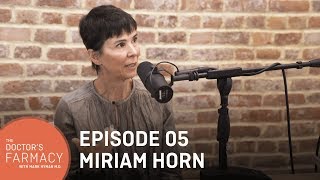
Dr. Mark Hyman talks with environmentalist Miriam Horn about how big farmers are solving environmental problems through regenerative agriculture and no-till farming. They challenge the assumption that large-scale food producers are always bad for the planet, exploring grassland preservation and fisheries management as examples of unexpected conservation wins.
Hey everybody, welcome to the Doctor's Pharmacy. This is Dr. Mark Hyman and I'm delighted today to have as our guest, Miriam Horn, an extraordinary environmentalist who's challenging our assumptions about how to fix our environmental crises. She's written three books, Rebels in White Gloves: Coming of Age with Hillary's Class, Wellesley 1969, Earth the Sequel: the Race to Reinvent Energy: Stop Global Warming, which was co-authored with the Environmental Defense Fund's president, Fred Krupp. And the book was a New York Times bestseller. And we're going to talk about today, Rancher, Farmer, Fisherman: Conservation Heroes of the American Heartland, which was a Kirkus Reviews best book of the year. And she produced a film which I recommend you all watch called Rancher, Farmer, Fisherman, based on the book which had its world premiere at the 2017 Sundance Film Festival and was aired globally on Discovery in August 2017. Now, before joining the Environmental Defense Fund, Mrs. Horn or Ms. Horn spent 15 years writing for US News and World Report, she's no slouch, the New York Times, Smithsonian and other publications. Her first job was at the US Forest Service in Colorado and she has a bachelor's degree from Harvard and completed two years of postgraduate study in Earth and Environmental Sciences at Columbia University. Not to mention that she was a Japan Society Amano Fellow and in 2012, the Clean Energy Team she led at Environmental Defense Fund won the Zayed Future Energy Prize. Wow, that's quite a deep and rich set of experiences and career. I'm so happy to have you here. Welcome.
Thank you. I'm thrilled to be here.
So I want to get into your background a little bit, but what really fascinates me is that we have a lot of assumptions about the environment, about saving the environment, and you challenge some of these assumptions and look at some big players that we often think are the enemy. Ranchers, farmers, fishermen that are destroying the planet, depleting the oceans, destroying habitats for animals. And yet you say in these places there's some unlikely allies that could help us actually solve these big crises.
That was really a core reason for writing the book and making the film. There were really sort of two myths I wanted to push back against. One was that conservation values only pertain in coastal liberal states. I knew that they were deep, traditional heartland conservative values. And, you know, that story has had a lot of political, damaging political legs, the idea that only Democrats care about the environment. So I wanted to reveal that, in fact, there are plenty of Republicans who do, too. But I also wanted to push back against this idea that the only sustainable way to produce food is to be small and local and organic. Because in fact, none of those categories tell you very much about whether a farm is sustainable. I always love people who challenge our.
Assumptions and get us to think differently. And that's what we're going to get into in a minute. But first, I want to know about your background. How did you become interested in the environment?
It started when I was a little kid. I grew up in California. I spent a lot of my childhood on a farm, a big farm in the Central Valley. That was where I really got exposed to what stewardship in agriculture looked like. And that was almost 5,000 acres. They were growing tomatoes and melons and barley and alfalfa. They now grow a lot of rice. They have stayed a hugely important force in my life. I fell in love with nature going up to the Sierra Mountains and out in the tide pools on the coast of California. I then worked for the US Forest Service for seven years in Colorado.
What were you doing there?
I was doing mostly timber management. I was running a chainsaw for a bunch of years.
Cutting down trees.
I was cutting down trees. And that, I mean, to your earlier point about busting assumptions, that was a really transformative experience in my life because I arrived from Berkeley with my Sierra Club certainty that any chainsaw was an evil object, that cutting any tree was a bad idea. and what I learned in my years in the Forest Service is that because we've suppressed fire so long in these forests that they are terribly overgrown and that in fact they need tremendous amounts of management and that just like in a garden pulling out plants is often the best thing you can do. Same thing in a forest, a lot of that skinny, dead, crappy wood needs to come out of there. And so that was probably my first most dramatic awakening to how these certainties that I had were often wrong and that I really needed to challenge them.
Amazing. Yeah, I remember worked in Idaho for a while as a doctor and it was a logging town and they used to have bumper stickers that said, you know, kill an environmentalist, save a logger.
Yeah.
Or kill a spotted owl, save a logger.
Yeah.
Well, They're pretty focused on their work and what they didn't realize was they were clear cutting and destroying lands, but all of them really cared about their land and they cared about their earth and they cared about what they were doing and they were really good people and often were just at the mercy of having to make a living in a tough environment with big logging companies and really were sad to see what was happening.
Right, well and again, as in everything, you can log in terrible ways and you can log in really restorative ways. The more we understand about these ecosystems, the better we can do. But you're right, a lot of times there's market forces and political forces that push things in the wrong direction that we really need to pull back on.
And you really, in your book, Rancher, Farmer, Fisherman, you really kind of made the connection between the food we eat and the environment, which a lot of people don't make that connection. And you kind of went deep into stories of people who we're doing things a little bit differently, unexpectedly, for who you think they are. Generations of ranchers and farmers and fishermen who really woke up to a different way of doing things. Can you tell us how you sort of got inspired to write this book and create this movie and how you picked the characters and tell us about that?
Sure. Well, so I've worked at Environmental Defense Fund for 14 years and we make a practice of working with large-scale food producers. We kind of break the the green mold in that way. And that's both because we understand that to make change at scale, you have to work with these large scale players. As you point out in your writing, agriculture is the single biggest impact that humans have on the planet. Farming and ranching, food production is the thing we do with the greatest impact on the planet. It uses half the terrestrial planet is devoted to ranches and farms. It uses 70% of fresh water, produces a third of greenhouse gases. So if you really want to get at the environmental crisis, you have to get at food and at food at scale. And there are people all over who break this mold who are doing a really terrific job. And so I knew about these people through my work at EDF. I decided to set the book in the Mississippi watershed, and I wanted to set it there partly because it maps perfectly onto red state America. So again, getting at this idea that this doesn't divide politically the way you think it does, but also because... Not.
A bunch of tofu eating hippies with Birkenstocks.
That's not true in California and Oregon. But also because the, you know, it drains almost half of the United States and it's where so many of our natural resources and especially our food comes from. It's where most of our meat comes from. It's where that whole grain belt is where most of our grains and legumes come from. And then down in the coast and the Gulf of Mexico is where most of our shellfish and finfish come from. So I really wanted to look at how are we really feeding not only the United States, but the whole world. And then I chose my characters. I intentionally made it a journey so that I could move from a cowboy in Montana who let me get into the issues around grasslands and meat and wildlife to a farmer in the Great Plains who let me get into the issues around croplands and the impacts of large-scale farming and then down into those fisheries so that I could keep moving through these ecosystems and tackle all the various issues.
Yeah, so one of the characters was this Montana rancher. Now these aren't feedlot grazing ranches, right? These are guys grazing grass fed, right? So they're already doing things a little bit differently, but they're also really connected to their land and they really care about the earth and they care about preserving it. And it was sort of striking to me to see how they became activists to protect the lands that were being potentially going to be raped by oil and gas exploration that was allowed under Reagan and allowed under other presidents to kind of get us to be energy independent. And they realized that they were destroying the habitats of the elk and the grizzly bears and the wolves and all these species that were part of the sort of last frontier of wilderness in America. And I'd love you to sort of dig more into how did they sort of become awake to these issues and what sort of was their approach to sort of dealing with the powerful force of the US government that was trying to take their lands.
Well, so the hero of that section is a guy named Dusty Cray, who is fifth generation on his land. His ancestors were bootleggers. They were kind of outlaws up there. He comes from a really deeply true cowboy history. And he was...
He looks like a cowboy in the movie.
Oh, absolutely. And he...
He's got that funny smile and that hat and Right.
And he was actually a rodeo champion. He was the Montana State Saddle Bronc Champion. And so he was flying all over the West to rodeos. And it was out of an airplane that he came to really appreciate this rare landscape that he lived in. He saw what had happened. He lives on what's called the Rocky Mountain Front. It's where the Rocky Mountains meet the Great Plains. It's really dramatic sheer cliffs that rise out of it. He lives in the last unaltered landscape in the lower 48, 10 million acres that have every animal that were there when Lewis and Clark came through. The largest population of grizzlies and wolves, a place where the grizzlies can actually still move the way they want to from the mountains down into the river bottoms where they den and back up into the mountains. And he got back from his rodeo years understanding that it had been wrecked pretty much everywhere else that in Denver, as he says, when he got more shingles than grass, Too late, partner. You're not gonna get that back. And so his first fight was against this oil and gas drilling, which is, you know, a very live fight again right now out in the West. And the way that they won that fight was, and this is another central theme of this whole project, is they figured out how to work with people across the political spectrum. They figured out how to do that really essential work of democracy of, aligning with people who aren't just in your same little pigeon hole. And so he gathered this posse of guys that ranged from this rancher named Carl Rappold, who's the most deep dyed Republican I've ever met, to this guy that Dusty calls a liberal beatnik, Gene Sens, who was in the Peace Corps and a school teacher. And they all came together and recognized that they had tremendous common ground around wanting to protect these landscapes, these historic ranches, this incredible wildlife. And so they figured out how to talk to people they disagree with. And that's, you know, something we really need.
We're all human first before we're a label.
Absolutely. And we actually agree on a lot of things. A lot of things still. And they have what they call the 80-20 rule, which is first you find the 80% of people who actually want to listen and you peel off the 10% at both ends that just really want to shout and hear the sound of their own voice. And then you focus on the 80% you agree on. And you just leave the other stuff off the table. And with that, they were able, these guys together saved a half million acres of land, of public and private land, some of the most glorious land you've ever seen in your life, and absolutely vital wildlife habitat.
And their experience and their model has inspired many others to do the same thing. And it became sort of a movement that said, what, 30 million acres across the states?
They have been an inspiration all across the country. And they really give a model. I mean, back to food, the beauty about livestock and about eating meat is that so much of the earth is grasslands, about 40% of the planet, the native ecosystem is grasslands. And the only way that you can feed people off that land, you only have two choices if you wanna feed people off that land. You can either destroy it, you can plow it up and turn it into croplands.
Basically mining the soil.
Or you can graze animals on it, 'cause animals have those amazing stomachs that can turn inedible grass into meat that we can eat. And so the fact that Dusty is able to raise and market absolutely fabulous grass-fed meat means both that his ranch is viable, so he doesn't have to sell it off into ranchettes, but also that we can keep these grasslands intact and feed people. And in that sense, he's really a model for the whole world. It's true.
I mean, let's talk about the grassland issue for a minute, because I think that most people don't understand how important they are. I think, oh, I'll save the oceans and save the rainforests and save the rivers. But nobody talks about save the grasslands. And the truth is that they might be more important than almost all of it, because properly managed grasslands can not only protect us by sequestering carbon and holding carbon so that we don't let the carbon go in the environment and then go in the oceans and heat the oceans and kill the phytoplankton, which produces 50% of our oxygen, and it also holds water, which is why we see these enormous droughts and then enormous floods. And the reason is the soil can't hold the water when you've mined the soil and depleted it. So, the grasslands are incredibly important and by proper management you can often turn desert or near desert back into lush, thriving grasslands. So talk to us about how we need to think differently about grasslands and how they can be part of the solution to climate change, to food production, and all the things that we might not be thinking about. We think grass-fed meat is sort of a luxury for a bunch of yuppies in New York or California, but what's the real story here?
Well, people refer to a grassland as an upside-down rainforest often. Rainforest has most of its biomass, its biodiversity, and its carbon above ground. A grassland has 95% of it below ground. which is really where you want it, because if it's below ground, it's not in the atmosphere causing global warming, and it's host to the most diverse ecology on Earth. The ecology in the soil, the microbiome in the soil, is more diverse than a rainforest, it's more diverse than the ocean, it's a third of the world's organisms. So if you keep that ecology intact, you are protecting probably the most critical and as you point out, the most unprotected landscape on Earth. We only about five percent of the grasslands on the planet have any kind of protection on them. You're absolutely right. We think we can just rip them out without cost. That's what we did in the homestead era. We ripped up a savanna across the middle of this country that was as beautiful, as great, as full of wildlife as the African savanna. And we called it sod busting because in order to turn that soil into croplands, you had to rip through roots that often went 20 or 30 feet deep, that held that soil together in this incredible way, and that maintained this absolutely essential ecology, which is the basis of photosynthesis, the basis of all our oxygen, the basis of our entire food supply, the protectors of the soil, which is a non-renewable resource that we're losing still at a precipitous rate. So, you know, I know you are, you get into the whole subject of veganism and that there's a kind of assumption that if we could turn the whole world vegan, that would be a better world. And the fact is, from an ecological standpoint, it would be a disaster. Because it would mean that all of these goats and sheep that are currently sustaining populations in Africa and across Asia in these arid regions that are leaving the ecosystem intact, that are coexisting with wildlife and grassland birds and all of this microbial ecology, that they would all be toast if we decided, no, let's get rid of animals and let's turn it into soybean plantations or whatever. That it would so... Well, that sort.
Of contradicts everybody's assumption, which is that if we all started eating plants and got rid of meat, the world would be at a better place. We'd all be healthier, the environment would be better. And you're saying that's not true.
No, I mean, there's no question you and I completely agree that eating feedlot meat has tremendous environmental costs. There's not an unlimited supply of rangeland. I mean, there's a limit to how much meat the planet can sustain. And we have a problem that we've got seven billion people on earth. You don't want to feed every blade of grass to a goat or a cow that a human's gonna eat, 'cause you want some for the rest of life on earth. And so it's not like it's an unlimited thing, but it is an app, meat is an absolutely essential part of an ecologically sound food system in the world.
You know, I was sitting and writing a blog called Reverse Climate Change, Eat Meat, which is sort of what you're saying, that we really underestimate the power of eating the right meat to mainly grazed and grass finished meat that restores soils, that protects us against climate change, that holds water and deals with the water crisis we're happening globally, and that provides a high quality source of food that actually can help us. It's a very different paradigm.
Well, and with climate change, you know, that Dusty, this Montana cowboy, is he's dealing with like a totally rampant invasive weeds, which are an invasive weed can get into an ecosystem like that and basically wipe out everything else. They have They have a reproductive potential that outdoes any other native plant. And so if you don't get on top of them, like spotted knapweed, pretty soon you're nothing but spotted knapweed, which is good for nobody. Wildlife don't eat it, cattle don't eat it. What a lot of these really advanced ranchers are discovering is that they can use their animals to control invasives. So that if you put the cows on a piece of land or the goats on at the right time, when these weeds are young and you don't give them any option, you bunch them in there and you don't let them go, just cherry pick the delicious stuff. It's like you eat the weeds or nothing. They'll eat the weeds and you can actually, they're one of the most effective defense lines against these invasives that are a hugely challenging problem.
So one of the things we're talking about is using animals to protect the soil. And I think most people don't realize that there were, what, 60 million buffalo in America that didn't create climate change. You know, so cows, regardless if they're grass finished or grass fed or they're feedlot, they're producing methane. And that's true, but, you know, when the buffalo were there, they were producing methane and we didn't get climate change. And we built tens of feet of topsoil. And we've mined that topsoil like a natural resource without any thought. You know, we deplete oil reserves, go over in danger, but we deplete soil reserves without soil we're dead.
Absolutely.
So we need soil, and it's such a vibrant, important part of our ecosystem, and yet what now we've done is transformed our farms from soil to dust. And the dust can't hold water, the dust doesn't have nutrients, the dust can't protect against climate change, and it ends up causing depleted foods which need to be grown with tremendous amounts of fertilizer and additives that are harming the environment. It's a horrible cycle. And I want to sort of take us from the ranchland of Montana to the Midwest and the farmers fields. And where we don't graze, we have to grow.
Right.
And the challenge of our current farming techniques is that they may be even worse than what we're doing with the ranchlands. They are actually turning soil into dust at scale. And you found an extraordinary farmer, a multi-generation farmer, who had an awakening, Justin, cough, and he changed his whole way of practicing agriculture in the Midwest in basically the grain belt. And tell us about him and how he had his awakening and what he's done and how it's transformed his farm and those around him.
Well, so Justin's is a fifth generation farmer. His kids are the sixth generation on the land. I got to meet four of the generations, which is pretty wonderful. were homesteaders in pioneer days. They were part of that sod-busting movement that ripped up those grasslands. And then for generation after generation, they farmed in the way that we associate with wonderful farming, those beautiful straight black furrows that you see in every Courier and Ives print that you just think it just reeks of health, the smell of fresh soil. It turns out that that was an incredibly destructive way to farm. And Justin discovered that when he went to Kansas State. He was the first person in his family to go to college. He got an agronomy degree and he went to college just when there was this explosion in soil microbiology, when people were really starting to understand the complexity and the importance of the soil microbiome. So that was the focus of his study, was understanding this incredible what one of the farmers calls a little city underground where everyone's working together, where fungi and bacteria are working together to nourish the crops, to hold the soil, to build carbon in the soil, to trap water, to do to protect human health, to protect plant health, to do all these critical things. So he came back understanding that... And.
There was a guy at the university who was sort of a radical professor who had this idea of no-till farming.
Charles Massy, who is now, he's a member of the National Academy of Sciences. He is the Well, at Case State was Charles Rice, who he's probably world's leading expert on soil carbon. Justin also got exposed to a true visionary named Dwayne Beck, who's up in South Dakota.
Yeah, that guy.
Yeah, who's really a character. He is a character. And he is really, I mean, at this point, about 20% of farmers have made this transition. And it's in large measure because of Dwayne Beck, because he's such a charismatic guy. So Justin came back from college understanding that his most important job was to take care of those microbes. That that's what he was really farming was the soil microbes. And that the way to do that-.
He wasn't a plant farmer, he was a soil farmer.
He was a soil farmer. And that the way to do that was to farm as much like the prairie as he could be. To emulate the native ecosystem that he lived in. This now lost prairie, this prairie that had been ripped up by the sod busters, to make his farm as much like the native prairie as he could. So that meant never plowing the soil. You seed by blowing the seed into the soil. It meant leaving everything on top of the soil, the residues, the living plants, dead plants, you just leave it there as a kind of armor.
It's almost like a mulch.
Yes, exactly. But at a huge scale because when he harvests his wheat or his soy, he takes the grain out and he leaves absolutely everything else in the field. So it's like a 10, five foot tatami mat. So there is no erosion, there's no wind erosion, there's no rain erosion. It keeps his soils cool even when it's blisteringly hot in Kansas. I mean one of the greatest things about it is that these soil microbes that are his most important charges, when you plow soil and you fold that residue into the soil, it's like a big gulp basically for those microbes. You are delivering them with a hit of nutrients that totally screws up the balance of microbes. You get a huge overgrowth of bacteria at the expense of fungi. The bacteria eat through all the organic matter and respire it as CO2. Your fungi, which are the ones that are really doing all the hard work, they're the ones that put out these beautiful silvery fingers that bring nutrients to the plant, they get choked out by the bacteria.
Which are so important. The mycorrhizome in the soil is like a vast network of fungi that actually is so critical for maintaining the soil health and even fixes methane, which is pretty interesting that the bacteria, right, there's methane fixing bacteria in the soil that help protect against the off-gassing from the cows, right? Well, that you know more about, you.
Should tell me about that because I don't know a lot about methane.
A lot of people say, well, if you grass-fed cows, you know, you're still gonna have methane, it's still gonna cause climate change because it's far more dangerous. turns CO2, but we know now that when you have rich grasslands that actually there's methane fixing bacteria and fungi in there that hold back the methane. That's why we had 60 million buffalo and no climate change.
Well, they certainly, I mean, that's fantastic. They certainly hold carbon. I mean, you look at Justin's soils now, and again, his model is the prairie, so his metric is the prairie. So it's how close can you get to the levels of carbon and organic matter and the diversity and vitality of the microbiome in the native prairie. And we do still have some, so you can go measure it and say. And Justin is, you know, his family had farms since 1865, the old way. He's been farming the new way for about 20 years. In that 20 years, he has rebuilt half the carbon that is in the native prairie. He's fixed that carbon in the ground because again, it's all this organic matter, it's this kind of goo, that holds nutrients in the soil. And these fungi, they actually wrap their arms around the carbon and hold it there. I mean, the other really important thing in an ecosystem like Kansas, which is some of the most extreme weather on Earth, the Great Plains, and becoming more extreme all the time, is that if you don't plow the soil, when you plow, it's like when you rip steel through soil. It's like a tornado and an earthquake at the same time. You scramble these microbial communities, you rip apart these symbiotic relationships, and you completely collapse their world. The healthy soil looks like a coral reef. It's full of air and space for water. Plowed soil is just a hard pan that nothing can permeate. So because Justin doesn't plow, if he has a plant, if he grows a plant like a radish, or an alfalfa plant that puts down a big old taproot 10 or 20 or 30 feet down, that channel stays there. And so water can get into his soil all the way down.
We're having such a water crisis in the world. I mean, I remember once I heard Jim Kim, who's out of the World Bank, say, In the future, wars will be fought over water, not oil.
Absolutely.
And I think we are completely blind to the depletion of our water supplies. In the Midwest, the Ogallala Aquifer, which is the biggest aquifer supplying that whole area, is being depleted at 1.3 trillion gallons more a year than it's being replenished by rainfall. It's unsustainable. And the beauty of this kind of farming is that it actually allows us to save the water and complete the cycle of carbon so we don't create emissions that lead to climate change. Very powerful.
And Justin doesn't irrigate. He's able, because he farms in this way, that keeps his soils cool and that captures every drop of rainwater. He has no irrigation on his farm.
That's extraordinary, right? And so you think about these farms that use massive amounts of irrigation. And then what happens is when there's drought, they can't grow food. And when there's rain, the soils can't hold the water because they're depleted soils and they lead to floods, which is why we see the cycle of droids, droids Flouts and drugs, droughts and floods that are mixing the whole world up.
And I- well, and carrying a ton of pollutants into the water, which you don't want, you know, when soil is eroding, so is everything else, like nitrogen that you don't want in your waterways. And, you know, and it's a global issue. I mean, there are a lot of people who think, who can trace, including the Joint Chiefs of Staff, who trace a lot of social stability in the world and even terrorism back to the depletion of soils and to drought. If people are starving, if their soils are depleted and they can't grow anything and they're displaced off their farms, they are extremely susceptible to radicalization. And Tom Friedman writes about once a year, he writes that column. And I think there's a lot of legitimacy to it.
I think it's true. You know, I remember reading this book that that we had 60 million bison, we killed them all to basically deprive the Native Americans of their food supply. And then fast forward into the 30s and we had the Dust Bowl. And they were connected because we protected the soils with the bison and now we had none of that. And then there was a scene in the book called Kiss the Ground where the Dust Bowl was rolling into Washington, DC, into Congress while the guy was testifying about what we need to do about it and it forced the regulators to actually do something about it.
Well, and Justin's family, there are people who still remember it, who remember this wall 10,000 feet high and 200 miles wide of dust rolling across the prairie. 10,000 feet high and 200 miles across. It stripped 10 million acres of soil. Soil is essentially non-renewable and it destroyed millions of livelihoods. And so that memory, Justin lives in that Dust Bowl region. He lives in the area that was depleted in that way. And that memory, you know, it's what led to the creation of the Natural Resource Conservation Service, the soil conservation service in the US government. But also it really was planted the seeds for this revolution away from plowing because plowing was had really set the, laid the groundwork for that disaster.
Yeah, humans are pretty destructive creatures.
We're so effective at it, too.
And the bigger our toys, the worse the destruction. We've been like this throughout our history. But I think there's a new level of awakening that allows us to rethink how we're doing things. And one of the things that is challenging for a lot of people is the idea of, well, No-till sounds great and it's clearly what we need to do to protect the soils, but what about organic? And in the movie, he still uses glyphosate, he still uses herbicides, he still uses pesticides. They do the no-till farming which protects the soil, but how do we sort of reconcile that contradiction? And is there a way to do it in a different way?
Well, so the farmers that I really admire and their professors at places like K-State talk about being on a continuum from chemistry to biology. but increasingly you want to move away from chemistry and toward biology on your farm. So every year Justin uses fewer chemicals and more biology. So he has fields now that he adds no nitrogen to because his plants, he uses cover crops, which a cover crop in between your commercial crops, you can grow cover crops which are generally a mix of eight or ten different species. They're chosen because they play a bunch of different roles, so some of them have big broad leaves and so they help shelter the soil, cool and protect it from erosion. Some of them have these deep tap roots to create water channels. Some of them grow really fast so they keep the weeds out. They get there before the weeds can. And some of them fix nitrogen. And so he comes in either with a legume like soy or alfalfa or with these cover crops and they fix the nitrogen for him. So he is every year putting less and less nitrogen on his ground. Every year he's using less and less pesticides because he's moving more and more to biological solutions. So some of it is you just confuse the pests. So if you do really intensive rotations like he does, the insects lose track of where their crop is and you can actually defeat them.
Confuse the bugs.
You can confuse them. Justin also grows, he grows habitat for beneficial bugs. so like predator wasps that will come in and eat the bad ones. And he's moving toward integrating livestock. And the reason that he still uses herbicide, which is the main thing which glyphosate, Roundup, is the herbicide that he uses, is because in any farming system, you end up, there's no perfect farm, there is no farm that has zero impact. So you're always at a juncture of what's the least harmful thing I can do here? And if you look at the impact, On soil microbiology, the impact of glyphosate is lower than the impact of plowing.
I'm sure.
And most organic farmers rely on plowing because if you're going to get rid of weeds without glyphosate, without herbicides, you don't have a lot of options. Some of them run through with these big steamroller type things. Some of them run through with flamethrowers. Both of those burn a lot of diesel. So again, you have to be honest about what's that's the cost of that weed management. People are working to try to figure out how to do no-till organic. No one has quite figured out how to do it at scale yet because managing weeds is probably the biggest problem that a farmer has. The best way to do it, and Justin is moving in this direction, and a lot of his friends are already doing it, is with livestock. So if you have a cover crop and you need to get rid of the COVID crop before you plant your crop, throw the animals in there.
Throw the animals in there and let.
Them graze on it. And then there's actually a guy named Jim Garash who's at the University of Missouri, who has done the calculations and shown that if you took animals, and Justin doesn't even have to learn how to run animals, he can just do what's called custom grazing. He can just lease, it's like Airbnb or something, he can just lease his fields to somebody with herds, and they bring them in to graze off his cover crops, and so he doesn't have to put an herbicide on them. And there's a guy who has calculated that if you did that, you could actually get rid of every feedlot in America. You could finish every cow in America on these mixes of eight plants and imagine how great it sounds.
Oh my goodness, that sounds so good.
You would have all those nutrients from all of those different plants and so there are people who are starting to do that, to integrate and that's the ultimate way to move as far toward biology as you can. But I think, you know, the organic movement has made almost a fetish of synthetic chemicals to a fault. You know, there are people, even Mark Bittman says, you know, chemicals sometimes are appropriate for fine tuning. That you don't want them to be your first line of defense, you want them your last line of defense, but if the choice is between plowing or using glyphosate.
I like your idea of spreading the animals around.
Yeah.
The goats and sheep and cows. Yeah.
Then you really got a good idea.
You know, you brought up something that I just quickly passed over. I want to come back to it, which is that you suggested organic farming. actually may be a problem if we till. In fact, it may be a bigger contributor to climate change than no-till farming with chemicals, which is a pretty radical idea. And it challenges a lot of our assumptions. So a lot of organic farms, like you say, at large scale organic farms in particular, use plowing and tilling as a way of managing weeds. But that is potentially a very harmful thing.
Yeah, and you know, I love organic farming. My mom was a, my mom had a huge garden and she was an early advocate of organic practices. And you know, I can't say enough about how important the organic movement was in terms of waking us up to these holistic systems we were operating in, to the dangers of chemicals. I mean, EDF where I work was founded out of the fight against DDT 50 years ago. We brought the lawsuits with Rachel Carson to stop the spraying of DDC. DdT, I have absolute respect for people who are constantly vigilant about chemicals. I think that's totally appropriate. But the organic movement lagged some of what we have learned in the last couple decades about the microbiome and its absolute critical role and the damage to it done by plowing. And, you know, to their credit, Rodale is stepping up to that now. Rodale is saying, okay, the organic standard doesn't begin to cover enough of the important things. It leaves out really important things. And it, you know, just to be clear, it also allows a lot of things that might surprise people. For instance, one of those eye-opening experiences for me was this farm I spent a lot of time on as a kid. They were farming a bunch of their tomatoes organically. They were doing both organic and conventional tomatoes. And Bruce, the farmer, was the one who said, well, you know, on our organic tomatoes, the only real weed management we have, which is commonplace for organic tomato farmers, is to use what's called plastic mulch. They lay down plastic across thousands and thousands and thousands of acres to keep the weeds from growing up. Well, that plastic all ends up in the landfill. It also heats the soil and kills a lot of the microbe.
Who knows what seeps into the soil from the plastic.
So, you know that, and that's totally allowed in organic farming, as are a bunch of synthetic or naturally occurring insecticides and pesticides, which the World Health Organization doesn't actually consider to be safer than synthetics.
So they're moving towards a whole new standard. You talked about regenerative agriculture.
Yes, yes. What is that? Well, so it's just in pilot phase now. They've been out for about a year with some reigning principles, and what's wonderful about it is they They are now looking at tillage. Tillage is a huge part of it and cover crops. Now if you want to get a regenerative certification, you have to radically ratchet back on tillage. I think they still haven't gone far enough. No-till. I think you really, I mean at least in an environment like Justin's, in some environments and some crops, no-till is really tough, like tomato growing, because you have the tomatoes are right down on the ground. If you leave all the residues, harvest becomes almost impossible. you know, one of the most important principles of sustainable farming is there is no one size fits all, that you have to be responsive to the local ecosystem, the local soil types, the local climate types.
It was fascinating, Justin, in the movies, like, I'm not so much into sustainable.
Farming, I'm interested in regenerative farming. Yes, that you actually rebuild it back. And that's what he's doing. I mean, his soil not only has half the carbon that prairie soils have, but the life in his soil, they do these incredibly sophisticated the Haney test, where they can measure fatty acids and they can measure metabolic products. And they can figure out what his microbiome looks like in terms of its diversity and its vitality. And he's climbing, climbing, climbing in terms of rebuilding that ecology. So Rodale is including tillage, they're including animal welfare, which is great, they're including worker rights.
Human rights, yeah.
Which is really great. So they're really trying to fill a lot of the gaps. I mean, there's still things that I would disagree with about this new standard, but they're moving. I think it's incredibly admirable that the group that was kind of born out of this movement is willing to challenge their own assumptions.
Yeah, I mean, in my book, Food, what the Heck Should I Eat? I tried to address a lot of these issues around food, not just the health impact of food, but also what are the human rights impacts and the workers rights and the environmental impact. impact on water and soil and all of that matters.
Oh, absolutely.
So let's talk a little bit about fish, because we talked about farming, we talked about ranching. Fish is something that we don't really pay that much attention to. We sort of know that the oceans are in trouble. We sort of know that the fisheries are being depleted, but most of us don't have an idea of like, what do we do about it and how do we think about it? And What's going on?
Well, so about half the world, 3 billion people depend on fish as their primary source of protein. Also for all these associated nutrients like zinc and iron. So it's- Iodine. From iodine from a global standpoint, it's, you know, as essential a food source as you really can think of. And half the world's fisheries are overfished. to the point of depletion or even collapse. So it is a starvation crisis unfolding before our eyes. The really fabulous thing is that it's a really fixable crisis. The oceans, you know, the oceans are huge. 90% of life on Earth is actually in the oceans. And what we have really found, what EDF has really found first working on fisheries in the US and now around the world is that if you reform the way you manage fisheries, you can bring them back spectacularly fast. So you can bring back the availability of food, you can protect fishing livelihoods and all those wonderful fishing communities, and actually increase revenues. So you really win across. And the key is giving fishermen a secure stake in the fishery that we used to The way we've always tried to manage fish is from the top down. So if we saw a fish population collapsing, we just tried to kind of handcuff the fishermen and limit their season and limit the gear they could use. And that just worked against success because what it meant is now, like in the red snapper fishery, which is the one I write about, it meant now they all just raced out at once. and they raced out in no matter if it was storming, they often lost their lives or their boats, and they did terrible damage. They caught millions of fish they didn't want, that they had to throw back dead because they're in this huge race. So you can't stop to be careful about what you're catching. Then they brought all that fish to Market at the same moment. So the value of the fish crashed. They had to freeze most of it. So the nutritional value of it also crashed. So it served nobody, and the fishery was still plummeting.
So what we figured out- who figured that out?
A bunch of bureaucrats in Washington?
That it was a disaster?
Well, you know that it was a good idea? Yeah, it was like they couldn't come up with a better idea. It's like, okay, the fish are still crashing. Okay, let's tie another noose around the fishermen. Let's just constrain them more and constrain them more. And the fish kept declining and the bycatch, which is these unwanted things you're killing, kept getting worse. So we were killing off turtles, we were killing off marine mammals. We're killing off all kinds of other fish. Half the fish we were catching, we were throwing back in the water dead. So this revolution, which started in New Zealand and then EDF brought to the United States, first to Alaska halibut and then to Gulf red snapper, where you say, okay, scratch that. Let's figure out how many fish can we sustainably catch in a year? And then let's divvy, say it's a million pounds, let's divvy that up among the fishermen. that have been historically fishing here and let them catch it whenever they want. So now fishermen go out when it's safe, they fish incredibly carefully so they're not killing anything except the fish that they want, and the consumer has fresh fish every day of the year, and that fish holds its value because there isn't this glut landing on the market. So in the 10 years since we reformed fisheries management in the Gulf, Red Snapper has come back to half its historical It was down to 4%. It's come back to half its historic levels. And it's come off of, I was very pleased to see that you referenced Seafood Watch in your book. It's come off of Seafood Watch's red list to its recommended list. And you also mentioned, which I was even more thrilled by, you mentioned Gulf Wild, which is an innovation that EDF was deeply involved in, which is that now technology is allowing an even deeper look into your fish supply. So what Gulf Wild is, is these red snapper guys who are pulling in red snapper on individually on hooks. They're not pulling them up in nets. They've got each snapper, I went out fishing, was sick as a dog, but I went out fishing and it's like they throw these lines over the edge of the boat. Each of them has a dozen or so hooks on them and then they start going, you know they're being hit and then they reel them in and they look like Christmas trees with these beautiful red snapper hanging off of them and then they peel them off and they're just gorgeous. And now they're like, sticking a little tag in them that has a barcode. So now the GIS, it's stamped with the location, it's stamped with the time, it's stamped with the fisherman's name, it's stamped with the gear he uses, it's stamped with the location.
It's transparency in the food supply.
Total transparency. So if you go in and buy a Gulf wild marred red snapper, you can know everything about that fish, how clean the water was it came from, how carefully it was caught, and that's this whole blockchain technology that Bitcoin sits on.
The transparency.
It's starting to be able to make that possible for all kinds of food products.
But do we really have the ability to keep fishing and feeding the planet the amount of fish we're feeding them? Because it seems like we are in trouble in the oceans and that there really isn't an unlimited supply and that they're being depleted and they're also being poisoned.
Yes, well, I mean, we need, these are all, everything we've been talking about is of course connected. So what Justin is doing on his farm, and that's another reason that I really wanted to use a river as my spine, because it makes so obvious this interconnectivity. What Justin does on his farm affects the fish that Wayne catches. If Justin overuses nitrogen and it runs off into his water supply and it expands the dead zone in the Gulf of Mexico, Wain suffers.
Which is already the size of New Jersey.
Right. Right, where there's just no oxygen to sustain life.
And so- Just to break that down for people, the reason that the nitrogen is bad is it fertilizes the algae in the rivers, which then overgrows and suffocates everything else. There's no oxygen for any other living species.
That's a very elegant way of putting it. So, yes, so it is a critical. You need to be solving all of these problems all the way down the chain, but fisheries can really rebound. We're seeing it. Belize has now adopted this same approach to fisheries management. It's a little bit different in a developing country because you don't do it individually. You do it by the village. You give the village the secure right. But Belize is completely reversing turning its fisheries around and making its people more secure and its food supplies more secure. It, you know, there's not unlimited anything. So, and we, I mean, you know, we keep growing as though, as a human population, as though there is, that we work very closely with UC Santa Barbara and there is a guy there who says, okay, we can bring wild fish back tremendously. And, you know, wild fishing is fantastic because it's like grazing animals. You can leave the ecosystem intact. you can hunt out of that ecosystem without altering that ecosystem. But there are people who are saying there also needs to be good aquaculture.
Yeah.
Fish farming. Yes. And it can get a lot better than it is. And it can actually contribute hugely to the food supply if done well. So, you know, he showed us this analysis. I mean, one of the most promising parts of aquaculture is shellfish, which I know you champion as a great food supply, but is also great because it's a filter feeder. So it has all these co-benefits. If you're growing mussels and oysters, they clean the water. They also build physical protection for coastlines. So all these coastlines that are being menaced by rising seas and stronger hurricanes, if you start growing oysters and mussels, you actually can build natural infrastructure, natural protection for those coasts. he showed us this analysis that you could feed, you could provide enough protein for the entire world on the shelf around New Zealand. That's all the space it would take. There's no greenhouse gas emissions, there's no freshwater use, there's no displaced ecosystem. And you don't have to feed them.
And you don't have to feed them.
So it's, you know.
What about if they're filtering everything? People are probably wondering, is that true? Why would you want to eat something.
That'S a garbage can? Well, I mean, you do again, then you have to solve the upstream problem so you're not putting garbage into the water that they're eating. But I think that if you can get it to that scale, the amount of garbage any single one would be getting, I think that the solution to pollution is dilution, that old saying. If you do this at a large enough scale, then you actually, And if you get the wetlands, the coastal mangroves and wetlands working again, then you do most of the filtering in the wetlands before it ever gets to your shellfish.
So in a sense, biology, not technology, is a solution to our problem.
That is absolutely the essential principle. If you can do it with biology first, it's always better.
Nature is much smarter than humans.
And we went through this, I mean, I love science, but we went through this period where we thought we could, I mean in farming, we thought, okay let's just get nature out of the way, let's create a clean slate, and then let's figure out the four nutrients that a plant needs, and let's farm like a factory. Let's farm it like a factory. And we completely missed that there are literally trillions of microbes in a teaspoon of soil, most of which we don't know what they are, let alone understand what they do, that are doing things for us that we can never do for ourselves. And that you gotta, we gotta lean on them.
A friend of mine wrote a book called Pharmacology about how the microbiome of the soil and our microbiome are all interdependent. So, sort of like eat dirt. Okay, now before we close, I want to get into politics for a minute because a lot of the practices that we're engaged in now, whether it's soil mining or raising cattle in feedlots or the way we handle our oceans and fisheries. These are driven by policies. How would you see the policy shifting to support the right kind of sustainable and regenerative types of agriculture and animal husbandry?
Well, it's a very live issue right now because the farm bill just got really You know, the draft farm bill just got released and will be debated over the next few months. And it's a disaster. It might not surprise you. They have taken out the draft that came out of the house, which is, I mean, fortunately will not fly, but it took out the entire funding for conservation stewardship programs. So a big- Seems like a good idea. Yeah. So a big driver for a big support system for farmers like Justin, you know, making that kind of radical change on your farm is not free. You need different equipment, you take a lot of risk because you're just figuring it out as you go. And so what the Conservation Stewardship Program has done is tried to support farmers. It's a fantastic program because it's performance-based. So you actually have to deliver environmental outcomes to get the payments. But what it does is it helps farmers get through these transitions and it rewards conservation. Amazing. We definitely need people to be using their voices. I mean, right now, I think the single most sustainable thing you can do is use your voice as a citizen. I mean, our environmental protections are under siege in so many directions. The, you know, the EPA-- you- don't.
Like the new EPA head?
Or the new assistant who came, who was a coal lobbyist, who, you know, spend every waking hour trying to roll back protections against power plant emissions.
That's a huge issue. Many patients from Pittsburgh, where they use coal ash to cover the streets in ice in the winter, they put it on farms, and that's where the steel plants are. And to a person, every single one of them was mercury toxic.
Is that right? Yeah. Wow.
And I was like, what is going on in Pittsburgh?
Well, I spent a lot of time in Southwest Colorado, where if you catch fish in what look like pristine lakes.
You can't eat them. There is not a single lake or river in America where I would eat fish out of.
Because of that mercury coming out.
Because according to the, yeah, according to the EPA, they tested all these fish and there's not a single river or lake fish that is safe to eat because of the pollution, mostly from coal burning cement plants and energy production.
So that's a hugely important thing is getting on top of power plant emissions and you know we made great progress until a year ago and so now That's unfortunately a defensive fight, but one that so far we're kind of holding the ground on.
So let's say, you know, we have 600 lobbyists spending half a billion dollars on just the farm bill. If you were queen for a day and you could rewrite the farm bill, what would you say that we should focus on?
I would say that you want to think of it as an incentives program for sustainable practices. And so you want to not only have these kinds of funds that actually look at things like, so for instance, if Justin has a wheat crop that gets killed by a hail storm, right now the only way he can get insurance is if he pulls out all that wheat and starts over. It makes much more sense for him to just leave that wheat there as residue, leave it as nourishment for the next crop, leave it as protection. So I would say the farm bill needs to reward farmers, crop insurance needs to reward farmers who are less likely to suffer losses. Justin has much more consistent yields than his conventional neighbors.
That's amazing. So better yields.
Better yields.
Better for the environment.
We pay, you know, taxpayers pay. If a farmer loses a crop because of crop insurance, we pay that crop insurance. so a farmer who's farming in a way that's less likely to lose a crop ought to get like a good driver discount on their insurance. The lion's share of the funding in the farm bill ought to go to helping farmers make these transitions to less tillage, to cover cropping, to relying on biology, to moving toward grass-fed beef.
Yeah, I mean, one of the, I mean, it's interesting we look at the history of the crop subsidies, during the Dust Bowl and the New Deal, the agricultural policies supported farmers even if they didn't produce crops. The change under Nixon, because the price of meat and milk were going up, led to the subsidization of more crops being paid for. So if you had a problem, for example, with corn and you grew it in a ditch, they'd still pay you if you couldn't grow in a ditch. So it led to this rampant excess calories in the market, about 500 calories more than in the 70s per person a day, which has led in part to the obesity epidemic. So this is all connected and I think people don't realize that.
Well, and they also, those farmers were farming land that should never have been farmed. They were farming right up to the river banks.
Exactly. And causing all this terror. So you basically planted, you know, a ditch or desert, which shouldn't be planted, then you can collect insurance. And it sort of led to a very messed up system.
Yeah.
So I love the idea of shifting our incentives. to support regenerative agriculture and removing the incentives from other forms of agriculture that are destructive.
Right. Yeah, I think that's- I'll vote for that. That's really key. And you know the market is doing that a lot too. I mean there are big actors, again surprising actors like Walmart that are trying to send signals into the market to move farmers toward, I mean in Walmart's case they really, Walmart has committed to removing a billion tons of carbon from their supply chain, which is unbelievable. Germany. And they looked at what they do and they're the biggest grocer in America and they realized that the biggest impact they could make was through their groceries by asking the raw material suppliers for all those products they have on their shelves to grow grains and legumes in the way Justin does that keep carbon in the soil.
That's extraordinary. So we think Walmart's a big enemy, but there are people in power who are rethinking ways to change things. They had a friend who just went and talked to all the executives at Walmart because they want to know what they can do to shift their practices to create more sustainability. I mean, big actors have to start changing. And I think everybody's starting to wake up and realizing that we're on a slow train to disaster.
And if we work together-- yeah, corporations have had their eyes open to it. I mean, there isn't a corporation across the food supply chain that isn't absolutely direct about the reality of climate change, the threat it poses to food production, and the need to address it, including through agriculture. You can't find a single actor from Monsanto to Kellogg's and Walmart along the whole chain. They're all like- Except for the President.
Of the United States.
Except for the President of the United States and his whole cabinet.
It's frightening, yeah. So in the face of all that, what would you advise the average person to do if they care about these issues? What can they do to make a difference?
Well, again, you know, be speak up as a citizen. We have an affiliate.
You mean write your congressman.
Yeah. I mean, there's a really one. Give money to the Environmental Defense Fund. Yes, of course. And moms clean Air Force. I want to give them a shout out. We have an affiliate group that is a million moms all over the country who really are working on these issues and, and have had a giant impact because who can say no to moms? I mean, Scott Pruitt met with them. I mean, no one can say no to mom. So, yes, you know, really using your voice as a citizen. I mean, you call out waste, which is so important. We waste half of the food we produce in this country, which, you know, that means everything that went into it, the land, the water, the chemicals, the diesel, everything, you're just throwing away. And so really learning how, I mean, I do not waste a drop of food in my house anymore. the other kinds of waste, energy waste, water waste, plastic. You know, we've seen these heartbreaking stories every day about whales dying because they have 60 pounds of plastic in their stomach.
So don't buy anything in plastic.
Don't buy anything plastic and carry your bags to the market.
I mean, in Switzerland, you know, you're not allowed to have garbage. You want to get rid of your.
Garbage, you have to pay a lot of money to go dump your garbage. Yeah, yeah. And plastic in particular, plastic is killing coral reefs. breaks down into these micro particles that- Microplastics. Yes, that are causing rampant disease on coral reefs. So on top of everything else corals have to deal with, now they have to deal with plastic.
So don't waste your food and don't use plastic.
And don't use plastic.
Don't waste water or energy. I make compost with my scraps. So we live in the country, but I actually have to forget that New York. There are actually bins of buckets you can put in your home that actually will make compost, it won't smell, and you'll create this great dirt and you can actually have urban farming. All kinds of shifts are happening in the marketplace that are empowering people with different tools and options.
Yep. So, I don't know if you read Dan Barber's book, Third Plate. Third Plate. Yeah. I think he makes an important point that we, going back to our small, local, and organic always best, that in some ways our diet has to be responsive to the land, not the other way around. That we can't ask- you- can't just.
Have bananas in February.
And you can't have asparagus in Kansas, or at least not all the time, because you can't ask Justin to grow asparagus, because if you do, you're asking him to irrigate, you're asking him to have heated greenhouses, you're asking him to intervene in all these ways in an ecosystem that really, Kansas really wants to grow grasses and legumes, because that's what that prairie is. Kansas really doesn't want to grow vegetables. And so the dogma of localism can again, go, I mean, I love your story about how you became a Pegan, that you were literally sitting between the two extreme views and said, no, the truth is in the middle. I mean, the truth is in the middle. And so, if there are things being grown locally, you know, yes, eat those, eat them seasonally, but again, this dogma that it's all got to be local cuts against the fact that ecosystems, and that's why I love Dan Barber's insight that, you know, cuisines, that's the diet following the land, not the other way around.
Well, this has been an extraordinary conversation. Thank you for enlightening us and changing our view of what sustainability is and environmentalists are and sort of breaking through some of the ossified concepts that keep us from actually doing the right thing. So thank you so much. For those of you listening, thanks for sticking with us and we're really excited to share these ideas with you. Please leave a comment or review. It means a lot to us, makes a difference for what we do and share, and you're welcome to Follow me on Facebook, Twitter and Instagram. Check out my newsletter at drhyman.com and we'll see you next time.
More from AI




This Is Why 99% of Skin Conditions Don't Heal — And What Dermatologists Won't Tell You






Why you need to start strength training today #strengthtraining #healthyaging #fitness
