Why Food Companies Make Unhealthy Products, And What We Can Do About It
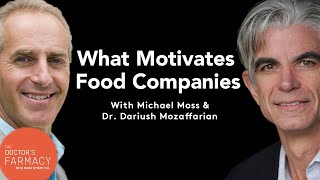
This is a YouTube video titled "Why Food Companies Make Unhealthy Products, And What We Can Do About It" published in July 2020. The content is a podcast-style discussion featuring Dr. Mark Hyman, investigative reporter Michael Moss, Ask AI Mark, and other experts. They explore how the food industry engineers addictive products using salt, sugar, and fat, the role of government and industry collaborations, and the impact of ultra-processed foods on public health. The conversation also covers potential solutions for creating a healthier, sustainable food system through policy and business innovation.
Coming up on this mini episode of the Doctor's Pharmacy.
Except that I see them as this evil empire that intentionally set out to make us hugely overweight or otherwise ill. I mean, these are companies doing what all companies want to do, which is to make as much money as possible by selling as much product as possible.
Hi, I'm Kaya Perowich, one of the producers of the Doctor's Pharmacy podcast. It is known that many in the food industry deliberately create addictive products. they approach food as engineering products with the end goal of creating what they call heavy users. In our very first episode, Dr. Hyman sat down with New York Times investigative reporter Michael Moss to talk about his best-selling book, Salt Sugar Fat. As the title insinuates, these three ingredients are the trillion-dollar food industry's secret weapon.
In creating addictive products. One of the greatest stories in your book was about cheese. Yes. So we were like, Everybody get off fat, low fat, low saturated fat. So the government's pushing this message out there at the same time that they're aggressively promoting the overuse of cheese because when you take the fat out of dairy, you're left with some fat to do something with the turn into cheese. And yet, so they're pushing it on the one hand there, it's just a complete contradictory mess.
If only cows had made non-fat milk, which they didn't. So the fat from the milk was a commodity. They weren't about to throw it away and they could only slough so much of it off on other countries in the world. so they made cheese and turned cheese from this kind of delightful, tasty treat in and of itself or cheese sandwiches into an ingredient to kind of increase the mouthfeel. And so suddenly you saw processed cheese made overnight in their factories going into everything in the grocery store seemingly as a way. And if I did the rough math and basically All of the fat that people took out of their diet from drinking low or non-fat milk snuck back in as a result of these government overseen programs to increase the consumption of processed cheese as a way of helping the dairy industry.
And they're in cahoots with the dairy industry. So the National Dairy Promotion Research Board works with the Dairy Council. So the government works with the Dairy Council to promote. They had these Got Milk ads. which actually had to be taken off the air because they were not based in science and they're making health claims that the FTC said were illegal. So this is really where the government gets its hands dirty in a way that is really in bed with industry.
With maybe in some sense sort of a noble thought in the beginning. Look, I mean, it's hard not to be empathetic with dairy farmers, but the fact was they were overproducing and instead of taking that overproduction and like, throwing it away or something. In fact, what they were doing was storing it, all that cheese in caves and realized the cheese was going moldy and they had to start like pumping it out into school food programs or et cetera. That's what they did. That was their solution was to promote more consumption.
And often it wasn't great cheese, right? It was processed cheese. In fact, I love the story about Kraft, we call it American cheese, but it's actually not allowed to be called cheese because it's not 51% cheese. It's called Kraft slices.
Right, right. Well, there's all kinds of euphemisms that they have to use because of the standards and some of the fit- what.
Is the other 49% on 50%? Right, right, right, right, right, right, right.
But in fact, some of the cheese engineers at Kraft were, in meeting them and tasting cheese, are just kind of appalled at American processed cheese, which to them was not real cheese.
It's not like your heirloom goat cheese from France or something like that.
No, but again, it serves this incredibly powerful role in processed food of sort of that providing that mouthfeel texture allure.
You talk about Howard Moskowitz who was a scientist, food scientist, who formulated a new tasting Dr. Pepper and had 61 different varieties that we tested over in 3,000 different taste tests.
Yes.
And they're looking for this magical point you call the bliss point.
It was Howard Moskowitz who coined the term the bliss point to apply to that sort of perfect amount of sugar in foods and it is kind of a precise point on a bell-shaped curve, and anybody who likes sugar in their coffee, for example, can do the tests themselves at home. Just add sugar till you get to the point where you really love the coffee and keep adding sugar and pretty much you'll be going, yuck. The really kind of important thing for me about that, though, was not that the companies hired people like Howard Moskowitz to engineer foods with the perfect bliss point of sweetness foods that we know should be sweet and we already consider to be sort of treats like ice cream and soda and cookies. The food companies marched around the grocery store adding sugar to things that weren't sweet before.
Salad dressing.
Engine. Salad dressing, yogurt, pasta sauce, creating kind of this expectancy in us that everything should be sweet. So if you've got kids and you're trying to drag them over to the part of the grocery store where we should all be spending more time, the produce aisle, and they get hit with some sour bitter notes, the other four or five tastes that Aristotle wrote about way back when, that's why you have a riot on your hands because they are attuned, they are expecting everything to be sweet.
It's true. One of the surprising facts I uncovered was that your morning low-fat fruit sweetened yogurt, which is considered a health food, has more sugar per ounce than soda, which is startling, you know?
You know, I mean, who knew that walking into the grocery store was such a treacherous thing? I mean, you have to be on your guard at all times. And they will, look, these are companies. I mean, and I always like to sort of make that point. It's not that I see them as this evil empire that intentionally set out to make us usually overweight or otherwise ill. I mean, these are companies doing what all companies want to do, which is to make as much money as possible by selling as much product as possible.
Unfortunately, the business of big food has come at the expense of our public health. The ultra-processed foods that make up the majority of Americans' diets are driving chronic diseases such as type 2 diabetes, cancer, obesity, and heart disease. It is also driving a massive economic burden on our families and our society at large. Dr. Hyman recently spoke with the Dean of Tufts Medical School, Dr. Darius Mozafariyan, about this and what we can do about it.
I don't think there's anybody in any business, in any seat of government, or any one of our citizens who wakes up and says, you, know what? I want to create a system that makes people sick and fat and kids not be able to learn and people depressed and make our national security worse and causes destruction of our agriculture environment. There's nobody that says that or wants that. as a human being. And so I believe we appeal to human beings who are behind these companies and behind these policies that most of them will be able to be brought along.
So businesses everywhere from farm to retail to personalized medicine to packaged foods are rapidly trying to innovate because customers are demanding different food. They want food that they think is going to make them healthier, that's sustainably sourced, that's good for the environment, that comes from sustainable labor or fair labor practices. And so companies are scrambling to figure this out. So how do we get healthier, affordable food to people? And right now, it's just the market is determining what works and what doesn't. And so that means that companies that are really trying to innovate and do the right thing, if their product costs a little more because they're making it healthier, if it doesn't taste quite as good because they've made it healthier, they're at a disadvantage. And so, and that's insane, right? Those companies should be at an advantage. And so I think we need a national, you know, program to spur innovation in business to help reward through tax policy and other policies, help reward those companies that are trying to do the right thing. There are three big picture principles that I'd like to highlight, you know, that I think our report highlights. One is that there are concrete solutions. There are very real, very concrete solutions that we can fix this. Two, many of these are win-win. This is not like tobacco where we're just trying to get rid of an entire industry. We want to help the food industry from farmers to manufacturers to restaurants to producers to retailers. We want to help them get healthier, more sustainable, more affordable food to people. It can be win-win. And three, this can happen quickly. After September 11th, there was, you know, which was a devastating crisis to our country, there was recognition that all of the national intelligence agencies did amazing work separately, but that it wasn't coordinated. And so, you know, the FBI and the CIA and all these other groups weren't talking to each other. And that was limiting our ability to respond quickly and effectively to intelligence and crises. So, The Office of the Director of National Intelligence was created, the ODNI, which is a cabinet level office, reports to the Office of the President and coordinates all of our national intelligence and brings that coordinated single message and information to the President, to Congress, to the heads of agencies, and creates coordinated actions. We have to stop trying to put our fingers in the dike one at a time and try to fix these things one at a time and say, we have a systems problem. And it's not rocket science. It's not brain surgery. It's pretty basic stuff that we can do and it's win-win. It's win-win for industry, it's win-win for farmers, it's win-win for pretty much everybody. So I think it's the time has come and let's walk through that door.
So I've asked you all the easy questions. I want to ask you a hard question. You say it's win-win, but what are the obstacles other than lack of education awareness to actually make this happen? Who are the people or the organizations or companies that are going to be resisting the change? Because I think there will be. And how do we work around that? How do we work around that?
I think it depends on the approach, right? If the approach is only punitive, if the approach is, which some countries are doing, like Chile, Mexico, some of these new food system programs, They say, look, we think there's too much salt and sugar and saturated fat in the food supply, and so we're going to penalize companies through warning labels or other things if they have those, and we're going to restrict marketing, and that's it. If that's the only approach, food industry is going to be kind of annoyed. They're going to say, All you're doing is hitting us for the negatives in our products. What if we have a fermented product? What if we add fruits in a product? What if we increase whole grains? What if we try to have more healthy oils? You're not giving us any credit for that. So I think that if you take a punitive approach, there's going to be some big time opposition from publicly traded companies that have stockholders, shareholders, excuse me, that they're beholden to and financial responsibilities. I think if you take a a win-win approach that, look, we're gonna use sticks and carrots. We're gonna help companies that are doing the right thing. We're gonna help you shift your portfolio. We're gonna reward farms that are doing the right thing. You know, of course there's some products that are going to be losers, right? So some, you know, single products may not be around that much longer, or they may not be sold that much, or they may cost more. But, you know, food companies are diverse and they can sell lots of things, restaurants are diverse and can sell lots of things, farmers can over time grow lots of things. So we don't have a monolithic system with one product like tobacco that we have to get rid of. And food companies are starting to try to create more nutritious products. And so, you know, government has to take on this crazy complicated system and help spur it and catalyze it and leverage it and nurture it, you know, faster.
Maintaining good health is front and center in most of our minds right now. And fixing our broken food system is among the most important issue of our time. Understanding the problems and challenges we face sets the foundation for the solutions. These solutions come in the forms of making changes to our own diet, as well as shifting policy and business to create a healthy, sustainable, just world. If you'd like to learn more about fixing our broken food system, I'd encourage you to check out Dr. Hyman's most recent book, food fix. If you'd like to learn more about the topics covered in this episode, please check out Dr. Hyman's full-length conversations with Michael Moss and Dr. Dariush Mozaffarian. And if you enjoyed this episode, please consider sharing it with a friend or leaving us a comment below. We'd love to hear from you. Thanks for tuning in.
Or they might not be sold that much, or they may cost more. But food companies are diverse and they can sell lots of things. Restaurants are diverse and can sell lots of things. Farmers can, over time, grow lots of things. So we don't have a monolithic system with one product like tobacco that we have to get rid of. And food companies are starting to try to create more nutritious products. And so government has to take on this crazy complicated system and help spur it and catalyze it and leverage it and nurture it, you know, faster.
Maintaining good health is front and center in most of our minds right now. And fixing our broken food system is among the most important issue of our time. Understanding the problems and challenges we face sets the foundation for the solutions. These solutions come in the forms of making changes to our own diet, as well as shifting policy and business to create a healthy sustainable, just world. If you'd like to learn more about fixing our broken food system, I'd encourage you to check out Dr. Hyman's most recent book, Food Fix. If you'd like to learn more about the topics covered in this episode, please check out Dr. Hyman's full-length conversations with Michael Moss and Dr. Dariush Mozaffarian. And if you enjoyed this episode, please.
Consider sharing it with a friend or.
Leaving us a comment below.
We'd love to hear from you. Thanks for tuning in.
More from AI


Why Younger Women Are Getting Breast Cancer at Record Rates (And How to Reduce Your Risk)




This Is Why 99% of Skin Conditions Don't Heal — And What Dermatologists Won't Tell You




