Why Food Is A Social Justice Issue
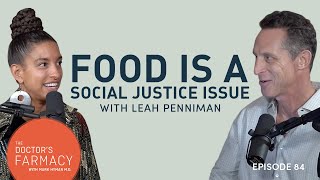
Dr. Mark Hyman talks with farmer and activist Leah Penniman about food apartheid, systemic racism in agriculture, and how Black and brown farmers face historical barriers. They discuss regenerative farming and community solutions to transform the food system toward equity.
It is nearly impossible to make a living selling vegetables on a small scale. 95% of small farmers are relying on second, third jobs. And so we have to, as a public, figure out how to stop subsidizing the stuff that's trashing the planet and our health and start, quote, subsidizing the things that are bringing life.
Welcome to the Doctor's Pharmacy. I'm Dr. Mark Hyman, and that's Pharmacy with an F, a place for conversations that matter. If you care about your food, this conversation is gonna matter to you 'cause it's with an extraordinary woman who's really revolutionizing how we think about food, how we grow it, and who we grow it for, and addressing issues around food injustice and food apartheid, which not many people are actually talking about, surprisingly, because it's such a big problem. She is an educator farmer, Peas on, she's Creole, her family's from Haiti, and she's an author, an activist from Soul Fire Farm in Grafton, New York. She co-founded the farm in 2010 with the mission to end racism in the food system and reclaim our ancestral connection to the land. As co-executive director, Leah is part of a team that facilitates powerful food sovereignty programs, including farmer training for black and brown people, a subsidized farm distribution program for communities living under food apartheid, and domestic and international organizing toward equity in the food system. Thank God for that. Leah has been farming since 1996. She has a master's in education and BA in environmental science. From Clark University, her work has been recognized and the work of Soul Fire Farm by the Soros Racial Justice Fellowship, Fulbright Program, Griswold 50, the James Beard Award, and on and on. And her book, which everybody should get, is called Farming While Black: Soul Fire Farm's Practical Guide to Liberation on the Land. And it's a love song for land and her people. Thank you for being here, Leah. Thank you so much for having me. Of course, so you're doing an extraordinary thing, which is changing the conversation about food, farming, and race and the injustice in our food system. Everybody talks about eating healthy and addressing chronic disease through food. Not many people are talking about food injustice or food oppression or food racism. And you are. How did you figure this out? Like what was the thing that got you into farming? It was sort of an accident. Talk about how that all got connected.
Wow. Well, I mean, there's a lot of beginnings to every story, but part of my beginning was growing up in a small, rural, working class, mostly white town. And to be really frank, you know, the kids at school were not kind to my siblings and I. We were the only Brown family in the school and had a hard time making friends, experienced a lot of bullying. And it was the forest. It was the land that was really a solace for me. I considered the trees my closest and best friends. Worked hard to defend them from a young age. They do actually talk back.
They don't bully you.
They don't, but they offer a lot of support and guidance about right relationship. And so I think it was my connection to land that drove me to eventually look for a job, a career that was related to land stewardship. And so I found farming as a teenager, and I haven't looked back.
Amazing. And You were working at something called the Food Project when you were 16. How did that affect your future and the work you're doing today? Absolutely.
So I spent summers in Boston with my mom. I spent the school years with my dad in rural Ashburnham, and the Food Project was generous enough to give me a summer job at 16, planting carrots, hoeing rows, running a farmer's market. And it was really transformative for me because at a time when the teenage years are tumultuous, there's lots of questions around identity and belonging, and farming is undeniably good. you have the opportunity to put a seed in the ground, harvest, feed the community, and no one can deny that that is a noble contribution to society. And so that beautiful nexus between environmental care and social care was deeply healing and meaningful for me. And so I went on to work at several other farms throughout my teenage years.
Well, you know, it's interesting, you know, we sort of had our entire country built on the backs of slavery. and the agrarian wisdom of the Africans who were involuntarily brought over here to grow food for Americans and to literally build the US economy. And so a lot of, you know, African Americans see farming as a reversion to slavery, plantation life. There's a sort of negative connotation about it, but somehow you've really reframed that and are bringing back the original wisdom that has sort of long been in that culture.
Can you talk about that? I mean, it's so true. I think there's a lot of agricultural practices that we take for granted as a historical or European that actually have African roots. So things like regenerative agriculture, you know, that comes out of the work of Dr. George Washington Carver in the late 1800s at Tuskegee University. Yeah. Black professor who started extension agencies, started, you know, cover cropping and crop rotation in this country. you look all the way back to Cleopatra, who came up with composting and raised beds from the Oromo people. So there's so many technologies and I think that, well, I certainly don't blame our people for feeling triggered by the land. The land was the scene of the crime, as Chris Bolden-Newsom would say. But we can actually reach back beyond that to reclaim a noble and dignified relationship to land, and I'm part of.
A returning generation that's excited to do that. Yeah, I mean, because, you know, In a way, part of the solution to poverty and injustice in our food system is bringing everybody back into right relationship with our food and our land. And that's a very novel concept, right?
Yeah, absolutely. Fannie Lou Hamer said, if you have 400 quarts of greens and gumbo soup canned for the winter, nobody can push you around or tell you what to do. Which I think is brilliant because if you think about that, if you don't have anything canned for the winter, you don't have a farm or anything, they put chains around that supermarket you're going to put down your protest sign, put down your ballot, and crawl through the dust to get food for your children. And so fundamentally, whoever controls the food and the land really controls the population. And we're seeing that now with power outages and grocery stores shuttering the way that it wreaks havoc in society. So part of our collective survival is to reclaim an agrarian tradition and our relationship to land.
So powerful. Now, you were in 2006, a long time ago. You were living with your husband in South End of Albany near the capital, New York state. And you said it was easier to get weapons and drugs than healthy food and that your neighborhood was a place of food apartheid, which is really an interesting term. I want to get into that, but there were no grocery stores, farmers markets, fast food and bodegas in every corner, just selling processed junk and alcohol. It sort of helped you catalyze a lot of what your thinking was and what you're doing. And why is this whole term food apartheid the right term that we should be using instead of talking about food deserts? Sure.
So there's a lot there. I mean, a food desert implies a natural ecosystem, right? It's the term the USDA uses for a high poverty neighborhood without grocery stores. But there's nothing natural about a system where certain people have access to food opulence and others food scarcity.
And I say man on purpose.
Right. So it's apartheid. It's apartheid. And, you know, there's a whole, history of like redlining and housing discrimination that's led to neighborhoods that don't have these resources. And I think for me, living with my children who were quite small then, Nashima was two, Emmett was a newborn. And as you said, there were no grocery stores, farmers markets, places to have a garden. And so we ended up joining a CSA program, so like a subscription program that cost more than our rent and had to walk over two miles to get the vegetables. piled them onto the laps of the sleeping children in the stroller, go back down. That was the only way to get vegetables. And so when our neighbors found out that we knew how to farm, there was a clamor for us to create the farm for the people.
And that was where the idea for Soul Fire Farm came about. Wow. And so food apartheid really is a better way of describing the intentional segregation, the deliberate policies, the redlining, which you described, which maybe you could explain, that led to this incredible disparity in access to food and also in the health disparities that result from that because we're seeing this tremendous increase in diseases in African American and Latino populations. It's not an accident.
Yeah, absolutely. So food apartheid is the right term because as you mentioned, if you are black or brown, you know, Latinx, indigenous, you're much more likely to struggle with diabetes, heart disease and other diet related illnesses. not to be clear because we don't know how to make good food choices or know how to cook food or want those foods. It's really because of access. If you have $3 in your pocket and you live in a food apartheid zip code, you can get some hot Cheetos and blue colored drink, but you cannot get a burrito, a salad or anything like that. And so it's really a tragedy that is rooted in institutional racism. Because as I mentioned in the 1930s, The federal government commissioned these maps to be made of neighborhoods that ranked them from most desirable to lend down to least desirable. And the communities of color were outlined in red as too risky to lend, too risky to have a mortgage, too risky to own homes. And so the wealth disparity has grown and the property ownership disparity has grown and with it these neighborhood conditions.
Incredible. You know, and I think people don't realize the magnitude of the health disparities that exist out there. Diabetes, heart disease, chronic illnesses, kidney failure, hypertension. that affect Black and Indigenous people, Native Americans, Latinos far more than whites. If you're African American, you're 80% more likely to be diagnosed with type two diabetes. You're four times as likely to have kidney failure. You're three and a half times more likely to have amputations from diabetes as whites. And it also somehow connects to sort of how our whole system is operating. It's almost like a weapon that is used against these populations, not necessarily intentionally always, but it sort of has been the unintended result of our food policies, of our ag policies. And, you know, the way I think about it is we're facing an unprecedented proliferation of biological weapons of mass destruction, our processed food, which kills literally 40 to 50 million people a year globally from hypertension. So how do you see the role of the farmer shifting this systemic violence, these biological weapons of mass destruction, as I call them? And how do we do that?
I mean, what you said is so powerful because food has intentionally been used as a weapon. I mean, you look at the Greenwood food blockades that were used to punish civil rights activity, literally cutting off food supplies to black communities in the 1960s for the audacity to try to register to vote. And so I actually don't think it's an accident that our schools, our urban schools, our prisons are filled with these highly processed foods because a population that's not well is not gonna resist. You know, if I'm not feeling well and I'm dealing with diabetes, kidney issues, I'm not gonna show up for a town hall and tell my senator what they should be doing, right? And so I, I don't think it's entirely an accident, but I do believe it's not just farmers who are responsible for the solution. It's obviously everyone in the food system. But farmers do have a unique role to play because we have an opportunity, one, to see where our food's going and to do what we can to make sure there's equitable distribution. We have the opportunity to make sure that our farm workers are treated fairly, signing on to programs like the Food Justice Certified. And we have a unique voice where we can really get bipartisan ear. Farming is considered a like everybody kind of issue, so we can be telling policymakers about the shifts that need to happen on a systemic level.
Exactly. And I think we are seeing a farm system that also has sort of generated out of a series of policies that have led to the overproduction of these highly processed foods and poor and minorities are targeted by the food industry with extra marketing for these foods. When SNAP or food stamps come on with your monthly stipend, it's usually at the beginning of the month and that's when there's maximum advertising in all these bodegas and local stores for more soda and more junk food. So it's sort of an intentional process. And the other thing that is not well understood, I think my most, is that your cognitive development depends on your nutrition. So if you're growing up in a poor community with lack of access to nutritious food, with lack of vitamins and minerals and phytonutrients and all the things you need to create your healthy brain, these kids are not going to be cognitively where they need to be. I mean, I mean, even, even, you know, the exposure on, on Farms to pesticides, these kids have lost, you know, 41 million IQ points in farm and food workers, which are among the most dangerous occupations in this country because of the use of these industrial agricultural chemicals. So, you know, we have both the issue of, you know, food justice. We also have like the environmental racism and environmental justice that's connected to the food system because most of the workers on farms today are brown, mostly Latino workers or migrant workers. They're not protected by the farm, I mean, the labor, a fair labor act that was in the 30s because they were excluded mostly because at the time, they were mostly African-Americans doing the work. And it's a big barrier. So what are the biggest barriers you see to what you describe as decolonizing farming? And can you just take a minute to describe what is the colonization of our food system? Because I think people don't understand that we have a colonization of our food system.
Yeah, absolutely.
That was a lot.
That was a lot. Environmental justice, I agree, is absolutely a huge issue, first of all, because we're talking about who's getting environmental benefits and who's suffering from environmental harms, pesticide exposure, extreme heat from climate chaos. We're talking about the effluent from hog farms and, you know, toxic emissions.
So, pesticides are, you know, abuse, sexual.
Abuse and all sorts of things. So, I'm glad that you mentioned because those issues are certainly linked. I mean, the colonization of the food system is the imposition of European control power and European norms over our food system. And it's quite pervasive. I'll tell a quick story just to illustrate one example of it. You take maize, 9,000 year old staple crop. It was a gift from Sky Woman to the Indigenous people of Turtle Island of this continent. It was given to prevent starvation in combination with her sister's beans and squash to be grown together. Right? You all heard of the Three Sisters. Or intercropping, right? Yeah. And there's many, many origin stories, but the condition was that that need to be, the gift of maize needed to be shared freely. So the colonizers got some too, right, as a gift. That's how they stayed alive. But look what they did with maize. tore her away from the sisters, monocrop, laden with chemicals, pesticides leading to the dead zone in the Gulf of Mexico, turned into corn syrup, pumped into the veins of our children, driving the diabetes epidemic, and genetically modified BT, terminator seed, all of this.
And so you look- We could go on and on.
Looking at maize, right, is just one example of colonization of the food system. You look at the fact that the soil has lost over 50% of its organic matter, 50% of its carbon is burned up into the atmosphere. That was the beginning of climate change was the 1800s opening of the Great Plains, you know, and so- We had.
Extractive agriculture that wasn't regenerative and that's led to this massive climate change crisis. And I think we've talked about on the show, but, you know, our food system end to end is the number one cause of climate change. Absolutely. And people don't realize that. It's about 50% whereas fossil fuels are about 30%. And it's not just the factory farming of cows, it's everything from deforestation to land destruction to food waste and so forth. So, You know, you don't just talk about this stuff. You got your hands in the dirt.
Absolutely.
And you are not just talking the talk, you're walking the walk. And you created an extraordinary place called Solfire Farm, which I read a lot about, I watched movies about it. I'm super impressed with what's going on there because you're helping your community and poor communities sort of understand the benefit of the land and becoming farmers and training them to become farmers, and then you're doing all sorts of collateral good in the community by providing food for ex-cons who can't get food or for immigrants who can't actually afford food. I mean, it's really amazing. So tell us what you think the role of Soul Fire Farm is in creating a new food system.
Wow. Sorry, I'm putting you on the spot. No, it's my heart work. So Soul Fire Farm, we are a community farm. There's eight of us up on the land, up in the mountains of Grafton, New York. I'm coming to visit. Please do. Every month we have a community day, everyone can come. But we're dedicated to ending racism in the food system. We're doing that in three basic ways, right? The first is to regenerate the 80 acres that we get to steward of Mohican territory. So we're using all these Afro-Indigenous technologies to heal the land, produce food, and get that to the people who need it most through a doorstep delivery program. That's the first thing. The second thing is to equip black and brown farmers through our training programs and mentorship, helping people get the knowledge and land and credit they need. And then the final thing is mobilizing public support, trying to change policy, get reparations for farmers, reparations for indigenous people who've lost their land and so forth. And, you know, it's been really heartening because we actually haven't had to convince people that this is worth doing. I thought I'd be all alone in the hills, but our waiting list for our programs are years long because we want to get back to the land as a people.
I mean, you know, most people aren't aware that Lincoln, when he freed the slaves, promised 40 acres and a mule. which Andrew Johnson, the president who got impeached right after him, revoked. And it's been estimated that if that was in place, that there'd be a land worth $4.6 trillion in the African American community, which has been usurped for them. And then at the turn of the century, 14% of farms compared to less than 1% of farmers now, were African-American and they were in the South and they were threatening the existing status quo down there. And the people who were running those farms were lynched, their homes were burned, their farms destroyed, their land was taken over. And it's just, it's a legacy that people just don't realize that this was sort of an injustice that's never been talked about, that really never been really addressed. And maybe we need to give back that $4.6 trillion of land.
We absolutely do.
Because you mentioned reparations, and I think.
You know, that's what made me think about it. Yeah, because 40 acres and a mule was a broken promise. You know, all of the land that black folks got was purchased off their own dime, despite the oppressive sharecropping and convict leasing conditions. And it wasn't just the violent lynching and terrorism that drove people off the land. It was the federal government itself. You know, the USDA in the 1962 Commission of Civil Rights report was named as the number one culprit in the decline of the black farmer. Reagan later closed that office. He didn't like their findings, but that's why black farmers sued the government. They won a settlement of $2 billion in 1999, the Pigford case, which was the largest civil rights settlement in US history. But by then, most of the farmers were in their 90s and 50,000 is not going to get you back your land. So it was really a symbolic victory.
So you point out that partly as a result of the broken promise of 40 acres and a mule and many other sort of deliberate and political and social injustice that happened. You talk about how there's been starting to be an increase in African American farmers. It used to be 14%, now it's maybe 1 or 2%. Yeah, but you see that changing. And I just saw this incredible graph in one of your articles where there was this complete divergence where white farmers are going down, mostly because they're aging out of farming and no one's coming in new and African American farmers are going up.
Well, the USDA actually just got called out for fluffing up its numbers in the 2017 census. So we're not exactly sure if black farmers are on the rise according to the USDA count. I will say, though, that as someone who focuses on training a returning generation of black farmers, that there is a clamor, there is an interest, and there are a number of success stories on an anecdotal level. and so we're hoping to see some legitimate shifts upward in the coming census.
You know, I work a lot in Cleveland and I go through some of the poorest areas there and see the way people live, the lack of access to food. And it strikes me that they're in this vicious cycle that they can't get out of and that thinking about how to bring, and I know it's not your expertise, but how to bring farming and community agriculture back into these communities. I was at Ebenezer Baptist Church a number of years ago. you know, they had a two acre plot, like right near the church in the middle of Atlanta was a massive farm where the church members were growing the food, they were eating the food, they were distributing it to the communities that needed it. I was really like, wow, this is a model that could be scaled.
And absolutely.
So how do you see that being part of the solution? Because it is something I struggle with. It's like you see the problem is so tough. I mean, I'm working in Cleveland, working with a a group there, you know, really underserved African-Americans who are very, you know, sick. They have diabetes, they have kidney failure, they have all these issues. And, and we're, we put them in a group together. We're using Community-based Solutions. We're going to them. We're teaching them how to cook and shop, and, and they want it so bad, but nobody ever has helped them. And, and they're losing weight and they're feeling good, and it just, it's amazing, but you know, like these are just really neglected communities and it's bankrupting our country. Like we should care about it because a big part of our $22 trillion debt is the cost of healthcare. So how do you see intervening in these communities as well? Because I think how do you bring people up to say, okay, well, you know, farming is not about slavery. It's not about working on a plantation. It's actually my salvation. It's what my ancestors did and brought to America, and I should be proud of it, which is what you're trying to say. But how do you get people's mindset to change around that? Absolutely.
I mean, I would say at least half of our graduates from our week-long beginning farmer training program go on to start urban farms or work on urban farms. So it's really part of the same solution. And I think it's a false dichotomy between the rural and urban. I want to shout out, if you look at Reverend Heber Brown's Baltimore Black Church Community Food Security Network, he realized, you know, that Black churches are actually the biggest landholders in the Black community. And so is, as you saw in Atlanta, you know, putting in gardens, also sourcing from rural Black farmers and getting that food to urban Black community. And so it's happening in Chicago, it's happening in Detroit with D-Town Farm, Malik Akini's work. So we're very excited to be collaborating and have found that it's not so much, again, that we need to convince people. I think the will is there. It's often the resources that are lacking. So if we can make sure that folks don't have to pay a high water bill, and that they have the tools and the land and institutional support, website development, whatever the thing is that they need, it emerges. And so we do not even have to evangelize.
That is crazy. I mean, Heber Brown said, the pastor in Baltimore said, We are losing more people to suites than the streets because he was ministering to his congregation and seeing how many people are dying from all the food they are eating. So I think it is an important solution to empowering people, getting them out of poverty, giving them food sovereignty in ways that, you know, there aren't a lot of solutions that people are offering and I think this is a powerful one. You know, I think, you know, but it's still hard for people of color to become farmers. So how do we overcome those obstacles?
Yeah, absolutely. So recently, the USDA, again, we looked at their numbers and they're still giving out a disproportionate amount of their resources to white farmers. large farmers, corporate farmers. And so we need an overhaul of the Civil Rights Commission in the USDA to address that discrimination. Is there a Civil Rights Commission at the USDA? There is, and they have a multi-year backlog of complaints that are unaddressed.
And so we've been meeting- Is there.
One 75 year old lady running the whole thing or what? Oh, it is a hot mess. But I will tell you, you know, we've been talking to Senator Sanders, Senator Warren, other politicians for the first time are interested in the plight of the black farmer. And so hopefully we'll get those cases addressed of discrimination so people can get their loans and crop allotments and technical assistance. I think also we need massive land reform. You know, 98% of the rural land is owned by white people right now. That's the highest amount of land concentrated in the hands of European Americans ever in the history of this country. And so we really need to look at a patchwork of land trust and land link and land transfer to make sure that- 40 acres and a mule.
Yeah, exactly. 40 acres and a mule in 2019-2020, right? Maybe not a mule, maybe Some other.
Tools, but 40 acres in a couple tracks.
What's really fascinating about this conversation is that if you do the right thing for the land, you do the right thing for humans, you do the right thing for climate, you do the right thing for biodiversity, do the right thing for our scarce water resources, right? You do the right thing for all the things that matter. You do the right thing for injustice, you do the right thing for our economy, you do the right thing for health. It seems like too good to be true, but is that how you see it?
I do think it is all really connected. Some of my mentors have taught me how to farm in Ghana. They are called the Queen Mothers, these elder women who are just badass in every way. But they said, you know, Amida, is it true? Leah, is it true that if you want to plant a seed on your farm in the United States, you do not pray over it or sing or dance or say thank you to the ground, right? You expect the seed to grow. I admitted that was true, and they said, that's why you're all sick. You're all sick because you treat the earth like a commodity and not like a family member. And so I do think that the reverence that we have for the earth, by extension, the way we treat the land, is going to be mirrored in the way we treat ourselves and our human communities.
I mean, you're so right about this, because when you look at the impact of regenerative ag to reverse all the wrongs to our earth and to humans, It has so much potential. It's like a, I wouldn't say it's the entire solution, but it's a big solution if we scale this. And I think, and doing all the things I said by producing better quality food where the farmers are happier, they're healthier, they make more money producing food that's good for humans, that actually reverses climate change, that actually doesn't deplete our scarce freshwater resources, that increases the biodiversity, protects our pollinator, I mean, there's all this downstream benefits. And it's like a duh, but it's still sort of this, people say regenerative, like, what's that, right?
Yeah, I mean, regenerative ag, I think we ought to give a shout out to Dr. George Washington Carver. People thought he was nuts. I mean, this is a generation and a half before Rodale. And so he's telling farmers literally to let their land rest out of cash crop for a little while, put some legumes in there, because legumes, as we know, are best friends with bacteria. and they fix nitrogen instead of eating fertilizer. Exactly. He was getting people to go and muck out swamps to make compost piles. I mean, he literally started quoting Bible verses to get folks convinced that this.
Is what God wanted them to do.
Because it didn't make any logical sense. How did he figure it out? Was it from his- It's from traditional African and indigenous practices, bringing them into the university. So he said, you know, whatever, you know, God says whatever you do unto the least of these, you do unto me, and God's talking about the earthworms. So come here over here. And his model was really neat because he would go out to the most decrepit farm in the county, do an extreme farm makeover with regenerative practices, and then invite everyone over to see the model, and then move to the next county. So that was the beginning of extension.
Agencies in this country. And we're building on it now. So great. I mean, it's so great. I remember reading a story about this guy who came up from the city with his Air Jordans and didn't want.
To get out of the city.
Oh, Dejore Carter, yeah. Because he didn't want to get his sneakers dirty. And he underwent quite a transformation. Can you just tell a story? 'Cause I think it's so cool. So hi, Dejore.
So Dejore Carter is now a grown person, but as a young-- as a teenager, he did come out of the farm. He was afraid a bear would eat him, so he didn't want to get out of the van.
This is somebody who's never been out of the city.
Yeah, he had not ever been to a farm before. And so, you know, when we all went on the tour, that was even scarier, 'cause if we're leaving him alone, We eventually convinced him to get out of the van, and in order to protect his sneakers from getting dirty, he took them off and went barefoot. And he had an experience where once his barefoot touched the ground, you know, a memory of his grandmother entered through his foot up to his heart. And she had once gardened with him in the city and put worms in his hand. And so he softened at that moment and ended up telling the whole group the story, like, in tears about, you know, Miss, I never thought this place had anything to do with me, but it sure does. you know, it sure does. And that's just one of the thousands of stories of the land just calling us home. We don't even have to do anything. You just touch it. She calls us home.
That's so true. I mean, I kind of came into this in college where I ended up going to this summer program called the Institute for Social Ecology, which was all about sort of understanding the challenge we're facing environmentally to our land, women's rights, various injustices. And one of the courses I took was biological agriculture. They didn't call it regenerative back then, but it was all about intercropping, cover crops, natural pest control through various plants that you can use like marigolds to repel pests. It was fascinating. I learned so much. And we make compost. And then I began studying these books like Soil and Health and which was from Sir Albert Howard, who was a British guy who helped start the organic agriculture movement and One Straw Revolution and all these books Wendell Berry's Unsettling America. And it just really shaped my thinking. So as I became a doctor, all that was in there, right? It was all sort of the underneath my thinking about how we need to be in relation to the land. But what's really occurred to me now, on the other end of 30 years of that, is seeing all these chronically ill patients that are sick from the food they're eating. And then I realize that I can't stay in my office treating patients because it's going to be a never ending stream unless we go upstream and fix the food system and fix farming and everything coming from that. And, you know, one of the most exciting thing is not, you're not just started, you know, making compost and building communities where agriculture and training people, but you're politically active. You, you actually help get I think it passed, but a provision in the farm bill, which is a monster bill to get community supported agriculture paid for with farm bill funds. Can you tell us about that?
Yeah, exactly.
How did you do that?
I think I was- Nothing gets done in Washington. I had the audacious boldness to stand up. Then the director of the FSA was speaking at a conference I was at. And the FSA is- Farm Service Administration. And I got in line for the comment period and said something about how it was impossible for farmers to accept SNAP the way that it was set up, which is the, you know, formerly known as food stamps. And she actually followed up with me. And so we ended up getting a petition going. You know, we got some allies who were lobbyists to support us. And in the last farm bill, got a provision passed that makes it a bit easier for farmers to be able to accept SNAP for their CSAs. You can do advance payments and vouchers and so forth. Again, very, very small drop in the bucket. of everything that needs to be changed in the food system, but it did embolden us to create a policy platform and ask for more changes.
So as someone who's literally doing this, not just talking about it like me.
It sounds like you're doing a few things.
I mean, I'm working on the doctor stuff, but we're in communities trying to deal with these issues. What would be the kinds of big changes in policy in, in around food and agriculture that you think are going to have the biggest impact? Things that we should be focusing on?
I have so much trouble answering that question because I have about a hundred things that need to change in the world. Start with the first 50.
Start with the first 50.
I mean, from your end, I really think that taxing, quote, junk food companies for their health impacts the way that cigarette companies are taxed and held accountable would be a good step. You know, from the farmer end of things, we need to pass the Fairness for Farm Workers Act. 'cause we still haven't updated our labor laws and farm workers don't have overtime protections, minimum wage, right to a day off in seven, right to unionize, some very, very basic things in this country.
Farm workers do not have. Yeah, just pause there for a second 'cause I just wanna put in context. So there was a lot of labor abuses in this country at the early part of the 1900s. And there was a law passed, there was a couple laws, the Fair Labor Act and another one that were designed to protect workers, minimum wage, fair working conditions, you know, removing abuse and so forth. But the exclusion within that was, and this was like 1938, okay? So we're talking like, I don't know how many, it's like, what is that, 80 years ago? It has not been addressed that the people who are working on farms and the food system were not protected by those laws.
Exactly. Because they were black. Because the Southern Democrats would not vote for the bill. It was introduced originally.
That's right.
As including everyone, but the Southern Democrats parties were switched then, would not vote for it if it included black people. And we've, you know, we updated Social Security, but we haven't updated the labor laws to include everybody.
And so, and they are the, and there's more people in the food and farm system as laborers, as workers, than any other industry in the United States. And they are the poorest, the most at risk for disease, the most likely to be harmed by farming and chemicals, the most in need of aid, So we're actually as taxpayers paying for their Medicare and all the services that they need. And we're also helping to support the food system as it is by using the tipping system, which was sort of designed also as a part of this whole legacy of racism in the food system, right? So can you talk more about that? Exactly. You're probably surprised that a doctor is.
Talking about all this stuff. Because yeah, look at the doctor.
Well, it's definitely all, it's absolutely all connected.
And, you know, it wasn't until this year, 2019, that the Fairness for Farm Workers Act was introduced to actually address some of those things. Mm-. It's been, mostly addressed to this, to date at the state level. So, you know, California, New York have some labor protections, or through corporations. If you look at what the Amocole workers did, or the Milk with Dignity campaign, they essentially tried to hold the corporate buyers accountable, Wendy's Taco Bell, Ben and Jerry's, by saying, you should pay more for your milk, your tomatoes, and then we'll make sure that that gets to the farmers as a, like, sur.
Extra on their wages, as well as farm worker education. But it should be a law. I'm gonna pass, Not let that pass. You talked about the Imokilly Food Workers, which basically were poor migrant farmers who rose up together, created a coalition, and demanded that the fast food companies pay more for tomatoes.
Exactly.
And a dollar a bushel. A dollar a bushel more. And the way they got them to do that was through massive campaigns and protests embarrassing these companies.
Exactly.
And they agreed to do it except for a couple of them. And I think that to me is such a hopeful example because it means a bunch of people with no power, with no rights, with no money can change the system.
Absolutely.
And I thought that was the best. Anyway, sorry to interrupt you. Keep going about the food policies.
No, that's fine. I think that's fine.
We got another 98 to go.
Okay. Well, I'll just mention one more. And I briefly touched on this about how The USDA is responsible for the food system, for helping take care of farmers. And there's all of these programs from land grant universities to credit, crop insurance, disaster relief that are supposed to go to farmers. And right now they're going almost entirely to white farmers and to commodity crop farmers. So we need to restructure the way all of those subsidies work to make sure it's equitable that those of us who are growing, quote, healthy foods like vegetables and fruits aren't just relegated to this tiny little sliver called specialty crops. You know, where it's like, you know, corn and soy getting all the money. And so we have to flip it. Even the fact that to be organic, you have to go through a certification process and pay money, but to trash the planet, you can just do it. I think it's a fundamental frame shift on how we think about regulation and subsidies.
Yeah, it's really putting the true cost of what we're doing into it. The true cost of drinking a can of soda isn't probably a dollar, it's probably a hundred dollars when you count all the effects of how it affected the land to farm the corn syrup and the processing and how it affects people's health. And, you know, it's just, it's all, it's all one big story. You know, I think we, you know, we, we have a moment, I think, in history where things are starting to shift. You know, people like you are giving voice to these issues. There's, you know, traditional white, you know, Republican farmers in North Dakota who are raising these issues and changing the way they're doing things. There's on both sides, I see this as sort of awareness about how we start to address this, because if we don't, we're literally robbing our future and our children's future. And I don't think people understand the urgency of this because it's like, what do you mean farming food, whatever, there's plenty of food, but we're actually in a massive crisis. I mean, the way we farm and the fact that we don't have supports, agricultural supports for transitioning to regenerative agriculture means that we're perpetuating the same system. We're incentivizing the intensive use of fertilizers and pesticides. which are damaging the soil and causing runoff and like you mentioned, creating dead zones that kill 212,000 metric tons of fish every year in the Gulf of Mexico. It's just like this whole ripple effect. And so unless we start to sort of think about this holistically, we're not going to solve it. And I think I'm hopeful because I'm seeing big companies that are being pushed into this by this consumer activism. Like I just met with the guy who runs the Danone sort of regenerative ag program. Now, maybe I'll talk, but I think they are serious because they see one, how their supply chain is going to go away. If we have 60 years of soil left, we're screwed unless we fix this, right?
Absolutely. And there are some countries that are starting to figure it out. Costa Rica pays its farmers for ecosystem services. So if you're creating pollinator habitat, aquifer recharge services, sequestering carbon in your soil, you actually get paid a monthly stipend according to the measurements and the metrics that they've set up. we as a nation can learn from that, study that and figure out how to compensate our farmers for stewarding the public trust.
Okay, you just hit on a massive idea that I don't think people understand, which is ecosystem services and why they're important. So just a little background for people. We use up about $124 trillion a year of ecosystem services, meaning we're extracting resources from the earth, or damaging the earth in ways that cost $124 trillion. That's more than the economy of the entire world. And so, I've never heard this idea before. I thought of how can we do it? I never heard that Costa Rica is actually doing it. So, here we have a model for redressing the injustices that we're doing to nature by actually paying for restoration of all the things you mentioned. How can we push that more?
I mean, I think we need to get political will behind it and, and develop those proposals. But there, there really is no other way, you know, because right now, farmers are aging out. It is nearly impossible to make a living selling vegetables on a small scale. Yeah. You know, 95 of small farmers are relying on second, third jobs. And so we have to, as a public, figure out how to stop subsidizing the stuff that's trashing the planet and our health and start, quote, subsidizing the things that are bringing life. And so if you could get you know, $200 an acre a year for increasing your organic matter by 1% or $200 an acre for bringing back a pollinator species and we have a peer audit system, you know, that becomes an income stream that's actually incentivizing the behaviors that we want to have on our land.
Yeah, I mean, if you add 1% organic matter to your soil, you add 25,000 gallons of water per acre.
54,000 pounds of carbon.
Pretty.
Well, some people say that, you know.
We could draw down carbon in the atmosphere to pre-industrial levels if we scale this up. And I, I was talking, I was talking before about this farmer from North Dakota, Gay Brown, that I was chatting with this morning. And I said, listen, you know, people love the idea of regenerative ag, but, like, they also criticize it as just not scalable, that we need it to feed the world. We need industrial agriculture. He's like, on the contrary, I produce far more food with far more side effects that are beneficial instead of harmful, and I make 20 times as much money. So it sounds like a win-win-win for everybody.
Wow, that's powerful. I had seen a statistic that if you grow corn, beans, and squash together in a milpa, three sisters, you get 40% higher yield than if you grow things side by side because you have these synergistic effects between the nitrogen-fixing legumes supporting the nitrogen-hungry maize and so forth.
And so there is some data to back that up. So exciting. So I want to ask you a hard question. You may not have the answer to it, but it's something I struggle with. Because I think in the poor communities and African-American Latino communities, there's a level of internalized racism that I don't think people are aware of. For example, I have a friend who's an African-American guy and he went to visit his family in the South. He says, why are you eating that white people's food? Why are you eating healthy food? And I think, I gave a talk in this community in Cleveland, this woman said, you know, I said, you know, you shouldn't drink sugar-sweetened beverages. It's the biggest driver of weight gain. And she's like, well, what else am I gonna drink? What is there to drink? And I'm like, water. And I was just like, there was really a lack of awareness that this is being done to them. I mean, people understand through Black Lives Matter that the police and the judicial system targets African-Americans. There are more African-Americans in prisons today than there were slaves in America. But they don't get this food injustice, racism, food oppression idea. What do you think about that? Am I off? Talk about it.
That's a good question. I mean, internalized racism for maybe folks who don't know is when the ideological white supremacy, the idea that white folks are inherently more worthy, deserving of life, smarter, capable, is actually internalized by people of color to believe those messages, to believe that we're not worthy of life, that we're not intelligent, that we're not, you know, what sort of why bother, right? Because there can be a fatalism around what's possible in our own lives. And so I do think that that is a tragedy that we in our communities need to heal from, really saying, you know, we believe that we will have tomorrow, that we will have grandchildren, and so let's think long term instead of thinking about survival day to day. But fundamentally we can't blame folks when you're literally living paycheck to paycheck. If you even get a paycheck, it's hard to think long term. I do think as far as, you know, what foods we eat and white people food, there is a challenge in the quote good food movement around evangelizing certain types of food in a way that's not culturally sensitive. Like we do not need kale salad. Greens are actually the foundation of a traditional African diet, but it might be different greens and they might be cooked with a turkey neck and it's amaranth or callaloo or whatnot. And so I think that I want to shout out the old ways folks and the African Heritage Food Pyramid and some of the work that they're doing. around reclaiming our traditional diets that are culturally relevant as opposed to thinking we have to adopt someone else's ways of eating.
I was on a rafting trip to sort of address the tar sands mining that was going to destroy the Green River in Utah and the headwaters of the Colorado River. And Robert F. Kennedy was there with the Water Keepers Alliance and there were Native Americans there. There was a Hopi chief and his wife who were extremely overweight, diabetic and really unhealthy. he was throwing up just walking down to the boat because he was just so sick. And I'm like, hey, you know, you can fix this. And he says, yeah, what do I have to do? I said, well, you have to sort of give up a lot of starch and sugar because that's what's causing this problem. And I said, oh, that's gonna be very hard. I'm like, why? Because, you know, we won't have our traditional ceremonial Hopi foods during our ceremonies. I'm like, what are those? He's like, cake. cookies and pie. And I'm like, I don't think those were your traditional foods, you know? And he didn't, he just, even though he was the Hopi elder, even though he was, you know, a Hopi chief and living in Araby, which is one of the oldest, continuously inhabited settlements in the United States, it was like, it was news to him. And I was like, wow, that level of, they call Indian fry bread.
It's just basically commodity food. It's a government dumping all of this crap food on communities and then supplanting our traditional ways. and there is a really powerful movement right now. The I Collective, the Indigenous Collective is part of it. Chef Sean Sherman is part of it, of really reclaiming indigenous diets, you know, localized, foraged, game rich diets, and it's been powerful. I remember there was a documentary that just came out, I'll find you the.
Title later, but... Yeah, no, I see it. I met this guy once, I was visiting my daughter who lives in Utah, and we went sort of canyoneering and on, and there was this Native American guy on our, on our little group. And we literally, there was like a instant flood. Like there was like a flash rain and like, you know, all of a sudden you went from these dry canyons to like waterfalls as you were rappelling down. And we got stranded and we were stuck sitting there talking in this like cliff somewhere. And we started chatting and he's like, you know, I was really overweight. I was diabetic. I was so unhealthy. And he's a, he's an obstetrician was working in a remote area in Vancouver. I mean, in British Columbia off on an island. and he was like, well, you know, I started thinking about what are my, you know, grandfathers eat and what, what were they doing? And I started eating that way, and I lost all the weight, and my diabetes went away, and I feel great, you know, I think. But it's, and he was a fairly educated guy, but, like, for the average, you know, African-American or Latino or Native American, it's just, there's no awareness of this as far as I can see in, in this level of internalized racism. And how do we break that? Like, how do you How do you approach these communities effectively to have that conversation? Yeah, I mean, I think that- I.
Know it's a big question. It is a huge question, and it's really important. And I fundamentally think internalized racism cannot be addressed from the outside. It's addressed within the community. So if you look at the work that I mentioned of iCollective or Sean Sherman or, you know, Bryant Terry in the Black community, a lot of this work is under-resourced, underfunded. And there are Black leaders and Indigenous leaders who are trying to do that work of uprooting internalized racism and promoting traditional diets who do not even have a staff, right? They do not have a social media person. And so finding ways to support what they are doing rather than thinking that folks who are not from those communities need to go change things for them.
Yeah, I think that is right. I think I had this fantasy, I am speaking on Tuesday to a group of community pastors in Cleveland. And I am a fan of saying, Hey, this is the next civil rights issue. I said, I would love for every pastor in America to get up and say, How about we all boycott the people who are hurting us and killing our communities and stop drinking sugar sweetened beverages and soda? I don't know if that's a dumb fantasy, but it's kind of like, I just feel like, and I, it's interesting because I went and I talked to Bernice King and she's like, yeah, nonviolence also means nonviolence to yourself. But the sad thing is that these communities are often co-opted by big food. And, you know, the NAACP and Hispanic Federation oppose soda taxes. Why? Because they're funded by these companies. Coca-Cola provides $2.5 million or $2.1 million to the NAACP.
And because it punishes the wrong person, you know, the soda tax punishes the consumer who doesn't have access. It doesn't actually punish the soda company. Exactly. And so, you know, really- so it's very regressive. It's a regressive tax. Exactly. And so really thinking about, well, if we do want to address the harm, how do we tax that company for its harm and use those dollars to support these community-based initiatives?
And I think incentives work better too. So actually providing, you know, instead of your SNAP dollars, you know, being a dollar, you know, equal for vegetables, you maybe make it $1.50 or $2 for every dollar you spend on vegetables, but maybe only it's worth 50 cents when you buy soda. You know, does that make sense?
Yeah, I mean, I think that it's really important to make sure that communities who are struggling with poverty because of institutional racism are not subject to lack of choice. Because then what you have is you have a situation where people who have wealth get to choose whatever they want to do, including self-harm. And then people who are poor, not because it's their fault, right, but because of history of institutional racism, are regulated and constricted in their choice. And so I really think that it's about holding the corporations accountable. rather than focusing so much on consumer behavior.
Down. Okay, so, you know, in your book, Farming while Black, you had a photo in your book and the caption read, To free ourselves, we must feed ourselves. So why is this such an important thing? Why is the land so important for liberation of oppressed peoples?
Yeah, I mean, we've talked a lot today about the role of the land in providing food and sustenance, something I didn't know until, you know, the past, maybe five years ago, is the role of land in all civil rights. if you look at the Civil Rights Movement, it was black farmers who were really the backbone. They provided all of the land for meetings, for people gathering to live and stay while they were doing voter registration campaigns. They provided the armed protection. They leveraged the land as collateral for bail money to get people out of jail when they were locked up. And so quite literally, you know, it's not like you could rent the Sheraton for your NAACP convention in Mississippi. So the black farmers were the ones who provided the material sustenance for that movement as Amazing. One of my elders, Baba Hafkinney would say without Black farmers, there would be no civil rights movement. And so I think about owning our own land, our own businesses as really the basis not just for our material health, but also our capacity to resist.
And our capacity to make ourselves free. Well, you are an inspiration. You are an extraordinary woman who's doing extraordinary things. And I think lessons that you have learned and the things that you're sharing about how we got here and how we can get out of here are just amazing. So thank you for being- Thanks for having me. Thanks for the great questions. Thanks for the great questions. All right, you've been listening to the Doctor's Pharmacy. I encourage you to get Leia's book, Farming while Black. It's an extraordinary testament to what she's doing and the story of how we can get out of where we are. And if you really loved it, please leave a comment, share with your friends and family, subscribe wherever you get your podcasts, and we'll see you next time on the Doctor's Pharmacy.
Thank you.
Hi, everyone. It's Dr. Mark Hyman. So, two quick things. Number one, thanks so much for listening to this week's podcast. It really means a lot to me. If you love the podcast, I'd really appreciate you sharing with your friends and family. Second, I want to tell you about a brand new newsletter I started called Mark's picks. Every week, I'm going to send out a list of a few things that I've been using to take my own health to the next level. this could be books, podcasts, research that I found, supplement recommendations, recipes, or even gadgets. I use a few of those. And if you'd like to get access to this free weekly list, all you have to do is visit drhyman.com/picks. That's drhyman.com/picks. I'll only email you once a week, I promise, and I'll never send you anything else besides my own recommendations. So just go to drhyman.com/picks. That's P-I-C-K-S to sign Free today.
More from AI




This Is Why 99% of Skin Conditions Don't Heal — And What Dermatologists Won't Tell You






Why you need to start strength training today #strengthtraining #healthyaging #fitness
