Why I Meditate with Dan Goleman
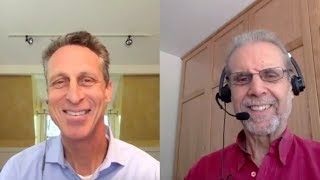
Dan Goleman, author of Emotional Intelligence, talks with Dr. Mark Hyman about how meditation changes the brain and improves emotional regulation and compassion. They cover what science shows about meditation's health benefits and how to start a practice.
Hey everybody, it's Dr. Mark Hyman. I'm here with my good friend Daniel Goleman, who many of you know. He's the author of the book Emotional Intelligence, which was on the New York Times best sellers for a year and a half in 40 languages and has really changed our thinking about what intelligence is. It's not just your IQ, it's your EQ and Daniel's really the guy who put that on the map. He also was a science writer for the New York Times for 12 years about brain and behavioral scientists. He's really comes from a unique perspective. Went to Amherst, Harvard, was at UC Berkeley. back in the heyday, went to India, studied with Ram Dass' teacher, Neem Karoli Baba, and just has a very eclectic view of the world. And I've known him for many years, and he's really an extraordinary man. And I really want to share with you what he's learned about meditation over this last, I don't know how many.
50 years or something.
And, you know, it's like... It's pretty amazing. You and Richard Davidson wrote this book. It's called Altered Traits. Can you see that, everybody? altered traits. And this is a very powerful view of meditation. It's really the science behind the meditation. So meditation has been around for thousands of years. The Buddha, wait, this is my cat making a lot of noise. This is Yoda, my cat.
Ow!
And he scratched me. And anyway, we have really an extraordinary opportunity to dive deep into the science of meditation and also, you know, what it is, what it isn't, the benefits of it. Little things we should know if we want to learn about it. So, you know, what are the common beliefs that people have about meditation that aren't necessarily really true? Let's start with that.
Well, you know, there is a lot of hype around meditation. This actually was one of the motivations for doing a book that looks at the hard science. And some of the things are that, you know, this is going to like make your days beautiful. This is going to change your whole outlook on life. And, you know, just sit down for five minutes and it's all different. Not true. It takes time and it does make a difference, but it doesn't make that huge difference. This is going to mold your brain in the most wonderful ways right away. Well, it seems that some of that is true, but not all of it is true. In other words, there's a lot of over exaggeration about the findings on meditation and it's used to sell an app, sell a book. whatever, you know, mindfulness and business. And I think it's a little dangerous because there's bound to be pushback because the people are exaggerating. That's why Richard Davidson and my friend, the neuroscientist, and I went through the 6,000 peer-reviewed articles on meditation, and we found the 60 that are rock solid, and they have good news for everybody from the someone who just starts out to someone who does it for years and years.
That's so fantastic. You know, what was really amazing is not just a theoretical thing for you guys. You guys have been in bed in this for decades and I know Richard Davidson has brought over these Olympic meditators from Tibet and look at their brains under MRI scans and looked at sort of beginning meditators and longer term meditators and you've seen a whole range of things. So, what were the sort of highlights that actually came out of that research that you reviewed and also the research that you guys have done about what happens in the brain when you meditate?
Well, first of all, you're right, Mark. This whole interest of ours came because we're both meditators. We noticed this really makes a difference. We wanted to demonstrate empirically what that difference was. Some of the work is by myself, much of it is by Davidson, and then there's Dozens of other investigators at Harvard, at Berkeley, at the best university centers, we pulled that all together. So let's say you're starting out, you're doing mindfulness, I'm going to do it five, ten minutes a day. Does it make a difference? Yes, it turns out right from the start. If you do ten minutes a day of mindfulness and then you're on your computer, you're doing your stuff and oh, I've got to check my Facebook, my email, my text, you know, we get distracted. usually what that does is lower the concentration level. You do more things less well.
But interestingly, multitasking is kind of like a bunch of baloney then, multitasking, right?
Well, the brain doesn't actually do things in parallel. You don't multitask.
I mean, the computer can multitask, but the computer can multitask, but your brain really can't.
Exactly. And so you lose concentration as you go on. Unless you do mindfulness. Interesting, mindfulness is a direct exercise. It's like a mental workout to enhance concentration, enhance your ability to resist mind-wandering. Notice when your mind wandered off, bring it back. So we find that attentional measures improve across the board the longer you do it. If you've done it for a year, done it for five years, we see a dose-response relationship. The benefits become wider, bigger array, just for attention, for example, and the longer someone has done it, the stronger they get.
So it's like any exercise, the more you do, the more fit you get. It's like brain fitness, precisely.
And one of the other benefits, particularly in this day and age, you hear the news from, oh my God, this crazy guy has an Adam, you know, a ballistic missile or the hurricane here or the daily dose from D.C. People are so agitated these days, but one of the great effects too is calm. Your ability to react less strongly and also to recover more quickly when you get upset. This is another benefit that shows up from the start and the longer you do it, the more years you've done it even, the stronger that ability becomes. So you get more equanimous. You're able to pay attention to what's going on but not flip out. about it. I think that's really important.
That's pretty key.
Another wonderful finding comes from a meditation on kindness, loving kindness, compassion. It turns out if you cultivate an attitude toward other people, and there are meditations that help you do this, of really caring about them, wishing them well, good feelings. First of all, you benefit, you become happier, but also you become more likely to notice when people are in need to be able to help to want to help them, so you become more generous. And then, to top it off, there are the therapeutic, psychotherapeutic and some medical benefits from meditation. Mark, I know you're very up on this, but just for the people watching this, from psychotherapy point of view, there's very strong evidence that meditation works as well as medications for anxiety and depression and possibly PTSD. They're looking into that. And then medically, so far, there's no study that I know of, maybe you do, Mark, that shows that meditation will end a disease. But if you have a chronic disease, chronic pain, it helps change your relationship to the experience of that so that your quality of life is better. which I think is absolutely important. Medicine generally does not pay much attention to quality of life. That's up to you. Here's something each of us can do. The best research is on what's called Mindless Based Stress Reduction, John Kabat-Zinn's method out of Worcester. But it shows that doing this a half hour a day, and it's basically mindfulness, which means you can track what's going on in your mind, but you don't get swept away by it. You're able to see it happening and just notice it instead of letting it take you over. That is what changes your experience and your quality of life day to day. So there you go.
Dan Harris wrote this book called 10% Happier, which is about his panic attack on national television in front of five million people and how he began to look at his life and then started meditating and realized that actually this have a real impact on his experience and reaction to things. And I think it's true. Like most of us have this monkey mind. We're reactive in life instead of proactive. We don't actually know, you know, how to manage our impulse experiences. And it does. It's like turning down the volume on the excitability factor that we all have so that we can actually meet things directly without a lot of noise. And it's. It's a very powerful thing. I noticed when I meditate, it's just such a powerful way that sort of. be happier, to be less reactive to things that normally make you anxious, to be able to listen better. It just slows, it's like slows everything down. Like there's a space between your thoughts and your emotions. And usually for people that's like a millisecond, right? But this actually kind of widens that space so you can actually go thought, oh, emotion. Well, wait a minute. I don't actually have to have that emotion related to this. I can shift my thinking. around it, which is super powerful.
It's powerful, Mark, I don't know if you remember, there's research at UCLA that shows the moment you notice what's going on in your mind, instead of letting it be what you're doing, automatic, but you have that little gap, and then you say, oh, there's that thought, there's that feeling again. You actually lower the energy of activation in the part of the brain, which is like flipping out about it, and you increase the activation, the prefrontal area, executive center, the part of the brain that can be more thoughtful, more reflective, and make a better reaction, make a better decision.
Yeah, some of the research was sort of fascinating to me. I talk about food as medicine, but it's clear to me that meditation is also medicine, that the impact on our experience as human beings and the quality of our life is real, but there's also biological things that are underlying that, increasing stem cell production, reducing inflammation, changing your hormones, all these things actually happen as a result of how you regulate your mind. And I think most of us know we need to exercise, but most of us don't understand that mental tasks that we do are influenced by all these biological factors and meditation is a doorway into sort of accessing that. It's like brain, it's like a brain exercise. But what are the goals? I mean, you know, people didn't start meditating so they can concentrate better and have better relationships and not get stressed out at work. What are the ultimate goals of meditation?
Well, you can have goals at many levels. I started meditating because I was anxious in college and it helped me relax. It's got like a minor league goal. But these things matter very much in our daily lives. But the big leagues, the Olympic level meditators that you mentioned, Richie Davidson flew them over one by one from Nepal and India. They are in the classical traditions of meditation that have as a goal minimizing our self-focus, our preoccupation with my this, I have to do that, and being more open to other people, being more present, being more equanimous, being more kind. And I've been with people like that. Their presence is nourishing. And Richie found that their brain activity is really different from ordinary. For example, when we have a creative insight, we get a wave into the EG called a gamma. We get it for about a half second at most. These are the light bulbs. Yeah, it's that light bulb. But these yogis have gamma all the time. That's where they are. I can't imagine it. But it's a qualitatively and quantitatively different way of experiencing life. That's why we call the book Altered Traits, because these are lasting changes. States happen, you know, during my meditation I had a nice feeling. That's great, but then it goes when you stop. It's like getting off of, you know, a drug that makes you feel good. When the drug goes, so does the feeling. But with meditation, it seems to re-figure, reconfigure the brain. and that's so important because that means that the changes you're doing during that mental workout, as you put it, is going to last. Just like when you go to the gym and strengthen a muscle, that strength is there anytime you need it. It's the same with the mind and meditation.
Yeah, so people listening might be a little discouraged. They say, well, I don't want to live in a cave for nine years meditating so I could meditate thousands and thousands of hours. It doesn't matter how much and what Where's the sort of 80-20 on this in terms of benefit?
Okay, so there's benefit from the beginning. This is the good news for all of us. None of that time you put in is wasted. It all pays off. The payoff gets bigger and bigger as you go, but the payoffs matter in our lives. You know, being able to focus better when you're under pressure and you have to get this thing done, not being so upset by things all the time, but being more even, more able to take in what's going on and react with some forethought rather than a knee-jerk reaction that you're going to regret, or being able to be more present to the people you love instead of tuning out of them. These are everyday benefits, and they come for anyone right at the start.
That's so great. So when you were writing the book with Richie, I mean, you guys, this is your world. What surprised you about meditation? What were the things that you didn't expect and that you learned?
Sure. Well, there are two things come to mind. One is that this meditation on kindness or loving kindness has strong payoffs right at the start. The payoffs are the people themselves feel better. Turns out that if you feel kind toward other people, it makes you happy. So the Dalai Lama has said this, the first beneficiary of compassion is the one who feels compassion. But it seems as though the brain is primed and ready to learn to be kinder and learn to be more caring. That was a surprise. And the second has to do with something that happened to genes for inflammation, and this is very relevant to your work, Mark. I know. Genes for inflammation, one day of practice by people who were somewhat experienced, one day of practice lowered, in fact, the technical terms down-regulated hundreds of inflammatory genes. I have to look to you to say, and how might that matter?
Oh my God, it matters because inflammation is the root of everything, right? Heart disease, cancer, diabetes, dementia. Pretty much every age-related disease is inflammatory. I call that inflammaging. And if you can impact that, that's tremendous. This is a tremendous thing. I think that's not why I meditate, although it's a nice fringe benefit. But I think for me, I did a lot of meditation. I majored in Buddhism when I was younger, kind of got off track, crazy medical school, and kind of got back into it a while ago. It just really made me realize I didn't think that I was anxious or stressed before. but the change was so dramatic from, you know, what I was feeling to how I'm feeling now. And it's true. Like, people go, you've got so much going on. You've got this and that. How do you do it? Are you stressed? I'm like, well, I just know I'm kind of just do it. And I think it really has helped me to kind of just sort of have this place that I go to every day that sort of disconnects from all the busyness and then puts me in a state where I can just be present and it's sort of automatic. You have to do it, you don't have to really understand it, you have to do it and then it just works its magic and over time things don't seem as big a deal and you put things in perspective. So it's got a lot of very practical benefits but I think waking up is really what you're talking about. How do you wake up to the way things are and the nature of things and that the side effect is all this other great medical stuff but it's kind of more about, like you said, at the beginning, the quality of your life.
Exactly, and waking up is a beautiful way to put it because the classical traditions of meditation basically say our daily lives are lived on automatic, we're a little bit asleep, and this is a way to be present to your own life, to be in it more fully.
That's so powerful. So why do you meditate?
Well, I meditate to be present to my life, to my wife, to be kinder. I originally started, as I said, to be less anxious. And then I found that that's been taken care of pretty much. But then I got very interested in the states I would get into during meditation. This was after some years I'd go on retreats and it was, oh, that's amazing. And that felt great. But then I noticed, well, that was that. Now it's gone. That's where we got interested in altered traits, the name of the book, which is what are the lasting benefits? What are the payoffs during your day? And for me, I find, as you said, I'm more relaxed doing all the stuff I do. When I'm upset, I recover very more quickly. I'm hoping that those medical benefits you point to, the lower inflammation will pay off. who knows? I don't have a clone, so I have no control for that. And also, I feel that I actually am able to be kinder, which for me is a big goal.
Well, you mentioned the whole compassion, loving kindness meditation. Well, we found, I think I've told you this before, but in the brain, there's a center which is the sort of pleasure center called the nucleus accumbens. And this center is critical in feeling joy and pleasure. also what gets stimulated by bad stuff like sugar, cocaine, heroin, right? But we found that it also stimulated by altruism. So by doing good for others, thinking good for others, just compassion actually creates that and I get that experience all the time. You know as a doctor, you think you're giving, giving, giving, giving but you're getting, getting, getting, getting all the time and it's you know, it's really fascinating to me and it's been my life of being in service, right? Being a doctor, helping people, writing books, all that is really in service of others to try to help them become happier, healthier. And I just noticed for me there's tremendous benefits to that that make me joyous, that make me happy, that make me satisfied. And when you're thinking me, me, me, me, me all the time, then it creates a lot of unhappiness.
There's research that was done at Harvard. They published a paper in science called A Wandering Mind is an Unhappy Mind. The more focused, our minds tend to wander to the things that are upsetting us. When we're just kind of ruminating, that's not helpful. Meditation actually reduces that mind wandering quite a lot. But I think helping people, what you describe is really the root of it. is the fact that you, by helping other people, are actually helping yourself too.
Yeah, so powerful. So if people want to learn more about how to meditate, where do they start?
Okay, so I would recommend, first of all, in the book Altered Traits, we tell you why it helps, what the science says, what it will do for you. And then you could go to morethansound.net I have some instructional tapes on, it's called Focus, but it's basically meditation. I recommend the works of John Kabat-Zinn. Mark, do you have a meditation tape?
I don't. Well, I have a CD called UltraCalM and I guide people through a little bit of breathing and stuff, but it's not a full meditation tape. Okay. It's a key part of the work that I do. I think they can also go to your book and get all this information, right? Absolutely. It's all in there. I encourage everybody to get this book. And I also work in Amazon, Barnes & Noble's, pretty much everywhere, right? You get it everywhere.
If you like to listen to books more than sound, has the audio, and any bookstore should have the book. Great, thank you.
Where can they learn more about your work, Daniel?
DanielGoleman.info, that's my website.
Daniel Goleman, Daniel H. Pink, check it out. Thank you for joining us and enlightening us about the amazing benefits of meditation and all your decades of work in this has just been so great and thank you.
Mark, it's always a pleasure to be with you.
More from AI




This Is Why 99% of Skin Conditions Don't Heal — And What Dermatologists Won't Tell You






Why you need to start strength training today #strengthtraining #healthyaging #fitness
