Why Making Food Taste Better Makes it Healthier
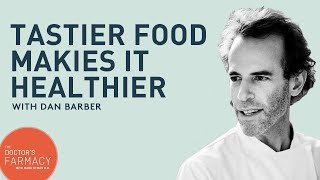
Chef Dan Barber and Dr. Mark Hyman discuss how breeding crops for flavor instead of shelf life creates healthier, more nutritious food. Better-tasting vegetables require better soil, which builds a food system that's both sustainable and good for you.
And so I'm thinking that the future of food is actually not gonna be one size fits all. It will be very distinct. There'll be micro regions and climates that will celebrate great delicious food.
Welcome to the Doctor's Pharmacy. I'm Dr. Mark Hyman and this is the place for conversations that matter. I think you'll find today's conversation with Dan Barber, one of the leading chefs in this country thinking about food, agriculture, sustainability, food waste, and how we change our food system is going to be a conversation that really matters. Dan is a chef and owner of Blue Hill, which is a restaurant in Greenwich Village, New York, which I've been to, which is astounding. And you basically get served kind of whatever's up that day. It's like it's kind of not a set menu. It's based on what's local, what's seasonal, what's up. He also has Blue Hill at Stone Barns, which I've also been to, and where I first heard Dan speak and got to experience a meal that was extraordinary but made of food scraps. It was all the peels of carrots and the leftover ends and all the stuff that you throw in the garbage, which ends up in landfills and creates climate change, he made a delicious set of meals out of. He also co-founded a new company called Row 7 Seed Company, which is a radical idea to create new seeds, not necessarily heirloom seeds, but new seeds that breed for flavor. and phytochemicals and literally rejigger food and seeds to actually create more taste and more flavor, which is something that nobody really thought of before you, it seems like. And we've really taken all that out of our plants, so we're going to talk about that. So he's bringing together chefs and plant breeders to develop new varieties of vegetables and grains. And he's written a lot in the New York Times about food and food and agricultural policy and many other publications. one of my favorite books is the Third Plate, which we're going to talk about. What is the Third Plate? He was appointed by President Obama to serve on the President's Council on Physical Fitness, Sports, and Nutrition. And he continues the work that he began as a member of Stone Barn Center for Food and Agriculture Board of Directors. And he's bringing together all these disparate things that normally we don't think about, such as food and healing and agriculture and soil and seeds and things that most chefs are really just focused on making dinner. And he's received multiple James Beard Awards, including Best Chef, which is no small act in New York City, and the country's outstanding chef, and he was named Time Magazine's 100 Most Influential People in the World. So welcome, Dan.
Thank you.
Okay, so I first met you briefly at the Food for Thought conference in Stone Barns. where I've also gone to weddings and had many other chances to be up there. It's a beautiful place. It's a rethinking of a restaurant based on a farm where you literally create and produce all the food that you serve or most of the food that you serve and do it in a way that's sustainable, that regenerates soil, that actually is really breaking some of the traditional thinking about how we eat and cook and make food. So you wrote this book called the Third Plate, which is an exploration of a new way of thinking about how we eat and how we should eat in the future of food. And most of us are enamored with this food movement, which is this farm to table concept where we eat heirloom foods, we have delicious things that make us feel good, it's sustainable, it's organic, it's grass fed. And you talk about the challenges of that idea that it's really not solving the problem that big food has created. So talk about the Genesis of Third Plate and talk about your idea of what is the first plate, the second plate, and why do we need a third plate?
I had this experience, sort of a late inning revelation of an experience while writing the book, which was, because I did set out to write a book about the recipe for Farm to Table and the ideals and ideas behind it. And I went to visit a grain farmer in Upstate New York named Klaus Martens, who was growing an amazing variety of wheat for us called Emmer wheat that we baked this incredible whole wheat bread, which people seem to go berserk for. You know, it was like sell their first born for another slice kind of thing. It was really amazing. At the time, we were one of the only restaurants to support 100% whole wheat, fresh milled wheat that was local. And so we got sort of known for it. So I went to Klaus Martin's farm to write about How do you make, what is the recipe of the recipe for this bread in terms of growing the wheat? And I'm standing there on the first hour I'm at his farm. I'm standing in the middle of fields, 2,000 acre farms. I'm looking around looking for the wheat, but I saw almost no wheat. Instead, I saw rye, I saw barley, I saw millet, I saw lots of COVID crops, lots of clover and veg and the rest. But I didn't see the wheat. And what I realized really in the first 10 minutes of the visit was that, you know, I was the emperor without clothes, actually. I was the guy who was sitting here proselytizing about farm to table and a direct connection with farmers and this amazing soil and all the rest. But I was supporting 1/1000 of this guy's farm, which was the wheat. That was very expensive wheat. So it actually did support his farm, literally, economically, right, from a revenue perspective. But the rest of the pie, the millet, the rye, the COVID crops, the rest of it, the leguminous crops, the cow peas and faba beans, the rest of it, I didn't buy from him.
And most people aren't eating that stuff.
And most people, and that's the key that I learned. I said, you know, Klaus, where does this stuff go? And he said, well, I mostly plow it into the ground if I don't have the market for animal feed. So forget about human feed, because very few people are eating rye and barley in any kind of quantity. So, he grows these crops in a meticulously timed rotation to lock and load the soil so that I can get the wheat that I became so celebrated for. So he's a soil farmer. He's a soil farmer. He's a soil farmer. He's growing all these crops in this timed rotation to get the fertility they needs to grow the wheat that we could end up tasting. I mean, it's very connected. But I wasn't supporting any other crops. I wasn't supporting the recipe. I was being, I was celebrating and being celebrated for one slice of actually the kind of Hummer of the soil world, which is wheat. It sucks fertility out. These other grains I just mentioned, oats, I didn't mention oats, but a lot of, there's a huge variety of grains that he experiments with and rotates that are soil supporting. They break up disease cycles, they add fertility, they do the kind of work that organic farmers need to do because.
They'Re not intervening with chemicals. And the quality of that the wheat that you love that made that bread.
Is derived from the quality of the soil. Not derived from the soil. Not derived, dependent on the soil and dependent in the soil, that quality of the soil is dependent on that rotation of those grains. So who am I to sit here and become celebrated for one 1,000th slice of this pie when the rest of the system wasn't being supported? And that's why I left that day and I changed the way I cooked. I really, I changed the whole direction of the book because as a farm to table, it doesn't work. If farm to table means you're allowed to cherry pick like you're in a supermarket, the ingredients you want for your for your kitchen. Well, that's not a skimming the cream. Skimming the cream. And that's exactly right. It's exactly the way to say it. Skimming the cream. And so, actually, that next day created this dish called rotation risotto, which doesn't have rice because Claus doesn't go rice. But it was an ode to all the rotation crops that support wheat. It had no wheat in it. It was everything, the millet, the rye, everything, and the COVID crops too. And I made a sort of a knockoff of a risotto to basically say, you know, actually, I can't say it better than a waiter said it in my restaurant when asked by a customer, kind of cranky customer, what the hell is a rotation risotto? And I was just passing by the table and the, yeah, the New Yorker, so what are you talking about? Is that rice? No, it's not rice. And the waiter said, it's the nose to tail of eating a whole farm. And that's exactly right. Because if you really want the kind of soil conditions that produce the flavors and the health benefits that we have to support the whole farm, we cannot choose cherry-pick crops.
And that's the fallacy of farm to table. Instead of farm to table, you talk about this as a whole farm solution.
Yeah, in the same way that we talk about nose to tail of an animal, we don't just eat the loin and the rack, we eat all the parts and celebrate the life of the animal.
For both farm and food.
So it's like most of the world does, right? Yeah, most of all cuisines have always celebrated. Only in America do you eat high on the hog. And that's historically- you- can feed for us, right? Yeah, right. I mean, we never, because we've been a rich country, agriculturally a rich country from the beginning, we haven't had to figure out the kind of negotiations that peasants have figured out for thousands of years, which is what rotations create fertility for the crops you really want, and what parts of the animal can, you don't get to choose the parts of the animal because you can't waste anything. So you're forced into both agronomic decisions and gastronomic decisions based on necessity. And that's how cuisines evolved. And it's fascinating. But they've evolved beautifully because look at the cuisines that have lasted to today. I mean, you know, rotation crop for Japan was buckwheat and barley, you know, and into rice. So another way of saying that is if you're Japanese, you can deserve your bowl of rice, but you have to have your buckwheat. And so what do they do? They didn't plow that into the ground to make soba. And in, in, exactly. And bleed it into inculcate that into the moors and traditions of the culture. So you're not, you're not eating the rotation crop because you love rice and you feel obligated. I mean, how long is that going to last? As long as this conversation has to taste great. And that's what that, but all cuisines have done that. You know, in the global south, you had corn, but you had beans that created, that trapped the nitrogen from the air and locked and loaded that nitrogen fixation to allow the corn to grow. So you had to have a bean culture with the corn culture. In Western civilization was wheat, obviously, but barley was the rotation crop into wheat. So beer and bread and barley and wheat are one in the same conversation. And that's lentils in India going into wheat or millet into whatever the ecology or environment is and the cultural more, they evolved together, created a system of eating, a cuisine. And that supported what the landscape was telling you, it absolutely needed to grow, not wanted to grow, but needed to grow in order to get the crop that you really wanted. And always the crop that we, throughout history, through the domestication of agriculture, wheat for Western world, rice for Asia and corn for the global south. It's been that way from the beginning of time. The question is, how do you get those crops in a way that makes them taste delicious, have the nutrition, you need the locked and loaded nutrition in the soil? And that's where you get this suite of other crop rotations that allow you to luxuriate in the king crop wherever you are.
And you've written that 1.1% of the farms in this country produce 50% of the food, namely corn and soy, which are monocrops.
And that are then processed into what seemingly gives us a big choice and array of different foods. But actually, they're all derived from very, yeah.
And the interesting thing is, you know, we have to put so many inputs, pesticides, herbicides, nitrogen fertilizer, which are all derived, by the way, from petrochemicals, which are industrial oil-based, right, and doing nothing.
For soil health and nothing for long term.
It's mining your soil. Exactly, it's exactly as opposed to soil restoration.
I read- the argument obviously against what you're saying or as a proponent of that system would be, well, you're feeding a lot of people cheaply. And the argument against that would be to go back to when I stood on the hilltop with Klaus and I looked over at that suite of diversity. Now he is producing a lot less corn and wheat and soy than the monoculture farm in North Dakota or South Dakota, for sure. But he's producing a ton of tonnage if you eat it. That's the key. It's like, it's not that whenever they say, you know, organic farms are not as productive as monocultures, well, no, I mean, you're not gonna, apples to apples, of course, they're not, the chemical regime is gonna be always gonna be, oh, I can be more. Well, you can get in very good soils, you can get equivalent or near equivalent yields. But my point is if you eat the diversity that's required in the organic system, you not only have this incredible array of flavors and nutrition at your disposal, but you also have the regeneration of the soil, which is true sustainability. So, I just think the ticket is this deliciousness and this celebratory hedonistic look at food, which is so interesting because that's what cuisines and cultures have taught us over time.
Yeah, on the flip side, we had Paul Hawken on the podcast who talks about the food system being a big driver of climate change and being the number one solution. And a lot of it has to do with soil. That soil is a carbon sink. And that the more you grow these crops, the more you do this type of rotational farming that you actually sequester carbon, can draw down carbon.
Add some cows into the mix and you bump that number up substantially. So there's a real argument for eating meat as long as it's grass-fed and as a part of that system.
That whole farm concept.
Yeah.
40 years ago, I read a book called the Soil and Health, and it was written about 40 years before that by Sir Albert Howard. I read that you could invite anybody for dinner, you'd invite him for dinner. I'd like to be there, too. And he wrote that the health of soil, plant, and animal and man, and should be humans, whatever, but is one great subject. And that's exactly what you're saying. And you could add in there. That's the quote. Not just health, but like the deliciousness of food, the quality of Well, we eat.
Well, that's what he discovered when I went back to the diaries. He was brought from England to teach, yeah, to teach the Indian peasants how really how to farm. And he got there and realized, I don't know anything. I don't know anything. These guys know how to make the compost that regenerates the soil, and he fell in love with the food. And that's what changed. That's where all these writings come from, is this, this spirit of like, these guys have had thousands of years of figuring this out. I am being taught by my students. And that's what changed the course of, you know, that was really, he was really the father, I think he's called the father of organic agriculture, because he was the first one to put the pieces together. As you just said, it's one great subject. And that's what organic is. Organic is an organism. You can't talk about food separated from soil. You can't talk about cooking separated from food or soil. You can't actually talk about a community. separated. It's all one organism that works together and that he really put the pieces together.
Yeah, we've totally depleted our food. Even if you're eating a vegetable rich diet and a plant-based diet, if you're eating a diet that's grown in soils.
That are depleted, you're not necessarily getting the phytochemicals, the vitamins and minerals, the rice, and it's not very tasty. And it doesn't taste like. My shiv is the deliciousness because, you know, I'm a chef and that's where I come into this. Yeah. And, you know, I'm really trying to make my food taste better than, than.
I am as a talented chef that can be. I mean, that's where, that's where I drive towards it. It always was my original intent was.
To, to search for the foods with these jaw-dropping flavors, 'cause they make me.
Look like a better chef. Yeah, absolutely. And you let the food speak for itself. Always, yeah, always. Yeah, it's impressive. So we have to really rethink the whole farm to table movement and really think about an ecosystem model, right? An ecosystem model of how we grow food and how we take care of the soil and how it affects everything, right?
It affects our health, it affects climate change, it affects- It's a new mindset, which is the problem I have with where a lot of, sustainable agriculture is going with tech investments and very linear thinking about indoor farming, about technology additions to agriculture that make things very efficient for the sake of sustainability. And what you just said is, I think, the paradigm shift we need to make, which is that these systems are by virtue inefficient. I'm sitting here looking at you with two eyes, not one. We have two ears and we are, nature is, by definition inefficient. It does that for true sustainability. And in a biological system, there's layers of inefficiency that are there for protection when things go south. And that's the ticket, is that I have found that the most delicious food is always from the most complex system, always, because it's always ultimately feeding the complexity of the soil. And the complexity of the soil, pays you back with deliciousness and nutrition if you buy into it.
Yeah, and we have literally mined our soil. We've depleted the topsoil in this country where in 50 years, it's estimated we may not have much soil left at all to grow food in. And this isn't really an urgent problem. It also potentially is a solution to climate change.
Yeah, it's all wrapped in that story.
It's all one story. So the third plate, you talk about the first plate being the big steak to mushy green beans on the side, basically the American diet, maybe a baked potato. And the second plate is grass-fed steak, heirloom carrots, right? Heirloom green beans. And the third plate is- But the.
Second plate, the architecture of the second plate is essentially the same as the first, but the ingredients are different and they're more holistic and they're a better, definitely better purchase, environmentally speaking, and from a gastronomic perspective, definitely a better purchase. But are they the answer? But the third plate is what? The third plate takes the architecture and flips it on its head. It says, we're not going to position that steak as the centerpiece of the plate. It's not gonna be the all-star. Actually, meat is gonna take more of a side actor. It'll be a part of it. This is not a vegetarian diet. At least where we're sitting, the argument for vegetarianism, I never understood. Meat plays, animals play a particularly important role in an organic system in cold weather climates. My third, the ideal third plate would be to say a vegetable or grain takes center stage. Tonight I'm serving a beet steak. Actually we're calling it a bloody rare beet steak on the menu. And that is a beet that's called a Forono beet. It actually is long and pretty thin and we flatten it in a pan and it comes out looking like a T-bone. And so we slice it at the table as you would a steak and we serve it with all the traditional accompaniments of a steak dinner, cream spinach and potatoes. We don't do fries, but I'm okay with fries. and the sauce though is a rich beefy grass-fed beef sauce. And part of the side is braised oxtail, which is braised meat from a grass-fed animal's tail, which is delicious, umami rich and whatever. And so you get your meat, but you get it in proportion to what the carrying capacity of the land is around you. And to me, that's not only a super delicious way to eat in this case, but the right way to eat for the future where we are at all for everybody.
I call it condiment. Nice.
Nice. Yeah, that's what it is. And I think it's and if you cook the condiment right and you have the right cuts like an oxtail, it's rich and deeply satisfying. And and you're right. I like that condiment.
It's great. Great. And then it also takes into account the whole farm concept. So it's building in not just the.
Health components, but also the whole farm.
Exactly.
Yeah.
Very powerful. You also Did an incredible TED Talk, which I saw called about, what was it called? About fish. I forget the name. What was the name of the TED Talk? That one was why I Fell in.
Love with the Fish. I forgot. Why I Fell in Love with a Fish.
Yeah, it was great. And I actually had the privilege of going to Spain and was in the south of Spain. Oh, no kidding. In Cordoba. And I met the guys who wrote the book.
Oh, wow. Okay, Mark, I didn't know that.
A restaurant meal with the fish from the farm.
Yeah.
Oh, wow. And I wrote a book blog about it called Grass Fed Fish as a joke, which was talking about this concept that you spoke about, which is extensive fish farming as opposed to intensive fish farming. And it was really about reestablishing the ecosystem that created extraordinary food with very little inputs. So could you share a little bit about that?
Well, the fish I fell in love with turned out to be a fish that they didn't actually feed in the aquaculture. So let's just back up a second. The oceans are depleted and investments are running towards fish farms, which are farms that raise fish and supplement, hugely supplement the diet to get out the fish.
And corn and soy and who knows what else.
They're quite destructive and ecologically speaking, they make very little sense because the ratio of feed to what you retrieve from the ocean in terms of protein is all out of whack. It's usually, yeah, usually 10 to 1 in terms of what you feed to what you get out of it. So it makes no sense, although it's a business that's growing because the oceans are depleted. So now I found a fish farm where the health of the ecosystem was so great, so rich that they actually didn't feed their fish, that the fish lived off and thrived and came to weight based on the health of the system. Now, is it less fish than a normal fish farm? Absolutely. So you pay a little bit more for your fish. But the idea that the fish are there to play the role of eating off the health of the system is the key and also was the most delicious fish. That's why I fell in love with it. I mean, it just was nothing like it. And so I got to see, I got to say, I like the grass-fed analogies exactly right. My favorite meat is grass-fed steak, which is essentially free. The sun feeds the grass, grass feeds the animal, it feeds us. But that's exactly what's happening in the world of these fish. And I just thought it was brilliant.
It is, I mean, because you think about it, they had an estuary that they drained.
Yeah.
And then they tried to turn into a cattle ranch.
That's right. Which failed. The Argentinians came in and then Spain.
Took it over and they put it back. And they hired an ecologist to restore the ecosystem, the estuary. And that estuary naturally brought in nutrients and brought in rich little things for.
The fish to eat. It was at the mouth of the Guadalquivir River, which is the main artery of Spain's river. And so it dumped down the Atlantic Ocean and they were right there where all this nutrient flow was happening. So they were really taking advantage of.
A very particular ecosystem.
Yeah.
Like you said, they didn't really have to feed the fish. And then they measure the health of the farm by the amount of fish that the predators eat. So the flamingos fly 150 miles to eat 20% of the fish and half of the shrimp get eaten. And that's a good thing. Right.
It's a whole new way to think about a bottom line.
But it made me think about, wow, how many damaged water systems do we have? Estuaries and swampland. I mean, we have so much wetlands that are not well managed, that are being destroyed. What if we could actually resurrect that instead of like just regenerate agriculture for.
Grass-Fed meat, create that for fish? And we'd have to eat fish in a different way. I mean, that's and look at a.
Fish farm in a completely different way. That was fascinating. Was those fish weren't full of toxins.
No.
They weren't full of mercury and chemicals and microplastics and they were very rich in Omega-3 fats.
Right. Right.
So they were all, they had all the qualities that you want, which is Pretty amazing. So you kind of are a new venture, which is pretty interesting called Row 7. And I was at the Milken Conference recently where you spoke and you were talking about this experience you had with a grower where you said, you know, I want squash that tastes better. And the breeder was like, wait, no one has ever asked me, How to make food that tastes better.
Well, how to select for seeds that actually are selected for flavor. I just thought, I was joking. I was like, why don't you create a butternut squash that actually tastes good? Because I find butternut squash so, so you have to add sugar, a maple syrup. You have to caramelize whatever. You have to get out all the water. And I was like, why don't you make one? I was joking around. I didn't know anything. That was 10 years ago. I knew nothing about breeding. And he looked at me totally serious. And he said, no one's ever asked me to breed for flavor. I'd love to. I was like, well, who are you talking to? It turns out he's talking to the Walmarts of the world, because they're interested in the yield and the uniformity.
They want it to look the same, look perfect, be shippable across the country, stay for a long time.
Oh, and taste good. So once you, yeah, it's not like the taste isn't there, it's just way down on the totem pole. And the problem with that is that you're selecting for other things, you're selecting against flavor and against nutrition. And that's what I learned through this process. But we started to create, we created over the course of several years, a new kind of butternut squash, which is essentially a shrunken butternut squash called the Honey Nut Squash now. It's now sold coast to coast. It's Blue Apron just harvested 2.4 million pounds, I heard the other day in November. 2.4 million pounds. You're gonna cut it out, I hope. No, no, nothing. No, this was pre the company. This was pre the company. No, but what's interesting about it is that it wouldn't have gone anywhere without me, but other chefs going ape over this thing. I mean, it was just like, It was just like you tasted it, you just started social media and mentioning on the menu and chefs just went crazy. And that's what pulled it into the marketplace. And, you know, when we first showed it to Walmart or the equivalent, he was like, I don't have a skew for this size squash. This is not a butternut squash. I'd have to create a whole new skew. And the thought of that, I mean, it's just that's what I was just like, I'll never forget that moment when Michael told me his conversation because I was like, if that's what we're up against, I cannot believe it. It stopped in the first conversation, whoa, whoa, whoa, wait a minute, there's no SKU for this. Because that's not a butternut squash. And you couldn't think outside that. Now, of course, six, seven years later, they figured out to create a new SKU number and they have a SKU.
For it and it's selling and it is going into Walmart stores. It's a shelf keeping unit.
It's basically the measure that they categorize all the things in your grocery store. Right, but he was exactly wrong and that there wouldn't be a market for it. That was his other point. There wouldn't be a market for something that was 30% smaller than a butternut squash. But it's not filled with 80% water. And butternut squash is bred to take on water because that's where the weight is. So essentially you're eating water, which as you know better than I do, it's a superfood. It's just offensive. It's like what is our honey nut squash? There's now 30% less water, 40% less water with this incredible creamy rich caramel flavor of squash that actually has very good yields. It doesn't have the yield of the big conventional butternut squashes, but incredibly good yields, which is why all these farmers want to grow it because it's what the market is clamoring for. So that's why we started the company. We're like, wait a minute, why wouldn't we do this with everything? There is a market out there for people who want to eat well. The issue though is that this isn't heirlooms. This isn't looking back at the past and saying, oh, we're going to repatriate a seed that our grandparents loved. Because that doesn't change the food system. The yield on those old seeds is very low. and if it rains too hard, you actually don't even get a crop. So what I used to advocate for for much of my career was about old seeds and all chefs do because it's where the flavor is. It's also where the nutrition is. It's been passed down for generations for a reason. It's because it tasted so good. But it was so, my thinking wasn't right until I met these, I realized my thinking was so often when I met these breeders, there's modern breeders who will take the genetics from the past, everything we covet in this flavor and nutrition. and modernize it, which means you bring it up to date and you make it productive. You make it agronomically a strong plant that will produce a very good yield for the farmer that will incentivize the farmer to grow it. And it leaves the purview of a white tablecloth restaurant, which is where I am, and gets out of this idea that the one percenters deserve delicious, nutritious food and democratizes it. And that's why I want to start the company democratize these flavors and the idea that there's yield and cheap food here and nutrition and deliciousness over here and you have to make a choice. It's a false choice. It's absolutely false and we're proving it with each of our seeds. That our yield, will it be exactly the yield of the conventional guys? No, no, it won't. But for a little less yield, you get a lot more of everything else and it's a hell of a deal. So that's why we got into the business. It really wasn't to make money, it was just to take these ideas, democratize.
The flavors and get some funding to do the R&D to do more of it.
So, that's why we started it.
You're not a monk, but you're like the Gregor Mendel of flavor.
No, he, yeah, Mendel.
It's a whole different way of thinking about our food, which is using technology and the science of breeding not just to create drought resistant or yield producing or insect resistant plants.
To create hedonism.
To create deliciousness and flavor. And as a side effect, you're regenerating the soil. biodiversity, creating increased phytochemical content of the food, which is, from my point of view, food is medicine. You're actually increasing the healing powers of food and the flavonols, and you're doing it in a way that is sort of a, like you said before, sort of like a David Goliath against big seed companies. Now, I want to go into the seed company thing for a minute because, you know, most people don't understand that there's a seed monopoly out there, that the centralization of seed creation and production and the selling of seeds is happening at scale globally and is undermining local farmers and food producers all over the world. And most of them around the world are women and small landholders or farm holders.
What you just said is a front page New York Times story. And I don't know why this more people, I mean, the seed industry is now consolidated to the point that any new variety of seed that has developed 68%. 68% is in the hands of three companies. So nearly 70% of the future of our food is in the hands of three companies. Which is Monsanto and- well, Monsanto has just been bought by DuPont. By DuPont, yeah. And there's DuPont and then there's ChemChina. So there's three big players now. I mean, next time we talk, there might be two. But that is a frightening reality because if you do, and I think you should look at seeds as the blueprint for the whole system, then you're talking about these companies controlling the system. It's not just a seed that doesn't taste good, lacks nutrition, whatever. It's a blueprint for how you're supposed to farm. And that's what scares me, is that you roll out everything from the amount of acreage that it should go on, where it should be grown, forget rotations, it's not even that, but that whole baked all the way to the processor. is what we're talking about. That's how baked in it is. That's a monopoly. What I find most interesting is that the three companies we just mentioned are not seed companies, they're chemical companies.
Yeah, they're creating seeds to sell their chemicals, right? Like the- It's what Roundup ready seeds they call it.
And what incentive do you have in that scenario to create a strong seed that doesn't need the chemical intervention? There's none. And that's where it's the David and Goliath story. It's like, that's crazy. And people don't, understand that because there's so much mixed messaging and because people don't think of food as seed driven. You know, we think too much of it actually as farm and soil driven, even though, God, we should be thinking more about smaller farms and diversified farms and biodiverse farms and soil and regenerative farms, they're all important. But the seed is the blueprint for how that stuff gets into play. And that's where, that's why I went to the seeds, because you could, you can have the best farmer like this guy, Klaus Martens, I was mentioning at the beginning, I went to visit. the best rotations, the most regenerative and biologically diverse soil, if you have a seed that doesn't have the genetics to be expressed, then what are we talking about?
Yeah.
So that was my interest. But you're right, it's a frightening future if we don't call it to attention.
So how do you see this really new venture, Row Seven, starting to challenge the the status quo around the centralization of seed production and how do we help support that?
Well, thank you for the offer. But I don't think they're scared of me. I don't think Monsanto's quaking in the boots that Row 7 or Dan Barber's coming after them because the more I learned about R&D on seeds, it's just so... It's why seed companies don't make money. Chemical companies make money. Seed companies is a lost game. But we're going to figure this out. I've got an amazing group of investors who aren't looking at a return on investment. They're looking at what I'm saying is like, disrupt the blueprint. And that's where, that's what we're going after. But what? It's like, I just actually was just on the phone to him. Just got my mind thinking about this oat breeder that I'm going to visit North Dakota, who's now retiring. He's been breeding us for 50 years. And I said, my first conversation with him was what I say to all these breeders when I go looking for a new variety or new Pursuit, I say, you know, What are you throwing away? Because there's always, this has been my, this is 100% true of my conversations. It's always in the thing that's being thrown away is the thing that we want, that I want, that you want, that everyone else wants, but that the industry is saying no. Like the shrunken butternut squash that would never work because of the skew, it's always the passion of the breeder that gets stopped at some point because it won't fit into the paradigm of the industry. So I said, just as I've said a million times, these breeders, what are you throwing away? said, well, what I keep in my desk drawer is one of my favorite oat that I, that I bred in the sixties that was very popular late 60s, 70s. Oh, it's popular out there. He's like, oh, everybody was growing my oat. It's called Paul Oats after the breeder. And I said, oh, what happened? He said, well, the American Heart Association in the seventies determined that because these oats were the highest possible in fatty lipids, in lipids, there were four times the next grain. I couldn't remember what he said, but it was four times the lipids. And at that point, a fat was a fat, was a fat. And so. And they're a bet. So you have to breed again. So he said, I was still have to breed again. So for the next 30 years, I bred against the lipids. And I was like, I just like, this is an unbelievable story. He's like, yeah, I've been saying it for 30 years. No one's listening to me until recently when they've discovered these. These lipids are actually the things that lower your cholesterol. Right. And then the anthro, the. The bladed glucans and all this stuff is just amazing. health and nutrition, they're just now, as you know, discovering. And so he said, yeah, so I guess maybe these boats, because he sent them to me. Mark, I dropped on the floor. They were good. It's good with like, they were like nothing I've ever tasted. Really? Yeah. Yeah. I just had some more this morning. I mean, I just boil them in water and I don't even put anything on them. And they taste like a bowl of cream and maple sugar. Wow. It is unreal. And it's what hour? No, they're not available in the market because the American Heart Association won't put.
A stamp on a high lipid oat or they didn't.
Well, they put a stamp of approval on Trix. On tricks. Yeah, well there you go. So that's what we're up against. That's what we're up against. I mean, it just, is it really?
Yes. Oh, God. They've kind of modified some of that, but they're, it's low in fat.
Right. So that's the thing. It's the, you know, I mean, that's, it actually goes exactly what you started with this, this is all connected. You can't separate these things and say like, you know, one nutrient is good for you and that, it's just so disheartening, especially when you taste, you're like, well, in 1965, Oats were the number three grain that we ate in America. Number three, we grew actually 29 million acres. 29 million acres. So I said, you know, what's today? So I looked it up. We grow three million acres today. Of the three million acres, 95% goes to animal feed. 95%. 95%. So we went from a culture that really did eat oats and that farmers, all mostly organic farmers, all in the Midwest because they weren't buying the chemicals even in the 60s. were planting oats because they needed it for the rotations. They broke up disease cycles. They added the kind of, you know, a tilth that they needed for the big crops like wheat and corn. But the market fell apart. And part of the reason the market fell apart, not all, I won't blame it all on the American Heart Association, but part of it is the oats don't taste good. And that's the big issue. Like the, you taste these oats, people would just, they die over this thing.
I mean, I mean, I mean, it's.
Just, it just, the difference is like cardboard.
I'm jealous.
I want to come over for breakfast. Come, come, I'll have you taste some stuff. I want to, this is what Row Seven's working on. It's like to reintroduce this. But how does this get pulled into the market? Because the yield on these is going to be a little bit lower. There's no question about that, in part because no one's been breeding them in 30 years. So we're talking about 1975 or 1974 yields as the last time we worked on it. So we need someone to pull this through the market and show what I'm just described. And that's where we're turning to chefs. It's like, who better to proselytize and to show this off? Who better than chefs are evangelists? Yeah. You know, Rene Redzepi said we'd make the best terrorists in the world because we will follow like pit bulls the evangelism of flavor and we'll do anything for it. And these oats are a good example.
And where we're leading you is to really interesting places, you know, which is soil and seeds and. regenerative practices and things that, you know, most people don't think of chefs being really interested in.
And they might not be, but that's why I'm no different than the chef who's not an environmentalist or couldn't care about any of these issues because if he or she is dogged about the flavor, they are by definition an environmentalist, an ecologist and a nutritionist. They have to be, if they really are curating great flavor, like true flavor. I'm not talking about Twinkies or Trix or any of that. I'm talking about true flavor. you cannot have a delicious oat or a delicious carrot that has a bad seed, grown in bad soil, probably wasn't grown locally, probably wasn't picked at the right moment. None of those things can happen and have a delicious jaw-dropping experience. It's impossible. And that's why it's kind of a soothsayer flavor.
And sort of what's beautiful is that when you focus on hedonism, it solves the world's problem. It gets people healthier, fixes the soil.
That'S the ticket to this movement. That's the ticket to this movement. What other movement requires you to be hedonistic and greedy. Yeah. I mean, the environmental movement asks you to give up everything. Religion asks you to give. I mean, there's any movement, it's always a sacrifice to get to the fulfillment. But in this case, it's hedonism A to Z.
It's very powerful. So, in other words, the recipe starts.
At the breeding of the. I think so. I think if we were to not look at the breeding and the selection, we're missing a huge part of it. For the food system, for the larger foods. Look, for the one percenters, we can go back to what our great-grandparents are doing. And you will be fed well, there's no question about it. I just, from a sustainability point of view, long term for our children, our children's children, it's not a way to change the food system.
Okay, so we've got the old model, which is this industrial agriculture with breeding plants that have no flavor, no benefit, and destroy the earth and our health. And we have heirloom varieties, We lost about 75% of the world's heirloom varieties already, which is like- Big problem. People don't talk about that, but we talk about animal extinction.
We were the plant extinction. Big problem.
But this Row 7 concept really seems radically different. It seems like you're trying to sort of not just hold on to the past, but reinvent the future.
Living seed bank. Living seed bank. And not freezing the seeds. We're trying to take the genetics of the past and marry it with the latest technology. I'm not talking about transgenic. I'm not talking about anything that the Monsanto's of the world do. talking about holistic, appropriate technology that's been invented in the last five years, 10 years. It's why we could make the squash from a tasteless, water clogged, bitter butternut squash into a caramel squash in the span of five years. I mean, that's using appropriate technology, as in the genome is mapped of the squash. So you can predict stuff that our parents or great-grandparents would have taken a lifetime to do if they were lucky. that's the beauty of this. Like we're not, this is not a harkening back to the past. This is about the, the pleasures of using technology of the future, but doing it in service to nutrition and food. I mean, that's, that's the, that's the idea.
And I can imagine some people listening might think, well, you know, this sounds good, but, you know, this is sort of elitist. And, and how does it really address the issue that we have to feed the world? You know, when you listen to big food, they're like, we need the Green Revolution, we need chemicals, we have to feed the world's population of growing towards 10 billion people. And we can't do that with these heirloom things or with these, you know, well, with the heirloom things, I would.
Kind of agree with it.
Yeah, but even with, you know, row seven seeds or without industrial agriculture, how do you address that argument?
Because let's go back to the hilltop. There's a lot of holes there. Yeah, I agree. Let's go back to the hilltop with me and my moment of revelation with Klaus Martens. I'm looking at 2,000 acres. I'm there to learn about wheat and I see almost no wheat grown, but instead I see this incredible suite of lowly soil supporting grains. So my answer to the big food argument that we need to feed a growing population is eat the diversity. If you eat that rotation that Klaus is forced into planting because he's an organic farmer and because he wants to lock and load his soil with the proper nutrition to grow crops like wheat and corn and soy, then you need to support the system and you need to support that suite of ingredients. So that's the end. It's not that he is less productive. It is that his farm grows less wheat, corn and soy, but he grows a ton of other stuff.
And if you incorporate that, is it.
Big food who's going to start using the grains? Well, I don't know. I, since I'm a chef, I think the responsibility rests on my shoulders, which is to create the market for the other 90% of the farm, or 99% of the farm, which is really what it is. Like we do with the honey nut squash, but create a culture around eating the barley. Create a culture around it, not because you have to. Not because a doctor or nutritionist is saying whole foods are better for you and a diversity of whole foods is better for you. Or environmentalist is saying you better eat this rotation crops because otherwise a farmer can't. Not because it's delicious. That's the key. And here's the big point that is another huge unknown. That those suite of rotation crops that Klaus is so interested in growing for his fertility, things like rye, things like barley, there is no difference in those seeds between what goes to a pig and what goes to your breakfast bowl. so let me just say that again. A barley that you might have for breakfast in the morning or an oat that you might have for breakfast in the morning. That decision was made at harvest time. A farmer looked at the price for the oat and said, you know what? It's good enough that I will make this into human feed oats. And it's harvested and gets to your breakfast bowl through some processing. But nine times out of ten, the farmer looks at the price and says, that doesn't even, that doesn't even bear a price that gets me close to bringing it to market. So what does he or she do? Grain, animal feed. Animal feed, this pennies on the dollar, but they're forced into because organic farmers, they better do it in the rotation so they have to have it on their farm, but they get rid of it through animal feed. So what you just ate for breakfast, your delicious oatmeal, so-called delicious oatmeal, is indistinguishable from pig feed. It's the same with barley, it's the same with rye, it's the same with everything. we don't breed for human feed because there isn't enough of a market. So if you're a farmer and you're making that calculation nine times out of 10, it's going animal feed. You want the most tonnage that you can get. Human feed, as in human oats, would be a little less in the yield because the seed are a little bit bigger, plumper, and they're much more delicious and obviously filled with the nutrition that we need. And that's the key point. That's where the seed comes in. That's why I got into this because I'm like, if we're actually going to tell people to the other 90% that's.
Got to taste good.
That's why when you go to Europe and you have rye, you're like, oh, totally different. Or you have a porridge of barley, you're like, Jesus, this is delicious. Is there butter in here? No, no, no, there's no butter. But that's because those are culinary grains.
We don't grow culinary grains here. Yeah, 70% of the world's agricultural service.
Is used to grow food for animals that humans eat. And think about the efficiencies of that.
I mean, that's just bananas. Now, you've activated 70 chefs around this, right?
Yeah, yeah. 70 chefs in the United States, 20 around the world. So that activated by saying, by identifying a chef who either owns a farm or is very closely knit to a farm in all different regions of this country, in all different regions of the world, we have South America, we have Europe, Eastern Europe, we have Japan, we have many different microclimates represented. And basically, we send these chefs and these, send these farmers the seed. and we say, give us feedback on the data. How did it grow? How is the disease resistance? How is the yield? How is the timing? How is the uniformity? And then we get the data from the chefs and we say, what'd you think of it? What didn't you like about it? And what we've learned, this is just the first year, so we have to collect a lot of data. What we're learning is that different chefs in different parts of the world have very different experiences, not just ecologically because of course they're very different environments. heat seed that we send to grow our squash seed grows differently. But actually much more interesting is just the cultural background that comes into play here that a potato that worked for a Pacific Northwest chef doesn't work for a Southern chef in the same way because they're making, I don't know, a hash or whatever, and they want one that has less creaminess because they're trying to actually up the starch. Okay, so now we're off and running. with a potato with the Southern chef that is higher dry matter because that's the culture for their dishes. And it will work even better in the environment. But that's where the seed company needs to go. And I think ultimately all seed companies need to go because we are entering into a culture that values regional eating experience. As in, you and I go out to eat, we don't want the same meal in New York that we had in San Francisco, that we have in Ann Arbor, that we have in Florida. We are now going out to eat more and more, and this isn't just white tablecloth restaurants on down, for an experience that is unique to the region. And that's where the power of the culture comes into play. We have to breed for that. And that's what we're trying to do because that's also where the healthiest seeds are going to come from. The culture, but the environment. What is specific about the region's soil and microclimate that will make does seed thrive and can we can we breed for it? I don't know how to make money doing that. That's the question. Because no seed company does this. Seed companies don't they're not interested. They're actually in one size fits all. I want the seed to work the exact same in New York, California, Michigan, Texas, Canada, Mexico, India, China. And that boy, you have to dumb down the genetics to do that. That much I know. And flavor is just tamped down. Everything is tamped down.
So do you see a future in 10, 20 years where where the predominance of the centralized seed production and the monopolies of these big seed producers is challenged by this model. And then actually it's going to start to change the food system.
Like I said, I don't know that these people are sitting or quaking in their boots for row seven, but 20 years, yeah, exactly.
That's why you started this.
So, do you see a path that that could happen? Well, let me flip that and ask you, do you see that this is an idea that will resonate in the food culture in the future? I see millennials and others fascinated and willing to spend more for cleaner food, but also food that's expressive of a region that gives them experience, that unique experience, partly because they can share it on social media. When they go to a place, what is unique about the thing that they had in the place? You have to breed for that. If you back that up, it goes right to the seed. And so I'm thinking that the future of food is actually not going to be one size fits all. It will be very distinct. There'll be micro regions and climates that will celebrate great, great delicious food. I'm actually a cynic about everything, Mark, but I'm actually feel very good about the future of food in this respect. If the culture continues this way, I see the potential for deliciousness and regenerative agriculture working in the same breath. As Sir Albert Howard said, it should work, and it's right.
It's really all connected. It's pretty interesting.
The.
Genetics are interesting because we've we think of it as breeding for certain traits. And, yet, you're talking about new technologies that I'm not even sure I'm aware of that can actually incorporate a lot of the things that you want from disease resistance, pest resistance, drought resistance, as well as flavor. So, you're not giving up, you're actually sort of creating a new- There's a.
Venn diagram here somewhere that taps into all of what you just said. And, that's what we look for. is, let's put it this way, if something was so jaw-dropping delicious, I fell off my chair, but it didn't produce well or it had bad disease resistance, we would never introduce it as a seed.
Yeah, and there was an amazing restaurant I went called to the Perennial.
Have you heard about this? Yeah, sure. Sure. And.
I think his name is Andrew Mint, who runs that. And he served this bread that was developed in the Midwest by Wes Jackson.
Kernza wheat, yeah.
Kernza wheat, has far less gluten, more nutrient density was the most amazing thing.
Oh, really?
Yeah. Have you tried it?
I have, yeah. I'm a little less of a fan of that than others, I think. Let's put it this way. They've just started with the current, it's been many years of R&D.
The roots go really deep and are strong.
Yeah, the whole point, if you back up even more, is Wes Jackson's idea that why mess around with agriculture? with these rotations because what history has proven is, as he always says, is we're a fallen people and we screw it up. Someone comes along and screws it up throughout history. And he kind of right, although what he's ignoring is the rise of cuisines and cultures that actually impregnated a sense of connection between the landscape and what you're eating and solidified that the need to create fertility created these rotations that are very interesting and a suite of foods that created the cuisine that gave rise to a lot of amazing stuff, including incredible culture, traditions, religious traditions, mores, everything. And I just like, I'm a little less enamored with the idea that perennializing it, you know, takes that, perennializing does take that away a little bit. And I'm more interested in responsible rotations through hedonistic pleasure. in the marketplace. But anyway, I admire his work, so I hope he continues to do what he's doing.
So if you were in charge of agricultural food policy and you could literally make unilateral decision and you had the authority to do that, what are the changes you would make in our food system?
The first one is I'd help invest in infrastructure. Well, there are a lot of meanings in that, but the first place I just hit the big ticket items, I mean, the grain. Look, we grow 70% of our food. 70% of agriculture is grain based. 70% of that, I think 55% is corn, soy and wheat. So if you can just disrupt that paradigm, and when I say that paradigm, here's what comes to mind. Not that long ago, I was sitting in a combine in North Dakota with one of a mid-sized grower of corn and soy.
Which is what the average nice Jewish boy from New York does.
Well, I'm a North Dakota tractor driver. He wanted to eat me for lunch. this guy was really, this is amazing. He had a 24,000 acre farm and he took down corn and soy crop in one combine. So we were sitting in a combine that's triple of this place or this room that we're sitting in, triple the length.
And it's not very big.
And he doesn't drive it, it's all satellite driven. It was beautiful piece of machinery. And this couldn't, as you said, Jewish boy from Upper East side, what is he doing with a Trumpian total, like it seemed like food was not of interest. It was like, okay, what can I yield out of my field? But what he said to me was so interesting when I was sitting in the cab. He said, you know, you want me to grow rye, I'll be fine growing rye. You want me to put that in the rotation? No problem. Who's going to pick it up? Yeah. Looked at me and said, who's going.
To pick it up?
I said, well, you have the distributor. No. The nearest distributor for rye is 3,800 miles away. And then I said, okay, so let's say you find a distributor that'll pick it up and deliver it. who's going to store it? I was like, oh, we get an elevator. He's like, elevator. I don't think there's a rye elevator within 6,000 miles of where we're sitting. 6,000. Okay? So I'm like, okay. He's like, okay, but wait. After that, what marketplace is going to buy it from the elevator? And right there was our food system. He said, I'm happy to plant the rye, but I need to know that there's a market for it. When he's in market, he was talking about infrastructure. Infrastructure. When oats were 27 million acres, you go, you talk to farmers in North Dakota and I talked to a lot of the old-timers that around him, they all grew oats and they all had them picked up and there was elevators everywhere for oats because everybody grew oats, they're all gone.
All gone.
So you'd fix the farm bill instead of having 99% of our crop supports to go to the top 1% of our farmers. I would subsidize infrastructure because that would kickstart a lot of this. Hey, look, another way to look at it is you don't touch it because look what happened to barley. I mean, just in the Barley today, you know, is now mixed in that. Why I was visiting him is because he was corn soy, but he was introducing barley into rotations. And why? Because the craft brewery industry. I mean, yeah, yeah. 20 years, 10 years ago, what was craft brew? I mean, it was like 10 of the market today. It's 39. And what's amazing. And what that. Yeah, all that coarse. It's all that adjunct. Right. All that adjunct beers were not. barley. They were fake. They were rice scraps and wheat scraps. And what the craft brewer said, look, for the quality, we need barley that we can malt. And 10 years ago, you were importing all your barley. You didn't grow barley. Today, 10 years later, it's nothing. I mean, it's just nothing. It's 160 months. What it said, yeah, it said 12 months times 10 years, 120 months. You have breeding programs all across the Midwest reinventing, reinvigorating the barley programs. and malts, malting houses springing up everywhere in the Midwest. I mean, and, and the East, the coast, too. And you have Growers like this conservative corn, soy living off the subsidies and the insurance, putting in barley because there's a market for it. So that infrastructure disappeared. But, boy, the market demand it and pulled it. And all of a sudden, there's people that pick it up and there's an elevator and there's a marketplace. So that happened overnight. I, you know, we could do the.
Same with oats if we put our minds to it. Well, I always say that, you People realize for many things, we feel disempowered. We don't know how to reverse climate change. We can't end violence. We can't end wars. But we eat three times a day and what you eat drives the behavior of the food industry. If everybody stopped eating processed food, if everybody started demanding... Mark, it wouldn't even be everyone.
It's kind of a small percentage to get a market. Look, the barley market is a good example. Barley is a soil supporting disease cycle breaker. and here are these like traditional, very modern, large scale farmers who are willing to put it in because they can get the price for it. I really actually think it would take, you know what I like to make an argument is that you have proof of the past. You know, you have a, what do you call that in a case when you look back and you say, yeah, but you have precedence. Well, we used to all eat oats. There is a precedence for that. It wasn't that long ago. It was the 60s. Everybody was eating oats again at 29 million acres. It's not nothing. the fact that we could introduce oats that are this delicious and reintroduce it, I think is not that crazy an idea. And barley gives me a lot of optimism. That's good.
And two plus million pounds of honey nut squash.
Yeah, you throw in the honey nut squash there. You got something and grass-fed meat.
You really have a food system.
Yeah.
Well, the whole Farm concept, I think, is an important for people to think about because, you know, you mentioned a little bit about vegetarianism or veganism and how so, in fact, animals are part of the whole ecosystem of a whole farm. And it's not the center of the plate, but it's part of the ecosystem to restore soil and regenerate. There's a beautiful book called Kiss the Ground, which you might have heard about. You would love that book by Josh Tickell, and there's a movie too, which is something I'd encourage you to look at, because it talks about the cycle of regenerating soil and how some of the biggest problems we have are solvable actually rethinking how we grow food. And that's really what you've come to as a chef is solving the problem of hedonism. You have to go back to the farm and the seed and the soil and the way we grow food. It's a very empowering message. And I think it's hopeful because while it may seem fringy or esoteric or on the margin, it actually is putting a crack in the whole agricultural system and a crack in our thinking about food. and when you combine that with these other huge trends we're seeing, which is the decline of our health as a species and the obesity and diabetes epidemics and the decline of our environment and the climate change we're experiencing and all the economic burden that comes from that, I mean, this is a global problem that has solutions, but they start at the farm and we have to rethink that.
Yeah, no, that's very well said. It's true. We have to create a culture that appreciates that and really appreciating it through truly great truly great flavor is one way to upend the paradigm that we have now.
And, I can say, I'm going to be 60 this year. And, I can remember back in the 70s, there were things we were doing that were so French, eating Whole Foods and shopping at co-ops.
And, now the counterculture movement.
And, now Whole Foods is, you know, it was bought by Amazon and it's become towards the center. So, it was weird and strange. Now, it's becoming sort of of actually-.
Yeah, fringe ideas usually do become mainstream if you give it time, especially when it's delicious. So- what the counterculture movement got wrong was deliciousness. I mean, the ideals were right, so that the morals and the ethics were right all across the board. It was taking Sir Albert Howard and making it real, organism, the community, the soil, the farm, it was all connected. The problem they missed was the cooking, the gastronomy. And if you missed the gastronomy in this, you missed It's really, I think, the hedonism pleasure aspect. So it becomes, oh, you're doing all this driven by ethics and morals. Well, that's French. That gets old. And for Americans, it's old because we're greedy. I love to eat. Right, right. And one of those hippies talking about is too much. Brown rice and tofu. Yeah, yeah. It's not good. And the bread is like a brick. It's like, what? That's not a movement. That's not a food movement. And that's the history of cultures and cuisines too, is it celebrating great food. I mean, great, truly delicious food was part and parcel with good ecological stewardship. They just didn't call it any of that.
You know, and you're doing great work. I mean, just getting out of the kitchen and onto the farm and into the bigger ecosystem of the food system and challenging it was what more chefs have to do. And I think you're at a leading edge that it's been great having this conversation.
Thank you for having me. I'm back to, back to the line to cook fish tonight.
My fish cook is six, so I'm The grass-fed fish.
There'll be a little bit of that on the menu.
Yeah, if anybody gets a chance to go, a special occasion to Blue Hill or Stone Barns, Blue Hill, Stone Barns, they're amazing experiences. And we didn't even get to talk about food waste and making food from compost scraps, which is pretty cool. Thank you. And I hope maybe we can continue this conversation. For those of you who want to learn more about his work, you can just Google him. He's got many articles in the New York Times. I encourage you to read those. They're very thoughtful. Read third plate. very good book. And check out his work. And I hope you succeed in disrupting the food industry because we need more disruptors. Thank you.
Hey, well look, we need more trained doctors like yourself talking about the connection between food and soil because as you know, it's very few that do it with your kind of passion and perspective. So thank you for that. Thank you.
So you've been listening to the Doctor's Pharmacy. If you like this podcast, please leave a review and share with your friends and family on social media. and we'll see you next time on the Doctor's Pharmacy.
More from AI




This Is Why 99% of Skin Conditions Don't Heal — And What Dermatologists Won't Tell You






Why you need to start strength training today #strengthtraining #healthyaging #fitness
