Why Neuroscientists Love Running
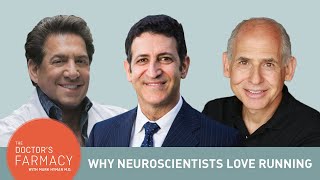
Dr. Mark Hyman, Dr. Daniel Amen, and others explain how running changes your brain. Exercise reduces inflammation, improves neuroplasticity, and strengthens immune function. Diet, movement, and stress management are the core tools for brain health and longevity.
Inflammation is a disaster for every organ in your body. That's true. Including your brain.
Hi, I'm Kaya Proietti, one of the producers of the Doctors Pharmacy Podcast. The root of most chronic diseases we see today is inflammation and immune dysregulation. Even major brain symptoms like brain fog, anxiety, and memory loss can actually be caused by a dysfunction in the immune system. The good news is taking simple, proactive steps like eating a nutrient-dense diet and moving your body daily are incredible tools to promote optimal health. In this mini episode, Dr. Hyman speaks with brain health experts Dr. Marwan Sabbah and Dr. Daniel Amen, an age management.
Medicine expert, Dr. George Shapiro.
Part of our day job is taking.
Care of people with disease. So here we are saying let's step back from that. Let's say instead of treating disease, let's treat health. Lifestyle interventions have benefits and there's now a whole new area of research. Exercise has really emerged as one of the areas that has grown with real biological evidence that it can prevent and improve brain function and brain health. We used to think, as you said, there was north of the neck and south of the neck, right? And that everything in the Alzheimer's was north of the neck and nothing south of the neck was related to it. When in fact now we know that things like gut microbiome can alter your immune system and having a healthy microbiome can keep you healthy and by the innate and you can boost your innate immunity, which might reduce inflammation across the body, including the brain.
Yeah, and exercise helps reduce inflammation.
And BDNF. So the exercise, I have to tell you, I hated running. Oh, no. But I've taken up running because of BDNF.
So what is that?
That's brain-derived neurotrophic factor. Because of- It's like miracle grow for the brain. Miracle grow for the brain, and the funny part about it is, Almost neuroscientists are runners. They don't do anything but run. Okay, they have to have something to it. It's the fastest way to raise your BDNF levels.
Which is basically this growth factor that connects your brain cells together. So, it calls neuroplasticity, which increases connections and helps neurogenesis, which is the development.
Of new brain cells. That is correct. So, we never thought that was possible. We never thought it was possible. We said, once you're born with your.
Neurons, you're gonna get it. But, we now know that the brain is making neurons throughout their life. That's unbelievable. Pretty cool stuff. So, these things like diet and exercise and optimizing your gut microbiome and stress reduction, they all in a sense work by regulating this inflammatory process.
That's correct, that is correct. The inflammation of course is the unifying common pathway that we can manage.
People think that you go to the doctor, they're gonna fix you, but the truth is 80% of your health is determined by what you do, not what the doctor does.
And that's the thing I want people to take away from this is that you can engage in your own life plan to alter your risk. Don't wait. You know, if people should start, they can change their diet today, they can start exercising today, they can do yoga starting today. They don't need to wait.
So new research, brain cells don't age. It's your blood vessels that age. So anything that damages your blood vessels damages your brain. So if you know how to increase blood flow, so things like exercise and ginkgo and beets and rosemary and pepper. I mean, really simple things can actually help improve the function of your brain.
Ping pong, that's your thing.
Table tennis. But you're not stuck with the brain you have. You can make it better. And most people don't know that. There's actually a study from England on who lives the longest. So they looked at sports. And so if you don't play any sports, you don't live long.
Tennis players live seven years longer.
If you play football or soccer, you don't live longer than anybody else.
Because you're butting your head with the ball.
People who play racket sports live the longest. And that's why I play table tennis. Because you gotta get your eyes, hands, and feet all to work together while you think about the spin on the ball.
Yeah, yeah. I picked up tennis when I was 45 and I work out as much as I can. It just makes me so happy and I think it has kept me younger.
Well, it activates your cerebellum. And the cerebellum, the young people listening, you're not gonna know who this is. It horrifies me. I call the cerebellum the Rodney Dangerfield part of the brain. It gets no respect. Even though it's 10% of the brain's volume, it contains 50% of the brain's neurons. And the cerebellum is not just involved in coordination, it's involved in processing speed and thought coordination. And so when you play tennis, you're activating the cerebellum, which oh has reciprocal connections with your frontal lobes. So, it's actually making you smarter, more focused. It's really a great game.
My goal is really to keep getting younger. I had my telomeres done, which are a measure of the end caps of your chromosomes, and they shorten as you get older. But, we know from research that through diet, through various vitamins, through exercise, stress reduction, meditation, you can actually lengthen your telomeres. It's not a one-way street. I'm 59, but my telomere says I'm 39, which is pretty awesome.
Correct. Telomeres are big. It's a big part of our program. We've been using telomeres for many years, but you're right, just walking 60 minutes a day will lengthen your telomeres and increase your lifespan by 25 years. Just walking 60 minutes a day, something that easy. Let's say you exercised your whole life compared to someone who was sedentary their whole life and you both had a heart attack. From the books, remember some of these studies, the person who exercised is gonna have a smaller heart attack. The person who doesn't exercise will have a larger heart attack. What does exercise do? Grows new blood vessels. I can speak for hours on just cardiology and traditional disease management, but here we're talking about more natural ways to stay younger and healthier and live longer.
It's great. It's really great. And I think the thinking about aging as a process that's not necessarily inevitable. We can, with a little effort, work and intelligence, use lifestyle plus various innovative treatments that are regenerative to actually optimize, maintain our health, and even reverse some of the things related to aging. And I look at myself, the more I've understood about diet and exercise, the more I've implemented it, the better I am. I can tell you my bone density and my body composition was better than even just three years ago, even though I'm getting older, I'm getting healthier. So, there is hope for all of us who are aging because that's the fastest growing segment of the population and the baby boomers are all heading there. And even if you're young, it's important to start young if you're listening because what you invest early pays off later. I've been taking care of myself my whole life. I've never really been overweight. I've exercised. as you see, I'm almost 60 and basically as fit as a 30 year old or younger. And I think that's possible for everybody. I just want everybody to have hope and believe that if they understand the basic workings of their biology, if they understand how to create health, that it's available to them at any time. And it doesn't take a long time. You're talking about really months or weeks for people to start to see massive changes.
We have the power to age well. It just takes a little insight, effort, and of course, the right mindset. Exercise can impact inflammation on a molecular level through regulatory effects on the immune system. Science is showing physical benefits from movement ranging from supporting brain health and cognition to balancing stress response signals. It can be intimidating to start a new workout routine, which is why making it fun is so important. Choose activities that are appealing to you, whether it's hiking with a friend, swimming, tai chi, yoga at a studio, or maybe even dancing in your own home. New research also revealed that we can work out less than previously thought and see even better results. Interval workouts alternate between bursts of high-intensity movements and low-intensity resting periods. The approach to exercise can be incorporated into a variety of programs from walking to weightlifting. Finding a buddy can also be very powerful in keeping you accountable to your health routine. Exercise and movement play a vital role in our cognition and ability to age young, and it's never too late to make improvements. Thanks for tuning in to this mini episode of the Doctor's Pharmacy. If you enjoyed this episode, please consider sharing it with a friend. Until next time.
More from AI




This Is Why 99% of Skin Conditions Don't Heal — And What Dermatologists Won't Tell You






Why you need to start strength training today #strengthtraining #healthyaging #fitness
