Why Pizza And Fries Can Be Claimed As Vegetables Through School Lunch Programs
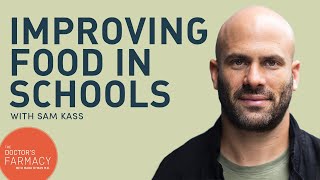
Sam Kass, who led Michelle Obama's Let's Move campaign, explains how pizza and french fries legally count as vegetables in school lunches. The conversation covers food industry lobbying, why nutrition policy reform stalls, and the diet-disease connection.
These budgets have been cut so much that schools are depending on basically selling these kids junk food to keep programs that we all care about alive. So there's a real, you know, tense conflict there. Hi, everyone. Just wanted to let you know that.
This episode contains some colorful language. So if you're listening with kids, you might want to save this episode for later.
Welcome to the Doctor's Pharmacy.
I'm Dr. Mark Hyman, and that's Pharmacy with an F, F-A-R-M-A-C-Y, a place for conversations that matter. If you care about our food system, and want to know the inside scoop from Washington and what happens and what doesn't happen, you're going to love this podcast because it's with my friend Sam Cass, who's the former senior policy advisor for nutrition in the Obama administration. And he was also the executive director of Michelle Obama's Let's Move campaign and the Obama Family Chef. He's currently a partner in Acre Venture Partners. Now, he kind of fell into this. Seems like he was, we had lunch recently and he was telling me how he really never went to chef school and he sort of fell into learning how to cook when he went to Europe. But he basically found his way into cooking for the Obamas in Chicago during the Obama run for president. And then, of course, he joined them in the White House and the staff in 2009. He took on lots of roles, including the chef in the residence, but also the executive director of First Lady Michelle Obama's Let's Move campaign. He was the senior White House policy advisor on nutrition. he's the first person in history of the White House to have a position in the executive office of the president and the residence, which is kind of cool. So he'd go from basically the office to home and cook for them. As one of the first lady's longest serving advisors, he helped the first lady create the first major vegetable garden at the White House since Eleanor Roosevelt's victory garden, which is interesting because a lot of people are now talking about creating gardens. And not only is toilet paper flying off the shelves, but so are seeds and garden equipment for people who've never had a garden before. Sam is now a partner at Acre Venture Partners, which is a venture capital fund investing in the future of food with a mission to improve human and environmental health in the food system. What a great thing to do. The fund focuses on early stage, highly disruptive, impactful companies in the food system focused on agriculture, supply chain, and consumers. Fast Company named Sam in 2011 on their list of 100 Most Creative People. He also helped create the American Chef Corps in 2012, which is dedicated to promoting diplomacy through culinary initiatives. I love that. He's an MIT Media Lab Fellow and World Economic Forum Young Global Leader. And he graduated from the University of Chicago.
Welcome, Sam. There's nothing else to know about me.
Well, he wrote a book called Eat a Little Better, Good Flavor, Good Health and Better World, which was published in 2018 about his time in the White House, which was great. So, so good to be here. Yeah, thanks, Sam. Thanks for doing this. This is an interesting time for all of us. We're all sequestered in our homes, trying to figure out how the world's gonna look during the age of corona and after. But whatever it looks like, we're gonna have to deal with this pesky issue of food in our food system because while coronavirus is killing us in the short term, in the long term, it's chronic disease. And what most people don't realize is that those who are at most risk of dying from COVID-19, the disease caused by coronavirus, are those with chronic illness, whether it's diabetes, heart disease, even being overweight. I mean, if you're overweight, you're about three times more likely to die have heart disease, you're 10 times more likely to die. If you have diabetes, you're seven times more likely to die. And this is already burdening our healthcare system, which we can see now is being crippled under the weight of the coronavirus. So we're gonna have to deal with this. Yes, coronavirus is acute, but chronic disease is chronic. And unfortunately, we don't do well with chronic things. We push them off and it's like a slow moving tsunami that's coming for us once this coronavirus is over. So we're gonna talk about that today and we're gonna start out by talking with Sam about how he is the accidental chef. You spent your first trimester in college working in one of the best restaurants abroad in Vienna. Your plan was to study a lot and cook occasionally and you actually did the opposite. So you worked a super hard 10-hour shift as a tryout and you were hooked. So how did this get you thinking about food in a different way? especially the implications of what's on our plate about our farmers and our land.
Yeah, it was actually a very specific moment for me while I was training in Vienna. I ended up staying there after my semester, my final semester of school was done and worked there illegally for about a year. But very early on in that process, so that's, I got run out of town, but that's okay. But very early on in the process, The sous chef asked me to make a rhubarb dish, a sauce to go with the dish we were making. And I'll clean this story up for that home. But he basically told me, he called me Yankee, he said, you know, Yankee, cook the rhubarb down, pureed and then in the butter. And I was like, okay, all right, I'll put a ton of butter in. So I go and I do that, I put this huge amount of butter and he said, no, no, Yankee, I said, you know, in the butter. And I was like, wow, that's crazy. And so I put another huge thing in and he came up to me pissed and he said, I said in the butter, he said, if the guest walks out of this restaurant and drops dead of a heart attack, that's not my problem. The guest asked me to make food that tastes good to them, not that's good for them. And, you know, it just totally rocked me, mostly because he was right. And that was true for the whole food system that we've been demanding food that tasted good, but we're not really that concerned with the well-being of the food that we were eating. And so, I went back to my station and I looked out—I could see out into the dining room—and I looked out and I just started thinking about what he said to me and realizing that everybody in that dining room looked terrible. They looked completely overweight and unhealthy. And I just started, I asked myself, well, what is the implications of what I was, you know, preparing for them to eat on their lives and their well-being. And then just as I was sort of in this middle of asking myself these questions after getting chewed out by the chef, by the way, is like the most wonderful human. I love that man. He taught me.
But he loved butter.
Yeah, well, he was doing what he thought the guests wanted. And right then, the purveyor of all our ducks and chickens and eggs came in through this door onto my left. And I immediately just asked, well, I wonder what the implications of what I'm serving has on the land that it that's producing it and the farmers that are growing and the environment that it comes from. And sort of once I, and that was very early on, it's just like the first few months of my serious training. And that sent me down a path of, you know, obscure history of agriculture books and weird policy taxation books. And I stopped reading cookbooks and just started, you know, there were, I can now start to say this, it's crazy, but like there wasn't kindles or things. I like to pack my bag and my travels through the next five years or so, mostly with books.
So you basically spend backpacking around with a backpack full of policy and food and ag books. Yeah, not cookbooks.
Yeah, not cookbooks. And so, Yeah, so that was a multi-year journey and ended up coming back to Chicago the year that just a few months after then Senator Obama launched his campaign to organize chefs around food policy. I didn't know what I wanted to do much beyond that sentence, but I knew that chefs had a big role to play and that we weren't raising our voices at all. That was my intent. And then the week I got back, I reconnected with Michelle, who was a single mom with not much, I mean, not a single mom, but a working mom. with a husband who wasn't there. So I'm sure at times she felt like a single mom. And started helping her a few times a week as the campaign really got going and sort of the rest was history.
Yeah, and then you just went right from the Obama's house in Chicago to the White House.
Basically. There's a lot in between. Obviously, you know, I did a lot to overhaul their kitchen and how they ate. she saw the impact not only on herself, but on the well-being of the girls. And, you know, we started talking a lot about, you know, just the, just the toll that what we were eating was taking on the health of the nation, on the economy of the nation. And, you know, as she started to see the power of what can be done with not that huge change, but some real change and how much she had been struggling with that. And, you know, her doctor, her pediatrician, she talked about this a lot when we're in the White House, but it sort of tapped on her shoulder and said, hey, you know, they're okay, but they're starting to move in, their numbers are starting to move in a direction that is concerning. And she just started taking a little bit more precaution about what they're eating, even though she thought she was feeding them really good food. Yeah. Yeah. And she realized for somebody who, you know, is as well educated as her, as a woman who had plenty of resources, if she was struggling with that, you know, God, how hard is this for parents around the country? And so that's really how we got started down the path that we did.
That's pretty amazing. And what was it like working in the White House? I mean, that would have been just sort of like a my own experience, I imagine.
Yeah, it was pretty intense. I had pretty crazy days. I'd start my days, I start the morning, I'd get a workout in with the President or First Lady, and then from there, so every day was a pretty good way to start the day. And then would change into a suit and go work on policy issues and working on let's move. So that would be anything from like child nutrition to antibiotics to food safety to working with businesses and trying to get them to change their practices to my plate or all the different things we did. It was a really broad range of issues around food systems. And then, you know, oftentimes I, be caught in some big meeting that would run over and I'd realize like, oh, you know, damn it.
You gotta make dinner.
I got 20 minutes to get dinner on the table and so I'd run, sprint to the kitchen, like tear off my tie and cook as fast as I can. I will say that, you know, I now have two young kids. I have two boys under three. So my time in the White House really has prepared me well for this because my skills went down over those years, but I got really fast. I could get dinner on the table in 20 minutes. Lightspeed, no problem. And so it served me well.
And wait, you can make delicious good food that tastes good and is good for you and isn't gonna break the bank in 20 minutes.
Absolutely.
Yeah, see that is the myth that the food industry propagates on us that is very difficult, that takes too much time, that's expensive to eat well. And I think that myth is keeping a lot of American families down.
Yeah.
And it's an interesting moment today in America because everybody has to be home cooking. Restaurants are closed, you know, and I think people are starting to cook and figure out what to do. But it's not the time to start making a lot of cakes and cookies because they're going to suppress your immune system.
Definitely. So, yeah, that's how it happened.
Amazing.
Hi, everyone.
Hope you're enjoying the episode. Before we continue, we have a quick message from Dr. Mark Hyman about his new company, Pharmacy and their first product, the 10 Day Reset. Hey, it's Dr. Hyman. Do you have FLC? What's FLC? It's when you feel like crap. It's a problem that so many people suffer from and often have no idea that it's not normal or that you can fix it. I mean, you know the feeling. It's when you're super sluggish, your digestion's off, you can't think clearly, or you have brain fog, or you just feel run down. Can you relate? I know most people can. But the real question is what the heck do we do about it? Well, I hate to break the news, but there's no magic bullet. FLC isn't caused by one single thing, so there's not one single solution. However, there is a systems-based approach, a way to tackle the multiple root factors that contribute to FLC. And I call that system the 10-day reset. The 10-day reset combines food, key lifestyle habits, and targeted supplements to address FLC straight on. It's a protocol that I've used. with thousands of my community members to help them get their health back on track. It's not a magic bullet, it's not a quick fix, it's a system that works. If you want to learn more and get your health back on track, click on the button below or visit getpharmacy.com that's getpharmacy with an F, F-A-R-M-A-C-Y.com Now back to this week's episode. So, you know, one of the things we really worked on was school nutrition and the obesity, I mean two out of 10 kids now are obese. obese, not just overweight, four out of 10 are overweight. We're seeing this affect their cognitive behavior and academic performance. What's most striking in the studies that really shocked me was that the ones, the kids who are the most obese are also the most nutrient deficient. When you look at their vitamin and mineral levels, they are among the lowest because they're eating crap and it's affecting their cognitive function, their metabolism and setting them up for really bad bad outcomes in lives, lower life expectancy, lower ability to earn higher incomes. And in schools, it's a cesspool there. Sugar, salt, processed carbs, industrial refined fats. And then, I mean, I went to the school, they had McDonald's Monday, Taco Bell Tuesday, Wendy's Wednesday. They had advertising all over the gymnasiums and bathroom stalls. and you guys really went to work on this with the Hunger Free Kids Act, the Healthy Hunger Free Kids Act, which was signed into law in 2010. Can you tell us about that and what were the challenges you found that you faced in addressing changes to the school lunch program from the food industry and from the Congress and what was that like?
There are lots of them. You know, so when we got there, there was no rules at all about what you could sell in schools. So in vending machines and in the a la carte lines and in the lunchrooms, there was literally zero standards. You could sell anything you wanted. And the guidelines hadn't been updated in terms of the nutrient standards for the school lunch meal itself in 20 years. There have been new resource for the program in 30.
Wow.
And part of the challenge, there's lots of different challenges. One, we were trying to do it in the middle of economic collapse. not too different from what's happening right now.
That was 2008, right?
Yeah. And so, you know, we were working on this through 2009. So, you know, pretty intense time to try to get a bill like that done. But, you know, for us in the administration, and by the way, it took President Obama intervening and helping to push with the first lady to get that done. You know, as we think it was the bedrock of the future of the nation. And so that's why it was such a priority for us. You know, I think there's a lot of challenges. One, like on the vending machines, you know, they are huge sources of revenue for things that we care about in schools, like art class and music class, the school's budget. Sports. Yeah, for sports. So these budgets have been cut so much that schools are depending on basically selling these kids junk food to key programs that we all care about. alive. So there's a real, you know, tense conflict there. But, you know, obviously, you know, killing them or prematurely over the long term, it's like not a solution for art.
So they can, they can write great poems as they're dying and great songs as they're dying.
We had to work this out. You know, there was huge raging and sometimes, you know, the debates in Washington just, you know, make leave you scratching your head, but. huge debates on whether you had to just offer the vegetable to the kid or actually had to serve them the vegetable.
Well, they talk about competitive foods in schools, which makes me crazy. I mean, if you, a competitive food is a donut versus an apple. So if you put them side by side, guess which one the kid's gonna pick.
Yeah.
So exactly competitive.
Big, big, big fights there. And, you know, then there was a pretty infamous effort by the frozen, Food Institute, which is basically the pizza and french fries. That made the tomato sauce on the pizza to be counted as a vegetable. And french fries, we were working very hard to put limit. We proposed limitations on the amount of fries that could be served in a.
Given week, which is also a vegetable.
Right, exactly. You didn't know.
Ketchup also is a vegetable.
Yeah. And so, they got Congress to intervene and they attached that onto another bill and got that through. So, we were able to then increase the serving of vegetables so you could serve fries but you still also had to serve like broccoli or something like that. So, it really kind of defeated the purpose of serving the fries. to constrain that significantly at the time anyway.
I remember a story that, you know, Swanson's Pizza, which is a big pizza company in Minnesota, is the largest supplier of pizza to schools. And Amy Klobuchar, who's the senator from Minnesota, Democrat, was instrumental in getting pizza being included as a vegetable, which just goes to show you the ways in which the food industry is so influential in driving our policies, which have nothing to do with science.
Yeah, that is true. We had big fights on potatoes in many arenas similar to school lunch as well as with WIC. But I gotta say, there was real fights. I do think there's this, I have gotten over the outrage that industry is going to pursue their interests. I'm sort of just like, we gotta get over it and just win. and just beat them at their, at this game. And we need to be smarter and more strategic and get in power, run for office, get in power and win.
So you think that the congressmen and senators would be your allies? Did you find that? I mean, clearly the food industry pushed back.
Yes, sometimes they, well, we got it all passed. And the bill was actually quite good outside of those things that I mentioned, you know, the whole grain provisions, the sodium provisions, the amount of vegetables we had to serve, like all those things were actually quite very, very strong. There was enough money for the program. Could it be improved? Of course. Could it be significantly improved? Absolutely. But was it just a transformational bill compared to what was there before? Absolutely. So, you know, and it took a Herculean effort to get it done at be given and everything else that was going on in Washington. So. So, you know, look, I mean, I that was just a huge win.
And, and was there any follow-up data on how kids did in terms of their weight, their academic performance, the impact of the new school lunch guidelines?
The, I haven't seen a robust analysis for the whole program in its entirety. The other part of the bill that we buried and didn't really talk much about because we didn't look at the But maybe the most impactful thing in this bill, I don't know, one you could debate it, was provision that basically said, it's called the Community Eligibility Program, and it allowed schools that had 40% free or reduced basically where the majority, almost the majority of their kids were low-income kids, you could serve breakfast to every kid in the school for free. and every kid got lunch for free. And so it was what was, what's very powerful about that is not as much at lunch, but at breakfast, because at lunch, everybody's eating together and you don't know who's who. But breakfast was only in the cafeteria for the poor kids. And so what would happen is those kids would have lunch at school. They'd go home. Most of them don't get food at home when they get there. Maybe a little bag of chips or something. and then they come back to school, but they were so ashamed of being identified as poor that they would skip breakfast even though they hadn't eaten since lunch the day before. And so by serving it in breakfast in the classroom and serving it to everybody, all like millions of poor kids are getting food now that otherwise wouldn't. And so you saw there, Increased participation, better improved, significantly improved attendance and significantly improved reading and math scores. Because, you know, those kids, you know, can you remember when you were like 12 or 13, how hungry you were all the time? Yeah. And imagine you hadn't eaten since, you know, lunch and it's now nine o'clock, the lunch the day before and it's now nine o'clock and you're asked to like focus on the math test?
Yeah, I get it.
Forget that. I could barely do that if I was full, let alone if I was starting. Right? And so, you know, so it was a transformational piece of legislation in that regard. And for the district, they've seen just incredible results. There's been challenges to implement it, but those resources remain and more and more districts each year are signing up for it. And so, you know, I think we have to be careful. Like things, are messy and politics is messy and you're gonna have people lobbying for their own interest of their businesses sometimes in ways that, you know, I can understand sometimes that I find disgusting and just abhorrent.
Can you share some stories of what you experienced that, you know, kind of reveal the underbelly about what you're fighting against?
I mean, look at cut both ways. I mean, I think, you know, when we were, we banned trans fats, which, you know, there was an attempt to try to figure out from the industry side, you know, they could still, because of a few people who wanted various icing and other couple products where, you know, it was harder to replace. They wanted to, like, go fight to try to allow a certain level right in under the ban. Am I allowed to swear on this podcast?
You can.
I mean, and I told the lab, the head lobbyists for these guys, like, if you want to have that fight, like, I let's because I cannot wait to take it to you on this. If you want to make sure that you're pumping trans fats, that is a known killer, let's go at it. So, you know, there's people like, that's like clearly something that was killing everybody, a very specific thing that had ample evidence. And sometimes you're just like ready for a nasty fight. But I will also say, and it's important for everybody to understand, there's a lot of nuance and a lot of gray. So there's some issues like pizza in, you know, as a vegetable or trans fat, which is a black and white issue. But there's a lot of other companies that, you know, have done tremendous work to try to make it easier and more affordable for families to get decent food that are working with real constraints from Wall Street. You know, like if these CEOs try to change too much too fast and lose some revenue in a three or six month period, they're gonna get fired, right? So there, those efforts are, you know, would be undone in a minute. So if you're trying to get something to change, there's a pragmatism that has to be taken from them as well. And by the way, like a lot of people talk about wanting to eat better and how we need better food, but consumers, you know, tend to eat what they eat and tend to like pretty unhealthy food.
And that's because that food likes them. It's addictive and it sort of sets up the biology of hunger and craving and addiction, which is very hard to fight with willpower. And that's part of the problem.
I totally, that's absolutely right. But it's also a real problem for the industry. So they create, they box themselves into a problem of creating, you know, highly craveable food. And now it's, they're, it's, people want it and they like it and they identify themselves with eating it. So it becomes the whole, you know, what we eat is really how we understand who we are. Yeah. And so when it starts to change, you're saying you want to change me as a human. And so it gets super complicated and people aren't changing as fast as we think they are. And so for some for a CEO who's like, I get it, like my portfolio is not good, I've got to make some real change. It's not like they are in the position to say, I get these products are terrible, I'm just going to get rid of them.
Well, they're innovating, these companies are innovating, they're getting the crap out, they're reformulating their products.
They're getting there. They're getting there. I just think we have to be careful to see like the monolith evil food industry versus everybody because it just actually doesn't capture the reality, nor is it gonna go away. And so I think we have to work to figure out who's a good actor trying to do the right thing, who's not and just needs to get called out and pressured and fought and won. And then work strategically to make progress, you know, to work collaboratively when you can and fight when you have to.
Yeah, it's hard to have the sniff detector on for the greenwashing. what's true, what's not. And a lot of people are saying the right things, are they doing the right things? You know, one of the things that's challenging, all the hard work you did with the Obamas to get the Healthy Hunger Free Kids Act passed in 2010, the current administration is trying to roll that back. And their arguments are that, oh, kids are throwing out the food, it doesn't taste good, people won't eat it. So we have to fix those guidelines, quote, fix the guidelines, which means roll them back so that more junk can be in the schools. And I think, you know, there's a real challenge in the culinary world in school lunches. And as a chef, I'd love your opinion about this because like we were talking about before, you've learned how to make delicious yummy meals in a short order from ingredients that aren't going to break the bank and that can be done. And I think there are models of this. You know, my friend Jill Shaw, I think I might have talked to you about her, who's also going to be on the podcast talking about My Way Cafe where she got top chefs to create delicious meals within the school nutrition guidelines within the school budget for school lunches, which is not very much. And kids love it and they're not throwing it out and they're eating it. And I've seen this happen over and over throughout the country. So can you speak to the rollbacks that are happening, why they're happening and what we can do to fight those?
Yeah. Well, the main reason they're happening is because of the School Nutrition Association. And that is an organization whose name it does not deserve.
Maybe the School of Malnutrition Association?
Yeah, basically. So basically what's happened with them is, you know, they represent the school chefs, as I call them, and, you know, they've been under a lot of pressure for many years. And, you know, I will say that school chefs around this country have, for the most part, they go into these cafeterias with very little resource, with almost no they love those kids and they're really trying to do right by them. Unfortunately, the organization that represents them is one that is just dominated by some of the worst players in the food system, those same pizza and french fries guys, ConAgra and a few others are the most influential companies on their board. And they were very supportive of of the Healthy Hunger Free Kids Act and the work that we were doing and we were real allies of theirs and then they realized that this was standards were going too far and kind of in the middle of the whole thing they fired the CEO, brought in a bunch of hacks for big food and have then since started fighting us and now have been lobbying the the Trump administration to roll back these standards. And so if they're listening, haven't talked to you guys in a while, but shame, shame on you. It's just an abomination of your role in our society to be safeguarding the well-being of the kids that are eating in our schools and representing and supporting the people, mostly women, who are working so hard with so little support day in and day out to do the best they can with these resources. And I just am so disappointed in how that has played out. The argument that it's just good enough to have some green beans on the line, that that's like a serious argument for a 10-year-old to say they want it. It's just a joke. The reality is all the evidence shows that the evidence shows two things. One, kids have been throwing out school lunch since the day it was invented. And that is nothing new and there's zero evidence that our new standards led to any increased food waste. Secondly, the evidence shows that there's a substantial increase in consumption if you actually serve the food to the child.
If you put it on their plate.
If it's on their plate, they're more likely to eat it.
You know.
In fact, we had to research that, but it's true. It turns out that's how it goes. So that's where these things really get back when they're going to do that, which is really troubling, especially given the fact that while we made a tremendous amount of progress, this is a generational effort, and we have a long way to go. And so we should be tripling down on our efforts, not rolling them back.
And as a chef, you believe that that if we somehow figured out how to get food service providers to recalibrate what they're doing that and get, you know, cooks, I mean, getting the ladies and the guys who are in the kitchens and schools actually cooking that it's doable.
So I think it's doable to, if there was a tremendous increase in funding. But right now, most of these schools don't, a lot of them don't have real kitchens. Infrastructure is lagging, schools haven't upgraded in years, schools have way bigger, a big part of the problem for school lunch is that these school kitchens were designed, cafeterias were designed for 300 students, now there's 700 in the school. And a big part of the problem that nobody really talks about is a lot of kids are getting lunch starting at 10 o'clock and then they have 20 minutes to eat. Yeah. and they're just not being able to, they just don't have enough time to eat. So there's a lot of really just structural problems. And so I think there's a middle ground where if we could bring some capacity of cooking back into kitchens or have better sort of hub and spoke models where food is being prepared more fresh and integrating that with high quality sort of pre-made foods, I think that's a likely scenario. But you're talking about billions and billions and billions of dollars of infrastructure needs hundreds of billions.
You mean kitchens, is that what you mean?
Yeah, kitchens and staff. Like now all of a sudden you need a lot more people to cook.
Well, this is what you know, Jill Shaw said that you actually don't increase costs at all. That you can do it if you put the kitchens in and then teach the staff how to do it and create the right recipes with food that's low cost but delicious and nutritious, that it's doable.
I'm not saying it's not doable, I'm just saying that it's definitely hard. And there's some school to do. I'm just saying it takes increased resources. The food costs. I don't necessarily need to go. I agree with her, but there's no way she's. I just. And I love her, so I don't want to disagree with her about anything.
There's just.
Each school is different, so it's hard to speak. Just, you know, General. You know, it's just complete generalities. But if you have a staff that all they're doing is taking frozen things and heating them up. you have a pretty lean team. If you're going to prepare everything and chop every vegetable, then you're just going to need more hands, most likely. Now, there could be some things that have a big staff and you could do that, but for the most part, I think there are some increased costs there, most likely.
And it's more decentralized, right? It's not a federal program. It's all based on local school districts and everybody decides themselves. So it's a harder thing to so they're nationalized.
Right. Much harder. Yeah, that part is hard. And look, what we found in the restaurant, sorry, what we found in these schools is that for the school chefs who really were excited about serving better food, passionate about it, really wanted to do right by their kids, they figured out how to make really delicious food within the budget and meeting the standards and sometimes dramatically exceeding the standards. And we found that in districts where They didn't believe in it. They didn't care about health. They thought that, you know, these Democrats in the White House were, you know, like trying to tell them what to eat. Nanny State. Nanny State. They just, they serve food that tastes terrible. And so, you know, a lot of it is just about your will and your commitment to doing.
Well, we need to do it because we are destroying our children in the future generation. And it's a, you know, a friend of mine said it was a doctor that was a pediatrician said if we're, if a foreign nation was doing to our children what we're doing to them, we'd go to war to fight it. You know, right? All right, well, you doing all this work on the front lines of food and politics, you sort of came to a revelation about how to make real progress on the challenges facing our health and the planet. Can you talk about what that was?
A few of them. which one?
Well, I think you had some insights about working on the front lines that made you realize how to make progress on certain challenges that were, I think, an insight that you got during that work.
Oh, God, what was, I mean, so many.
You probably had a lot of them.
Yeah, a lot of them. I mean, look, I think, well, I think, you know, for me, change you know, there's sort of a roadmap for it, but most of it is rooted in our culture. And I think a lot of times we like to blame government, and we like to think that, you know, there's a very convenient narrative, very convenient narrative that government subsidies are the reason why junk food is cheap. And if only we could change those subsidies, everything would be fine, and we would fix it, and healthy food would be more affordable. And I just came to realize one that's unfortunately just utterly not true. There's no basis in fact of that. The subsidies are stupid policy. We actually changed a lot of the ones that people have heard a lot about. But there is, it's just such a developed market that they're just really a drop in the bucket. The reason why we or eating, why junk food is much more affordable than healthier food often is because we've figured out how to make junk food in a very efficient manner and grow the two crops that are really the foundation of unhealthy food, namely corn and soy in a hyper efficient manner. I mean, we can have fields of 100,000 acres of corn that nobody ever touches that are planted grown and harvested without a single person on the land. The corn used to be many feet apart. Now it's grown 18 inches next to each other. It's just an amazing amount of energy and resources that have innovated on the system. And we've invested statistically insignificant, like statistically zero dollars and figuring out how to grow nutrient dense fruit, vegetables and whole grains. Right. in that manner. And so we have just a gaping hole on our innovation of how we do that. And I think that's really where we need to put our attention. And that's where the solutions are going to really lie.
Well, that brings me to my next question, which is, you know, you worked a lot inside government. And I think you came to the conclusion that, you know, governments may not be the whole answer to solving these problems, that businesses have to innovate. and that you have now moved on to working with an organization that focuses on accelerating businesses that are innovating around solutions. So rather than talk about all the things that go bad and it's terrible, how about we talk about what people are actually doing in the innovation space around food and ag and consumer solutions that are addressing chronic disease, that are addressing climate change, that are addressing the food system. It's so exciting, man. We've had these conversations before, but it'd be really great to hear how actually you're seeing this happen.
Yeah. I mean, what I, what I did realize, and it's just worth a minute to, to touch on, you know, I think government has a really important role to play in our food system. So it's not to say that it's not a, you know, has a critical role, but it's not that well positioned to change it. There's some key areas like school food, of course, or the military, which we did a bunch of work on them like the food that the military purchases and they're huge obviously. And some other areas where their rules and regulations are quite important leadership matters. But for the most part, food is a private sector endeavor and you know, it's farmers that are growing it and companies that are processing it and distributors that are selling it. And so if we don't affect that chain, then we're not going to make much progress. And so I think what we're seeing, if you, we have a food system that's basically been built on a few things, a few key elements. One, we've had the most stable climate in kind of recorded history over the last 100 or so years.
Yeah, not anymore.
Right, well the climate has been completely stable. We've had unlimited natural resources, namely soil and water. which is plentiful, and we've had cheap energy. And it's that sort of formulation that has allowed this system that we have currently to be built. And all of those things are done. And so you're seeing a tremendous amount of pressure on the supply chain from all the way upstream down, and you're seeing a transformation in consumer preferences, attitudes, and behaviors being driven around climate and health. And so you're getting a really powerful ecosystem of the potential for real change because we've seen really no innovation in food systems outside of some things around corn and soy. Kind of really for the last like 60, 70 years. If you think about, think about your kitchen as a good way to think about it in a way that we can touch. The only innovation in the kitchen has been the microwave. over the last, like, 75 years, 50 years or something like that. Yeah. Like, once we have a refrigerator, that was a big deal. We've had ovens. They've gotten better, but they're basically the same. Yeah, I got crushed by. I dropped my cookbook, and there's, like, two instapot cookbooks. And it's like, I got buried by instapot. What is this instapot thing? And that turns out I was, like, living in the dark. Yeah, it's the pot in the microwave. This is about like hats off, that's great. The microwave, if you stop and think about it, was kind of the only real innovation that we've seen. The rest of our world is being transformed by our phones and everything is changing from technology point. And that's true throughout the whole supply chain. And so the time is ripe. So do you have all these young entrepreneurs who are founding businesses to try to solve the issues of food and climate to try to solve the issues around our health and our well-being. And this goes all the way up from like genetics of plants to different ways of bringing nutrients to the soil, the microbiome of the soil, all the way to how do we trace and provide transparency through the supply chain, alternative proteins, alternative ingredients, and then, you know, down into the convergence of the healthcare system and into the food system. Finally, there's a major part of the economy that is waking up to the realization that if they don't help make a healthier country, they're going to go out of business. The tidal wave of just diabetes alone with 34 million pre-diabetics and over 80 million diabetics and over 80 million pre-diabetics. It's just a tidal wave of health, of a healthcare crisis coming at the industry. And so there's just all this innovation coming about how do we deliver more nutrient dense foods in a price point that people can afford? And I think it gives me a lot of hope. Now, we're running out, the clock is ticking, we're running out of time. The problems are particularly on the climate side are happening faster than I think anybody could have realized. I didn't know if I told you this, I do these dinners called the Last Supper where I would cook. I do these. I still do sometimes where you take ingredients that basically experts are predicting that our kids or grandkids aren't going to have because of climate. So these are things like coffee and wine and chocolate. So let me just repeat that. Coffee, wine, chocolate. We're not going to be able to eat those. Now everybody's got a stake in solving climate change if they didn't realize it before, but it's also like shellfish and crustaceans and crabs, so crabs and lobsters and. real food, you know, base bedrocks of the, you know, ocean, nuts and all kinds of different foods. And then, you know, I go, a couple weeks ago, got a little push alert around, you know, basically Dungeness crabs are populations have collapsed because the acidification of the ocean, which we thought was going to happen in 20, 30, 40 years, is increasing so fast that the babies can't form shells and so they're starting to get wiped out. The things that I had been talking about up until a couple months ago that were way off in the future, but in our kids and grandkids- are happening now. So, I think the sense of urgency to change how we're eating and to innovate is growing ever more dire.
Yeah, so what's really interesting is that we talk about how the way we grow food is going to be threatened by climate change. So in a way, the way we're growing food contributes to climate change and the food that we're trying to grow is going to be impacted by climate change. Can you talk about that and what innovations are happening in technology that's going to be necessary to actually make progress on both those aspects? Yeah, it's a pretty negative feedback loop.
That we're under right now. Food and Ag is the number two driver of emissions globally. And give or take a decade, the next 20 or 30 years, it's going to be the number one driver because unlike energy, where we can see a future where our footprint is coming down, Food and Ag is going straight up.
Yeah, some estimate that even now when you add it all in, it's the first.
Yeah, I don't know, depending on how you cut the numbers, yeah, I think you can make a good argument. But either way, it's a huge part of the footprint. And, you know, and it's a wildly inefficient system. We're wasting a third of what we produce, which is a huge emitter in and of itself. And we're getting these terrible waste, terrible health outcomes. So it's a system that is wildly inefficient. And as climate gets worse, food is, and food security is on the front lines, one of the places where we're going to feel the impacts of climate first and we already are. And what, so what you're starting to.
See is- Because with climate instability, then the agricultural environments change and you can't grow the food that you used to be able to grow where you used to grow it.
Yeah, so what we're starting to see, I'm actually, you beat me to the punch with your incredible book, but I'm writing, you know, say a different version of the same issues that we've got to talk about. You're just faster than me. unfortunately.
You've been busy. You've been busy. Yeah, with the babies and all that. I did the babies.
I did the babies. I did the babies. But I'm working on, you know, what I'm working on right now is you actually, what you're seeing is a massive migration north of plants and animals, north and south, trying to get to more temperate climates because volatility and increasing temperatures are making the areas where grew food in, you know, inhospitable. Now, there's some areas for time being that will benefit. Right. But, although soils are different in the.
North, if you're growing, you know, food in North Dakota and you want to go grow it in Northern Saskatchewan, it.
Might not be the same. And we're gonna run out of room, like, we're, you know, and so you're seeing this as real disruption. And there's some, you know, plants that can move, you know, they're planted year over year, so they can you know, move as the climate moves. Farmers realize, oh, I can plant a corn now. Like, they're going to plant it for a while because they can make some real money. But there's other crops like anything that grows on a tree that's not as easily moved. And, you know, for fishermen who've been fishing certain areas for generations, you know, when the fish are gone, there's nothing to catch. Yeah.
I remember going to New Finland, which was one of the biggest Cod Fisheries in the world. and we went to this remote little day. We had to literally take a boat around to this town that was isolated. And there was this incredible fish Hatchery, this giant fish. I mean, processing plant. And there were a couple of fishermen on the dock, and they brought in these really puny little cod. And it was just so sad. And the whole town was like going out of business sale. Everything was shutting down, and it was just sort of, you know, firsthand experience on what actually is going on.
Yep, yeah, it's pretty devastating. And so we're just at the very beginnings of this. And so, you know, I think we're going to have to, you know, and so look, I think that we're gonna have to use, we're gonna have to innovate in meaningful ways and sometimes in uncomfortable ways. And, you know, we don't really like the idea of high tech things in our food and we shouldn't, you know, I think that sort of sense of you know, tradition and that sense of, you know, this is how we've always done it, is a healthy, there's a healthy aspect to that. But given, you know, what's happening and how bad I think it's going to get and how bad I think it's going to get in a relatively short amount of time, that I think we're going to have to keep an open mind about looking at different tools that could help us solve these challenges.
What are you seeing coming up in these businesses that you're looking at? Like, what are you're sort of, I.
Think the biggest one that has the biggest potential to help us manage the crisis that we're entering, as well as has potential to be used in all kinds of ways that could not be beneficial is gene editing. And just like you kind of hear a lot about it right now around human health and sort of designer babies and all those sort of things. that same sort of technology can be used to basically express or silence genetic material in the genome of a plant, not foreign DNA, but what currently resides.
In a- this is not literally genetically modified organisms in the sense of inserting like a bacterial gene in a plant or something like that.
Right. GMO is as it exists now, and as you hear it is about foreign DNA being inserted into the genome of a plant. CRISPR, what it does is it allows you to both silence genes that are being expressed or express genes, more importantly, that have been silenced and kind of lost over like, you know, thousands, hundreds of years, if not thousands of years of breeding. So the power of the, and to do multiple expressions or silencing in one plant, it has transformational potential in terms.
Of giving an example of how that would be used in agriculture.
You could use it to improve, so like wheat has a lot of fungus problems. You could use it to help target the genes that could be resistant to fungus while increasing the fiber in the plant and improving nutrient density potentially. Or needing, allowing it to be more drought tolerant. You can do things- you- can breed.
It for more nutrient density and flavor, which it would always be good.
Flavor. Absolutely. Like their ability to basically target Sequence the genome of a plant, target the characteristics of that plant you want or silence the ones you don't. It's just much cheaper now and much, much more efficient. Now, the question is, what are the values that we're going to deploy these tools on? They're very powerful. And I think instead of saying tool like genetics bad, which is just not how it's really not been the case. We've been tinkering with the genetics of plants since the beginning.
-Regor Mendel.
Right? Well, and far before him.
Before him, for sure.
It's the foundation of civilization was our ability to take plants and breed them over time. This is able to do that in a much more dramatic and efficient manner. And the question is, are we going to use these tools for the benefit of a few big companies so they could spray more chemicals and extract more profit, or are we going to use this in a way that's going to help and lighten our footprint on the agricultural system and improve the health outcomes of eaters. And I, you know, so the, where I've come to after, you know, grappling and there's going to be a lot of gray and it's going to be, I think, complicated. But I, you know, I'm going to judge these new Innovations based on that. So I don't think tools are inherently good or bad. I think it's how you use them. And, and so you know, that's how I think we need to see this. So if it's helping us meet these goals of a much more sustainable, sustainable and healthier food system, then I support it. And if not, then I don't.
Amazing. That's a simple metric to look at. Is it helping or hurting?
Yeah.
And there's a lot of things that are hurting. So, yeah. So, so as individuals, what can we do to shift our patterns? And is that even relevant? I mean, do we have to wait for business and governments to act or. Can we as individuals actually make a difference to live a way that's more healthful and more climate smart?
Oh, there's no question about it. You've written about it in many of your books. I took my stab at it in my cookbook, hybrid cookbook. You know, I think there's no question that, you know, we, here's the thing that people don't realize. And this is true, both politicians and of businesses, they're scared to death of us. They spend hundreds of millions of dollars trying to figure out what we're thinking, what do we want, and just figuring out how they can somehow deliver it in some way, shape or form. Like they feel powerful and they are, and they'll fight for things when their interests are threatened, but they're scared. And they're listening intently to everything, like every micro trend. They're like, oh my God, I think they may be going this way. We got to figure out how to, you know, move that way. and we're driving so much of their behavior and we're more powerful than we realize.
They should be CBD Coca-Cola, I'm sure.
Of course, that's right. I guarantee it. I guarantee that. And think about that. So I think we have to, the key for us and the way I always try to put this out there is, I think we need to set ourselves up for success. We need to make it as easy on ourselves as we can to make the best choice. A lot of times when we're buying food that's pretty unhealthy and then just trying to rely on willpower to just not eat it in our home. No matter who you are, if that cookie is in front of you, eventually you're going to eat it. You can hold off for a while, but there's nobody, myself included, who is not eventually going to eat a cookie if it's there. A lot of times, and this is.
How marketing works, and I know- See, now you made me want to cook chocolate chip cookies tonight after dinner. I'm like, oh my god.
That's exactly how it works. That's exactly how marketing works. And you've talked a lot about this, but you know, it's such a bad idea. You see a picture of a burger, you hear somebody say chocolate chip cookie, and then you're like, oh, I love a cookie. It's like you didn't want a cookie. You just saw a picture of a cookie. And that made you want the cookie. Yeah. And so in our home, especially, I think we have to do a much better job at, you know, fighting the fight in the grocery store, like being really conscious about making good choices there. and then we're relaxing when we get home because we have ourselves surrounded by things that are good for us. And if we continue to do that and focus on just more plants, nutrient dense fruits, vegetables, nuts, whole grains, we're going to continue to drive the market and make that known. Make that known to your friends, make that known to your family, make that known on social media. That has a huge impact on our culture and as that becomes our norm, you're going to see both policy and politics and food companies starting to try to increasingly respond to what we're saying we want and what we're saying we need and what we're saying we're going to do and doing. And that for me is, yeah, that for me is actually the main job. Like that's the hard work, but that's the work that actually allows both the industry and our policy and politics. to act as they should because they're supposed to follow us. These people aren't leaders. Business people are not leaders. No. Politicians are not leaders. They're not. They're designed, they're supposed to follow. Democracy is about following the will of the people. That's what they're supposed to do. And so really, we have more power in this than we realize. And so I think the more we activate on that, the better we're gonna be.
I think that's true. I think that the take-home message is Make your home a safe zone. Don't introduce foods in there that are not good for you, your family, and introduce foods that taste good and are amazing. My son, when he was, I think 15 or 14, he wanted to invite a bunch of friends over for dinner. He goes, There's nothing to eat in the house. I'm like, All right. I said, Let's go to the grocery store. And there's only one rule. You can't buy anything with trans fat, period, nothing. He couldn't find a single thing to buy, pizza, whatever he wanted to buy.
All had trans fat.
It was a good lesson, you know, I think.
Yeah, I mean, look, we, I think a real rule on that is too, when you get into your home, it's true in society, you eat what you see.
Like, that's right.
That's what you're going to eat. And so even in your home, it's not to say that you shouldn't have a, like a, you know, you want a couple cookies.
I got chocolate.
Yeah.
And coffee.
I got plenty of wine, especially right now, let me tell you. But, just put it out of sight, you know, put on the top shelf behind something. So you're only going to eat it when you, like, know you really, really want it. And what, and this is honestly what I, what happened. This is how it all started with the Obamas, is that instinctually, and I didn't even know that the research that had been done at that time. But, you know, I took the fruit that was in the bottom shelf, which we, you know, everything goes to waste on there. Why? Because, like, we don't see it. So we open the fridge, we don't.
Open it, we don't see what's down there. And then you remember, oh, man, I.
Should look down there.
And it's like, we got green beans tonight because we're found them in the bottom.
Right. But, you know, I put the fruit out on the counter. So when the girls would run by, if I had a bowl of chips there, they would have grabbed a bowl of chips, a handful of chips. But I had some grapes there, so they grabbed grapes. Right. It's just because that's what was easy and that's what they saw. And so the more you can surround yourself with those things, so you're not having to think about it and you're just eating whatever's around you, the better, like, the more successful. to be because we're going to eat what we see. So just think about that, like about setting up what you're going to make eye contact with as you move through the day. It's going to have a huge impact on ultimately what you eat, even in our homes.
Yeah, and I love what Michael Pond says. If you want to eat something, just eat it, but make it yourself. If you want french fries, make them yourself. If you want a cookie, make it yourself from real ingredients.
Well, also, yeah, the, the, because the, the truth, that's true, mostly because, like, we would never put as much of the junk in there as, like, these guys would. Right. Because they're, they're trying to minimize the profit margins on their every product. If you're gonna, you know, cook something, you're not gonna, like, throw, like, 10 times the amount of sugar. Right. And some extra acid and some salt just to amp the whole thing up. Yeah. And not have any real good other ingredients that. actually carry the flavor. Okay, well, I'm gonna go.
I think it's one of those great solves for all of that. Okay, well, this week, I'm gonna make french fries from scratch with some beef tallow, just like the old McDonald's french fries. And I might make some chocolate chip cookies, but I'm trying to eat healthy. And I think all of us should, you know, keep our home safe from industrial food. If we did that, it would be a game changer, you know, if you just. And I did this when I was, my kids were growing up. There were two things on the menu. take it or leave it. That was it. And they did fine. And my son's now a chef. My daughter cooks and they eat delicious food and they understand. They went off the wagon for a little bit, but they had it embedded in their consciousness when they were growing up. And that's what they loved. And I think we can all do that for our families. And that's the place to start. And what that does, like you said, Sam, it drives the marketplace. It drives innovation. It drives policy. So that's what we can all do. and I really applaud your efforts both on the political front and fighting the good fight, which was not easy. I'm sure you got a lot of battle wounds. And now, you know, thinking about how do we stimulate business and innovation in food and agriculture to actually solve some of these big problems. So my hats off to you, Sam. Thank you for joining us on the Doctor's Pharmacy.
Such a pleasure being here. And, you know, thank you for all of your incredible leadership and advocacy over the years. You're like a one-man army. with the much bigger Army behind you. And so, you know, we just, you've had such an impact and just, just an honor to be here with you.
Well, thanks, Sam. So if you've been listening to the doctors Pharmacy and you love this podcast, please share with your friends and family. Leave a comment. We'd love to hear from you. Subscribe wherever you get your podcast, and we'll see you next week on the doctors Pharmacy.
More from AI




This Is Why 99% of Skin Conditions Don't Heal — And What Dermatologists Won't Tell You






Why you need to start strength training today #strengthtraining #healthyaging #fitness
